 Georgia
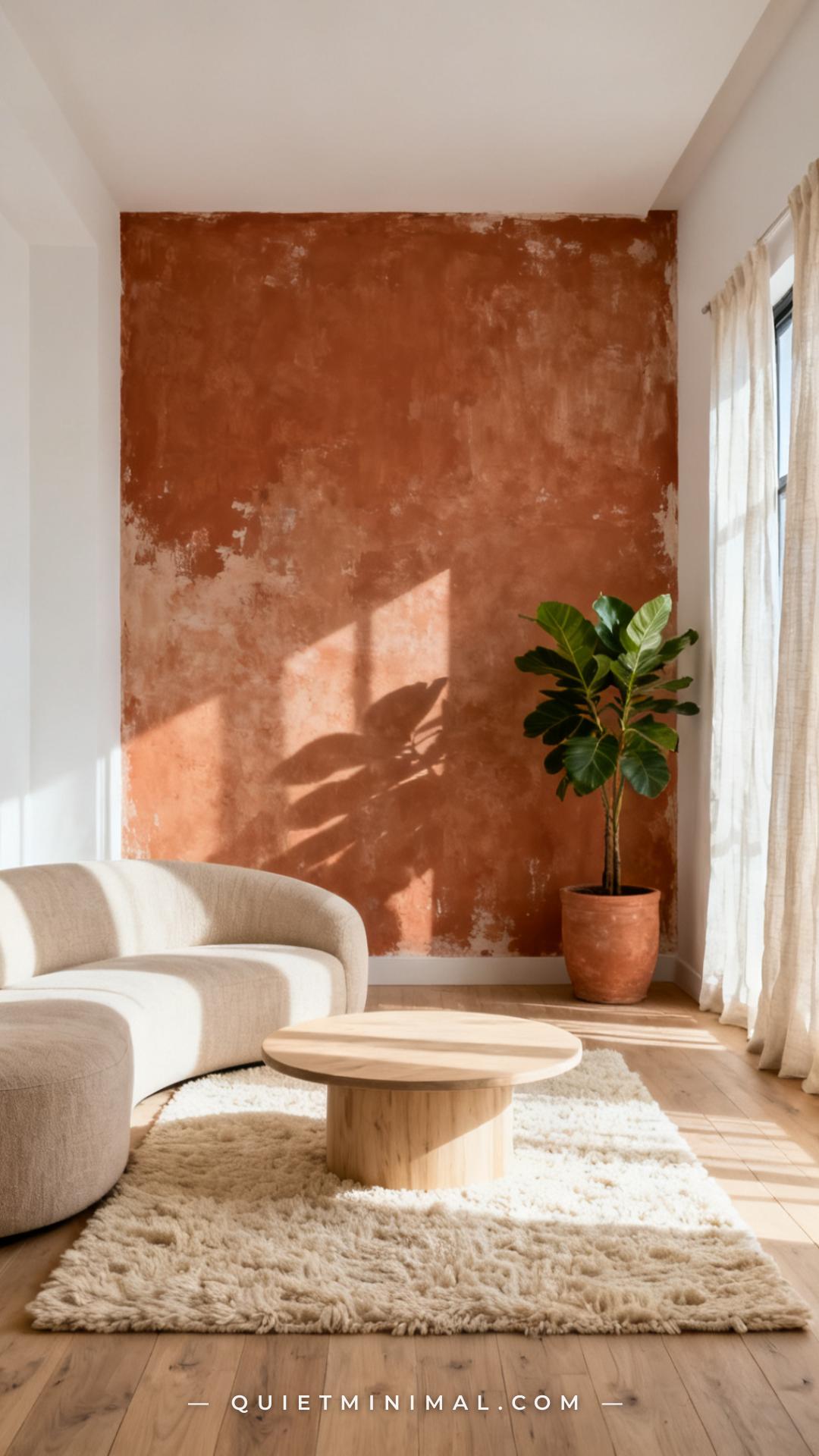
If you’ve searched “accent wall ideas for living rooms” more than twice, you’ve noticed the pattern: shiplap, shiplap, and more shiplap. It was a great look — once. But it’s peaked, it reads as a specific era of home design, and plenty of living rooms deserve something that feels more considered and more now.
The good news is that shiplap was never the point. The point was texture, depth, and a wall that earns attention without a gallery of frames. Every technique on this list does exactly that — through paint, plaster, tile, wood, wallpaper, or molding — without the horizontal planks. Each idea includes honest notes on difficulty, permanence, and whether it works in a rental.
1. Limewash Paint
 Save
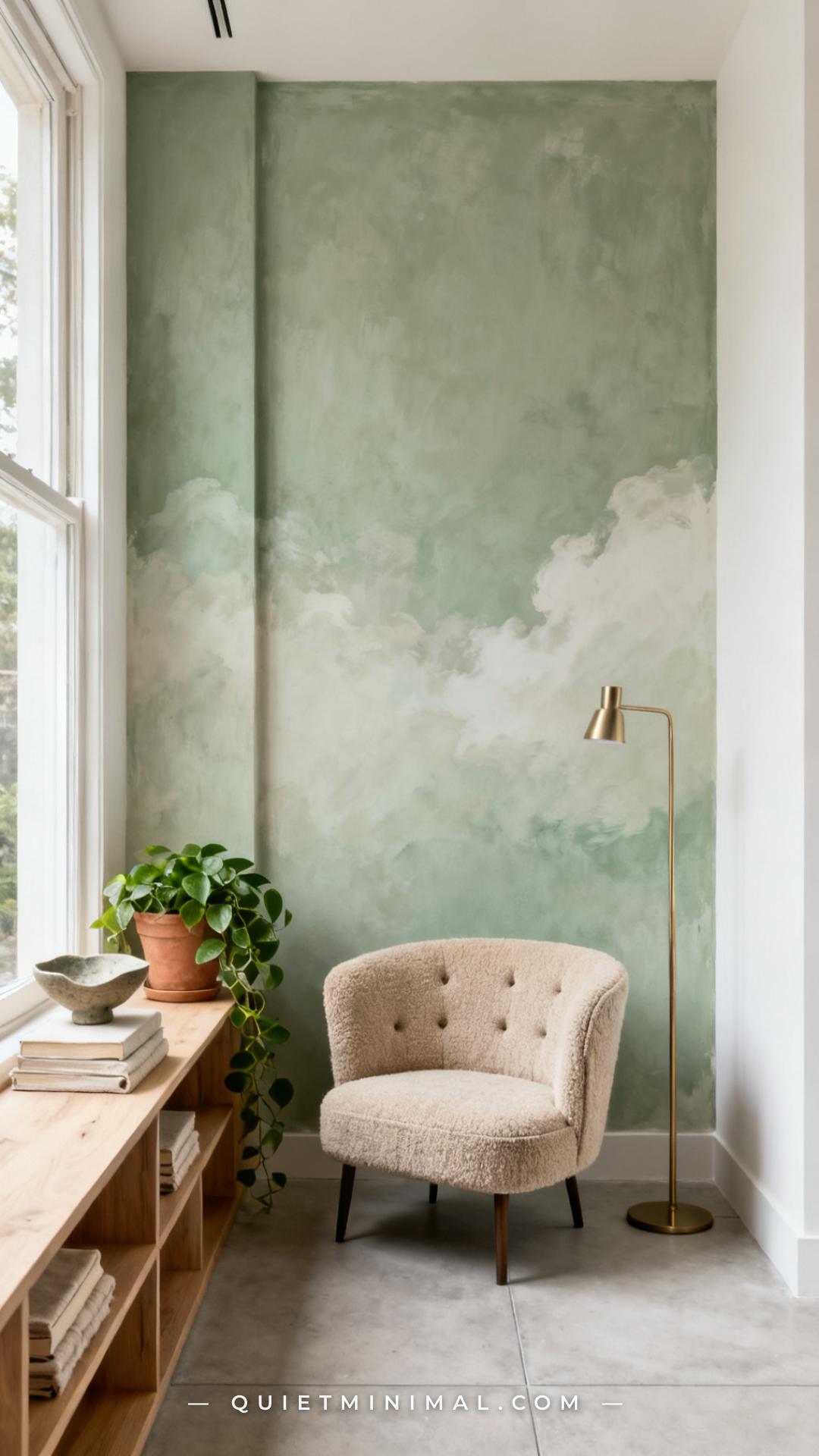
Limewash paint is the technique that most directly replaces shiplap’s visual interest — except instead of horizontal texture, you get organic, layered depth that makes the wall look like it belongs in a European villa. The process involves applying diluted mineral paint in overlapping passes, so the color builds unevenly in the most intentional-looking way possible.
From the guides
You've saved it, wanted it. Here's the how: codes, measurements, order. Your choices make it yours.
 The Japandi Honest PlaybookThe honest version of the style: what to keep, what to skip, and the order to do it in.See inside →
 The Room Refresh PlaybookA repeatable four-step method, room by room, in ten minutes, thirty minutes, or one weekend.See inside →
 Make Any Room Feel Cozy on PurposeWhy some rooms hold people and others empty out, and the moves that change it.See inside →
It works in almost every aesthetic: modern organic, Mediterranean, earthy contemporary, even transitional rooms where you want warmth without being precious about it. The effect is most striking in warm neutrals — dusty rose, sage green, terracotta, aged cream — but it also reads beautifully in deeper tones like forest green or navy when you want drama.
Implementation is more approachable than it looks. Brands like Portola Paints and Roman Decorating Products sell limewash kits that include the tools and step-by-step instructions for DIY application. For renters, there are peel-off limewash-effect wallpaper options that mimic the look, though nothing replicates the actual depth of real mineral paint. Expect a weekend project and light prep work if you’re doing a standard 12-by-9 accent wall.
Key Takeaway: Limewash paint is the highest-impact, lowest-barrier replacement for shiplap — it adds genuine texture and depth without any carpentry.

2. Venetian Plaster
 Save
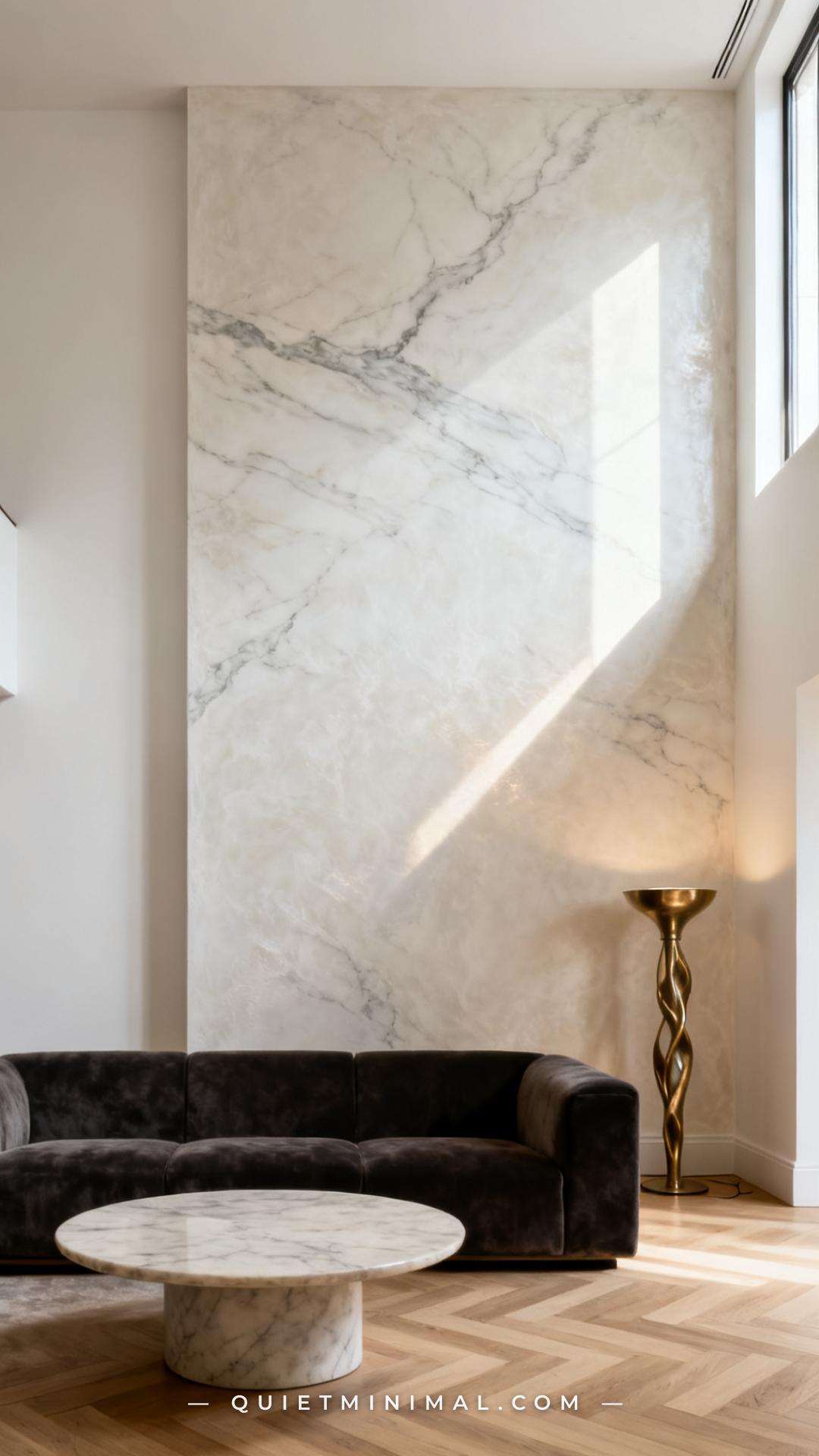
If limewash is the approachable version, Venetian plaster is its more sophisticated sibling. Applied in multiple thin coats and burnished to a subtle sheen, it creates a marbled, almost reflective surface that catches light in a way that flat or textured paint simply cannot achieve. It’s one of the most high-end-looking finishes available, and it genuinely reads as custom craftsmanship — not a trend.
The tradeoff is complexity. True Venetian plaster is a skill-based application, and DIY results vary wildly without practice. If you’re committed to the DIY path, practicing on a large piece of foam board before touching the wall is essential. Most people in this category hire a decorative plaster specialist — expect professional application to run higher per square foot than standard painting, but the result lasts decades.
Venetian plaster works best in rooms that already have some refinement: a sofa with clean lines, minimal clutter, and a consistent material palette. Drop it into a chaotic room and it’ll look out of place. Done right in the right space, it’s a feature that genuinely adds perceived value to a home.
Key Takeaway: Venetian plaster pays off in rooms that can hold a polished, quiet sophistication — it’s not a look to add around clutter.
3. Geometric Tile Feature Wall
 Save
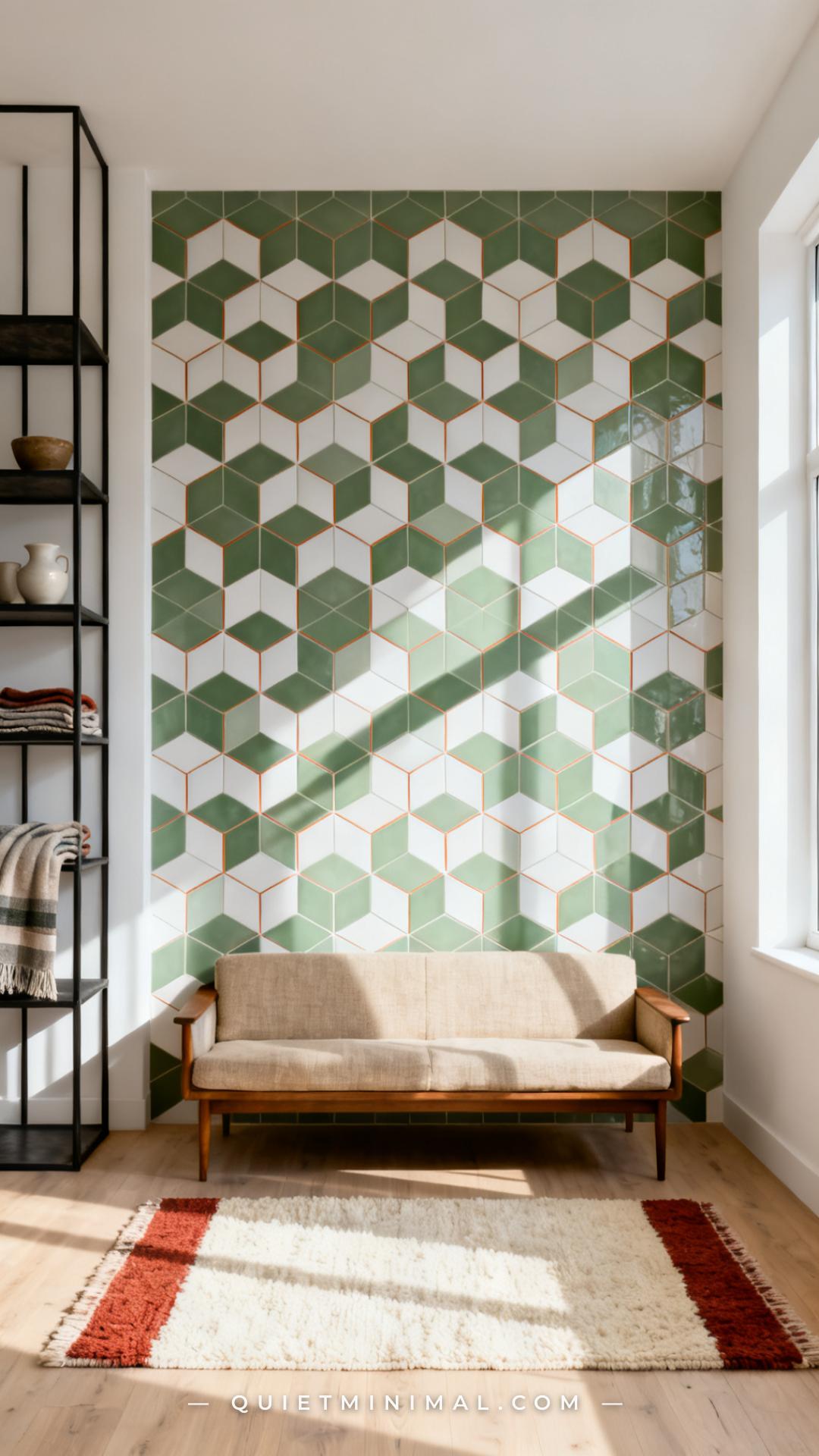
Tile isn’t just for kitchens and bathrooms — and putting a tile feature wall in a living room is one of the most distinctive moves in contemporary interior design right now. The key is scale and restraint: choose large-format tiles (12×24 or bigger) in a geometric or textural pattern, and limit the application to one wall without competing decorative elements fighting for attention.
The aesthetic range is wider than you’d expect. Terracotta zellige-style tiles bring warmth and an artisan quality. Large-format concrete-look tiles feel industrial-modern. Matte geometric patterns in muted colorways work for a contemporary or transitional room. The tile wall behind a TV console — replacing the ubiquitous shiplap TV wall — is an especially strong application because the tile’s visual texture doesn’t compete with the screen the way busy wallpaper might.
This is a permanent installation requiring professional tile-setting unless you have genuine experience with mortar and tile. Rental? Hard pass on real tile. For renters, peel-and-stick tile panels have improved substantially — STICKGOO and similar brands offer options that can approximate the look in a temporary format. But if it’s your wall, committing to real tile is worth every step of the process.
Key Takeaway: A tile accent wall signals genuine design confidence — choose one muted pattern and let it be the room’s one statement.

4. Slat Wood Panels (Not Shiplap)
 Save
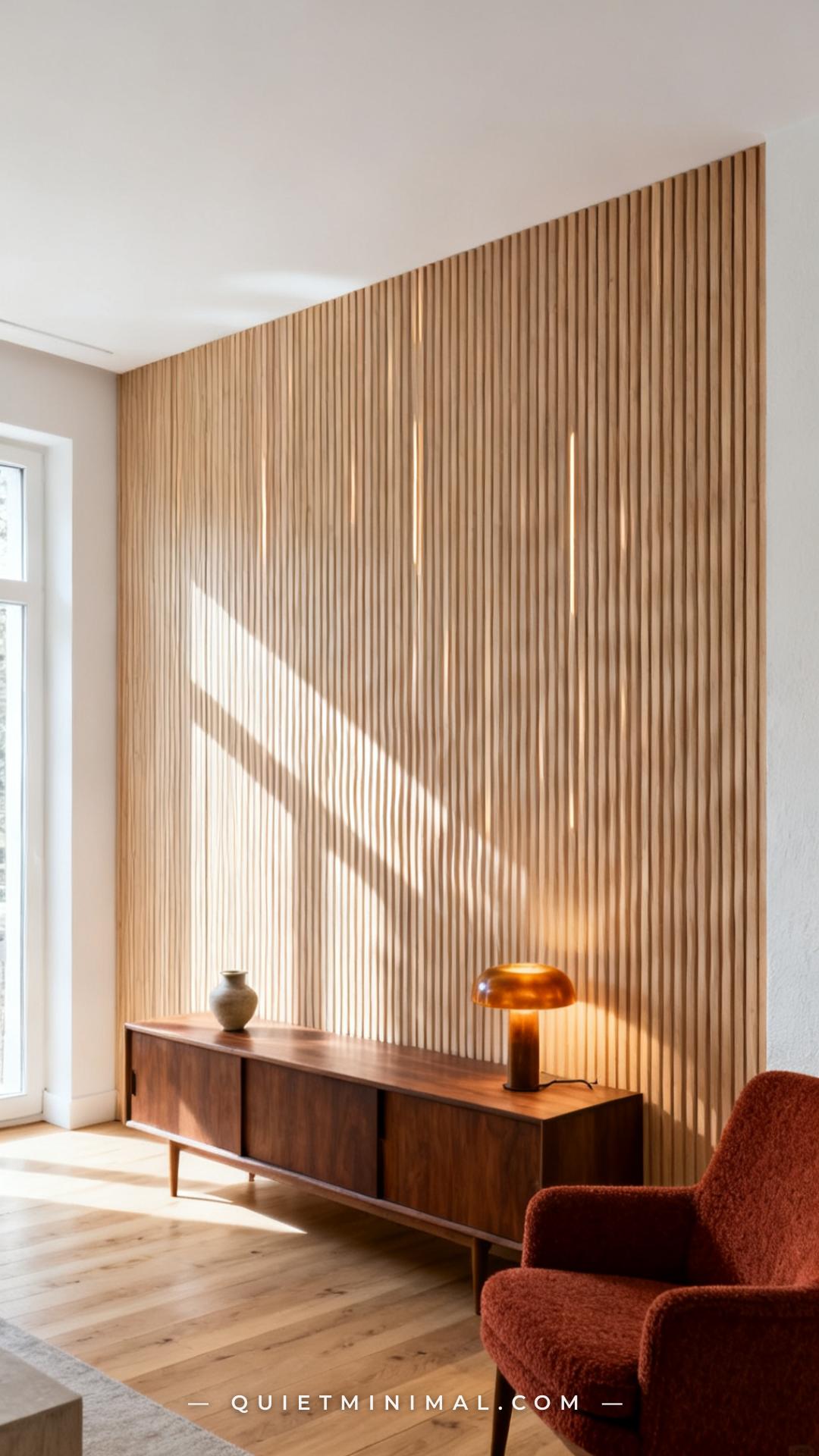
Here’s a distinction worth making clearly: slat wood panels and shiplap are not the same thing. Shiplap is horizontal planks with a distinctive reveal at each seam, deeply associated with the modern farmhouse trend. Slat panels — particularly vertical narrow-profile panels — are an entirely different aesthetic: Scandinavian, contemporary, warm-minimal, and very much in the current moment of interior design.
The look comes from closely-spaced vertical strips of wood (or wood-composite) mounted to a wall. The narrow gaps between slats cast subtle shadows, creating a texture that shifts depending on the light. It’s a technique you’ll see in high-end hotels, Scandinavian-designed showrooms, and contemporary apartments. Done in natural oak or walnut tones, it brings warmth to a room that might otherwise feel cold. Done in a painted matte black, it reads as bold and architectural.
Installation options have improved significantly. Full DIY kits from brands like Woodupp and similar suppliers come pre-spaced and can be adhered directly to drywall. For a rental, some slat panels can be installed with removable mounting systems — check individual manufacturer specs. The three-dimensional texture reads beautifully in photos, which matters for anyone styling their space with sharing or saving in mind.
Key Takeaway: Vertical slat panels give you the warmth and dimensionality of wood without any farmhouse connotation — it’s the upgrade from shiplap, not the replacement.

5. Bold Paint in an Unexpected Color
 Save
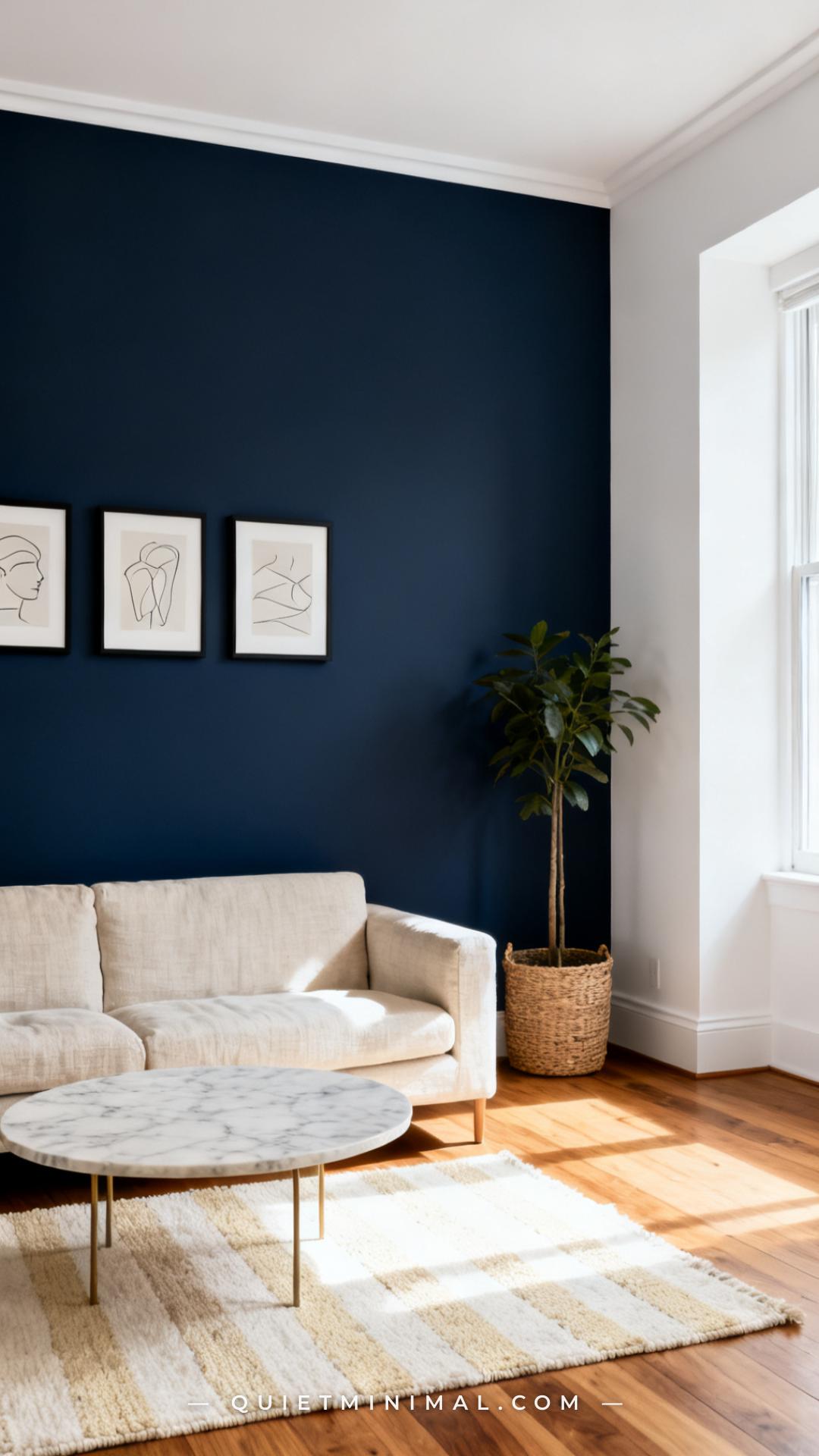
Sometimes the lowest-tech solution is the right one. A single wall painted in a truly confident, saturated color — not a whisper of blush, but a deep forest green, a rich navy, an almost-black charcoal — does something that textured techniques can’t: it resets the entire room’s visual weight instantly and costs under $80.
The mistake most people make with bold accent wall paint is choosing a color that’s “bold for a neutral person” — a dusty sage or a medium-depth blue that doesn’t commit. The walls that actually work are the ones where the color is genuinely decisive. Benjamin Moore’s Newburyport Blue (HC-155), Sherwin-Williams’ Caviar (SW 6990), and Farrow & Ball’s Hague Blue (No. 30) are all examples of colors that design professionals reach for on accent walls because they have enough depth to read as intentional rather than accidental.
For renters, this is the most achievable option on the list — one gallon of paint, proper taping at the edges, and a weekend afternoon. When you move, you paint it back. The investment is minimal; the impact is not.
Key Takeaway: A genuinely bold paint color — not a muted one — is the fastest, cheapest accent wall technique, and the one most likely to change how the whole room feels.

6. Grasscloth or Textured Wallpaper
 Save
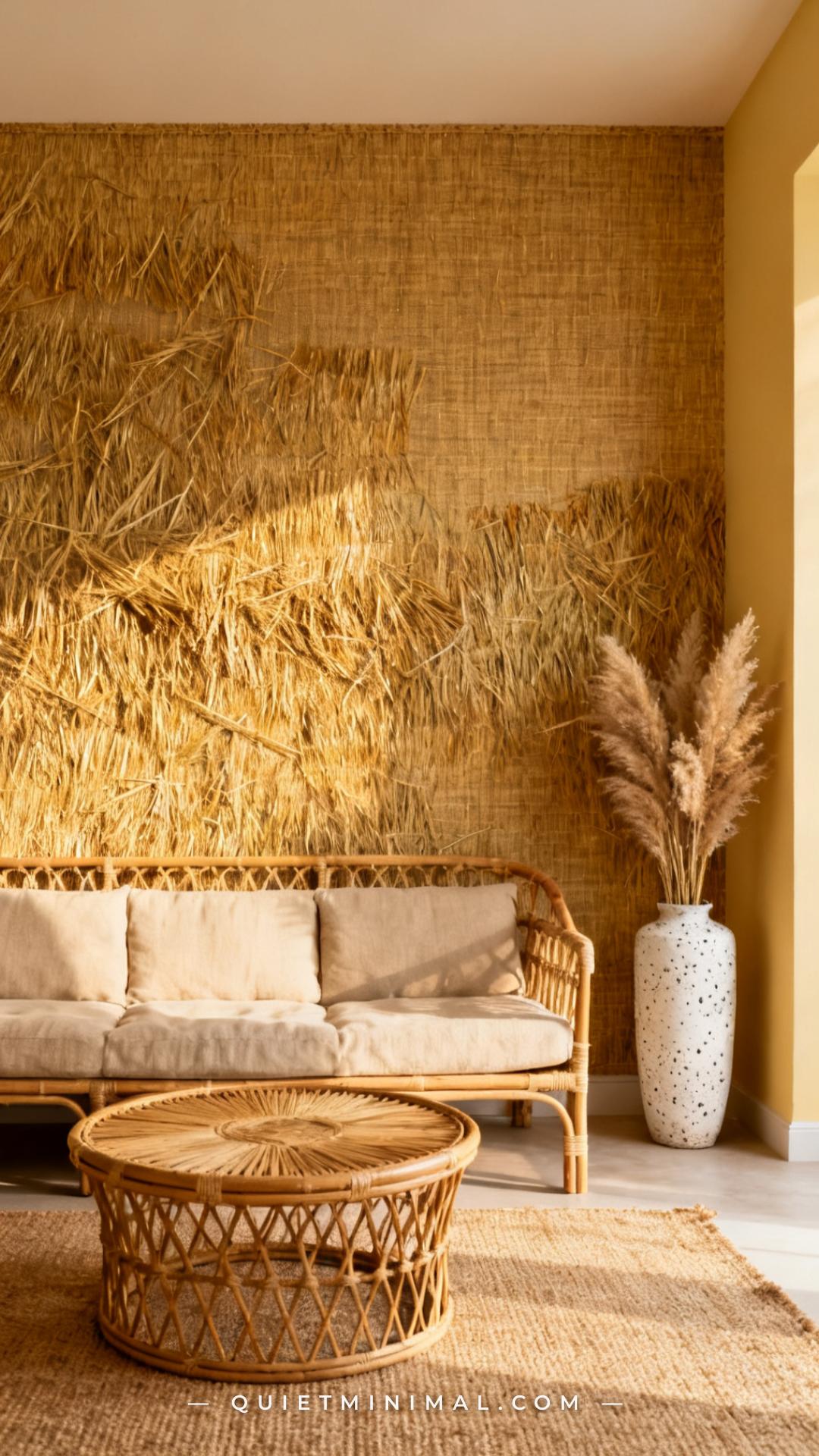
Wallpaper had a reputation problem for years — it meant floral grandma prints and the nightmare of removal. The current generation of grasscloth and textural wallpapers is a completely different product category. Natural fiber wallpapers woven from jute, seagrass, and sisal bring organic texture that paint cannot replicate. More recently, textured vinyl and fabric-backed papers offer similar visual warmth with significantly easier installation and removal.
Grasscloth specifically has an almost tactile quality in a room — it absorbs sound slightly, creates visual warmth without adding color, and photographs beautifully. It pairs particularly well with earthy, organic interiors: rattan furniture, ceramic accents, natural wood tones, linen upholstery. In a more contemporary room, woven-look papers with a tighter, more uniform pattern feel clean and architectural.
Practical note: true grasscloth is not a rental-friendly option. It adheres firmly and comes down with the wall finish in many cases. Peel-and-stick textured wallpapers have improved to the point where several patterns are genuinely convincing — brands like Tempaper and RoomMates offer grasscloth-look options that are manageable for temporary installations.
Key Takeaway: Grasscloth wallpaper adds a layer of organic warmth that no paint technique can replicate — treat it as a long-term investment in the right kind of room.

7. Panel Molding and Wainscoting
 Save
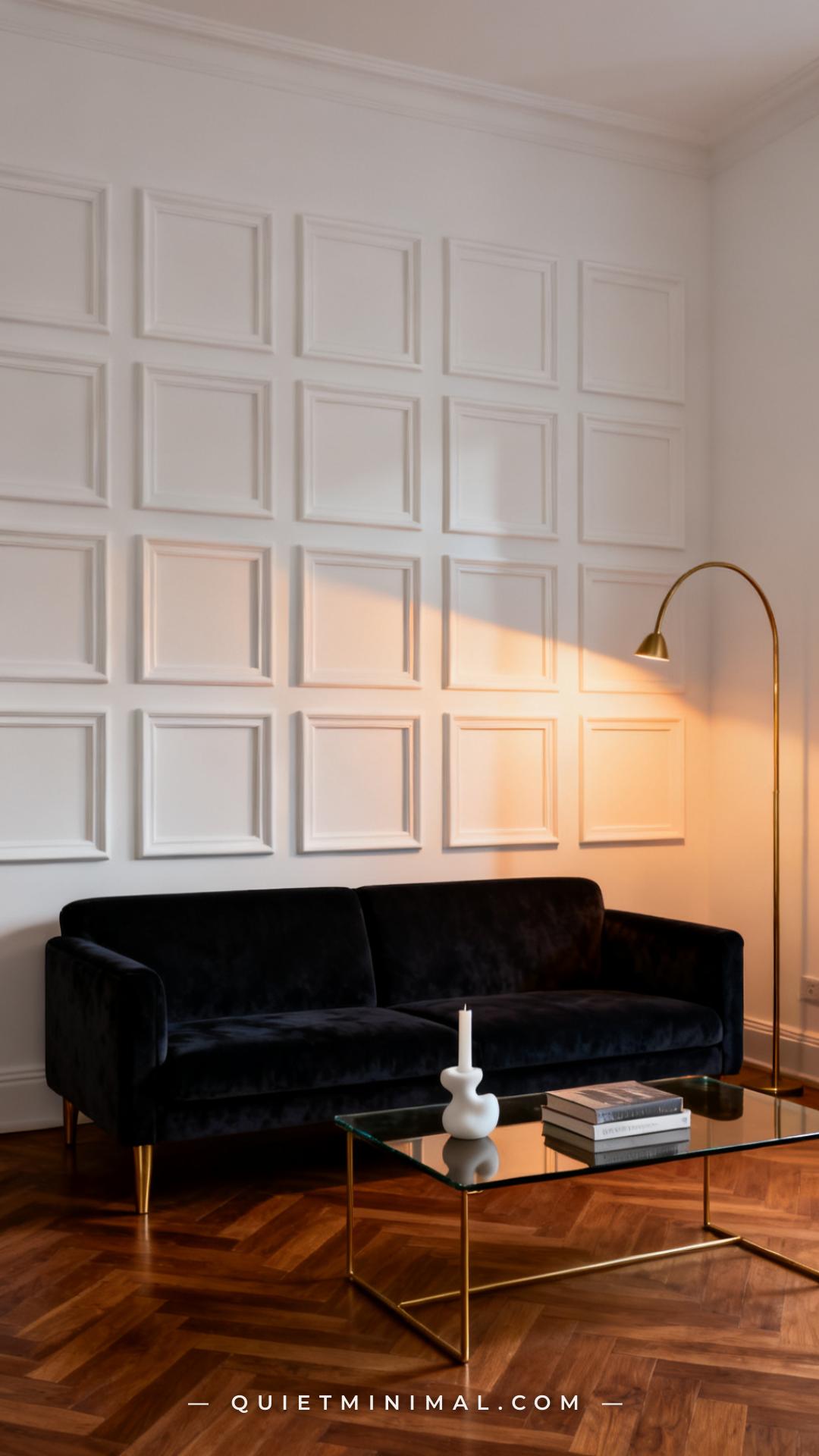
Panel molding is one of the techniques that makes a room feel genuinely architectural — not decorated, but built. Applied in a grid pattern across a single wall, MDF or solid wood trim pieces create a classical or contemporary framing effect that can read as traditional, transitional, or even modern depending on the profile of the molding and the color used.
The most common application is a full grid of rectangular panels running floor to ceiling. But the design decisions within that framework are significant: the scale of the panels (large, airy rectangles read modern; smaller, tighter grids read traditional), the profile of the molding (flat batten strips feel contemporary; cove or ogee profiles feel classical), and the color (painting everything one color — wall and molding — looks sleek and architectural; painting the wall a different color inside the panels adds depth and visual interest).
From the guides
You've saved it, wanted it. Here's the how: codes, measurements, order. Your choices make it yours.
The Japandi Honest PlaybookThe honest version of the style: what to keep, what to skip, and the order to do it in.See inside →The Room Refresh PlaybookA repeatable four-step method, room by room, in ten minutes, thirty minutes, or one weekend.See inside →Make Any Room Feel Cozy on PurposeWhy some rooms hold people and others empty out, and the moves that change it.See inside →Implementation requires precise measuring, a miter saw for clean corner angles, and a nail gun or strong construction adhesive. DIY difficulty is medium — the skills aren’t exotic, but precision matters. Pre-primed MDF molding is available at most home improvement stores for a relatively modest cost per linear foot. For renters, this is firmly in the “probably not worth it to undo” category unless your landlord gives a green light.
Key Takeaway: Panel molding transforms a flat wall into a design feature without requiring any special finishes — the architecture does the work.

8. Limewash Brick or Faux Brick Texture
 Save
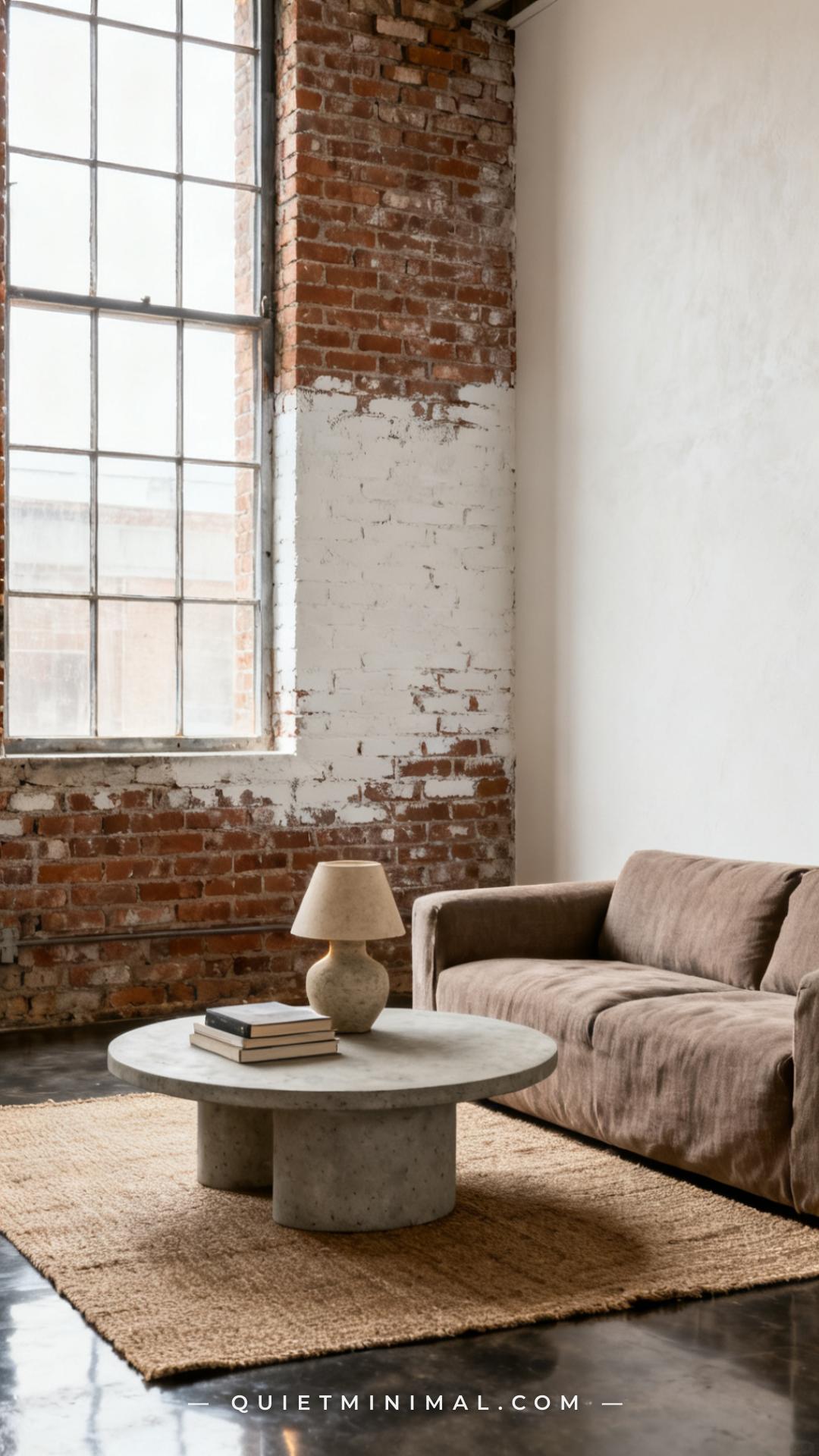
If you have an actual brick wall in your living room, whitewashing or limewashing it is one of the most dramatic improvements a single product and an afternoon can create. Raw brick reads as industrial or dated depending on the color; limewashed brick reads as editorial, historically sophisticated, and current — the kind of wall that appears in high-end Brooklyn loft shoots and European flat tours equally.
The technique is simple: dilute white latex paint 50/50 with water, apply it with a large brush in irregular strokes, and wipe back with a damp cloth before it dries to let the brick texture and some of the original color show through. The amount of wipe-back determines how bright or how subtle the effect is. You can also use a dedicated limewash product for a more mineral, authentic texture.
For rooms without real brick, several faux brick products are worth considering. Brick veneer panels (real thin-cut brick on a backing board) are the highest-fidelity option and can be applied to any wall. Faux brick peel-and-stick panels have improved and are now convincing at normal viewing distance, particularly in warmer textures. Either approach gets the material quality of brick without the structural commitment.
Key Takeaway: Limewashed brick — real or faux — hits a specific visual note that no other technique replicates: warm, textured, and quietly historic.

9. Arched Plaster Niche or Painted Arch
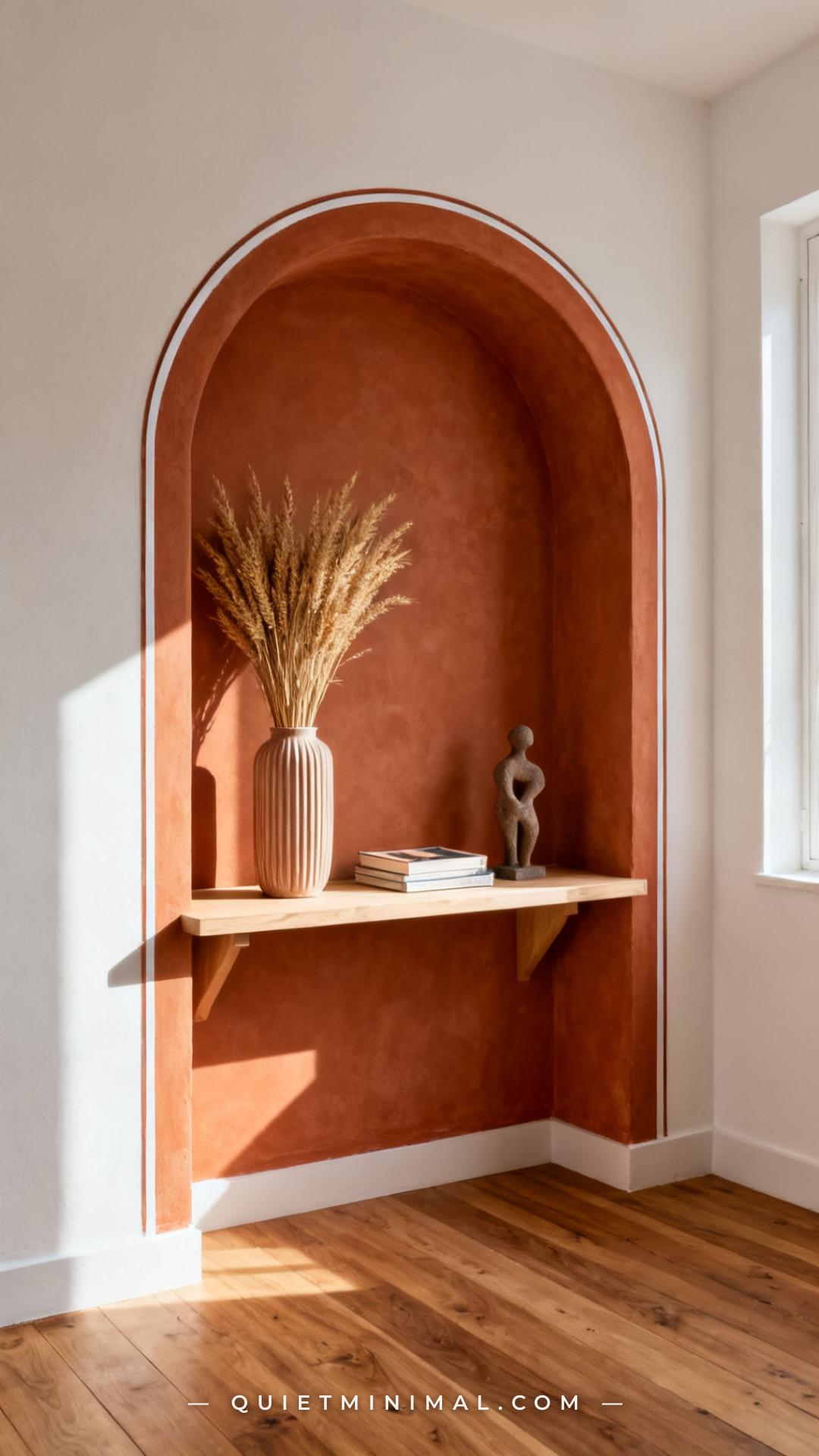 Save
A painted arch on a wall is exactly the kind of move that makes guests ask if you hired a decorator — and it’s achievable with a pencil, a piece of string, painter’s tape, and a weekend afternoon. The technique involves measuring and hand-drawing a large arch directly onto the wall, taping it carefully, and painting the interior in a contrasting or complementary color. Used above a console table or floating shelf, it creates the illusion of a built-in architectural niche.
This works especially well in Mediterranean-influenced interiors, global-modern rooms, or any space that wants warmth and curve without furniture spending. The scale should be confident: a 6-foot-wide arch that goes nearly to the ceiling reads as architecture; a small arch at eye level reads as craft project. Go large or don’t bother.
For an elevated version, a real plaster half-arch or niche — built out from the wall by a few inches in drywall, finished in smooth plaster, and painted or limewashed — takes this from a paint trick to a genuine architectural feature. It’s a weekend project for someone comfortable with basic drywall work. For everyone else, the painted version is the right starting point.
Key Takeaway: A large-scale painted arch costs less than a throw pillow and looks like a deliberate architectural decision — size is everything.

10. Bookmatched Stone Slab or Stone-Look Panel
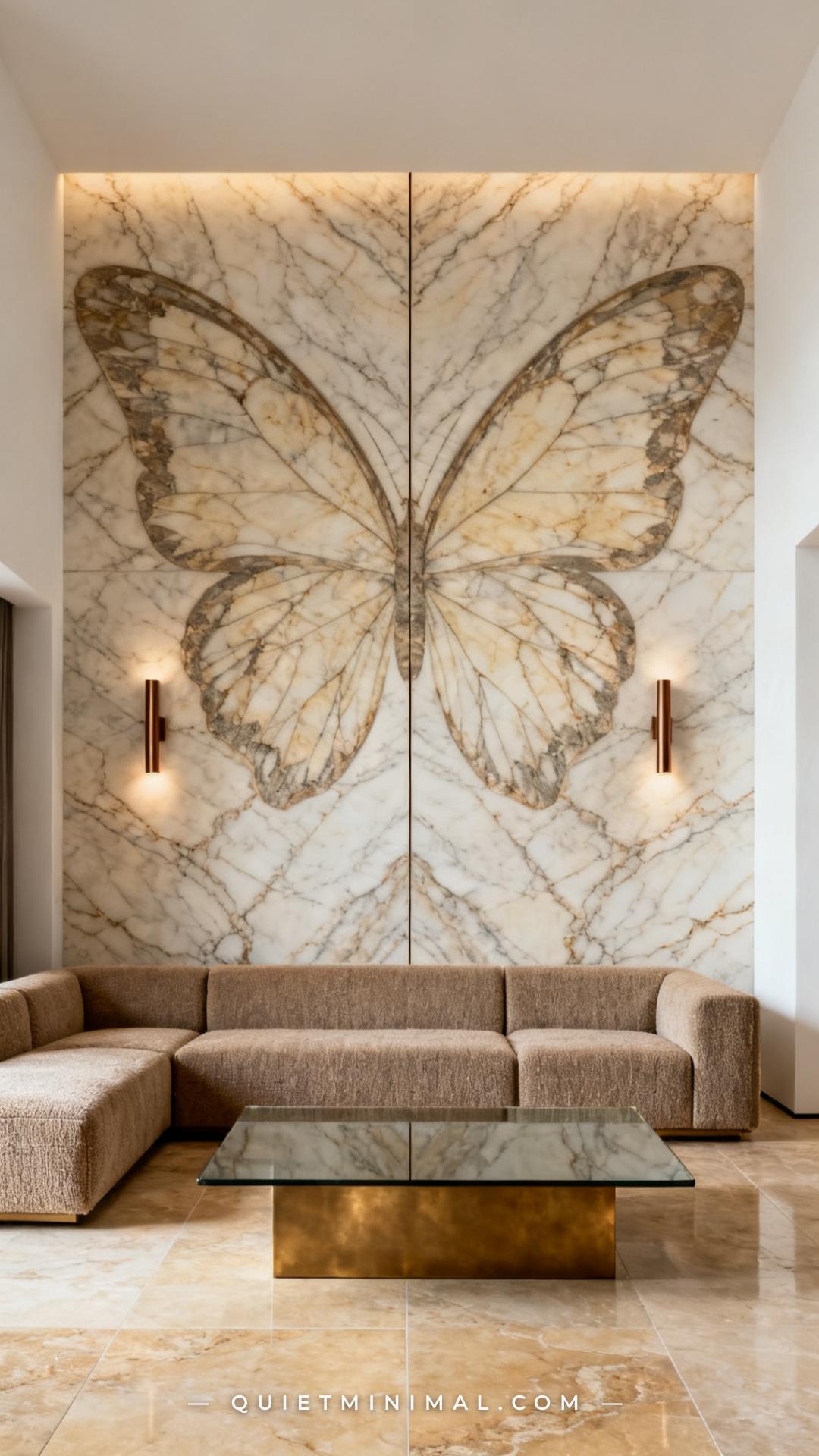 Save
Bookmatched stone — where two slabs are placed mirror-image side by side so the natural veining creates a symmetrical butterfly pattern — is one of the most impressive accent wall techniques available. Traditionally limited to very high-end projects with natural stone, the emergence of large-format porcelain and engineered stone panels that replicate bookmatching at a fraction of the cost has made this look accessible for projects at a range of budgets.
The visual impact is in the symmetry and scale. The veining pattern on each panel is the focal point, so a minimalist room approach is essential — furniture in front of the wall should be simple, low-profile, and not competing for attention. This wall wants to be seen. A single sofa and a slim coffee table are appropriate companions; a cluttered entertainment setup is not.
Installation of stone-look porcelain panels requires professional tile-setting skills and is a permanent installation — rental-incompatible. However, some engineered stone panels designed for feature walls come in a click-together dry format that’s more installation-friendly, though these are higher-cost products. If budget is the primary constraint, large-format stone-look contact paper exists as a short-term experiment — it won’t fool anyone up close, but for renters who want to test the aesthetic, it’s a starting point.
Key Takeaway: Bookmatched stone or stone-look panels work only if the rest of the room is simplified to let the wall speak — give it the space it needs.

11. Fabric Wall Panels or Upholstered Wall
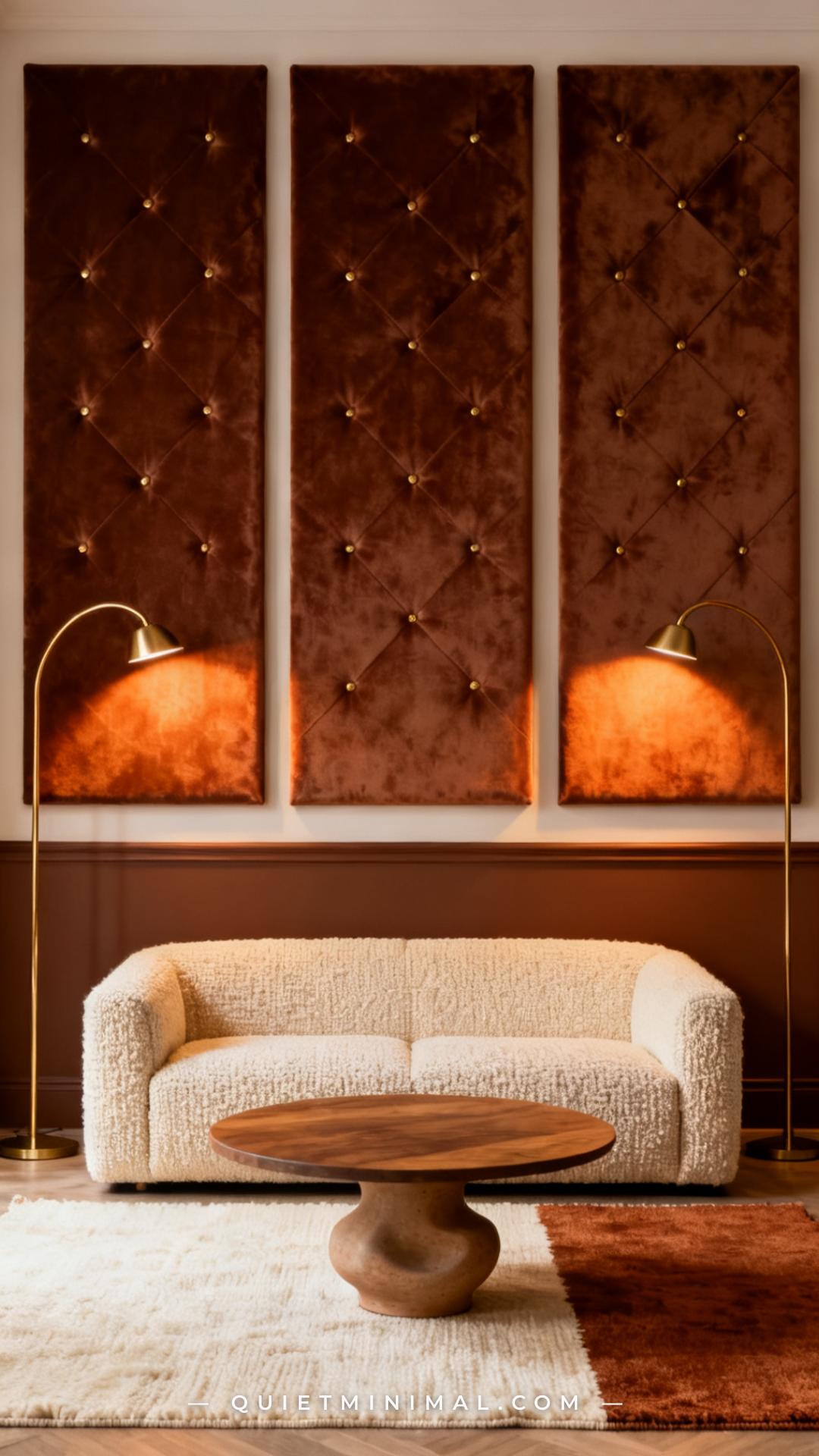 Save
Upholstered or fabric wall panels are the acoustic, tactile, and visual upgrade that brings a living room closest to a boutique hotel suite. The technique involves mounting panels — either custom-fabricated or DIY using batting, fabric, and a wood frame — directly to the wall. The effect is dimensional, sound-absorbing, and genuinely luxurious in a way that paint and wallpaper cannot achieve.
The aesthetic range is wider than the technique suggests. Tight linen-covered panels in a neutral tone create a clean, quiet backdrop that lets furniture do the talking. Deep velvet tufted panels in jewel tones go full maximalist glamour. Leather or faux-leather panels in caramel or cognac feel mid-century and editorial. The common thread is that the fabric adds tactile warmth that reads clearly even in photographs.
DIY fabrication is more approachable than it sounds. The basic unit is a 1×2-inch wood frame, wrapped in 2 inches of high-density upholstery foam, covered in batting, then finished fabric pulled taut and stapled on the back. Hang it like a painting. The total material cost per panel is modest, and a set of three large panels covering a standard wall is a weekend project. For renters, command strips rated for the panel weight can make this entirely removable — making it one of the few truly textural accent wall options that’s renter-safe.
Key Takeaway: Fabric wall panels are the most tactile accent wall technique available — and one of the few genuinely renter-friendly options with real depth and dimension.

Choosing the Right Technique for Your Room
Every idea on this list is a real upgrade over shiplap — but the right choice depends on three things: how long you’re staying (rental versus owned), what your room already contains (simple furniture benefits from bolder walls; busier rooms need quieter backdrops), and how much effort you’re genuinely willing to commit before interest fades.
The fastest path to a result you’ll love: pick the technique that makes you stop scrolling. Not the one with the highest Pinterest saves. The one you actually picture in your specific room, with your existing sofa and your particular light. Narrow it to two options, look at both in real rooms (not renders), and commit. The worst accent wall is the one you plan forever but never start.
From the guides
You've saved it, wanted it. Here's the how: codes, measurements, order. Your choices make it yours.
The Japandi Honest PlaybookThe honest version of the style: what to keep, what to skip, and the order to do it in.See inside →The Room Refresh PlaybookA repeatable four-step method, room by room, in ten minutes, thirty minutes, or one weekend.See inside →Make Any Room Feel Cozy on PurposeWhy some rooms hold people and others empty out, and the moves that change it.See inside → Save


