Georgia
Your home gym should feel like a room you designed on purpose — not a corner of the basement where equipment goes to collect dust. The problem with most home gyms isn’t the gear or the square footage. It’s that they look like a storage problem instead of a dedicated space. When a room feels chaotic or visually uninspiring, motivation quietly evaporates before you even lace up your shoes. The good news is that two design moves — pegboard storage systems and potted plants — do more to shift the atmosphere of a home gym than almost anything else you can add. They bring in order, texture, life, and personality without requiring a renovation. This article covers 15 specific, actionable ideas that layer these elements into a gym that looks intentional enough to photograph and functional enough to actually use every day.
1. Install a Full-Panel Pegboard Wall as Your Command Center
 Save
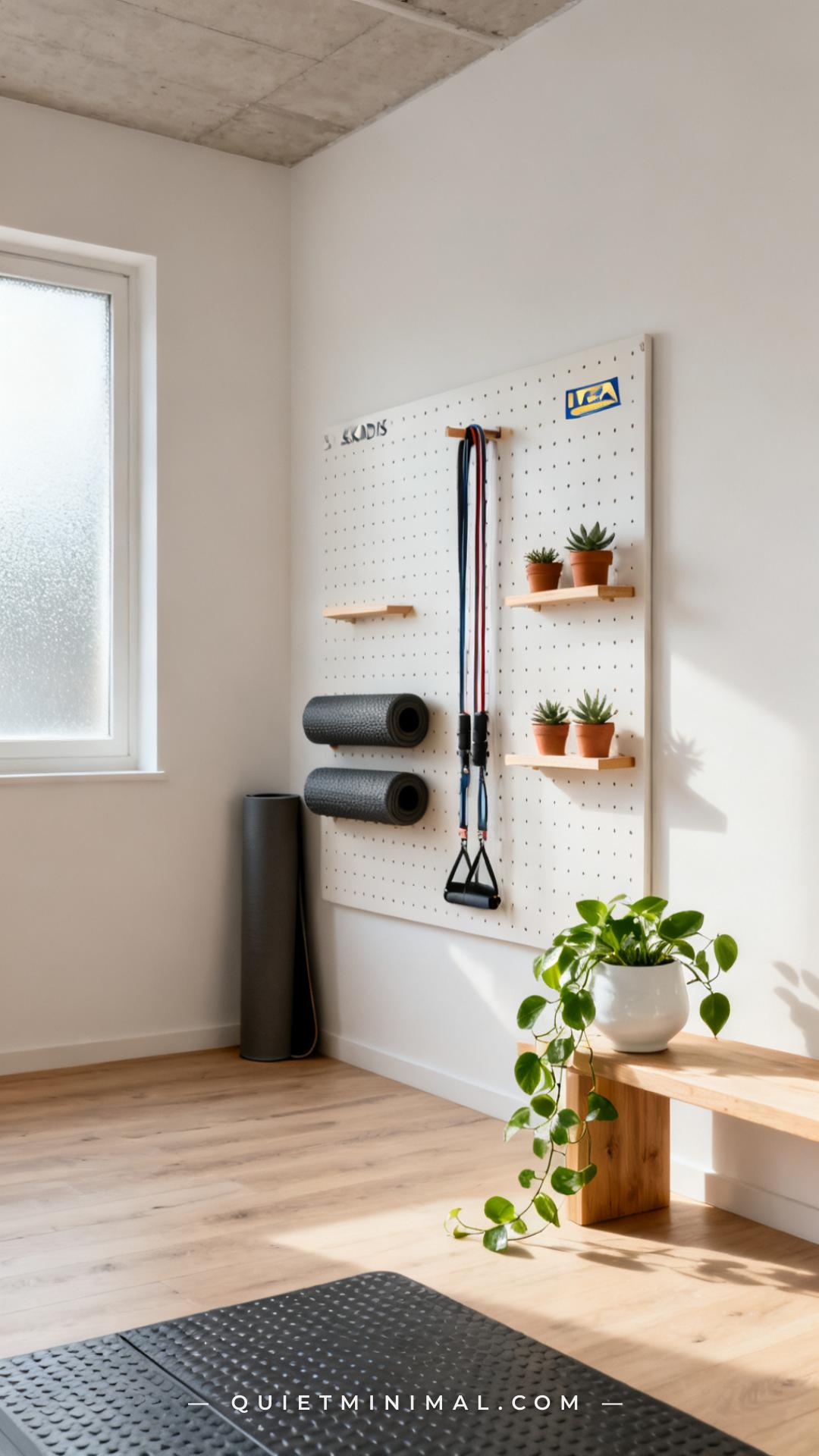
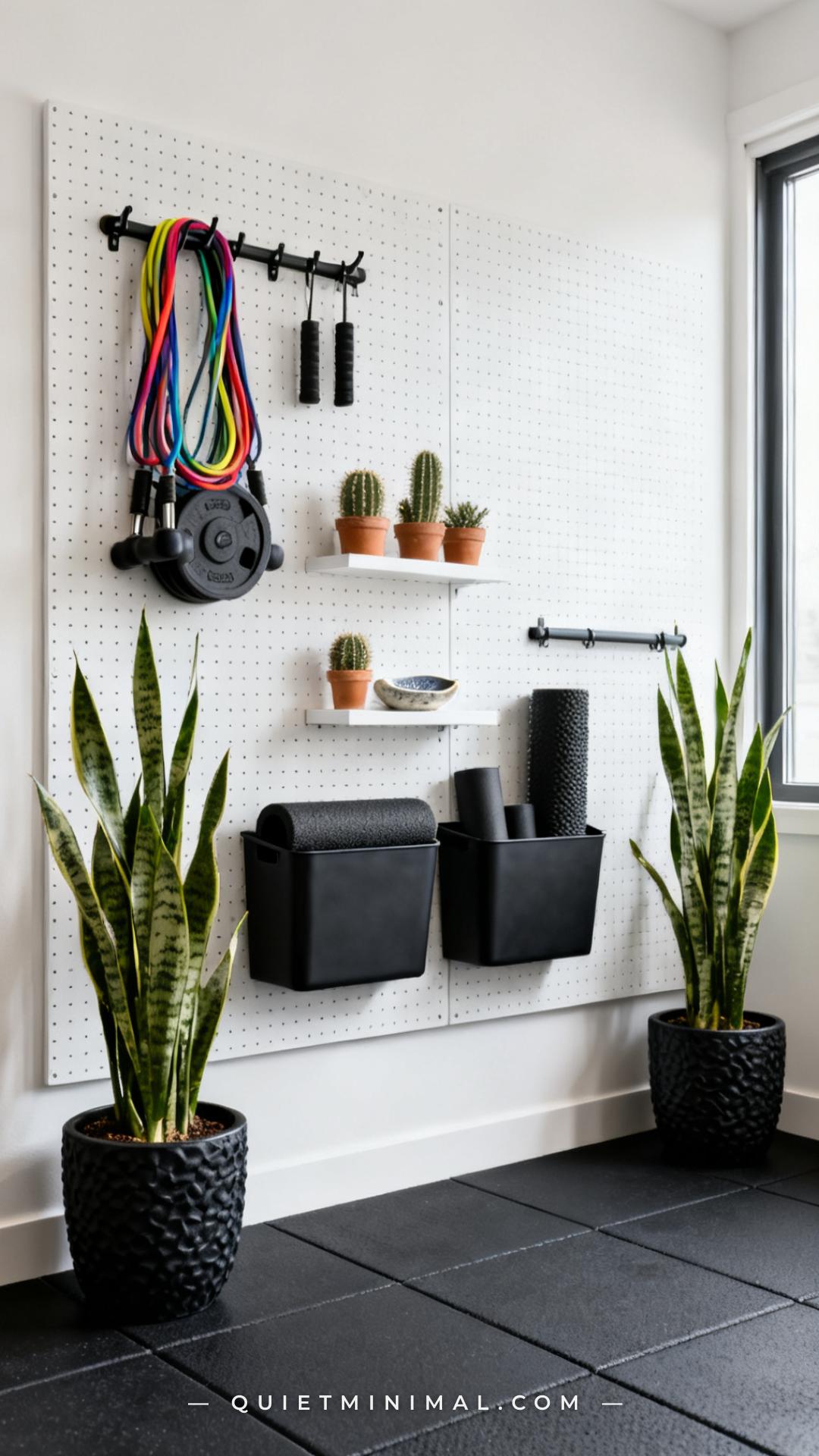
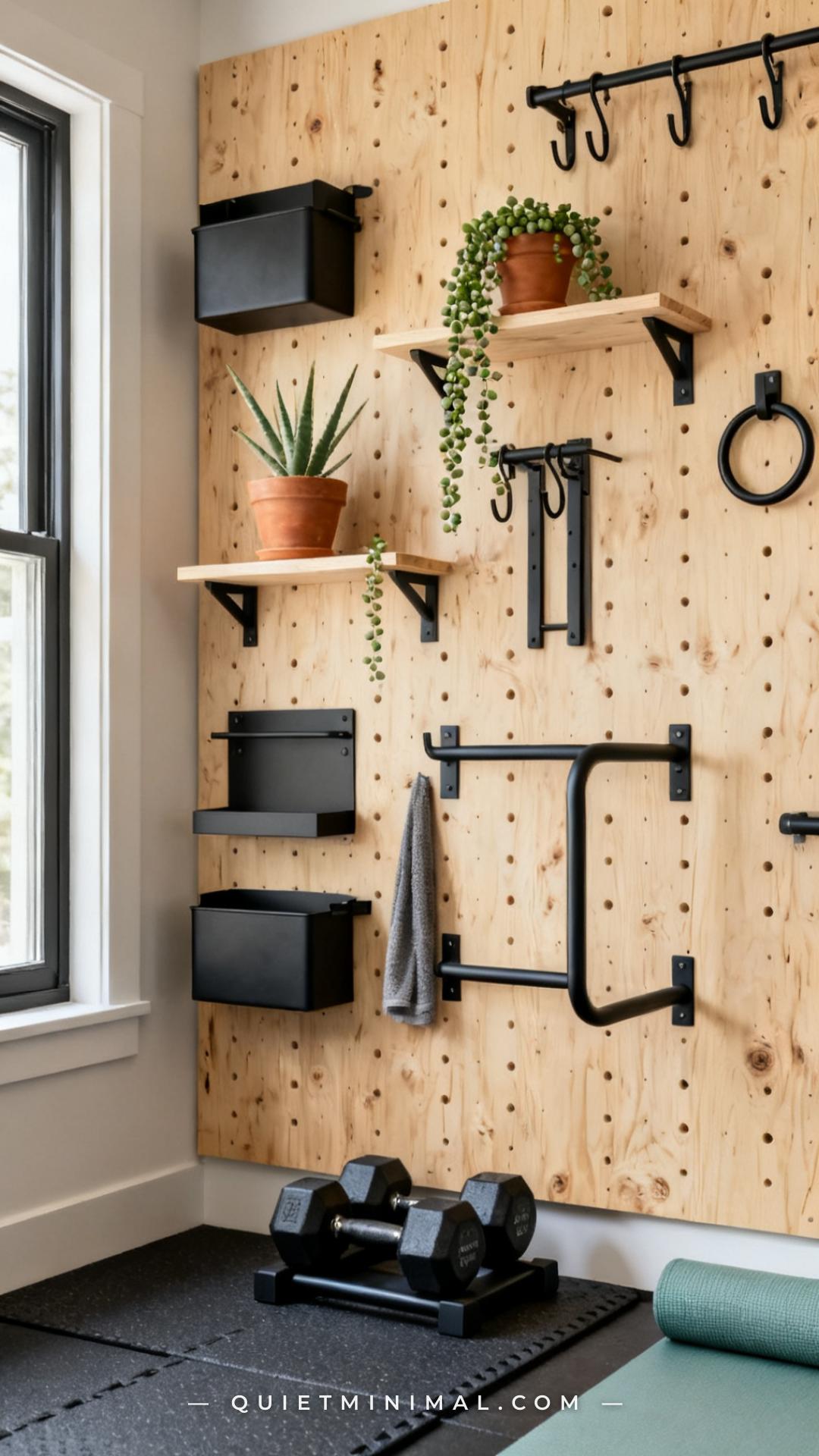
The most transformative single move in an aesthetic home gym is dedicating one full wall to pegboard. Not a small panel — a full, floor-to-near-ceiling installation that functions as your room’s organizational backbone. The reason this works visually is that pegboard enforces intentionality: everything has a designated spot, which means the room never looks cluttered even when it’s fully equipped. Choose a matte white or natural wood-finish board to keep the palette clean, and use matching hook and bin hardware throughout so the wall reads as a system rather than a collection of random hangers.
The plant integration happens naturally on a full pegboard wall. Shallow wooden shelves at mid-height hold small potted succulents or trailing pothos, which add a living layer to what would otherwise be a flat grid of equipment. The visual rhythm of organic plant shapes against the geometric pegboard grid is one of the most Pinterest-friendly combinations in the home gym space right now.
From the guides
You've saved it, wanted it. Here's the how: codes, measurements, order. Your choices make it yours.
 The Japandi Honest PlaybookThe honest version of the style: what to keep, what to skip, and the order to do it in.See inside →
 The Room Refresh PlaybookA repeatable four-step method, room by room, in ten minutes, thirty minutes, or one weekend.See inside →
 Make Any Room Feel Cozy on PurposeWhy some rooms hold people and others empty out, and the moves that change it.See inside →
Key Takeaway: A full-panel pegboard wall is the single highest-impact aesthetic upgrade in a home gym — it solves storage, adds texture, and creates a natural home for plants all at once.

2. Use Color-Sorted Resistance Bands on Pegboard Hooks
 Save
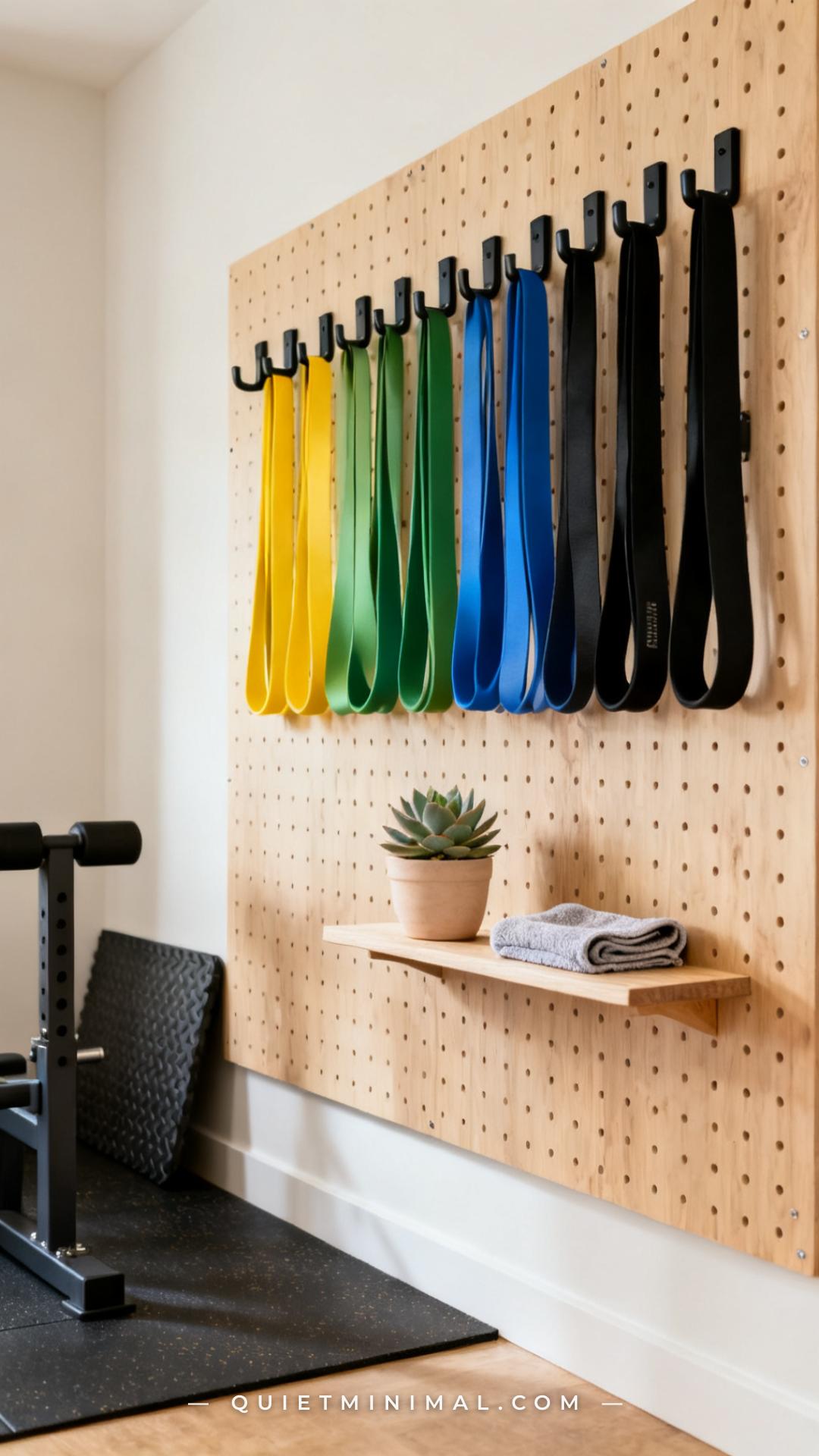
Resistance bands are one of the most visually chaotic elements in a home gym when stored badly — tangled in a bin or hanging in a knotted mess. Sorting them by resistance level and color on dedicated pegboard J-hooks does two things at once: it makes them faster to grab mid-workout and it creates a satisfying color-gradient display on the wall that actually looks designed. Group them light to heavy, left to right, and use consistent hook spacing so the row reads as intentional.
Adding a small potted plant directly to the shelf below the band row is a simple trick that elevates the composition. A single echeveria or small aloe in a terracotta or pale clay pot introduces warmth and contrast against the rubber or nylon textures of the bands.
Key Takeaway: Sorting resistance bands by color on evenly spaced pegboard hooks turns functional storage into a visual detail worth photographing.

3. Add a Trailing Pothos to Your Highest Pegboard Shelf
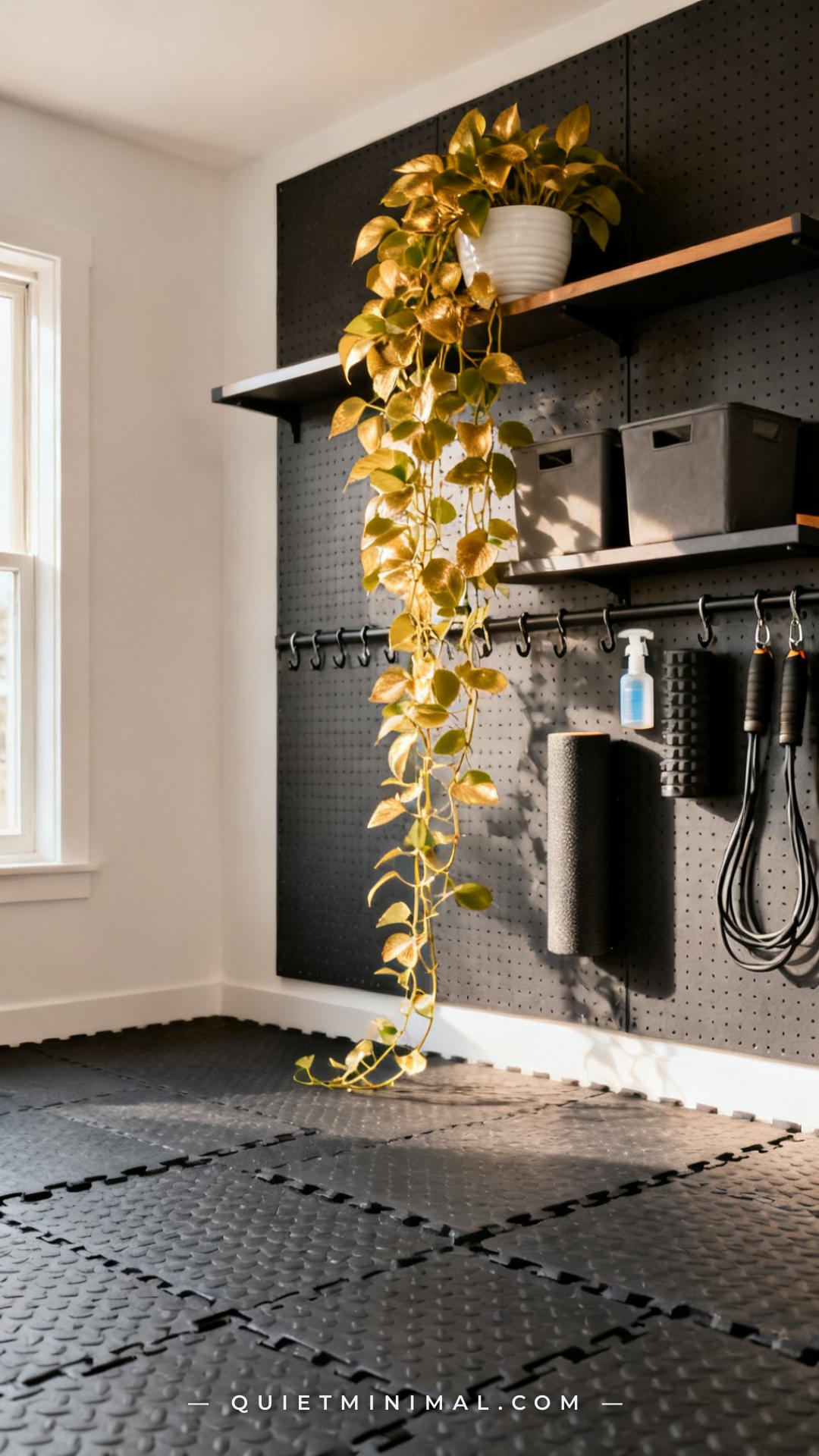 Save
The pothos is the single best plant for a home gym pegboard setup, and placing it on the highest shelf produces the most dramatic visual payoff. As the vines trail downward over two or three feet, they naturally soften the hard geometric grid of the pegboard — the organic movement of the leaves creates contrast against the rigid rows of hooks and bins. Golden pothos and marble queen pothos are both tolerant of lower light and inconsistent watering, which matters in a space that isn’t your primary living area.
Use a simple white ceramic or neutral terracotta pot. The plant itself is the visual element — the pot should recede, not compete. Secure the shelf hardware with weight-rated anchors if the pot is large, and allow the vines to grow untrimmed for the most lush, editorial look.
Key Takeaway: A trailing pothos placed on the top shelf of a pegboard wall softens the entire composition and requires almost no maintenance, making it the highest-return plant choice for a gym space.

4. Choose Rubber Flooring in a Neutral Tone That Works with Plants
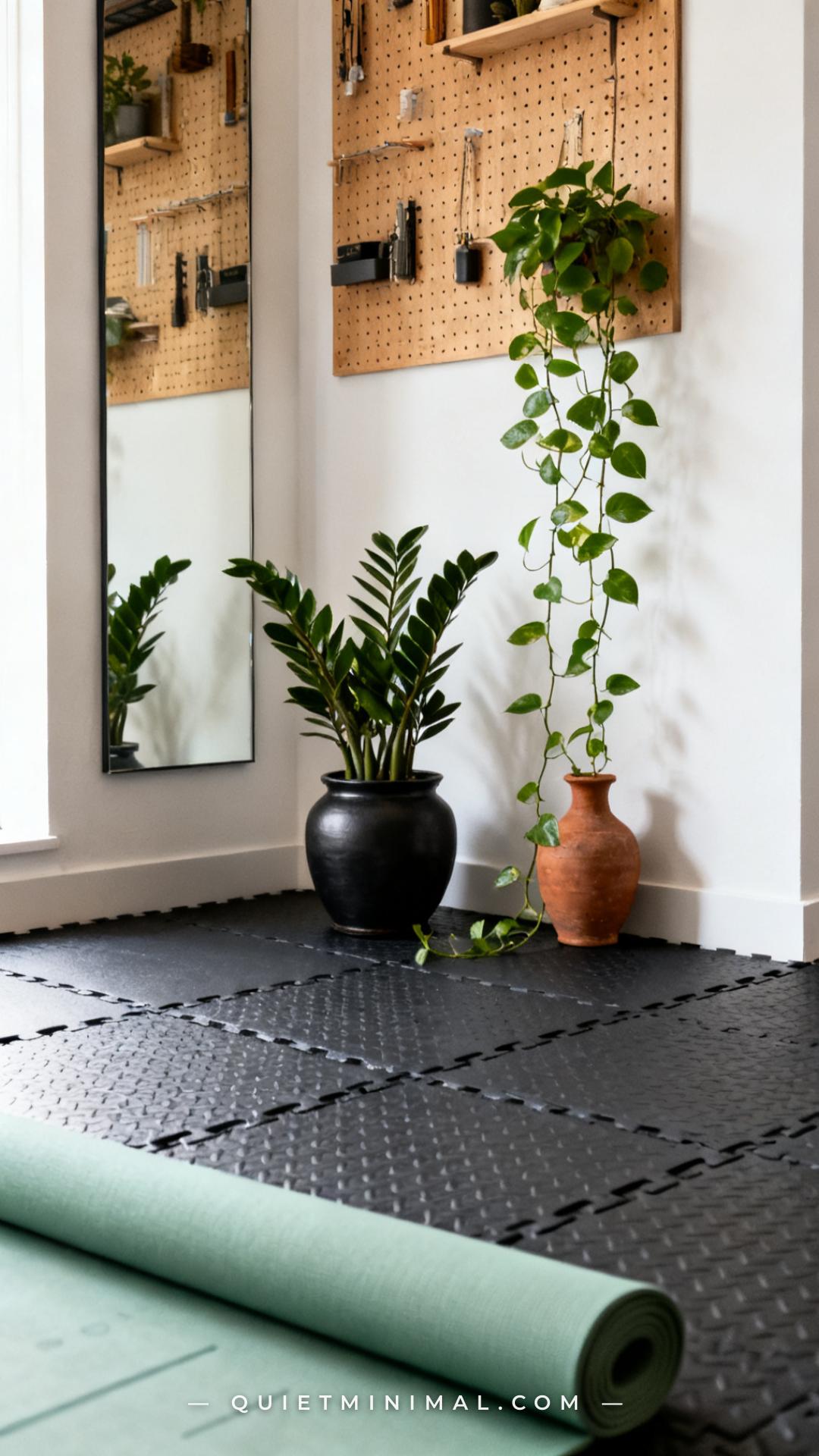 Save
Flooring is the backdrop for everything else in a home gym, including your plant pots, and the color choice matters more than most guides acknowledge. Jet black rubber tile makes dark pots and deep green plants disappear into the floor — the contrast you need for the aesthetic to read comes from a medium-toned charcoal, a warm taupe, or a speckled gray. These neutrals ground the space without competing with the organic colors of plants or the organized color of equipment on the wall.
Interlocking rubber tile is the practical standard — it’s durable, reduces impact noise, and can be installed without tools. For a more elevated look, choose tiles with a smooth-face or fine-texture finish rather than the raised-diamond pattern, which skews more utilitarian and is harder to photograph well.
Key Takeaway: The right rubber flooring color is the backdrop for your plant pots and pegboard wall — a mid-toned charcoal or warm gray creates the contrast that makes the whole aesthetic work.

5. Use a Snake Plant as a Floor-Level Anchor in the Corner
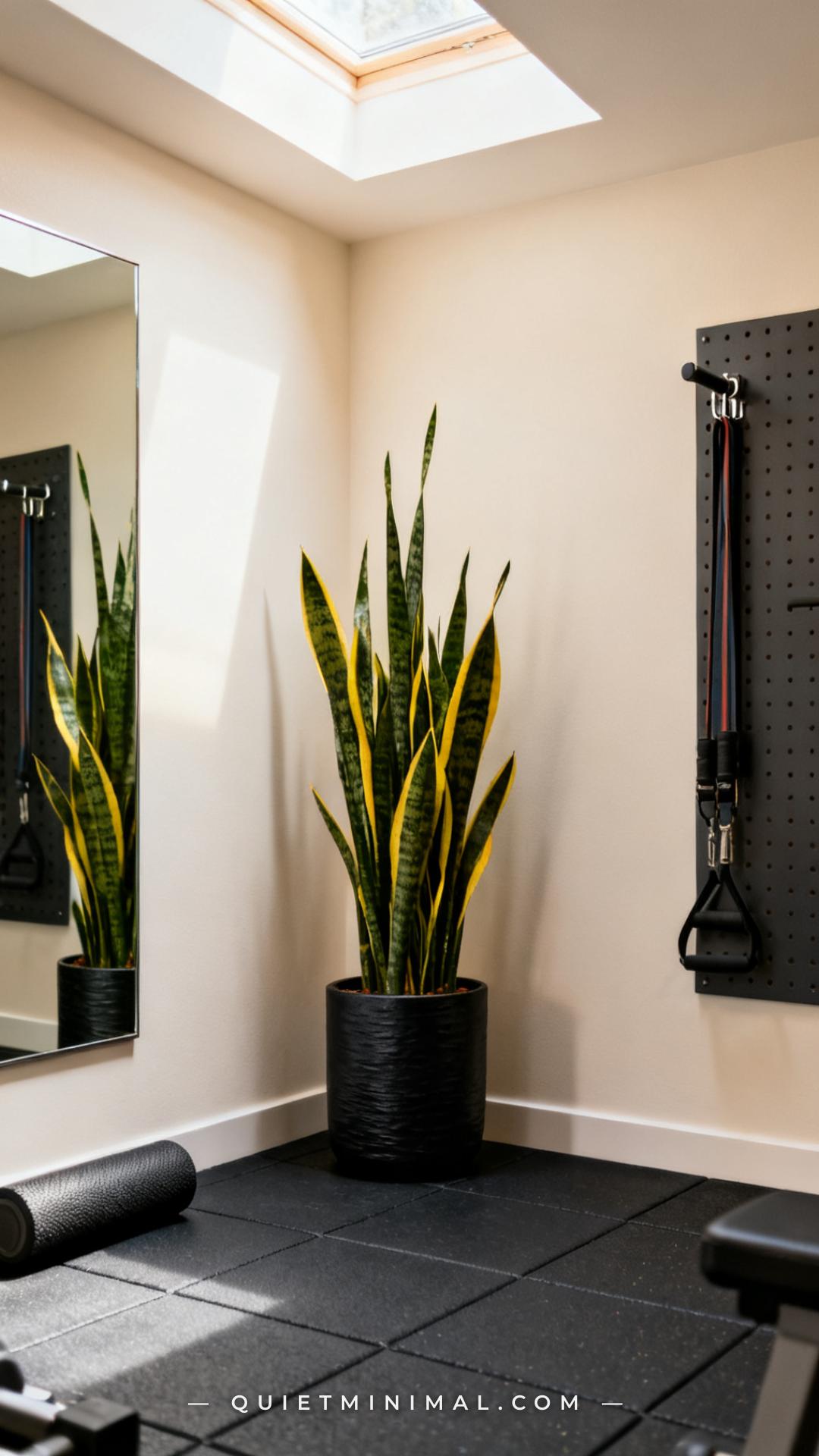 Save
Floor-level plants anchor a home gym visually the same way a rug anchors a living room — they give the eye a place to land and define the room’s lower boundary. The snake plant earns its place in a gym specifically because it tolerates low light, dry air, and irregular watering better than almost any other plant with a strong architectural presence. Its upright, sword-like leaves create vertical emphasis that complements the linear organization of a pegboard wall without requiring any horizontal surface to sit on.
Position one large snake plant in the corner opposite your main mirror. The reflection doubles its visual presence without taking up additional floor space. A matte black or raw concrete pot grounds the plant in the aesthetic without adding visual clutter.
Key Takeaway: A single large snake plant in a corner opposite your mirror delivers maximum visual impact with minimum maintenance — it’s the most forgiving floor plant for a gym environment.

6. Mount a Full-Length Mirror Beside the Pegboard Wall
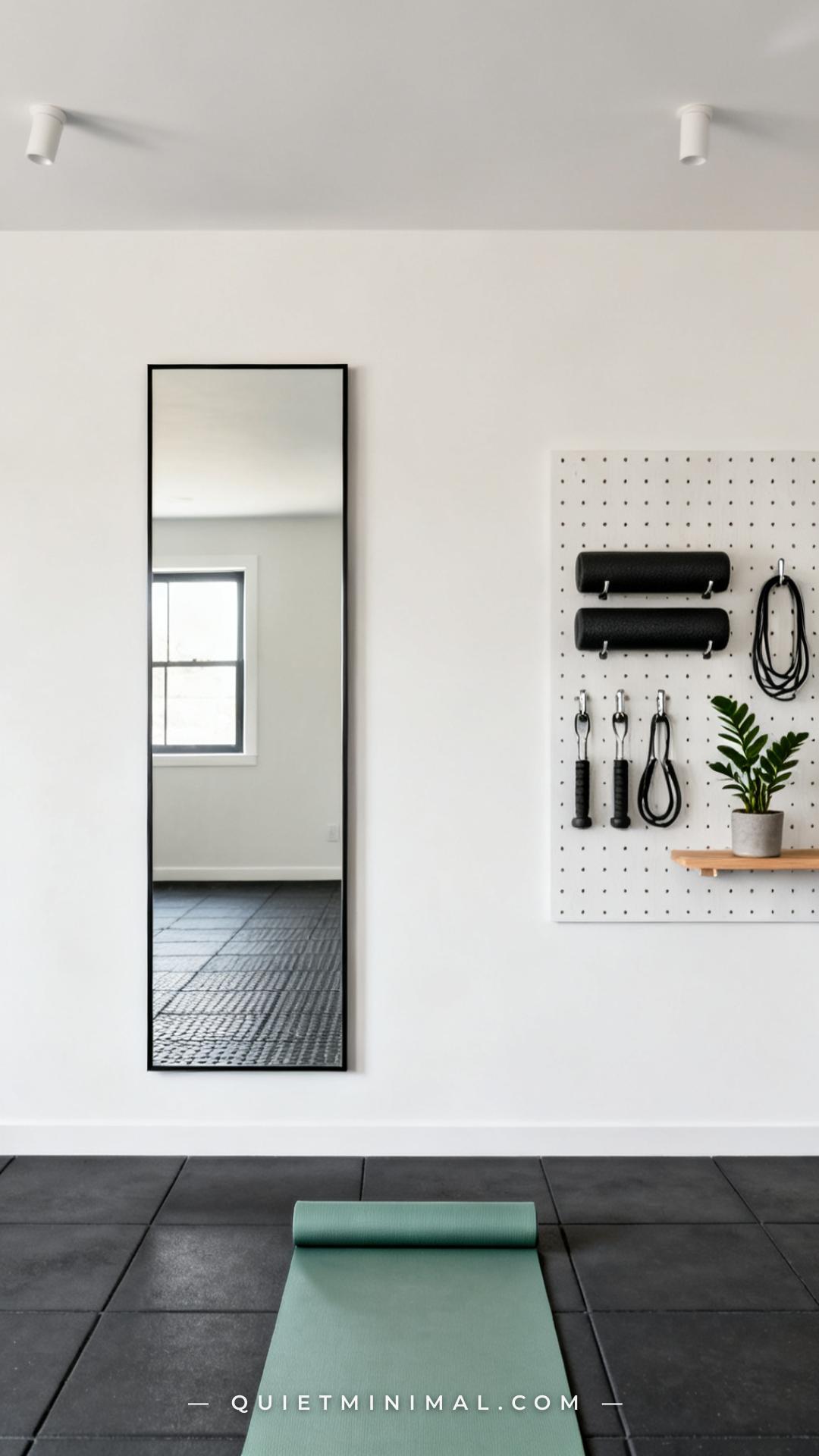 Save
A full-length mirror adjacent to the pegboard wall serves two practical purposes — form-checking during workouts and visually expanding the room — but it also has an underappreciated aesthetic function: it reflects the plant arrangements on the opposite side of the gym back into the frame, effectively doubling the green in the space without adding more pots. If you’ve placed a snake plant or trailing pothos across from the mirror, the reflection turns a single plant moment into a lush, layered scene.
Choose a frame in matte black or raw metal to match the pegboard hardware. Frameless mirrors read as more spa-like but are harder to reposition if the room layout changes. Lean-style mirrors can work in a gym if secured with a wall anchor; flush-mount is more stable for a room with any dynamic movement.
Key Takeaway: Placing a full-length mirror adjacent to — not across from — your pegboard wall creates a reflection that amplifies your plant styling and makes the room feel twice as large.

7. Build a Pegboard Shelf Row for Small Terracotta Pots
 Save
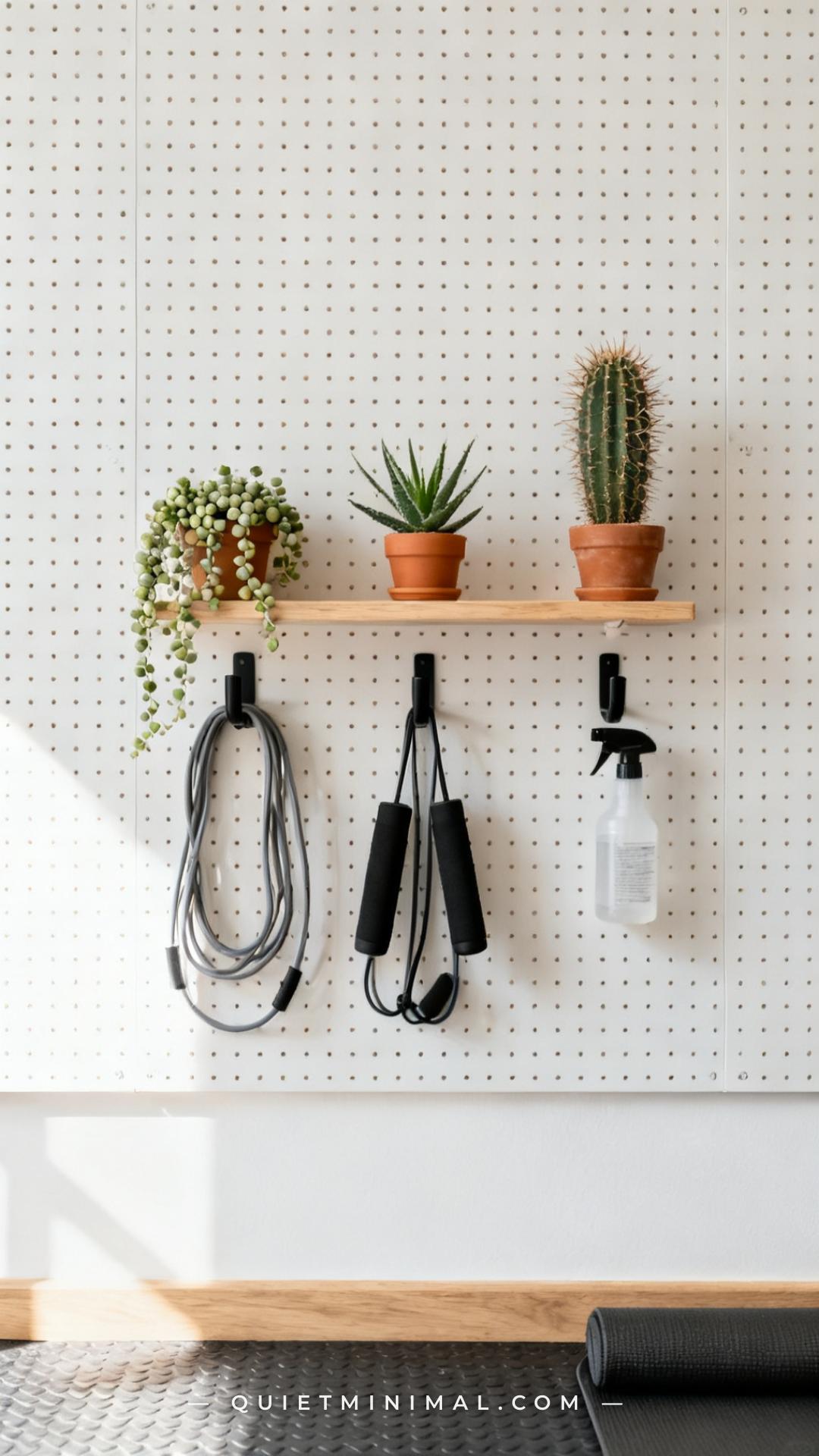
A dedicated row of small wooden shelves along the middle of the pegboard creates what designers call a “gallery moment” — a curated arrangement that reads as intentional rather than incidental. When each shelf holds a single terracotta pot with a different low-maintenance plant (succulents, small aloe, cactus varieties), the row produces a consistent botanical rhythm that elevates the entire wall.
Terracotta specifically earns its place here because the warm rust-orange tone sits beautifully against the neutral backdrop of a white or natural-wood pegboard, and the unglazed surface breathes well, which succulents prefer. Keep pots at the same diameter for visual consistency — three 3-inch pots spaced evenly read as designed; three random-sized pots read as accumulated.
Key Takeaway: A row of evenly spaced terracotta pots on dedicated pegboard shelves is one of the fastest ways to make a home gym wall look curated rather than utilitarian.

8. Add Warm LED Strip Lighting Behind the Pegboard Panel
 Save
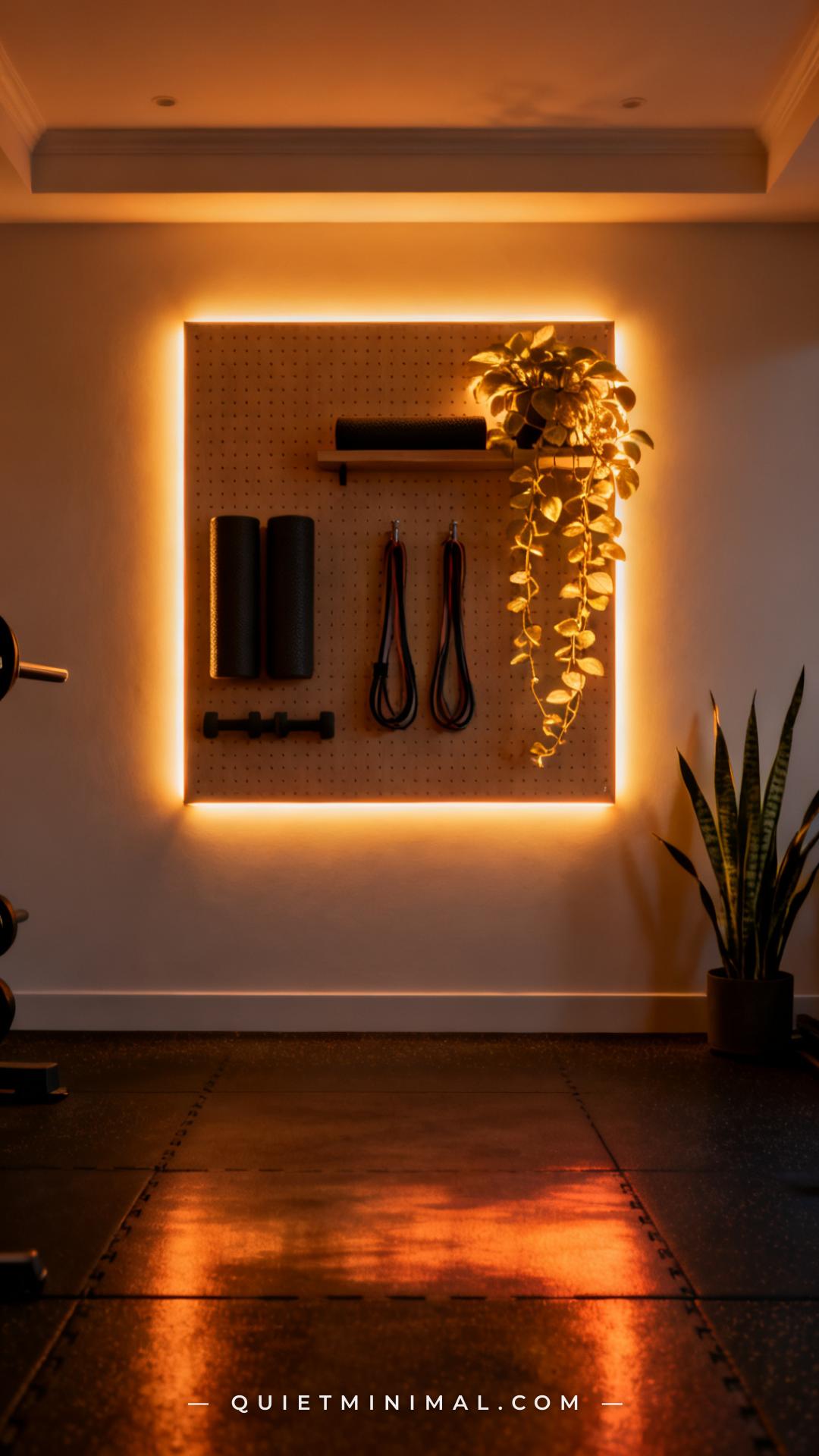
Backlighting a pegboard panel by mounting it one inch off the wall and running a warm LED strip around the perimeter creates one of the most dramatic lighting effects you can achieve in a home gym with minimal effort. The glow outlines the board, adds depth to the wall, and completely transforms the room’s mood after dark — from functional workout space to something closer to a boutique wellness studio.
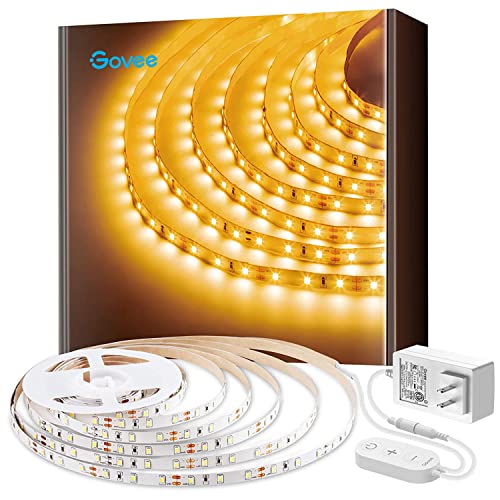
Warm white (2700K–3000K) LED strips are the right choice here. Cool-white or daylight strips read as clinical under artificial light. The warm tone also flatters the terracotta pots and green foliage on the shelves, making plants look richer and more vibrant in the evening hours when you’re most likely to use the space.
Key Takeaway: A warm LED strip behind a wall-mounted pegboard panel costs almost nothing but changes the entire atmosphere of a home gym after dark — this is the detail that makes the room feel designed.
9. Use a ZZ Plant for Zero-Maintenance Biophilic Impact
 Save
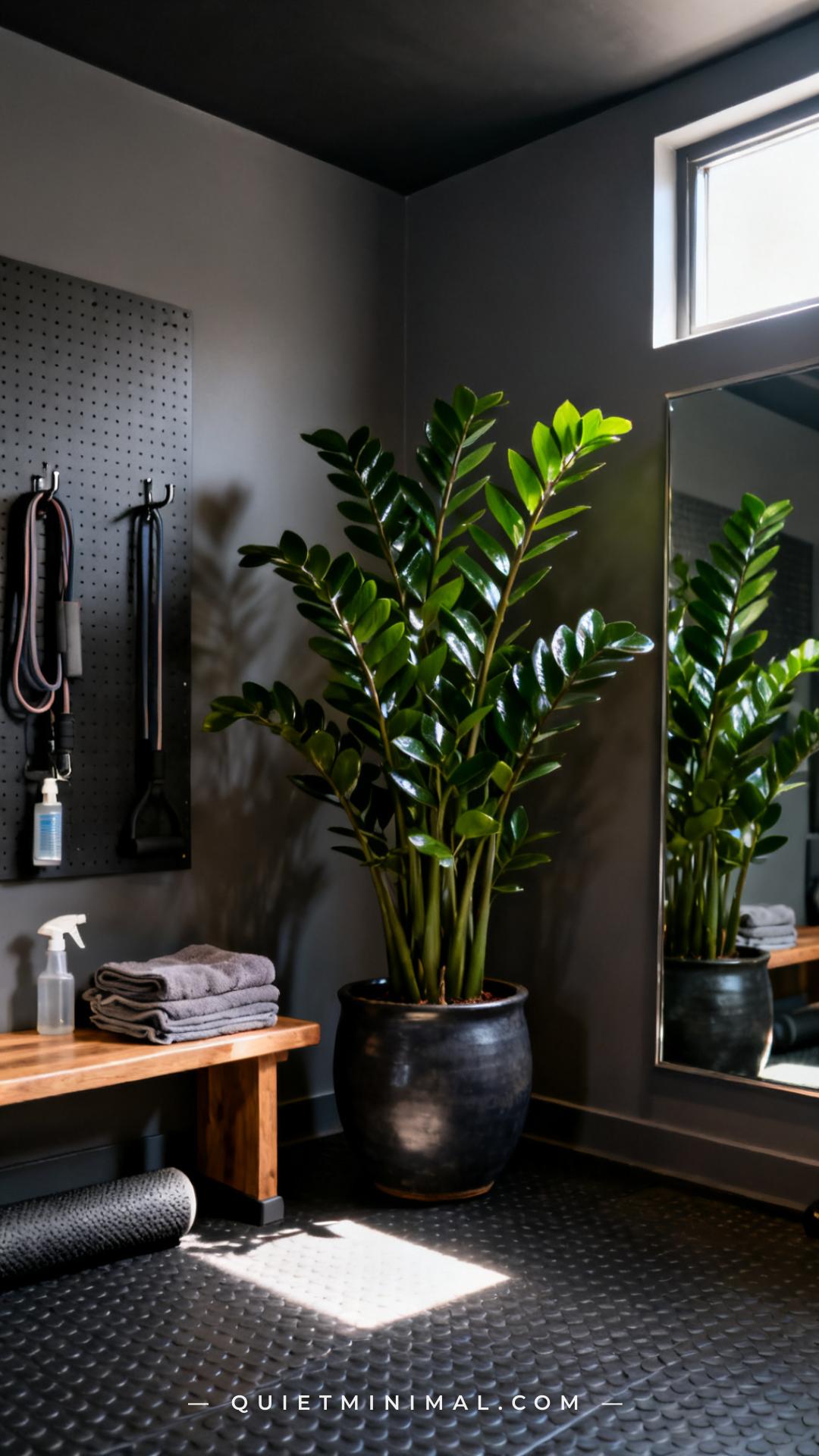
The ZZ plant — Zamioculcas zamiifolia — is the definitive choice for gym environments where natural light is inconsistent and watering is irregular. Its glossy, deep-green paired leaflets create a lush, almost architectural presence that reads as dramatically beautiful in photographs, and it genuinely thrives on neglect. Unlike plants that require weekly care and bright indirect light, the ZZ tolerates dim corners, low humidity, and missed watering cycles without visible distress.
From the guides
You've saved it, wanted it. Here's the how: codes, measurements, order. Your choices make it yours.
The Japandi Honest PlaybookThe honest version of the style: what to keep, what to skip, and the order to do it in.See inside →The Room Refresh PlaybookA repeatable four-step method, room by room, in ten minutes, thirty minutes, or one weekend.See inside →Make Any Room Feel Cozy on PurposeWhy some rooms hold people and others empty out, and the moves that change it.See inside →For a gym aesthetic, place a large ZZ in a charcoal or near-black ceramic pot — the contrast between the almost-black vessel and the glossy dark green leaves creates a rich, monochromatic layering effect that feels intentional and considered. Position it near the pegboard wall at bench height or on the floor beside a low bench to create a layered composition between the horizontal surface and the vertical plant.
Key Takeaway: The ZZ plant is the most reliable biophilic element you can add to a home gym — its glossy architectural presence is high-impact and its care requirements are genuinely minimal.

10. Organize Foam Rollers and Mats Vertically on Pegboard
 Save
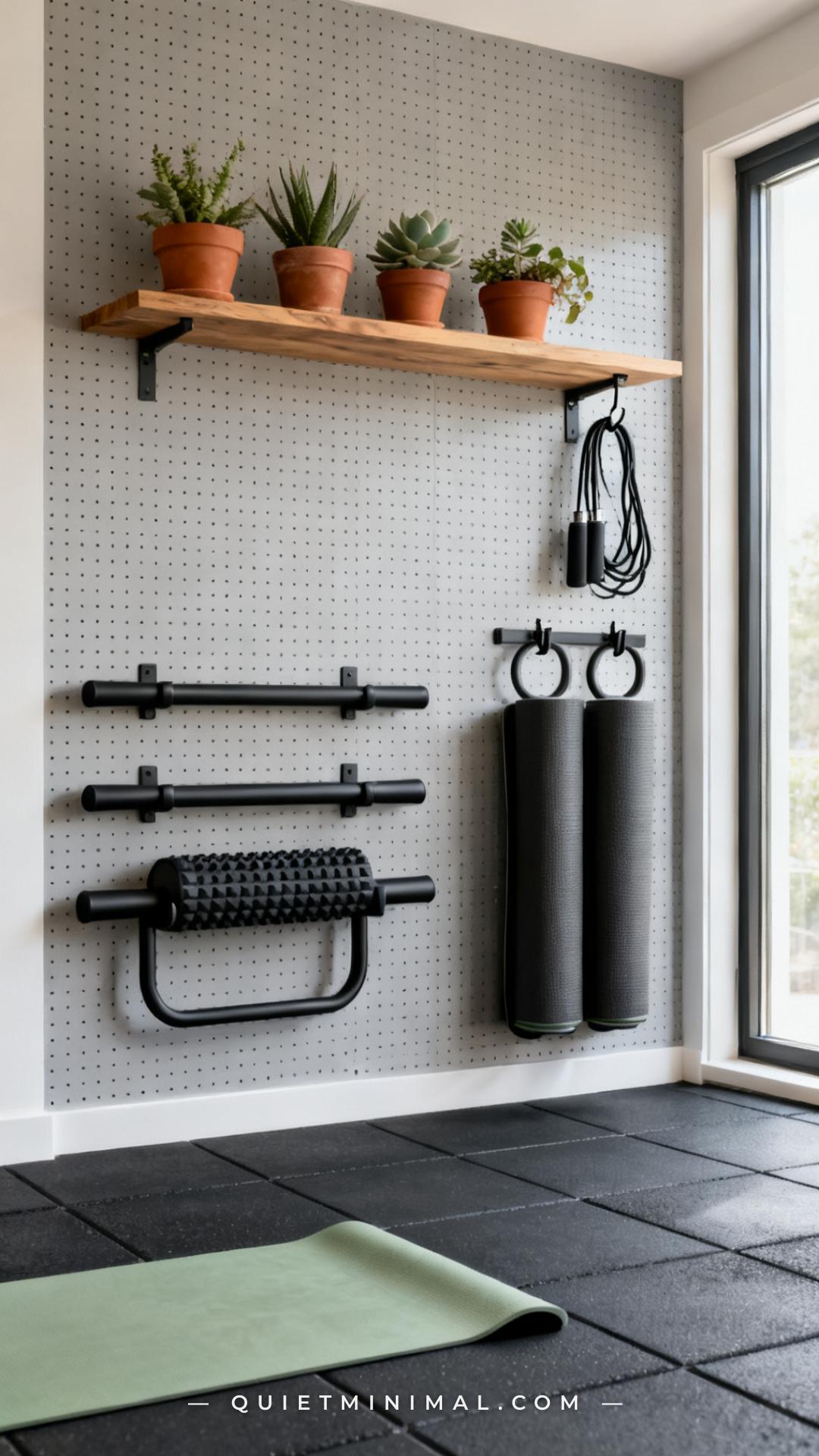
Foam rollers and yoga mats are the items most likely to end up in an awkward pile on the floor of a home gym, because most storage systems don’t account for their odd cylindrical shapes. Pegboard solves this directly. Horizontal dowel-style holders cradle foam rollers without letting them roll; wide-loop hooks store yoga mats upright and visible without crushing them into a rolled-and-banded bundle that never fully unrolls flat again.
The visual benefit of storing these items vertically and openly on the pegboard — rather than in a basket or closet — is that the room reads as actively used and intentionally organized. It communicates that this is a real gym, not a dumping ground. Pair this section of the board with a wooden shelf just above that holds two or three small succulents to soften the entirely utilitarian zone.
Key Takeaway: Storing foam rollers and mats vertically on open pegboard hooks rather than in floor bins keeps the room looking organized and signals that the space is curated, not improvised.
11. Paint the Pegboard Wall an Accent Color
 Save
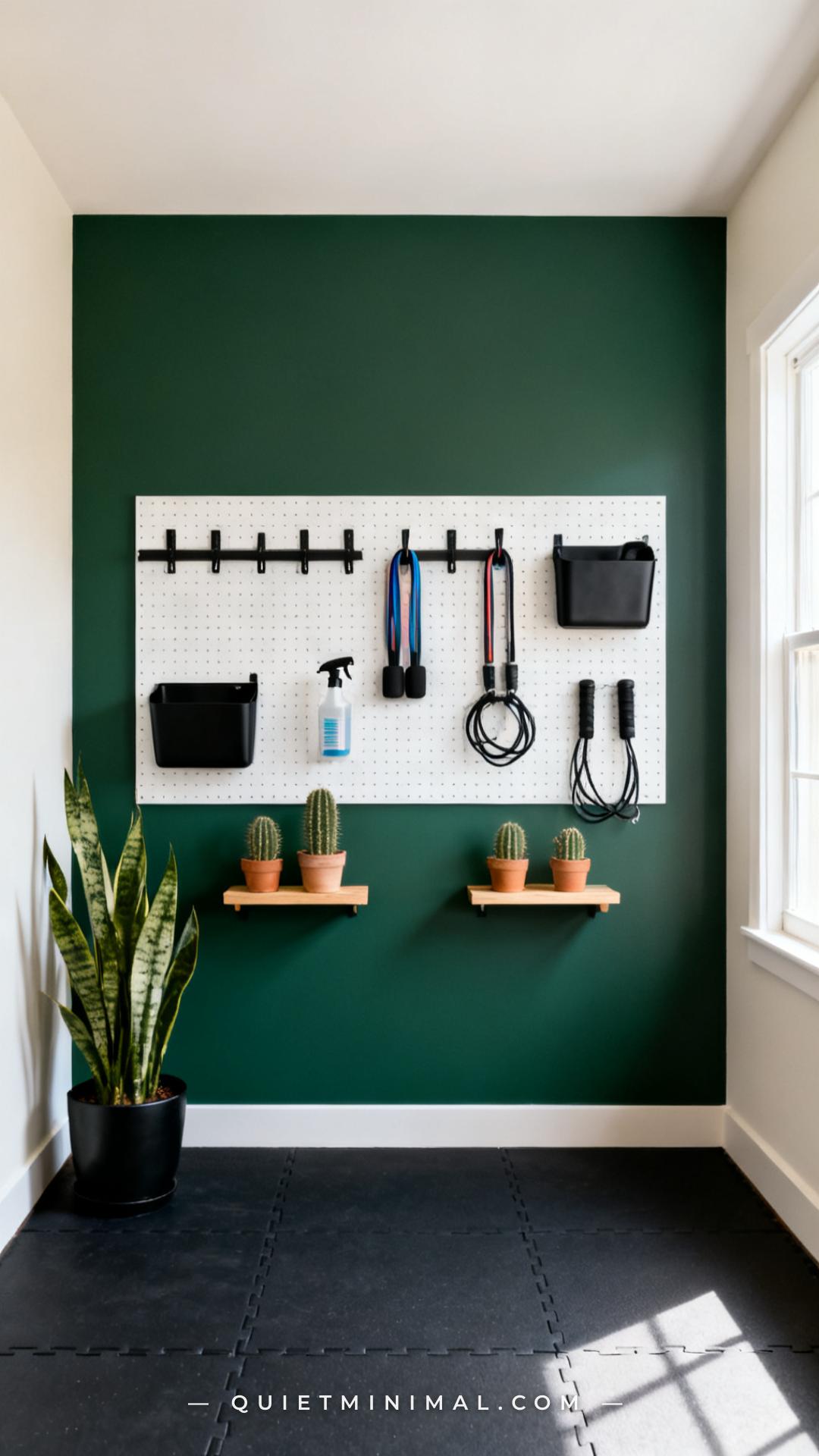
Most home gym pegboard installations go on a white or off-white wall, which is clean but visually flat. Painting the wall behind the pegboard a deep accent color — sage green, charcoal, dusty navy, or muted terracotta — immediately transforms the pegboard from a storage solution into a design feature. The color creates a backdrop that makes both the organized equipment and the potted plants pop forward visually.
Sage green is the strongest performer here for a plant-forward gym because it creates a tonal harmony with the green of the plants (they feel like part of the wall, not in front of it) while still creating clear contrast against white or light-toned pegboard. Sherwin-Williams “Retreat” and Benjamin Moore “Saybrook Sage” are both verified options in this range. Use eggshell or satin finish — matte is harder to clean in a high-sweat environment.
Key Takeaway: Painting the wall behind your pegboard an accent color — especially sage green — is a single-afternoon project that changes the entire aesthetic register of the room.

12. Hang a Propagation Station on the Pegboard
 Save
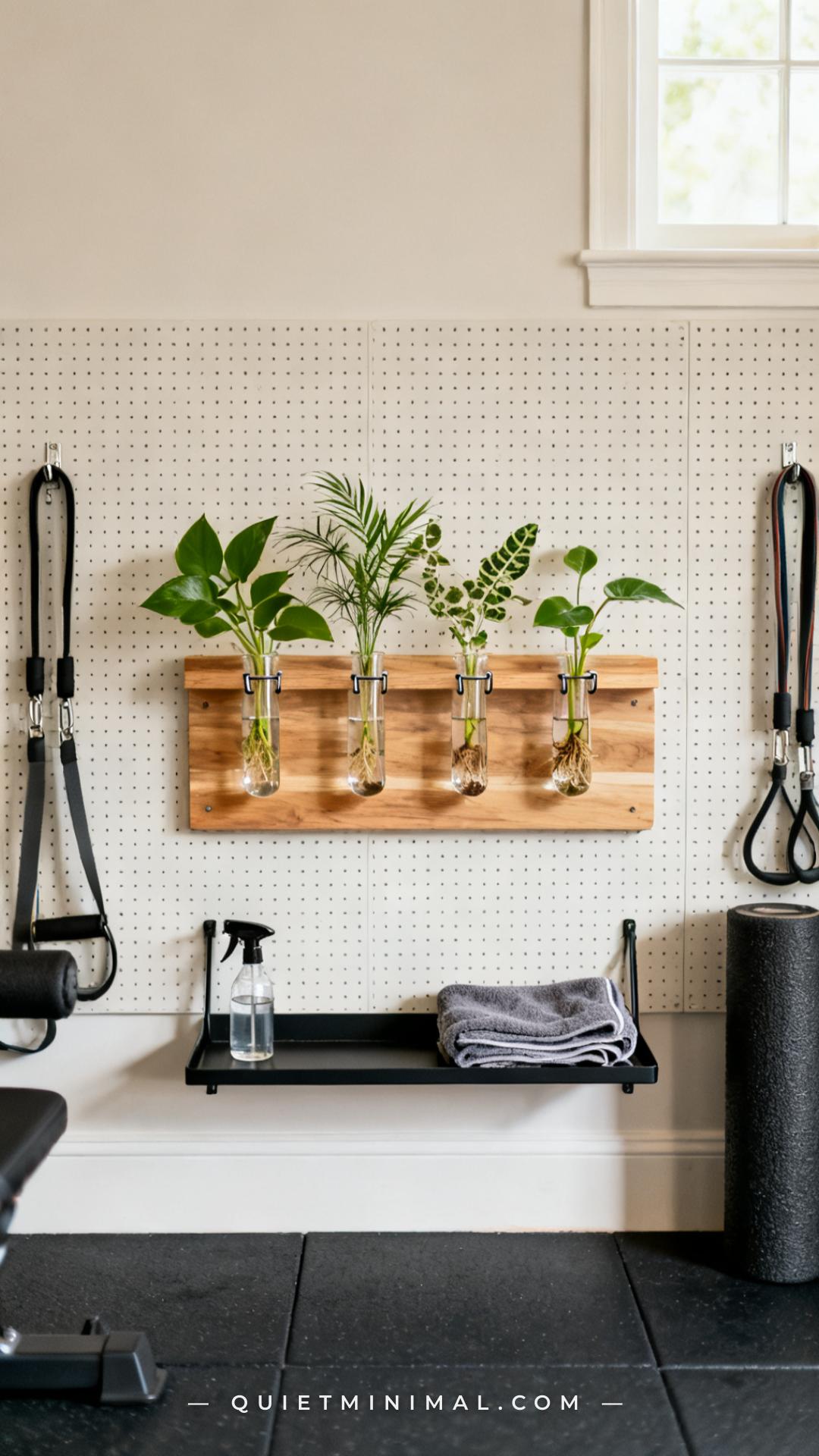
A pegboard-mounted propagation station — a wooden holder with four to six small glass tube vases for water-propagating plant cuttings — is the most conversation-worthy detail you can add to an aesthetic home gym. It sits at the intersection of living decor and functional display: the cuttings are actively growing, visually dynamic as roots develop, and completely free to replace since propagation produces new plants at no cost.
This element specifically works for Maya’s audience because it signals that the gym space is genuinely loved and attended to — not just set up once and photographed. Philodendron heartleaf, spider plant, and pothos cuttings all propagate reliably in water with indirect light, which makes them well-suited to a gym environment where full sun isn’t always available.
Key Takeaway: A propagation station on the pegboard is the most personal and visually interesting plant element you can add — it shows the gym is a living, evolving space, not a static setup.

13. Use Matching Matte Black Hardware Throughout
 Save
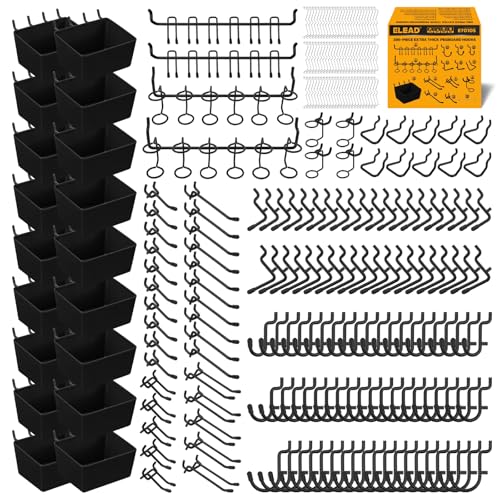
Hardware consistency is the detail that separates a home gym that looks designed from one that looks assembled. When every hook, bin, shelf bracket, and accessory holder on a pegboard is in the same finish — matte black, brushed brass, or raw metal — the entire wall reads as a unified system rather than a collection of individual parts sourced from different places at different times.
Matte black is the strongest choice for most aesthetic gym palettes because it pairs equally well with white, natural wood, sage green, and charcoal backgrounds, and it complements both the dark greens of tropical plants and the warm tones of terracotta pots without competing. Source your hardware from one supplier in a single order so all pieces come from the same production batch and the finish genuinely matches.
Key Takeaway: Committing to one finish for all pegboard hardware — and never mixing — is the design discipline that makes a home gym wall look professionally styled rather than DIY-accumulated.
14. Create a Low Bench Moment with Stacked Plants and Folded Towels
 Save
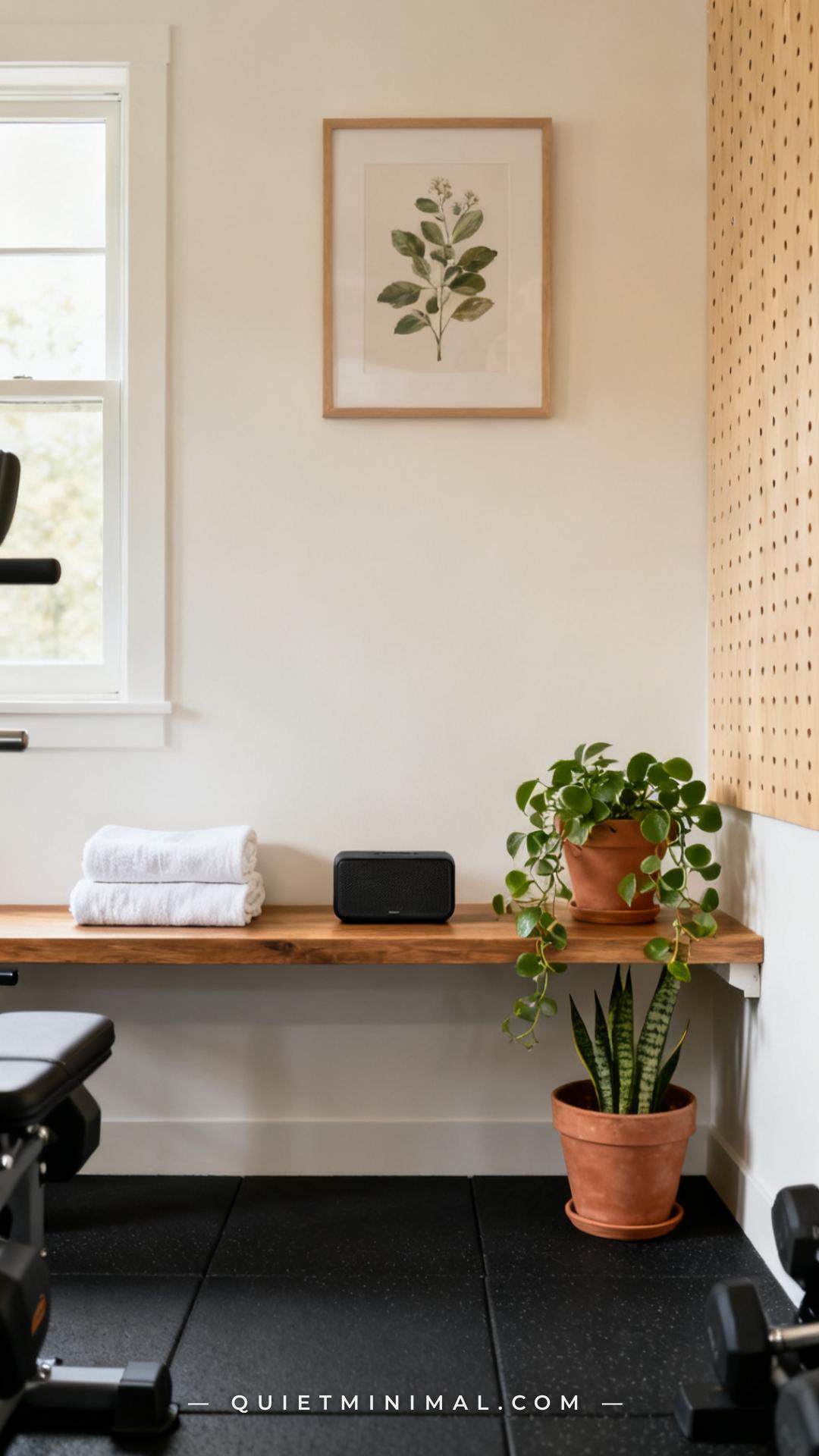
A low wooden bench against one wall creates a horizontal surface that functions as a styling ledge and practical drop zone simultaneously. It’s where you put your phone, your water bottle, and your towel — but if it’s styled with intention, it becomes one of the most photographable moments in the gym. The formula is simple: one folded stack of clean towels, one small tech item (a speaker or phone stand), and one or two potted plants at different heights.
The layered height trick — a trailing pothos at bench level beside a taller snake plant on the floor below the bench overhang — creates vertical movement without using any additional wall space. This combination photographs as lush and layered when shot straight-on, which is exactly how Pinterest users compose and save gym content.
Key Takeaway: A bench styled with stacked towels and layered plants at two different heights is the most efficient way to create a spa-like moment in a home gym without adding any fixed architectural elements.

15. Display Your Dumbbells as Decor, Not Just Equipment
 Save
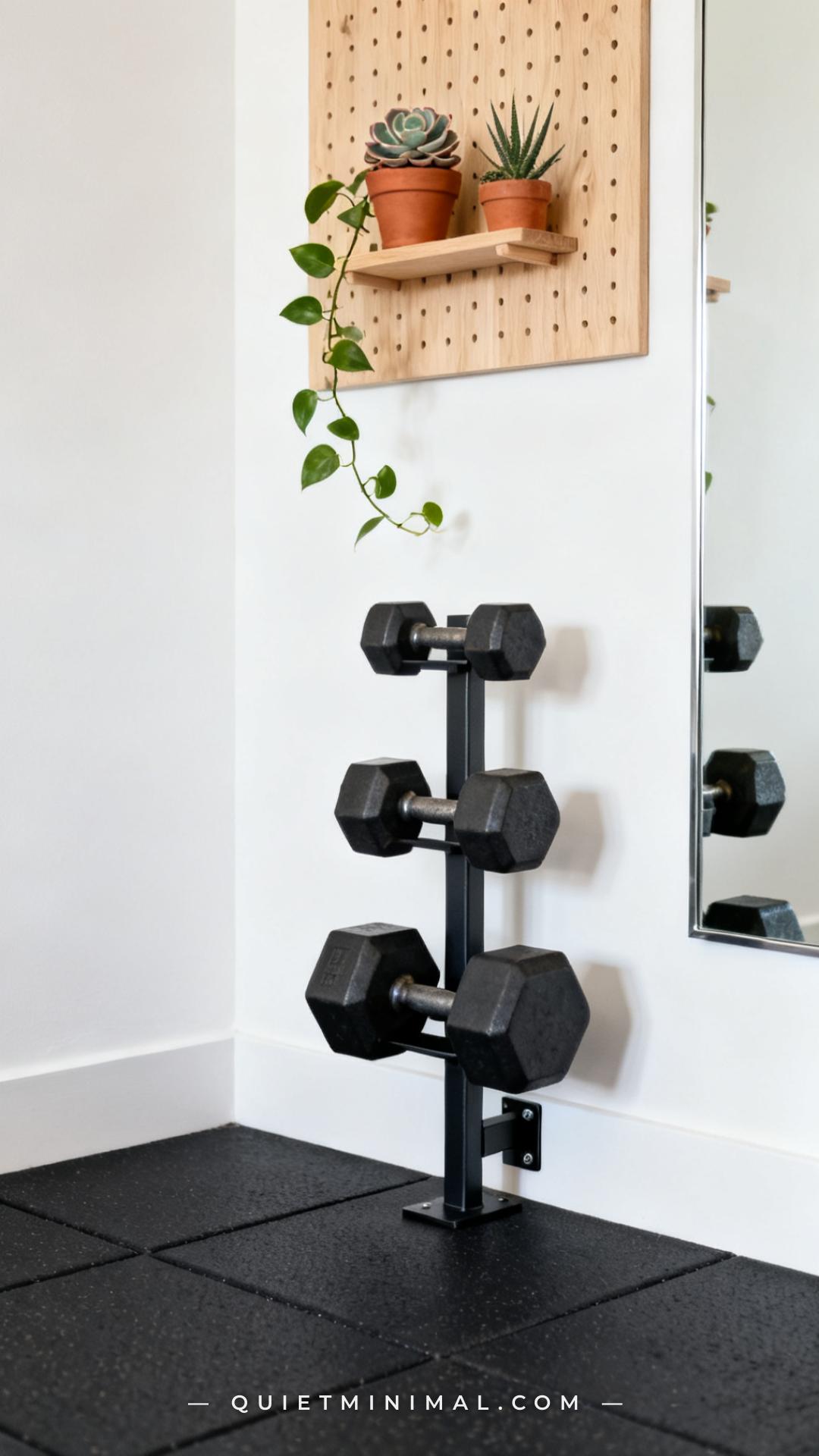
Dumbbells are often hidden in a corner or stuffed under a bench because most gym owners treat them as purely functional. But hex dumbbells in matte black iron, stored on a wall-mounted tiered rack with small plants displayed on the shelf directly above, create a composition that reads as athletic decor — intentional, graphic, and worth photographing. The repetition of the dumbbell pairs creates a visual rhythm that is genuinely appealing, especially when the size gradient runs light to heavy from top to bottom.
Position two or three terracotta pots with small succulents on the pegboard shelf immediately above the rack. The combination of the cool iron textur
From the guides
You've saved it, wanted it. Here's the how: codes, measurements, order. Your choices make it yours.
The Japandi Honest PlaybookThe honest version of the style: what to keep, what to skip, and the order to do it in.See inside →The Room Refresh PlaybookA repeatable four-step method, room by room, in ten minutes, thirty minutes, or one weekend.See inside →Make Any Room Feel Cozy on PurposeWhy some rooms hold people and others empty out, and the moves that change it.See inside → Save