 Georgia
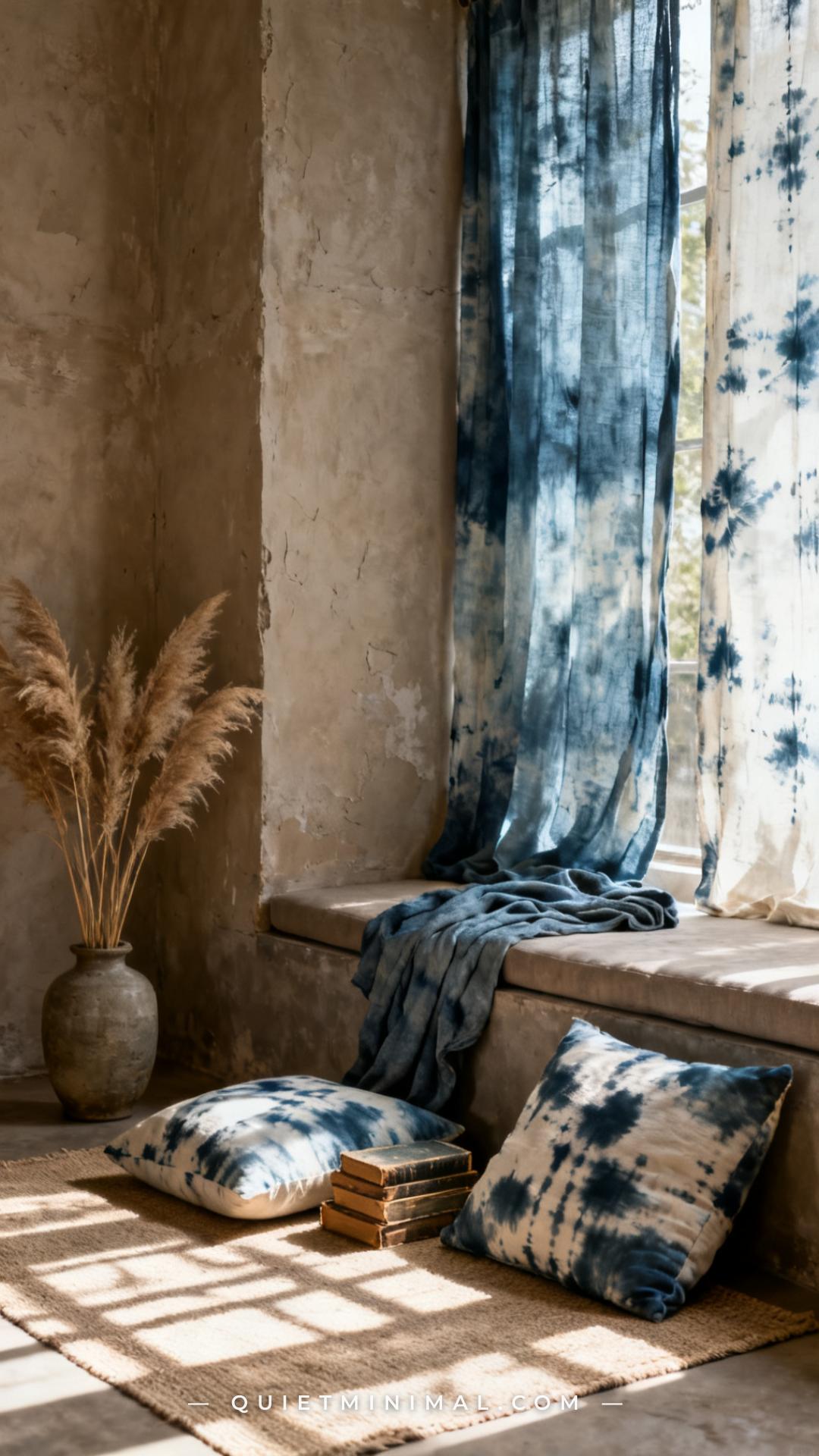
There is a specific kind of calm that only comes from a room that looks like it has been lived in slowly. Not decorated — assembled, over time, with things that carry a little history in their fibers. Aged indigo shibori textiles do exactly that. The resist-dyed patterns, the faded wash of hand-worked blue, the soft irregularity that no machine can perfectly replicate — these are the raw materials of a wabi-sabi room that feels genuinely settled rather than styled for a photo.
The challenge most people hit is treating shibori as a single accent: one throw pillow on a white sofa, one curtain panel as a backdrop. That approach gives you a vignette. What actually builds a wabi-sabi room is layering — faded curtains that filter afternoon light, a floor cushion that invites sitting low, a throw folded with deliberate looseness over a linen chair. This article walks through fourteen specific ways to use aged indigo shibori textiles as a complete room system, with guidance on placement, proportion, and what to pair with each layer so the result feels found rather than forced.
1. Faded Arashi Shibori Curtain Panels as the Room’s Light Filter
 Save
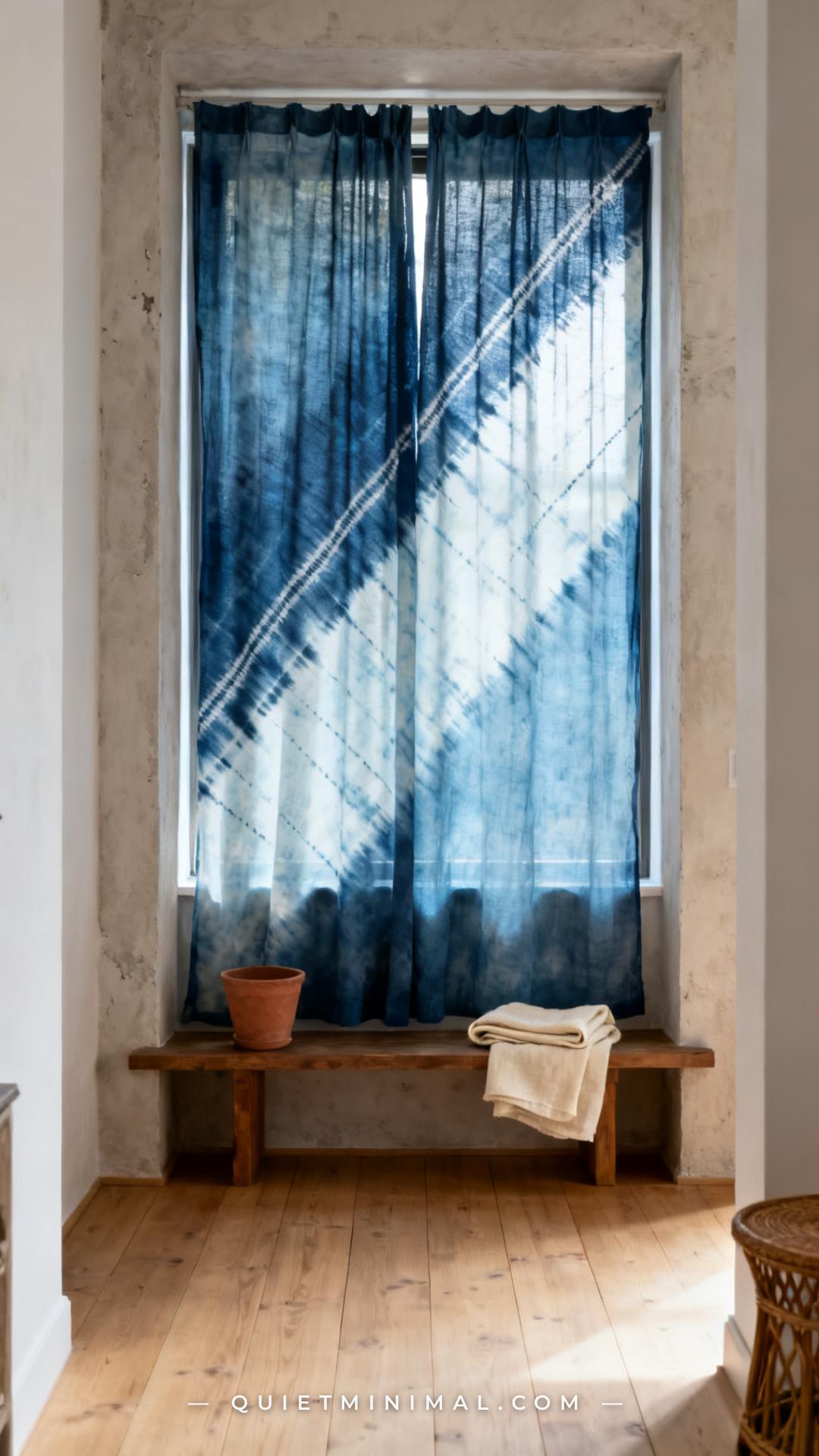
Arashi shibori — the pole-wrapped, diagonal-stripe technique — produces the most architectural pattern in the shibori family, and it translates exceptionally well into curtain panels because the diagonal lines elongate the window without competing with it. When the fabric has been aged or repeatedly washed to soften the dye, the contrast between deep indigo and pale resist-faded sections becomes almost luminous when backlit by daylight.
From the guides
You've saved it, wanted it. Here's the how: codes, measurements, order. Your choices make it yours.
 The Japandi Honest PlaybookThe honest version of the style: what to keep, what to skip, and the order to do it in.See inside →
 The Room Refresh PlaybookA repeatable four-step method, room by room, in ten minutes, thirty minutes, or one weekend.See inside →
 Make Any Room Feel Cozy on PurposeWhy some rooms hold people and others empty out, and the moves that change it.See inside →
Hang these panels inside the frame on a minimal matte-black rod, letting them pool slightly at the floor. Avoid tieback hardware — the loose, unstructured fall is the point. If your windows face east or west, the arashi pattern will cast moving shadow lines across the floor throughout the day, which is one of the more genuinely wabi-sabi effects a textile can produce.
Key Takeaway: Arashi shibori panels work best as a light-filtering layer hung loose and long — the shadow pattern they cast is as important as the textile itself.

2. Itajime Shibori Throw Over a Linen Reading Chair
 Save
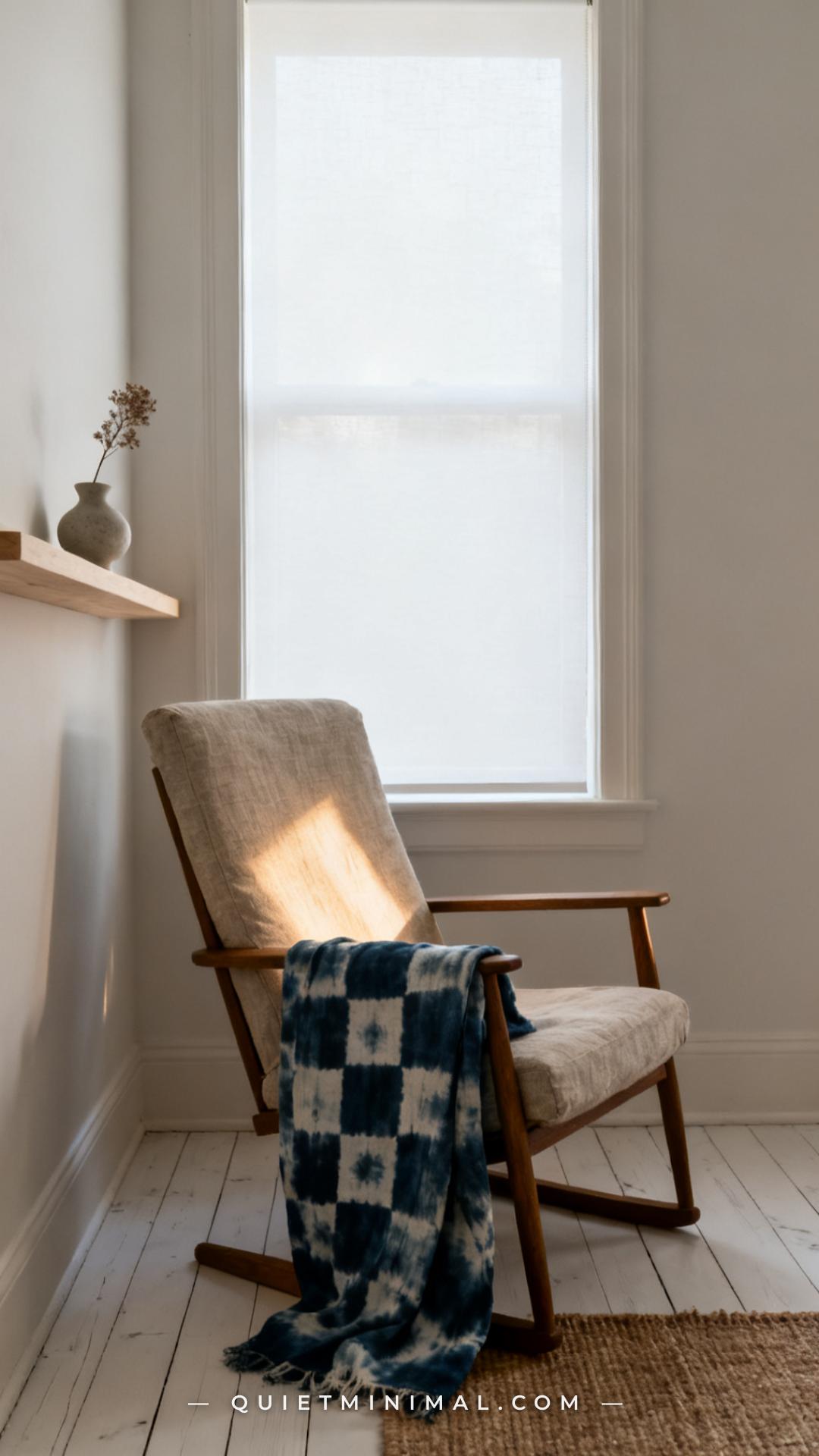
Itajime shibori — clamped-block resist dyeing — produces the most graphic pattern in the family: precise squares, diamonds, or triangles that read as geometric but carry the irregular edges of handwork. As a throw, this pattern does something most solid throws cannot: it adds visual structure without adding visual noise. The aged versions, where the indigo has softened to a pale slate-blue in the resist areas, sit particularly well against natural linen upholstery.
Drape it over one arm rather than folding it symmetrically across the back. The asymmetry reads as lived-in, which is exactly the register wabi-sabi rooms need to avoid looking like a showroom. Pair with a ceramic or raku-fired mug on the side table and leave a worn paperback open on the seat — context matters as much as the textile.
Key Takeaway: Itajime shibori’s geometric resist pattern adds structure to a seating vignette without formality — asymmetric draping over one arm is the move.

3. Oversized Floor Cushions in Kumo Shibori as Low Seating
 Save
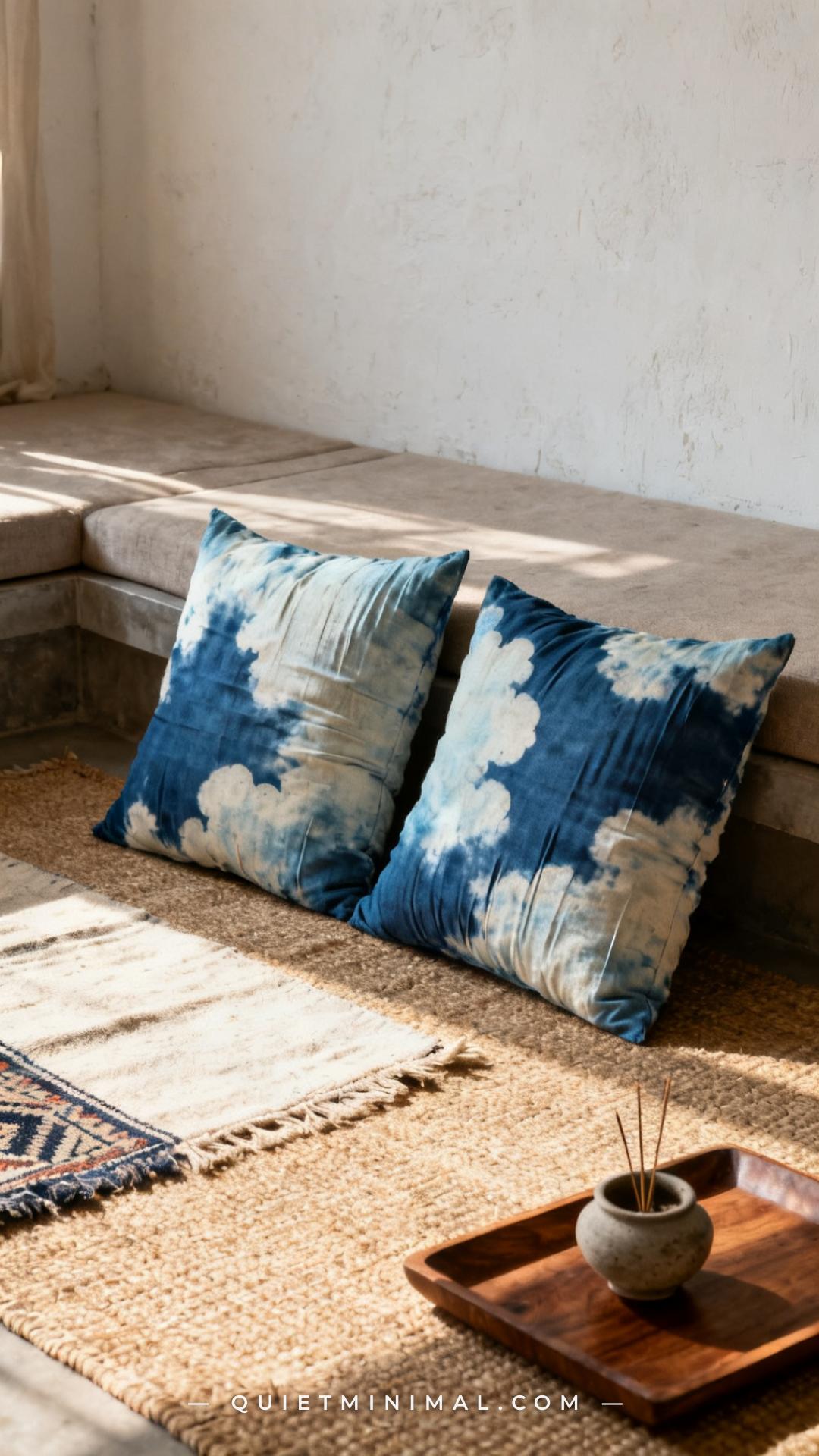
Kumo shibori — the gathering-and-binding technique — produces the most organic, cloud-like pattern of any resist-dye method, and it is ideal for floor cushions because the rounded, billowing forms echo the soft, low-profile seating philosophy of a wabi-sabi room. Oversized versions (24 inches or larger) work as actual seating, not just styling props.
Place two at slightly different angles on a flat-weave jute or sisal rug, not aligned symmetrically. Low seating anchors the room’s center of gravity and pulls the eye downward, which opens the walls and ceiling and makes a room feel more spacious. The faded indigo pairs with undyed linen, raw cotton, and natural-fiber rugs without any color conflict — the entire floor palette stays in the natural-to-indigo range.
Key Takeaway: Oversized kumo shibori floor cushions serve as genuine low seating, not decoration — angle them asymmetrically and let the organic cloud pattern do the visual work.

4. Layered Shibori Throw Pillows on a Low Platform Sofa
 Save
The mistake most people make with shibori pillows is buying a matching set. Wabi-sabi layering works on tonal variation, not uniformity — three to four pillows in the same indigo family but different techniques (one arashi, one kumo, one solid aged indigo linen, one nui embroidered) build depth in a way a matching set never does.
Keep the scale graduated: one large 22-inch square behind, two 20-inch squares in front, one 14×20 lumbar at the front. The depth graduation creates a wall of soft texture rather than a flat row of pillows. Against a platform sofa in natural linen or unbleached cotton, the indigo range reads as one cohesive color story while each individual pillow holds its own character.
Key Takeaway: Mix shibori techniques across your pillow grouping rather than buying a set — tonal variation within the indigo family reads as intentionally collected, not accidentally mismatched.

5. A Single Shibori Table Runner as a Wabi-Sabi Dining Anchor
 Save
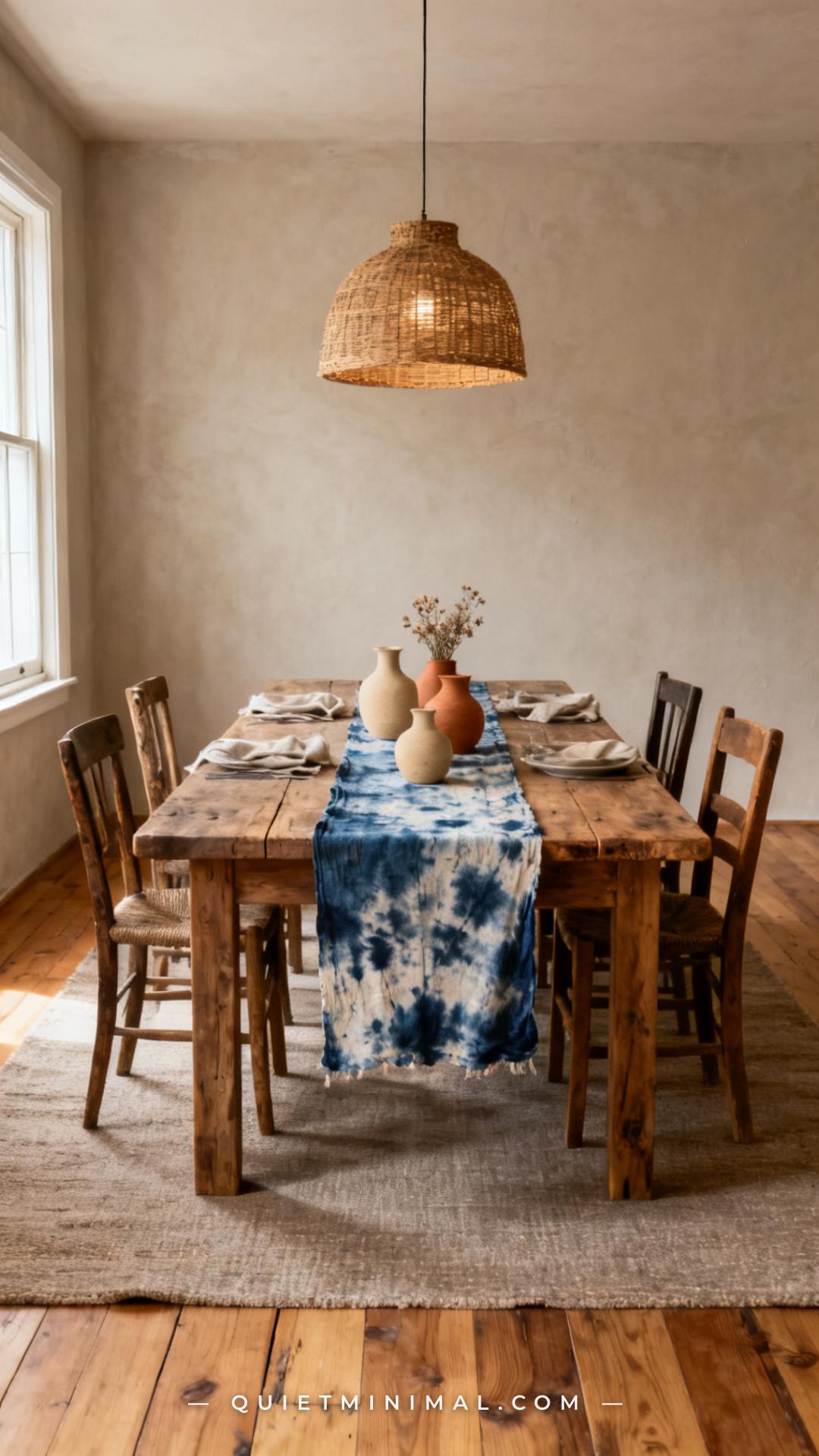
The dining table in a wabi-sabi room should feel like it has been set for living, not for entertaining. A single shibori table runner — especially one with enough age on it that the indigo has moved from saturated to softly faded — does the work of a tablecloth without covering the table’s natural grain or wood imperfections, which are part of the aesthetic.
Lay it loose with slight overhang, not hemmed to exact table length. Group ceramic vessels of varying heights along its length rather than centering a single arrangement. The irregular placement mirrors the irregular pattern in the shibori fabric and keeps the table from looking arranged. Nui shibori (stitch-resist technique producing elongated, painterly marks) works particularly well here because it is the most fluid and least geometric of the shibori patterns.
Key Takeaway: A shibori runner laid loosely over natural wood draws attention to both surfaces — the indigo pattern and the wood grain become a conversation rather than a cover.

6. Shibori Bedding as the Wabi-Sabi Bedroom’s Focal Point
 Save
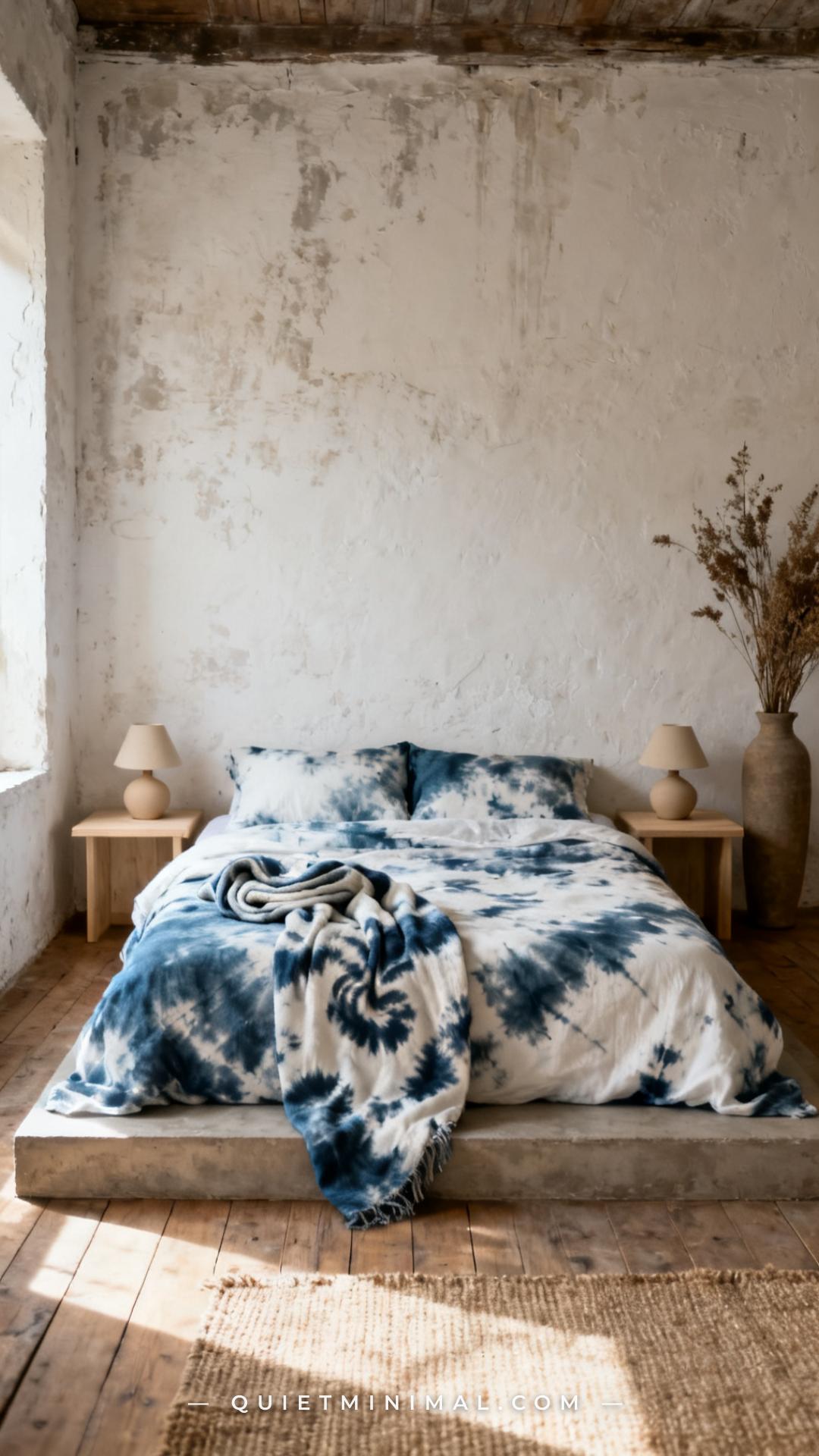
In a wabi-sabi bedroom, the bed is not the focal point — the textile is. An aged indigo shibori duvet cover or coverlet immediately anchors the room’s color story. The key is keeping everything else in the room quieter: white plaster walls, pale oak nightstands, natural linen euro shams. The shibori piece carries the room visually precisely because it is the only patterned element.
Layer a solid aged-indigo linen flat sheet beneath and a kumo shibori throw folded at the foot. The three textures — smooth woven linen, resist-dyed cotton, and hand-folded throw — build depth at the bed’s foot that reads in photographs and in person. Avoid matching shibori pillowcases to the duvet cover; use solid aged-indigo or undyed natural linen instead.
Key Takeaway: Let the shibori duvet or coverlet be the single patterned element in the bedroom — keep every other textile solid, undyed, or naturally textured.

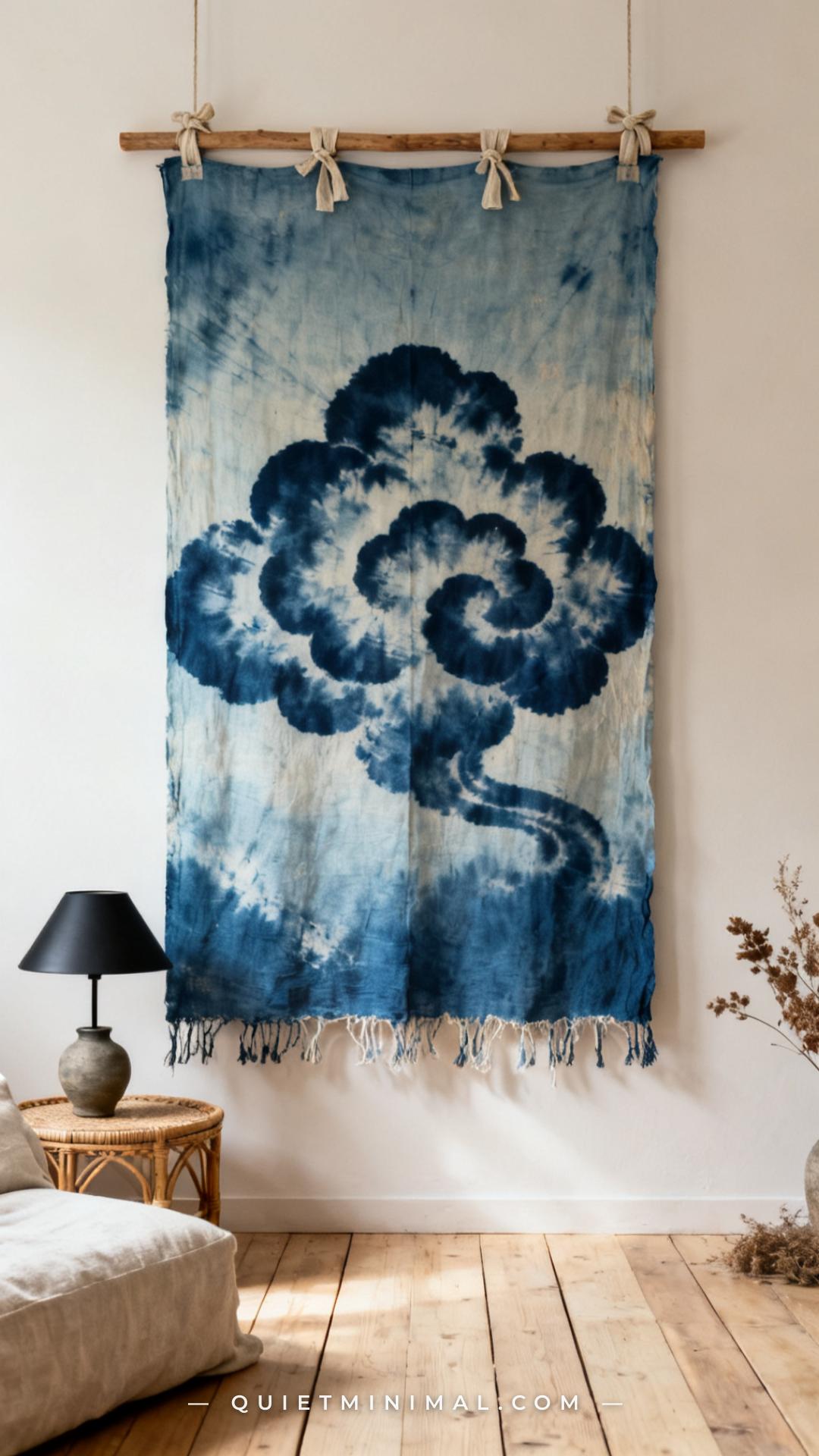
7. Hanging a Shibori Textile Panel as Wall Art
 Save
Framed art in a wabi-sabi room always risks looking too deliberate, too symmetrical, too finished. A shibori textile panel hung from a simple wooden dowel solves all three problems. The fabric drapes naturally, creates slight movement, and the hand-dyed pattern introduces color and texture simultaneously without the visual finality of a frame.
Choose a piece with significant size (at least 36 x 48 inches) so it commands the wall without needing other elements beside it. If the panel has visible selvedge edges or fraying at the hem, do not trim it — those details are the wabi-sabi dimension of the piece. Mount at approximately picture-rail height and let the bottom edge float 12–18 inches above the floor rather than hanging it floor-to-ceiling, which can feel heavy in smaller rooms.
Key Takeaway: A shibori panel hung on a dowel reads as intentional wall art while maintaining the softness and imperfection that a framed print cannot offer.

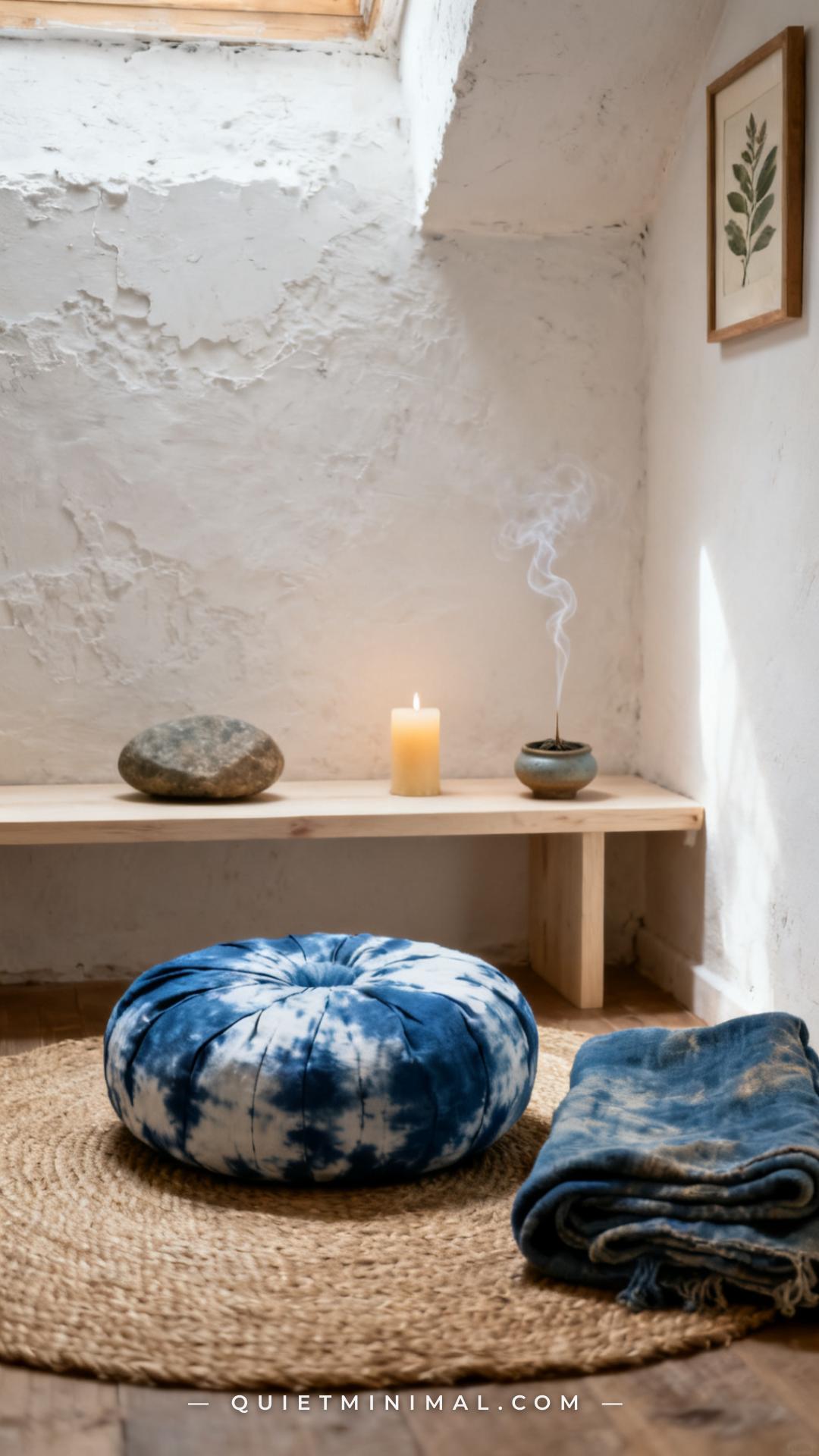
8. A Shibori-Dyed Meditation Cushion (Zafu) for Floor-Level Intention
 Save
A zafu — the traditional round meditation cushion — is one of the most underused textile investments in wabi-sabi interiors. It performs functionally (supporting seated posture during meditation, reading, or floor-level work) while contributing to the room’s aesthetic as a sculptural, low-to-the-ground element. In aged shibori, the zafu becomes a piece that clearly has history and purpose rather than decoration.
Position it in a corner with a small low shelf or stack of books within reach. Keep the supporting objects minimal and meaningful: a single candle, a stone, an incense holder. The restraint around the cushion amplifies its presence. A folded shibori throw within arm’s reach maintains the room’s textile continuity while making the space genuinely usable.
Key Takeaway: A shibori zafu functions as both seating and visual anchor in a wabi-sabi corner — the restraint of the objects around it determines how significant it looks.

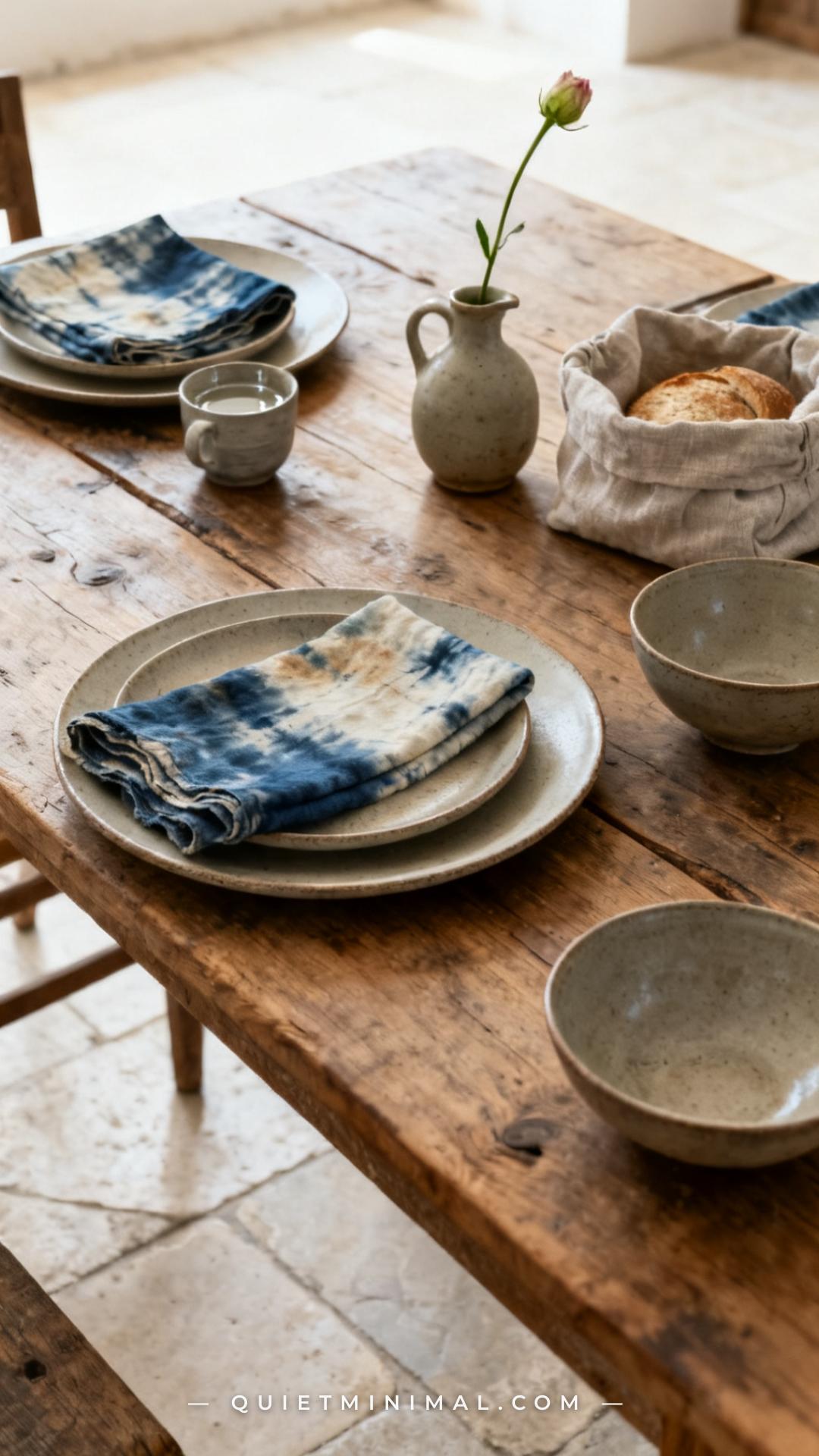
9. Shibori-Dyed Linen Napkins as Everyday Wabi-Sabi Practice
 Save
From the guides
You've saved it, wanted it. Here's the how: codes, measurements, order. Your choices make it yours.
The Japandi Honest PlaybookThe honest version of the style: what to keep, what to skip, and the order to do it in.See inside →The Room Refresh PlaybookA repeatable four-step method, room by room, in ten minutes, thirty minutes, or one weekend.See inside →Make Any Room Feel Cozy on PurposeWhy some rooms hold people and others empty out, and the moves that change it.See inside →Wabi-sabi is not a decorating style — it is a way of moving through a space. Shibori-dyed linen napkins used at every meal are one of the most direct expressions of that idea: a beautiful, imperfect object that is present in daily life, not displayed behind glass. The aging of the dye through repeated washing is part of the practice.
Look for napkins with visible resist-dye variation — some areas deeper indigo, some almost pale — rather than uniformly dark ones. The variation is what shows handwork. Linen construction over cotton holds the dye differently and develops a softness with washing that cotton cannot replicate. Stack them in a ceramic bowl on the counter when not in use; the folded textile becomes part of the kitchen’s still-life composition.
Key Takeaway: Shibori linen napkins used daily develop their wabi-sabi character through use — the fading that happens in the wash is the point, not a flaw.

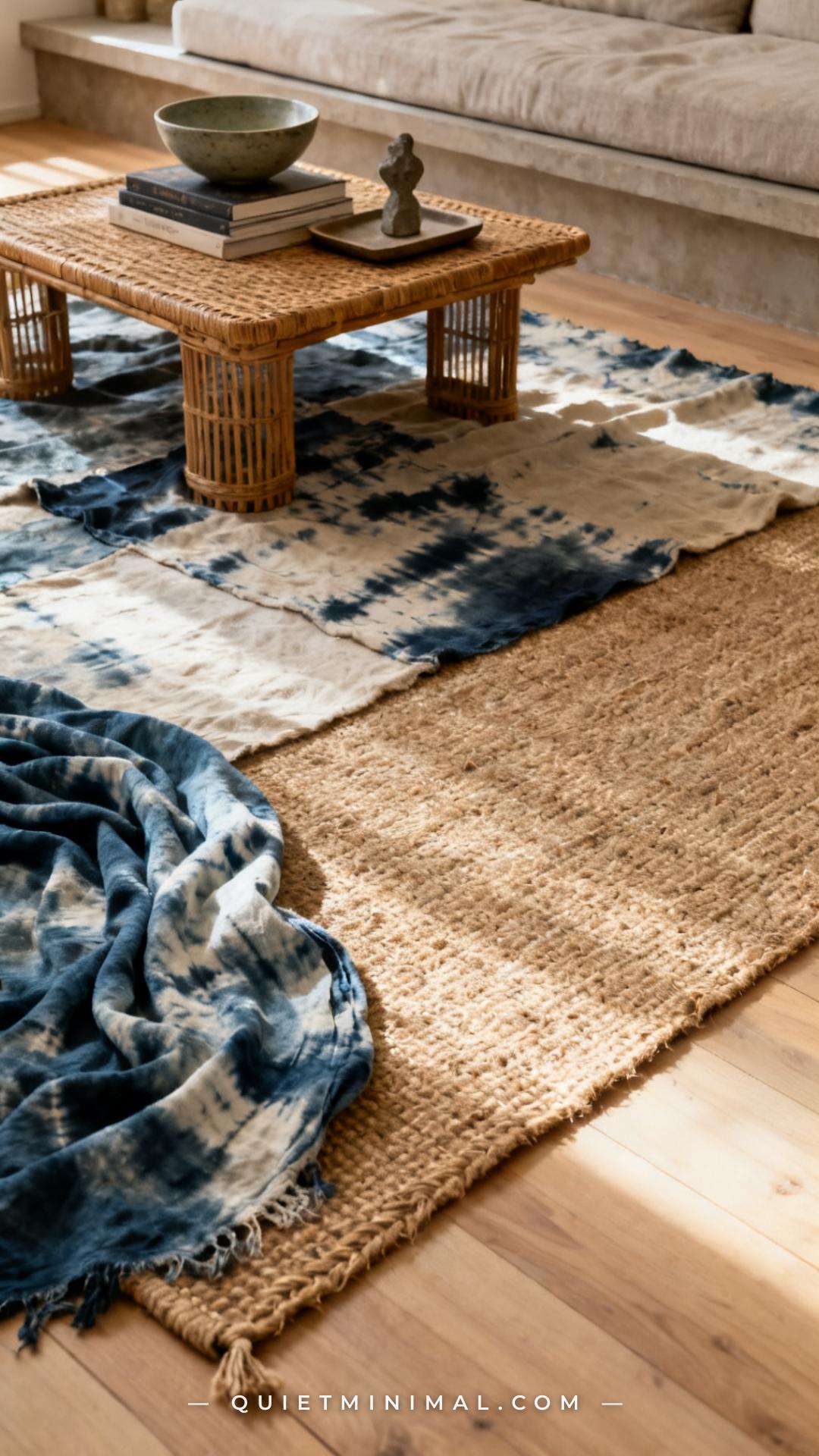
10. Layering a Shibori Throw Over a Natural Fiber Rug
 Save
Rug layering in wabi-sabi rooms works on the same principle as textile layering everywhere else: a base layer in natural fiber (jute, sisal, seagrass) provides the neutral ground, and the upper layer introduces character. Using a shibori throw as an over-layer rather than a dedicated flatweave is an unconventional approach that reads as genuinely found rather than styled.
Drape the throw across the top corner of the rug so it overlaps the edge by 8–12 inches, letting it fall onto the floor slightly. It should look like something that was set there and stayed rather than placed with a ruler. The effect works best in rooms where low seating keeps the rug composition visible from a human-level viewpoint rather than a birds-eye overhead perspective.
Key Takeaway: Using a shibori throw as the upper layer in a rug stack reads as organic rather than designed — the key is the loose, slightly asymmetric placement.

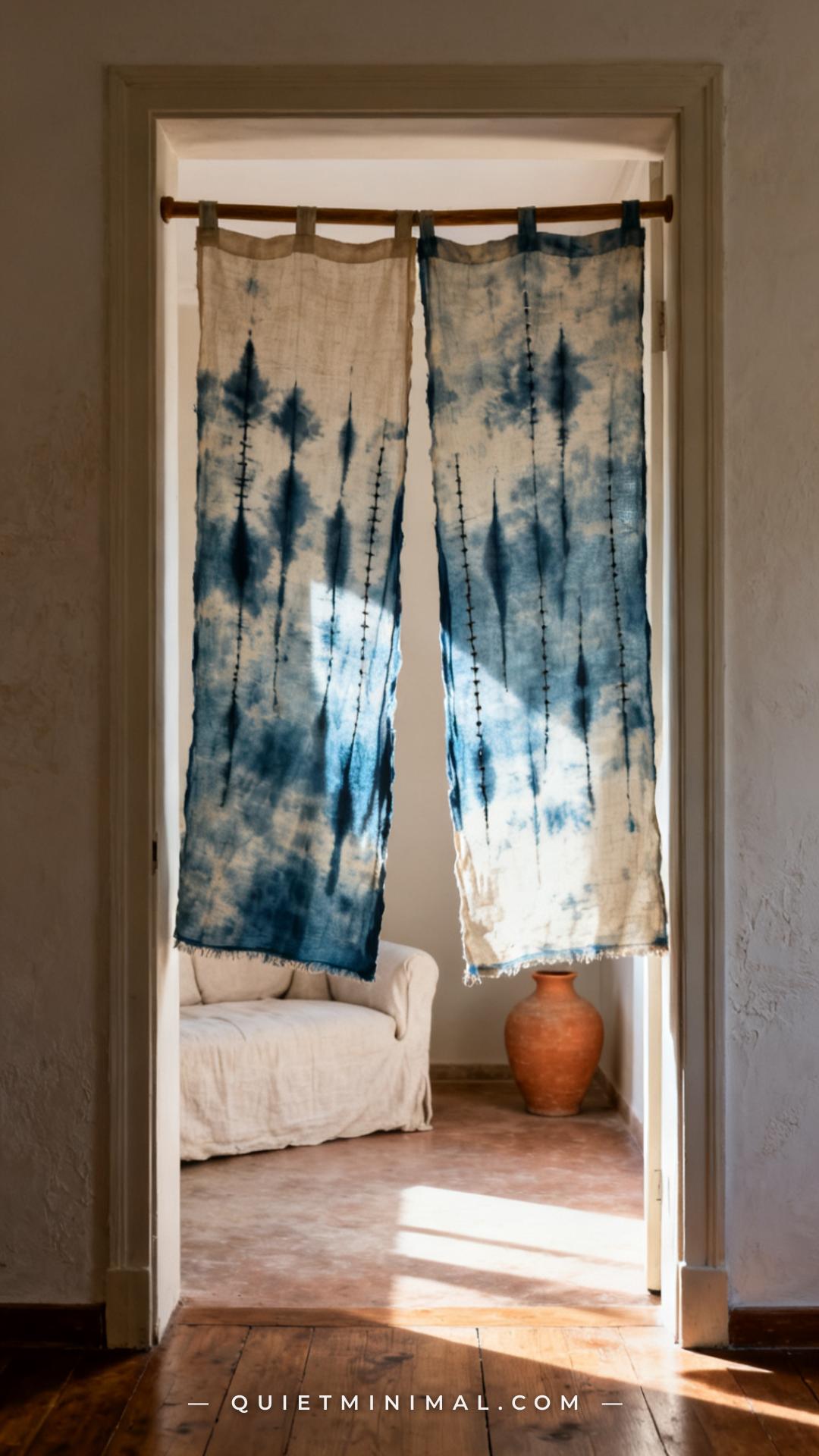
11. Noren-Style Shibori Doorway Panels for Room Division
 Save
Noren — the traditional Japanese split-panel curtain — is one of the most architecturally versatile textile applications in a wabi-sabi interior. It divides without closing, frames without confining, and introduces the room’s textile story at the threshold. In aged indigo shibori, the noren becomes a point of beauty that the room’s inhabitants pass through several times a day.
Hang panels from a natural wood or matte-black rod at standard door height, letting them hang to about two-thirds of the door frame height (not floor-to-ceiling). The gap between panels should be approximately one-third of the doorway width — enough for easy passage without fully obscuring the view between rooms. The movement when someone walks through is one of the most genuinely wabi-sabi effects in any room.
Key Takeaway: A shibori noren hanging at two-thirds door height divides space without enclosing it — the passage through the textile is part of the room experience.

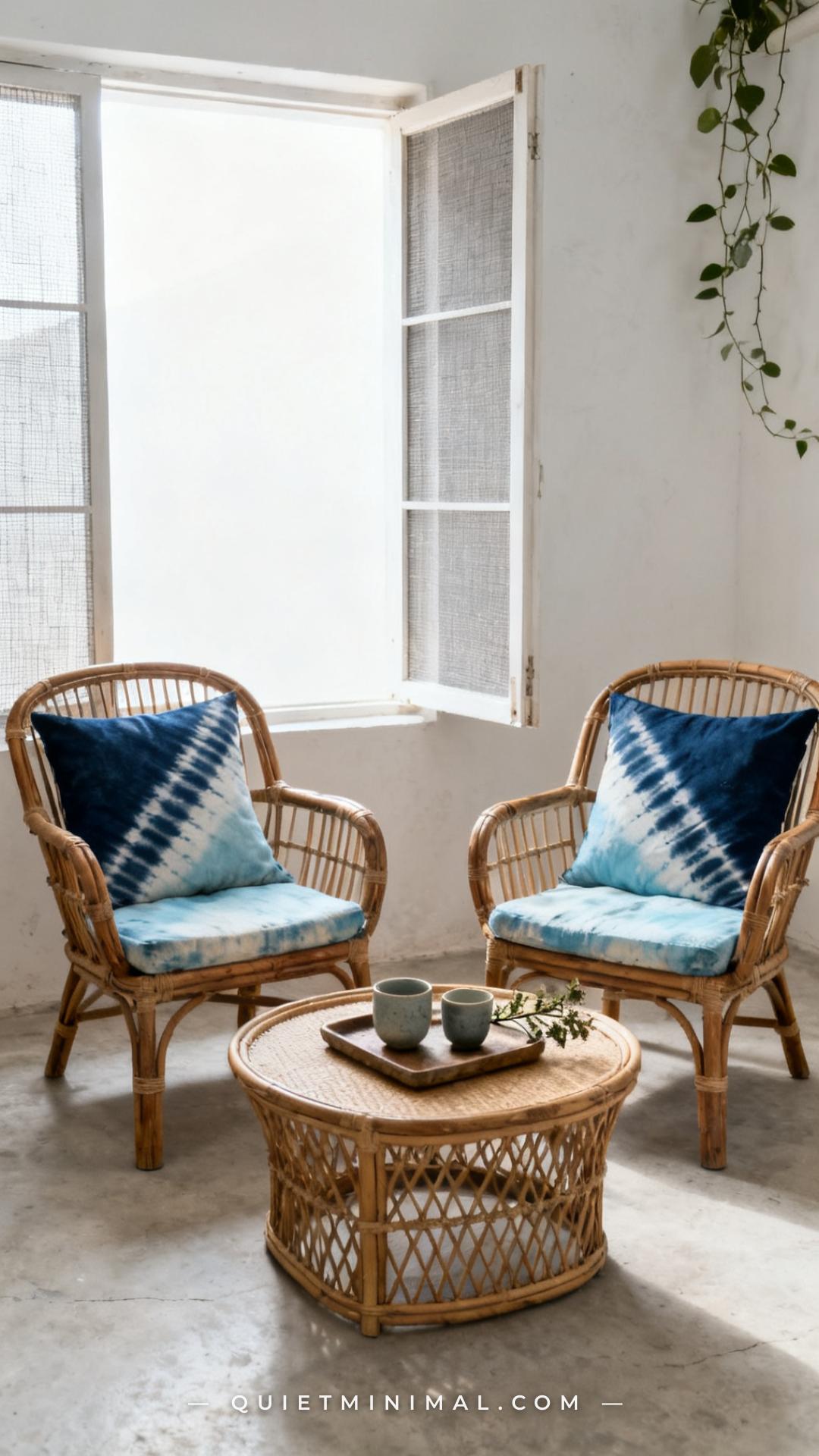
12. Shibori Cushion Covers on Outdoor or Sunroom Seating
 Save
The wabi-sabi aesthetic adapts well to transitional spaces — sunrooms, covered terraces, and screened porches — where the combination of natural light, plant life, and weathered materials already creates the imperfect, organic atmosphere the style requires. Shibori cushion covers on rattan or bamboo seating amplify that quality without requiring any other styling changes.
In outdoor and high-light environments, the aging of indigo dye accelerates beautifully — UV exposure deepens the faded, bleached quality of the resist areas over time. This is not damage; it is the material doing exactly what wabi-sabi says all materials should do. Choose indoor-outdoor rated cotton or a tightly woven natural cotton-linen blend for outdoor cushion covers, as indigo dye responds better to natural fiber in humid or variable-light conditions.
Key Takeaway: Shibori cushion covers age faster in outdoor and high-light settings, which accelerates their wabi-sabi quality — treat UV fading as a feature of the material’s life.

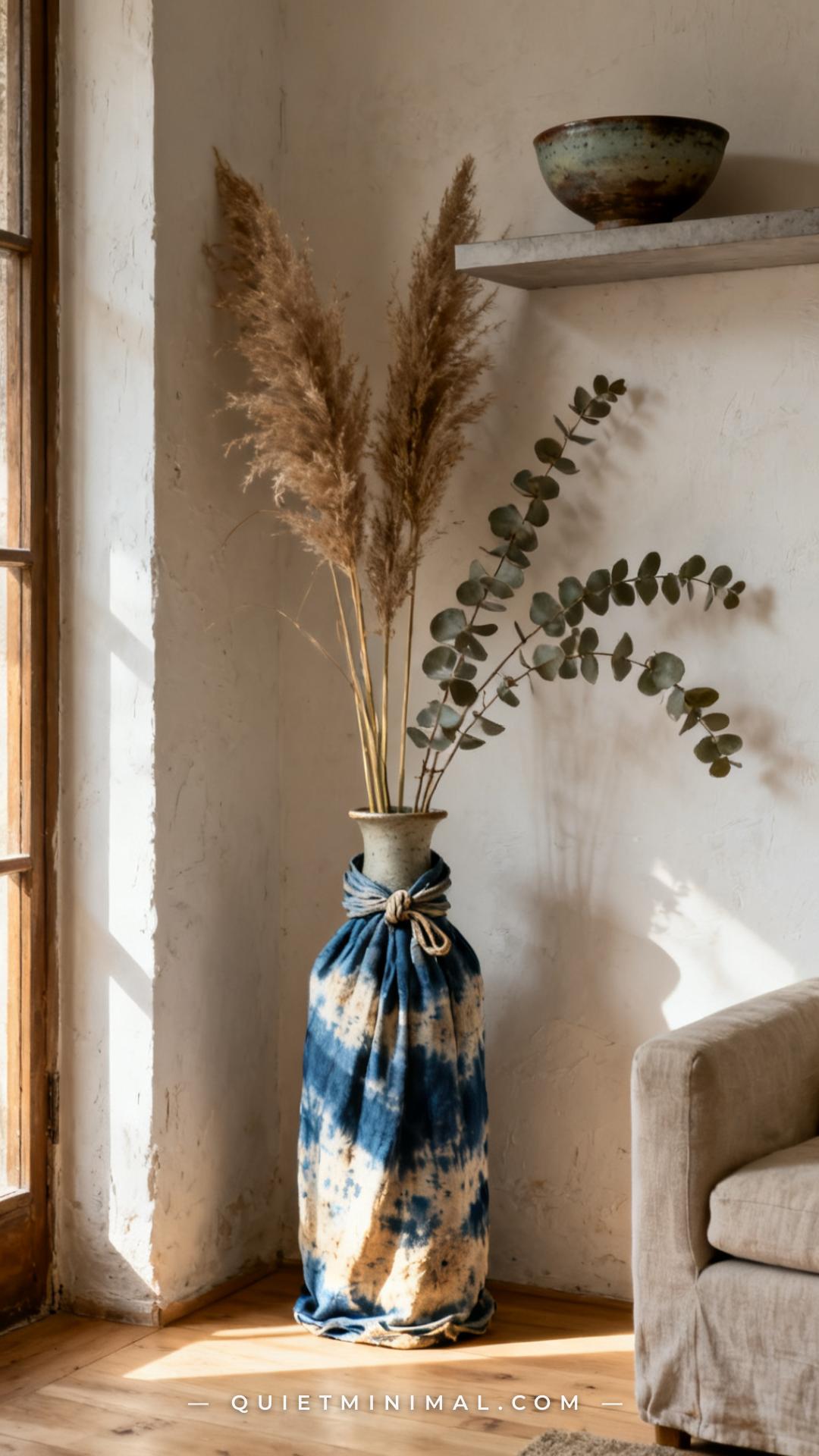
13. A Shibori-Wrapped Floor Vase as Textile Sculpture
 Save
This is one of the lower-cost, higher-impact applications of a shibori textile in a wabi-sabi room. A large floor vase — ceramic, terracotta, or stoneware — becomes a textile sculpture when loosely wrapped with a piece of aged shibori cloth and tied with a simple linen cord or left to fall open. The textile does not need to cover the entire vessel; partial wrapping, showing the ceramic beneath, creates the wabi-sabi dialogue between materials.
Use a piece of shibori that has visible fraying, uneven dye, or natural imperfections rather than one in perfect condition. The contrast between the sturdy, grounded ceramic and the aged, soft textile is the compositional point. Style the vase with tall dried botanicals (pampas, preserved palm, bleached branches) to draw the eye upward and give the textile-wrapped base a sense of elevation rather than heaviness.
Key Takeaway: Partial shibori wrapping on a ceramic floor vase introduces textile texture at floor level without a cushion or rug — the contrast of materials does the visual work.

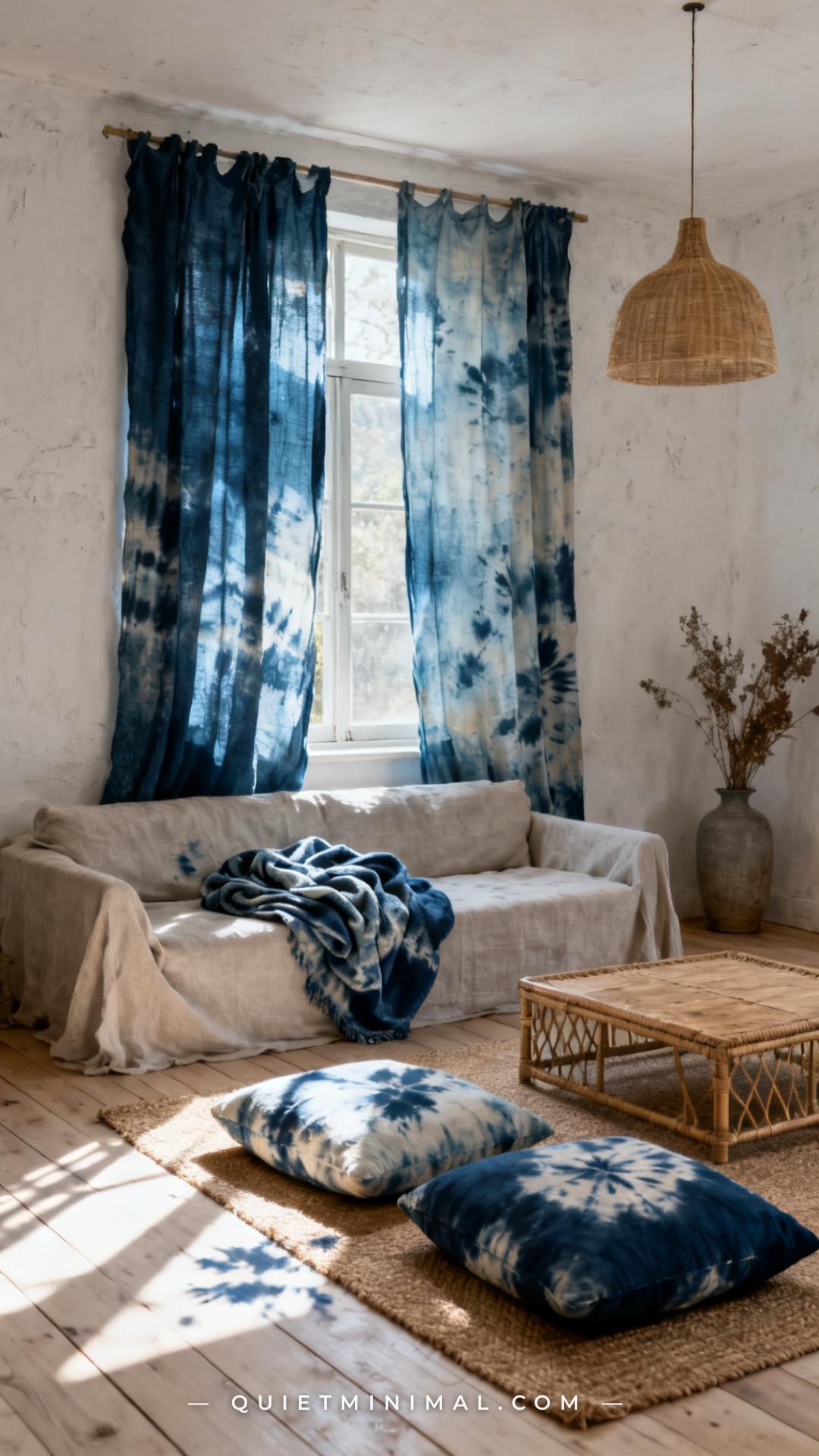
14. Building the Full Wabi-Sabi Textile Stack: Curtains + Throw + Floor Cushion Together
 Save
The individual applications described in this article compound into something qualitatively different when three key layers are present in the same room simultaneously: shibori curtains that control the light, a shibori throw that marks the primary seating as a place to settle in, and shibori floor cushions that establish a floor-level living option. Together, these three layers build the full textile atmosphere of a wabi-sabi room.
The secret to making the stack work without the room feeling monotone is tonal variation within the indigo range. Hang the deepest, most saturated shibori at the window (where natural light will fade and illuminate it simultaneously). Use a mid-tone throw in a different technique (arashi at the window, kumo at the sofa, itajime at the floor). Keep the floor cushions in the softest, most faded range of the palette. The light-to-dark graduation from floor to window mirrors how light naturally moves through a room — and wabi-sabi rooms work because they cooperate with light rather than fight it.
Key Takeaway: The full shibori textile stack — curtains, throw, floor cushions — reads as a cohesive wabi-sabi room when tonal graduation runs from deep at the window to faded at the floor.
A wabi-sabi room built around aged indigo shibori textiles does not happen in one shopping session. The most convincing versions of this aesthetic are assembled over time — a floor cushion added before a curtain, a table runner that pre-dates everything else in the room. The advice here is to start with the layer that addresses your room’s most immediate need: if your windows are bare, begin with curtain panels. If your seating lacks warmth, begin with the throw. Each textile layer is complete on its own and compounds with the next. What the indigo does over time — softening, fading, wearing at the edges in the places it is touched most — is not something to reverse. It is the room becoming itself.
From the guides
You've saved it, wanted it. Here's the how: codes, measurements, order. Your choices make it yours.
The Japandi Honest PlaybookThe honest version of the style: what to keep, what to skip, and the order to do it in.See inside →The Room Refresh PlaybookA repeatable four-step method, room by room, in ten minutes, thirty minutes, or one weekend.See inside →Make Any Room Feel Cozy on PurposeWhy some rooms hold people and others empty out, and the moves that change it.See inside → Save


