 Georgia
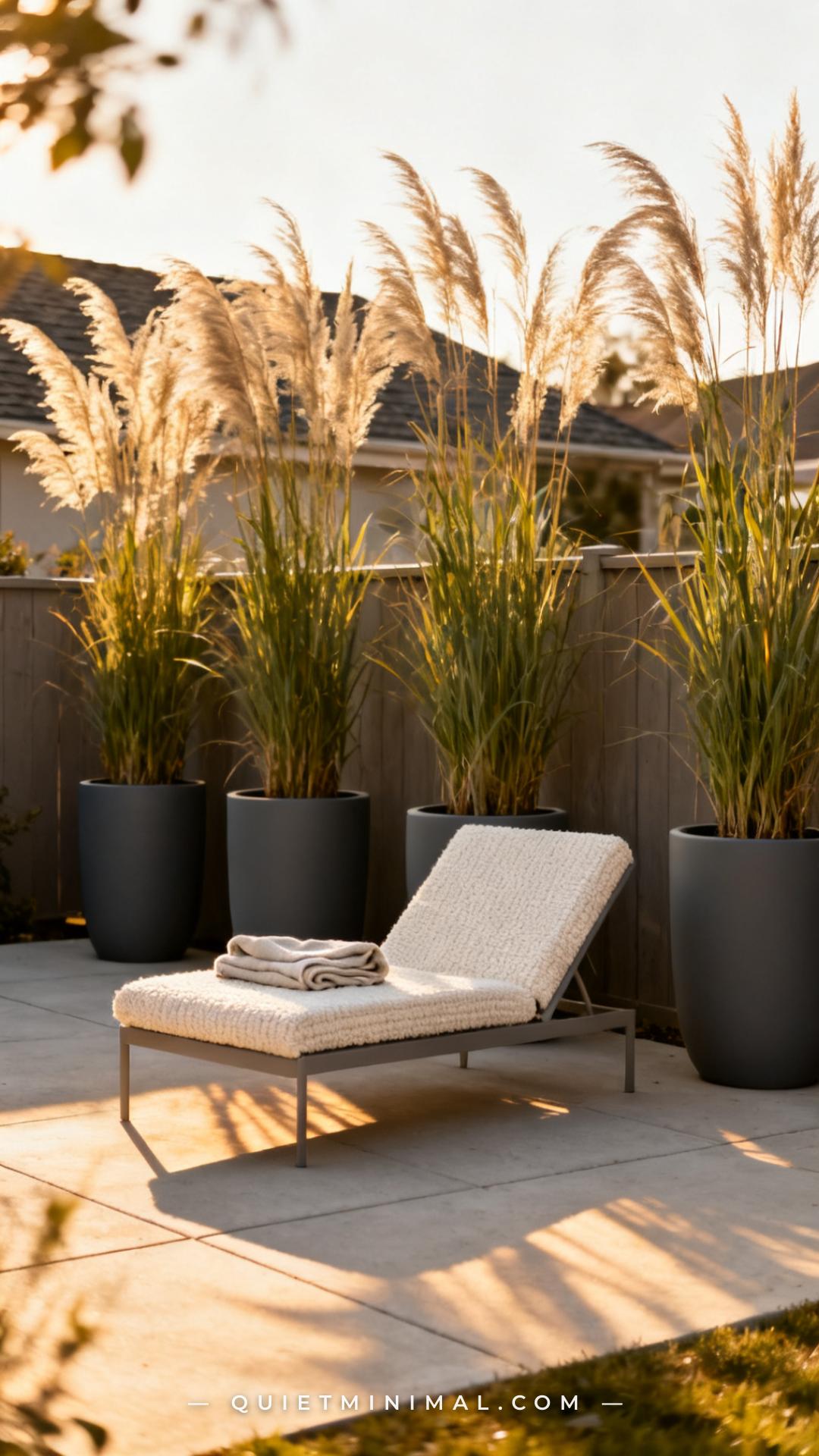
Your backyard should feel like yours — not a fishbowl for the neighbors. The good news is that you don’t need a building permit, a contractor, or a five-figure landscaping budget to get there. Tall ornamental grasses planted in large outdoor planters are one of the most effective (and underused) tools for creating natural privacy screens that actually look beautiful. They move in the breeze, soften harsh edges, and can be arranged in modular configurations you shift and edit over time.
This guide breaks down 12 specific ways to use tall grasses and planters as a layered privacy system — from anchoring a patio corner with a single dramatic grass to building a full perimeter screen that reads like a designed landscape. Every idea here works for renters, works around HOA restrictions, and can be executed in phases so you’re not dropping your entire outdoor budget in one weekend.
1. Anchor a Patio Corner with a Single Statement Grass
 Save
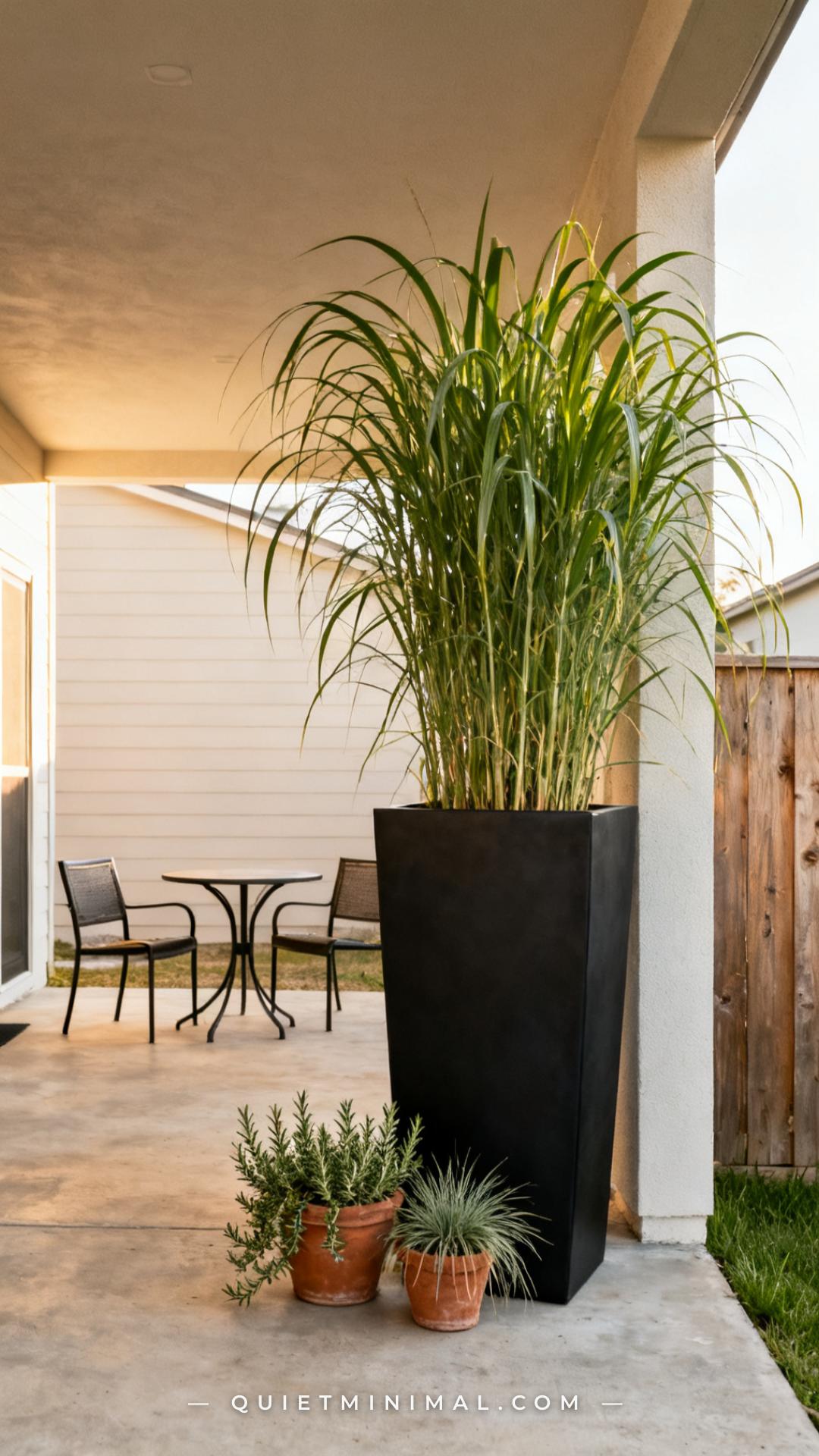
The fastest way to begin building privacy is to solve the most exposed corner of your patio first. One very large planter holding a mature ornamental grass instantly changes the sightline from a neighbor’s yard or a street-facing angle. Maiden grass (Miscanthus sinensis ‘Gracillimus’) is one of the best choices here: it reaches five to six feet at maturity, produces feathery plumes in late summer, and its fine texture keeps it from looking heavy or overgrown. Choose a planter with a minimum 20-inch interior diameter so the root mass has room to establish. A single large statement planter reads as intentional design — not a desperate privacy patch.
From the guides
You've saved it, wanted it. Here's the how: codes, measurements, order. Your choices make it yours.
 The Japandi Honest PlaybookThe honest version of the style: what to keep, what to skip, and the order to do it in.See inside →
 The Room Refresh PlaybookA repeatable four-step method, room by room, in ten minutes, thirty minutes, or one weekend.See inside →
 Make Any Room Feel Cozy on PurposeWhy some rooms hold people and others empty out, and the moves that change it.See inside →
For renters, the portability of this setup is the real win. You take it with you when you move. For homeowners, it’s the starting point of a layered system you’ll build out over two or three seasons.
Key Takeaway: One oversized planter with a mature ornamental grass solves your most exposed sightline immediately and functions as the anchor for every layer you add later.
2. Build a Staggered Row Along the Fence Line
 Save
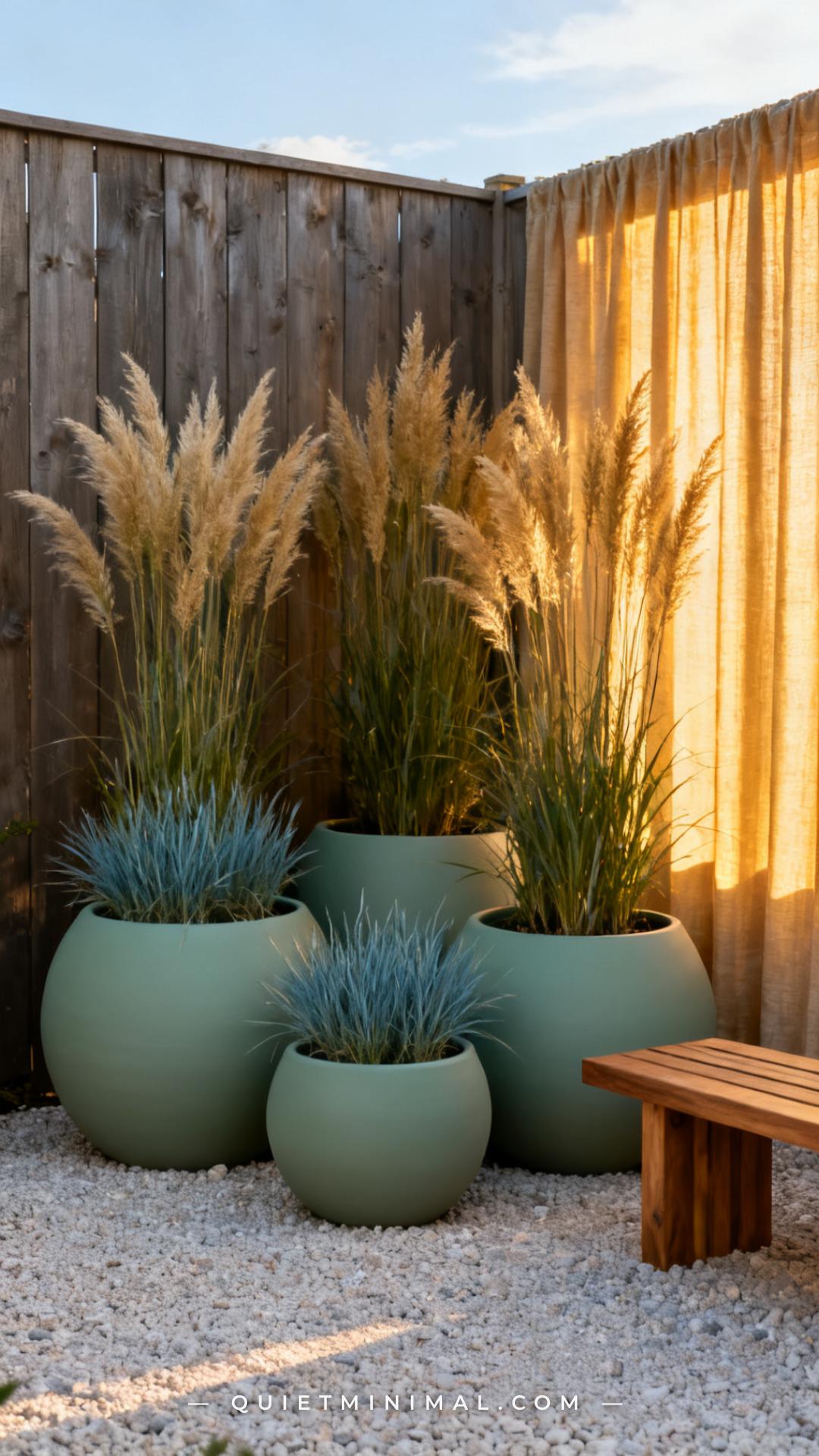
A single planter in a corner is a start. A staggered row along an entire fence line is a privacy screen. The key word is staggered — placing planters in a perfectly uniform military row looks flat and formal. Instead, alternate each planter two to four inches forward or back from the line, and vary the grass heights. Pair a tall background grass like Karl Foerster (four to five feet) with a medium-height grass like blue oat grass (Helictotrichon sempervirens, two to three feet) to create depth and layering.
Use planters that share a color family even if they vary in size — sage green, matte charcoal, warm terracotta, or weathered concrete all read as cohesive when repeated. Mix sizes within a color palette. Avoid using five completely different pot colors in a row; it reads as a clearance sale rather than a designed landscape.
Key Takeaway: A staggered row of planters with mixed grass heights creates a privacy screen that has depth and movement instead of looking like a flat barrier.

3. Use Pampas Grass as a Single Dramatic Screen
 Save
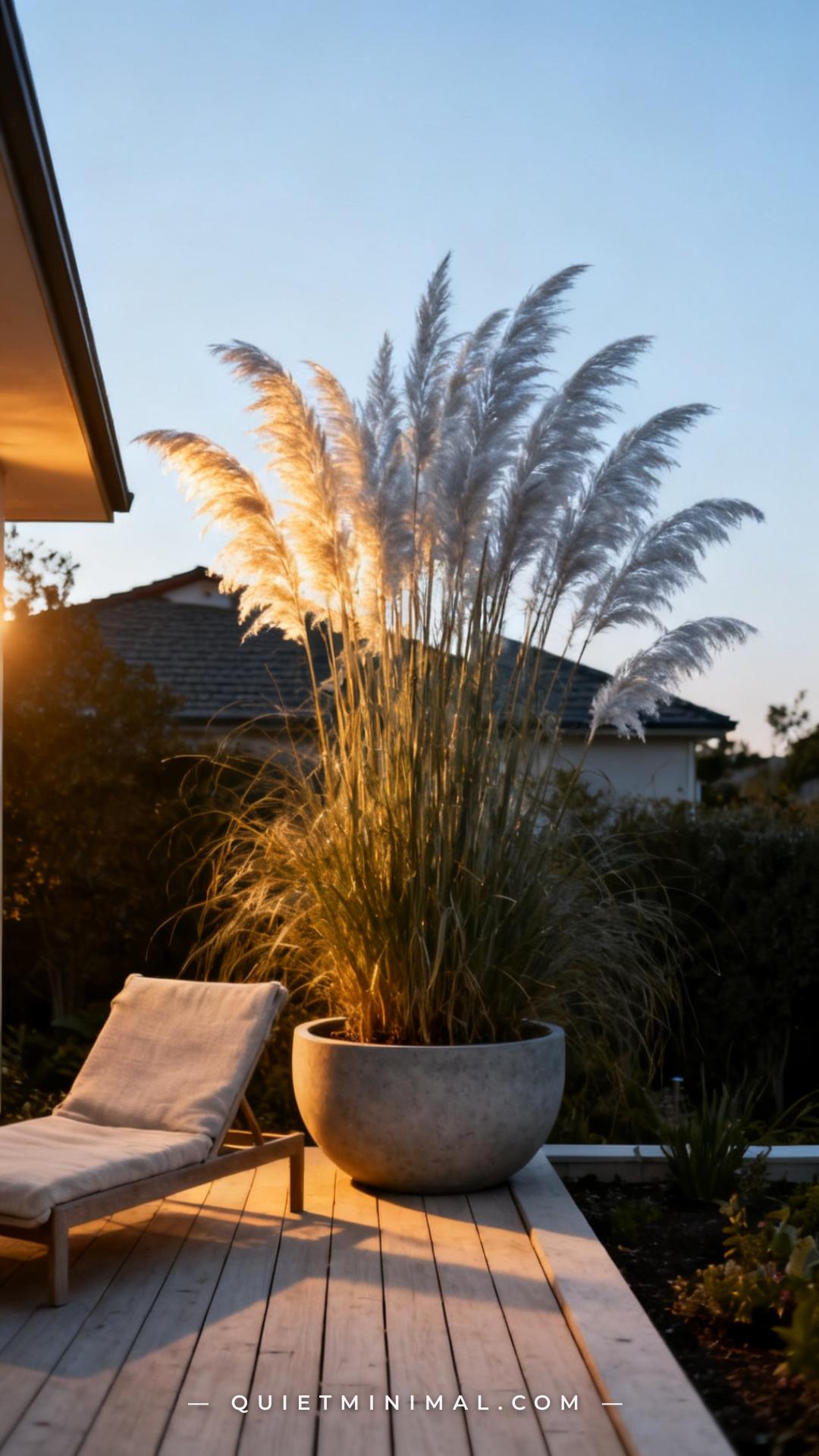
Pampas grass (Cortaderia selloana) has had a sustained design moment for a reason: nothing else produces that level of soft visual drama at height. A single mature clump in a large container can reach six to eight feet and produces fluffy silver-white plumes from late summer into winter. For maximum impact, use one pampas grass as a standalone focal piece at the end of a deck or beside a seating area rather than planting it in a row — the architecture of the plant itself is enough.
The planter must be heavy and large: pampas grass develops a substantial root mass, and a lightweight or undersized container will either restrict growth or tip over in wind. Look for fiberglass planters that mimic concrete — they give the visual weight without the actual weight, which matters if you’re placing this on a deck with load limits.
Key Takeaway: One oversized pampas grass in a heavyweight planter creates a dramatic, pavilion-like privacy screen that earns its space as sculpture and function.

4. Layer Grasses with Tall Perennial Shrubs in the Same Planter
 Save
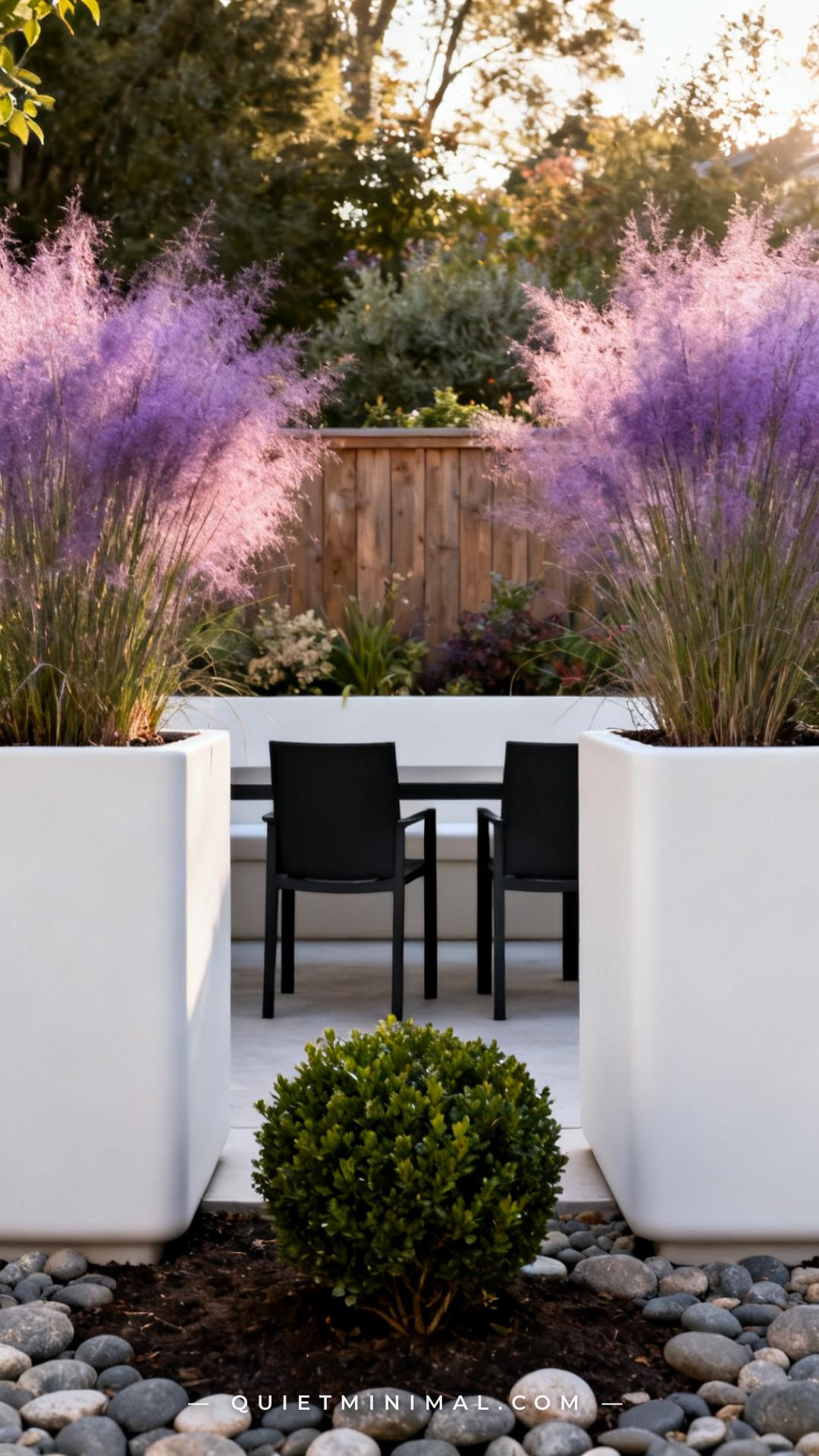
A planter filled with only one species of grass looks complete but thin. Layering a tall grass at the back of a deep rectangular planter with a lower compact evergreen shrub in front creates a privacy screen that works in all four seasons — the grass provides height and softness from spring through fall, the shrub holds structure through winter when the grass dies back or goes dormant.
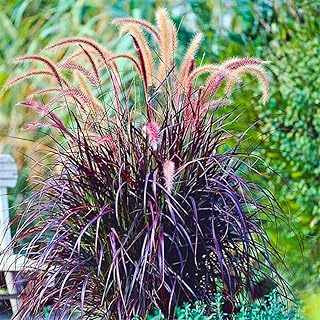
Purple muhly grass (Muhlenbergia capillaris) is an excellent back-row choice: it reaches three to four feet and produces spectacular pink-purple cloud-like blooms in September and October. Pair it with compact boxwood, dwarf inkberry holly, or little bluestem at the front. The result is a planter that looks professionally designed and functions as a multi-season screen.
Key Takeaway: Layering one tall grass with one compact evergreen in the same deep planter gives you a privacy screen that holds structure through all four seasons.
5. Create a Planter and Trellis Hybrid Screen
 Save
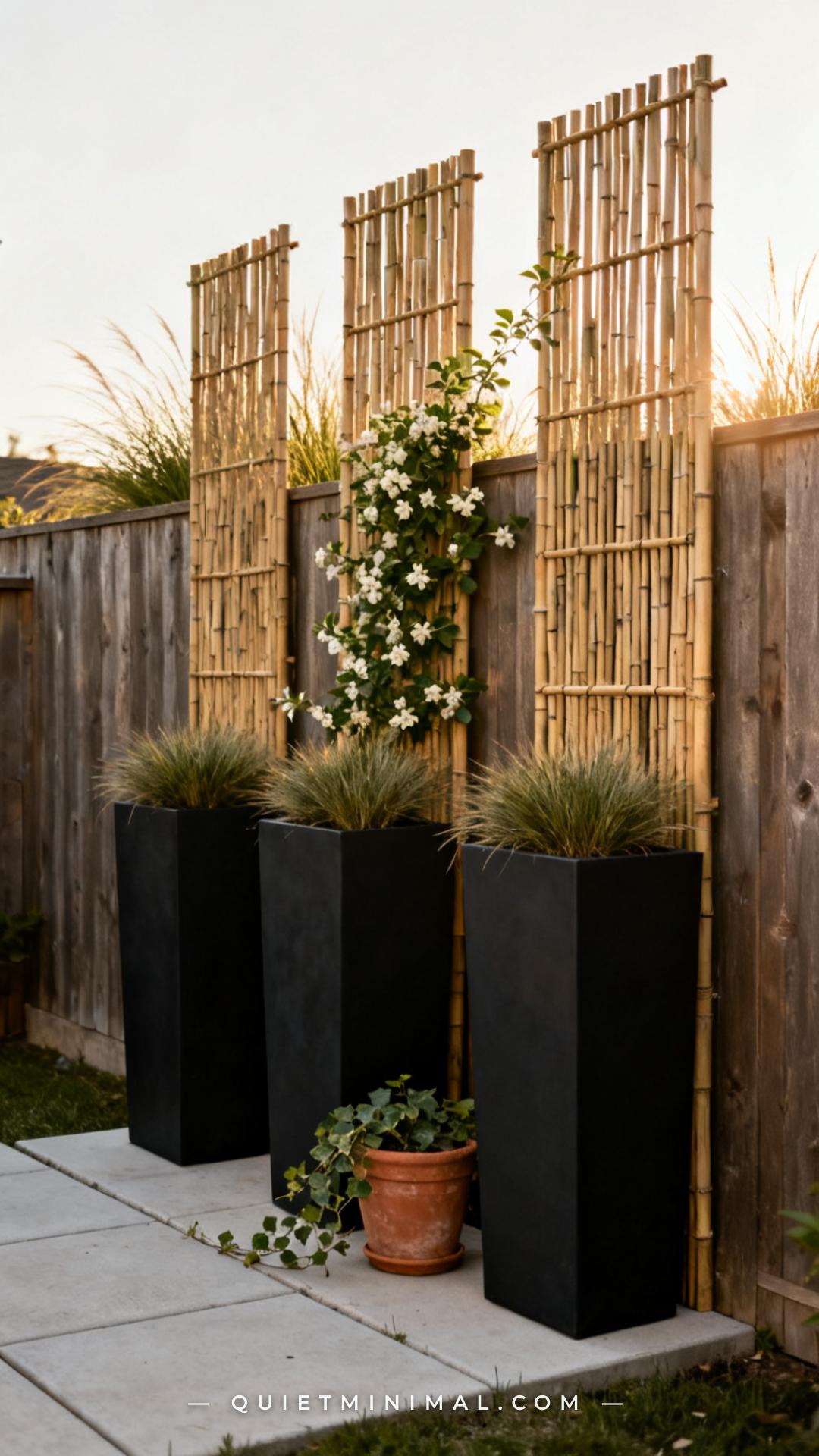
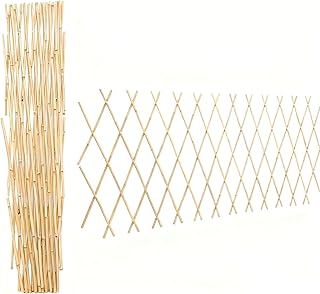
Tall grasses max out at six to eight feet in containers. If your privacy problem requires ten or twelve feet of screening — facing a second-story window or a raised neighbor’s deck — combine a large planter with a freestanding bamboo trellis panel inserted into or positioned directly behind the container. The grass fills the planter naturally and obscures the base of the trellis; a climbing vine trains up the trellis above.
Use a trellis with a base stake or foot bracket so it doesn’t depend on the planter for stability. Jasmine, climbing hydrangea, and black-eyed Susan vine are all good climbers for this setup. The hybrid reads as a single designed element — not two separate things duct-taped together — because the grass at the base visually connects the trellis to the ground.
Key Takeaway: A planter-and-trellis hybrid solves privacy problems above six feet without requiring a structural fence or a permit.
6. Use Matching Planters to Define the Edge of an Outdoor Dining Area
 Save
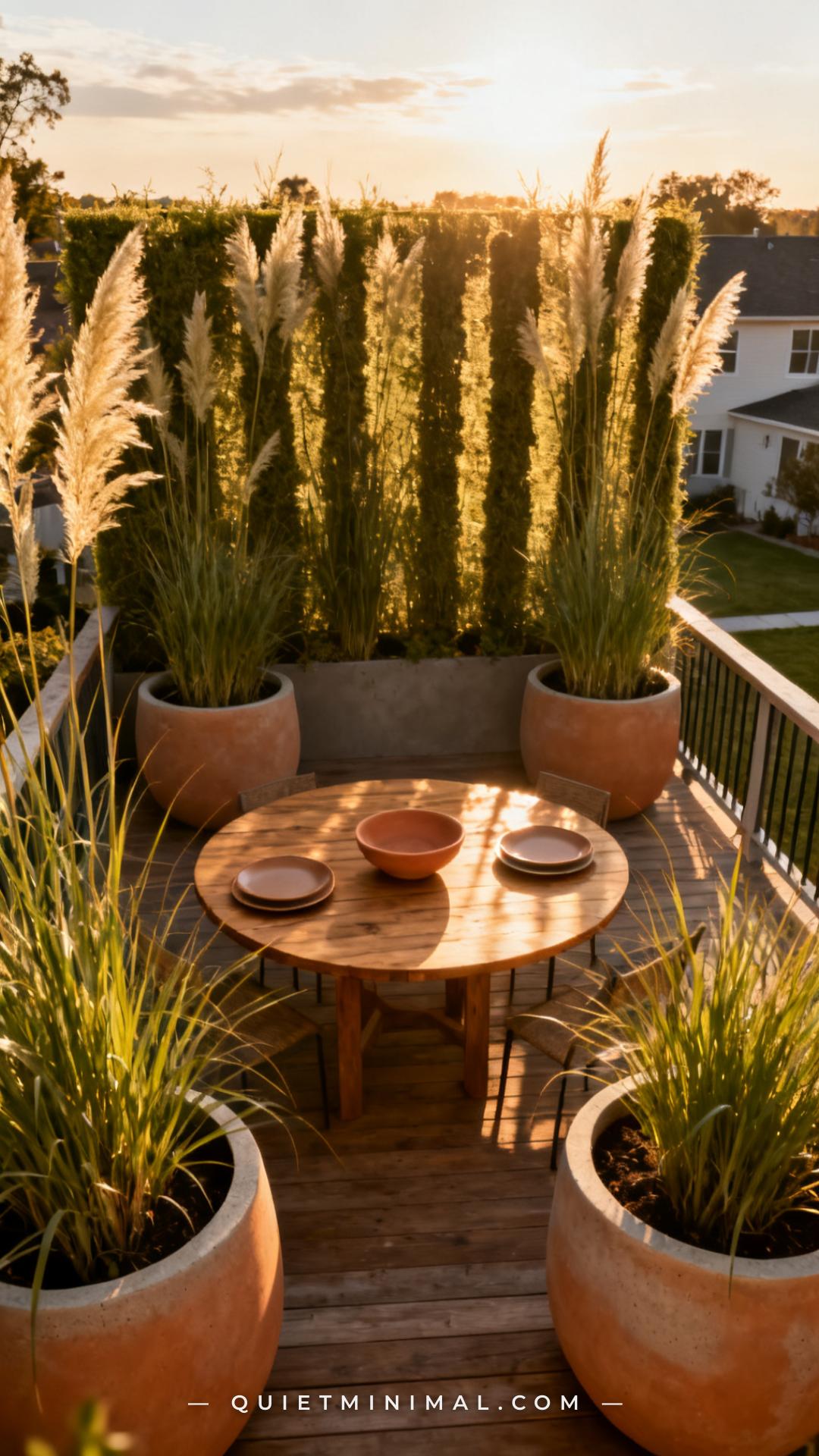
Planters used for privacy don’t have to line a fence — they can define a spatial boundary for an outdoor dining or lounge area, functioning as both a room divider and a screen. Three to five matching large-round planters spaced evenly along the open side of a deck or patio create a living wall that signals “this is where the private dining zone ends.”
Karl Foerster feather reed grass is ideal for this role because of its vertical, columnar growth habit. It doesn’t arch out like maiden grass — it grows straight up, which means it occupies less horizontal footprint per planter. On a deck where square footage is limited, that vertical efficiency matters. Space planters 18 to 24 inches apart on center; close enough to read as a continuous screen when viewed from across the yard, open enough for air circulation around each plant.
Key Takeaway: Matching planters with upright columnar grasses define the edge of an outdoor dining zone while screening it from neighbors in the same gesture.

7. Build a Rolling Planter Screen for Renters
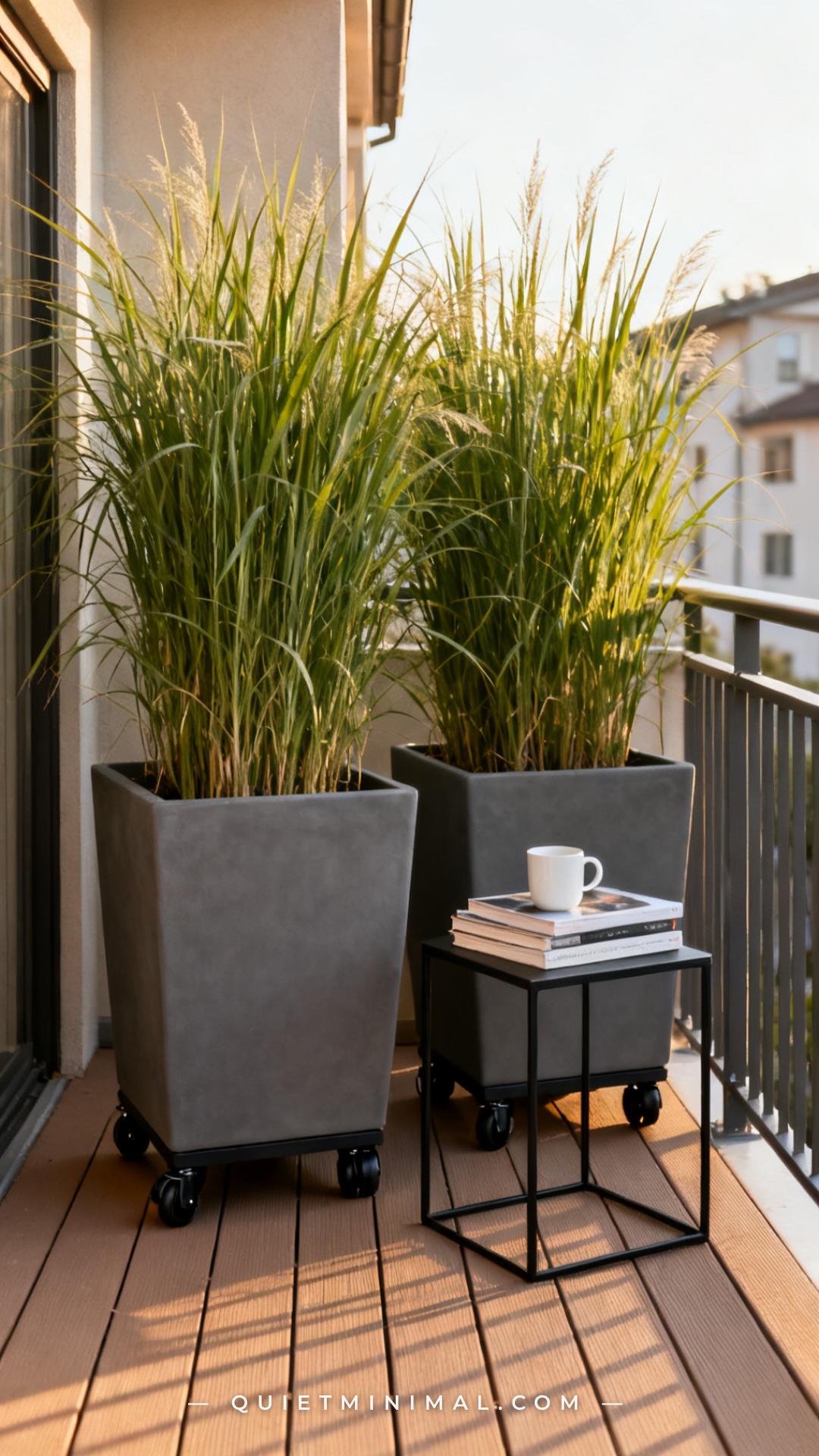 Save
For renters — or anyone who rotates seating areas seasonally — a rolling planter changes everything. A large planter on heavy-duty locking caster wheels can be repositioned based on the time of day (blocking the morning sun from a neighbor’s sightline) or season (moving indoors during winter to protect the grass root mass). Rolling planters also mean you never have to lift a container that, fully planted and watered, can weigh 80 to 150 pounds.
Use casters rated for outdoor surfaces (look for weather-resistant ball bearings and rubber wheels that won’t mark decking). The locking mechanism on each caster is non-negotiable — a 150-pound grass-filled planter on a sloped deck or balcony that rolls is a real safety problem. Opt for planters with a flat base rather than tapered feet so the caster plate has full contact.
Key Takeaway: Heavy-duty locking caster wheels turn any large planter into a moveable privacy screen that goes where you need it without requiring permanent installation.

8. Use Blue Oat Grass for a Year-Round Evergreen Screen
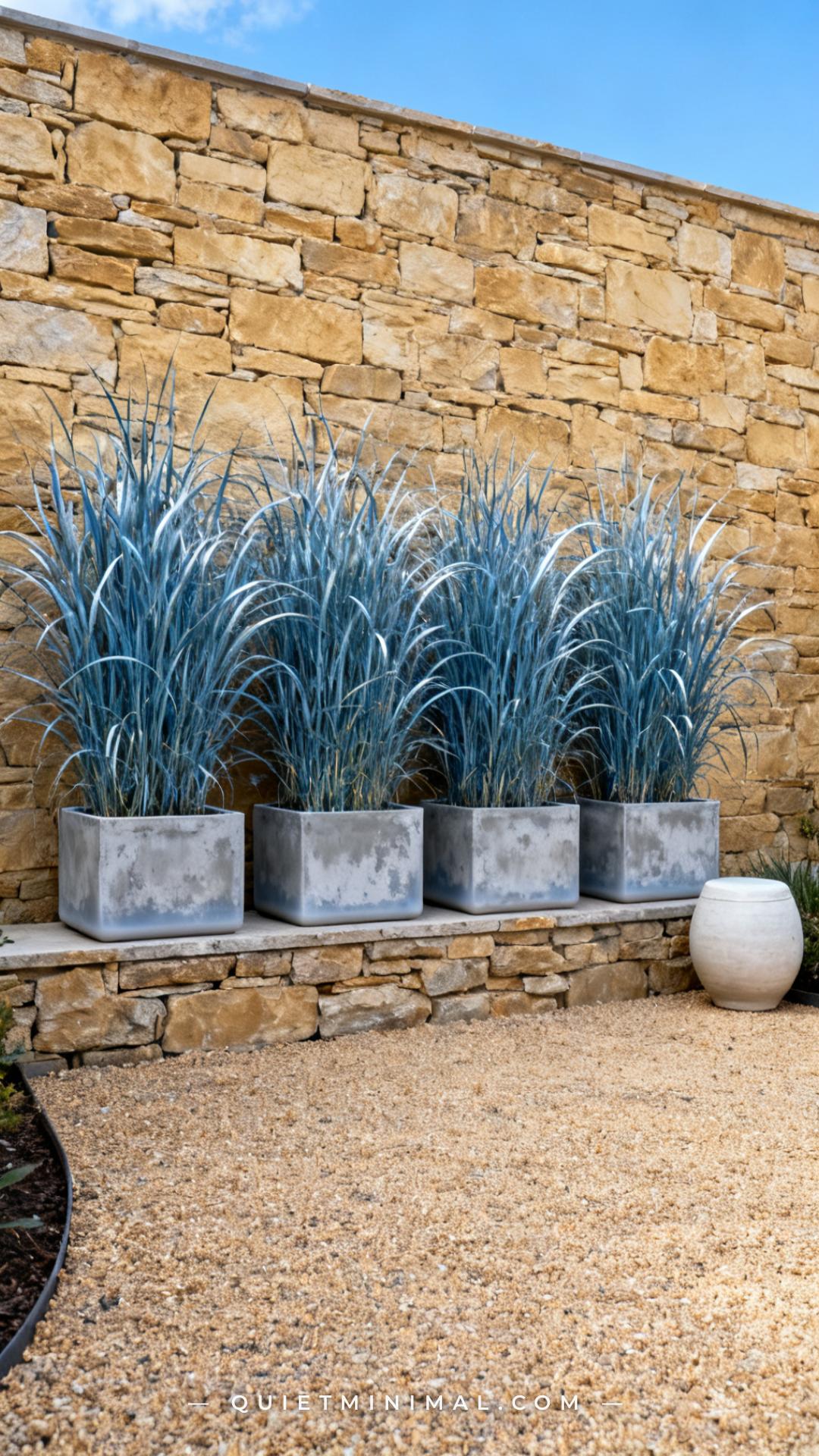 Save
From the guides
You've saved it, wanted it. Here's the how: codes, measurements, order. Your choices make it yours.
The Japandi Honest PlaybookThe honest version of the style: what to keep, what to skip, and the order to do it in.See inside →The Room Refresh PlaybookA repeatable four-step method, room by room, in ten minutes, thirty minutes, or one weekend.See inside →Make Any Room Feel Cozy on PurposeWhy some rooms hold people and others empty out, and the moves that change it.See inside →Most tall ornamental grasses are deciduous — they die back in winter and leave empty planters for three to five months. If your privacy need is year-round rather than seasonal, blue oat grass (Helictotrichon sempervirens) is one of the few true evergreen ornamental grasses hardy in most US climates (zones 4–9). It reaches two to three feet with a similar spread, maintains its steel-blue blade color through winter, and requires almost no maintenance beyond dividing every three to four years.
Because blue oat grass is shorter than Miscanthus or Karl Foerster, use it as a mid-layer component — grouping three or four in a medium-sized planter at table height to screen a seated sightline, or positioning planters on a raised platform (a low deck step, a planter stand) to gain the extra height needed for a standing sightline.
Key Takeaway: Blue oat grass gives you a true year-round evergreen screen in a planter without the installation complexity of boxwood or holly hedging.

9. Pair Raised Beds with Tall Grasses for a Garden-Room Feel
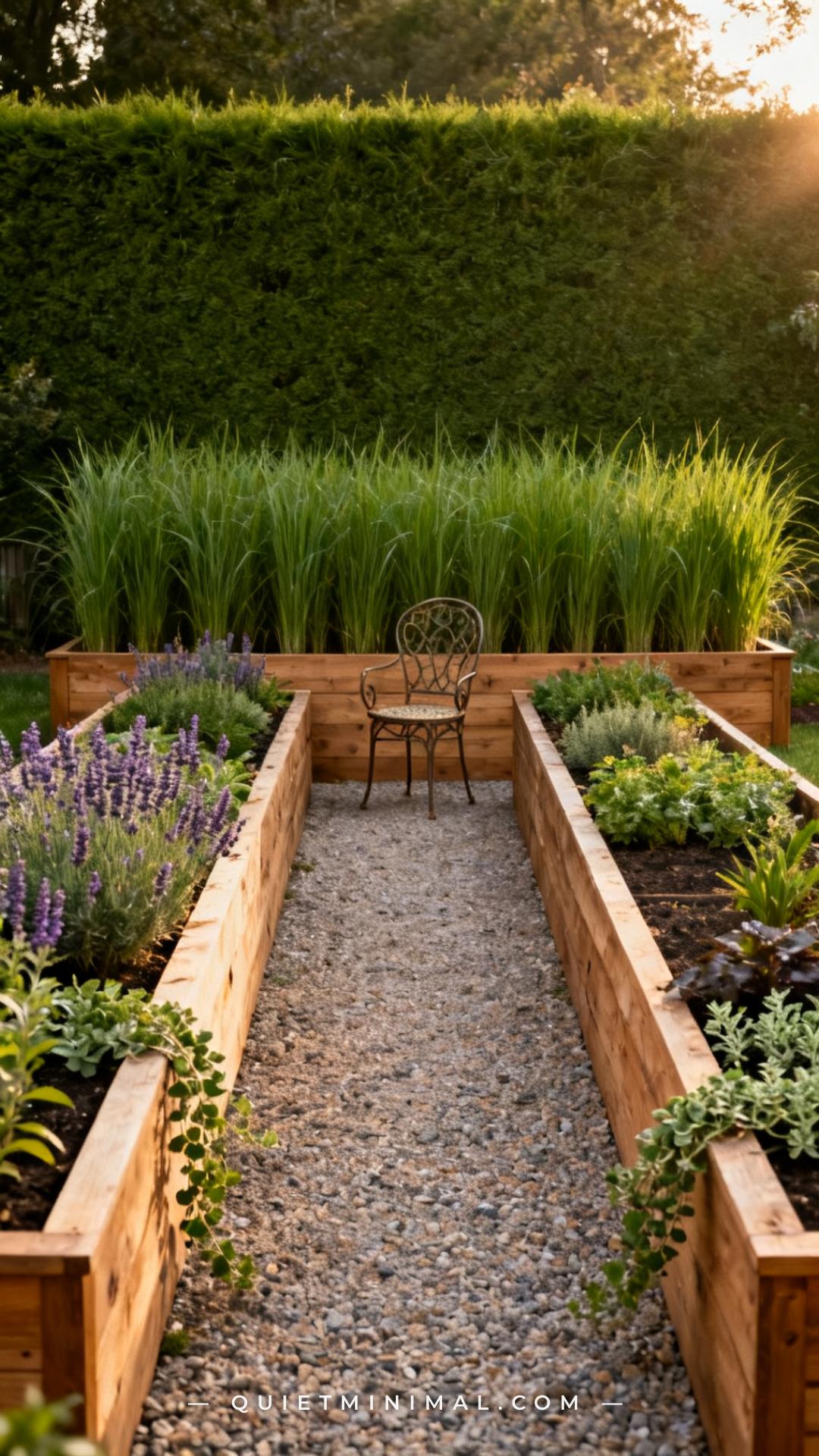 Save
Raised planter beds add 18 to 24 inches of elevation to whatever you plant in them — which means a grass that would reach four feet at ground level now effectively screens at five and a half to six feet when the raised bed height is added. This elevation gain is the design hack that makes smaller ornamental grasses viable for full standing-height privacy.
Build or buy raised beds in cedar or rot-resistant composite. Position them parallel to the boundary you want to screen, plant Karl Foerster or switchgrass (Panicum virgatum) along the back row, and use the front rows for herbs, strawberries, or flowering perennials. The result is a productive garden that earns its keep aesthetically and functionally — the grasses provide privacy, the front planting provides beauty and harvest. This is the format garden designers use when they want screening to feel like a designed landscape rather than a utility fix.
Key Takeaway: Raised beds give your ornamental grasses a natural height boost, turning a four-foot grass into a six-foot privacy screen without container upsizing.

10. Use Oversized Glazed Pots for a Luxe Courtyard Effect
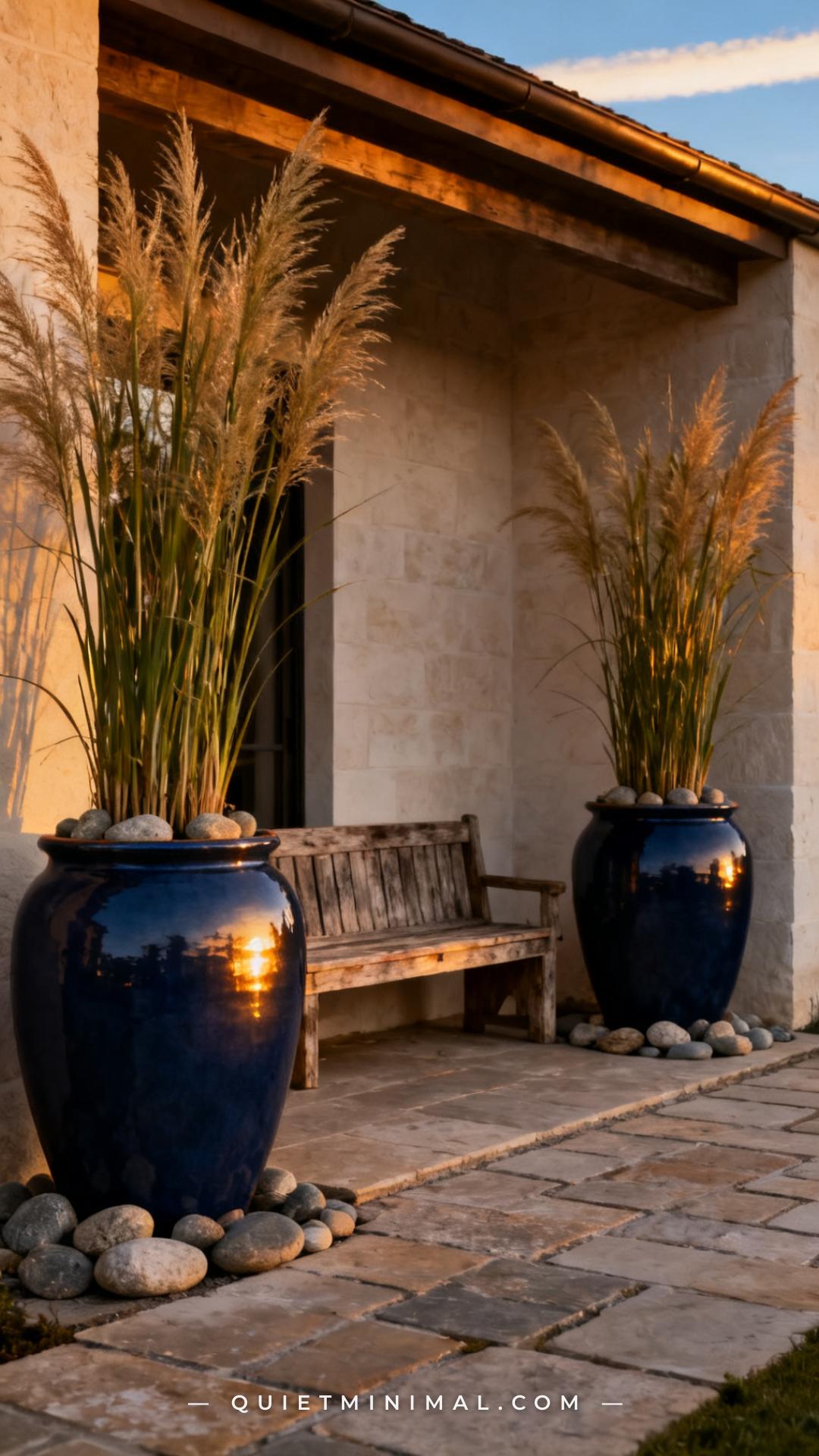 Save
Most privacy-planter setups default to matte gray or black containers — practical but not particularly beautiful up close. Oversized glazed ceramic pots change the register entirely. A deep navy, forest green, or warm amber glazed pot holding a tall ornamental grass functions as a piece of outdoor sculpture at the same time as a privacy anchor. The reflective depth of a glaze finish reads as high-end in a way that plain resin or concrete never does.
The trade-off is weight: large glazed ceramic pots can weigh 60 to 100 pounds empty. Place them on their permanent spot before filling — you won’t be moving them with a mature grass inside. Ensure the planting location is on stable, level ground. Drill additional drainage holes if needed; ceramic pots often come with a single central hole that’s adequate for most plants but limiting for grasses that prefer fast drainage.
Key Takeaway: A large glazed ceramic pot elevates your privacy planter from functional utility to outdoor sculpture — it earns its space on aesthetics alone, with the grass adding function.

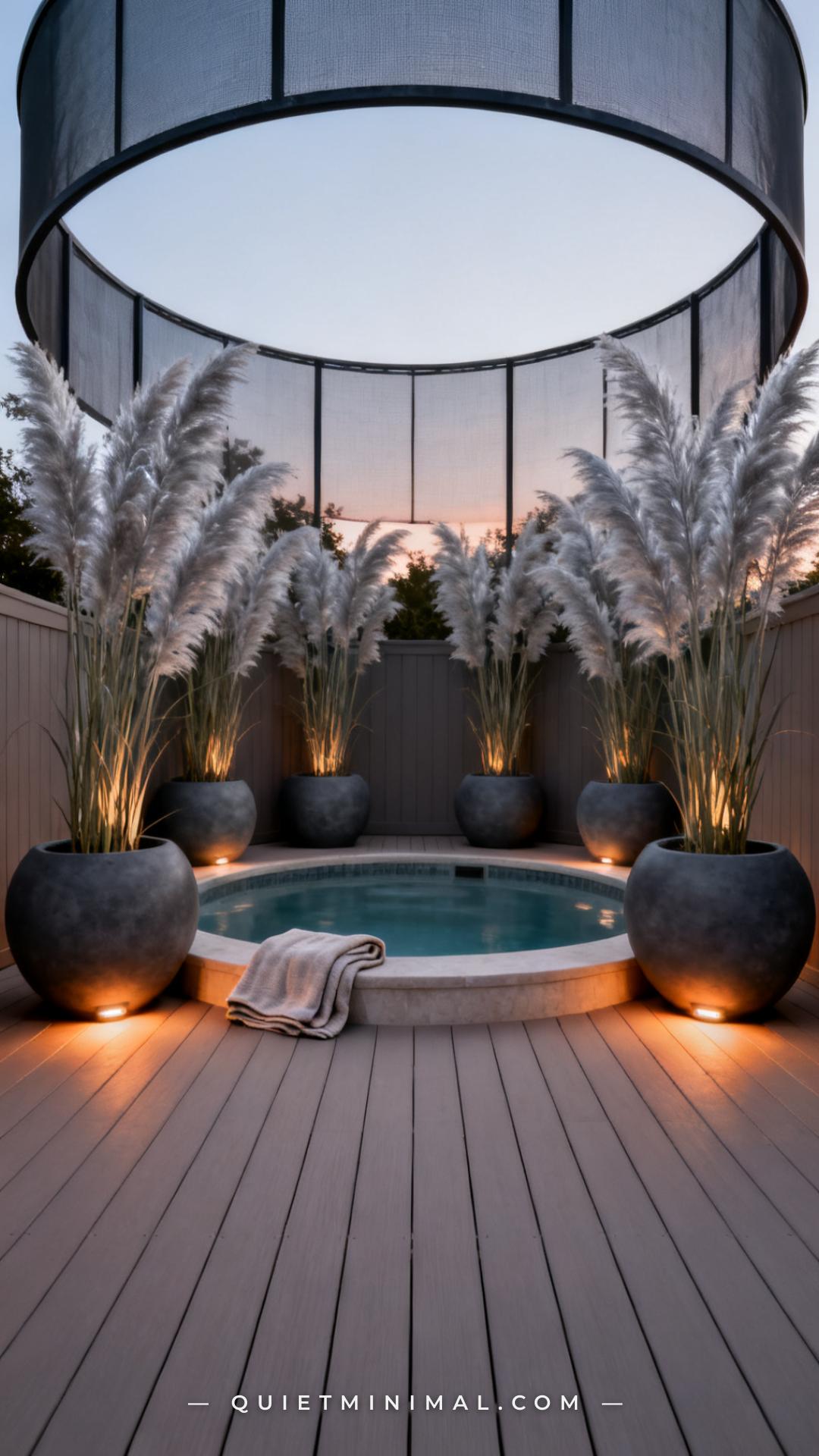
11. Screen a Hot Tub or Pool Area with a Grass Planter Perimeter
 Save
A hot tub or pool deck is one of the highest-privacy-need zones in any backyard — you’re using it when you most want to feel unobserved. The problem with standard solutions (a fence addition, a pergola screen) is that they require permits and contractor involvement. A curved arrangement of large planters with tall pampas grass creates an effective privacy perimeter that you install yourself in an afternoon.
Curve the planter arrangement rather than positioning planters in a straight line — a gentle arc around the tub’s exposed side feels more like a natural landscape and less like a barricade. Use uplighting at the base of each planter (a small solar-powered ground spike light works perfectly) to make the grass glow in the evening hours when the hot tub is most used. The lit plumes overhead create an atmosphere that feels resort-caliber at a fraction of the cost.
Key Takeaway: A curved pampas grass planter perimeter gives a hot tub or pool area genuine privacy and genuine atmosphere — two things a straight board fence cannot do simultaneously.

12. Winterize Your Planter System So It Survives and Returns
 Save
A modular planter system is only worth investing in if it comes back next spring. Most ornamental grasses are hardy in their planted zones, but containers are more vulnerable to freeze-thaw cycles than in-ground plantings — the roots are exposed on all sides to cold air rather than protected by soil mass. In USDA zones 6 and colder, take two steps: wrap planters in burlap or bubble-wrap insulation in November, and move any pots that hold zone-borderline grasses (pampas grass is zone 7–11) into an unheated garage or basement for winter.
Leave the top growth standing through winter — do not cut grasses back until March. The standing blades protect the crown from frost and provide winter interest in the garden. Karl Foerster, in particular, holds its warm amber seed heads through December and looks genuinely beautiful under frost. Cut to four to six inches above the crown in early spring before new growth emerges.
Key Takeaway: Insulating your planters in fall and leaving grass blades standing through winter protects your investment and means the entire system returns stronger the following spring.

The most important thing to understand about a grass-and-planter privacy system is that it’s not a one-weekend project — it’s a living design that gets better every year as the plants mature and you refine the arrangement. Start with one statement corner planter and one verified grass variety. Get a feel for how it grows, how it moves, how it reads from inside and outside your yard. Then add the next layer: a staggered row, a raised bed, a rolling planter for the patio. Within two growing seasons, most people who start this system end up with a yard that feels completely private, completely designed, and genuinely worth spending time in. Start the corner this weekend. The rest follows naturally.
From the guides
You've saved it, wanted it. Here's the how: codes, measurements, order. Your choices make it yours.
The Japandi Honest PlaybookThe honest version of the style: what to keep, what to skip, and the order to do it in.See inside →The Room Refresh PlaybookA repeatable four-step method, room by room, in ten minutes, thirty minutes, or one weekend.See inside →Make Any Room Feel Cozy on PurposeWhy some rooms hold people and others empty out, and the moves that change it.See inside → Save


