Georgia
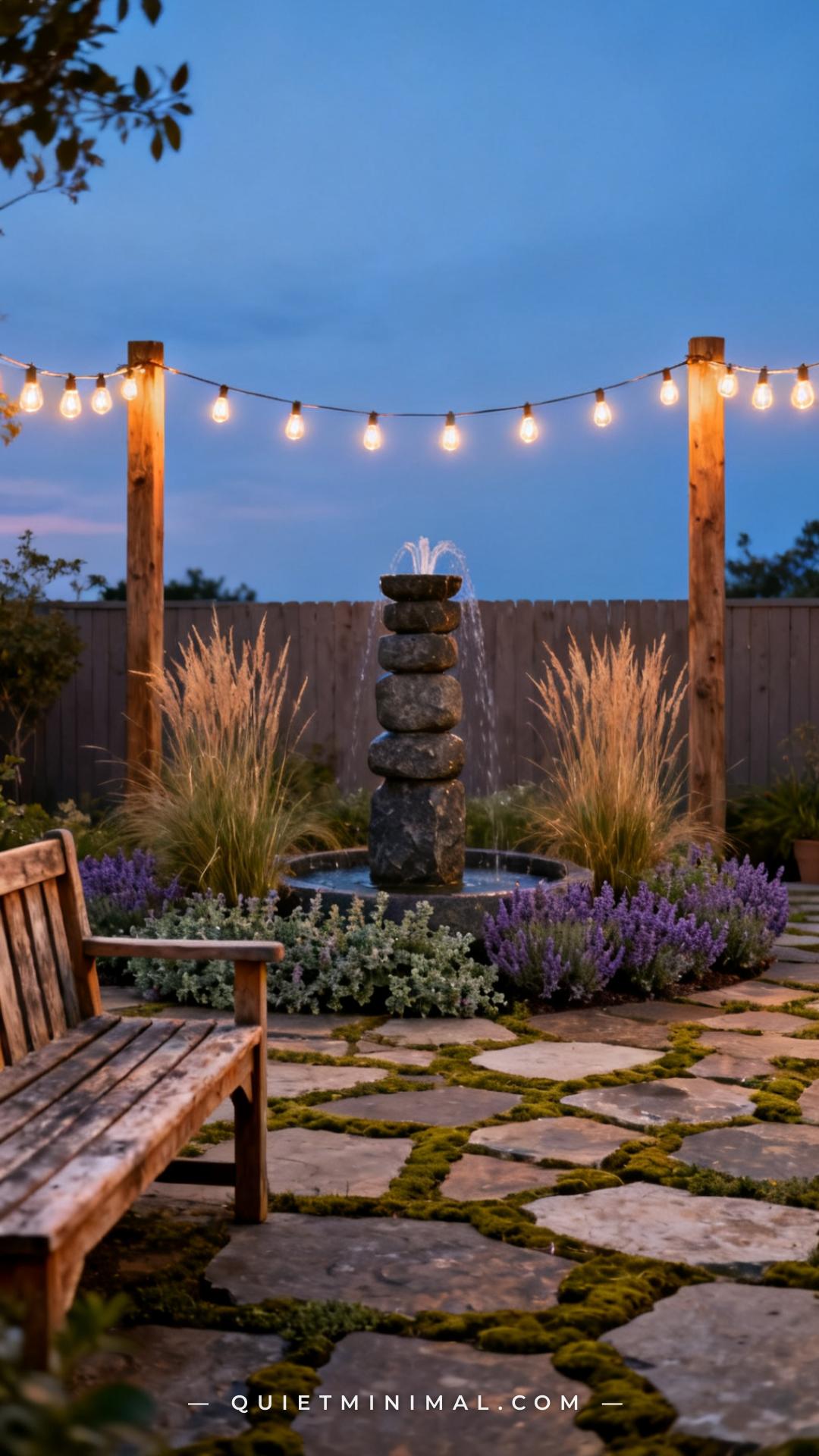
Your backyard doesn’t need an infinity pool or a landscape architect on retainer to feel like somewhere you actually want to stay. A well-chosen water feature — paired with the right plants, lighting, and layout — does more for the retreat atmosphere than almost any other single upgrade. The sound alone changes how you experience the space. The problem is that most water feature inspiration shows you the object without showing you how to make it land. A beautiful fountain sitting alone on a concrete pad doesn’t feel like a retreat. A fountain set within a planted alcove, edged with ornamental grasses and lit from below at dusk? That’s a different experience entirely.
This guide covers ten backyard water feature ideas that are designed to feel complete — not just to look good in a photo. Each one includes what to pair it with, what to realistically expect in terms of maintenance, and why it works for a yard that isn’t mansion-sized.
1. The Basalt Column Fountain With a Planted Surround
 Save
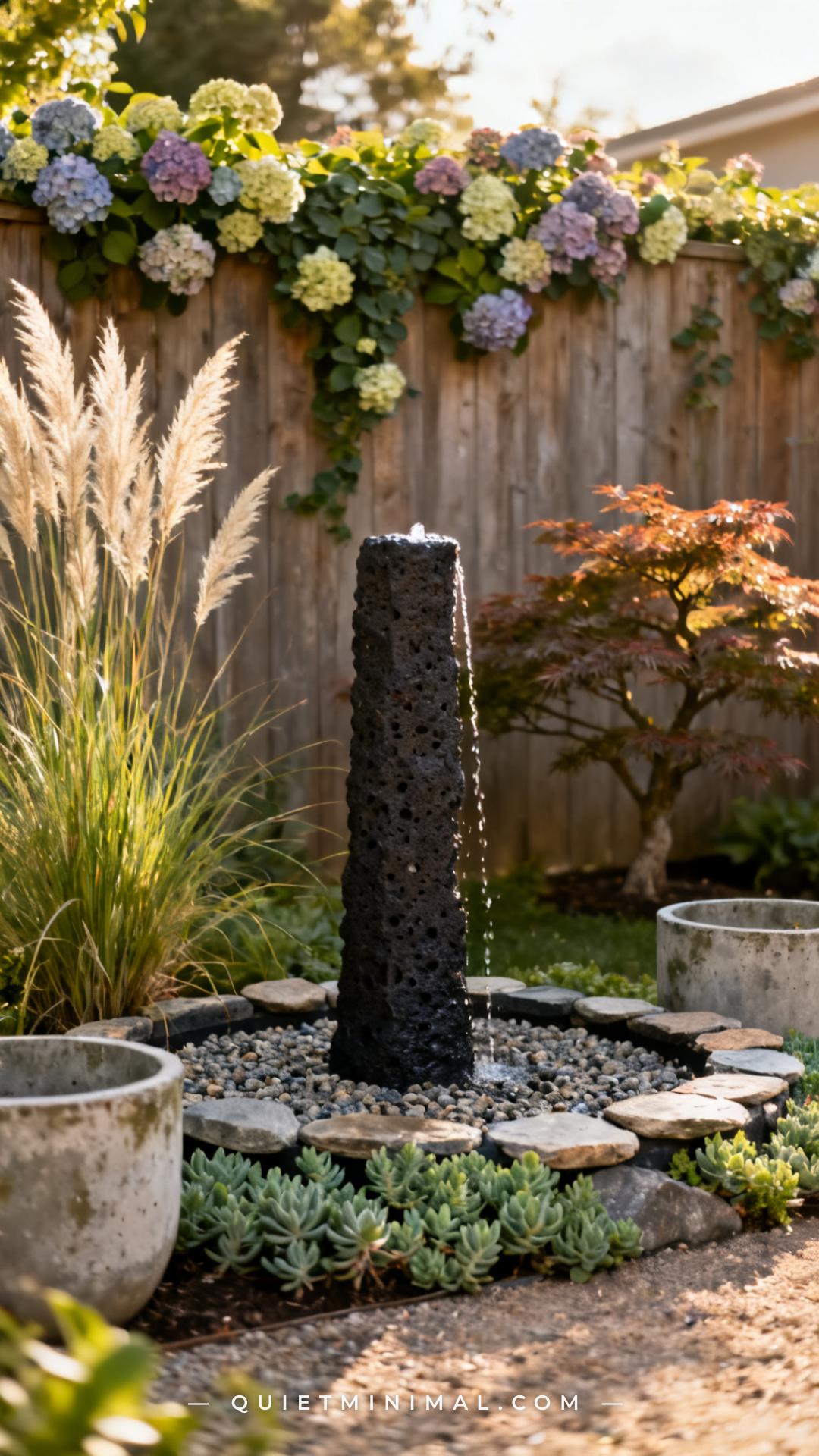
A basalt column fountain is the most reliable way to get that high-end spa-resort feeling without the price tag of a full pond installation. The column itself — typically a solid cylinder of dark volcanic rock drilled through the center for a pump tube — produces a quiet, consistent trickle rather than a loud splash. That sound level matters: it’s audible enough to mask ambient street noise but not so loud that it dominates conversation.
From the guides
You've saved it, wanted it. Here's the how: codes, measurements, order. Your choices make it yours.
 The Japandi Honest PlaybookThe honest version of the style: what to keep, what to skip, and the order to do it in.See inside →
 The Room Refresh PlaybookA repeatable four-step method, room by room, in ten minutes, thirty minutes, or one weekend.See inside →
 Make Any Room Feel Cozy on PurposeWhy some rooms hold people and others empty out, and the moves that change it.See inside →
The design move that separates this from a generic yard fountain is the planted surround. Group the column inside a loose crescent of feather reed grass (Calamagrostis acutiflora ‘Karl Foerster’) — its vertical lines echo the column — and edge the gravel reservoir basin with creeping thyme or woolly thyme, which fills in the gaps and releases fragrance when brushed. The gravel should be dark river stone or black lava rock, not beige pea gravel, to keep the palette from looking muddy.
Maintenance note: basalt column fountains are among the lowest-effort options available. The pump lives submerged in the reservoir basin and typically runs without attention for an entire season. Top up the water level every 1–2 weeks in summer. Add a fountain algae treatment tablet monthly.
Key Takeaway: Pair the basalt column with vertical grasses and creeping groundcover so the fountain reads as part of a composed planting scene, not a prop dropped into gravel.

2. A Pondless Waterfall Built Into a Slope
 Save
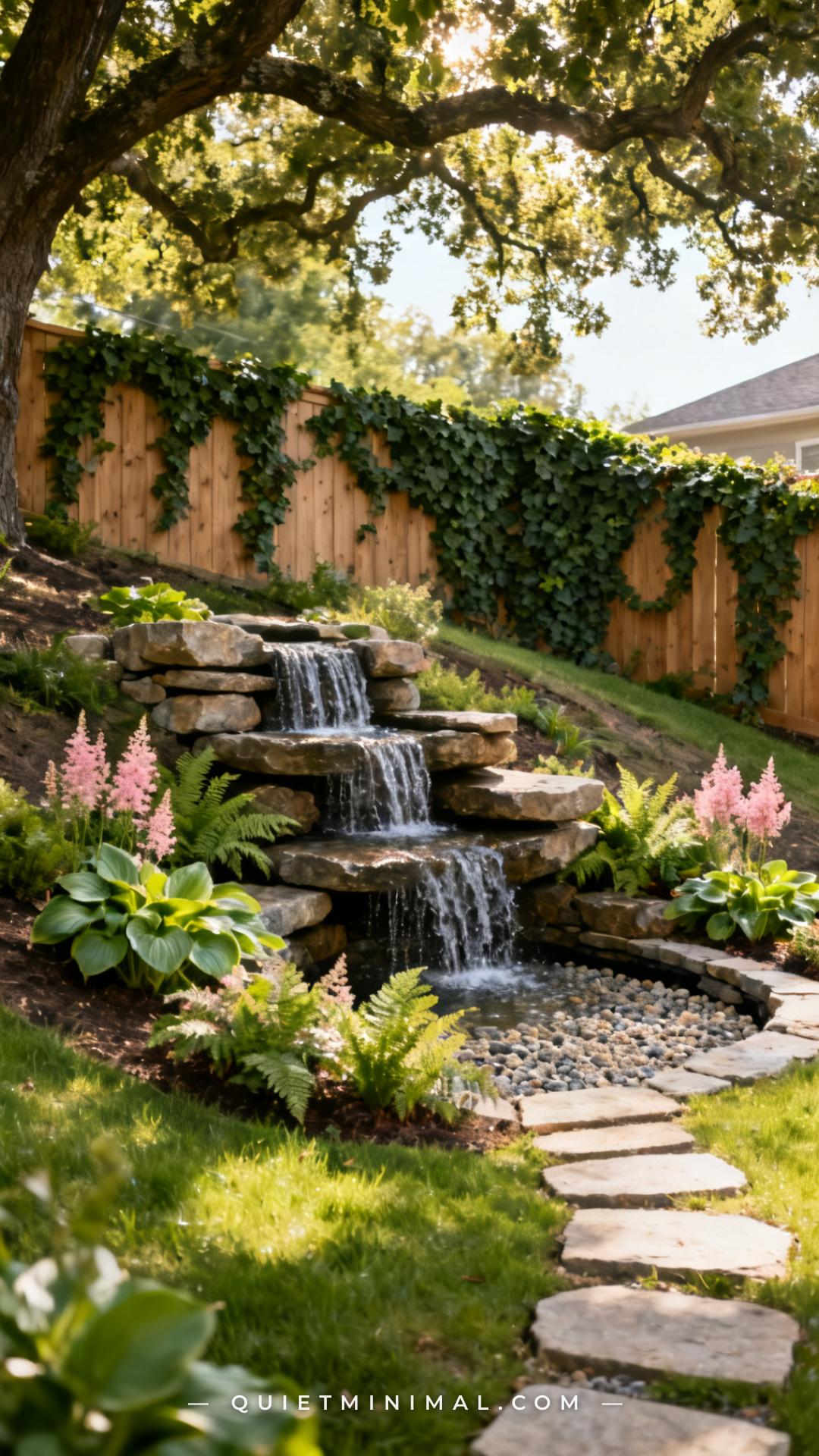
If your backyard has any grade change at all — even a gentle 18-inch slope — a pondless waterfall is your best option for achieving that mountain-stream sound and look without a standing pond. The “pondless” design means the water flows down stacked stone and disappears into an underground reservoir basin. There’s no open water to manage, no pond liner exposed to UV damage, and no standing water for mosquito breeding.
The retreat effect comes from the sound volume: a pondless waterfall is significantly louder than a column fountain, which is actually a feature here. That white noise fills the entire yard and blocks out neighboring conversations, traffic, and lawn equipment. It creates an acoustic boundary that makes the space feel more private than it actually is.
For planting, match the naturalistic feel by bordering the waterfall on both sides with shade-tolerant perennials. Hostas provide broad leaf texture. Astilbe adds soft vertical color in late spring. Ferns fill the lower edges and spill naturally over the stones. Avoid annuals here — the planting should look like it grew there, not like it was installed.
Key Takeaway: The acoustic privacy a pondless waterfall creates is as valuable as its visual impact — it makes a small yard feel removed from the neighborhood in a way no fence can replicate.

3. A Wall-Mounted Fountain for Small or Paved Yards
 Save
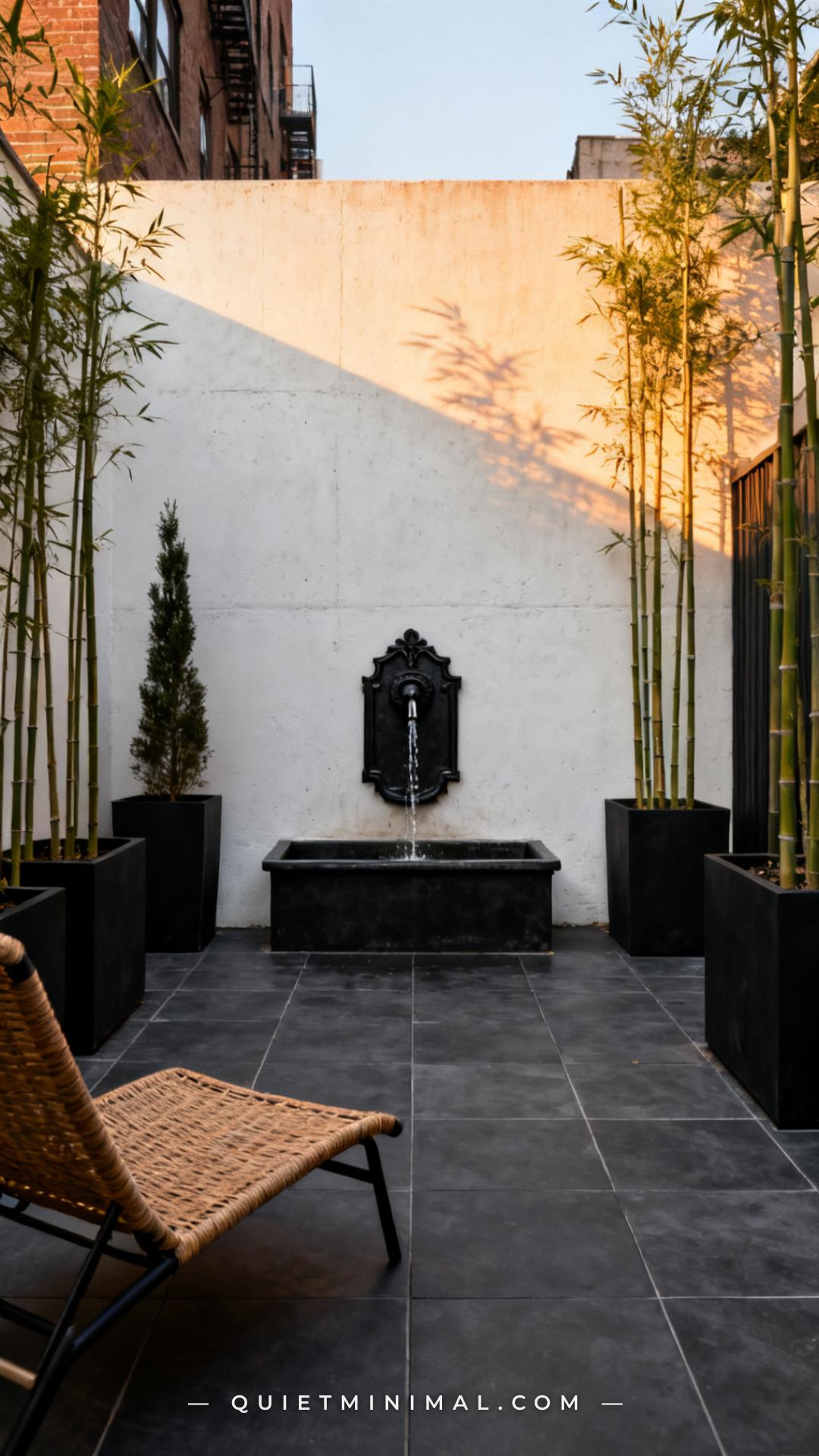
Not every yard has space for a freestanding feature. For a paved courtyard, a narrow side yard, or a deck situation where groundwork isn’t an option, a wall-mounted fountain is the only water feature that actually makes sense — and when it’s done right, it punches well above its spatial weight.
The key is to treat the wall as a full composition, not just a place to hang a fixture. Mount the fountain at eye level when seated (around 48 inches from the floor to the spout). On either side, add tall planters with bamboo, tall ornamental grasses, or columnar evergreens — plants that frame the fountain vertically and create the sense of enclosure that makes the corner feel like a destination. The sound of water hitting a shallow basin is softer than a waterfall; it works well in smaller patio settings where you don’t want the feature to overpower conversation.
Material selection matters a lot in small spaces. A matte black or weathered bronze fountain reads as intentional. Faux rock resin fountains in a paved setting look out of place — save the natural stone aesthetic for actual garden beds.
Key Takeaway: In a paved yard or deck, the wall-mounted fountain works only when the surrounding wall and planting are designed as a single composition — the fountain is the focal point, not the entire feature.

4. A Japanese-Inspired Tsukubai Stone Basin
 Save
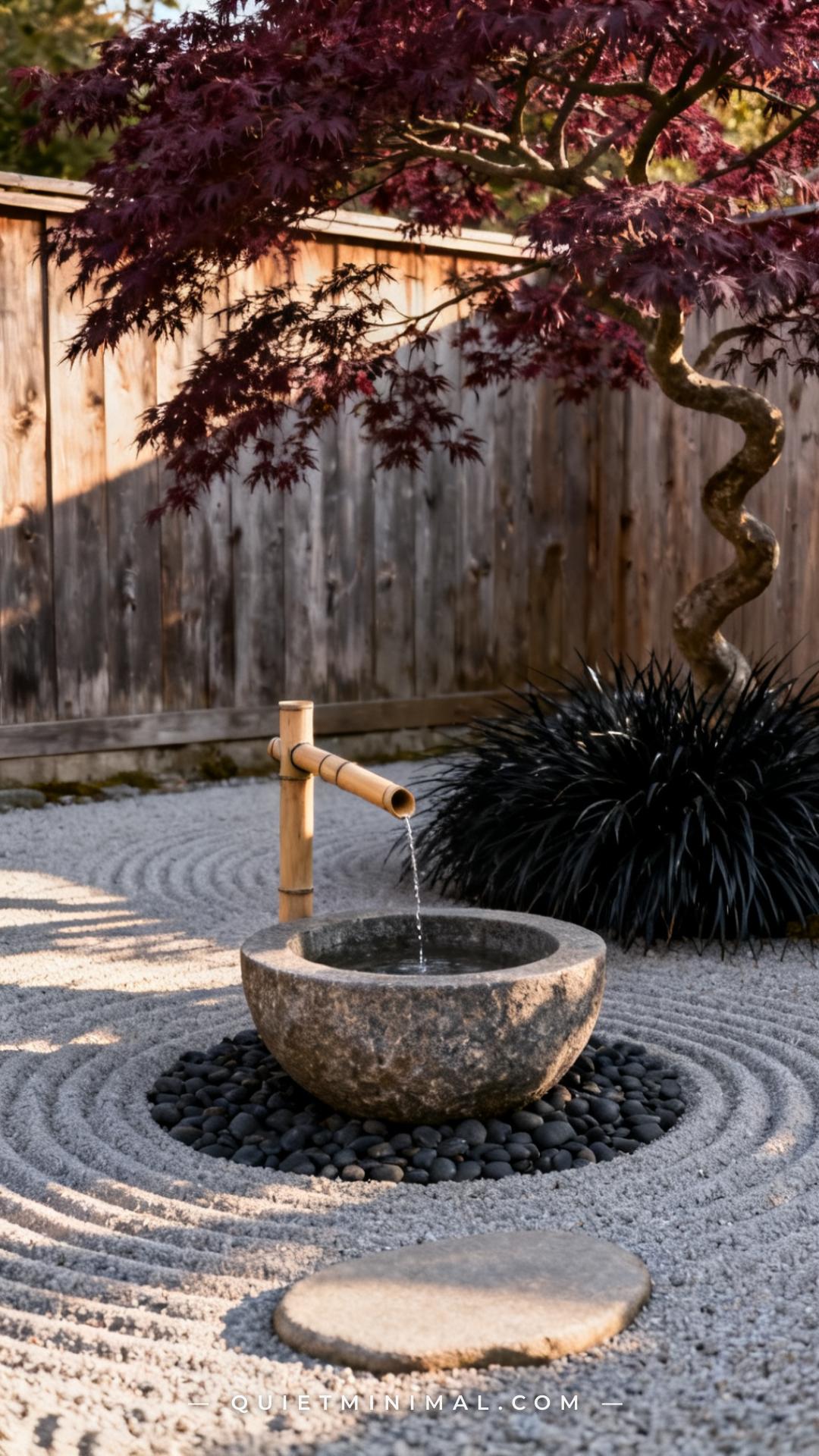
The tsukubai — a low stone water basin traditional to Japanese garden design — is the quietest water feature on this list, both visually and acoustically. The bamboo spout produces a delicate, almost meditative drip. The whole installation sits low to the ground and reads as a considered, calm detail rather than a statement piece.
This works particularly well in a backyard corner that already has some privacy screening — a cedar fence, a bamboo grove, or a mature hedge. The surrounding elements matter enormously: use dark pebble or raked pale gravel as the base, plant black mondo grass (Ophiopogon planiscapus ‘Nigrescens’) as a low border, and position a single Japanese maple overhead if the space allows. Keep the palette restrained — this feature falls apart in a busy, colorful planting scheme.
The pump here is very small and submersible; the bamboo spout simply recirculates water from the basin back up through a short tube. Setup is simple enough to complete in an afternoon.
Key Takeaway: The tsukubai’s power is restraint — pair it with a minimal palette of dark stone, fine-textured grass, and a single structural tree to achieve the stillness that makes the corner feel genuinely meditative.

5. A Solar-Powered Birdbath Fountain in a Garden Bed
 Save
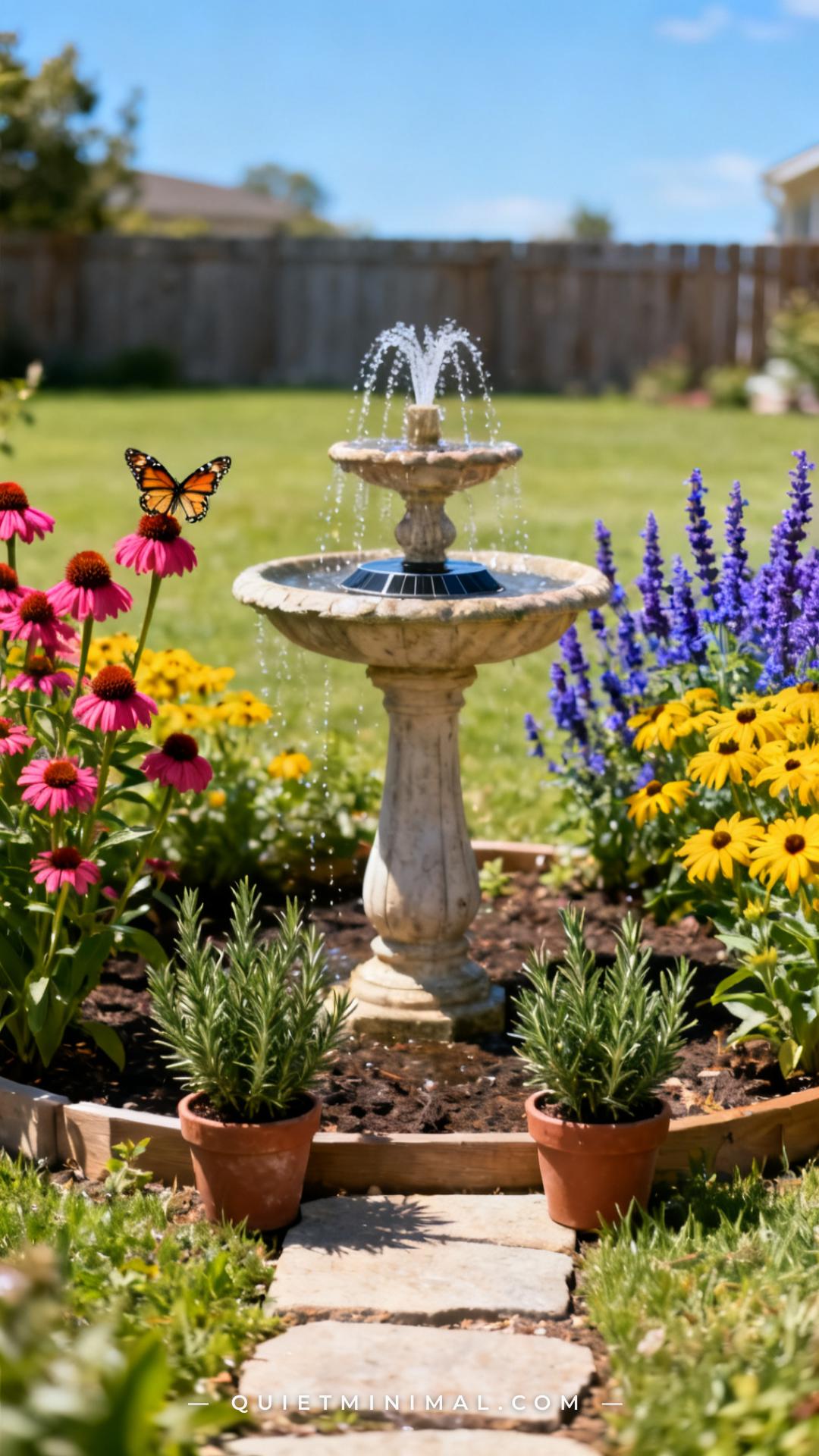
A solar fountain insert dropped into an existing birdbath is the lowest barrier-to-entry water feature on this list — and one of the most effective for creating that “living retreat” feeling, because it actually brings wildlife into the yard. Moving water draws birds in ways that still birdbaths simply don’t. Within a few weeks of installation, a garden bed with a solar fountain birdbath becomes an active, inhabited space.
The solar insert requires no wiring and no permits. It runs only when direct sun hits the panel, which means it’s most active during the brightest part of the day — exactly when you want sound and movement in the garden. Place it in a spot that gets at least six hours of direct sun.
Surround the birdbath with a pollinator-friendly planting scheme: coneflower, rudbeckia, salvia, and lavender all bloom sequentially from late spring through fall and pull in birds, bees, and butterflies. This turns the water feature into an ecosystem anchor, not just a decorative object — and that distinction is what makes the space feel truly retreat-like rather than staged.
Key Takeaway: Pair the solar birdbath fountain with a sequenced pollinator planting so the retreat experience includes sound, movement, and wildlife from spring through the first frost.

6. A Container Water Garden With a Mini Fountain Pump
 Save
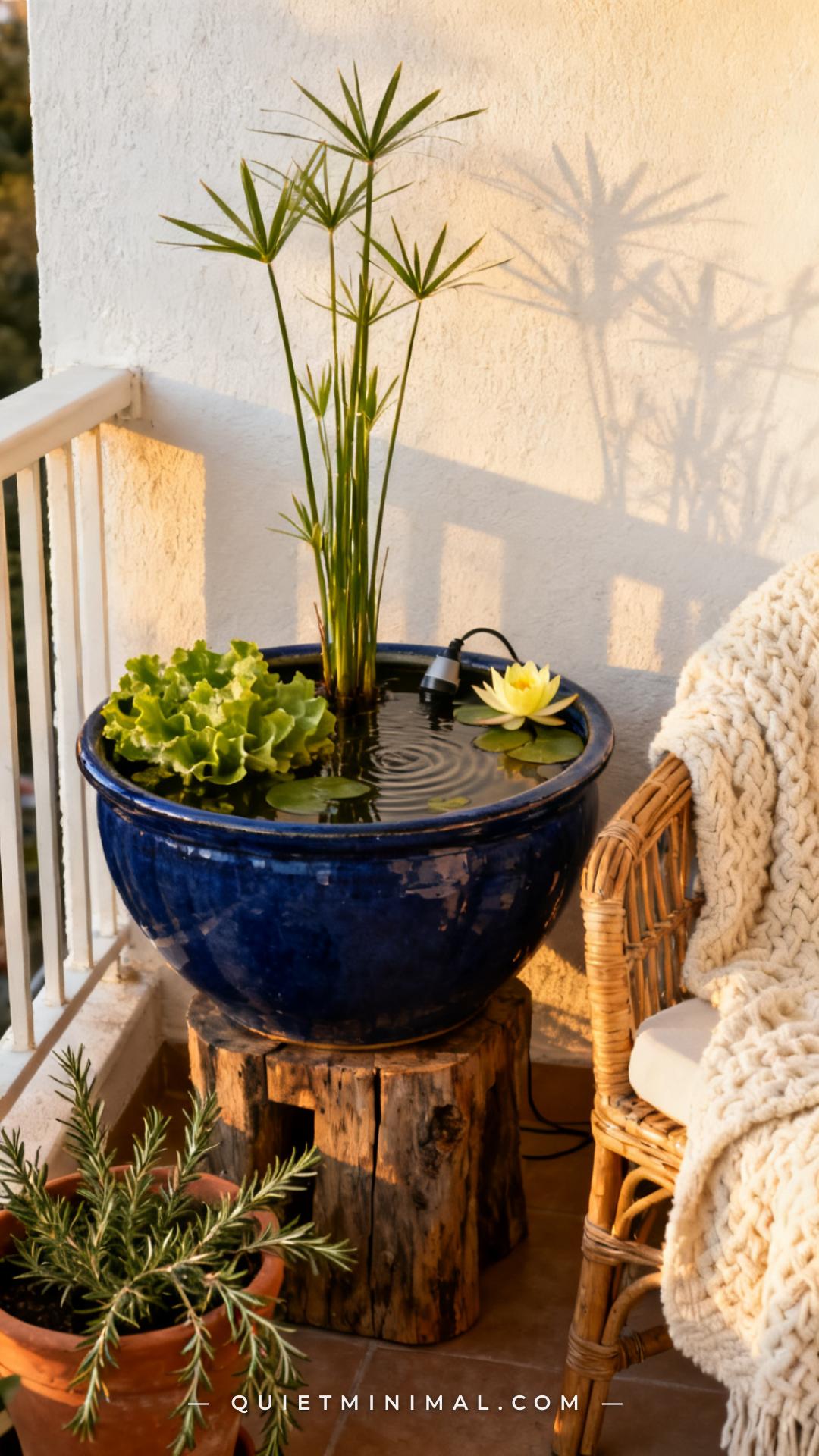
A container water garden brings moving water into the smallest outdoor space — a balcony, a 6-foot side yard, a small porch — with no digging, no permits, and no permanent infrastructure. All you need is a watertight container (a glazed ceramic pot or a half wine barrel with a liner), a submersible mini pump, and a few aquatic plants.
The plant selection makes or breaks the retreat feeling. Avoid the impulse to cram in too many species. Use one vertical plant for height (dwarf papyrus or rushes), one floating plant for coverage (water lettuce or frogbit), and optionally one blooming aquatic (a dwarf water lily or water iris) for color. That combination creates the sense of a miniature ecosystem rather than a tub of water.
The pump creates a surface ripple or small bubble fountain — quiet enough for a balcony, but present enough to register as a sound feature. Top up the water weekly in hot weather, and add a barley straw extract tablet to prevent algae. Full setup runs a single afternoon.
Key Takeaway: Use a three-plant formula — one vertical, one floating, one blooming — to turn a glazed container into a contained ecosystem that reads as a designed retreat element, not an afterthought.
From the guides
You've saved it, wanted it. Here's the how: codes, measurements, order. Your choices make it yours.
The Japandi Honest PlaybookThe honest version of the style: what to keep, what to skip, and the order to do it in.See inside →The Room Refresh PlaybookA repeatable four-step method, room by room, in ten minutes, thirty minutes, or one weekend.See inside →Make Any Room Feel Cozy on PurposeWhy some rooms hold people and others empty out, and the moves that change it.See inside →
7. A Naturalistic Koi Pond With an Overflow Waterfall Edge
 Save
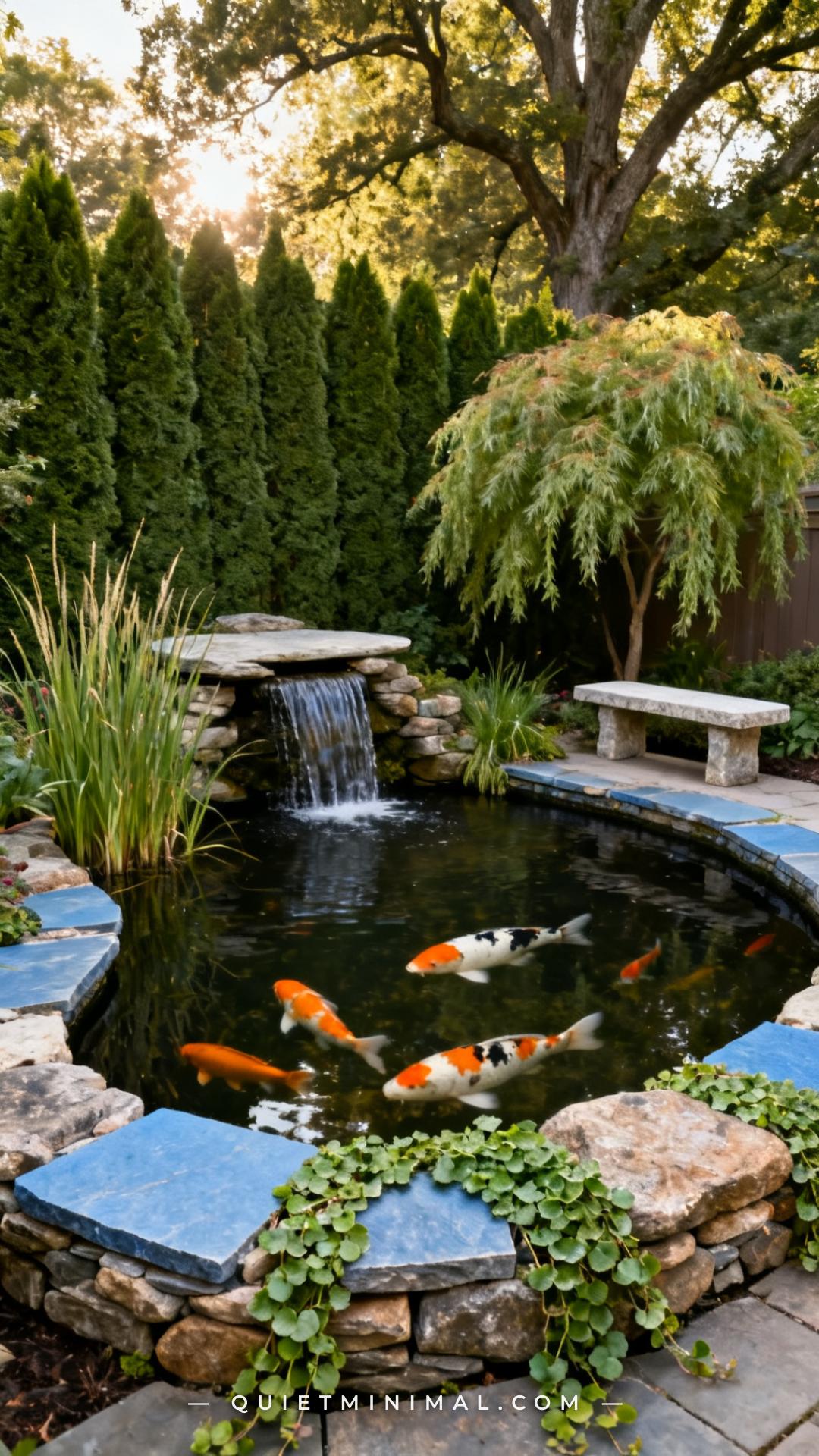
A koi pond is the most involved water feature on this list — it requires a liner, a properly sized biological filter, and a UV clarifier — but it also delivers the most immersive retreat experience. Watching koi move through water is genuinely calming in a way that no inanimate feature can replicate. The overflow waterfall edge adds the sound dimension without requiring a separate waterfall structure.
The design detail that separates a retreat-grade koi pond from a backyard pond that looks like a hole in the ground is the stone edging and surrounding planting. Use natural fieldstone for the border, set at slightly varying heights so the edge looks settled, not installed. Plant directly into gaps in the stone wherever possible: creeping jenny, blue star creeper, and Irish moss all establish between stones and give the pond a “it grew here” quality.
Be honest with yourself about maintenance before building one: a koi pond requires a biological filter change every 2–4 weeks in the warm season, a net cover during leaf drop, and a de-icer in colder climates. That’s a real commitment. For anyone who finds that appealing rather than daunting, the result is the single most satisfying backyard retreat investment available.
Key Takeaway: The retreat quality of a koi pond depends entirely on the stone edging and surrounding planting — without those elements, it reads as infrastructure, not sanctuary.

8. A Recirculating Stream Between Two Garden Beds
 Save
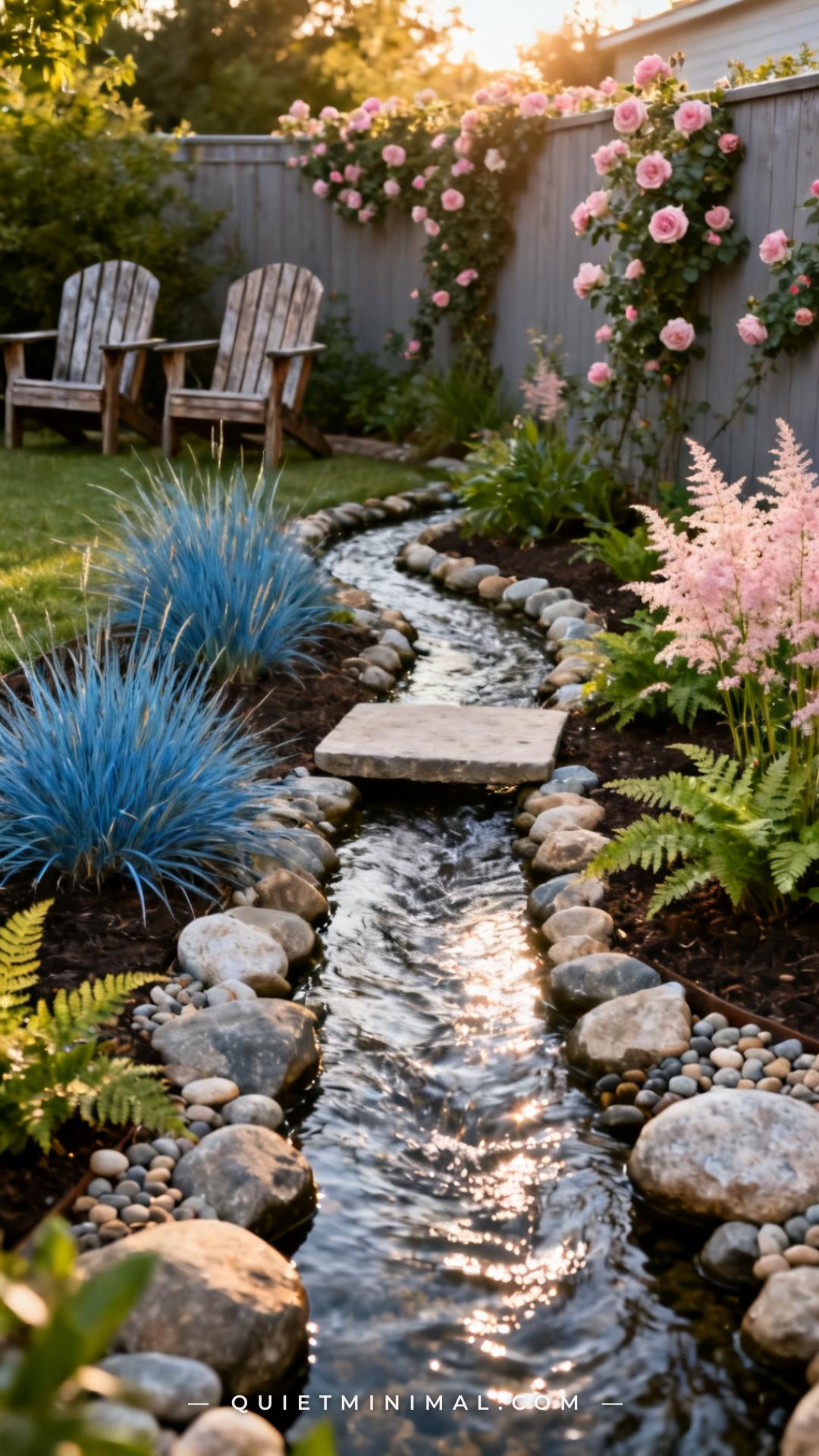
A recirculating stream is the most spatial water feature on this list — it defines a zone within the yard rather than creating a single focal point. The stream runs between two garden beds (or between a garden bed and a lawn edge), with a pump hidden in an underground reservoir at one end recirculating water to a simple header pool at the other. The water travels the length and returns on a continuous loop.
The effect is completely disproportionate to the complexity of installation. A stream that’s 10–15 feet long and 18 inches wide fundamentally changes the character of a backyard — it divides the space into “sides,” creates a crossing-point with a stepping stone, and produces a continuous, naturalistic sound that fills the whole yard without any single loud feature.
Planting along the stream banks should favor moisture-tolerant perennials: blue oat grass, lady fern, astilbe, and Japanese primrose all thrive in the slightly dampened soil near a stream edge. Avoid annuals; the banks should look established and lush, not freshly planted.
Key Takeaway: A recirculating stream transforms how the entire yard is organized — use it as a spatial dividing element between zones rather than just a decorative strip of moving water.
9. A Minimalist Concrete Trough Fountain
 Save
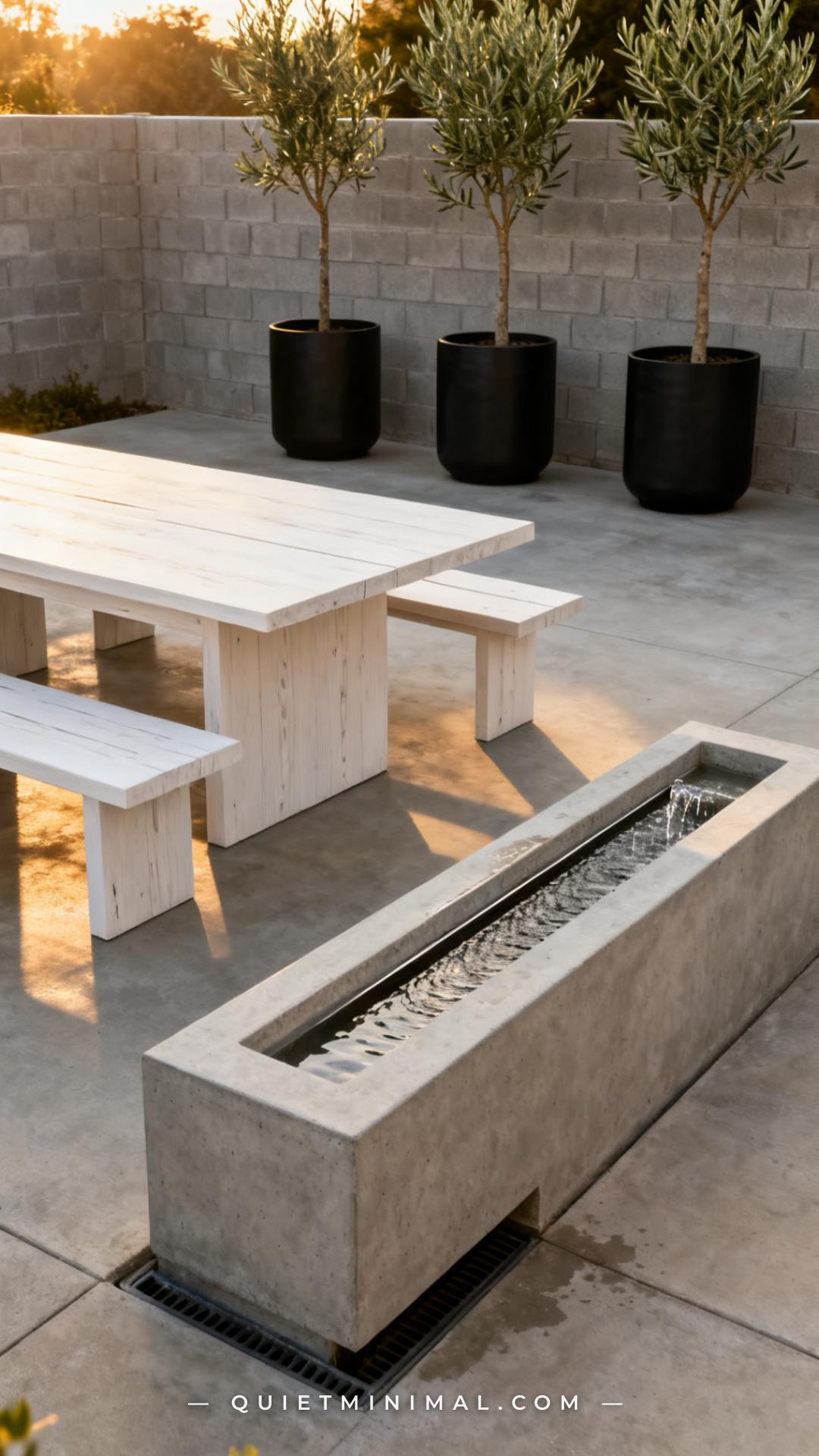
For a backyard with an architectural or modern aesthetic — concrete, steel, clean lines — the last thing you want is a tiered stone fountain or a faux-rock pond. The concrete trough fountain is the water feature for that context. Water overflows silently from a linear slot and sheets down the smooth concrete face with almost no sound. The visual is the feature.
This suits a setting where the retreat experience is about calm, reduction, and visual stillness rather than nature sound. Pair it with an architectural planting scheme: three identical columnar olive trees in matte black planters behind the trough, a row of agave or sculptural grass clumps on either side, nothing that reads as casual or cottage. The concrete on concrete palette works because it’s intentional — everything in the scene is in the same material family.
The trough can be custom-poured by a concrete contractor or purchased as a GFRC (glass fiber reinforced concrete) piece from a specialty outdoor furniture supplier. GFRC weighs significantly less than solid concrete and ships without freight concerns.
Key Takeaway: The concrete trough fountain succeeds only in a fully committed architectural context — pair it with a restrained, structural planting scheme or the aesthetic tension defeats the whole effect.

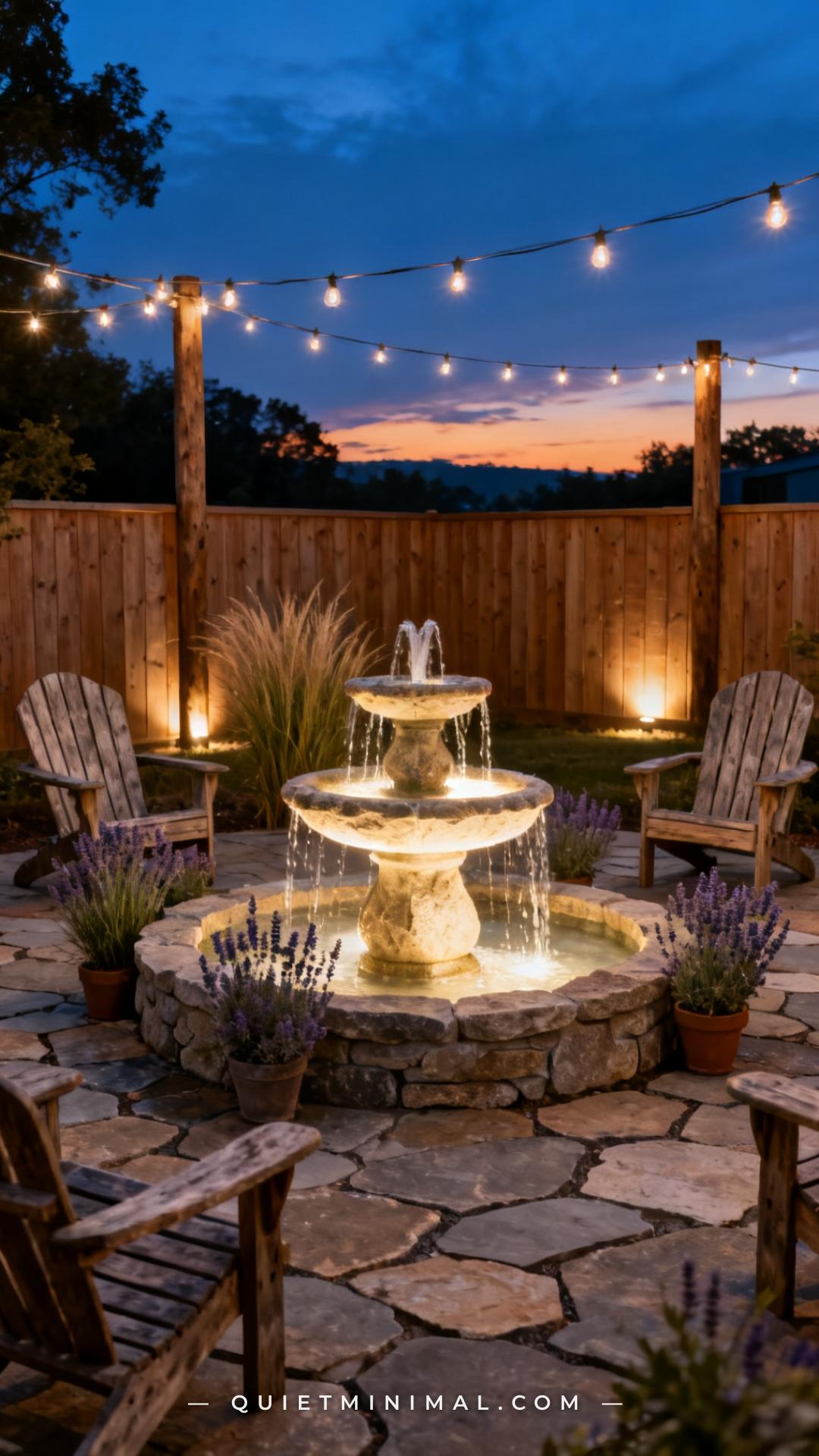
10. A Lighted Fountain as the Centerpiece of a Full Retreat Zone
 Save
Lighting is the element that turns a daytime water feature into an all-hours retreat anchor. A fountain that looks nice at 2pm and disappears into the dark at 8pm is only doing half its job. Adding integrated LED lighting to a fountain — or positioning landscape uplights at the base — extends the retreat window into the evening hours, which is when most people actually use their backyards.
The complete retreat zone formula pairs the lighted fountain with overhead string lighting on timber posts, a defined seating semicircle, and layered plantings at varying heights around the perimeter. The lighting does three things: it makes the fountain a visual anchor after dark, it defines the boundary of the retreat zone without any physical enclosure, and it changes the mood of the entire backyard from “outdoor furniture on a patio” to “a place designed for staying.”
Use warm white LEDs exclusively — 2700K to 3000K color temperature. Cool or blue-white outdoor lighting is a common mistake that undermines the warmth that makes a space feel retreat-like. The fountain uplights, the string lights, and any path lighting should all match in color temperature.
Key Takeaway: Matching all light sources to the same warm color temperature (2700–3000K) is the single most important technical decision in creating a retreat atmosphere after dark — and the most commonly skipped.

Bringing It All Together
The water features on this list range from a solar pump in a birdbath to a full koi pond — but the principle behind all of them is the same. Moving water on its own is an object. Moving water surrounded by intentional planting, appropriate lighting, and a seating arrangement designed around it becomes a place. That distinction — object versus place — is what separates a backyard with a fountain from a backyard that actually functions as a retreat.
Start with what your space and budget honestly support. A container water garden or a solar birdbath insert can be installed this weekend for very little. A pondless waterfall or a recirculating stream is a project, but one with a payoff that reshapes how you experience your outdoor space for years. Pick the feature that matches your maintenance tolerance, not just your aspiration for how it looks on day one. Then build the planting and lighting around it — because that’s where the retreat feeling actually lives.
From the guides
You've saved it, wanted it. Here's the how: codes, measurements, order. Your choices make it yours.
The Japandi Honest PlaybookThe honest version of the style: what to keep, what to skip, and the order to do it in.See inside →The Room Refresh PlaybookA repeatable four-step method, room by room, in ten minutes, thirty minutes, or one weekend.See inside →Make Any Room Feel Cozy on PurposeWhy some rooms hold people and others empty out, and the moves that change it.See inside → Save