 Georgia
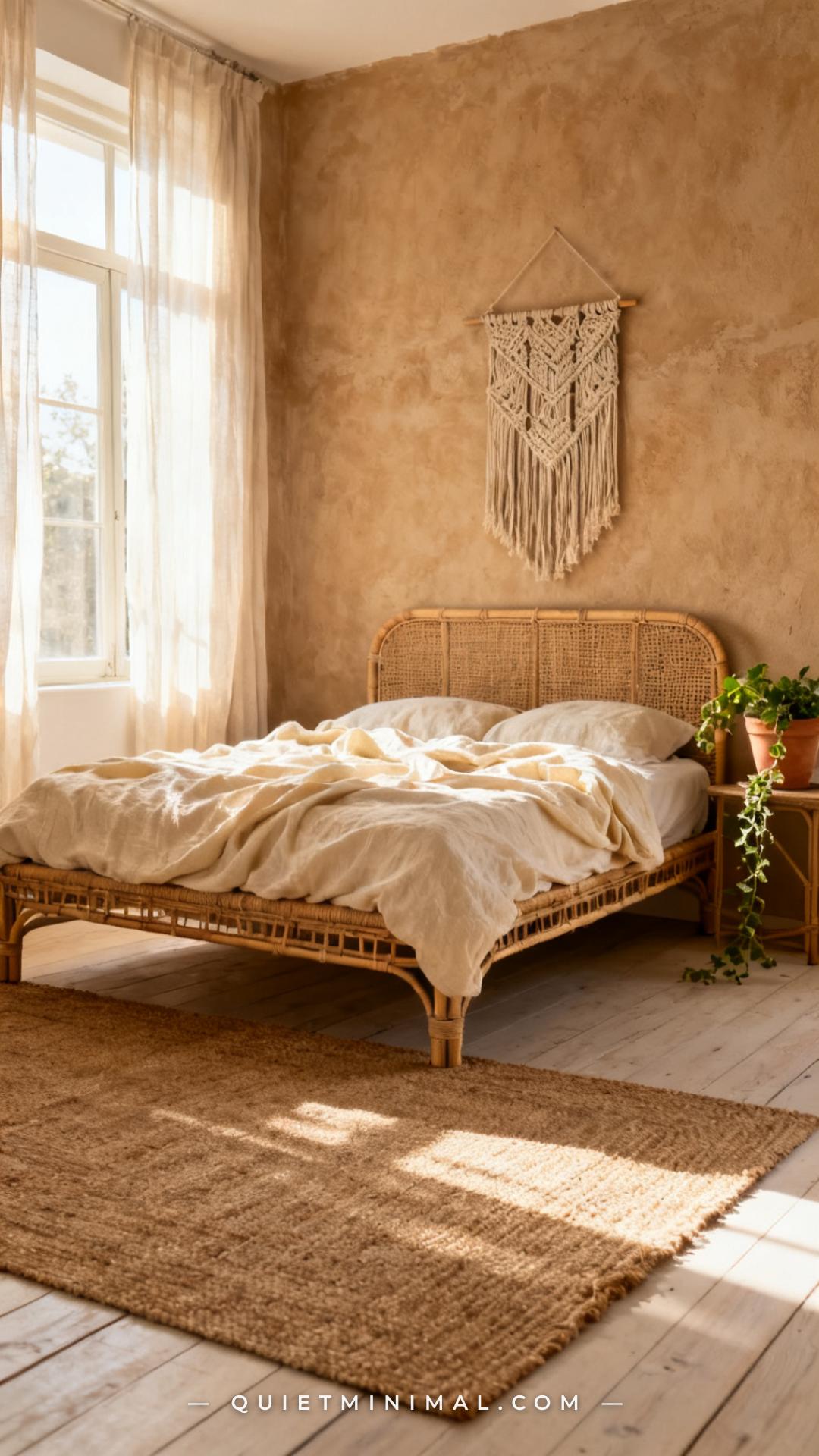
There’s a version of bohemian styling that looks effortless and serene — layered textiles that feel intentional, warm textures that invite you to slow down, a bed that looks like you actually want to spend a Sunday morning in it. Then there’s the other version: the one where every boho purchase you’ve loved over the past three years is piled on at once, and the room just feels busy.
The difference between those two outcomes isn’t the number of pieces. It’s the decisions behind them. A calm bohemian bedroom is built on restraint — knowing which layers to keep, which to edit out, and how to anchor the whole thing so it reads as curated rather than collected. These eleven bed styling ideas will walk you through exactly that.
1. Start With a Neutral Foundation Duvet
 Save
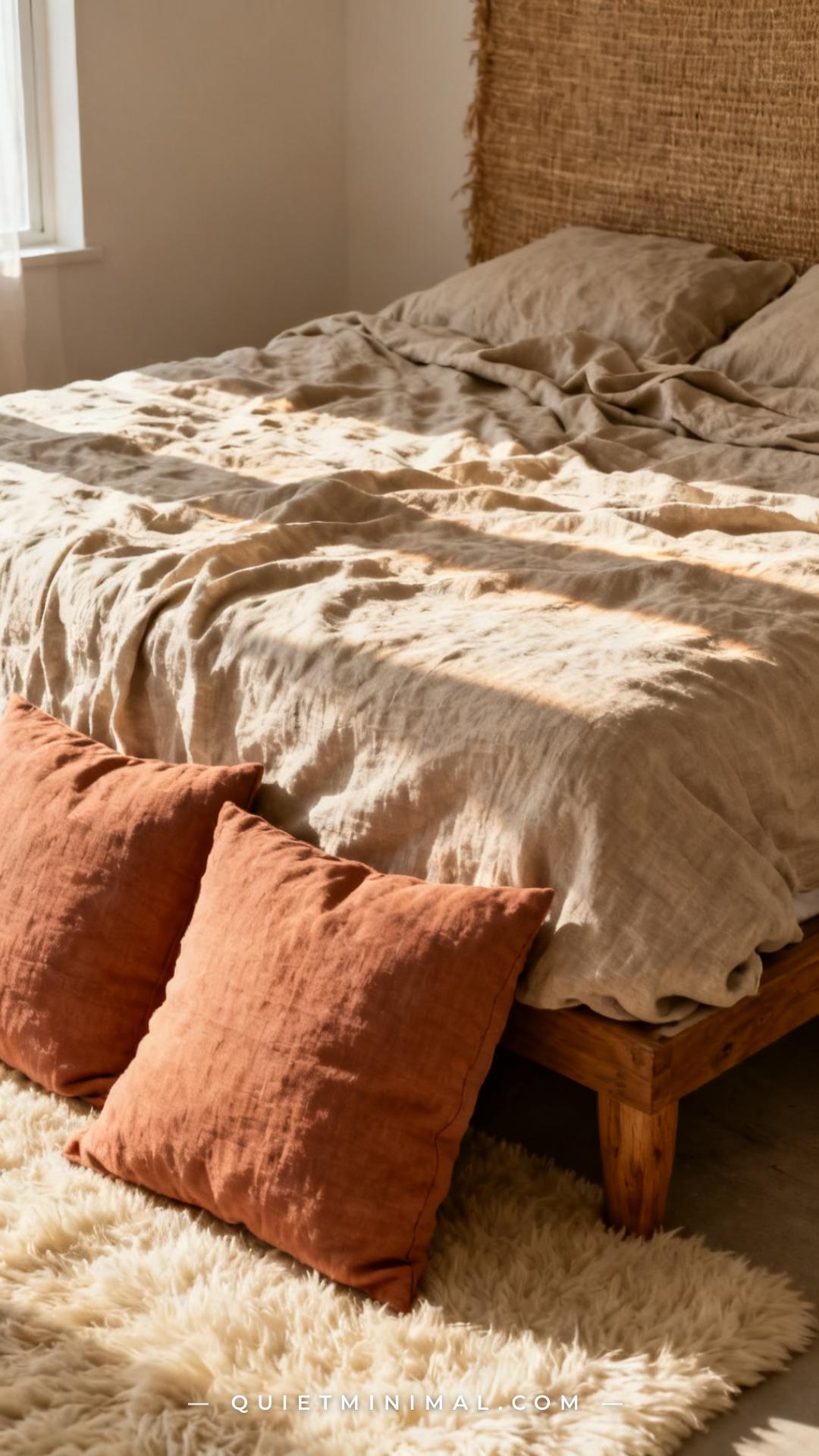
The single most common mistake in bohemian bed styling is leading with color and pattern before establishing a neutral base. Every calm boho bedroom that reads as intentional starts with one foundational piece — usually the duvet — in a quiet, natural tone: undyed linen, warm oatmeal, cream, or a pale straw. This is the visual anchor the rest of the layers sit against.
From the guides
You've saved it, wanted it. Here's the how: codes, measurements, order. Your choices make it yours.
 The Japandi Honest PlaybookThe honest version of the style: what to keep, what to skip, and the order to do it in.See inside →
 The Room Refresh PlaybookA repeatable four-step method, room by room, in ten minutes, thirty minutes, or one weekend.See inside →
 Make Any Room Feel Cozy on PurposeWhy some rooms hold people and others empty out, and the moves that change it.See inside →
When your duvet is neutral, your eye has somewhere to rest. Pattern and texture introduced through pillows and throws become the detail, not the noise. Think of the duvet as the canvas, not the art. The natural creases of a quality linen duvet also do half the styling work for you — they read as effortless rather than stiff, which is exactly the energy a calm boho room needs.
Key Takeaway: Choose a neutral, undyed linen duvet as your foundation — it’s the one piece that makes every other boho layer look more intentional.

2. Layer Two Textures, Not Five
 Save
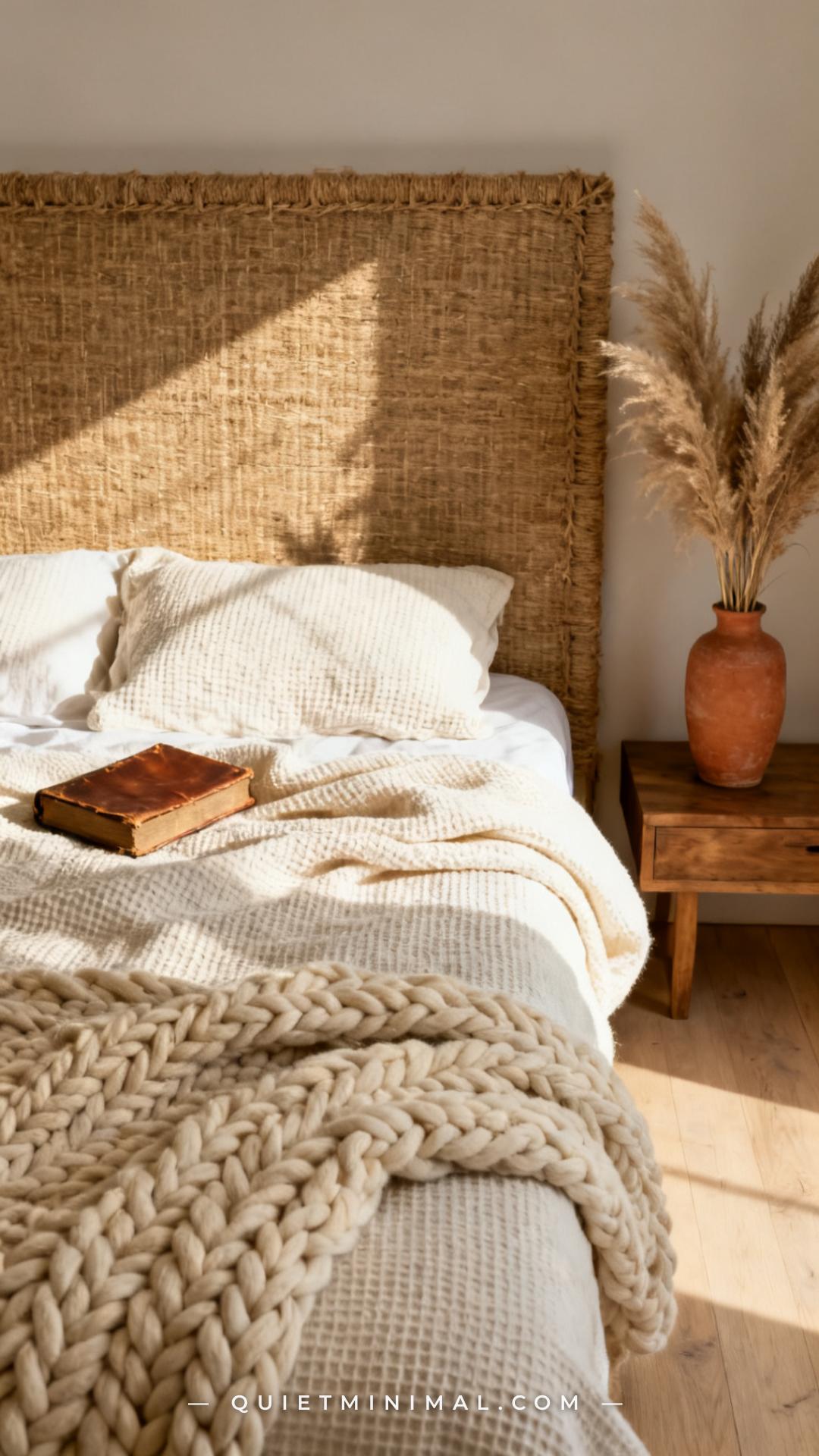
Bohemian styling is defined by texture — but the rooms that feel calm are the ones where those textures have been edited down to two or three, not stacked until the bed disappears. A reliable pairing: one smooth or fine-weave textile (linen, cotton percale) against one visibly handcrafted texture (chunky knit, waffle weave, macramé-edged blanket). That contrast is enough.
When you add a third texture, make sure it’s a small accent — a single throw pillow in a woven fabric, not another full blanket. The restraint here isn’t about minimalism for its own sake. It’s about giving each texture room to be seen and appreciated. A chunky knit disappears when it’s buried under three other things. Let it breathe.
Key Takeaway: Limit active textile layers to two dominant textures — the contrast between them creates visual richness without visual noise.

3. Use Pillow Arrangements in Odd Numbers
 Save
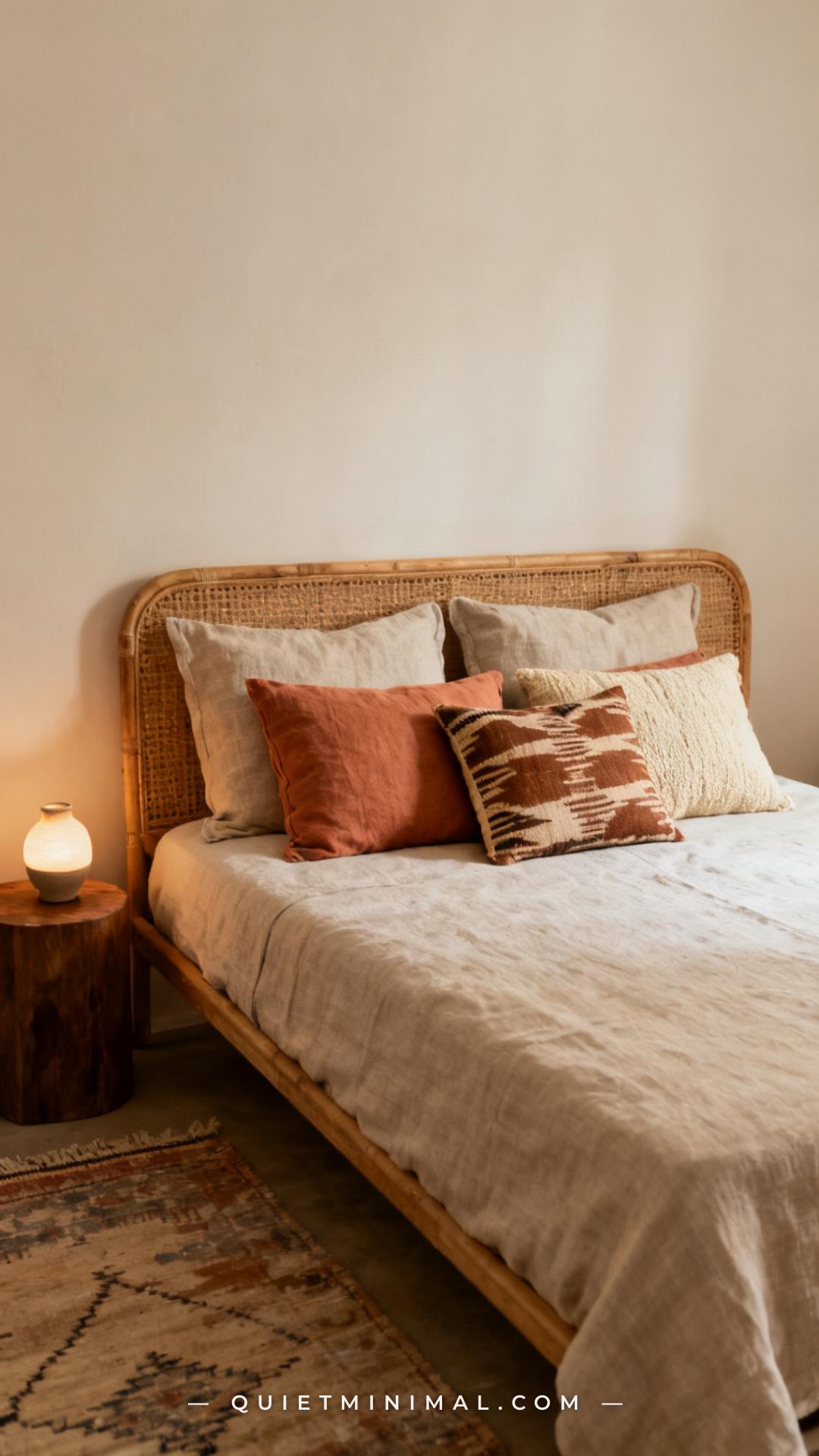
Odd-numbered pillow arrangements — three or five — feel more organic and less “showroom” than even groupings. For a calm boho bed, a five-pillow arrangement works well: two sleeping pillows in neutral linen shams at the back, two euro shams in subtle pattern or warm earth tones in the middle, and one lumbar pillow with the most visible pattern at the front. That front lumbar pillow is where your boldest print lives — it’s one piece, so it reads as a deliberate accent rather than an overwhelming pattern.
The key is keeping the back layers quieter. If your lumbar is mudcloth-patterned or block-printed, your euro shams should be solid or near-solid in a harmonious earthy tone. The visual weight builds from back to front, guiding the eye in rather than stopping it at the pillow stack.
Key Takeaway: Build your pillow arrangement back-to-front with increasing pattern intensity — the bolder print belongs on the single front lumbar, not repeated across every layer.

4. Introduce One Printed Textile, Repeated Twice
 Save
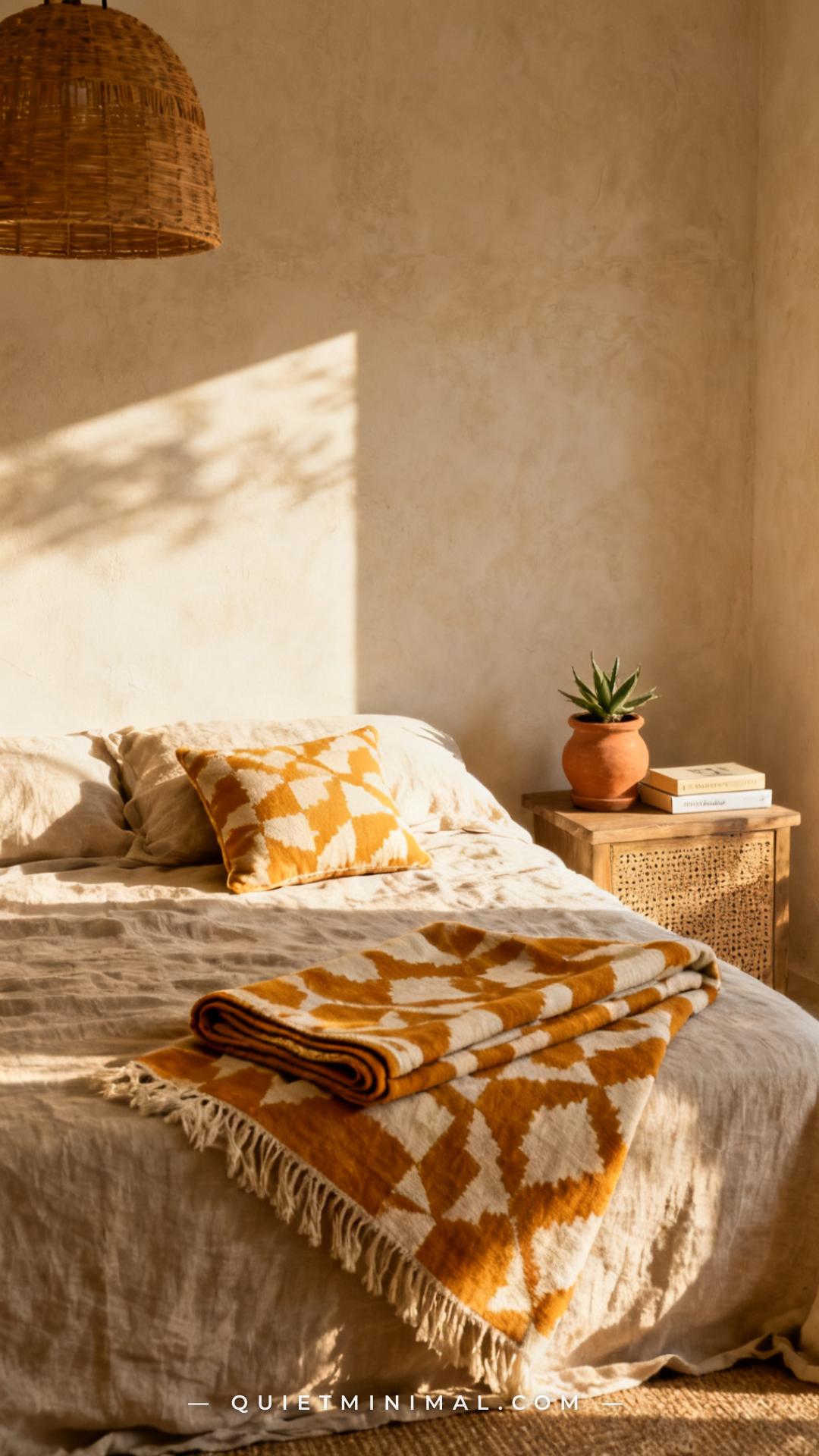
The trick to making pattern feel intentional in a calm boho room is repetition — but controlled repetition. Pick one printed textile, and let it appear exactly twice in the bed styling: once at the pillow layer and once at the foot of the bed as a folded throw. That repetition signals that the pattern was chosen, not accumulated.
When the same print appears twice in a composition, the eye reads it as a design decision. When five different prints appear once each, the eye reads it as a collection of things. That’s the difference between calm and cluttered. Your chosen print can be block-print, batik, ikat, or classic mudcloth — but keep everything else in the arrangement solid or near-solid so the print has visual space around it.
Key Takeaway: Let one printed textile appear twice in your bed styling — as a pillow and as a folded throw — and keep everything else solid to let it read as intentional.

5. Choose a Low-Profile or Rattan Bed Frame
 Save
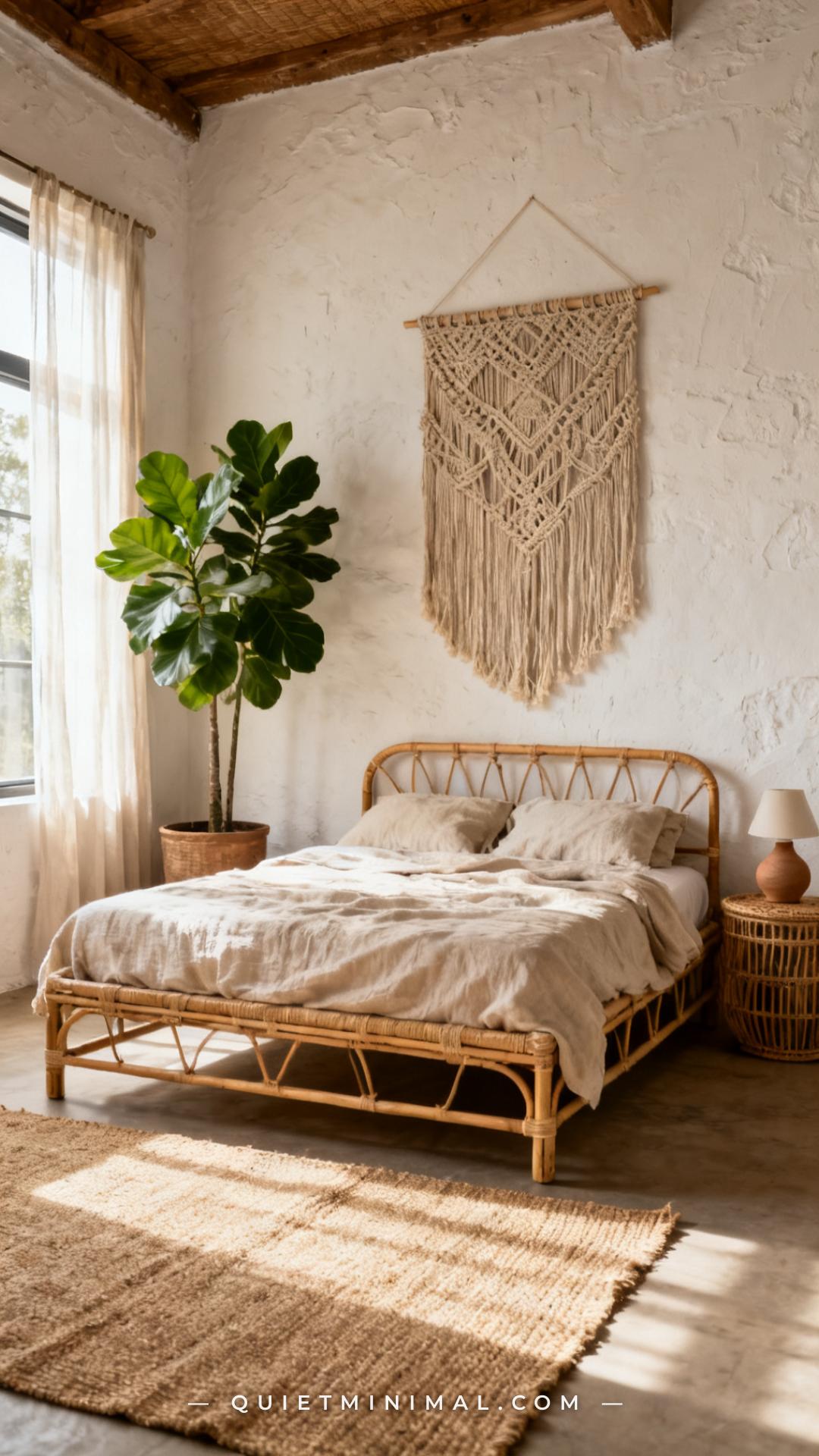
The bed frame is the architecture of a boho bedroom, and nothing anchors the calm aesthetic more reliably than a low-profile rattan or natural wood frame. Low profile keeps the room feeling open — the space above the mattress breathes rather than being enclosed by a towering headboard. Rattan or woven seagrass introduces the natural material language that is definitional to bohemian style without adding color.
The material honesty of rattan — you can see how it was made, the weave is visible, the imperfections are part of it — carries the handmade, organic quality that boho styling is reaching for. A rattan frame also plays well with almost every color palette, so it doesn’t compete with your textile choices. If rattan isn’t accessible in your budget, a simple slatted wood frame in natural or whitewashed finish accomplishes a similar grounding effect.
Key Takeaway: A low-profile rattan or natural wood frame is the structural anchor of a calm boho bedroom — its organic material does the heavy lifting before a single textile is placed.

6. Add a Macramé Wall Hanging Above the Bed
 Save
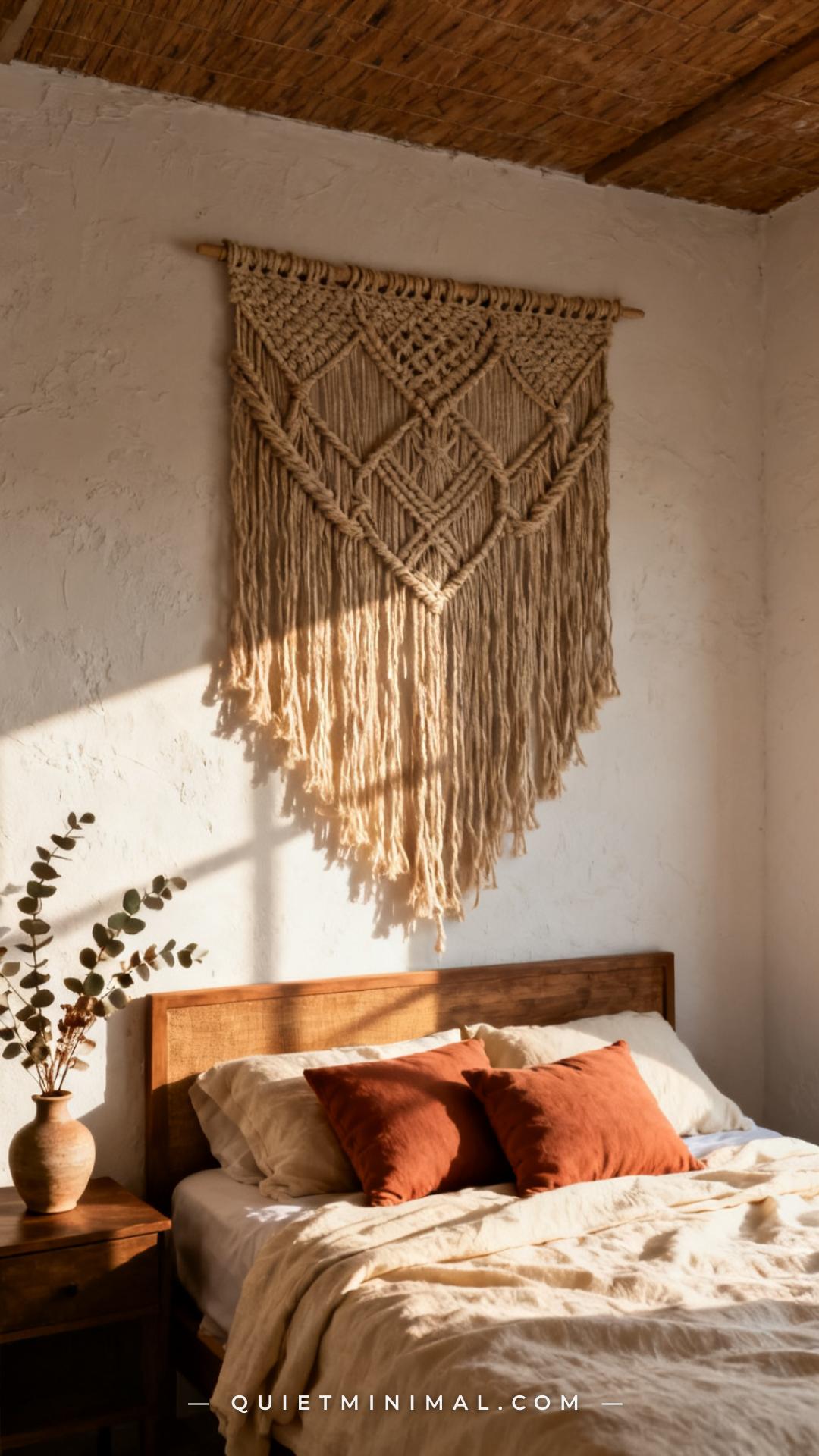
A macramé wall hanging above the bed is the single piece that most efficiently signals “intentional bohemian” — but the styling decisions around it determine whether it reads as calm or chaotic. Three rules for using macramé without overwhelming the room: size up (a small piece above a queen bed looks like an afterthought), center it precisely (this is where the asymmetry of the rest of the boho room gets its counterbalance), and keep the wall around it clear.
The macramé piece should be the only wall art above the bed. No gallery wall, no additional framed prints competing for the same visual zone. When it hangs against clean wall space, the negative space around it becomes part of the composition — the room breathes around the texture rather than being crowded by it. Natural undyed cotton cord in cream or warm ivory keeps the palette consistent with a calm foundation.
Key Takeaway: Size up on the macramé and keep the wall around it clear — negative space is what separates a calm bohemian accent from a cluttered one.

7. Bring In Dried or Preserved Botanicals
 Save
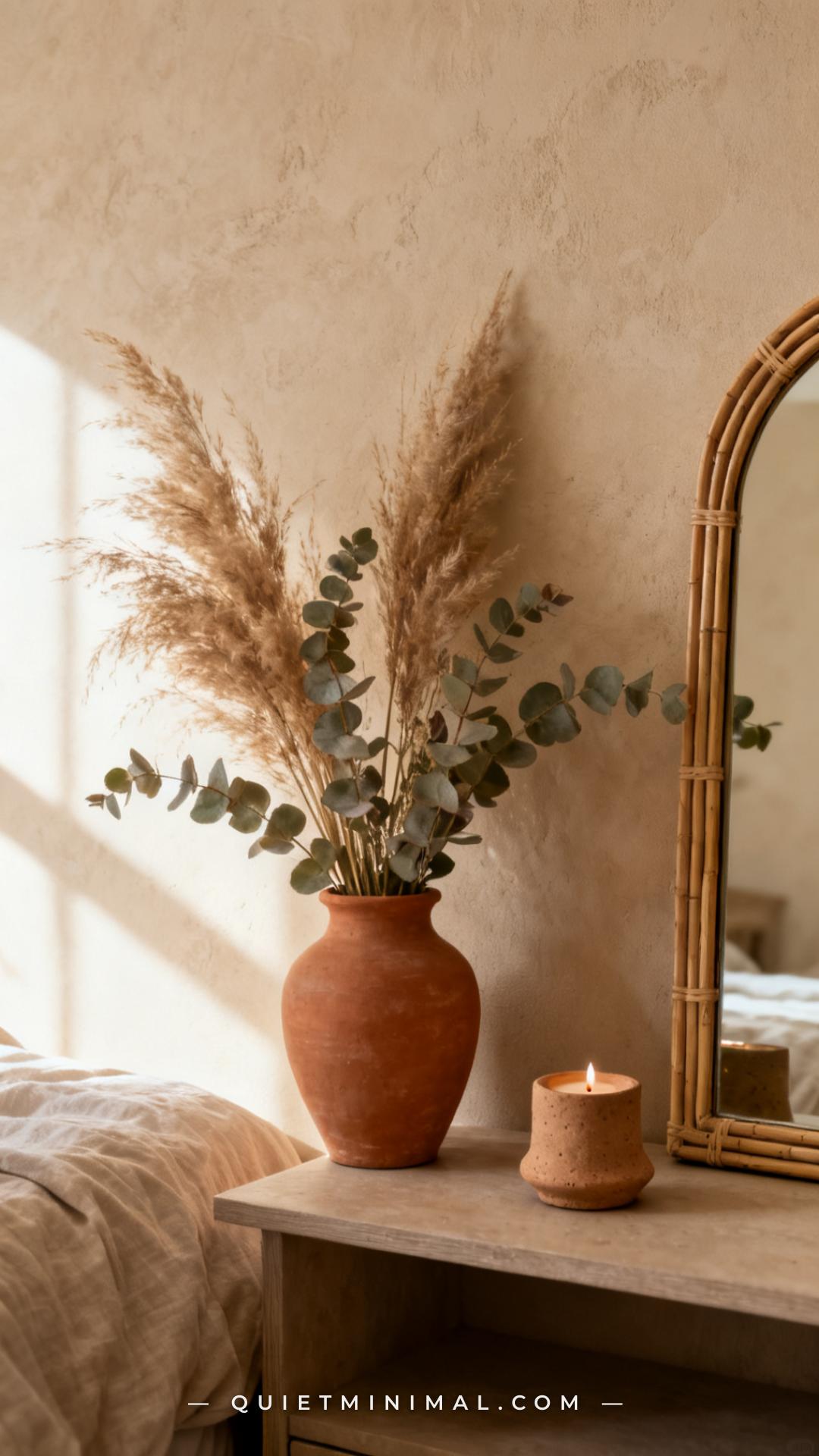
Live plants bring energy into a room; dried and preserved botanicals bring stillness — which makes them the right botanical choice for a calm boho bedroom specifically. Pampas grass, dried lavender bunches, preserved eucalyptus, and cotton stems all carry the natural material language of bohemian style without requiring maintenance or introducing the visual busyness of large-leafed plants.
The key is placement: a single tall ceramic or rattan vase holding one type of dried stem, positioned on the nightstand or floor beside the bed, acts as a vertical element that draws the eye upward without competing with the textile story on the bed. Keep the stem arrangement loose and minimal — three to five stems, not a dense bouquet. The dried, muted tones of pampas or eucalyptus also work naturally within an earthy neutral palette without needing to match anything specifically.
From the guides
You've saved it, wanted it. Here's the how: codes, measurements, order. Your choices make it yours.
The Japandi Honest PlaybookThe honest version of the style: what to keep, what to skip, and the order to do it in.See inside →The Room Refresh PlaybookA repeatable four-step method, room by room, in ten minutes, thirty minutes, or one weekend.See inside →Make Any Room Feel Cozy on PurposeWhy some rooms hold people and others empty out, and the moves that change it.See inside →Key Takeaway: Dried botanicals in a single tall vase add vertical life to a calm boho bedroom without the visual complexity of a lush plant arrangement.

8. Layer a Vintage or Woven Area Rug Under the Bed
 Save
A large-format area rug under the bed does two things for a calm boho bedroom: it anchors the entire bed as a composed vignette rather than a floating piece of furniture, and it introduces the pattern layer of the room at floor level — where it reads as warmth and grounding rather than noise. Size matters significantly here. The rug should extend at least eighteen inches past each side of the bed and a full two feet past the foot — if the rug ends at the bed legs, the room reads as unfinished.
Vintage-style flatweave rugs — kilim, Oushak, or Moroccan-inspired — work best for a calm boho bedroom because they carry pattern without the thick pile that reads as heavy. Their worn, faded quality signals age and intentionality without requiring you to actually hunt down a vintage piece. Keep the rug’s palette harmonious with your duvet and pillow tones — warm terracotta, indigo, and cream tend to be the most versatile across boho bed palettes.
Key Takeaway: Size up your rug so it extends well past the bed on all sides — an undersized rug is the fastest way to make a boho bedroom look unfinished.

9. Use Ambient Lighting, Not Overhead Lighting
 Save
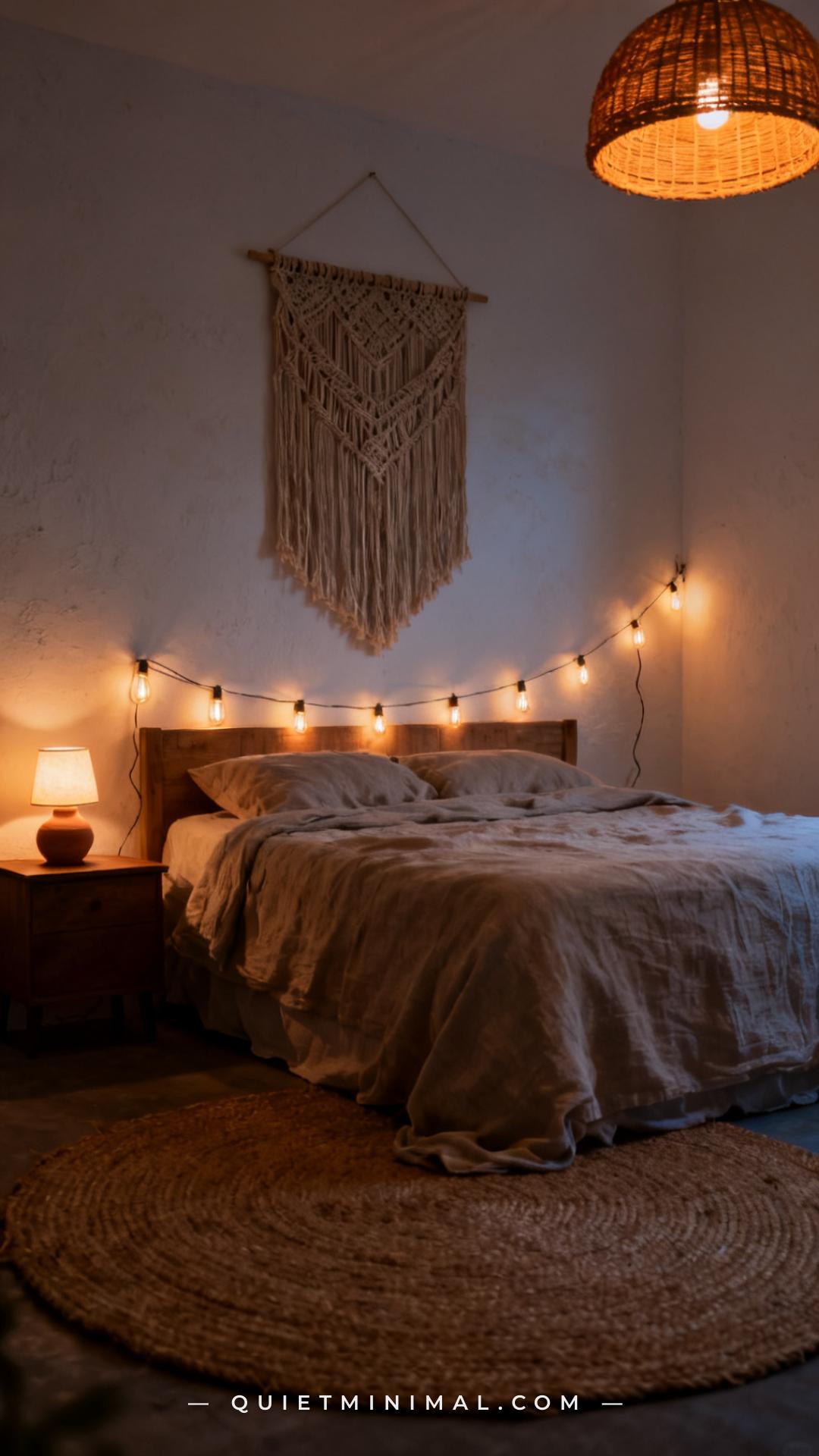
Nothing disrupts the calm of a carefully styled bohemian bedroom faster than harsh overhead lighting. A calm boho bedroom is lit from multiple low ambient sources — a rattan or paper pendant light at a low wattage, ceramic table lamps on the nightstands, and one warm accent source like string lights along the wall or a single candle cluster on a low surface. The combined glow of these sources creates the layered warmth that overhead lighting always flattens.
Rattan or woven pendant shades are especially well-suited to this aesthetic because the weave casts dappled shadow patterns on the ceiling and walls — adding visual texture to the room without adding any physical objects. For nightstand lamps, warm-toned bulbs (2700K or lower) are non-negotiable; cool white bulbs in a boho room immediately push the palette toward a stark, clinical feel that works against everything else you’ve styled.
Key Takeaway: Swap overhead lighting for two or three low ambient sources — the layered glow is as important to the calm boho look as any textile or object you place.

10. Edit the Nightstand to Three Items Maximum
 Save
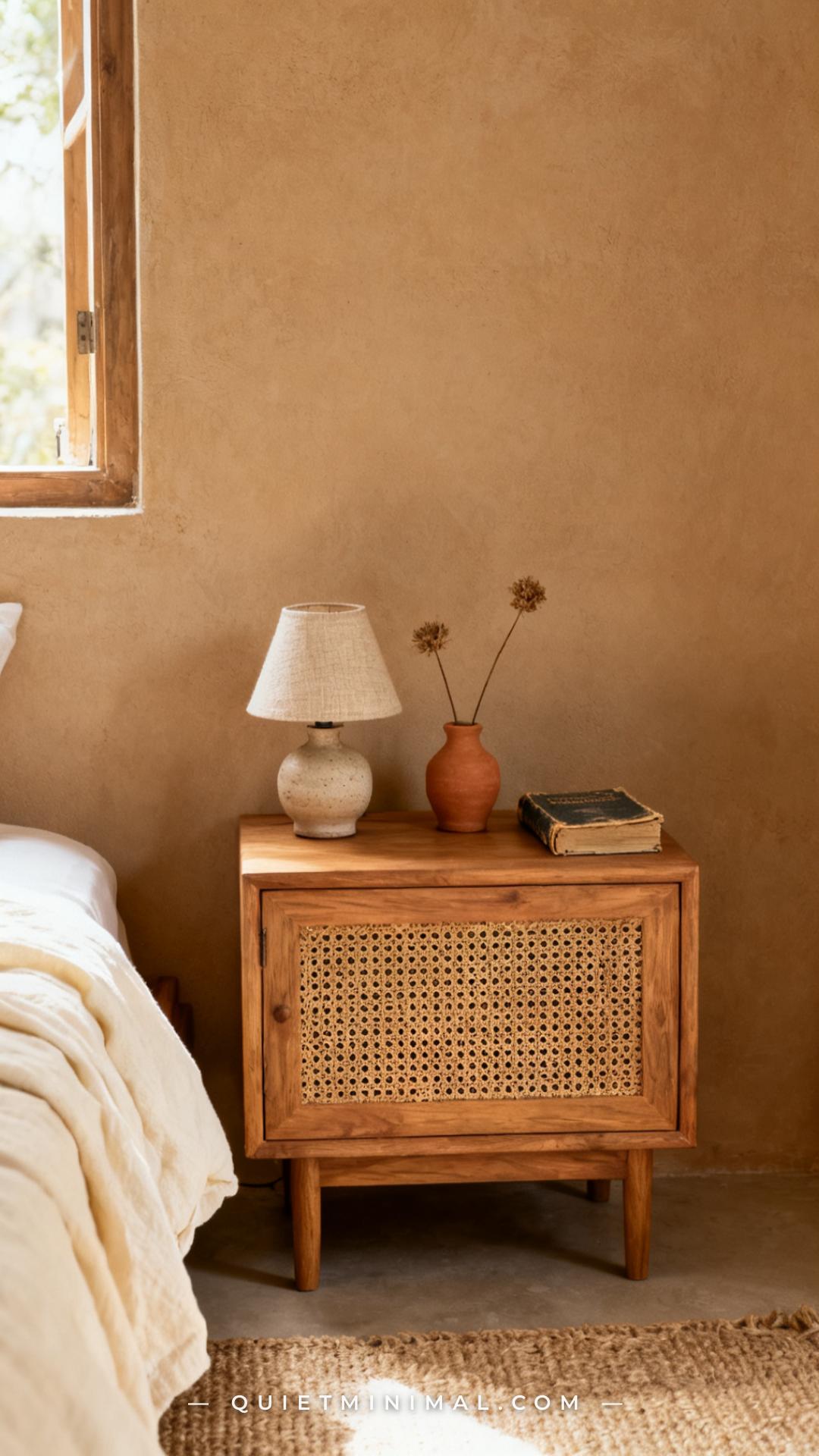
The nightstand is where bohemian bedrooms most commonly unravel. Every candle, crystal, book stack, tray, and plant that seemed like a good idea individually creates visual chaos as a group. The discipline of a calm boho nightstand is the rule of three: one light source (a small lamp or a single candle), one natural element (a bud vase with dried stems or a small terracotta planter), and one personal item (a book, a journal, a pair of glasses). That’s the inventory.
If you use a tray to corral items, the tray counts as the container and everything inside it counts as one item toward your three. The nightstand itself should be a natural material — rattan, reclaimed wood, cane — to stay consistent with the boho material language. Anything white lacquer, mirrored, or high-gloss introduces a different aesthetic conversation that the rest of the room can’t resolve.
Key Takeaway: Apply the rule of three to your nightstand — one light source, one natural element, one personal item — and stop there.

11. Ground the Whole Scheme With a Warm Wall Color
 Save
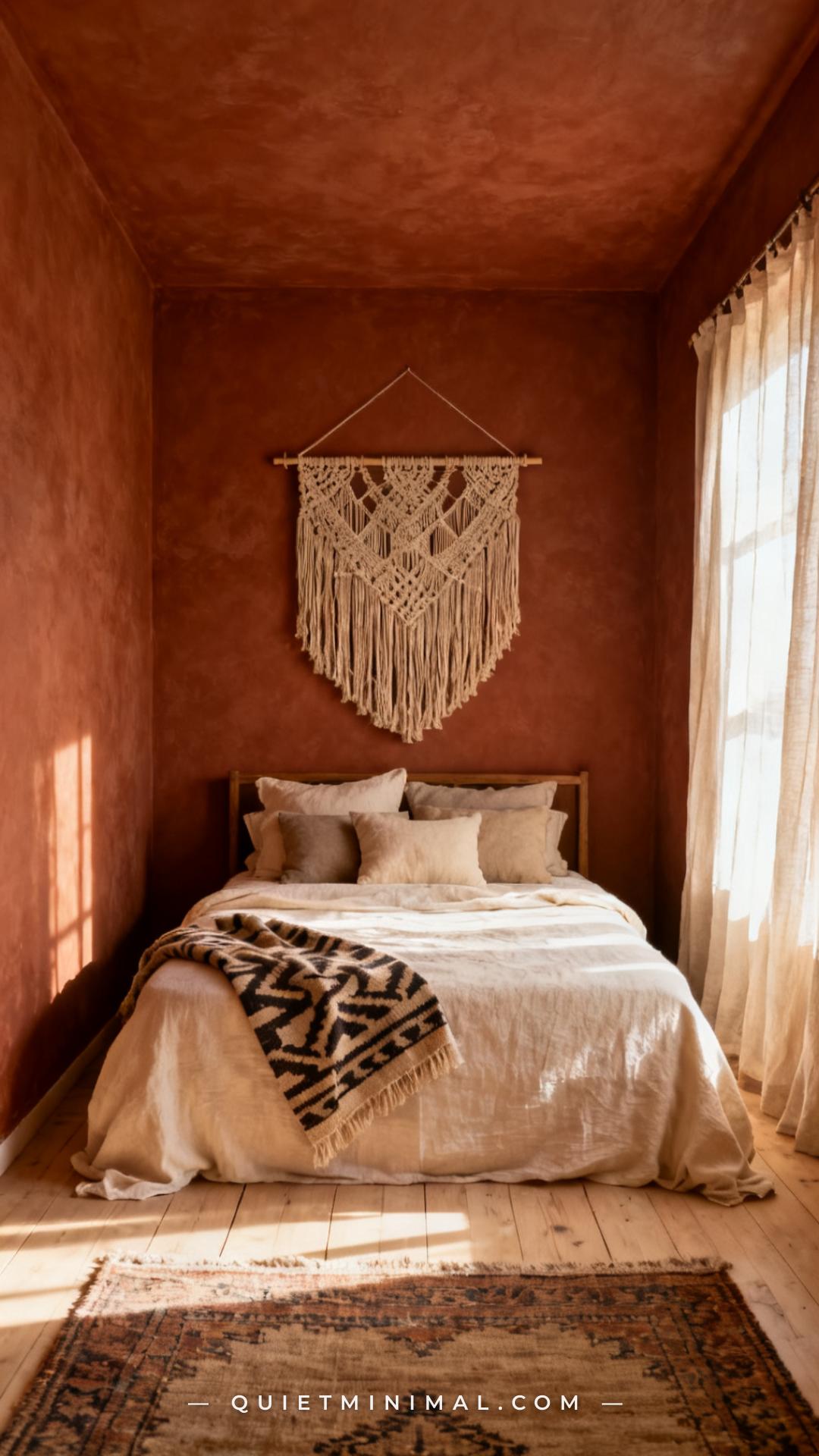
Wall color is the frame around everything you’ve built on the bed, and the wrong choice undoes all of it. For a calm bohemian bedroom, the wall color should do one of two things: recede as a warm neutral (Sherwin-Williams “Accessible Beige” SW 7036, Benjamin Moore “Pale Oak” OC-20, Behr “Vintage Taupe” PPU5-12), or anchor as a warm earthy mid-tone (a muted terracotta, a dusky clay, a warm deep sand). What doesn’t work is cool gray, cool white, or anything with a blue or green undertone — these push the palette away from the warmth that makes bohemian styling feel human and unhurried.
The walls are also where the room’s sense of calm is most physically felt — a warm enveloping wall color signals enclosure and rest in a way that white walls don’t, regardless of what’s on the bed. If you’re in a rental and can’t paint, a large-format tapestry or a gallery wall built around earthy warm tones can approximate the same effect.
Key Takeaway: Warm wall colors — from a barely-there sandy beige to a rich muted terracotta — are the invisible infrastructure of a calm bohemian bedroom.

A calm bohemian bedroom isn’t built by adding more — it’s built by making every layer earn its place. Start with the neutral foundation duvet and the rattan frame. Layer two textures, not five. Let one printed textile repeat exactly twice. Edit the nightstand to three items and the wall above the bed to one statement piece.
The rooms that make Maya stop scrolling on Pinterest aren’t the ones with the most objects. They’re the ones where every piece looks chosen and every surface has room to breathe. Take the ideas here one at a time, start with the bed, and let the rest of the room follow that same deliberate logic.
From the guides
You've saved it, wanted it. Here's the how: codes, measurements, order. Your choices make it yours.
The Japandi Honest PlaybookThe honest version of the style: what to keep, what to skip, and the order to do it in.See inside →The Room Refresh PlaybookA repeatable four-step method, room by room, in ten minutes, thirty minutes, or one weekend.See inside →Make Any Room Feel Cozy on PurposeWhy some rooms hold people and others empty out, and the moves that change it.See inside → Save


