Georgia
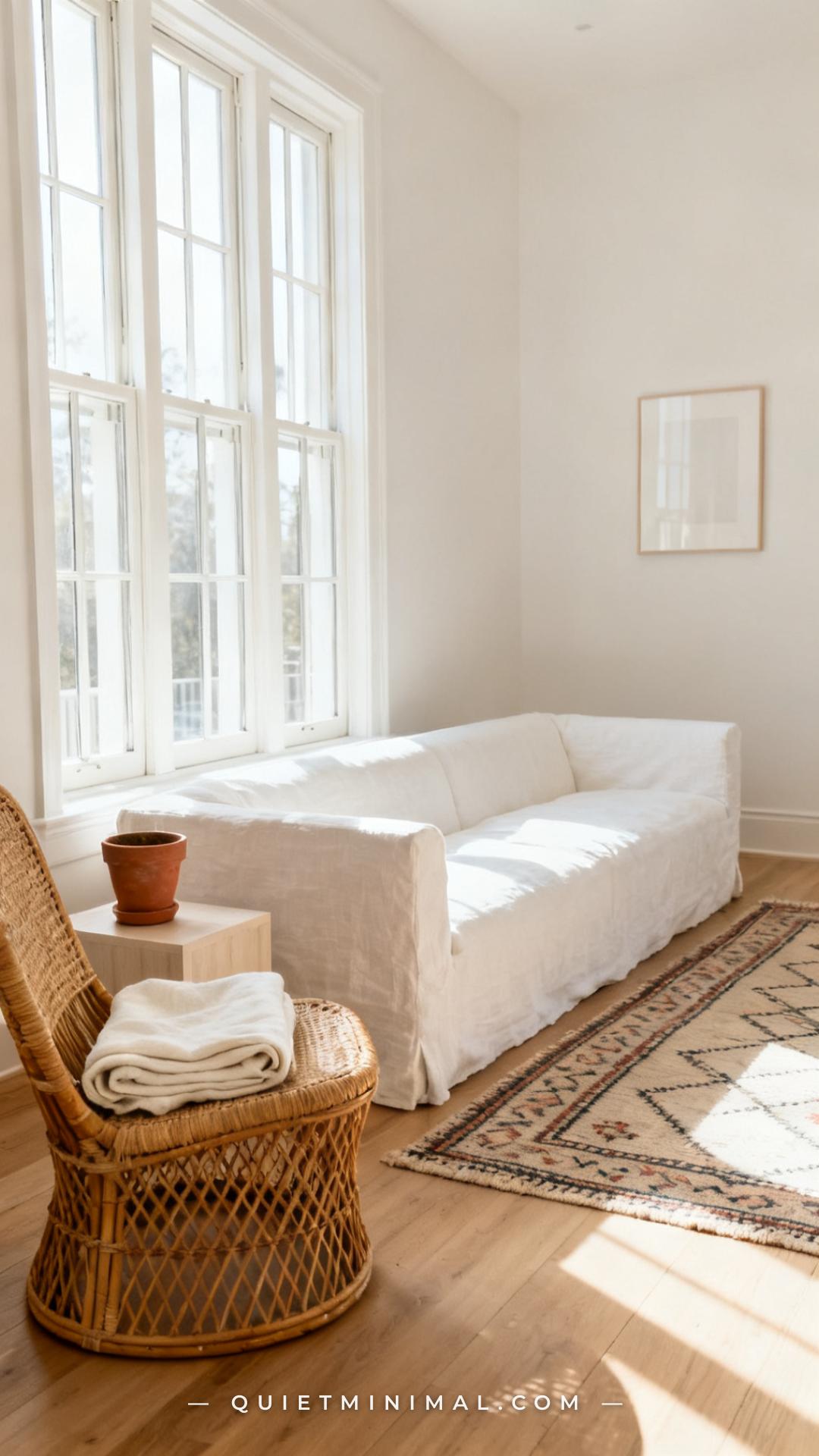
The problem with mixing bohemian furniture into a modern home isn’t the pieces themselves — it’s the logic behind choosing them. Pick randomly, and the room starts to feel scattered. Pick with intention, and a single rattan chair or a hand-knotted rug can do more for a space than a full furniture swap.
Modern rooms tend to be clean, low-contrast, and architecturally restrained. What they often lack is warmth, texture, and the sense that a real person lives there. Bohemian furniture — the right pieces, styled the right way — fills exactly that gap without dismantling the visual order you already have.
This list isn’t about going full boho. It’s about the specific pieces that bridge both worlds, and the placement decisions that make them look deliberate instead of accidental.
1. The Rattan Accent Chair
 Save
Of all the bohemian pieces available, the rattan accent chair earns its place in modern rooms more consistently than anything else. The reason is structural: its open weave reads as visually lightweight, which means it doesn’t compete with surrounding upholstered furniture. A solid armchair in the same spot would feel heavy and deliberate. Rattan just occupies space with a kind of transparency.
The styling rule here is to keep everything around it neutral. Pair a rattan chair with a white or oatmeal linen throw, avoid patterned cushions, and let the material do the talking. In a room with mostly straight lines, the curved back of a round rattan chair introduces organic shape without introducing noise.
From the guides
You've saved it, wanted it. Here's the how: codes, measurements, order. Your choices make it yours.
 The Japandi Honest PlaybookThe honest version of the style: what to keep, what to skip, and the order to do it in.See inside →
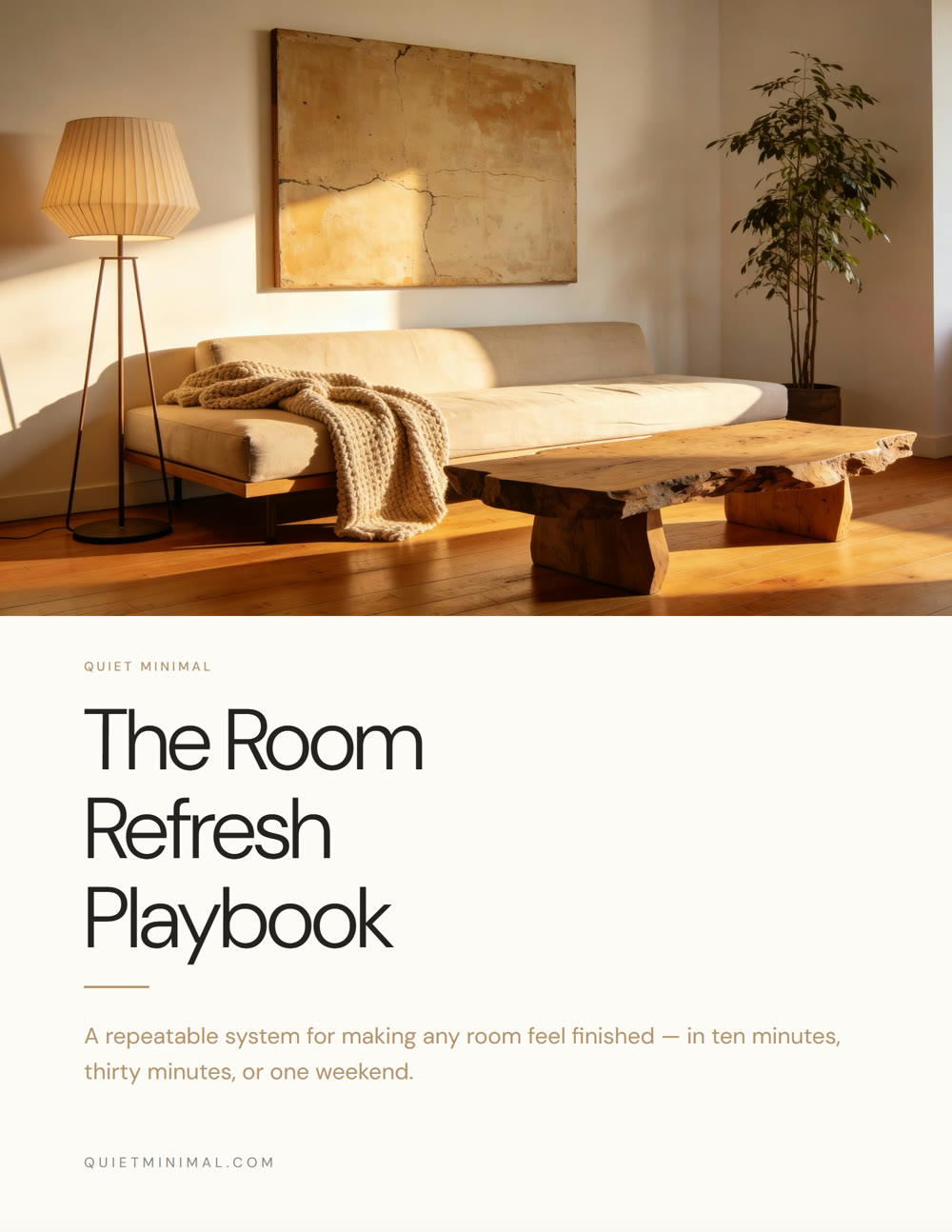 The Room Refresh PlaybookA repeatable four-step method, room by room, in ten minutes, thirty minutes, or one weekend.See inside →
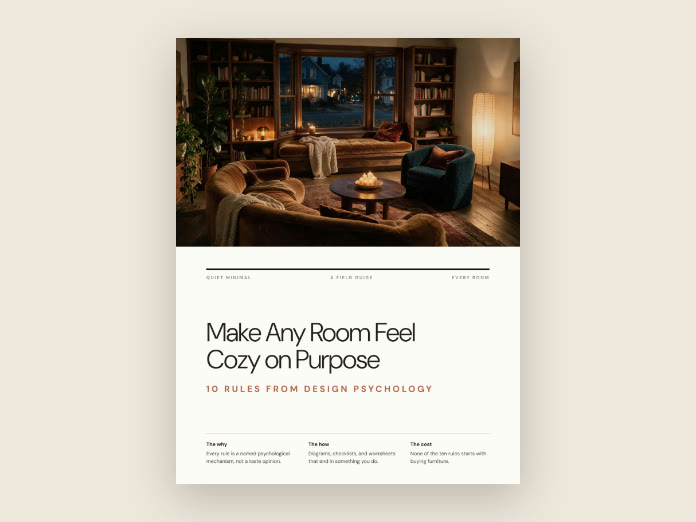 Make Any Room Feel Cozy on PurposeWhy some rooms hold people and others empty out, and the moves that change it.See inside →
Where it earns its place most is in a reading corner or near a window — spots where a certain lived-in quality is expected rather than jarring.
Key Takeaway: A rattan chair works in modern rooms because its open weave keeps it visually light — style it with neutral textiles and let the form speak for itself.
2. The Hand-Knotted Wool Rug
 Save
A hand-knotted wool rug is the bohemian piece with the lowest risk of looking out of place in a modern home — because it lives on the floor, it reads as a foundation rather than a statement. Modern rooms almost always have hard flooring (wood, concrete, tile), which means a rug is expected. What you’re choosing is only which one.
The distinction between a boho rug that works and one that overwhelms comes down to pattern scale and color density. Geometric patterns in low-saturation palettes — terracotta, ivory, charcoal, sand — feel global-influenced without being chaotic. High-contrast multi-color tribal patterns compete with everything else in the room and tend to claim too much visual attention.
In a modern room, the rug should feel like it was discovered rather than purchased. Natural imperfections in the hand-knotting, slight color variation in the pile, fringed edges — these are signs of authentic craft, and they register as warmth rather than mess.
Key Takeaway: Choose a hand-knotted wool rug with a geometric pattern in low-saturation tones — it reads as a grounding layer, not a boho commitment.
3. The Hammered Brass Side Table
 Save
Where most boho pieces carry their character through texture (weave, pile, grain), hammered brass carries it through surface treatment. The irregular faceted finish is handcrafted in origin — hammered by hand on a mold — which gives it the same artisanal quality as woven goods but in a metallic form that reads as sophisticated rather than rustic.
In a modern home where the dominant metals tend to be matte black or brushed nickel, a hammered brass side table introduces warmth without introducing color. It sits in the room as an accent rather than a focal point — which is exactly the role a good bohemian piece should play.
The safest use is as a bedroom side table or living room end table. The round form is common in boho design, and a circle reads more fluidly in a right-angled modern room than a square or rectangular surface. Keep what’s on it edited: a lamp, a plant, one personal object.
Key Takeaway: Hammered brass introduces artisanal warmth through surface texture alone — a round form as a side table is its quietest and most effective role in a modern room.
4. The Woven Pendant Light
 Save
Lighting is where you can introduce the most texture in a room without changing the furniture footprint at all. A woven pendant light — rattan, seagrass, or jute — adds organic material and warmth at the ceiling plane, which is almost always a cold, underused surface in modern homes.
The reason woven pendants work specifically in modern dining areas and bedrooms is scale. A large-diameter woven sphere above a dining table fills the visual center of the room with texture and warmth, but because it’s overhead, it doesn’t interrupt the sightlines at eye level. The room remains clean and open when you’re sitting in it; the texture reads from a distance and from photographs.
Avoid woven pendants with excess fringe or tassels — those details read as costume in a modern context. Choose clean geometric forms: spheres, cylinders, wide bell shapes. The weave itself provides enough visual interest.
Key Takeaway: A large-diameter woven pendant above a dining table adds bohemian warmth at the ceiling plane without interrupting the clean sightlines at eye level.
5. The Carved Wood Console Table
 Save
A carved wood console table is one of the most underused bohemian pieces in the context of modern interiors. The reason it works is displacement: a console lives in transition spaces — entryways, behind sofas, in hallways — where a certain degree of visual richness is expected and where it won’t compete with seating or sleeping furniture.
The carving is what makes it bohemian. Whether it’s geometric latticework, floral relief, or simple repetitive cut-outs, carved wood signals craftsmanship and global influence. In a modern room where most furniture surfaces are smooth and unadorned, a carved console reads as intentional contrast rather than visual noise.
Style it simply. The table earns attention through its own detail — adding too many objects on the surface cancels the effect. One large vessel, one natural element (dried branches, pampas, eucalyptus), and a small sculptural object is the formula.
Key Takeaway: A carved wood console works in modern rooms because it occupies transition spaces where rich material detail is expected — style the surface sparingly so the carving itself registers.
6. The Moroccan Pouf
 Save
The Moroccan leather pouf occupies a perfect design category: it reads as a seat, a footrest, and a sculptural object simultaneously. That functional ambiguity is what makes it at home in a modern room — it doesn’t demand a role the way a side chair or a second sofa would.
Its form is inherently restrained. The geometric stitching on a traditional pouf is small-scale and tonal — it adds detail without adding color chaos. A cognac, ivory, or charcoal pouf in a modern room sits quietly until needed, and its soft rounded form against flat-plane furniture reads as organic warmth rather than stylistic departure.
The key is not to treat it as a side table. Once you put a tray and objects on a pouf, it reads as furniture pretending to be a surface, which diminishes both functions. Let it be what it is: a flexible, beautiful seat that happens to be bohemian.
Key Takeaway: A Moroccan leather pouf earns its place in modern rooms through functional flexibility and tonal restraint — keep its surface clear so it reads as sculptural rather than makeshift.
7. The Linen Floor Cushion or Meditation Pillow
 Save
Floor cushions function differently than most furniture — they suggest how a room is actually used rather than how it’s meant to look. In that sense, they’re bohemian in the truest meaning: they prioritize living over formality. And that quality is precisely what modern rooms often lack.
A large, well-made linen floor cushion in a neutral tone doesn’t read as hippie or retro — it reads as intentional casualness, which is a distinct and desirable aesthetic in contemporary interiors. The material matters here: linen or stonewashed cotton in natural tones signals quality and care. Avoid velvet, bright pattern, or pom-pom trim in a modern context.
From the guides
You've saved it, wanted it. Here's the how: codes, measurements, order. Your choices make it yours.
The Japandi Honest PlaybookThe honest version of the style: what to keep, what to skip, and the order to do it in.See inside →The Room Refresh PlaybookA repeatable four-step method, room by room, in ten minutes, thirty minutes, or one weekend.See inside →Make Any Room Feel Cozy on PurposeWhy some rooms hold people and others empty out, and the moves that change it.See inside →Placement is the variable. A single floor cushion tucked beside a bookcase or near a low coffee table communicates that the room has a relaxed layer beneath its polished surface. Grouped into a cluster, they define a floor-level seating area — appropriate in rooms with high ceilings where a second furniture plane adds dimension.
Key Takeaway: A linen floor cushion in a neutral tone introduces relaxed living into modern rooms — its material quality is what separates “intentional casualness” from “college apartment.”
8. The Wicker or Seagrass Storage Basket
 Save
Wicker and seagrass baskets are the bohemian pieces most likely to already be in a modern home — and the most likely to be underused. Most people treat them as pure storage: a hamper, a bin, a place for cables. But in a room context, a well-placed wicker basket does something more.
Used as a throw blanket holder beside a sofa or as a plant pot cover in a corner, a large woven basket introduces natural material and irregular texture at floor level — which is where most modern rooms are coldest. The hard geometry of baseboards, furniture legs, and flooring creates a visual monotony that organic woven material breaks quietly.
The rule: use one oversized basket rather than a cluster of smaller ones. A single statement-scale piece reads as collected and editorial. Three small baskets in a row reads as organizing-aisle styling.
Key Takeaway: One oversized wicker or seagrass basket near the sofa or in a room corner adds natural material at floor level — the difference between editorial and utilitarian is size and placement.
9. The Terracotta or Hand-Thrown Ceramic Vessel
 Save
A hand-thrown ceramic vessel is possibly the smallest-scale bohemian purchase with the highest visual return in a modern room. The reason is material rarity: modern interiors tend to be dominated by mass-produced, perfectly smooth objects. A hand-thrown ceramic — with its slight wall variations, earthy glaze, and irregular rim — reads as made by a human, which is a quality modern rooms are almost always missing.
Terracotta and warm stoneware tones do particular work in rooms with cool-white walls, gray upholstery, or concrete surfaces. They introduce a warm analog to the room’s dominant cool palette without introducing a color that needs to be matched or coordinated elsewhere.
The staging principle: use height variation. A trio of hand-thrown vessels at three different heights (tall, medium, low) on a shelf or console surface reads as a collected installation rather than a store display. Mixing glazed and unglazed finishes within the same palette strengthens the effect.
Key Takeaway: Hand-thrown ceramics introduce the human element that modern rooms most often lack — use three vessels at varying heights and mix glazed with unglazed finishes for a collected look.
10. The Macramé Wall Hanging (Restrained Version)
 Save
Macramé has a reputation problem in modern interiors — and it’s almost entirely a scale and complexity issue. Large, multi-panel macramé installations with feathers, driftwood, and cascading knot layers read as maximalist bohemian and sit awkwardly against modern architecture. But a single, medium-scale macramé wall hanging in undyed natural cotton — with a restrained geometric pattern — does something very different.
Above a bed, it solves one of the most persistent problems in modern bedrooms: what to put on the wall where a headboard doesn’t reach. A conventional art print feels too formal; a gallery wall feels too committed. A macramé piece occupies that space with texture and softness, in a material that photographs beautifully and costs a fraction of custom art.
The filtering criteria: choose pieces with clean geometric fringe or simple knotted grids — avoid owls, dreamcatchers, or anything with representational shapes. Natural cotton only; synthetic cord reads as craft-store in a way that plant-fiber versions don’t. Size should be roughly two-thirds the width of what it hangs above.
Key Takeaway: A macramé wall hanging works in modern bedrooms when it’s restrained in scale, undyed in color, and geometric in pattern — it solves the above-bed wall problem better than most alternatives.
The bohemian pieces that earn their place in modern homes aren’t the loudest ones — they’re the ones with the quietest job: adding warmth, texture, and the sense that a room has been lived in and considered over time. A rattan chair in a reading corner, a hand-knotted rug underfoot, a carved console in the entryway — none of these require you to change your furniture plan or your color palette. They work within what you already have.
The rule worth keeping from all of this: one strong bohemian piece per sightline. Not one per room — per sightline. Stand in your doorway and count the directions your eye naturally travels. Each line of sight should have one organic, textured, or globally influenced element within it. That’s the difference between a room that feels layered and one that feels collected — and it’s the decision that keeps modern architecture intact while giving the space the soul it was missing.
Start with one piece. See how it changes the room’s temperature before adding another.
From the guides
You've saved it, wanted it. Here's the how: codes, measurements, order. Your choices make it yours.
The Japandi Honest PlaybookThe honest version of the style: what to keep, what to skip, and the order to do it in.See inside →The Room Refresh PlaybookA repeatable four-step method, room by room, in ten minutes, thirty minutes, or one weekend.See inside →Make Any Room Feel Cozy on PurposeWhy some rooms hold people and others empty out, and the moves that change it.See inside → Save