 Georgia
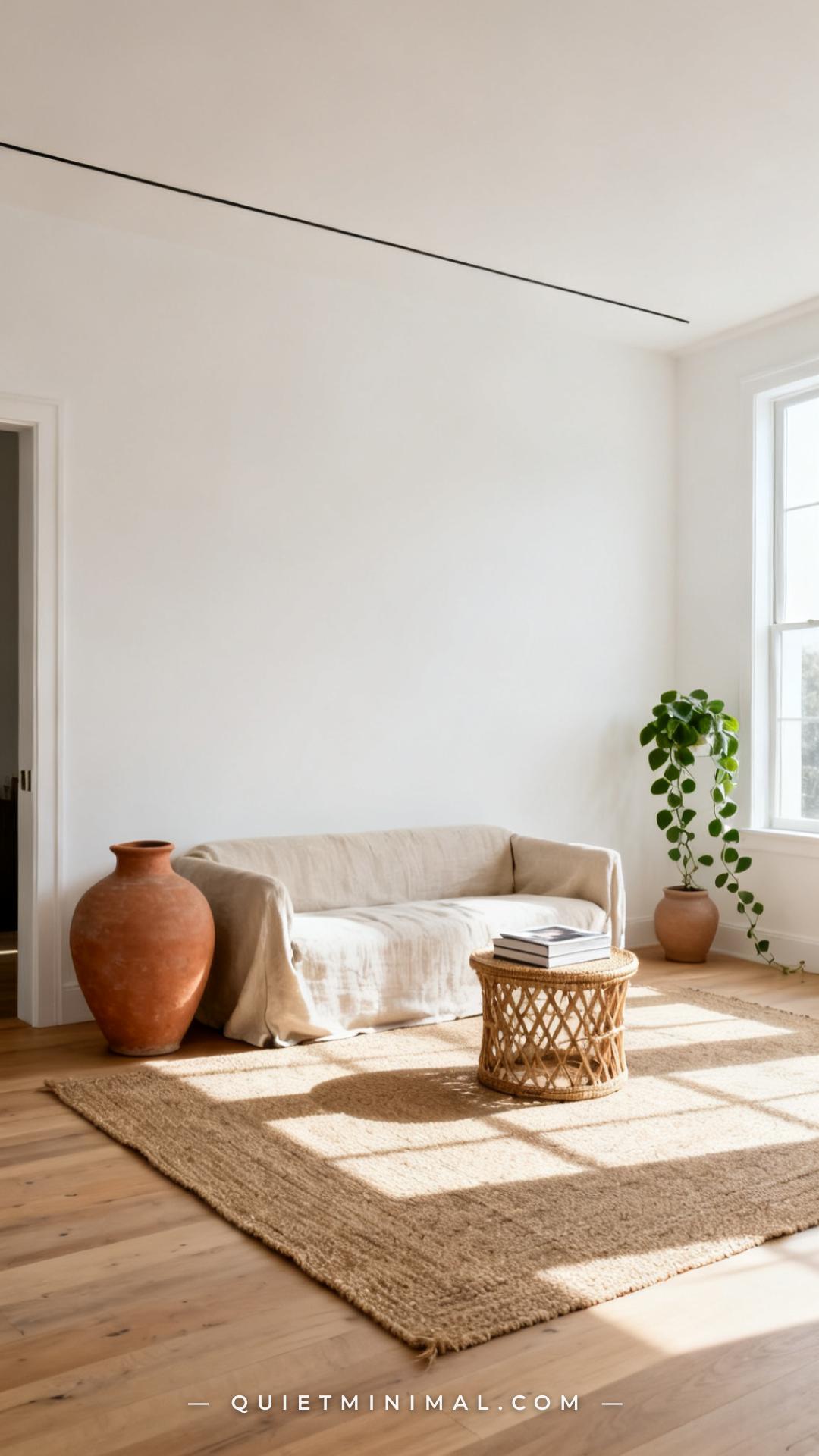
Bohemian style has a clutter problem — and it isn’t really the style’s fault. It’s a curation problem. The warmth, the texture, the layered rugs and handmade objects: all of that is genuinely beautiful. The trouble is that most rooms following a boho brief keep adding and never edit. The result feels heavy, busy, and oddly dated within a year.
The fix isn’t to abandon the aesthetic. It’s to apply a minimalist’s discipline to a bohemian’s eye. That means choosing fewer pieces, letting them breathe, and anchoring everything in a restrained neutral palette so the texture reads as intentional rather than accumulated. The 14 ideas below show you exactly how to do that — room by room, decision by decision.
1. Start With a Strict Neutral Base and Add Texture, Not Color
 Save
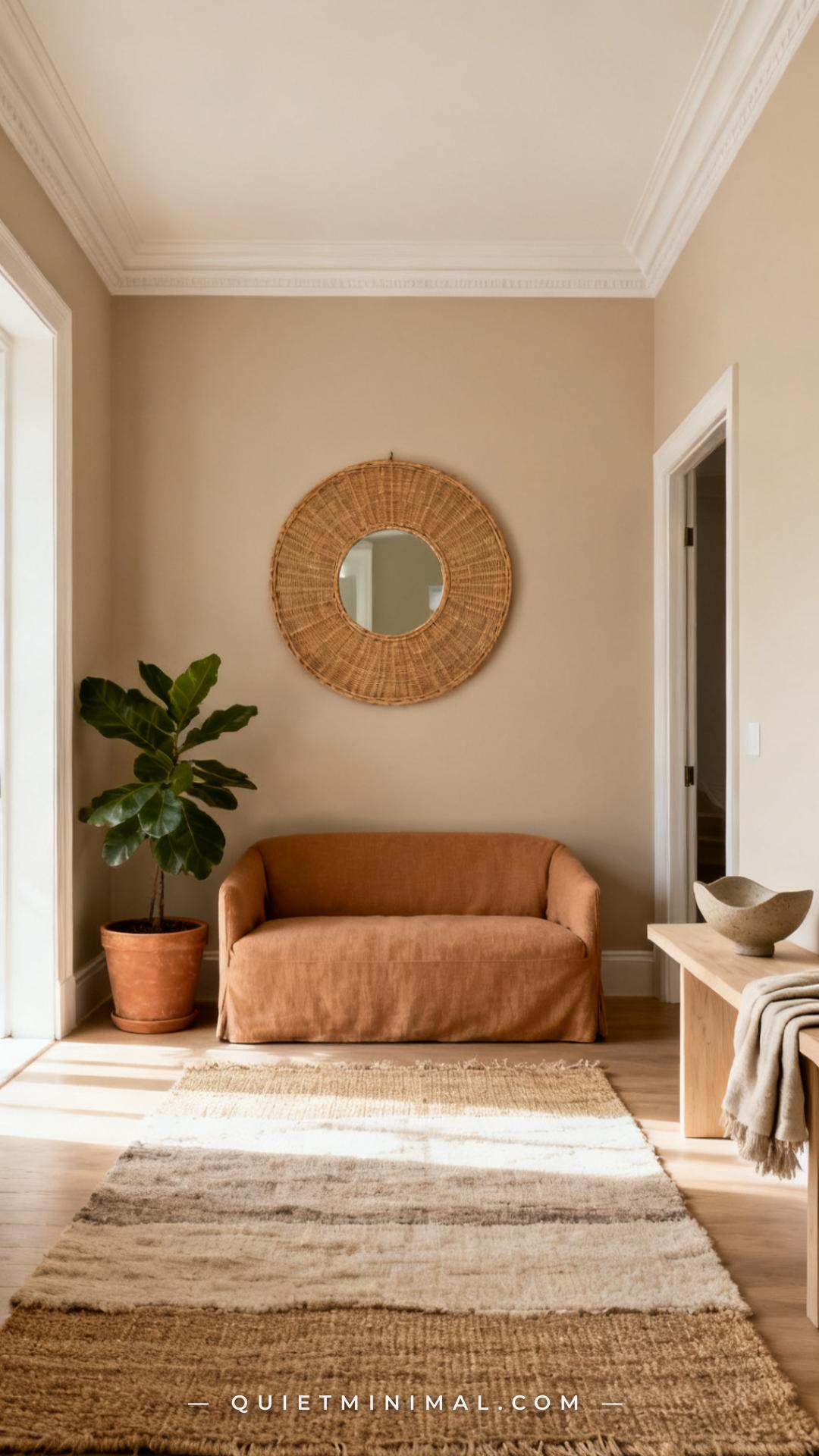
The biggest reason bohemian rooms tip into chaos is too many colors competing at once. Minimal boho rooms make a different choice: one warm neutral base — walls, sofa, and rug all pulling from the same oatmeal-to-caramel range — and then texture does all the visual work.
From the guides
You've saved it, wanted it. Here's the how: codes, measurements, order. Your choices make it yours.
 The Japandi Honest PlaybookThe honest version of the style: what to keep, what to skip, and the order to do it in.See inside →
 The Room Refresh PlaybookA repeatable four-step method, room by room, in ten minutes, thirty minutes, or one weekend.See inside →
 Make Any Room Feel Cozy on PurposeWhy some rooms hold people and others empty out, and the moves that change it.See inside →
Think Sherwin-Williams Accessible Beige on walls, a raw linen sofa, and a jute rug in natural fiber. Those three elements share an undertone. When you add a terracotta vase or a woven basket in that same earthy range, it doesn’t read as “more stuff” — it reads as depth. The palette holds it together.
The rule: pick a wall color with a warm or neutral undertone, then only bring in objects that sit within two steps of that tone on a warm-to-cool axis. Every outlier you introduce adds visual noise.
Key Takeaway: Lock your palette to one warm neutral family first — texture creates the bohemian feeling, not color variation.

2. Choose One Statement Textile and Edit Everything Else Down
 Save
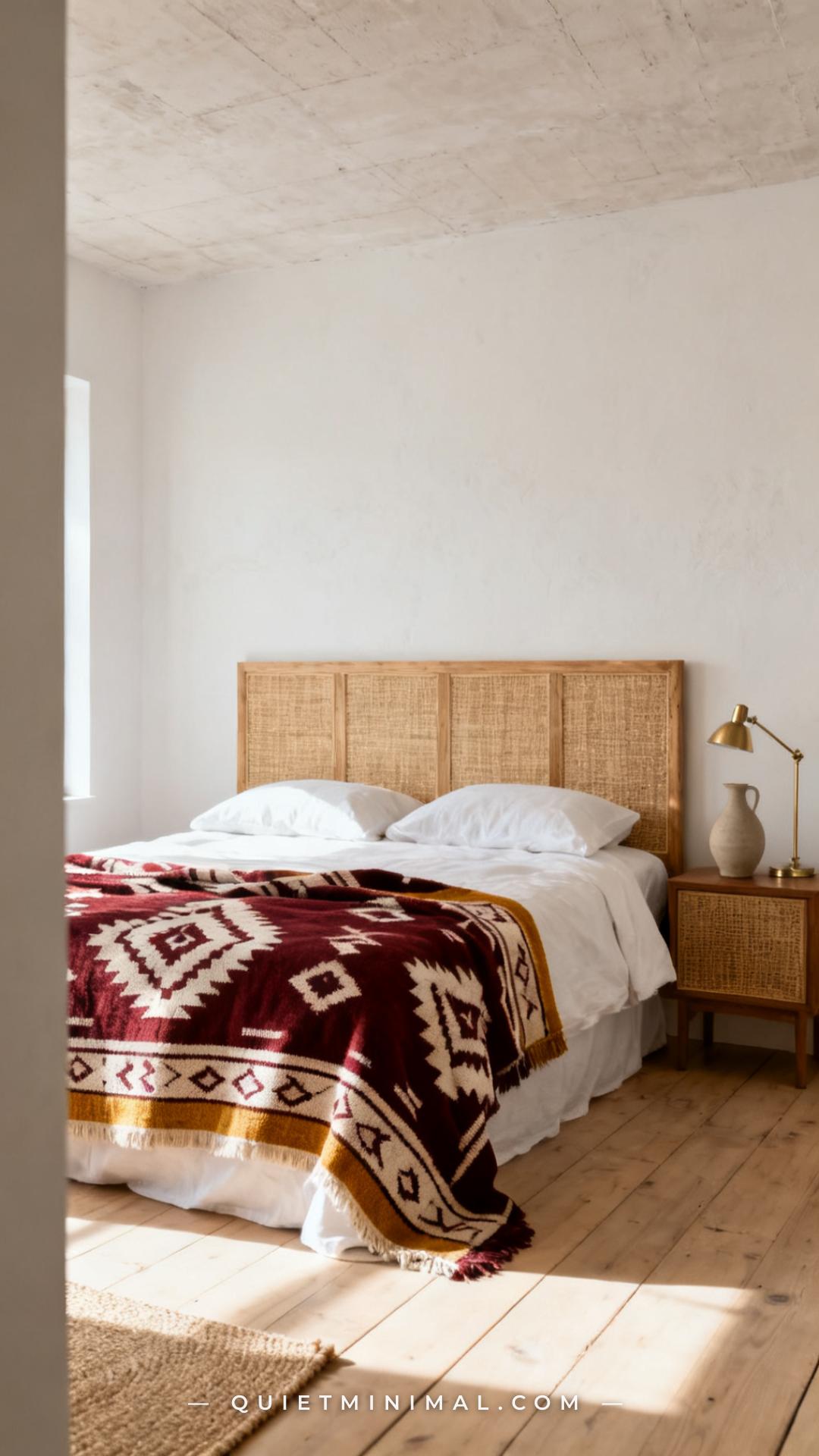
One strong textile — a flatweave kilim throw, a block-printed lumbar pillow, a globally-patterned blanket at the foot of the bed — does more visual work than twelve smaller ones. Minimal boho rooms understand this. They choose the one piece with real character and strip everything around it back to plain linen or cotton.
This is the editing principle that separates a curated room from an overwhelming one: give one thing permission to be interesting, then let the surrounding pieces rest. A bed with one beautifully patterned throw on plain white linen reads as intentional. A bed with six patterned pillows, two different throws, and a tapestry headboard reads as indecisive.
Apply this across the room. One patterned rug, not two. One woven wall hanging, not a full gallery wall. One statement textile, full stop.
Key Takeaway: Pick one textile with real character, then keep everything around it deliberately plain — the contrast is what makes both elements land.

3. Use Low-Profile Furniture to Keep the Sightlines Open
 Save
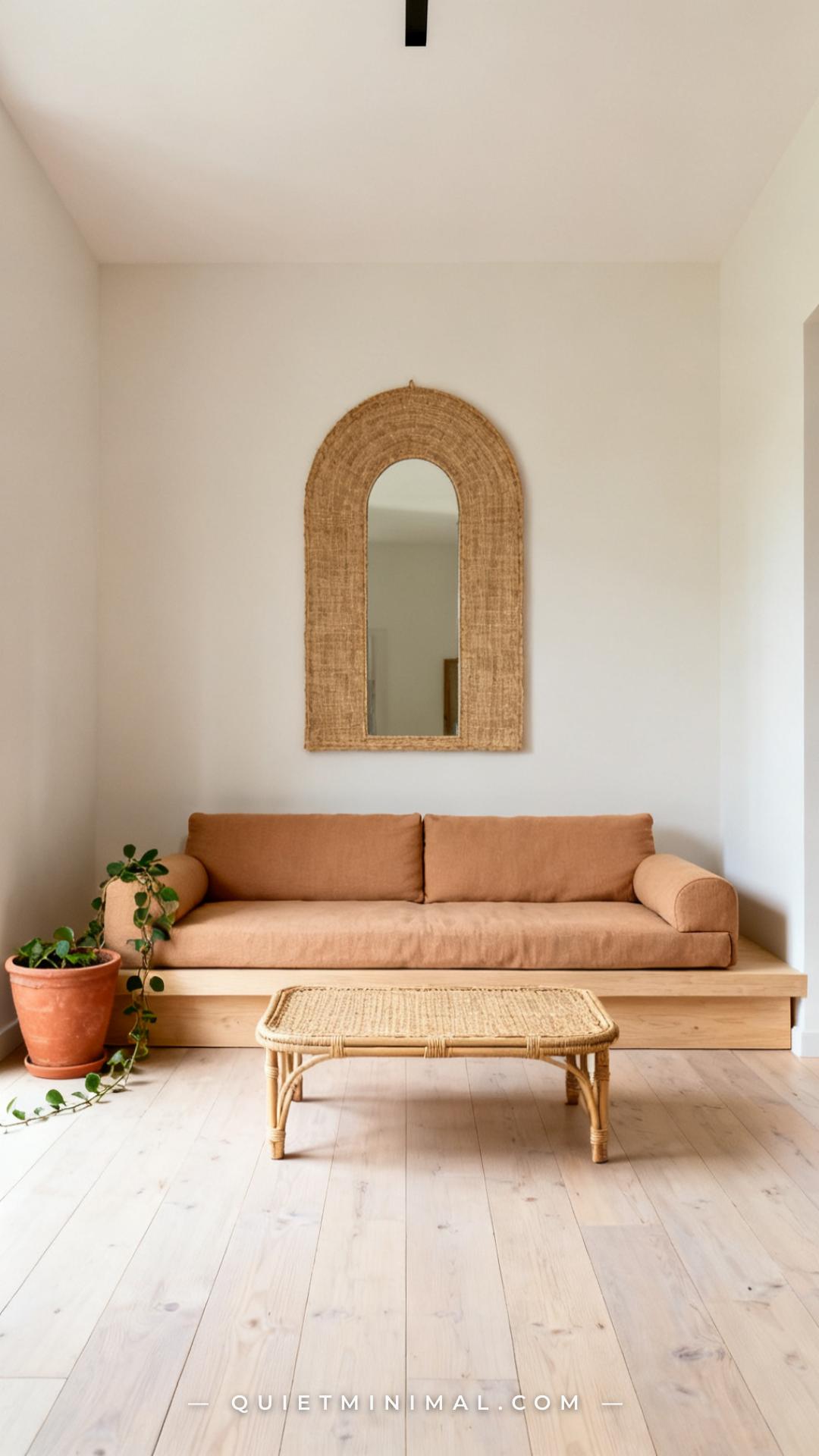
In a maximalist boho room, furniture tends to be big, tall, and decorative — carved wooden armoires, oversized sectionals, statement headboards that touch the ceiling. In a minimal boho room, the furniture profile drops. Low platforms, simple frames, pieces that don’t compete with ceiling height.
Why does this matter? Low furniture creates visual sightlines. Your eye can travel across the room without being interrupted by furniture mass. That open travel reads as space, and space reads as calm — even when the room has texture, plants, and woven objects in it.
A low-profile platform bed, a simple rattan coffee table that sits 16–18 inches off the floor, a two-cushion sofa without boxy arms: these choices are the structural reason a minimal boho room feels different from its cluttered counterpart.
Key Takeaway: Drop your furniture profile and you gain visual breathing room — that’s the structural foundation of a calm boho room.

4. Hang One Rattan or Woven Pendant Instead of a Standard Fixture
 Save
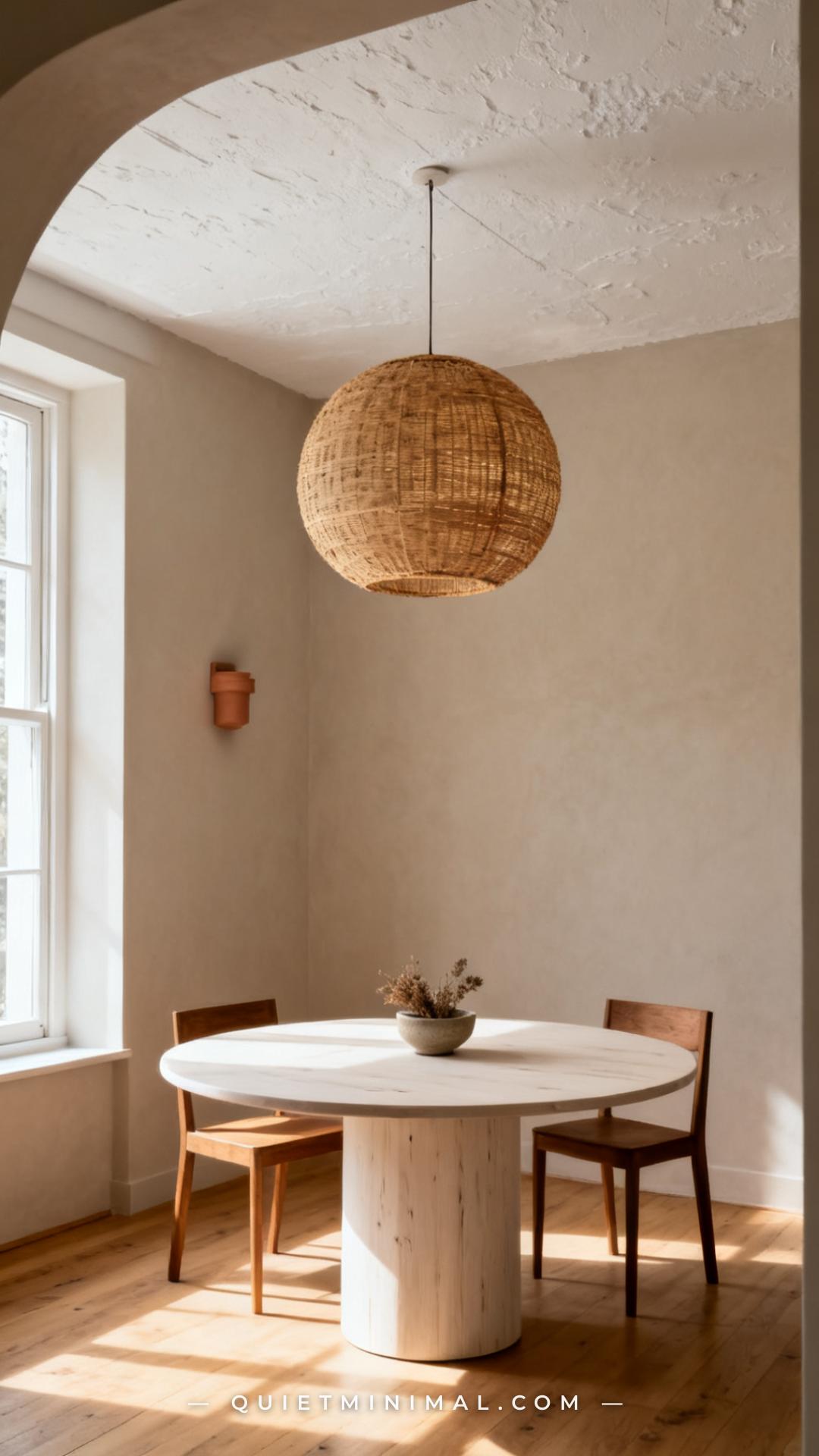
A rattan or woven pendant light is the single fastest way to introduce bohemian character into a minimal room without adding any objects to the floor or surfaces. It lives at ceiling level, out of the visual clutter zone, and the natural texture it brings reads as warm and interesting — not busy.
The key is to choose a pendant with a simple, clean silhouette. Not an elaborate burst of woven tendrils — a smooth drum or a slightly tapered bell shape in natural rattan. Those shapes read as intentional and contemporary rather than decorative-maximalist.
One pendant above a dining table, one above a reading corner, one in a bedroom in place of a flush-mount: each swap costs almost nothing in complexity and adds considerable warmth.
Key Takeaway: Replace one standard fixture with a clean-lined rattan pendant and you add boho texture at ceiling level, where it contributes character without congesting the floor.

5. Layer Two Rugs Maximum — and Only if the Scales Are Very Different
 Save
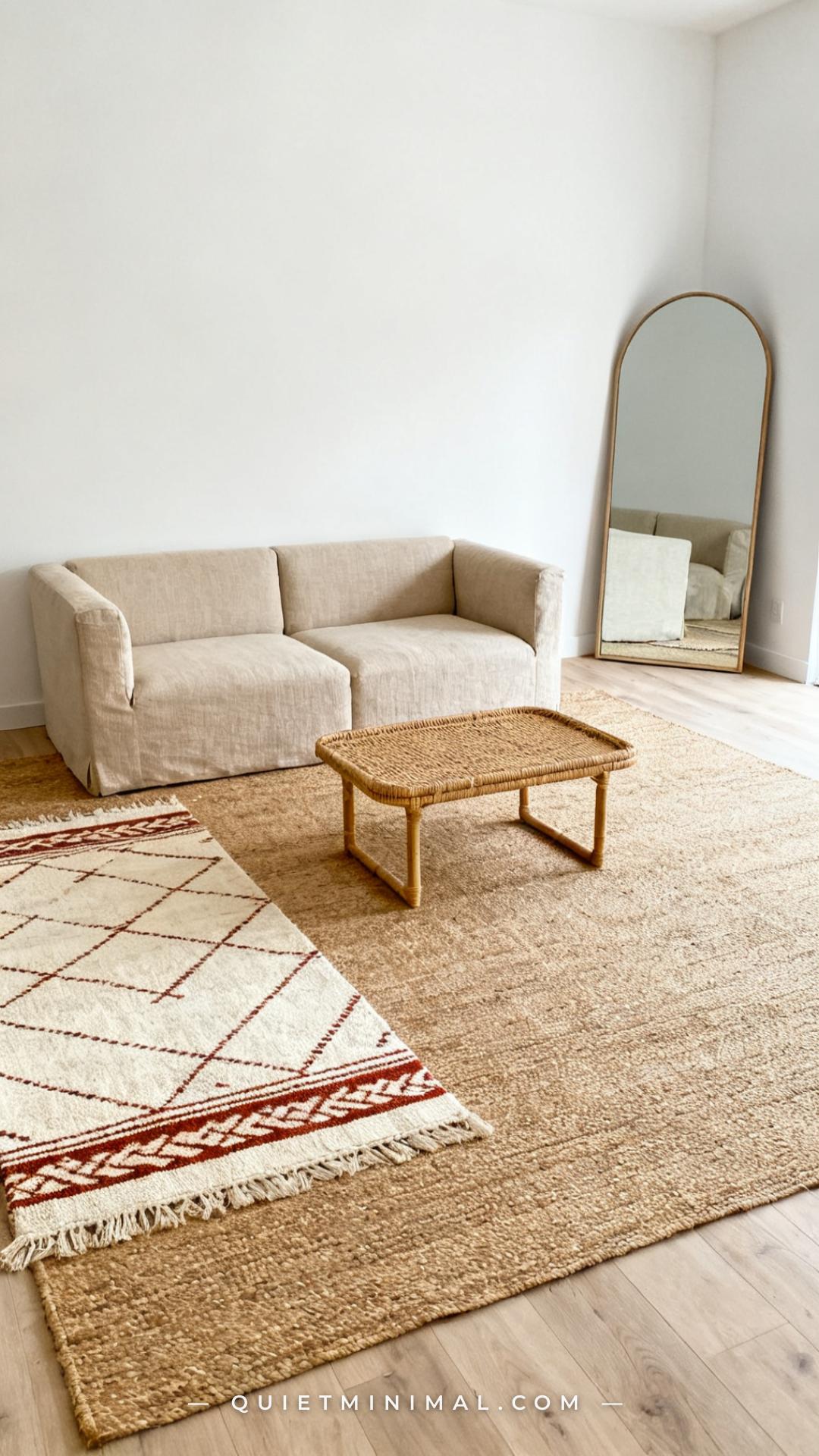
Rug layering is one of the signature moves of bohemian interiors — and one of the fastest paths to visual overwhelm. The minimal boho rule is simple: two rugs maximum, and the size difference between them must be significant.
A large natural-fiber base rug (jute, sisal, seagrass) acts as a neutral plane. A smaller, patterned rug layered on top — a vintage Moroccan, a simple flatweave kilim — adds the bohemian character. Because the scales are so different, the eye reads them as one composed element, not two competing ones.
The mistake is layering rugs of similar size or similar visual weight. Two medium-sized patterned rugs on top of each other flatten the room and read as overflow rather than design.
Key Takeaway: If you layer rugs, make the base rug significantly larger and keep it in a plain natural fiber — the scale difference is what makes the layering look intentional.

6. Use Plants as Sculpture, Not Filler
 Save
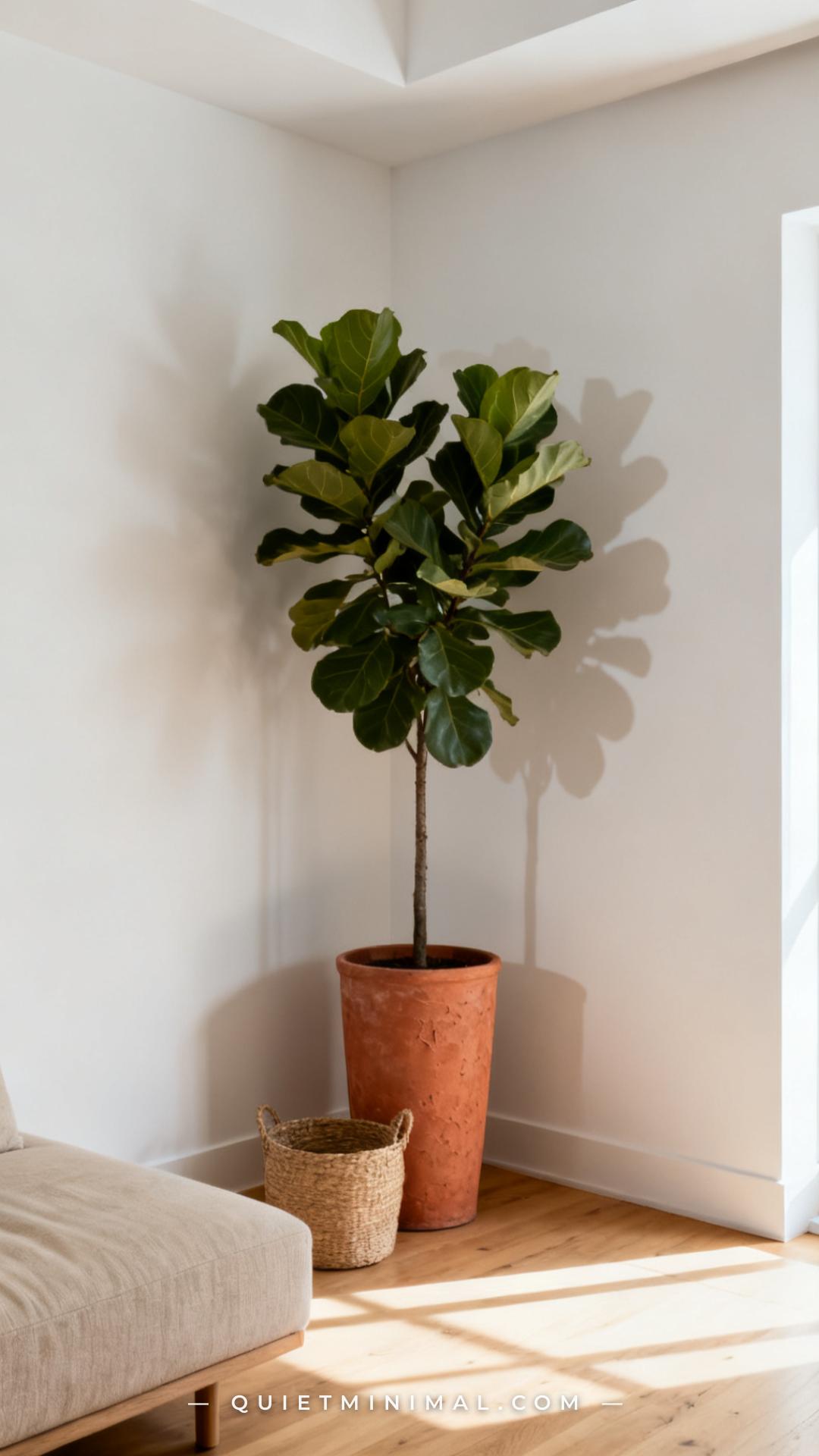
Bohemian rooms often use plants generously — trailing pothos from every shelf, clustered succulents on every windowsill, dried pampas grass in every corner. Minimal boho takes a different approach: fewer plants, larger scale, treated like sculpture.
One large fiddle-leaf fig in the corner of a living room does more than twelve small plants scattered across surfaces. It creates a vertical focal point, brings life and organic texture, and because it is singular, it commands attention rather than blending into the background.
The minimal boho rule for plants: choose fewer, go bigger, and place them where nothing else competes. A single plant in an empty corner. One trailing vine on an otherwise bare shelf. A large monstera beside a sofa as a second sculptural element. That’s the full plant inventory for a room.
Key Takeaway: Treat plants as sculpture — singular, large-scale, and placed where they stand alone — and they elevate the room instead of crowding it.

7. Keep Walls Mostly Bare — One Piece, Large Format
 Save
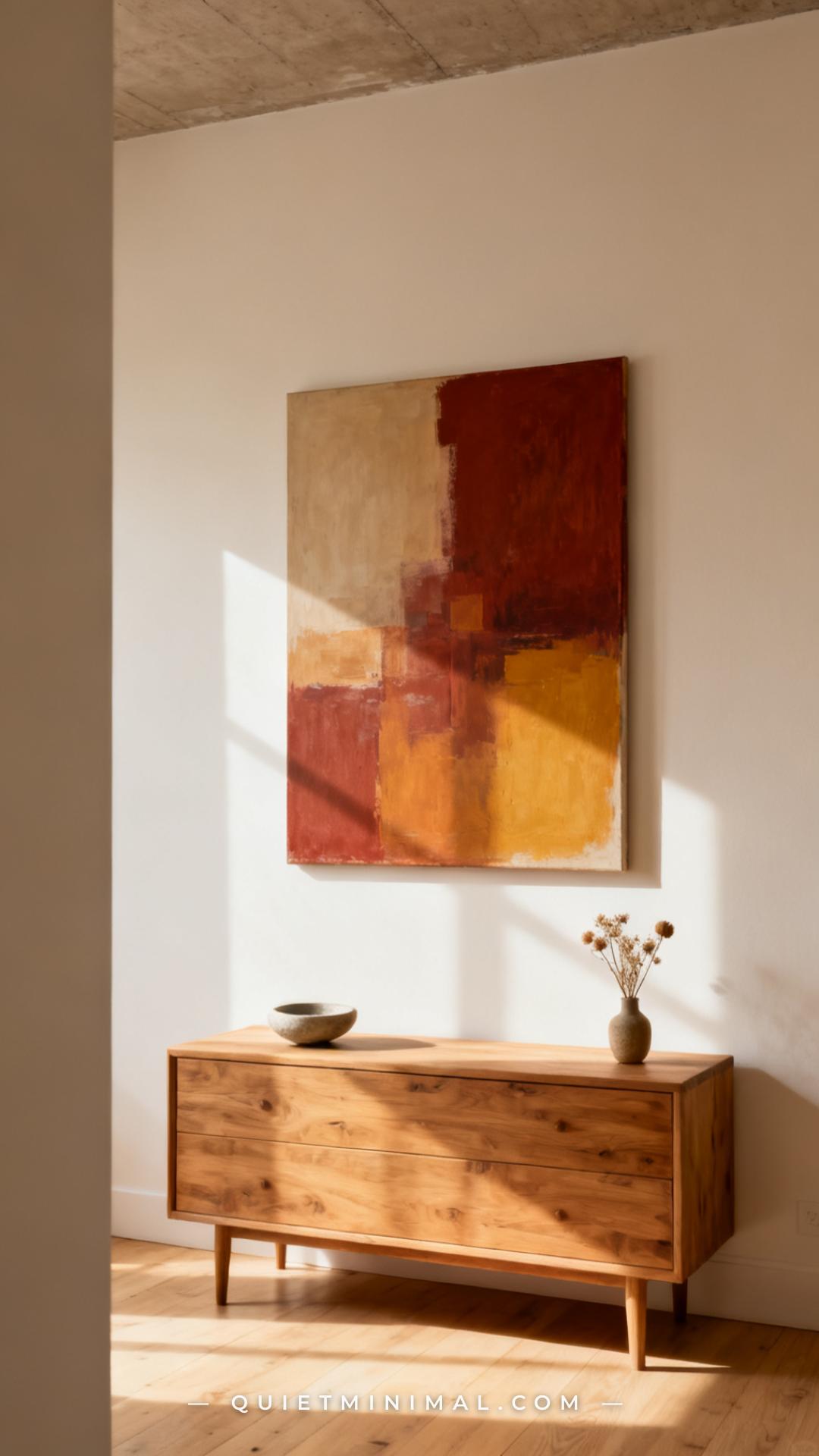
Gallery walls are a bohemian staple, but in a minimal boho room they are almost always a mistake. A gallery wall introduces 8–12 objects onto one surface and rarely lands as intentional — it more often reads as “I had all these things and ran out of places to put them.”
The minimal boho alternative: one large-format piece per wall, hung with space on all sides. A large abstract canvas in earthy tones, an oversized vintage textile framed as art, a single large-scale botanical print. The size creates impact without density.
If you already have a gallery wall and love some of the pieces, take everything down, choose the one strongest piece, and rehang only that. The room will feel immediately calmer and the piece itself will read as more considered.
Key Takeaway: One large piece of wall art with breathing room on all sides reads as more intentional than any gallery wall — and it takes less time to arrange.
8. Choose Handmade or Natural-Material Objects Over Decorative Sets
 Save
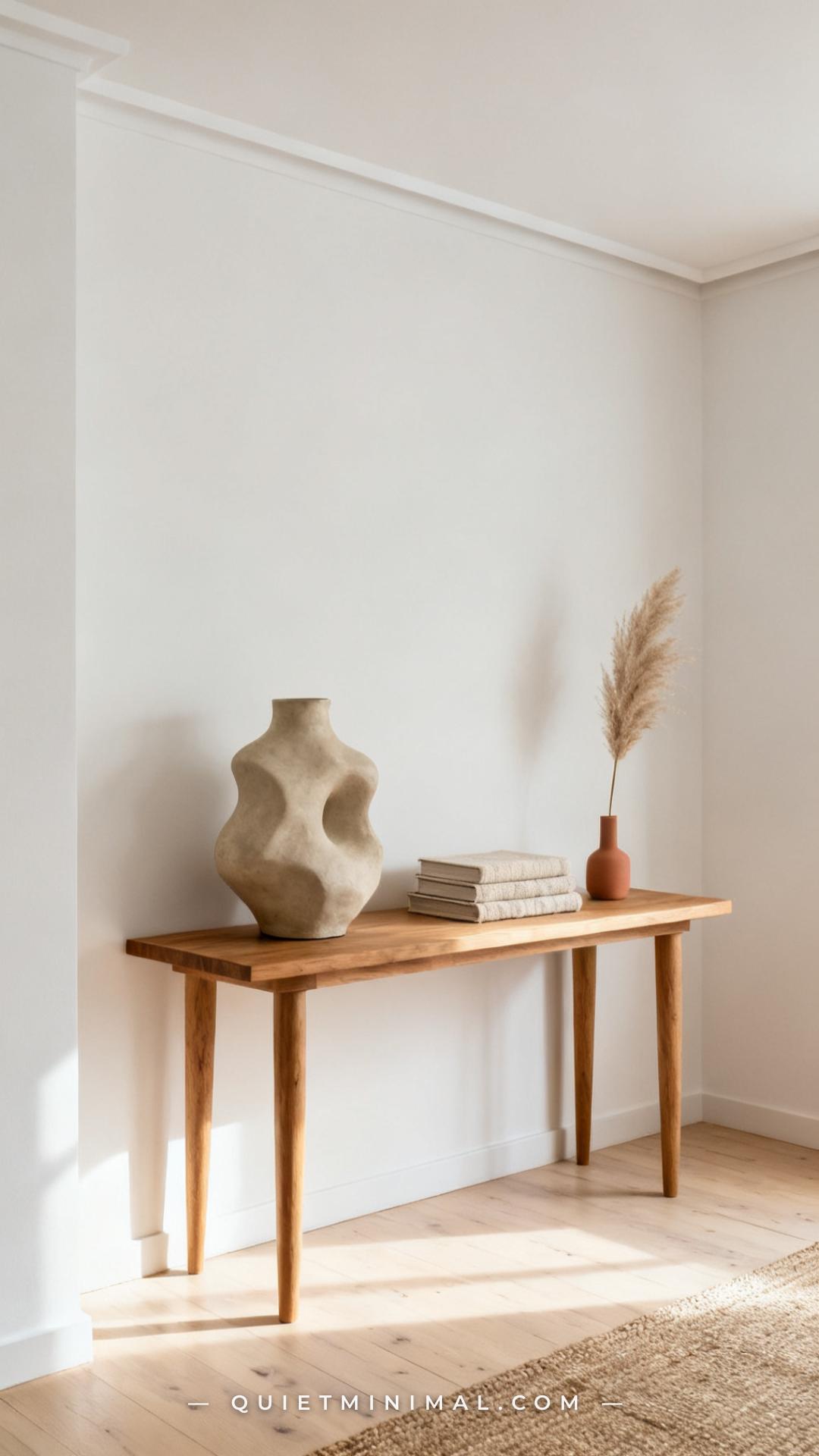
Bohemian interiors are rooted in handmade and natural objects — ceramics, woven baskets, raw wood, beaten brass. That instinct is exactly right for a minimal boho room. The mistake is buying decorative sets: the matching three-piece vase collection, the uniform row of identical ceramic pots, the set of five nesting baskets displayed all at once.
Sets read as retail, not collected. They signal that objects were purchased together rather than found over time. A single irregular ceramic bowl, one woven seagrass basket, one sculptural piece of driftwood: these read as objects with individual identity.
The curation principle: every object on a surface should be able to justify its presence on its own. If it only works as part of a set, it is doing less than it should.
Key Takeaway: Choose individual handmade objects over decorative sets — singular pieces with distinct character read as collected, not purchased.

9. Use Linen Everywhere Softness Is Needed
 Save
From the guides
You've saved it, wanted it. Here's the how: codes, measurements, order. Your choices make it yours.
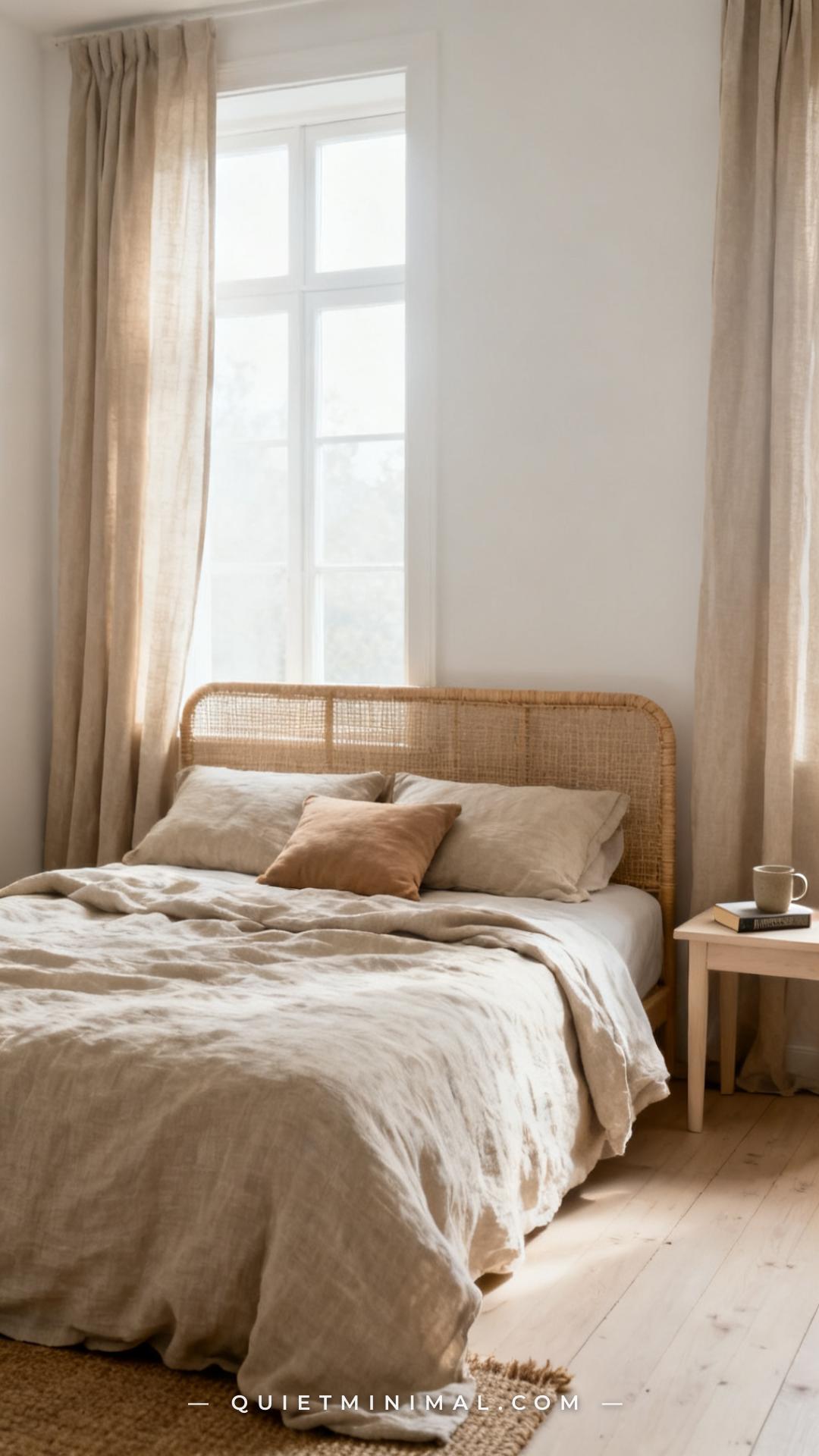
The Japandi Honest PlaybookThe honest version of the style: what to keep, what to skip, and the order to do it in.See inside →The Room Refresh PlaybookA repeatable four-step method, room by room, in ten minutes, thirty minutes, or one weekend.See inside →Make Any Room Feel Cozy on PurposeWhy some rooms hold people and others empty out, and the moves that change it.See inside →Linen is the material that connects bohemian warmth to minimalist restraint. It has enough texture to read as interesting, enough neutrality to never compete, and it softens every room it enters without adding visual complexity.
In a minimal boho bedroom, linen on the bed replaces the patterned duvet set. Linen curtains replace printed or blackout panels. A raw linen throw over the back of a sofa replaces the chunky knit that reads as trend-dated. The material does the same warming job but with far more restraint.
Linen also photographs beautifully — which matters if Maya is designing partly for the kind of room she wants to share or pin. The texture shows up in photos in a way that cotton or polyester does not.
Key Takeaway: Linen earns its keep in every room — it brings texture without pattern, warmth without weight, and elevates even the plainest furniture.

10. Keep Shelves at 60% Capacity — and Style the Negative Space
 Save
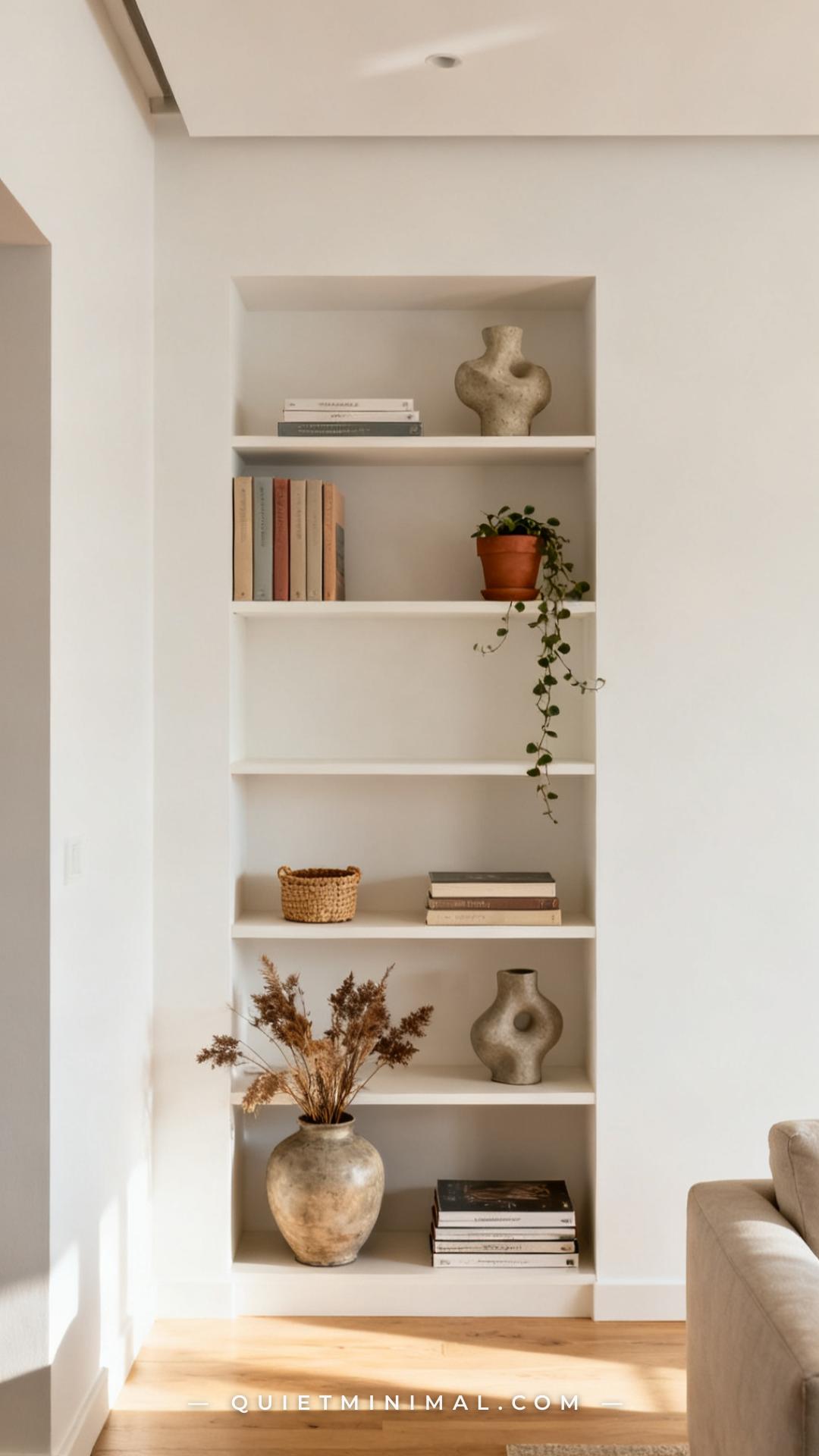
The shelf is where minimal boho rooms most often collapse. The instinct is to fill every inch — more books, more objects, more plants, more candles. The result is the visual equivalent of noise.
Minimal boho shelving works on one rule: 60% capacity, with the empty 40% treated as a deliberate choice. Negative space on a shelf is not wasted — it is the breathing room that allows the objects present to register individually. A single interesting ceramic on a half-empty shelf reads as a focal point. The same ceramic on a crammed shelf disappears.
Style each shelf as a small composition: one vertical element (a plant or a tall vase), one horizontal element (a stack of books lying flat), and one object with distinct character (a handmade ceramic, a small sculpture). Then leave the rest of the shelf clear.
Key Takeaway: Treat shelf space the way a museum treats a display case — fewer objects, more space between them, and every piece earns its spot.

11. Replace Overhead Lighting With Layered Warm Sources
 Save
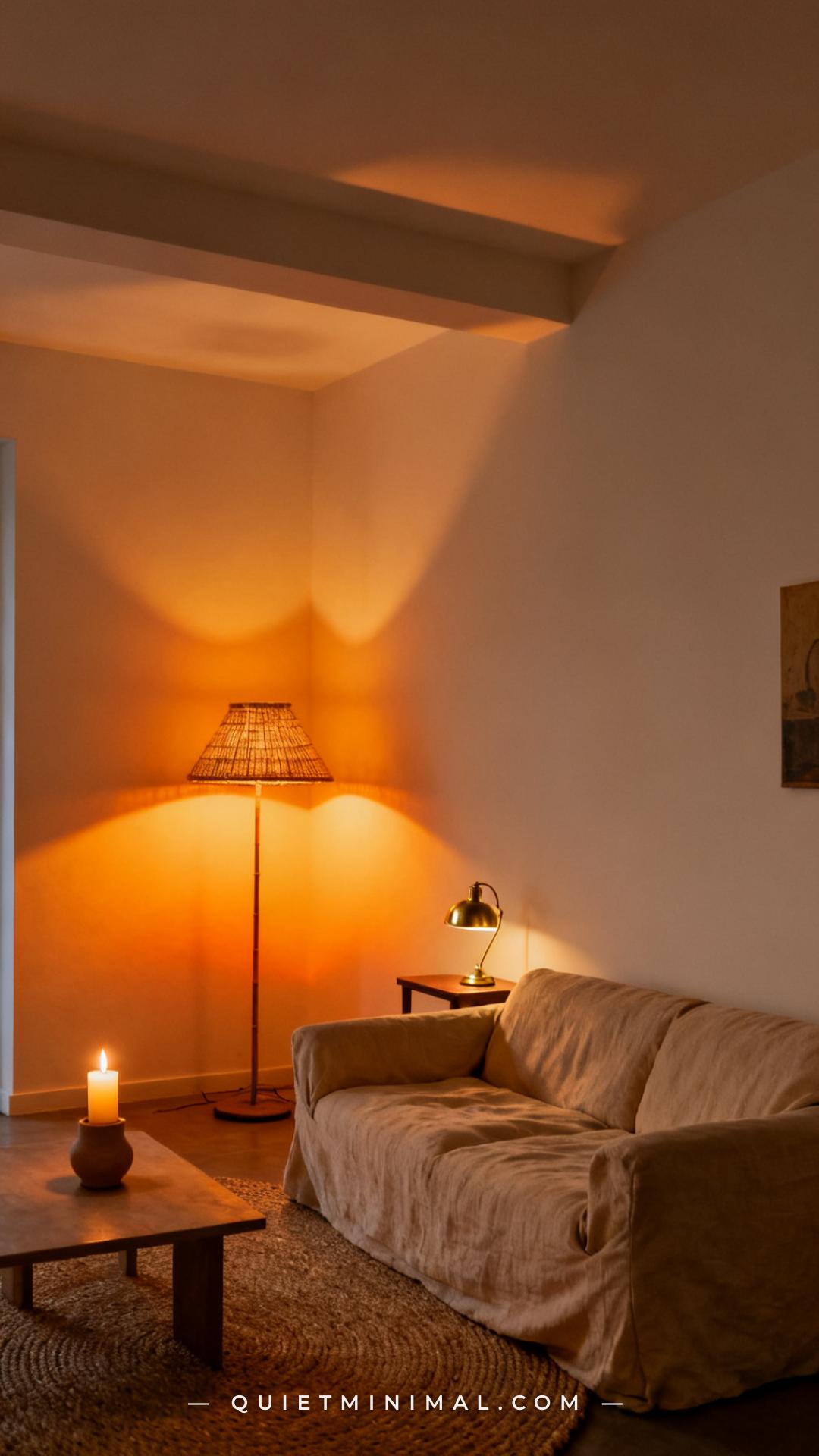
Overhead lighting is one of the details that most undermines the warmth of a boho-minimal room. A single overhead fixture — especially a recessed can light or a basic flush-mount — flattens a room and strips it of atmosphere.
Minimal boho rooms layer three sources: one floor lamp in a corner (rattan shade, warm bulb), one table lamp on a side table or dresser (brass or ceramic base), and one candle or battery-powered flickering source on the coffee table or nightstand. The overhead stays off in the evenings, or is replaced entirely with a dimmer.
This isn’t about expense — it’s about switching what you turn on at 6 p.m. Three warm sources on dimmers create a room that feels intentionally designed. One overhead on full creates a room that feels lit for a task.
Key Takeaway: Replace overhead light with three layered warm sources and your room immediately reads as more designed — this is the fastest atmospheric upgrade in a boho-minimal room.

12. Edit Your Color Story Down to Three Maximum
 Save
Every bohemian object you love — the woven pillow, the block-printed throw, the vintage ceramic — arrives carrying its own color. In a maximalist boho room, those individual colors multiply across the room until the palette is effectively “everything.” That’s where the cluttered feeling lives.
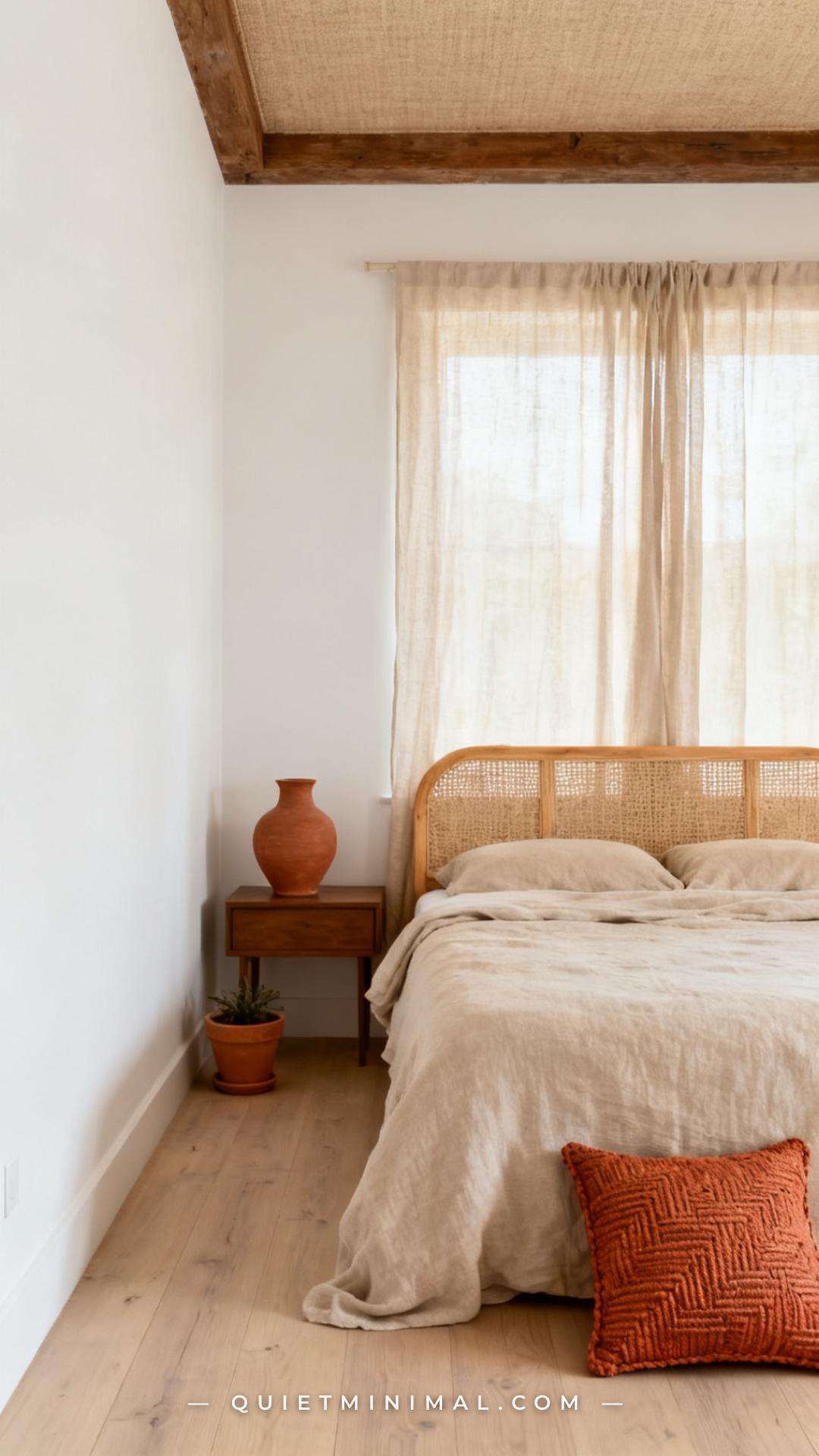
A minimal boho room commits to three colors, full stop: a dominant neutral (the walls and large furniture), a secondary neutral (textiles and natural fibers), and one accent (a terracotta, a dusty sage, a deep ochre) that repeats in three to five small objects throughout the space.
That repetition of the accent color is what makes it read as intentional. Terracotta in the vase, in the pillow, in a small planter: the eye picks up the thread and the room feels designed. Terracotta in one place and mustard yellow somewhere else and rust somewhere else feels like accumulation.
Key Takeaway: Pick one accent color and repeat it in three to five places — that repetition is the difference between a designed room and a room full of things you like.

13. Introduce Global Accents Sparingly — One Culture’s Influence per Room
 Save
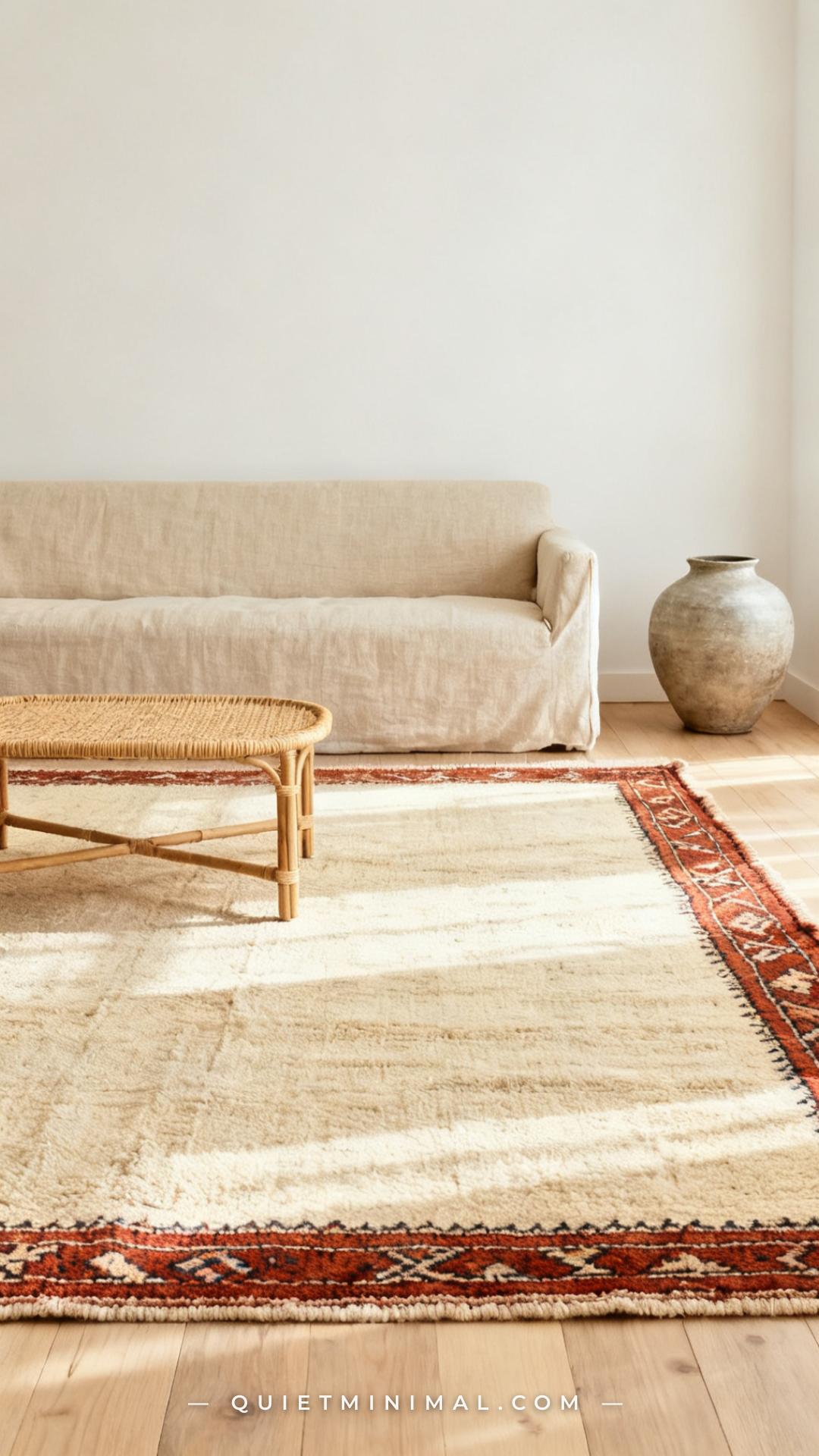
Bohemian style draws from global traditions — Moroccan rugs, Indian block printing, Japanese wabi-sabi ceramics, Scandinavian natural fibers. In a maximalist boho room, all of those influences arrive simultaneously and the result feels like a souvenir shop.
Minimal boho takes a different approach: choose one cultural influence per room and let it be the clear editorial thread. A room anchored in Moroccan influence — a hand-knotted rug, one brass lantern, plain white walls — reads as curated and well-traveled. Add Indian block-print pillows, Japanese ceramic vessels, and rattan Scandinavian accents to that same room and it reads as collected-without-intention.
This is a hard edit for most people who love many things equally. The rule is: the room gets one influence, the rest of the house gets the others.
Key Takeaway: One global design influence per room — let it be clear, let it breathe, and save the other influences for different spaces.

14. Do a “One In, One Out” Audit Every Season
 Save
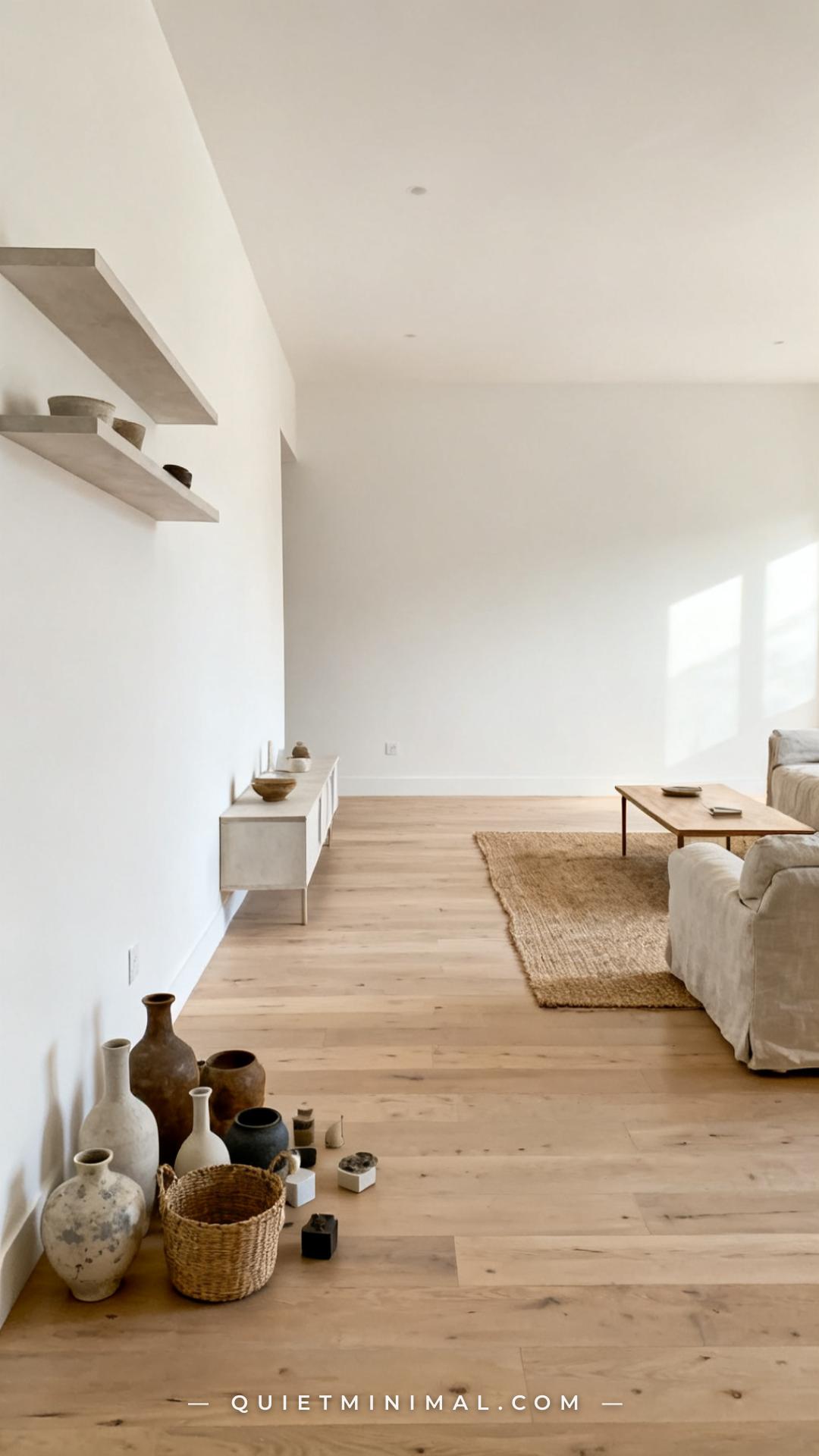
The best minimal boho rooms are not decorated once and left alone. They are edited continuously, because the instinct to add — a new candle, a new basket, a found object from a market — never fully stops. The room needs a counterforce.
A seasonal “one in, one out” audit takes about 30 minutes per room. Every time a new object enters, one object leaves: to storage, to donation, or to another room where it has more space to breathe. This keeps the room from accumulating without preventing it from evolving.
The audit also catches objects that have stopped earning their place. A ceramic piece that once felt intentional but now just occupies space. A basket that’s been empty for six months. A throw that no longer fits the palette. Those are the first things to remove, and every removal makes the room feel slightly more resolved.
The minimal boho room is not a fixed state — it’s a practice of continuous editing. That practice, done seasonally, is what keeps the warmth without the weight.
Key Takeaway: Treat your decor as an ongoing edit, not a finished project — a seasonal one-in, one-out audit keeps the bohemian warmth without the slow creep of clutter.
The thread connecting all fourteen ideas is the same thing: every object in a minimal boho room should be there because it was chosen, not because it arrived and stayed. That distinction — between deliberate and accumulated — is the entire difference between a room that feels curated and one that feels cluttered.
Start with the palette, drop the furniture profile, pick one strong textile, and then practice the edit. You do not have to build a different kind of room. You just have to be willing to remove as often as you add. That discipline, applied consistently, is what turns a bohemian room into a space that feels as calm as it does warm.
From the guides
You've saved it, wanted it. Here's the how: codes, measurements, order. Your choices make it yours.
The Japandi Honest PlaybookThe honest version of the style: what to keep, what to skip, and the order to do it in.See inside →The Room Refresh PlaybookA repeatable four-step method, room by room, in ten minutes, thirty minutes, or one weekend.See inside →Make Any Room Feel Cozy on PurposeWhy some rooms hold people and others empty out, and the moves that change it.See inside → Save


