Georgia
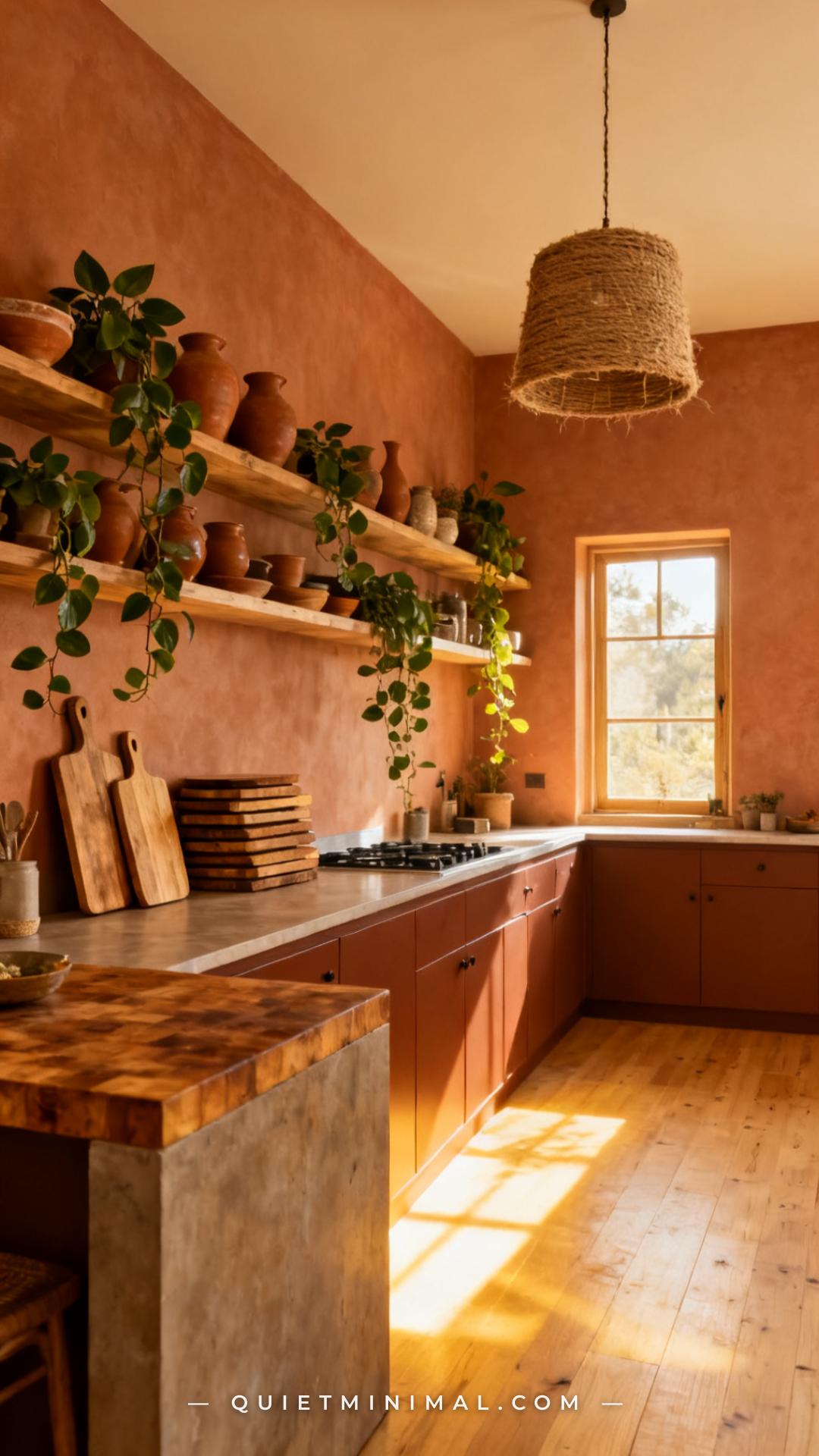
Your kitchen should feel like the warmest room in the house — not just in temperature, but in personality. Bohemian style does that better than almost any other aesthetic, but the version most people end up with looks like a flea market exploded rather than a thoughtfully styled space. The difference almost always comes down to one thing: a grounded earthy color palette that holds everything together. Warm terracotta, sun-bleached clay, deep ochre, and soft mushroom tones do the heavy lifting that lets you layer texture, pattern, and collected objects without the room tipping into chaos. These 11 ideas show you exactly how to use those tones — whether you’re renting, working with existing white cabinetry, or starting a kitchen refresh from scratch.
1. Paint One Wall in Terracotta and Let Everything Else Stay Neutral
 Save
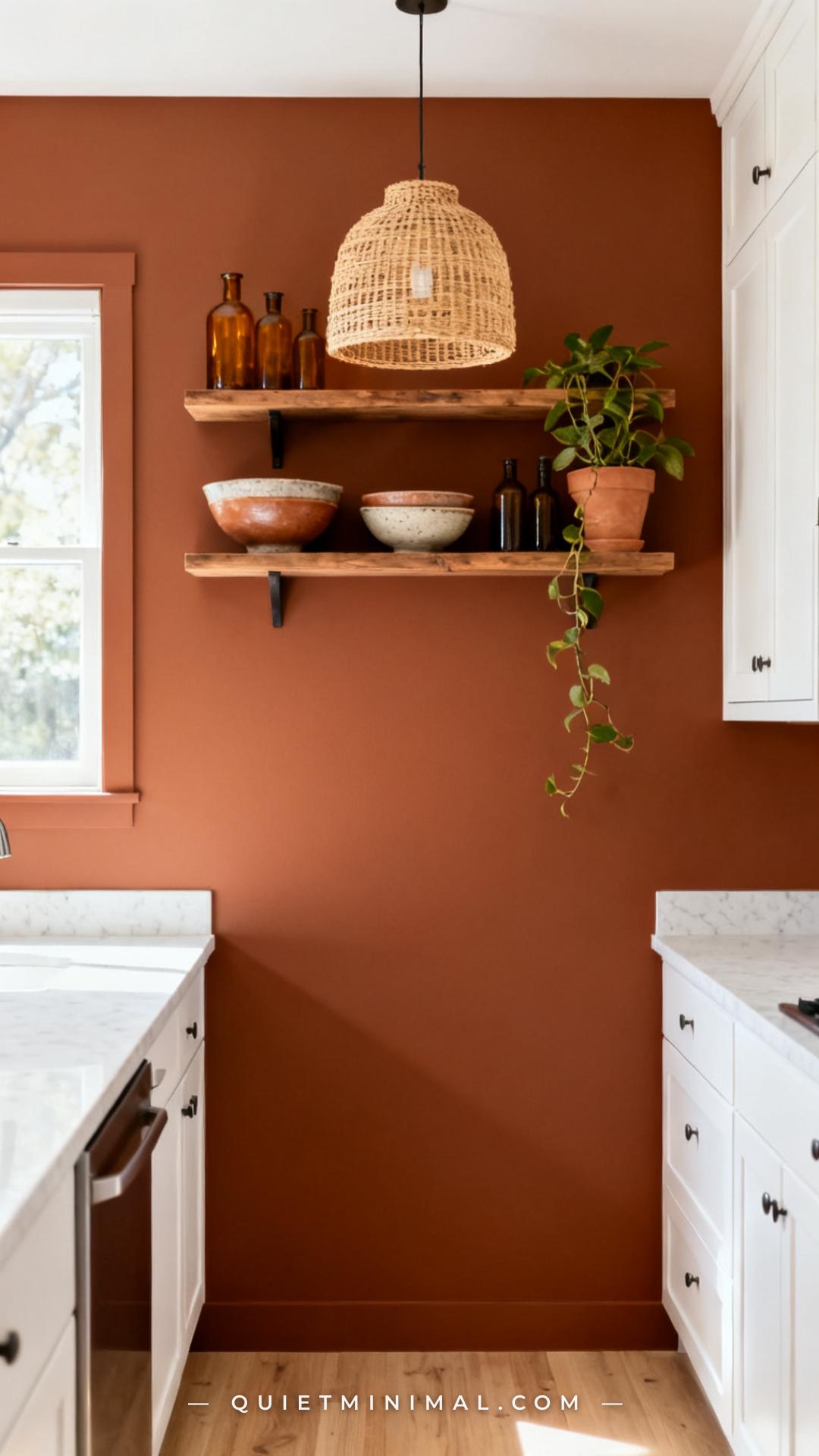
If the idea of going full earthy-toned kitchen feels like too much commitment, one terracotta accent wall is the highest-leverage move you can make. It costs almost nothing (one quart of paint covers more wall than you think), it’s fully reversible in a rental, and it immediately anchors the bohemian palette without requiring you to change a single cabinet.
Sherwin-Williams Cavern Clay (SW 7701) is the most Pinterest-saved earthy tone for this treatment — it reads as terracotta in direct sunlight and shifts toward a warm copper-clay in the evening. Apply it to the wall behind open shelving or the wall that faces you when you walk in. Pair it with your existing white cabinets and natural wood accents and the room snaps into focus instantly.
From the guides
You've saved it, wanted it. Here's the how: codes, measurements, order. Your choices make it yours.
 The Japandi Honest PlaybookThe honest version of the style: what to keep, what to skip, and the order to do it in.See inside →
 The Room Refresh PlaybookA repeatable four-step method, room by room, in ten minutes, thirty minutes, or one weekend.See inside →
 Make Any Room Feel Cozy on PurposeWhy some rooms hold people and others empty out, and the moves that change it.See inside →
Key Takeaway: One terracotta wall anchors a bohemian kitchen’s entire color story — everything else can stay neutral and still feel intentional.

2. Swap Out Bar Stools for Rattan Seats in a Warm Honey Tone
 Save
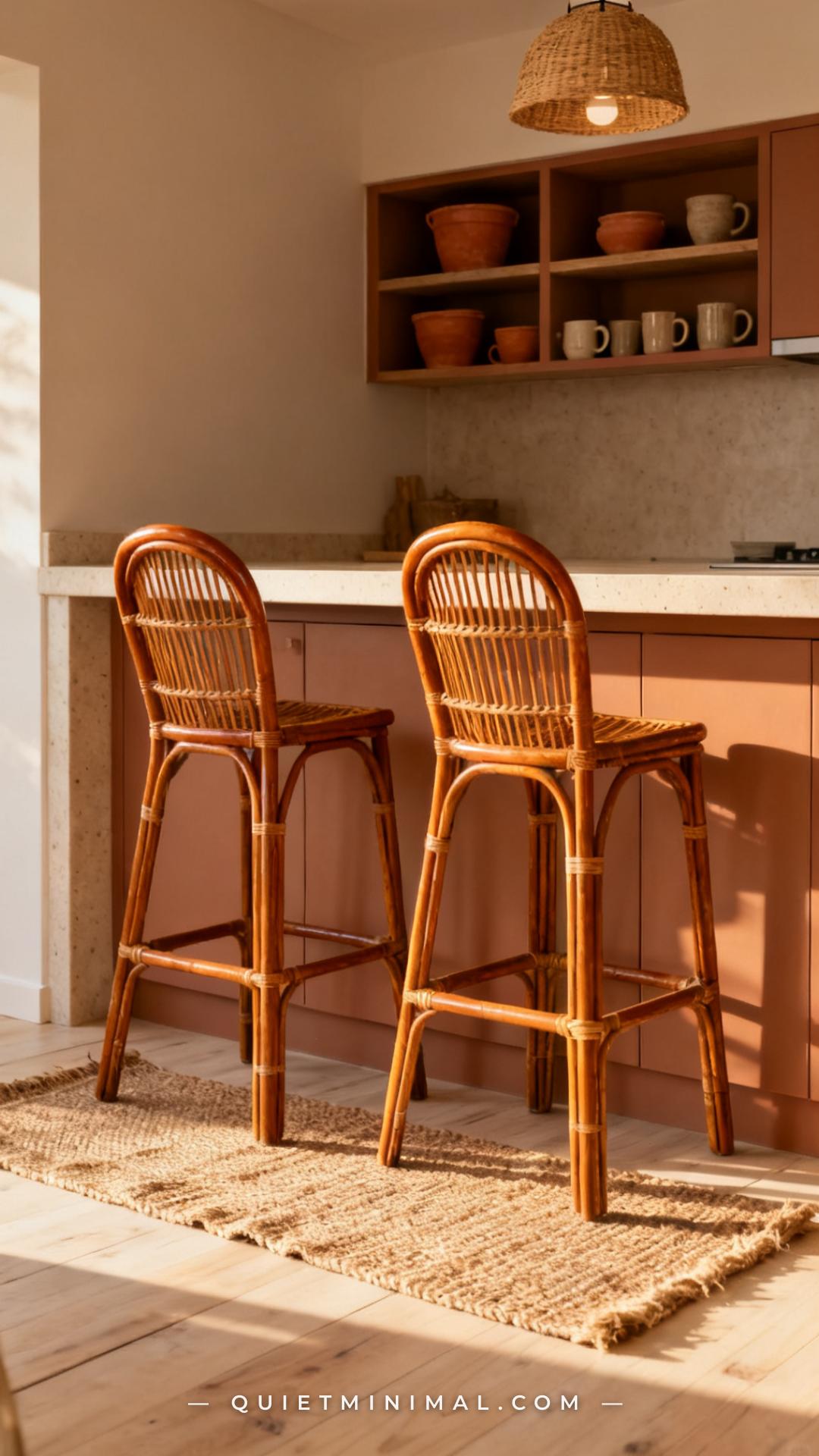
Bar stools are the most visible and most-ignored piece of furniture in a kitchen. If yours are black metal or plain wood with no warmth, that’s a cheap, reversible swap that changes the room’s entire energy. Natural rattan stools in a honey or caramel tone do two things at once: they add an earthy material layer, and they break up the hard-surfaced heaviness that most kitchens carry.
Look for stools with a slight curve to the back — that silhouette reads as bohemian without veering into “themed.” Pair them with a butcher block or live-edge wood countertop overhang if you can. The combination of rattan weave, warm wood, and terracotta wall (if you’ve done idea #1) creates a layered, intentional depth that feels collected rather than matched.
Key Takeaway: Natural rattan bar stools in honey or caramel tones add earthy material texture without requiring any permanent kitchen changes.

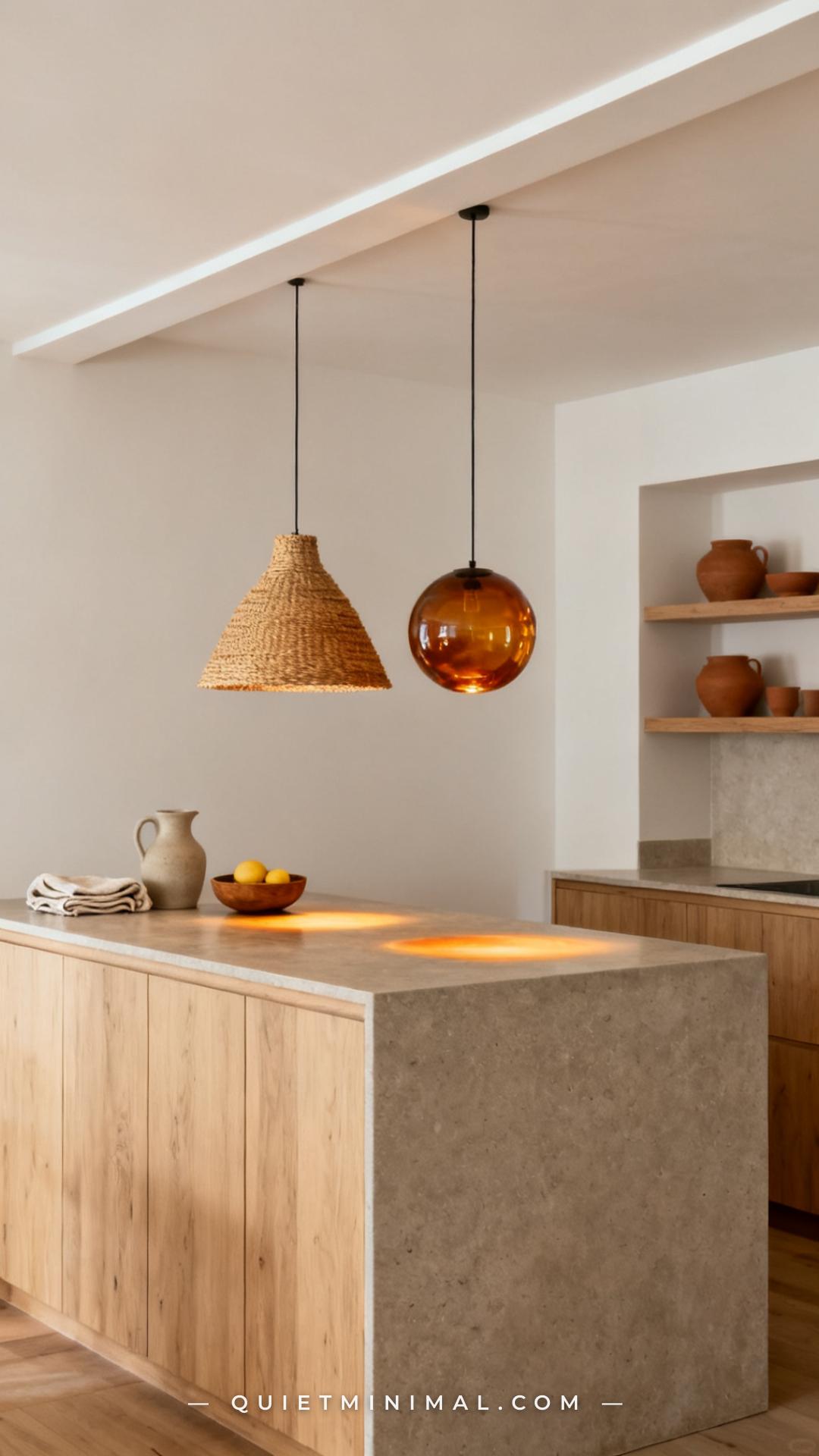
3. Introduce Ochre and Amber Through Your Pendant Lighting
 Save
Pendant lighting is where earthy bohemian kitchens either come together or fall apart. Most people default to black metal or clear glass — both fine in isolation, but they don’t contribute any warmth to the palette. Swapping in a woven seagrass, hand-blown amber glass, or jute-wrapped pendant immediately pushes the room into earthy territory without you having to touch the walls or cabinets.
The trick is pairing two pendant styles over an island rather than matching them. Choose one woven natural-material shade and one amber glass globe. The variation looks intentional and adds the layered, collected quality that’s central to bohemian style. Both tones — the straw-gold of woven fiber and the amber of blown glass — sit perfectly within a warm earthy palette.
Key Takeaway: Mismatched earthy pendants (one woven, one amber glass) over an island deliver bohemian warmth and layering without a single wall or cabinet change.

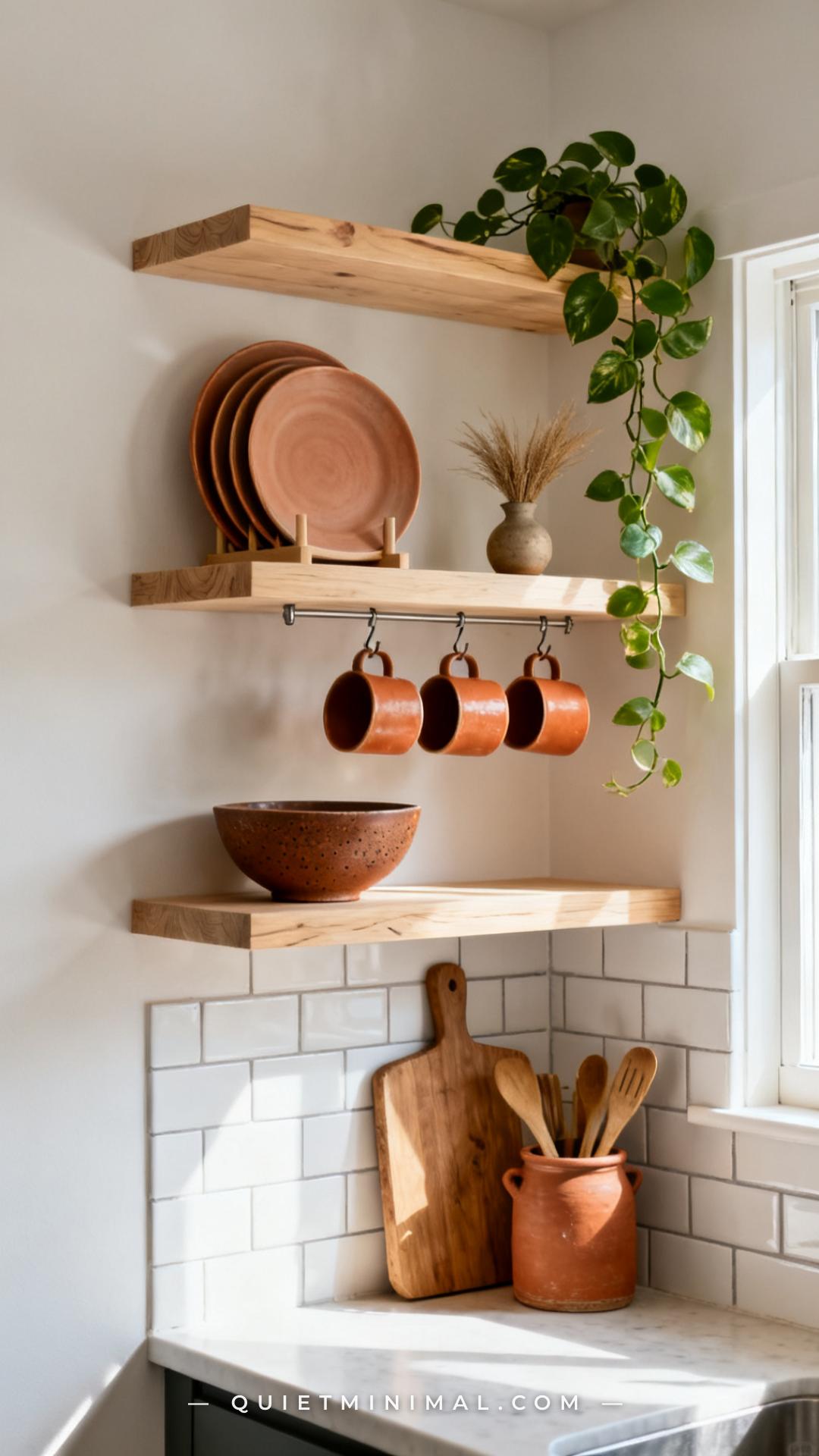
4. Fill Open Shelves With Handmade Ceramics in Clay and Terracotta Glazes
 Save
Open shelving is the canvas of a bohemian kitchen, and what you put on it determines whether the whole look reads as curated or cluttered. The single most cohesive thing you can do is commit to a ceramic palette of clay, terracotta, and warm speckled stoneware — and remove anything that fights that palette (bright white, stark black, or plastic containers).
You don’t need to buy a matching set — in fact, you shouldn’t. Mix a few hand-thrown matte brown mugs, a terracotta-glazed bowl, and a speckled stoneware plate or two. The variation in glaze and form is what makes it feel collected and personal. Add one or two trailing plants in clay pots at the ends or top of the shelves to bring in organic softness.
Key Takeaway: Open shelves styled with a mix of hand-thrown stoneware in clay and terracotta glazes create the cohesion that makes bohemian kitchens look curated, not chaotic.

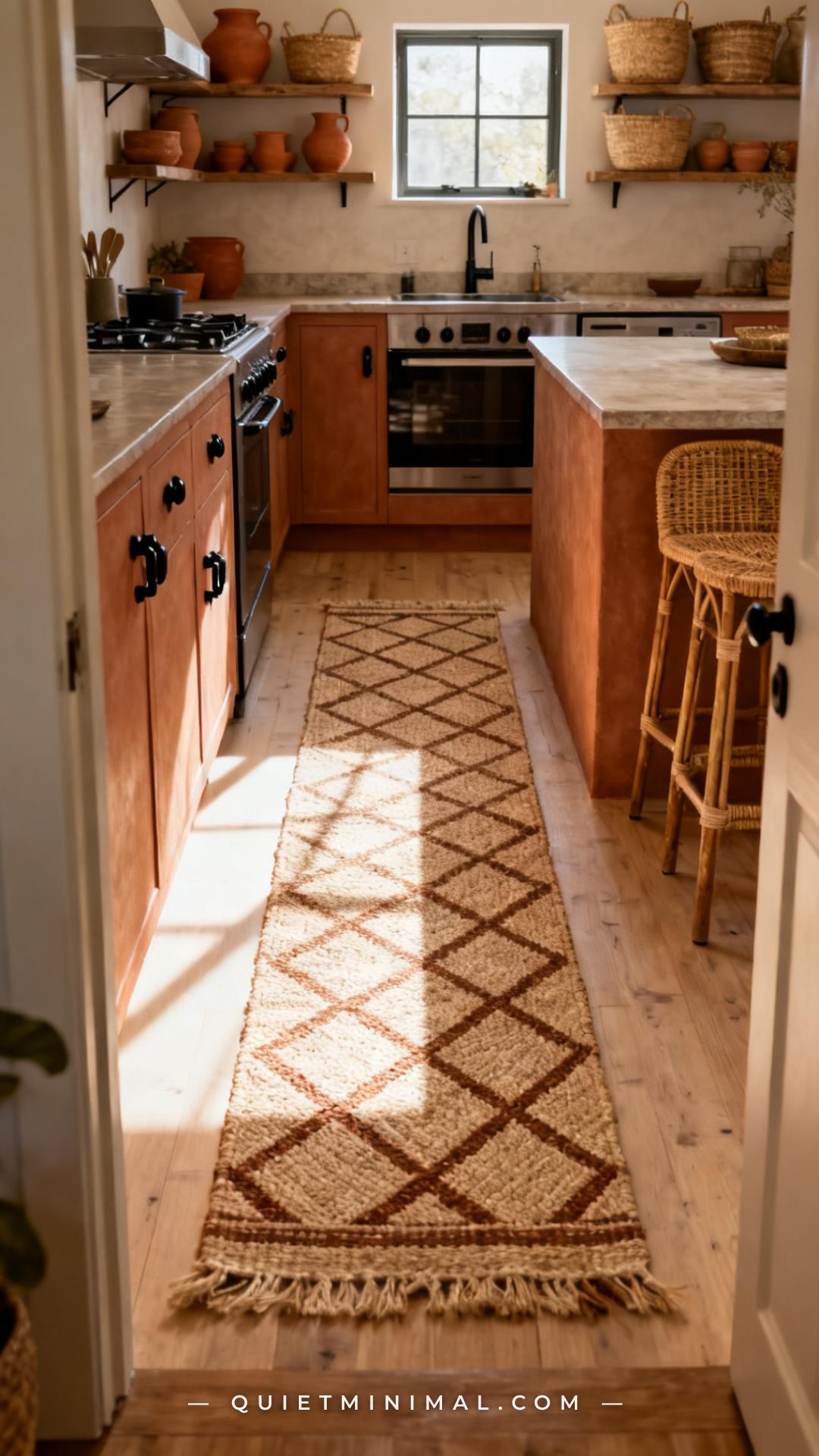
5. Use a Jute or Sisal Runner to Ground an Earthy Kitchen Floor
 Save
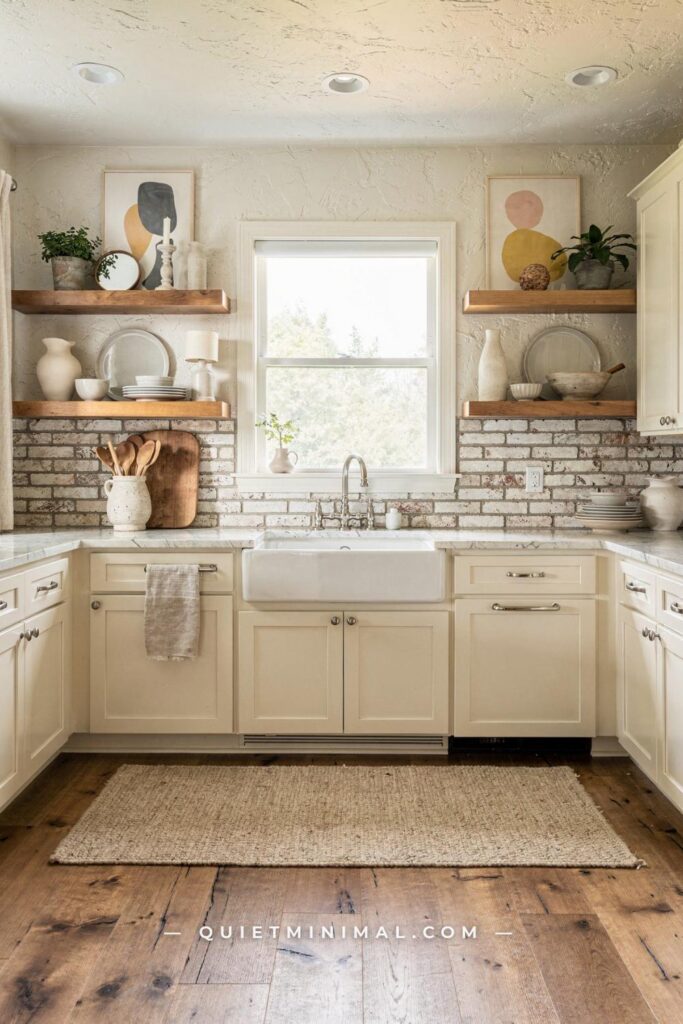
Most people think about earthy color from the walls or cabinets up. The floor is just as important, and a natural fiber runner — jute, sisal, or a jute-cotton blend — is the fastest, most affordable way to ground an earthy bohemian kitchen at floor level.
Jute runners add two things simultaneously: the warm honey-brown of natural fiber (which ties directly to terracotta walls, rattan stools, and wooden shelves) and the tactile, handmade quality that is the foundation of bohemian style. Choose a pattern that’s simple — a diamond or herringbone weave in the natural fiber itself, without dye. The natural variation in the jute color gives you all the visual interest you need.
Key Takeaway: A natural jute runner in a simple woven pattern grounds the earthy palette at floor level and adds the tactile, handmade quality bohemian style is built on.
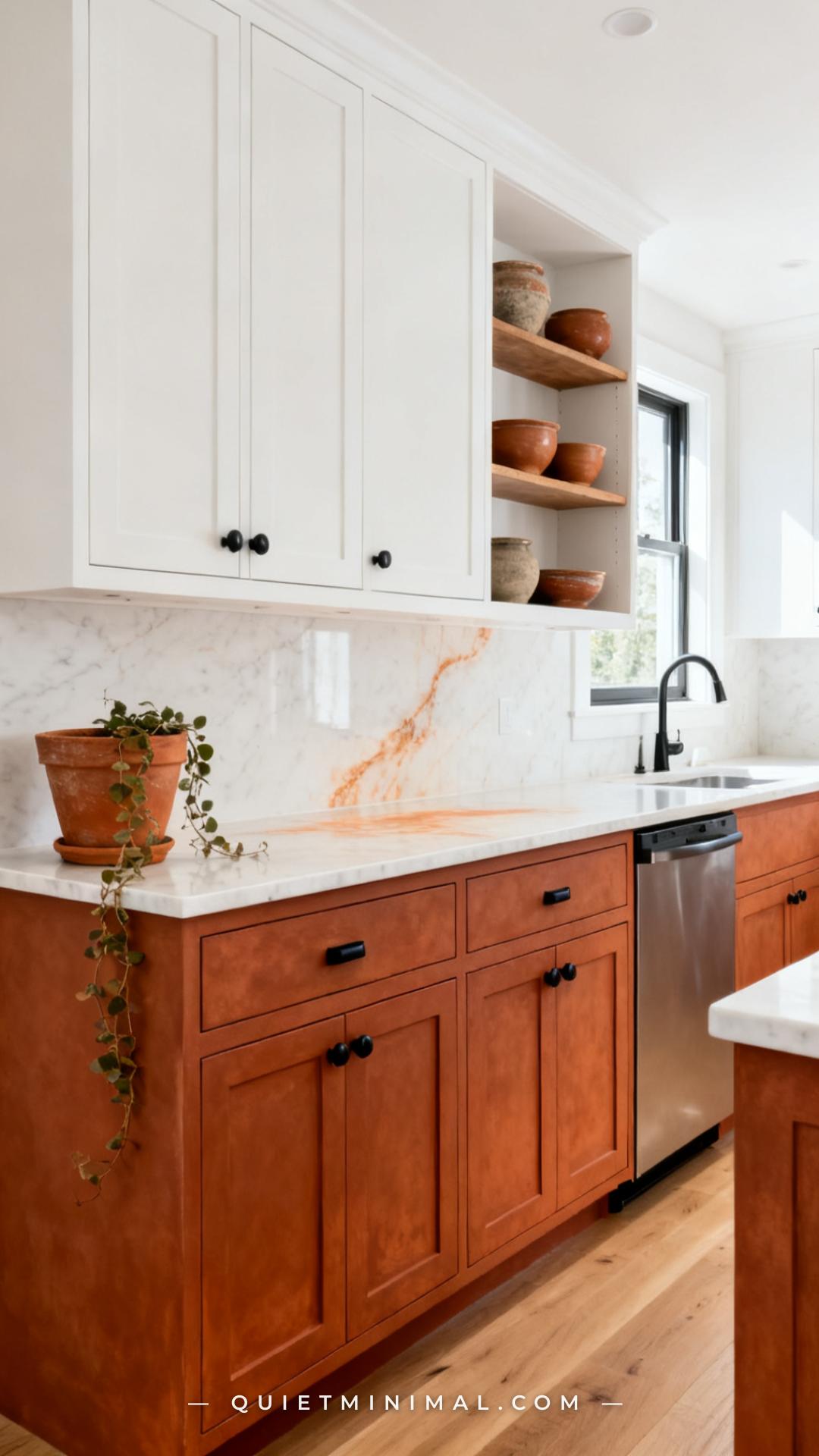
6. Paint Lower Cabinets in a Deep Clay or Warm Mushroom Tone
 Save
Two-tone cabinetry — white uppers and a warm earthy lower — is the most dramatic bohemian kitchen move you can make without a renovation. It has the same visual effect as an accent wall, but because it’s on the lower half of the room, it grounds the space rather than closing it in, which matters especially in smaller kitchens.
Benjamin Moore “Tucson Sand” (CSP-980) and Behr “Dusty Terracotta” (N200-4) are both confirmed earthy options that work beautifully as lower cabinet tones. Apply with a cabinet-specific paint (Sherwin-Williams Emerald Urethane is the current professional standard for furniture-grade durability) and finish with matte black or brushed brass hardware. The hardware choice matters: matte black reads as modern-boho; brushed brass reads as vintage-boho. Either is correct — just be consistent across all the hardware.
Key Takeaway: Earthy lower cabinets paired with white uppers give a bohemian kitchen dramatic depth and warmth without touching the upper half of the room.

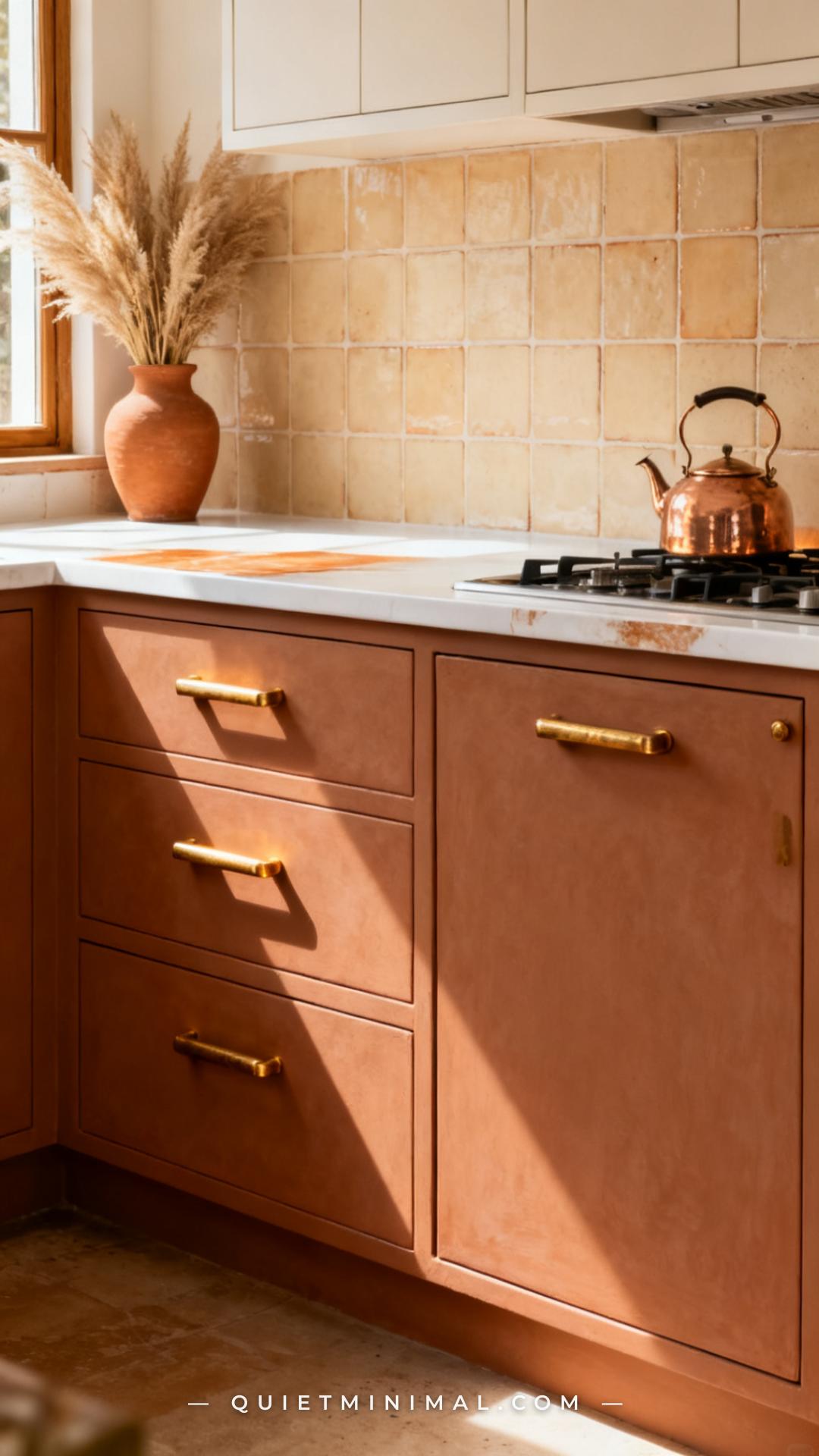
7. Bring In Copper and Brushed Brass Hardware as Warm Metallic Accents
 Save
Hardware is the jewelry of a kitchen, and in a bohemian earthy kitchen, the metal finish you choose either reinforces the warm palette or fights it. Brushed brass and unlacquered copper are the two finishes that work hardest in this context — both carry inherent warmth that reads as aged, organic, and intentional rather than shiny-new.
Brushed brass (which is warmer and less yellow than polished brass) pairs cleanly with matte clay or terracotta cabinets and reads as modern-bohemian. Unlacquered copper, which will develop a patina over time, leans more vintage and is especially good in a kitchen where you’re going for a maximalist, deeply layered feel. Replace cabinet pulls and knobs first — that’s the highest-visibility hardware — then move to the faucet if budget allows.
From the guides
You've saved it, wanted it. Here's the how: codes, measurements, order. Your choices make it yours.
The Japandi Honest PlaybookThe honest version of the style: what to keep, what to skip, and the order to do it in.See inside →The Room Refresh PlaybookA repeatable four-step method, room by room, in ten minutes, thirty minutes, or one weekend.See inside →Make Any Room Feel Cozy on PurposeWhy some rooms hold people and others empty out, and the moves that change it.See inside →Key Takeaway: Brushed brass or unlacquered copper hardware bridges the gap between earthy cabinet tones and bohemian warmth — and it’s one of the most affordable hardware swaps available.

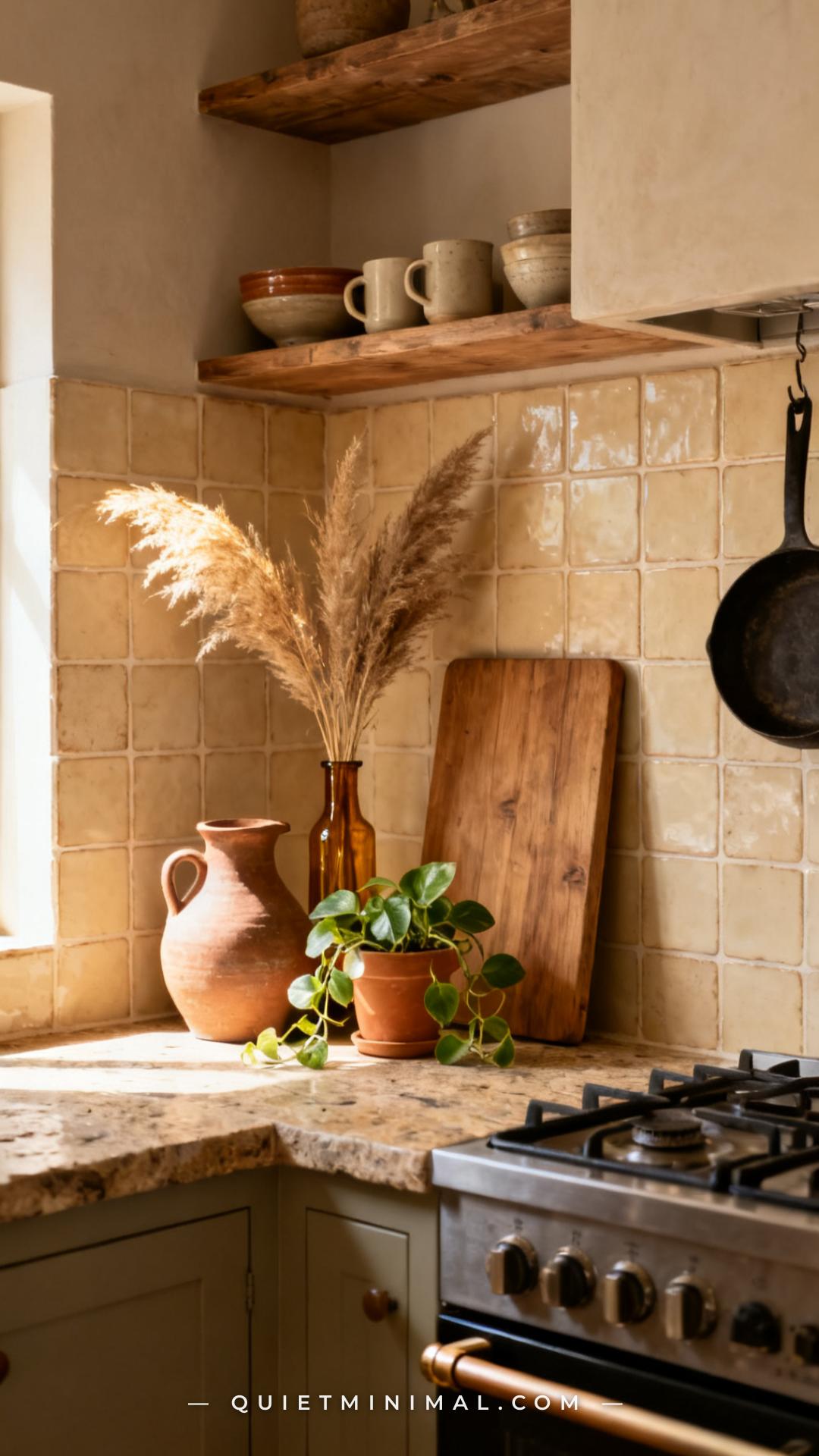
8. Style the Counter With a Cluster of Earthy Vessels and Dried Botanicals
 Save
Countertop styling is where bohemian kitchens live or die. Too sparse and the earthy elements feel isolated; too crowded and it tips into clutter. The solution is clustering — grouping objects in odd numbers (3 or 5) at varying heights rather than spreading them evenly across the counter.
Build your cluster around one focal object (a hand-thrown clay pitcher or large stoneware vase), one living or dried plant element (pampas grass, dried wheat, or a small trailing pothos in a terracotta pot), and one functional beautiful object (a wooden board, a stone mortar, or a clay crock holding utensils). That triad reads as intentional and warm. Keep the rest of the counter clear — the empty space around the cluster is what makes the cluster look curated.
Key Takeaway: Cluster counter styling in groups of three at varying heights — one vessel, one botanical, one functional object — creates intentional warmth without visual overwhelm.

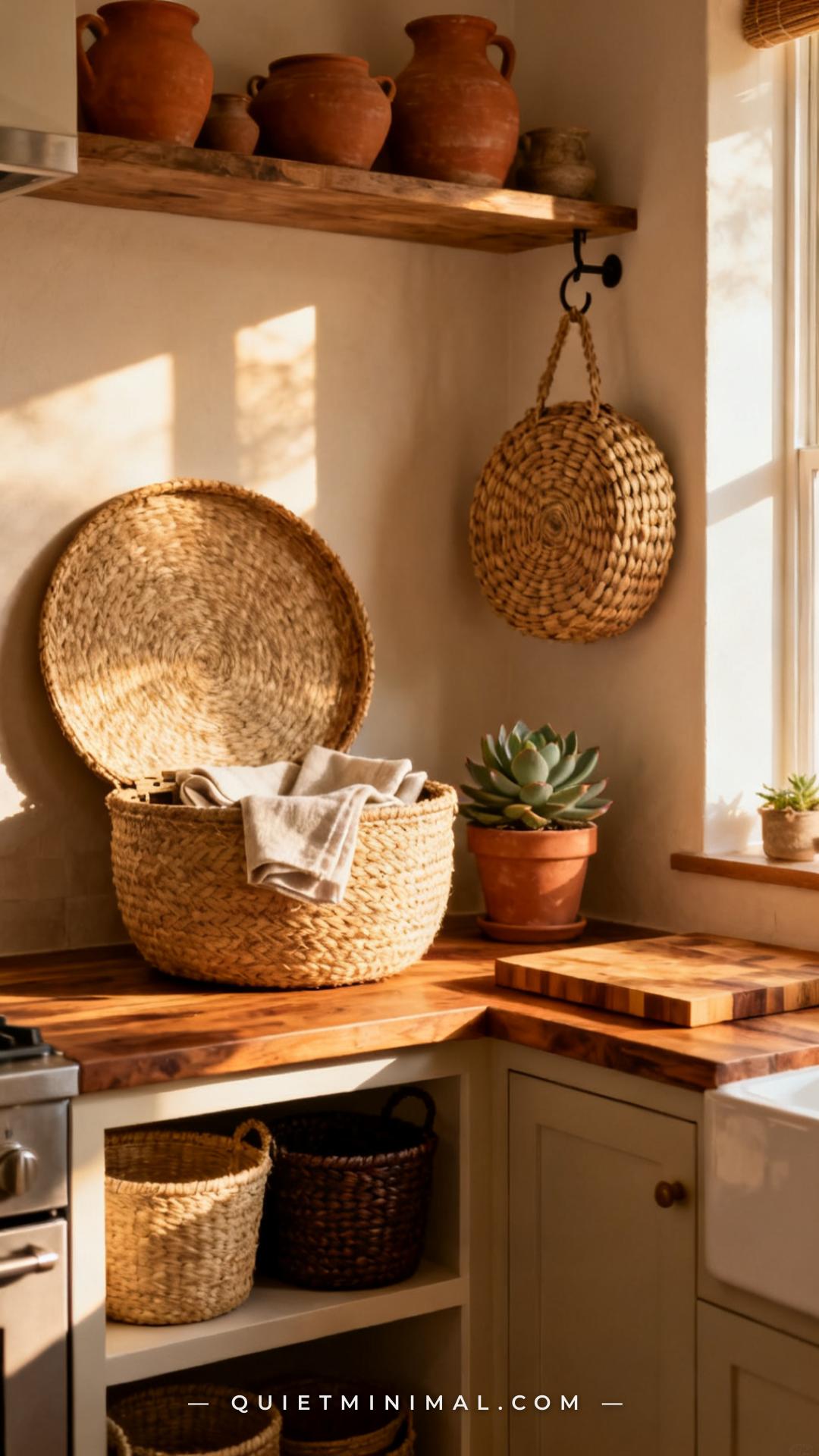
9. Add Woven Baskets as Both Storage and Earthy Texture
 Save
Woven baskets are doing two jobs in a bohemian earthy kitchen: they’re solving a storage problem and they’re adding natural material texture in the exact warm brown and honey tones that tie the palette together. That’s a rare combination of functional and decorative, which is the core of bohemian design philosophy.
Use seagrass or water hyacinth baskets for pantry storage in open lower niches — they tuck in cleanly and look intentional rather than improvised. Add a lidded basket on the counter for linen napkins or small produce. Hang a small tight-weave basket on a wall hook as a standalone decorative element. Vary the weave patterns (one open weave, one tight) and the natural tones (one honey, one darker brown) so they feel collected rather than bought as a set.
Key Takeaway: Natural fiber baskets in honey and warm brown tones serve double duty as both earthy texture and practical storage — exactly the functional-beautiful combination bohemian style is built on.

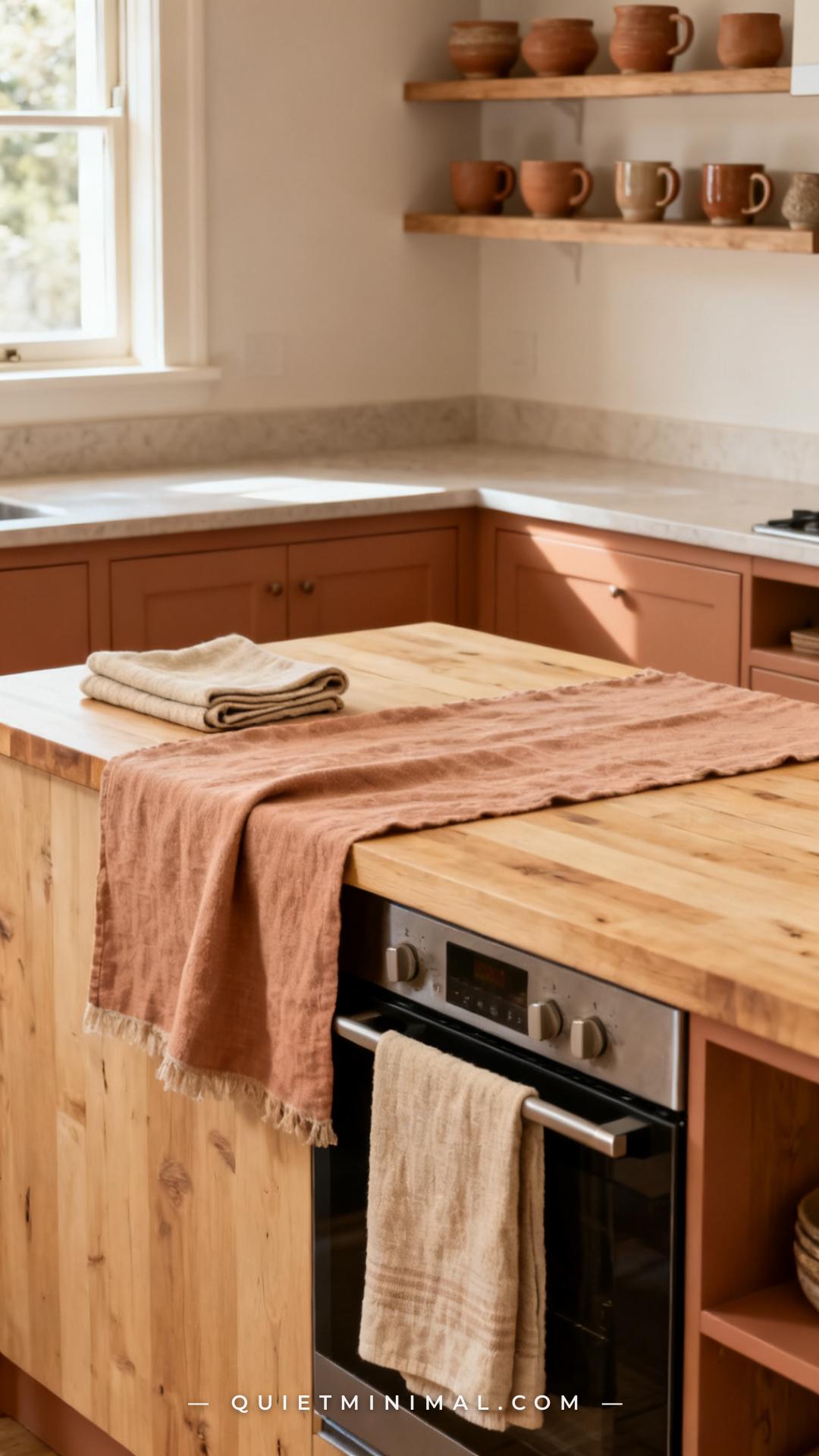
10. Introduce Linen Textiles in Warm Sand and Oatmeal Tones
 Save
Linen is the textile of earthy bohemian style — its natural, slightly uneven weave, and its inherent warm-sand or oatmeal coloring both contribute to a kitchen that feels handmade and lived-in rather than sterile. The simplest way to introduce it is through your kitchen textiles: tea towels, hand towels on the oven handle, and a table runner across an island.
Stick to tones that sit within your earthy palette: oatmeal, warm sand, undyed natural linen, or soft clay. Avoid crisp white linen — it’s beautiful but it fights the warm palette and reads as French country rather than bohemian. Slightly rumpled, slightly imperfect, and always natural-fiber is the goal. Wash before displaying — the pre-washed softness of linen is part of its aesthetic appeal.
Key Takeaway: Linen textiles in warm sand and oatmeal tones add organic softness and tactile depth to an earthy bohemian kitchen without any permanent changes.

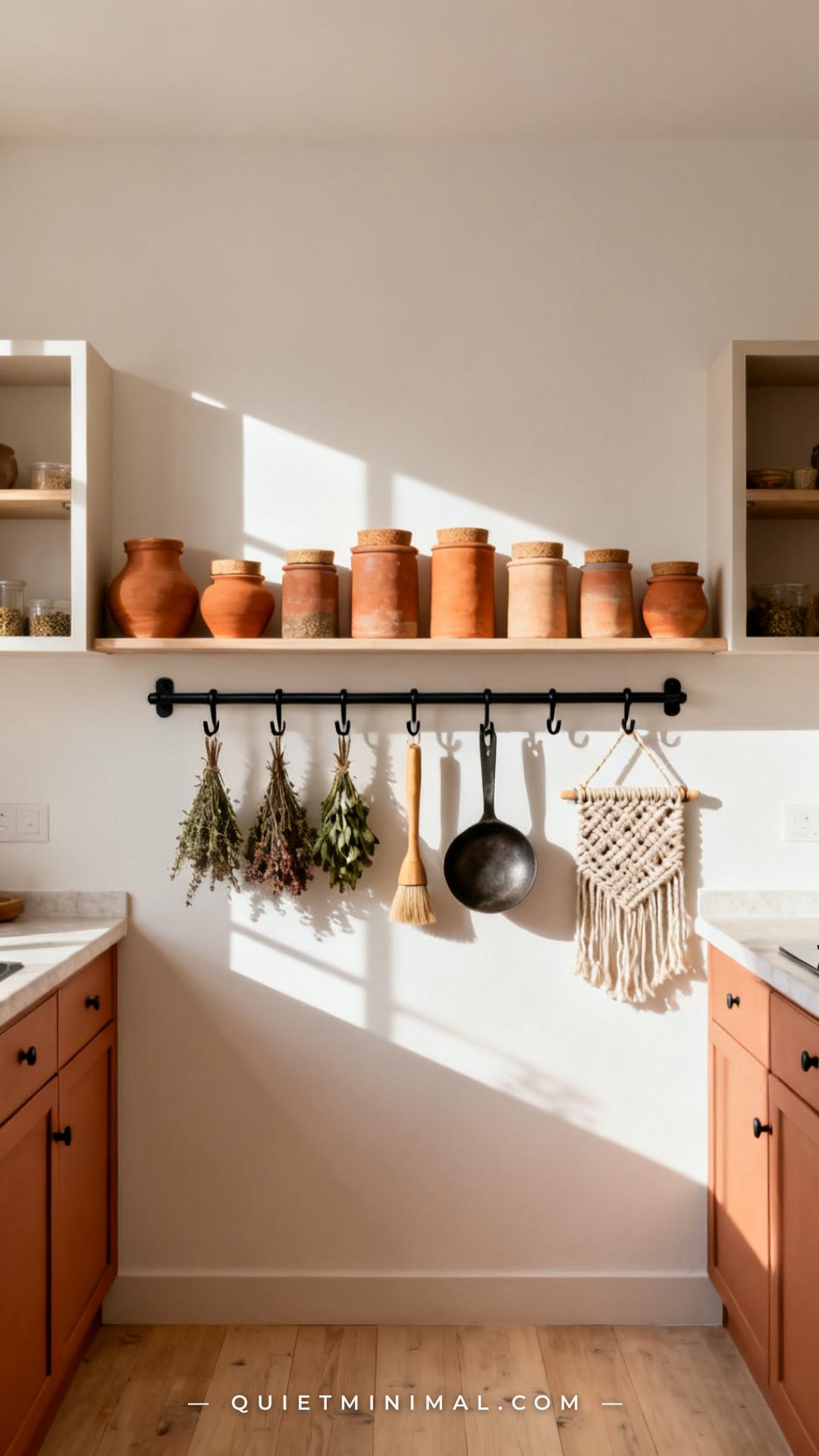
11. Build a Spice Wall With Earthy Ceramic Canisters and Open Hooks
 Save
A spice wall — a single, dedicated section of your kitchen wall given over to ceramic canisters, hanging dried herbs, and small utensil hooks — is the most characterful thing you can add to a bohemian kitchen, and it does something none of the other ideas on this list do: it makes the kitchen actively smell and feel like a working, alive space.
Use hand-thrown terracotta or clay-glazed ceramic canisters (cork or wooden lids only — no plastic) for your most-used spices. Mount a row of matte black hooks beneath the shelf for hanging dried herb bundles, a linen dish towel, or frequently used utensils. Add a small handwritten label on each canister using a chalk pen — the imperfection of handwriting is pure bohemian. The whole wall section should feel like it evolved organically, not like it was installed.
Key Takeaway: A spice wall with ceramic canisters, hanging herbs, and matte black hooks is the most characterful, living element an earthy bohemian kitchen can have — and it costs almost nothing to build.

The reason most bohemian kitchens miss is that they treat earthy tones as decoration — an afterthought added on top of a kitchen that was never designed for warmth. The approach that actually works is using terracotta, clay, ochre, and natural fiber as the structural palette — the foundation every other decision is made against. Start with one wall or your lower cabinets in a verified earthy tone, add two or three natural material layers (rattan, jute, stoneware), and let the styling details fill in from there. Pick one idea from this list this week, execute it fully, and the direction for the next step will be obvious once you see the room shift.
From the guides
You've saved it, wanted it. Here's the how: codes, measurements, order. Your choices make it yours.
The Japandi Honest PlaybookThe honest version of the style: what to keep, what to skip, and the order to do it in.See inside →The Room Refresh PlaybookA repeatable four-step method, room by room, in ten minutes, thirty minutes, or one weekend.See inside →Make Any Room Feel Cozy on PurposeWhy some rooms hold people and others empty out, and the moves that change it.See inside → Save