 Georgia
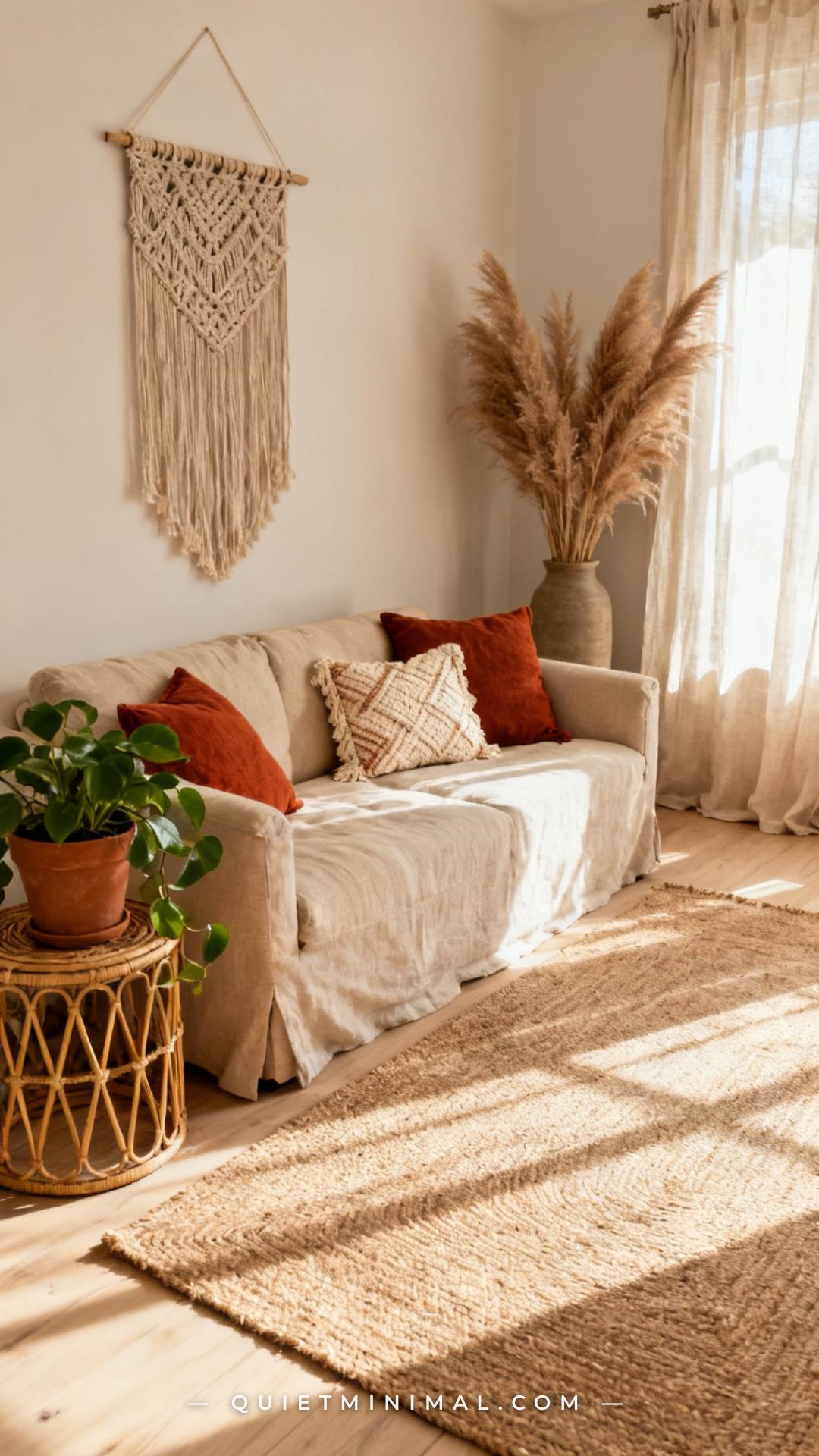
If your living room feels like it’s missing something but you can’t name exactly what, this article is for you. The bohemian look has a way of making spaces feel intentional, layered, and lived-in — in the best possible way. But most budget boho advice skips the most important part: the order in which you build it. Add the wrong thing first and the whole room reads “random garage sale” instead of “curated and collected.” Add things in the right sequence and even a $30 jute rug can anchor a space that looks effortlessly put-together.
These 11 bohemian living room makeover ideas are organized the way a designer would actually think about them — starting with what grounds the room, building through texture and color, and finishing with the small details that make people ask who helped you decorate. Every idea works on a real budget, and most work alongside furniture you already own.
1. Start With a Layered Rug Foundation
 Save
Every well-executed boho living room starts with the floor. A single flat rug can look fine, but two layered rugs — a large natural fiber base with a smaller woven or Moroccan-style topper — is the move that separates Pinterest-worthy from just okay. The visual layering immediately gives the room that collected, well-traveled feeling that defines the style.
From the guides
You've saved it, wanted it. Here's the how: codes, measurements, order. Your choices make it yours.
 The Japandi Honest PlaybookThe honest version of the style: what to keep, what to skip, and the order to do it in.See inside →
 The Room Refresh PlaybookA repeatable four-step method, room by room, in ten minutes, thirty minutes, or one weekend.See inside →
 Make Any Room Feel Cozy on PurposeWhy some rooms hold people and others empty out, and the moves that change it.See inside →
For a budget-friendly version, start with an oversized natural jute rug as your base. Jute is inexpensive, available at nearly every major retailer, and its raw texture does the heavy lifting for the boho aesthetic. Then add a smaller vintage-looking kilim or a flat-weave Moroccan-style rug on top, slightly angled or offset. The combination reads expensive even when neither piece is.
Key Takeaway: Layering a natural jute base with a smaller patterned topper is the single highest-impact, lowest-cost move in a boho living room.

2. Rethink Your Sofa With Texture, Not Replacement
 Save
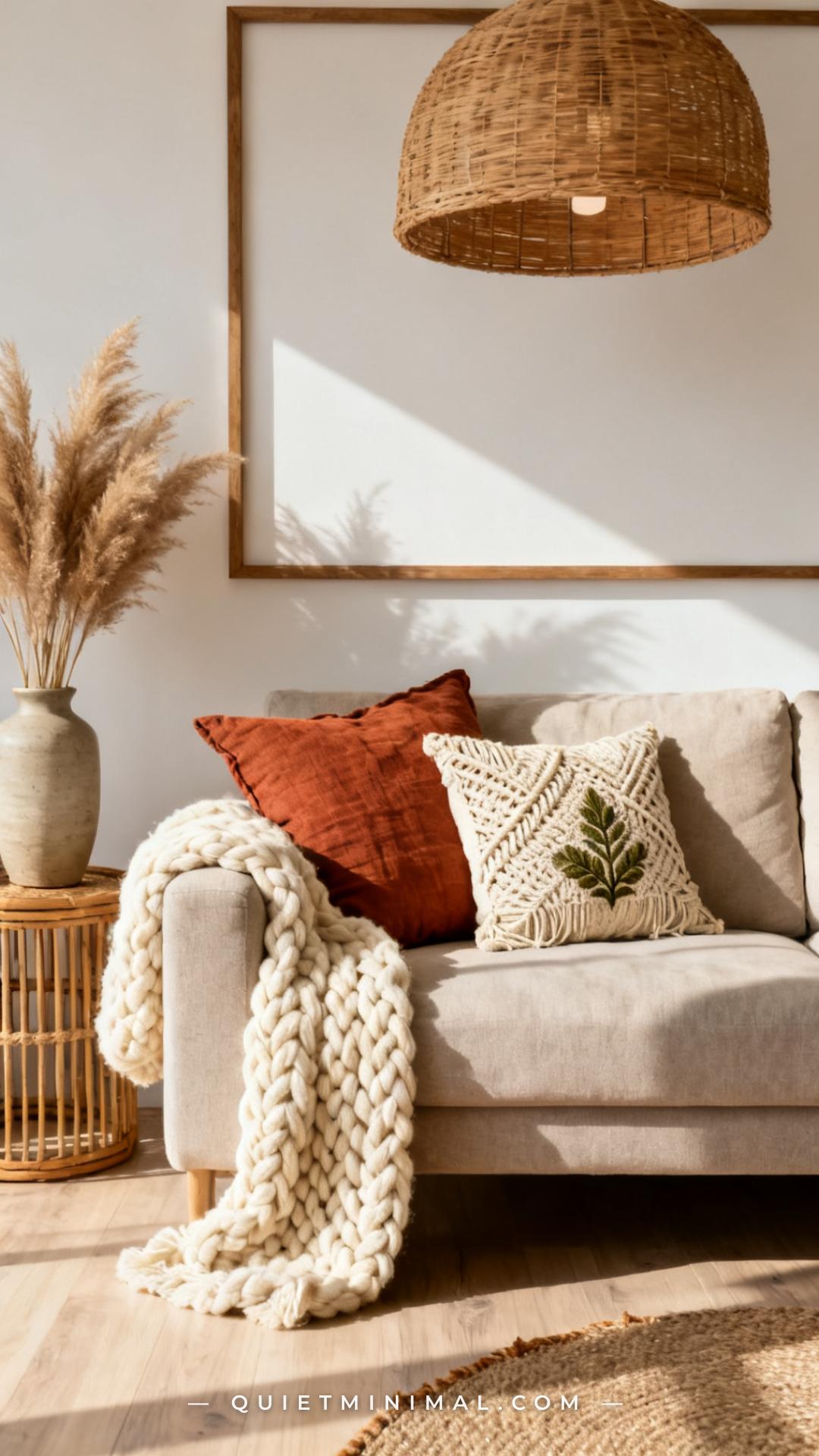
The number one budget mistake in a boho makeover is assuming you need a new sofa. You almost certainly don’t. The boho look is built on layers, and your existing sofa — even if it’s a basic gray or beige sectional — is the perfect neutral canvas for what comes next.
The transformation happens through pillows and throws. Mix at least three pillow sizes, and choose covers in natural materials: raw linen, embroidered cotton, macramé-textured weaves. Combine solid warm neutrals (rust, terracotta, cream) with one patterned or embroidered piece. Add a chunky woven or waffle-knit throw draped over one arm. The whole set of covers and a throw can be sourced for well under $100 total, and the sofa will look like a different piece of furniture.
Key Takeaway: Pillow covers in mixed textures and a woven throw can make any basic sofa read as the anchor piece of a fully realized boho room.

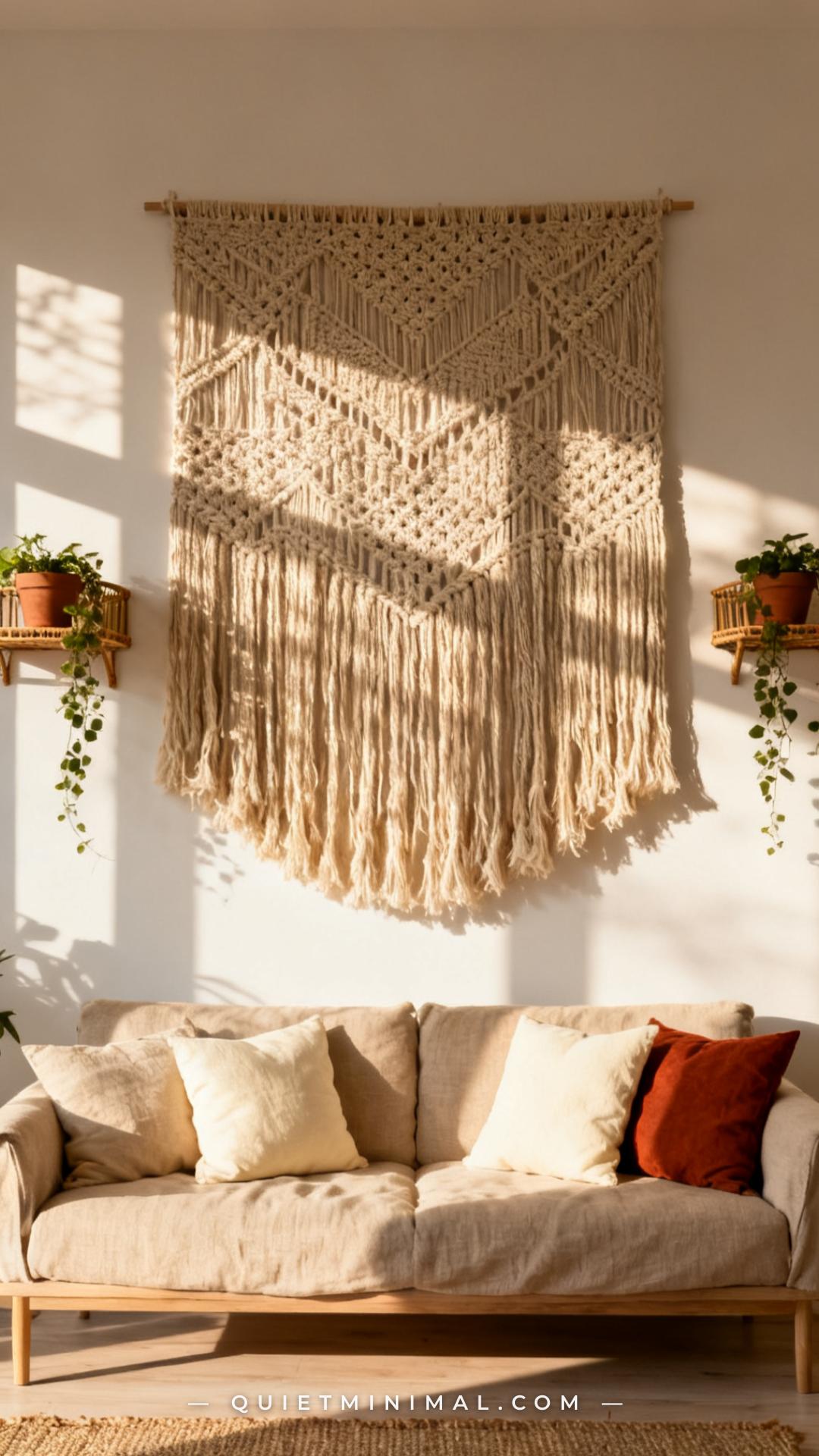
3. Hang a Statement Macramé Wall Piece
 Save
Boho is one of the few design styles where the wall does as much work as the furniture. A large macramé wall hanging — hung above the sofa or on a prominent accent wall — anchors the room’s visual identity immediately. It adds texture that paint and art prints simply can’t replicate, and it reads handmade and intentional even at a budget price point.
Size matters more than complexity here. A large, simple macramé piece in natural cotton reads more high-end than a small, fussy one. Aim for something that spans at least 70–80% of your sofa’s width. Natural undyed cotton is the most versatile — it works with warm neutrals, earthy terracottas, and even deeper jewel tones as your palette evolves.
Key Takeaway: One oversized macramé hanging above the sofa does more for the boho aesthetic than a dozen smaller wall decorations combined.

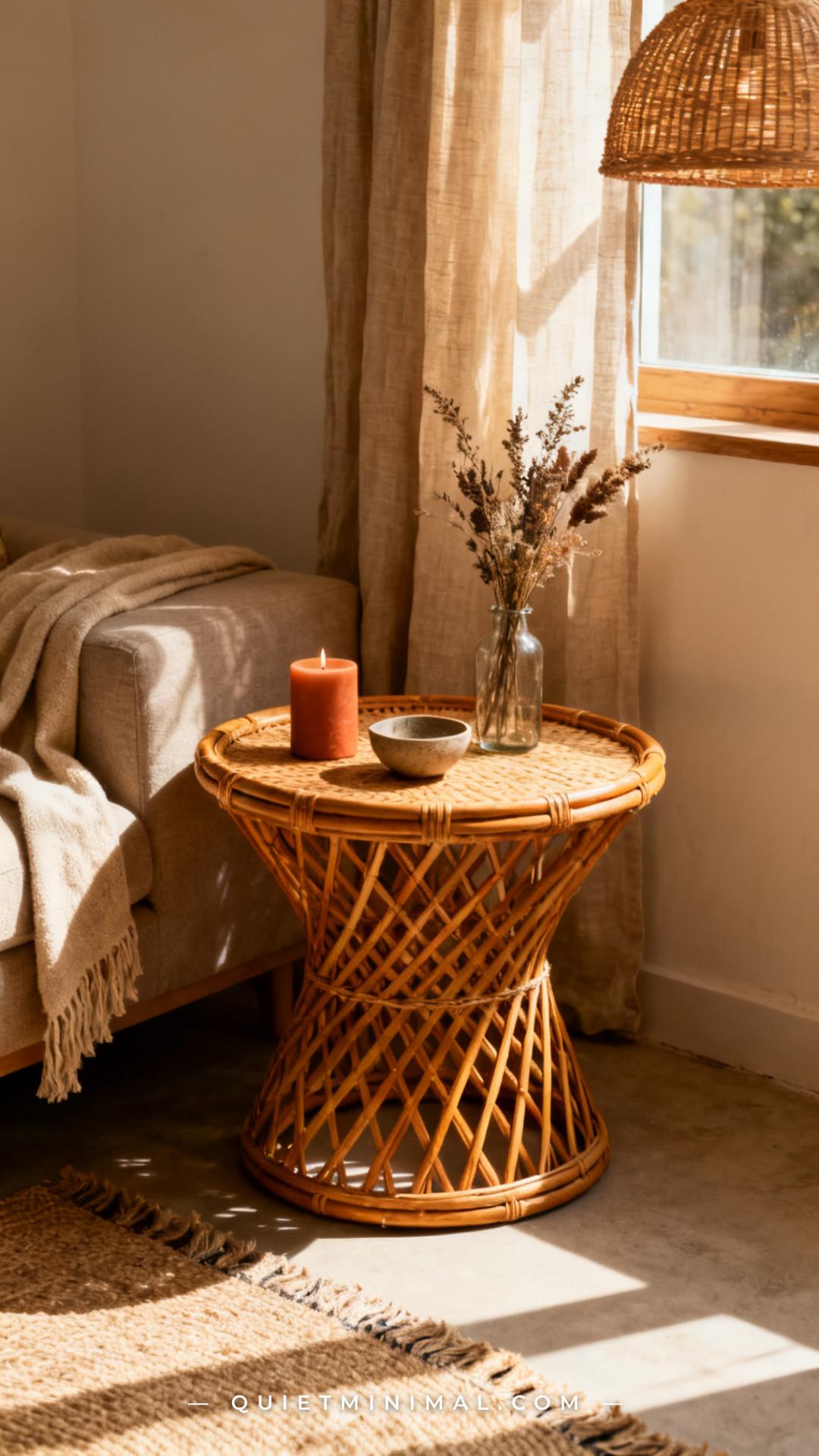
4. Bring In Rattan or Wicker as an Accent Piece
 Save
Rattan is to bohemian decor what marble is to modern minimalism — the signature material that makes the style immediately recognizable. The good news: rattan accent pieces (side tables, trays, pendants, shelving) are widely available at accessible prices and have an outsized impact on the overall look.
If your budget allows only one rattan piece, start with a side table or coffee table. Round rattan or wicker coffee tables are among the most-pinned boho living room items and for good reason — their organic shape softens the room and adds that essential natural material layer. If you already have a wood coffee table, a rattan tray placed on top achieves a similar effect for a fraction of the cost.
Key Takeaway: A single rattan side table or tray introduces the natural material story that defines the boho look without requiring a full furniture swap.

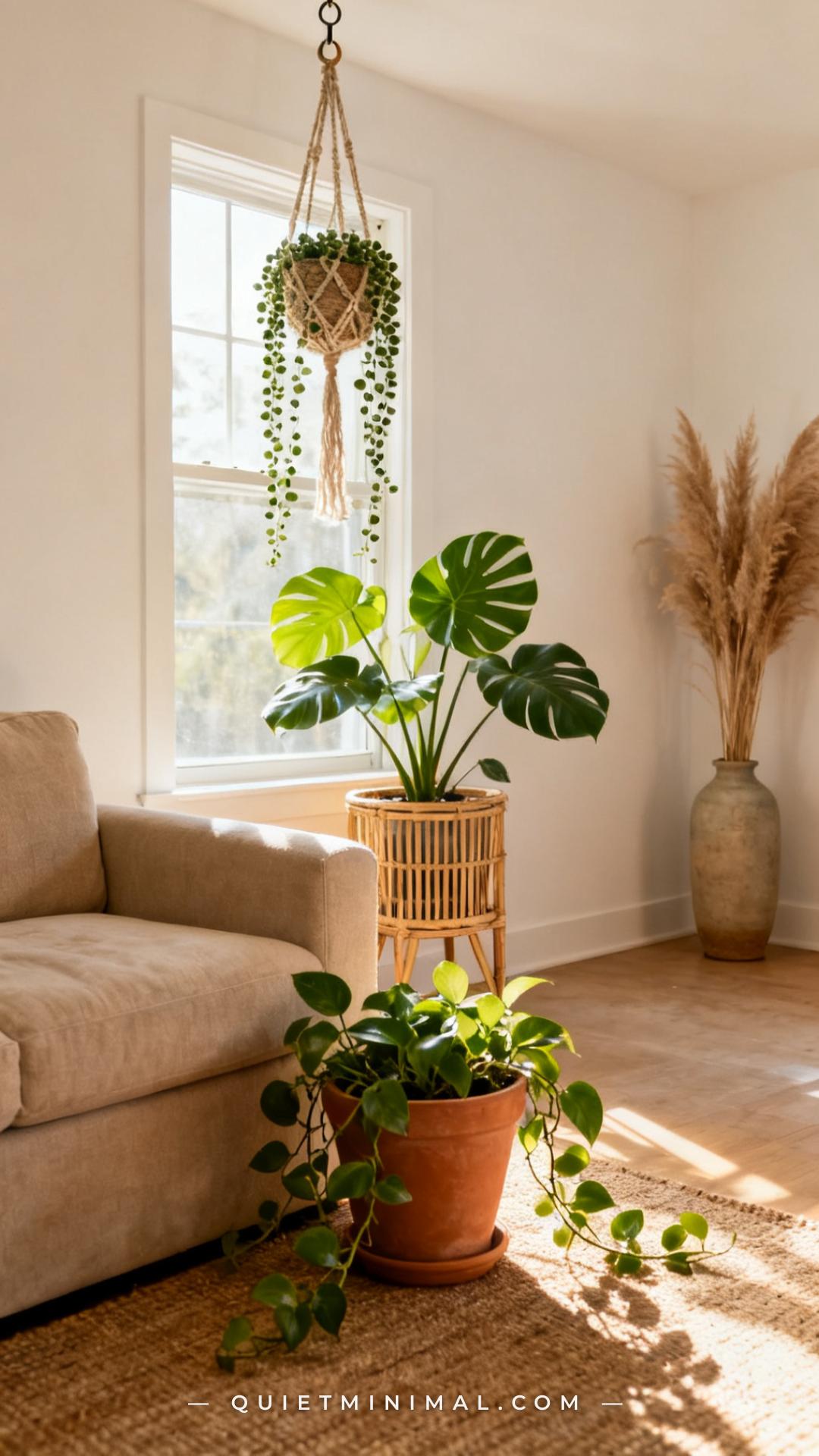
5. Use Plants as a Structural Design Element
 Save
The most common boho plant mistake is buying one statement plant and calling it done. A single plant in a corner looks like an afterthought. Plants in a bohemian living room work as a structural design element — they create vertical layering, fill dead zones, and bring the organic aliveness that makes the style feel genuinely warm rather than styled for a photo.
Work in threes across three heights: a low trailing plant on the floor or coffee table (pothos, wandering dude), a mid-height plant on a stand near a window (fiddle-leaf fig, monstera), and a hanging planter at ceiling height (string-of-pearls, trailing pothos). Terracotta pots at all three levels pull the palette together. Dried botanicals — pampas grass, dried eucalyptus, dried palm leaves — fill height without requiring maintenance and are extremely cost-effective for large statement arrangements.
Key Takeaway: Plants at three distinct heights — floor, stand, and hanging — create the layered, living quality that makes boho rooms feel full rather than cluttered.

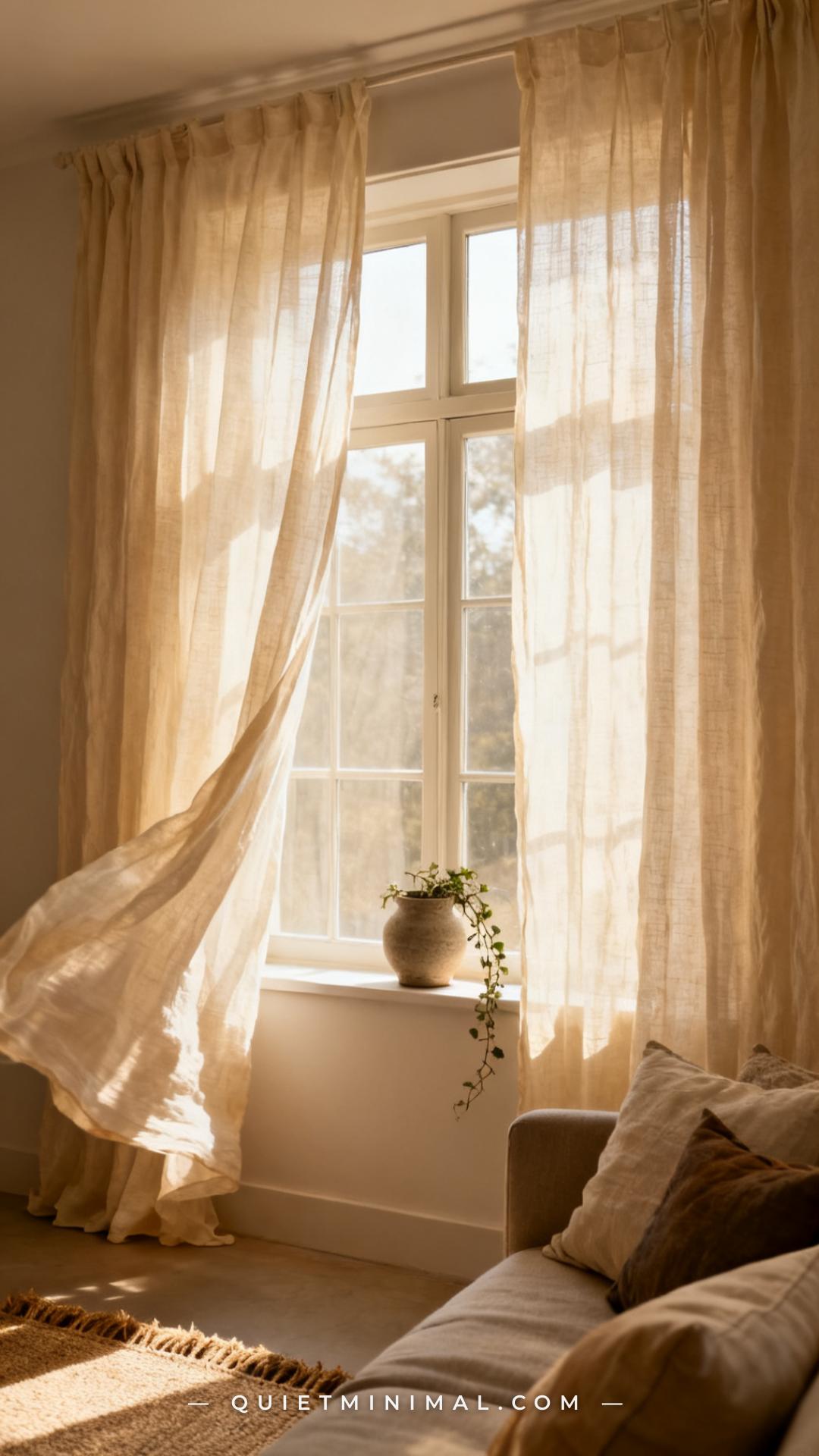
6. Swap Out Curtains for Sheer Linen Panels
 Save
Window treatments are one of the most overlooked budget levers in a living room makeover. Standard curtains — especially short or synthetic ones — actively work against the boho aesthetic. Long, flowing sheer linen panels hung as high as possible (ideally ceiling height) are one of the fastest ways to shift a room’s entire mood.
Linen look panels in warm ivory or natural are the most versatile choice for a boho palette. Hang the rod 4–6 inches from the ceiling and extend the rod at least 6 inches past the window frame on each side. This makes the window look dramatically larger and the ceiling feel higher — both of which are free upgrades that come purely from placement. The billowing, relaxed texture of linen panels adds to the organic, unlabored feeling that defines the style.
Key Takeaway: Hang sheer linen panels ceiling-high and wide beyond the window frame to instantly make any living room feel larger, brighter, and more intentionally bohemian.

7. Layer Lighting With Warm Bulbs and Mixed Sources
 Save
Boho living rooms live or die by their lighting. Overhead flat lighting — especially cool-toned LEDs — destroys the warm, ambient atmosphere the style depends on. The fix isn’t expensive: it’s about layering multiple warm light sources instead of relying on a single ceiling fixture.
The formula is simple: one ambient source (a rattan pendant or arc floor lamp), one accent source (a table lamp with a warm bulb on the side table), and one decorative source (Edison string lights draped behind a plant corner or bookshelf). All three should use warm white bulbs (2700K or lower). The rattan pendant is the highest-impact single purchase — it introduces a natural material overhead while completely changing how the room feels at night. It’s also one of the more affordable lighting upgrades you can make.
From the guides
You've saved it, wanted it. Here's the how: codes, measurements, order. Your choices make it yours.
The Japandi Honest PlaybookThe honest version of the style: what to keep, what to skip, and the order to do it in.See inside →The Room Refresh PlaybookA repeatable four-step method, room by room, in ten minutes, thirty minutes, or one weekend.See inside →Make Any Room Feel Cozy on PurposeWhy some rooms hold people and others empty out, and the moves that change it.See inside →Key Takeaway: Replace a single overhead light with three layered warm sources — pendant, table lamp, and accent string lights — to create the moody, intimate atmosphere boho rooms require.

8. Build a Boho Bookshelf or Styled Shelf Moment
 Save
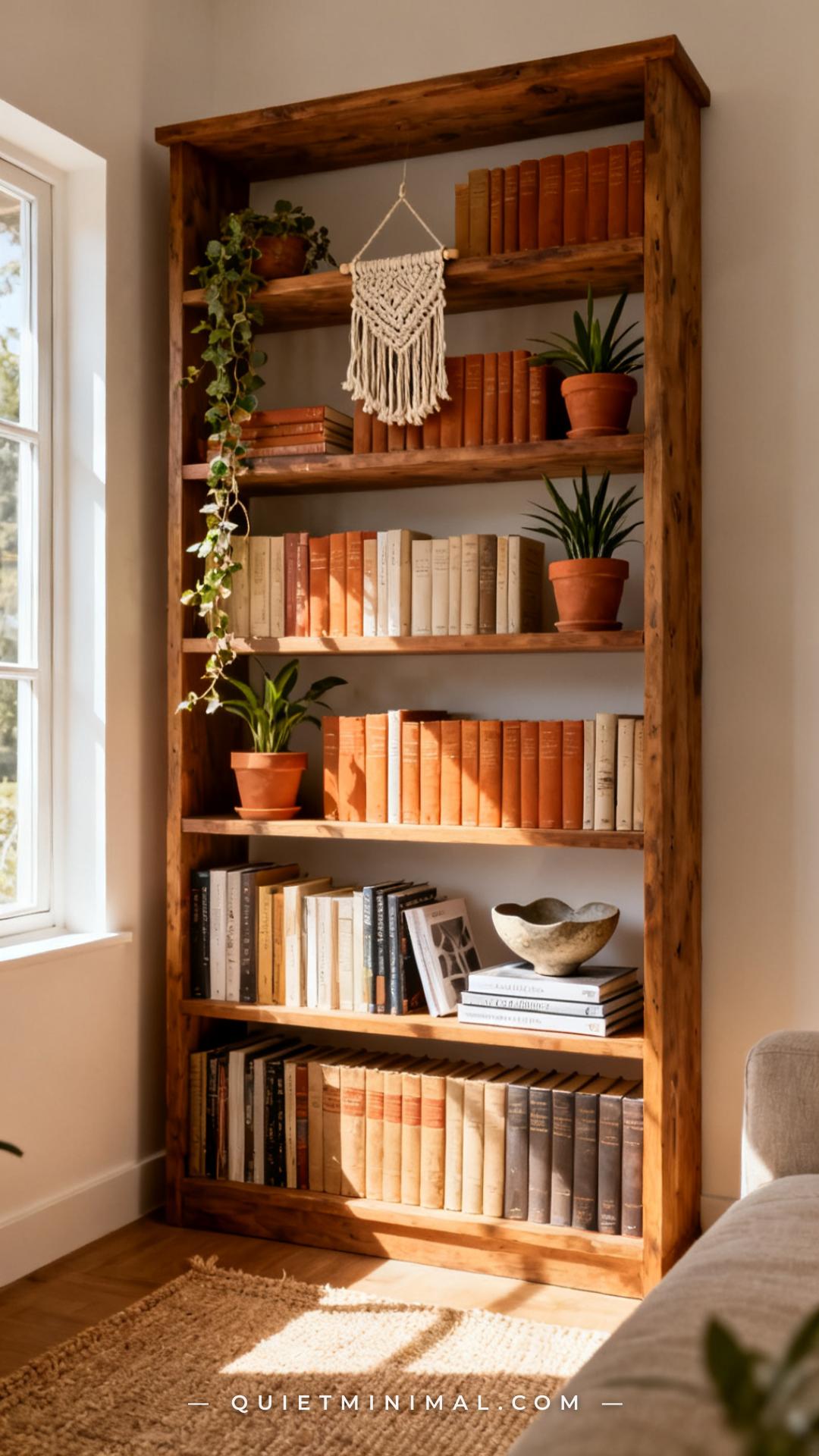
A styled bookshelf is one of the highest-value, zero-cost makeover tools in a boho living room — assuming you already own a bookshelf. The boho shelf aesthetic isn’t about matching sets; it’s about mixing categories: books alongside objects, plants alongside ceramics, textiles alongside art. The visual variety is the point.
A practical approach: edit ruthlessly first (remove anything that doesn’t serve the palette or the mood), then rearrange in an asymmetrical pattern using the rule of odd numbers. Group items in threes — a plant, a ceramic, a small stack of books. Use one shelf for a small draped macramé or woven piece. Face some books spine-out and some cover-out for visual variation. Introduce height differences across shelves so no two levels look the same. The result reads expensive and considered, and costs nothing but time.
Key Takeaway: A boho bookshelf is built on contrast and asymmetry — mixing plants, ceramics, textiles, and books across levels creates the layered, collected look that defines the style.

9. Add an Earthy Color Moment With an Accent Wall or Paint Refresh
 Save
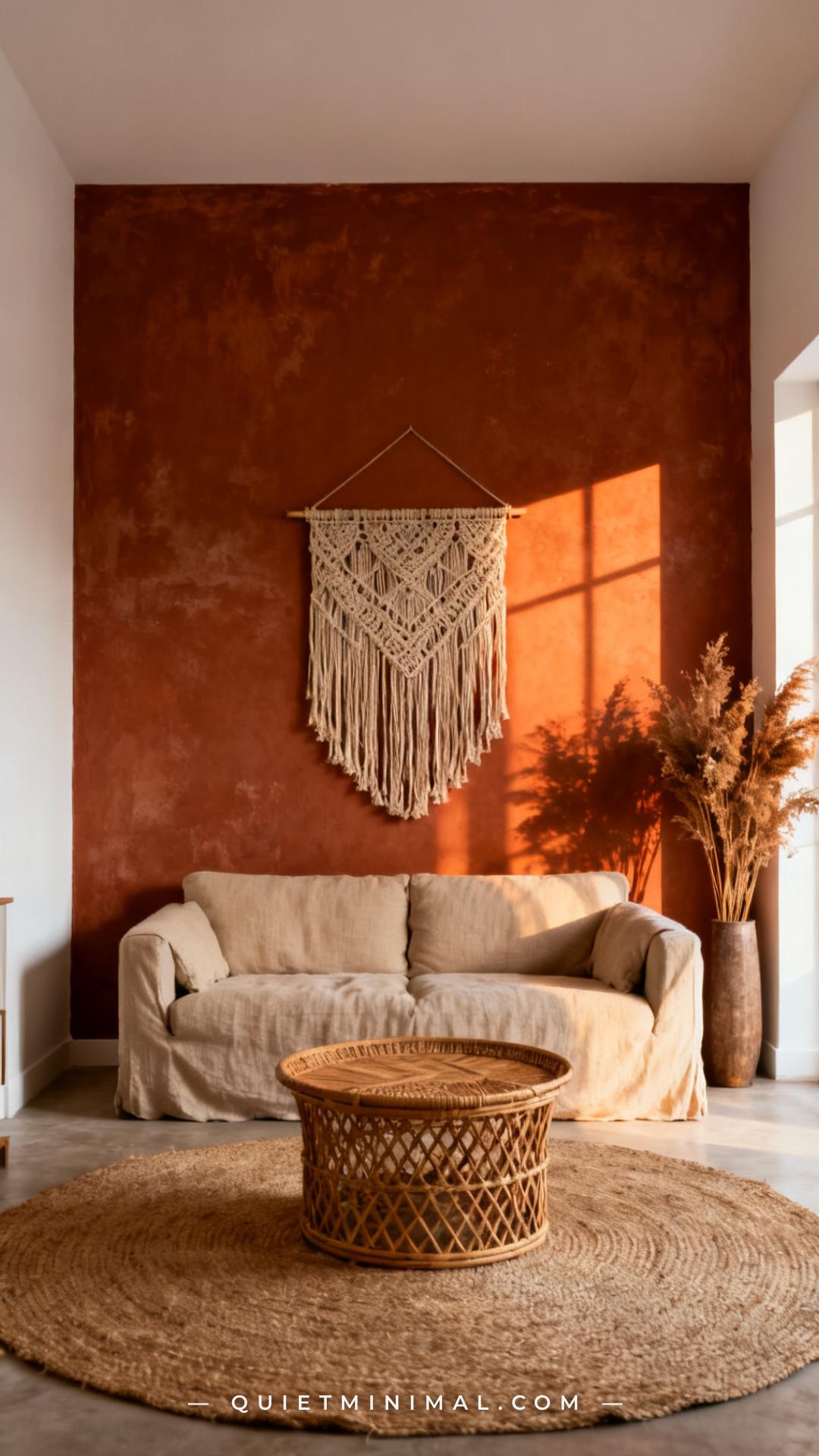
Color is where a lot of budget boho makeovers stall — either people are afraid to commit, or they reach for a shade that looks bohemian in theory but falls flat on the wall. In 2026, the boho palette has shifted toward warmer, more grounded tones: dusty terracotta, warm amber, olive green, and muted clay rather than the bright jewel tones of earlier boho waves.
If you’re comfortable with paint, a single accent wall behind the sofa in a muted terracotta or dusty warm clay can completely reframe the room. Benjamin Moore’s “Pueblo” (2175-30) or Sherwin-Williams “Fired Brick” (SW 6335) are verified options that hit the right dusty-warm tone without going orange. If painting feels like too much commitment, terracotta can be introduced through a large ceramic floor vase, a woven throw, or curtain panels — the color story works in accents too.
Key Takeaway: A single wall in a verified dusty terracotta or warm clay shade anchors the entire boho palette — but the same color story can be built through textiles and ceramics if you’re not ready to paint.

10. Collect and Display Natural Objects Intentionally
 Save
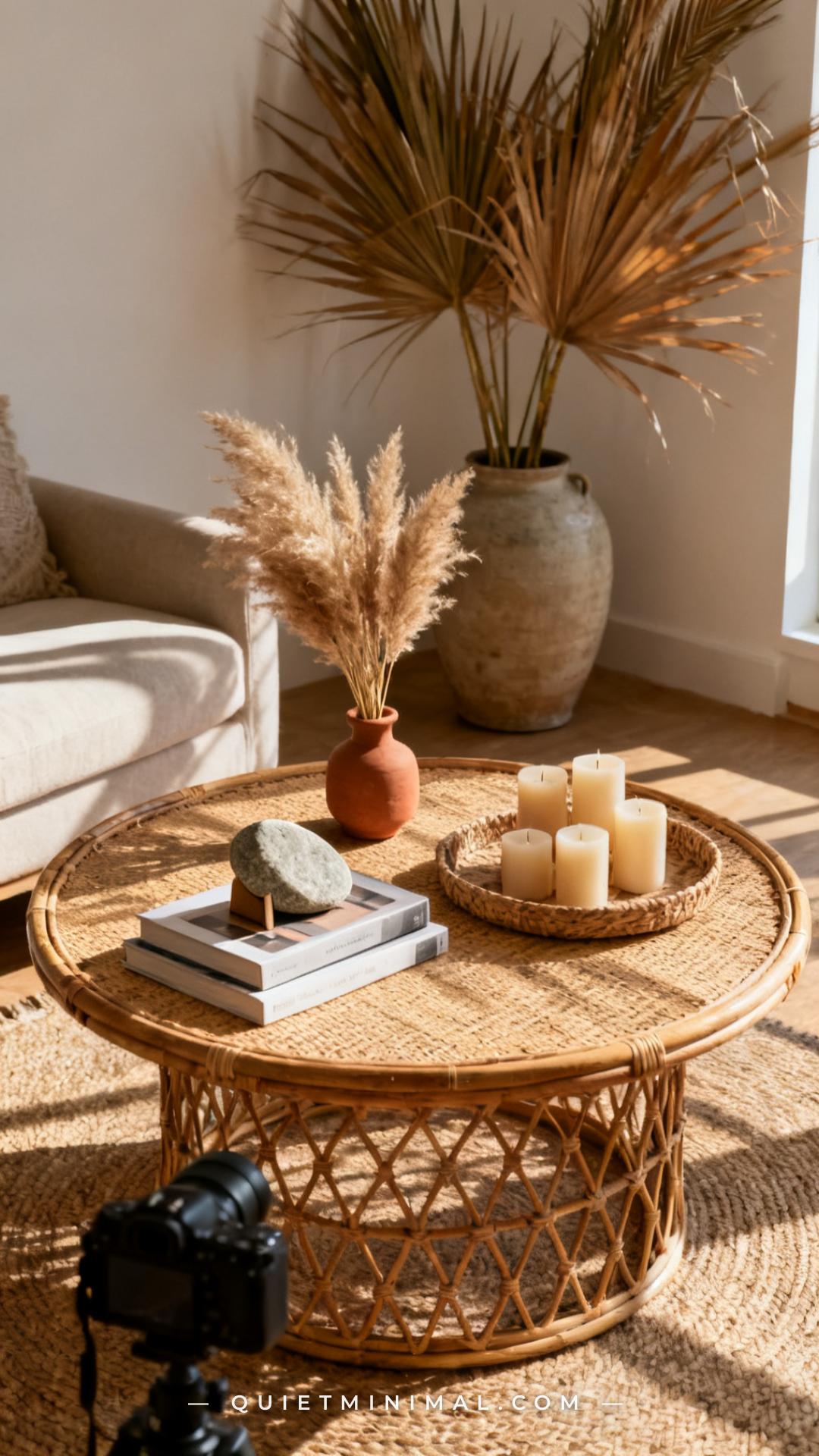
One of the defining characteristics of a genuine boho room is that it looks collected over time, not purchased all at once. Natural objects — smooth stones, dried botanicals, raw crystals, weathered driftwood, seed pods — contribute an authenticity that manufactured decor can’t replicate, and they cost very little or nothing at all.
The key is intentional grouping. A single smooth stone on a coffee table reads as an oversight. The same stone as part of a styled tray alongside a candle, a small ceramic, and a dried botanical reads as considered and purposeful. Think in clusters: a woven tray acts as a contained “vignette” that gives your collected objects a visual home. It signals that the arrangement was thought about, even when the individual objects are completely free.
Key Takeaway: Natural objects grouped intentionally on a tray or surface read as curated boho styling — the grouping signals intention, not clutter.

11. Finish With Small Textile Layers That Pull It Together
 Save
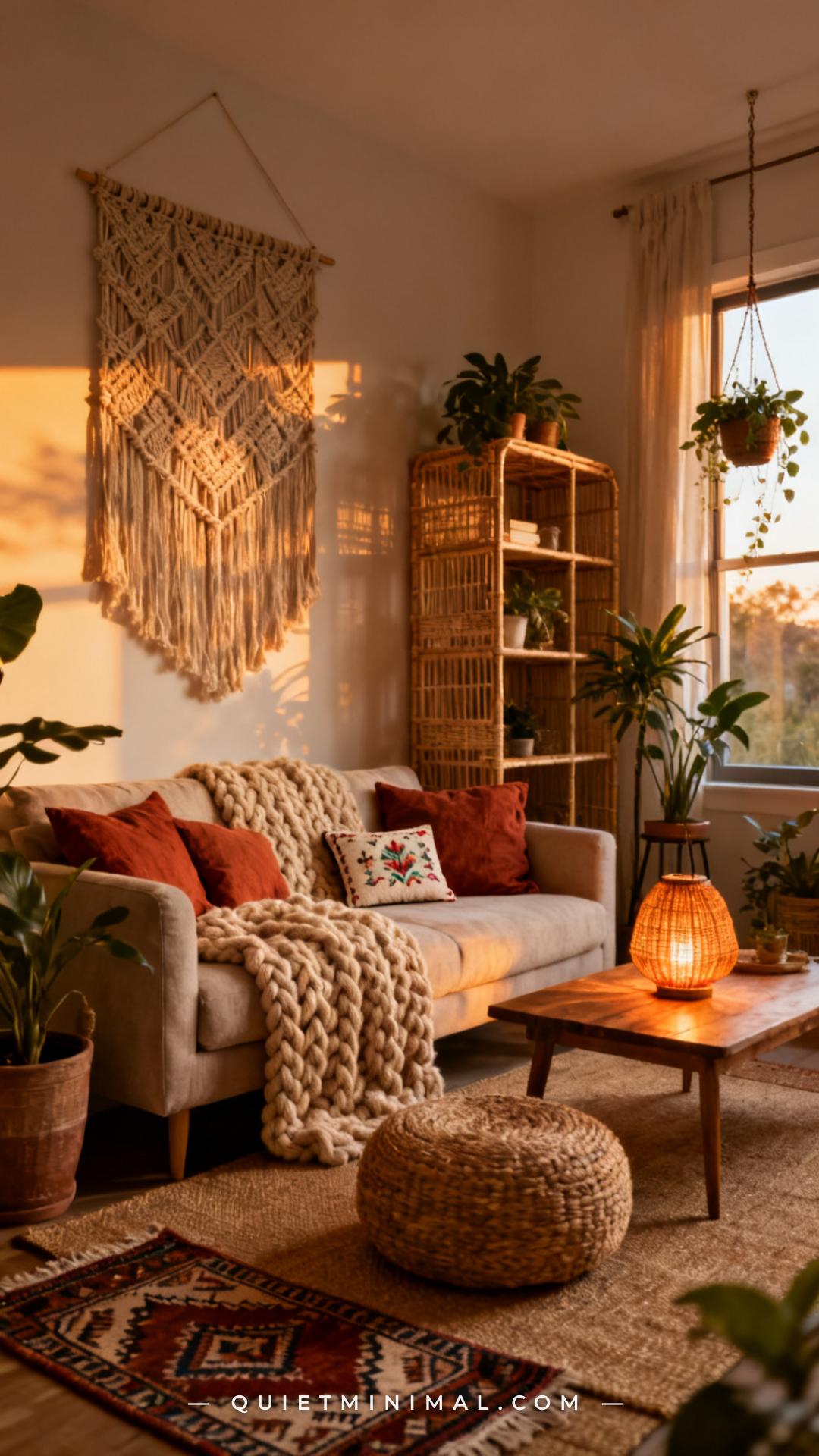
The last 10% of a boho living room is where the whole thing comes together — or falls apart. Small textile additions like a woven floor pouf, a Moroccan patterned ottoma cover, a sheepskin draped over a chair, or a small embroidered throw pillow are the punctuation marks that signal the room is done rather than in progress.
The woven pouf is particularly effective as a final layer. It functions as additional seating, a footrest, a plant riser, and a visual texture element all at once — and it sits low to the ground in a way that reinforces the boho preference for relaxed, floor-level living. Place it in front of the sofa, slightly off-center, and you’ve added the final grounded, gathered quality that makes the whole room feel intentional rather than assembled.
Key Takeaway: A woven floor pouf placed slightly off-center in front of the sofa is the finishing detail that makes a boho living room feel fully realized rather than still in progress.

The secret to a bohemian living room on a budget isn’t finding the cheapest version of every trend — it’s understanding what to add first and why. Anchor the floor with layered rugs. Build texture on your existing sofa before you even think about replacing it. Introduce natural materials — rattan, jute, linen, terracotta — across categories rather than doubling down on one. Then let plants, lighting, and small collected objects do the atmospheric work that no single statement piece can accomplish alone.
Work through these ideas in sequence and you’ll end up with a room that feels genuinely curated — not because you spent a lot, but because you built it in the right order. Start with the rug layer this weekend and see how much the room shifts before you buy anything else.
From the guides
You've saved it, wanted it. Here's the how: codes, measurements, order. Your choices make it yours.
The Japandi Honest PlaybookThe honest version of the style: what to keep, what to skip, and the order to do it in.See inside →The Room Refresh PlaybookA repeatable four-step method, room by room, in ten minutes, thirty minutes, or one weekend.See inside →Make Any Room Feel Cozy on PurposeWhy some rooms hold people and others empty out, and the moves that change it.See inside →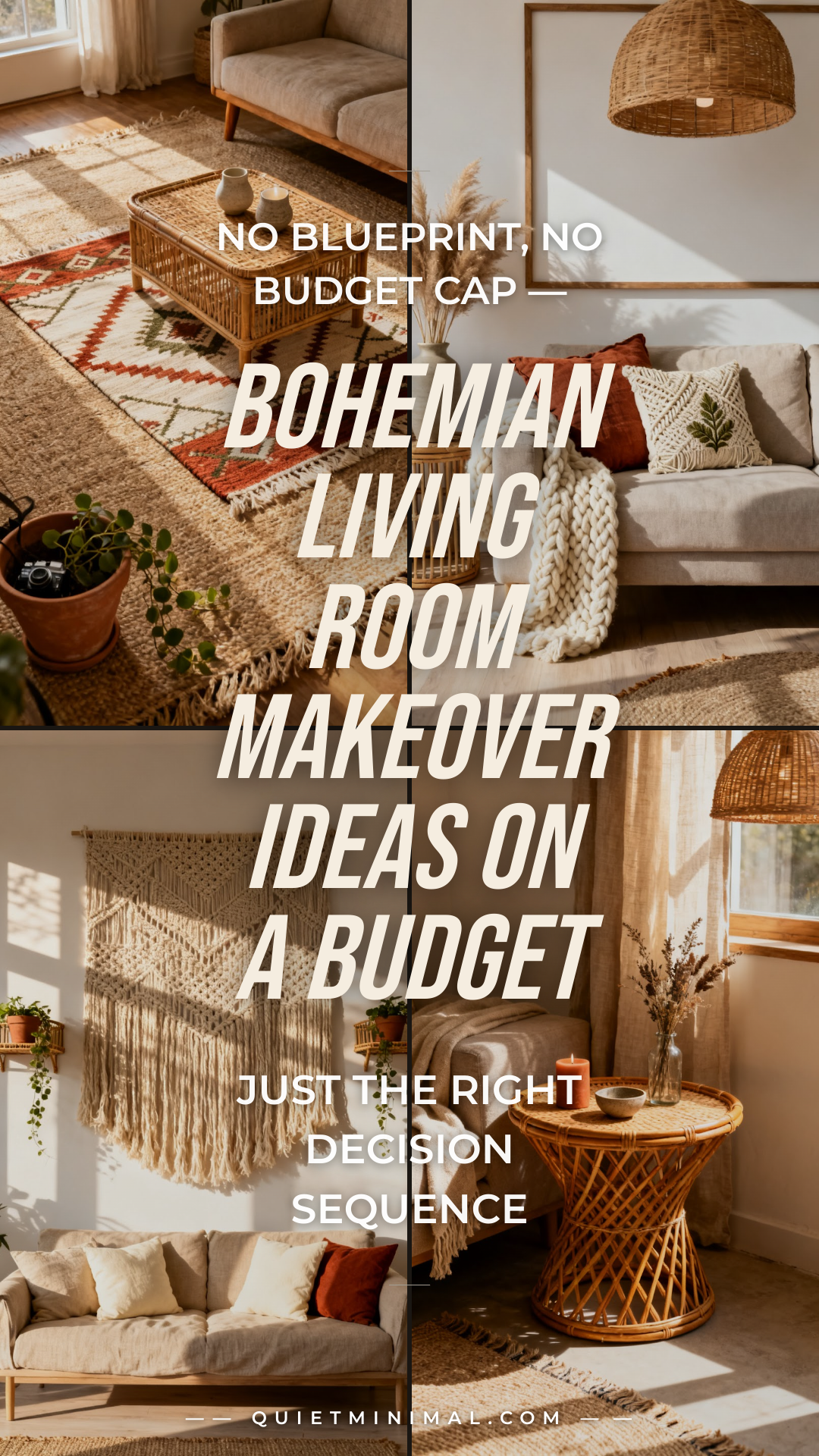 Save


