 Outmane A
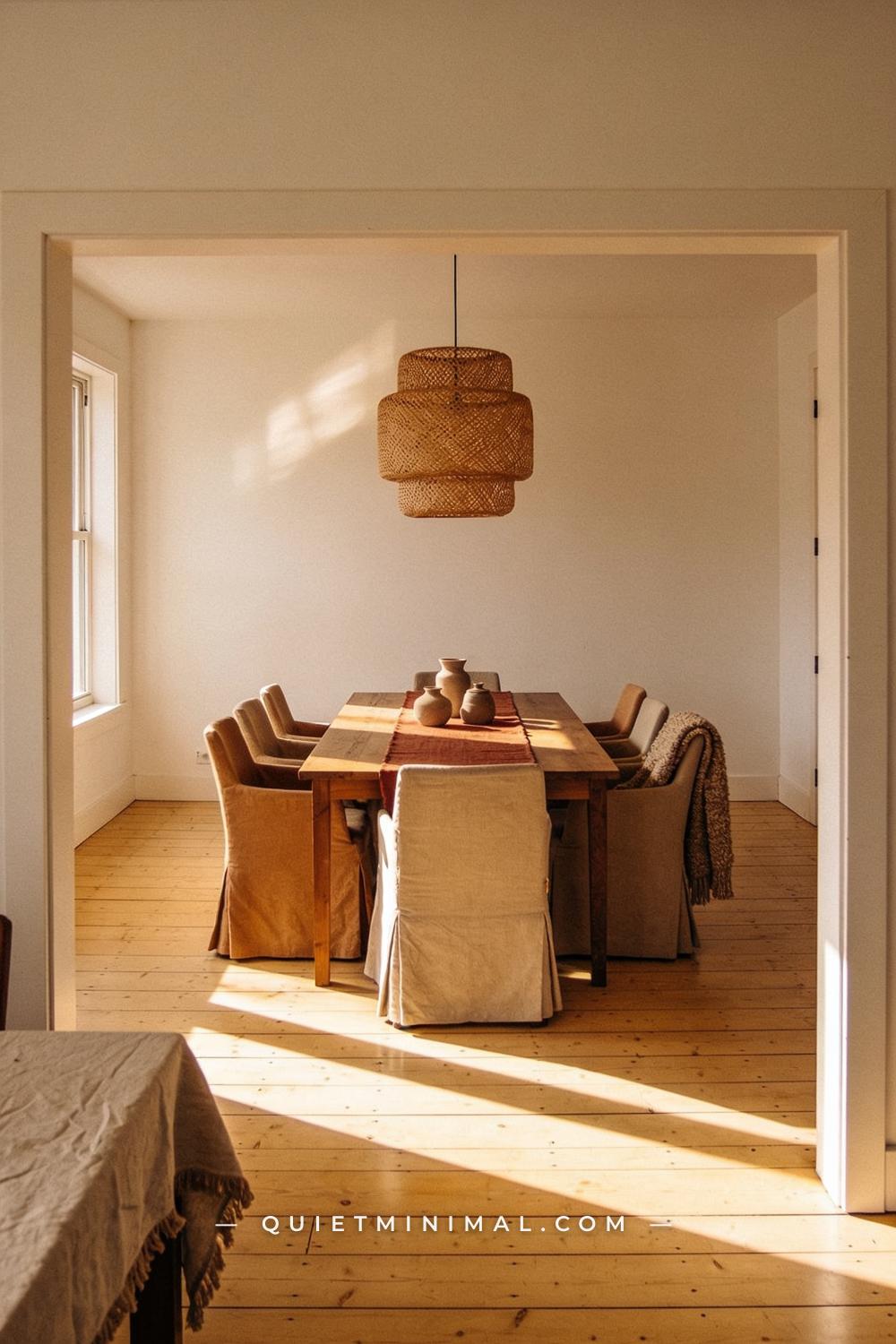
Most fall decorating advice skips straight to the centerpiece and calls it done. You get a gourd arrangement, maybe some orange napkins, and a tablescape you’ll dismantle the moment the holiday is over. But the real opportunity in autumn is the room itself — the light it holds, the textures it layers, the way warmth radiates from a wall color or a rug long after the candles are out. A truly cozy fall dining room isn’t a temporary installation. It’s a room that makes Tuesday night dinner feel like something worth sitting down for.
These 12 ideas work as an everyday foundation — changes you make once and live with all season. Some are five-minute swaps. Some are small investments. All of them move the needle toward a dining room that actually feels like fall.
1. Swap Your Pendant for a Woven Rattan or Jute Fixture
 Save
The single biggest room-level change you can make for a fall dining room costs less than a new rug and takes thirty minutes to install. A woven rattan or jute pendant light replaces the cold, generic fixture most dining rooms start with and instantly introduces organic texture overhead — the one place most people never think to add it.
The woven material casts a dappled, amber-toned glow on the ceiling and table when the bulb is warm white (look for 2700K). That quality of light is what makes a dining room feel cozy in autumn: not bright and functional, but warm and enveloping. Look for natural rattan in a drum or dome silhouette — both work over rectangular and round tables.
From the guides
You've saved it, wanted it. Here's the how: codes, measurements, order. Your choices make it yours.
 The Japandi Honest PlaybookThe honest version of the style: what to keep, what to skip, and the order to do it in.See inside →
 The Room Refresh PlaybookA repeatable four-step method, room by room, in ten minutes, thirty minutes, or one weekend.See inside →
 Make Any Room Feel Cozy on PurposeWhy some rooms hold people and others empty out, and the moves that change it.See inside →
Key Takeaway: Switching to a woven pendant light changes the quality of light at the table — it’s the most impactful single upgrade for a fall dining room.

2. Layer a Warm-Toned Rug Beneath the Table
 Save
A rug beneath the dining table is one of those additions that works on three levels: it anchors the table visually, muffles sound for a quieter, more intimate meal, and — when you choose the right tone — carries autumn warmth from the floor up. In fall, lean toward rugs in amber, rust, warm camel, or oatmeal with a tactile weave (flatweave, low-pile wool, or braided jute).
The sizing rule that almost everyone gets wrong: the rug should extend at least 24 inches beyond each side of the table so chairs stay on the rug when pulled out. A rug that’s too small looks like a mat and defeats the anchoring purpose entirely.
Key Takeaway: A correctly sized warm-toned rug anchors the dining room and introduces fall color from the ground up — don’t size down to save money.

3. Add Linen Chair Cushions or Seat Pad Covers
 Save
Hard dining chairs are one of the most common reasons people don’t linger at the table. Linen seat cushions or slip-on seat pad covers solve that immediately — and in fall, the added softness reads as intentional warmth rather than just comfort padding. Choose natural linen in warm white, oatmeal, or warm greige. Avoid synthetic velvet in bright fall colors; it reads as seasonal prop rather than integrated room element.
Tie-on cushions in thick linen work on almost any chair style and wash easily, which matters for everyday use. Boucle seat covers are a worthwhile step up if the budget allows — the nubby texture adds visual interest at eye level when the chairs are pulled back from the table.
Key Takeaway: Linen or boucle seat cushions add warmth and comfort that encourages people to stay seated longer — the simplest upgrade for everyday fall use.

4. Introduce a Terracotta or Amber Table Runner
 Save
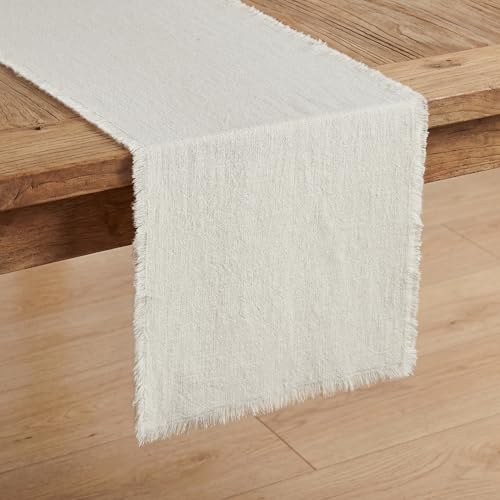
A table runner is the fastest way to introduce fall color to the dining room without committing to paint or a full textile overhaul. Terracotta, rust, warm amber, and deep oatmeal are the tones that read autumn without sliding into seasonal-decoration territory. The key material choice: linen with a fringe or raw hem reads intentional; polyester in harvest orange reads temporary.
Layer the runner over a plain linen tablecloth in warm white for the most layered, styled result. Running the runner down the long axis of a rectangular table creates a natural landing strip for everyday items — a candle, a small planter, a ceramic bowl — so the table feels dressed without requiring a formal centerpiece.
Key Takeaway: A terracotta linen runner is the single lowest-commitment, highest-impact fall color addition — swap it in and the whole table reads autumn.
5. Style an Everyday Candle Arrangement (Not a Centerpiece)
 Save
The word “centerpiece” implies formality — something you arrange for guests and dismantle afterward. What a fall dining room actually needs is an everyday candle arrangement: a small cluster of tapers in amber glass holders, or a trio of pillar candles on a ceramic tray, that you light every single evening. This is where fall atmosphere lives — not in pumpkins, but in flame.
Beeswax tapers in natural honey tone are the better aesthetic choice over white paraffin candles; they carry their own warm amber color even unlit. Group holders in varying heights for a natural cluster rather than a regimented line. For everyday practicality, flameless beeswax-scented pillars are a credible swap in homes with children or pets.
Key Takeaway: A reusable everyday candle arrangement — lit each evening, not just for guests — is what turns a dining room from functional to genuinely cozy in fall.

6. Bring In a Ceramic Serving Bowl as Permanent Decor
 Save
A hand-thrown ceramic bowl sitting on the dining table is not clutter — it’s the most versatile everyday decor object you can own. During fall, fill it with seasonal fruit (figs, persimmons, quince) or simply leave it empty. Its handmade quality and warm glaze do the visual work of a centerpiece with none of the maintenance of fresh flowers or crafted arrangements.
The key purchase criterion is glaze color: look for irregular matte or semi-matte glazes in terracotta, warm amber, bark brown, or off-white. Factory-smooth ceramic in bright colors looks decorative in the wrong direction — too precious to use, too shiny to read as warm. Handmade or handmade-style pieces in earthy tones feel lived-in from day one.
Key Takeaway: A single quality ceramic bowl in an earthy glaze functions as a permanent, season-neutral table focal point that happens to look especially right in fall.

7. Hang Warm-Toned Artwork or a Large Woven Wall Piece
 Save
The dining room wall opposite or beside the table is one of the most underused surfaces in the home. In fall, it becomes an opportunity to introduce large-scale warm tone without paint. A woven textile wall hanging in oatmeal, terracotta, or warm rust brings texture and color simultaneously — the two things a dining room needs most to read as cozy.
Choose scale deliberately: a piece that’s at least 24 inches wide and 30 inches tall reads as intentional on a standard dining room wall. Smaller pieces cluster into gallery arrangements or simply get lost. A single large woven piece hung above a credenza or sideboard grounds the room and gives the eye somewhere to rest between bites.
Key Takeaway: A large woven wall piece introduces fall color and texture at scale — one purchase that changes how the whole room feels from across the table.

8. Place a Narrow Credenza or Sideboard for Layered Styling
 Save
A credenza or narrow sideboard does double duty in a fall dining room: it provides practical storage for linens and serving pieces, and its surface becomes the second styling zone in the room beyond the table. In autumn, that surface can hold a small curated arrangement — a terracotta planter, a ceramic vase, a woven basket — that stays in place all season without interfering with daily meals.
For a fall palette, choose a sideboard in pale oak, warm walnut, or white-painted wood. Avoid dark espresso finishes; they absorb rather than reflect the warm light you’re trying to cultivate. Keep the top surface styled with restraint: three to five objects maximum, varying in height, all in the same warm earthy register.
Key Takeaway: A sideboard creates a second styling surface in the dining room that holds your fall vignette permanently without ever touching the dining table.

9. Swap Curtains for Warm Linen Drapes
 Save
Curtains are among the most overlooked fall decor levers in a dining room. Synthetic sheers in cool white flatten the room’s color temperature; linen or linen-blend drapes in oatmeal or warm white soften it. In autumn especially, when daylight shifts toward lower angles, linen drapes diffuse that raking light into something glowing and warm — a natural light filter that works without a dimmer switch.
From the guides
You've saved it, wanted it. Here's the how: codes, measurements, order. Your choices make it yours.
The Japandi Honest PlaybookThe honest version of the style: what to keep, what to skip, and the order to do it in.See inside →The Room Refresh PlaybookA repeatable four-step method, room by room, in ten minutes, thirty minutes, or one weekend.See inside →Make Any Room Feel Cozy on PurposeWhy some rooms hold people and others empty out, and the moves that change it.See inside →Hang drapes as high as possible and let them graze or very slightly pool on the floor. This proportion makes dining room ceilings read as taller and the window as grander, both of which amplify the cozy-but-not-cramped quality that makes a fall dining room feel like a destination. Iron-ring grommet headers work on most tension rods and don’t require custom installation.
Key Takeaway: Oatmeal linen drapes hung high and long change the quality of fall light in the dining room more than any other single window treatment choice.

10. Layer Rattan or Wood Placemats for Everyday Table Texture
 Save
Fall tablescape content is obsessed with seasonal props, but placemats might be the single most underrated table textile. Woven rattan or water hyacinth placemats introduce natural texture directly into the meal setting — they’re out on the table every day, not just for entertaining, which means they earn their keep in ways a centerpiece arrangement never does.
Natural rattan and water hyacinth placemats in honey or warm brown tones pair well with virtually every earthy ceramic, linen napkin, and warm-wood table. They’re also durable and wipe clean, making them practical for everyday use. Stack them flat in a drawer when not in use — they take up almost no storage space.
Key Takeaway: Woven rattan placemats are the most everyday-functional fall table textile: they add organic texture at each place setting without requiring any special occasion to justify them.

11. Add a Boucle or Chunky Knit Throw to One Chair
 Save
A throw on a dining chair sounds odd until you see it — then it looks completely intentional. In fall especially, a chunky boucle or loose-knit throw draped over the back or arm of one chair signals warmth and comfort in a way that hard surfaces simply can’t. It tells anyone sitting down that this is a room you’re meant to settle into, not just eat quickly and leave.
Keep it to one or two chairs maximum — at the head or corner positions. In an oatmeal, warm white, or camel tone, a boucle throw reads as a permanent styling element rather than a seasonal accessory. Fold it loosely rather than draping it with precision; the casual placement is what makes it work.
Key Takeaway: One boucle throw on a dining chair is the softest, most unexpected fall warmth signal in the room — it changes the emotional temperature of the entire space.

12. Paint One Accent Wall in a Warm Autumn Neutral
 Save
Everything else on this list is movable. Paint is the only change that becomes the room. An accent wall in a warm autumn neutral — Benjamin Moore “Warm Caramel” (2165-20) or Sherwin-Williams “Toasted Marshmallow” (SW 6114) — gives the dining room a permanent fall foundation that makes every other element read richer. Against a warm caramel wall, pale oak wood looks honey-toned, linen looks creamy, and candlelight reflects back instead of disappearing into a cold white surface.
The dining room is the best room in the house for an accent wall precisely because you only spend focused time in it — the color doesn’t overwhelm the way it might in a bedroom you wake up in. Paint the wall the dining table sits against, and the room gains depth and drama without losing its warm, approachable quality.
Key Takeaway: A single warm caramel or toasted amber accent wall is the foundation of a cozy fall dining room — every other textile and texture choice looks better against it.

Fall dining room decor doesn’t have to be a seasonal project you dismantle in December. The ideas in this list are room-building moves — a woven pendant, a warm rug, linen drapes, an accent wall — that create a backdrop so good every ordinary evening feels intentional. Start with the change that will affect the most hours: the pendant light if your current fixture is cold and flat, the accent wall if the room has no color grounding, or the candle arrangement if atmosphere is what’s missing. Layer from there. The goal isn’t a room that looks like fall. It’s a room that feels like it.
 Save
Styling Ideas
 Save
Your Full Dining Room as a Cozy Fall Dining Room Decor Ideas Everyday Backdrop
 Save
Style a Candle Arrangement That Brings Cozy Fall Dining Room Decor Into Everyday
 Save
A Terracotta Table Runner That Makes Cozy Fall Dining Room Decor Feel Everyday
 Save
One Boucle Throw on a Dining Chair for Cozy Fall Dining Room Decor Ideas Everyday
 Save
Painting One Accent Wall to Ground Your Cozy Fall Dining Room Decor Ideas Everyday
From the guides
You've saved it, wanted it. Here's the how: codes, measurements, order. Your choices make it yours.
The Japandi Honest PlaybookThe honest version of the style: what to keep, what to skip, and the order to do it in.See inside →The Room Refresh PlaybookA repeatable four-step method, room by room, in ten minutes, thirty minutes, or one weekend.See inside →Make Any Room Feel Cozy on PurposeWhy some rooms hold people and others empty out, and the moves that change it.See inside →


