 Outmane A
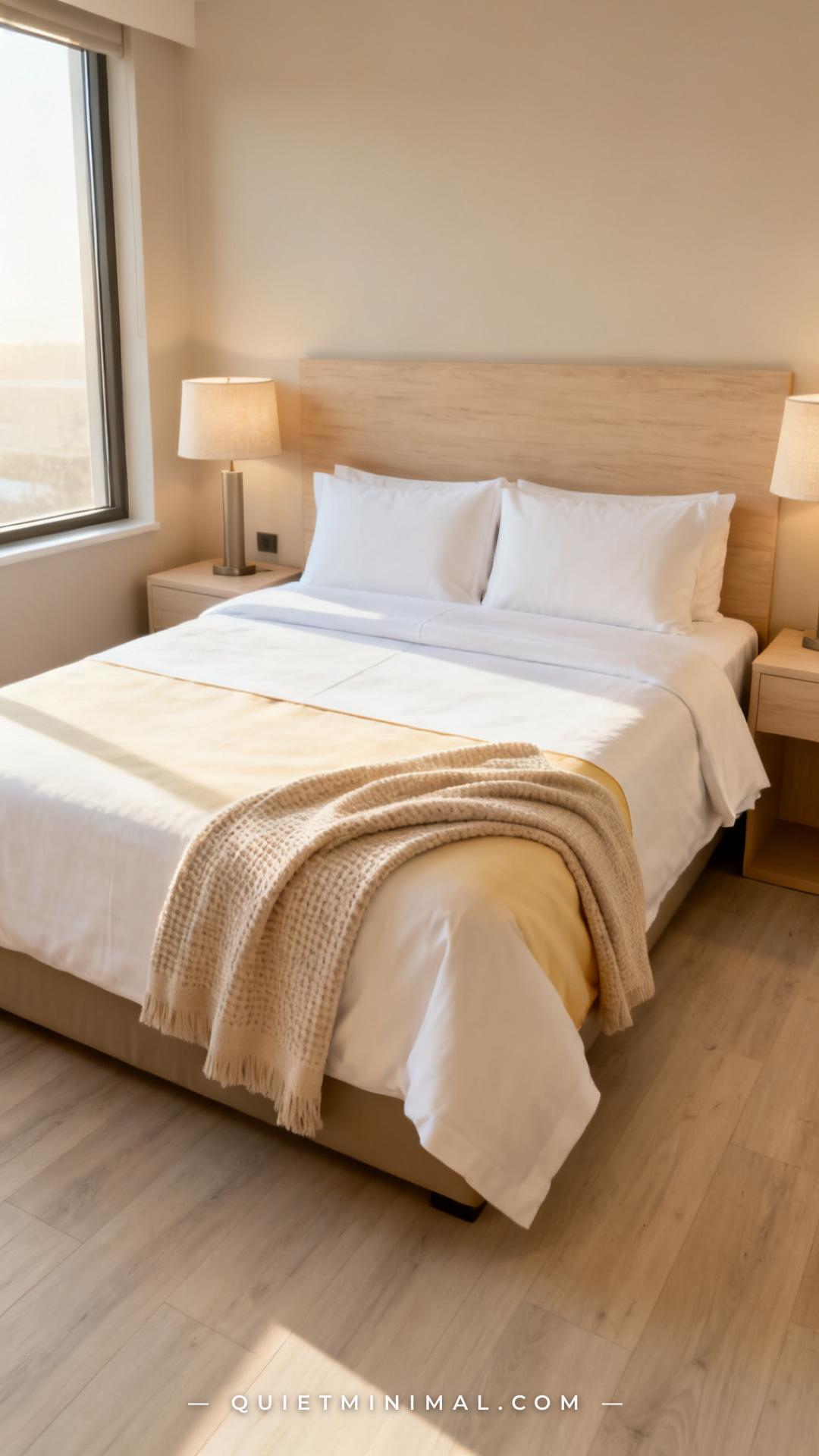
There is a specific feeling a hotel bed gives you the moment you walk into the room — before you’ve touched it, before you’ve pulled back a single layer. It looks calm. Ordered. Like every pillow is exactly where it is supposed to be and the duvet has never once been slept under by anyone in a hurry. That feeling is not an accident, and it is not expensive bedding. It is a series of deliberate structural decisions: the fold ratio, the insert weight, the pillow hierarchy, the exact amount of overhang on each side. Hotels follow a quiet logic that most home beds ignore entirely, which is why your bed can have better sheets than a four-star property and still look like a place where someone overslept.
These 15 duvet styling ideas decode that logic, one decision at a time. Whether you are starting from scratch or just want to fix what is already on your bed, each section gives you the specific adjustment that changes how the whole thing reads.
1. Start With the Right Duvet Insert Weight
 Save
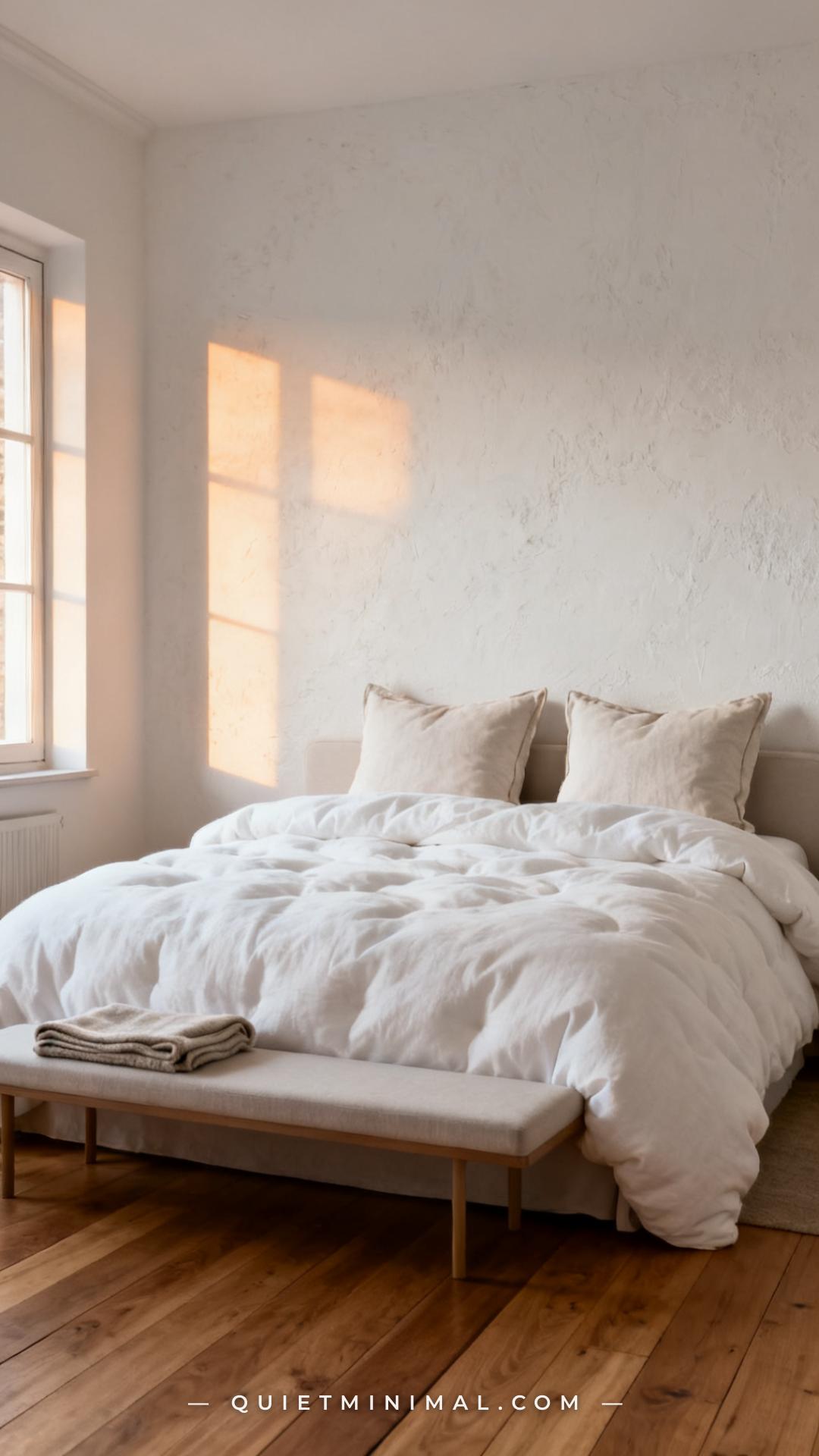
The flattest beds in the world have one thing in common: an insert that is too light for the cover. A 15 tog or medium-weight down alternative insert fills a duvet cover the way upholstery fills a cushion — it holds its shape, creates natural folds, and gives the surface a cloud-like depth that reads as intentional. Go too light and the cover collapses on itself, creating the rumpled grocery-bag effect that no amount of styling can fix.
From the guides
You've saved it, wanted it. Here's the how: codes, measurements, order. Your choices make it yours.
 The Japandi Honest PlaybookThe honest version of the style: what to keep, what to skip, and the order to do it in.See inside →
 The Room Refresh PlaybookA repeatable four-step method, room by room, in ten minutes, thirty minutes, or one weekend.See inside →
 Make Any Room Feel Cozy on PurposeWhy some rooms hold people and others empty out, and the moves that change it.See inside →
For a true hotel look, match your insert to your cover size deliberately: a duvet insert one size up from your cover (a king insert in a queen cover) creates the overstuffed fullness that makes luxury beds look so pillowy. This is the single most common hotel trick that home styling guides never explain.
Key Takeaway: A properly weighted, slightly oversized insert is the structural foundation — without it, no styling technique will hold.

2. Master the Duvet Fold-Down Ratio
 Save
The fold-down is the detail that separates a hotel bed from a made bed. In most hotels, the top of the duvet is folded back toward the foot of the bed by exactly one-third to one-quarter of the total bed length — leaving the flat sheet visible beneath, tucked with a sharp edge. This fold line becomes the visual horizon of the bed: everything above it (the pillows) has height and dimension; everything below it (the covered portion) is smooth and flat.
At home, most people pull the duvet up to the pillow line and leave it. The fold-down changes the entire geometry of the bed, creating a layered effect that shows thought and intention. Fold back, press the crease flat with your palm, and tuck the folded edge under the mattress on both sides for the sharpest result.
Key Takeaway: The fold-down crease is the hotel bed’s signature detail — get the ratio right and every other element falls into place around it.
3. Choose a Duvet Cover With a Subtle Texture, Not a Pattern
 Save
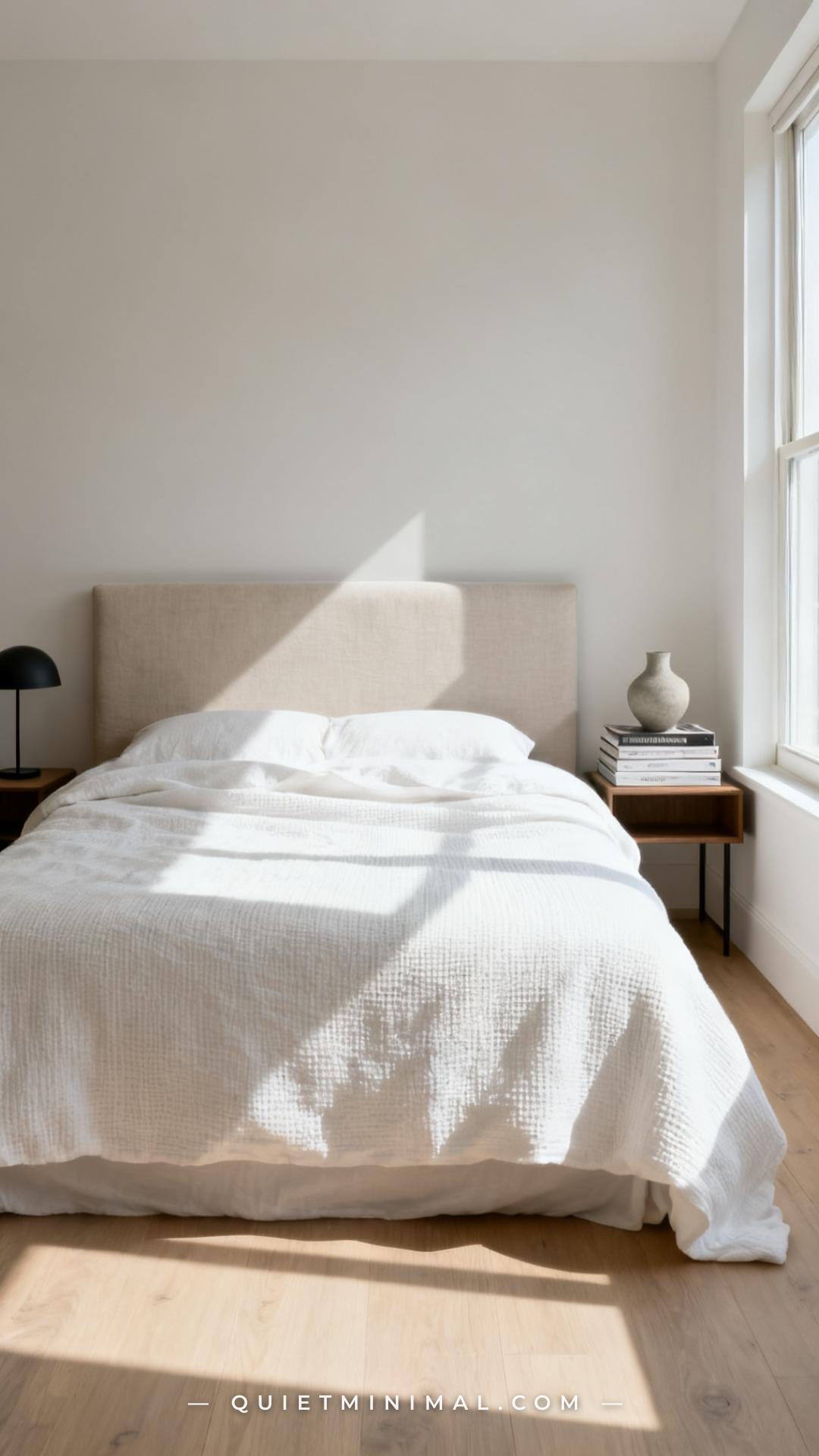
Plain white can look institutional. Loud prints look like a guest bedroom that hasn’t been updated since 2012. The hotel solution is a duvet cover with quiet texture — a percale weave, a fine waffle grid, a subtle jacquard stripe — that catches light without demanding attention. The surface reads as rich and considered without introducing a color or pattern that dates the room.
Percale weaves (a tight one-over-one-under construction) are the most commonly used in upscale hotels because they feel crisp fresh out of the dryer, resist pilling, and have a matte finish that photographs beautifully in any light. Sateen is slightly more reflective — excellent if your room skews warmer and dimmer. Waffle weave is the most forgiving for home use because its texture structure hides minor wrinkles.
Key Takeaway: A subtle-texture white duvet cover does more work than any decorative pillow — choose the weave before you choose anything else.

4. Use the Right Number of Pillows in the Right Order
 Save
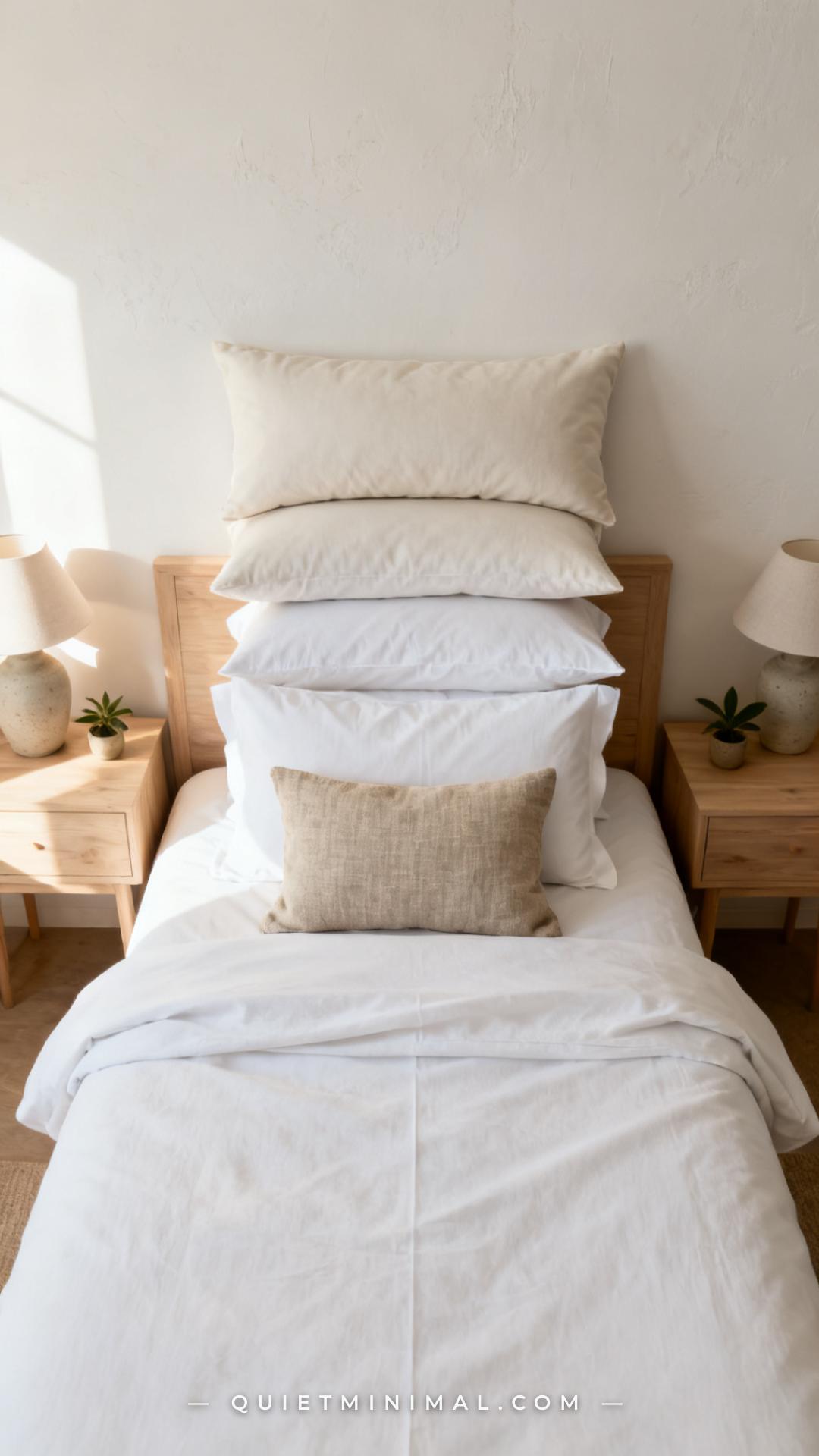
Hotel beds use a specific pillow architecture that home beds rarely replicate correctly. The formula is: two euro shams (26×26 inches) standing upright against the headboard — this creates the backdrop height. In front of them, two standard sleeping pillows in matching white cases, laid flat. In front of those, one smaller accent or lumbar pillow in a contrast texture — not a different color family, just a different weave or tone.
The critical rule: every pillow cover should be in the same color family (white, off-white, warm ivory, very pale linen). Hotels never put a colored accent pillow on a white bed unless it is a very specific brand decision. The calm comes from tonal unity — you are playing with texture and shape, not color.
Key Takeaway: Five pillows in a three-row tonal arrangement is the hotel formula — vary texture, never vary the color family.

5. Add a Flat Sheet and Actually Use It
 Save
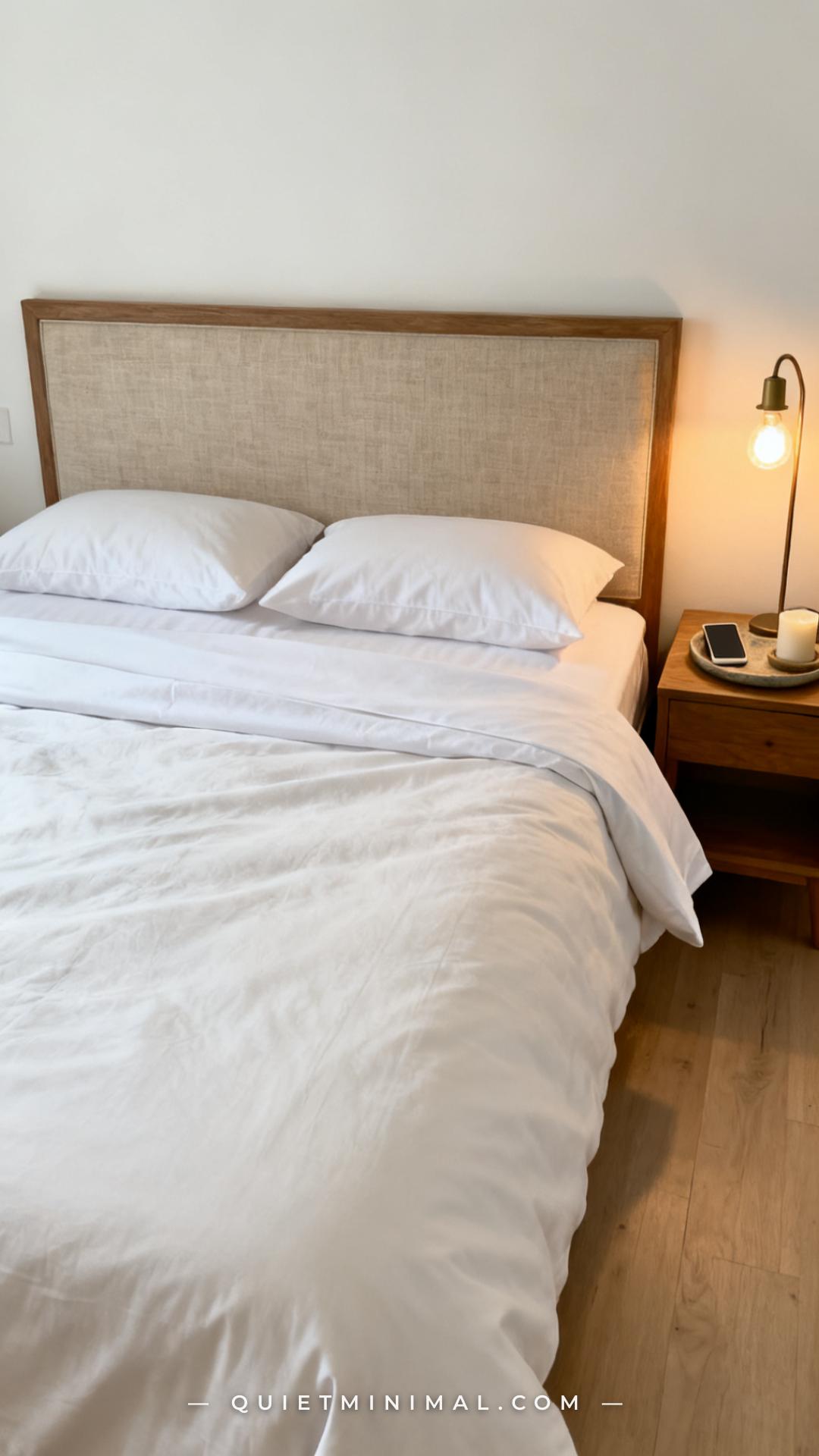
Most people either skip the flat sheet entirely or use it incorrectly — bunching it at the foot of the bed or tucking it so tight it pulls out by morning. Hotels use the flat sheet as a visible design layer: it is the bright white surface you see between the fold-down duvet and the sleeping pillows. It makes the bed look like it has more layers, more intention, more investment — even if the duvet cover is a basic white cotton.
The flat sheet creates the visual gap between the duvet edge and the pillow line. It is also the reason hotel beds look so clean — because skin touches the flat sheet, not the duvet cover, so the cover stays pristine. At home, tuck the flat sheet tightly on both sides under the mattress, leave the top free, and fold it back neatly over the duvet to reveal about 8–10 inches of clean white sheet.
Key Takeaway: The visible flat sheet fold-over is the detail that tells people your bed was styled, not just made.

6. Get the Duvet Overhang Exactly Right
 Save
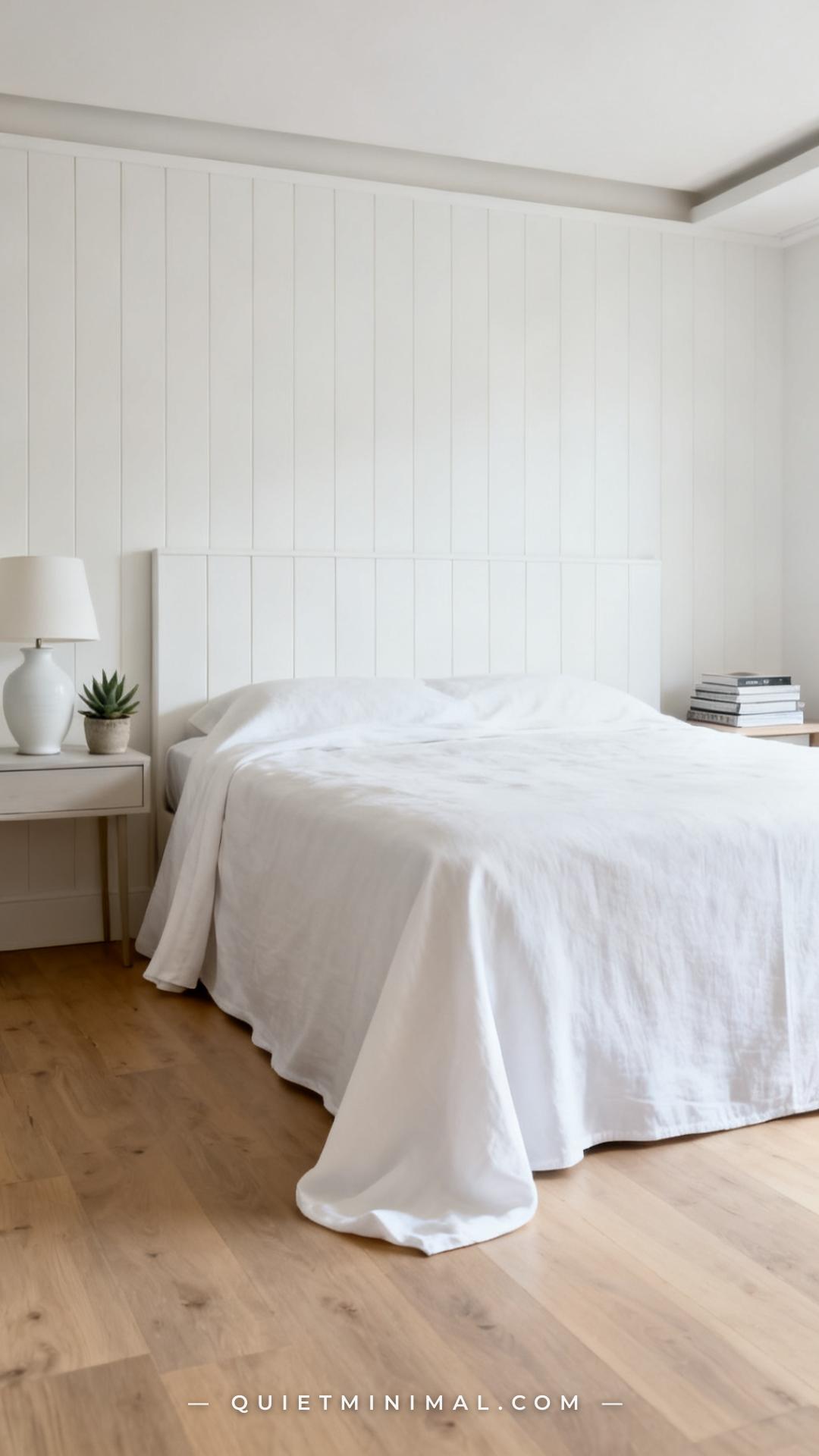
Uneven overhang is one of the most common reasons a home bed looks less polished than a hotel bed. Hotels measure the drop: the duvet falls an equal distance on both sides of the bed (typically 12–15 inches from the mattress edge to the bottom of the duvet) and ends a few inches above the floor for a clean float, not a puddle. At the foot, the duvet tucks slightly under the mattress or meets the foot bench, never bunching on the floor.
Before making the bed each morning, lay the duvet over the insert and center it by eye — step back and check both sides before you tuck anything. Even a two-inch discrepancy reads as visual imbalance. A foot bench or folded throw at the foot both solves the overhang question and adds the layered hotel aesthetic.
Key Takeaway: Equal overhang on both sides and a clean foot-end finish are what make a bed look symmetrical and considered from across the room.

7. Layer a Waffle-Knit or Linen Throw at the Foot
 Save
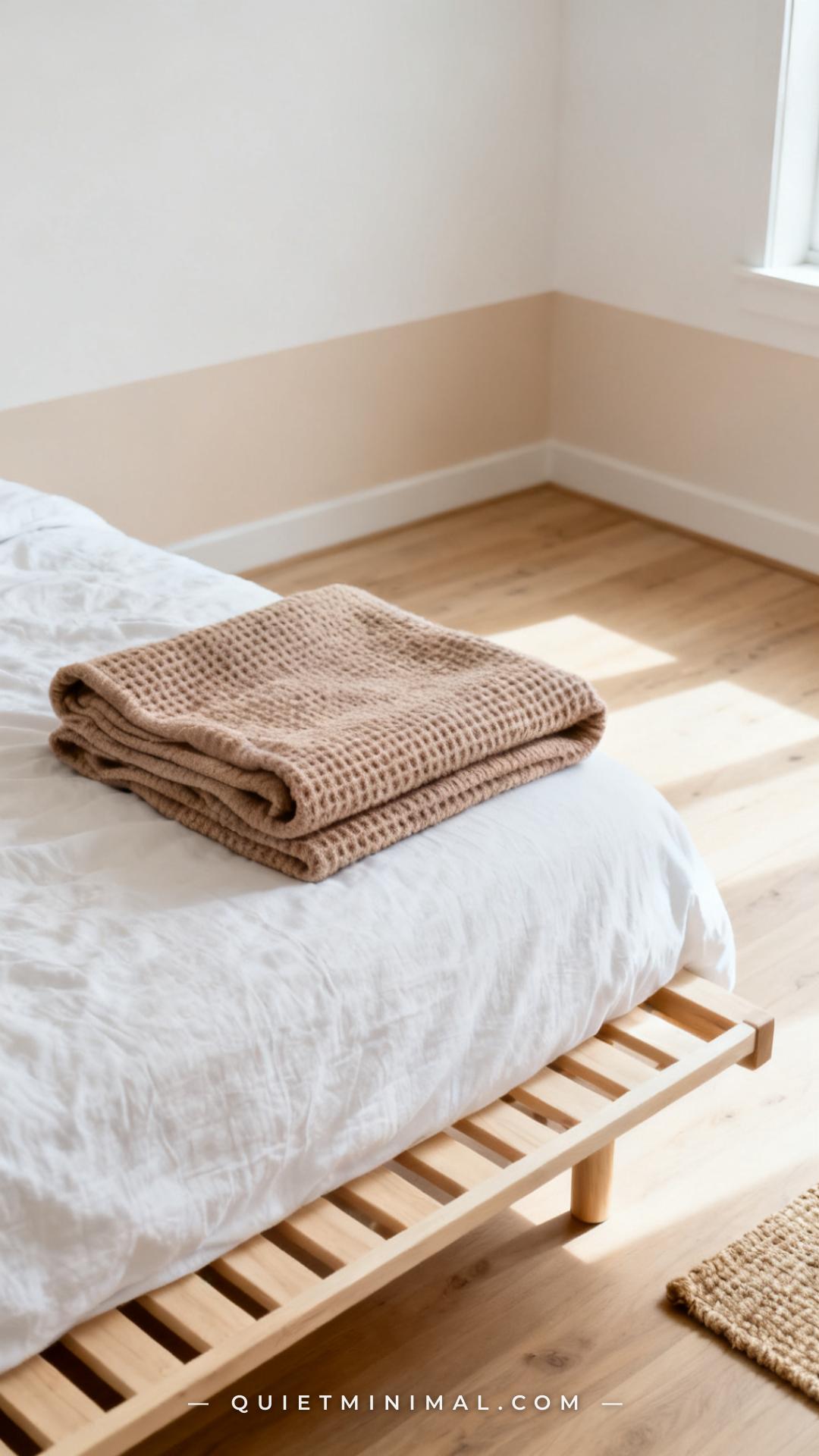
A throw at the foot of the bed does two things: it introduces a secondary texture that makes the all-white palette feel layered rather than clinical, and it gives the eye a visual stopping point at the foot. Hotels typically use a banded throw or a folded coverlet. At home, a waffle-knit in oatmeal or ivory, or a stonewashed linen throw in pale warm grey, achieves the same layered depth without adding color.
Fold the throw in thirds lengthwise and drape it across the bottom quarter of the bed, letting it fall evenly on both sides. Do not drape it diagonally — that reads as casual rather than calm. The fold should be visible and horizontal, mirroring the duvet fold-down logic above.
Key Takeaway: A horizontal throw fold at the foot echoes the duvet fold-down geometry and signals that the bed was styled from top to toe.

8. Invest in Pillowcases That Match the Duvet Cover Weave
 Save
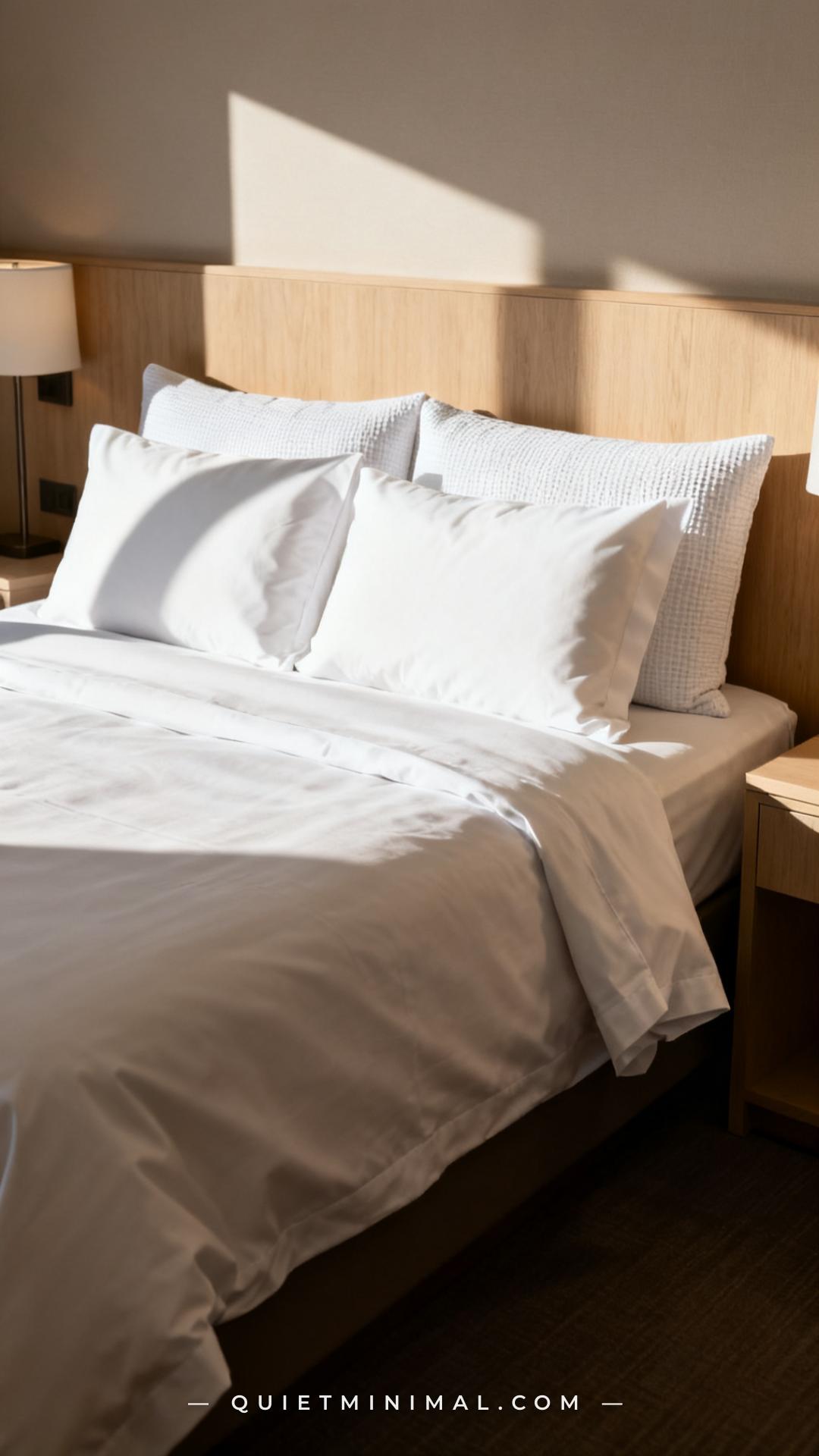
Mismatched pillowcases and duvet covers are a detail Maya’s eye will register even if she cannot name it. If your duvet cover is percale, your sleeping pillow cases should also be percale — the slight matte finish and similar crispness create a unified surface. If you introduce euro shams in a different weave (waffle, for example), that is a deliberate textural contrast that reads as sophisticated rather than inconsistent.
The most common mistake is using a different white — one pillow case is cold-bright white, the duvet cover is warm ivory, and the euro sham is a third shade. This looks accidental. Buy your duvet cover and sleeping pillowcases from the same brand and the same colorway, then allow only the euro shams to vary slightly.
Key Takeaway: Matching weave and colorway across duvet cover and front pillowcases creates the visual unity that reads as hotel-polished rather than assembled from multiple sales.

9. Choose a Headboard That Anchors the White Bed
 Save
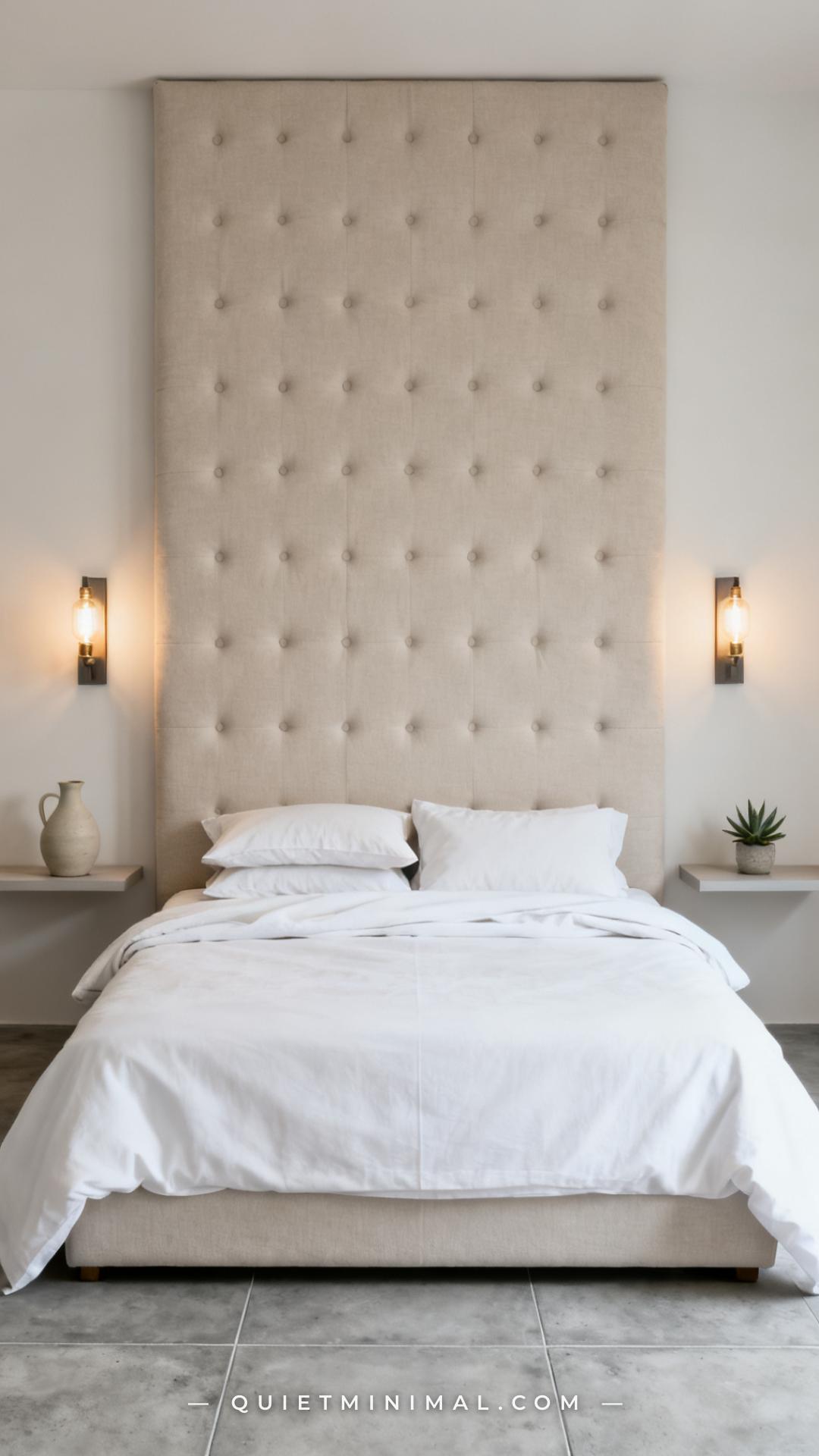
A white-on-white bed can disappear into a light wall. A headboard gives the whole composition a back wall — height, framing, and a material contrast that makes the linens look intentionally placed rather than floating. Hotels use upholstered headboards almost universally because the padded softness contrasts with the crisp geometry of the linens, and because an upholstered surface absorbs sound and adds warmth to rooms that are otherwise hard and minimal.
At home, a linen or boucle upholstered headboard in a warm neutral (oatmeal, warm sand, pale taupe) is the most versatile choice. It reads clean next to white bedding, adds dimension without a color commitment, and scales the entire bed arrangement to feel like a considered design decision rather than furniture that happened to be there.
From the guides
You've saved it, wanted it. Here's the how: codes, measurements, order. Your choices make it yours.
The Japandi Honest PlaybookThe honest version of the style: what to keep, what to skip, and the order to do it in.See inside →The Room Refresh PlaybookA repeatable four-step method, room by room, in ten minutes, thirty minutes, or one weekend.See inside →Make Any Room Feel Cozy on PurposeWhy some rooms hold people and others empty out, and the moves that change it.See inside →Key Takeaway: A neutral upholstered headboard frames the bed like a photograph frame — without it, the best-styled linens look unmoored.

10. Use Scent and Sound to Complete the Calm (and Style the Nightstand Accordingly)
 Save
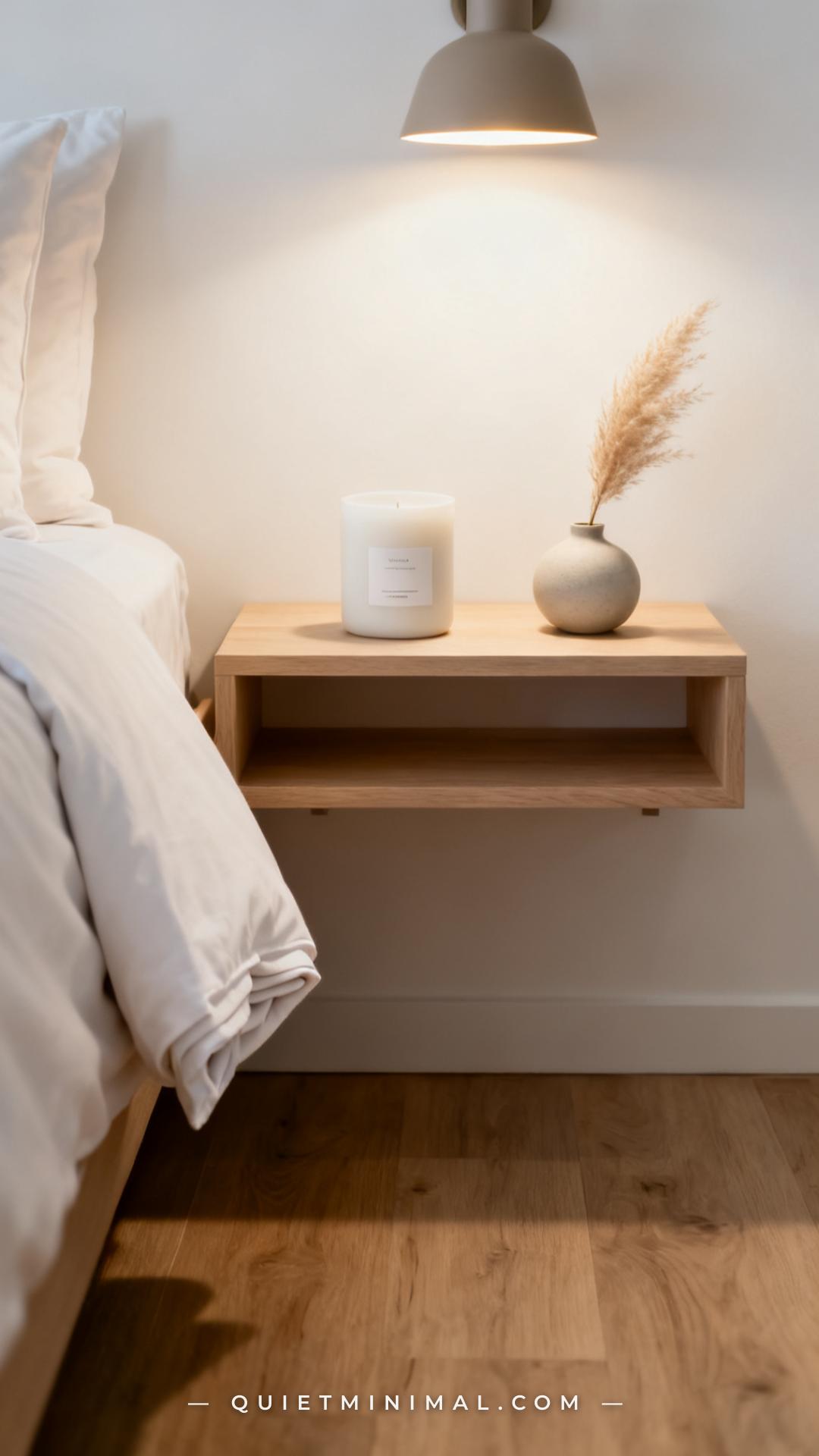
Hotel rooms smell calm as much as they look calm. That is not an accident — housekeeping uses a scent protocol with every room reset. At home, a simple reed diffuser or a room-temperature candle on the nightstand signals the same intentionality. The key is the nightstand styling itself: hotels keep nightstands minimal. One lamp, one small object (a phone charger tucked out of sight), a glass of water. No visual clutter.
Style your nightstand with this restraint: lamp, one decorative object (a ceramic tray, a sculptural vase, a small plant), and nothing else visible. The negative space on the nightstand surface makes the whole bed arrangement look calmer because the eye has nowhere stressful to land.
Key Takeaway: A minimally styled nightstand frames the bed and extends the calm — every object on that surface either belongs or detracts.

11. Iron or Steam the Duvet Cover (Or Buy Wrinkle-Resistant Fabric)
 Save
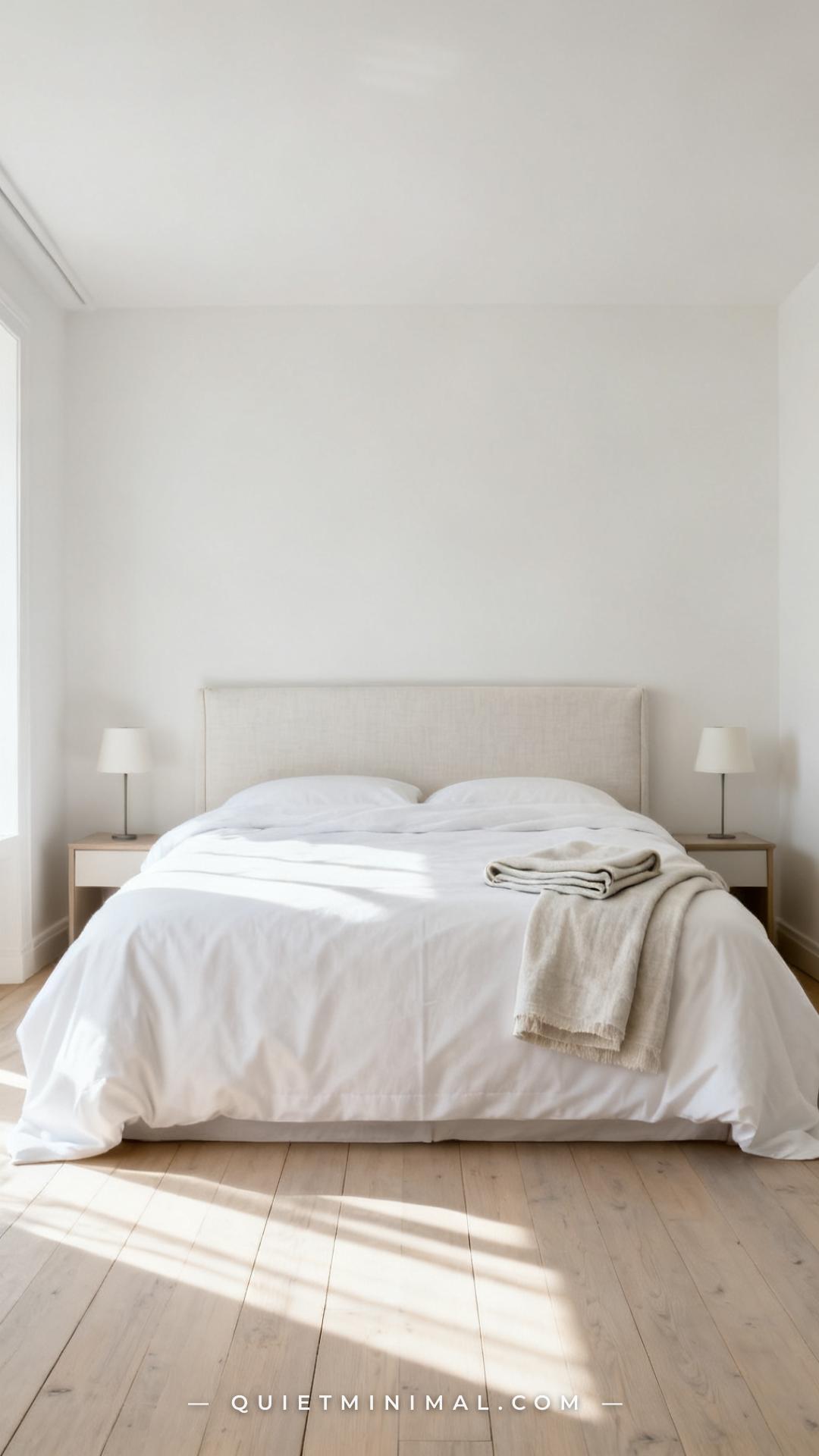
Nothing undermines a carefully styled bed faster than a duvet cover that looks like it was pulled from the bottom of a laundry basket. Hotel laundry departments press or steam every cover before it goes back on the bed. At home, the equivalent is either a two-minute steam wand pass before making the bed, or specifically choosing a fabric that releases wrinkles naturally — percale cotton, linen-cotton blends, and microfiber all perform better out of the dryer than heavy sateen.
The practical approach: remove the duvet cover from the dryer promptly while it is still warm, shake it out firmly once to pop the wrinkles, and put it on the insert immediately. If it still shows fold lines, a handheld steamer run over the surface while it is on the bed takes under five minutes and makes a visible difference.
Key Takeaway: Fabric choice and immediate post-dryer handling eliminate wrinkles without an iron — wrinkle-resistant percale and prompt removal from the dryer are the professional shortcuts.

12. Add Exactly One Warm Accent Color — Not Two
 Save
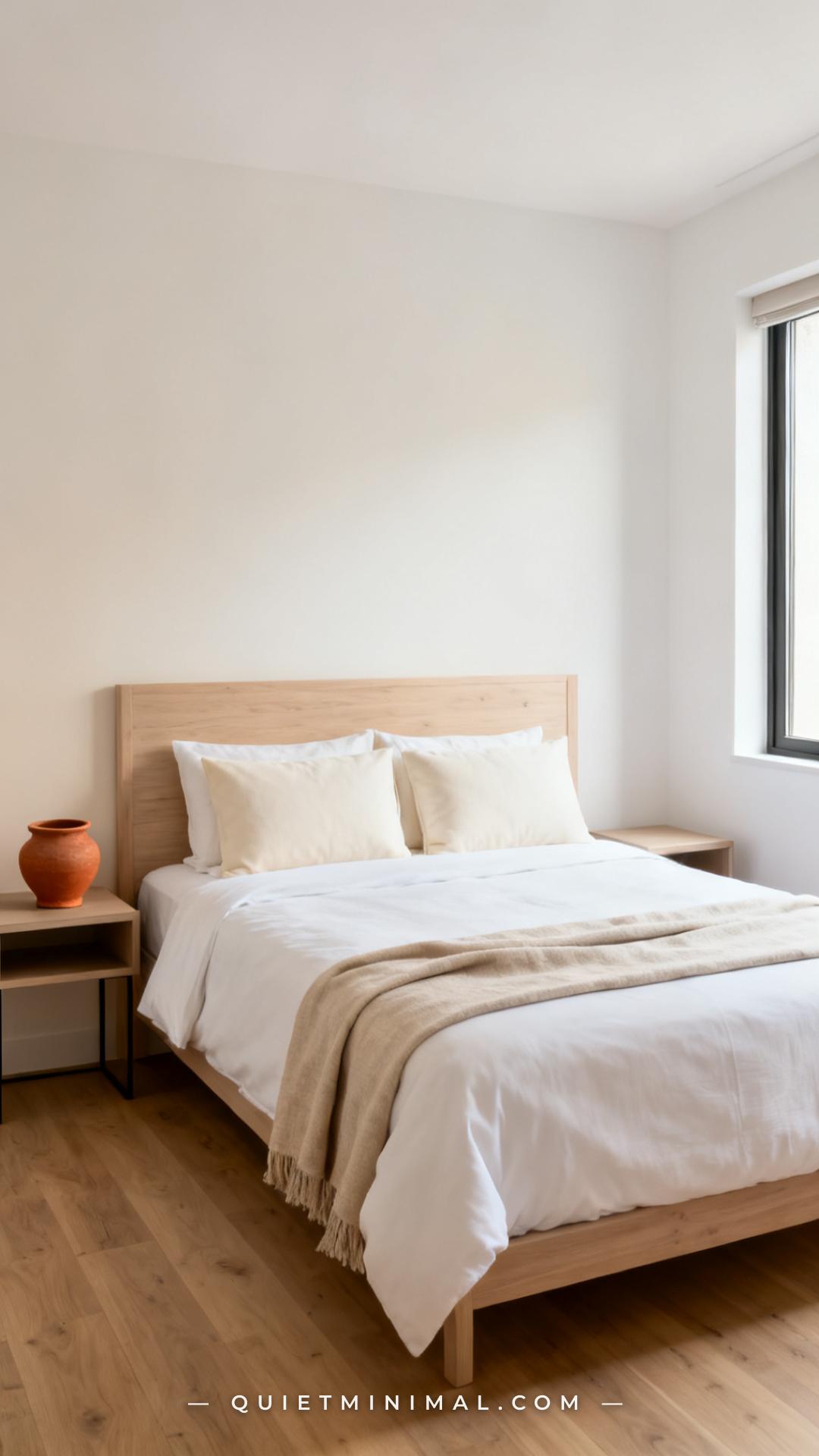
One of the counterintuitive truths of hotel bedroom design: the rooms that feel the most luxuriously calm almost always contain one very subtle warm accent — a terracotta vase, a warm honey wood surface, a single stem of dried botanicals. This single element prevents the all-white palette from reading as sterile, and it does so precisely because it is one accent, not a coordinated “color scheme.”
The mistake Maya’s bed styling often makes is introducing two or three accent colors “to add personality” — a sage throw, a dusty pink lumbar pillow, a terracotta planter. Three accents compete with each other and the eye reads “collected” rather than “calm.” Reduce to one accent element and suddenly the room reads as designed.
Key Takeaway: One warm accent in an otherwise neutral bed arrangement reads as intentional design; two or more reads as indecision — edit ruthlessly.

13. Keep the Duvet Cover Bright White With a Simple Wash Protocol
 Save
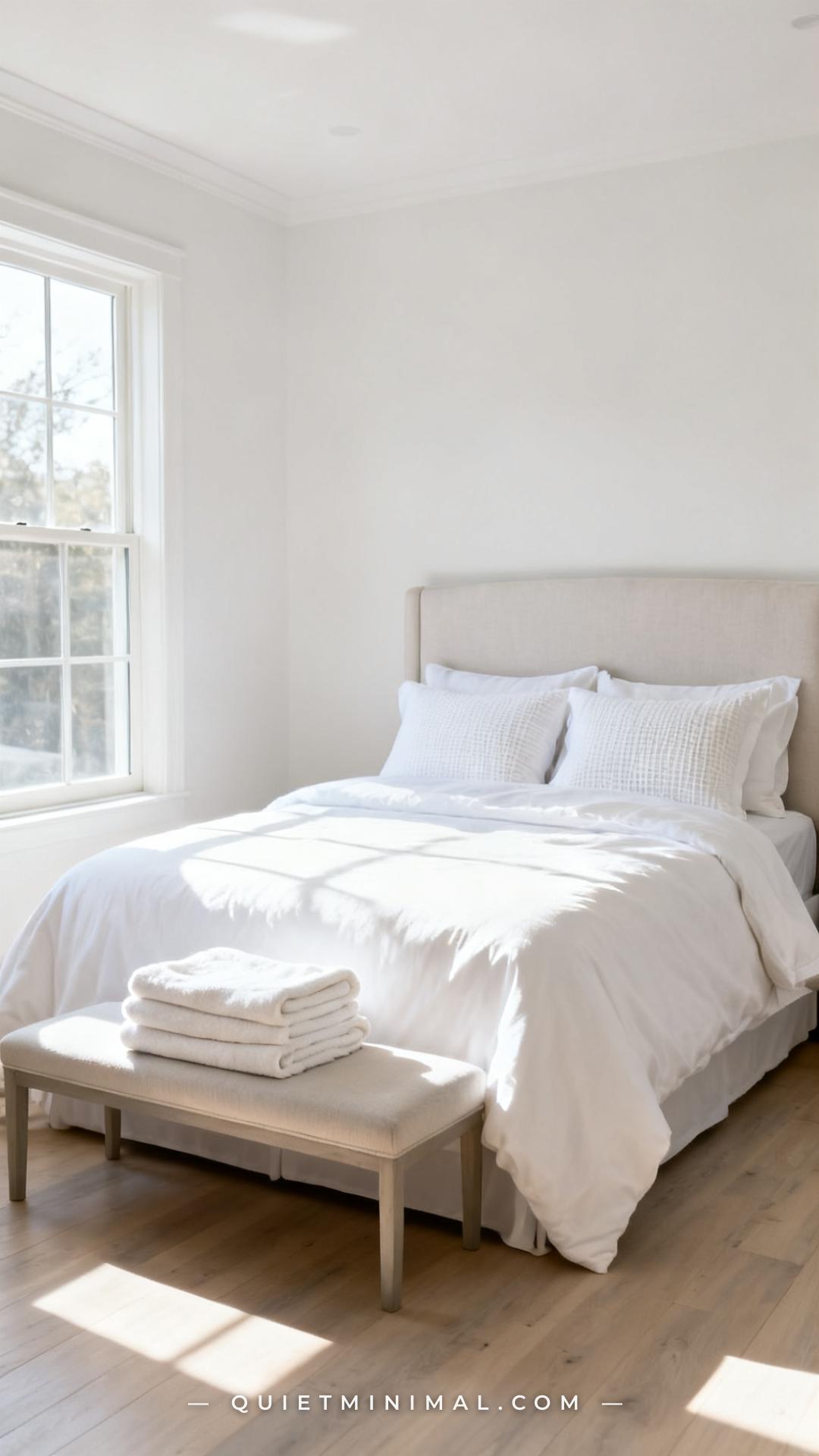
Hotel linens stay bright white not because they are replaced constantly, but because hotels wash them with a specific protocol: hot water (for cotton, above 60°C), a small amount of oxygen-based whitener, and a vinegar rinse cycle to strip detergent buildup that causes greyness. At home, detergent buildup from overwashing is the most common cause of white linens going dull — using less detergent than the machine suggests and adding a half-cup of white vinegar to the rinse cycle solves most cases within two to three washes.
Sunlight is a free optical whitener: line-drying white cotton in direct sunlight bleaches it naturally without fabric damage. If line drying is not an option, a short high-heat dryer cycle with a clean tennis ball to restore loft achieves nearly the same result.
Key Takeaway: Bright white linens come from washing less and rinsing better — vinegar rinse cycles and sun drying are the professional laundry shortcuts that hotels actually use.

14. Apply the “Distance Test” Before Calling the Bed Done
 Save
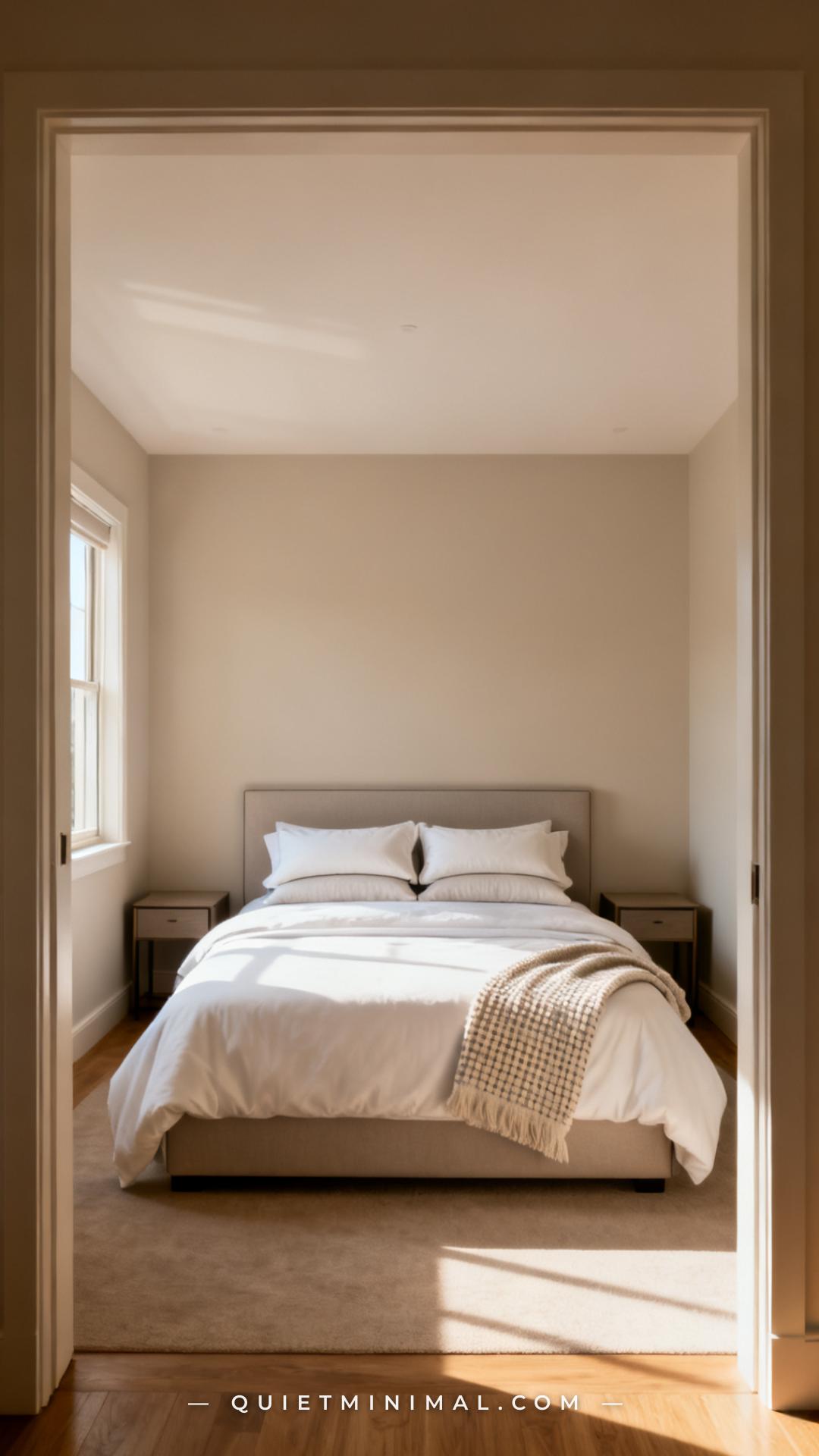
Every hotel housekeeper checks a bed from the doorway before leaving the room. This is the distance test: from six to eight feet away, does the bed look symmetrical? Does the pillow arrangement read as an intentional stack or a random pile? Does the overhang fall evenly? Does the fold-down crease look horizontal or slightly skewed?
At home, most people style a bed while standing directly over it — which makes it impossible to see the things the eye will actually notice from the doorway. After making the bed each morning, step back to the bedroom doorway and look. Adjust the euro shams if one is lower than the other. Pull the duvet left or right to correct the overhang. The whole adjustment takes thirty seconds and the visual result is immediate.
Key Takeaway: The distance test from the doorway reveals every symmetry issue invisible from above — it is the professional’s final quality check before a room is considered finished.

15. Reset the Bed the Same Way Every Morning
 Save
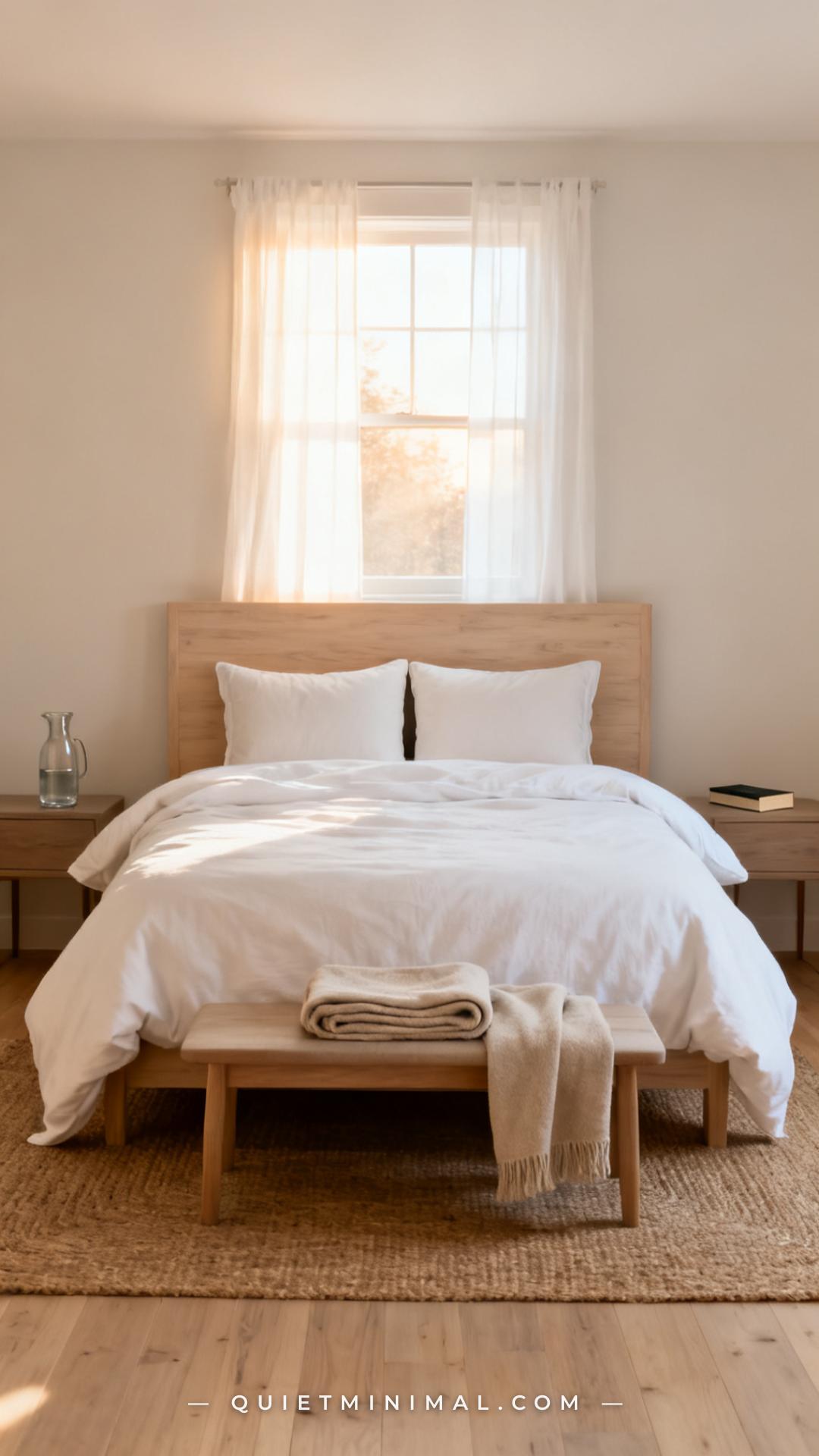
The reason hotel beds look the same on arrival as they did in the photographs is not that a professional stylist visits each morning. It is that housekeepers follow a repeatable process in a fixed order — insert first, cover second, flat sheet third, fold-down fourth, pillow architecture last — and that consistency means every detail lands in the same place every time.
At home, a consistent bed-reset routine that takes under five minutes achieves the same result. The first week it feels effortful; by the second week it is automatic; by the third week the bed looks the same every single morning and the room reads as designed from the doorway. The hotel-calm aesthetic is less about expensive products and more about the commitment to a repeatable five-minute process that treats the bed as the room’s most important visual element — because it is.
The calm you felt walking into that hotel room was not the thread count. It was the decision someone made to do the same thing, in the same order, every morning. That decision is available to you at no cost.
Key Takeaway: A fixed morning reset routine — same order, same decisions, every day — is the habit that turns a styled bed into a permanent feature of how the room reads.

The hotel-calm bed look is not a product category — it is a set of structural decisions applied consistently. The insert weight gives the duvet its shape. The fold-down ratio and overhang create the geometry. The pillow hierarchy and tonal unity build the visual architecture. The wrinkle-free surface and bright white laundry protocol maintain the result. Start with the insert and the fold-down: fix those two things alone and the bed will look noticeably more intentional by tomorrow morning. Then work through the remaining details at your own pace. Each one compounds the effect of the last, and by the time you have applied all fifteen, the room will feel like a place you actually want to walk into — every single day.
From the guides
You've saved it, wanted it. Here's the how: codes, measurements, order. Your choices make it yours.
The Japandi Honest PlaybookThe honest version of the style: what to keep, what to skip, and the order to do it in.See inside →The Room Refresh PlaybookA repeatable four-step method, room by room, in ten minutes, thirty minutes, or one weekend.See inside →Make Any Room Feel Cozy on PurposeWhy some rooms hold people and others empty out, and the moves that change it.See inside → Save


