 Outmane A

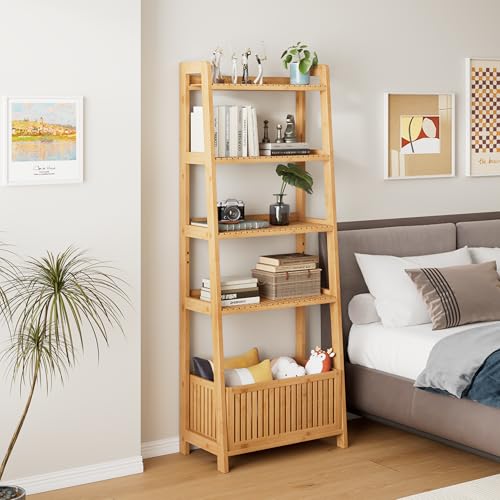
A blanket ladder is one of those pieces that looks incredible in saved pins and slightly off in real life — and the reason is almost always the styling, not the ladder. Either it’s stacked too full, every blanket is the same flat fold, or it sits there without any supporting elements to make it feel like it belongs to the room. Fall is actually the perfect season to fix all of that. The combination of warm textures, rich earthy colors, and seasonal accents gives you exactly the right ingredients to style a ladder that feels intentional rather than assembled. These 15 ideas walk through every element — from how you fold to what you put underneath — so your blanket ladder becomes one of the best spots in your living room this season.
Start With the Right Ladder for Fall’s Weight
 Save
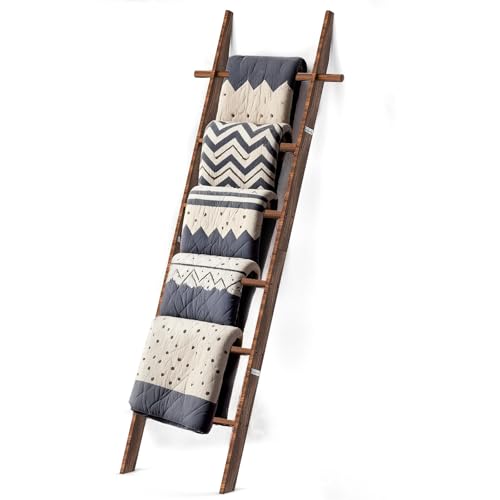
Not every ladder suits fall styling equally. A slim, lightweight decorative ladder can look overwhelmed when you hang heavier wool or chunky-knit throws on it — the rungs bow, the piece leans awkwardly, and the whole effect looks precarious rather than relaxed. For fall, lean toward a ladder with wide, solid rungs spaced at least eight to ten inches apart. That spacing lets thick blankets drape naturally without bunching between rungs. A warm walnut or dark oak finish also bridges the gap between summer’s lighter wood tones and the deeper palette you’re building into the room for the season. If your ladder is raw or light pine, a coat of dark wax or a quick stain is a weekend fix that pays off for months.
Key Takeaway: A ladder with wide-spaced, sturdy rungs is a prerequisite for fall’s heavier textiles — proportion before styling.
The Three-Blanket Rule for Fall
 Save
Three blankets is the fall sweet spot. Fewer looks sparse; more looks like a textile sale. The formula that works: one heavy-weight textured blanket at the top (chunky knit, bouclé, or cable-knit), one medium-weight woven throw in the middle, and one lighter blanket — either smooth ribbed wool or a cotton blend — at the bottom. This creates natural visual graduation from thick to thin as the eye moves down the ladder. For fall specifically, anchor the palette in three tones from the same warm family — think oatmeal, rust, and deep brown, or cream, mustard, and olive — rather than mixing cool greys or navy into the mix, which pulls the eye away from the seasonal feeling you’re building.
Key Takeaway: Three blankets in graduated weight and a single warm tonal family is the fall styling formula that reads as intentional, not cluttered.

How You Fold Changes Everything
 Save
How a blanket is placed on the ladder matters as much as which blanket you pick. Three techniques, rotated across the rungs, break the visual monotony: the loop (drape the blanket centered over the rung and let both halves hang in a relaxed U shape), the flat fold (fold lengthwise twice and lay it flat across the rung with even ends hanging), and the casual toss (drape it with one end longer than the other, letting it look like someone just grabbed it and set it back). Never use the same fold for every rung — uniform folds are what makes a ladder look staged. The casual toss on the bottom rung specifically reads as “someone actually uses this,” which is the single most important quality a blanket ladder needs.
Key Takeaway: Rotating three fold techniques across your rungs is the difference between a lived-in display and a dressed prop.
Anchor the Base With a Wicker Basket
 Save
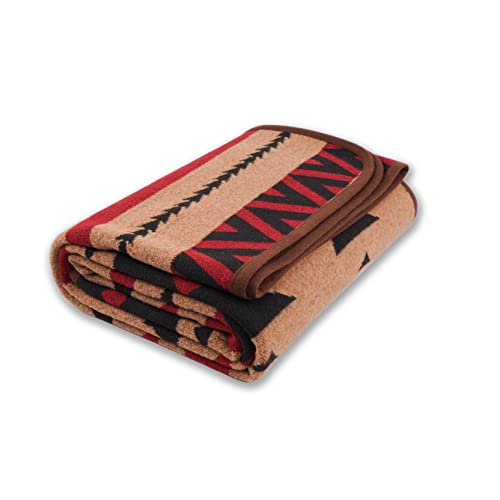
A wicker or rattan basket at the base of the ladder solves two fall problems at once: it gives overflow blankets a home (so the ladder itself stays at three and doesn’t creep to five), and it breaks the stark line where the ladder feet meet the floor. Choose a basket that’s proportionate — roughly one-third the ladder’s width — and slightly taller than it is wide so it doesn’t look squashed. For fall, a natural undyed wicker or a dark smoked rattan reads warmer than white-painted versions. Leave one blanket gathered loosely inside with an end spilling casually over the rim, not folded neatly — neatly folded contents in a basket at the base of a ladder looks like a furniture showroom, not a home.
Key Takeaway: A wicker basket at the ladder’s base grounds the display and keeps the rungs from being overloaded — style through restraint.

Add One Dried Element Without Going Overboard
 Save
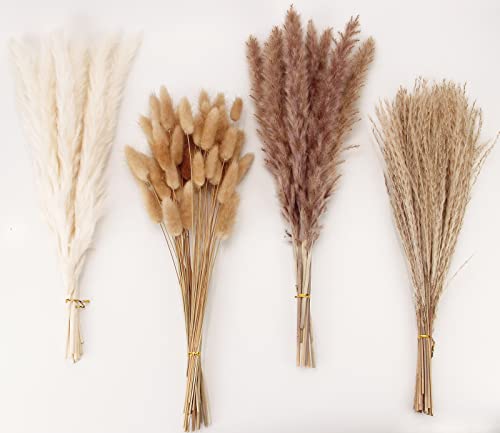
Dried botanicals are the fastest way to push a blanket ladder firmly into fall territory — but the key is singular, not plural. One stem of dried pampas grass or a small bundle of dried cotton stems tucked behind the top rung is seasonal. Three different dried elements wired to different rungs is a harvest festival. For fall specifically, dried pampas in a warm blush or natural cream, dried eucalyptus, or a single dried wheat bundle all work without reading as Halloween décor. Tuck the stem behind the rung rather than in front of it — behind reads as organic and grown into the space; in front reads as placed for a photo. Keep the stem at or above the top rung so it extends upward past the ladder, adding visual height to the whole vignette.
Key Takeaway: One dried botanical element tucked behind the top rung adds fall seasonality without tipping into themed décor.
Build a Candle Cluster at the Foot
 Save
Candles at the base of a blanket ladder work especially well in fall when the evenings get shorter and you want layers of warm light in the room. The trick is containment: group the candles on a small wooden tray, a stone slab, or a thick slice of live-edge wood rather than placing them directly on the floor, which looks accidental. Use pillar candles in cream, beeswax, or a muted sage — avoid anything artificially orange or “pumpkin spice” scented in a decorative capacity. Vary the heights — one tall, one medium, one short — so the grouping has a silhouette even when unlit. Positioned at the base of the ladder, this cluster creates a warm anchor point that makes the whole vignette feel rooted rather than leaning against the wall with nowhere to go.
Key Takeaway: A contained cluster of staggered pillar candles on a small tray at the ladder’s base grounds the whole display and adds evening warmth to the room.

Use Texture Contrast, Not Color Contrast
 Save
A common mistake is trying to create interest on the ladder through color contrast — pairing bright burgundy with forest green and mustard yellow. It ends up looking busy, not curated. For fall, the better move is tonal color with textural contrast: keep the palette within a narrow warm family (all the creams, taupes, and caramels, or all the rust-to-chocolate range), but make each blanket feel dramatically different from the next through its weave and surface. Chunky knit next to flat herringbone weave next to fine-ribbed cashmere reads as rich and layered even when the colors barely differ. This is the approach that makes a ladder look like it belongs to someone with a good eye rather than someone who just pulled the fall section at the home goods store.
Key Takeaway: Tonal color with maximum texture contrast is what separates a curated fall ladder from a color-blocked one.

Style the Wall Behind It, Not Just the Ladder
 Save
The wall behind the ladder is part of the display, and leaving it bare makes the ladder look like a lonely prop waiting to be moved. For fall, a macramé wall hanging hung slightly above and off to one side of the ladder creates a layered textile wall moment — the wall piece and the ladder together form a vignette rather than a single object floating in space. Keep the wall piece simple: natural undyed cotton, geometric knotwork without figures or letters, and in proportion to the ladder’s height (roughly two-thirds the height of the ladder is the right scale). If macramé isn’t your style, a single large art print in a wood or matte black frame, a woven wall basket, or a cluster of small ceramic wall plates all work — the goal is a second visual anchor on that wall so the ladder isn’t floating.
Key Takeaway: Adding one textile or art element to the wall behind your ladder transforms it from a standalone prop into a wall moment.

Bring in Fall Color Through One Non-Blanket Object
 Save
You don’t need to buy orange blankets to make a ladder feel like fall. Keep the textiles neutral — cream, oatmeal, caramel — and introduce fall’s color through one supporting object on the floor or a lower rung. A small terracotta pumpkin, a burnt-orange ceramic vase, a single stem of bittersweet berries in a slim bud vase — any of these carries the season without committing the whole display to it. The reason this works better than coloring the blankets is longevity: when you’re done with fall, you swap out one small object and the ladder transitions into winter seamlessly. When the blankets themselves are rust and mustard, you’re re-doing the whole thing.
Key Takeaway: Carry fall’s signature color through one small supporting object beside the ladder, not through the blankets — it gives you an easy seasonal swap later.

Vary the Rung Heights You Use
 Save
If your ladder has six rungs, you don’t need to fill six rungs. Using alternate rungs — first, third, fifth — gives each blanket room to breathe and lets the ladder’s shape remain visible rather than disappearing under a stack of fabric. The empty rungs are part of the design. This approach also works particularly well for fall, when heavier blankets take up more physical space on a rung and look crowded when placed on consecutive ones. Start with the heaviest blanket at the top, skip a rung, place the medium, skip again, finish with the lightest at the bottom. The ladder reads tall and elegant instead of stuffed.
Key Takeaway: Skipping rungs between blankets lets the ladder breathe and keeps its silhouette visible — empty rungs are a styling choice, not a shortage.
You've saved it, wanted it. Here's the how: codes, measurements, order. Your choices make it yours.

Pair It With a Floor Plant for Fall Warmth
 Save
A floor plant beside the ladder adds a living, organic element that no amount of dried botanical can fully replace. For fall, the best pairing is an upright plant — a snake plant, a fiddle-leaf fig, or a tall olive tree — because the vertical form echoes the ladder’s height and the two together read as a cohesive corner moment rather than unrelated objects against the same wall. The container matters as much as the plant: a matte terracotta or rough-textured ceramic pot in a warm earth tone connects the planter to the fall palette without forcing the color. Place the plant on the ladder’s more open side so the two elements frame each other without the leaves actually catching on the rungs — tangled plant-in-ladder looks accidental.
Key Takeaway: A tall floor plant in a warm-toned terracotta pot beside the ladder creates a cohesive corner composition that no single textile can achieve alone.

Mix One Patterned Blanket Into a Neutral Set
 Save
One patterned blanket in an otherwise solid set is the styling move that makes the ladder feel curated and personal rather than coordinated and safe. The placement matters: put the pattern on the middle rung, flanked by solids above and below. This centers the visual interest and gives the pattern enough breathing room to read clearly. For fall, patterns that work are classic geometrics — diamond, simple check, herringbone weave — in a two-tone warm palette. Avoid anything with too many colors or figurative motifs (birds, leaves, animals) — these tip the balance from editorial to novelty, which ages quickly. The pattern provides personality; the solids provide calm.
Key Takeaway: One geometric-patterned blanket on the center rung, with solids above and below, adds personality without disrupting the tonal cohesion of a fall display.

Try a Leaning Gallery Wall Extension
 Save
The blanket ladder doesn’t have to be the whole story on that wall — it can anchor the largest position in a loose gallery arrangement. Hang one or two small frames on the wall above and to one side of the ladder, treating the ladder as you’d treat the largest print in a gallery grouping: the anchor that everything else relates to but doesn’t crowd. For fall, choose simple prints in warm earthy tones — abstract brushstroke, a minimal botanical line drawing, a vintage map — and keep the frames in matching wood or matte black to avoid visual noise. The result is a composed wall moment that moves beyond “blanket storage with décor potential” toward a genuinely intentional corner.
Key Takeaway: Treating the blanket ladder as the anchor of a loose gallery wall arrangement elevates the whole corner from storage solution to designed moment.

Use a Slim Side Table as a Supporting Surface
 Save
A slim side table or tall plant stand placed beside the ladder gives the vignette a supporting surface without taking up floor space. Use it to hold the small accent objects — a ceramic vase with one dried stem, a small candle, a stack of two thin books — that you might otherwise pile directly on the floor around the ladder’s base. Objects on the floor next to a ladder look like they haven’t found a home; objects on a surface look considered. For fall, choose a table in warm wood or raw iron that echoes the ladder’s material rather than contrasting it. Keep the surface lightly edited: two or three objects max, with space between them.
Key Takeaway: A slim side table beside the ladder converts scattered floor objects into a curated supporting surface — it’s what takes the vignette from styled to designed.

Let the Ladder Do Less When the Room Does More
 Save
Here’s the rule that overrides every other one in this list: when the room around the ladder is already full of fall richness — warm cushions, a seasonal coffee table vignette, warm paint color, plants — the ladder should be restrained. Two blankets, nothing at the base, no botanicals. The ladder’s job in a well-styled room is to hold blankets in a visually calm way, not to be the single source of seasonal feeling. Over-styling a ladder in an already styled room creates chaos. The ladders that look best in genuinely well-decorated fall rooms are the simplest — two or three quality blankets, impeccably folded, i
 Save
Styling Ideas
 Save
Fall Blanket Ladder Styling Ideas That Feel Like Home, Not a Prop
 Save
One Dried Element That Grounds Your Fall Blanket Ladder
 Save
Bring Fall Color to Your Blanket Ladder With One Object
 Save
The Three-Blanket Rule Behind Great Fall Blanket Ladder Styling
 Save
Pair a Floor Plant With Your Blanket Ladder for Fall Warmth
 Save
Texture Contrast Over Color Contrast in Fall Blanket Ladder Styling
You've saved it, wanted it. Here's the how: codes, measurements, order. Your choices make it yours.


