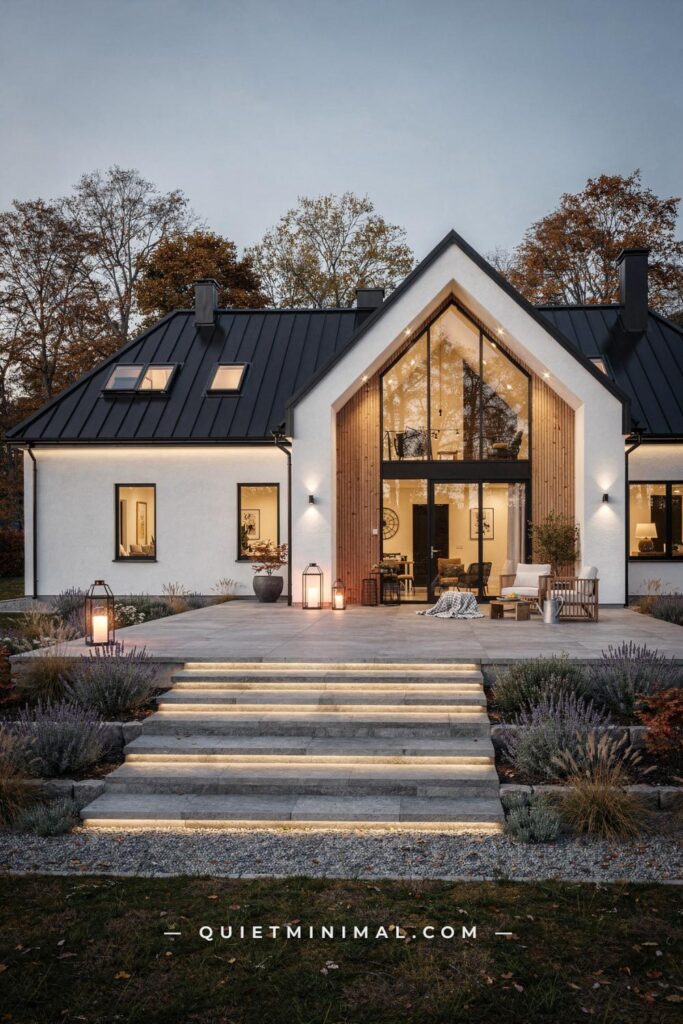
Georgia
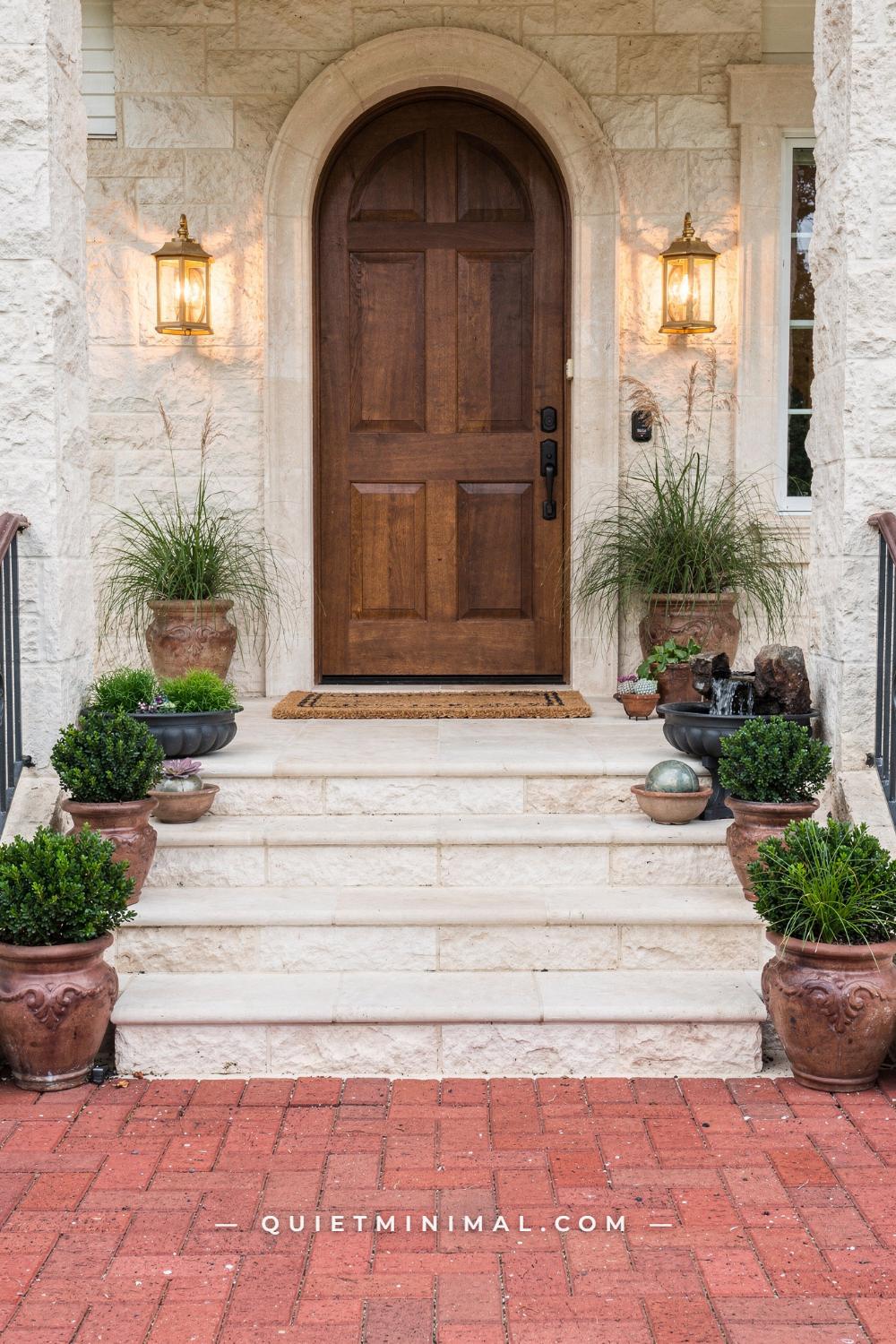
A feng shui front porch is not a shopping list of lucky symbols scattered across your steps. It is a sequence: clear the path first, understand what each zone of your entry represents, then layer in color, plants, water, and seasonal decor in an order that actually supports the flow of energy through your home. Most feng shui front porch ideas you have saved show you the finished result without ever explaining how the pieces fit together, which is why so many well-intentioned porches end up feeling like a random collection of statues and planters instead of one coherent entry.
This guide walks through that sequence from the inside out, starting with the sightline from your front door into your home and ending with the matched plantings that frame the entrance. Each step names what to do, the actual measurements to work from, the tool you need in hand, and the mistake that undoes the step if you skip it. Work through it in order and you will end with a porch that reads as intentional, not decorated after the fact.
The order is the whole point. Almost every step here depends on a decision made in the step before it, which is why buying the statue first and the tape measure never is the most common way a porch project stalls. Most of the thirteen steps take under an hour of actual work, two of them take a weekend, and one of them, the sketch, costs nothing at all and saves you the most money.
Clear the Chi Path From Your Front Door Inward
 Save
Before you touch the porch itself, stand at your front door and look straight through it into your home. In feng shui the front door is called the mouth of chi, the point where energy enters, and it needs an open, readable path for at least the first several feet of the room beyond it. If the first thing a visitor’s eye hits is the back of a sofa, a tall bookshelf, or a console table stacked with mail, the energy is considered to stall right at the threshold. No amount of porch styling outside will fix a blocked entry inside, which is exactly why this step comes before any of the exterior work.
Walk the sightline with a tape measure rather than eyeballing it. A cream linen sofa around 84 inches (213 cm) wide should never sit with its back squarely facing the door in the direct line of sight; angle it so the front or the side greets the entry instead, even if that means rotating it fifteen or twenty degrees off the wall. A round coffee table near 36 inches (91 cm) across should sit centered on the rug rather than shoved toward one edge, because an off-center anchor piece reads as unsettled the moment you walk in. Leave at least 30 inches (76 cm) of clear floor between the door and the nearest furniture leg so a person, and by extension the energy, has room to actually enter rather than being funneled around an obstacle.
From the guides
You've saved it, wanted it. Here's the how: codes, measurements, order. Your choices make it yours.
 The Japandi Honest PlaybookThe honest version of the style: what to keep, what to skip, and the order to do it in.See inside →
 The Room Refresh PlaybookA repeatable four-step method, room by room, in ten minutes, thirty minutes, or one weekend.See inside →
 Make Any Room Feel Cozy on PurposeWhy some rooms hold people and others empty out, and the moves that change it.See inside →
Storage pieces are the quiet offenders. A light oak open sideboard around 60 inches (152 cm) wide works beautifully along a side wall where it runs parallel to the path, and works badly the moment it juts into the walkway or fills up with the day’s clutter on its open shelves. Keep the top surface to three objects or fewer. A rattan pouf about 18 inches (46 cm) across is the one piece allowed to live near the path, because it moves with a foot and never truly blocks anything.
Plants do real work here. A fiddle-leaf fig or similar tall tree form placed in a far corner, not in the walking path, softens a hard corner and is considered to keep chi moving instead of letting it pool in a dead spot. Keep trailing vines like pothos trimmed so they hang clear of anything at eye level, since a plant that brushes your face on the way past reads as an obstruction, not a decoration. Two more small corrections finish the step: keep sheer curtains pulled clear of the glass so daylight actually reaches the entry, and do not hang a mirror on the wall directly facing the door, which is traditionally read as pushing incoming energy straight back out. If you rent and cannot move much, clearing and angling is still available to you, and it costs nothing.
Key Takeaway: Clear a 30-inch (76 cm) open path from your front door into the first room, angle furniture out of the direct sightline, and keep tall plants in the corners rather than the walkway.

Choose an Anchor Point for Your Porch Corner
 Save
Every porch needs one anchor, a single grounded piece the eye settles on before it takes in anything else. Without an anchor, a porch full of otherwise nice objects reads as scattered, because nothing tells the eye where to rest. A seated sculptural piece around 24 inches (61 cm) tall on a shallow round pedestal does this job well, particularly when the pedestal is filled with river pebbles about 6 inches (15 cm) deep rather than left as bare stone. The pebbles matter more than they look like they should: loose, rounded stones are read as settled, still water in feng shui terms, which reinforces the grounded feeling the anchor is meant to create. Put the anchor in a sheltered corner, never in the middle of the porch floor, where it becomes something to walk around.
Flank the anchor asymmetrically rather than centering a single plant on each side. A tall upright plant such as a bird-of-paradise on one side and a shorter, broader snake plant in a woven grey pot on the other creates visual balance without being a mirror image, which is closer to how a resting corner actually settles the eye. Aim for a height difference of at least a third: if the tall plant reads around 48 inches (122 cm), the companion should sit near 24 to 30 inches (61 to 76 cm) so the pairing looks deliberate instead of accidentally uneven. A round natural jute rug about 36 inches (91 cm) across under the whole grouping defines the zone as one area rather than letting the sculpture and plants float on bare tile.
Add one light source at ankle to knee height, not overhead. A wooden hexagonal lantern around 14 inches (36 cm) tall, placed to one side of the anchor rather than directly in front of it, gives the corner a warm glow at dusk without competing with the porch fixture. A wooden tray about 12 inches (30 cm) across holding three tealights extends that glow, and three is the right number precisely because odd groupings read as composed while pairs of small loose objects read as leftovers. On an unsupervised porch, use battery candles with a warm flicker; the visual effect is identical from more than a few feet away and nothing has to be watched.
Materials decide whether this corner still looks good in six months. Jute belongs only on a genuinely covered porch, because it wicks moisture from the tile beneath it and stays damp for days after rain. Terracotta floor tiles get slick when wet, so the rug needs to lie completely flat with no curled edge at the walking side. Rough-cast concrete drinks up water and stains, and a coat of matte masonry sealer once a year keeps the sculpture the soft grey it started as instead of a blotchy dark one. Hang the trailing pothos on a wall bracket at 78 to 84 inches (198 to 213 cm) so nobody walks into it. Then stop. One focal object, two flanking plants, one rug, one light source: adding a second sculpture undoes the calm the whole corner exists to hold.
Key Takeaway: Build one grounded anchor corner with a single sculptural focal piece on a pebble-filled base, asymmetric plant flanking, and one low light source, and resist adding a second competing piece.

Map Your Porch Onto the Bagua Grid
 Save
Before you buy another single item, map your porch footprint onto a three-by-three bagua grid with the front door on the bottom edge, at the center or the left depending on where the door actually sits along the front wall. This nine-square overlay assigns each zone to one of eight life areas plus a center: career sits at the entry point itself, wealth sits in the far left corner as you stand facing the house from outside, relationships sit in the far right corner, and family, health, creativity, knowledge, and recognition fill in around the perimeter. It takes about twenty minutes and it is the only step in this guide that costs nothing.
You will run into two different systems while reading about this, and choosing between them up front saves a lot of second-guessing. The Western three-door method lays the grid over the floor plan from the entry, so the map rotates with whichever door you walk through. The compass-based Classical method fixes the grid to true north and reads the same regardless of where the door sits. Neither is more correct, and mixing them is what produces the confusion most people hit. For a porch, the three-door method is the practical choice, because the porch has exactly one entry and the grid lines up with how anyone actually approaches the house. Pick one, write which one you used on the sketch, and stay with it.
Sketch it on paper before you touch a plant. Stand facing your front door from the street or front walk and divide the porch width into thirds and the depth into thirds, giving you nine zones. A typical 8 by 12 foot (244 by 366 cm) porch produces zones roughly 32 by 48 inches (81 by 122 cm) each, which is a useful thing to know because it tells you immediately that a 36-inch (91 cm) rug fills a zone and a 12-inch (30 cm) pot does not. Note what currently sits in each square. Most porches, without any planning, end up with all the existing furniture and pots crowded into one or two zones and nothing in the others, which is the visual equivalent of an unbalanced room. It is why some porches feel busy on one side and bare on the other even when the total amount of stuff is perfectly reasonable.
Then use the grid to decide what goes where for the rest of this project, rather than defaulting to wherever it fits. The wealth corner, far left as you face the house, is where a water feature or a lush plant does the most work. The relationships corner, far right, is where a pair of matched objects such as two identical planters reinforces balance better than a single asymmetric piece. The center square is the one zone you deliberately leave open, because it is the health area and the walking path at the same time, and both of those want clear floor. Keep the sketch, even a rough one on the back of an envelope, because every remaining step in this guide references a specific zone rather than somewhere on the porch.
Key Takeaway: Sketch a nine-zone bagua grid over your porch footprint before adding anything else, and use it to decide where each new element goes rather than placing things wherever there is space.

Pick a Door Color That Matches Your Facing Direction
 Save
Your door color is the highest-impact, lowest-cost change on this entire list, and it should be chosen by compass facing, not by whichever color photographs well. A door that faces south, southwest, or northeast sits in the earth and fire family, where a warm saturated yellow, a mustard, or a deep terracotta reads as correct and grounded. A door that faces east or southeast sits in the wood family, where deep greens and bold jewel tones do the same job. West and northwest-facing doors lean toward the metal family, where white, cream, or pale gray reads as balanced rather than the warm tones that suit a southern exposure. North-facing doors sit with water, where deep blues and charcoals settle in most naturally.
Use a compass app on your phone, standing on the porch facing away from the house, to get your actual facing direction before you buy a single sample pot. This takes under two minutes and prevents the most common feng shui porch mistake, which is picking a color because it is trending rather than because it agrees with the direction the door faces. A warm mustard or ochre on a south or southwest-facing door against a buff brick facade reads as intentional precisely because the color and the facing support each other. The same yellow on a north-facing door reads as arbitrary, because nothing about the direction backs it up.
Test the color where it will live, not in the store. Buy sample pots of two or three candidates, paint them on a scrap of primed board about 12 by 16 inches (30 by 41 cm), and prop the board against the door for a full day. Warm afternoon light from the upper right will push a yellow toward orange, and overcast morning light will pull it toward green, and you want to see both before you commit. Hold the sample up against the brick too: buff and tan brick carry a pink or a yellow undertone, and a door color that fights that undertone looks slightly wrong forever without anyone being able to say why.
The painting itself is a weekend, not an afternoon. Wash the door with a mild detergent, sand the existing finish with 120-grit paper until it is dull all over, spot-prime any bare wood, then apply two thin coats of exterior paint rather than one heavy one. Satin or semi-gloss is the right sheen: it sheds rain, wipes clean, and reflects enough light to make the color read as saturated from the street. Paint between roughly 50 and 85 degrees Fahrenheit (10 to 29 Celsius) and keep the door open until the second coat is dry to the touch, or it will stick to the jamb. Once the color is set, keep the threshold simple. A single round clay pot around 14 inches (36 cm) with one upright structured shrub beside the door does more than a cluster of mismatched planters, and a flat woven coir mat about 18 by 30 inches (46 by 76 cm) in solid charcoal grounds the step without competing. Skip the busy patterned mat here. The door is the focal point of this zone, and everything at floor level should support it.
Key Takeaway: Check your door’s actual compass facing before choosing a color, and match warm earth tones to south, southwest, and northeast doors rather than picking a shade because it is popular.

Layer In Metal Hardware and a Bold Accent Color
 Save
If your door faces east or southeast, or if you simply want a bolder statement than a warm earth tone gives you, a deep purple-violet is one of the strongest wood-family accent colors available, and it reads as considered rather than jarring when it sits against a crisp white surround. The trick that keeps a saturated color from feeling chaotic is contrast discipline: the door carries all of the color and everything around it, the trim, the pilasters, the threshold, stays a clean uninflected white or stone tone. A bold door against an equally busy facade cancels itself out, which is why a violet door on a painted Georgian townhouse works and the same violet on a multi-material facade rarely does.
Raised panels change how a saturated color behaves, and this is worth knowing before you commit. Four raised panels per leaf catch the light along every bevel, so a single flat color reads as several shades at once and gains depth that a flush slab door never gets. That is a gift on a bold color and a liability on a busy one: keep the panel profile as the only texture and resist painting the beads or the panel fields a second tone, which turns a confident door into a project that looks half finished.
Hardware is the layer most people skip, and it is doing real work here. Warm brass introduces the metal element, which in the five-element cycle supports water and by extension the wealth and career associations tied to the entry. Brass numerals with digits around 4 inches (10 cm) tall, mounted at eye level rather than tucked down near the ground, and an oval brass knocker around 5 inches (13 cm) tall centered at roughly door-handle height give the entry a second material besides paint without adding visual noise. Keep the finish consistent. Mixing brass, brushed nickel, and matte black on one door reads as unplanned rather than layered, and it is the single fastest way to undo an otherwise disciplined entry.
Placement precision matters more than most people expect, and it is where a tape measure earns its keep. Center the knocker on the door’s vertical axis, not offset toward the hinge or the strike side, and set it between 60 and 66 inches (152 and 168 cm) off the threshold so it lands at comfortable knuckle height for most adults. On a double door, that axis runs down the meeting stile, not down the center of one leaf. Keep house numbers in a single horizontal line rather than stacked, with roughly a digit’s width of space between them, and mount them on the door or the adjacent pilaster but never split across both. One more decision to make consciously: unlacquered brass will patina to a soft brown within a year, while lacquered brass holds its bright yellow until the coating eventually fails and wears unevenly. Either is fine, but choose it on purpose. This whole step is inexpensive next to repainting a facade, which is exactly why it belongs early: get the color and the hardware right before spending money on anything larger.
Key Takeaway: Pair a bold accent door color with warm brass hardware in a single consistent finish, centered precisely, and keep everything else on the facade neutral so the color reads as intentional.

Lay Out Your Garden Path by Bagua Sector
 Save
If you have any garden bed or path leading up to your porch, this is where the bagua sketch from the previous step stops being paper and becomes a planting plan. Divide the approach into eight wedge-shaped sectors radiating from a center point near the door, the way you would slice a circular bed, and assign each wedge to one of the eight life areas. A center water feature such as a tiered fountain around 48 inches (122 cm) tall sits naturally at the point where several sectors meet and activates the whole approach rather than only one corner. Landscape designers use the same radial trick for a different reason, which is that a center feature gives every surrounding planting something to be measured against.
Match plantings to their sector rather than distributing them evenly for symmetry’s sake. Climbing roses on a timber arch suit the relationships or family sector, since flowering, upward-growing plants carry an association with active, nurturing energy. A small kitchen-garden section with edible herbs suits the health sector, reinforcing that this corner is about tending and nourishment. A seating alcove with a curved outdoor sofa suits the recognition sector, since that is the area meant for gathering and being seen. Sizing follows the same logic: give the arch a clear 36 inches (91 cm) of walking width beneath it and set it back far enough that rose canes never reach across the path, because a plant that catches a sleeve turns a welcoming approach into an obstacle course.
Curved paths do more work here than straight ones. A path that bends gently rather than running dead straight from the street to the door is considered to slow chi to a pace that feels welcoming instead of rushing it through, which is why so many feng shui gardens favor curved stone over a single direct sidewalk. The straight shot has a traditional name, the secret arrow, and the objection to it is as much practical as symbolic: a long unbroken run gives the eye nothing to pause on and makes the walk feel longer than it is. Keep the walking surface between 36 and 48 inches (91 and 122 cm) wide, wide enough for two people to arrive side by side, and hold the curve gentle, a soft arc rather than a zigzag, since a path that wanders too much stops reading as a route at all.
If your existing path is a hard straight line, you do not need to tear it out. A low border planting 18 to 24 inches (46 to 61 cm) deep along both edges, staggered so the two sides do not mirror each other, interrupts the sightline just enough to soften the run at a fraction of the cost of re-laying stone. Repeat one plant every 6 to 8 feet (183 to 244 cm) down the border rather than planting a different thing in every gap, because repetition is what makes a mixed border read as designed instead of collected. Finish with low path lighting spaced evenly along the edges so the layout stays legible after dark rather than disappearing the moment the sun drops. Warm-toned lights on a dusk timer keep the approach usable every evening without anyone remembering to flip a switch.
Key Takeaway: Divide your approach into eight wedge sectors from a central point, match each planting type to its sector’s meaning, and let the path curve rather than run in a hard straight line.

Anchor the Family and Health Sector With a Meaningful Object
 Save
The east sector of your bagua map, generally the left side of the garden as you face the house, corresponds to family and health, and it is one of the easiest zones to underuse because it usually sits off to the side rather than in the direct sightline. A single meaningful object here, a weathered bust or sculptural piece around 24 inches (61 cm) tall on a simple stone base, gives the sector the same anchoring treatment the porch corner got earlier, but with plant framing tuned to this zone’s own element. Set it against a solid backdrop such as a cedar fence rather than open air, because a sculpture with sky behind it reads as adrift while a sculpture with a warm plank wall behind it reads as placed.
The wood element rules the family and health sector, so the flanking plants should lean into it rather than fight it. A Japanese maple with deep burgundy dissected foliage on one side introduces a fire accent against the wood element, a pairing the generative element cycle treats as supportive rather than competing, while a dark upright arborvitae on the other reinforces wood directly through its column form and color. This is one of the few places where contrasting plant colors, burgundy against deep green, strengthen the composition instead of creating conflict, because the elements underneath the colors already work together.
Give each plant the room it needs now rather than the room it needs today. A dissected Japanese maple wants roughly 5 to 6 feet (152 to 183 cm) of eventual spread and prefers morning sun with afternoon shade, which the fence on one side conveniently provides. Set it at least 36 inches (91 cm) off the fence line so air moves behind it and the branches do not rub. A columnar arborvitae stays narrow, around 24 to 36 inches (61 to 91 cm) wide, but it wants full sun to hold its density; planted in deep shade it thins out on one side and the symmetry you built the corner on quietly collapses. Check what your corner actually gets across a day before you buy either plant, because this is the step where a wrong choice takes two seasons to reveal itself.
A shallow concrete basin planter at the base, around 24 inches (61 cm) across and filled with seasonal blooms in purple and white, adds a water association through its shape even without holding standing water, since the visual cue of a vessel reads as water-adjacent in feng shui terms. Plant pansies close, roughly 6 inches (15 cm) apart, because a basin that shows more soil than flower reads as unfinished, and confirm the basin has a drainage hole before it goes down; a shallow concrete bowl without drainage becomes a mosquito dish after the first heavy rain. Keep the bed edged with a clean cut line 3 to 4 inches (8 to 10 cm) deep and a shallow layer of bark mulch pulled back an inch or two from every stem. An overgrown family sector is traditionally read as reflecting an unattended family life, and whether or not you put stock in that, a defined edge simply reads as cared-for rather than neglected. Swap the basin planting twice a year, pansies for the cool months and something heat-tolerant for summer, and the corner never has an off season.
Key Takeaway: Anchor your garden’s family and health sector with one grounded object flanked by a fire-toned plant and a dark evergreen, and keep the bed edged and tidy.

Dress the Steps for the Season Without Blocking the Path
 Save
Seasonal decor is where most otherwise well-planned porches quietly break every rule established so far, because gourds and mums get added in whatever quantity looks full rather than in a quantity that respects the walking path. The fix is unglamorous and it works: keep a clear walking width of at least 36 inches (91 cm) down the center of your steps at all times, and place seasonal items only at the outer edges where feet do not land. Nothing sits in the middle of a tread. A standard exterior step gives you about 11 inches (28 cm) of tread depth and 7 inches (18 cm) of rise, so a pumpkin much over 10 inches (25 cm) across on a tread overhangs the nosing and becomes a genuine trip hazard rather than a styling choice.
Odd numbers matter more here than almost anywhere else in this guide. A grouping of seven to nine pumpkins in a mix of sizes from about 6 to 18 inches (15 to 46 cm) reads as an intentional display when each piece has visible room around it, while the same total volume crammed into a dense pile at the door reads as clutter rather than abundance. Space them so you could walk between the largest pieces without brushing them, and vary size and color rather than lining up identical pumpkins in a row, which flattens the display into a barrier. Work in triangles: place three pieces of different heights, step back to the sidewalk, and only then add the next three. Composing from the street is the difference between a display that photographs well and one that only works from the top step.
Terracotta planters around 16 inches (41 cm) in diameter on each side of the door, planted with mums in warm russet and orange, should sit at the same height and roughly the same fullness on both sides. This is one of the few spots where strict left-right symmetry is the goal rather than the asymmetric balance used in the anchor corners, because a front door benefits from a settled mirrored frame even when the rest of the porch uses varied groupings. The failure mode to watch for is a lopsided pair, one planter noticeably fuller or taller than its match, which reads as neglect on the smaller side even when that was never the intent. Buy both mums from the same batch on the same day and give the pair a quarter turn each week so the sun does not fatten one side and thin the other.
From the guides
You've saved it, wanted it. Here's the how: codes, measurements, order. Your choices make it yours.
The Japandi Honest PlaybookThe honest version of the style: what to keep, what to skip, and the order to do it in.See inside →The Room Refresh PlaybookA repeatable four-step method, room by room, in ten minutes, thirty minutes, or one weekend.See inside →Make Any Room Feel Cozy on PurposeWhy some rooms hold people and others empty out, and the moves that change it.See inside →Plan for how the display ages, because a seasonal arrangement that outstays the season undoes everything the step accomplished. Uncut pumpkins on a shaded, dry stone step usually hold six to eight weeks, and the same pumpkins sitting in a puddle on a damp tread can collapse in two. Set each one on the stone rather than on soil or a wet mat, lift them after heavy rain to let the underside dry, and remove any piece the moment a soft spot appears rather than waiting for the whole group to go. Mums drink far more than people expect in a 16-inch (41 cm) pot and want water almost daily in warm weather, with spent blooms pinched off as they brown. Set a date on the calendar for taking the display down. A porch that stays dressed for a season that ended a month ago is read the same way an overgrown bed is, as unattended.
Key Takeaway: Keep a 36-inch (91 cm) clear path down your steps, cluster seasonal decor in odd numbers of seven to nine pieces at the outer edges, and match planter pairs in height and fullness.

Activate the Wealth Corner With Water and Soft Light
 Save
The wealth sector, generally the far left corner of the property as you face the house from the street, is the zone most feng shui guides mention and fewest actually explain how to activate. Moving water is the classic method: a small tiered fountain placed in this corner and kept running rather than left dry is considered to keep wealth energy circulating instead of stagnating. Orientation matters as much as presence. Angle the fountain so the water appears to spill toward the house rather than away from it, since flow directed at the entry is read as bringing energy in, while flow pointed at the street is read as carrying it off.
A fountain is a commitment, and it is better to skip it than to install one you will not tend. The pump wants a rinse and a filter check about once a month, the basin needs topping up in hot weather because evaporation alone can drop it noticeably in a week, and a fountain that sits full of leaves works against the intention entirely. In any climate that freezes, drain it, pull the pump indoors, and cover the basin before the first hard frost, or the freeze-thaw cycle will crack the stone. If none of that sounds realistic, a lush healthy plant grouping does much of the same work through growth rather than water, since abundant thriving foliage carries a similar association with increase and flow.
Whichever you choose, the plants in this corner have to be genuinely healthy rather than merely present. A struggling, yellowing plant in the wealth corner is worse than no plant at all, because it visually reinforces decline exactly where you were trying to reinforce growth. This is not the spot for the fussy specimen you are hoping to keep alive; it is the spot for something you already know thrives in that light and that soil. Round or oval leaf shapes are traditionally preferred here over spiky or thorny ones, and a plant that stays full to the ground is better than a leggy one, because bare stems read as thinning even when the plant is perfectly healthy.
Lighting extends the activation into the evening, and it is the cheapest part of this step. Soft string lighting along the path or draped near a seating element, kept warm-toned rather than cool white, keeps the zone from going dark and dormant once the sun sets, which matters because a wealth corner that disappears at dusk every day is considered to lose its momentum overnight. Choose warm bulbs in the range that reads amber rather than blue, run them on a dusk-to-dawn timer so nobody has to remember, and space them evenly rather than bunching the strand where the hook happened to be. Finally, give the corner a reason to be used. A rattan sofa with cushions, sized so at least 30 inches (76 cm) of clear passage remains beside it, tells the eye this part of the property is lived in rather than staged, and a corner that gets used is far more likely to stay maintained than a corner that is purely ornamental.
Key Takeaway: Activate your wealth corner, generally the far left of the property, with either moving water you will actually maintain or a genuinely thriving plant, plus warm lighting that carries into the evening.

Balance the Stair Symmetry With Paired Plantings
 Save
A staircase leading up to a porch is one of the few features where symmetry should govern almost every decision, because an off-balance stair reads as unstable before anyone consciously registers why. If your stoop has railings with newel posts on both sides, treat those posts as a matched pair and give them identical planters, identical plant varieties, and identical heights. A cream terra cotta planter around 12 inches (30 cm) in diameter holding a rust-orange mum on one post, matched exactly on the other, does more for the balance of the whole stoop than any single larger statement piece placed on one side only.
Secure anything that sits on a post, because a stoop is windier than it looks and a post-top planter has no friction holding it down. Use a purpose-made post-top ring or a rail bracket rather than balancing the pot on the cap, and if you are working with a heavier terra cotta piece, put two or three inches of gravel in the bottom for ballast before the potting mix goes in. On an urban stoop where the display sits directly above a public sidewalk, that ballast is not a styling detail, it is the difference between a planter that survives the first storm and one that does not.
Wrought-iron railings carry the metal element, which is useful to know if the stair structure itself is a heavier material like stone or a warm one like wood, since the two sit in a supportive relationship rather than competing. That means you do not need to soften the railing’s presence everywhere else. Black ironwork against the warm honey tones of a stained door and the deep red of the brick is already a balanced elemental pairing without further intervention. What it does need is upkeep: wrought iron rusts first at the joints and at the base where water sits, so a wire brush and a touch-up of exterior enamel once a year keeps the black reading as crisp rather than chalky. Bright white trim between the brick and the ironwork is what separates the two, so wash it when you wash the windows, because dulled trim quietly flattens the whole composition.
Seasonal pumpkins on the treads themselves follow the same odd-number, well-spaced rule from the earlier step, but on a stoop specifically, concentrate the display on the bottom one or two steps rather than spreading it up the full run. A pumpkin on every tread from bottom to top blocks the sightline up the stair and creates a kind of visual clutter that a narrow vertical feature cannot absorb the way a wide flat porch floor can. Keep the pieces tight to the outer edge against the railing, leave the inside line of every tread completely clear, and let the sage green and striped heirloom varieties carry the interest instead of adding more of them. Mixed pumpkin colors against red brick work better than pure orange, which competes with the brick rather than sitting against it. Concentrating the display low and keeping the upper treads clear preserves the stair’s real job, which is a clean approach to the door.
Key Takeaway: Treat railing posts as a strict matched pair in height and plant variety, and keep seasonal displays on a stoop concentrated on the lower one or two steps rather than spread across the full run.

Clear the Threshold of Chi-Blocking Obstacles
 Save
Once color, hardware, plants, and seasonal decor are all in place, go back and test the physical threshold for anything that restricts the door’s motion or a visitor’s approach. A front door should swing a full 90 degrees without catching on a planter, a mat edge, or a piece of furniture, and anything less than that is considered a direct block on chi entering the home. It is a common problem on porches where a planter or a bench got added long after the door hardware was chosen. Measure the swing properly: a standard 36 by 80 inch (91 by 203 cm) door sweeps an arc with a 36-inch (91 cm) radius from its hinge, so mark that arc on the porch floor with painter’s tape and move anything sitting inside it. A slim topiary in a round white planter around 14 inches (36 cm) across belongs just outside that line, not just inside it.
The mat is the second offender and the easier fix. A thick coir mat that the door drags across will wear a bald stripe in itself within a season and, more to the point, tells you the door is not clearing. Use a low-profile mat under 3/4 inch (2 cm) thick at the threshold, or move a thicker one out one step. While you are down there, check the threshold strip itself for a lifted edge, since a strip that catches a shoe is the most literal possible version of a blocked entry.
A wreath at the door refreshes the entry, and where you hang it changes how the door reads. Center it on the upper third of the door face, with the middle of the wreath roughly at eye level around 60 inches (152 cm) from the threshold, which on a taller door means resisting the urge to hang it from the very top rail where it looks stranded. A eucalyptus or mixed-greenery style is treated as a clearing, freshening symbol in many feng shui traditions, distinct from a purely decorative holiday wreath, and a 22 to 24 inch (56 to 61 cm) diameter suits a standard single door without crowding the stiles. Glass sidelites beside the door, if you have them, should stay clean and unobstructed by tall furniture pushed against them from either the porch or the interior side. They are one of the main sources of natural light reaching the threshold, and a blocked sidelite dims the entry more than people expect.
Lighting the threshold after dark matters as much as anything covered earlier. A wall-mounted lantern in a warm metal tone consistent with the hardware chosen earlier, roughly 18 inches (46 cm) tall and mounted with its center about 66 inches (168 cm) off the porch floor, sits at the right height to light a face rather than a doormat. Fit a warm bulb rather than a cool white one; cool light on a warm wood door turns the wood grey and makes the whole entry feel like a service door. Put it on a dusk-to-dawn sensor so it lights every evening instead of only when someone is expected. A porch that goes fully dark at dusk is considered to let its energy go dormant overnight, and practically speaking, a lit entry is safer and more welcoming regardless of the symbolism behind it.
Key Takeaway: Confirm your door swings a full 90 degrees unobstructed, keep sidelites clear, and light the entry every evening rather than only when expecting a visitor.

Choose Container Plants Sized to Your Porch Style
 Save
Container size has to match the size of your porch and your door, not just whatever pot looked good online. A casual everyday porch with a painted deck and a single door is well served by one tall tapered planter around 24 inches (61 cm) high holding a single strong specimen rather than a mixed arrangement. A copper-leaved heuchera or a similarly textured perennial reads as considered rather than busy against a simple charcoal deck. On a porch at this scale one well-chosen planter usually outperforms a cluster of smaller pots, because small pots look scattered rather than curated once the composition is viewed from the street.
A charcoal-grey painted deck introduces a variable most people do not plan for, which is heat. Dark paint absorbs afternoon sun and a black planter standing on it can run considerably warmer than the same pot on pale stone, drying the root ball fast and scorching the leaf edges of anything that prefers shade. Heuchera in particular holds its copper color best with morning sun and afternoon shade. If your deck faces west, either shift the planter into the shadow of the roofline or choose a tougher plant and accept that you are watering it more often. A tall tapered container helps, since a deeper soil column holds moisture longer than a wide shallow one, and a couple of inches of bark mulch on the surface cuts evaporation further.
A larger entry, with a wide double door and substantial framing such as stone pilasters and a full portico, calls for a completely different scale, and the mistake runs in the opposite direction: a small planter looks lost against a grand facade. In-ground plantings, or urns sized to the proportions of the doorway, are what a space like that actually needs. Hydrangeas set roughly 36 to 60 inches (91 to 152 cm) apart at the base of the pilasters give a mature, settled look within two seasons without crowding, and a pair of matched round wreaths on double doors reinforces the strict symmetry a formal entrance depends on. Size those wreaths at 24 inches (61 cm) or more, since a 20-inch (51 cm) wreath that looks generous on a single door looks undersized on a tall mahogany leaf.
The rule that carries across both scales is proportion, not a fixed plant list. Measure your door width and choose a planter or plant grouping whose visual width lands at roughly a third to half of that width. On a 36-inch (91 cm) door that is a 12 to 18 inch (30 to 46 cm) footprint, and on a 72-inch (183 cm) double door it is 24 to 36 inches (61 to 91 cm). Anything smaller reads as an afterthought and anything much larger competes with the door rather than framing it. Height follows the same logic: a container plus plant that reaches about a third of the door height frames it, while one that reaches past the handle starts to hide it. Whichever scale your porch falls into, keep the planting singular in style, one specimen repeated or one flower type in a matched pair, rather than mixing several varieties in one grouping, which reads as unplanned no matter how nice each plant is on its own.
Key Takeaway: Match your container scale to your porch, one tall specimen planter for a casual deck or large in-ground plantings and matched urns for a grand entry, sized to roughly a third to half of your door’s width.

Finish With Matched Guardian Plants at the Door
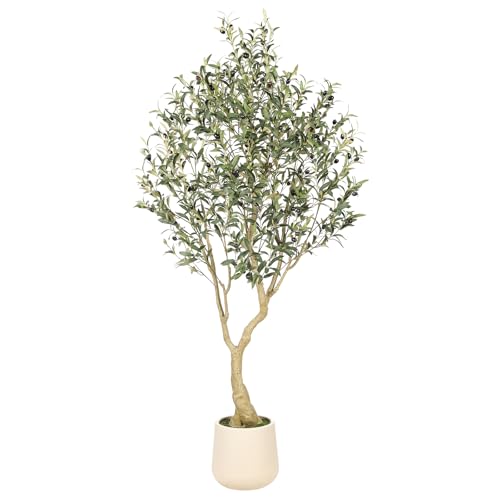
The final step is the one most porches get right on instinct: a pair of matched structural plants flanking the door itself. Two identical standard-form trees such as olives, in identical round white planters around 18 inches (46 cm) in diameter, set at equal distances from the door on each side, complete the symmetry that has been building through every earlier step, from the matched railing planters to the paired wreaths on a grand entry. This is the moment the entry reads as finished rather than in progress, and it works on the inside face of a glass-paneled door just as well as on the porch, because a glass slab door makes the flanking pair visible from both directions at once.
Placement is a measurement, not a feeling. Set each planter 12 to 18 inches (30 to 46 cm) out from the door jamb so the trees frame the opening without narrowing the walking width, and measure that gap on both sides with a tape rather than trusting your eye, since a two-inch difference is invisible up close and obvious from across the room. Keep the canopy clear of the door swing and clear of the handle, and check the height relationship: standard-form trees around 60 inches (152 cm) tall including the pot suit an 80-inch (203 cm) door, where anything taller starts to crowd the head of the opening.
The two plants have to genuinely match, not merely be the same species. Uneven height, one noticeably fuller than the other, or pots at different distances from the door all undercut the settled effect this pairing exists to deliver, and a mismatch here is more noticeable than anywhere else on the property because it sits exactly where every visitor’s eye lands first. Buy the pair together from the same batch, turn both planters a quarter rotation every couple of weeks so light reaches all sides evenly, and prune them on the same day so neither drifts ahead of the other. If one begins to struggle or grow lopsided, replace it rather than letting an obvious mismatch stand at the most visible spot in the house. Olives want bright direct light and dry out between waterings, so a glass door that floods the area with daylight suits them, while a dim interior corner does not, and a well-made faux pair is a perfectly reasonable answer where the light is poor.
A runner rug leading straight from the outer edge of the entry to the door, around 24 by 72 inches (61 by 183 cm) in a natural fiber such as sisal, reinforces the clear path the very first step of this guide asked you to establish indoors. Center it on the door rather than on the room, add a thin non-slip pad underneath since sisal slides on a polished oak floor, and leave a few inches of bare floor visible on each side so the runner reads as a path rather than wall-to-wall covering. Placing that runner closes the loop: the chi path that started as a cleared sightline through your living room now has a physical guide leading it the rest of the way to the door. With the matched plants, the clear runner, and every earlier step in place, the entry works as one continuous sequence rather than a set of separate decorating decisions.
Key Takeaway: Finish with two genuinely matched evergreen plants in identical planters flanking the door, connected by a straight natural-fiber runner that continues the clear path established at the start of the sequence.
A feng shui front porch is not thirteen separate purchases, it is one sequence, and the three moves that matter most if you only have a weekend are clearing the physical walking path, choosing your door color by actual compass facing rather than by trend, and finishing with a genuinely matched pair of plants at the door. Everything else here, the bagua mapping, the anchor corners, the seasonal decor, builds on those three fundamentals rather than replacing them.
Start where the sequence starts. This week, walk your own entry from the inside out with a tape measure, note where the path is blocked, and check your door’s real compass facing before you buy a single new item. The porch does not need to be finished in one weekend to start working. Each step you complete in order makes the next one easier to see, and a porch built this way holds together in a way that a pile of feng shui-adjacent objects, however nice individually, never quite manages to.
From the guides
You've saved it, wanted it. Here's the how: codes, measurements, order. Your choices make it yours.
The Japandi Honest PlaybookThe honest version of the style: what to keep, what to skip, and the order to do it in.See inside →The Room Refresh PlaybookA repeatable four-step method, room by room, in ten minutes, thirty minutes, or one weekend.See inside →Make Any Room Feel Cozy on PurposeWhy some rooms hold people and others empty out, and the moves that change it.See inside → Save