Georgia

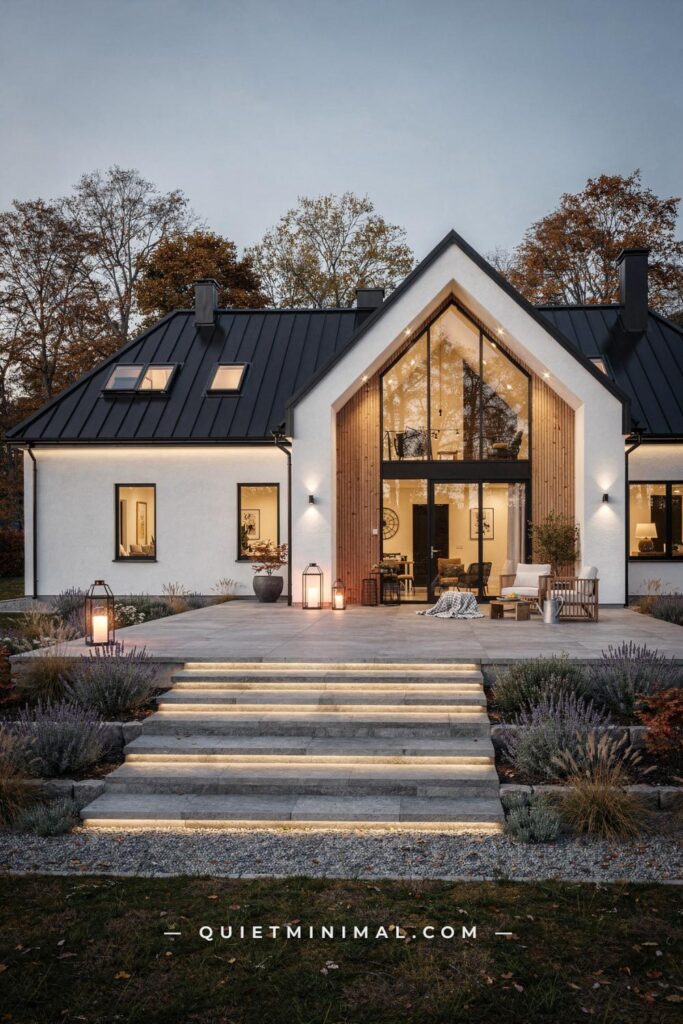
A garden room is the most seductive room in any house to plan and the easiest one to get wrong, because everything that makes it appealing in a photograph is the same thing that makes it unusable in August. Glass on three sides, a low roof, a floor that runs straight out to the terrace. In May that is the best room you will ever sit in. In late July it is a greenhouse with a sofa in it, and in January it is the room you walk through on the way to somewhere warmer.
The rooms that get used every month of the year are not the ones with the best furniture. They are the ones where somebody made four unglamorous decisions early: which way the glass faces, how the roof handles the summer sun, how the floor handles wet boots, and where the heat comes from when it is dark at four in the afternoon. Get those right and almost any styling works. Get them wrong and no amount of linen cushions will bring you out there in February.
What follows works through the climate decisions first, then the surfaces, then the plants and the light, and finishes with what a room like this honestly costs once the foundations are in the number.
Which Way the Glass Faces Decides Everything Else
 Save
Orientation is the one decision you cannot undo, and it changes what the room is good for more than any other choice on the list.
A north-facing garden room, in the northern hemisphere, gets soft even light all day and almost no direct sun. It never overheats, the light is beautiful for reading and for anything you look at closely, and it is the orientation designers quietly prefer. The cost is that it is the coldest of the four, so heat has to be part of the build rather than an afterthought.
From the guides
You've saved it, wanted it. Here's the how: codes, measurements, order. Your choices make it yours.
 The Japandi Honest PlaybookThe honest version of the style: what to keep, what to skip, and the order to do it in.See inside →
 The Room Refresh PlaybookA repeatable four-step method, room by room, in ten minutes, thirty minutes, or one weekend.See inside →
 Make Any Room Feel Cozy on PurposeWhy some rooms hold people and others empty out, and the moves that change it.See inside →
South-facing is the opposite trade. It is the room people want because it is bright and warm in the shoulder seasons, and it is the room that becomes unusable in high summer unless the roof is doing serious work. If you are building south-facing, budget for external shading from the beginning. That is not a decorating decision, it is a structural one.
East-facing gives you morning sun and afternoon shade, which is why it is the best orientation for a room where the first cup of coffee happens. It warms early, cools by mid-afternoon, and rarely overheats. West-facing does the reverse and is the hardest to control, because low evening sun comes in almost horizontally, under any roof overhang, straight into your eyes and onto the seat backs.
If you are converting an existing space rather than building, you do not get to choose, so measure instead. Stand in the space at 9am, 1pm and 5pm on a bright day and note where the sun actually lands. Put the seating where the 1pm patch is not. That single observation is worth more than any layout diagram, because it tells you where the room is comfortable rather than where the furniture fits.
One more orientation note that gets missed: it also decides the view. A garden room whose glass faces the most planted part of the garden feels twice the size of one whose glass faces a fence, and moving the room 8 feet (2.4 m) along the wall at the planning stage is free.
Key Takeaway: Choose north or east glazing for comfort and only build south-facing if external shading is in the budget, and if you cannot choose, sit in the space at three times of day before placing a single chair.

Shading Belongs on the Roof, Not on the Windows
 Save
The heat that makes a garden room unbearable comes mostly through the roof, and shading it from inside does almost nothing.
The physics is worth one paragraph. Sunlight that passes through glass turns into heat when it hits the floor and the furniture, and once that heat is inside, an internal blind is on the wrong side of the glass to stop it. An interior blind reduces glare and it protects fabric, both of which matter, but it cannot keep the room cool. Anything that blocks sun before it reaches the glass can.
That gives you a clear order of preference. A solid insulated roof with two or three modest rooflights is the most comfortable garden room specification there is, and it is the direction new builds have moved for exactly this reason. It gives you daylight from above without the greenhouse effect, and it gives you a ceiling to fix a light and a fan to.
If the roof is glazed, ask for solar-control glass with a low g-value, which is the number describing how much solar heat gets through. Standard clear glazing lets a great deal through. Solar-control coatings cut it substantially at a modest cost, and doing it at the glazing stage costs a fraction of retrofitting external blinds later.
An overhang is the cheapest shading of all and the most overlooked. A roof edge projecting 24 to 36 inches (61 to 91 cm) beyond a south-facing wall blocks high summer sun almost entirely while letting low winter sun straight in, because the sun sits far higher in the sky in July than in December. That is the whole trick behind a porch that stays cool, and it works just as well on a garden room.
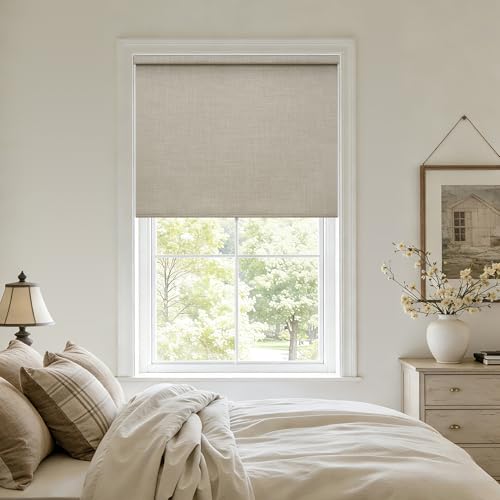
Then handle the leftovers inside. Roller blinds in an unlined natural linen soften the glare without darkening the room, and on a west-facing wall they are genuinely necessary at 6pm. Automated versions are worth the money on rooflights specifically, since nobody reaches an 11 foot (3.4 m) ceiling twice a day.
Key Takeaway: Stop sun before it reaches the glass with a solid roof, solar-control glazing or a 24 to 36 inch (61 to 91 cm) overhang, and use interior blinds only for glare and fabric protection.
Floors That Take Wet Boots, Direct Sun and a Watering Can
 Save
A garden room floor takes more abuse than any other floor in the house, because it takes garden dirt, direct ultraviolet light, and the occasional overflowing plant pot, often in the same week.
Stone and porcelain are the honest answers. Porcelain in particular has become the default for a reason: it does not fade, it does not stain, it is available in convincing stone and timber looks, and the same tile is usually sold in an outdoor-rated finish so you can run the identical floor straight through the doors onto the terrace. That continuity, one material inside and out with the joint line falling under the door, is the single most effective thing you can do to make a garden room feel bigger than it is.
Underfloor heating and stone are natural partners, and this is the room where it earns its cost. Stone is cold underfoot and slow to warm, so a room that relies on a wall radiator will always feel chilly at floor level even when the air is warm. Electric underfloor mat systems are thin enough to go under tile without raising the floor much and are the usual retrofit answer.
Engineered timber works if the room is not a plant room and the glazing is shaded. Solid wood is riskier, because a floor in direct summer sun with big swings in humidity will move. If you want the warmth of wood in a bright room, a wide-plank engineered board with a matte oil finish handles it better than a lacquered one, since a matte finish hides both scratches and the fine dust that a garden room always has.
Vinyl and luxury vinyl plank are the budget option and they are genuinely fine underfoot, but check the UV rating before it goes in a south-facing room, because cheap vinyl in strong sun will discolour unevenly and you will see the line where the rug sat.
Then add one rug and stop. A flat woven jute or a polypropylene flatweave defines the seating without trapping the grit that a garden room floor collects. Anything with a pile becomes a job.
Key Takeaway: Run one porcelain or stone floor from inside to the terrace with the joint under the door, add electric underfloor heating if the room is stone, and keep to a single flat woven rug.

Furniture That Survives a Bright Room
 Save
Bright rooms are hard on furniture in three specific ways, and each one has a straightforward answer.
Ultraviolet light fades dye. In a garden room this is not theoretical: a mid-tone cushion in a south-facing window will visibly lighten in one summer, and it fades unevenly, so the front of the arm goes pale while the back stays saturated. The fix is fabric choice rather than avoidance. Solution-dyed acrylic, the family that includes Sunbrella and its equivalents, has the pigment in the fiber rather than on it, so it holds color for years in direct sun. It is sold as outdoor fabric, it now comes in soft linen-look weaves that do not read as patio furniture, and it is what any designer would specify for a glazed room.
Heat and dryness split wood and loosen glue. Rattan, cane and bamboo handle a garden room better than most solid timber because they are already dimensionally stable at small sections, which is part of why woven furniture has been the material of this room for two hundred years and why rattan is running through current living room coverage generally. Teak and acacia also cope. Veneered case furniture in a hot bright room is the thing that goes wrong.
Weight matters more than people expect. A garden room usually has doors that open wide, and the furniture in it gets moved constantly, out for a gathering, back for winter. Pieces you can lift with one hand get used flexibly; a heavy sectional locks the layout permanently, which is a shame in the one room that ought to change with the seasons.
Practically, that argues for a small number of solid pieces and a larger number of light ones. One sofa or daybed that is genuinely comfortable for an hour of reading, two chairs that move, one low table that takes a tray, and a folding side table you can bring outside. If you want a table for meals, a round pedestal seats more people in less floor area than a rectangle and lets a chair sit at any angle to the view.
Key Takeaway: Specify solution-dyed acrylic upholstery, choose rattan, cane or teak frames over veneered case furniture, and keep most pieces light enough to move with one hand.

The Plants That Are Still Alive in August
 Save
A garden room is not a greenhouse and it is not a living room, and the plants that thrive in it are chosen for tolerance of change rather than for a light level.
The variable that kills plants here is swing. A glazed room can move 30 degrees Fahrenheit (17 degrees Celsius) between 3pm and 3am, and it can go from humid to bone dry in an afternoon. Plants that tolerate that are the ones adapted to open, exposed, seasonally variable places, which is why the reliable list for these rooms is so consistent across sources.
For the bright corners and the floor pots, use structural plants that want sun. A bird of paradise gives you height and broad leaves and will take a lot of light. A Meyer lemon in a large pot is the classic conservatory plant and rewards a bright room with actual fruit and a scent in spring. A large olive works in a dry sunny room. All three want a heavy pot, because a tall plant in a light pot in a room with doors that open is a plant on the floor.
For shelves and window ledges, use succulents. Jade, aloe, echeveria and small cacti are built for exactly the conditions a glazed room produces, they need watering roughly once a fortnight, and a row of six in matching pale stoneware pots reads as a deliberate arrangement rather than a collection.
For the filtered corners away from the glass, ferns, philodendron and orchids do well, and this is where a hanging plant belongs. Keep hanging plants out of the direct beam, since scorching happens fastest to anything suspended in front of a south window.
Two practical rules. Every pot gets a saucer and every saucer gets a felt pad or a stand, because water rings on a stone floor are permanent. And group in odd numbers at three heights, floor pot, shelf cluster, hanging piece, which does the same structural job as any other three-layer arrangement and stops the room looking like a garden center.
Key Takeaway: Choose plants for tolerance of temperature swings rather than for light level, use bird of paradise or a Meyer lemon on the floor, succulents on shelves and ferns in the filtered corners, and give every pot a saucer.

Light for the Hours When the Sun Is Gone
 Save
The reason garden rooms empty out at sunset has less to do with temperature than people think. It is that a glazed room after dark, lit from the ceiling, becomes a mirror.
Here is what happens. A bright overhead light inside a dark-windowed room turns every pane into a reflective black surface, so instead of a garden you see yourself and the ceiling fitting. The room shrinks to its own reflection, which is the opposite of what the glass was for.
Two moves fix it. First, get the light low and warm. Table lamps and floor lamps at 2700K, placed at seat height, light the people and the surfaces without illuminating the glass from behind. A room lit by three lamps at different points reads as much larger after dark than the same room lit by a downlight grid, and it is also the difference between a space you sit in and one you pass through.
Second, put light outside. A single low-level fitting on the terrace, a spot uplighting a tree, or a string of warm bulbs along a fence turns the black mirror back into a view, because once there is something brighter outside than inside, the glass becomes transparent again. This is the highest-value lighting decision in the entire room and it typically costs less than a lamp.
If the roof is solid, you have a ceiling to use, and a dimmable low-output fitting on it is worth having for the ten minutes a day when you need to find something. Put it on its own switch and keep it off the rest of the time. Recessed downlights in a garden room ceiling are a common specification and a common regret, because they light the floor and nothing else.
Candles finish the job. Unlit through the day they read as objects; lit at dusk they give you the flicker that a glazed room otherwise lacks entirely. Keep them in heavy glass holders, since this is a room with doors that open.
Key Takeaway: Light a garden room with warm lamps at seat height and put at least one light outside in the garden, because the outdoor light is what stops the glass turning into a black mirror after dark.

Heat, Power and the Bill in February
 Save
A garden room that is not heated properly is a four-month room, and heating one that is badly insulated is expensive in a way that shows up on a bill and then quietly ends the habit of using it.
Insulation comes first because it decides everything downstream. In a new build, the specification to ask about is the U-value of the walls, roof and floor, and the glazing spec of the doors and windows, and the honest thing to know is that this is exactly where cheap quotes save money. A room that meets current dwelling standards costs more up front and costs a fraction to run. A single-glazed uninsulated shell will need a heater running constantly and will still be cold 3 feet (1 m) from the glass.
For heat sources, three options cover most rooms. Electric underfloor heating is the most comfortable in a stone-floored room and the slowest to respond, so it wants a thermostat and a schedule rather than a switch. A slim electric panel radiator or a modern vertical rail heats quickly and takes almost no wall. An air-source heat pump unit, the same box that provides air conditioning, is the one that solves both problems at once, cooling in August and heating in January, and in a room with a heat problem in summer that is a strong argument.
Power planning is the boring part that people regret. Decide now whether this room will hold a laptop, a lamp, a heater, a fan and a speaker, then double the sockets you first thought of and put at least one on each wall. Add an outdoor-rated socket under the overhang while the trades are there. Nothing makes a garden room feel unfinished faster than a cord running across the floor to the only outlet.
Run it on a schedule rather than on demand. A glazed room takes a long time to come up from cold, so holding 55 degrees Fahrenheit (13 degrees Celsius) through the day and lifting to comfortable in the late afternoon costs less than heating from cold at 7pm and gives you a room you can simply walk into. That one setting is what turns a winter garden room from an occasional effort into a normal part of the house.
Then kill the draft with fabric. Floor-length curtains in a heavy wool or a lined linen, hung on a track fixed to the ceiling rather than to the window frame so they close flat against the glass with no gap at the top, cut the radiant chill off the glazing noticeably within minutes of being drawn. And plan for the shoulder season: a basket of heavy wool throws by the door, a pot of tea and a jug of hot spiced apple juice with cinnamon sticks on the table, and a rug thick enough to sit on extend the usable months at almost no cost. The rooms people use in November are the ones where the warm thing is already in the room.
Key Takeaway: Pay for insulation before you pay for a heater, hold a low background temperature on a schedule rather than heating from cold, hang ceiling-fixed floor-length curtains to stop the draft, and put a socket on every wall while the walls are open.
From the guides
You've saved it, wanted it. Here's the how: codes, measurements, order. Your choices make it yours.
The Japandi Honest PlaybookThe honest version of the style: what to keep, what to skip, and the order to do it in.See inside →The Room Refresh PlaybookA repeatable four-step method, room by room, in ten minutes, thirty minutes, or one weekend.See inside →Make Any Room Feel Cozy on PurposeWhy some rooms hold people and others empty out, and the moves that change it.See inside →
The Threshold: Where the Room Meets the Garden
 Save
The joint between a garden room and the garden is where the whole idea either works or does not, and it comes down to two details: the step and the drainage.
A level threshold, where the inside floor and the outside paving meet with no step, is what makes a garden room feel like part of the garden rather than a box looking at it. It also matters for anyone using a walker or a stroller. The reason it is not standard is water: without a step, rain that lands on the paving has nowhere to go except inside.
The answer is a linear drainage channel, a slim slotted channel set into the paving immediately outside the doors, running the full width of the opening and falling away to a soakaway or a drain. It is a modest cost at the paving stage and effectively impossible to add cleanly later, so it belongs in the first conversation.
Sightlines are the other half. Look out through the doors from where you will actually sit, and put something worth looking at on that line 15 to 25 feet (4.5 to 7.5 m) out. A single tree, a wide pot with one structural plant, a bench. Without an anchor, the eye stops at the fence, and the room feels enclosed no matter how much glass it has.
Then treat the paving outside as part of the room. Matching the interior floor is the strongest move, but even a different material laid in the same direction, with the same joint spacing, reads as continuous. What breaks it is a change of direction: interior tiles running one way and decking running across them cuts the space in half visually at the door line.
Finally, put one usable thing outside the doors permanently. A pair of chairs, a bench, a low table. It gives the doors a reason to be open and it makes the threshold a place rather than an exit, which is most of what people are after when they say they want indoor-outdoor living.
Key Takeaway: Specify a level threshold with a linear drainage channel at the paving stage, run the same floor material or at least the same direction outside, and anchor the sightline with one strong plant or tree 15 to 25 feet (4.5 to 7.5 m) away.

Borrowing the Garden’s Colors Instead of Competing With Them
 Save
A garden room already has a color scheme and somebody else chose it. Every window is full of green, and that green changes six times a year.
That single fact should decide the palette. The colors that work are the ones that sit behind green rather than beside it: warm whites, oatmeal, sand, soft clay, pale stone, and unbleached natural fiber. These read as a neutral surround, which lets the view do the color work, and they hold up as the garden goes from bare to lush to russet.
Cool gray is the common misstep in this room specifically. Against a gray November sky and wet green foliage, a cool gray interior looks flat and slightly cold, whereas the same room in a warm off-white looks lit even when it is not. The current garden room palettes builders are quoting run to earthy neutrals, muted greens and warm stone for this reason.
Where color goes is in the small, replaceable layer. Cushions, throws, a stack of ceramics. That layer is also how you follow the seasons: a soft sage green and a warm terracotta in spring and summer, deeper rust and heavy oatmeal wool from October. Two cushion covers and a throw is a fifteen minute change and it is the whole difference between a room that reads as summer only and one that reads as current in November.
If you want a saturated color on the walls, put it on the one solid wall the room has, not on the glazed side. A deep muted green or a soft clay on a single back wall reads as a garden color and gives the eye somewhere to rest, and it makes the glazed side look brighter by contrast.
Metals should stay warm and few. Brass or aged bronze on the lamps and door furniture, and one dark matte finish on the window frames, is enough. Mixing polished chrome into a room full of natural texture is the detail that makes an otherwise good garden room read as a conservatory extension.
Key Takeaway: Keep the fixed surfaces warm neutral so the green outside supplies the color, put any saturated shade on the single solid wall, and change the room seasonally through cushions and throws.

Storage Is What Keeps a Garden Room a Room
 Save
Garden rooms fill up faster than any other room in a house, because they sit on the boundary between two worlds and both worlds leave things there.
Make the list honestly before you design the storage. A garden room accumulates outdoor cushions that come in when it rains, throws, garden tools that came as far as the door, boots, a watering can, plant food, pruners, a hose fitting, children’s outdoor toys, and whatever the last gathering left. Every one of those has to have a home inside the room or the room becomes the home for all of them at once.
Built-in bench seating along one wall is the highest-value answer, because it does three jobs. It seats people at a table without chairs to store, it gives you 12 to 18 inches (30 to 46 cm) of depth underneath for baskets or lift-up boxes, and it keeps the floor clear, which is what makes a small glazed room feel calm. Run it along the solid wall, not under the glass, so the seat backs are against something.
Baskets are the right container here rather than boxes with lids, because the things that come in from a garden are usually damp. Open woven seagrass or water hyacinth lets things dry, hides the contents from eye level, and can be lifted out and hosed down. Buy them all the same, since a matched row reads as joinery and a mismatched set reads as clutter.
One tall cupboard is worth its floor area. Somewhere with a door for the ugly, wet, sharp things: tools, plant food, a small vacuum for the grit that a garden room floor generates weekly. A single 24 inch (61 cm) wide unit does it, and it is the difference between a room where the boring objects are contained and one where they live on the windowsill.
And keep the horizontal surfaces short. A garden room with two surfaces, a low table and a narrow console, stays styled. The same room with four surfaces will hold four piles by the end of the month.
Key Takeaway: Build bench seating with 12 to 18 inches (30 to 46 cm) of basket storage beneath, add one tall cupboard for tools and mess, and deliberately limit the room to two open surfaces.

Rain on the Roof and Other Reasons This Room Feels Restful
 Save
The best thing about a garden room is not visual and it does not photograph. It is that you can hear the weather, and being safely inside something you can hear the weather from is a specific and genuinely restful feeling.
That is worth designing for on purpose, because acoustics in a glazed room are otherwise poor. Hard glass, hard floor and a low ceiling produce a bright, echoing space where a conversation is tiring and a phone call is unpleasant. Two people talking in an unfurnished garden room sounds noticeably harsher than the same conversation in a carpeted living room, and most people register it as the room being uncomfortable without identifying why.
Soft mass fixes it and there are only a few places to put any. A rug is the first and largest. Full-length curtains on the solid walls, even where there is no window to cover, add a surprising amount of absorption and soften the room visually at the same time. Upholstered rather than timber seating helps. A wall of plants helps a little, more than people expect from something that light.
Roof material changes the sound of the weather itself, and it is worth choosing deliberately. Rain on a glazed or polycarbonate roof is loud enough to stop a conversation. Rain on an insulated solid roof is a soft continuous sound you can talk over. Rain on a standing seam metal roof over insulation is somewhere between, and some people build for that sound specifically.
The other restfulness lever is what the room is not connected to. A garden room with no television and no desk holds a different kind of attention than one with both, and the current wellness framing that builders are selling comes down to this rather than to anything they install. If the room has one purpose that is not work, it stays a retreat. If it becomes the second office, it becomes an office.
Key Takeaway: Add a rug, curtains on the solid walls and upholstered seating to stop a glazed room echoing, choose a solid insulated roof if you want to talk through rain, and keep one screen-free purpose for the space.

The Freestanding Garden Room in the Garden
 Save
The other kind of garden room is a separate building, and almost everything above applies with three additions.
Siting is the decision that gets rushed and it deserves an afternoon. Do not automatically put the building at the far end of the garden. A room 40 feet (12 m) from the house on a wet January evening is a room you use less than one 20 feet (6 m) away, and putting a structure at the end of a garden also removes the view from the house. The best sitings are often to one side, angled so the building faces the most planted part of the garden and presents its narrow end to the house.
Foundations are where quotes diverge and where the surprises live. The most detailed recent cost reporting for these buildings comes out of the UK, where the market is largest, and it puts foundations at £1,500 to £5,000, and the widely repeated warning is that headline prices frequently exclude groundwork and internal finishes entirely, a gap of £5,000 to £15,000 between the number in the advertisement and the number on the final invoice. Ask for a written quote that names the base, the electrical supply run from the house, the internal wall and ceiling finish, and the floor covering, and treat any quote that does not as incomplete.
Permissions vary by where you live, and the two variables that usually decide are height and use. A structure under a certain ridge height, sited a certain distance from a boundary, and used as a garden room rather than as sleeping accommodation is typically the easy case. Sleeping in it, running a business with visitors, or plumbing it changes the answer. Check before you order, not after.
For scale, a room around 12 square meters, roughly 130 square feet, is the size that holds a sofa, a small table and a work surface without feeling tight, and it is the size most current all-in quotes are built around. Smaller than about 8 square meters, roughly 86 square feet, and it becomes a single-purpose room.
Key Takeaway: Site the building closer to the house than instinct suggests, insist the quote names foundations, power run, internal finishes and flooring, and plan on roughly 130 square feet (12 sq m) for a room that holds seating and a work surface.

What It Costs, Honestly
 Save
Numbers vary by market and by builder, and the fullest recently published figures come from the UK, where freestanding garden rooms are a mature product category. The ratios inside those numbers travel even where the currency does not.
For a freestanding, fully insulated, year-round room, average garden office cost is reported at around £15,000, with small insulated rooms with electrics at £9,000 to £15,000, medium at £12,000 to £20,000, and large at £18,000 to £30,000. Per square meter pricing lands at £1,200 to £2,500. A well-specified 4 by 3 meter room, about 12 square meters or 130 square feet, with full insulation, double glazing, electrics and finished interior comes in around £18,000 to £28,000 all in. Build time for most is about a week on site once the base is done.
The gap between the advertised figure and the real one is where planning goes wrong, and it is almost always the same four line items: foundations, groundwork, tax, and internal finishes. That gap is commonly £5,000 to £15,000. Budget entry-level insulated buildings start nearer £3,800, and they are a genuine option for a summer studio, but they are not the same product as a room you sit in during January.
Then there is the money that is easy to underestimate on the inside. Flooring, blinds or curtains, lighting, heating, seating and storage for a room this size add up quickly, and the useful discipline is to decide the order. Insulation, glazing spec and shading first; floor and heat second; seating and storage third; the pretty layer last. Anything bought in the last category can wait a season without making the room unusable. Anything skipped in the first cannot be added later without taking the room apart.
If the budget will not stretch, the most effective compromise is to build a smaller room properly rather than a bigger room cheaply. Eight square meters, about 86 square feet, that is warm in February is used two hundred days a year. Fourteen square meters that is not is used forty.
Key Takeaway: Plan on roughly £18,000 to £28,000 for a properly specified 130 square foot (12 sq m) year-round room, insist that foundations, power and finishes are in the quote, and spend on insulation and shading before you spend on furniture.

Everything about a garden room that people love is the same thing that makes it hard: it is mostly glass, and glass does not moderate anything. So decide the climate first. Face the glazing north or east if you get the choice, stop the summer sun before it reaches the pane with a solid roof or a 24 to 36 inch (61 to 91 cm) overhang, run one hard floor from inside to the terrace over a linear drain, and put the heat on a schedule rather than a switch. Then style it warm and light: solution-dyed fabrics, rattan and cane, a few structural plants that tolerate a swinging thermometer, and lamps at seat height with one light out in the garden so the windows do not go black at dusk. Start with an afternoon and a notebook. Sit in the space at nine, one and five, mark where the sun lands, and put the chair somewhere else. Every good decision in this room follows from that one observation.
From the guides
You've saved it, wanted it. Here's the how: codes, measurements, order. Your choices make it yours.
The Japandi Honest PlaybookThe honest version of the style: what to keep, what to skip, and the order to do it in.See inside →The Room Refresh PlaybookA repeatable four-step method, room by room, in ten minutes, thirty minutes, or one weekend.See inside →Make Any Room Feel Cozy on PurposeWhy some rooms hold people and others empty out, and the moves that change it.See inside → Save