Georgia
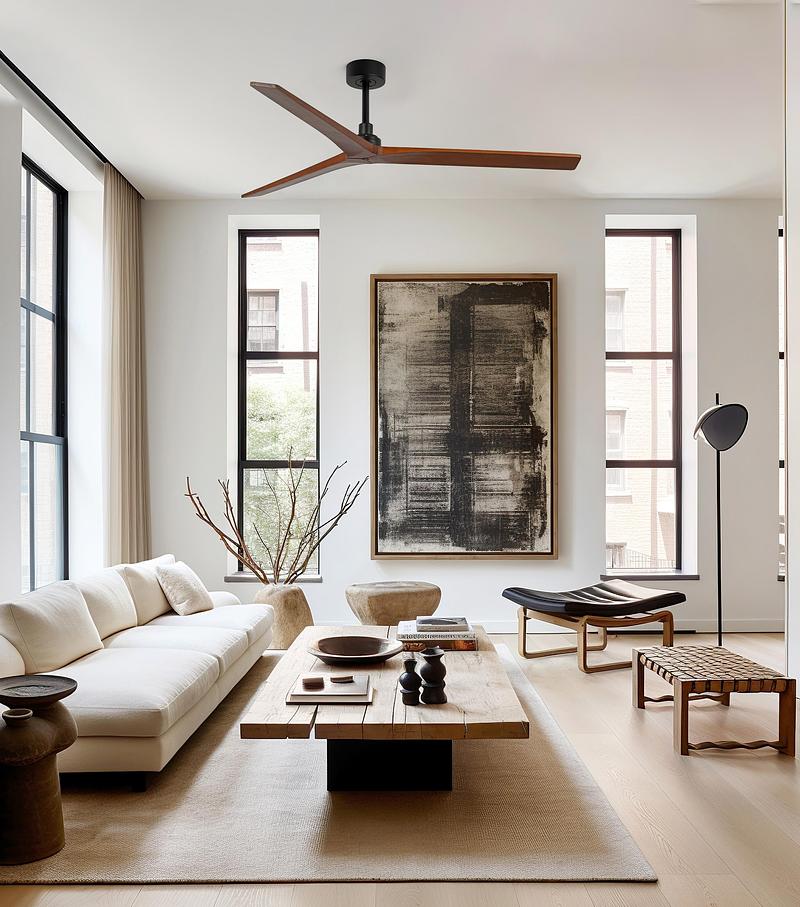
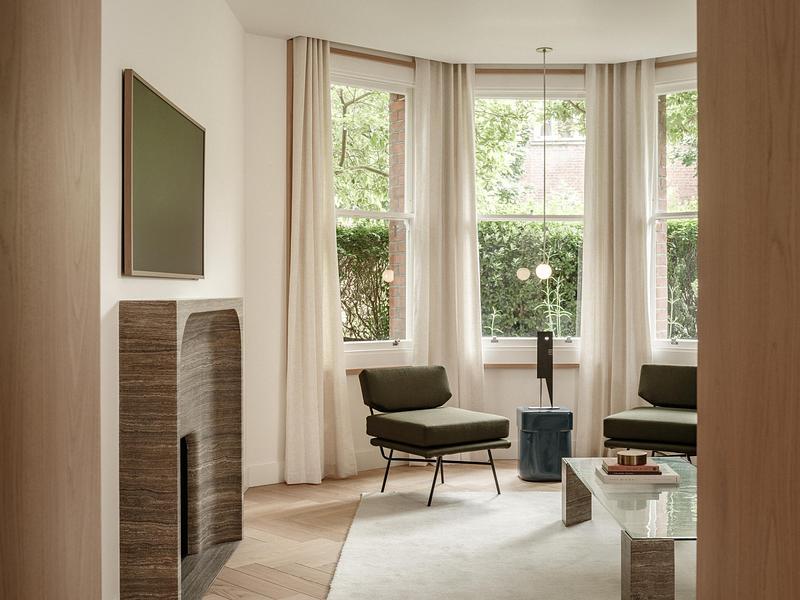
There is a particular kind of design decision that does not announce itself. You walk into a room and something feels composed, comfortable, considered — and only later do you clock that the element doing the quiet work is spinning slowly above your head. That is precisely the argument Faro Barcelona has been building since 1982: that airflow, handled with intention, belongs in the same conversation as the sofa you agonized over or the floor you refinished twice.
The Project
Designing The Air Faro Barcelona Defines Modern Ventilation is not a single interior but a body of work — a cross-context portfolio that places Faro Barcelona fans inside real domestic environments to make one sustained case: that a ceiling fan, specified correctly, is an architectural element rather than an afterthought. The Barcelona-based firm, now operating in over 140 countries with more than 1.5 million fans installed worldwide, brings four decades of ventilation engineering to a category that American interiors have largely underestimated. The brief here is essentially a reframe. Ceiling fans have been associated with dated aesthetics and grudging utility. Faro Barcelona’s response is to show them in spaces where material quality, restraint, and spatial intelligence are already doing serious work — and demonstrate that a well-designed fan neither interrupts nor competes, but completes.
The engineering underneath that design position is specific. DC motor technology keeps average consumption at roughly 15 watts while delivering up to 6,000 CFM of airflow. Annual energy use lands around 10.4 kWh — against 392 kWh for a comparable air conditioning unit. An environmental study conducted with sustainability consultancy Inedit found the PUNT M model generates just 4 kg of CO₂ over its lifespan versus 122 kg for a 2.5 kW AC unit, a 97% reduction driven almost entirely by operational energy. All models are ETL-certified for U.S. compliance. When paired with existing HVAC, the fans can improve system efficiency by approximately 30%. The performance numbers are not incidental — they are the reason the design investment is worth making.
 Save
The Spaces
The Minimal Kitchen-Dining Room
One of the clearest statements in the portfolio is a Scandinavian-leaning kitchen and dining zone where every surface — floor-to-ceiling cabinetry, dining table, chair legs — is pulled from the same pale ash-blonde wood family. The palette is so controlled that the ceiling fan, finished in matte black with narrow aluminum-toned blades, reads less as a fixture and more as a graphic — a single dark counterpoint to all that warmth. The dining table holds a single ceramic vase with dried botanicals. A folded gray throw sits on the sofa at the room’s edge. Nothing competes. The fan is simply the one object that works above the plane of living.
 Save
The Quiet Bedroom
In the bedroom, a white and natural-oak fan with compact three-blade geometry sits above a white timber bed frame fitted with rattan-weave under-bed drawers. Mustard velvet cushions break the room’s otherwise cream-and-linen palette. Sheer white curtains diffuse light from a double French window behind the bed, and herringbone oak floors warm the lower half of the room while the walls stay a soft, almost-blush white. The fan is scaled to the room rather than dominating it — its white housing disappearing into the ceiling, its light wood blades echoing the curtain rod and bed frame material. The whole room reads like an exhale.
From the guides
You've saved it, wanted it. Here's the how: codes, measurements, order. Your choices make it yours.
 The Japandi Honest PlaybookThe honest version of the style: what to keep, what to skip, and the order to do it in.See inside →
 The Room Refresh PlaybookA repeatable four-step method, room by room, in ten minutes, thirty minutes, or one weekend.See inside →
 Make Any Room Feel Cozy on PurposeWhy some rooms hold people and others empty out, and the moves that change it.See inside →
 Save
The Covered Outdoor Kitchen
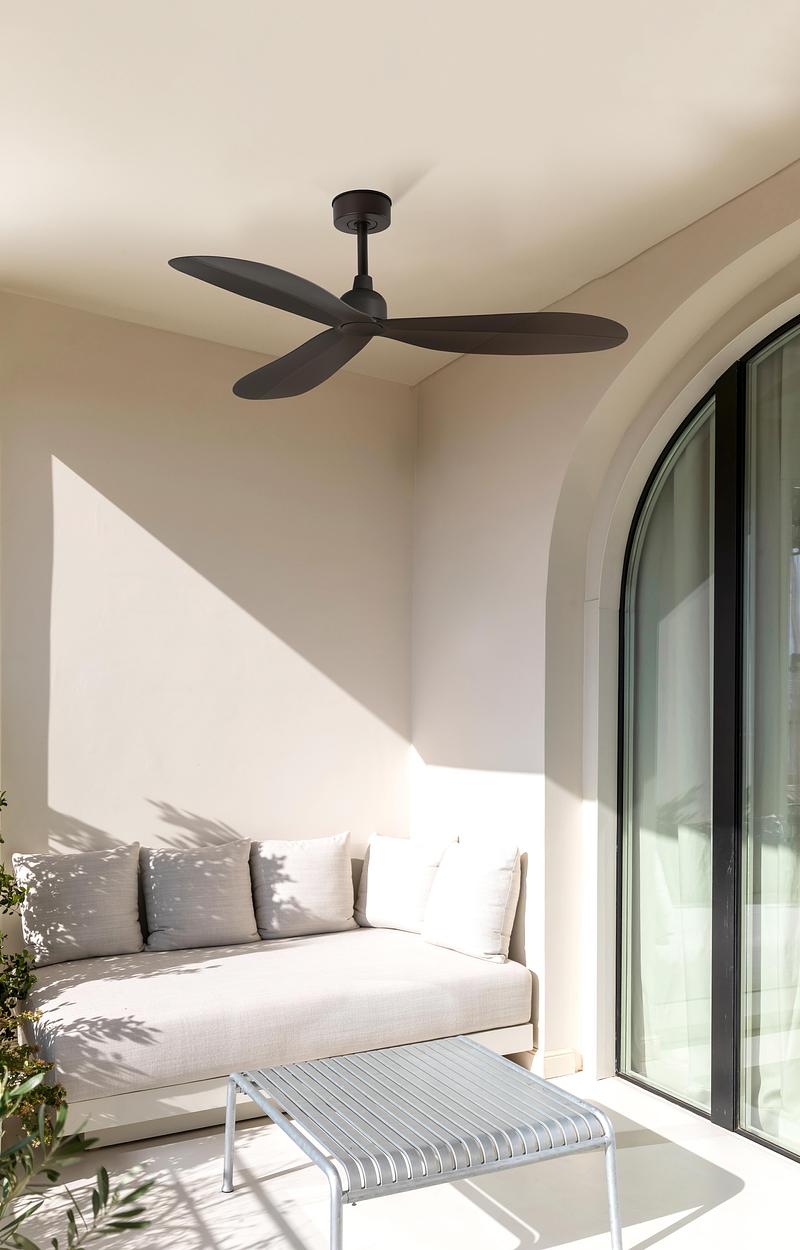
The outdoor dining setup may be the portfolio’s most generous demonstration of range. A deep walnut three-blade fan with a globe-shaped opal light diffuser anchors a covered terrace that functions as a full outdoor kitchen. The counter is poured concrete with a terrazzo-flecked finish; open shelving above it holds a collection of woven seagrass baskets and potted ferns. The dining table is reclaimed wood — heavily grained, whitewashed, every plank telling its age. Cane-back chairs in honey-toned bentwood pull up to it. The garden beyond is loose and planted thickly. The fan reads here as the one element that makes this space genuinely usable across seasons, connecting the crafted materiality of the shelving and table to the practical reality of outdoor comfort.
 Save
What you might carry home
The most useful thing this project demonstrates for a real home is the finish-matching logic visible in the bedroom — white fan housing against white ceiling, oak blades echoing the curtain rod and bed frame. You do not need to match perfectly, but when a fan’s motor housing disappears into the ceiling color and its blade material repeats something already in the room, it stops being a ceiling fixture and starts being part of the composition. That is a decision you make at the specification stage, not after installation.
The outdoor kitchen image is also worth sitting with if you have a covered porch or pergola. The fan there is doing two jobs: it is circulating air for comfort, and it is providing the room’s only overhead light source via the integrated opal globe. If you are designing an outdoor room from scratch, combining those two functions in one ceiling-mounted piece keeps the overhead plane clean and the wiring simple — and a well-specified outdoor-rated fan genuinely extends the hours you use the space.
The energy numbers matter in a practical way. Running a DC ceiling fan at roughly 15 watts instead of reaching for a window AC unit or cranking central air in shoulder seasons — spring evenings, early fall — is not a sacrifice. The perceived temperature drop of 2 to 4 degrees Celsius is real, and if you already have AC, running the fan alongside it can improve that system’s efficiency by around 30%. The math rewards keeping a good fan in every room you actually live in, not just the bedroom.
Finally, the flat-minimal kitchen image is a useful reminder that fan blade finish is a design choice as active as hardware finish. In that room, matte black blades function the way a black-frame window or matte black tap does — as a graphic anchor in a room that is otherwise all warm wood and negative space. If your kitchen or living space is already working in a restrained palette, a fan blade finish that echoes your hardware or your window frames will feel intentional rather than incidental.
 Save
What Faro Barcelona has built across four decades is less a product line than a position: that the ceiling is part of the room, and what hangs from it deserves the same rigor as anything else you specify. The spaces in this portfolio — from a spare Barcelona living room to a lushly planted outdoor kitchen — hold up that argument quietly and without overstatement. Which, given the subject, seems exactly right.
From the guides
You've saved it, wanted it. Here's the how: codes, measurements, order. Your choices make it yours.
The Japandi Honest PlaybookThe honest version of the style: what to keep, what to skip, and the order to do it in.See inside →The Room Refresh PlaybookA repeatable four-step method, room by room, in ten minutes, thirty minutes, or one weekend.See inside →Make Any Room Feel Cozy on PurposeWhy some rooms hold people and others empty out, and the moves that change it.See inside →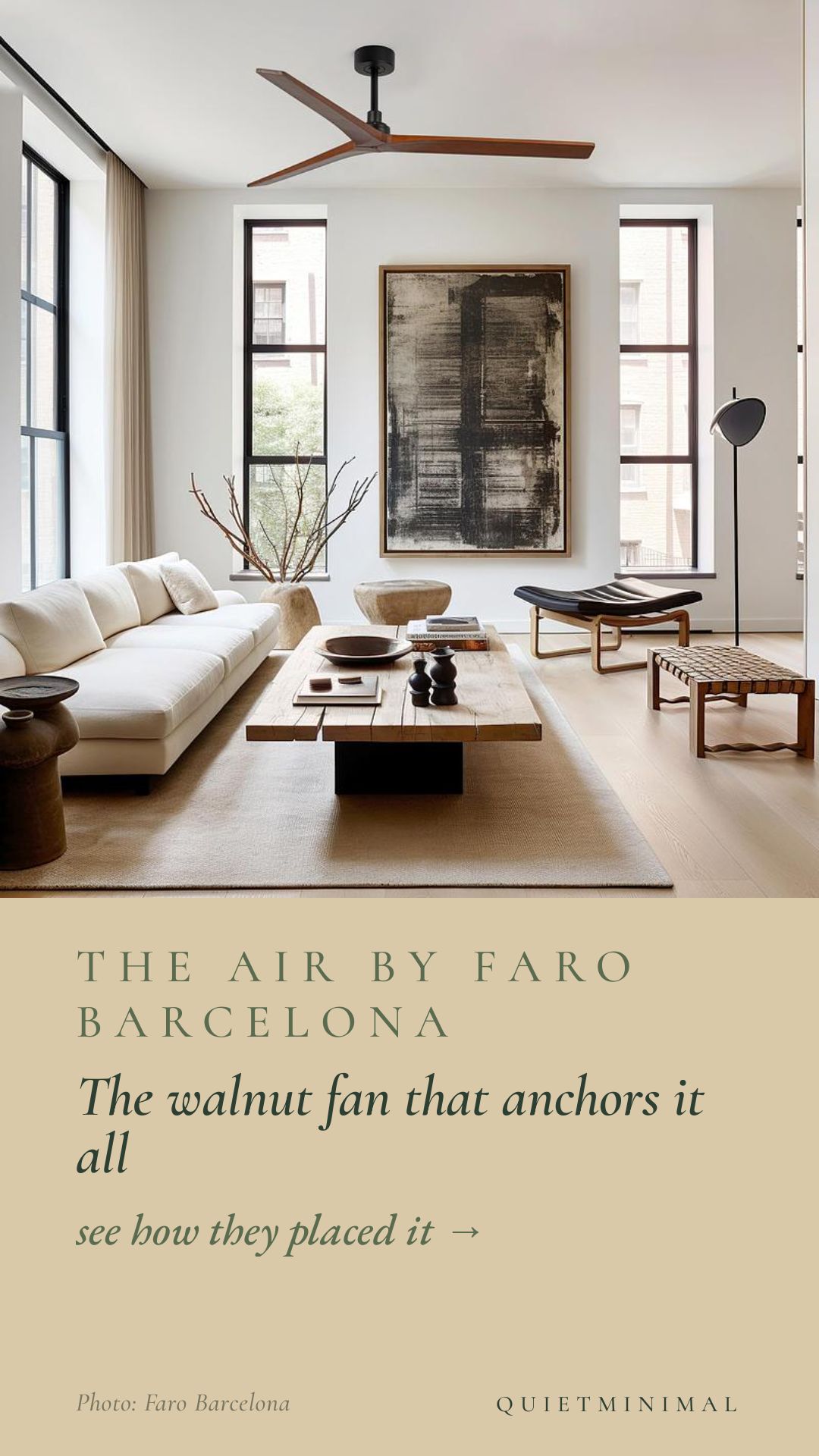
From the guides
You've saved it, wanted it. Here's the how: codes, measurements, order. Your choices make it yours.
The Japandi Honest PlaybookThe honest version of the style: what to keep, what to skip, and the order to do it in.See inside →The Room Refresh PlaybookA repeatable four-step method, room by room, in ten minutes, thirty minutes, or one weekend.See inside →Make Any Room Feel Cozy on PurposeWhy some rooms hold people and others empty out, and the moves that change it.See inside →