 Georgia
Your home is more than just a place to sleep; it is your sanctuary and your canvas. For the creative spirit, the living room offers the ultimate opportunity to curate a space that reflects your personal narrative. We are moving away from the era of the “big box store” matching set. There is a distinct lack of soul in a room where everything matches perfectly. Instead, the magic lies in the mix.
Creating a cohesive look when you mix and match sofas living room styles requires a curator’s eye. It isn’t just about clashing colors; it is about the subtle, tactile language of textures. Whether you are blending a refurbished mid-century gem you sanded down yourself with a plush, modern sectional, the secret is in how those materials speak to one another. Here is how to master the art of textual contrast to create a space that feels collected, cozy, and undeniably yours.
1. Anchor with Leather, Soften with Fabric
 Save
One of the most timeless pairings in interior design is the juxtaposition of worn leather with soft woven fabrics. If you have a sleek, cognac leather sofa (perhaps a mid-century find), it brings a masculine, sleek energy to the room. To balance this, pair it with a sofa or armchair upholstered in a soft, tactile fabric like chenille or cotton linen.
The leather reflects light and offers a smooth, cool touch, while the fabric absorbs light and provides warmth. This contrast prevents the room from feeling too sterile or too heavy. Think of it as balancing the yin and yang of your living space; the structure of the leather needs the “give” of the fabric to make the room feel inviting.
Key Takeaway: Create immediate visual interest by pairing the slick, cool surface of leather with a soft, light-absorbing fabric to balance the room’s energy.
From the guides
You've saved it, wanted it. Here's the how: codes, measurements, order. Your choices make it yours.
 The Japandi Honest PlaybookThe honest version of the style: what to keep, what to skip, and the order to do it in.See inside →
 The Room Refresh PlaybookA repeatable four-step method, room by room, in ten minutes, thirty minutes, or one weekend.See inside →
 Make Any Room Feel Cozy on PurposeWhy some rooms hold people and others empty out, and the moves that change it.See inside →
2. Elevate with Velvet and Matte Finishes
 Save
For those who view their home as a personal retreat, velvet offers an immediate sense of luxury and comfort. However, a room full of velvet can feel heavy and dated. The trick is to mix the sheen of velvet with matte, flat textures.
If your main sofa is a deep emerald or navy velvet, consider pairing it with accent chairs in a flat-weave wool or a matte canvas. The velvet catches the light and changes color depending on the angle, adding depth to the room. The matte partner grounds the space, ensuring the glamour of the velvet doesn’t overwhelm the “quiet” in your quiet minimal aesthetic.
Key Takeaway: Use velvet as a highlight texture for depth and luxury, but ground it with matte, flat-weave fabrics to keep the aesthetic modern and approachable.
3. Introduce Organic Weaves like Rattan or Cane
 Save
For the maker mindset, nothing beats the visible craftsmanship of natural materials. Integrating wood-framed seating with cane or rattan backs adds an architectural and organic element to your seating arrangement. This works exceptionally well when mixed with fully upholstered, chunky sofas.
The open weave of cane allows light to pass through, reducing visual clutter—perfect for smaller metropolitan apartments. It provides a crisp, dry texture that contrasts beautifully with soft, squishy upholstery. It’s that “brought the outdoors in” feeling that revitalizes a space.
Key Takeaway: Incorporate “skeleton” textures like cane, rattan, or exposed wood frames to add airiness and organic architectural interest alongside heavy upholstery.
4. The Cozy Factor: Bouclé and Sherpa
 Save
In the pursuit of self-care and wellness, our homes need to feel like a hug. Enter the nubby, high-texture world of bouclé and sherpa. These fabrics are incredibly popular right now, and for good reason—they are hyper-tactile.
Because bouclé is so visually busy (in a good way), it pairs best with simple, smooth textures. Mix a curvaceous white bouclé armchair with a structured linen sofa. The contrast here is between the “cloud-like” undefined edges of the bouclé and the tailored, crisp lines of the linen. It creates a sensory experience that invites you to sit down and exhale.
Key Takeaway: Treat high-pile textures like bouclé as a sensory accent; pair them with smooth, tailored fabrics to prevent the room from looking like a sheep farm.
5. Tonal Texture Mixing
 Save
If you prefer a calm, monochromatic palette to soothe a busy mind, you can still mix and match sofas without using different colors. The key here is extreme texture variation within the same color family. This is the epitome of the “Quiet Minimal” style.
Imagine a living room where everything is in shades of oatmeal or cream. To make this work, you need a heavy weave linen sofa, a velvet ottoman, and perhaps a canvas armchair. The color continuity calms the eye, while the textural differences keep the design from falling flat. It forces the eye to notice the quality of the materials rather than just the color.
Key Takeaway: When sticking to a monochromatic palette, exaggerate the difference in material textures (weave vs. velvet vs. canvas) to prevent the space from looking flat.
6. The Bridge: Using Textiles to Connect Disparate Sofas
 Save
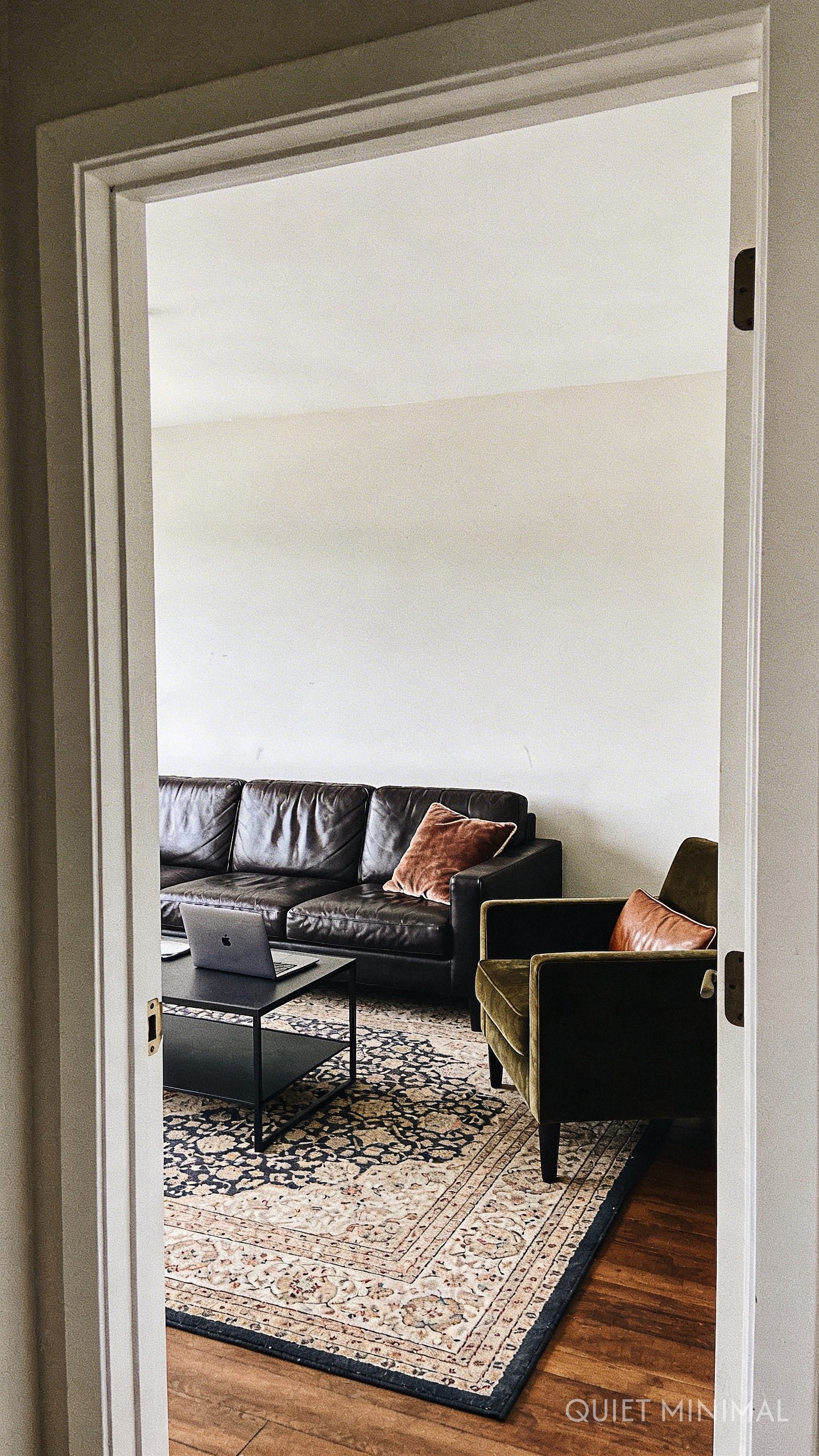
Sometimes you have two sofas that you love, but their textures feel like strangers. As a creative curator, your job is to build a bridge. This is done through throw pillows and blankets—the accessories where you can perhaps show off that embroidery project or a hand-knitted throw.
If you have a leather sofa and a velvet chair, place a velvet pillow on the leather sofa and a leather (or faux leather) lumbar pillow on the velvet chair. This cross-pollination of textures signals to the brain that these two pieces belong together. It creates a cohesive conversation between the furniture pieces.
Key Takeaway: Use throw pillows and blankets to cross-reference materials; place a pillow in the fabric of Sofa B onto Sofa A to visually link the two pieces.
7. Juxtaposing Leg Finishes and Materials
 Save
Texture isn’t just about the fabric; it’s about the hard materials that support it. A common pitfall is having all furniture legs match perfectly (all walnut or all chrome). To truly curate a space, mix the textures of the frames.
Try mixing a sofa with hidden legs (skirted or block) with an armchair that has sleek metal or turned wood legs. The “heaviness” of a sofa that sits directly on the floor provides a solid foundation, while leggy furniture adds negative space and lightness. This structural texture prevents the room from feeling like a furniture showroom display.
Key Takeaway: Mix the “hard textures” of the furniture bases—combine skirted, grounded sofas with leggy, airy chairs to balance visual weight.
From the guides
You've saved it, wanted it. Here's the how: codes, measurements, order. Your choices make it yours.
The Japandi Honest PlaybookThe honest version of the style: what to keep, what to skip, and the order to do it in.See inside →The Room Refresh PlaybookA repeatable four-step method, room by room, in ten minutes, thirty minutes, or one weekend.See inside →Make Any Room Feel Cozy on PurposeWhy some rooms hold people and others empty out, and the moves that change it.See inside →8. Pattern as a Texture
 Save
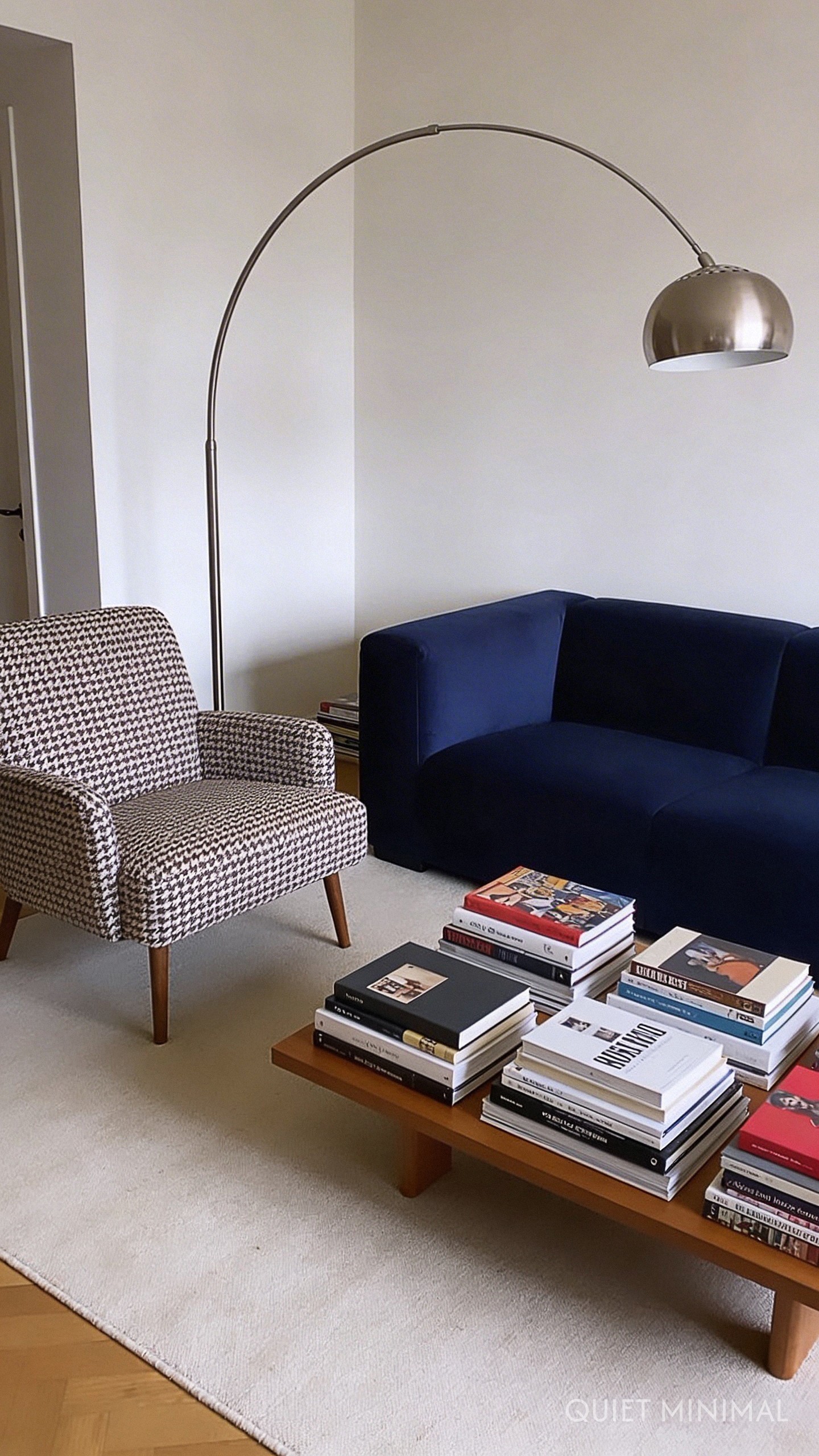
While we often think of texture as how something feels, pattern reads as visual texture. A subtle herringbone, tweed, or houndstooth creates a vibration in the room that mimics physical texture.
If you are hesitant to use bold prints, opt for a small-scale woven pattern on one of your seating choices. From a distance, it may read as a solid neutral, but up close, it offers intricate detail. Pair a patterned occasional chair with a solid, block-color sofa. The pattern acts as the “spice” that enlivens the solid “staple” of the main sofa.
Key Takeaway: Utilize micro-patterns like tweed or herringbone to introduce “visual texture” that breaks up large blocks of solid color without overwhelming the space.
9. Rough vs. Refined
 Save
This approach appeals to the “Before and After” transformation lover. It’s about the tension between something raw and something polished. Consider the interplay between a refined, tight-back satin or polished cotton sofa and a rougher, raw-edge linen or burlap-style chair.
The “rough” texture brings an element of relaxed, lived-in approachability—essential for a home that is meant to be lived in, not just looked at. The “refined” texture maintains the sophistication. This balance ensures the room feels elegant but not too precious to touch.
Key Takeaway: Balance elegance with approachability by pairing refined, smooth fabrics with raw, nubby, or natural-fiber textures.
10. Grounding the Mix with the Rug
 Save
Finally, when you mix and match sofas living room textures, the rug is the foundation that holds it all together. The texture of your rug should complement, not compete with, your sofas.
If you have chosen highly textured seating (like corduroy or bouclé), opt for a lower pile, simpler rug like a flat-weave wool or a natural jute. Conversely, if your sofas are smooth leather or simple linen, a high-pile Moroccan rug or a shag adds the necessary softness to the floor level. The rug dictates the “temperature” of the room and unifies the disparate furniture textures above it.
Key Takeaway: Choose a rug texture that opposes your furniture; pair high-texture sofas with flat rugs, and smooth sofas with plush rugs to maintain equilibrium.
 Save
Follow Quiet Minimal on Pinterest for more curated aesthetic inspiration.
The images featured in this article have been generated or modified using AI to help visualize these design concepts.
From the guides
You've saved it, wanted it. Here's the how: codes, measurements, order. Your choices make it yours.
The Japandi Honest PlaybookThe honest version of the style: what to keep, what to skip, and the order to do it in.See inside →The Room Refresh PlaybookA repeatable four-step method, room by room, in ten minutes, thirty minutes, or one weekend.See inside →Make Any Room Feel Cozy on PurposeWhy some rooms hold people and others empty out, and the moves that change it.See inside →


