 Georgia
Your home is more than just a living space; it is your sanctuary and your canvas. For the creative soul who finds joy in both the hunt for a vintage treasure and the satisfaction of a DIY project, the current resurgence of the “vintage grandma” aesthetic feels like coming home. It’s a move away from cold, sterile showrooms toward warmth, nostalgia, and storytelling.
However, there is a fine line between a curated, authentic aesthetic and a space that feels cluttered or dated. The goal isn’t to replicate a time capsule, but to blend the cozy, eclectic charm of the past with the clean, intentional living of the present. Whether you are refurbishing a mid-century piece or looking for the perfect spot for your latest embroidery project, styling this look requires a curator’s eye.
Here is how to style the vintage grandma aesthetic authentically while keeping your home feeling fresh, spacious, and sophisticated.
1. Reintroduce Chintz and Florals with Restraint
 Save
The hallmark of the vintage grandma aesthetic is undeniably the floral print. From chintz curtains to upholstered armchairs, botanicals are essential. However, to keep the look “clean” rather than chaotic, play with scale and negative space. If you choose a busy, small-scale floral wallpaper, balance it with solid-colored, streamlined furniture. Conversely, if your walls are neutral, allow a statement floral armchair to serve as the room’s focal point.
Key Takeaway: Balance intricate floral patterns with solid colors and breathing room to prevent visual overwhelm.
From the guides
You've saved it, wanted it. Here's the how: codes, measurements, order. Your choices make it yours.
 The Japandi Honest PlaybookThe honest version of the style: what to keep, what to skip, and the order to do it in.See inside →
 The Room Refresh PlaybookA repeatable four-step method, room by room, in ten minutes, thirty minutes, or one weekend.See inside →
 Make Any Room Feel Cozy on PurposeWhy some rooms hold people and others empty out, and the moves that change it.See inside →
2. Curate Open Shelving as Art
 Save
Grandma’s kitchen often featured open hutches overflowing with ceramics. To modernize this, treat your open shelving or glass-front cabinets as a gallery exhibition rather than storage. Group collections of colored glassware, ironstone, or hand-painted plates by color palette or height. Leave negative space between items so each piece can be appreciated individually. This turns everyday dishware into a deliberate design element.
Key Takeaway: Edit your collections ruthlessly; display items in breathable clusters rather than stacking them floor-to-ceiling.
3. Layer Tactile Textures (Crochet and Velvet)
 Save
Texture is the secret ingredient that makes this aesthetic feel cozy and lived-in. Look for crocheted throws (perhaps one you’ve made yourself), velvet throw pillows, and lace doilies. The key to authenticity here is quality materials. Avoid cheap synthetics; instead, opt for cotton, wool, and silk. A handmade granny square blanket draped over the back of a modern sofa bridges the gap between kitsch and cool.
Key Takeaway: Mix “high touch” fabrics like velvet and wool to add depth and warmth to the room.
4. Swap Modern Fixtures for Pleated Lampshades
 Save
Lighting sets the mood, and nothing screams vintage charm quite like a pleated fabric lampshade. Swap out industrial bulbs or sleek metal shades for tapered, pleated fabric shades in creams, dusty pinks, or patterns. Pair these with brass or ceramic bases. This softer lighting diffusion creates a warm, inviting glow that instantly softens the edges of a room, making it feel intimate and restful.
Key Takeaway: Replace harsh, modern lighting with soft, pleated fabric shades to instantly warm up the atmosphere.
5. Anchor the Room with Warm Wood Tones
 Save
While the “Scandi” look relies on pale blonde woods, the vintage grandma aesthetic favors warmth—think walnut, mahogany, and cherry. You don’t need to replace all your furniture, but introducing one or two “brown furniture” pieces creates a sense of history. A refurbished mid-century coffee table or a dark wood side table provides a grounding contrast to lighter walls and colorful textiles.
Key Takeaway: Incorporate darker, warmer wood tones to give the space a sense of history and permanence.
6. Frame the Handmade and the Sentimental
 Save
As a maker, this is your time to shine. Needlepoint, cross-stitch, and embroidery are core pillars of this style. Instead of leaving your projects in a hoop, frame them professionally. Mixing framed textile art with traditional oil paintings or botanical prints elevates the craft. It signals that these handmade items are art, worthy of display alongside “serious” pieces.
Key Takeaway: Elevate DIY textile projects by framing them professionally to sit alongside traditional art.
7. Adopt a “Dusty” Color Palette
 Save
To nail the vibe without it looking like a nursery or a circus, focus on “dusty” or muted tones. Sage green, dusty rose, mustard yellow, and slate blue are perfect choices. These colors possess a vintage quality that feels sophisticated. They work beautifully as wall colors or as accent hues for throws and pillows, providing color without the jarring impact of bright primaries.
Key Takeaway: Stick to desaturated, earthy pastels to maintain a sophisticated, grown-up vibe.
8. Construct a Heritage Gallery Wall
 Save
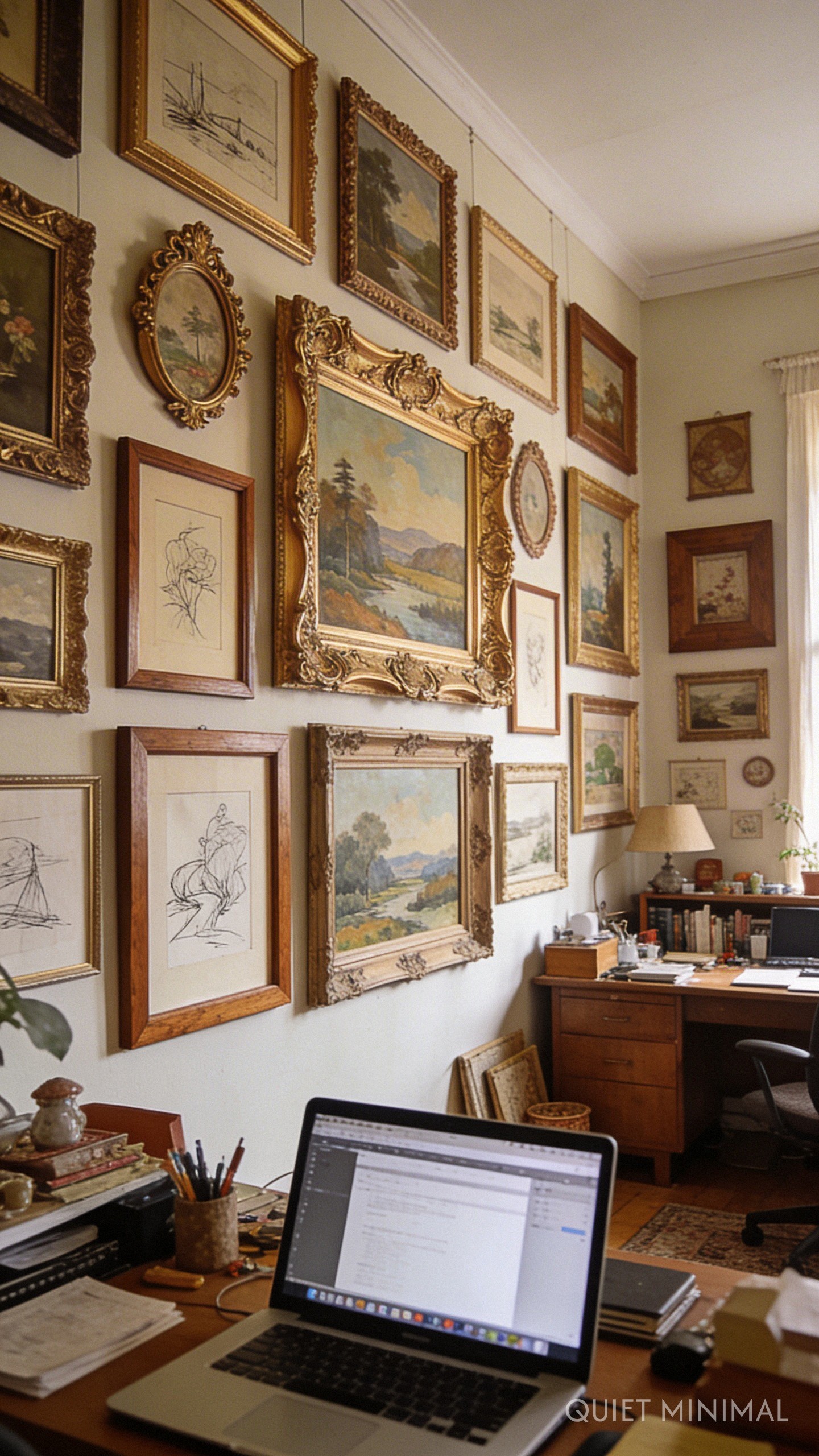
A gallery wall is essential for the creative curator. For this aesthetic, move away from uniform black frames. Mix ornate gold frames with simple wooden ones. Combine landscapes, portraits, botanical sketches, and even small mirrors. The layout should feel organic and evolved over time, rather than mathematically precise. This is the perfect backdrop for your Zoom calls or your evening embroidery sessions.
From the guides
You've saved it, wanted it. Here's the how: codes, measurements, order. Your choices make it yours.
The Japandi Honest PlaybookThe honest version of the style: what to keep, what to skip, and the order to do it in.See inside →The Room Refresh PlaybookA repeatable four-step method, room by room, in ten minutes, thirty minutes, or one weekend.See inside →Make Any Room Feel Cozy on PurposeWhy some rooms hold people and others empty out, and the moves that change it.See inside →Key Takeaway: Mix frame styles and art mediums to create a gallery wall that feels collected over generations.
9. Style Vignettes with Brass and Crystal
 Save
Surface styling is where the “clutter” risk is highest. To keep it clean, style in vignettes (small groupings) using the rule of three. A brass candlestick, a small crystal bowl, and a stack of vintage books make a perfect trio. Brass animals or figurines are classic elements of this style, but limit them to one or two per room to keep the look intentional rather than kitschy.
Key Takeaway: Group small decor items in threes and use trays to contain them, preventing surfaces from looking messy.
10. Incorporate Nostalgic Botanicals
 Save
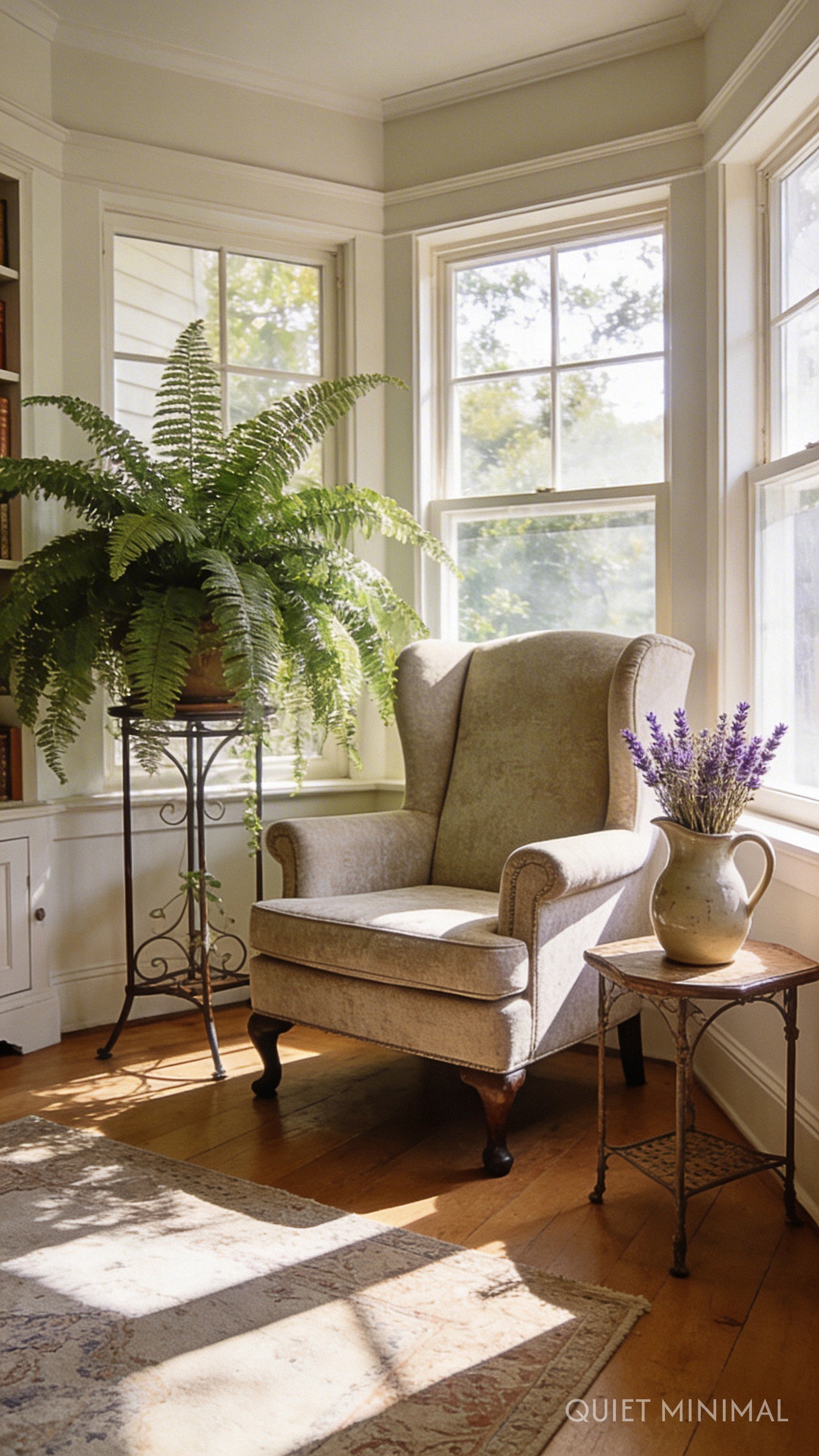
Finally, bring the outdoors in, but choose your plants wisely. While fiddle leaf figs are modern staples, the vintage aesthetic calls for ferns, African violets, or hydrangeas. Dried flowers also work beautifully here—think dried lavender or baby’s breath in a ceramic pitcher. These plants add life to the room and reinforce the connection to nature that is so central to the “slow living” aspect of this style.
Key Takeaway: Choose classic, slightly wilder plants like ferns or dried florals to complete the vintage narrative.
 Save
Follow Quiet Minimal on Pinterest for more curated aesthetic inspiration.
The images featured in this article have been generated or modified using AI to help visualize these design concepts.
From the guides
You've saved it, wanted it. Here's the how: codes, measurements, order. Your choices make it yours.
The Japandi Honest PlaybookThe honest version of the style: what to keep, what to skip, and the order to do it in.See inside →The Room Refresh PlaybookA repeatable four-step method, room by room, in ten minutes, thirty minutes, or one weekend.See inside →Make Any Room Feel Cozy on PurposeWhy some rooms hold people and others empty out, and the moves that change it.See inside →


