Georgia
Can a backyard put together for a few hundred dollars actually look expensive, and if it can, what do you buy first? That is the real question behind every search for inexpensive backyard ideas, and it has a definite answer. The yards that look luxe on a small budget share three moves: they spend on the backdrop, the floor and the ceiling before a single chair, they hold to one palette and a few honest materials, and they work in an order that lets each layer dry before the next. Everything below is priced at the home centre and the farm supply and sized inch by inch. Ten projects carry the numbers that make them doable, and four decisions sit between them: what to buy at $300, $600 and $1,000, the three faults that read cheap, the weekend order, and what to leave alone. Start with the floor.
Pea Gravel Draws the Rooms Before Anything Else Does
 Save
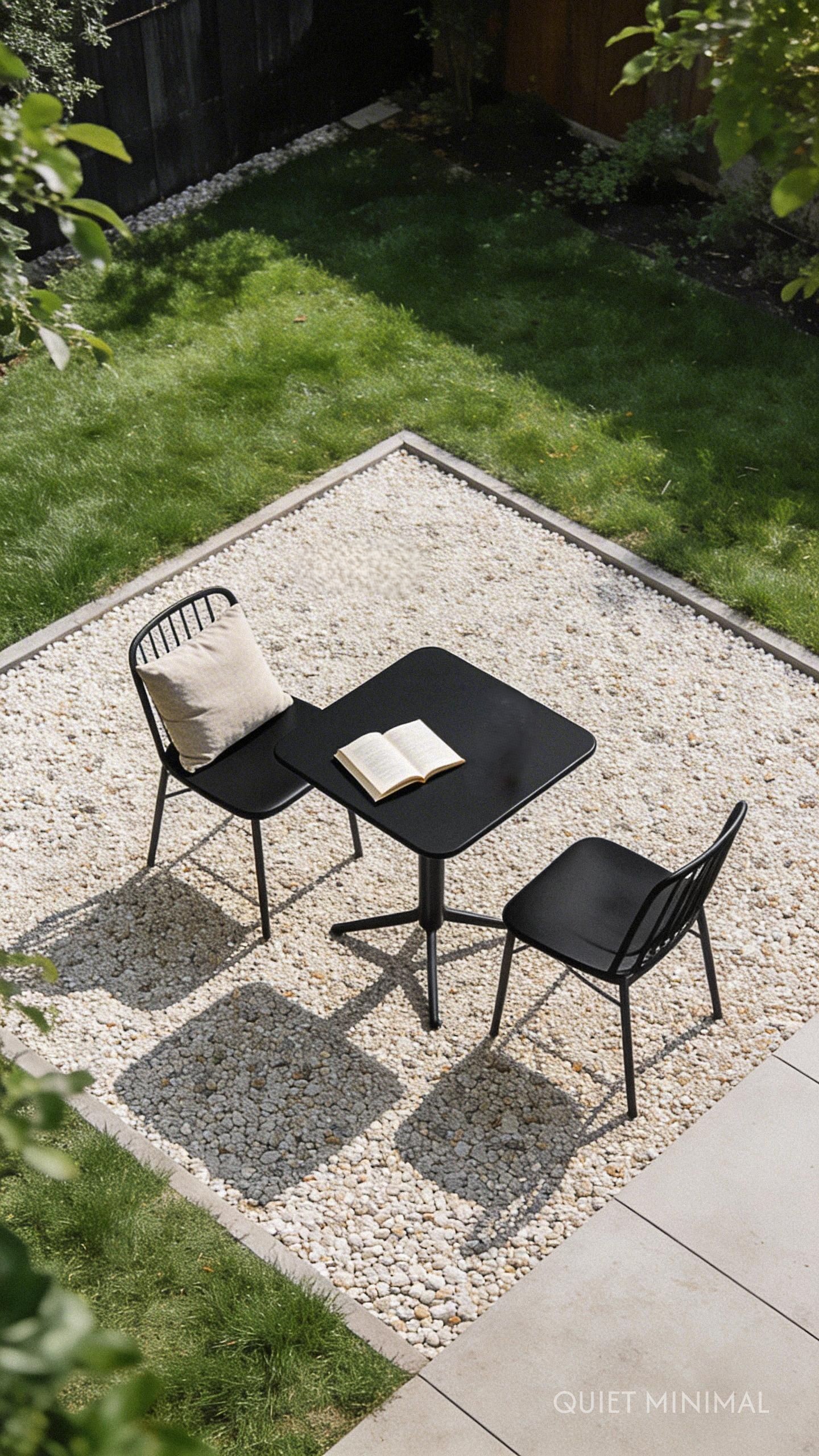
A backyard reads as designed when it has rooms, and the cheapest floor that draws one is pea gravel. Size the zone first: a dining spot wants about 10 by 12 ft (3 by 3.7 m) for a table and four chairs. Cut the sod, rake the soil flat, lay landscape fabric, and pin a steel edging strip around the perimeter, because unedged pea gravel migrates into the lawn within a season. Spread the stone 2 to 3 in (5 to 7.5 cm) deep. At that depth a 10 by 12 ft room takes just over a cubic yard: about sixty half-cubic-foot bags at $5 to $7 each, or one bulk delivery at $30 to $55 a yard. Bags win below half a cubic yard and bulk above it; put the saving into the edging.
Key Takeaway: Edge the gravel with steel, keep it 2 to 3 in (5 to 7.5 cm) deep, and go bulk past half a cubic yard.
 Save
What to Buy First at $300, $600 and $1,000
 Save
Underneath all inexpensive backyard ideas is the question of what to buy first, and the answer is the same at every budget: backdrop, then floor, then ceiling, then seats. At $300, that is two gallons of solid-colour fence stain and a roller (about $120), one 48 ft (14.6 m) run of commercial-grade cafe lights (about $50) and the concrete block bench (under $100), with the remainder going to two outdoor cushions. Nothing at this tier is furniture, and the yard already looks intentional. At $600, add the pea gravel room, roughly $150 to $250 for stone, fabric and edging, plus three tall planters with grasses for about $100. At $1,000, choose between acacia deck tiles over the slab, about $350 for 100 sq ft (9.3 sq m), and the entry-level stock tank at $179 plus a $75 pump. Pick one; both at once is a $1,300 yard.
Key Takeaway: Spend in the order backdrop, floor, ceiling, seats; each tier adds the next layer without undoing the last.
Cafe String Lights Give the Yard a Ceiling After Dark
 Save
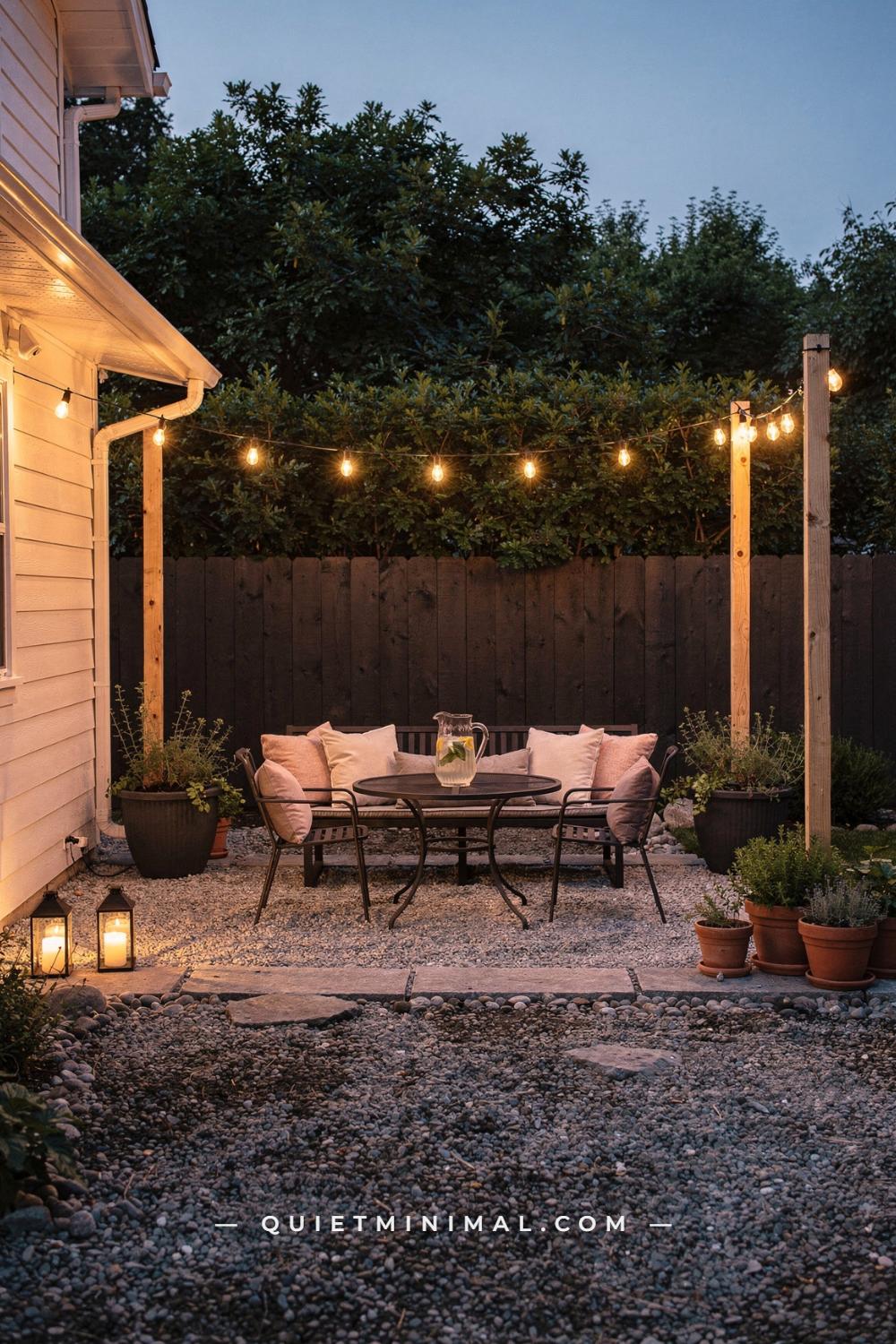
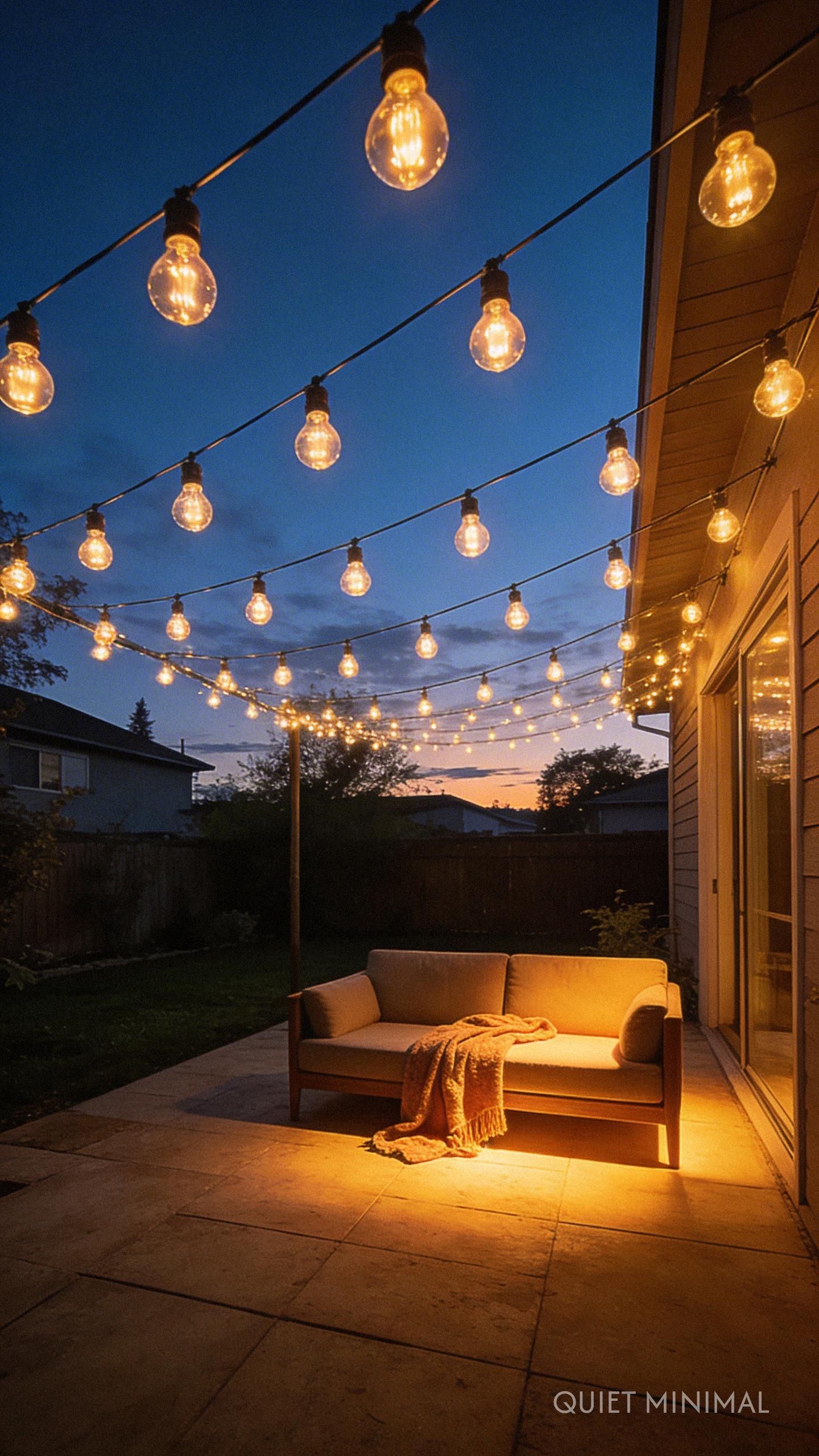
A yard without a ceiling has no edge at night, and cafe lights are the ceiling. Buy commercial-grade: a 48 ft (14.6 m) LED run with fifteen shatterproof bulbs on 3 ft (91 cm) spacing costs about $50, while flimsy sets sag by the first summer and fail by the second. Hang the wire at 9 to 10 ft (2.7 to 3 m) so nobody ducks, on 10 ft (3 m) 4×4 posts set in 16 in (41 cm) planters with a 50 lb (23 kg) bag of concrete mix in each. Run a guide wire between the posts first and clip the string to it, so the bulbs hang straight; one straight run or a simple X reads calmer than a zigzag. Then add solar path lights at ankle height along the gravel edge and one candle lantern on the table.
Key Takeaway: Hang commercial-grade bulbs at 9 to 10 ft (2.7 to 3 m) on a tensioned guide wire, then add path lights and one table lantern.
 Save
A Concrete Block Bench Costs Less Than a Hundred Dollars
 Save
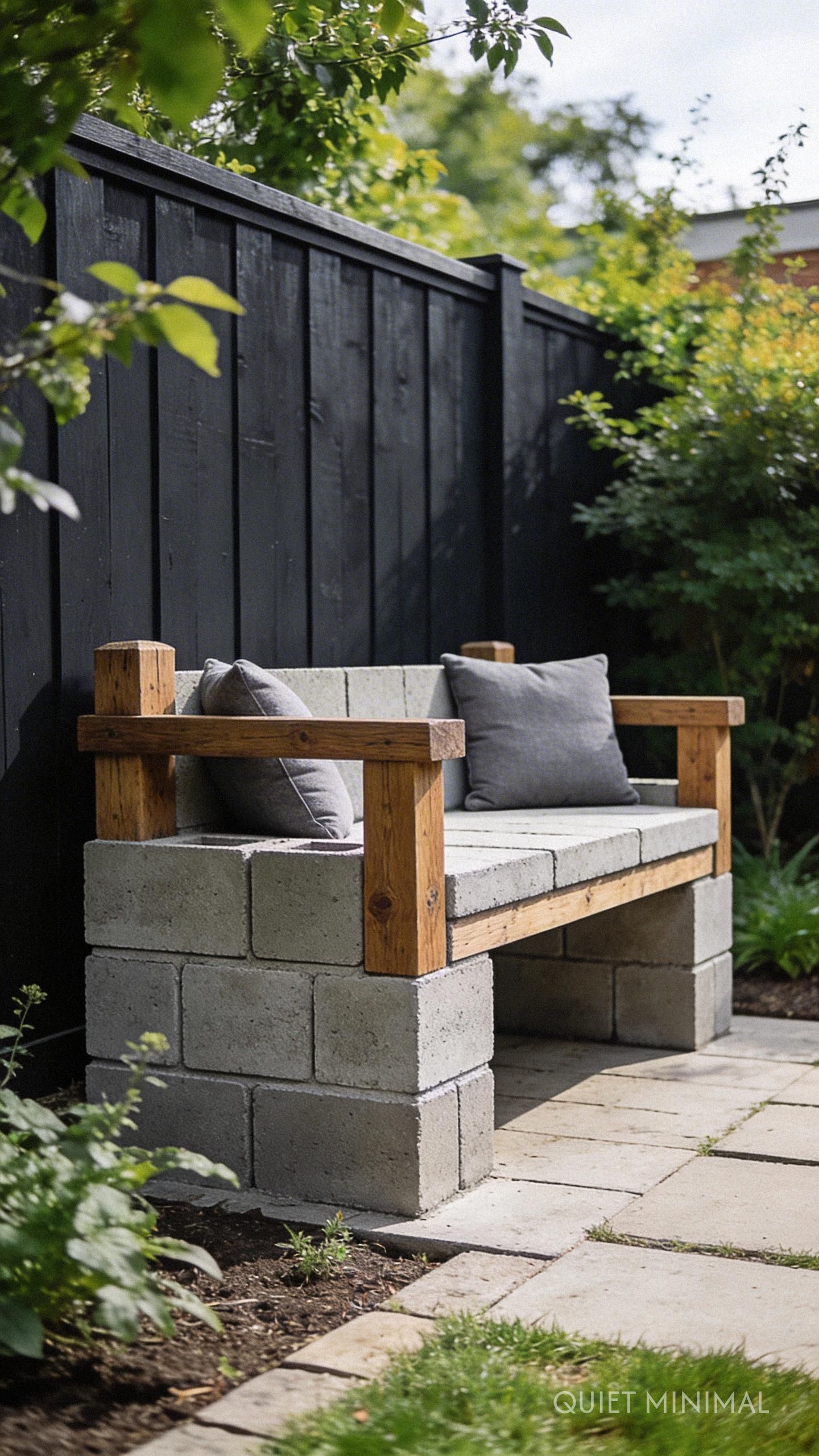
The parts list is short and every item is priced at the home centre: eight standard 8 by 8 by 16 in (20 by 20 by 41 cm) concrete blocks at roughly $2 to $2.60 each, four 8 ft (244 cm) pressure-treated 4×4 posts at $10 to $15 each, a tube of construction adhesive and a bag of paver base. Level a 16 by 32 in (41 by 81 cm) pad of base at each end. Lay two blocks flat as the bottom course, then glue two blocks on their sides on top with the cores facing along the bench. Slide the four posts through the four cores, and the seat sits at 16 in (41 cm), a comfortable garden height once a 3 in (7.6 cm) cushion goes on. Stain the posts the fence’s charcoal or leave them pale; either way the bench comes in under $100 and looks like a gallery piece.
Key Takeaway: Eight blocks, four posts and one tube of adhesive make a 16 in (41 cm) bench for under $100 in about an hour.
 Save
A Dark Fence Is the Cheapest Backdrop You Can Buy
 Save
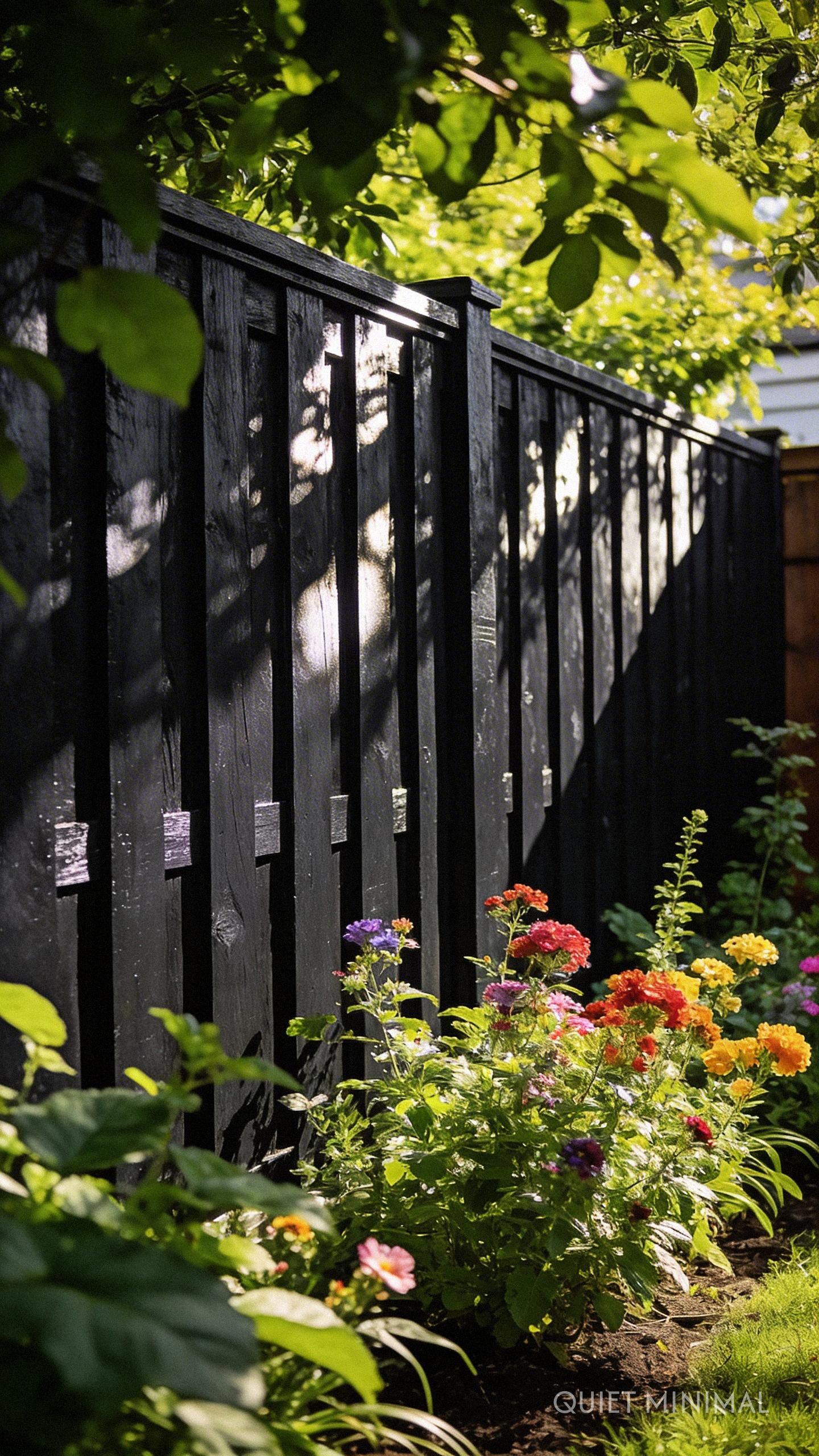
Nothing else in the yard changes as much per dollar as the colour of the fence. A near-black fence drops behind the planting, and every green suddenly reads as a colour. Use a solid-colour exterior wood stain rather than paint, because stain will not peel. Behr’s runs about $50 a gallon and covers 200 to 400 sq ft (18.6 to 37 sq m) on a first coat, so a 6 ft (183 cm) fence running 60 ft (18 m) takes two gallons for one coat and three for two. Sherwin-Williams Iron Ore SW 7069 is the charcoal designers reach for. Wash the fence, let it dry a full day, cut in the rails with a 4 in (10 cm) brush, roll the boards and back-brush. Do it before anything else goes in, because drips on new gravel are permanent.
Key Takeaway: Two to three gallons of charcoal solid-colour stain, applied first, give the whole yard a backdrop that makes every plant look chosen.
 Save
Deck Tiles Cover a Cracked Slab Before Lunch
 Save
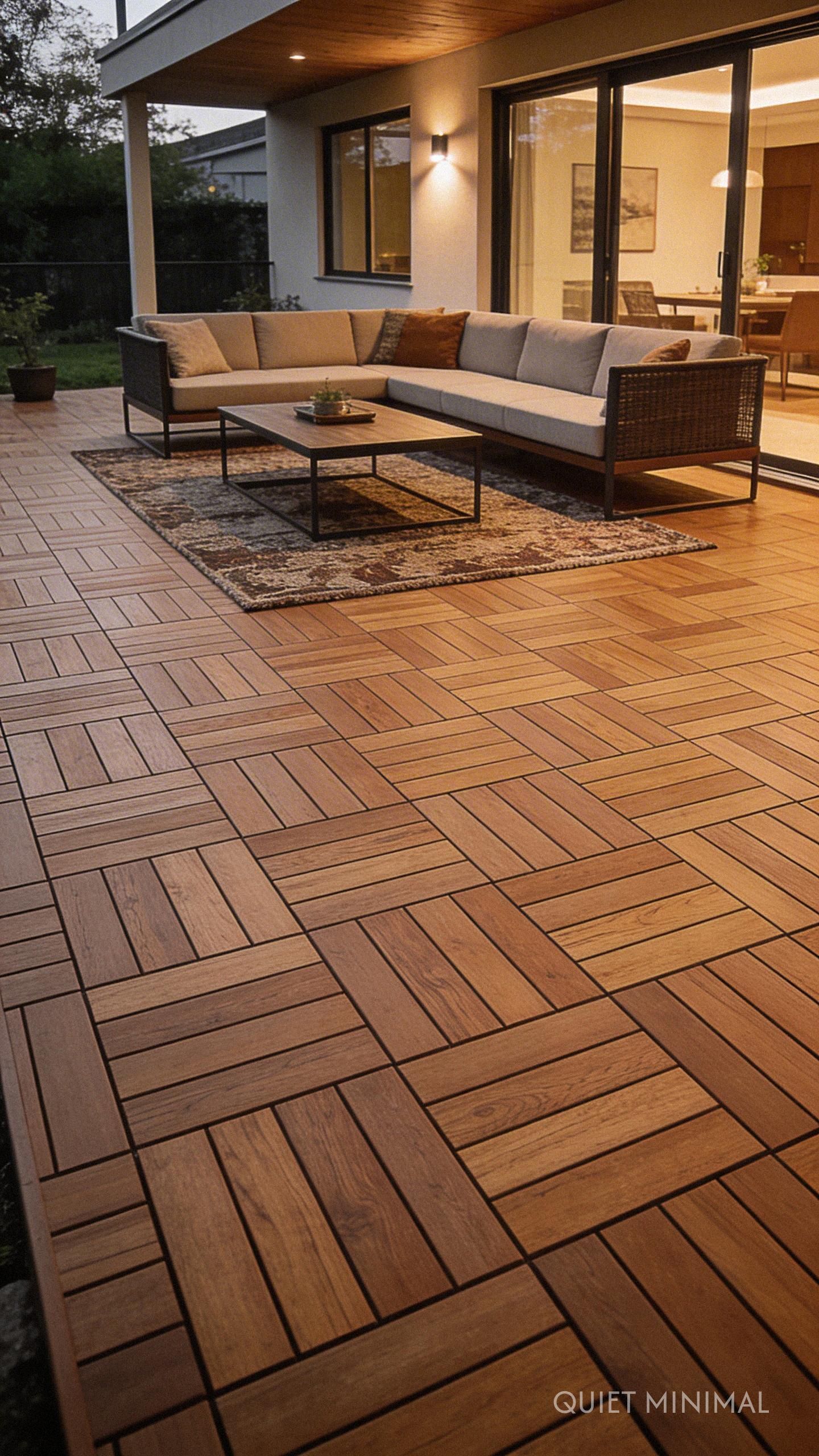
A cracked, stained concrete pad is the most common thing standing between a backyard and the word luxe. Interlocking deck tiles cover it instead. Acacia tiles at 12 by 12 in (30 by 30 cm) snap together on plastic bases at about $3.50 to $4 per sq ft, so a 10 by 10 ft (3 by 3 m) slab takes 100 tiles for roughly $350 to $400; composite looks similar at closer to $6.50 to $7 per sq ft. Do the maths first: round each side of the slab down to whole feet and multiply, so no tile needs cutting. Sweep the slab, check it still sheds water toward the lawn, lay from the corner where the house meets the pad, and leave a 1/2 in (13 mm) gap at any wall. The job takes two or three hours, lifts out for a landlord, and wants penetrating oil each spring.
Key Takeaway: Round the slab down to whole feet, buy that many tiles at about $3.50 to $4 per sq ft, and lay from the house corner outward.
 Save
Tall Planters Make a Privacy Wall You Can Move
 Save
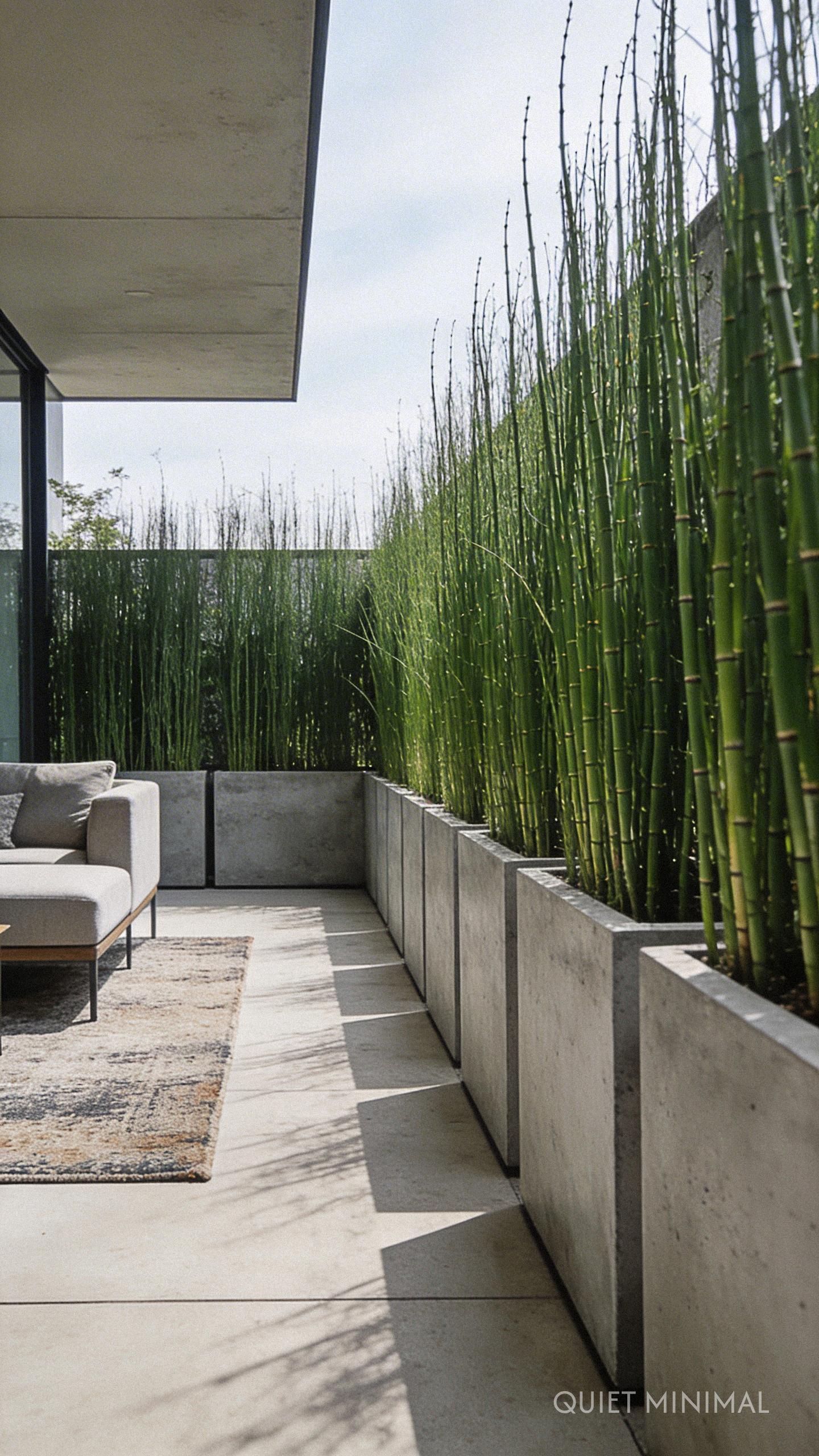
Privacy is what people price a fence for, and a row of tall planters delivers it for a fraction. Scale sells it: choose planters at least 24 in (61 cm) tall. Veradek’s 24 in recycled-plastic tall planter starts around $24 and a lightweight concrete-look one at 22 in (56 cm) is closer to $107, so a five-planter run costs $120 to $550 depending on finish; matte charcoal or bone white reads far more expensive than glossy terracotta-coloured resin. Set them 4 to 6 in (10 to 15 cm) apart along the edge that needs screening, so five planters cover about 12 ft (3.7 m). Fill the bottom third with the insert shelf or upturned nursery pots, then plant feather reed grass or a clumping bamboo; both reach 5 to 6 ft (152 to 183 cm) in a season. Water every second day in the heat.
Key Takeaway: Five matching 24 in (61 cm) planters, a hand’s width apart and planted with tall grass, screen 12 ft (3.7 m) of view and can be moved.
 Save
A Stock Tank Pool, Sized and Priced Before You Commit
 Save
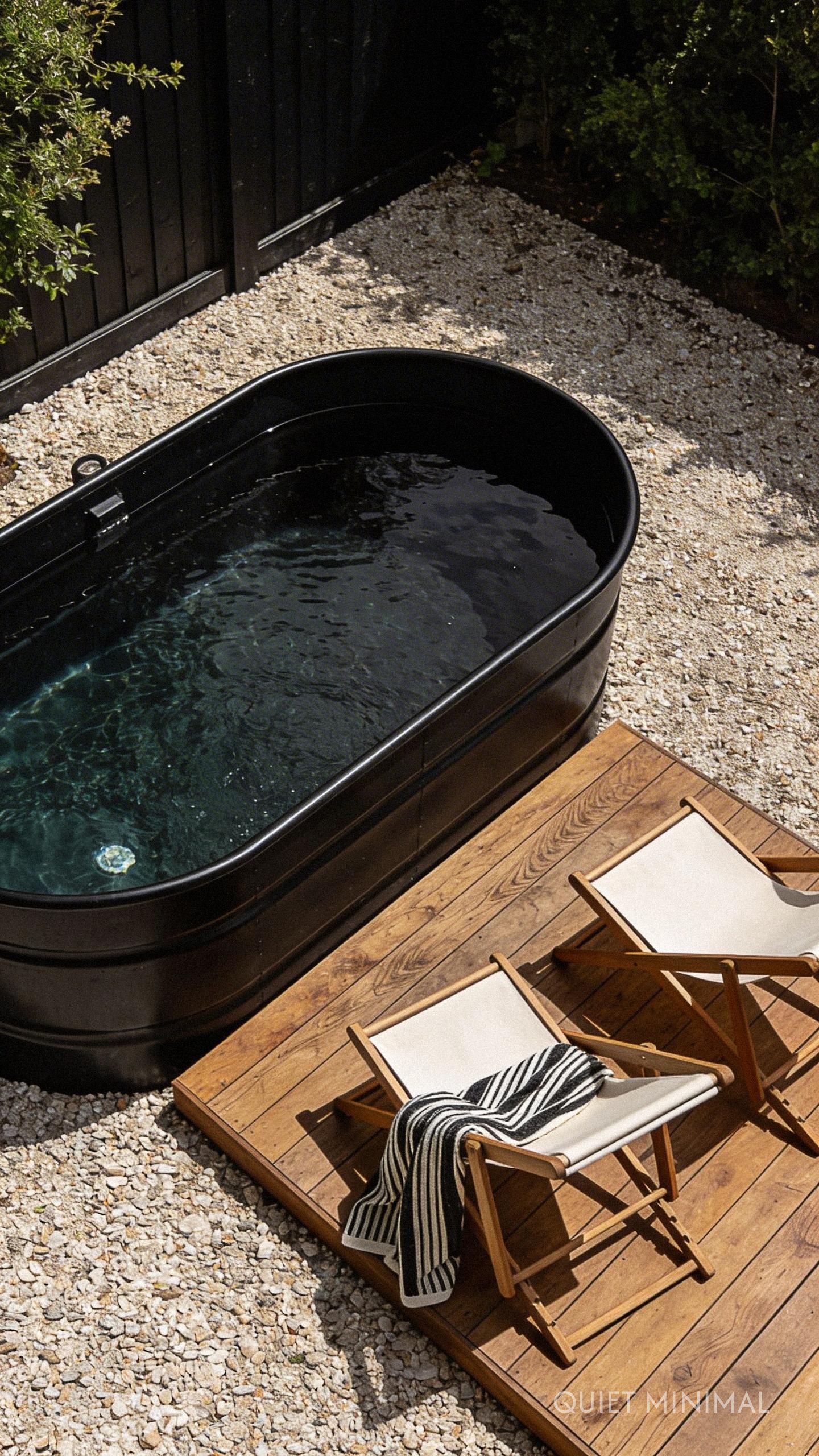
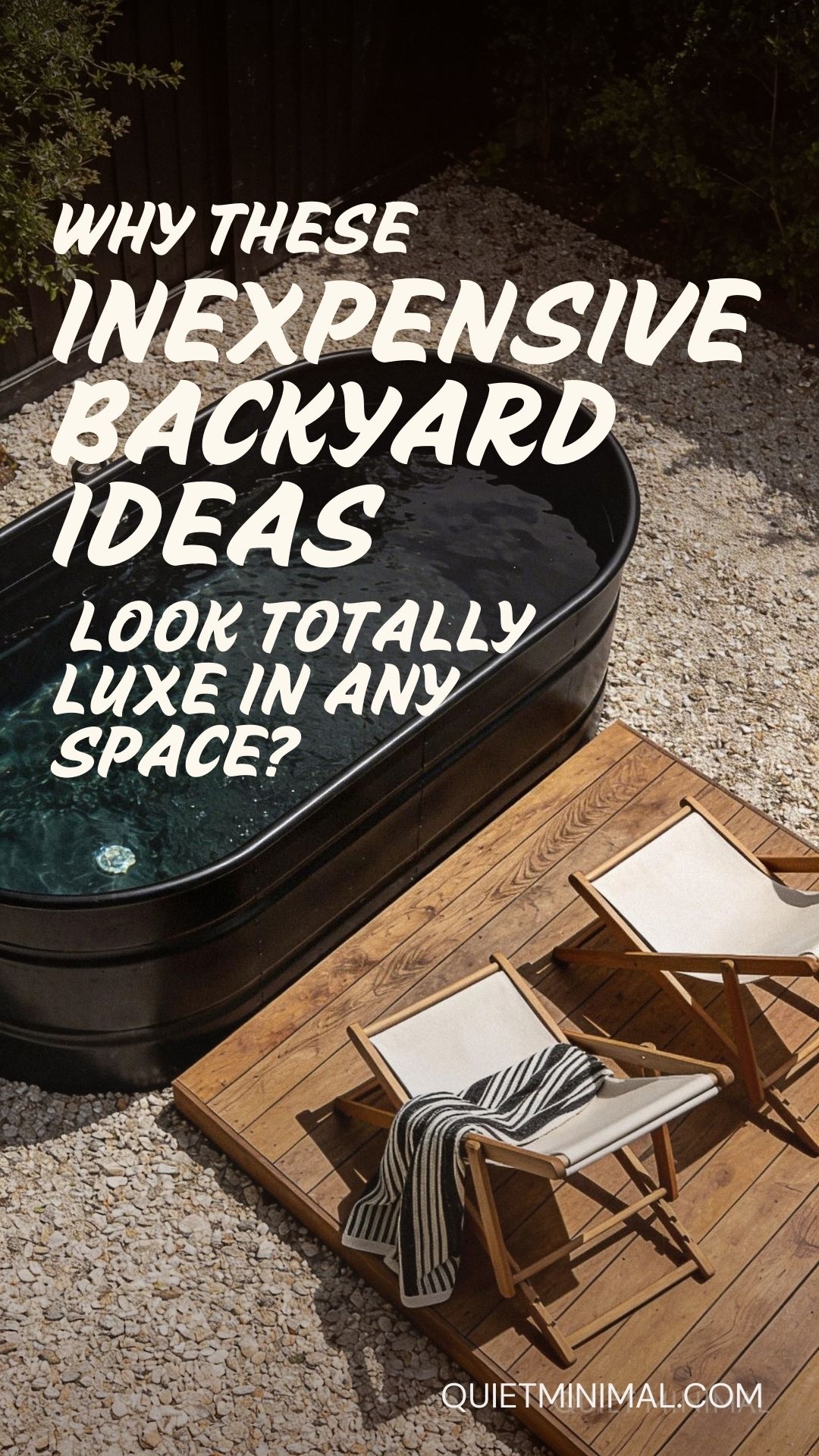
The stock tank is the idea people save most and measure least, so start with the sizes. The 8 ft (244 cm) round holds 700 gallons (2,650 L) at $549; the 6 ft (183 cm) round holds 400 gallons at $399; the 8 by 3 ft (244 by 91 cm) oval holds 300 gallons at $249; the 6 by 2 ft (183 by 61 cm) oval holds 170 gallons at $179. All are 24 in (61 cm) deep, a sit-and-soak depth, not a swim. Add a small above-ground pool filter pump at about $75 and a floating chlorine dispenser, and the water stays clear. Weight matters most: a full 8 ft tank weighs close to 6,000 lb (2,700 kg), so it needs a level 2 in (5 cm) pad of compacted sand or paver base on firm ground, never a deck. Place it in afternoon shade and paint the outside matte black with exterior metal paint.
Key Takeaway: Pick the size from the price table, budget $75 for the pump, and build a level compacted pad before the tank arrives.
 Save
A Vertical Garden Fills the Wall Nobody Was Using
 Save
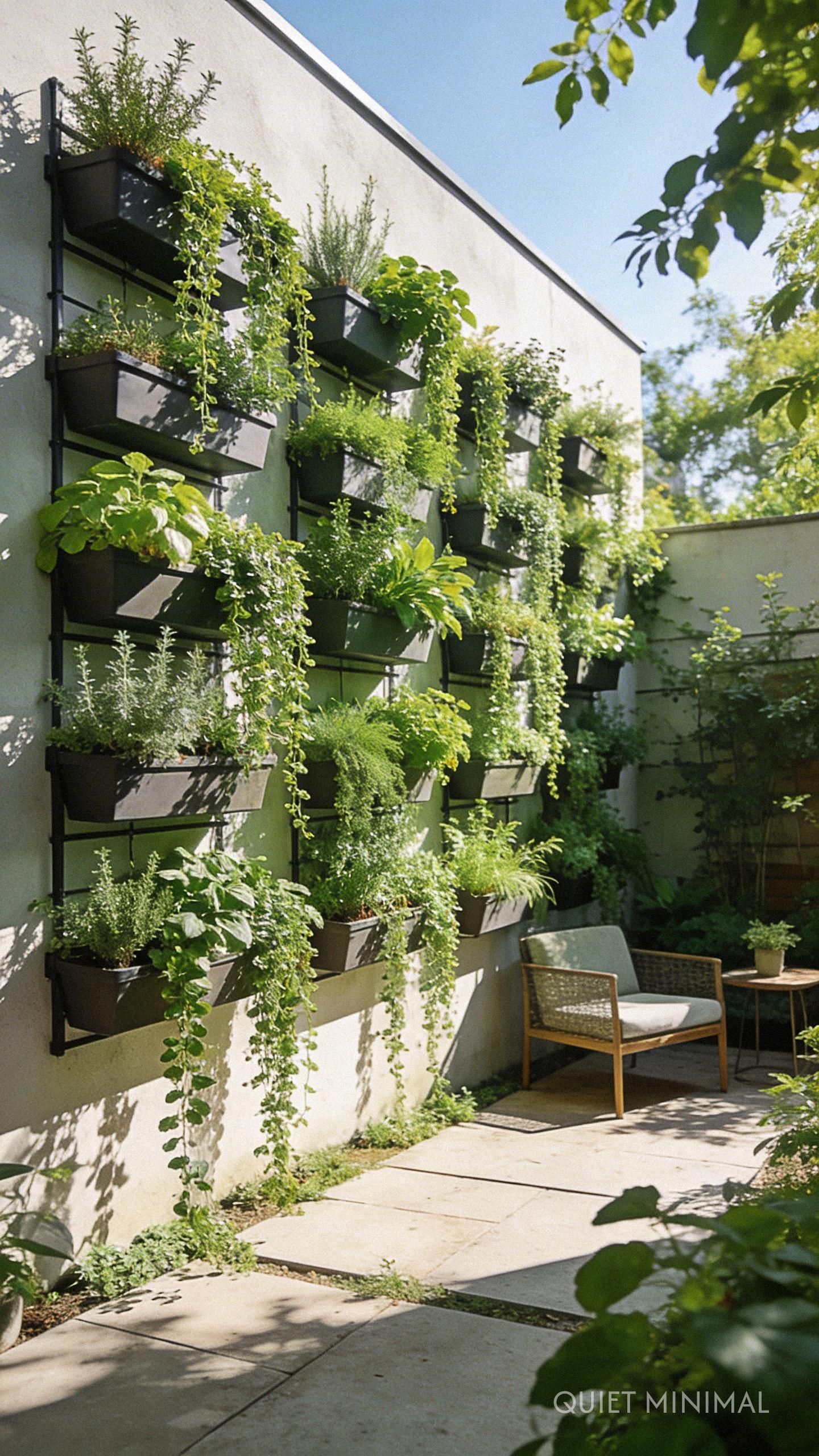
Every backyard has one blank wall, and the cheapest way to make it read as planting is to go up. A 4 by 6 ft (122 by 183 cm) cedar trellis panel screws into the siding on spacers so air moves behind it, and takes three rows of hanging pocket planters or a dozen hooked terracotta pots. Herbs are the right first crop: basil, thyme, parsley and mint want six hours of sun and shallow soil, so a wall facing south or east works and a north wall does not. Use potting mix, not garden soil, and water every other day in July because a 6 in (15 cm) pocket dries out in one afternoon. Keep the pots to one kind, all terracotta or all black. A wall of green at eye height turns the yard from a flat plane into a room with a back to it.
Key Takeaway: Mount a 4 by 6 ft (122 by 183 cm) trellis on a sun-facing wall, plant one kind of pot with herbs, and water on alternate days.
You've saved it, wanted it. Here's the how: codes, measurements, order. Your choices make it yours.


 Save
Scale, Shine and Sag: The Three Things That Read Cheap
 Save
Three faults undo more inexpensive backyards than any missing purchase. Scale is the first: a 5 by 7 ft (152 by 213 cm) rug under a dining set, a 12 in (30 cm) pot at the foot of a fence, all look like samples of the real thing. Buy fewer pieces and buy them bigger; one 8 by 10 ft (244 by 305 cm) rug beats two small ones. Shine is the second: glossy resin, bright white plastic chairs and mirror-finish steel announce their price, whereas matte black metal, wood, canvas and stone hide it. Sag is the third, and it covers anything that has given up its line: lights drooping between posts, cushions that have lost their fill, a hose across the gravel, a gate that hangs. Tension the lights, replace the cushions, wind the hose onto a wall hook, and a $300 yard reads as a considered one.
Key Takeaway: Go bigger and fewer, choose matte over shiny, and take every sag out of the yard before adding anything new.
Second-Hand Furniture Refinished Is the Piece Guests Ask About
 Save
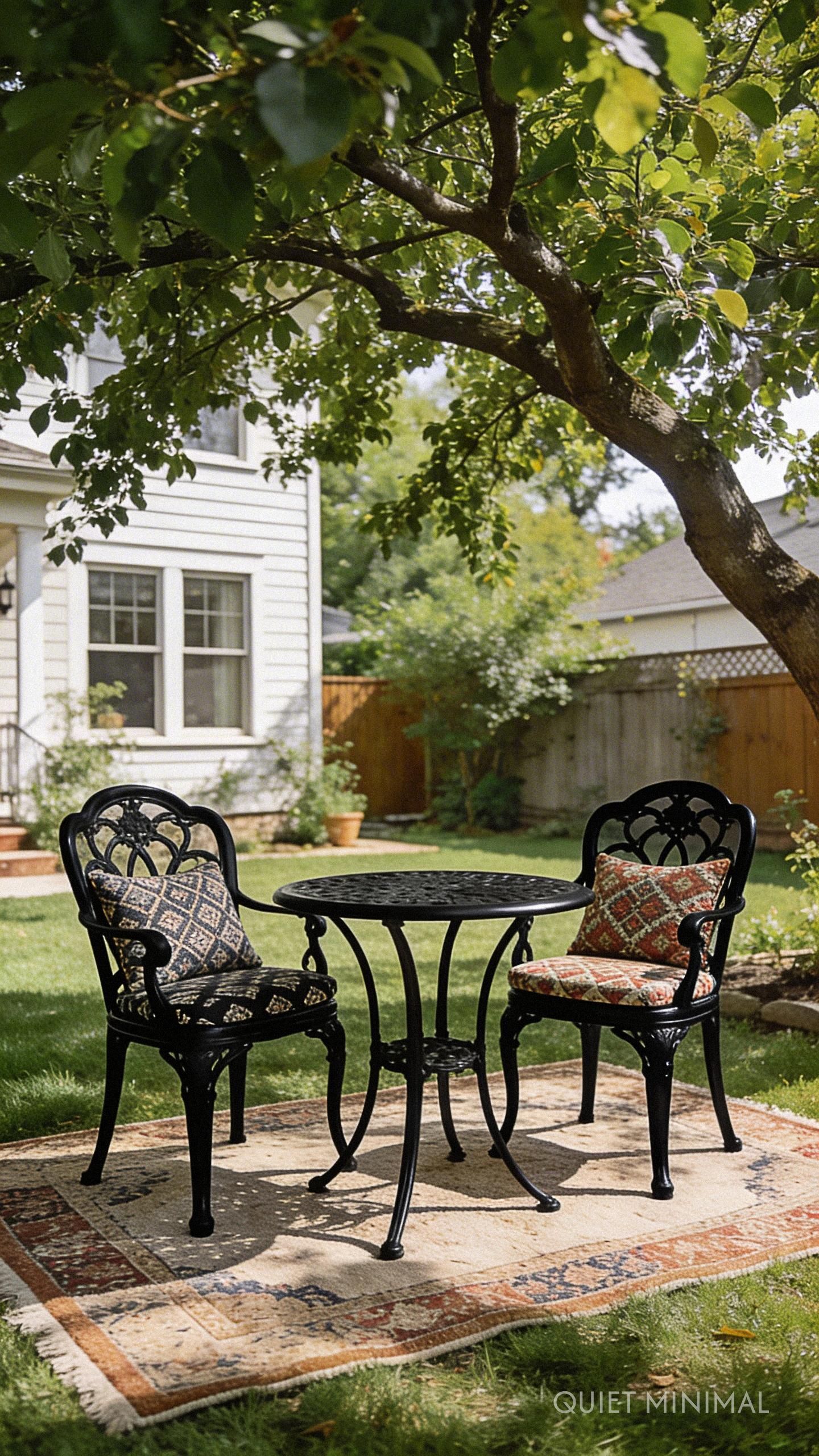
The furniture should come last and second-hand, because by then the yard has a backdrop, a floor and a ceiling, and any solid piece will look right in it. Search online marketplaces and estate sales for wrought iron, cast aluminium or solid teak, the three materials that survive a refinish, and skip anything with rusted-through welds, split wood or a woven seat that has begun to unravel. The order of work: scrub with degreaser, wire-brush the rust, sand wood to 120 grit, wipe clean, prime metal with a rust-inhibiting primer, then spray two thin coats of exterior enamel in matte black, an hour between coats and a full day before sitting on it. Plan on two cans per chair and four for a table. Teak needs no paint: sand, oil, done. New cushions in a solid oatmeal or charcoal outdoor fabric are what make the set read as expensive, so put the money there.
Key Takeaway: Buy iron, aluminium or teak second-hand, refinish it in matte black or oil, and spend the saving on solid-coloured cushions.
 Save
The Order of One Weekend, Friday Evening to Sunday Night
 Save
The projects above fit in one weekend only if they run in an order that respects drying times. Friday evening: clear the yard, wash the fence and mark the gravel room with spray chalk, so everything dries overnight. Saturday morning: first coat of stain on the fence. Saturday midday: cut the sod, lay the fabric and pin the edging, and set the light posts in their planters with concrete so it cures through the afternoon. Saturday late afternoon: second coat on the fence. Sunday morning: spread and rake the gravel, build the bench on its pads, place the planters along the screening edge. Sunday afternoon: run the guide wire, clip on the lights, lay the deck tiles and carry out the refinished furniture. Sunday evening is the first time you switch the lights on. The stock tank and the movie screen belong to a second weekend.
Key Takeaway: Stain first, dig second, set posts to cure, then gravel, bench, planters, lights and furniture, with the tank and the screen on a second weekend.
A DIY Movie Screen Turns the Fence Into a Cinema
 Save
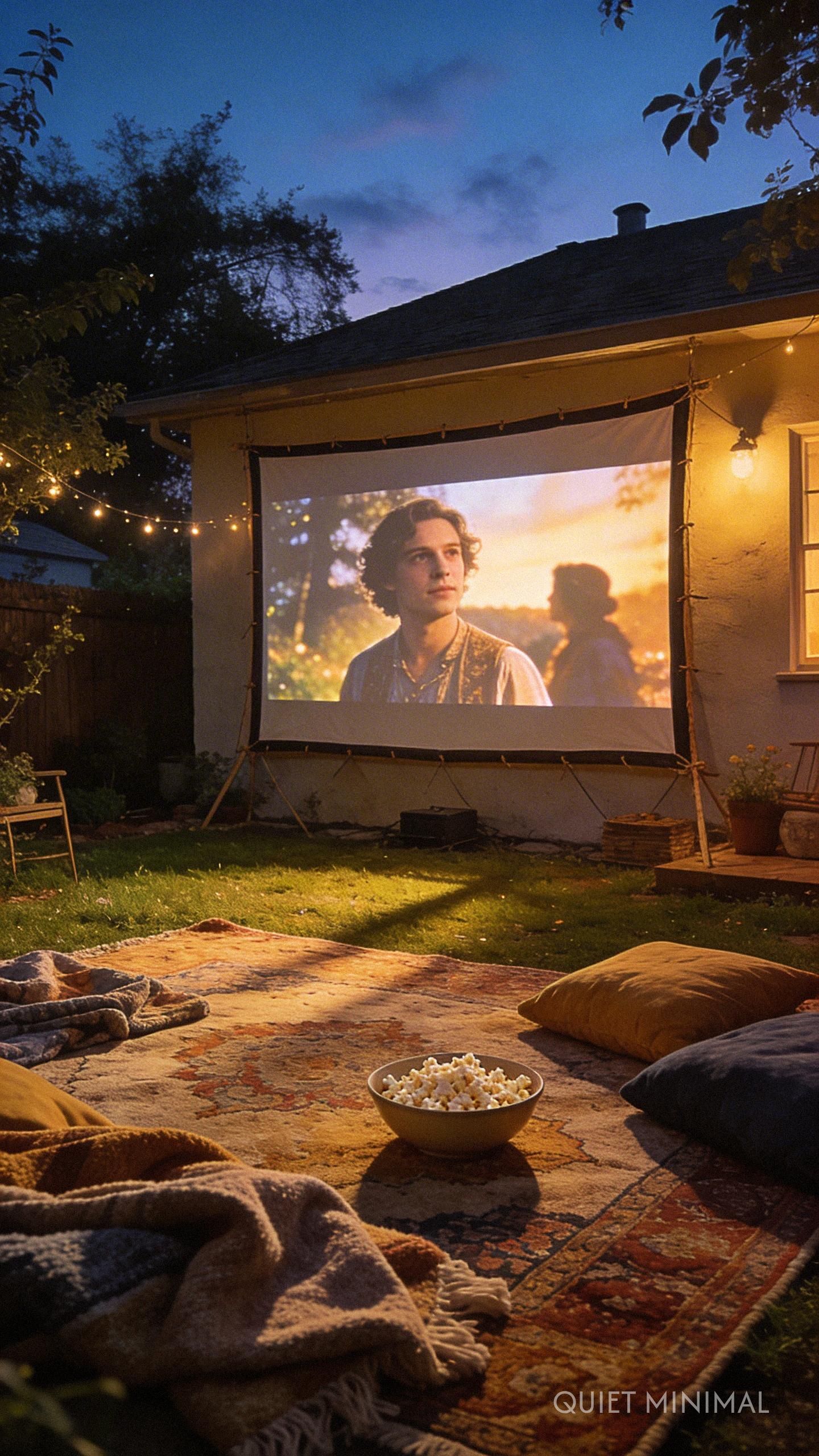
The projector screen is the least permanent idea here. Buy 3 yd (2.7 m) of 54 in (137 cm) wide white blackout cloth at $15 to $30 a yard and stretch it over a frame of 1×3 furring strips or 1 in (2.5 cm) PVC for a 100 in (254 cm) diagonal picture. Staple from the centre of each side outward so the cloth carries no ripples, then hang the frame on the dark fence with two hooks; against charcoal the white rectangle almost disappears by day. A 1080p projector now costs under $200 and at a typical throw ratio sits about 10 ft (3 m) back on a stool or the bench, so check the ratio on the box against your gravel room before buying. Wait for full dark, because a budget projector of 200 to 300 lumens washes out at dusk.
Key Takeaway: Three yards of blackout cloth on a light frame, a sub-$200 projector at about 10 ft (3 m), and full dark give you a 100 in (254 cm) cinema on the fence.
 Save
What to Leave Alone
 Save
 Save
The last part of the answer is a list of things that cost money and change nothing. The lawn is first: a worn patch of grass beside a gravel room looks fine. Leave mature shrubs and any tree, because their size is the one thing no budget can buy this year. Leave the concrete slab; cover it, never break it. Leave the fence panels themselves, since stain does the same job as replacement for two gallons. Leave the grading, meaning the slope that sends rain toward the lawn, and never let gravel or tiles change it. Leave any patio door, gate or hardware that works. The pattern is the same throughout: touch surfaces and colour, leave structure.
Key Takeaway: Keep the lawn, the trees, the slab, the fence structure, the grading and working hardware; spend only on surfaces and colour.
So, can an inexpensive backyard look luxe? Yes, when the money goes to the backdrop, the floor and the ceiling first, meaning a charcoal fence, a gravel room with a steel edge and a commercial-grade run of cafe lights, everything stays inside one palette and three materials, and the furniture arrives last and second-hand. The ten projects together cost less than one new dining set, and the order you do them in matters more than which you choose. Start this week with the fence stain: it is the cheapest change, it has to go first anyway, and once the backdrop is dark you will see exactly which room to draw next.
You've saved it, wanted it. Here's the how: codes, measurements, order. Your choices make it yours.
 Save