 Georgia
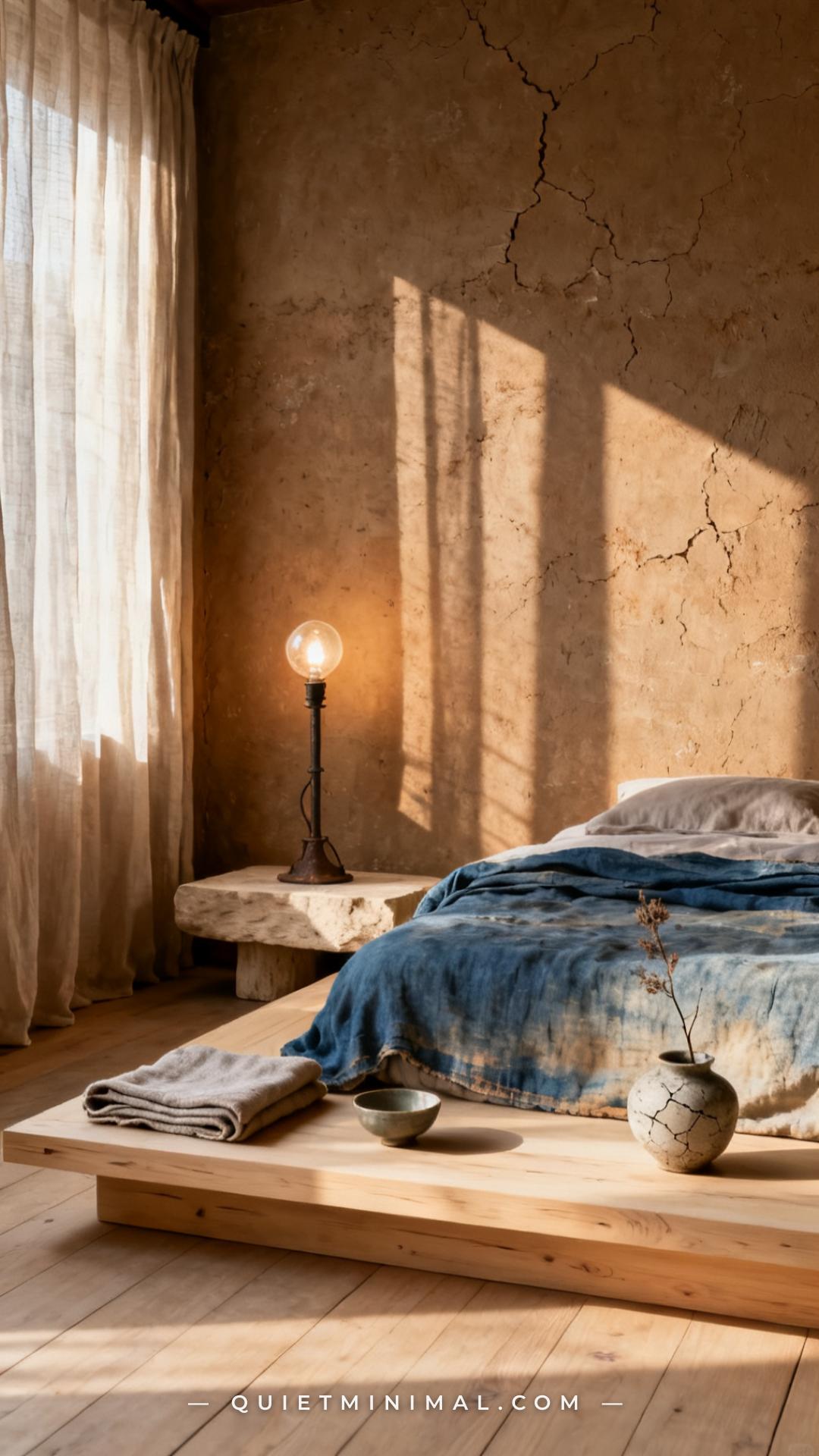
There is a specific kind of bedroom that stops you mid-scroll — no color, no clutter, no statement piece screaming for attention, just a room that feels like it has been quietly lived in for decades. That is wabi-sabi, and it is one of the hardest aesthetics to pull off because the margin between “beautifully imperfect” and “needs cleaning” is razor thin. The difference is almost always in the materials. Aged hinoki wood platform beds, cracked earth walls, worn indigo linen, and hand-forged iron lamps are not just stylistic choices — they are specific signals that tell a room apart from neglect. This article builds that room layer by layer, from the platform up, so you have a material-by-material guide you can actually shop and assemble.
1. Start With a Hinoki Wood Platform Bed (or Its Closest Western Stand-In)
 Save
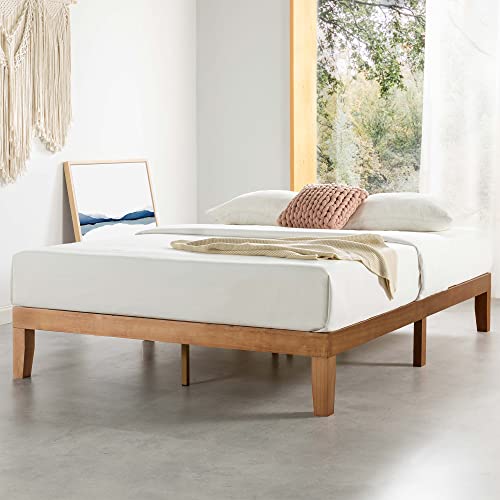
Hinoki is Japanese cypress — pale, honey-toned, with an almost medicinal oil that gives the wood a faint warm scent and natural resistance to moisture. In Japan it is used for both bath platforms and sleeping platforms precisely because the material ages gracefully: the grain darkens slightly over years of use without losing its quiet elegance. If a true hinoki bed frame is outside the budget, look for platform beds in white oak, ash, or birch with a matte, unfinished or oil-rubbed surface — the grain and tone read nearly identically in a finished room. Avoid lacquered, high-gloss, or dark-stained wood; those read as East Asian decorative revival rather than wabi-sabi. The platform itself should sit low — ideally 8 to 14 inches off the floor — to maintain the grounded, gravity-close relationship with the earth that is central to the aesthetic.
Key Takeaway: Choose a low, pale, matte-finish wood platform bed — hinoki is ideal, but ash or white oak with an oil finish is a faithful stand-in.
2. Build Cracked Earth Walls With Plaster or Limewash Paint
 Save
The wall is where wabi-sabi either reads as intentional or falls apart. A flat, smooth, perfectly painted wall is the fastest way to undercut every other material choice in the room. The cracked-earth quality described in the keyword comes from two techniques: limewash paint applied in overlapping, slightly dry strokes, or a genuine plaster skim coat left with its natural variation intact. Behr’s Limewash Paint line (verified on behr.com as of 2026) gives a DIY-accessible version of the effect, and Benjamin Moore’s “Pale Oak” OC-20 used as an undertone base before limewash application gives the wall that specific warm clay quality. The goal is a surface that looks like it has absorbed decades of light. If a full room feels too committed, apply the treatment to the wall behind the bed only — the contrast with smooth side walls actually intensifies the effect.
From the guides
You've saved it, wanted it. Here's the how: codes, measurements, order. Your choices make it yours.
 The Japandi Honest PlaybookThe honest version of the style: what to keep, what to skip, and the order to do it in.See inside →
 The Room Refresh PlaybookA repeatable four-step method, room by room, in ten minutes, thirty minutes, or one weekend.See inside →
 Make Any Room Feel Cozy on PurposeWhy some rooms hold people and others empty out, and the moves that change it.See inside →
Key Takeaway: Use limewash paint or a skim plaster coat on the wall behind the bed — tonal variation and slight texture are the goal, not coverage.

3. Layer Worn Indigo Linen as the Bedding Foundation
 Save
Indigo linen is the textile heart of this aesthetic. The color — historically significant in Japanese boro and sashiko fabric traditions — brings the only saturated note into a room that is otherwise all neutrals. The critical word is “worn”: new, vibrant indigo reads as a color statement; washed, slightly faded indigo reads as aged, lived-in, and wabi-sabi-appropriate. Look for linen duvet covers described as “stonewashed,” “enzyme-washed,” or “pre-washed” — these treatments simulate years of laundering and give the fabric its characteristic softness and tonal variation. Pair with undyed natural linen pillowcases in an oatmeal or warm ivory tone rather than matching indigo on everything; the contrast between the faded blue and the raw natural linen is what gives the bedding its layered, collected quality.
Key Takeaway: Choose stonewashed or enzyme-washed indigo linen — the pre-faded, soft texture is what separates wabi-sabi bedding from a basic blue duvet.

4. Choose an Iron Lamp That Looks Hand-Forged, Not Factory-Made
 Save
Lighting in a wabi-sabi bedroom should look like it belongs in a pottery studio or a Kyoto inn — not in a boutique hotel lobby. The iron lamp serves as one of the room’s only dark anchors, providing visual weight in a palette that is otherwise all light and muted neutrals. What to look for: a blackened or oxidized iron base (not spray-painted black, which reads shiny and cheap), an irregular or slightly asymmetric form that suggests hand-fabrication, and either an exposed bare-bulb design or a simple linen drum shade in undyed natural linen. Bulb choice matters: a warm globe bulb (2200K–2700K) in amber glass preserves the organic warmth of the room. A bright white LED bulb will flatten every material in the room and undo the atmosphere completely.
Key Takeaway: An iron lamp with a blackened, oxidized finish and a warm amber globe bulb is the room’s dark anchor — get the bulb temperature right or the whole palette goes flat.

5. Use a Tatami-Inspired Rug or Seagrass Mat Under the Bed
 Save
The floor in a Japanese bedroom is rarely bare and rarely buried under a thick, plush rug. The traditional reference point is tatami — a tightly woven reed mat with a firm, flat surface and a distinctive grid or herringbone weave texture. In a Western bedroom, the closest readily available equivalent is a natural seagrass mat, a jute flatweave, or a sisal rug in a tight, low-pile construction. These materials have the pale, dry, slightly rough quality that reads as wabi-sabi appropriate; a thick shag or a Persian-style rug would introduce a visual register that fights the rest of the room. Size the rug to extend about 24 inches beyond the sides of the bed so bare feet land on it in the morning — the tactile experience of a firm, natural-fiber surface is part of the aesthetic’s sensory intention.
Key Takeaway: A flat, natural-fiber rug in seagrass, jute, or sisal reads as tatami-inspired — avoid thick pile or patterned rugs that contradict the wabi-sabi material language.

6. Add a Low Wooden Side Table With Raw-Edge or Live-Edge Detail
 Save
Side tables in this aesthetic should look like they came from a woodworker’s studio rather than a furniture showroom. A raw-edge or live-edge slab table in pale wood — roughly 14 to 18 inches tall to match a low platform bed height — carries the same material honesty as the hinoki platform. The irregular edge of a live slab is a literal expression of wabi-sabi: the wood retains its natural form, and the character of the tree is still visible in the finished piece. If a live-edge piece is over budget, a simple cube or block table in unfinished or oil-rubbed ash achieves a similar effect at a lower price point. Avoid glass-top, mirrored, or lacquered side tables — these materials read as contemporary glam and will visually clash with the rest of the room’s intentional rawness.
Key Takeaway: A low live-edge or oil-finished wood side table reads as wabi-sabi appropriate — match its height to the low platform bed or it will feel oddly formal.

7. Introduce Cracked or Imperfect Ceramics as Decor Vessels
 Save
Ceramics in a wabi-sabi room are not accessories in the conventional sense — they are the room’s most honest material storytellers. Look specifically for pieces with wabi-sabi-aligned characteristics: uneven walls, visible throwing lines, cracked or crazed glazes (the fine crackle pattern across a glaze surface is called “crazing” and is a deliberate aesthetic technique in Japanese ceramics), rough unglazed foot rings, and matte or semi-matte finishes in earthy tones — sandy beige, iron grey, ash white, or the faint olive tone of celadon. These do not need to be expensive artisan pieces; mass-market ceramics with organic shapes and matte finishes from brands like Bloomingville, Meraki, and several Amazon sellers serve the purpose well. Place them at floor level, on low shelves, or on the bedside table rather than on high surfaces — keeping objects low reinforces the room’s gravitational pull.
Key Takeaway: Ceramics with crazing, uneven walls, or rough unglazed surfaces are not “imperfect” — they are the aesthetic’s most specific material signal.

8. Hang Sheer Undyed Linen Curtains Instead of Blackout Panels
 Save
Blackout curtains optimized for light control are practical, but they work against the wabi-sabi bedroom’s central visual quality, which is diffused, softened natural light. The room should feel like light is being filtered through washi paper or thin cloud cover — present everywhere but never harsh. Sheer, undyed linen curtains in a natural oatmeal or warm ivory tone achieve this perfectly: they reduce harsh glare, soften the light entering the room, and add another layer of the raw linen material that carries through the bedding and the overall palette. Hang them from a simple blackened iron rod — this echoes the iron lamp and gives the window a consistent material register with the rest of the room. Let the panels pool slightly on the floor; that casual excess is a very specific wabi-sabi signal.
Key Takeaway: Sheer undyed linen curtains pooling softly at the floor are more wabi-sabi than any blackout panel — the diffused light they create is part of the aesthetic’s mood.

9. Keep the Nightstand Arrangement Minimal — Three Objects Maximum
 Save
One of the fastest ways to undermine a wabi-sabi bedroom is treating the nightstand as a general deposit zone. The aesthetic is not just about material choice — it is about negative space, which means the objects that ARE present must earn their place. A wabi-sabi nightstand holds three objects at most: a light source, a vessel of some kind (ceramic bowl, cracked stoneware cup, small iron holder), and one organic element (a dried stem, a smooth stone, a piece of moss or bark). The discipline of editing down to three objects is what gives the surface its stillness. Consider removing even the phone — charging it outside the bedroom, even temporarily, completes the visual intention in a way that a charging cable snaking across a wood slab cannot.
Key Takeaway: Three objects maximum on the nightstand — a light source, a vessel, and one organic element — is the edit that gives the surface its wabi-sabi stillness.

10. Source a Handmade Indigo Throw Blanket for the Bed’s Foot
 Save
The throw at the foot of the bed is where you can introduce the deepest tone in the room’s indigo spectrum without overwhelming the neutral palette. A hand-loomed or hand-block-printed throw in a deeper indigo or midnight navy — especially one with visible weaving irregularity or an intentionally uneven hem — adds both tactile richness and a direct reference to Japanese boro textile traditions, where indigo-dyed fabrics were layered, patched, and repaired as a matter of craft. Drape it asymmetrically rather than folding it in a perfect rectangle — a slightly casual, lived-in arrangement communicates that this is a room that gets used, which is very much the point. The throw should be linen or a linen-cotton blend rather than fleece or velvet, keeping the material register consistent.
From the guides
You've saved it, wanted it. Here's the how: codes, measurements, order. Your choices make it yours.
The Japandi Honest PlaybookThe honest version of the style: what to keep, what to skip, and the order to do it in.See inside →The Room Refresh PlaybookA repeatable four-step method, room by room, in ten minutes, thirty minutes, or one weekend.See inside →Make Any Room Feel Cozy on PurposeWhy some rooms hold people and others empty out, and the moves that change it.See inside →Key Takeaway: A hand-loomed indigo throw draped asymmetrically at the foot of the bed connects the room to Japanese textile history and deepens the bedding’s tonal range.

11. Use Dried Botanicals Instead of Fresh Flowers
 Save
Fresh flowers are too temporary and too overtly decorative for a room built around the idea of quiet, unassuming longevity. Dried botanicals — pampas grass, dried wheat stalks, poppy seedheads, preserved eucalyptus, or Japanese knotweed — bring the same organic presence as fresh flowers but in a form that aligns with wabi-sabi’s appreciation for things that age and change without intervention. The color range of most dried botanicals (pale straw, warm sand, faded ivory) fits perfectly within the room’s neutral palette. Arrange them in the tall cracked-glaze stoneware vessels you sourced for Step 7, grouping two or three vessels of varying heights in a floor corner rather than on a surface — low placement stays consistent with the room’s grounded aesthetic.
Key Takeaway: Dried botanicals in grouped stoneware vessels at floor level are a more wabi-sabi-aligned choice than fresh flowers, and they improve rather than fade over months.

12. Apply a Wabi-Sabi Edit to the Closet Door or Room Entryway
 Save
The room’s entryway or closet door is often the last thing considered in a bedroom design and the first thing that fractures the aesthetic if left as-is. A standard hollow-core door with a polished-nickel handle is a modern contractor default that sits at odds with everything the wabi-sabi room is trying to communicate. Two achievable interventions: replace the interior door with a simple shoji-panel inspired sliding door in pale wood and frosted or washi-paper-style glass, or replace the door entirely with a floor-length undyed linen curtain panel hung from a blackened iron track. The curtain option is the lower-commitment, renter-friendly version — it takes a standard tension rod or track mount, costs significantly less than a door replacement, and adds a softness to the room’s entry that a solid door never could.
Key Takeaway: A linen curtain panel hung from a blackened iron track replaces a closet or interior door with a wabi-sabi-appropriate alternative that costs a fraction of a door replacement.

13. Keep the Palette to Four Materials — and Resist Adding More
 Save
The most common mistake in building a wabi-sabi bedroom is treating it as a license to collect more things — more textures, more natural materials, more “intentional” objects. The philosophy points in the opposite direction. Once you have the four core materials in place — pale aged wood, cracked earth plaster, worn indigo linen, and blackened iron — the discipline is to stop. Every additional material introduced into the room dilutes the visual quiet that makes the aesthetic work. No rattan, no macramé, no white shiplap, no gallery wall, no succulents on every surface. Those are different aesthetics, and mixing them with wabi-sabi creates a room that reads as “collected neutral things” rather than “Japanese-informed material philosophy.” The edit is the design. What you remove is as important as what you choose.
Key Takeaway: Four materials — pale wood, cracked earth plaster, worn indigo linen, and blackened iron — is the complete palette; every addition after that works against the aesthetic, not with it.

A wabi-sabi bedroom is not decorated — it is edited. Start with the platform bed and the wall behind it, get those two materials right, and the rest of the room has a foundation to build from. Layer the indigo linen, add the iron lamp, and then resist the pull to fill every surface. The rooms that genuinely stop people mid-scroll on Pinterest are the ones where something has been left out on purpose. That restraint is not minimalism for its own sake — it is the direct expression of what wabi-sabi has always meant: finding the most honest version of a thing, and letting that be enough. Start with one element from this list this week, and build slowly from there.
From the guides
You've saved it, wanted it. Here's the how: codes, measurements, order. Your choices make it yours.
The Japandi Honest PlaybookThe honest version of the style: what to keep, what to skip, and the order to do it in.See inside →The Room Refresh PlaybookA repeatable four-step method, room by room, in ten minutes, thirty minutes, or one weekend.See inside →Make Any Room Feel Cozy on PurposeWhy some rooms hold people and others empty out, and the moves that change it.See inside →


