 Georgia
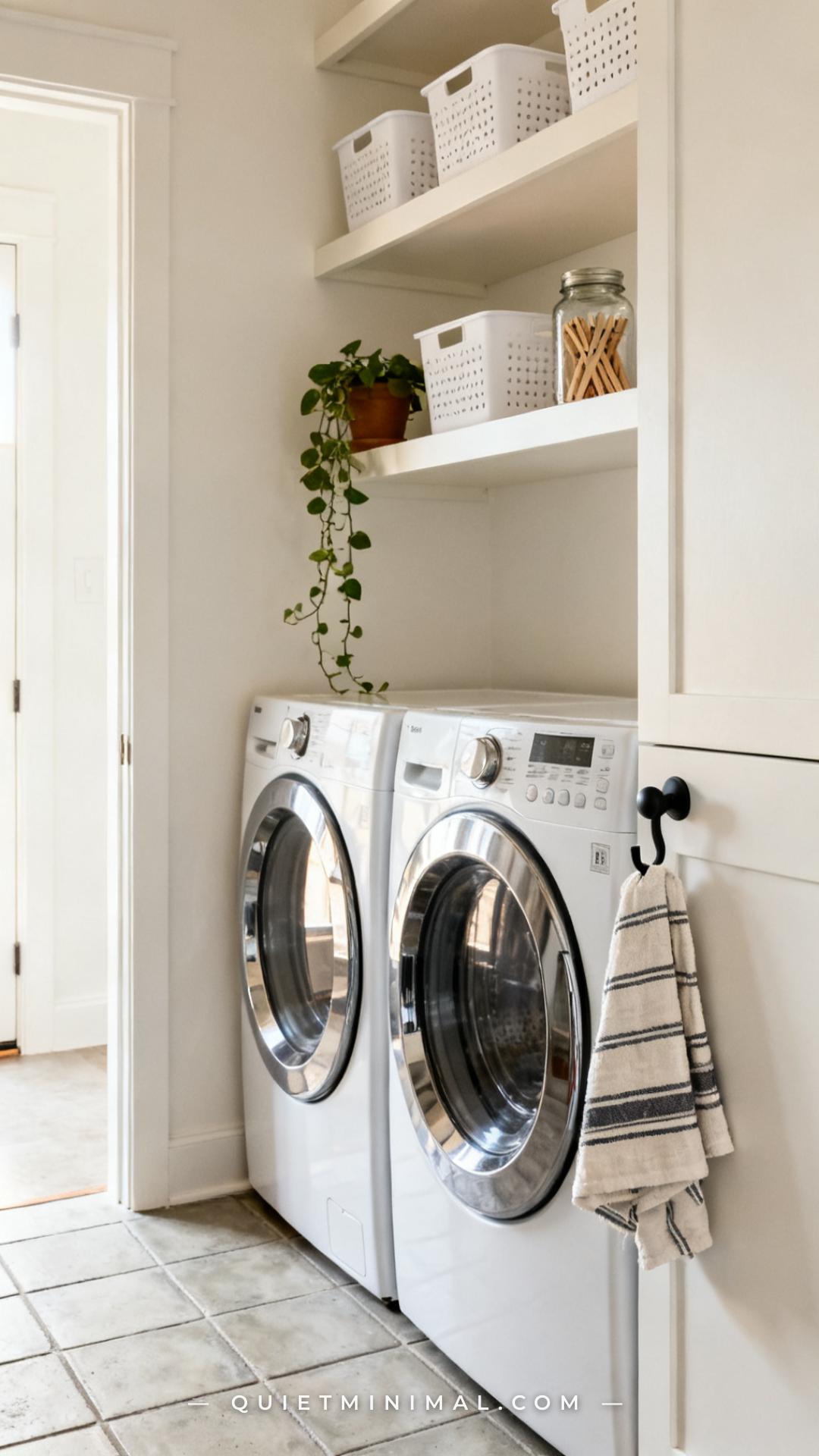
If your laundry space is more “closet with a prayer” than “Pinterest shiplap dream room,” you are not alone — and you don’t need to spend hundreds of dollars to make it functional and even a little beautiful. The real problem with most laundry organization advice is that it assumes you have a full room, a drill, and a Saturday to spare. Most of us have none of those things. What you do have is vertical wall space, a few horizontal inches above and beside the machines, and a genuine desire to stop losing socks in the chaos. These 11 laundry room organization ideas work on a small budget, in small spaces, and — critically — without requiring you to own the building.
1. Add a Tension Rod Below Your Shelf for Hanging Space
 Save
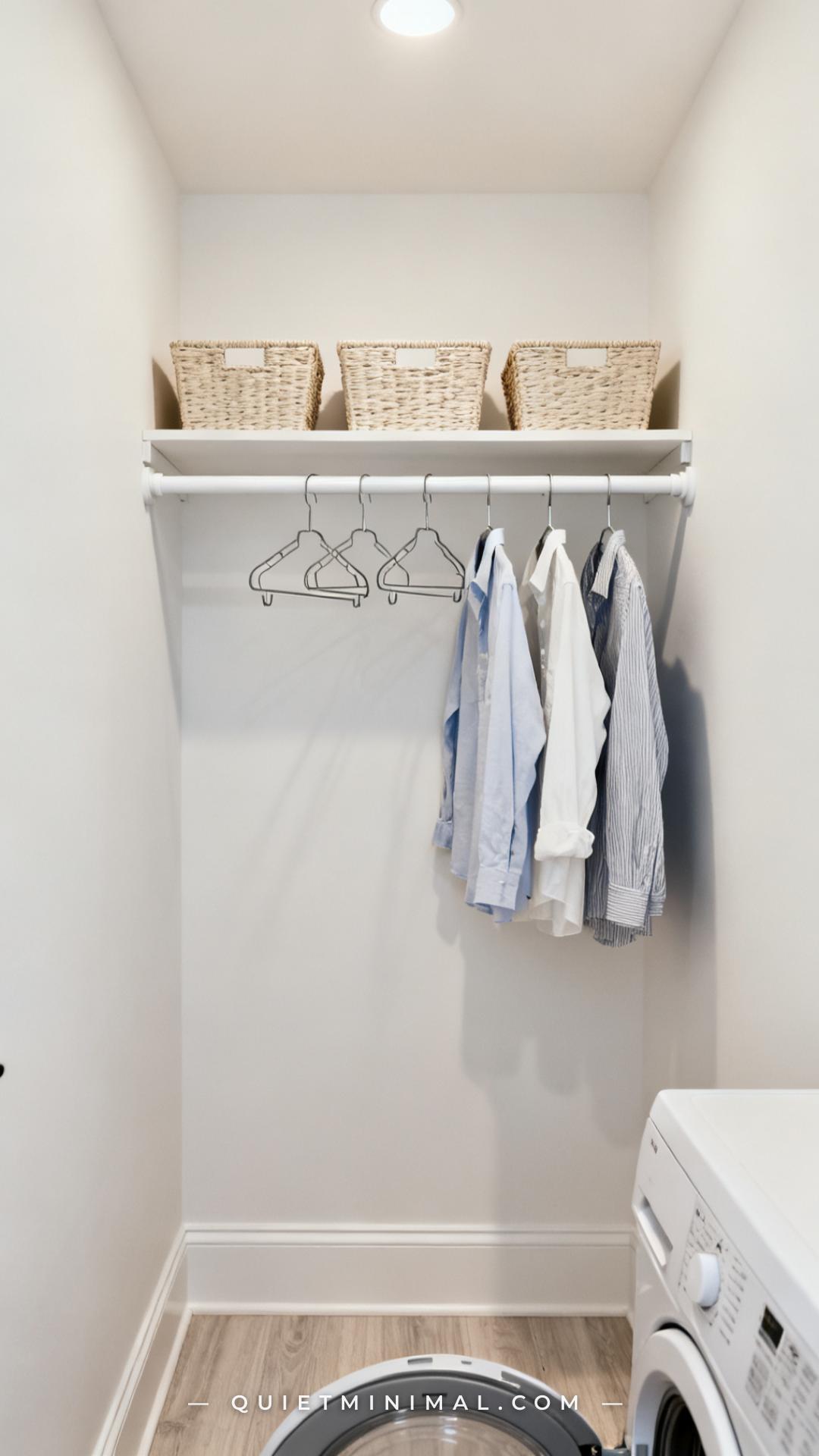
Most laundry closets have a shelf above the machines and nothing below it — which means that whole zone between the shelf and the top of the dryer is wasted air. A tension rod dropped into that gap gives you an instant hanging bar for dress shirts and blouses that can’t go in the dryer. No drilling, no hardware, no landlord call required. The rod springs between the two side walls and holds more weight than it looks like it should. Add a handful of matching slim-profile hangers and the section suddenly looks intentional instead of improvised.
The other underused version of this trick: a second tension rod mounted inside a cabinet door or closet wall lower down, used to hold a spray bottle, a small mesh pouch of dryer sheets, or even a narrow basket on S-hooks.
From the guides
You've saved it, wanted it. Here's the how: codes, measurements, order. Your choices make it yours.
 The Japandi Honest PlaybookThe honest version of the style: what to keep, what to skip, and the order to do it in.See inside →
 The Room Refresh PlaybookA repeatable four-step method, room by room, in ten minutes, thirty minutes, or one weekend.See inside →
 Make Any Room Feel Cozy on PurposeWhy some rooms hold people and others empty out, and the moves that change it.See inside →
Key Takeaway: A tension rod is the single highest-ROI laundry upgrade — under $10, installs in 30 seconds, and frees up shelf space you didn’t know you had.
2. Stack Matching Bins on Top of the Dryer
 Save
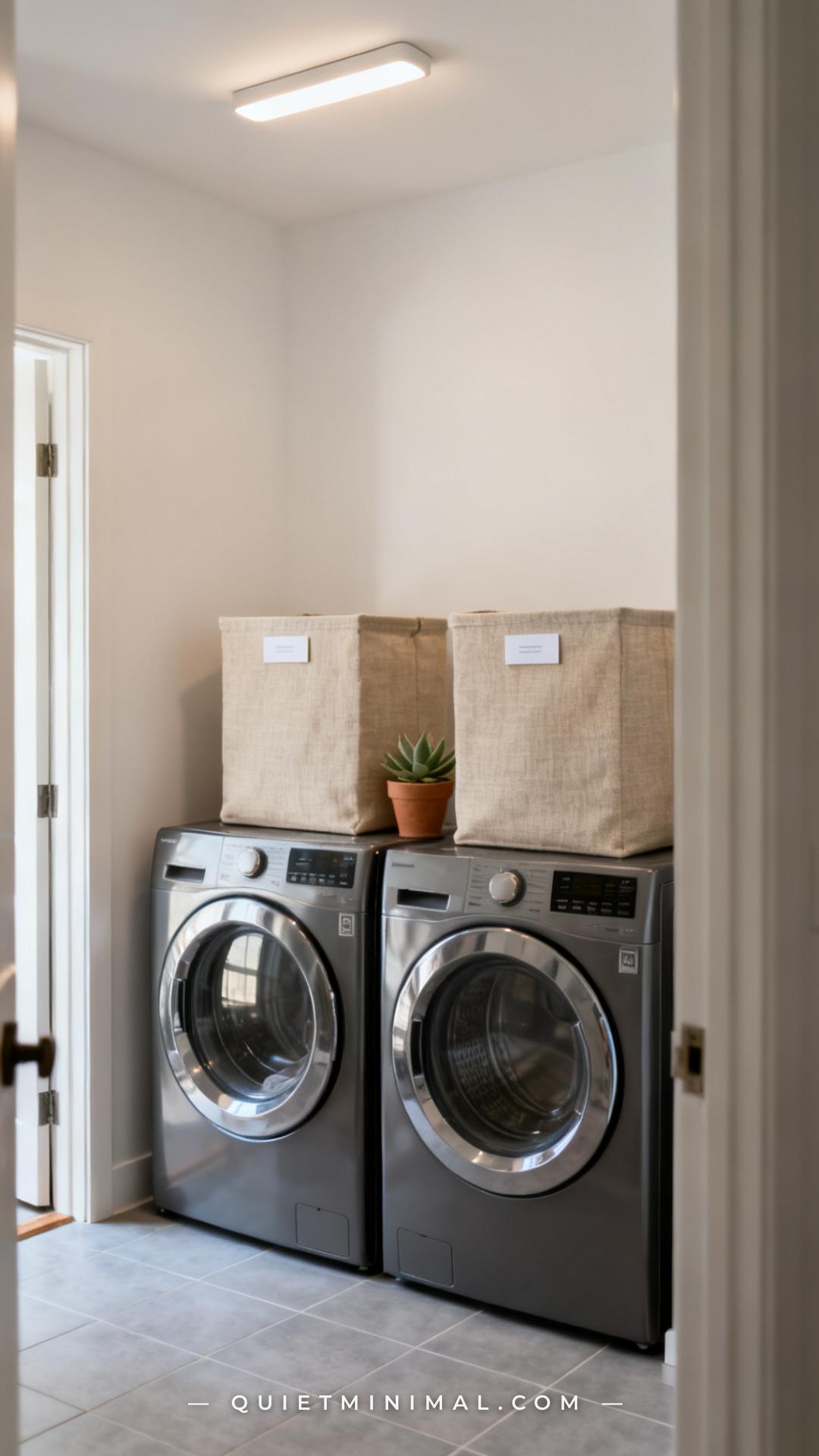
The top of the dryer is premium real estate that most people treat as a staging area for things that don’t have homes yet. Reclaim it with two or three matching fabric bins — the kind with stiff sides that hold their shape. Use one for items that need to air dry flat, one for single socks waiting for their match, and one for cleaning supplies you reach for constantly (lint roller, stain pen, dryer balls). The matching part matters more than you’d think. Identical bins make a space read as organized even when it isn’t perfectly so — your eye registers the pattern as intention.
Look for bins at Target’s Dollar Spot section or IKEA’s utility aisle. The goal is visual calm, not a magazine set. If every bin is the same color and roughly the same size, you’re already ahead of most laundry rooms.
Key Takeaway: Matching bins on the dryer top turn the most-used surface in your laundry space into storage you can see and reach without creating visual chaos.
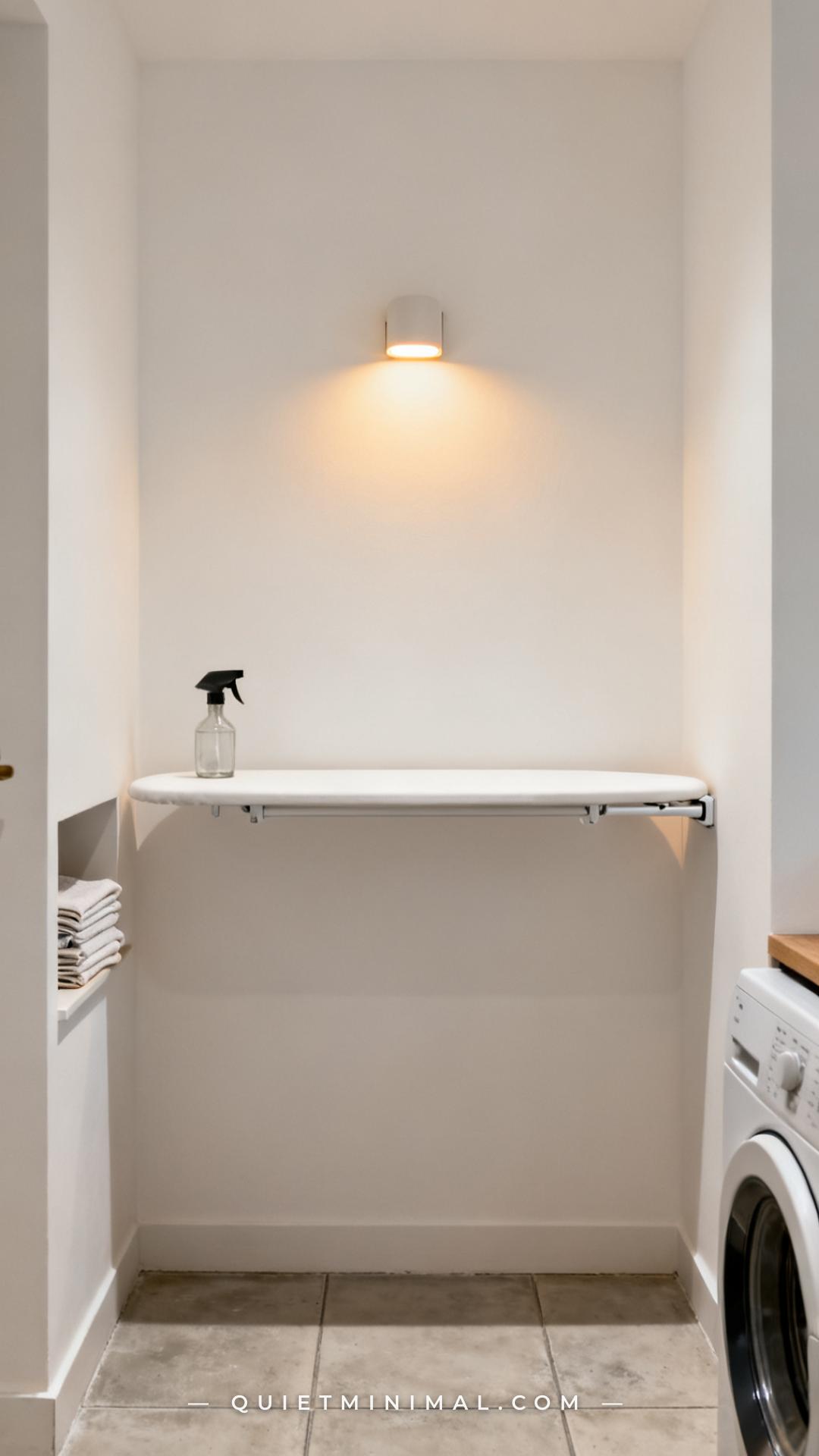
3. Mount a Fold-Down Ironing Board on the Wall
 Save
A traditional ironing board takes up floor space you don’t have. A wall-mounted fold-down version solves the same problem, takes 10 minutes to install with two screws, and folds completely flat against the wall when you’re done — effectively disappearing. Several versions are available at Wayfair and Amazon at an accessible price point, and most come with a built-in iron holder bracket on the side.
If you’re renting and can’t put holes in the wall, look for over-door versions that hang from the top of a door frame. They’re slightly less stable but accomplish the same visual and functional goal without any permanent installation. Either version frees up your floor entirely, which makes even the smallest laundry space feel noticeably less cramped.
Key Takeaway: Switching from a freestanding ironing board to a fold-down wall version is the fastest way to recover actual floor space in a small laundry room.
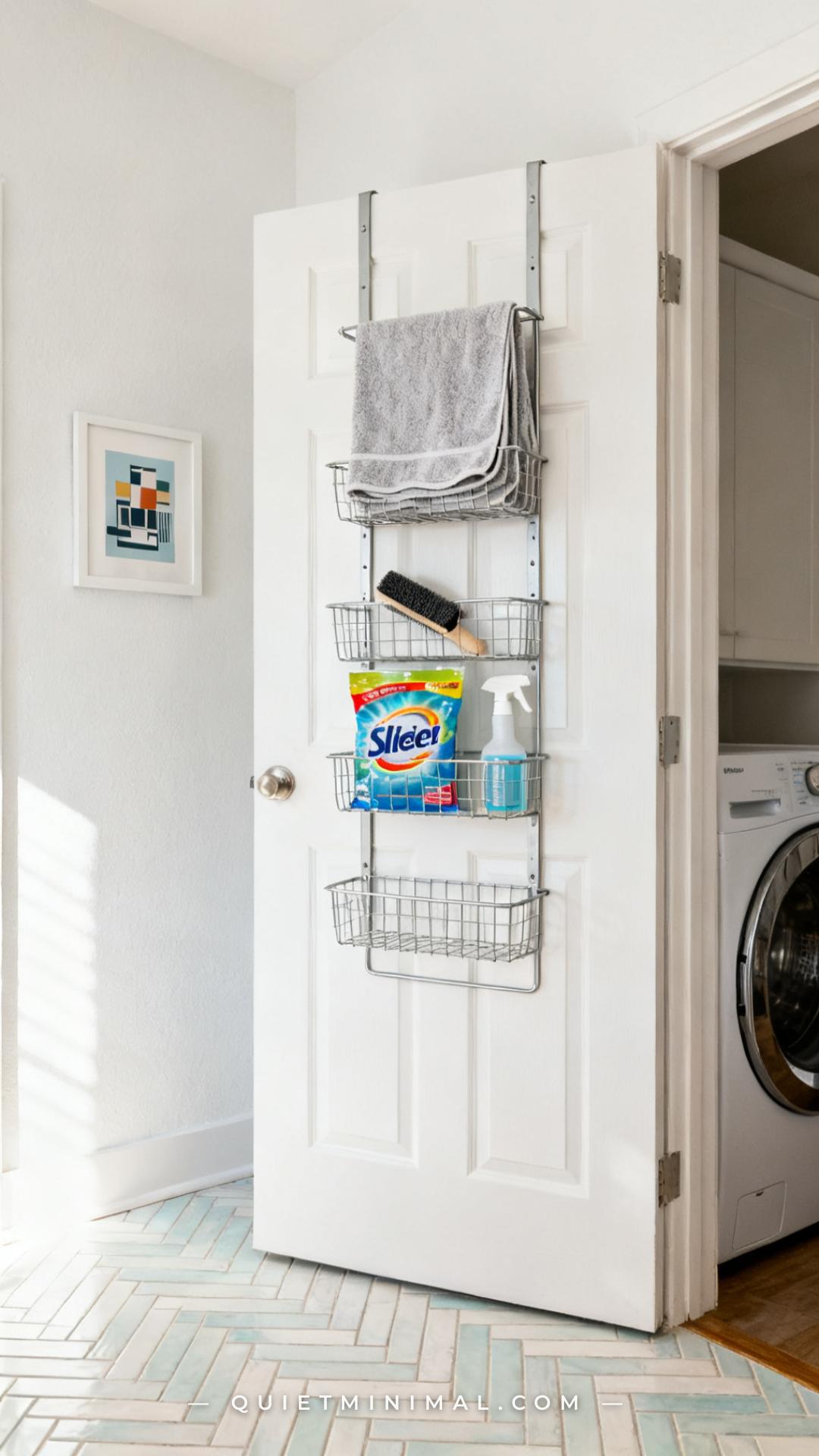
4. Use an Over-Door Organizer for Supplies
 Save
The back of the laundry room door is almost always empty, and it can hold an enormous amount of small-item chaos without taking up any floor or shelf space. An over-door organizer with wire or fabric pockets is ideal for stain remover, extra dryer sheets, a lint roller, and the dozen other small supplies that currently live in a tangled pile on the shelf above the machine. Most options are available at Target, Amazon, or The Container Store, and the installation requires zero tools — the hooks sit over the top of the door edge.
If your door doesn’t fully close with the organizer attached (common in tight laundry closets), look for slim-profile versions specifically designed for narrow clearances. The extra 10 minutes spent measuring the door clearance before you buy will save you a return trip.
Key Takeaway: The back of your laundry door holds more storage than most people realize — an over-door organizer there solves the “small supplies everywhere” problem permanently.
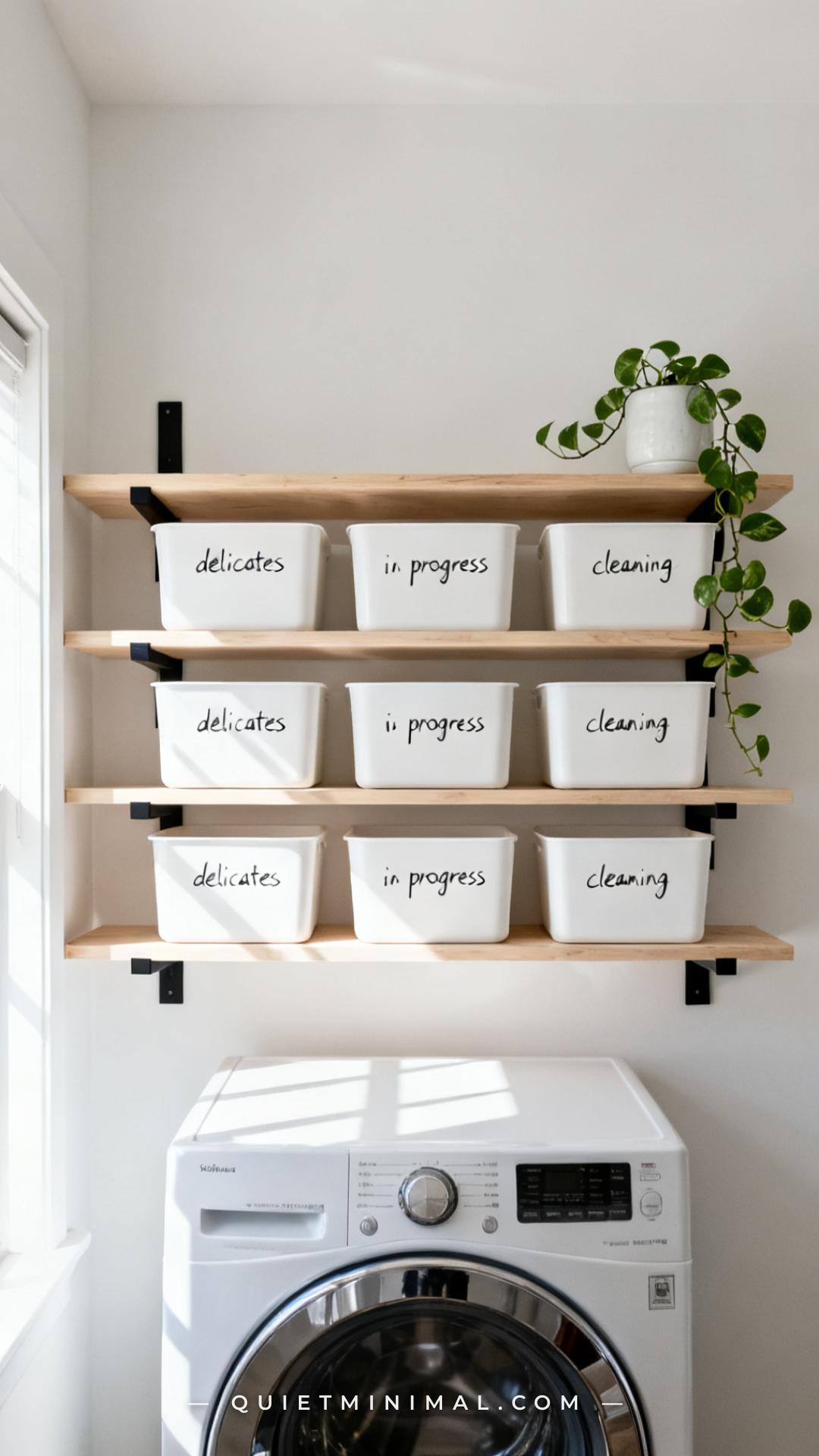
5. Label Everything (Yes, Really)
 Save
Labeling feels like a step too far until you live with it for a week and realize you’ve stopped asking where things go. Labels don’t need to be a craft project — a labelmaker, a strip of washi tape with a handwritten marker, or a set of chalkboard label stickers all do the same job. The goal is to make every bin self-explanatory so that putting things away takes no mental effort at all.
For a laundry-specific system, useful categories include: in-progress (items that need rewashing or rewearing), hand wash only, and donate/repair. These three categories alone eliminate the piles that form on top of the dryer when something doesn’t fit neatly into “clean” or “dirty.”
Key Takeaway: Labels remove the decision-making from putting things away — the single step that causes most organization systems to fall apart over time.
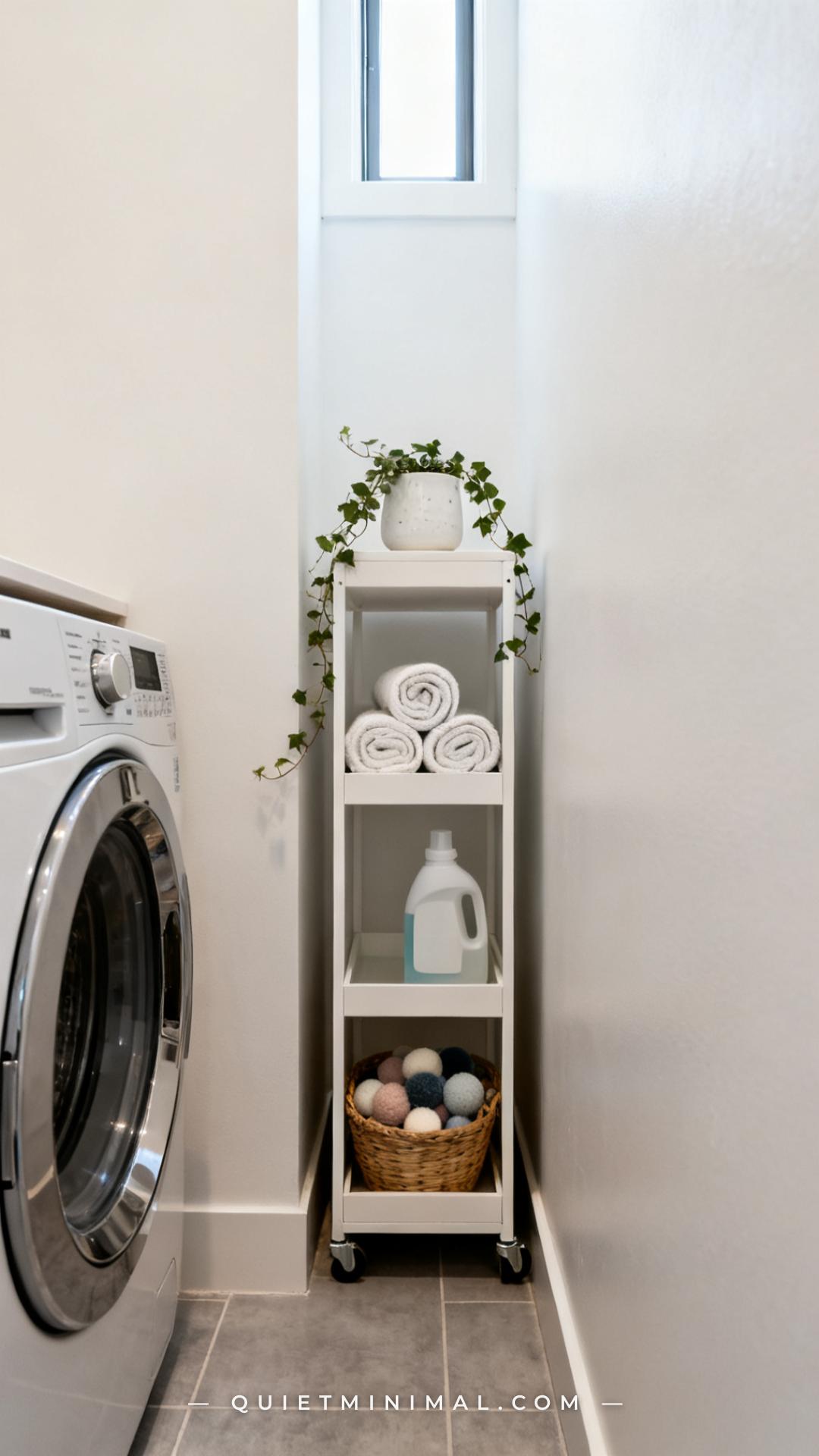
6. Add a Slim Rolling Cart Between the Machines and the Wall
 Save
The gap between your washing machine and the wall — usually two to five inches — is ignored by most people. A slim rolling utility cart (sometimes called a “narrow laundry caddy” or “between-washer cart”) fits into that space and slides out when you need it. Most hold laundry detergent, fabric softener, and dryer balls on four or five open shelves, and they roll on wheels so you can reach the machines for maintenance without disassembling anything.
Look for versions specifically sized at 4 inches, 5 inches, or 6 inches wide depending on your gap. IKEA, Amazon, and Wayfair all stock them. White or chrome finishes work in most laundry setups. This is the kind of addition that makes people who see it immediately ask why they waited so long — it uses dead space without adding any visual clutter.
Key Takeaway: A slim rolling cart turns the side gap beside your machines into organized vertical storage without touching your walls or floor footprint.
7. Swap Mismatched Bottles for Decanted Containers
 Save
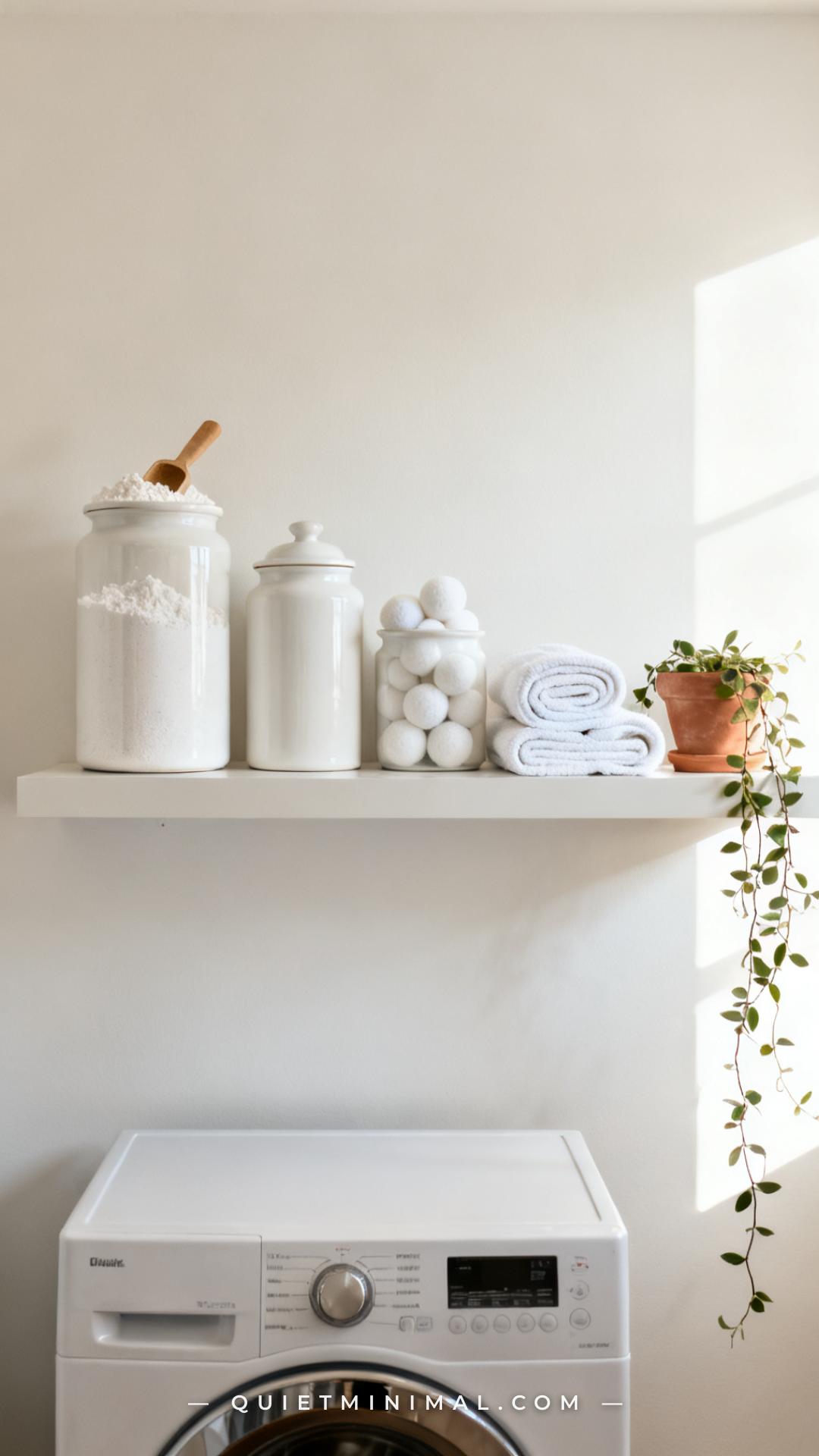
This is the single change that most transforms how a small laundry space feels. Detergent bottles come in every color, shape, and label style — and when four of them sit on the same shelf together, the space looks like a supply closet regardless of how well organized it is. Moving your detergent, dryer sheets, and small supplies into matching apothecary jars or labeled containers takes about 20 minutes and costs almost nothing if you use glass jars you already own.
For powdered detergent, any wide-mouth glass jar with a small scoop works. For pods, a clear canister with a lid keeps moisture out and lets you see the count at a glance. Decanting isn’t about being precious — it’s about reducing visual noise so that the space reads as organized rather than as a supply closet.
From the guides
You've saved it, wanted it. Here's the how: codes, measurements, order. Your choices make it yours.
The Japandi Honest PlaybookThe honest version of the style: what to keep, what to skip, and the order to do it in.See inside →The Room Refresh PlaybookA repeatable four-step method, room by room, in ten minutes, thirty minutes, or one weekend.See inside →Make Any Room Feel Cozy on PurposeWhy some rooms hold people and others empty out, and the moves that change it.See inside →Key Takeaway: Decanting laundry supplies into matching containers does more visual work per dollar than almost any other small-budget organization change.
8. Install Floating Shelves Above the Machines
 Save
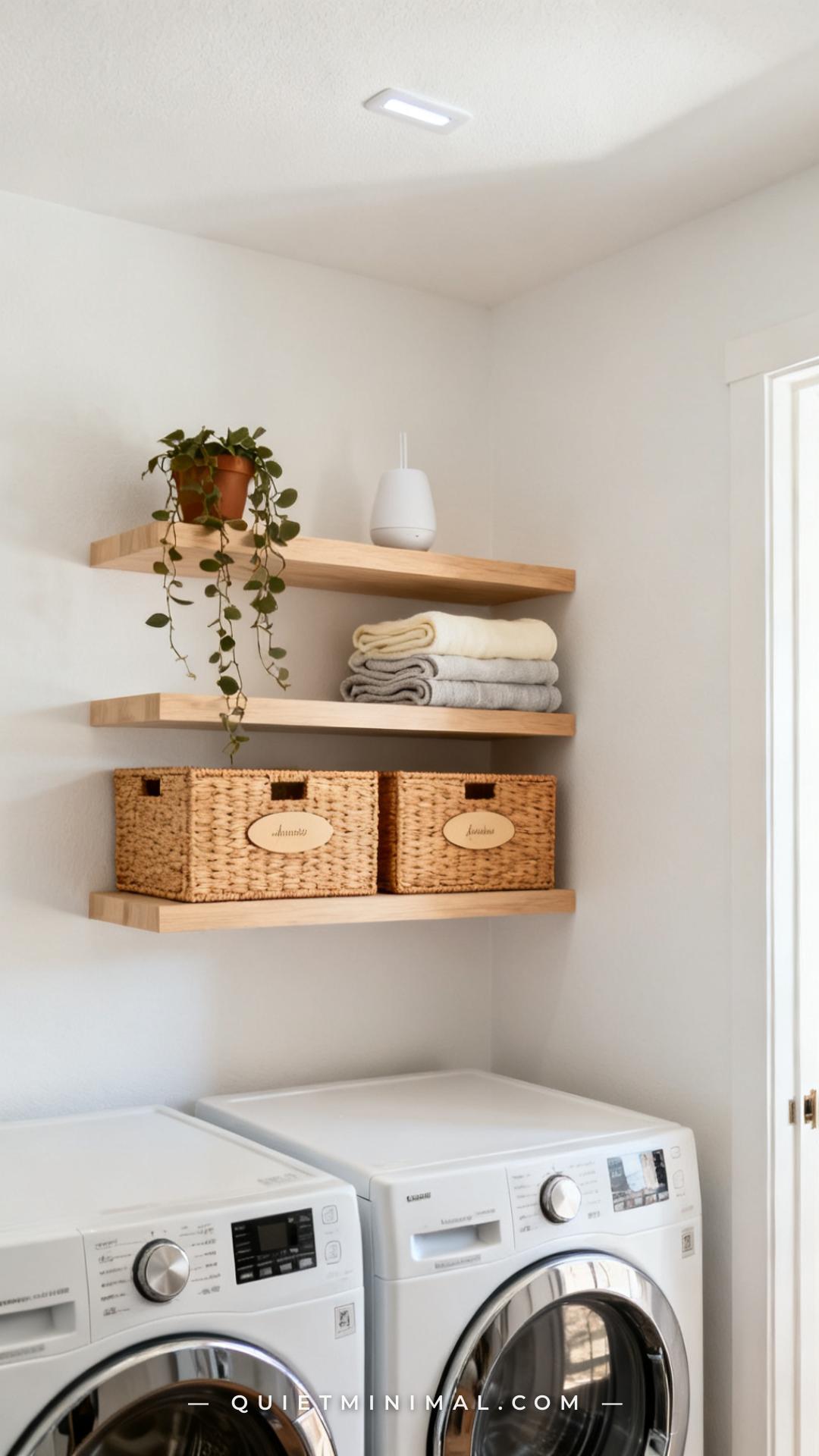
If your laundry space has bare wall above the machines and you’re allowed to put holes in it, floating shelves are the highest-return investment available at a small-budget price. A pair of 24-inch floating shelves from IKEA’s LACK line or any home improvement retailer will cost under $30 for both and add 10–15 feet of usable horizontal storage space. That’s enough for your detergent display, a few baskets, a plant, and the things that currently don’t have homes.
The key is to not overfill them. Two shelves well-curated look significantly better than three shelves crammed. Use the lower shelf for active supplies (what you reach for every laundry day) and the upper shelf for display or deep storage (extras, seasonal items, the plant). This visual layering — functional near the bottom, decorative near the top — is what makes laundry shelves look intentional rather than just “more storage.”
Key Takeaway: Floating shelves above the machines are the highest-impact, lowest-cost structural upgrade available in a small laundry space — use them vertically as a two-tier system, not one flat row.
9. Use a Wall-Mounted Drying Rack Instead of a Floor Rack
 Save
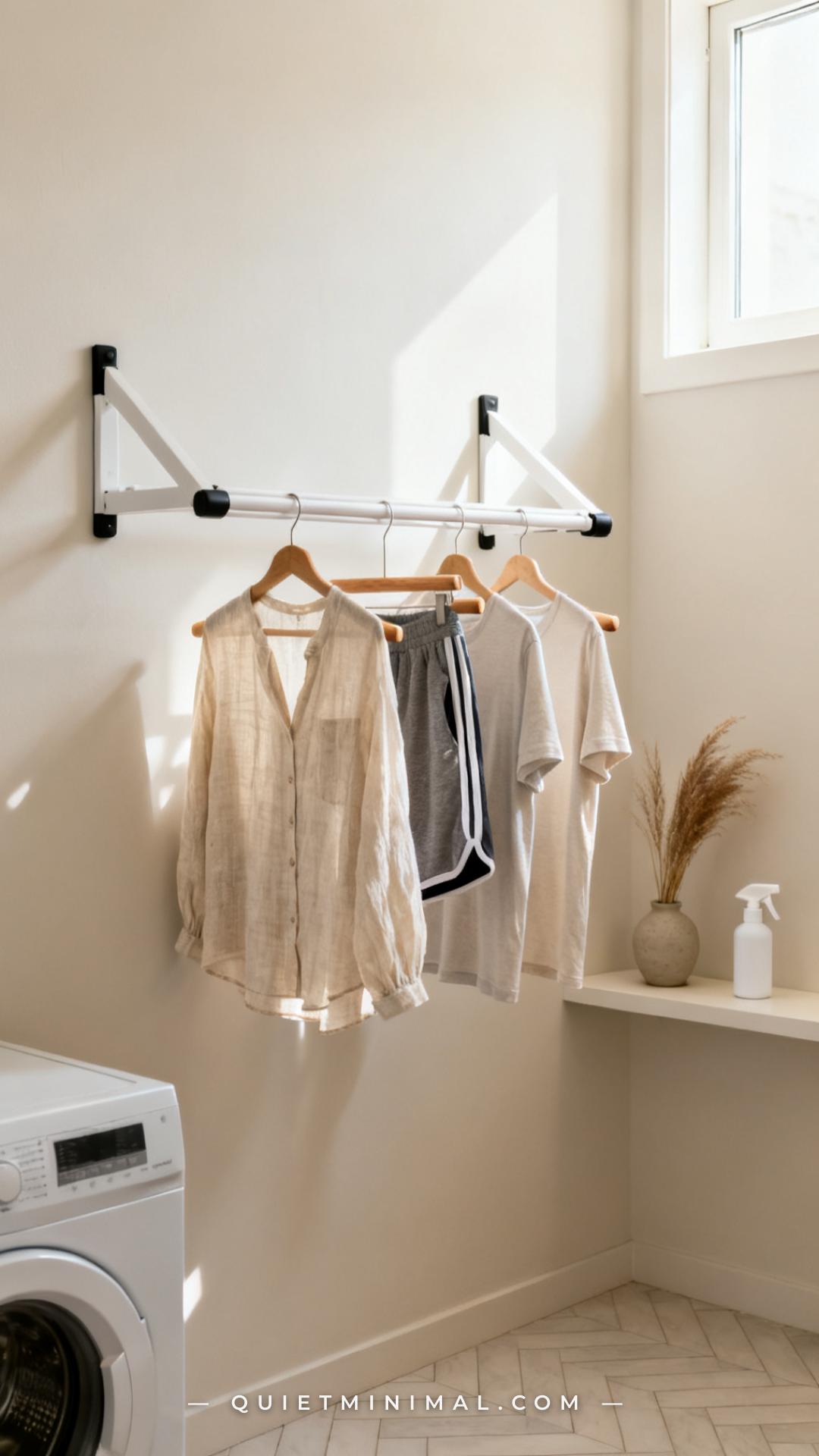
A freestanding drying rack is one of the most space-hostile objects in a small laundry setup — it has a wide footprint, tips over, and can’t be moved without reorganizing the whole room. A wall-mounted folding drying rack solves every one of those problems: it mounts flat against the wall when not in use and extends out to a full rack when you need it. Most versions mount with four screws and hold 15–20 lbs of wet garments without any flex.
If you can’t drill into the wall, over-door drying racks that hang from the door’s top edge accomplish the same result with no installation. They’re slightly less stable under heavy loads but work perfectly well for delicates, intimates, and lighter items. Either version reclaims significant floor space compared to a traditional freestanding rack.
Key Takeaway: A wall-mount or over-door drying rack removes one of the largest floor-space violators from the room without sacrificing any of the function.
10. Create a Lost-Sock Station
 Save
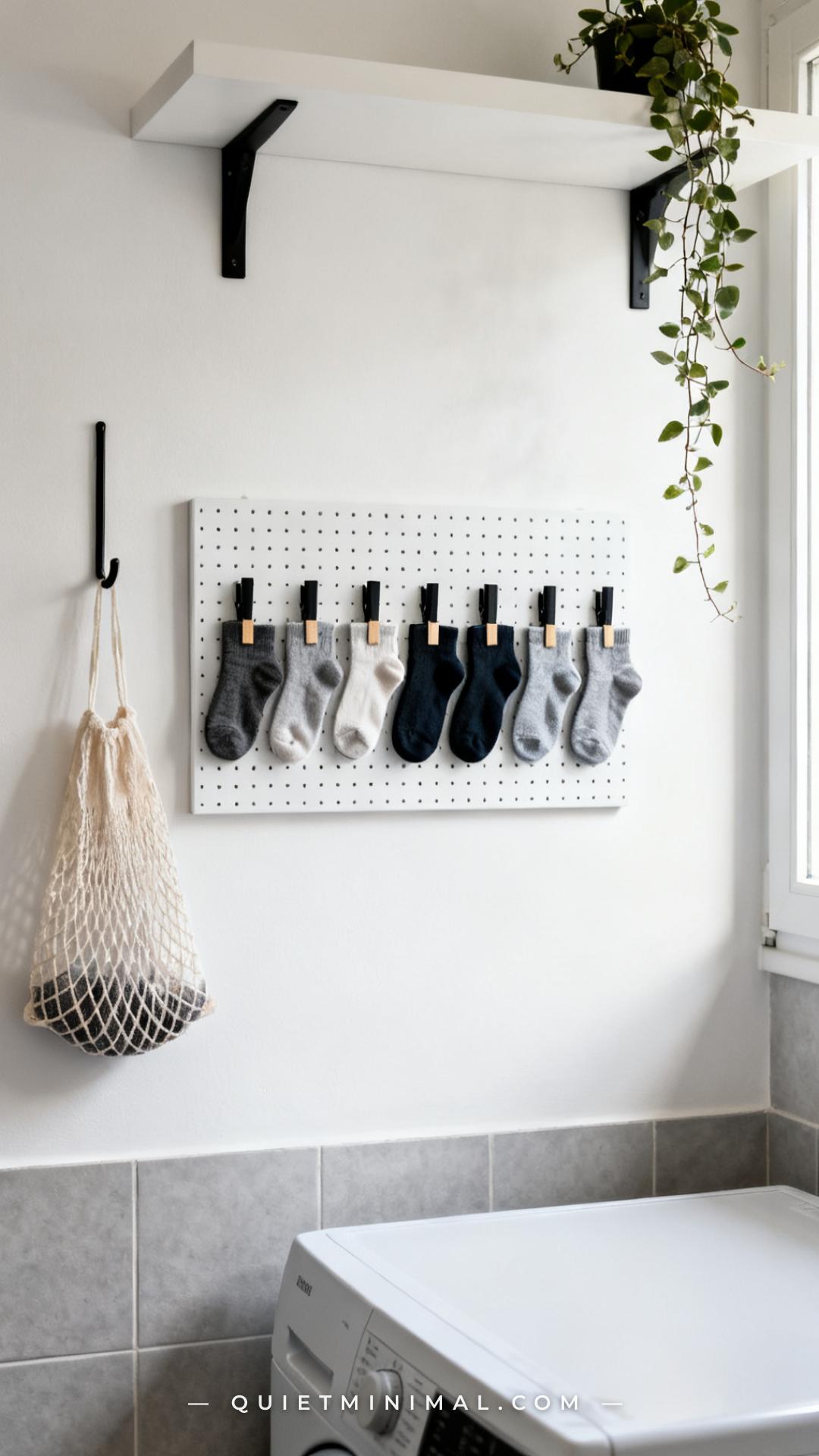
The lost-sock problem is not a sorting problem — it’s a holding problem. Socks go missing because there’s no designated place for the single that comes out of the dryer without its pair. A small pegboard section, a fabric wall pocket, or even a simple hook with a clip holds unmatched socks in a visible, specific spot until their match turns up in a future load. When the match appears, pair them immediately instead of adding a second orphan to the pile.
This works because it creates a rule: a single sock with no match goes to the station, not on top of the dryer. It costs nothing if you use a hook or a small piece of pegboard you already have, and it eliminates the most psychologically irritating part of doing laundry.
Key Takeaway: A lost-sock station works because it turns a vague problem (“where are all the socks?”) into a specific, visible system with a clear rule attached to it.
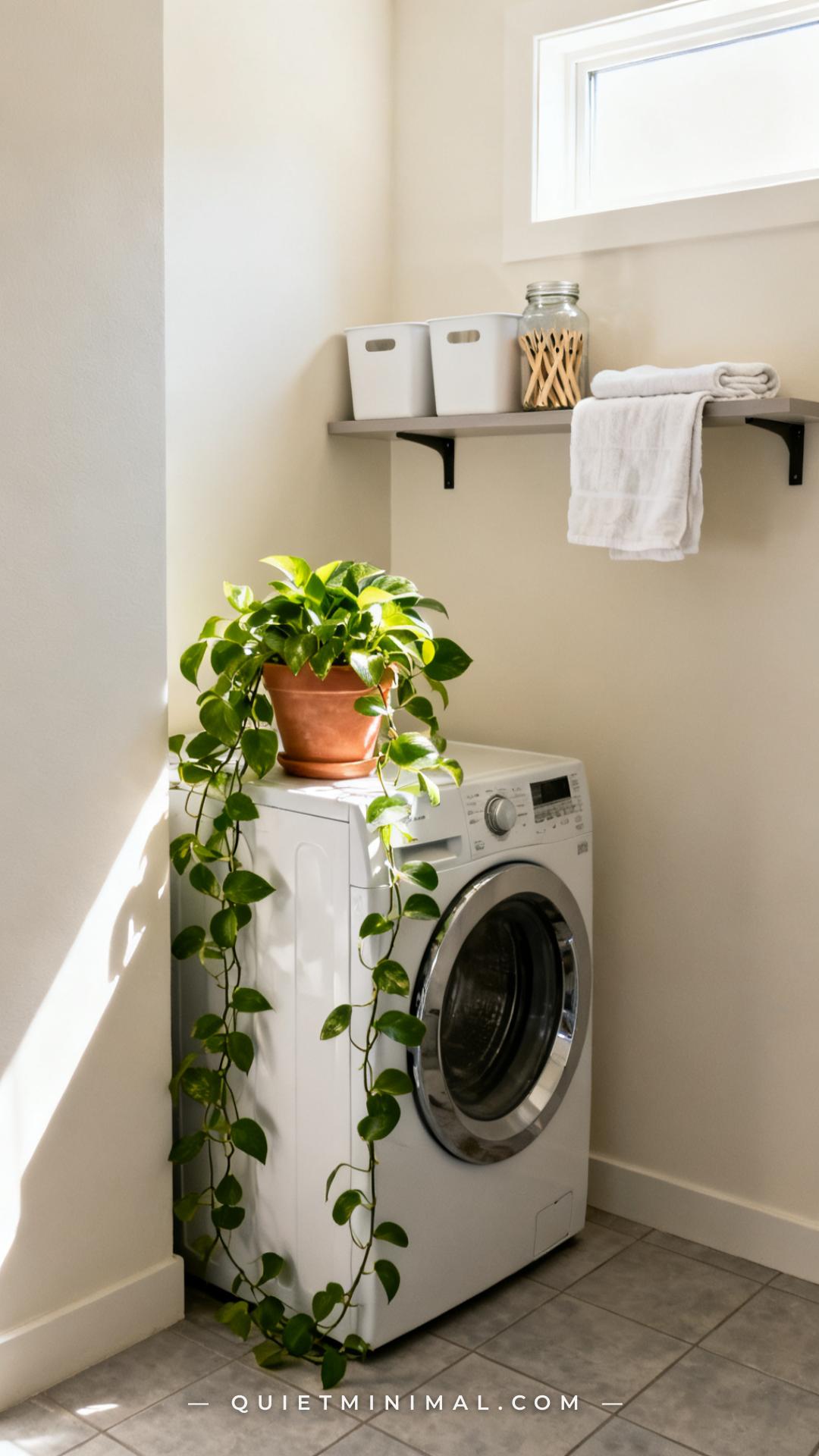
11. Add One Plant to Make It Feel Like a Room
 Save
This last idea sounds soft but it works harder than almost anything else on this list. A laundry room or closet with one living plant looks intentional. Without it, even a perfectly organized space reads as functional-only — a utility room, not a space anyone has cared about. A single pothos on top of the dryer, a small snake plant on a shelf, or a trailing string of pearls in a terracotta pot is the finishing element that shifts the whole room’s feeling.
Pothos is the correct choice for a low-light, high-humidity laundry space — it tolerates the conditions better than almost any other houseplant, grows quickly enough to look full within a few weeks, and costs very little. The trailing form also adds something no organization product can: a sense of looseness and life that makes the room feel curated rather than clinical.
Key Takeaway: One plant doesn’t just decorate a laundry room — it changes the entire register from utility space to intentional room, which is the whole goal of any organization project.
None of these ideas require a renovation, a weekend, or a budget that requires planning. The most effective approach is to pick the two or three that solve your specific frustration — whether that’s no folding surface, no hanging space, or just the visual noise of a dozen mismatched bottles — and address those first. A small laundry space organized in focused zones will always outperform a large laundry space with no system at all. Start with the tension rod and the matching bins. Do those two things this week. Everything else builds from there.
From the guides
You've saved it, wanted it. Here's the how: codes, measurements, order. Your choices make it yours.
The Japandi Honest PlaybookThe honest version of the style: what to keep, what to skip, and the order to do it in.See inside →The Room Refresh PlaybookA repeatable four-step method, room by room, in ten minutes, thirty minutes, or one weekend.See inside →Make Any Room Feel Cozy on PurposeWhy some rooms hold people and others empty out, and the moves that change it.See inside → Save


