 Georgia
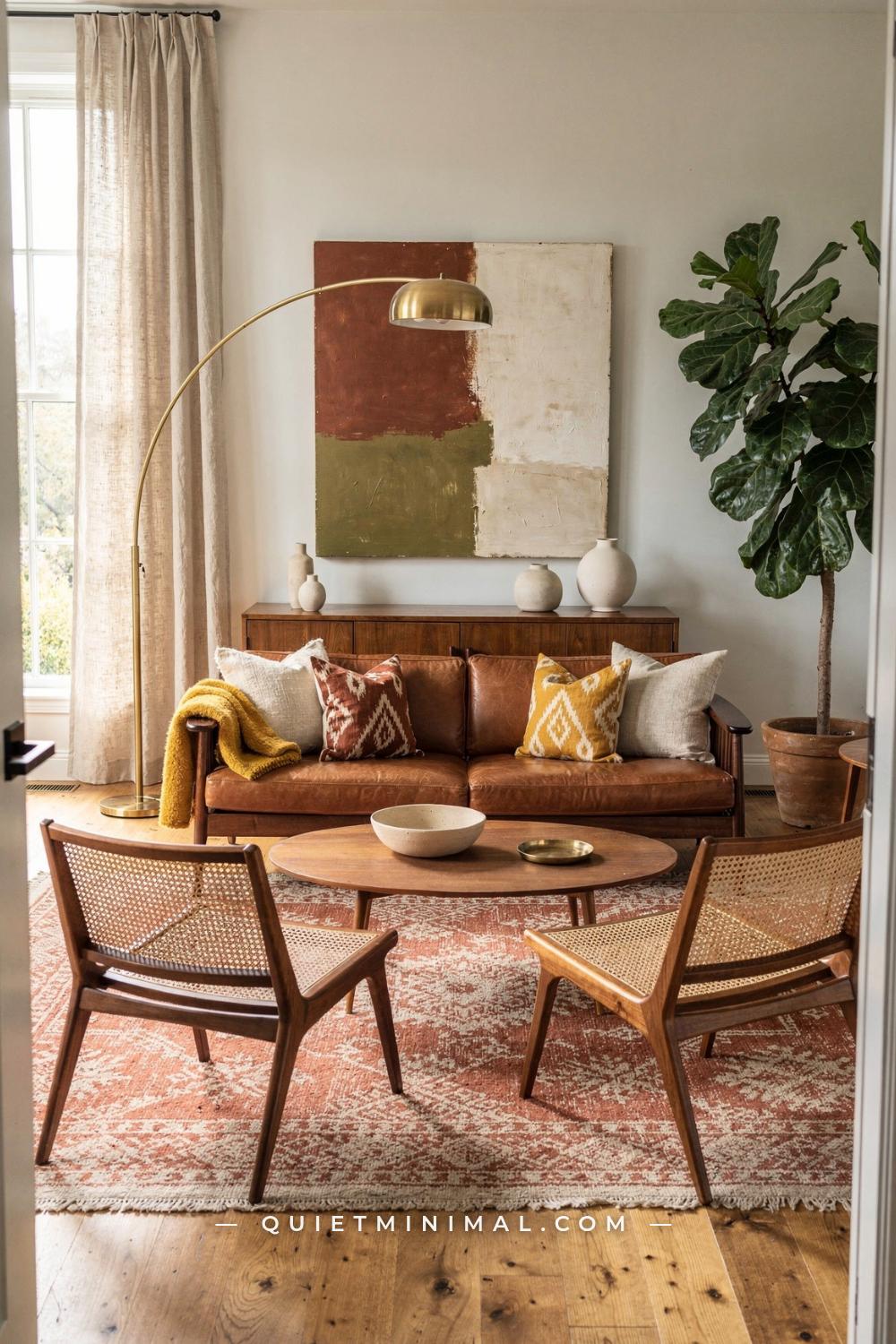
A mid century bohemian living room is one of the easiest looks to love and one of the easiest to get slightly wrong. You buy a walnut credenza, a jute rug, a stack of kilim cushions and an orange mushroom lamp, and every piece is right on its own. Then the room comes together and it reads as two rooms sharing a floor: a furniture showroom underneath, a market stall on top.
The fix is almost never another purchase. It is an order of operations. Mid-century modern is a furniture style first: tapered legs, low backs, clean case pieces, wood you can see. Boho is a layering style: textiles, plants, handmade objects, warmth. When the bones lead and the layers follow, the two read as one idea. When the layers arrive first, or bury the bones, the room never settles.
Each section below names one mistake that shows up again and again in this style, why it happens, and the correction, with measurements inch-first. Every photograph shows the version that works.
Layering Boho Textiles Before the Room Has Any Mid-Century Bones
 Save
The most common way into this look is the soft way. Cushions are easy to buy, a jute rug arrives rolled in a box, and a throw costs less than a lamp. So the textiles come first, and they land on whatever furniture is already there: a builder-grade rolled-arm sofa, a chunky farmhouse coffee table, a television stand in gray laminate. The result looks boho, but there is nothing mid-century about it, because mid-century is carried almost entirely by the furniture.
Start with one piece that has real mid-century anatomy instead. That means a slim frame lifted on legs, a seat that sits low, and wood or upholstery you can see all the way around. A terracotta velvet armchair about 28 in (71 cm) wide on tapered walnut legs does this in a single purchase. Put it facing a low cream sofa about 84 in (213 cm) wide and the room already has a point of view before a single cushion lands.
Only then add the boho layer, and give each piece a job. Ikat cushions in fuchsia, mustard and orange carry the color on the sofa. A chunky woven jute rug grounds both seats. A ribbed oak drum coffee table, around 24 in (61 cm) across and 18 in (46 cm) tall, adds a handmade texture that still has a clean geometric outline. A sage green sideboard about 55 in (140 cm) wide, topped with an orange mushroom lamp, gives the color a second place to land, so the cushions do not look like the only bright idea in the room.
Narrow rooms in particular reward this order. When the room is long and slim, one low sofa on one wall and one leggy chair across from it keeps the walkway open, and the view through to the far end, whether a garden door or a window, stays clear. Heavy upholstered pieces that sit flat on the floor block that line of sight, and no amount of pattern will make them look mid-century.
A useful test: take every textile off the furniture for a minute and look at what is left. If the room still reads as a mid-century room with bare cushions, the bones are right and the boho layer will sit on top cleanly. If it reads as a generic living room, buy one leggy piece before you buy another cushion.
Key Takeaway: Buy at least one piece with true mid-century anatomy, slim frame, low seat and tapered legs, before you buy a single boho textile.

Calling Everything From 1925 to 1979 Mid-Century
 Save
Listings use “mid-century” for almost anything with a tapered leg, and that loose labeling is where a lot of rooms go off course. Three different eras get sold under the same tag: the Bauhaus modernism of the 1920s and 1930s, true mid-century modern from roughly 1945 to 1970, and the softer, chunkier 1970s that followed. They share a love of clean lines, but they look very different in a room, and knowing which is which tells you how many of each you can mix.
Take the pieces this style borrows most. The chrome cantilever and tubular steel chairs are Bauhaus: the Wassily chair was designed in 1925 and 1926. The round glass coffee table on a sculpted wood base is true mid-century: Herman Miller introduced the Noguchi table in 1947. The deep, tufted modular sofa that shows up in so many boho rooms is a 1970s idea: Mario Bellini’s Camaleonda belongs to that decade. Put all three in one apartment and you have spanned fifty years, which is fine, as long as you do it on purpose.
The working rule is to pick one era as the backbone and let the others visit. In a mid century bohemian living room, the backbone should be the 1945 to 1970 window: tapered legs, walnut and teak, slim arms, low backs. The 1970s pieces bring the boho warmth, the rust velvet, the plush tufting, the amber glow. The Bauhaus chrome brings a single cool, graphic note. A good split is roughly two-thirds backbone, a quarter 1970s, and one or two Bauhaus accents.
In a city apartment, that might mean a rust-brown tufted modular sofa about 96 in (244 cm) wide as the 1970s statement, a round glass coffee table about 48 in (122 cm) across on a wood base as the mid-century anchor, and one chrome cantilever chair with a black leather sling as the Bauhaus accent. A navy and rust Persian rug, around 8 by 10 ft (244 by 305 cm), and a warm brown open bookcase about 60 in (152 cm) tall bring in the collected, traveled feel that makes it boho.
What goes wrong is three statements from three eras, each one loud. A chrome chair, a tufted sofa and a sculptural table all competing for attention reads as a vintage shop floor. Let the sofa be the loud one and keep the other two quiet in color.
When you shop secondhand, ask the seller for the decade, not just the style. A label that says “MCM” on a 1980s oak piece is common, and the proportions will tell you before the paperwork does: heavier legs, thicker tops and rounded edges usually mean later.
Key Takeaway: Choose 1945 to 1970 as the backbone, let the 1970s supply the warmth and keep Bauhaus chrome to one or two accents.

Lining Up Every Wood Case Piece at the Same Height
 Save
Mid-century furniture is famous for its case pieces: low credenzas, tall wardrobes, open shelving, sideboards with sliding doors. Buy two or three of them and the instinct is to line them up along the longest wall like a catalog page. That is the exact moment a mid-century room starts to feel like a showroom. Three walnut boxes in a row, all at hip height, give the eye nothing to do.
The correction is a skyline. Case pieces should step up and down along a wall, so the eye moves across them instead of sliding along a single line. A walnut low TV console about 72 in (183 cm) wide and 18 in (46 cm) tall sets the low line. A black metal-frame open shelving unit with walnut shelves, about 36 in (91 cm) wide and 70 in (178 cm) tall, gives the middle height and the transparency. A tall walnut wardrobe cabinet, about 40 in (102 cm) wide and 80 in (203 cm) tall, stands near the window as the high point. Low, open, high: three heights, one wood.
The black metal frame matters more than it looks. Three solid walnut pieces side by side are heavy, and the guides that warn about monotonous wood tones are describing exactly this wall. The open shelving breaks the mass. Fill it lightly with small ceramic objects and trailing pothos, and leave at least a third of each shelf empty, so the black lines and the wall behind them stay visible.
The boho layer belongs on and around this skyline, not in front of it. A trailing plant on the top shelf softens the hard edge of the unit. An abstract organic print in a warm walnut frame, hung above the low console, ties the art to the wood. An olive mushroom table lamp about 14 in (36 cm) tall adds a second color that repeats the olive green three-seat sofa across the room. A natural jute rug, around 6 by 9 ft (183 by 274 cm), and a white boucle armchair with walnut arms complete the conversation zone.
Leave space between the pieces. A gap of 6 to 12 in (15 to 30 cm) between each case piece lets them read as three separate designs rather than one long built-in. Pushing them tight together erases the tapered legs and slim edges that made you buy them.
If you only own one case piece, the same skyline thinking applies to what sits on it. Put something tall at one end, such as a lamp or a plant, and keep the other end low.
Key Takeaway: Arrange mid-century case pieces as a skyline of low, open and tall, with a small gap between each, rather than a single line at one height.

Hiding Tapered Legs Under Fringe, Skirts and Floor Baskets
 Save
The single most recognizable feature of mid-century furniture is the leg. Tapered, splayed, slim, often in walnut or teak, it lifts the piece off the floor and lets light and air pass underneath. That lifted look is what keeps a room full of wood and pattern from feeling heavy. Boho, left alone, buries it. Throws hang to the floor, fringe skirts the sofa, a floor pouf slides under the credenza and baskets fill every gap at ground level.
The correction is a visible floor line. Keep at least 6 in (15 cm) of clear air under every legged piece, and most of the floor under the credenza visible from where you sit. That means throws fold over the back or the arm of a sofa, not down the front. Fringe stays on rugs and wall hangings, not on furniture edges. Baskets live beside furniture, not beneath it.
A typical media wall shows why. A dark walnut credenza about 60 in (152 cm) wide and 18 in (46 cm) tall sits on slim legs. Next to it stands black metal open shelving about 24 in (61 cm) wide and 60 in (152 cm) tall, and a tall walnut wardrobe about 30 in (76 cm) wide with glass-pane doors. Slide two baskets under the credenza and the whole wall becomes one heavy block. Keep the floor clear under it and the same three pieces look light enough to sit in a small apartment.
The same goes for seating. A wood-frame armchair with a cream boucle cushion, around 28 in (71 cm) wide, shows its frame as part of its design. Drape a sheepskin over it and it becomes a lump. If you want texture on that chair, use a small lumbar cushion that sits inside the frame instead of a throw that hangs over it.
Rugs are the one place boho should reach under the legs, and it should reach under all of them. A jute rug that catches the front legs of the sofa and the chair ties the group together. A rug that stops short of the legs leaves the furniture floating, and a rug that only the coffee table sits on shrinks the whole group.
When you cannot resist a floor-level layer, such as a large floor cushion, park it out in the open where its whole shape can be seen, not tucked under a piece of furniture.
Key Takeaway: Keep at least 6 in (15 cm) of clear floor visible under every legged piece, and let only the rug reach beneath the legs.

Letting the Retro Revival Turn Into a Costume
 Save
There is a version of this style that leans hard into the late 1960s: saturated orange light, a hunter green velvet sofa, a glowing orb lamp, a dense poster wall, a mirrored ball. Done with conviction it can be joyful. The mistake is doing it everywhere at once, so the room stops feeling like a home with a retro streak and starts feeling like a set built for one party.
The difference between a retro room and a costume is restraint on a few surfaces. Pick the two or three places where the revival is loudest and let everything else stay plain. In a small room, the loud places are usually the pendant, the sofa and one wall. A large orange paper lantern pendant about 24 in (61 cm) across turns the whole room amber at night. A low dark green velvet sofa, around 80 in (203 cm) wide, gives the saturated color a solid base. One dense wall of abstract prints from floor to ceiling becomes the pattern. That is already plenty.
Then keep the rest quieter than you think you should. Walls stay cream or white. A glass-top chrome coffee table about 30 in (76 cm) square disappears visually, which is why it suits a busy room. Vinyl record shelving about 48 in (122 cm) wide on the left wall is functional storage first and decor second. A red mushroom floor lamp and a glowing orb floor light about 12 in (30 cm) across add two warm points at floor level without adding pattern.
Pattern is where the costume effect usually tips over. An organic swirl rug, a poster wall and patterned cushions all at full strength leave nowhere to rest. If the wall carries the pattern, keep the rug calmer, such as wide wavy stripes in two or three colors, and keep the cushions in solids pulled from the prints.
Plants help more than anything here. A tall monstera in the corner and pothos trailing from upper shelves break up the hard graphic lines and add a living green that no print can copy. They also make a retro room look lived in rather than staged.
A good check is the morning light. A room that only works at night under orange light is a set. A room that still looks good on a Tuesday at 9 a.m., with the lantern off, is a living room with a strong personality.
Key Takeaway: Let the retro revival run loud on two or three surfaces, usually the pendant, the sofa and one wall, and keep everything else plain.

Putting a Pattern on Every Plane at Once
 Save
Mid-century modern and boho both love pattern, but they love different kinds. Mid-century pattern is graphic and architectural: wide stripes, simple geometry, cane grids, a single bold motif. Boho pattern is woven and busy: kilims, ikats, block prints, fringe. Put both on every surface at once and the two languages talk over each other.
The fix is to think of the room in planes: the floor, the main seating, the walls, and the accents. Give each plane one pattern job and keep the rest plain. The floor is the biggest plane and the best place for the boldest pattern. A black-and-cream wide-stripe rug instantly says mid-century, and its scale means it reads as one calm idea rather than a busy texture.
If the floor is graphic, the sofa should be solid and textural. A cream boucle curved sectional about 100 in (254 cm) wide gives the room a soft, pale mass with plenty of texture and no print. An olive green bubble chair about 26 in (66 cm) wide brings a second solid color. An oval glass coffee table about 42 in (107 cm) long on a black sculptural base lets the stripes show through, which keeps the floor pattern continuous.
The wall plane then gets texture rather than pattern. A walnut open shelving unit with cane-panel cabinet doors, about 72 in (183 cm) wide and 6 ft (183 cm) tall, carries the woven texture boho needs in a quiet, grid-like form. A full-arch leaning floor mirror about 24 by 65 in (61 by 165 cm) adds a soft curve and reflects light. One framed print in simple geometric blocks completes the wall without adding another busy surface.
Accents are the last plane, and here the boho pattern can come back in small doses. Two kilim cushions on the sectional, or a woven throw folded on the bubble chair, bring the handmade note. Keep them to the colors already in the room, cream, olive, walnut brown and amber, so they read as a continuation of the palette.
A simple rule for any mid century bohemian living room: one bold pattern at large scale, one medium pattern in the accents, everything else solid or textured. The moment you add a second large pattern, such as a patterned sofa on a patterned rug, one of them has to go.
Key Takeaway: Give one plane, usually the floor, the boldest pattern, keep the sofa solid and textural, and let boho pattern return only in small accents.

Hanging Wall Art Without Sizing It to the Credenza
 Save
A long, low mid-century credenza is the natural anchor for wall art. It gives the wall a horizontal base line and a surface for a lamp or a record player. The mistake is hanging art as if the credenza were not there: a single small print floating high above it, or a gallery wall that spreads far wider than the furniture underneath and hangs in its own space.
Size the art to the credenza first. A teak mid-century credenza about 60 in (152 cm) wide and 28 in (71 cm) tall wants art that spans roughly two-thirds to three-quarters of its width, so somewhere between 40 and 45 in (102 and 114 cm) for a single piece or for the outside edges of a grouping. The bottom of the lowest frame should sit about 8 to 10 in (20 to 25 cm) above the credenza top, close enough that the two read as one composition.
A collected gallery wall can go much taller than wide, and that is where it suits boho best. Floor-to-ceiling groupings of abstract prints and cutout pieces in mixed gold and dark wood frames feel layered and personal. Keep the outer edges lined up with the credenza, or step them out by no more than 6 in (15 cm) on each side, and the wall still reads as anchored. Mixed frames work when two or three finishes repeat, such as gold, dark wood and black, rather than every frame being different.
The top of the credenza is part of the composition. A record player on one end, a black ceramic vase with a pink flower bouquet on the other, and a gap in the middle keeps it from becoming a shelf for everything. That gap gives the lowest row of art room to breathe.
The furniture in front then frames the wall. A mustard gold velvet sofa about 72 in (183 cm) wide with rust and color-block cushions and a chartreuse velvet armchair about 28 in (71 cm) wide create a conversation pair facing the credenza. A Persian rug layered over jute, an acrylic and glass coffee table about 48 in (122 cm) long, and a white terrazzo garden stool about 18 in (46 cm) tall add the collected layer without blocking the view of the wall.
If your art collection is smaller than the wall, do not stretch it. Hang a tight grouping centered on the credenza and let the wall around it stay quiet.
Key Takeaway: Size wall art to two-thirds or three-quarters of the credenza width and hang the lowest frame 8 to 10 in (20 to 25 cm) above its top.

Pushing Every Seat Against the Walls
 Save
Mid-century living rooms were designed around conversation. The low sofas and lounge chairs of the period were meant to be pulled into groups, close enough to talk, with a coffee table in reach of everyone. The common modern habit is the opposite: sofa against one wall, chair against another, a wide empty middle and a coffee table stranded in it. With mid-century pieces that habit is especially costly, because their slim frames look lost when they are spread out.
Build a conversation group instead, and measure it. Seats in a group should sit within about 8 to 10 ft (244 to 305 cm) of each other across the circle, close enough to talk at a normal volume. The coffee table should sit 16 to 18 in (41 to 46 cm) from the sofa front, so it can be reached without leaning, and the walkway around the group should stay at least 30 to 36 in (76 to 91 cm) wide.
The classic mid-century shape is a U: a sofa on one side and two chairs facing each other or angled toward it on the other. A green button-tufted Danish sofa about 84 in (213 cm) wide, flanked by two rust-orange armchairs on walnut legs, each about 28 in (71 cm) wide, makes a balanced U around an oval walnut coffee table about 48 in (122 cm) long. Oval and round tables suit these groups better than sharp rectangles, because every seat reaches the table at about the same distance and nobody catches a shin on a corner.
The walnut low sideboard, around 72 in (183 cm) wide and 30 in (76 cm) tall, belongs on the wall behind the group, not in it. It carries the lamps and the art and gives the U a back edge. A large abstract canvas above it in orange, teal and yellow on cream sets the color story.
The boho layer gives the group its floor. A multicolor vintage kilim, sized so all the front legs sit on it, turns the U into a room within the room. With a kilim, an 8 by 10 ft (244 by 305 cm) size usually works for a sofa and two chairs; a 5 by 8 ft (152 by 244 cm) rug almost never does.
If the room is narrow, pull the sofa off the wall by even 12 in (30 cm) and angle the chairs slightly toward it. That small shift is often enough to turn a waiting room into a living room.
Key Takeaway: Pull seating into a U within 8 to 10 ft (244 to 305 cm) across, with the coffee table 16 to 18 in (41 to 46 cm) from the sofa.

Letting One Oversized Modern Piece Swallow the Slim Ones
 Save
Today’s favorite seating shapes are soft and big: cloud sofas, deep modular pieces, rounded egg chairs. They are comfortable and they photograph well, and they sit beautifully in a boho room. The mistake comes when they are mixed with true mid-century pieces without thinking about scale. A cloud sofa can be 100 in (254 cm) wide and 40 in (102 cm) deep, while a typical mid-century credenza is slim and low. Put them in a room together with no plan and the credenza starts to look like a toy.
The rule is one oversized soft piece per room, and everything else slim. If the sofa is the cream boucle cloud sofa, the coffee table should be low and sculptural, such as a pebble-shaped dark walnut table about 40 in (102 cm) across, rather than another chunky block. The accent chair can be rounded too, like a deep olive egg-shaped lounge chair about 32 in (81 cm) wide, but it should stay smaller and darker than the sofa so it reads as a counterpoint.
The slim mid-century pieces then go on the walls, where they act as the room’s frame. A walnut credenza with sliding doors, about 60 in (152 cm) wide, carries matte ceramic vases and an orange mushroom lamp about 14 in (36 cm) tall. Its length and the abstract orange print hung above it give the wall the visual weight to stand up to the sofa across the room.
Height is the other way to rebalance. A large ribbed globe pendant, about 24 in (61 cm) across, in the spirit of the bubble lamps that came out of the early 1950s, adds mass at the ceiling and balances the low bulk of the sofa. Tall plants such as a monstera and a bird of paradise flanking a floor-to-ceiling window pull the eye up, so the room does not feel bottom heavy.
Watch the rug as well. A shaggy cream rug under a cream cloud sofa doubles the soft mass. Keep the shag, but make sure the dark walnut table and the olive chair sit on it, so the rug has dark shapes to frame.
A small stone drum side table about 18 in (46 cm) tall with a glass votive is the kind of slim, simple piece that keeps the room from tipping entirely toward soft and big.
Key Takeaway: Allow one oversized soft piece per room and keep everything around it slim, low and darker in tone.

Keeping All the Boho Texture on the Sofa
 Save
When the furniture is mid-century, the boho layer tends to pile up in one place: the sofa. Five cushions, two throws, a crocheted blanket and a sheepskin end up on one burnt-sienna corduroy sofa, and the rest of the room is bare wood. From across the room the sofa looks like a nest, and the walnut and cane pieces around it look like they belong to someone else.
Spread the textiles across at least three zones instead. Think of it as a triangle: the sofa, a second seat or the floor, and a wall or a window. Each corner of the triangle carries a little texture, so the eye moves around the whole room rather than stopping at one heap.
On the sofa, stop at three cushions and one throw. On a corduroy sofa about 84 in (213 cm) long, olive and mustard cushions with one crocheted blanket folded over an arm is enough. The corduroy itself is already a texture, so it does not need to be buried.
The second corner can be the floor. A cream Berber rug with a terracotta geometric pattern does a lot of boho work by itself. A green velvet pouf about 18 in (46 cm) across adds a second texture at low height. A round walnut coffee table on hairpin legs, around 36 in (91 cm) across, sits on top and keeps the floor zone feeling lifted rather than cluttered.
The third corner is the wall or the window. A cane-front media sideboard about 48 in (122 cm) wide and 24 in (61 cm) tall carries a woven texture in a form that is still mid-century. A trailing pothos in a hanging planter and a large framed abstract print above the sideboard give the wall its soft and its graphic notes. A green mushroom table lamp about 16 in (41 cm) tall on a round side table completes the vignette.
The test is the photo test. Take a picture of the room from the doorway and squint at it. If all the color and texture is in one corner, move one cushion to the chair, one throw to the pouf, and one woven piece to the wall.
Key Takeaway: Spread boho textiles across three zones, the sofa, the floor and one wall, and cap the sofa at three cushions and one throw.

Fighting a Tall Ceiling With Low Furniture Alone
 Save
Mid-century furniture sits low on purpose. Sofa backs around 28 to 32 in (71 to 81 cm) high, coffee tables at 14 to 16 in (36 to 41 cm), credenzas below hip height. In a room with an ordinary 8 ft (244 cm) ceiling, that low line feels relaxed and open. Under a tall or sloped ceiling, such as an A-frame, a vaulted living room or a loft, the same low furniture can look like it has sunk to the bottom of a very large box.
The mistake is assuming the answer is bigger furniture. Bigger, taller pieces lose the low, lean character that drew you to mid-century in the first place. The fix is to keep the furniture low and build a second layer above it: something tall on the floor, something hanging from the ceiling, and something big on the wall.
On the floor, use a tall plant as a column. A fiddle leaf fig in a terracotta pot, ideally 6 ft (183 cm) or taller, connects the low furniture to the upper half of the room. It is the boho answer to a tall ceiling, and it does the job better than a tall bookcase because it stays light and open.
From the ceiling, drop a pendant into the space. A brass dome pendant hanging well below the peak brings the light down to human height and gives the empty volume a focal point. In an A-frame with an exposed wood plank ceiling, this also connects the warm wood above to the walnut below.
On the wall, go large. A big abstract canvas in red, black and teal geometric shapes, around 36 by 48 in (91 by 122 cm), on a cream wall gives the eye a stopping point at mid-height. Hang it with its center about 57 to 60 in (145 to 152 cm) from the floor, the same as in a standard room, rather than chasing the ceiling.
The seating group stays grounded. A rust-orange velvet three-seat sofa about 84 in (213 cm) wide with kilim cushions, a forest green velvet bubble chair about 32 in (81 cm) wide, and an oval walnut coffee table about 48 in (122 cm) long on tapered legs all sit on a bold red-and-teal geometric rug. The rug’s strong color answers the strong architecture.
A tall triangular window flooding in forest light is the room’s best feature, so leave it uncovered by heavy treatments and let the trees act as the backdrop.
Key Takeaway: Under a tall ceiling, keep the furniture low and add a tall plant, a dropped pendant and one large canvas to fill the upper half.

Buying Reproductions Without Checking the Proportions
 Save
Most people furnishing this style use reproductions, and that is fine. The mid-century mistake guides make the same point: one or two real vintage pieces mixed with good reproductions is the realistic way to do it. The trouble is that many cheaper versions get the shape roughly right and the proportions wrong, and proportion is the whole point of the style.
Check a few numbers before you buy. On a triangular glass-top coffee table with a sculpted wood base, look at the glass thickness and the base. The original Noguchi design uses heavy plate glass resting on two interlocking curved wood pieces; a version with thin glass on a lightweight base will look flimsy and can feel unstable. Ask for the glass thickness and the total weight. A table about 48 in (122 cm) wide that weighs very little is a warning sign.
You've saved it, wanted it. Here's the how: codes, measurements, order. Your choices make it yours.

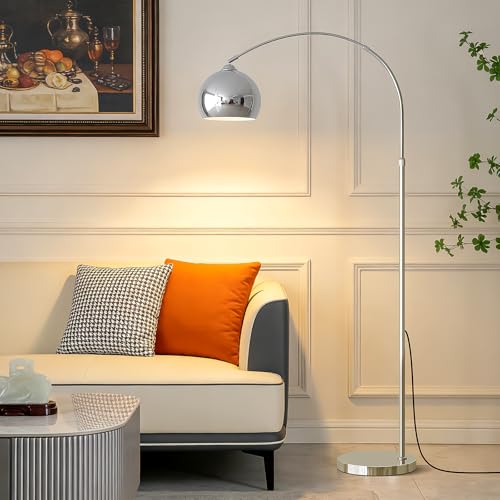
On a chrome arc floor lamp, check the reach and the base. A lamp about 72 in (183 cm) tall should have a heavy base, often marble or weighted metal, and enough reach to put the shade over a seat or a coffee table rather than over the floor beside it. Measure the distance from where the base will sit to the center of the sofa before ordering.
On a tufted modular sofa in the 1970s style, check the depth and the seat height. Many versions run 38 to 42 in (97 to 107 cm) deep, which is lovely for lounging but can swallow a small room. A deep orange velvet modular sofa about 110 in (280 cm) wide needs a room that can give it space on both ends.
On case pieces, check the legs and the joints. True mid-century credenzas and sideboards have slim legs set slightly in from the corners and visible wood edges. Thick, square legs set flush at the corners usually mean a later design or a loose interpretation.
In an industrial loft with white painted brick, a black-and-white checkered rug, a 2 by 3 grid of framed abstract poster prints, each about 18 by 24 in (46 by 61 cm), and fiddle leaf fig and monstera plants flanking the sofa, these checked reproductions look deliberate. Bought on looks alone, the same room can feel like a catalog set.
Keep a tape measure and a short checklist on your phone when you shop.
Key Takeaway: Before buying a reproduction, check glass thickness and weight, lamp reach and base, sofa depth and leg placement against the original proportions.
Hanging the Pendant at Dining Height Over the Coffee Table
 Save
A dome pendant is one of the most mid-century things you can hang in a living room, and many mid century bohemian living rooms center one over the coffee table. The mistake is hanging it at dining-table height, around 30 to 36 in (76 to 91 cm) above the surface. Over a dining table that works, because people sit around it and the light is at eye level. Over a coffee table, that same drop puts the shade right in the sightline between the sofa and the chairs, and people end up talking around a lamp.
Over a living room seating area, raise the pendant so its bottom edge sits at least 7 ft (213 cm) above the floor in a room with an 8 to 9 ft (244 to 274 cm) ceiling. That height keeps the shade above the sightline of people standing and sitting and keeps it clear of heads when someone walks past. In a taller room, you can drop it a little lower relative to the ceiling, but keep the same 7 ft (213 cm) minimum clearance above the floor.
Size the pendant to the table below it. A mustard dome pendant about 16 in (41 cm) across suits a burl wood rectangular coffee table around 48 in (122 cm) long. A rough guide is a shade diameter of one-third to one-half the table’s length, so smaller tables want smaller shades.
The rest of the lighting then fills in at lower heights. In a bright city apartment, morning light from tall windows does most of the work by day. A peach mushroom side table about 18 in (46 cm) tall with a blue ceramic vase of dried alliums, and a teak retro sideboard on hairpin legs about 60 in (152 cm) wide carrying a turntable and a lamp, give the evening its warm layer at hand height.
The seating keeps the mid-century balance. A powder blue tufted modular sofa about 90 in (228 cm) wide faces a brown velvet lounge chair with a chrome tubular frame about 28 in (71 cm) wide. A geometric checker wool rug and herringbone oak floors carry the pattern underfoot, while a fiddle leaf fig in a terracotta pot by the window adds height.
If you rent and cannot move the ceiling box, a swag hook can shift the pendant over the table and a ceiling-mounted cord cover can hide the run.
Key Takeaway: Over a coffee table, hang the pendant with its bottom edge at least 7 ft (213 cm) above the floor, not at dining height.

Choosing Bulbs That Turn Paper and Amber Glass Orange
 Save
Paper lanterns, amber glass globes and mushroom lamps are the boho half of mid-century lighting, and they are brilliant at night. They are also very sensitive to the bulb inside. Put a very warm, amber-tinted bulb inside an amber glass shade and the room turns orange. Put a cool daylight bulb inside a paper lantern and the room looks like an office. The fixture gets blamed, but the bulb is the problem.
Match the bulb to the shade. Color temperature, measured in kelvin, tells you how warm a bulb looks: lower numbers are warmer. White paper shades and frosted glass are neutral filters, so a 2700K bulb gives a soft, warm white that suits them. Amber or tinted glass already adds warmth, so use a slightly cooler bulb, around 2700K to 3000K, to keep the glow from tipping into orange. Very warm 2200K bulbs, often sold as vintage or filament style, are best kept for clear glass, where you want the glow itself to be the color.
Check the brightness as well. Lumens measure how much light a bulb gives. A stacked triple-globe paper lantern floor lamp about 68 in (173 cm) tall used as the main light in a corner wants roughly 800 lumens or more in total; a small amber ball table lamp about 8 in (20 cm) across is an accent and needs far less, around 200 to 400 lumens. Dimmable bulbs on dimmable fixtures let one lamp do both jobs.
Keep one color temperature across the room. Two lamps at 2200K and one at 4000K in the same room look like three different rooms. Choose one temperature for every visible bulb and adjust brightness rather than color.
This matters most in rooms with deep, warm palettes. A chocolate brown tufted modular sofa about 110 in (280 cm) wide, a muted geometric Berber rug in rust and cream about 8 by 10 ft (244 by 305 cm), and a large monstera behind the sofa all absorb light. The wrong bulb flattens them into one brown mass; the right one picks out the velvet, the rug weave and the leaves.
The ceiling pendant and the coffee table lamp should sit in the same temperature family as the lantern, so the whole room glows in one key.
Key Takeaway: Use 2700K bulbs in paper and frosted shades, 2700K to 3000K in amber glass, and keep one color temperature for every bulb in the room.
Choosing a Rug That Hides the Floor Instead of Framing the Group
 Save
Mid-century rooms were often built on beautiful floors, and dark walnut or oak planks are part of the look. Boho wants a big, soft rug. The two can work together beautifully, but the mistake is a rug that covers the floor wall to wall, or one so small it floats in the middle. Either way, the floor stops doing its share of the design.
Frame the group instead. Choose a rug large enough that at least the front legs of every seat sit on it, with a band of bare floor showing around it. In most living rooms that band should be about 12 to 18 in (30 to 46 cm) wide between the rug edge and the walls. For a sofa about 84 in (213 cm) long and one lounge chair, an 8 by 10 ft (244 by 305 cm) rug usually works.
The color of the rug against the floor matters too. A cream Beni Ourain-style rug with fringe on dark walnut floors is a classic mid century bohemian pairing because the contrast is high and the rug reads as a clear shape. On pale oak, the same rug blends in; a rug with a darker border or a warmer ground keeps the outline.
Shag needs a plan for the furniture on it. A thick cream rug and a round two-tier walnut coffee table about 40 in (102 cm) across work well together, because the round table needs no precise alignment. Rectangular tables on deep shag can wobble, so check the leg design or choose a lower pile in the center.
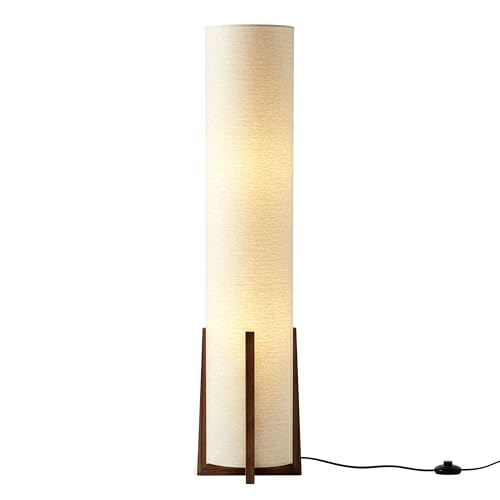
The rest of the group sits around the rug’s edges. An olive green velvet three-seat sofa faces a walnut-frame lounge chair upholstered in matching green, about 28 in (71 cm) wide. A low walnut slat-front media console about 72 in (183 cm) wide lines the back wall with a turntable on top, and a weeping fig in a concrete planter adds height beside it. A globe table lamp with a linen shade, about 16 in (41 cm) tall, gives the warm evening light, and a small matte black tulip-style side table repeats the dark accents.
Leave the dark floor visible around all of it. That frame of polished walnut is what tells the eye this is a mid-century room, and the cream rug inside it is what makes it boho.
Key Takeaway: Choose a rug that holds the front legs of every seat while leaving 12 to 18 in (30 to 46 cm) of bare floor showing around it.

Painting an Accent Wall Without Picking Its Partners
 Save
Terracotta, sage, mustard and olive are the colors this style lives on, and an accent wall in one of them is a natural move. The mistake is painting the wall first and hoping the room catches up. A terracotta wall with no other terracotta in the room looks like a paint sample, and a bold wall that fights the wood tones can make walnut look muddy.
Pick the accent color’s partners before you paint. Every strong wall color in this style needs at least two echoes elsewhere: one in a textile, one in an object. A terracotta accent wall wants terracotta in a rug, a cushion or a pot, and a second warm color such as burnt sienna or amber glass nearby. Then give it a cool partner, usually sage green, so the warm colors have something to sit against.
A working split for a mid century bohemian palette is about 60 percent warm white or cream on the main walls and large surfaces, about 30 percent wood and the accent color together, and about 10 percent the strongest accents. In an open-plan room with a large rounded arch through to a dining nook, the terracotta accent wall and the arch are the 30 percent; the white main wall, cream shag rug and cream upholstery are the 60; sage, amber glass and deep green velvet are the 10.
The furniture should bridge the colors. A dark walnut mid-century media console with fluted sliding doors on tapered legs, about 72 in (183 cm) wide, sits under floating shelves holding matte ceramic pottery. An organic walnut coffee table about 48 in (122 cm) long rests on layered jute and cream shag rugs. A deep green rounded velvet sofa about 84 in (213 cm) wide faces it all. Oversized abstract art in sage, terracotta and cream on the white wall carries all three colors at once.
Paint finish matters here. A matte or eggshell finish gives an earthy accent color a soft, plaster-like depth. A glossier finish makes it look harder and more modern.
Test the color on a large board in both morning and evening light before painting the wall. Earthy colors shift a lot between the two.
Key Takeaway: Before painting an accent wall, choose two echoes of that color in the room and one cool partner, then keep it to about 30 percent of the palette with the wood.

Making the TV Wall the Most Modern Thing in the Room
 Save
Most living rooms need a television, and in a mid-century boho room it often ends up as the one thoroughly contemporary corner: a glossy black stand, a tangle of cables and a big blank screen on a white wall. Everything else in the room is warm and textured, so the TV wall becomes the place the eye goes first, for the wrong reason.
Give the TV wall the same materials as the rest of the room. A vertical walnut slat accent wall panel, about 72 in (183 cm) wide and full ceiling height, turns the screen into part of a wood composition. Slats were a common mid-century detail, and the vertical lines balance the low horizontal furniture in front. A floating low TV console with a warm LED strip underneath keeps the floor visible and adds a soft glow in the evening.
The screen should sit with its center around 42 in (107 cm) above the floor for comfortable viewing from a sofa, and the console should be wider than the screen by at least 6 in (15 cm) on each side. A black screen against warm walnut slats looks deliberate. The same screen floating on a bare white wall looks like an afterthought.
Then bring the boho layer to the wall itself. A majesty palm in a woven basket at one side and floating oak shelves on the adjacent wall soften the hard edges. Keep the console top almost empty: one plant or one small ceramic piece is enough.
The seating faces the wall with the same warmth. A marigold velvet modular sofa about 90 in (228 cm) wide with an olive throw, a dark forest green organic accent chair about 28 in (71 cm) wide, and a round black-frame glass coffee table about 36 in (91 cm) across sit on dark espresso hardwood floors. The glass table keeps the floor and the slat wall visible from the sofa.
Cable management is the boring part that makes the rest work. Run cables inside the wall or behind the slat panel before the slats go up. A single visible black cable undoes most of the effect.
If a slat wall is too much, a low walnut credenza wider than the screen and a large abstract print hung beside the TV gives a similar result with less work.
Key Takeaway: Wrap the TV in the room’s own materials, such as a walnut slat wall and a floating console wider than the screen, and hide every cable before it goes up.

Mixing Eras Without a Ratio
 Save
The appeal of this style is that it mixes: mid-century wood, 1970s warmth, current organic shapes, a handmade piece found on a trip. The mistake is mixing without a ratio. A room that is one-third mid-century, one-third 1970s and one-third modern organic has no clear center, and the eye cannot tell which part is the room and which part is the accent.
Give the room a dominant era, a supporting era and an accent. A simple rule is 70, 20 and 10. Seventy percent of the large pieces come from the dominant language, twenty percent from the supporting one, and ten percent are the wild cards that make the room personal. In a mid century bohemian living room, the dominant language is usually mid-century or its close cousin, organic modern; the supporting language is the 1970s boho layer; the accent is a piece from somewhere else entirely.
A sage green modular sectional about 120 in (305 cm) wide, an amber boucle rounded accent chair about 30 in (76 cm) wide and a walnut built-in display unit about 48 in (122 cm) wide form a clean organic modern base. A live-edge dark walnut slab coffee table about 52 in (132 cm) long is the accent. Live-edge furniture is not a modern invention; American woodworkers were making it in the mid-century years, so it slots in naturally. Four large abstract prints in terracotta, navy and cream in a grid on the back wall bring the supporting 1970s color. Layered bohemian cushions and a jute rug add the texture.
Count pieces, not accessories. The ratio applies to the large furniture: sofa, chairs, tables, storage, rug. Small objects can come from anywhere, because they read as a collection rather than as the room’s style.
Repeat the accent at least once, in a smaller form. If the slab table is the wild card, a small cork or light wood side table nearby repeats the natural material. If the accent is a single vintage chair, repeat its wood or its color somewhere else in the room.
When a new piece does not fit any of the three slots, it does not belong in this room, however much you love it.
Key Takeaway: Mix eras at roughly 70 percent dominant, 20 percent supporting and 10 percent accent, counting large furniture only.

Hanging Short Curtains on a Mid-Century Picture Window
 Save
Large picture windows are one of the gifts of mid-century architecture, and in the original houses they were often dressed with full-width, floor-to-ceiling drapery that pulled to the sides. The common mistake today is to hang short curtain panels on a rod just above the window frame, ending at the sill. On a wide window that makes the whole wall look shorter, and it chops the room in half visually.
Hang the rod high and wide. Mount it at least 4 to 6 in (10 to 15 cm) above the top of the window frame, or closer to the ceiling if there is room, and extend it 8 to 12 in (20 to 30 cm) past each side of the frame so the panels can stack off the glass when they are open. Panels should reach the floor, just kissing it or hovering about 0.5 in (1 cm) above it. For fullness, the combined width of the panels should be about twice the width of the window.
Color and weight make the boho part. Rust drapes in a heavy fabric such as velvet or linen bring warm color to a large wall and soften the hard lines of the glass. In a seventies-revival room with concrete-textured plaster walls in warm gray taupe, rust drapes connect the walls to the burnt-orange upholstery. Sheer layers behind them filter daylight and keep the room bright when the drapes are open.
The furniture then sits in front of the window without fighting it. A hunter green velvet button-tufted sofa about 90 in (229 cm) long is flanked by two burnt-orange swivel egg chairs on chrome star bases, each about 30 in (76 cm) wide. The egg chair shape traces back to Arne Jacobsen’s 1959 design, which is why it sits naturally in a mid-century room. A walnut rectangular coffee table about 54 by 28 in (137 by 71 cm) sits on a large geometric area rug in cream, terracotta and olive blocks. A brass arc floor lamp about 72 in (183 cm) tall rises behind the sofa, and a tall leafy plant fills the far corner.
Keep the drapery simple: ripple-fold or pinch-pleat headings suit mid-century rooms better than grommets or ruffles.
Key Takeaway: Hang drapes 4 to 6 in (10 to 15 cm) above the frame, extend the rod 8 to 12 in (20 to 30 cm) past each side and let the panels reach the floor.

Spending on Every Icon Instead of the Pieces You Touch
 Save
The mid-century catalog is full of famous designs: the lounge chair and ottoman Charles and Ray Eames introduced in 1956, the biomorphic glass-and-wood table, the arc lamp, the glowing mushroom lamp. It is tempting to collect them all. The mistake is spending the budget on every icon at once, so the room looks like a museum shop and there is nothing left for the comfortable, everyday pieces you touch most.
Spend where comfort and wear meet. The sofa and the main reading chair take most of the daily use, so they deserve the best quality you can afford: good frames, firm cushions, durable upholstery. A cream low-profile sofa about 84 in (213 cm) wide with brown velvet and rust cushions, or a black leather lounge chair with an ottoman about 32 in (81 cm) wide, are the pieces where a better build pays off every evening.
Save on what you mostly look at. An organic biomorphic walnut coffee table about 54 in (137 cm) long, an amber-dome arc floor lamp about 72 in (183 cm) tall and a small mushroom table lamp about 12 in (30 cm) tall are all available in good, affordable versions, and nobody sits on them. The same goes for art: a gallery wall of six framed abstract prints in black frames, each about 12 by 16 in (30 by 41 cm), can be built with prints and simple frames without changing how the room feels.
Boho textiles are the easiest place to save. A horizontal-stripe rug in rust, brown and cream, cushions and throws can all come from flat-weave and secondhand sources, and they are the pieces you will want to change most often.
One real vintage piece is often worth more than three icons. A secondhand walnut side table or a vintage credenza gives the room something the catalog cannot: a little age and a real story. Pair it with comfortable new seating and the room feels collected rather than bought.
Keep a running list in your notes: spend, save and wait. Anything you are unsure about goes in the wait column for a month.
Key Takeaway: Put the budget into the sofa and the chair you sit in every day, and save on tables, lamps, art and textiles.

Adding Plants and Textiles Until the Furniture Disappears
 Save
The last mistake comes from love. A mid century bohemian living room is so easy to add to that it keeps growing: another plant, another cushion, another basket, another rug. Eventually the walnut, the tapered legs and the low lines that made the room special are hidden under the layers, and the room has turned into a greenhouse with seating.
Edit by the furniture. The test is simple: from the doorway, can you see the shape of every major piece? If the sofa outline, the coffee table and the chair frames are blurred by cushions, plants and throws, it is time to remove some. A good limit is one large plant per corner, three cushions per sofa and one throw per seat.
Plants work best when they frame rather than fill. In a dense, plant-loving room at night, a large monstera anchors the foreground on one side and trailing pothos cascades from a softly lit oak shelf on the other. Between them, the center stays readable: an oversized olive green corner sectional about 110 in (280 cm) total, a round ribbed-drum walnut coffee table about 36 in (91 cm) across, and a rust velvet armchair about 30 in (76 cm) wide in the foreground. A knitted cream pouf about 20 in (51 cm) across adds one more soft piece without crowding.
Textiles should repeat rather than multiply. Rust and olive cushions on the sectional echo the rust armchair and the plants; a cream kilim rug pulls the palette together underfoot. Every new textile should repeat a color already in the room.
Lighting decides whether a dense room feels warm or cluttered. Warm table lamps and the glow from a backlit shelf, plus a paper lantern pendant about 22 in (56 cm) across, put the light where the furniture is, so the layers recede at night and the seating comes forward.
Make editing a habit. Every season, take out one thing before adding another. When a new cushion comes in, an old one goes to storage. That rhythm keeps the room fresh without burying it.
Key Takeaway: Keep the outline of every major piece visible from the doorway, with one large plant per corner and three cushions per sofa.

A mid century bohemian living room works when the furniture leads and the layers follow. Start with one piece that has true mid-century anatomy, keep its legs and outline visible, and let boho textiles, plants and handmade objects fill in around it. Pick a dominant era and treat the others as guests, check reproductions against the original proportions, and size the art, the rug and the pendant to the furniture they belong to.
Most of the fixes cost nothing. Pull the seating into a closer group, clear the floor under the credenza, move two cushions to a second seat, swap a bulb, raise a pendant. Before your next purchase, take the textiles off the furniture for a minute and look at what is left. If the bones read clearly, add the next layer. If they do not, the next thing to buy is a piece with legs.
You've saved it, wanted it. Here's the how: codes, measurements, order. Your choices make it yours.
 Save


