 Georgia

The pitch for an in-ground pool sounds perfect until you look into what it actually takes — permits, excavation crews, six-figure budgets, and a backyard that looks like a construction site for the better part of a year. For most homeowners and renters, the real question isn’t “do I want a pool?” It’s “what do I actually want, and can I get it without all of that?”
The honest answer is yes. The minimalist backyard pool alternatives that are trending right now look nothing like the inflatable rings and above-ground vinyl eyesores of the past. They look intentional, resort-adjacent, and specific — and most of them can be set up in a single weekend without a single permit or shovel.
Here are 11 no-dig options worth considering, ranked roughly from “weekend project” to “one-season investment.”
1. The Stock Tank Pool
 Save
From the guides
You've saved it, wanted it. Here's the how: codes, measurements, order. Your choices make it yours.
 The Japandi Honest PlaybookThe honest version of the style: what to keep, what to skip, and the order to do it in.See inside →
 The Room Refresh PlaybookA repeatable four-step method, room by room, in ten minutes, thirty minutes, or one weekend.See inside →
 Make Any Room Feel Cozy on PurposeWhy some rooms hold people and others empty out, and the moves that change it.See inside →
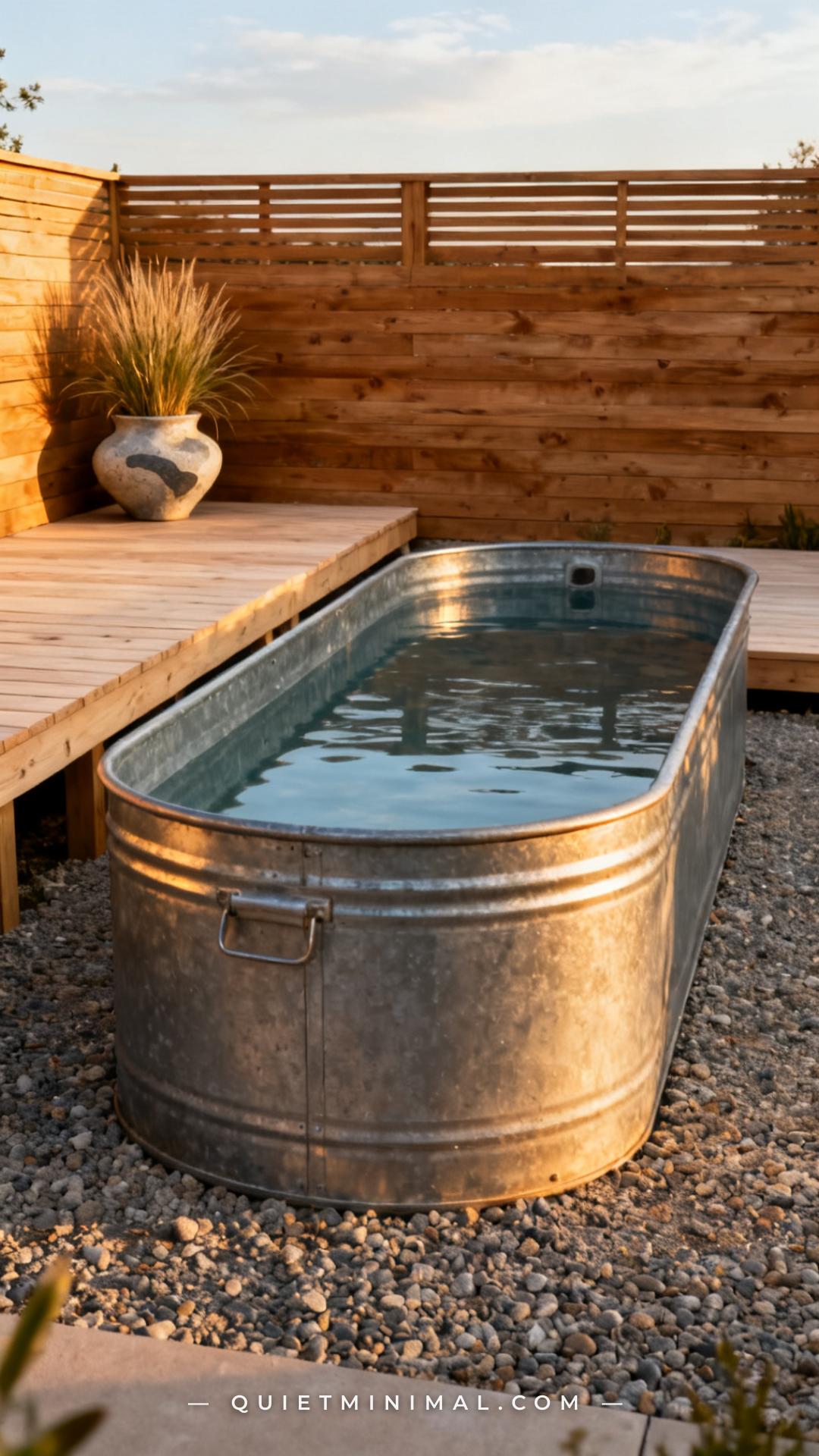
The galvanized steel stock tank has had its moment — and it hasn’t peaked yet. Originally built for livestock watering, the round or oval tank (typically 6 to 10 feet in diameter) holds enough water for two to four adults and has become the go-to solution for designers who want a pool aesthetic without any of the infrastructure.
The steel finish reads as industrial-minimalist, which pairs naturally with gravel surrounds, cedar fencing, and matte black hardware. Set it on a level gravel pad, add a small external pump and filter, and you have a functioning pool that cost a fraction of excavation and took one weekend. Cities don’t regulate these as pools — they’re classified as containers — which means no permits in most municipalities.
Key Takeaway: A stock tank pool on a gravel pad delivers a designer look with zero permits and a setup time measured in hours, not months.
2. The Portable Plunge Pool
 Save
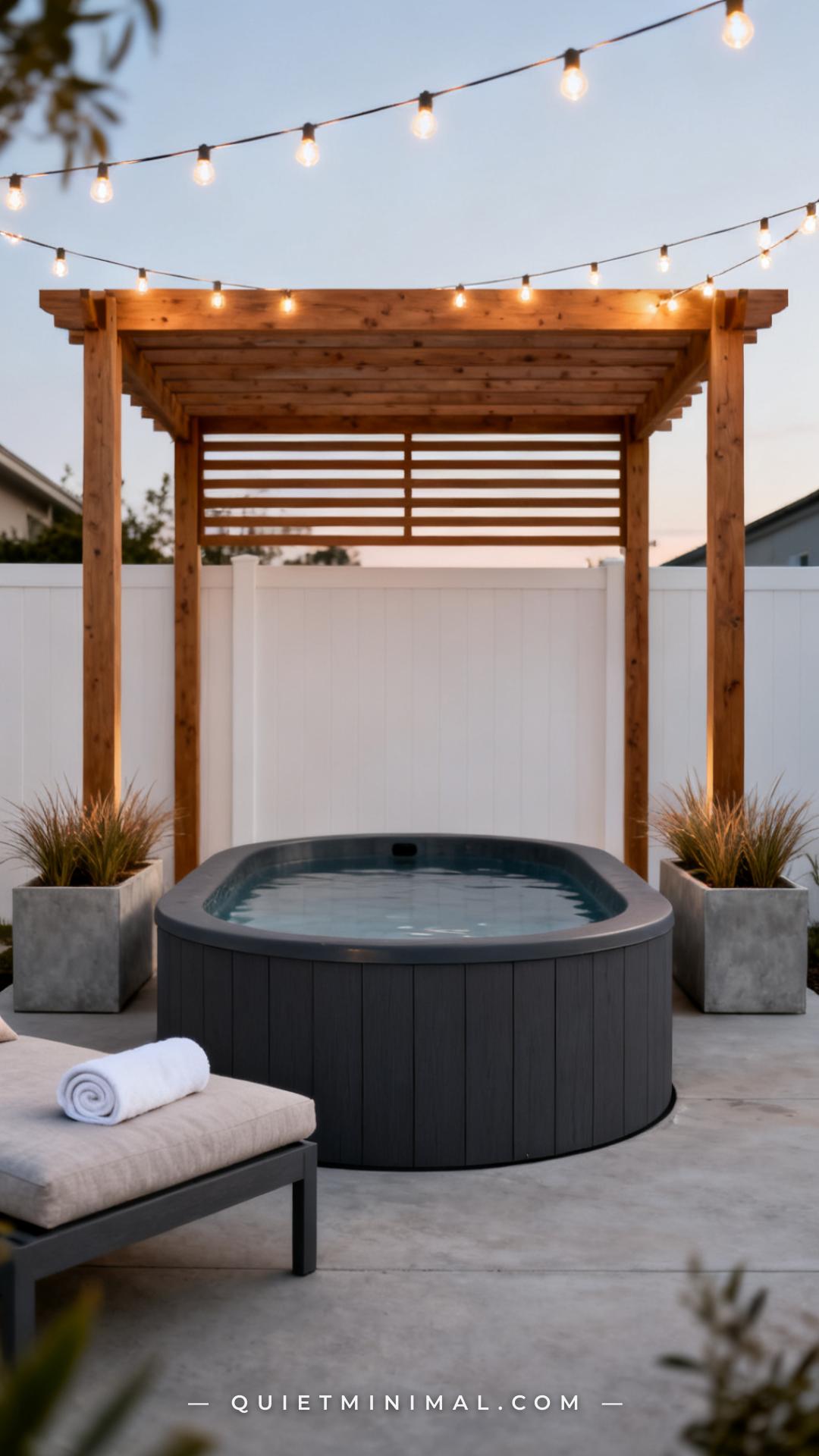
The cold plunge wellness trend has accelerated a wave of purpose-built portable plunge pools designed to sit on a deck or patio surface with no ground disturbance at all. Brands like Modpools, AquaSpa, and several direct-to-consumer manufacturers now produce freestanding fiberglass or composite plunge pools that connect to a standard garden hose and a residential electrical outlet.
These are designed for immersion and temperature therapy rather than lap swimming — think a deep soaking tub that seats two to three, sometimes with integrated chilling or heating. The exterior shells come in matte charcoal, warm white, and pale concrete finishes that photograph beautifully and require nothing more than a flat, load-bearing surface.
Key Takeaway: A portable plunge pool is the wellness-first pool alternative — compact, freestanding, and finished in materials that look like high-end outdoor furniture.
3. The Cocktail Pool Setup (Above-Ground Frame)
 Save
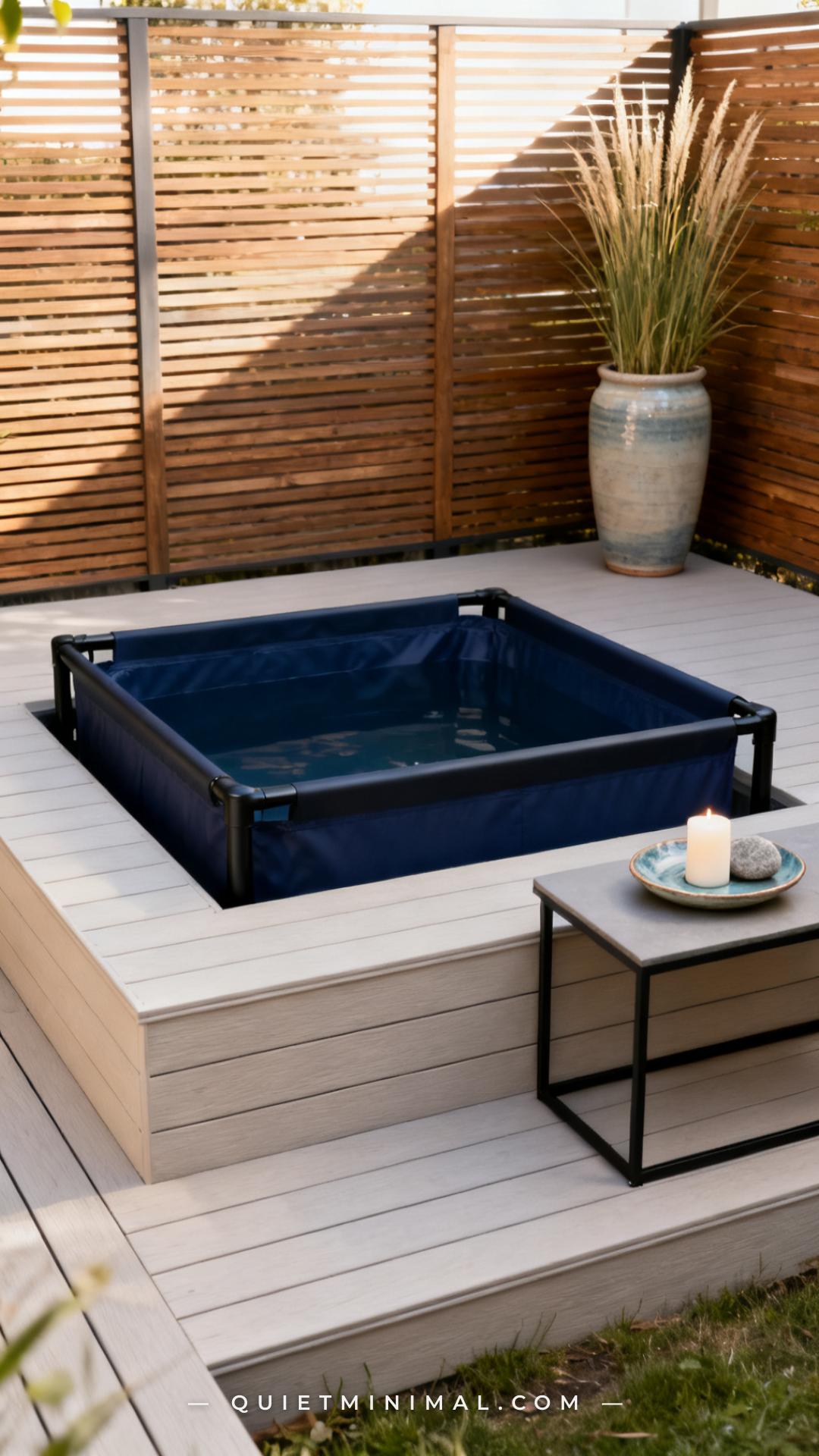
The term “cocktail pool” originally referred to small in-ground pools, typically 12 by 14 feet, sized for lounging rather than swimming laps. The design community has applied the same concept to above-ground frame systems. A rectangular above-ground pool with a deep navy, charcoal, or black liner — set on a composite deck platform with clean steel framing — reads far closer to a resort cocktail pool than anything the term “above-ground pool” used to imply.
The key is the surround. A raw vinyl above-ground pool surrounded by nothing looks like a suburban backyard. The same water volume surrounded by a low composite deck, a pergola overhead, and two or three oversized planters looks like a boutique hotel terrace. The water is identical. The design intention is everything.
Key Takeaway: Upgrade the surround — deck platform, steel frame, dark liner — and a cocktail-style above-ground pool becomes indistinguishable from the in-ground version at a fraction of the cost and disruption.
4. The Japanese Soaking Tub (Ofuro)
 Save
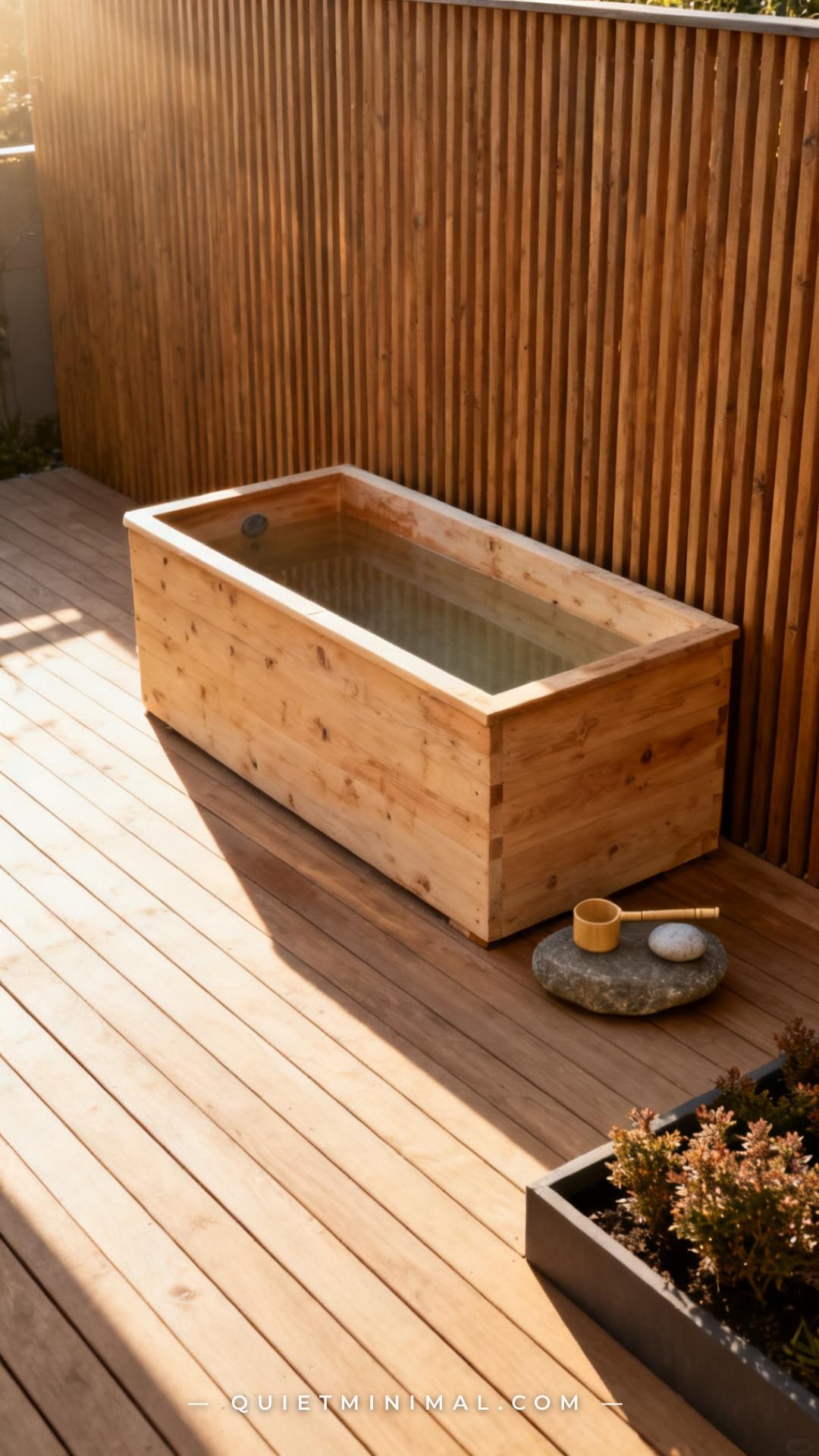
A traditional Japanese ofuro — a deep, compact soaking tub designed for full immersion in a seated position — is one of the most aesthetically considered pool alternatives available. The cedar construction, the architectural depth, and the ritual quality of the experience make this a deliberate choice rather than a fallback.
Ofuro tubs are available from specialty outdoor suppliers and some high-end garden retailers in sizes ranging from single-person (roughly 3 by 4 feet) to couples (4 by 5 feet). They’re filled with a standard garden hose, heated with an integrated propane heater or wood-fired heat exchanger, and require no plumbing work beyond an outdoor spigot.
Key Takeaway: An ofuro is the pool alternative for the buyer who doesn’t actually want to swim — they want immersion, heat, and the visual weight of a beautiful material in their outdoor space.
5. The Elevated Deck with In-Deck Hot Tub
 Save
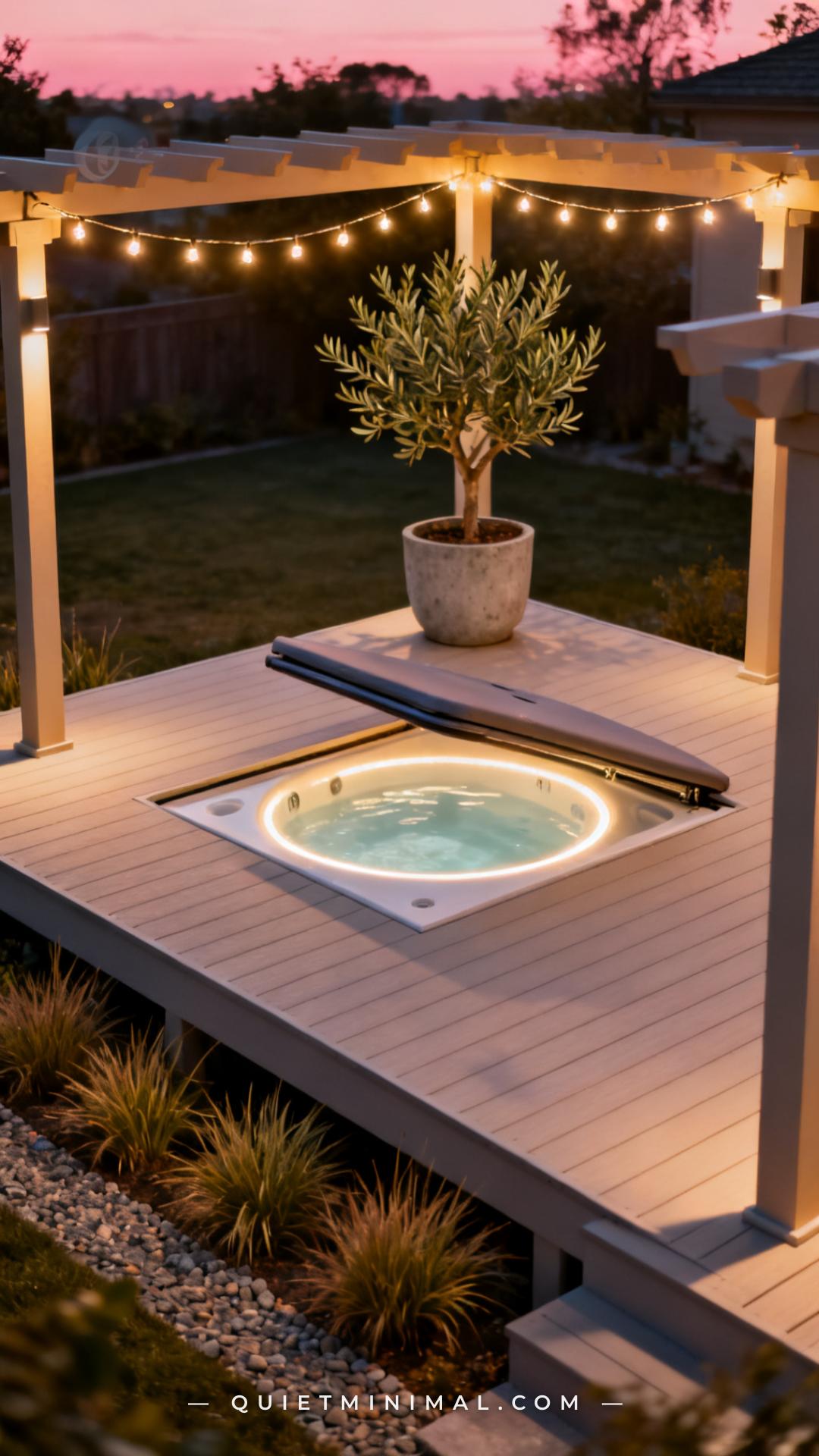
A hot tub recessed flush into a deck surface — rather than sitting above it — creates one of the most finished “pool area” looks available without any ground excavation. The visual difference between a drop-in hot tub and an in-ground pool, when photographed from standing height, is minimal. Both read as a body of water set into a hardscape surround.
This approach requires a deck build or rebuild, which is more involved than a stock tank weekend, but it remains entirely above-grade — no digging into soil, no permits beyond standard deck construction in most jurisdictions. The result is a permanent-looking outdoor water feature that adds real perceived value to the space.
Key Takeaway: Flush-set hot tubs on elevated decks are the highest-effort alternative on this list, but they produce the most convincing permanent-pool aesthetic of anything that doesn’t require excavation.
6. The Reflecting Pool (Shallow Decorative Basin)
 Save
Not every pool alternative needs to be swimmable. A shallow reflecting pool — a low basin with a dark interior finish that creates a mirror-like water surface — brings the visual calm and presence of water into a backyard without any of the pool infrastructure.
Prefabricated reflecting pool basins in concrete, resin, or powder-coated steel are available through garden design suppliers and some large online retailers. Installation involves setting a level base (compacted gravel or a concrete pad), connecting a small recirculating pump, and filling with a garden hose. The visual effect is striking — particularly for minimalist or Japandi-inspired outdoor spaces where the goal is atmosphere rather than recreation.
Key Takeaway: A reflecting pool delivers all of the visual presence of water in an outdoor space with none of the maintenance, safety, or permitting complexity of a swimming pool.
7. The Gravel-and-Shade “Dry Pool” Zone
 Save
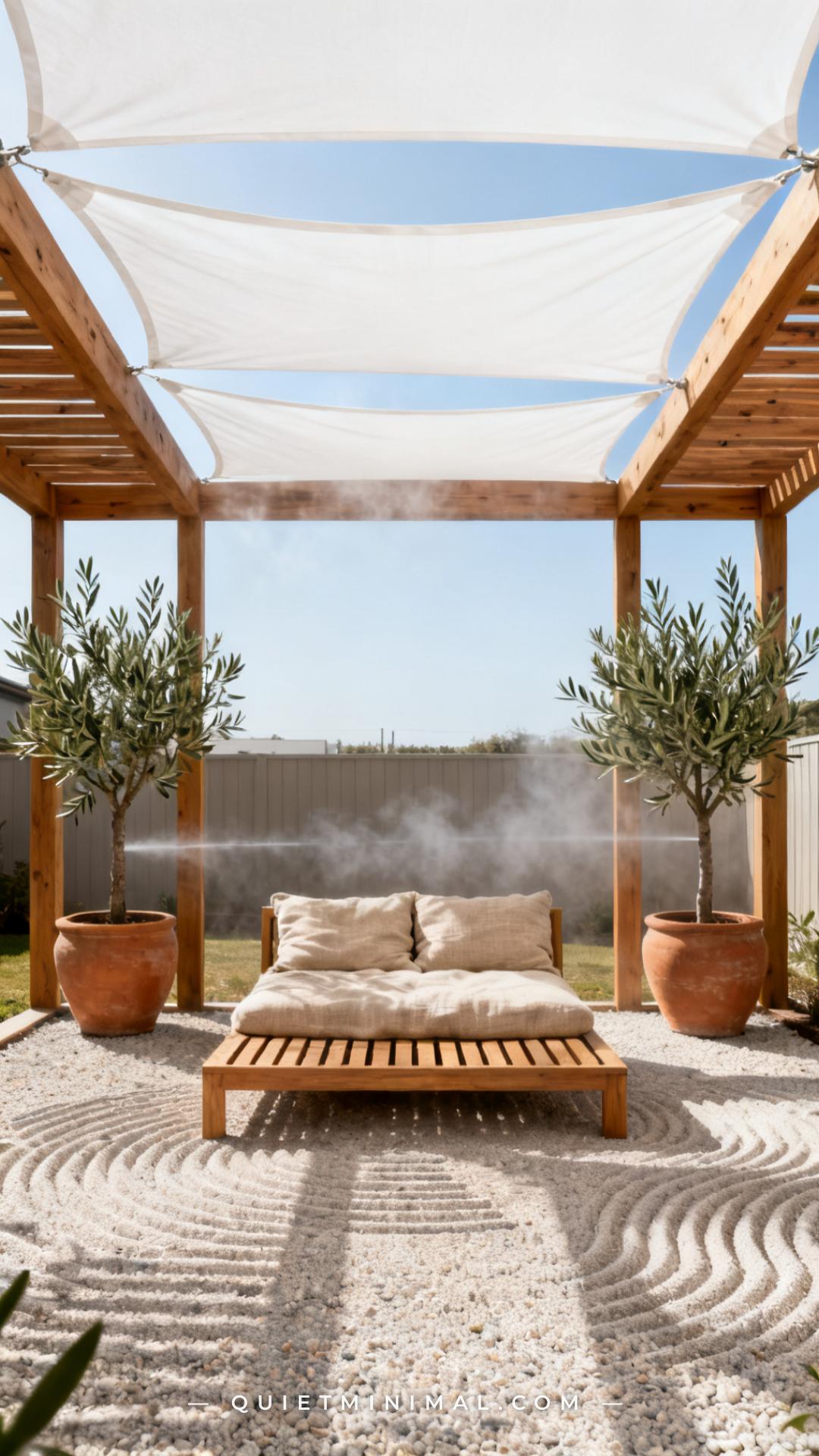
This one requires a reframe: sometimes the real goal isn’t water — it’s temperature control and a designated outdoor retreat. A gravel pad under a tensioned shade sail or timber pergola, fitted with a simple misting system, can reduce the perceived air temperature by 10 to 15 degrees in direct sun climates. This is the “dry pool zone” — a designed outdoor cooling area that replaces the function of a pool without a drop of water you need to manage.
From the guides
You've saved it, wanted it. Here's the how: codes, measurements, order. Your choices make it yours.
The Japandi Honest PlaybookThe honest version of the style: what to keep, what to skip, and the order to do it in.See inside →The Room Refresh PlaybookA repeatable four-step method, room by room, in ten minutes, thirty minutes, or one weekend.See inside →Make Any Room Feel Cozy on PurposeWhy some rooms hold people and others empty out, and the moves that change it.See inside →For minimalist backyards, this is often the best-looking solution. Pale gravel, a low daybed or oversized cushion platform, sculptural planters, and a clean overhead structure photograph like a Mykonos resort terrace — and require no more maintenance than raking and replacing misting line fittings once a season.
Key Takeaway: If the real goal is outdoor comfort and a beautiful retreat, a shade-and-mist zone achieves the same result as a pool without any water feature to manage.
8. The Lap Swim Endless Pool System
 Save
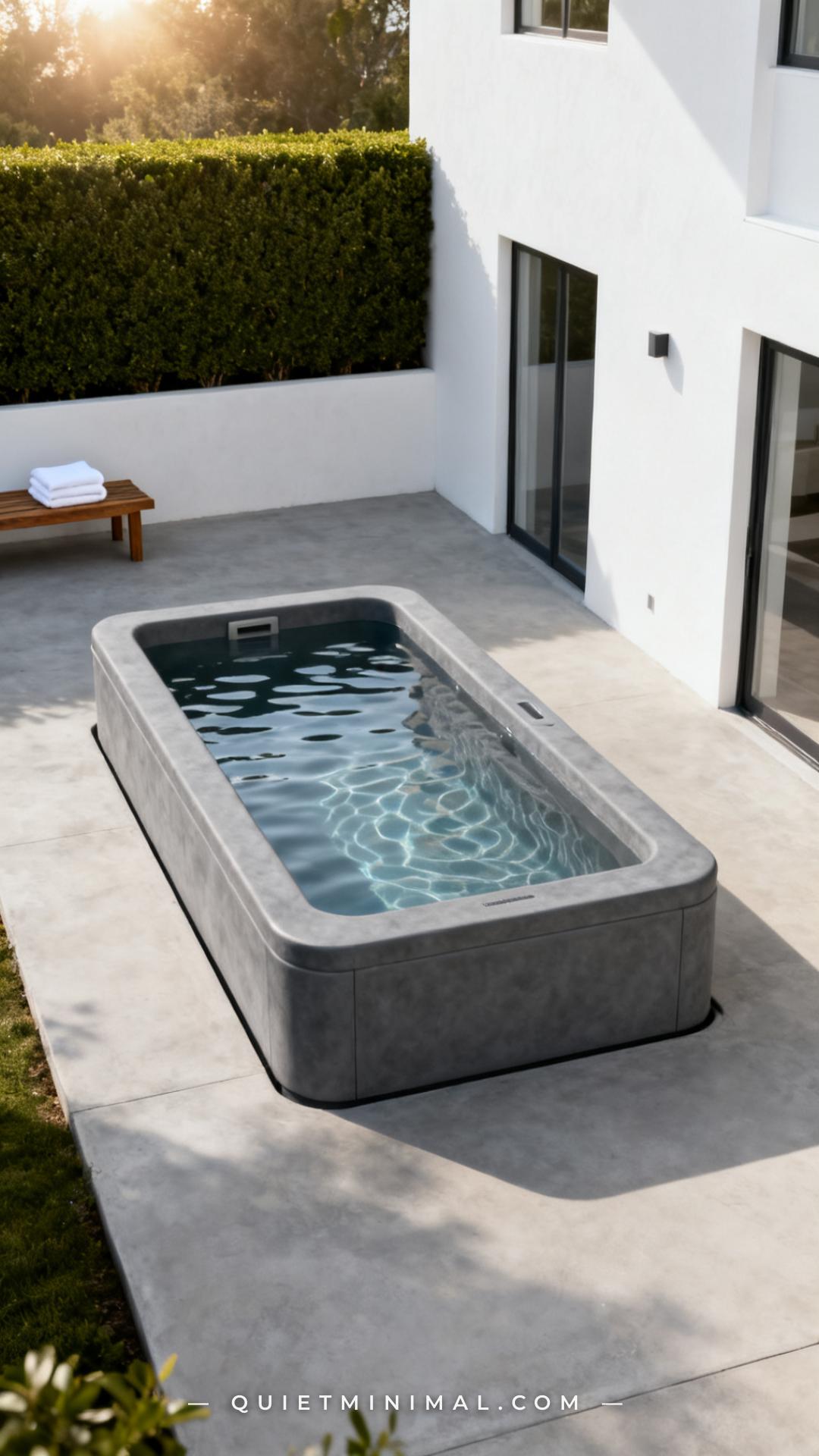
For the buyer who actually wants to swim — laps, resistance, real exercise — the Endless Pool category delivers. These self-contained units use a powerful current generator to create a swim stream inside a compact tank, allowing continuous lap swimming in a footprint as small as 8 by 15 feet. The exterior is a finished molded shell, not a liner system, so it sits on a patio or deck surface without looking temporary.
Endless Pools and its competitors (SwimEx, Fastlane units from Endless Pools, and several boutique manufacturers) are significant investments, but they’re fully above-ground, arrive as prefabricated units, and require only electrical hookup — not excavation or concrete forming.
Key Takeaway: Endless pool systems are the only no-dig option on this list that provides a true swimming experience — at a price that reflects that, but without a single shovel touching the ground.
9. The Naturalistic Pond-Pool Hybrid
 Save
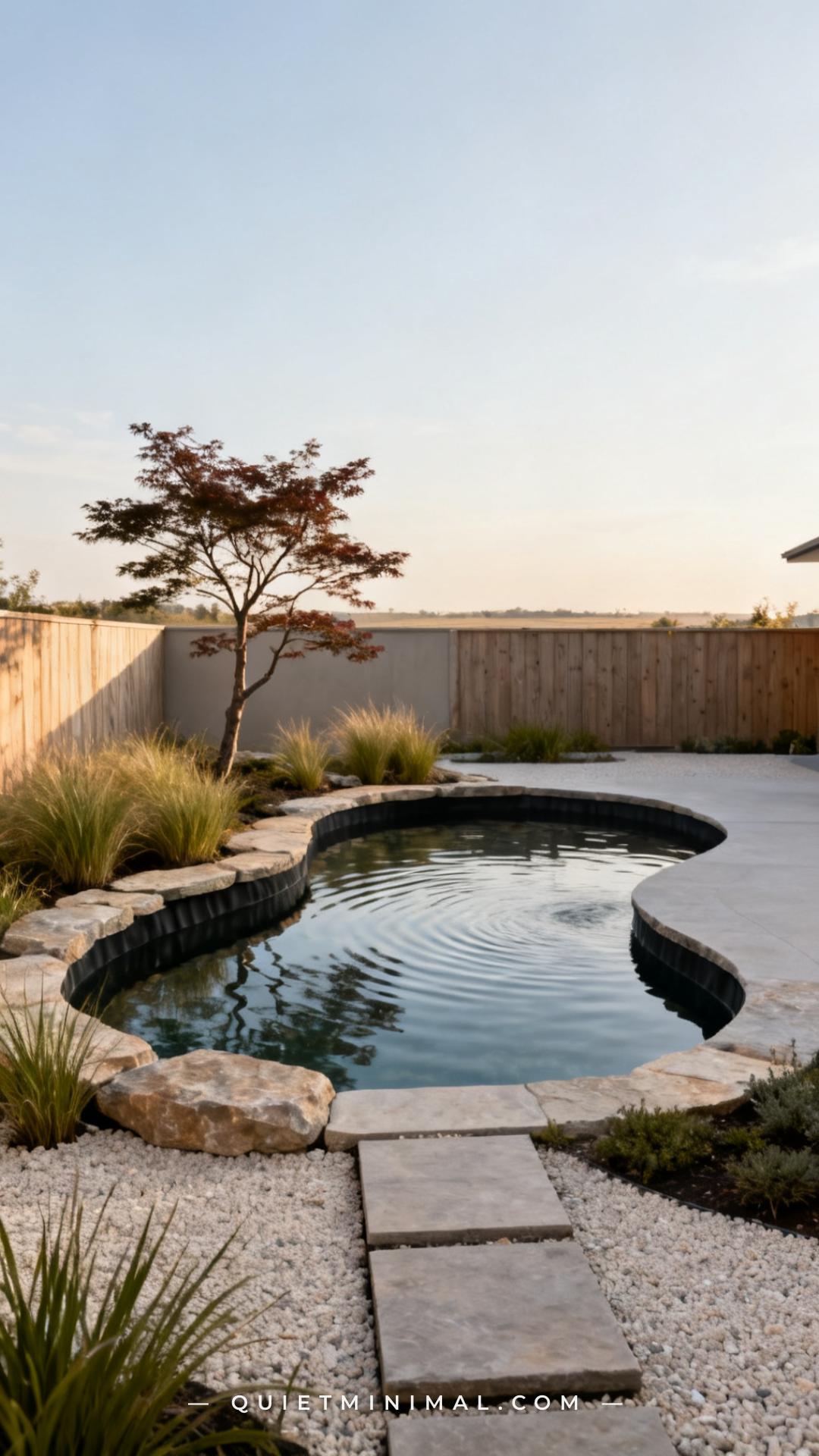
A naturalistic pond-pool — a shallow decorative pond designed for wading, aesthetic enjoyment, or temperature cooling rather than traditional swimming — sits in a middle ground between reflecting pool and swimming pool. The key design distinction is that these use a flexible liner system set into a shallow depression rather than deep excavation: the typical installation is 18 to 24 inches deep, which in many jurisdictions falls below the threshold requiring a pool permit.
The naturalistic finish — irregular stone edging, surrounding plantings, and a dark or pebble-bottom liner — creates a landscape feature that looks permanent and intentional while costing a fraction of a concrete pool and requiring no specialized construction crew.
Key Takeaway: A shallow naturalistic pond-pool occupies the sweet spot between decoration and function — deep enough to cool down in, beautiful enough to anchor the whole backyard design.
10. The Container Water Garden with Cooling Zone
 Save
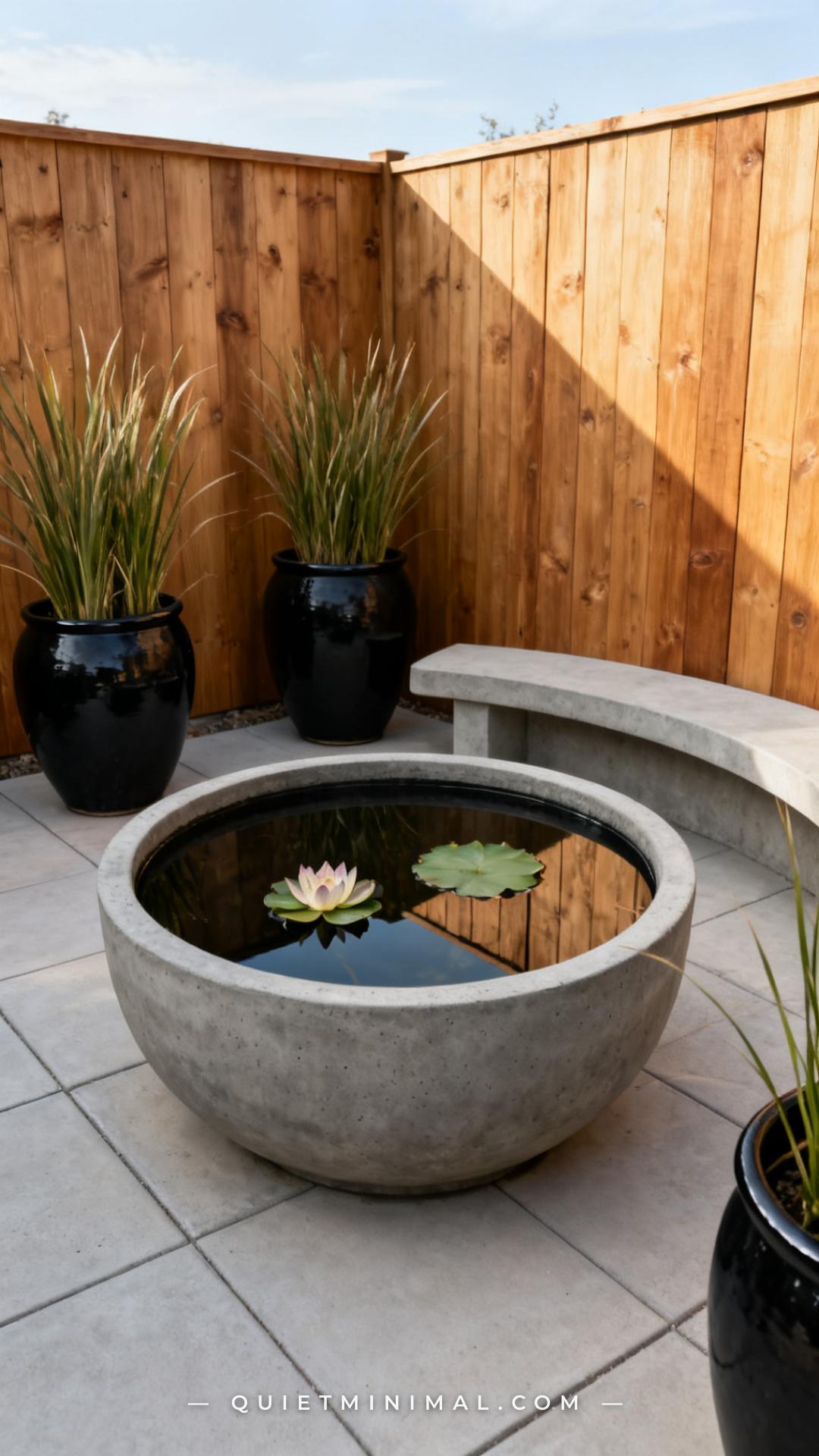
A large container water garden — a concrete, ceramic, or steel basin 24 to 48 inches in diameter filled with still water and aquatic plants — is often overlooked as a pool alternative because it reads as “garden feature” rather than “pool adjacent.” That’s a design opportunity. A grouping of two or three large water basins, arranged around a seating area with a stone or concrete surround, creates the visual presence of water in a backyard without any of the infrastructure.
This works particularly well in minimalist Japanese or Japandi-influenced outdoor spaces where the goal is sensory calm rather than active recreation. The sound, reflection, and cooling effect of multiple still water containers in close proximity is measurably different from a dry patio, even if the total water volume is modest.
Key Takeaway: A thoughtfully arranged water garden achieves the atmospheric presence of a pool in a compact space — it’s a design tool, not a compromise.
11. The Prefab Fiberglass Shell (Minimal Excavation Install)
 Save
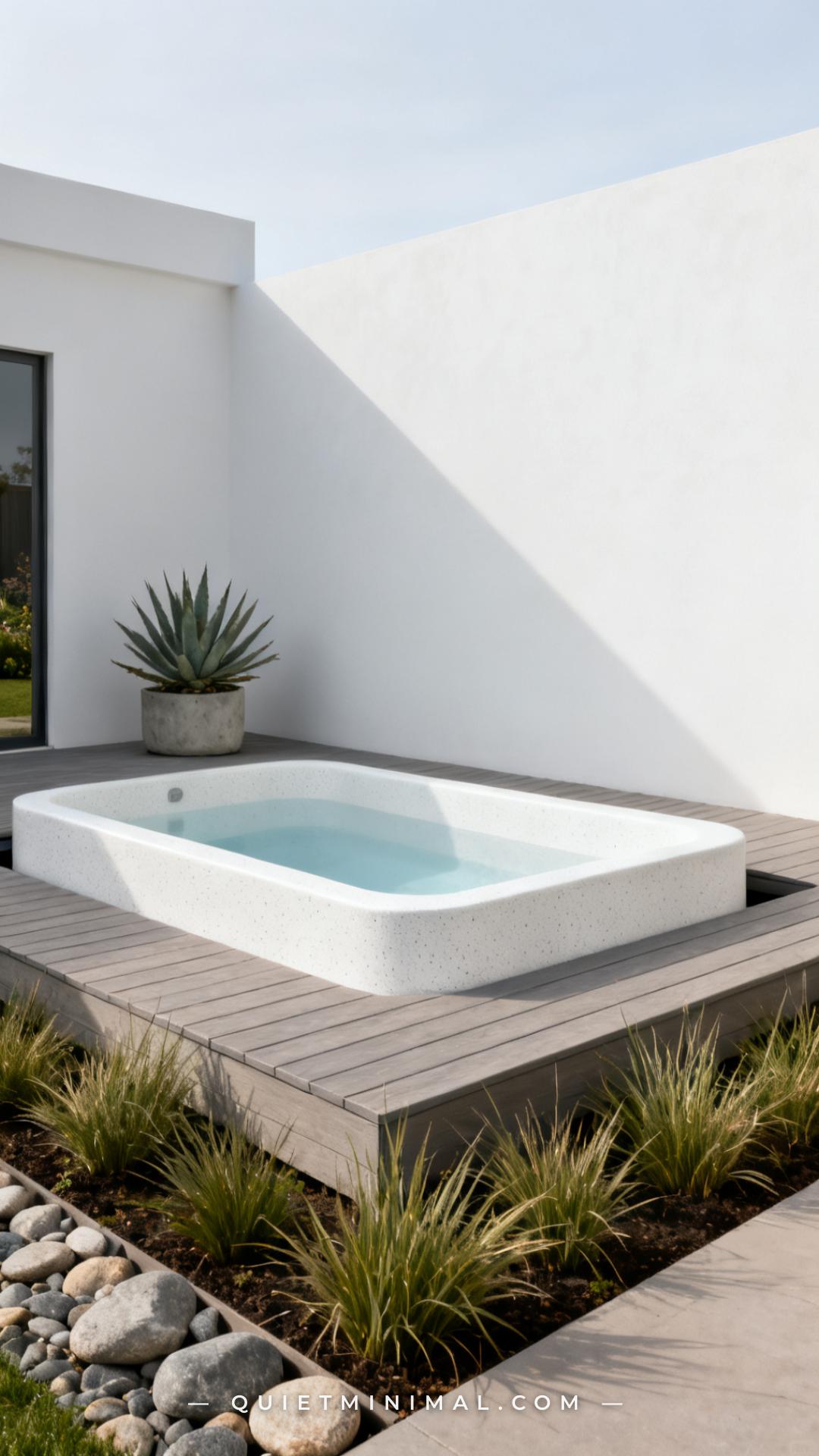
If a true pool-like experience is the goal and a small amount of site preparation is acceptable, a prefab fiberglass shell pool represents the minimum-excavation option. These arrive as a single molded unit — no forming, no concrete pouring — and are typically set into a shallow excavation of 12 to 18 inches with gravel backfill. The pool sits partially above grade, which reduces digging dramatically compared to a traditional in-ground pool and can eliminate the need for a separate excavation permit in some areas.
Designers are increasingly finishing these with a low deck wrap on three sides and a gravel garden on the fourth, creating a permanent-looking pool that was installed in days rather than months. The minimalist shell options in matte white, charcoal, and pale gray read as architectural elements rather than pool accessories.
Key Takeaway: A prefab fiberglass shell is the closest thing to a real pool without the timeline, crew size, or ground disturbance — and the finished result is indistinguishable from custom in-ground construction when paired with a simple deck surround.
The through-line across all 11 of these is that the constraint isn’t the problem — it’s the design. In-ground pools are aspirational because of how they look within a well-designed outdoor space, not because of the water itself. Every option on this list can achieve that same visual result when the surround, materials, and scale are treated with the same intention. Start with the function you actually need — cooling, lounging, immersion, aesthetics — and work backward to the option that delivers it. The pool you want is probably not the pool you thought you needed.
From the guides
You've saved it, wanted it. Here's the how: codes, measurements, order. Your choices make it yours.
The Japandi Honest PlaybookThe honest version of the style: what to keep, what to skip, and the order to do it in.See inside →The Room Refresh PlaybookA repeatable four-step method, room by room, in ten minutes, thirty minutes, or one weekend.See inside →Make Any Room Feel Cozy on PurposeWhy some rooms hold people and others empty out, and the moves that change it.See inside → Save


