 Georgia
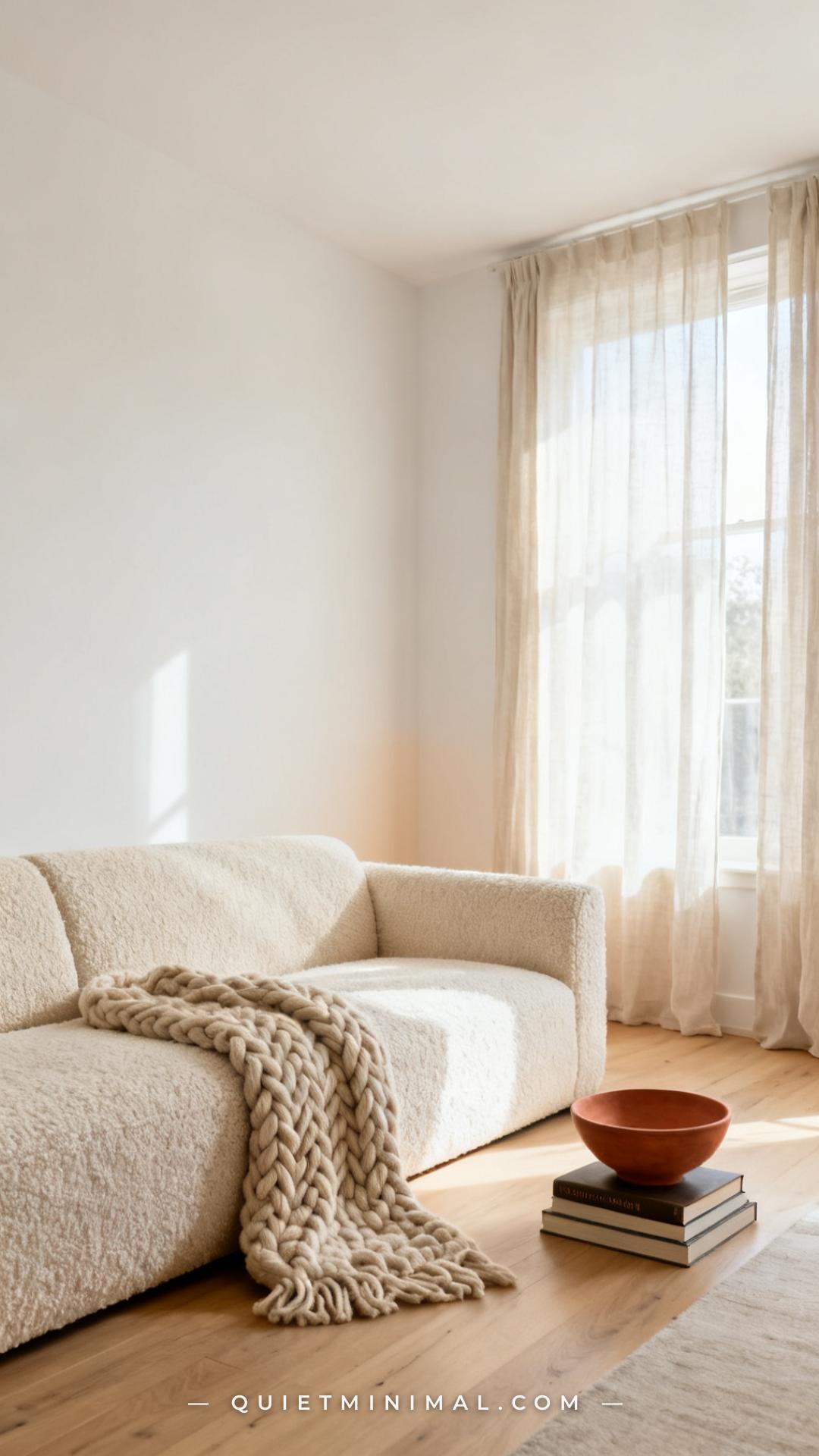
The hardest thing about going minimal is that most rooms end up feeling cold instead of calm. You clear the clutter, edit down the furniture, and then stand in a room that looks more like a model unit than somewhere you’d actually want to spend a Sunday afternoon. The problem isn’t minimalism itself — it’s that warmth doesn’t come automatically once you subtract the excess. It has to be built in deliberately, layer by layer, using the right elements in the right order.
This is the part most inspiration boards skip. They show you the end result — the perfectly lit neutral bedroom, the spare living room with one sculptural chair — but not the specific decisions that made it feel warm rather than sterile. These 12 ideas do exactly that. Each one targets a specific warmth gap in a minimal room and fills it with something intentional rather than something extra.
1. Start With a Warm-Toned Neutral Base
 Save
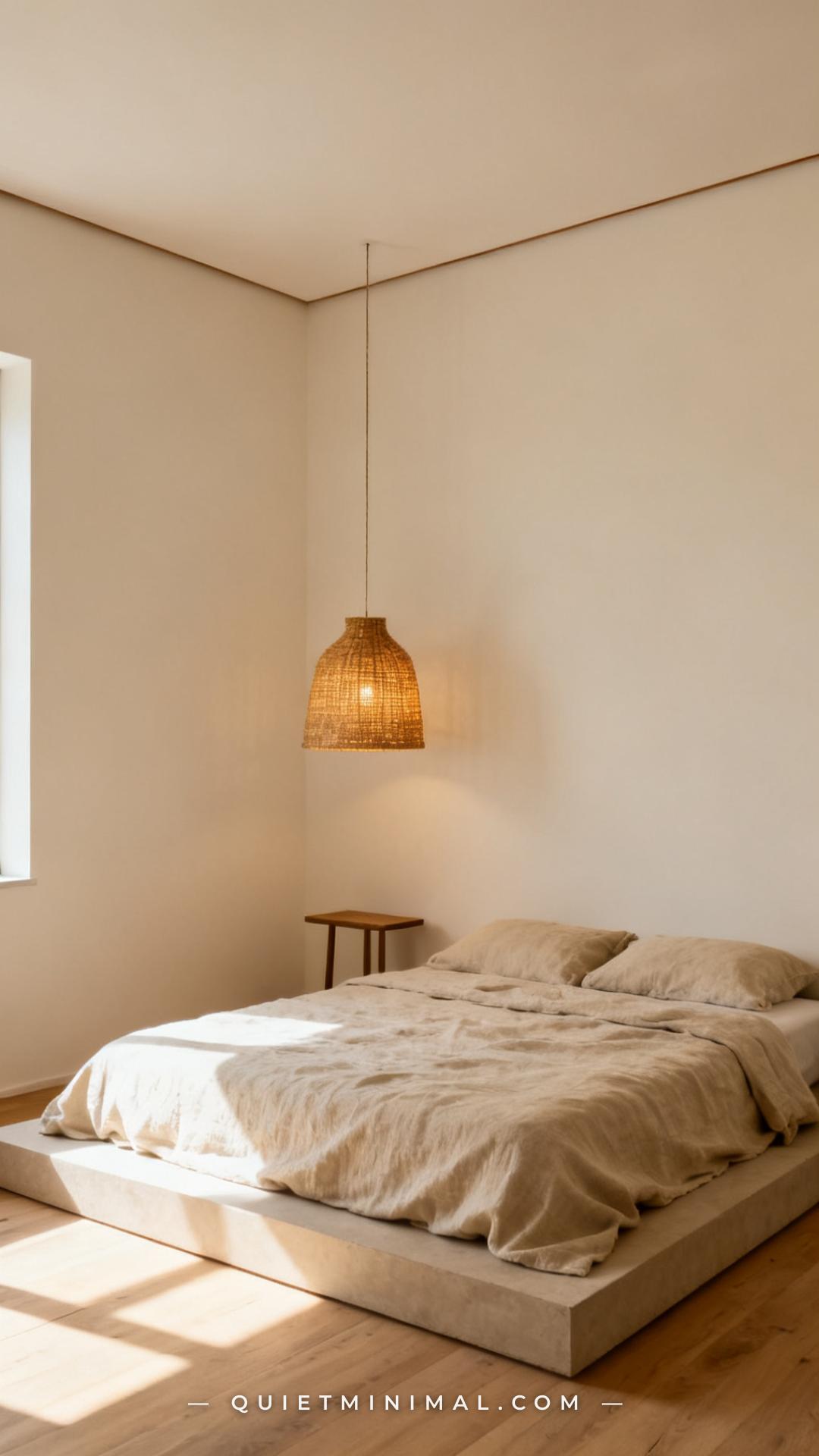
The single most impactful thing you can do in a minimal room is choose a wall color with a warm undertone. A bright cool white reads as clinical — think hospital corridor. A white with yellow, beige, or pink undertones reads as calm. Benjamin Moore’s Pale Oak (OC-20) and Sherwin-Williams’ Shoji White (SW 7042) are consistently recommended by designers for this reason: they look nearly white in photos but feel noticeably warmer in person. Before committing to a full room, test your shortlisted colors in large swatches (at least 12 inches square) on two different walls and check them at midday and at dusk. The undertone shifts dramatically with changing light.
From the guides
You've saved it, wanted it. Here's the how: codes, measurements, order. Your choices make it yours.
 The Japandi Honest PlaybookThe honest version of the style: what to keep, what to skip, and the order to do it in.See inside →
 The Room Refresh PlaybookA repeatable four-step method, room by room, in ten minutes, thirty minutes, or one weekend.See inside →
 Make Any Room Feel Cozy on PurposeWhy some rooms hold people and others empty out, and the moves that change it.See inside →
The wall color is the background layer — everything placed in front of it either fights the temperature or harmonizes with it. Getting this right first means every subsequent layer of warmth stacks cleanly rather than working against a cold foundation.
Key Takeaway: A warm-undertone neutral on the walls does more for a cozy minimal room than any single accessory you could add afterward.

2. Choose One Textured Anchor Fabric
 Save
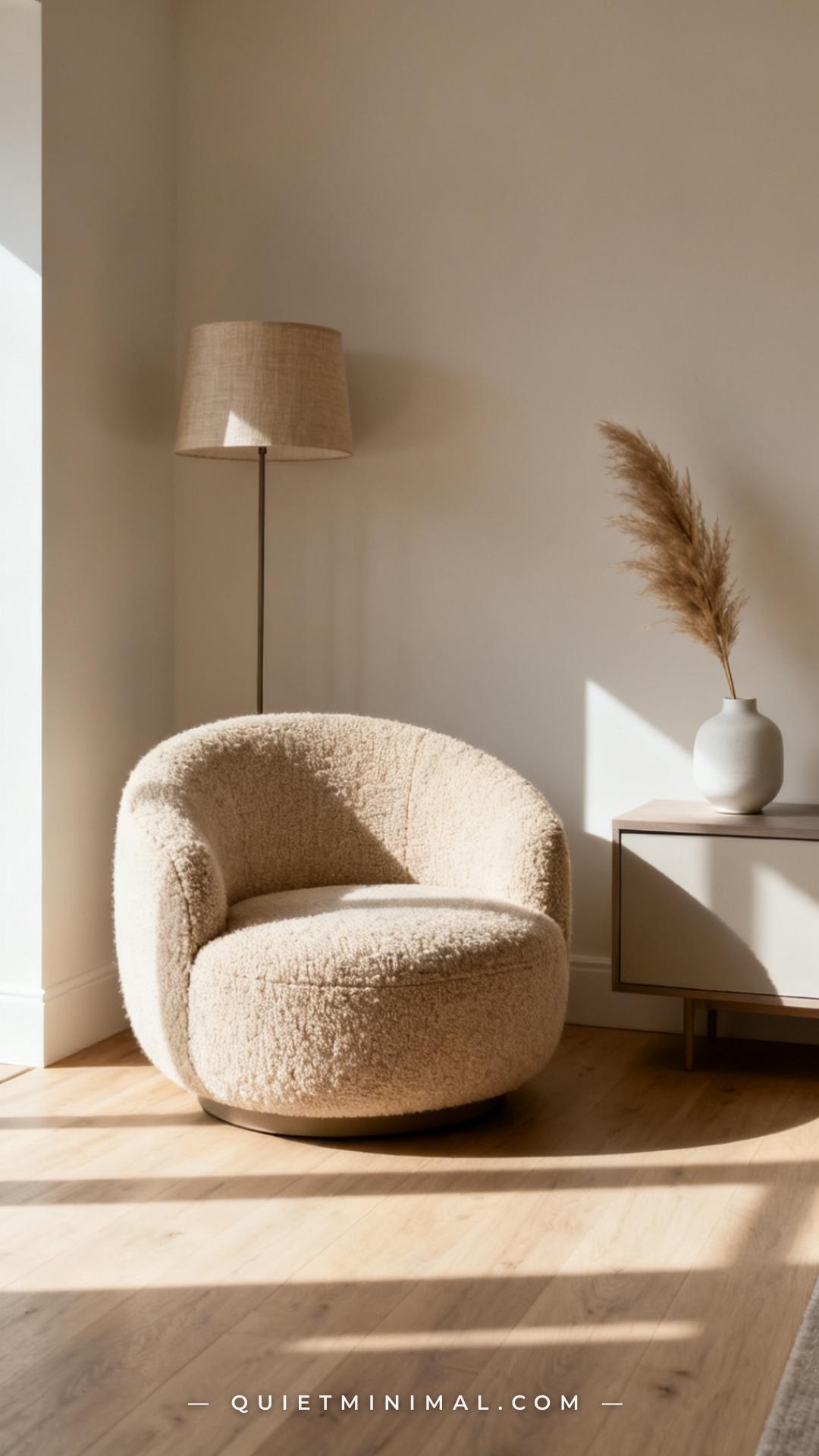
In a minimal room, one large-scale textured fabric becomes the room’s warmth anchor. Boucle is the clearest example right now — its looped, nubby surface catches light and creates visual softness that flat fabrics simply don’t. But the same principle applies to chunky-knit throws, woven linen upholstery, or a bouclé-wrapped headboard. The key word is one. Stacking three different textures at the same scale creates busyness; placing one dominant texture and keeping everything else smoother creates contrast that reads as intentional.
For a sofa or accent chair, boucle or a textured weave in a neutral tone pulls far more warmth into a room than a solid-colored smooth fabric in the same shade. It’s the difference between a room that looks expensive in a photo and one that feels warm when you walk in.
Key Takeaway: Pick one primary textured fabric — sofa, chair, or headboard — and let it carry the room’s warmth while keeping other upholstery quieter.
 Save
3. Use Warm Wood in at Least Two Spots
 Save
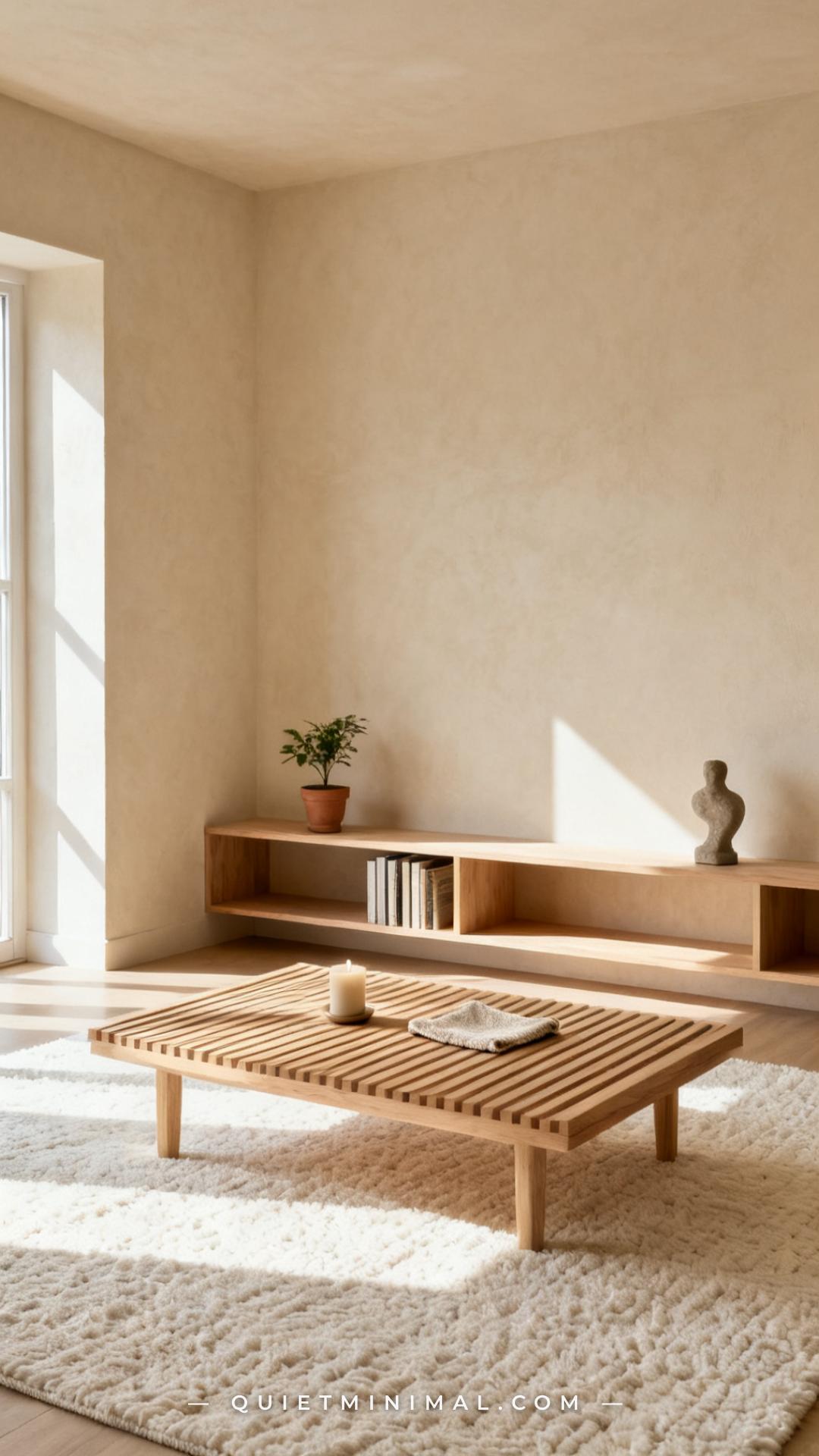
Wood is the fastest way to introduce natural warmth in a minimal room — but placement matters. One small wooden object on a shelf reads as a decorating afterthought. Wood that appears in two or more distinct locations — say, a coffee table and a floating shelf, or a headboard and bedside tables — creates a visual thread that grounds the whole room in a warm, natural tone.
Pale oak and ash are the strongest choices for a minimalist interior because they read as light and airy rather than heavy. Darker walnut or espresso finishes can work, but they carry more visual weight, which makes a spare room feel smaller rather than warmer. Stay in the lighter wood family if your goal is warmth without weight.
Key Takeaway: Warm wood works best when it appears in at least two places — that repetition reads as deliberate design, not just a single decorative piece.
 Save
4. Layer Your Lighting at Three Heights
 Save
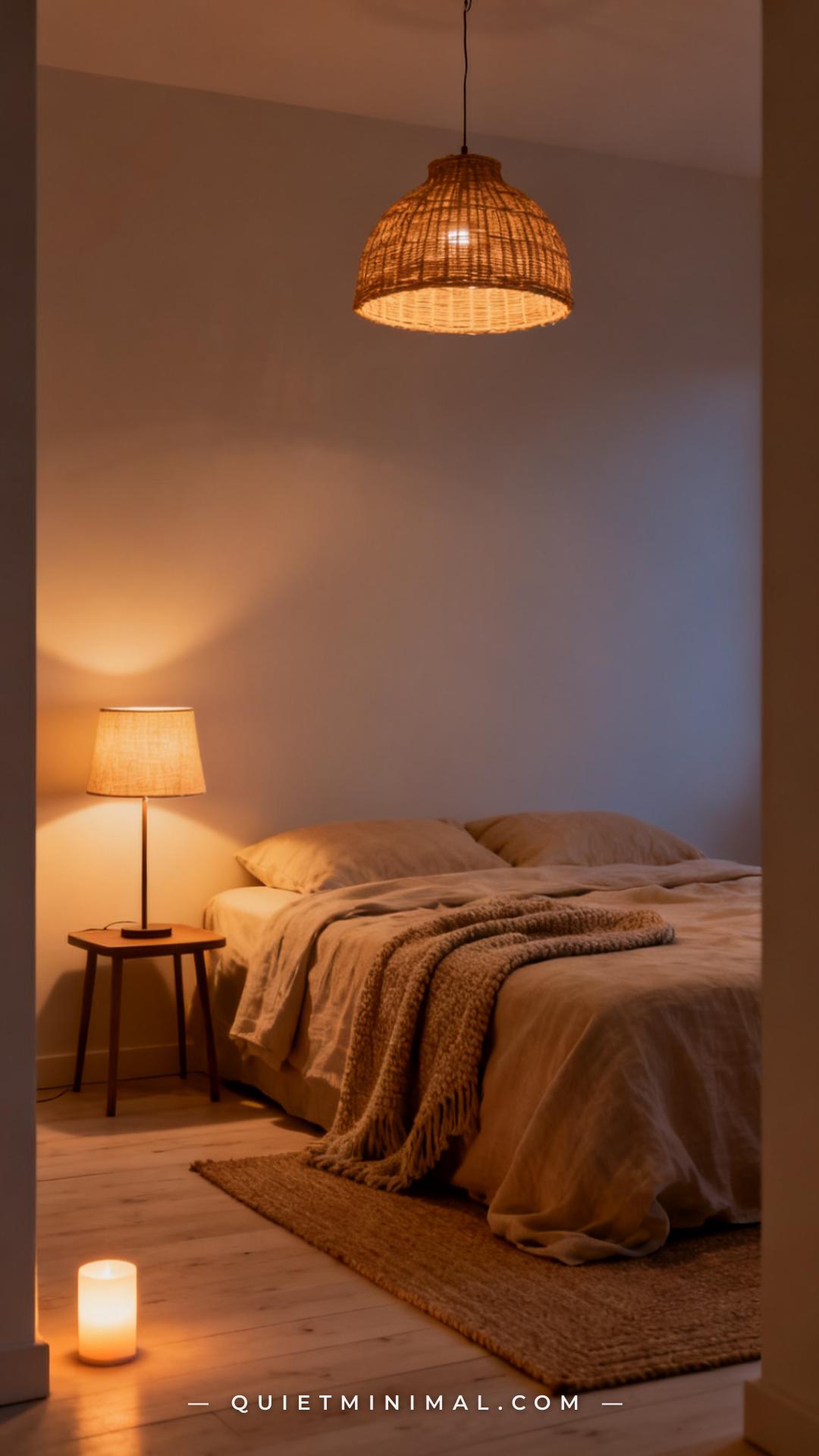
Overhead lighting alone is the single biggest contributor to a room that feels cold and institutional. In a minimalist space — where there’s less furniture to absorb and diffuse light — a single overhead source is even more brutal. Layering light at three heights (ceiling, table or surface level, and floor or low accent level) wraps the room in warmth the way multiple heat sources warm a space more evenly than one radiator.
For a bedroom or living room, this means: one pendant or flush-mount ceiling fixture, one or two table lamps, and a floor lamp or low candle cluster in a corner. The overhead light can be bright for tasks; the lower sources should be warm-toned (2700K or lower) and dimmable. This layered structure lets you dial the room’s atmosphere from functional to intimate without changing a single piece of furniture.
Key Takeaway: Three lighting heights — ceiling, surface, and floor level — give a minimal room the layered warmth that overhead-only lighting will never achieve.
 Save
5. Add a Rug That Defines Without Dominating
 Save
A rug in a minimal room does two things simultaneously: it defines the seating zone visually and introduces a layer of warmth underfoot and to the eye. The most common mistake is going too small — a rug that only fits under the coffee table leaves the sofa floating and makes the room feel disconnected. In a minimalist space, the rug should be large enough that at least the front two legs of every sofa and chair sit on it. This grounds the furniture grouping and makes the room feel intentional rather than underfurnished.
For texture, natural fiber rugs — jute, sisal, wool boucle, or a flatweave cotton in a warm tone — add warmth without the visual busyness of a patterned rug. Pattern in a minimal room often competes; texture adds warmth quietly. A 8’x10′ or 9’x12′ rug is almost always the right call in a main living space.
Key Takeaway: Size up on the rug — furniture legs on the rug, not floating beside it — and choose a natural fiber or textured weave over a flat or patterned option.
 Save
6. Edit Your Surfaces Down to Three Objects
 Save
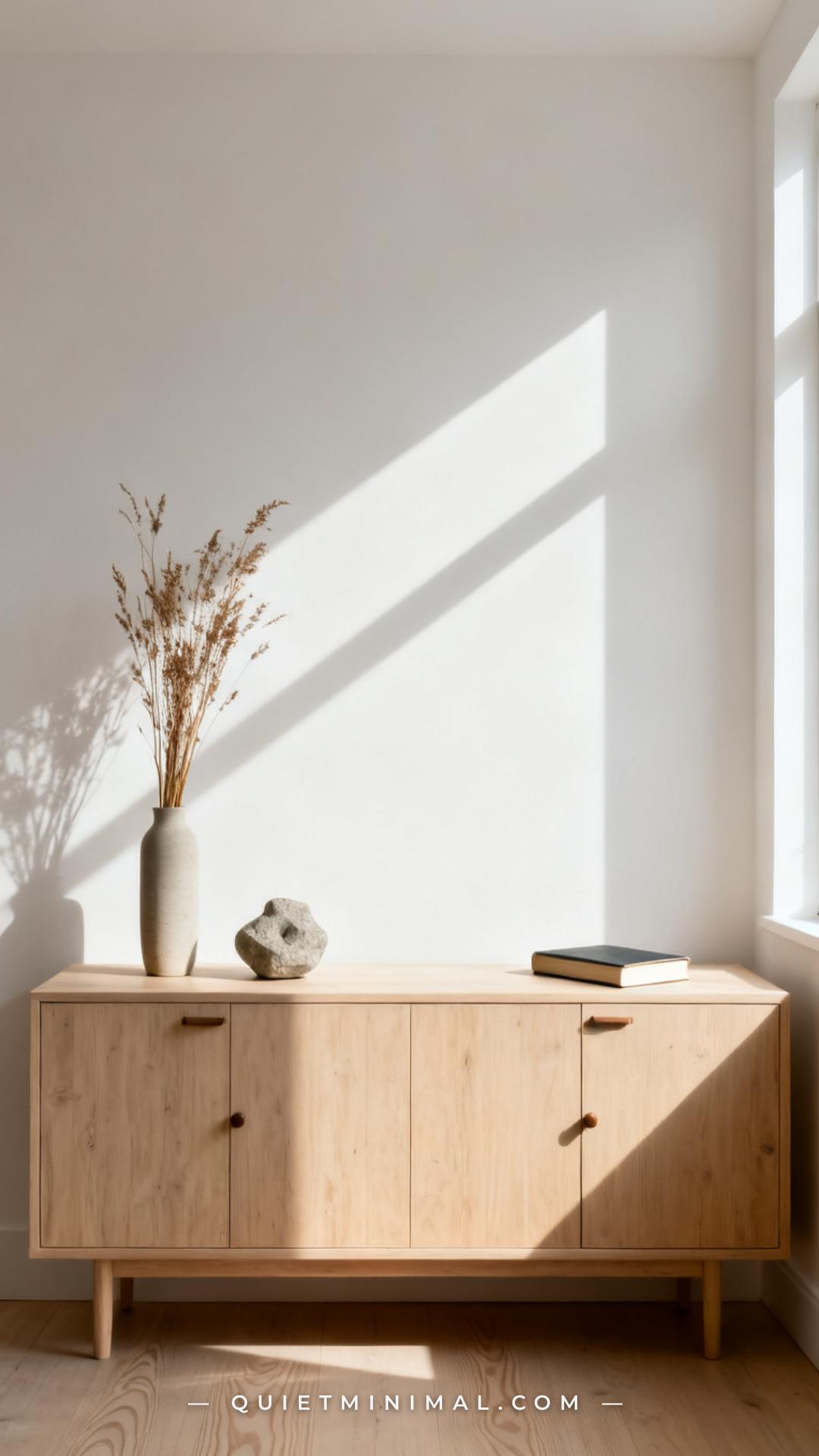
Minimalism gets uncomfortable when it results in perfectly empty surfaces — a flat, blank table looks less designed than a curated one, and it reads as unfinished rather than calm. The fix is the rule of three: limit any given surface to three objects, grouped with an intentional height variation (tall, medium, low). On a console table or sideboard, this might be a tall ceramic vase, a small sculptural bowl, and a single book placed flat. That’s it.
The objects themselves matter less than their relationship to each other. One tall, one medium, one low — and at least one of them organic in form (a vase, a plant, a stone, a woven basket). This slight departure from geometric regularity is what makes a minimal surface feel alive rather than staged. Uniformity of height and shape in a trio of objects is what tips a surface from “edited” into “sterile.”
Key Takeaway: Three objects with intentional height variation — including one organic form — transform an empty surface from sterile to styled without adding clutter.
 Save
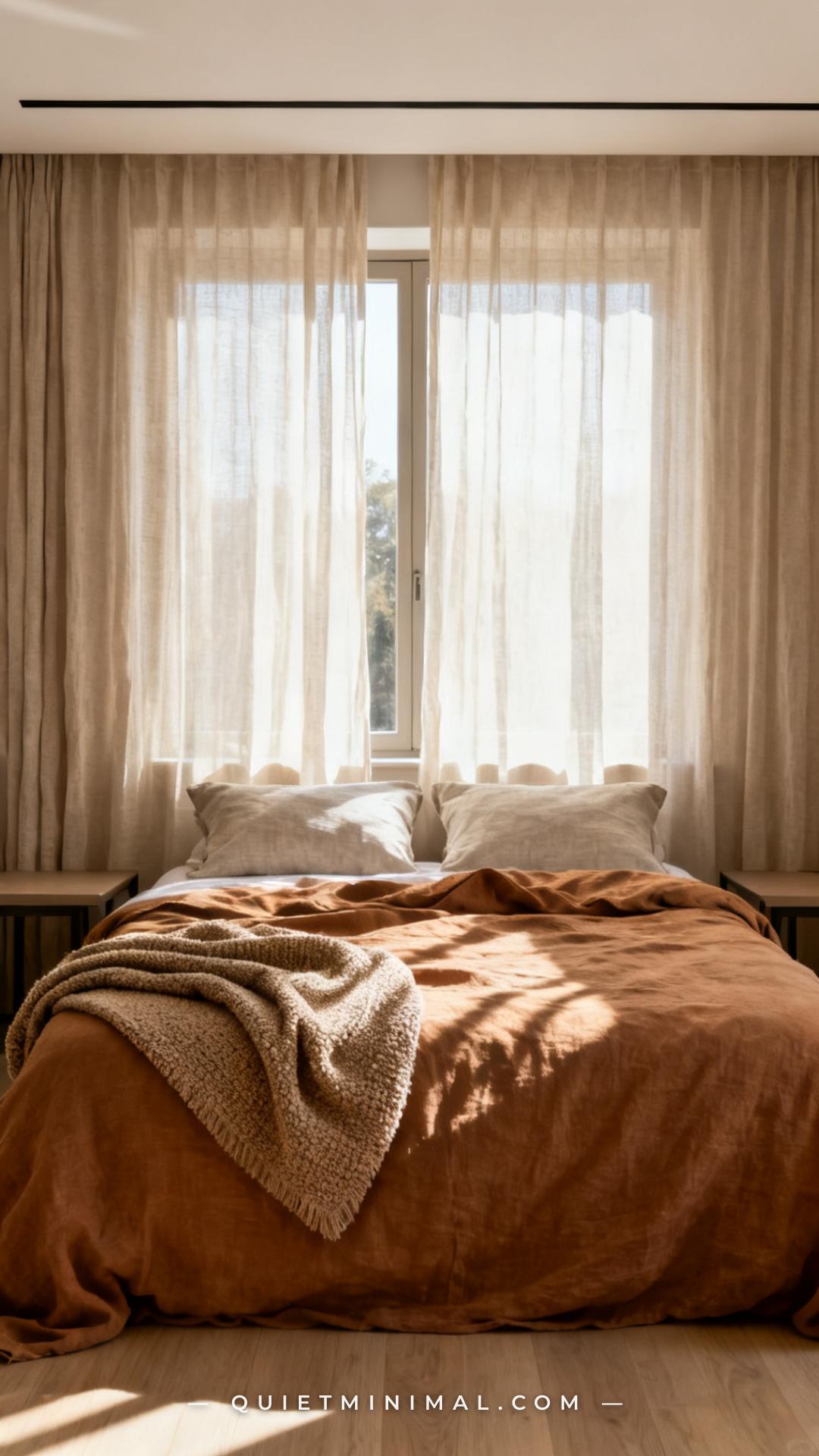
7. Introduce Linen as Your Primary Soft Good
 Save
Of all the textile choices available, linen does the most work in a minimal room for the least visual noise. It’s textured enough to add warmth but neutral enough not to compete with anything else in the room. More practically, linen has a naturally crumpled, lived-in quality that makes a minimal room feel inhabited rather than untouched — which is the exact quality that prevents a spare room from reading as cold.
For bedding, a linen duvet cover in a warm flax, oatmeal, or soft blush tone is the most impactful single purchase for a minimalist bedroom. Pair it with sheer linen window panels and you’ve introduced the same material at two scales — soft goods that echo each other and warm the whole room without adding visual weight. Avoid overly stiff or synthetic linen blends; 100% French or Belgian linen has the right drape and texture.
Key Takeaway: Linen at two scales — bedding and curtains — warms a minimal room with texture and a lived-in quality that flat, smooth fabrics can’t replicate.
 Save
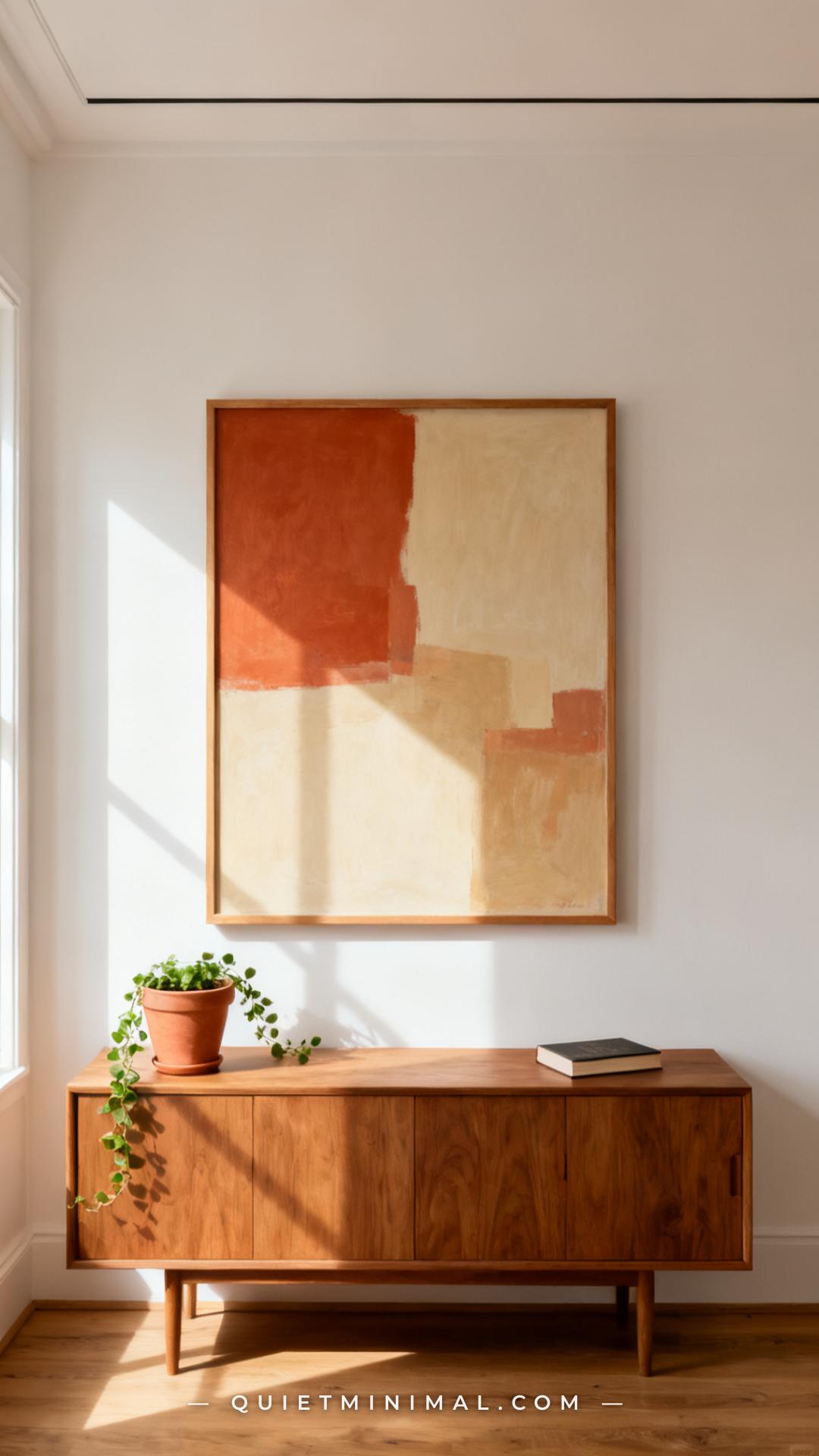
8. Hang One Piece of Art That Has Warmth in the Color
 Save
From the guides
You've saved it, wanted it. Here's the how: codes, measurements, order. Your choices make it yours.
The Japandi Honest PlaybookThe honest version of the style: what to keep, what to skip, and the order to do it in.See inside →The Room Refresh PlaybookA repeatable four-step method, room by room, in ten minutes, thirty minutes, or one weekend.See inside →Make Any Room Feel Cozy on PurposeWhy some rooms hold people and others empty out, and the moves that change it.See inside →In a minimal room where walls are largely bare, one piece of well-chosen art carries enormous visual weight — more than in a gallery-style display where individual pieces compete. That means the color story in that one piece matters more than it would in a busy arrangement. Art with warm tones — terracotta, ochre, rust, warm beige, sand — actively warms the room it’s in. Art with cool tones (cool gray, blue, stark black-and-white) reinforces a clinical feeling.
Abstract art works best in a minimalist setting because it doesn’t demand narrative attention the way representational art does — it registers as color and texture from across the room rather than pulling the eye in for close reading. A single large print (at least 24″x30″) in a simple natural wood or matte frame, centered above a low furniture piece, is the design move that consistently makes a minimal room feel complete rather than sparse.
Key Takeaway: One large piece of abstract art in warm tones does more for a minimal room’s warmth than a gallery wall — choose the color story deliberately.
 Save
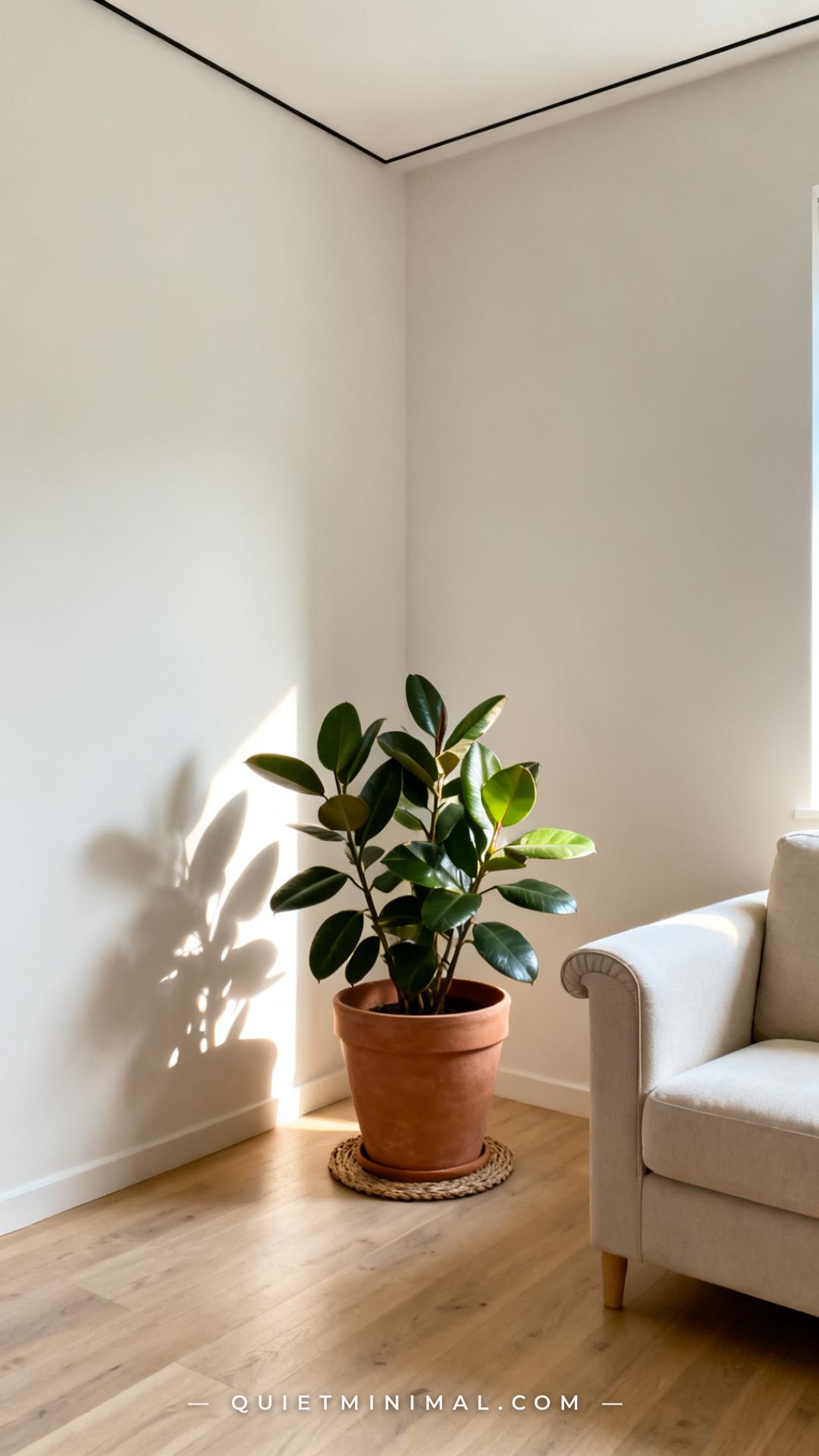
9. Add a Low-Profile Plant in an Earthy Vessel
 Save
Plants belong in minimalist rooms not because of any maximalist impulse but because they introduce organic shape — something no furniture piece, no rug, no artwork fully replicates. A minimal room built entirely from rectangular and linear elements has a geometric rigidity that reads as cold. One plant breaks that regularity naturally, and the green of a living plant adds a warmth and vitality that no paint color or fabric achieves the same way.
The key constraint for a minimal space: keep it to one or two plants, both in earthy, matte vessels (terracotta, matte ceramic, raw clay). Avoid shiny or brightly colored pots — they introduce visual competition. For room scale, one floor-height plant (fiddle leaf fig, rubber tree, olive tree in a large nursery pot) or one mid-height plant (a trailing pothos on a stool, a monstera in a medium pot) is enough. More than two plants in a minimal room tips into a different aesthetic entirely.
Key Takeaway: One floor-height plant in a matte earthy vessel introduces organic warmth that no furniture or fabric can replicate — and it keeps the room decidedly minimal with just that single addition.
 Save
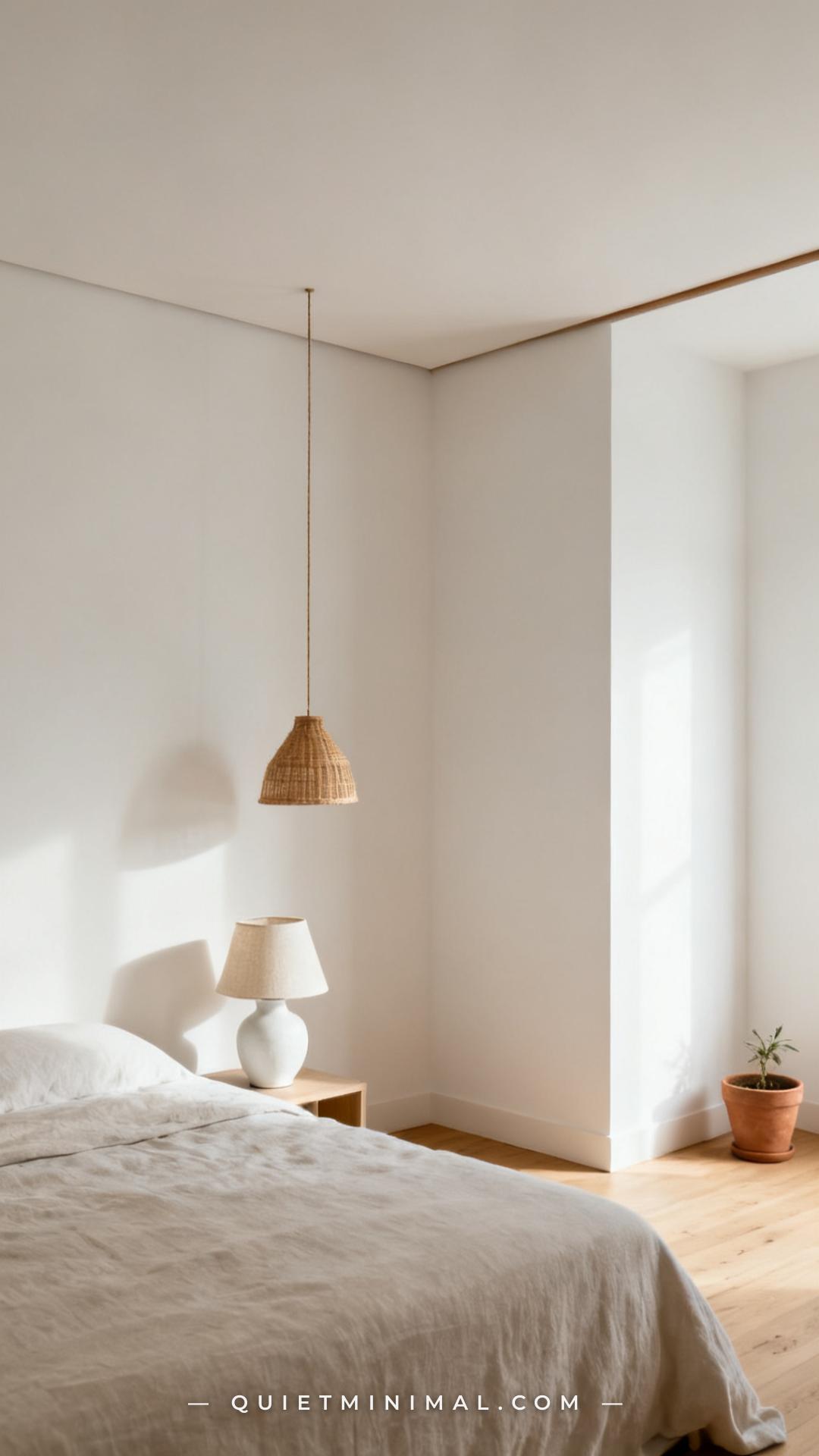
10. Keep the Color Palette to Three Tones
 Save
Color restraint is one of the defining moves of cozy minimalism — but most rooms fail not by using too many colors but by using tones that don’t relate to each other. The three-tone rule is simple: choose a dominant tone (the walls, 60% of the room), a secondary tone (the main furniture and large textiles, 30%), and an accent tone (accessories, plants, throw pillows, 10%). All three should be in the same temperature family — warm or cool, not mixed.
For a cozy minimal room, the warmest and most versatile combination is: warm white walls + pale oak or warm gray furniture + one earthy accent (terracotta, muted olive, or dusty blush). This palette reads as simple in execution but never sterile, because all three tones are slightly warm rather than neutrally balanced. The moment you introduce a cool-toned accent (a bright white pillow, a cobalt vase, a silver frame) into this palette, it interrupts the warmth. Ruthless consistency in tone temperature is what separates intentional minimalism from a room that just looks underdone.
Key Takeaway: Three tones, all in the same temperature family — dominant, secondary, accent — give a minimal room its warmth-through-restraint signature.
 Save
11. Use Closed Storage to Keep Surfaces Clear
 Save
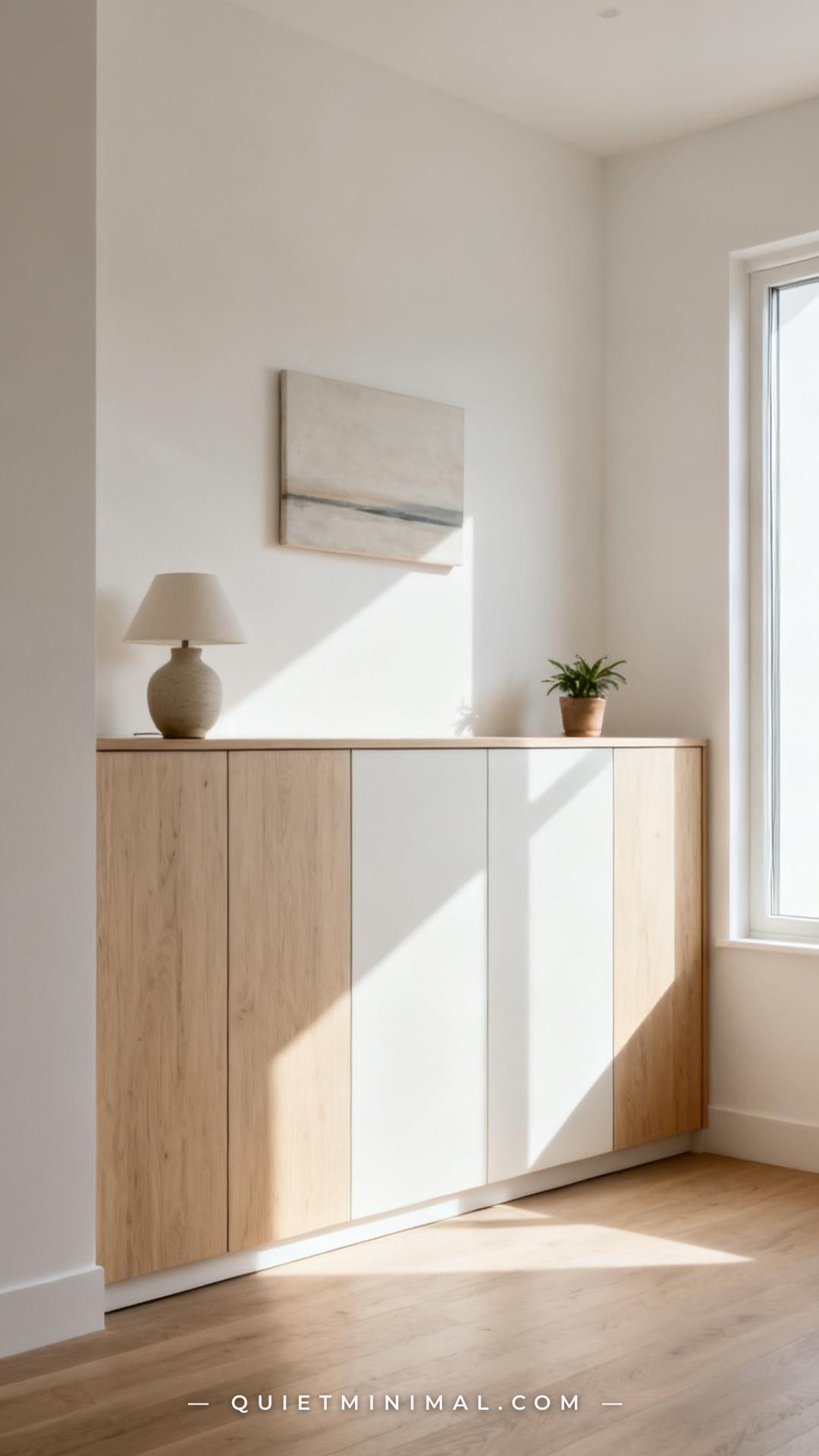
A minimalist room without adequate storage isn’t minimal — it’s just temporarily tidy. The items that accumulate on every flat surface (remotes, chargers, mail, keys, throw blanket overflow) are waiting to re-clutter the room the moment daily life resumes. Closed storage — a credenza with doors, a media console with concealed shelving, an entryway bench with a lift-top — is what allows minimalism to survive contact with actual living.
The design principle here is that the storage piece itself should be visually quiet. Simple flat-panel doors in a warm wood or matte white finish, clean hardware or no hardware at all, proportions that are low rather than tall. A tall, imposing cabinet draws the eye upward and adds visual weight; a low, wide credenza distributes weight horizontally and keeps the room feeling open. The top surface of that storage piece then becomes the one intentional display surface — styled with the rule of three from earlier.
Key Takeaway: Closed storage is the infrastructure that makes minimalism livable — without it, every flat surface becomes a clutter magnet and the whole aesthetic collapses.
 Save
12. Add One Scented Candle or Reed Diffuser
 Save
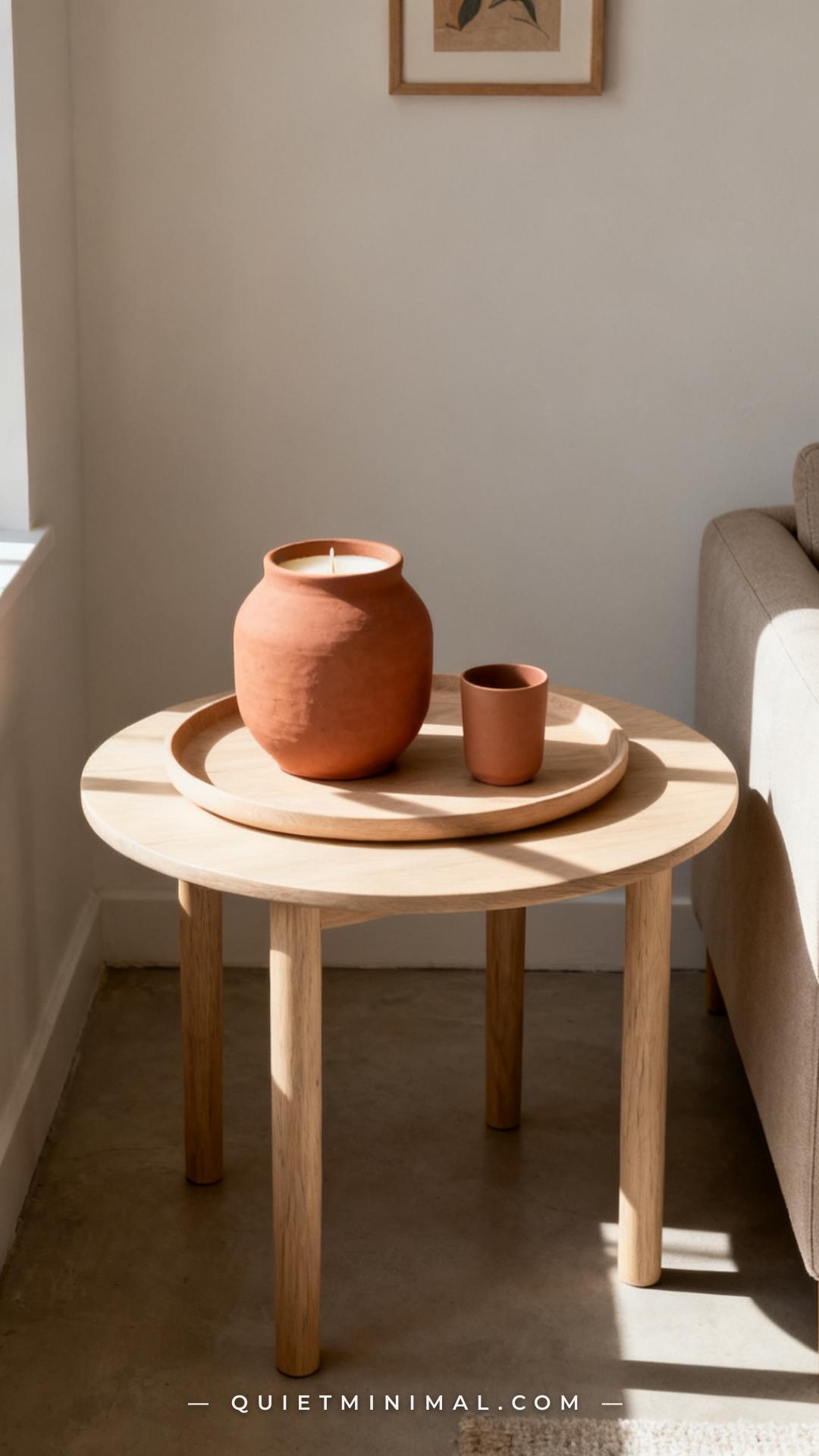
The final layer of warmth in a cozy minimal room is sensory rather than visual. A room can look warm in every photograph and still feel sterile when you walk in — because warmth isn’t only visual. Scent is one of the most direct routes to a felt sense of comfort and inhabitation. A single large candle in a ceramic or concrete vessel, or a reed diffuser in a clean, understated bottle, placed on a surface that’s already been styled, adds the final signal that this room is lived in and cared for.
For a minimalist aesthetic, the vessel matters as much as the scent. Avoid glass jars with decorative labels — they read as product rather than design object. Look for matte ceramic, concrete, or terracotta candle vessels; these sit naturally within a warm neutral palette. Scents that align with the warm, natural aesthetic: cedarwood, vetiver, sandalwood, fig, or amber. These read as grounded rather than sweet or floral, which aligns with the interior’s overall mood.
Key Takeaway: Scent is the one warmth layer you can’t photograph — add it last and it completes the room in a way that no visual element alone can.
 Save
Warmth in a minimal room is never accidental. It’s the result of specific, layered decisions — a wall color with the right undertone, a rug at the right scale, one dominant texture, three tones that share the same temperature. None of these moves require more stuff. They require more intentional stuff, placed with a clear logic rather than accumulated over time. Start with the wall color and the rug — those two decisions shape everything that comes after. From there, build the layers one at a time, checking each addition against the question Maya keeps in the back of her mind: does this make the room feel warmer and calmer, or just fuller? That question, applied consistently, is the whole practice.
From the guides
You've saved it, wanted it. Here's the how: codes, measurements, order. Your choices make it yours.
The Japandi Honest PlaybookThe honest version of the style: what to keep, what to skip, and the order to do it in.See inside →The Room Refresh PlaybookA repeatable four-step method, room by room, in ten minutes, thirty minutes, or one weekend.See inside →Make Any Room Feel Cozy on PurposeWhy some rooms hold people and others empty out, and the moves that change it.See inside → Save


