 Georgia
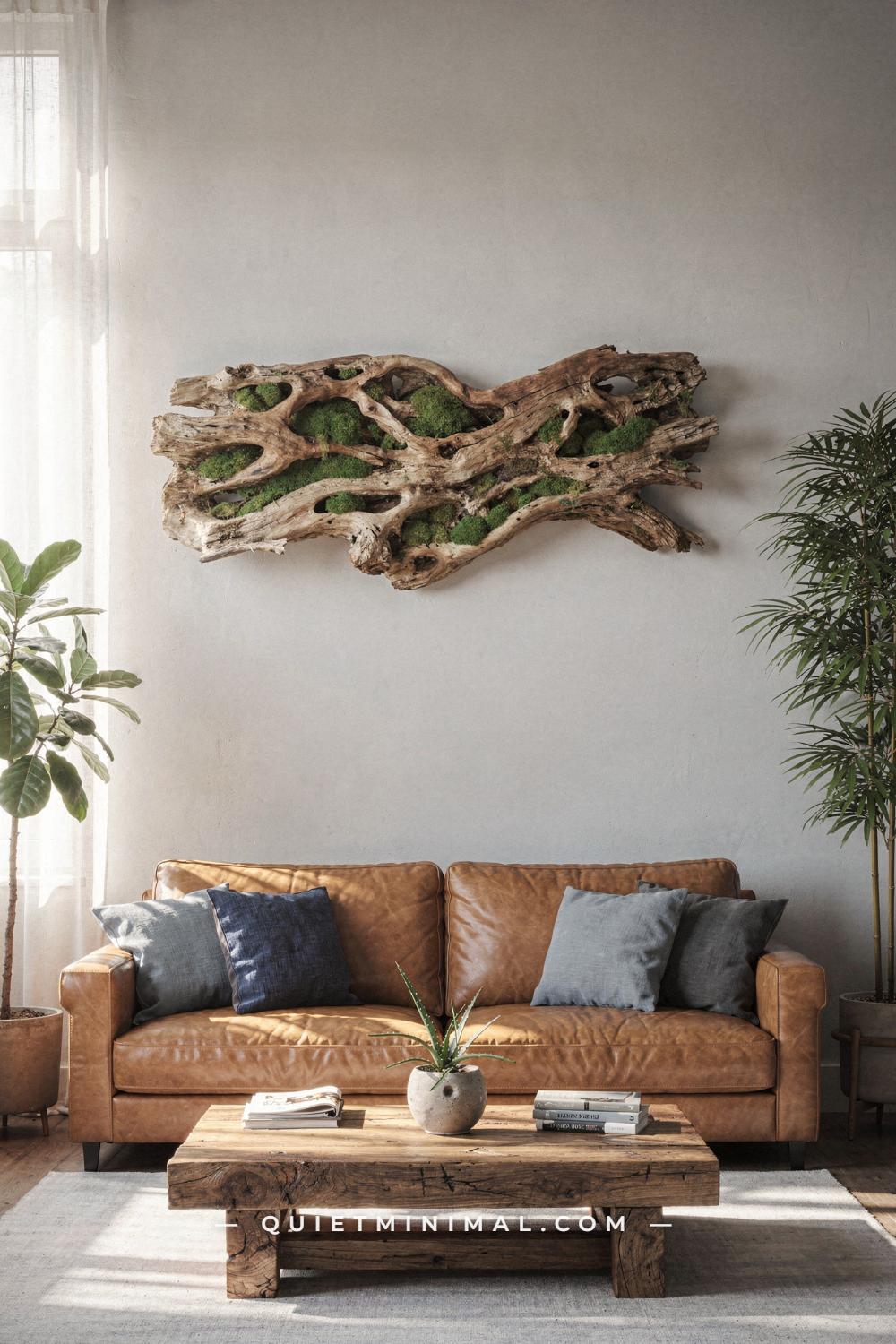
Almost everyone shopping for moss walls is looking at two completely different products without knowing it. One is preserved moss: real moss, harvested and then soaked in a glycerin solution that replaces its own moisture, usually with pigment added, so it holds its shape and color for a decade or more while asking for nothing beyond an occasional dusting. The other is living moss: an actual plant colony held on a vertical frame, which wants humidity, indirect light, filtered water, and attention on a schedule it sets rather than one you choose. In a saved photograph they are almost impossible to tell apart. On a wall they behave nothing alike.
That single confusion is behind most of the regret people report afterward, the musty smell in a bathroom, the dye that ran down the wall after someone helpfully misted it, the panel that faded to a dull olive in eighteen months in front of a west window. None of those are moss problems. They are matching problems, the wrong product placed in the wrong room with the wrong care instructions.
What follows is the decision in the order it actually has to be made: which product your room can hold, what goes behind it, what it costs per square foot, and where in a house it earns its place.
The Two Products Sold Under One Name
 Save
Preserved moss begins as real moss that was harvested, then soaked in a solution of glycerin and water. The glycerin replaces the plant’s own moisture, which is why the moss stays springy and soft instead of going brittle the way a dried bouquet does, and pigment is usually added in the same bath to hold a consistent green. The material that comes out is genuinely plant, genuinely soft, and genuinely not alive. Nothing in it grows, drinks, or photosynthesizes again.
A living moss wall is the literal opposite: a colony of plants in a growing medium, mounted vertically, doing everything a plant does, which includes failing when conditions slip. The practical gap between the two is wider than the visual one. Preserved moss weighs roughly 0.6 to 1 pound per square foot (about 3 to 5 kg per square meter), which any drywall anchor can carry. A living wall runs 6 to 16 pounds per square foot saturated (about 30 to 80 kg per square meter), which is a framing question before it is a decor question, and it arrives with irrigation, drainage, and usually a grow light. Preserved installations commonly carry a 10-year warranty, and installers report pieces sitting unchanged past 15 years in protected interiors. Living systems are generally planned around 10 to 20 percent plant replacement per year.
From the guides
You've saved it, wanted it. Here's the how: codes, measurements, order. Your choices make it yours.
 The Japandi Honest PlaybookThe honest version of the style: what to keep, what to skip, and the order to do it in.See inside →
 The Room Refresh PlaybookA repeatable four-step method, room by room, in ten minutes, thirty minutes, or one weekend.See inside →
 Make Any Room Feel Cozy on PurposeWhy some rooms hold people and others empty out, and the moves that change it.See inside →
There is a vocabulary problem underneath all of this that keeps the two products blurred. Sellers of preserved moss describe it as natural, real, and sustainable, all of which are accurate, and buyers reasonably hear alive. Sellers of living systems show the same lush green photographs. Nothing in most listings states plainly which one you are buying, so the question to ask before anything else is simply whether the product requires water. That one question sorts every listing on the market into the correct pile in about four seconds.
The choice comes down to what you actually want to own. If you want a wall that still looks like the photograph a decade from now, and a soft brush is the only tool involved, preserved is the answer and the rest of this guide is mostly about protecting it. If what appeals is the plant itself, the fact that it is alive and changing, then living moss is worth doing, and the honest version starts small and enclosed rather than as a full open wall.
Key Takeaway: Decide first whether you want a decor material or a living plant system, because every other spec, weight, light, water, cost, and lifespan, follows from that one answer.

The Humidity Number That Decides Which One Your Room Can Hold
 Save
This is the measurement that should happen before any money is spent, and almost nobody takes it. Preserved moss performs best in rooms sitting around 40 to 60 percent relative humidity, which is roughly the band a comfortable house already lives in. The US Department of Energy guidance for indoor humidity is tighter still, 30 to 50 percent. Above about 60 percent, condensation and dampness become possible on and behind the panel, and that is the condition under which owners start describing a musty smell. The moss itself is usually not molding in those cases. The backing board and the wall cavity behind it are.
Living moss needs the number to run the other way. Most guidance puts a living wall at 50 to 80 percent relative humidity, and cushion moss specifically prefers 70 to 90 percent, which is above what a person finds comfortable to sit in and well above what most drywall, trim, and window frames tolerate over years. That is the real reason living moss walls in homes tend to be small, enclosed, or confined to a bathroom, and the reason large open living walls belong to buildings with mechanical systems designed around them from the start.
The fix is a hygrometer, the small digital or dial kind that sells for well under twenty dollars, placed on the wall you are considering rather than in the middle of the room. Log it morning and evening for a week, and include the days you run the dryer, cook a long dinner, or take back-to-back showers. A room that averages 48 percent but spikes to 72 percent every evening is not a 48 percent room as far as the moss is concerned. Interior walls, exterior walls, and the wall shared with a bathroom can read several points apart in the same house, which is why the reading has to happen at the specific spot.
If the spikes stay under 60 percent, preserved moss is safe there. If they live above it, the order of operations is ventilation first and moss second: a bath fan that runs 20 minutes past the shower, a range hood that actually vents outside, or a small dehumidifier will usually pull a problem room back into range for less than the cost of the panel. That is a better sequence than buying the moss and hoping, because a humidity problem discovered after installation is discovered by smell.
Key Takeaway: Measure the humidity at the actual wall for a full week before buying, because preserved moss wants 40 to 60 percent and living moss wants 50 to 90, and no room delivers both.

Misting Preserved Moss Is the Fastest Way to Ruin It
 Save
The most common way a preserved moss wall gets destroyed is by someone being kind to it. It looks like a plant, so it gets misted, and misting is exactly what it cannot take. The glycerin and pigment that make preserved moss soft and green sit in the fibers rather than bonded to them. Water lifts them out. The dye runs, usually downward and usually onto whatever surface sits below, and the moss underneath dulls in a patch that never recovers. Repeated wetting also lets moisture reach the backing board, and a damp organic backing behind a sealed panel is the one situation where a preserved moss wall genuinely can grow mold.
So the care instruction is simple and it feels wrong: no water, ever, in any form. That includes misting, wiping with a damp cloth, and steam. It also means keeping the panel out of the direct path of a shower, a kettle, the blind spot beside a range hood, and a humidifier’s plume. If a household member is the kind of person who waters everything green in the house on a Sunday, say so out loud when the panel goes up, because this is a single-mistake material.
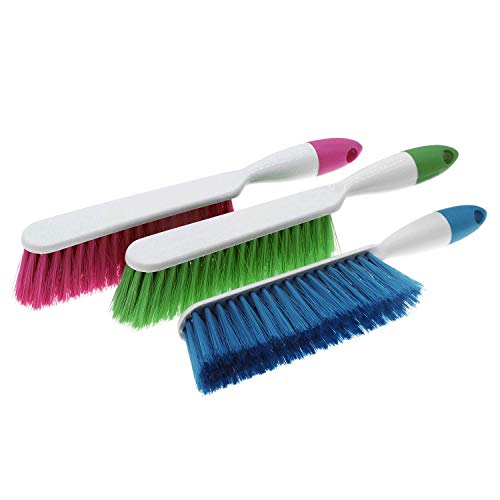
What preserved moss does need is dust removal every few months. Dust is what actually dulls the color over time, not age. Use a soft-bristled brush, a clean makeup brush or a natural-bristle paintbrush works well, and sweep in one direction with almost no pressure. If you use a vacuum, keep the nozzle several inches off the surface with the suction at its lowest setting, because contact pulls fibers loose and that is where the shedding complaints come from. A soft-bristled brush attachment held just off the surface splits the difference on a large wall.
Do a visual check while you are there. Look for flattened patches where something brushed against it, loose pieces gathering at the bottom edge, and any color change on the side nearest a window. Catching a fading edge in month three is a repositioning job. Catching it in year two is a replacement, and that is the difference between a five-minute habit and a four-figure invoice.
Key Takeaway: Preserved moss is dusted, never watered, and a soft brush used every few months does more for its color than anything else you can do.
Living Moss Fails on Light Before It Fails on Water
 Save
People who lose a living moss wall usually assume they underwatered it. More often the light was wrong from the first day. Moss wants bright indirect light, the quality you get a few feet back from a north or east window, or behind a sheer curtain on a brighter exposure. Direct sun through glass dries the surface faster than misting can replace it and bleaches the color, and a genuinely dim corner starves it slowly enough that the decline looks like a watering problem for months. If the wall you want is more than about 8 feet (244 cm) from a window, the honest answer is a full-spectrum grow light on a timer running 10 to 12 hours a day, which means a real fixture and a real cord in the room, and that should be part of the decision rather than a surprise in month two.
Water quality matters more than water quantity. Moss has no root system to filter what it takes in, so it absorbs what you give it directly, and the minerals and chlorine in most tap water accumulate as a pale crust and a slow browning at the tips. Use distilled, filtered, or collected rainwater, and mist to damp rather than to dripping, which in most homes means daily or every other day. Standing water at the base of a vertical panel is its own problem, so a system that drains is worth more than a system that holds.
Temperature belongs in the same conversation and is the specification people skip. Moss is comfortable between 55 and 75 F (13 to 24 C), and it handles the cool end far better than the warm one. A spot above a radiator, beside a heat register, or on a wall that bakes in afternoon sun is the wrong spot even when the light reading looks fine, because heat and the dry air that comes with it undo the humidity you are working to maintain.
The version of this that actually succeeds in a normal house is enclosed. A glass-fronted cabinet, a wide closed terrarium, or a large bell jar holds humidity around the moss instead of asking the whole room to hold it, and it drops misting to roughly once a month. It reads as a living green object without requiring your living room to sit at 75 percent humidity, and it is the format worth starting with before committing a whole wall to something that needs you every other day.
Key Takeaway: Give living moss bright indirect light and distilled water, and keep it enclosed behind glass so the humidity stays around the plant instead of in your walls.

The Backing Board Decides Whether You Get Mold
 Save
Everything that goes wrong behind a moss wall is a backing problem. Professional installers specify non-porous, mold-resistant substrates, treated MDF or metal mesh, precisely because those materials hold no moisture themselves and because they feed nothing if moisture arrives. The same installers avoid gluing moss directly onto plaster or bare drywall, which absorb and hold water and then sit sealed behind a green blanket where nobody can see them. A cheap panel with an untreated cardboard or raw plywood back is the single most common cause of the musty smell owners report, and it stays invisible until the piece comes down.
For a build of your own, the sequence that works is a rigid sealed panel, birch plywood or MDF primed and sealed on both faces and all four edges, then a felt or dark fabric layer glued down so the backing never shows through gaps in the moss, then hot glue or a low-moisture craft adhesive for the moss itself. Seal the back even though nobody will ever see it, because that face is the one touching your wall. If the room ever runs humid, the sealed panel is the difference between a decor object and a science experiment. Water-based wood glues are fine for the felt as long as the panel dries fully before moss goes on, since trapped moisture under moss is the exact condition to avoid.
Hanging is easier than most people expect. At 0.6 to 1 pound per square foot (3 to 5 kg per square meter), a substantial 4 by 6 foot panel (122 by 183 cm) weighs somewhere around 15 to 24 pounds (7 to 11 kg), which a pair of drywall toggle anchors handles comfortably. A French cleat is the better choice for anything wider than about 3 feet (91 cm) because it distributes the load along the whole top edge, holds the panel flat and level against the wall, and lets you lift the piece off in one motion to check the wall behind it once a year.
Renters have a genuinely good option here, which is unusual for a wall treatment. Build the panel exactly as above and hang it on heavy-duty adhesive strips rated well above the panel weight, or lean a large piece behind a console or a bench. Because preserved moss is so light, the rental version is not a compromised version, and the panel moves to the next place intact.
Key Takeaway: Build or buy on a sealed, non-porous backing and hang it on a French cleat, so the wall behind the moss stays dry and inspectable.

Direct Sun Is What Actually Takes the Color
 Save
Pigment is the vulnerable part of preserved moss, and ultraviolet light is what breaks it down. Once chlorophyll stops working, the color you see is the dye added during preservation, and dye in sunlight behaves like dye in sunlight: it goes first at the top edge, then across whatever face collects the most hours, until the piece reads flat olive-grey rather than green. This is the failure mode that turns a ten-year material into a two-year one, and it is entirely about placement rather than about product quality.
The rule that keeps color is straightforward. Put the moss on a wall perpendicular to the window, or on the same wall as the window, rather than on the wall the sun actually lands on. South and west exposures are the ones to plan around in most of the country, since those deliver the longest and strongest direct hours, and a west wall in summer is the harshest combination of light and heat a panel can face. Stand in the room at three in the afternoon in July and note where the bright rectangle sits on the floor and walls. That rectangle is the one place the moss should never go.
If the only available wall takes direct sun, two fixes work. Hang sheer or linen curtains that stay closed during peak hours, which softens the light for the room as well. Or apply a clear UV-blocking window film, which cuts the bulk of the ultraviolet without noticeably darkening the glass and protects your rugs, art, and upholstery at the same time. Both cost a fraction of replacing a faded panel.
The longevity evidence supports the placement rule rather than contradicting it. Installers reporting pieces unchanged after 15 years are describing protected interiors, corridors, inner walls, and lobbies, not sunlit windows. If you own craft moss rather than a commercial panel and it has already dulled, a light glycerin-and-water refresh can restore some softness and depth on small pieces, though it will not bring back dye that has genuinely bleached. Prevention is the whole game.
Key Takeaway: Hang preserved moss on a wall the sun does not land on directly, and use a sheer curtain or UV film if that is not an option.

The Air-Purifying Claim, Told Honestly
 Save
Preserved moss is sold almost everywhere as a natural air purifier, and it is worth being clear that it is not one. The preservation process ends the plant’s metabolism. Without photosynthesis there is no carbon dioxide uptake, no oxygen release, and no absorption of volatile compounds, because all three of those are things a living organism does. A preserved panel also does not regulate humidity, since it does not transpire. It is a soft, durable, genuinely beautiful decorative material, and the purification language is marketing that blurs the line between the two products this article separates.
Living moss does slightly better, and only slightly. It photosynthesizes, so it exchanges gases the way any houseplant does, and its dense surface traps airborne dust. What no reasonable reading of the evidence supports is the idea that a residential-scale moss panel meaningfully cleans the air in a room. The volume of plant material required to move a measurable number is far beyond what a wall holds, which is the same reason the houseplant air-purifying studies from the 1980s do not translate to a living room. If clean air is the actual goal, a HEPA filter does the job, quietly and for a fraction of the money.
This matters beyond accuracy, because buying something for a benefit it does not deliver is how people end up disappointed in an otherwise good purchase. Preserved moss delivers real, specific value: deep organic texture on a flat surface, a green that holds through February with no light at all, measurable sound absorption, a decade of life without a watering can, and a weight light enough for any wall in a rental. That is a strong list on its own.
It also gives you a useful test of a seller. A supplier who leads with air purification is either uninformed about their own product or comfortable overstating it, and neither is who you want quoting a wall-sized installation. A supplier who leads with moss species, backing construction, and acoustic or fire test data is telling you they work with people who read specifications.
Key Takeaway: Buy preserved moss for texture, color, and sound absorption, and treat any air-purification claim about it as marketing rather than a specification.

A Room That Echoes and a Wall That Absorbs Some of It
 Save
The acoustic benefit is the claim that does hold up, with limits worth knowing. Preserved moss has an irregular, porous, deep surface, which is precisely the structure that absorbs sound rather than reflecting it. Tested products land between roughly NRC 0.55 and NRC 0.73, meaning the best of them absorb about 73 percent of the sound energy that reaches them, verified to ISO 11654. For comparison, purpose-built acoustic panels sit between 0.85 and 1.00. So moss is a real absorber rather than a token one, and it is somewhat less effective per square foot than a product engineered for nothing else.
Coverage is what determines whether you hear the difference. A single 24 by 36 inch (61 by 91 cm) framed piece in a hard-surfaced room changes almost nothing measurable, because sound does not respond to a decorative gesture. Meaningful improvement in a normal room starts when roughly 20 to 30 percent of the hard surface area is absorptive, counting everything together: rugs, curtains, upholstery, and the moss. That is why moss works so much better as a wall-sized field than as a picture, and why the acoustic argument is really an argument for buying big.
Placement carries as much weight as area. In a home office, the highest-value location is the wall directly behind or beside where you sit, because that is the first surface your own voice reflects off during a call, and it is that early reflection that makes a room sound hollow to the person on the other end. In an open-plan living space, the wall facing the largest expanse of glass is the one doing the most damage, since sound bounces between two hard parallel surfaces. Breaking one of those two surfaces is worth more than treating four small ones.
From the guides
You've saved it, wanted it. Here's the how: codes, measurements, order. Your choices make it yours.
The Japandi Honest PlaybookThe honest version of the style: what to keep, what to skip, and the order to do it in.See inside →The Room Refresh PlaybookA repeatable four-step method, room by room, in ten minutes, thirty minutes, or one weekend.See inside →Make Any Room Feel Cozy on PurposeWhy some rooms hold people and others empty out, and the moves that change it.See inside →Layer it rather than relying on it alone. A wool rug covering most of the floor, floor-length curtains rather than a short valance, an upholstered chair, and a moss panel on the reflective wall will together change how a room sounds, not just how it looks. The moss earns its spot in that stack by being the piece that also reads as decor, which is not true of a foam tile, and by holding its performance for a decade with no maintenance beyond dusting.
Key Takeaway: Place the moss on the wall your voice reflects off, and combine it with a rug and full-length curtains, since absorption works on total coverage rather than on one panel.

The Cost Per Square Foot Nobody Quotes Up Front
 Save
Professionally installed preserved moss walls generally run $100 to $175 per square foot installed, and the number moves with design complexity more than with size. A solid mix, one moss species laid uniformly for a clean field of green, sits at the low end around $100 to $110 per square foot. An organic mix or a natural flow, several species composed to imitate a forest floor or a directional landscape, runs roughly $110 to $120. A foliage mix, moss combined with preserved ferns, branches, or dried botanicals, climbs to $128 to $175. Some installers quote from $69 for simple work, and fully custom sculptural pieces can pass $300 per square foot.
Two things about that pricing surprise people. First, smaller is not cheaper per square foot. Shipping, design time, and framing are largely fixed costs, so a 6 square foot framed piece often carries a higher per-foot rate than a 40 square foot wall does. If you are close to a size threshold, going bigger frequently costs less per foot than you expect. Second, the installed price is close to the total lifetime price, because there is no irrigation, no drainage, no grow lights, no water bill, and no service contract behind it.
Run the same comparison over ten years and the gap becomes the real story. A preserved wall stays at its purchase price. A living wall accumulates scheduled maintenance visits, plant replacement at roughly 10 to 20 percent per year, water, and energy for lighting and pumps, which is where published estimates of five to eleven times the total ten-year cost come from. That multiplier, not the install quote, is the honest comparison between the two products.
The build-it-yourself route changes the math substantially and changes the workload just as much. Bulk preserved moss sells by weight rather than by area, and a large panel is a genuine full weekend of gluing rather than an afternoon. It is the right call for a framed piece up to about 4 by 6 feet (122 by 183 cm), where materials run a small fraction of an installed quote. Past that size, the labor and the composition difficulty rise faster than the savings do, and a professional panel starts to look reasonable rather than extravagant.
Key Takeaway: Budget $100 to $175 per square foot installed for professional work, expect small framed pieces to cost more per square foot than large walls, and keep DIY to panels under about 24 square feet.
Buying Moss by the Bag When the Wall Is Measured in Square Feet
 Save
Bulk preserved moss is sold by weight, typically in bags running from about 0.85 to 2.65 pounds, and walls are measured in square feet, which is where most DIY budgets go wrong before the first bag arrives. Coverage depends entirely on how densely you pack the material, and dense packing is exactly what separates a panel that reads as an installation from one that reads as a school project. Two people can use the same bag on the same board and cover twice the area, with completely different results.
The way to price a project accurately is to test rather than to estimate. Buy one bag first, glue it as densely as you actually want the finished piece to look onto a 12 by 12 inch (30 by 30 cm) scrap of board, and note how much of the bag it consumed. That single square gives you a real coverage rate for your own packing style, and multiplying it across the panel gives you a materials cost you can trust. Then order 20 percent more than that math suggests, because edges, corners, and the inevitable rework consume more material than the flat field does.
Order it all at once, in one purchase, for one specific reason: dye lots vary. Preserved moss is colored in batches, and two bags of the same product bought three weeks apart can differ enough to show as a visible band across a finished panel, which is impossible to fix afterward without redoing a section. Buy the whole quantity in a single order and mix from all the bags as you work rather than emptying one before opening the next.
Mix textures deliberately while you are at it. Reindeer moss, technically a lichen rather than a true moss, gives the fine branching detail and the pale silver-green tone. Cushion moss, also sold as mood moss, gives the rounded mounds and most of the depth. Sheet moss gives the flat connective field that ties the mounds together and covers the backing between them. Pole moss adds height and shadow at a higher price per pound. A panel built from one type reads flat under any light, while three types read like ground you could walk on, and that difference costs almost nothing extra.
Key Takeaway: Test coverage on a 12 inch (30 cm) square before ordering, buy 20 percent extra in a single order to avoid dye-lot bands, and use at least three moss textures.

The Difference Between a Moss Wall and a Moss-Covered Rectangle
 Save
The difference between a moss wall that reads as an installation and one that reads as a hobby project comes down to three decisions, and none of them is about the quality of the moss. The first is edge treatment. A hard rectangular boundary with the backing visible at the perimeter announces the panel as an object stuck to a wall. Packing the moss proud of the frame so it crests slightly over the edge, or letting the boundary itself wander in a soft organic drift rather than following a ruled line, is what makes the piece read as something that grew where it sits.
The second is depth. A flat green field is wallpaper. Real ground has relief, and the way to get it is height variation of roughly 1 to 3 inches (2.5 to 7.5 cm) across the surface, built by packing cushion moss densely enough to dome and letting flat sheet moss recede between the domes. Under raking light, that variation is what creates shadow, and shadow is most of what your eye is actually reading when a moss wall looks expensive. It is also why a photograph of a good panel changes completely depending on the time of day, and why a spotlight aimed across the surface rather than straight at it doubles the apparent texture.
The third is scale relative to the room. A panel hung above a sofa should run at least two-thirds of the sofa’s width, which for a standard 84 inch (213 cm) sofa means about 56 inches (142 cm) at minimum, and it looks best sized closer to the sofa’s full width. Height matters equally: align the top of the panel with the head height of the doors in the room, usually about 80 inches (203 cm) from the floor, and the piece sits inside the architecture instead of floating above it. Undersized moss is the most common composition mistake by a wide margin, and it is the one that no amount of good material rescues.
If the budget only reaches a small piece, the better move is a tall narrow vertical panel rather than a small horizontal one, because vertical proportion reads as intentional at almost any size while a small horizontal rectangle reads as a picture that got lost on a large wall.
Key Takeaway: Build in 1 to 3 inches (2.5 to 7.5 cm) of surface relief, let the outer boundary wander rather than following a ruled edge, and size the panel to at least two-thirds of the furniture beneath it.

Fire Rating Is the Spec That Matters Once You Cover a Whole Wall
 Save
Once moss stops being a framed picture and becomes a wall finish, it moves into a different category, and there is a real specification for that category. Interior finishes are tested under ASTM E84, which produces a flame spread index and a smoke developed index. Class A, the highest rating, requires a flame spread index between 0 and 25 and a smoke developed index between 0 and 450. Commercial preserved moss panels can perform very well against it: preserved ball moss panels test at FSI 0 and SDI 15, comfortably inside Class A, and rate B-s2-d0 under the European EN 13501-1 standard, described by the manufacturer as self-extinguishing.
Craft moss out of a bag carries no such rating. It has been treated with glycerin, which is not a flame retardant, and it has not been tested at all. For a framed piece hanging over a console in a living room, that is an ordinary decorative-object risk, no different from a stretched canvas or a wool tapestry. It becomes a genuinely different question when moss covers a large area of a wall, sits in a hallway or a stairwell that functions as your route out of the house, or goes anywhere near a heat source.
The practical rules are short. Keep untreated craft moss to framed pieces, ideally away from the path you would use to leave the house in a hurry, and several feet clear of a fireplace, a range, a heater, or a candle. If you are covering a substantial area, or if the wall sits in a corridor or stairwell, buy commercial panels and ask the seller for the actual ASTM E84 test report rather than accepting the words fire safe on a product listing. A supplier who works with commercial installers will send the document without hesitating. One who cannot produce it has answered a different question you also needed answered.
If the house is in a jurisdiction with strict interior finish rules, or if the wall is in a rental you do not own, the rated panel is the only version worth considering. It costs more, and it is the one part of this project where the cheaper option carries a consequence that is not cosmetic.
Key Takeaway: Ask for the ASTM E84 test report on anything covering a large wall or a hallway, and keep unrated craft moss to framed pieces away from heat sources and exit routes.

The Rooms Where a Moss Wall Works and the Ones Where It Just Collects Dust
 Save
Preserved moss belongs in the rooms with hard surfaces, stable humidity, and no direct sun, which in most houses means the home office first. It sits behind you on video calls, it absorbs the reflections that make a small room sound hollow, and it asks nothing of you during a workday. A stair wall is the second-best location, because stairwells are tall, echoey, chronically under-decorated, and almost never sunlit, though that is exactly where the fire rating question becomes non-negotiable. Above a sofa, above a headboard, and along a windowless hallway all work well for the same reasons.
The rooms that need real thought are the wet ones, and the published advice genuinely splits here. Some installers recommend preserved moss for bathrooms and kitchens specifically because it outperforms living plants in a humid room, while the humidity guidance says trouble begins above 60 percent. Both statements are correct, and the reconciliation is ventilation. A bathroom with a fan that actually runs for 20 minutes after a shower drops back under 60 percent quickly and can hold a preserved panel indefinitely. A windowless bathroom with a weak or shared fan cannot, and no product choice fixes that, so the honest sequence is to fix the fan or choose a different wall. In a kitchen, stay well clear of the range and the dishwasher vent, because airborne grease settles into moss fibers and cannot be washed out of a material that must never get wet.
Two placement details apply in every room. Hang the panel above easy reach, ideally with the bottom edge at least 40 inches (102 cm) from the floor, because moss invites touching and repeated handling flattens the mounds and pulls fibers loose. That number also keeps it above the back of most sofas and consoles, which is where sleeves and shoulders do their damage. And keep it out of the direct airflow from a supply vent or a ceiling fan, which drives dust into the surface far faster than still air does and turns a seasonal brushing into a monthly chore.
The rooms to skip entirely are the ones with a strong, unavoidable sun path, an unvented moisture source, or a heat source you cannot move. Those are not close calls, and a panel installed in one of them will look tired within two years no matter how good the material was.
Key Takeaway: Put it in the home office, the stairwell, or a windowless hallway, keep it above 40 inches (102 cm) from the floor, and only use a bathroom that vents back under 60 percent humidity quickly.
The decision that matters was made in the first section, and everything after it was logistics. If you want the wall in the photograph, the one that still looks like that ten years from now, you want preserved moss on a sealed backing, on a wall the sun does not reach, in a room whose humidity you have actually measured for a week rather than guessed at. If what draws you is the plant itself, the fact that it is alive and changing, start with a glass-fronted case of living moss instead of an open wall, and let a small success teach you what a large one would demand.
Take the humidity reading first. It costs almost nothing, it takes seven days, and it is the only number that can tell you which of these two products your house is able to keep. Then measure the wall, price it honestly at $100 to $175 per square foot for professional work or a weekend and a plywood panel for your own, and put the moss where the light is soft and the air is still. That is the whole method, and it is considerably shorter than the pile of contradictory advice sitting between you and it.
From the guides
You've saved it, wanted it. Here's the how: codes, measurements, order. Your choices make it yours.
The Japandi Honest PlaybookThe honest version of the style: what to keep, what to skip, and the order to do it in.See inside →The Room Refresh PlaybookA repeatable four-step method, room by room, in ten minutes, thirty minutes, or one weekend.See inside →Make Any Room Feel Cozy on PurposeWhy some rooms hold people and others empty out, and the moves that change it.See inside →
 Save


