Georgia
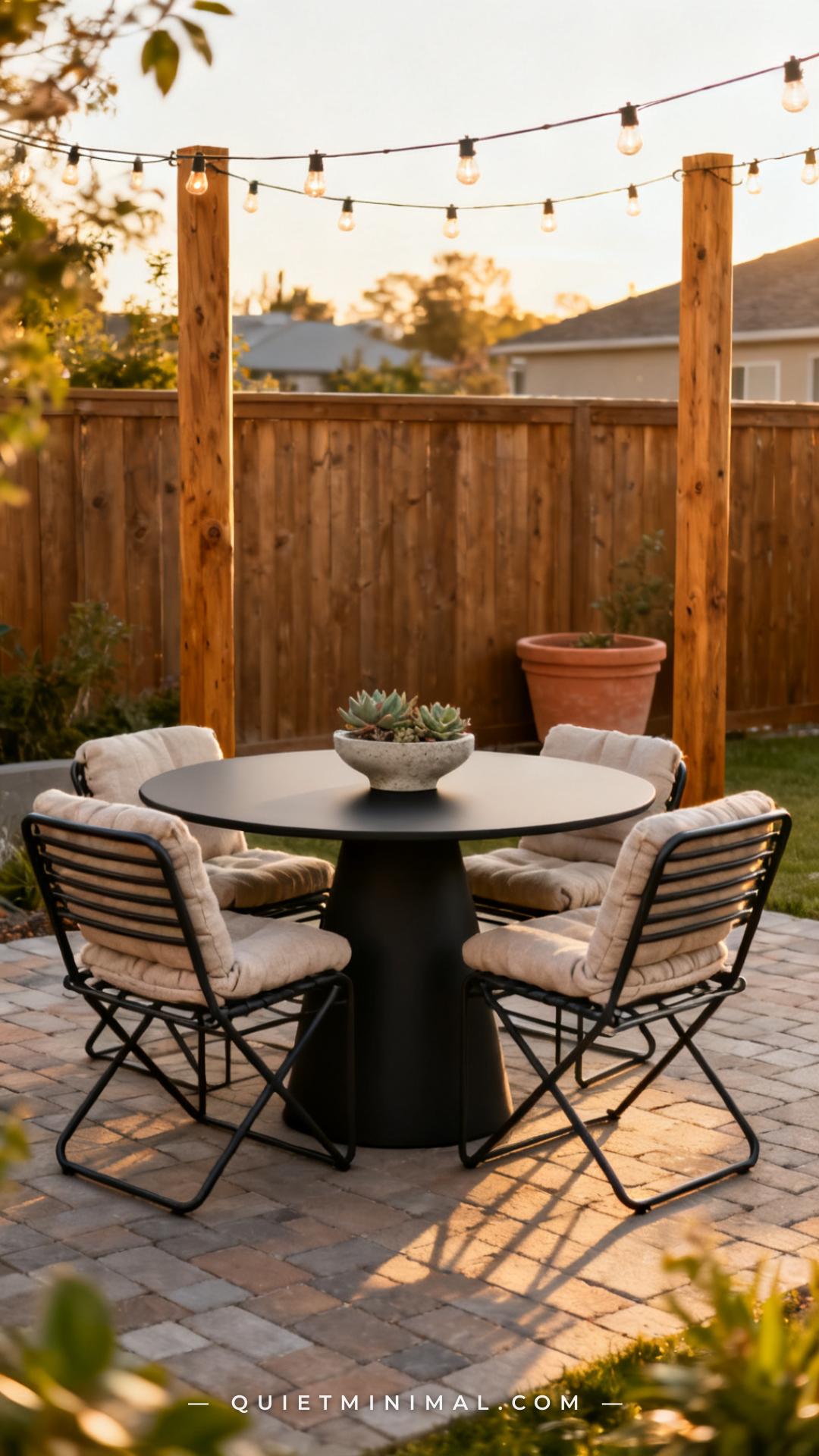
If you’ve ever bought outdoor dining chairs that looked beautiful in a product photo and then spent eight months stacked in the corner looking like a garage sale waiting to happen, you already understand the real problem with most patio seating advice. The guides show you chairs around a table. They don’t show you the chairs stacked three high against a fence in November, or what happens to the powder coat after two winters, or whether those cushions are still on the chair by dessert.
This guide is built around a different standard: chairs that earn their place on a patio year-round — not just during the dinner party. You’ll find 12 specific ideas organized around what actually matters — frame color, cushion system, stackability, and durability — with enough detail to make a confident decision before you buy.
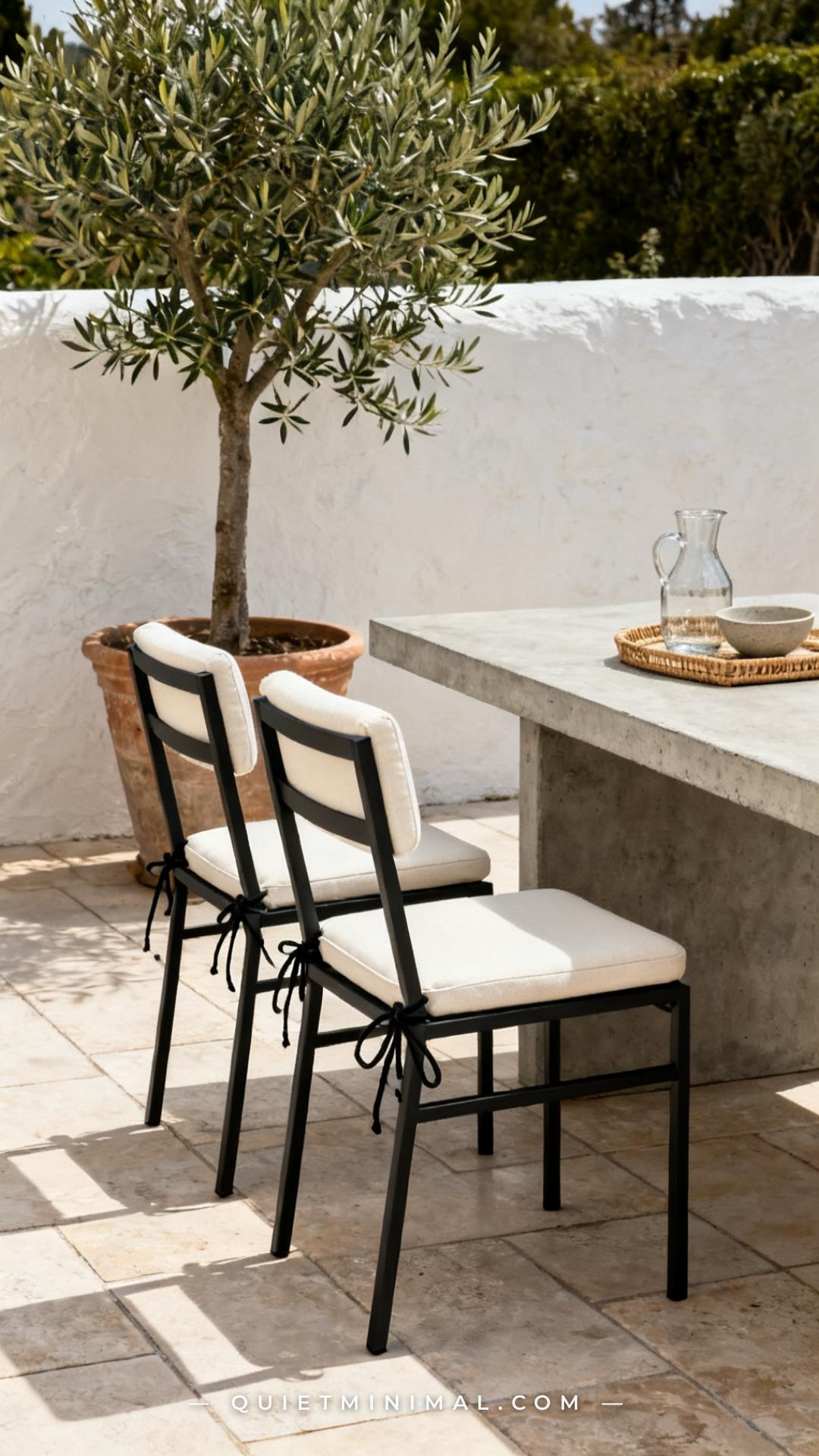
1. The Matte Black Frame with a Cream Cushion — The One Combination That Never Reads Cheap
 Save
Matte black powder-coated steel is one of the most forgiving frame finishes you can choose for an outdoor dining chair. Unlike gloss finishes that show every scratch and fingerprint, matte black conceals minor weathering and scuffs while maintaining a deliberately modern look — the kind that photographs well and holds its character across seasons.
From the guides
You've saved it, wanted it. Here's the how: codes, measurements, order. Your choices make it yours.
 The Japandi Honest PlaybookThe honest version of the style: what to keep, what to skip, and the order to do it in.See inside →
 The Room Refresh PlaybookA repeatable four-step method, room by room, in ten minutes, thirty minutes, or one weekend.See inside →
 Make Any Room Feel Cozy on PurposeWhy some rooms hold people and others empty out, and the moves that change it.See inside →
Pair it with a cream or warm white cushion and you get a combination that reads as expensive without being expensive. The cushion does the softening work: it keeps the black frame from feeling industrial, and the contrast makes the chair look intentional rather than default.
For this combination, look for cushions rated for outdoor use with a weather-resistant fabric like Sunbrella or a Sunbrella-equivalent polyester. The fabric weight matters more than color for longevity — lightweight cushion covers fade and pill within one season.
Key Takeaway: Matte black frames with cream cushions work precisely because the matte finish hides weathering and the cushion contrast prevents the look from feeling cold.

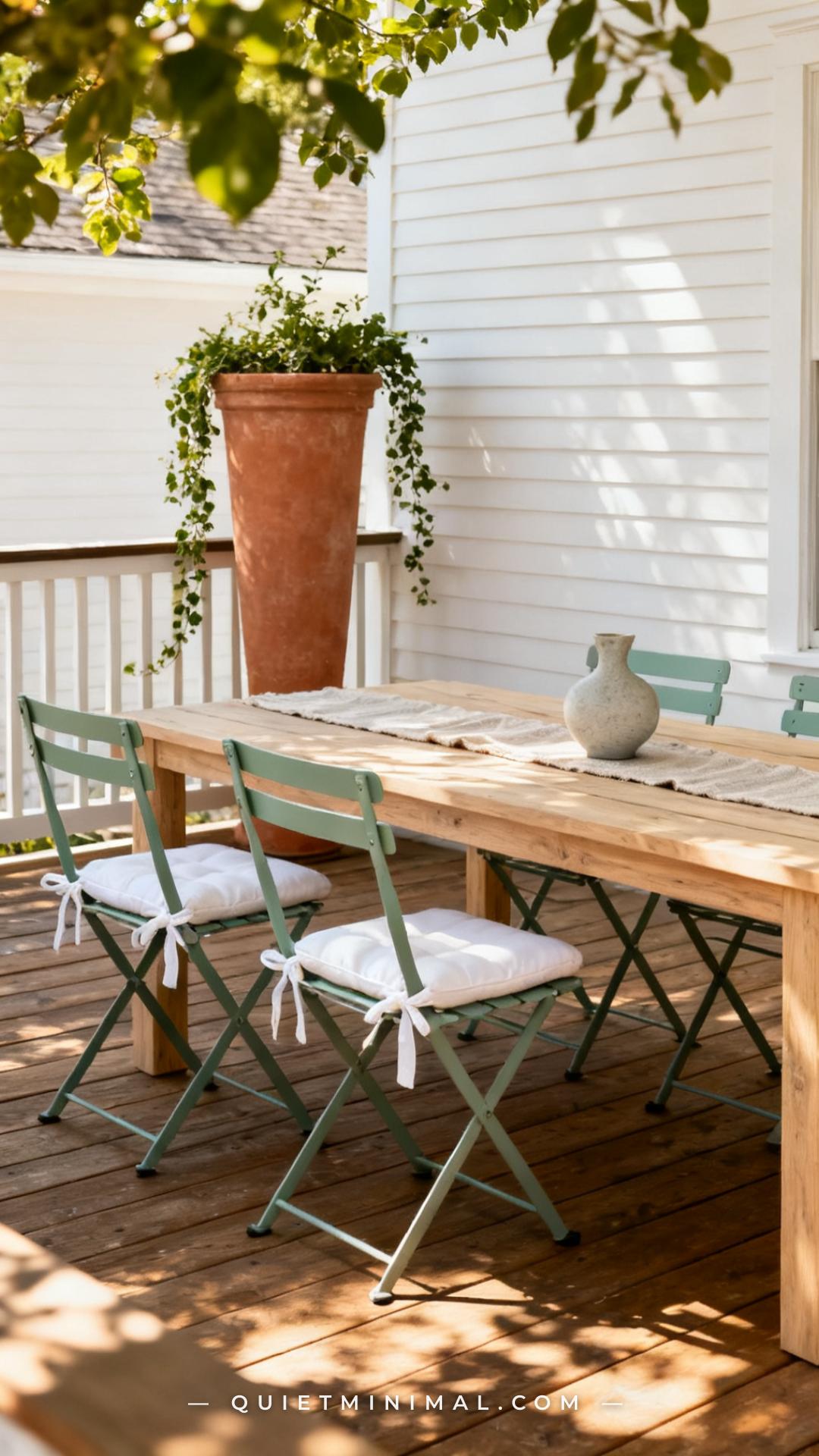
2. Sage Green Frames for a Patio That Looks Styled, Not Decorated
 Save
Sage green is the one chromatic powder-coat color that consistently photographs well, holds its tone across seasons, and doesn’t fight with any plant life on a patio — which is saying something for an outdoor color. It reads as deliberate and contemporary without being a trend-first choice.
The challenge with sage green frames is that the wrong cushion color washes the whole look out. Avoid sage-on-sage: a sage frame with a sage cushion disappears into itself. The strongest pairings are warm white, natural hemp, or a soft clay terracotta cushion — any of those add contrast without competing with the frame.
When evaluating powder-coat on a sage green finish specifically, ask about the coating thickness. Cheaper frames use a single-layer powder coat that chips at the weld points within a season. A quality frame should have a two-stage pre-treatment (typically phosphate wash + powder coat) or be described as “electrostatically applied” — both indicate a thicker, more adhesion-resistant finish.
Key Takeaway: Sage green powder-coat works best with warm-contrast cushions — white, hemp, or clay — and you should confirm multi-stage coating before buying any colored-frame chair.

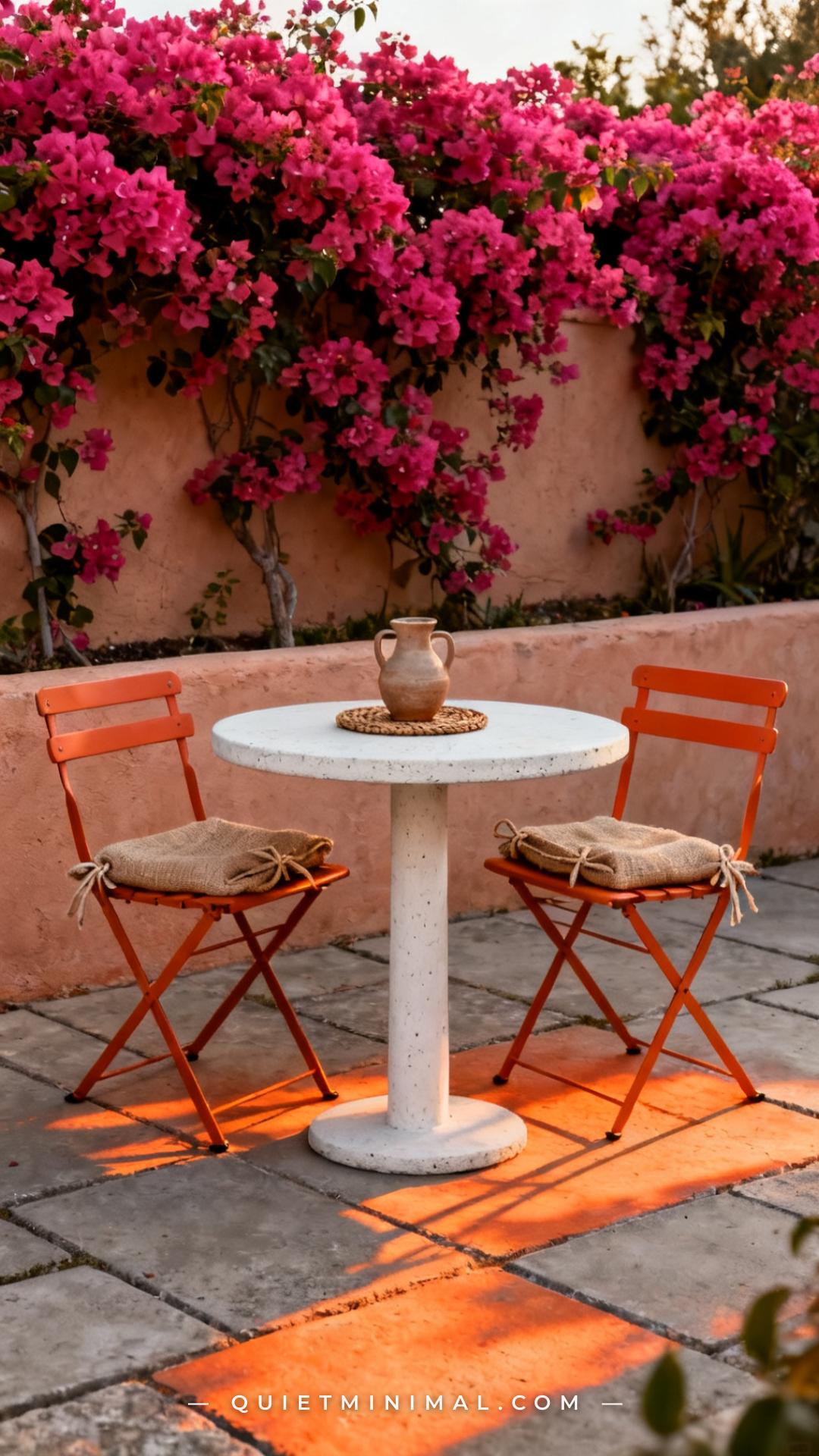
3. Warm Terracotta Frames — The Bold Choice That Actually Makes a Patio Feel Complete
 Save
Terracotta-toned powder-coat isn’t the obvious patio choice, which is exactly why it works when Maya’s goal is a space that feels designed rather than assembled. In 2025 and 2026, design publications from Apartment Therapy to Architectural Digest have called out terracotta and clay-adjacent tones as the color bridging indoor and outdoor living — and powder-coated metal is the right substrate for it because the matte finish absorbs rather than reflects that warm hue.
Used for outdoor dining chairs, terracotta frames benefit from the same neutralizing cushion logic as sage: go neutral or go warm, never go bright. A sand-colored cushion, a bleached linen, or even an undyed canvas works well. Avoid red-family cushions — they fight with the orange undertone in the frame and look unsophisticated at a distance.
One practical note: terracotta and clay frames in powder-coat show chalking more visibly than darker frames in humid climates. In the Pacific Northwest or a coastal environment, it’s worth applying a UV-protectant spray to the frame each spring — it takes five minutes and extends the color vibrancy by years.
Key Takeaway: Terracotta frames create a complete, designed patio aesthetic when paired with neutral cushions, but they require seasonal UV protection in high-humidity climates to prevent chalking.

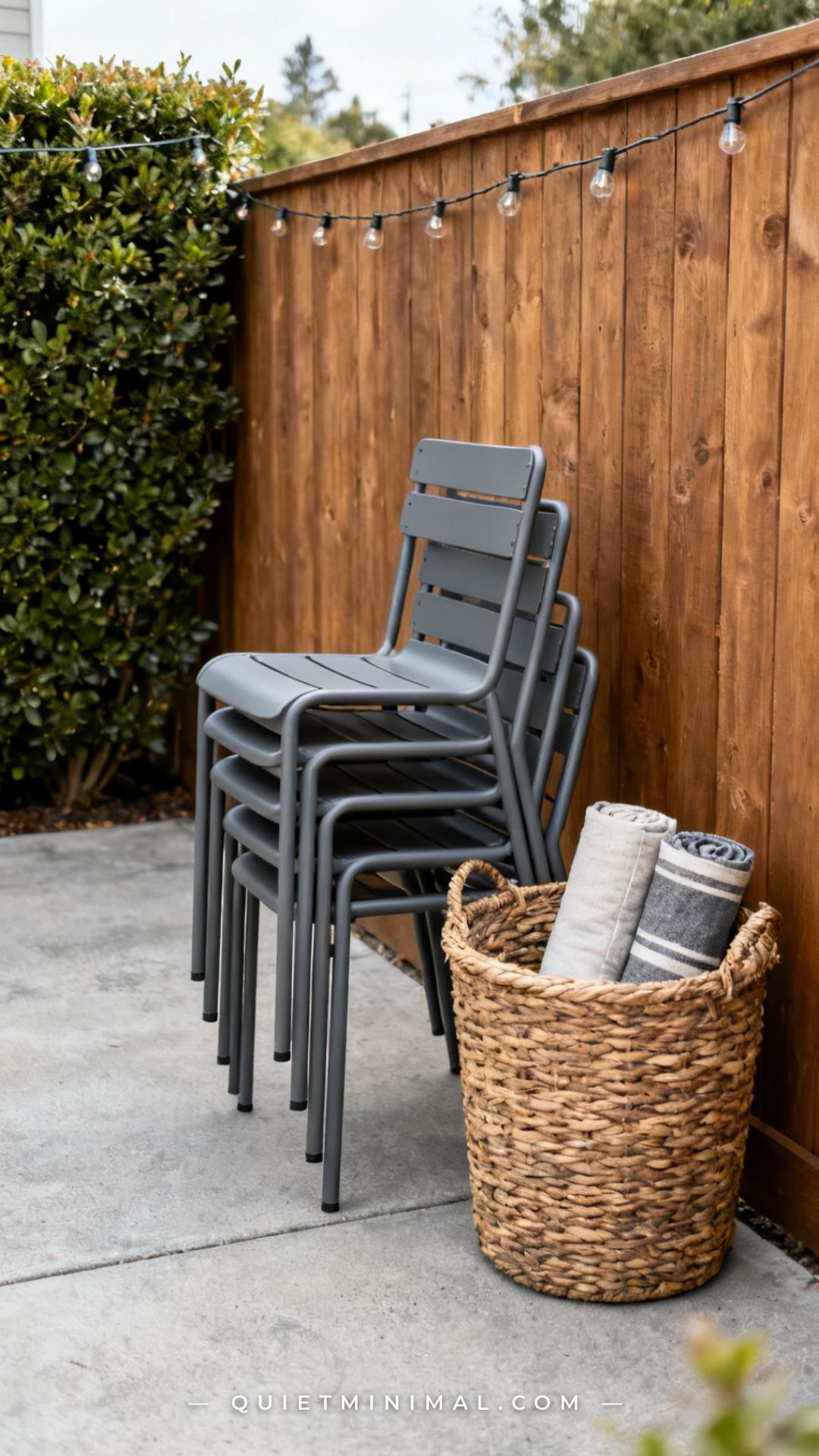
4. The Stack Test — Why You Should Evaluate How These Chairs Look When They’re Not in Use
 Save
Here’s the test almost no buying guide runs: stack the chairs and look at them from twenty feet away. Do they look like outdoor furniture waiting for its next use, or do they look like chaos? The answer has less to do with the chair’s design and more to do with frame geometry and the weld quality at the stacking points.
Chairs that stack cleanly — meaning the seat pan of one chair slides flush onto the frame of the chair below without tilting or spreading — create a coherent visual column. That column, even sitting in the corner of your patio, reads as intentional. Chairs that stack unevenly create an unstable-looking pile that signals “storage problem” every time you walk past it.
When evaluating stackability, look for chairs that list a specific stack height (e.g., “stacks to 8 chairs”) — brands that know their stacking geometry tend to have engineered it deliberately. Also look at whether the frame has a dedicated stacking ledge or notch at the rear leg junction. That small feature is the difference between a chair that stacks at 6 inches per unit versus one that adds 10–12 inches per chair, which adds up fast.
Key Takeaway: Evaluate stacking geometry before buying — chairs with a dedicated stacking ledge stack at a lower per-chair height and look intentional as a stored column, not like a storage problem.

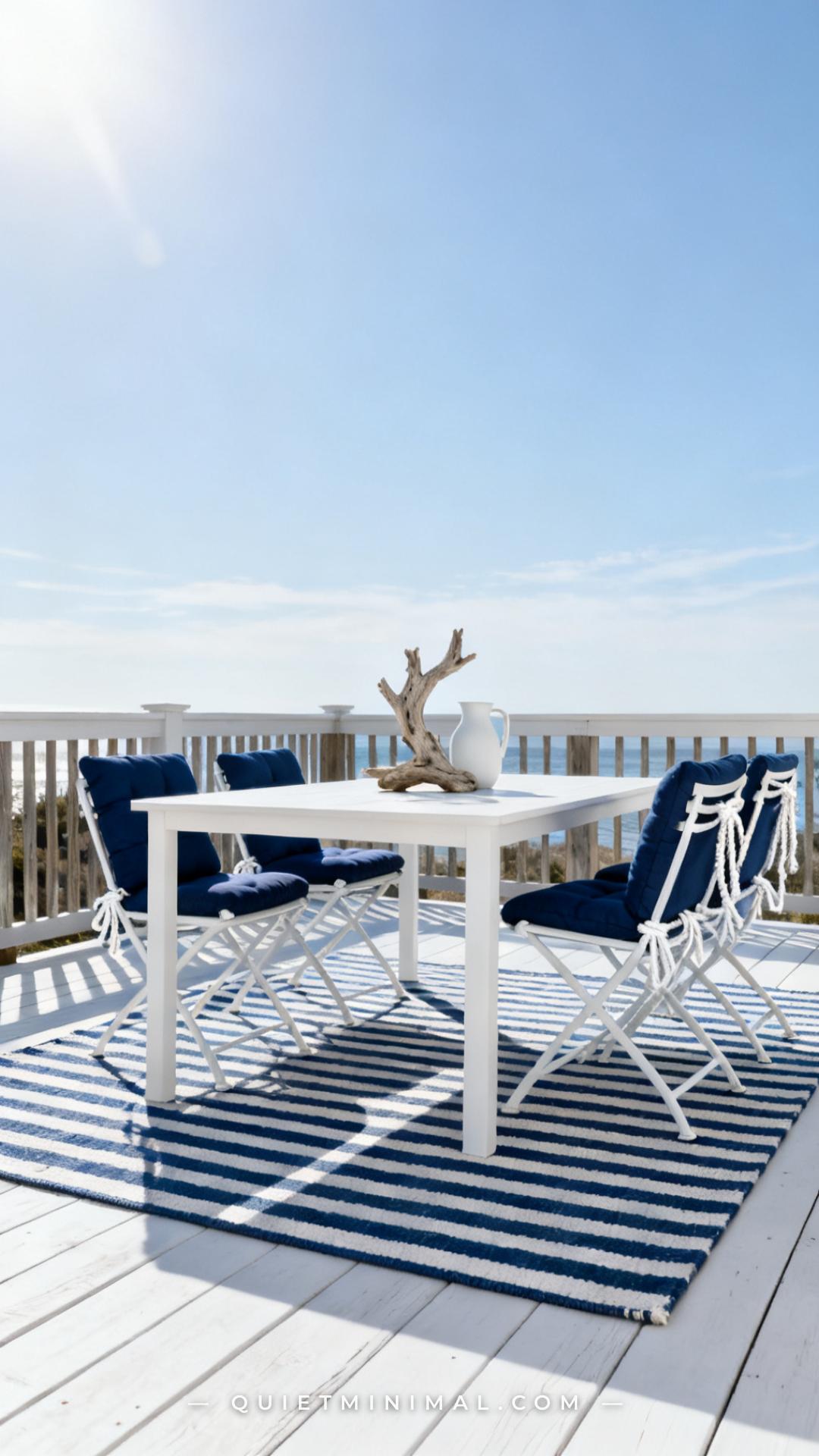
5. White Powder-Coat with a Navy Cushion — A Coastal Combination That Reads Elevated, Not Kitschy
 Save
White powder-coat has a reputation problem: it’s often associated with mass-market patio sets that look fine in the store and chalky within a season. The problem isn’t the color — it’s the single-coat application on low-gauge steel that accounts for most of that reputation. A properly applied white powder coat on a 14-gauge or heavier steel frame with an electrostatic process holds up significantly better.
Paired with a navy or indigo blue cushion, white frames create a combination that reads as coastal without reaching for rope, anchor motifs, or nautical clichés. The contrast is clean, the palette is recognizable, and it photographs well in a wide range of natural light conditions — which matters if Maya is the person who documents her space on Pinterest or Instagram.
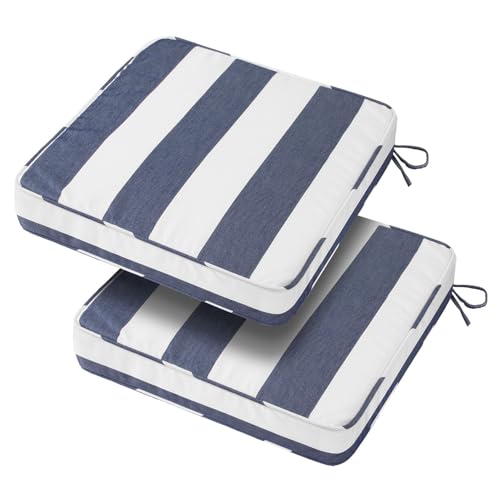
For cushions in this combination, look for covers with a zippered enclosure rather than envelope-style — zippers allow for cushion removal and machine washing, which is the single most important maintenance feature for white-adjacent outdoor cushions that will show dirt at the seam lines.
Key Takeaway: White frames with navy cushions work because the contrast reads as elevated, not default — but you need to verify coating gauge and look for zippered cushion covers for realistic maintenance.

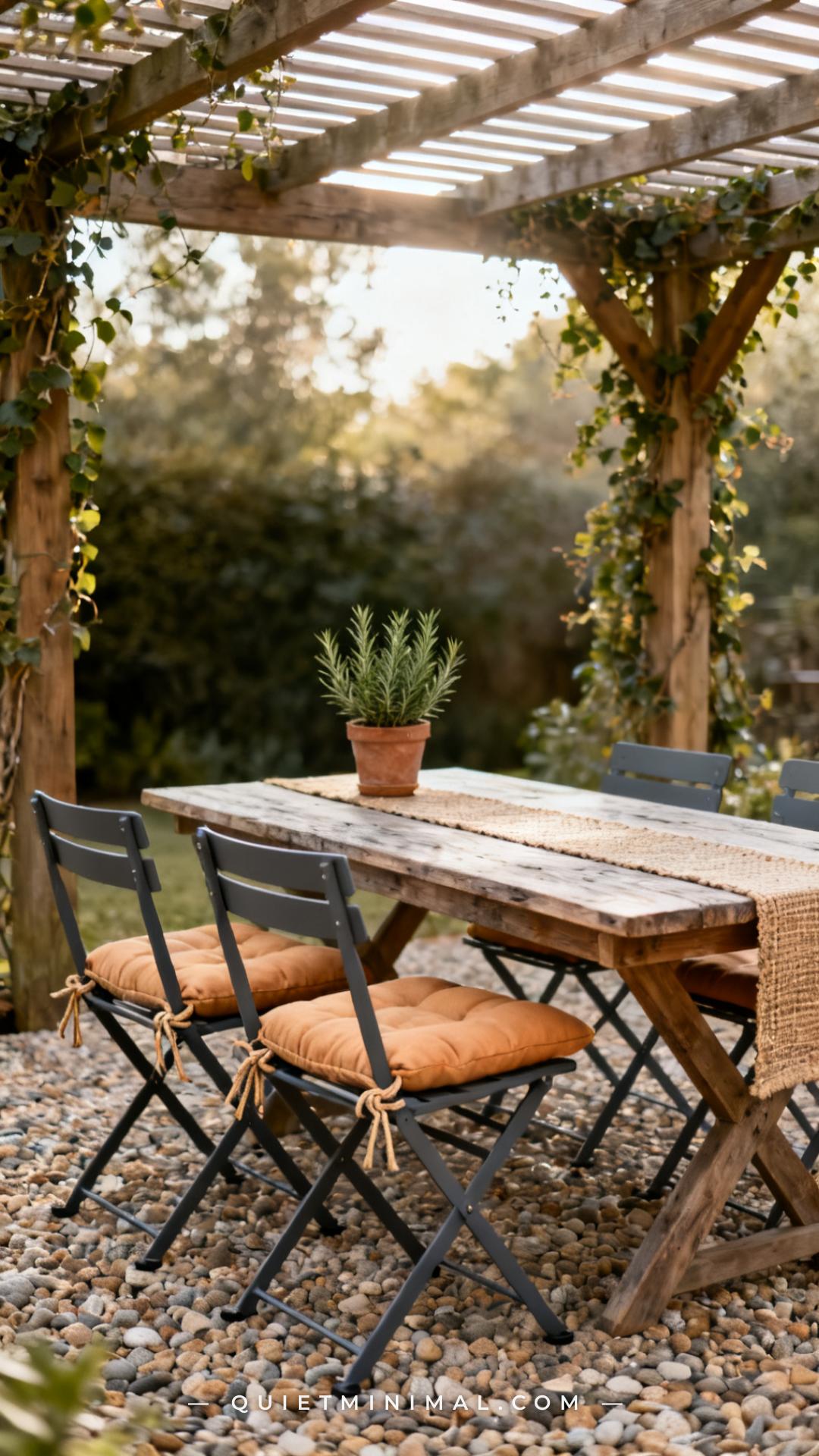
6. The Cushion Tie-Down System — The Feature That Separates Usable Chairs from Frustrating Ones
 Save
Cushion tie-down systems are the least glamorous feature in any outdoor chair description and the one most likely to determine whether you use the cushion at all after month two. A cushion without ties on a chair with any amount of breeze is a cushion that spends more time on the ground than on the seat. That isn’t a small inconvenience — it’s the reason outdoor cushions end up abandoned inside before summer ends.
There are three common tie configurations: side ties that loop around the chair’s back posts, bottom ties that anchor through a slot in the seat pan, and wrap-around ties that encircle the lower crossbar. Of these, wrap-around crossbar ties are the most secure for dining chairs because they use the horizontal frame element — which doesn’t flex — as the anchor point.
When buying, look specifically for chairs with a horizontal lower back crossbar that a tie can wrap around. Chairs without any lower crossbar rely on back post ties alone, which work for occasional outdoor use but fail in any space with regular wind. If the product listing shows cushion ties at all — confirm which tie type before purchasing.
Key Takeaway: Wrap-around crossbar ties are the most reliable cushion retention system for dining chairs — specifically look for a horizontal lower crossbar in the frame design before committing.

7. Slate Navy Frames with White Cushions — The Alternative to the All-Gray Patio Default
 Save
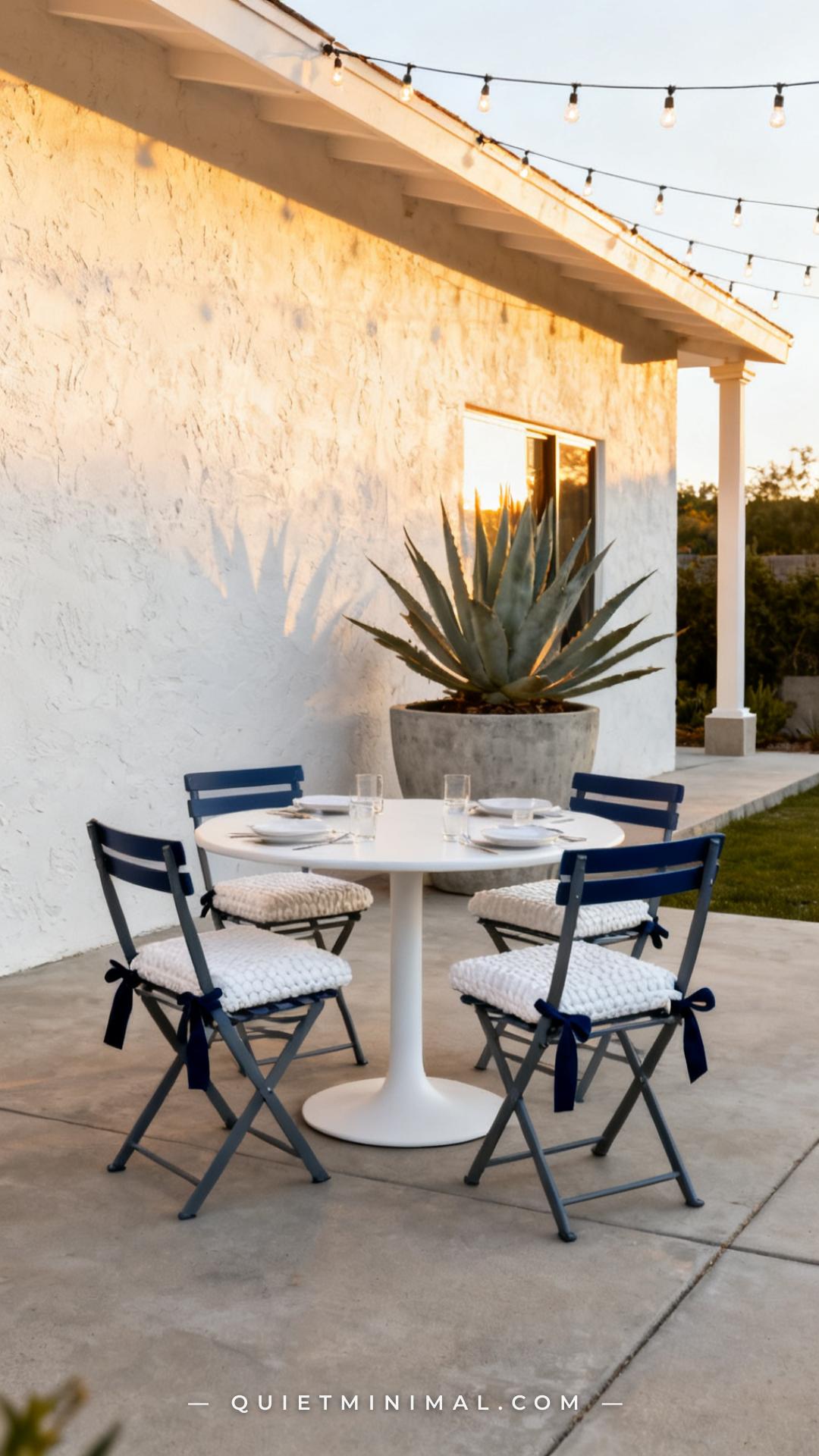
The all-gray patio default — gray furniture, gray concrete, gray cushions — is the outdoor equivalent of the all-beige living room: inoffensive, easily assembled, and impossible to remember. Slate navy powder-coated frames are one of the most effective ways out of this default because they carry depth without reading as a “statement color” in the way terracotta or sage do. They look like a decision, not an accident.
Paired with white cushions — not cream, but true white — slate navy frames create a high-contrast combination that photographs sharply and reads as coastal, contemporary, or transitional depending on the surrounding materials. On a warm wood deck, the navy-white combination reads coastal. On a concrete patio with modern landscaping, it reads contemporary. That contextual flexibility makes it one of the most versatile powder-coat color choices available.
For frame evaluation, navy and other deep blue powder coats can show UV fading as a chalky lighter tone at the top surfaces — the parts of the frame that face direct sunlight. A high-quality UV-resistant topcoat slows this significantly. Look for frames described as “UV-resistant coating” or “marine-grade powder coat” — both indicate a formulation designed for higher sun exposure.
Key Takeaway: Slate navy frames with white cushions deliver a versatile combination that reads differently based on surrounding materials — and you should verify UV-resistant coating to prevent surface chalking on the top-facing frame elements.
8. The Weight-to-Gauge Ratio — What Chair Weight Tells You About Frame Durability
 Save
From the guides
You've saved it, wanted it. Here's the how: codes, measurements, order. Your choices make it yours.
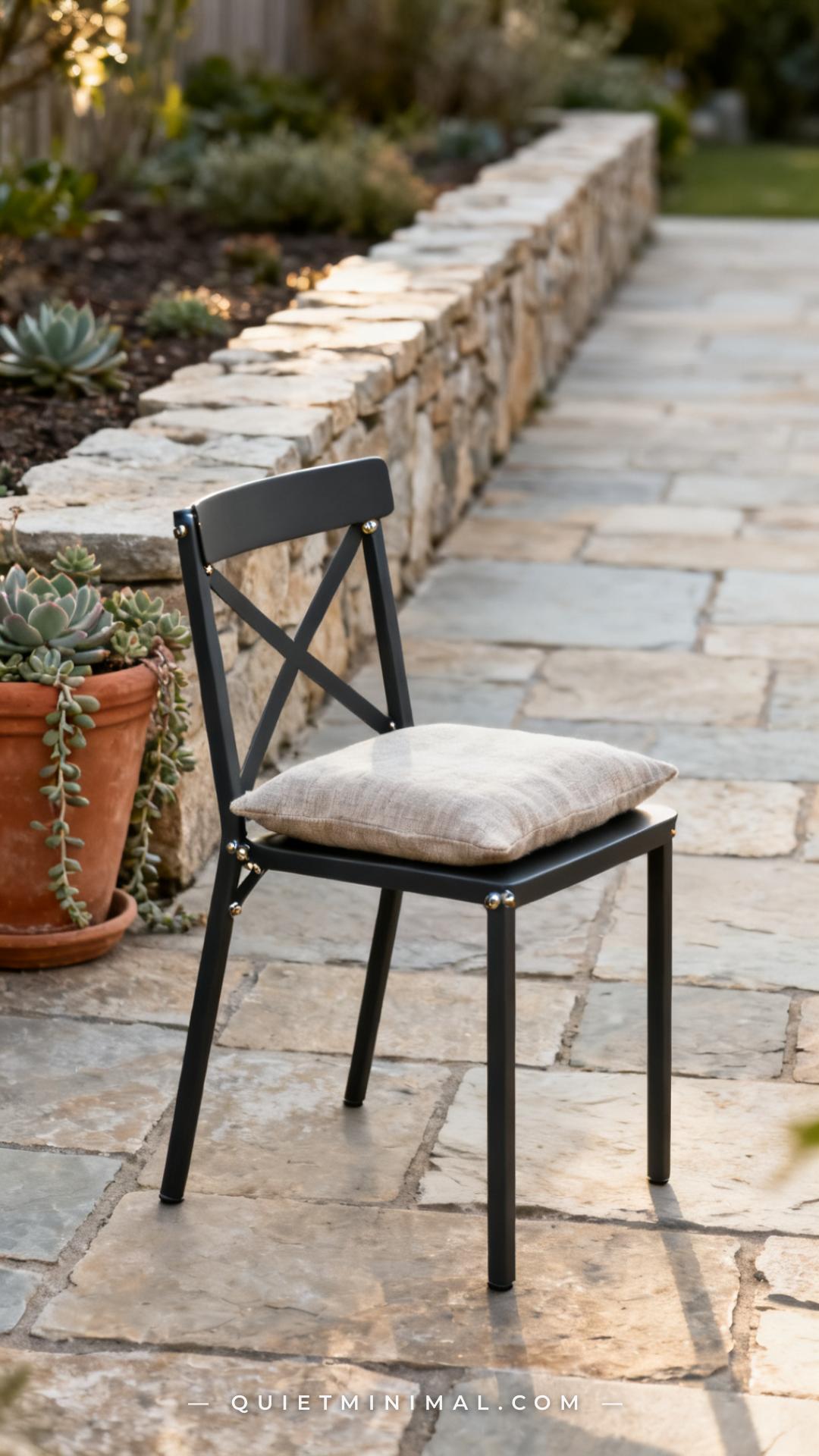
The Japandi Honest PlaybookThe honest version of the style: what to keep, what to skip, and the order to do it in.See inside →The Room Refresh PlaybookA repeatable four-step method, room by room, in ten minutes, thirty minutes, or one weekend.See inside →Make Any Room Feel Cozy on PurposeWhy some rooms hold people and others empty out, and the moves that change it.See inside →Every outdoor chair listing shows a weight. Most buyers interpret a lighter chair as easier to move, which it is. But in powder-coated steel frames, weight is the clearest proxy signal for steel gauge — and gauge is the most direct predictor of how long the frame will last without bending at the legs or cracking at the welds.
A standard commercial-grade stackable outdoor dining chair in 16-gauge steel runs approximately 12–15 lbs. A chair listed at 8–10 lbs in steel (not aluminum) is almost certainly 18- or 20-gauge, which will deflect under regular use within two to three seasons. The weld points are where lighter-gauge chairs fail first — particularly at the rear leg-to-seat-pan junction, which takes the most stress when a person leans back.
If you’re shopping aluminum-frame chairs rather than steel, the weight benchmark shifts: aluminum runs lighter, so a 7–9 lb aluminum chair may be perfectly durable. The gauge issue is primarily a steel-frame concern. For a mixed outdoor dining set — four to six chairs used regularly for meals — 16-gauge steel or equivalent structural aluminum is the minimum worth buying at any price point.
Key Takeaway: Use listed chair weight as a gauge proxy for steel frames — chairs under 12 lbs in steel likely use thin-gauge construction that fails at weld points within a few seasons of regular use.

9. Mixed Frame Colors Around One Table — How to Pull It Off Without It Looking Like a Mistake
 Save
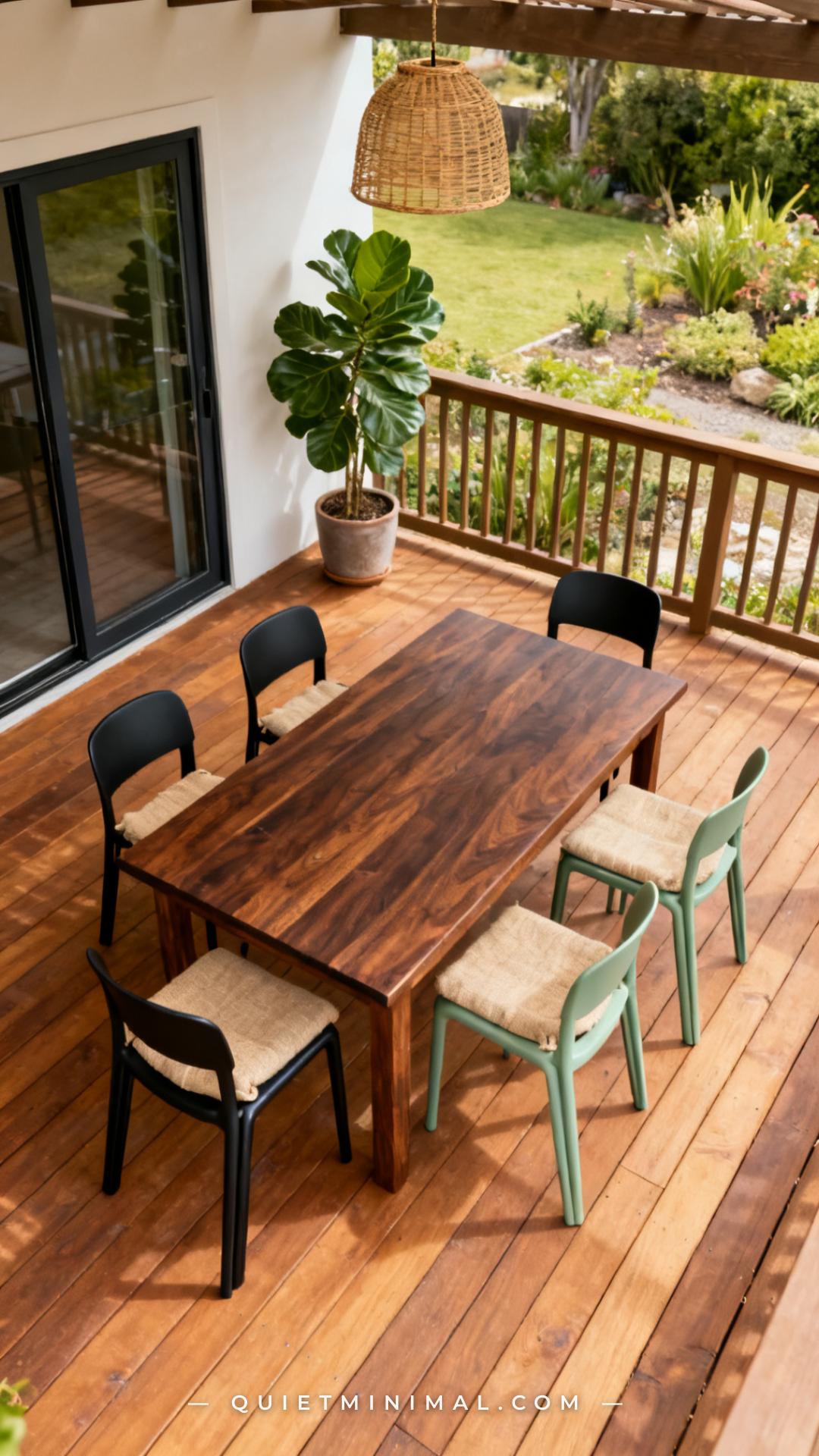
Mixed frame colors at one outdoor dining table can look intentional or chaotic — the difference is almost entirely in the cushion decision. When every chair has the same cushion, the variation in frame color reads as a considered choice rather than a mismatch. The cushion creates visual coherence that allows the frames to vary without the arrangement appearing unfinished.
The most successful mixed-frame combinations work within a tonal family: two matte blacks and four sage greens, for instance, or alternating slate navy and charcoal. Mixing a warm tone (terracotta) with a cool tone (sage) at the same table is harder to pull off because the frames create a temperature conflict that the cushion alone can’t resolve.
Practically, mixing frame colors also solves a common patio problem: you find a chair you love that’s discontinued or out of stock in your original quantity, and you need to supplement. Rather than trying to match exactly, leaning into a deliberate two-tone combination and using uniform cushions transforms a practical constraint into a design decision.
Key Takeaway: Mixed frame colors at one table read as intentional when every chair uses the same cushion — the cushion is the unifying element that keeps variation from looking like a mismatch.

10. Rust-Proof Guarantee — What to Look For and What to Ignore in Product Descriptions
 Save
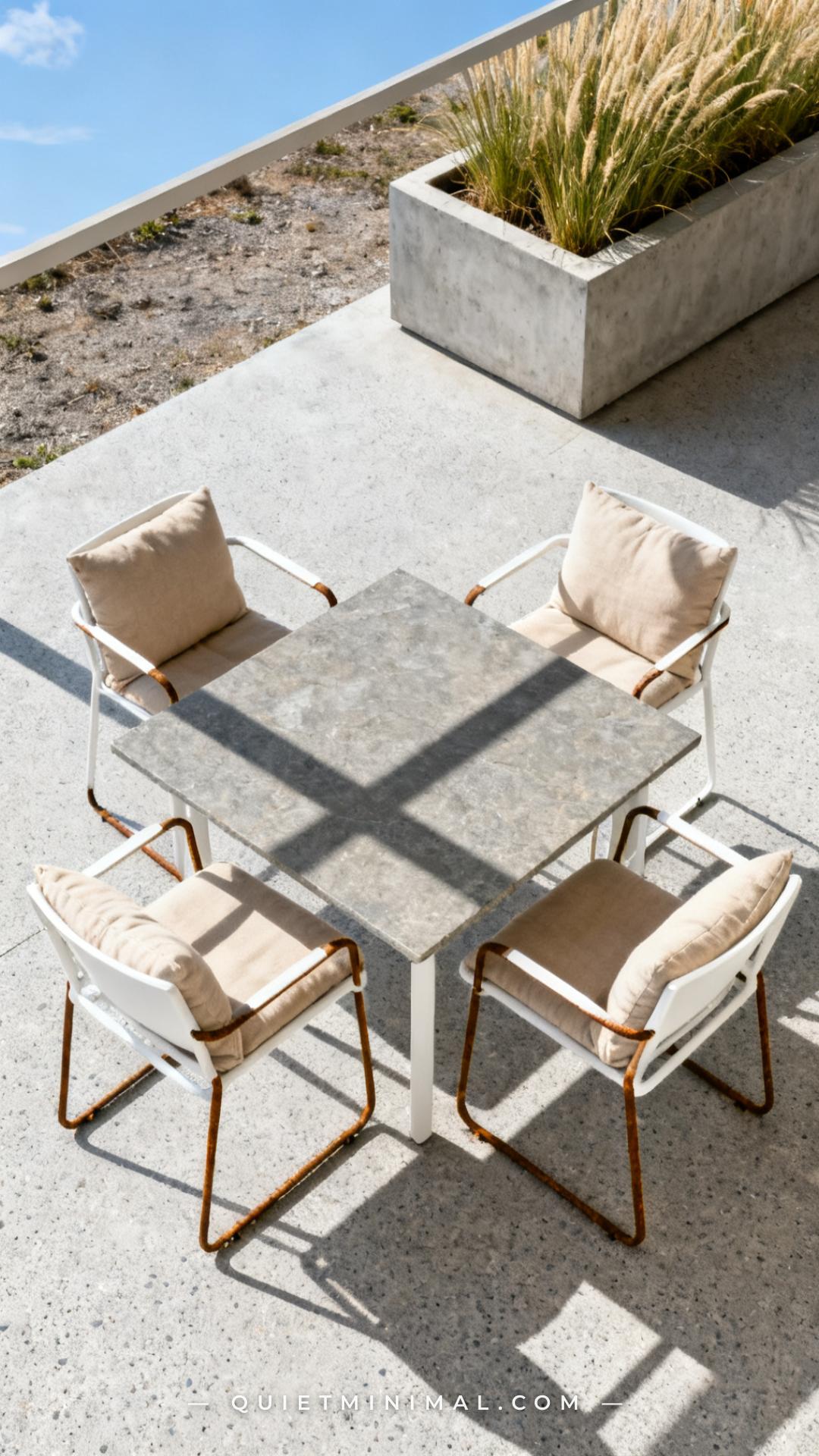
“Rust-proof” and “rust-resistant” appear on nearly every powder-coated outdoor chair listing. They mean very different things, and the distinction matters if your chairs will be left uncovered through winter or in a humid coastal climate.
True rust-proof outdoor chairs are almost always aluminum — aluminum doesn’t contain iron, so it cannot produce iron oxide (rust). Powder-coated steel is rust-resistant, not rust-proof: the powder coat prevents moisture from reaching the steel substrate, but any chip, scratch, or thin coating application creates an entry point for moisture and eventual rust. In practical terms, a well-applied powder coat on steel in a temperate climate will give you many years before surface rust appears. In a coastal or consistently humid environment, that timeline shortens significantly.
When evaluating listings, “rust-proof” on a steel chair is a marketing claim worth questioning. Ask (or read reviews for) whether buyers in coastal areas have experienced surface rust within one to two seasons. “Galvanized steel with powder coat” is a better phrase — galvanization adds a zinc layer under the powder coat that creates a second barrier against moisture penetration.
Key Takeaway: Rust-proof claims on steel-frame chairs are marketing language — look for galvanized steel with powder coat as the frame description, which indicates a two-layer moisture barrier rather than powder coat alone.

11. Cushion Thickness and Foam Density — The Numbers That Determine Whether You Actually Sit Comfortably
 Save
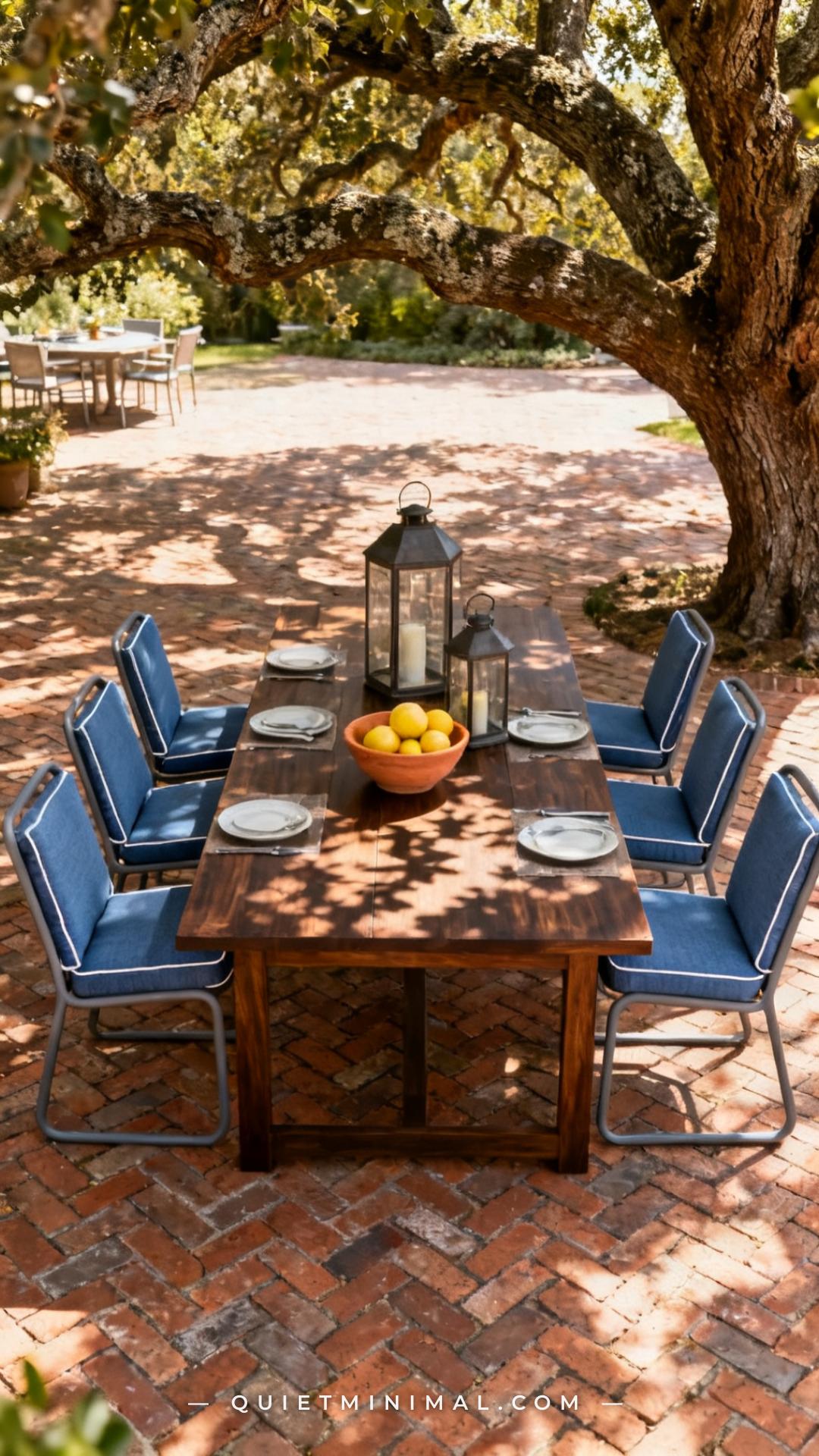
Outdoor dining chair cushions are frequently described by cover fabric and color — the two variables that matter least for comfort — and rarely described by foam density or fill thickness, which are the two variables that determine whether a chair is comfortable for a full meal or just adequate for ten minutes.
For foam-filled outdoor cushions, look for at least a 3-inch thickness at the center, with a high-resiliency (HR) foam rating rather than standard polyurethane foam. HR foam — sometimes listed as “quick-dry foam” or “open-cell foam” — recovers its shape after each use and drains moisture faster, both of which extend the cushion’s usable life significantly. Standard poly foam compresses after a season and doesn’t recover, which is why so many outdoor cushions feel hollow by year two.
For fiberfill cushions (often described as “patio cushions with polyester fill”), the initial softness is misleading — fiberfill compresses significantly under body weight and doesn’t recover the way HR foam does. For dining chairs specifically, which support seated body weight at a fixed angle for thirty to ninety minutes at a time, foam is the superior fill material.
Key Takeaway: Prioritize cushion foam density and thickness over fabric color — look for 3-inch minimum thickness and HR or quick-dry foam, which maintains its shape through repeated use and moisture exposure.

12. The Complete Set vs. the Mix-and-Match Approach — Which One Actually Saves You Money
 Save
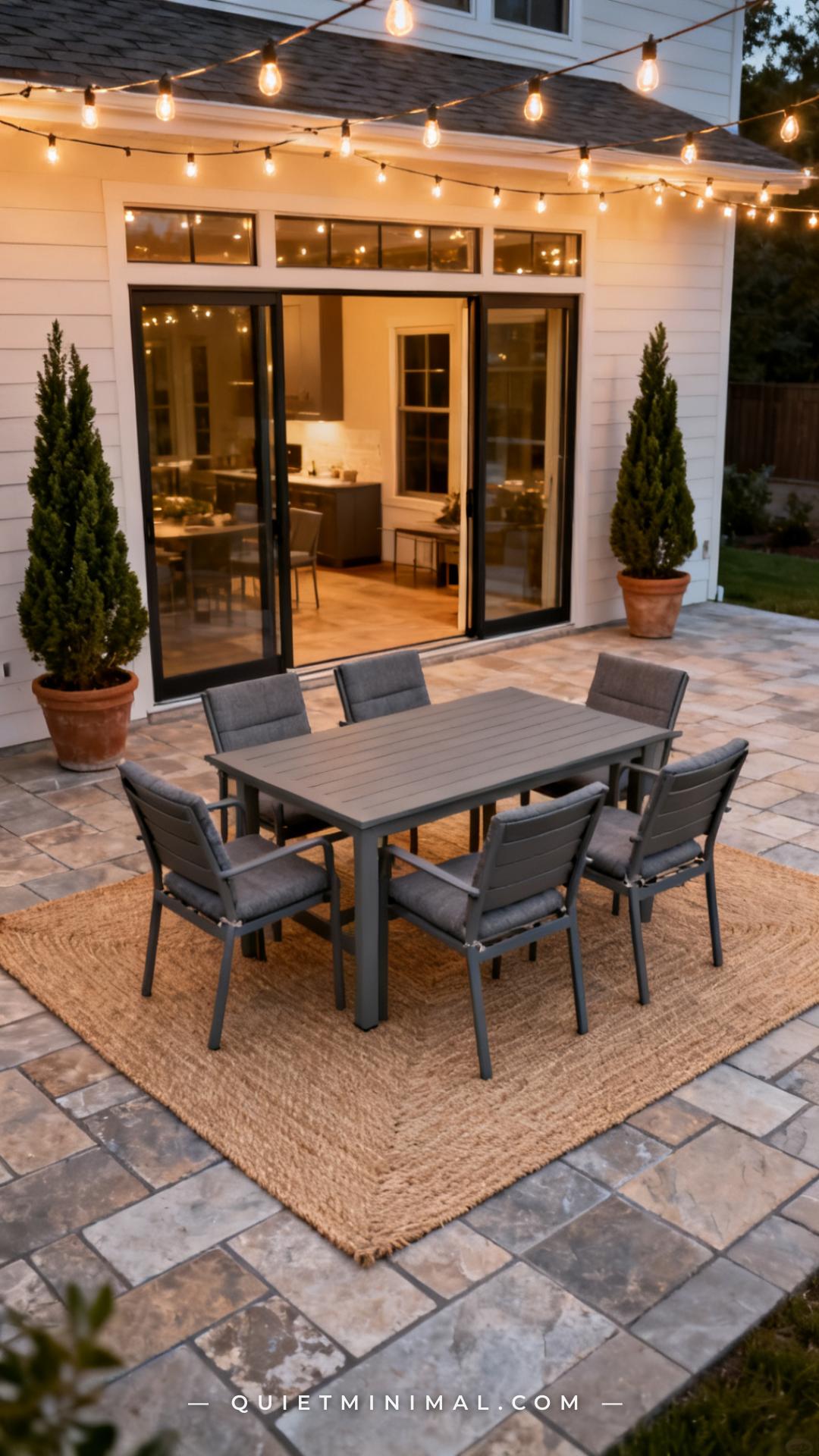
The complete-set approach and the mix-and-match approach have different financial profiles that aren’t always obvious from the initial purchase price. A complete 6-piece set — table and chairs from one brand — almost always costs less per chair than buying chairs individually. The trade-off is inflexibility: if one chair breaks or a frame color is discontinued, matching a replacement becomes difficult.
The mix-and-match approach — buying chairs from one source and a table from another — costs more upfront but gives you more flexibility in color, cushion selection, and replacement. It also allows you to buy the number of chairs you actually need (four chairs for a four-person household, six for a household that entertains) rather than being locked into a set quantity.
For Maya’s use case — a suburban household that entertains occasionally and wants chairs that photograph well — the mix-and-match approach is often the better long-term choice. She can buy four core chairs now, add two more in the same frame color before a large gathering, and replace cushions independently as they wear out. The modular logic of stackable powder-coated chairs is built for this kind of incremental approach.
Key Takeaway: Mix-and-match gives you better long-term flexibility than a complete set — buy the number of chairs you actually use regularly, and treat cushions as a consumable you’ll replace on a separate cycle.

The most useful thing to take from this guide is that outdoor dining chairs are a system — frame, cushion, and stacking geometry are three separate decisions that interact with each other. A beautiful frame with a sliding cushion is frustrating. A comfortable cushion on a chair that stacks poorly becomes a storage problem. And a stylish combination that starts chalking or rusting by year two isn’t worth what you paid for it, regardless of the price.
Start with the frame color and gauge (confirm galvanized steel or structural aluminum), verify the stacking geometry before ordering, and treat the cushion as a separate purchase where foam density matters more than color. Once you have those three elements working together, the result is a patio dining setup that looks as considered stacked in the corner in November as it does set for dinner in July — which is the actual standard worth building toward.
From the guides
You've saved it, wanted it. Here's the how: codes, measurements, order. Your choices make it yours.
The Japandi Honest PlaybookThe honest version of the style: what to keep, what to skip, and the order to do it in.See inside →The Room Refresh PlaybookA repeatable four-step method, room by room, in ten minutes, thirty minutes, or one weekend.See inside →Make Any Room Feel Cozy on PurposeWhy some rooms hold people and others empty out, and the moves that change it.See inside →