Georgia
The matching patio set had its moment. Now the spaces that actually get saved on Pinterest are the ones that look like they came together over time — a metal bistro chair here, a slatted wood bench there, a woven accent piece that ties it all together. The good news: that “curated collected” look is actually easier and cheaper to pull off than buying a six-piece coordinated set. The secret isn’t luck. It’s three repeatable rules — material echo, height harmony, and color anchor — that designers use every time they pair mismatched outdoor pieces. This article walks you through 15 specific outdoor seating area ideas built around mix-and-match chairs and benches, all on a budget, with the logic behind why each combination works so you can adapt it to your own space.
1. Pair Metal Bistro Chairs with a Wood Slatted Bench
 Save
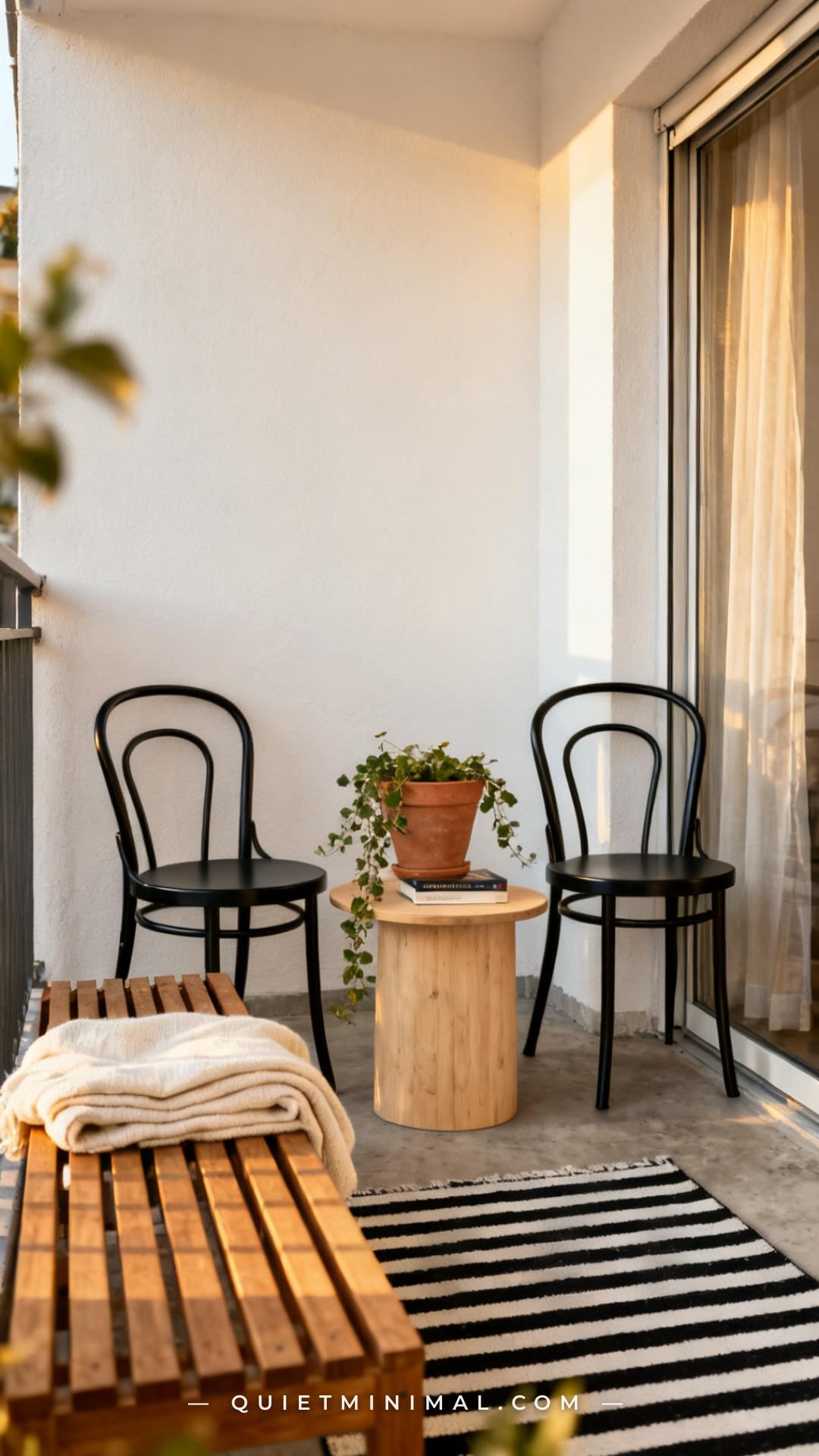
Metal and wood are the foundational pairing in mix-and-match outdoor design because they satisfy the material echo rule: each material is visually distinct, yet both read as “natural and honest” rather than synthetic. Matte black bistro chairs next to a honey-toned slatted bench feel intentional rather than mismatched because the contrast is purposeful, not accidental.
To make this combo cohesive, add one unifying textile — a pair of matching seat cushions in the same fabric across both the bench and the chairs. That single repeated element tells the eye “this was planned.” Keep the cushion color in the neutral family (oatmeal, warm white, or slate) so it bridges both materials without competing.
From the guides
You've saved it, wanted it. Here's the how: codes, measurements, order. Your choices make it yours.
 The Japandi Honest PlaybookThe honest version of the style: what to keep, what to skip, and the order to do it in.See inside →
 The Room Refresh PlaybookA repeatable four-step method, room by room, in ten minutes, thirty minutes, or one weekend.See inside →
 Make Any Room Feel Cozy on PurposeWhy some rooms hold people and others empty out, and the moves that change it.See inside →
Budget note: folding metal bistro chairs from brands like Flash Furniture or Homall are widely available and hold up well through multiple seasons. A simple slatted bench from Nathan James or a similar source rounds out the setup without requiring a matching set purchase.
Key Takeaway: One shared cushion fabric across mixed seating pieces is the fastest way to make a mismatched grouping look curated.

2. Anchor the Look with a Bold Color Bench
 Save
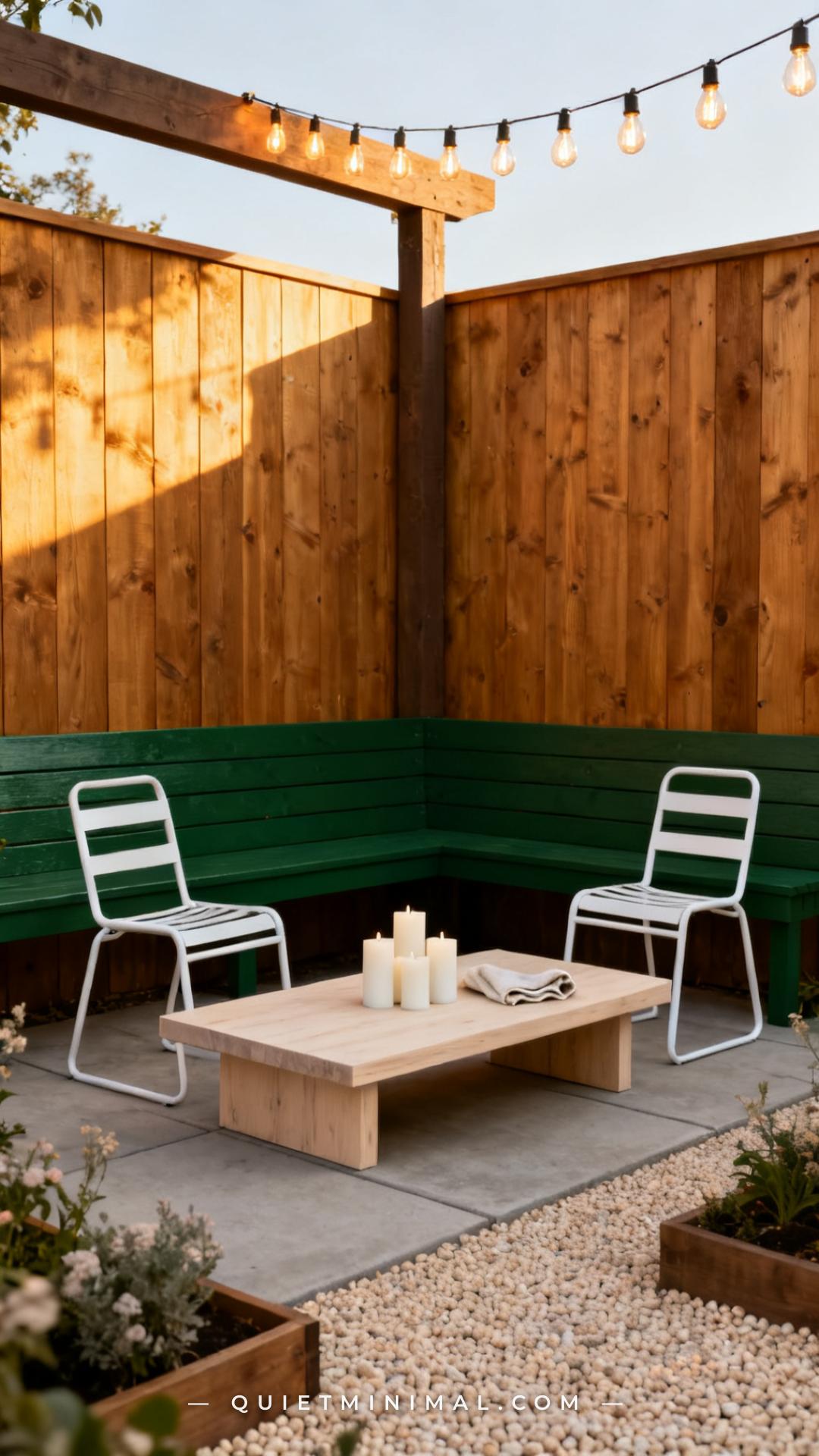
The color anchor rule works like this: when your chairs are neutral (white, black, or natural wood), the bench can carry one intentional color without the group looking chaotic. A bench painted in Sherwin-Williams’ Shade-Grown or Benjamin Moore’s Salamander gives the eye a landing point and makes even the most basic metal chairs look like a deliberate choice beside it.
The key is keeping everything else in the arrangement neutral. If the bench is your statement piece, the chairs, the table, and the textiles stay in quiet tones. One anchor, everything else a supporting player.
Painting an existing bench is one of the highest-return budget moves in outdoor decorating. A can of exterior-grade spray paint runs a few dollars and completely changes how a secondhand or builder-grade bench reads in a space.
Key Takeaway: Give one piece in your mix-and-match grouping a deliberate color, then let everything else stay neutral — the arrangement will look styled, not scattered.

3. Mix Wicker and Metal for Relaxed Coastal Layering
 Save
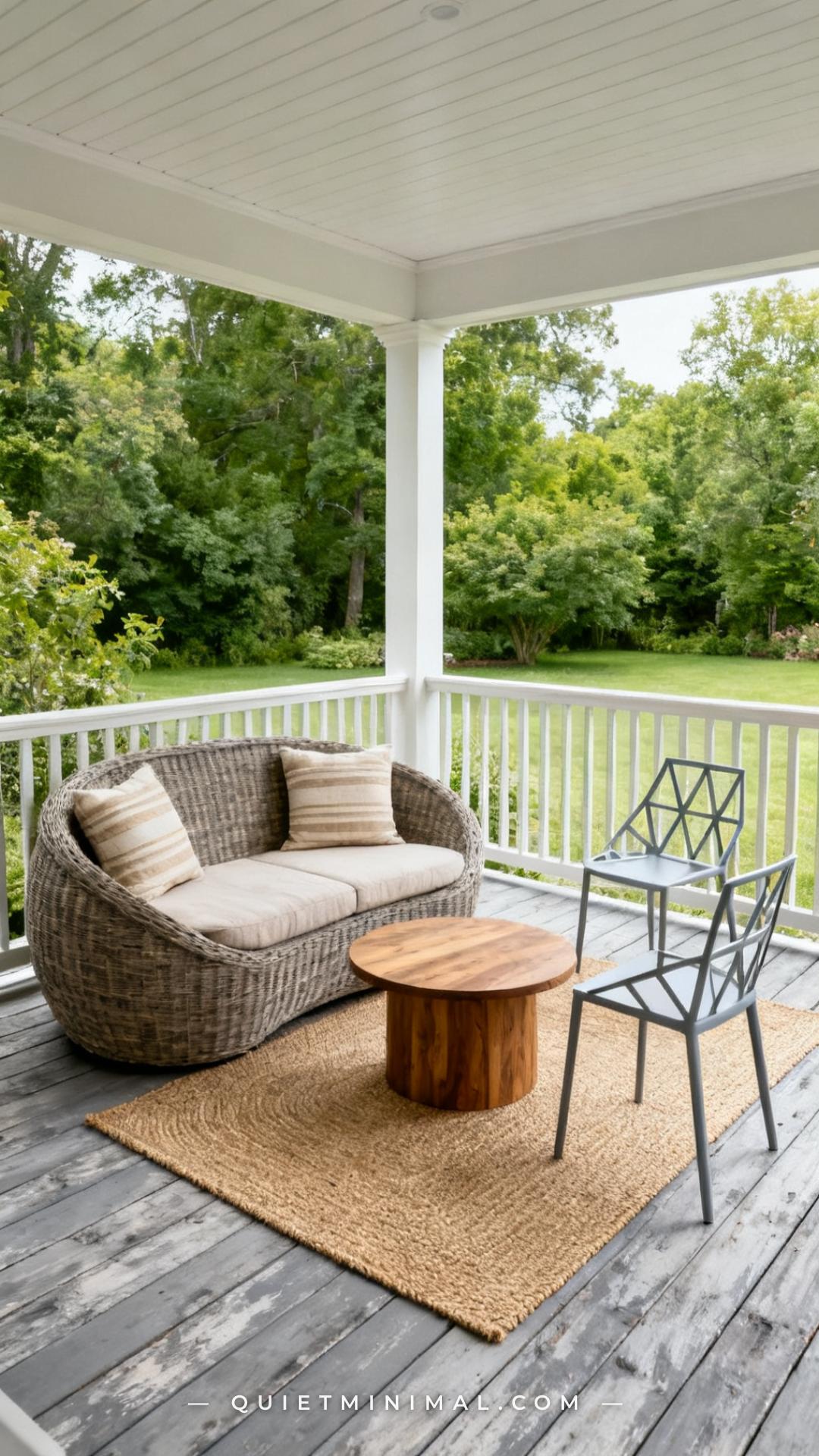
Wicker (or all-weather resin wicker) and powder-coated metal work together because they occupy opposite ends of the texture spectrum — one is organic and woven, the other is clean and geometric — while both being lightweight and weather-resistant. That textural contrast is exactly what gives a mix-and-match patio personality.
The height harmony rule matters here: keep your seat heights within two to three inches of each other across your mixed pieces. A wicker loveseat that sits noticeably lower than metal side chairs creates an awkward visual drop that no amount of cushions can fix. Check listed seat heights before purchasing any piece.
For a coastal lean, use striped or textural throw pillows in sandy tones across both the wicker and the metal seating. The matching pillow treatment unifies disparate pieces the same way a matching cushion does in the bistro-and-bench pairing.
Key Takeaway: Check seat height specs before mixing any two chair types — pieces within 2–3 inches of each other create a visually balanced grouping.

4. Use an X-Frame Bench as a Flexible Filler Piece
 Save
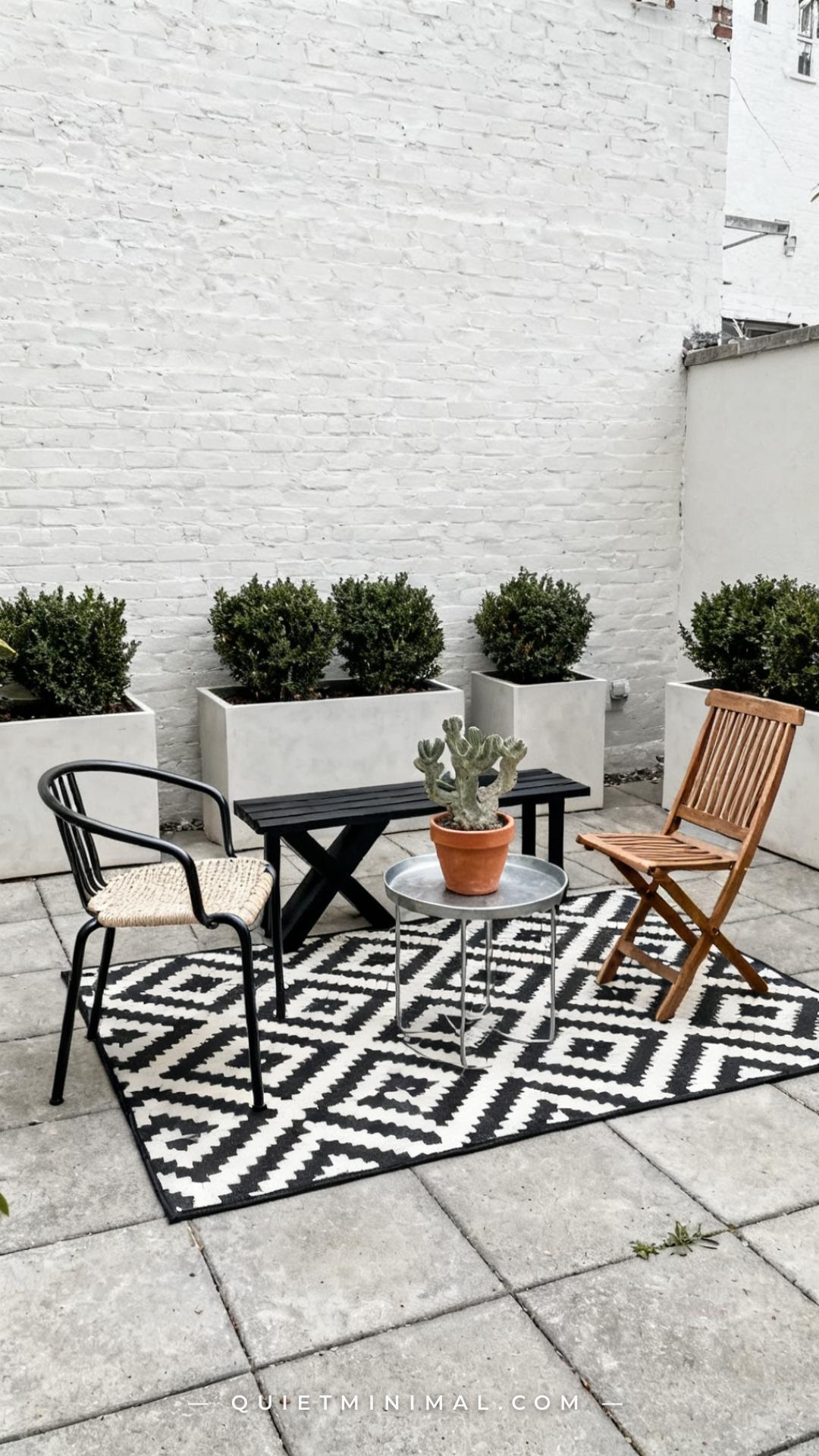
The X-frame bench is the most versatile piece in any mix-and-match outdoor setup because its open silhouette doesn’t compete visually with anything beside it. Unlike a solid bench with a back, an X-frame reads as almost two-dimensional — it adds seating without adding visual mass. That makes it an ideal connector piece between two visually heavier chairs.
Budget-wise, X-frame benches in acacia wood or eucalyptus from brands like Nathan James or Christopher Knight Home consistently rank among the most affordable real-wood outdoor pieces available. They’re also easy to move, which matters when you’re still experimenting with your layout.
Position the X-frame bench as the central piece in a three-seat arrangement — flanked by one mismatched chair on each side — and it becomes the axis that makes everything feel intentional. Add a small outdoor tray on the bench surface as a styling layer.
Key Takeaway: An X-frame bench is the easiest “connector piece” in a mixed outdoor arrangement because its open silhouette lets heavier chairs anchor the visual weight.

5. Combine Folding Chairs with a Storage Bench for Small Patios
 Save
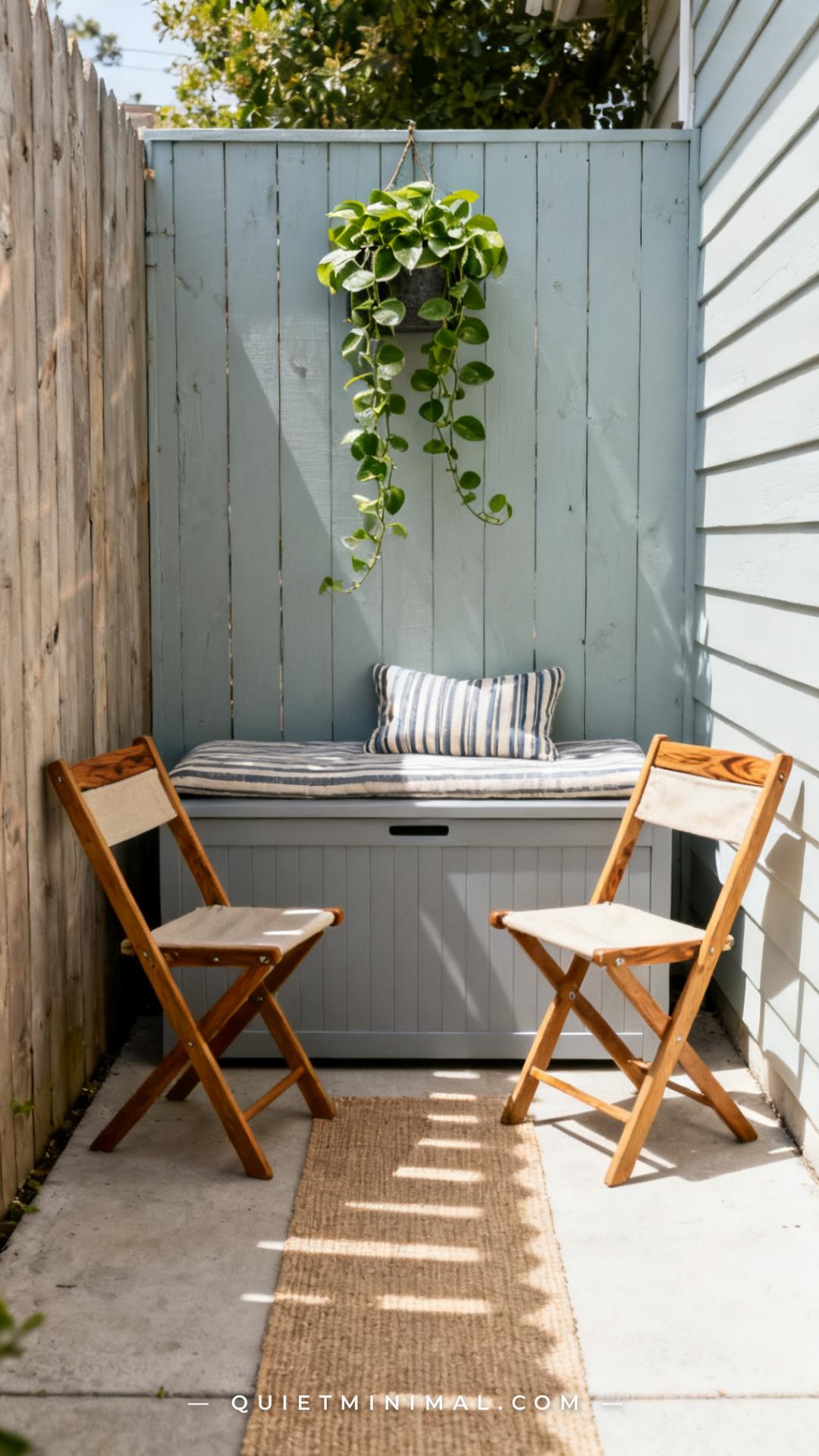
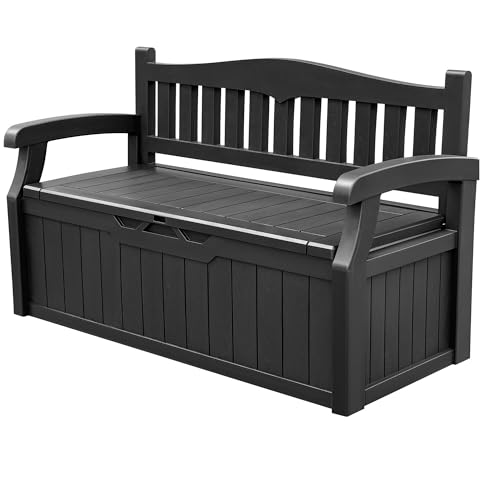
Small patio spaces need every piece to earn its footprint twice. A storage bench — one with a hollow interior for outdoor cushions, throw blankets, or garden tools — does the work of seating plus storage in the space of a single bench. Pair it with folding chairs that can be tucked away when not in use and you’ve solved a small-space seating problem without buying a full set.
The material match here is forgiving: a resin wicker storage bench pairs just as naturally with natural wood folding chairs as with metal ones, because the storage bench’s clean rectangular form acts as a neutral base. The visual weight of each piece stays balanced as long as the chair backs don’t tower dramatically above the bench.
A striped outdoor cushion on the bench seat bridges the storage-bench form (which tends to look boxy) and the more casual lines of folding chairs. Choose a cushion color that picks up a tone from both the bench and the chairs.
Key Takeaway: A storage bench in a mixed seating setup gives you a third function — seating, storage, and visual anchor — without needing more floor space.
6. Layer Two Chair Styles Around One Shared Side Table
 Save
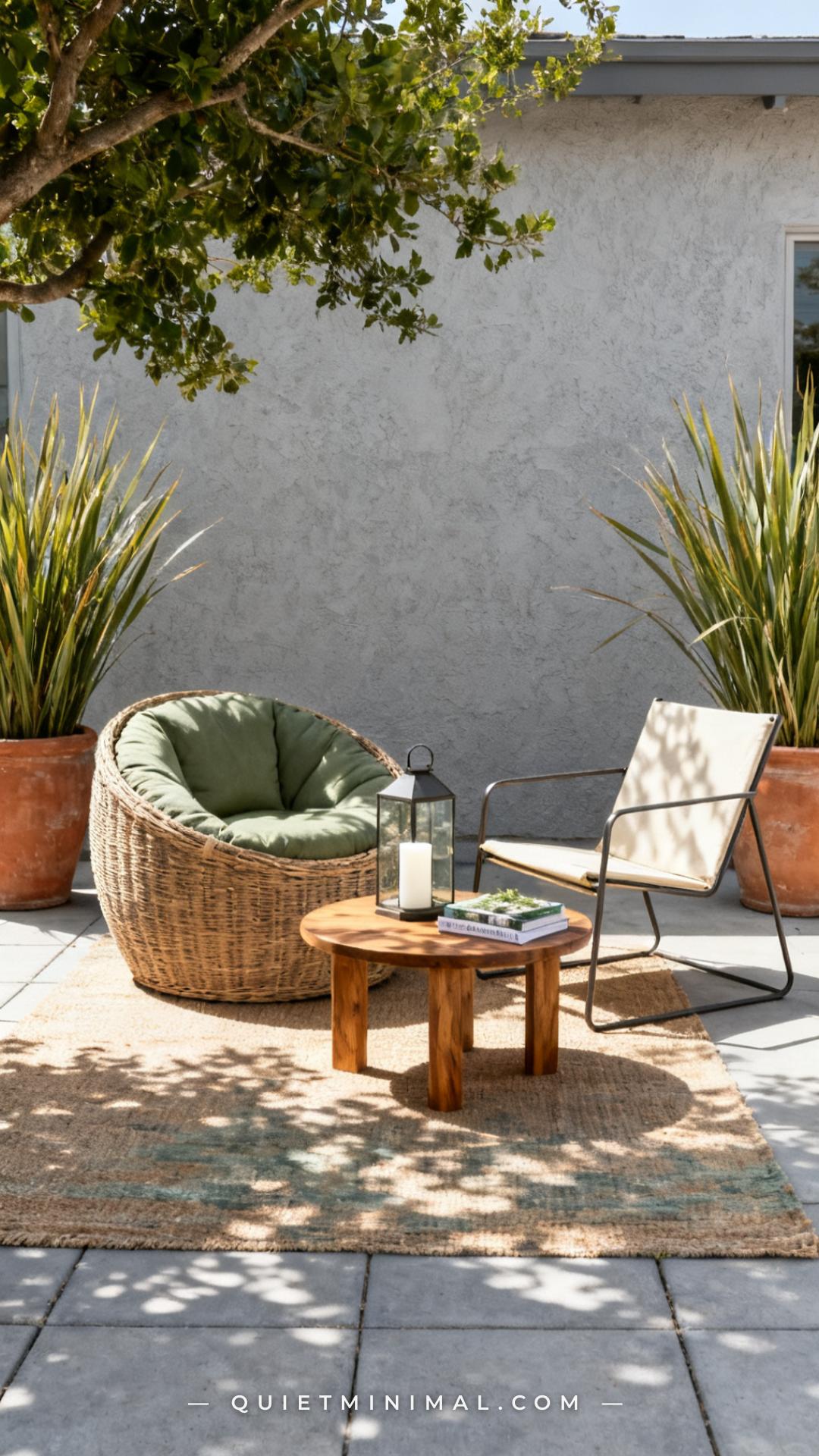
Two mismatched chairs become a seating area (rather than just two chairs near each other) the moment you give them a shared object to orient toward. A small round side table — low, simple, in teak, rattan, or matte black metal — does this job better than a large coffee table because it keeps the arrangement intimate and flexible.
The shared table also gives you a styling surface, which is how you introduce a third visual layer without spending money on additional furniture. A glass lantern, a potted succulent, or a small ceramic tray with votive candles brings the eye between the two chairs and makes the arrangement feel composed rather than accidental.
When choosing the table, pick a material that bridges your two chair finishes. If one chair is wicker and the other is metal, a teak or light wood table borrows warmth from the wicker and geometric simplicity from the metal.
Key Takeaway: A shared side table is the least expensive way to transform two mismatched chairs into a defined seating area — it creates the visual “room” they need.

7. Create a Fire Pit Ring with All-Different Chairs
 Save
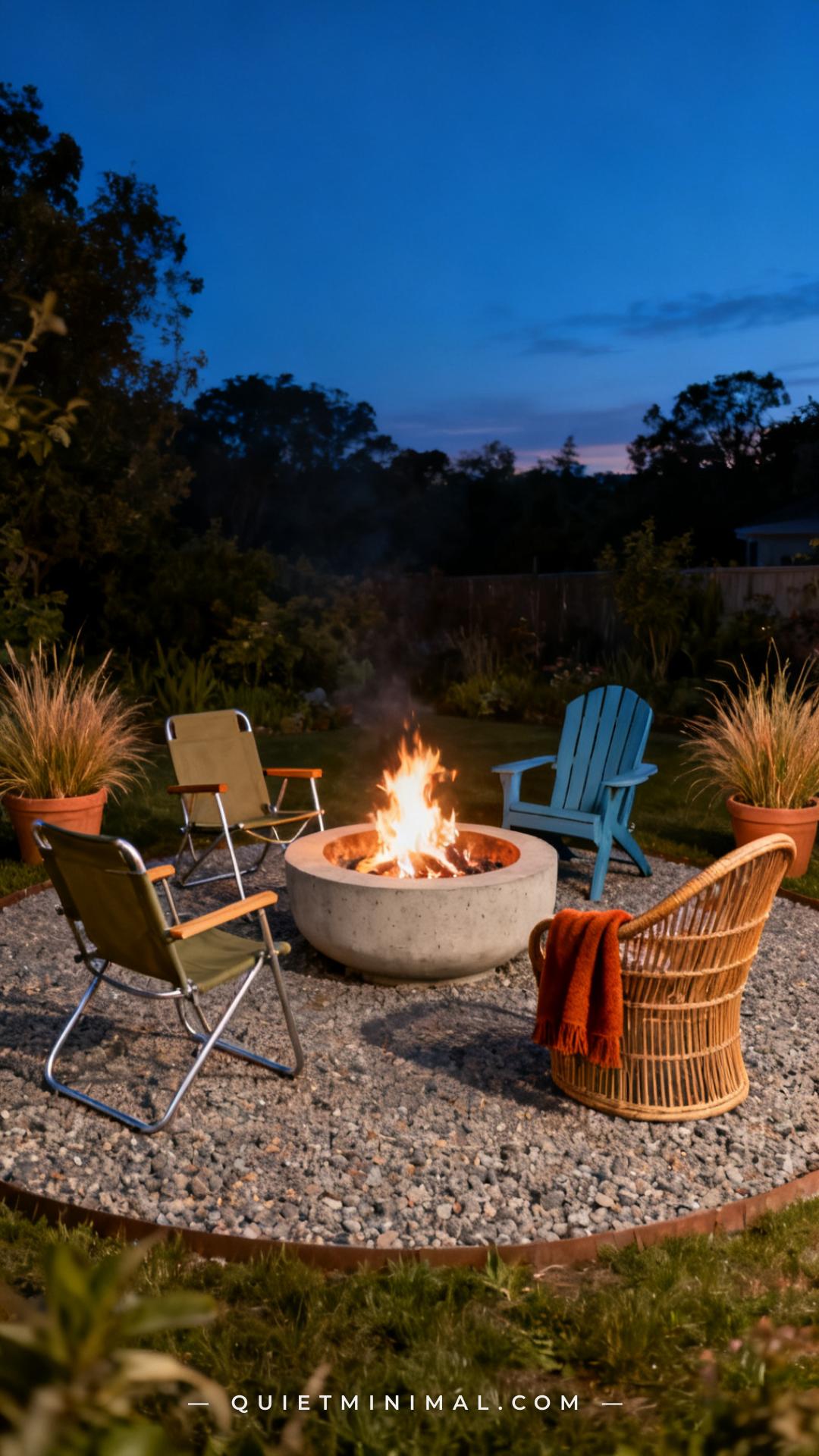
The fire pit circle is the one outdoor seating context where all-different chairs are not only acceptable — they’re the expected aesthetic. The arrangement works because the fire pit itself becomes the unifying center; every chair reads as “gathered around this thing” rather than “placed in this space.” That shared orientation does the visual work that matching furniture usually does.
The rule for fire pit chairs is practical as much as aesthetic: every chair should be comfortable for extended sitting (at least 30 minutes), weather-durable, and easy to reposition by one person. That combination rules out most heavy benches and makes lightweight metal, wood, and canvas chairs the practical picks.
The one styling move that elevates a fire pit chair collection: add one throw blanket per chair, all in the same color family (rust, terracotta, or deep olive). The throw doesn’t have to match exactly — slight variation in tone is fine — but a shared warmth in the palette reads as an intentional choice.
Key Takeaway: In a fire pit circle, the pit itself unifies mismatched chairs — your only job is keeping seat heights and comfort levels consistent across the grouping.

8. Mix Painted and Unpainted Wood for a Collected Garden Look
 Save
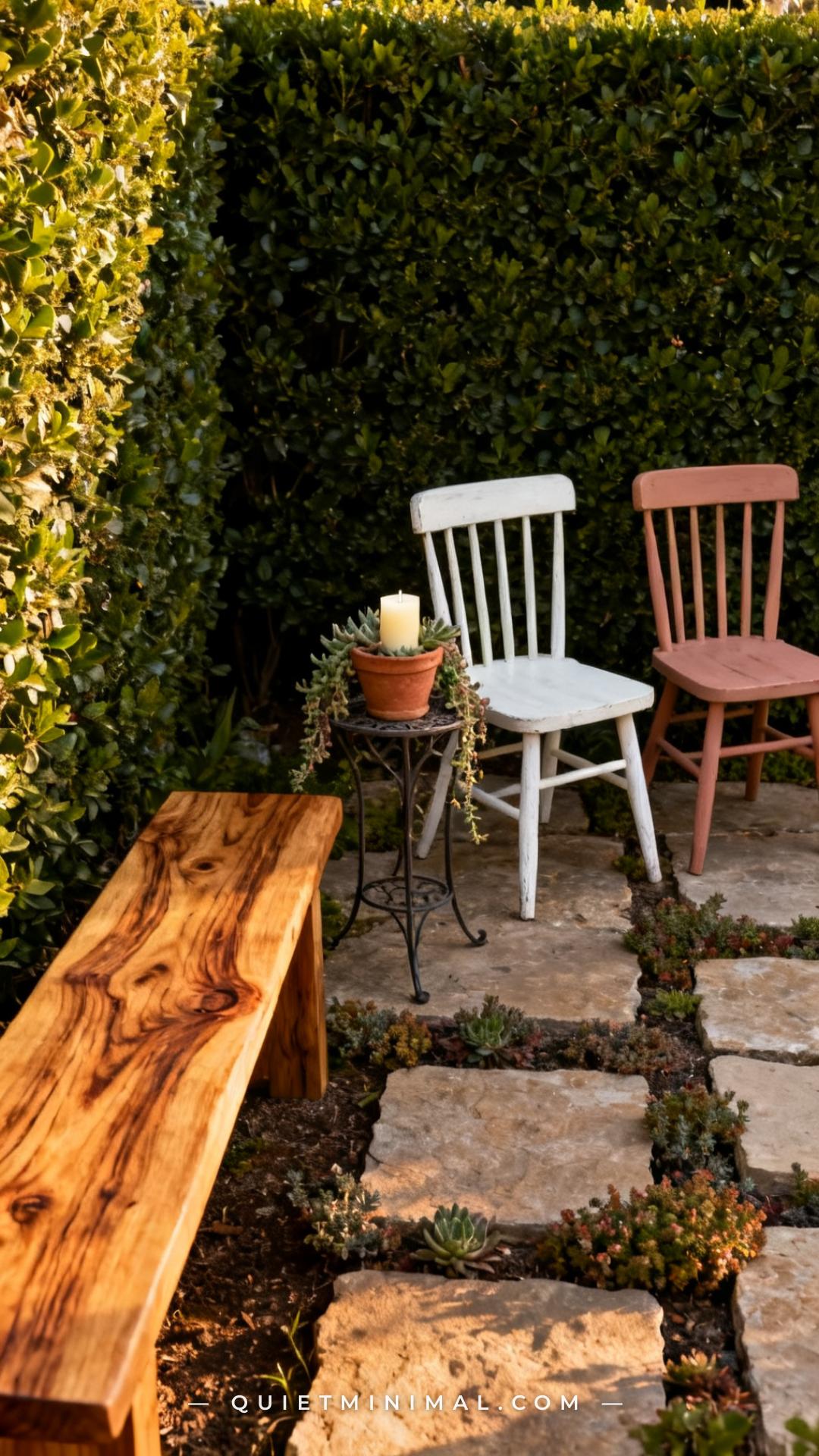
Mixing painted and unpainted wood pieces within the same grouping works because wood is wood — the material echo is already built in. Painting two chairs in complementary tones (matte white and chalky terracotta, or dusty sage and warm oatmeal) while leaving the bench raw creates a layered, aged look that reads as garden-collected rather than store-bought.
The practical note: if you’re painting outdoor wood furniture, exterior chalk-finish paint or exterior-grade latex in a matte or satin sheen holds up better than regular interior paint. Sherwin-Williams Alabaster and Benjamin Moore Chantilly Lace are two verified exterior-compatible whites that read beautifully against raw wood.
For a three-piece setup like this, the unpainted bench acts as the natural anchor — it carries the most raw texture — and the two painted chairs become the coordinated element. Even if the two chair styles are different silhouettes, painting them in the same tone makes them read as a pair.
Key Takeaway: Paint two mismatched chairs the same color and leave the bench raw — you get the layered look of collected pieces with the visual cohesion of a pair.
From the guides
You've saved it, wanted it. Here's the how: codes, measurements, order. Your choices make it yours.
The Japandi Honest PlaybookThe honest version of the style: what to keep, what to skip, and the order to do it in.See inside →The Room Refresh PlaybookA repeatable four-step method, room by room, in ten minutes, thirty minutes, or one weekend.See inside →Make Any Room Feel Cozy on PurposeWhy some rooms hold people and others empty out, and the moves that change it.See inside →
9. Build a Budget Dining Bench Setup with Mismatched Side Chairs
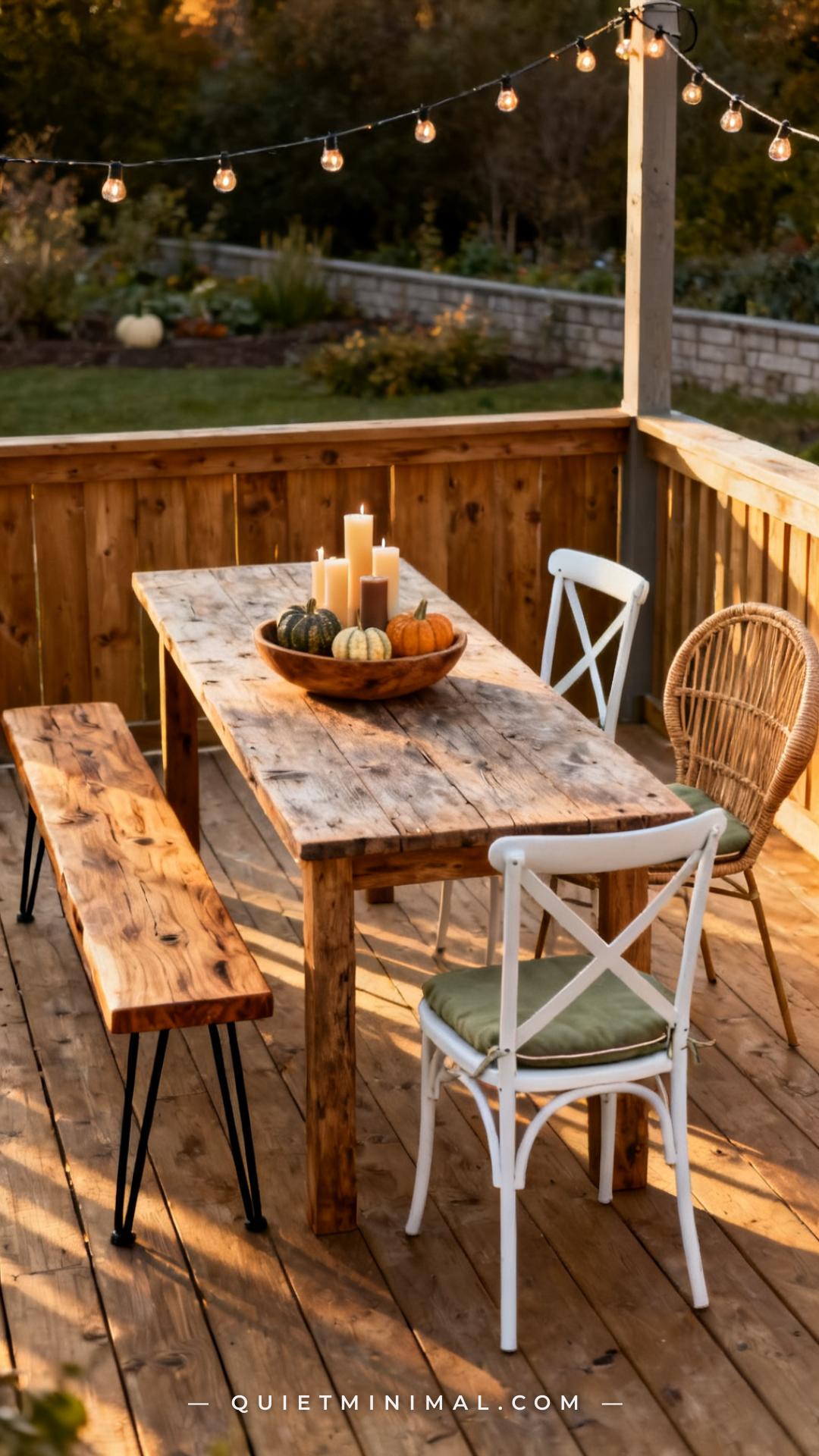 Save
Outdoor dining is the most natural setting for a bench-plus-mismatched-chairs arrangement because every restaurant you’ve ever loved has done exactly this. A long bench on one side of the table creates flexible seating for varying group sizes; two (or more) mismatched side chairs on the opposite side add visual rhythm.
The budget advantage here is significant: a bench costs a fraction of four individual chairs and seats just as many people. Buying one or two mismatched chairs to pair with a bench rather than buying a complete four- or six-chair dining set can cut your outdoor dining furniture budget substantially.
The one rule for dining pairings: the seat heights must match the table height. Standard dining tables call for seats between 17 and 19 inches high. Verify this spec for every piece you add — it’s the detail that makes the arrangement feel right to sit in, not just look good in photos.
Key Takeaway: A bench on one side plus two mismatched chairs on the other is the restaurant move that makes outdoor dining look intentional and cuts furniture cost at the same time.

10. Add a Hanging Chair as the Statement Piece in a Mixed Grouping
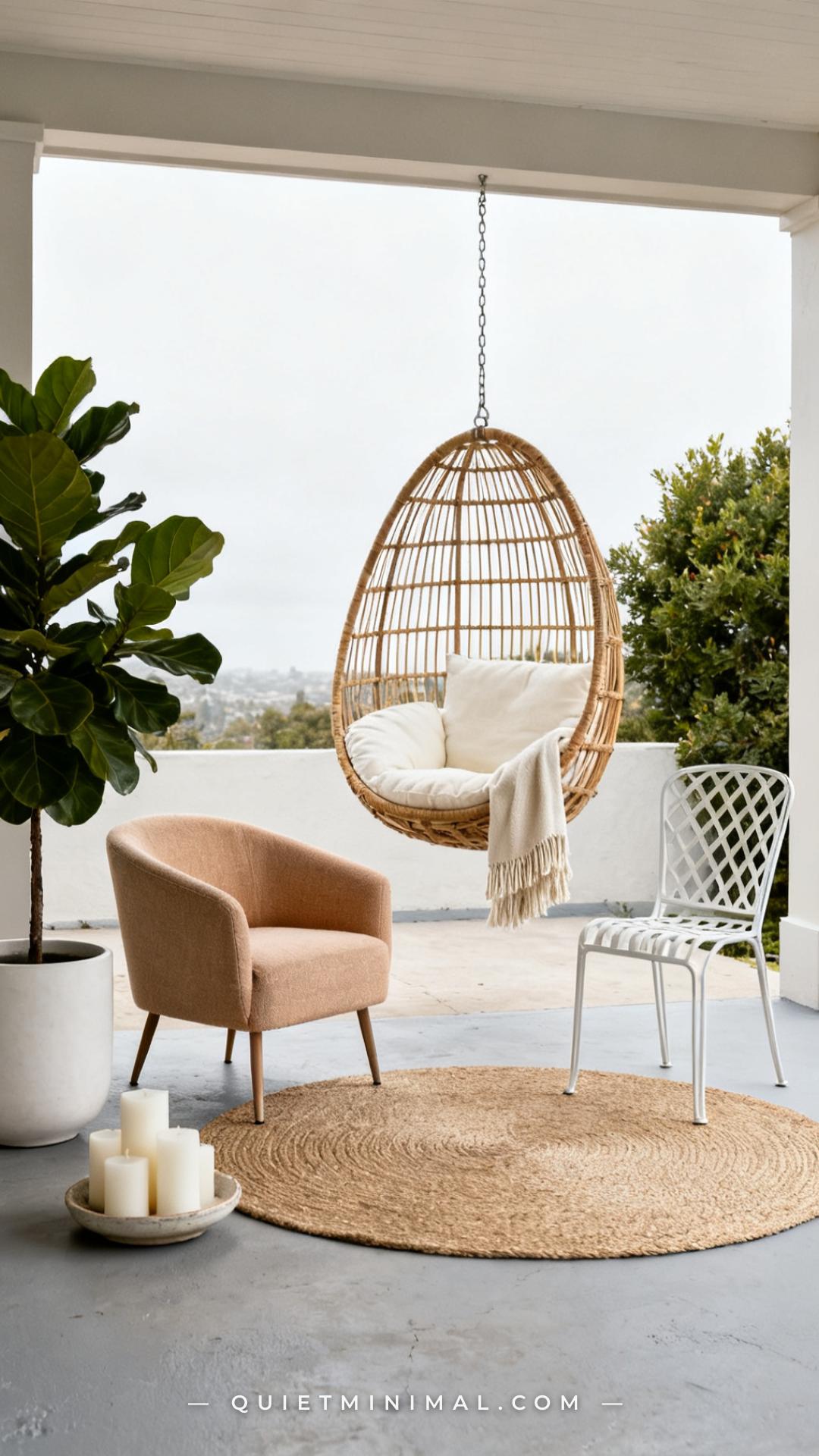 Save
A hanging egg chair is the one piece that can carry a mismatched outdoor seating grouping almost by itself because it’s inherently decorative — it adds dimension (literally, vertical movement) that no static chair can replicate. When you build a mixed grouping around a hanging chair, the hanging piece becomes the anchor and everything else becomes supporting seating.
The budget strategy for a hanging chair: the chair itself is the splurge piece; the supporting chairs should be your most affordable options. A simple white metal garden chair or a basic folding slatted chair alongside a hanging rattan egg chair looks intentional precisely because the contrast in scale and texture is so strong. Equal-quality pieces fight for attention; the hierarchy of splurge-plus-basic works.
Make sure the suspension point is structural before you hang anything. A ceiling joist, pergola beam, or dedicated hanging chair stand are the three reliable options. Never hang from a single drywall anchor outdoors.
Key Takeaway: Build a mixed grouping around one statement hanging chair — let it carry the visual weight and keep every other piece simple and affordable.

11. Unify Mismatched Pieces with a Single Outdoor Rug
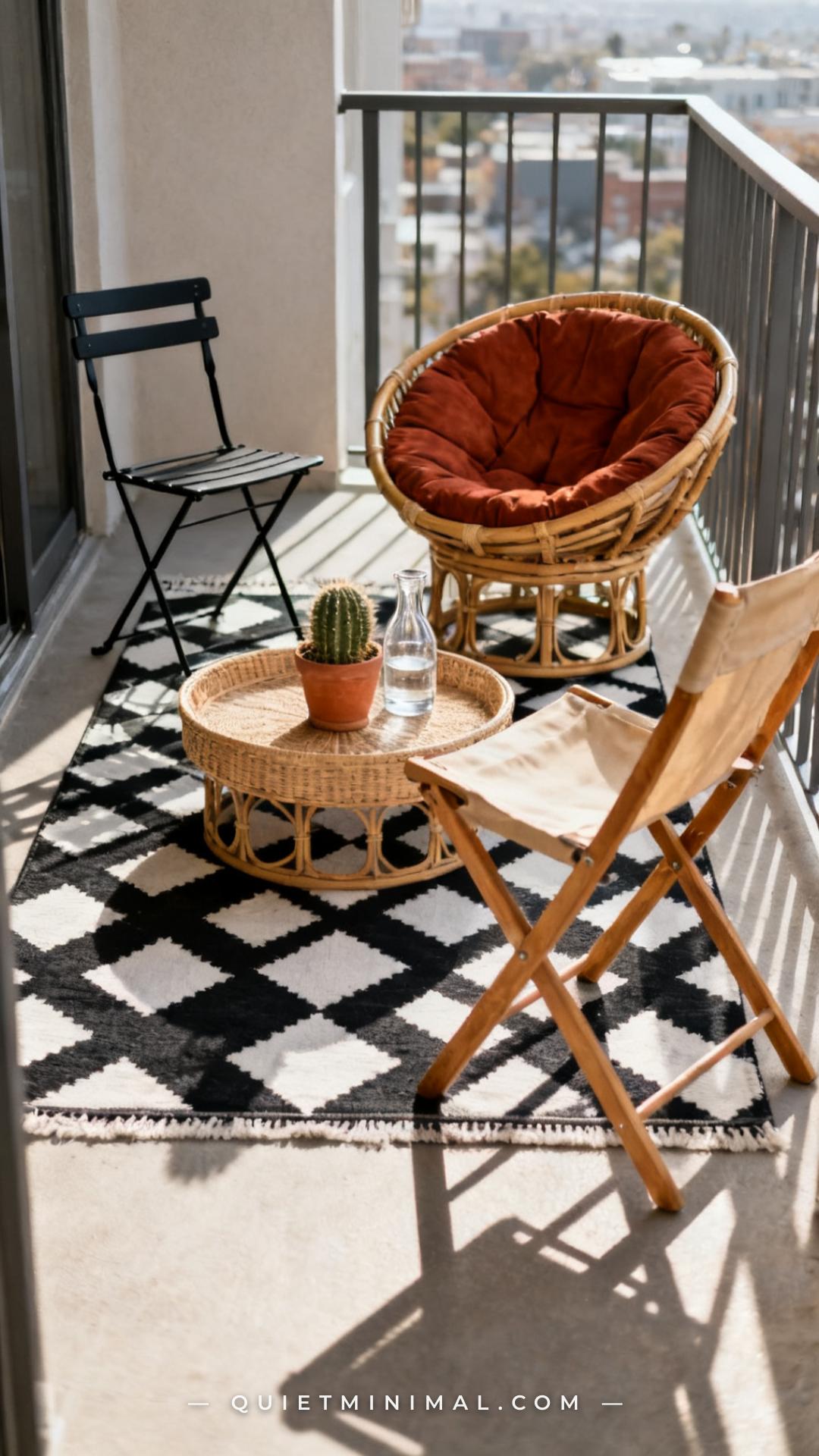 Save
If there is one single purchase that does more to unify a mix-and-match outdoor seating area than anything else, it is the right outdoor rug. A rug placed under all the seating pieces draws a literal boundary that says “this is a room” — and when all your chairs sit on the same rug, they belong to the same arrangement regardless of how different they look.
The pattern rule for outdoor rugs under mixed seating: bold geometric patterns (diamond, stripe, or checkerboard) in two-color combinations work best because they’re strong enough to anchor diverse chair styles without competing with any single piece. Busy, multi-color patterns fight with the variety of furniture forms around them.
Size matters critically: the rug should be large enough that the front legs of every chair sit on it. A rug that only partially reaches the chairs reads as an afterthought. For most balcony and patio setups, this means a minimum of 5×8 feet, often larger.
Key Takeaway: An outdoor rug that fits under all your seating pieces is the single highest-impact, lowest-effort move for making a mix-and-match setup look like a designed room.

12. Repurpose Indoor Chairs Outdoors with Weatherproofing Spray
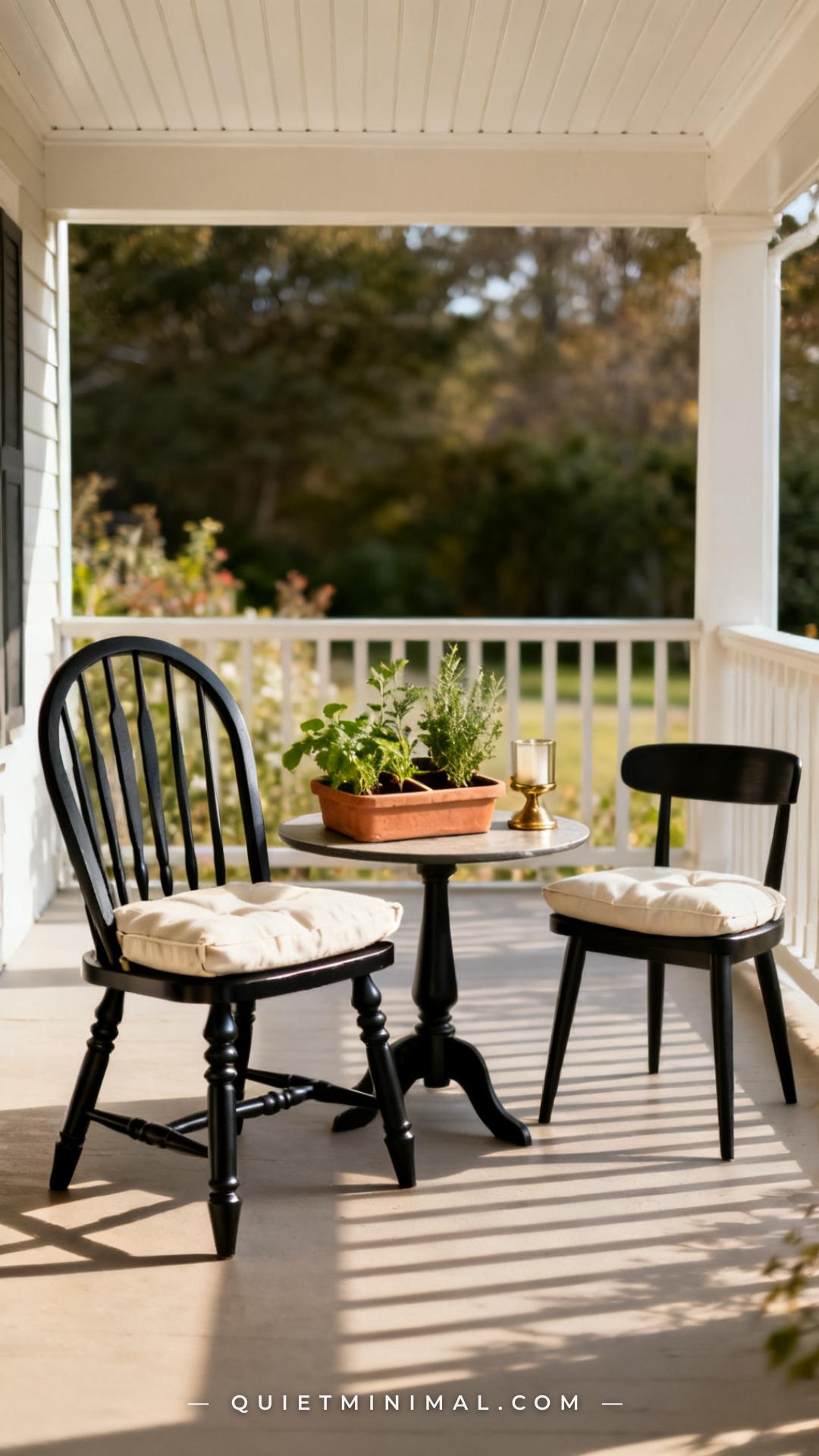 Save
Thrift stores and Facebook Marketplace are full of solid wood chairs that cost a fraction of purpose-built outdoor furniture and will outlast cheap patio sets by years — once you apply the right protection. The process is straightforward: lightly sand, apply two coats of exterior-grade paint in the same color across all sourced pieces, then seal with a clear exterior topcoat or use an outdoor-specific furniture wax.
The matching-paint move is important: mismatched thrift chairs in different original finishes become a cohesive pair the moment they share a single exterior paint color. This is the same paired-chairs-same-paint logic as Section 8, applied to repurposed pieces rather than purpose-built ones.
The caveat: this works reliably for covered porches and patios with roof protection. Fully exposed outdoor placement requires either purpose-built outdoor furniture or more frequent re-application of the protective finish. Covered or semi-covered spaces are the right context for this approach.
Key Takeaway: Painting secondhand wooden chairs in a matching exterior color transforms mismatched finds into a cohesive set — a covered porch is the ideal location for this budget approach.

13. Style a Bench-Only Wall with Throw Pillows as the Mixing Device
 Save
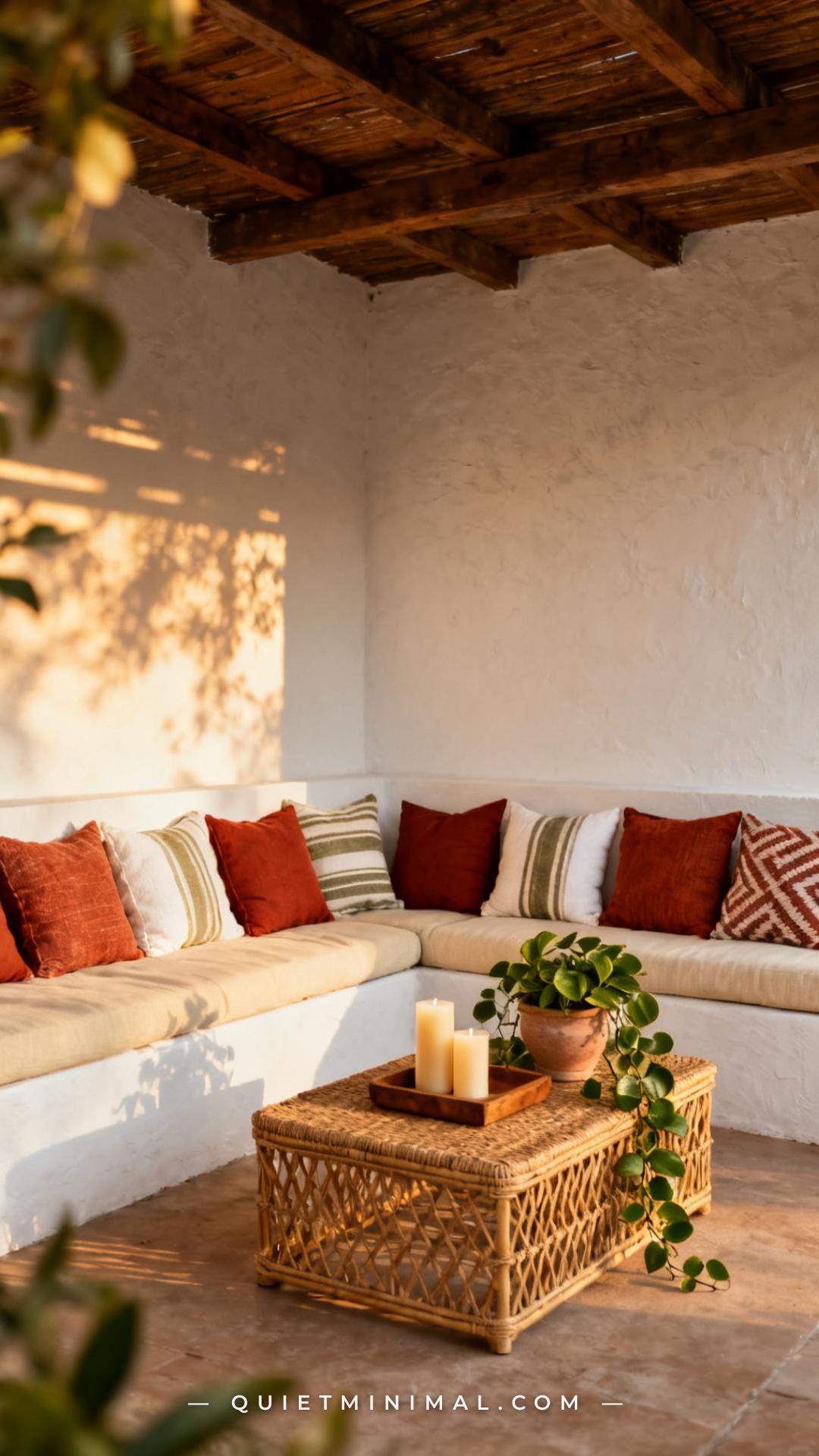
A built-in or wall-positioned bench doesn’t need matching stand-alone chairs beside it to function as a complete seating area. Layer enough throw pillows across the bench — varied in pattern but unified in color palette — and the bench becomes a full seating and lounging zone on its own. This is a genuine budget approach because the bench structure itself can be a simple, affordable platform or storage bench; all the visual interest is carried by the textiles.
The pillow palette rule: pick three to four tones within a narrow color family (rust-terracotta-oatmeal, or sage-olive-cream), then mix freely within those tones. Pattern variation is encouraged — stripe next to geometric next to solid — as long as the colors stay within the chosen family. This is the same logic as a throw pillow arrangement on an indoor sofa.
For outdoor use, confirm your pillow inserts and covers are rated for outdoor exposure, or store them indoors overnight. Many affordable indoor-aesthetic outdoor pillows are now widely available, so the “outdoor pillows look cheap” problem of a few years ago is largely solved.
Key Takeaway: An affordable bench plus a curated throw pillow arrangement within a tight color palette creates a full outdoor seating area with no additional chairs required.

14. Cluster Heights Deliberately: Low Chair + Standard Chair + Bar-Height Stool
 Save
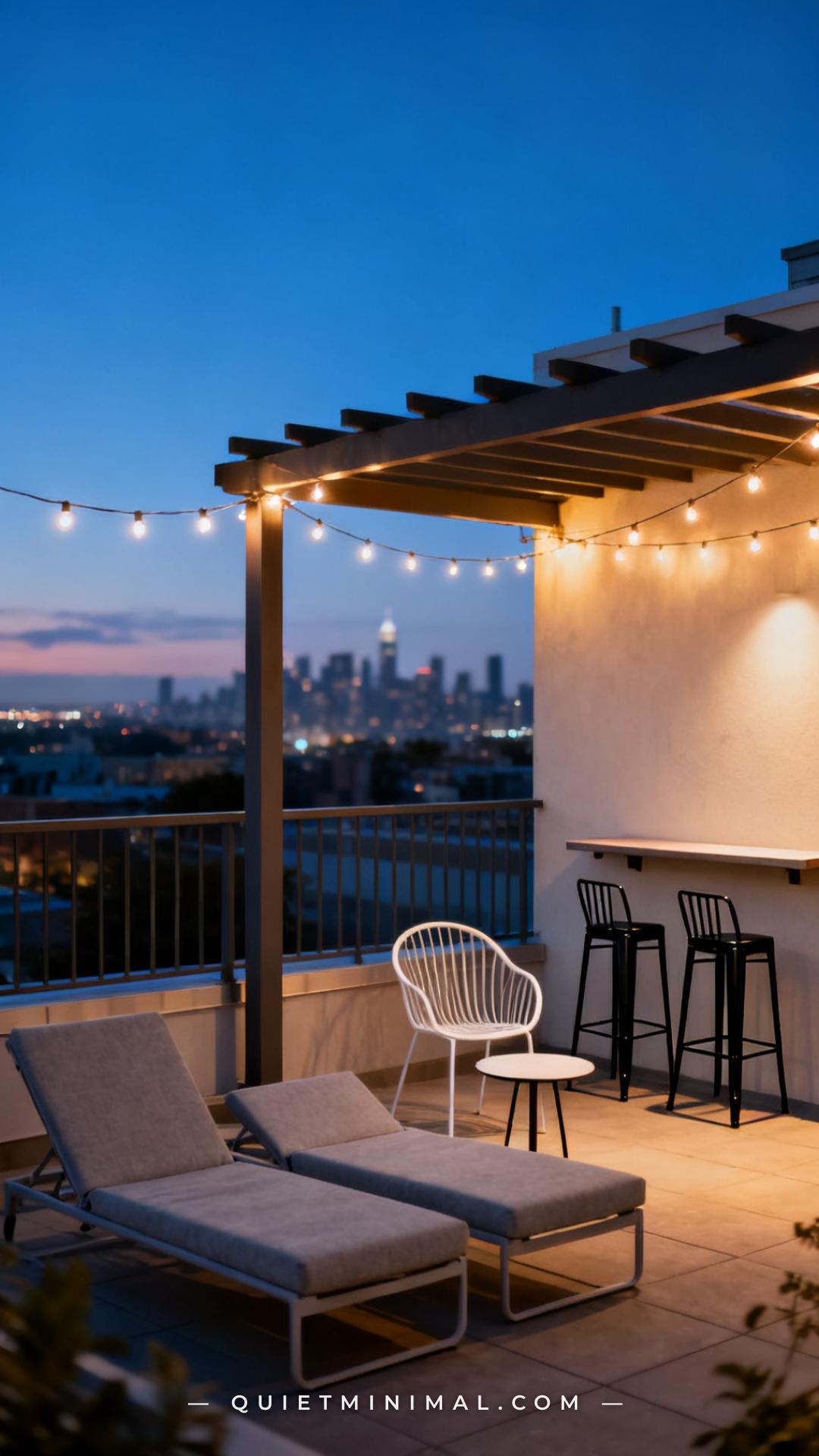
Mixing seat heights is the design move that makes outdoor spaces feel like bar and restaurant environments — places that feel sophisticated precisely because not everyone is seated at the same level. A low lounge chair or floor cushion, a standard-height dining or accent chair, and a bar-height stool clustered in a single terrace or rooftop setup creates visual rhythm that a uniform seating height never achieves.
The practical rule: never position a low lounge chair directly beside a bar-height stool without a transition piece between them. The height jump is too abrupt to feel comfortable or intentional. Use a standard-height piece as the visual bridge in the middle of the arrangement.
This approach works particularly well on rooftop terraces, larger patios, or decks where you’re hosting varied activities — some guests want to lounge, some want to eat or drink at height, some want a middle-ground conversation seat. Multiple heights serve multiple functions without requiring multiple seating zones.
Key Takeaway: Mix three seat heights in one outdoor space to create visual rhythm and functional variety — but always use a standard-height piece to bridge the jump from low lounge to bar-height stool.

15. Finish with Lighting That Ties Every Piece Together
[IMAGE: A vertical photograph captures a full backyard patio at dusk with a complete mix-and-match seating area visible — a wood slatted bench along the back fence, two metal bistro chairs and one wicker accent chair arranged around a low coffee table in the foreground. The space is unified by warm ambient lighting: a cluster of Edison bulb string lights drooping from a pergola beam above, a lantern on the coffee table with a lit candle inside, and two short solar stake lights at the corners of a jute outdoor rug. The warm amber light from multiple sources wraps across all the different chair materials — metal, wood, wicker — and makes them read as a single cohesive grouping despite their visual differences. The background fence and the overhead pergola structure are visible in t
From the guides
You've saved it, wanted it. Here's the how: codes, measurements, order. Your choices make it yours.
The Japandi Honest PlaybookThe honest version of the style: what to keep, what to skip, and the order to do it in.See inside →The Room Refresh PlaybookA repeatable four-step method, room by room, in ten minutes, thirty minutes, or one weekend.See inside →Make Any Room Feel Cozy on PurposeWhy some rooms hold people and others empty out, and the moves that change it.See inside → Save