Georgia
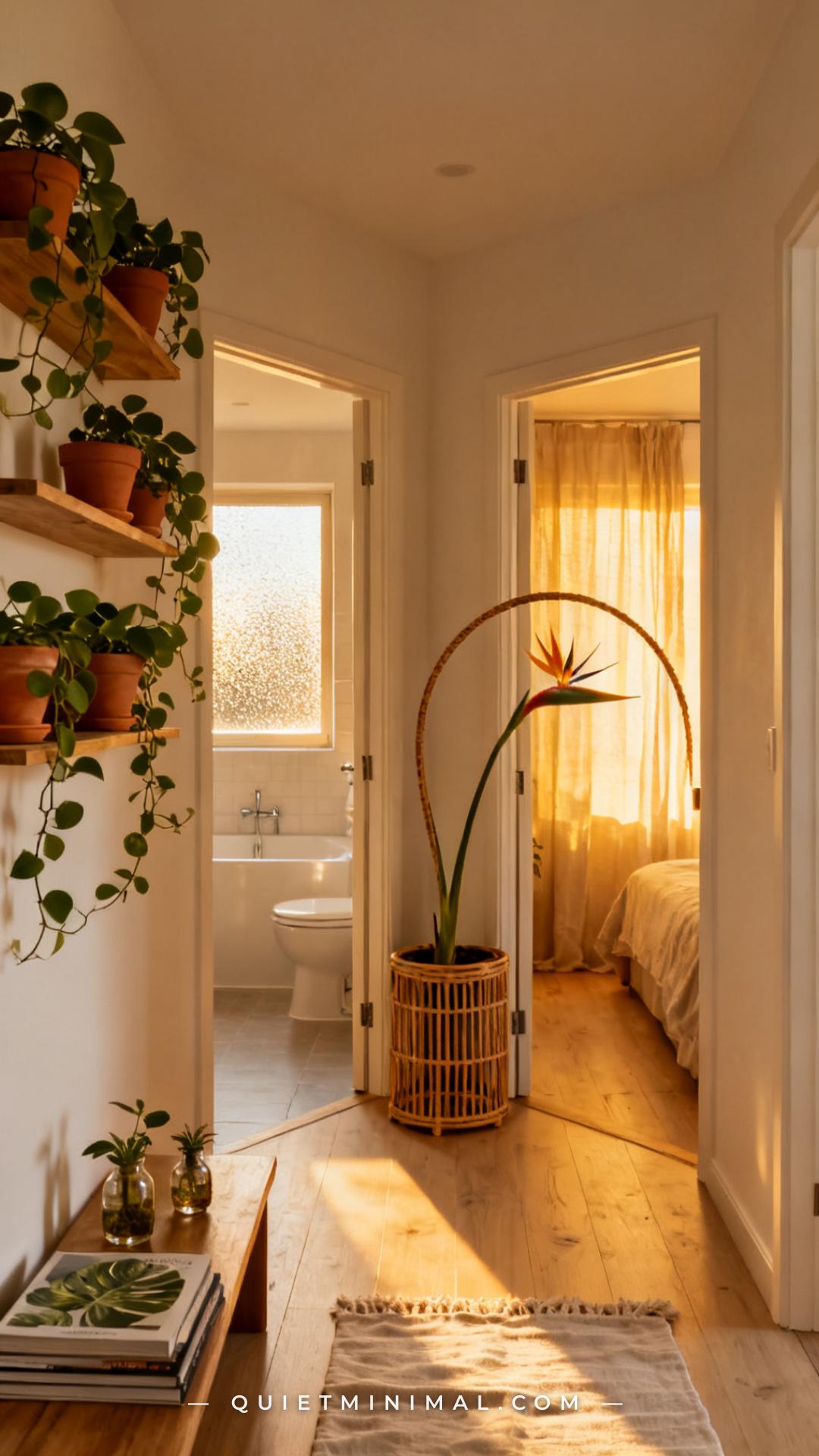
If your bathroom has a trailing pothos on the shelf and your bedroom has a fiddle-leaf fig in the corner, you technically have plants in both rooms — but that doesn’t mean you have a plant aesthetic. The difference is cohesion: a shared visual language of vessels, palette, textures, and plant types that makes both spaces feel like they belong to the same home. That’s what this guide is about.
Most plant-styling advice treats each room in isolation. You get a list of humidity-tolerant plants for the bathroom, then a completely separate list of air-purifying plants for the bedroom. What you don’t get is a method for making them look like they were designed together — the same way a designer would approach a home. This article fixes that. These 11 ideas give you the exact framework: how to choose plants, vessels, shelving, and color so your bathroom and bedroom become one cohesive, intentional suite.
1. Commit to One Vessel Material Across Both Rooms
The fastest way to make plants feel designed rather than collected is to standardize your pot material. Terracotta, matte ceramic, or woven rattan — pick one dominant material and use it in both the bathroom and the bedroom. The plants can be completely different. The pots don’t have to match in size or shape. They just need to share a material story.
In the bathroom, a matte terracotta pot on a floating shelf next to your sink reads as intentional. In the bedroom, the same terracotta material on your nightstand or dresser creates an instant visual echo. The brain registers that connection subconsciously — that’s exactly what makes a space feel curated instead of accidental.
The mistake most people make is buying whatever pot the plant comes in and never repotting into something cohesive. Repotting takes ten minutes and changes the entire feel of the room. Buy three or four pots in the same material at the start and distribute them across both rooms before you worry about anything else.
Key Takeaway: One pot material across both rooms is the single fastest way to make your plant styling look intentional.

2. Build Your Color Palette Around the Plants First
Most people choose their decor and then try to fit plants in. Flip that. For a true plant aesthetic, start with the plant tones — the waxy dark green of a rubber tree, the silvery sage of an air plant, the warm olive of a pothos — and pull your bathroom and bedroom palette from those colors.
In practice, this means your towels, linen throw, and wall color should reference the green family your plants live in. If your plants lean dark and glossy (snake plant, ZZ plant), reach for deep forest green or moody olive accents. If your plants are lighter and trailing (pothos, string of pearls), a pale sage or warm celadon reads as a natural extension of them.
Sherwin-Williams Mossy Ledge SW 9131 and Benjamin Moore Camo 502 are both verified 2026 colors that sit in this warm, botanical green range. Either works as an accent wall in the bedroom or as a cabinet color in the bathroom, creating the tonal bridge between both rooms.
Key Takeaway: Choose your wall, textile, and accent colors after you’ve decided which plants you’re using — not before.

3. Use a Rattan Plant Stand as the Signature Piece in Each Room
Rattan is the material that reads most universally as “plant home.” A rattan plant stand in both the bathroom and the bedroom doesn’t just hold a plant — it signals an aesthetic. It’s the design shorthand that ties rooms together without requiring identical furniture.
In the bathroom, a small two-tier rattan stand tucked into a corner with a pothos cascading from the top shelf and a succulent on the lower shelf creates a layered moment. In the bedroom, a taller arc-style or ladder-style rattan stand near a window with a larger plant like a monstera or rubber fig anchors the whole room. The material echo between the two pieces is what does the work.
Look for stands with a natural, slightly imperfect finish rather than lacquered wicker. The organic texture reads better against both bathroom tile and bedroom plaster walls, and it ages gracefully rather than looking dated.
Key Takeaway: A rattan plant stand in both rooms is the lowest-effort, highest-visual-impact way to create a shared aesthetic anchor.
 Save

4. Choose Plants That Thrive in Both High and Low Humidity
The biggest practical challenge with a bathroom-bedroom plant aesthetic is that the two environments are different. Bathrooms cycle between high humidity after showers and dry air in between. Bedrooms tend to stay drier and have steadier indirect light. If you choose plants suited to only one environment, the other room’s plants will always look half-dead — and nothing undermines an aesthetic faster than a struggling plant.
The plants that bridge both environments without drama: pothos (nearly indestructible in any humidity), ZZ plant (tolerates low light and dry air in the bedroom, handles steam in the bathroom), snake plant (same logic), and peace lily (actually thrives in both if given consistent watering). Air plants are excellent bathroom plants and can move to the bedroom periodically without issue.
Avoid plants that need extremely high, constant humidity in both rooms — orchids and ferns look beautiful but they will fail in the bedroom unless you mist daily, which most people won’t maintain. Choose durability and you’ll maintain the aesthetic without constant plant replacement.
Key Takeaway: Build your plant list around the two or three varieties that genuinely thrive in both environments — everything else will become a maintenance burden.
 Save

5. Mount a Propagation Wall in the Bathroom
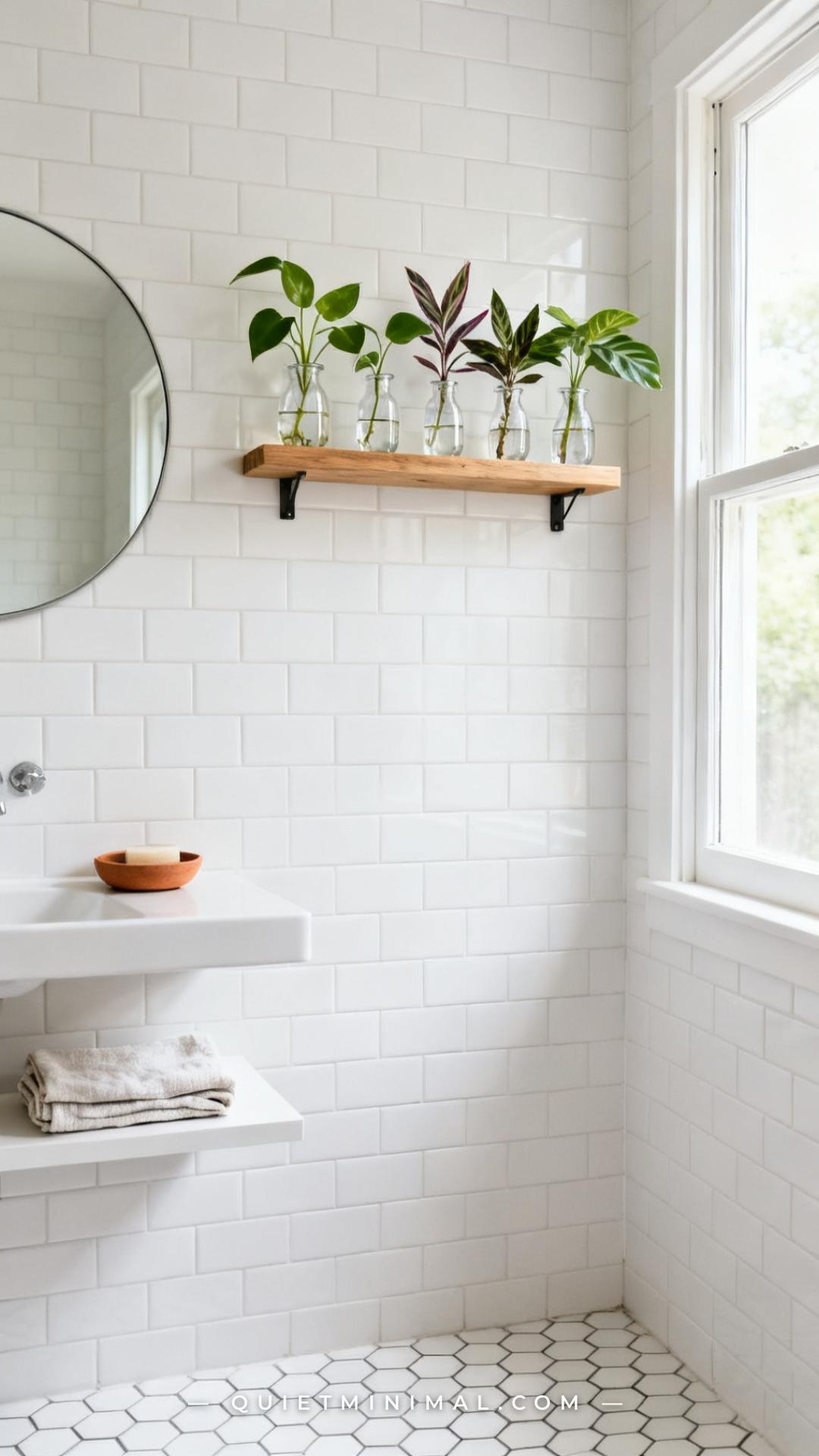
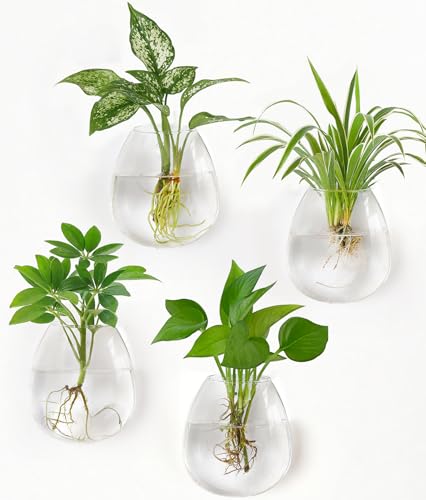
A propagation wall — a row of small glass bud vases or test-tube holders mounted on the bathroom wall, each holding a cutting in water — is one of the most visually distinctive and genuinely functional elements of a plant aesthetic. It works perfectly in the bathroom because the humid air keeps the water-rooted cuttings healthy with minimal intervention.
Mount three to five bud vases in a horizontal or staggered arrangement on the wall above the toilet, beside the mirror, or along an empty wall section. Fill each with a cutting from your pothos, tradescantia, or heartleaf philodendron. The result is something that looks like living art — organic shapes, varying stem heights, the visual interest of plant growth — without requiring soil, drainage, or any real maintenance beyond topping up the water.
This also creates a practical function: your bathroom propagation wall becomes the nursery for new plants that will eventually move to the bedroom. That lifecycle — propagate in the bathroom, grow out in the bedroom — is a beautiful built-in story for the aesthetic.
Key Takeaway: A propagation wall in the bathroom serves as both living art and a plant nursery that feeds the rest of your aesthetic.
 Save
6. Layer the Bedroom With Plants at Three Heights
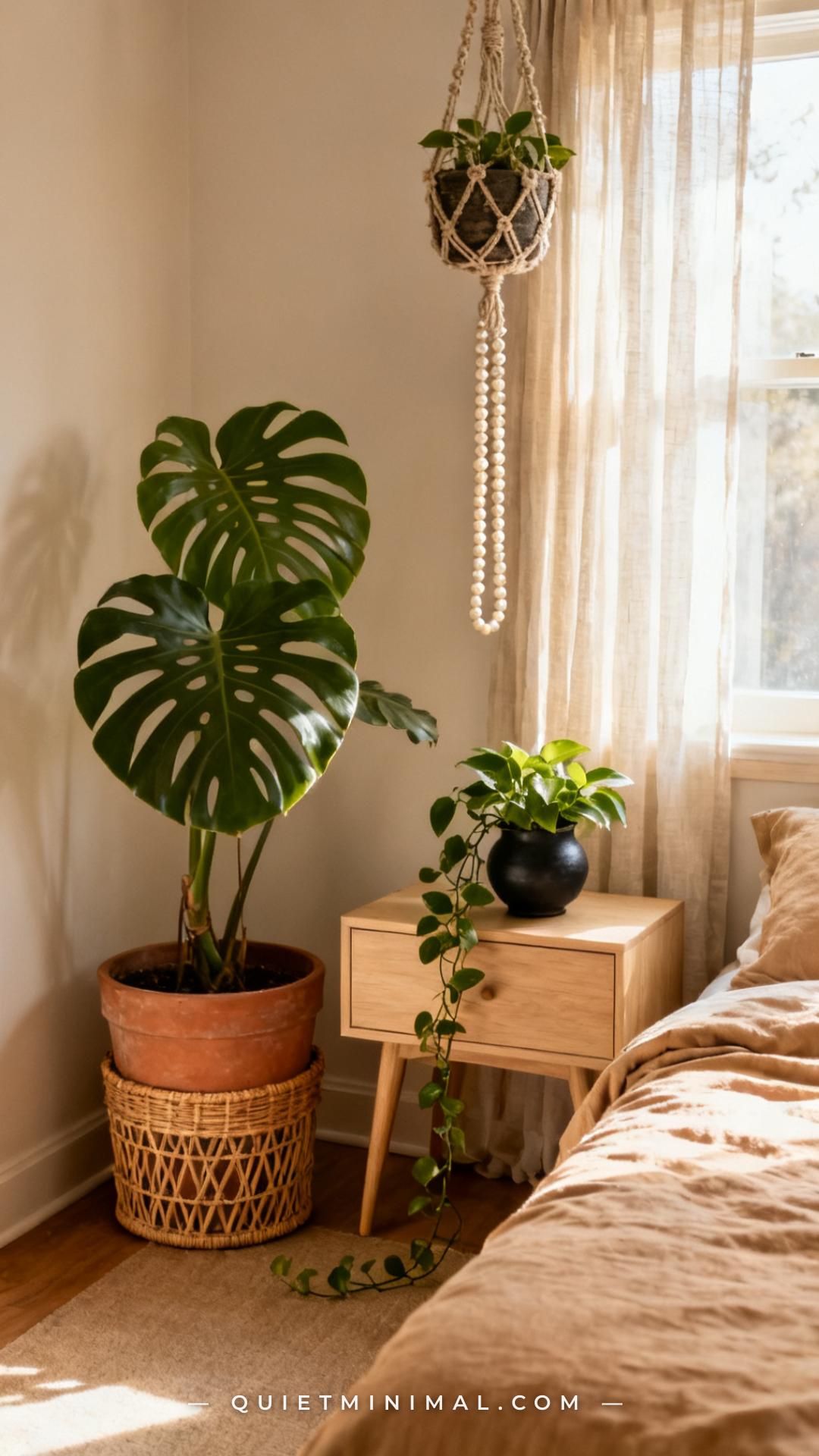
A bedroom that feels “plant aesthetic” rather than just “has some plants” uses vertical layering. That means one plant on the floor, one at mid-height (nightstand, dresser, shelf), and one at eye level or above (hanging planter, tall shelf, top of a wardrobe). This three-tier structure fills the room dimensionally and creates the lush, layered quality that makes botanical interiors look genuinely designed.
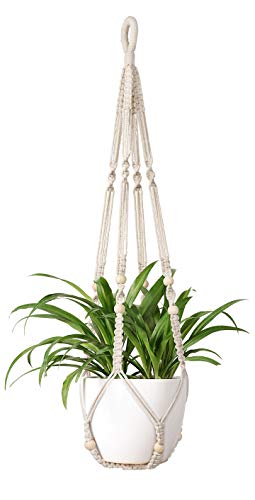
Floor level: a large rubber tree, monstera, or bird of paradise in a substantial terracotta or wicker-sleeved pot. Mid-level: a trailing pothos or heartleaf philodendron on a nightstand, cascading toward the floor. Upper level: a hanging macramé planter near the window with a string of pearls or a small ivy. The key is choosing plants that naturally suit the height — tall architectural plants at the floor, cascading plants at mid-height, and light-chasing trailing plants near the ceiling or window.
If your bedroom is small, this principle still applies at a smaller scale. A small snake plant on the floor, a small succulent on the nightstand, and a single hanging air plant near the window creates the same layered logic without overwhelming the space.
Key Takeaway: Three vertical tiers — floor, mid-height, and upper — are what turn a few plants into an actual plant aesthetic in the bedroom.
 Save
7. Introduce Matching Linen Textiles as the Green Bridge
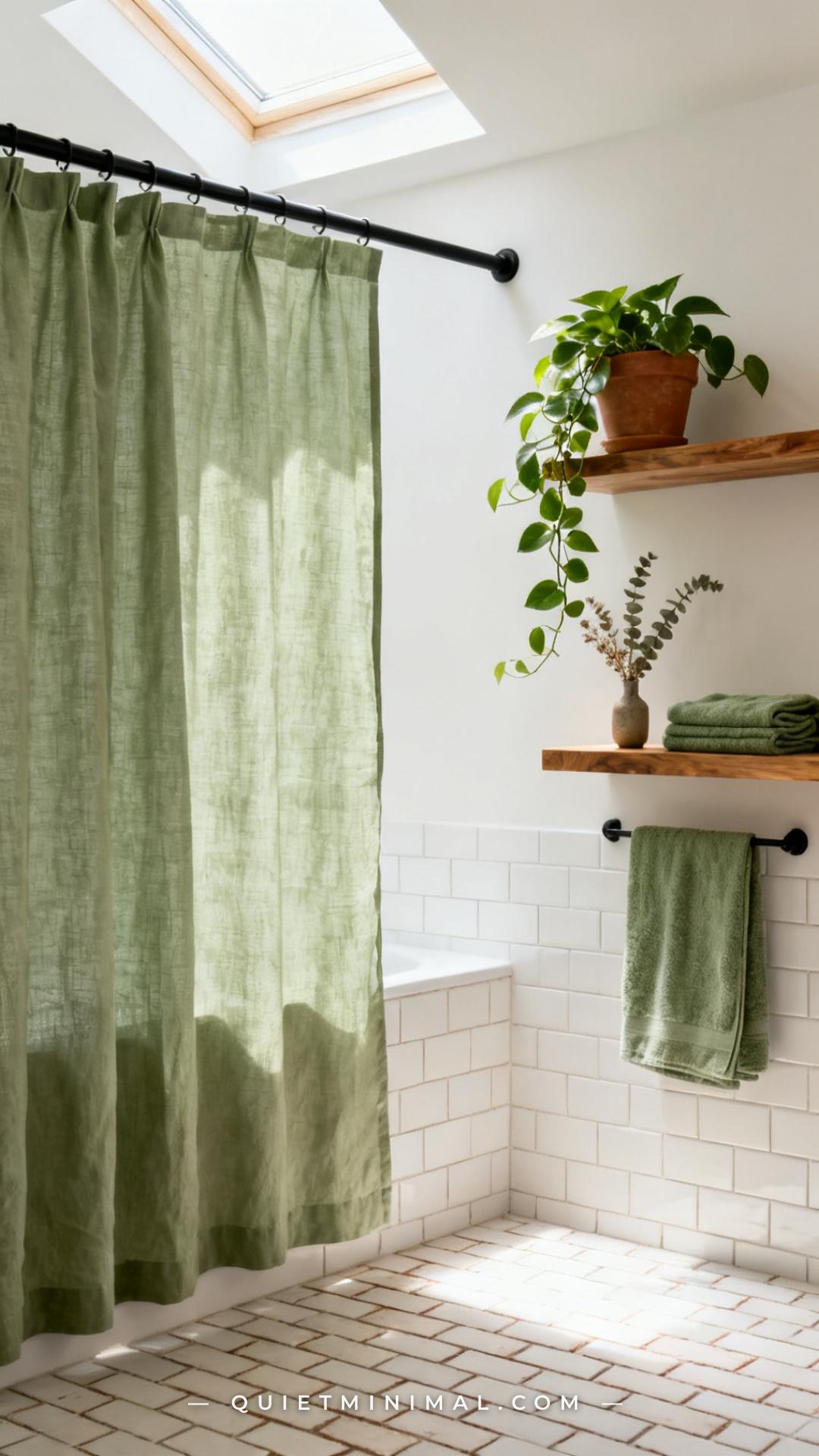
Plants can’t be the only green in the rooms — that looks sparse and disconnected. The way to deepen the plant aesthetic without adding more plants is to layer matching botanical-toned linen textiles into both rooms. A sage green linen shower curtain in the bathroom and a sage green linen throw on the bed create a visual bridge that makes the plants feel embedded in the space rather than sitting on top of it.
Linen is the right textile choice here specifically because its natural, slightly raw texture sits in the same tonal register as plant material. Velvet or polyester don’t create the same harmony. Linen or cotton in sage, warm olive, mossy green, or soft celadon all work. The color doesn’t need to be an exact match to your plants — it just needs to read as part of the same green family.
If you already have white or neutral linens you love, add a single botanical-toned pillow or hand towel rather than replacing everything. One piece per room is enough to establish the connection without a full textile overhaul.
Key Takeaway: Matching linen textiles in a plant-tone color connect the bathroom and bedroom visually and make every plant feel like part of the design rather than an afterthought.
You've saved it, wanted it. Here's the how: codes, measurements, order. Your choices make it yours.

 Save

8. Use Floating Shelves to Create a Plant Gallery in the Bathroom
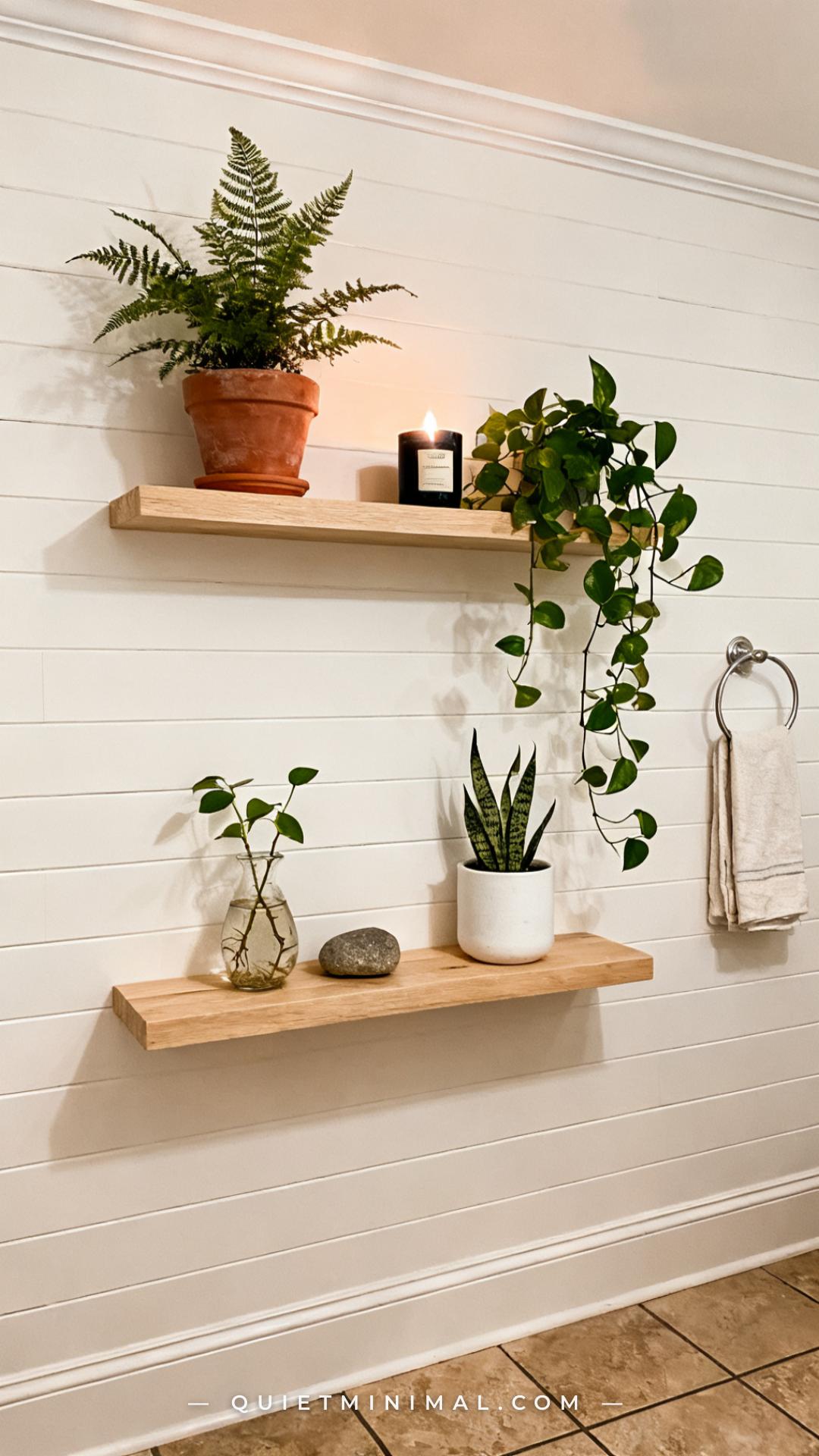
A single plant on a bathroom shelf reads as functional. Three plants on a floating shelf arrangement reads as a gallery moment. The difference is intentional composition — varying heights, varying pot sizes, and one non-plant element (a candle, a small piece of driftwood, a river stone) that gives the eye a place to rest.
Floating shelves in the bathroom work best when they’re installed at a height that keeps plants above the water splash zone — typically 18 to 24 inches above the sink or bathtub edge. Pale oak, white-painted, or matte black shelves all read well with plant styling. Avoid high-gloss or chrome shelving, which competes visually with the organic quality of the plants.
Mirror this shelf moment in the bedroom at a smaller scale: a single floating shelf above the bed with two small plants bookending a framed print or a piece of organic art creates the same gallery logic. The bathroom has the quantity; the bedroom has the curation. Both use the same shelf format, which is what makes them feel connected.
Key Takeaway: A gallery-style floating shelf arrangement in the bathroom, mirrored by a simpler version above the bed, creates visual consistency across both rooms.
 Save

9. Add a Tray System to Contain and Style Plants on Surfaces
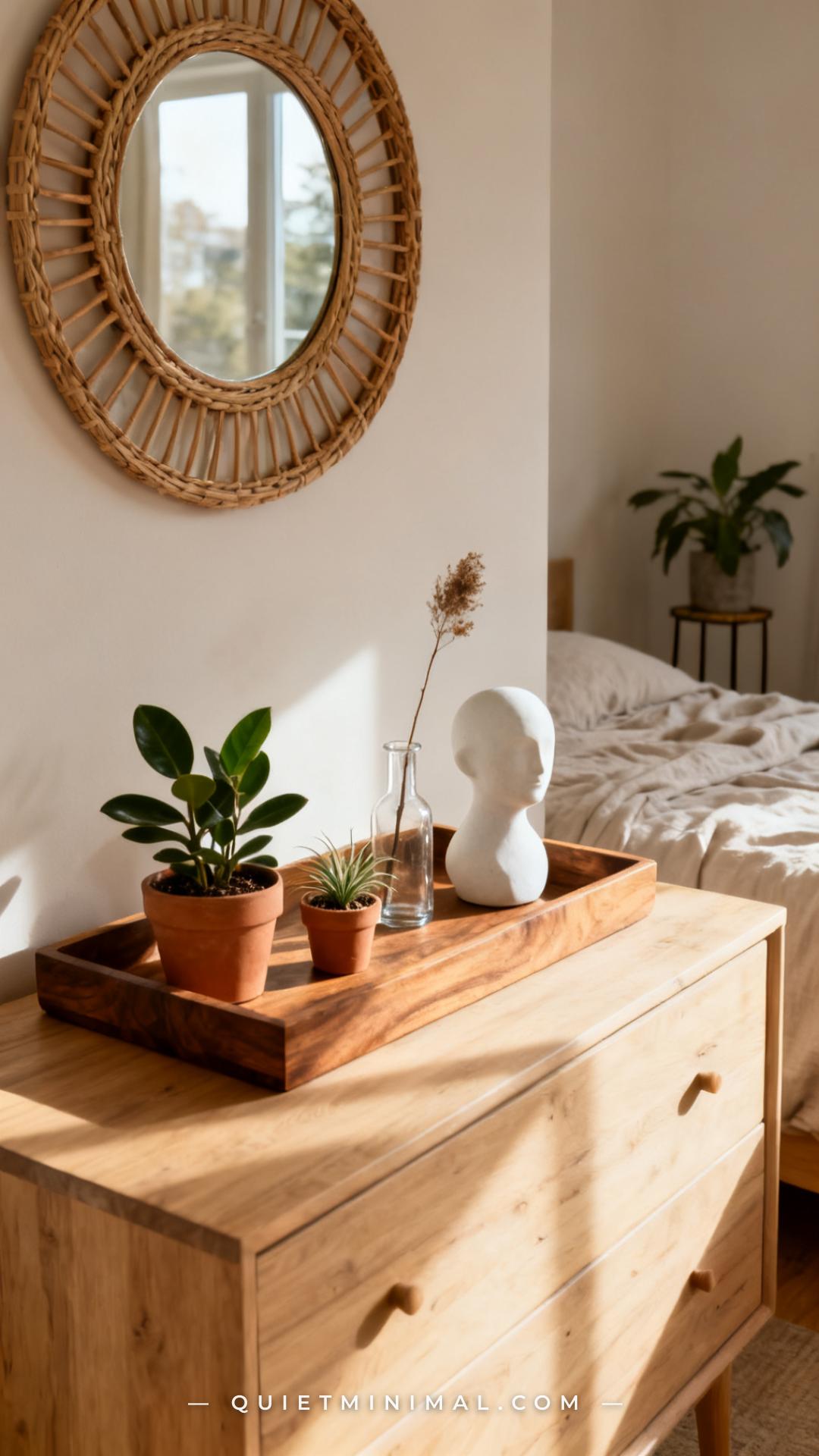
Loose pots scattered across a dresser or bathroom counter look like clutter even when the plants are beautiful. A tray contains them — visually corrals the pots into a single intentional vignette rather than a collection of separate objects. This is a small change with disproportionate visual impact.
In the bedroom, a wooden, marble, or rattan tray on a dresser or nightstand with two or three small plants and one lifestyle prop (a perfume bottle, a small sculpture, a folded card) creates a curated moment. In the bathroom, a teak or marble tray on the counter corrals your hand soap, a small plant, and a cotton bud holder into a unified vignette. The tray is the container that makes editing possible — it tells your eye where to stop looking.
Use the same tray material in both rooms for continuity. Teak trays work in both wet and dry environments and age beautifully, making them the most practical choice for a bathroom-bedroom system.
Key Takeaway: A tray in each room is the simplest tool for making a surface vignette look designed rather than collected.
 Save

10. Bring Dried and Preserved Botanicals In as a Secondary Layer
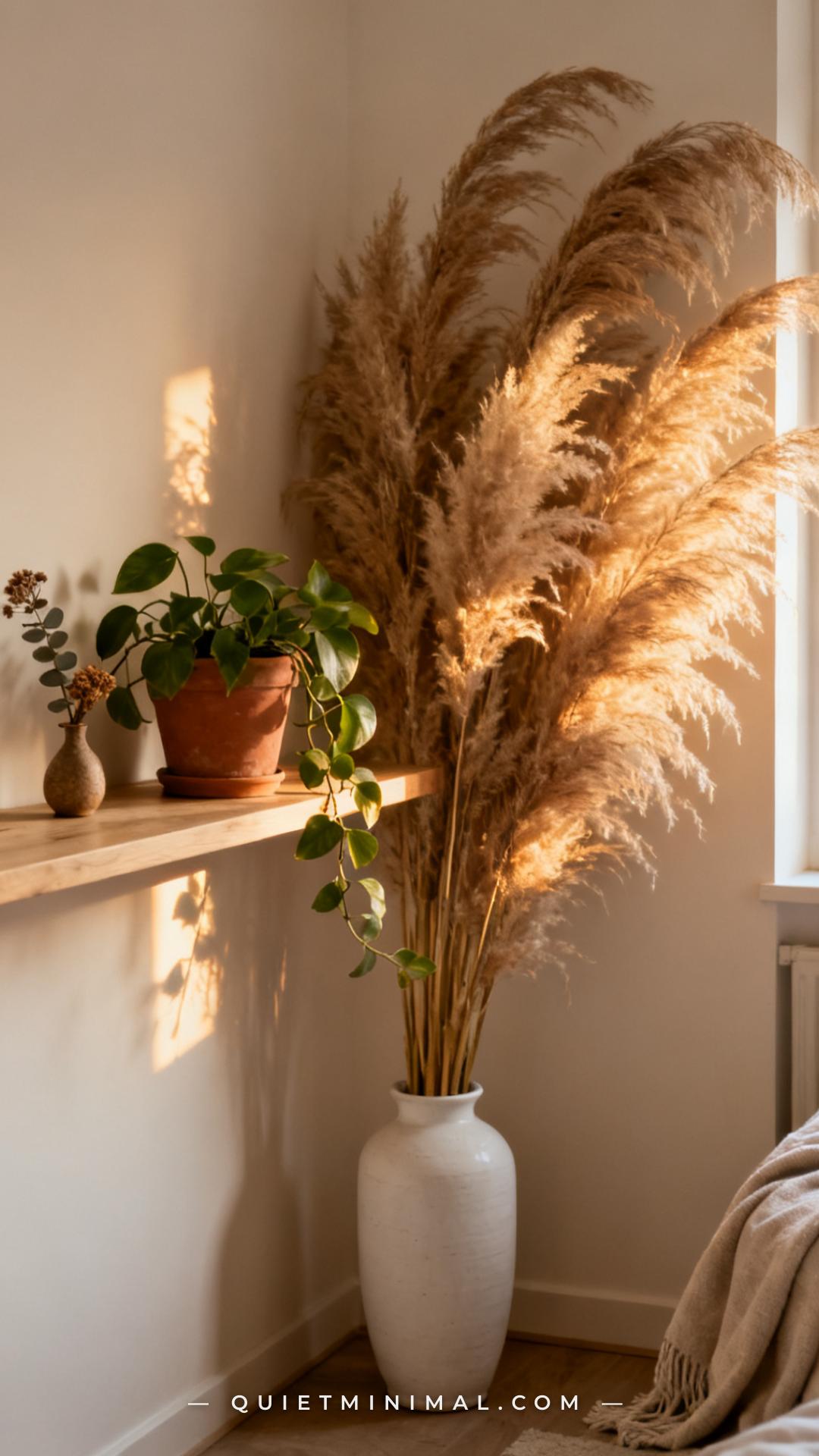
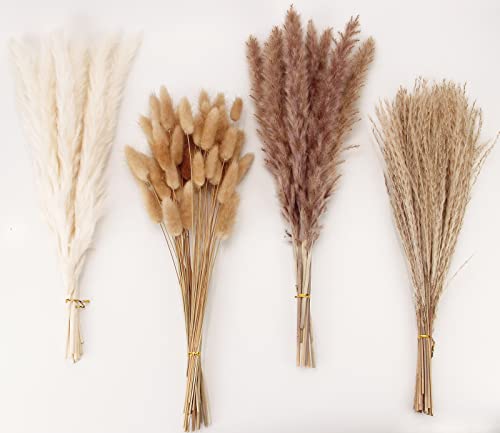
Fresh and living plants are the primary layer of the plant aesthetic, but dried and preserved botanicals are the secondary layer that keeps the look rich even when your living plants aren’t at their fullest. Dried pampas grass in a tall vase, preserved eucalyptus in a bud vase, or dried lunaria hung from a wall hook all read as botanical without requiring water, light, or any maintenance.
Dried botanicals are especially useful in areas of both rooms where light or humidity makes living plants impractical: above a mirror, in a dark bathroom corner, on a high bedroom shelf. They add texture, height, and a warm organic quality that fills visual gaps in the aesthetic.
Use dried elements sparingly — one arrangement per room is usually enough. The living plants should still be the dominant element. Dried botanicals work best when they share the vessel material of the rest of your aesthetic: a dried eucalyptus spray in a terracotta vase reads cohesively with the living pothos in a terracotta pot next to it.
Key Takeaway: One dried botanical arrangement per room fills the visual gaps where living plants can’t thrive, without competing with the living plants that anchor the aesthetic.
 Save
11. Use Matching Hooks and Hardware to Reinforce the Aesthetic
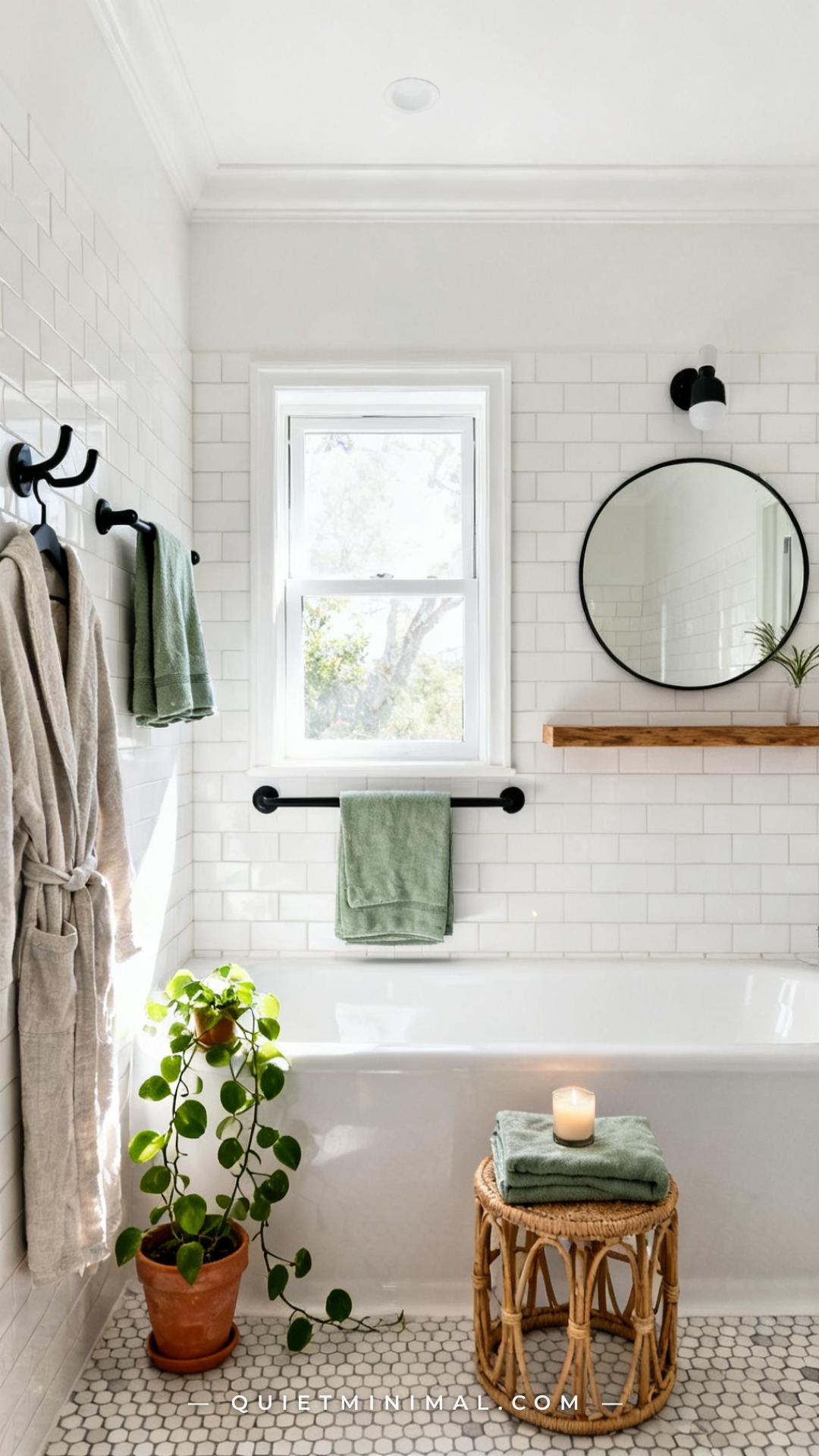
This is the detail most plant-aesthetic guides skip, and it’s the one that designers always add. The hardware in both rooms — towel hooks, curtain rod brackets, shower rod, mirror frame — should be in the same finish. Matte black is the most plant-aesthetic-compatible finish because it reads as grounded and natural alongside terracotta, rattan, and greenery without the coldness of chrome or the formality of gold.
In the bathroom, swap out any chrome hooks, toilet paper holders, or faucet fixtures for matte black equivalents. In the bedroom, match your curtain rod, picture hooks, and drawer pulls. The plants stay front and center, but the hardware creates a quiet through-line that makes everything look chosen rather than accumulated.
This is a surprisingly affordable change — a set of four matte black wall hooks runs well under the cost of a new plant, and the visual impact is immediate. It’s the kind of detail that makes guests say “this feels so put together” without being able to identify exactly why.
Key Takeaway: Matching matte black hardware in both rooms is the under-the-radar detail that makes the whole plant aesthetic feel professionally designed.
 Save

The plant aesthetic home isn’t about having the most plants — it’s about creating a system. When your vessel material, textile palette, shelf format, and hardware finish are consistent across both your bathroom and bedroom, a handful of well-placed plants does more visual work than a dozen randomly scattered ones ever could. Start with the vessel material (pick one, use it everywhere) and the plant palette (choose varieties that genuinely thrive in both rooms), and build from there. Every other idea in this list is a layer you add when you’re ready.
The result is a home that feels alive, considered, and completely your own — the kind of space that earns a second glance and a saved pin every single time.
You've saved it, wanted it. Here's the how: codes, measurements, order. Your choices make it yours.
 Save