Georgia
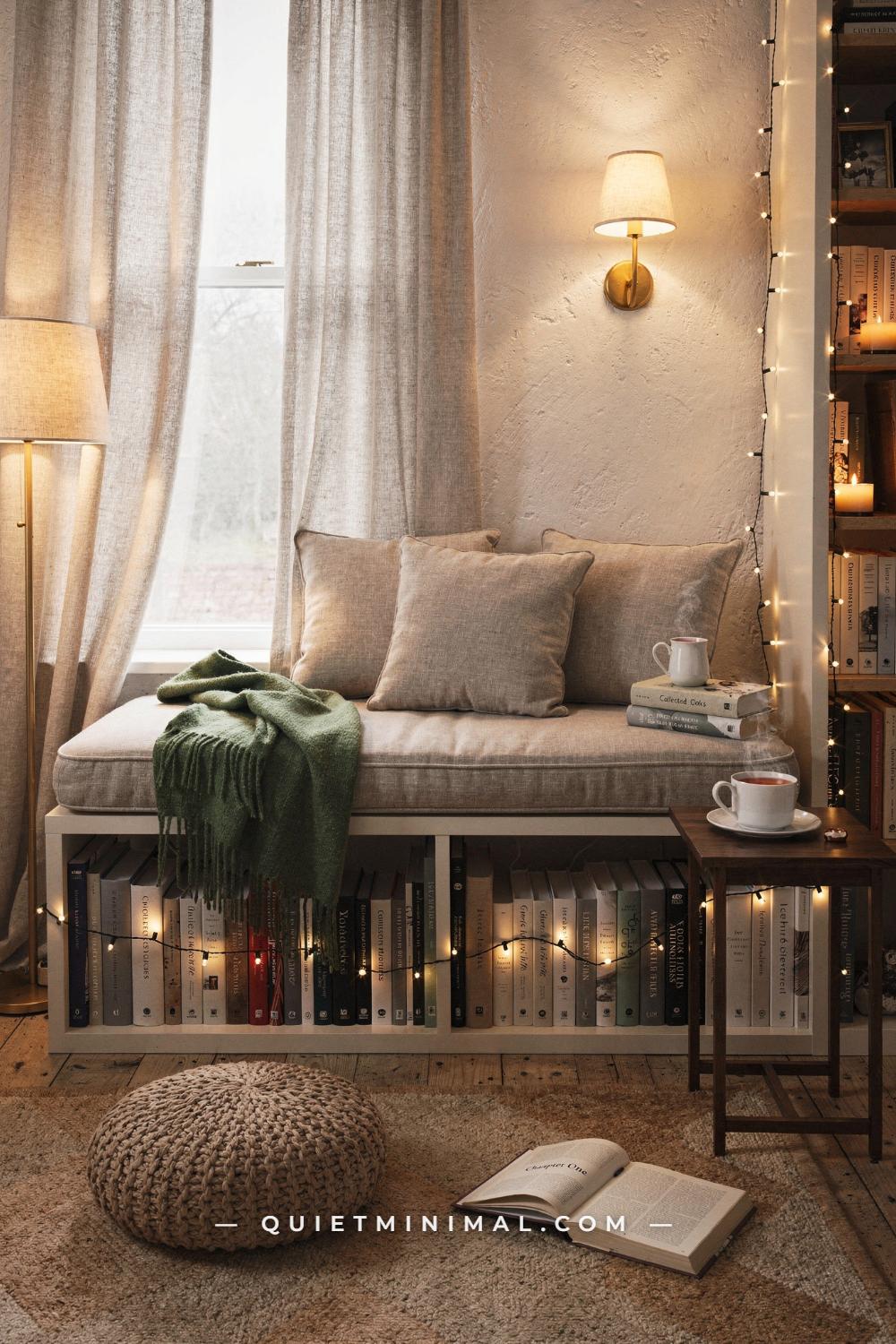
Most reading nooks get built twice. The first version is a chair in a corner with a throw over the arm and a small table, and it looks right in photographs and gets used for about a week. The second version, if it happens at all, is the one that works, and the difference between them is almost never about the chair being nicer.
It comes down to three things, and all three are measurable. How many sides of the space are bounded, because a body reads enclosure before it reads decor. How the seat depth relates to where your back is supported, because that is what decides whether you last twenty minutes or ninety. And where the light is coming from relative to your shoulder, because a lamp in the wrong position makes reading tiring in a way most people never trace back to the lamp.
Every reading nook idea worth saving is a solution to one of those three. What follows works through each of them with real numbers, then applies them to the shapes people actually build: the window seat, the corner chair, the daybed, the alcove, and the version that fits in a room already full of furniture.
The Three-Sided Rule
 Save
Here is the thing that separates a nook from a chair, and it has nothing to do with the chair. A nook is bounded on at least three sides at seated height. That is the whole definition.
Sit in any chair in the middle of a room and your body registers the open space around you. Sit in a chair with a wall behind you, a bookcase beside you and something closing the third side, and something quite different happens: your peripheral vision stops reporting the rest of the room and you settle. Designers describe people reading for longer when they feel tucked away, and this is the mechanism behind it.
From the guides
You've saved it, wanted it. Here's the how: codes, measurements, order. Your choices make it yours.
 The Japandi Honest PlaybookThe honest version of the style: what to keep, what to skip, and the order to do it in.See inside →
 The Room Refresh PlaybookA repeatable four-step method, room by room, in ten minutes, thirty minutes, or one weekend.See inside →
 Make Any Room Feel Cozy on PurposeWhy some rooms hold people and others empty out, and the moves that change it.See inside →
Count your sides honestly. A corner gives you two for free. The third is what you have to build, and it is the step almost everyone skips. Options, roughly in order of cost: a tall bookcase turned so its side faces the room, a large plant in a floor pot at least 4 feet (122 cm) tall, a folding screen, a curtain on a slim rod or a ceiling track, a console table behind the chair, or a second chair angled toward the first. A high-backed chair positioned so its back faces the open side does it by itself.
Height is what makes it work. The boundary needs to reach above your seated shoulder line, roughly 40 to 48 inches (102 to 122 cm) from the floor. A 30 inch (76 cm) console behind you gives you a shelf and no enclosure at all, because your eye passes straight over it. This is why a low sofa table never makes a nook and a tall bookcase always does.
The ceiling counts as a side too, which is why alcoves, dormers, under-stairs spaces and sloped attic corners work so well with almost no effort. If you have any space in your house where the ceiling comes down, that is the single best candidate you own.
The floor gives you a soft fourth boundary. A small rug of 4 to 5 feet (122 to 152 cm) across, or a round one, under the chair and its footstool draws a visible edge around the zone. It does nothing physical, and it does a lot perceptually, because it tells your eye where the nook stops and the room starts.
Key Takeaway: Bound the seat on at least three sides with something reaching 40 to 48 inches (102 to 122 cm) high, and draw the fourth edge with a small rug underneath.

Seat Depth Decides How Long You Stay
 Save
This is the number that decides whether the nook survives past week one, and it is the one nobody measures.
The published range for a window seat is 18 to 22 inches (46 to 56 cm) deep for upright sitting and 24 to 30 inches (61 to 76 cm) if you want to be able to lie down. Those two ranges do very different things and the mistake is treating them as one flexible spectrum.
At 18 to 22 inches (46 to 56 cm), you sit with your back against the back and your feet on the floor, exactly like a chair. It is comfortable indefinitely and it is the correct depth if the nook is where you sit and read for an hour.
At 24 to 30 inches (61 to 76 cm), you can put your legs up along the seat, which is genuinely more comfortable for long sessions, but only if the back is dealt with. A 28 inch (71 cm) deep bench with a flat back gives you a choice between sitting on the front edge with no support at all, or sitting back with your legs sticking straight out in front of you, and both fail within half an hour. This is exactly why so many built-in window seats end up as places to put laundry.
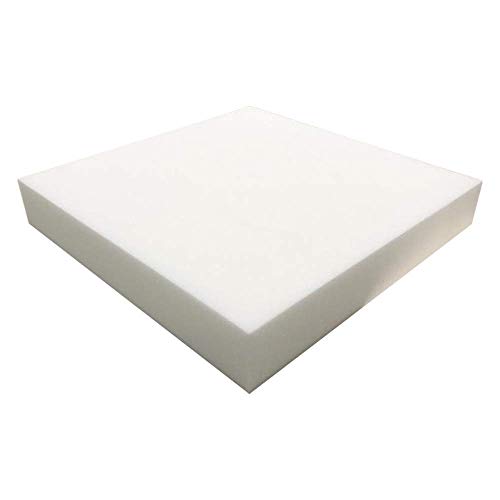
The fix is cushions doing structural work rather than decorative work. On a deep seat, two large 22 to 24 inch (56 to 61 cm) cushions stacked against the back reduce the usable depth to around 20 inches (51 cm) and put a soft support behind your spine. Suddenly the same bench works both ways: cushions in place to sit, cushions moved to lie down. Buy those as firm inserts, not soft feather ones, because a squashy cushion compresses to nothing under your back weight.
If you are building, the practical compromise is 22 inches (56 cm) of depth. It is enough to curl up sideways with your knees drawn in, which is how most people actually read in a window seat, and shallow enough to sit upright without help.
For an armchair the same logic applies. A 20 to 24 inch (51 to 61 cm) seat depth suits most adults, and the test is whether you can sit fully back with your lower legs clearing the front edge. If you love a deeper chair, add a lumbar cushion rather than perching.
Key Takeaway: Build at 22 inches (56 cm) deep for a window seat, or go to 24 to 30 inches (61 to 76 cm) only if firm back cushions bring the usable depth back to around 20 inches (51 cm).
Seat Height and the Foot Problem
 Save
Seat height is a smaller decision than depth and it fails in a more specific way: it decides what happens to your feet, and unsupported feet end a reading session faster than an uncomfortable back.
The target is 17 to 19 inches (43 to 48 cm) from the floor to the top of the compressed cushion, which is standard chair height for a reason. At that height an average adult sits with feet flat and knees at roughly a right angle, which keeps weight off the back of the thighs and lets you stay put.
The word compressed matters. A bench built at 18 inches (46 cm) with a 4 inch (10 cm) cushion on top is not an 18 inch seat, it is a 20 to 21 inch (51 to 53 cm) seat once you allow for compression, and that is high enough that shorter adults will dangle. Build the timber deck at 14 to 15 inches (36 to 38 cm) if you are adding a 4 inch (10 cm) cushion, or 16 to 17 inches (41 to 43 cm) for a 2 inch (5 cm) one.
Too high is the more common error and the more uncomfortable one, because a dangling foot cuts circulation at the back of the thigh within about twenty minutes. If a bench or a chair is already too high, a footstool fixes it entirely. This is also the reason a footstool is worth buying even when the seat height is correct: getting your feet up changes the whole angle of your spine and roughly doubles a comfortable session.
Too low has its own problem. Under about 15 inches (38 cm) your knees come up above your hips, your pelvis rolls back, and your lower back rounds. That is fine for ten minutes on a floor cushion and tiring for an hour. If a low seat is what you have, sit on a firm folded blanket to raise the front edge, or add a wedge cushion.
For a nook you plan to nap in, all of this relaxes, because a lying body does not care about seat height. But a nook designed only for lying in is used far less than one that works both ways, so build for sitting and let lying down be the bonus.
Key Takeaway: Aim for 17 to 19 inches (43 to 48 cm) to the top of the compressed cushion, build the deck lower to allow for cushion thickness, and add a footstool if the seat is already too high.

Where the Back Support Actually Goes
 Save
A bench under a window has a hard flat vertical wall behind it, and a flat wall is a poor back rest. Understanding where support needs to land is what turns a built-in seat from a photogenic ledge into somewhere you sit.
Two points on your spine need contact. The lumbar curve, at roughly 6 to 9 inches (15 to 23 cm) above the seat, which is the one that decides comfort. And the upper back or shoulder blades, at roughly 16 to 20 inches (41 to 51 cm) above the seat, which is what lets you lean back rather than hold yourself up. A flat wall contacts your shoulder blades and leaves a gap at the lumbar curve, which is why sitting against a wall gets tiring so quickly.
So the lumbar cushion is not decorative. A small firm cushion, roughly 12 by 18 inches (30 by 46 cm), placed low against your back, does more for comfort than anything else in the nook. In an armchair it does the same job, and it is why so many reading chairs come with one.
For a built-in bench the more permanent answer is a run of upholstered back cushions attached to the wall, hung so their bottom edge sits about 4 inches (10 cm) above the seat cushion and their thickness is 4 to 6 inches (10 to 15 cm). That thickness is what fills the lumbar gap along the whole length. Mount them on cleats or hook-and-loop tape so they can come off to be cleaned.
Angle helps too. A back tilted 10 to 15 degrees off vertical is much more comfortable than a plumb one, and you can build that with a wedge-shaped back cushion even when the wall behind is perfectly vertical. It is the difference between sitting up in a seat and sitting into it.
Corners are worth exploiting. An L-shaped bench in a corner lets you sit sideways with your back against one leg of the L and your feet up along the other, which is the single most comfortable configuration of everything here and needs no footstool. If your window is near a corner, build the seat around it rather than only under the glass.
Key Takeaway: Support the lumbar curve 6 to 9 inches (15 to 23 cm) above the seat with a firm cushion, tilt the back 10 to 15 degrees off vertical, and use an L-shape in a corner so you can sit sideways with your feet up.

Light Over Your Shoulder, Not in Your Face
 Save
Light is where most nooks are quietly wrong, and the symptom is that reading there feels slightly tiring without anyone knowing why.
The rule is that light should arrive over your shoulder from behind and to one side, aimed at the page. Not from in front, which puts glare off the paper straight into your eyes. Not from directly overhead, which drops your own head’s shadow onto the line you are reading. Behind and to the side, at roughly the angle a window over your shoulder would give you.
Brightness has a floor. About 450 lumens landing on the page is the working minimum, which in practice means a 40 to 60 watt equivalent bulb in a shade fairly close to the book, or a directional lamp aimed properly. Below that your eyes work harder and you get tired without registering that the light is the reason.
Direction beats brightness, though. A 60 watt equivalent aimed at the page beats a 100 watt equivalent bouncing off the ceiling every time, which is why an adjustable head matters more than wattage. Look for a floor lamp with a swing arm or a gooseneck, or a wall sconce with an articulating arm.
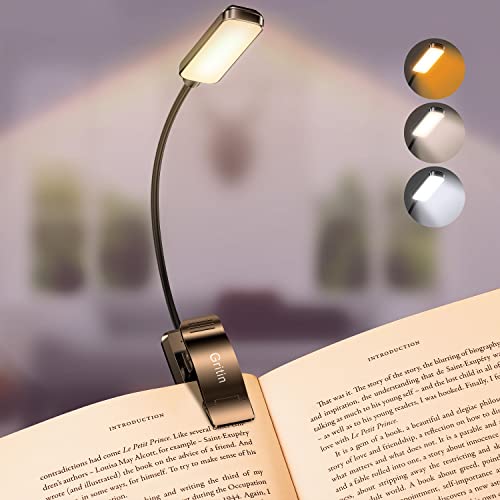
Where you put the fixture depends on the nook. In an armchair corner, a floor lamp behind one shoulder is the simplest and the best. In a window seat there is usually no floor space, so a wall sconce is the answer, mounted 48 to 54 inches (122 to 137 cm) from the floor beside the seat, on the wall you lean against, with an arm that reaches over your shoulder. A plug-in sconce with a fabric cord run down a paintable channel keeps this reversible for renters. A clip-on lamp on a shelf edge or the window frame is the fastest and cheapest version and works better than it has any right to.
Colour temperature 2700K and dimmable. And the second layer matters as much as the first: a small low lamp somewhere else in the room, so the nook is not a bright island in a dark room. Reading in a pool of light with total darkness around it produces the highest contrast your eye can be asked to handle, and it is the second most common cause of eye fatigue after too little light.
Daylight deserves a note too. A window seat is a beautiful place to read and a difficult one, because light straight into your face is glare. The fix is a sheer panel or a cafe curtain that diffuses without blocking, or siting the seat so the window is to your side rather than in front of you.
Key Takeaway: Put at least 450 lumens on the page from an adjustable source behind and to one side of your shoulder, add one small lamp elsewhere in the room to cut contrast, and diffuse direct daylight with a sheer panel.
Building a Window Seat, or Buying One
 Save
A window seat is the shape everybody wants, and there are three routes to it at three very different levels of commitment.
The built-in version is a simple carcass: a frame of 2 by 4 timber, a plywood deck, a face frame and a lift-up or drawer-front storage void underneath. Nothing about it is difficult carpentry. The specifications that matter are the ones already covered, a deck at 14 to 16 inches (36 to 41 cm) so the finished height lands at 17 to 19 inches (43 to 48 cm), and a depth of 22 inches (56 cm) unless you are committing to the deep version with back cushions.
Two details are worth getting right. If there is a radiator under the window, do not box it in solid; either build the seat with a slatted or grilled front so heat escapes, or move the seat. And if the window is a bay, follow the bay rather than cutting a straight line across it, because the angled returns are what make a bay seat feel enclosed.
Storage underneath is the whole practical argument for building rather than buying. A lift-up lid on soft-close hinges is the simplest and holds the most; drawers cost more and are much easier to use, since a lift-up lid means unloading the cushions first. Whichever you choose, keep it for things you access seasonally, blankets, spare bedding, holiday decorations, because in practice the lid stays closed.
The buy-it version is a storage bench, and it is a genuinely good answer. A 48 to 60 inch (122 to 152 cm) upholstered or wooden storage bench pushed under a window, with a cushion on top and two more against the wall, is 80 percent of a built-in for a small fraction of the cost and it moves with you. Scribe it to the wall with a strip of quarter-round if there is a gap, and it reads as built.
The no-build version is a daybed or a narrow twin mattress on a low frame, placed against a wall under or beside a window with cushions along the back. It is the most comfortable of the three by some margin because there is nothing to compromise, and it doubles as a guest bed, which is why it works so well in a spare room.
Whatever route you take, plan the cushion at the same time as the frame, not afterwards. Retrofitting a cushion to a finished bench is how you end up with a 3 inch (8 cm) foam pad that compresses to nothing.
Key Takeaway: Build a simple carcass at 22 inches (56 cm) deep with a 14 to 16 inch (36 to 41 cm) deck, or push a storage bench under the window instead, and design the cushion at the same time as the frame.

Cushion Construction, Which Nobody Talks About
 Save
Here is the detail that decides whether a window seat is comfortable, and it is almost never mentioned in the articles that show you one.
Foam density, not thickness, is what matters. A 4 inch (10 cm) cushion in soft low-density foam compresses to about an inch under a seated adult and you are effectively sitting on plywood. A 3 inch (8 cm) cushion in a high-resilience foam of at least 1.8 pounds per cubic foot density stays supportive for years. When ordering a custom cushion, ask for the density number rather than accepting descriptions like firm or extra firm, which mean nothing consistent.
Thickness of 3 to 4 inches (8 to 10 cm) is the useful range for a seat. Thinner reads as a pad; thicker starts to raise the seat height past comfortable and looks bulky. Wrap the foam in a layer of polyester batting before the cover goes on, which softens the hard edge and gives the cushion the slightly rounded shoulder that looks upholstered rather than cut.
The boxed edge with piping is the construction detail that makes a homemade cushion look bought. A boxed cushion has a separate side panel, so it holds a crisp rectangular shape; a knife-edge cushion, sewn straight from top to bottom, sags at the corners. Piping along the seams stiffens the edge further and takes the wear.
Fabric should be a performance weave or a heavy cotton or linen, and the cover should be removable. Window seats catch sun, and sun fades everything, so a cover you can wash and eventually replace is worth the extra cost of a zip. Choose a mid tone rather than pale cream if the seat is where people actually sit with drinks.
Then the back cushions, which do the structural job from the earlier section. Two or three, 20 to 24 inches (51 to 61 cm) square, with firm inserts. Feather is the wrong choice here despite being the right choice on a sofa, because feather compresses under back weight and stops supporting. Use a foam core wrapped in feather if you want both the look and the support.
And add a bolster if the seat is long. A cylindrical bolster at one end gives you something to lean against when you sit sideways with your legs along the bench, which is how a window seat actually gets used most of the time.
Key Takeaway: Specify high-resilience foam of at least 1.8 pounds per cubic foot at 3 to 4 inches (8 to 10 cm) thick, in a boxed and piped removable cover, with firm rather than feather back cushions.

The Armchair Nook in a Room That Is Already Full
 Save
Most people do not have a spare window bay or an empty alcove. They have a living room with a sofa in it and one corner that is currently holding a floor lamp and nothing else. That corner is enough.
Start by angling the chair. A chair placed square against a wall reads as part of the room’s furniture arrangement; the same chair turned 30 to 45 degrees into the corner reads as its own place. That single rotation is the cheapest change on this list and it does a surprising amount, because an angled chair implies a different orientation from the rest of the room.
From the guides
You've saved it, wanted it. Here's the how: codes, measurements, order. Your choices make it yours.
The Japandi Honest PlaybookThe honest version of the style: what to keep, what to skip, and the order to do it in.See inside →The Room Refresh PlaybookA repeatable four-step method, room by room, in ten minutes, thirty minutes, or one weekend.See inside →Make Any Room Feel Cozy on PurposeWhy some rooms hold people and others empty out, and the moves that change it.See inside →Then build the third side, using the rules from earlier. A tall bookcase is the best option because it also holds the books. A large plant in a floor pot works. A slim console behind the chair works only if you add something tall on it, a lamp or a stack of frames, to get the boundary above shoulder height.
Choose the chair for scale rather than for grandeur. In a room already full, a compact high-backed chair with a footprint around 30 by 32 inches (76 by 81 cm) does everything a large wing chair does without dominating. Height in the back matters more than width in the seat here, because the back is doing enclosure work.
Define the floor. A round rug of 4 to 5 feet (122 to 152 cm) under the chair and footstool separates the nook from the main rug and the main seating group. Round is worth considering specifically, because a circle reads as its own zone in a way a rectangle aligned with the room does not.
Light it separately from the room. The nook wants its own lamp on its own switch, so you can have the nook lit and the rest of the room dim. That contrast is what makes a corner of a shared room feel like a separate place in the evening.
And keep the nook’s stuff in the nook. Its own small stack of books, its own blanket, its own mug coaster. If the reading things live somewhere else in the house, the chair reverts to being a chair, and that is the mechanism by which most reading corners quietly disappear.
Key Takeaway: Angle the chair 30 to 45 degrees into the corner, build the third side above shoulder height, define the floor with a small round rug, and give the nook its own lamp on its own switch.

The Daybed and the Floor Nook
 Save
Two shapes sit outside the chair-and-bench pair and both solve problems the others cannot.
The daybed is the most comfortable reading furniture in existence and the most underused. A narrow twin mattress on a low frame, pushed lengthways against a wall with cushions along the back, gives you a seat that supports your whole body at any angle, a place to lie down properly, and a guest bed. In a spare room it is a better use of the floor than a bed nobody sleeps in for fifty weeks of the year.
The specifications are simple because a mattress has already solved most of them. Frame height at 16 to 18 inches (41 to 46 cm) so it works as seating. Depth of 30 to 36 inches (76 to 91 cm), which is a twin mattress, with three or four firm back cushions of 20 to 24 inches (51 to 61 cm) bringing the usable seat depth back to around 20 inches (51 cm) when you want to sit up. A bolster at one end so you can lie along it with your head raised.
Cover it so it does not read as a bed in a living space. A fitted cover in a heavy linen or a canvas over the mattress, rather than sheets, turns it into upholstery. A tailored cover with a boxed edge does this best and can be made from an ordinary fitted sheet pattern by anyone who sews.
The floor nook is the other shape and it belongs mainly in children’s rooms and in very small spaces, but it works for adults too if it is built properly. The failure mode is a pile of soft floor cushions with no back support, which is comfortable for fifteen minutes. The version that works has a firm base, a stack of thick floor cushions or a folded futon of at least 4 inches (10 cm), and a real back: a wall with two large firm cushions against it, or a low upholstered headboard fixed at about 24 inches (61 cm).
Add a rug underneath in both cases, because a floor-level seat puts you in direct contact with the floor temperature. And add a low surface, a small stool or a 12 inch (30 cm) side table at 16 to 18 inches (41 to 46 cm) high, since a normal side table is far too tall to reach from a floor seat.
Key Takeaway: Use a daybed at 16 to 18 inches (41 to 46 cm) high with firm back cushions and a bolster where a spare room allows it, and give any floor nook a firm base and a real supported back rather than a pile of cushions.

Alcoves, Dormers, and Under the Stairs
 Save
If your house has any space where the ceiling drops or the walls close in, that is the best reading nook site you own, and it is usually the space currently holding a laundry basket.
The candidates are consistent across most homes. The alcove beside a chimney breast. A dormer window recess. The dead end of an upstairs hall or a landing. The triangular space under a staircase. A deep bay. The sloped corner of a converted attic. All of them arrive with two or three sides already built, which means you are furnishing rather than constructing enclosure.
The move that ties an alcove together is paint. Paint the inside of the recess, including the ceiling of it, in one continuous colour different from the surrounding wall. A soft muted green, a deep blue, a warm clay. The contrast defines the pocket as a separate place and makes it read as deliberate rather than as leftover space. This is the single most effective thing you can do to an alcove and it costs the price of a small tin.
Shelving in the returns is the second move. Shallow shelves of 8 to 10 inches (20 to 25 cm) fitted into the side walls of an alcove hold books without stealing seat width, and they complete the enclosure at eye level. Keep them shallow, because in a narrow recess every inch of shoulder room matters.
Under a stair the constraint is headroom, and the answer is to sit sideways. Build the bench along the long wall of the triangle with the high end where you sit and the low end for cushions and storage, so you are never sitting under the lowest point. A 30 inch (76 cm) headroom at the seat position is workable if you are sitting with your back to the high side.
For a dormer, the seat goes across the recess at sill height if the sill is between 15 and 20 inches (38 and 51 cm), which many are. If the sill is higher, build the seat at the correct 17 to 19 inch (43 to 48 cm) height and let the window sit above your shoulder, which is better for light anyway.
In all of these, lighting must be a plug-in sconce or a clip lamp, because there is rarely a floor for a lamp and rarely a circuit for a hardwired fitting.
Key Takeaway: Use the recesses you already have, paint the whole inside of the pocket a different colour from the room, fit shallow 8 to 10 inch (20 to 25 cm) shelves into the returns, and light it with a plug-in sconce.

Textiles: The Blanket, the Cushions, the Floor
 Save
Textiles in a nook are doing three specific jobs and it helps to buy them against the job rather than against the picture.
Warmth is the first, and it is genuinely functional. Sitting still for an hour drops your body temperature noticeably, which is why people reach for a blanket in a room they were perfectly comfortable walking through. A wool or cotton throw of about 50 by 60 inches (127 by 152 cm) is the right size, big enough to cover your legs and tuck round, small enough to fold over an arm. Wool over fleece, because wool stays warm without getting clammy and looks better as it ages.
Acoustic softening is the second and it is why a nook full of textiles feels calmer than a nook without them. A rug, a curtain and an upholstered seat between them absorb the high frequency reflections that make a hard room feel edgy. It is a small effect per item and a noticeable one in combination.
Enclosure is the third. A curtain on a slim rod or a ceiling track across the open side of a nook is the most complete boundary you can build and the most reversible. In a child’s room or a small alcove it turns a recess into a room. It does not need to be heavy or full; a single panel that can be pulled halfway across is enough to change how the space reads.
Layer with restraint. On a bench: one seat cushion, two back cushions, one lumbar, one throw. On a chair: one lumbar, one throw, optionally a sheepskin. More than that and the seat becomes something you have to clear before you can use it, which is the fastest route to an unused nook.
Choose washable everything. This is a place where people eat toast, spill tea and fall asleep. Removable covers on the cushions, a machine-washable throw, a flat weave rug rather than a deep pile.
And keep the palette narrow and quiet. A nook is a small space and three or four colours in it read as busy at close range in a way they would not across a living room. Two neutrals and one soft colour is plenty, and it lets the books be the visual interest.
Key Takeaway: Buy a 50 by 60 inch (127 by 152 cm) wool throw, cap the cushions at four, make every cover washable, and add a single curtain panel if the open side needs closing.

Somewhere to Put the Mug
 Save
This section sounds trivial and it is the reason a large number of nooks fail. If there is nowhere to put a mug down, the nook is a place you visit rather than a place you stay.
The surface needs three properties. It has to be within arm’s reach without leaning, which means within about 24 inches (61 cm) of where your hand rests. It has to be at roughly the height of the chair arm or the seat back, 22 to 28 inches (56 to 71 cm) from the floor. And it has to be big enough for a mug, a book laid open face down and a pair of glasses at the same time, which means at least 12 by 12 inches (30 by 30 cm) of usable top.
In an armchair nook, a small round side table is the obvious answer. Choose one with a top of 14 to 16 inches (36 to 41 cm) across rather than the 10 inch (25 cm) drinks tables that photograph so well and hold almost nothing.
In a window seat there is usually no floor space, and the answer is a wall-mounted ledge. A slim shelf 5 to 7 inches (13 to 18 cm) deep and 18 to 24 inches (46 to 61 cm) long, mounted at about 26 inches (66 cm) from the seat top, gives you exactly the surface you need and takes up no floor at all. If the window has a deep sill, that is your ledge already.
A C-shaped side table is the other good answer for a bench or a deep chair, because its base slides underneath the seat and the top cantilevers over your lap. It is the only table shape that puts a surface where you actually want it when you are sitting with your legs up.
Then the small storage. A shallow drawer, a lidded box, or a small basket hung on the side of the bookcase, holding the glasses, the pen, the bookmark, the charging cable and the lip balm. Without a home, those things live on the surface, and the surface stops being available for the mug within a week.
And plan for the drink itself. A small tray with a glass carafe of water and a tumbler, or a pot of tea, means the nook is self-contained for an hour. A place you do not have to leave is a place you stay in, and this is the least glamorous and most effective item on the whole list.
Key Takeaway: Put a surface of at least 12 by 12 inches (30 by 30 cm) within 24 inches (61 cm) of your hand at 22 to 28 inches (56 to 71 cm) high, and use a wall ledge or a C-table where there is no floor space.

Nooks for Children, and How They Grow Up
 Save
A reading nook is one of the few pieces of children’s furniture worth building properly, because it is used daily and it can be designed to last from picture books to paperbacks.
Scale it down honestly at first. Seat height around 12 to 14 inches (30 to 36 cm) for a young child, so their feet reach the floor, and a depth of 18 to 20 inches (46 to 51 cm) so they can sit back against the cushions. The temptation is to build adult dimensions and add cushions, and it does not work, because a child sitting on a stack of cushions has no back support at all.
Forward-facing display is the specific difference between a child’s nook and an adult one. Picture ledges 3 to 4 inches (8 to 10 cm) deep, mounted at the child’s own eye level between about 24 and 40 inches (61 and 102 cm) from the floor, showing covers rather than spines. Children choose books by cover, so a shelf of spines gets ignored while a ledge of covers gets used every day. This one detail does more for whether the nook is used than any other.
Enclosure matters more here, not less. A curtain across the front, a canopy, a low tent frame or a painted recess all read as a hideout, and a hideout is used far more than a chair. Keep it a place they can see out of and be seen in, which is both the reassuring version and the one that actually gets sat in.
Light it with a plug-in sconce or a clip lamp with a warm bulb, positioned over the shoulder as with any other nook, and put it on a switch a child can reach. A nook they can turn on themselves is a nook they own.
Then design the second life. Build the bench at adult depth of 20 to 22 inches (51 to 56 cm) even if you cushion it forward for now, and put the picture ledges on removable brackets so they can come off and be replaced by proper shelves. Choose a paint colour that will still work in eight years. Done that way the nook survives the transition from picture books to homework instead of being ripped out at nine.
Keep the drinks simple and the surface wipeable. A small ledge with a lidded cup of water is all it needs, and a wipe-clean cushion cover will earn its cost within a month.
Key Takeaway: Build at 12 to 14 inches (30 to 36 cm) seat height with forward-facing picture ledges at the child’s eye level, add a curtain or canopy for the hideout effect, and design the frame at adult depth so it grows up.

Three numbers and one habit carry all of this. Bound the seat on three sides with something at least 40 inches (102 cm) tall. Build or buy a seat at 17 to 19 inches (43 to 48 cm) high and about 22 inches (56 cm) deep, with a firm cushion supporting your lower back 6 to 9 inches (15 to 23 cm) above the seat. Put 450 lumens of warm light over your shoulder onto the page. Then keep the nook’s own blanket, books and mug in the nook, so it never quietly reverts to being a chair. If you already have a corner chair you stopped using, do not replace it. Sit in it, notice which of the three things is missing, and fix that one, because it is almost always a boundary you never built or a lamp pointing the wrong way.
From the guides
You've saved it, wanted it. Here's the how: codes, measurements, order. Your choices make it yours.
The Japandi Honest PlaybookThe honest version of the style: what to keep, what to skip, and the order to do it in.See inside →The Room Refresh PlaybookA repeatable four-step method, room by room, in ten minutes, thirty minutes, or one weekend.See inside →Make Any Room Feel Cozy on PurposeWhy some rooms hold people and others empty out, and the moves that change it.See inside → Save