Georgia
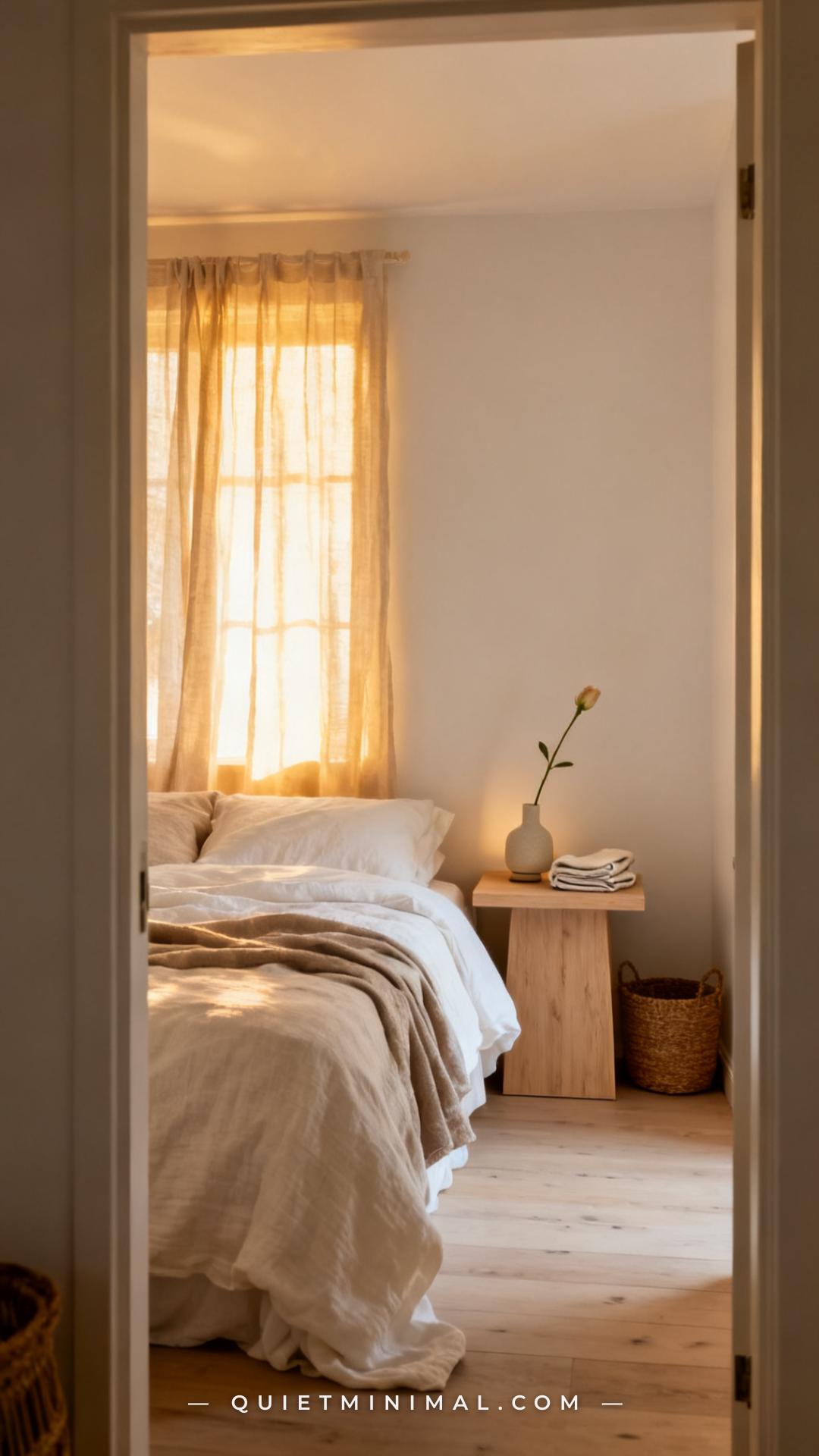
Your room should work for you on a weekend, not against you. If you’ve been walking past the same pile of mail, the same flat pillow, and the same overhead light that makes everything look like a waiting room, this weekend is the one to actually do something about it. Not a full renovation — not even close. What follows are 13 specific, sequenced moves you can work through from Friday evening to Sunday afternoon to shift how your space feels. Some take five minutes. A few take an hour. All of them are worth it.
These room decor ideas for a calm reset weekend are built around one principle: small, sensory changes compound. You don’t need new furniture. You need intention.
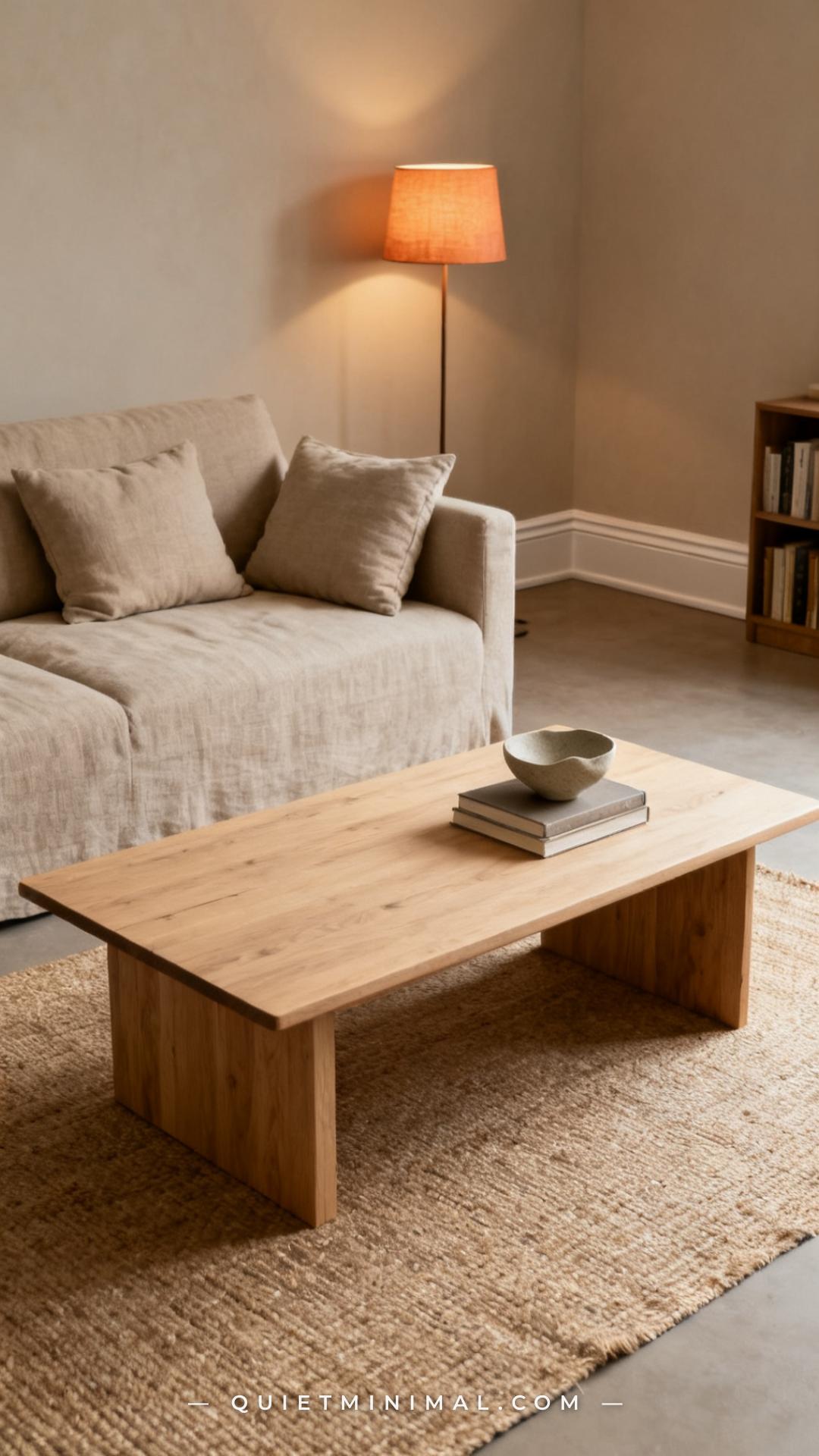
1. Start with a Full Surface Clear (Friday Night, 20 Minutes)
 Save
Before you buy, hang, or rearrange anything, clear every horizontal surface in the room you’re resetting. Coffee table, nightstand, dresser, shelving ledge — all of it. Put the stuff in a box, move the box to another room, and spend five minutes wiping down the surfaces. This is not about minimalism as an aesthetic; it’s about creating a visual baseline so you can see what you’re actually working with.
From the guides
You've saved it, wanted it. Here's the how: codes, measurements, order. Your choices make it yours.
 The Japandi Honest PlaybookThe honest version of the style: what to keep, what to skip, and the order to do it in.See inside →
 The Room Refresh PlaybookA repeatable four-step method, room by room, in ten minutes, thirty minutes, or one weekend.See inside →
 Make Any Room Feel Cozy on PurposeWhy some rooms hold people and others empty out, and the moves that change it.See inside →
When surfaces are cluttered, every new thing you add competes for attention. When they’re clear, even a single ceramic bowl reads as intentional and beautiful. The whole point of a reset weekend is to feel the difference — and this is the step that makes everything else land.
Key Takeaway: Clear surfaces before adding anything new — the blank slate is what makes your reset moves visible.

2. Swap Your Pillow Covers (Friday Night, 10 Minutes)
 Save
Pillow covers are the fastest legitimate room transformation available to you. A flat, mismatched set of pillows reads as neglected. A cohesive set in a texture — linen, waffle knit, boucle, or cotton gauze — reads as curated. You don’t need new pillows, just new covers. Two euro shams and two standard covers in a single tonal palette (all warm neutrals, or all dusty earth tones) will change how the whole bed or sofa reads.
Look for linen-look or washed cotton covers rather than anything shiny or overly crisp. Texture is what makes a calm room feel warm rather than clinical. Stick to a palette that already exists somewhere in the room — pick up on a color in your rug, your wall, or a piece of art.
Key Takeaway: Two coordinated euro shams and a tonal throw pillow set will do more for a room’s calm factor than almost any other single purchase.

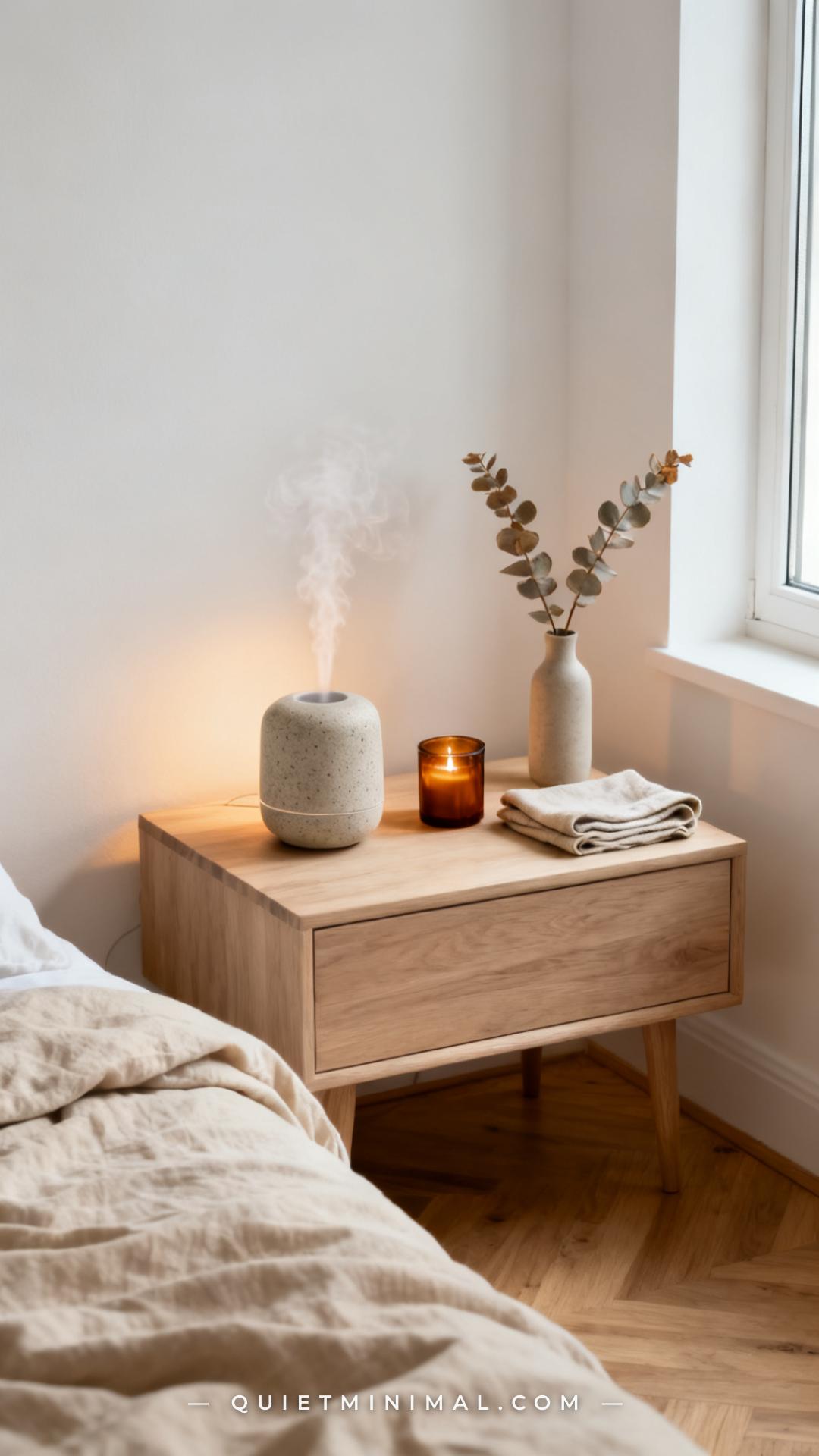
3. Add One Source of Scent (Friday Night, 5 Minutes)
 Save
Scent is the most underused design tool in a home reset. Your other senses take time to adjust to a room change — scent is immediate. A room that smells like clean linen, eucalyptus, or warm cedar registers as calm before you’ve consciously noticed anything else. This is not aromatherapy pseudoscience; it’s sensory priming.
The options that work without overwhelming: an ultrasonic diffuser with eucalyptus or lavender essential oil, an unscented beeswax candle (which gives off a faint honey warmth), or a simple linen spray on your bedding. Avoid synthetic “clean cotton” sprays from big-box stores — they tend to smell like laundry detergent and don’t read as calm. Go for single-note botanical scents.
Key Takeaway: Add one consistent scent source to the room on Friday night and let it run through the weekend — your brain will start associating the space with calm before you’ve changed anything else.

4. Rearrange the Furniture (Saturday Morning, 45–60 Minutes)
 Save
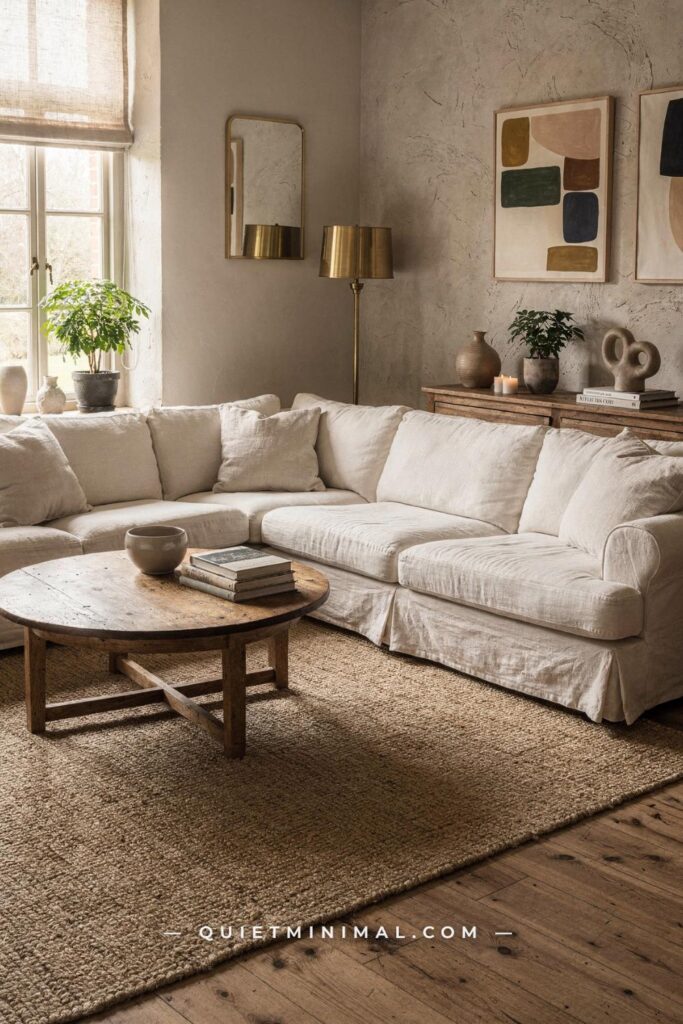
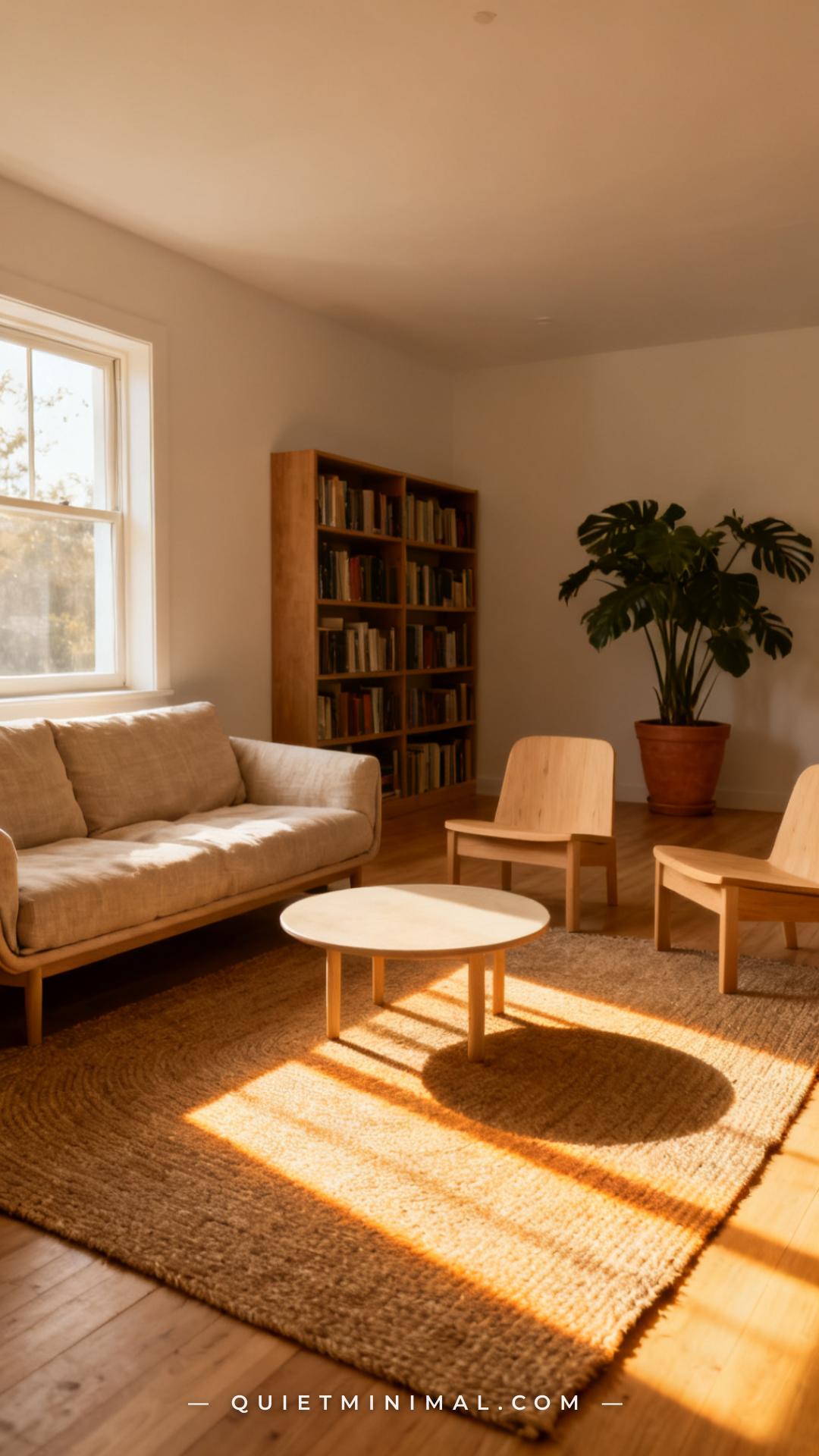
This is the highest-leverage move of the reset weekend and the one most people skip because it feels like a big undertaking. It isn’t. Most rooms default to a furniture arrangement that pushes everything to the walls, which makes the center of the room feel like a hotel lobby and the seating feel disconnected. Pulling the sofa or bed a few inches away from the wall — just enough to create a visual buffer — immediately makes the space feel more intentional.
The rule that works consistently: anchor your main seating or sleeping piece on a rug, with at least 12–18 inches of rug visible on all four sides. If your rug is too small for that, float the front legs only. If you’re rearranging a bedroom, try rotating the bed to face the natural light source rather than running parallel to it — even a 90-degree rotation can make the same room feel completely new.
Key Takeaway: Pull furniture away from walls and anchor it on a rug — this single move makes any room feel more like a designed space and less like a storage room.

5. Layer Your Lighting (Saturday Morning, 30 Minutes)
 Save
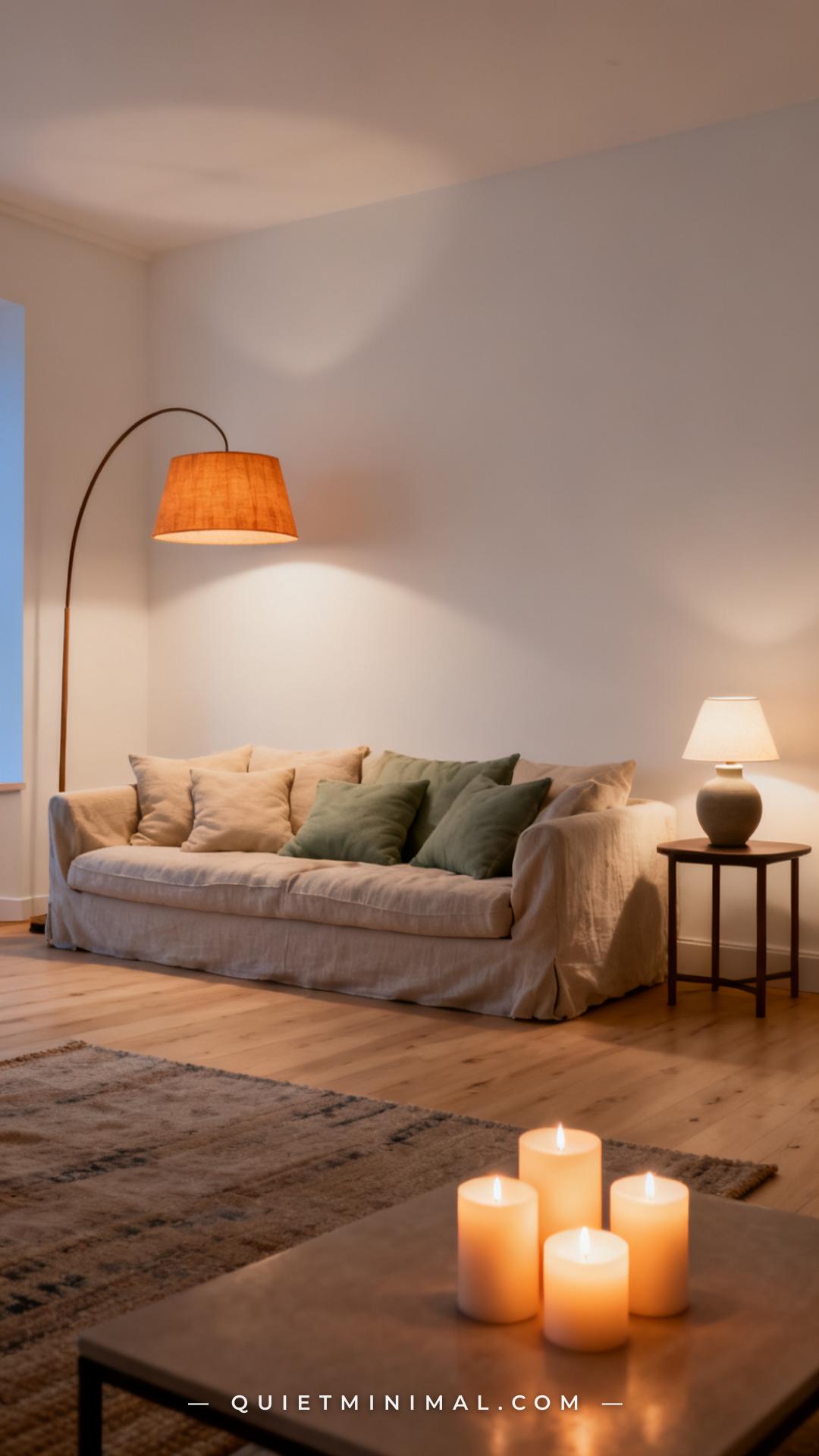
Single overhead lighting is the fastest way to make a calm room feel like a hospital break room. Most rooms only use one light source — the ceiling fixture — which means harsh, flat, shadow-free illumination that has no warmth whatsoever. A reset weekend is the perfect time to fix this without rewiring anything.
The layered lighting formula: one ambient source (floor lamp or table lamp at ceiling height), one task source (desk lamp or reading lamp aimed at a surface), and one accent source (LED pillar candles, a small neon lamp, or a string of warm Edison lights). The accent source should run at or below eye level when you’re seated. The result is a room that looks completely different at 8pm on a Saturday versus what it was before — quieter, softer, and significantly more restful.
Key Takeaway: Turn off the overhead, turn on three layered sources at different heights, and your room will feel like a completely different space after dark.

6. Bring in One Living Plant (Saturday Morning, 15 Minutes)
 Save
You don’t need a collection. You need one plant, placed with intention. A living plant introduces organic shape, color variation, and — in a measurable way — air quality improvement. More importantly for a calm reset, it introduces something that isn’t perfectly still. A trailing pothos on a plant stand, a large monstera in a corner, or a simple fiddle-leaf fig in a white ceramic pot all add the visual complexity of something alive without adding clutter.
The positioning rule for calm: place the plant adjacent to your primary light source (window), not blocking it. A plant in front of a window reads as a living curtain and softens harsh light. A plant in a dark corner looks sad within two weeks. Match plant size to corner scale — a 6-inch pot on a high shelf looks decorative; a 10-inch pot on the floor looks architectural.
Key Takeaway: One well-placed plant at floor or stand height adds the organic visual complexity that makes a room feel alive rather than staged.

7. Edit Your Shelf Styling (Saturday Afternoon, 40 Minutes)
 Save
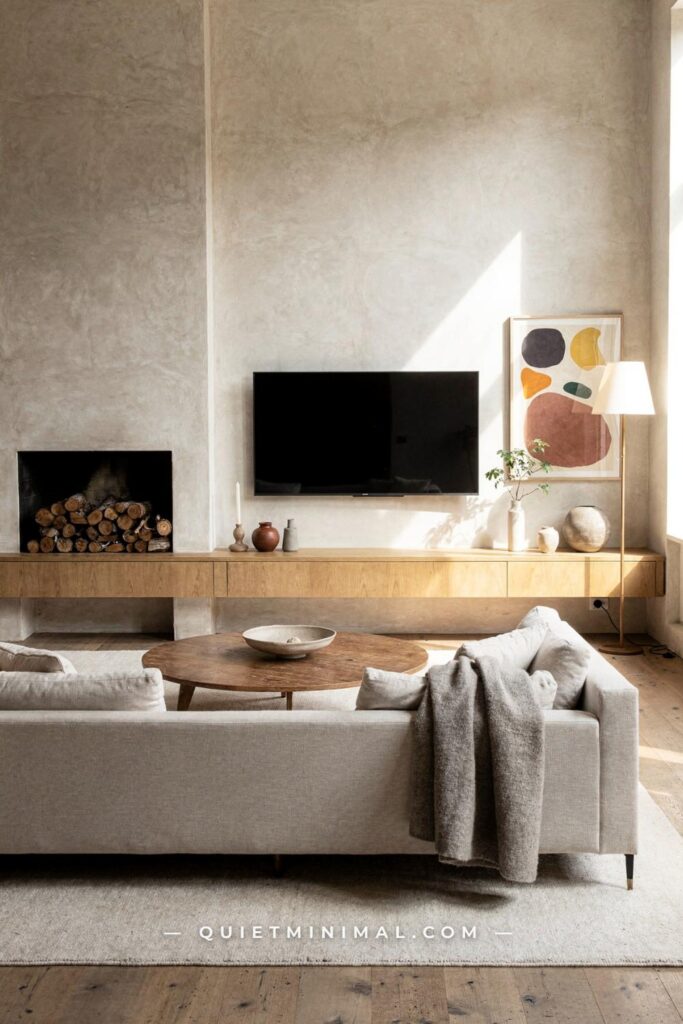
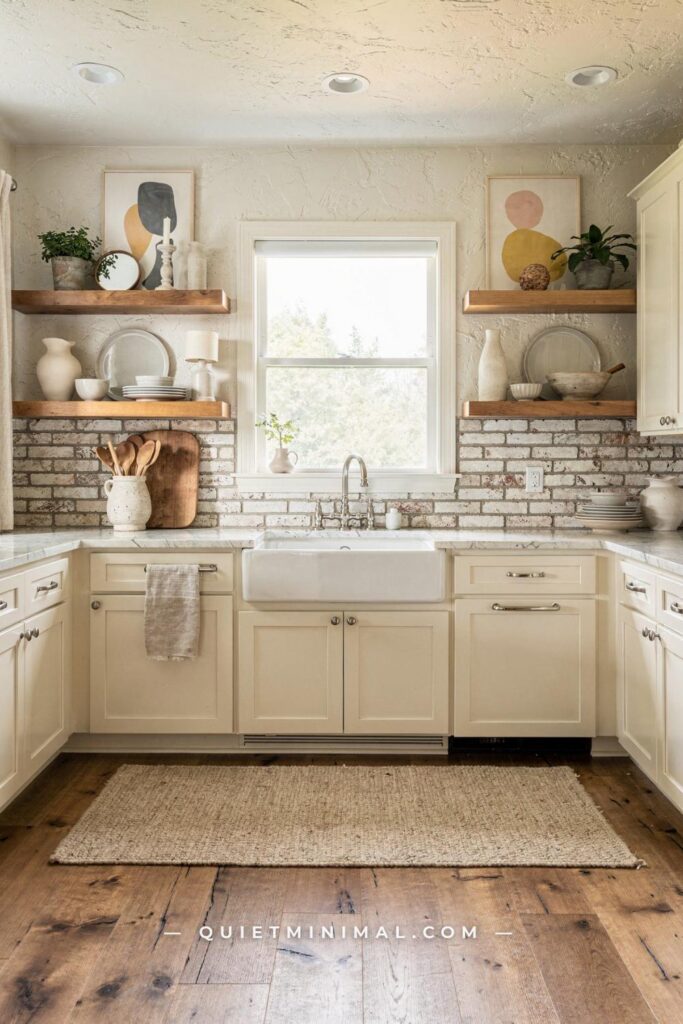
Most shelves accumulate rather than curate. By the end of a month, they hold whatever was put down and never moved — a mix of books, random objects, chargers, and impulse buys that collectively read as noise. The reset move is to pull everything off, wipe the shelves down, and then style them back using the rule of three: for every horizontal run of shelf space, use three elements — something tall (a vase or stack of books), something wide (a horizontal stack or tray), and something small (a ceramic figure or plant cutting in a bud vase).
Remove anything that doesn’t have a clear visual purpose. That doesn’t mean throw it away — it means store it in a drawer for now. The edit is what makes the pieces that remain feel considered. After you’re done, step back to the doorway of the room and assess from five feet away. That’s how your shelf reads to a first-time viewer.
Key Takeaway: Pull everything off, edit down by 40%, and restyle using the rule of three — a shelf should be readable from the doorway, not just interesting up close.

8. Add a Weighted Blanket or Heavyweight Throw (Saturday Afternoon, 5 Minutes)
 Save
A heavyweight throw or weighted blanket is a dual-purpose reset tool — it’s both a visual anchor for a bed or sofa and a genuinely functional comfort object. Visually, a heavier blanket with a subtle texture (waffle knit, ribbed cotton, chunky linen) reads as more substantial and expensive than a lightweight fleece. It gives a bed or sofa its “dressed” quality — the way hotel beds look finished even from across the room.
Functionally, weighted blankets (typically 15–25 lbs) are documented to reduce cortisol and improve sleep quality, which aligns directly with what a calm reset weekend is trying to accomplish. If you’re resetting your sleep environment specifically, this is one of the most practical purchases in this entire list.
From the guides
You've saved it, wanted it. Here's the how: codes, measurements, order. Your choices make it yours.
The Japandi Honest PlaybookThe honest version of the style: what to keep, what to skip, and the order to do it in.See inside →The Room Refresh PlaybookA repeatable four-step method, room by room, in ten minutes, thirty minutes, or one weekend.See inside →Make Any Room Feel Cozy on PurposeWhy some rooms hold people and others empty out, and the moves that change it.See inside →Key Takeaway: A heavyweight throw or weighted blanket does double duty — it finishes the visual composition of a bed or sofa and delivers measurable physical calm.

9. Use a White Noise Machine Overnight (Saturday Night, Setup 2 Minutes)
 Save
A calm room is a sensory experience, and sound is part of that experience. Traffic noise, upstairs neighbors, HVAC cycling, early-morning birds — all of these interrupt sleep quality in ways that accumulate. A white noise machine (or its cousin, a pink or brown noise machine) masks ambient sound variation not by adding more noise but by creating a consistent audio background that your brain stops monitoring.
The practical result: you fall asleep faster, sleep more deeply, and wake up less triggered by random sounds. For a reset weekend, run it Friday night through Sunday night to see the difference. The LectroFan and the Marpac Dohm are the two verified options worth recommending — both have analog sound (fan-based, not looped digital files) which is less fatiguing over long periods.
Key Takeaway: A white noise machine is the one reset tool you can’t see in the room — but it’s often the most noticeable change in how you feel on Monday morning.

10. Hang Something on a Previously Bare Wall (Sunday Morning, 45 Minutes)
 Save
A bare wall above a sofa or bed is one of the most common “I’ll deal with that later” elements in a renter’s or new homeowner’s space. The reset weekend is the time to actually deal with it. You don’t need a large-format custom piece — a horizontal grouping of three frames in a consistent finish (all black, all natural wood, all white) reads as curated and intentional even when the prints inside are affordable.
The positioning rule: the center of your gallery grouping should sit at 57–60 inches from the floor, which is gallery standard (eye level for an average-height adult). For a sofa wall, the bottom edge of the frame arrangement should sit 6–8 inches above the sofa back. Too high, and the art feels disconnected from the furniture. Too low, and it reads as an afterthought.
Key Takeaway: Three frames in a consistent finish, hung at 57–60 inches center height, will make a bare wall feel finished — even if the prints inside are from a print shop download.

11. Introduce a Natural Texture Basket or Tray (Sunday Morning, 10 Minutes)
 Save
Natural textures — rattan, seagrass, jute, raw wood, unglazed ceramic — are the material vocabulary of a calm room. They introduce warmth without adding color, which means they’re almost impossible to get wrong regardless of your existing palette. A single large rattan basket functions as both storage (throws, extra blankets, magazine overflow) and a textural anchor that signals “this room was thought about.”
The placement that works consistently: one basket on the floor beside a sofa or in a bedroom corner (never shoved under furniture), and one wood or stone tray on any flat surface that needs organization — a coffee table, a nightstand, a bathroom counter. The tray corrals small items into a grouping that reads as styled rather than scattered.
Key Takeaway: One large rattan basket and one natural wood or stone tray are the two textural anchors that make a room feel considered without requiring any design expertise.

12. Swap Your Overhead Bulbs for Warm-Tone LEDs (Sunday Afternoon, 15 Minutes)
 Save
Most apartments and homes ship with cool-white or daylight bulbs (4000K–5000K color temperature) because they’re cheap and available. These bulbs make rooms feel bright and functional — which is appropriate for a kitchen or bathroom, and actively wrong for a bedroom, living room, or any space you want to feel calm. Warm-white LEDs at 2700K–3000K produce the amber-gold tone that your brain associates with firelight and low-stress evenings.
This is a $15–20 fix per room and takes less time than making a grocery list. Pick up a multipack of warm-white A19 LEDs at 2700K (GE, Philips, or Sylvania all make reliable options), swap them in, and turn on the overhead. The difference is immediate and significant — the same furniture, same textiles, and same wall color will look 30% more inviting under warm-toned light.
Key Takeaway: Swap cool-white bulbs for 2700K warm-white LEDs and your room will feel like a different space after dark — this is the cheapest high-impact reset move on the list.

13. Do a Final “Edit Pass” Before Monday (Sunday Evening, 20 Minutes)
 Save
The final move is the one most people skip because it doesn’t feel like decor. Walk through the room you’ve been resetting with a fresh eye — pretend you’re a guest seeing it for the first time. Remove anything that broke back in over the weekend (the charger on the nightstand, the mail that migrated back to the coffee table, the bag you dropped on the chair). Return the things you moved “temporarily” to their proper homes. Light the candle or run the diffuser.
The edit pass is what separates a room that was worked on from a room that feels finished. It doesn’t add anything new — it removes the things that undercut everything else you did. Ten to twenty minutes on Sunday evening, and by the time you wake up Monday, the room will still read as reset rather than already sliding back.
Key Takeaway: The final edit pass on Sunday evening is what locks in the calm — without it, the reset erodes overnight.

A calm room isn’t a permanent state — it’s something you return to. The moves in this list work precisely because they’re repeatable: next month, you can run the same sequence again and the room will reset just as effectively. The three that will do the most work with the least effort are the surface clear on Friday night, the lighting layer on Saturday, and the final edit pass on Sunday. Start there. Let the rest of the weekend fill in around them. By Monday morning, your space will feel like it’s working with you.
From the guides
You've saved it, wanted it. Here's the how: codes, measurements, order. Your choices make it yours.
The Japandi Honest PlaybookThe honest version of the style: what to keep, what to skip, and the order to do it in.See inside →The Room Refresh PlaybookA repeatable four-step method, room by room, in ten minutes, thirty minutes, or one weekend.See inside →Make Any Room Feel Cozy on PurposeWhy some rooms hold people and others empty out, and the moves that change it.See inside → Save