Georgia
There’s a version of farmhouse fall decor that looks stunning — dried wheat, aged wood, warm candlelight, earthy ceramics — and a version that looks like it was bought at a gas station in October. The difference isn’t budget. It’s selection. The rooms that stop scrollers cold on Pinterest share a few things: an organic, muted palette instead of screaming orange; real textures instead of shiny plastic; and a layering logic that makes the whole space feel considered rather than decorated. These 12 ideas are built around that principle. Each one is specific, reusable, and designed to work together as a system — so by the time you finish, your home doesn’t just have fall accents, it has an actual fall aesthetic.
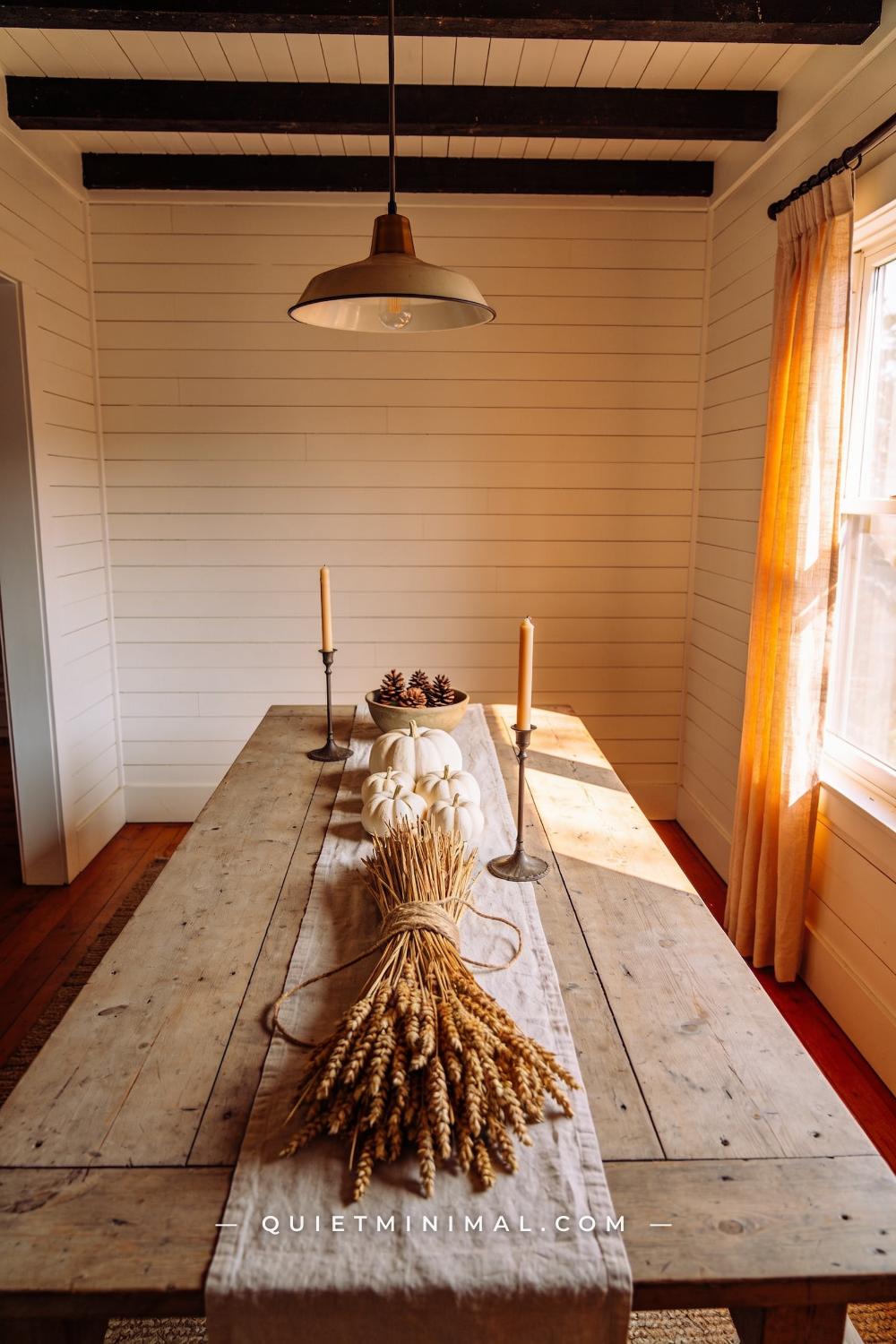
1. Swap Synthetic Pumpkins for a Dried Wheat Bundle Centerpiece
 Save
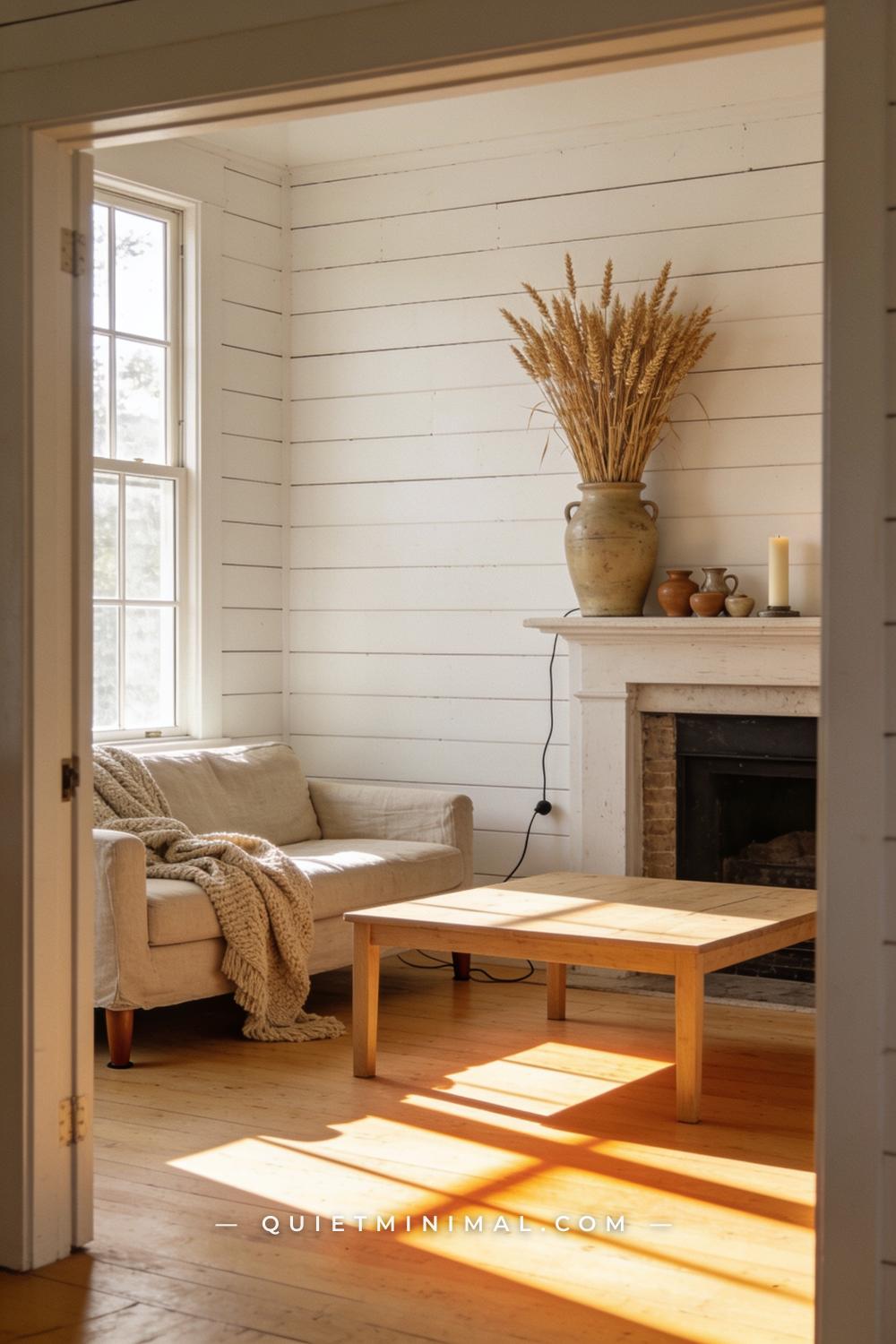
Walk into any farmhouse that photographs beautifully in fall, and you’ll almost always find dried botanicals before you find plastic anything. Dried wheat bundles are the single best swap you can make: they bring immediate organic warmth, they’re neutral enough to work with nearly any color palette, and they last for multiple seasons stored properly in a paper bag. A single oversized bundle laid flat as a table runner or stood upright in a tall stoneware vase does more for the room than a scattered collection of synthetic gourds ever could.
The key is proportion. Don’t undersize it. A bundle that’s too small looks like an afterthought. Go for a 24–30 inch bundle on a dining table, or a 36-inch bunch in a floor vase. Pair with one or two real white pumpkins and a stoneware bowl — that’s the complete vignette. Adding more muddies the palette and kills the quiet-harvest effect you’re going for.
From the guides
You've saved it, wanted it. Here's the how: codes, measurements, order. Your choices make it yours.
 The Japandi Honest PlaybookThe honest version of the style: what to keep, what to skip, and the order to do it in.See inside →
 The Room Refresh PlaybookA repeatable four-step method, room by room, in ten minutes, thirty minutes, or one weekend.See inside →
 Make Any Room Feel Cozy on PurposeWhy some rooms hold people and others empty out, and the moves that change it.See inside →
Key Takeaway: One oversized dried wheat bundle sets a tone that no amount of small plastic accents can match — scale up and keep everything else secondary.

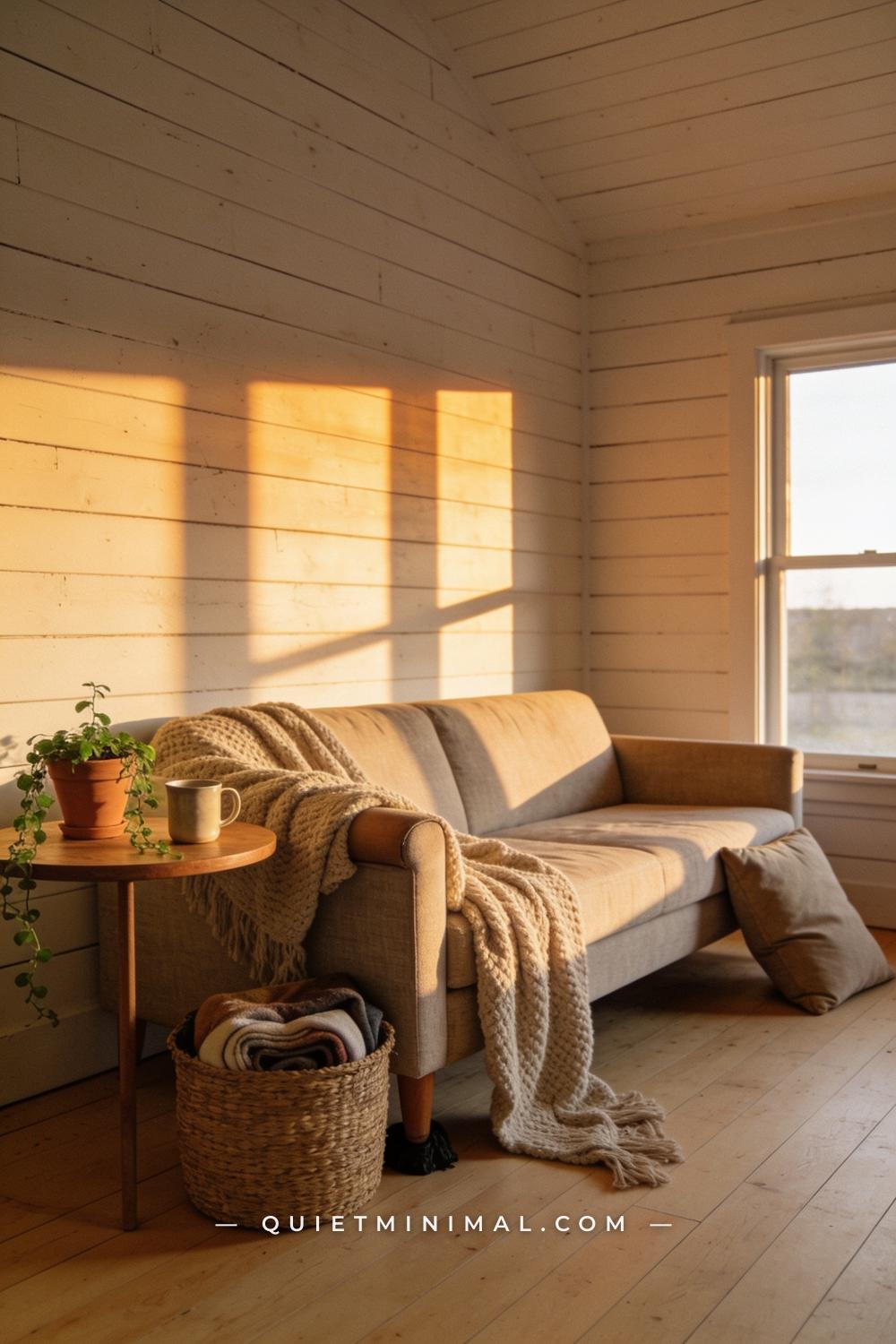
2. Layer a Chunky Knit Throw Over Every Seating Piece
 Save
There’s a reason chunky knit throws appear in nearly every high-performing fall home pin: they signal warmth instantly, and they do it through texture rather than color. For rustic farmhouse fall, choose natural fiber options — wool or cotton — in oatmeal, cream, warm taupe, or a deep rust. These tones land in every season without looking costume-y.
The layering technique matters. Don’t fold it neatly over the back of the sofa like a catalog display. Drape it slightly off one arm, let it pool a little at the base. That’s what reads as lived-in warmth rather than showroom staging. If you have a reading chair, a bench at the foot of the bed, and a sofa, each gets its own throw — but vary the texture so they don’t all match exactly. An oatmeal waffle knit on the chair, a chunky cable knit on the sofa, a thinner woven blanket on the bench.
Key Takeaway: Natural fiber throws draped casually, not folded precisely, are the fastest way to make a room feel genuinely autumnal rather than decorated for fall.

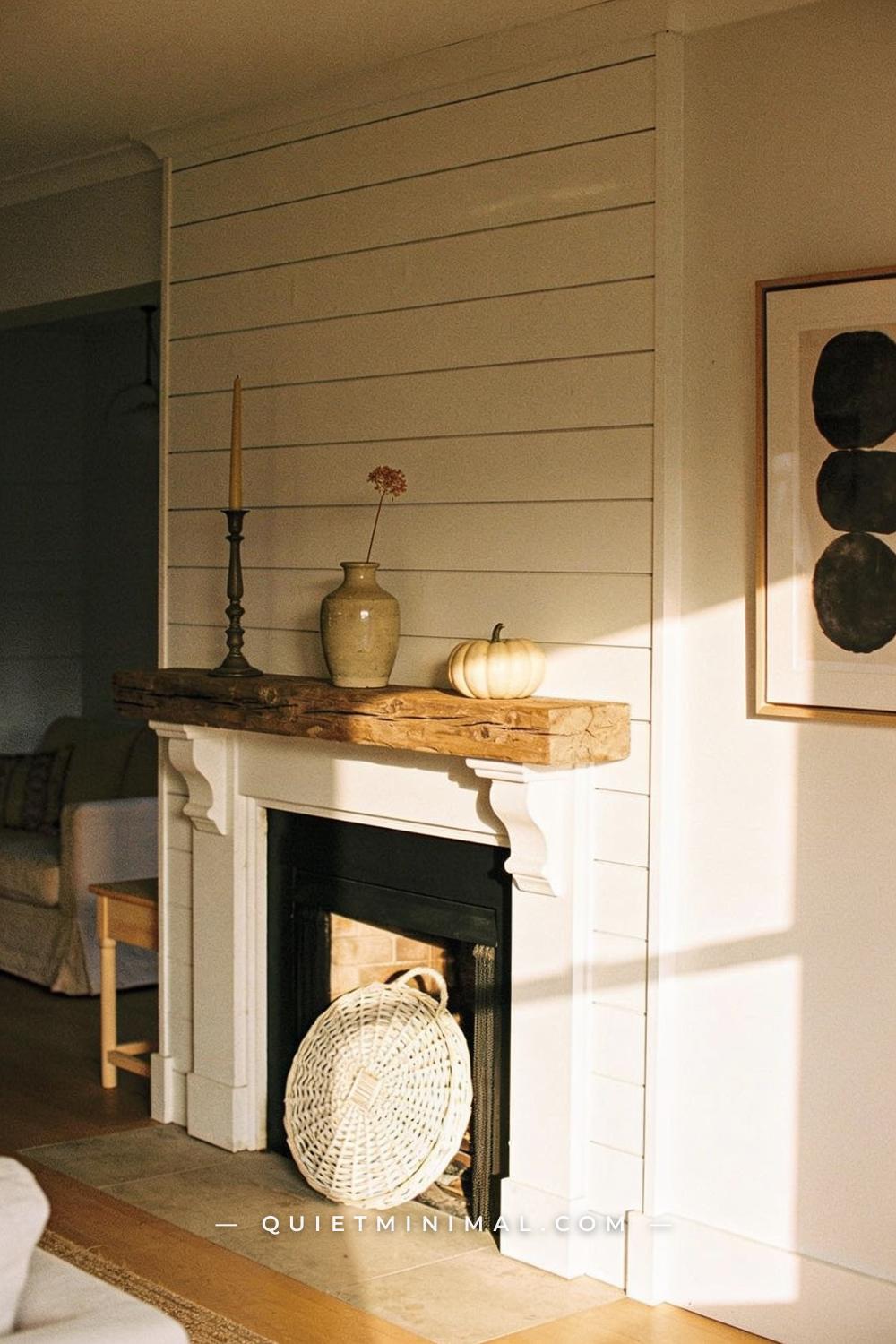
3. Build a Fireplace Mantel Vignette Around an Odd-Number Rule
 Save
A farmhouse mantel styled for fall doesn’t need much — it needs the right structure. The odd-number rule is the fastest shortcut to a vignette that looks considered: group objects in threes or fives, varying the height of each element so the eye moves across the mantel rather than sitting flat. Low-medium-tall is the classic arrangement. Start from a neutral base — neutral candlestick, neutral vessel, neutral pumpkin (real or ceramic) — and let texture do the work rather than color contrast.
For the farmhouse aesthetic specifically, material choices matter more than object choices. Aged iron, raw stoneware, unfinished wood, beeswax candles — these read as authentic. Shiny finishes, plastic, and bright-painted ceramics break the spell immediately. Keep the palette to three tones max: warm ivory, earthy terracotta or rust, and a deep neutral like charcoal or aged wood.
Key Takeaway: Three objects at varying heights, all in organic materials, will always outperform a mantel crowded with themed seasonal accents.

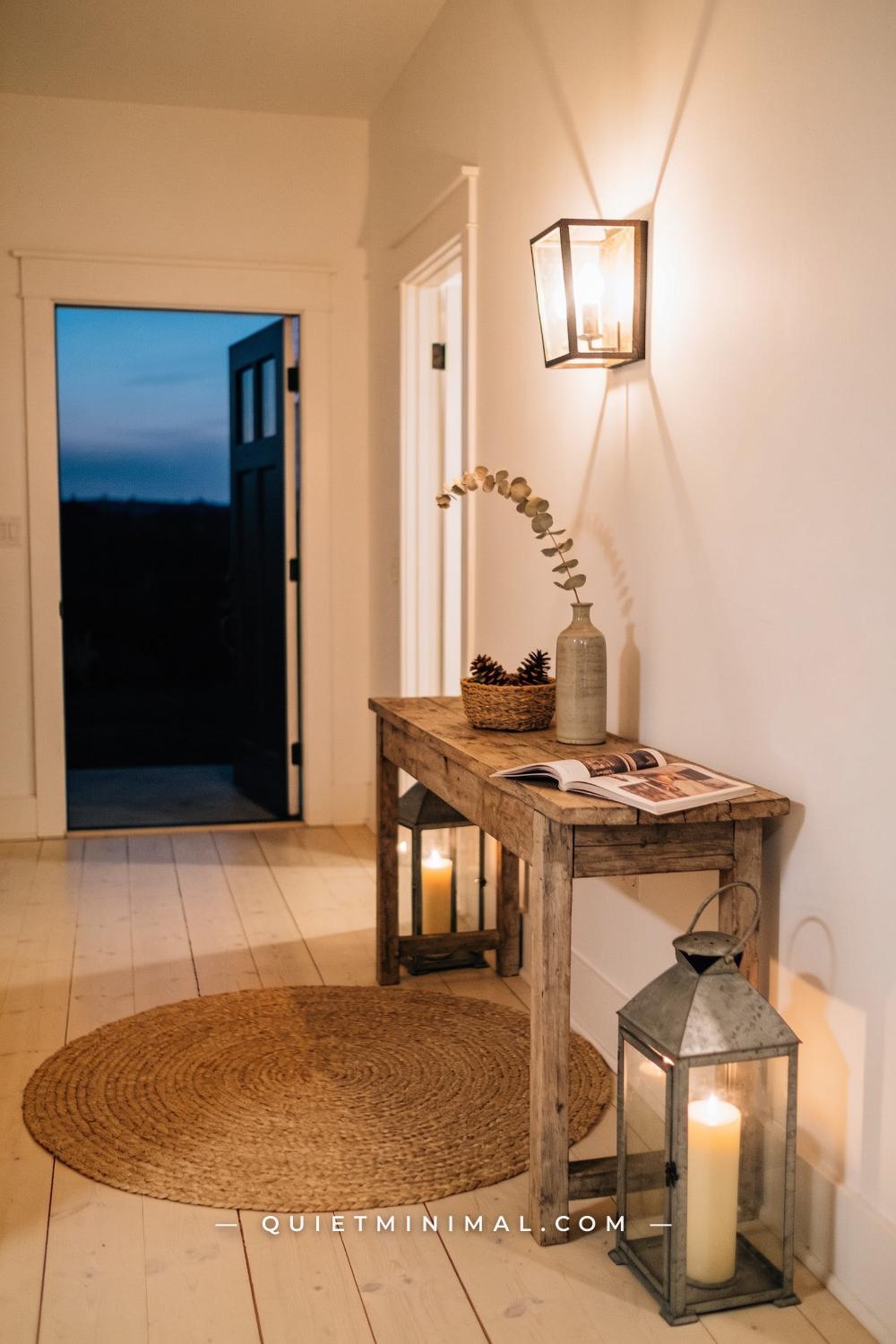
4. Use Galvanized Metal Lanterns as the Primary Light Source
 Save
Farmhouse fall is really about atmosphere, and nothing builds atmosphere faster than warm, low light in the right vessel. Galvanized metal lanterns — especially ones with aged, slightly matte finishes — are ideal because they work indoors and outdoors, they scale easily (floor lanterns in an entryway, smaller lanterns on a coffee table or mantel), and they photograph spectacularly at dusk when the candlelight glows through the metal grid.
Place them in pairs at slightly different heights if possible: two floor lanterns flanking a console or front door, or a large and small lantern grouped together on a hearth. The asymmetry feels intentional rather than matched. For safety and everyday use, battery-operated pillar candles with a real wax exterior give you the warm amber glow without the fire risk — the visual effect in photos is nearly identical.
Key Takeaway: Galvanized metal lanterns in pairs at different scales create a warm, layered light atmosphere that elevates an entire entryway or living room corner without a single additional piece.

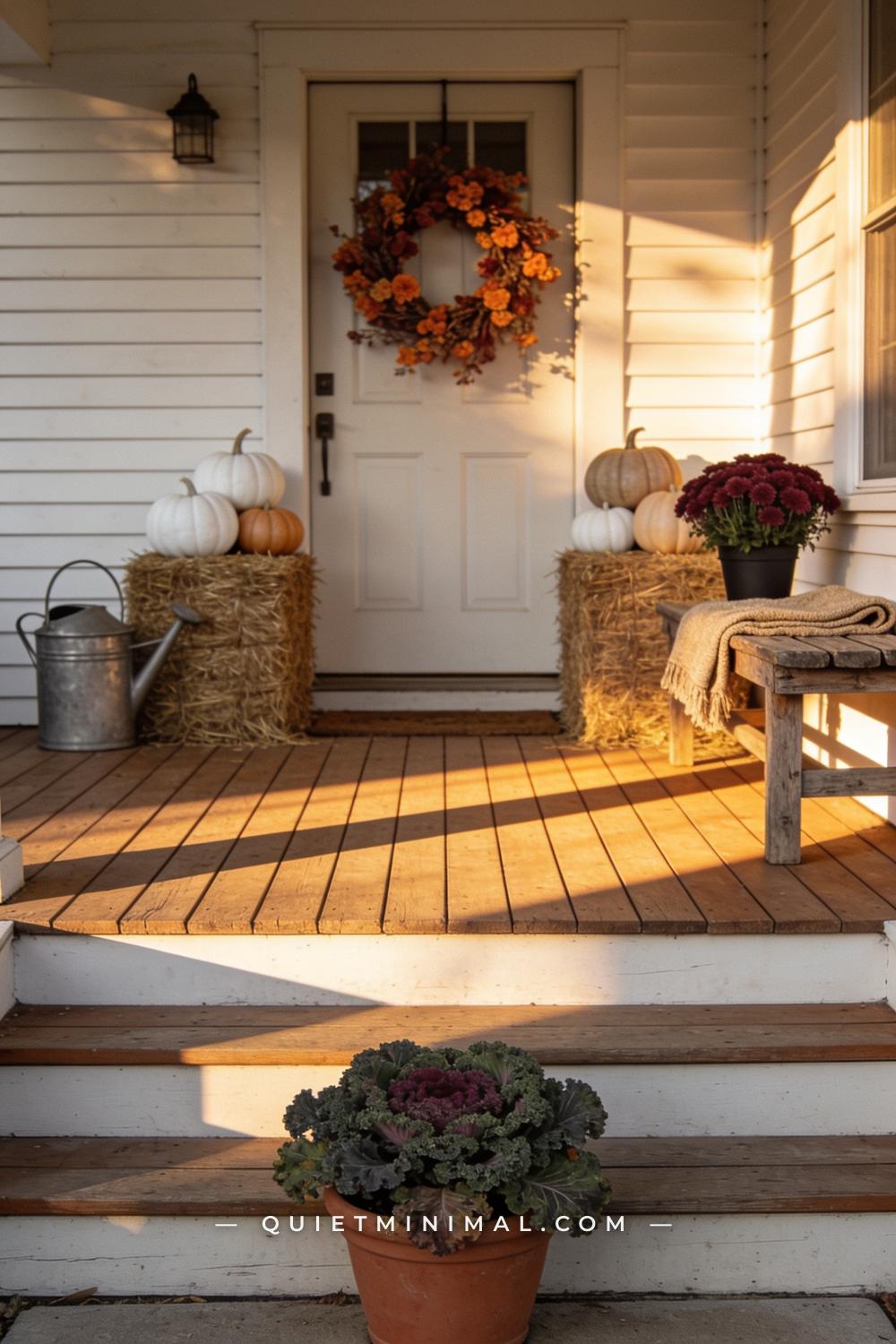
5. Style a Front Porch With Stacked Hay Bales and Real Pumpkins
 Save
The front porch is the first impression, and for rustic farmhouse fall it’s also the highest-impact canvas. Real hay bales are inexpensive from farm stands or garden centers, they’re completely biodegradable, and they create immediate dimensional interest when stacked. Two bales stacked asymmetrically — one tall pair, one single — flanking the door is enough. Top them with real pumpkins in white, tan, and deep orange rather than all-orange plastic, and the difference is immediate.
Ground the bales with a layer: ornamental kale in terracotta pots, a galvanized watering can, or a wooden crate of gourds. Add one deep-toned mum — burgundy or dark copper rather than yellow — in a simple pot at the base of the steps. The goal is a harvest-market feeling, not a haunted house. Keep the color palette to no more than three tones and use texture (rough hay, smooth pumpkin, terra cotta clay) to do the visual work.
Key Takeaway: Stacked hay bales with real pumpkins in white, tan, and deep copper tones is the single fastest way to transform a bare porch into a proper farmhouse fall moment.

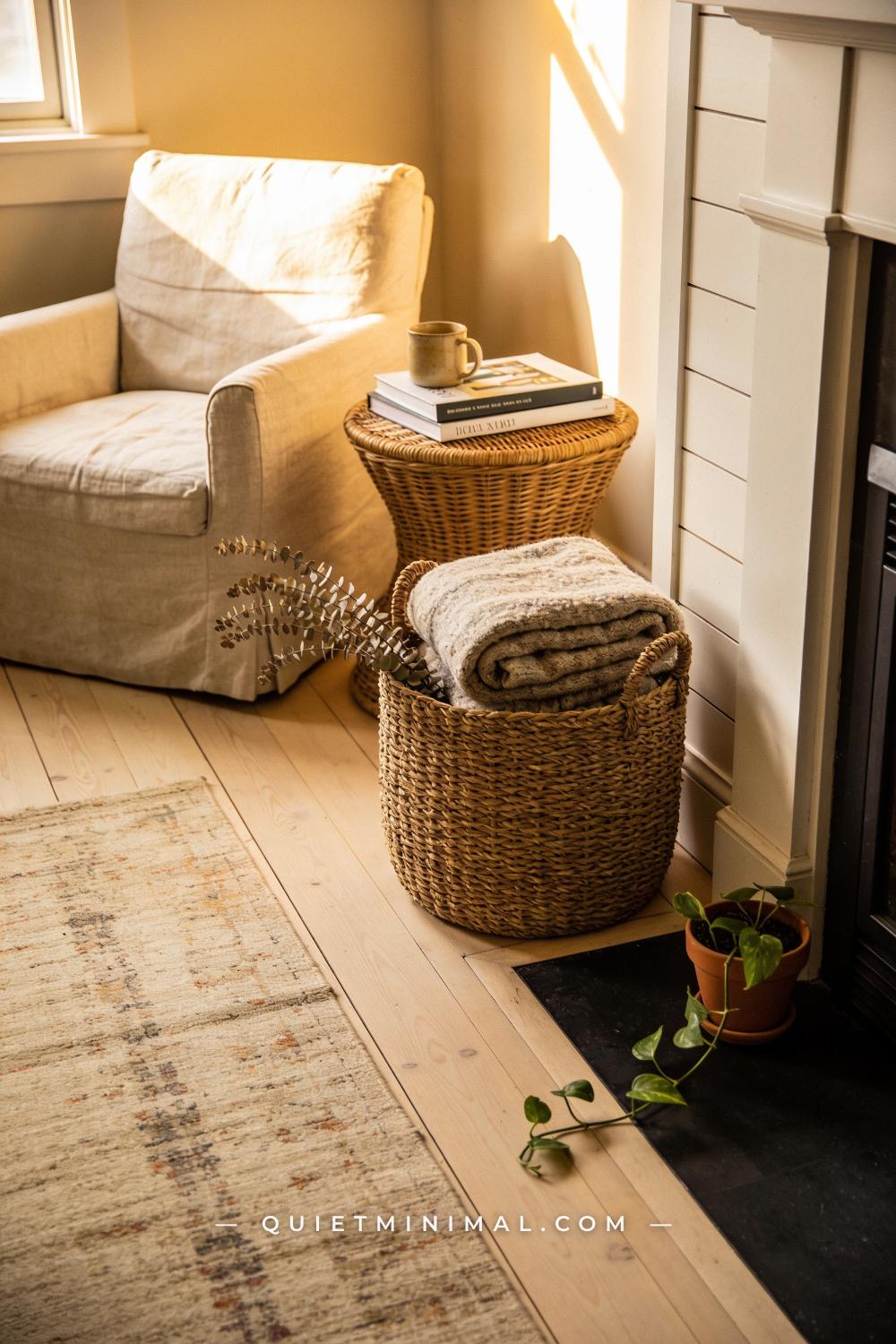
6. Bring in Woven Seagrass and Rattan Baskets for Organic Texture
 Save
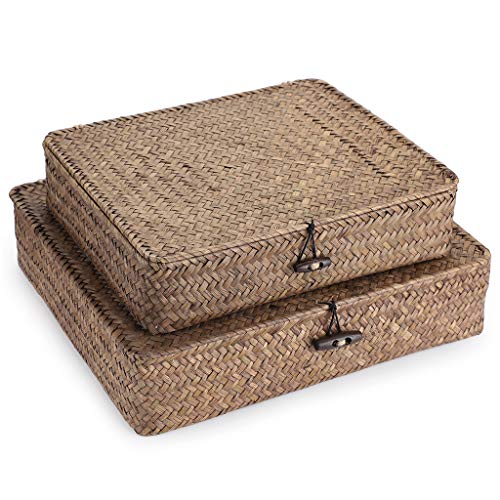
Texture is the defining quality of rustic farmhouse style, and woven baskets are the most versatile texture carrier in the toolkit. A large seagrass storage basket beside the fireplace for extra blankets, a flat-woven rattan tray on the coffee table corralling candles and a small pumpkin, a handled basket on the entryway console for mail or scarves — these pieces pull double duty as functional storage and warm visual anchors.
For fall specifically, layering woven baskets at different scales and in two complementary weave types (seagrass and rattan, or jute and water hyacinth) adds that organic depth that makes a room look collected over time rather than assembled in one shopping trip. Avoid plastic-coated wicker — the sheen reads as cheap immediately. Natural, undyed fibers in their raw tones are exactly right.
Key Takeaway: Woven seagrass or rattan baskets used at two or three scales throughout a room create instant organic warmth that synthetic alternatives can never replicate.
7. Dress the Dining Table With a Natural Linen Table Runner
 Save
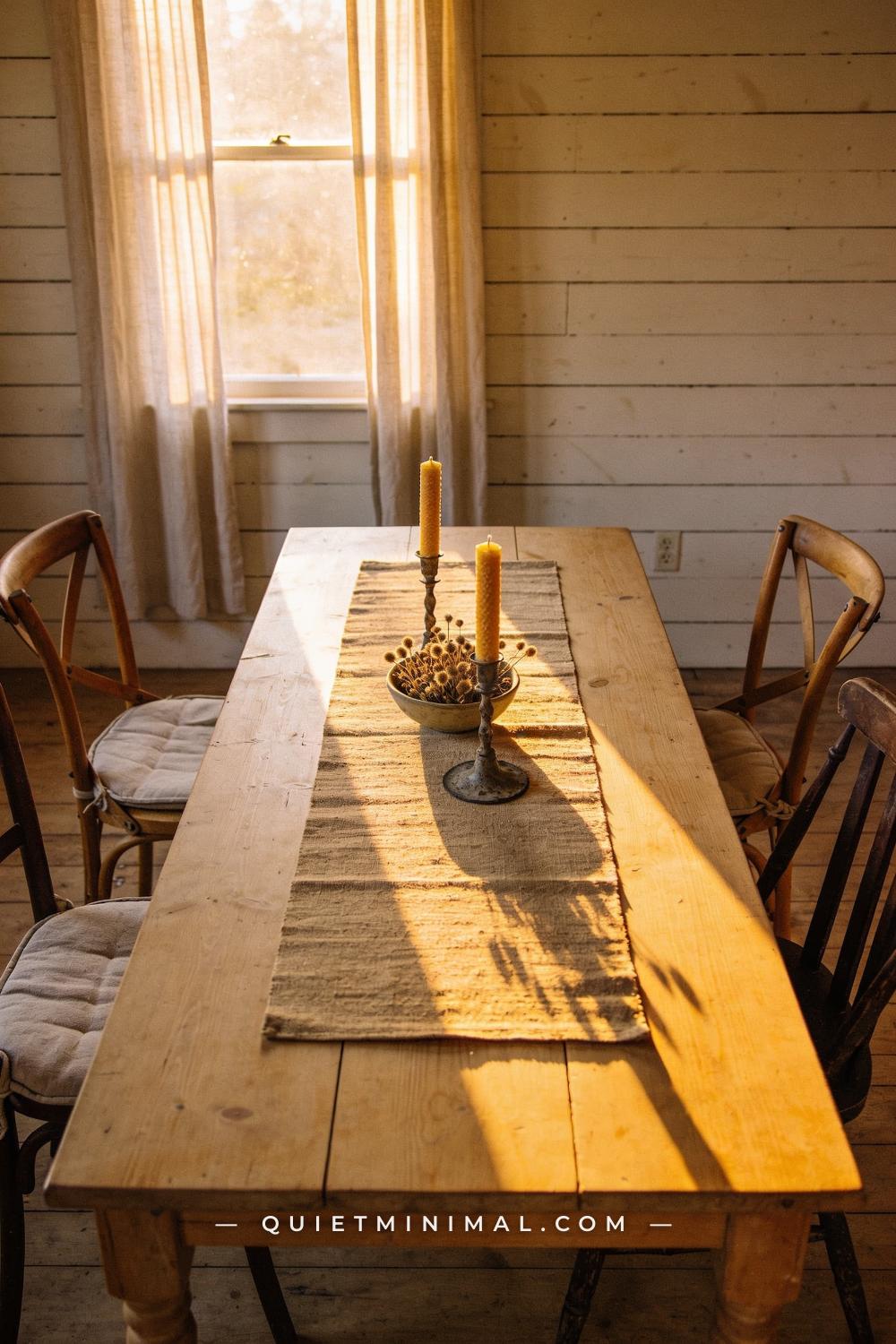
The dining table is where fall decor gets to be both beautiful and functional, and a natural linen table runner is the single investment that ties everything together. Choose undyed or raw linen, or a warm ivory — it becomes a neutral stage for everything placed on top of it, and it photographs beautifully in warm light without competing with the food or the centerpiece.
Layer the runner with a low, linear centerpiece rather than a tall arrangement that blocks conversation: a flat stoneware bowl of small gourds, a horizontal dried flower stem grouping, or a simple cluster of beeswax taper candles in varying heights. The arrangement should feel like something you’d see at a farmhouse dinner table, not a florist’s display — loose, slightly asymmetrical, anchored to the runner by weight rather than height.
Key Takeaway: A natural linen runner paired with a low, horizontal centerpiece of organic materials gives the dining table a harvest-table feeling that lasts all season without requiring refreshing.

8. Add a Wreath of Dried Botanicals to Every Interior Door
 Save
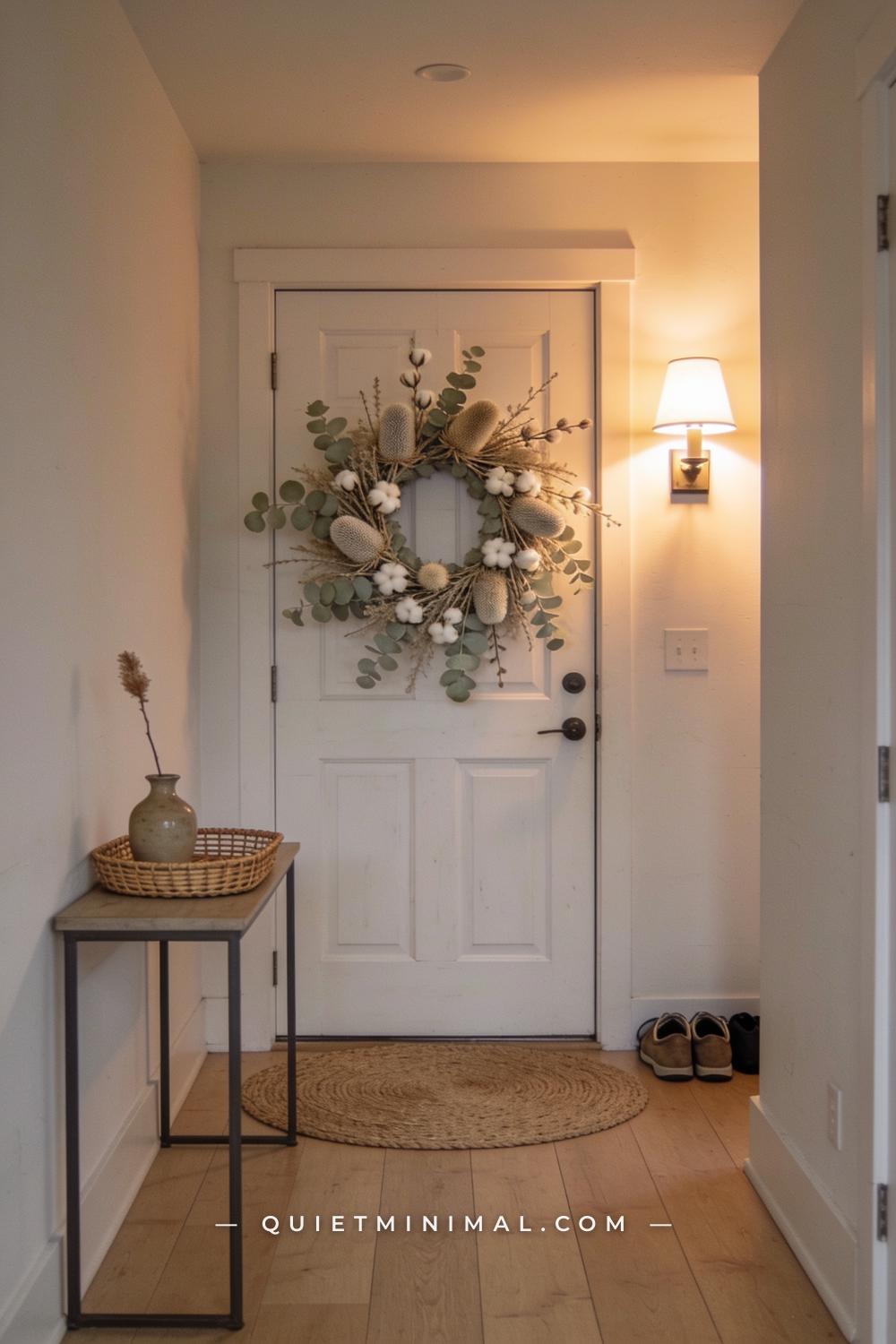
Most people stop at the front door wreath. But carrying dried botanical wreaths to interior doors — the pantry door, the master bedroom door, the mudroom entry — creates a layered, editorial effect that makes the whole home feel considered rather than decorated only at the threshold. Interior wreaths also don’t need to withstand weather, which means you can use more delicate dried botanicals like dried cotton stems, seed heads, and preserved eucalyptus.
For farmhouse fall, the best palette for a dried wreath is muted: dusty sage, warm ivory, faded rust, and charcoal seed heads. Avoid bright-dyed wreaths — the artificial color reads as craft-store immediately and breaks the organic quiet you’ve built everywhere else. A simple neutral dried wreath that costs a fraction of a florist arrangement will outlast it by two to three seasons when stored correctly.
Key Takeaway: Extending dried botanical wreaths to interior doors creates a cohesive, whole-home fall atmosphere that a single front-door wreath can never achieve alone.
From the guides
You've saved it, wanted it. Here's the how: codes, measurements, order. Your choices make it yours.
The Japandi Honest PlaybookThe honest version of the style: what to keep, what to skip, and the order to do it in.See inside →The Room Refresh PlaybookA repeatable four-step method, room by room, in ten minutes, thirty minutes, or one weekend.See inside →Make Any Room Feel Cozy on PurposeWhy some rooms hold people and others empty out, and the moves that change it.See inside →
9. Style the Kitchen Counter With an Earthy Harvest Vignette
 Save
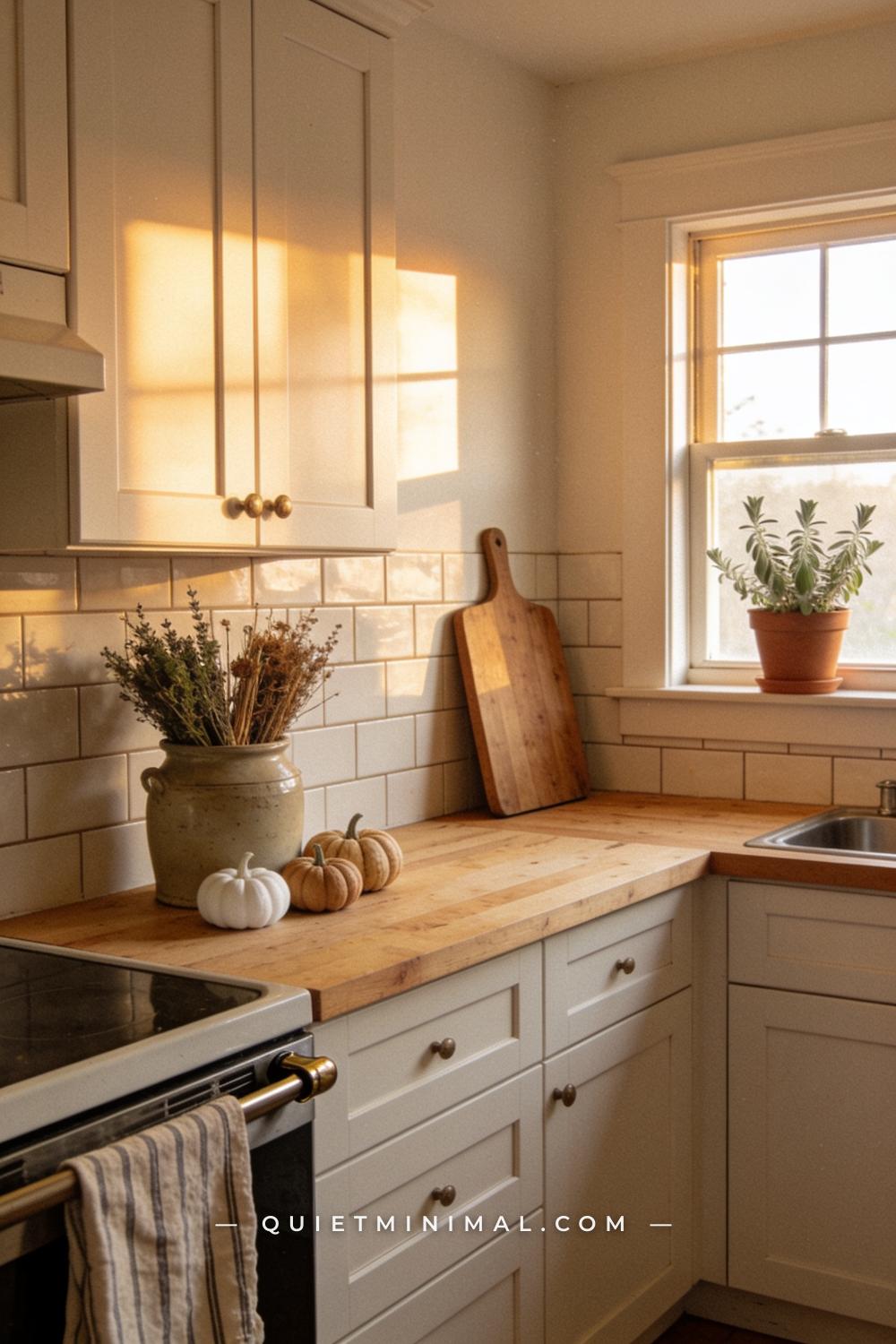
The kitchen is the most used room in the house, and it’s often the most neglected when it comes to seasonal decor — because most fall styling advice is built around the living room and front porch. But a small, considered harvest vignette on one kitchen counter section is deeply effective: it makes the kitchen feel warm and seasonal without disrupting function, and it photographs beautifully for anyone who shares their home to Pinterest or Instagram.
Keep it to one corner, one to two feet of counter space, and three objects maximum. A stoneware crock or vessel, a few real mini gourds or white pumpkins, and one organic element — dried herb bundles, a small cutting board, a fresh potted herb. The counter shouldn’t look staged; it should look like someone who cooks well also has good taste. Avoid adding signage, chalkboards, or seasonal word art — they immediately date the look and undercut the organic, collected feeling you’re building.
Key Takeaway: A three-object harvest vignette in one kitchen corner — stoneware, real gourds, one organic element — brings the fall aesthetic into the most-used room without sacrificing counter function.

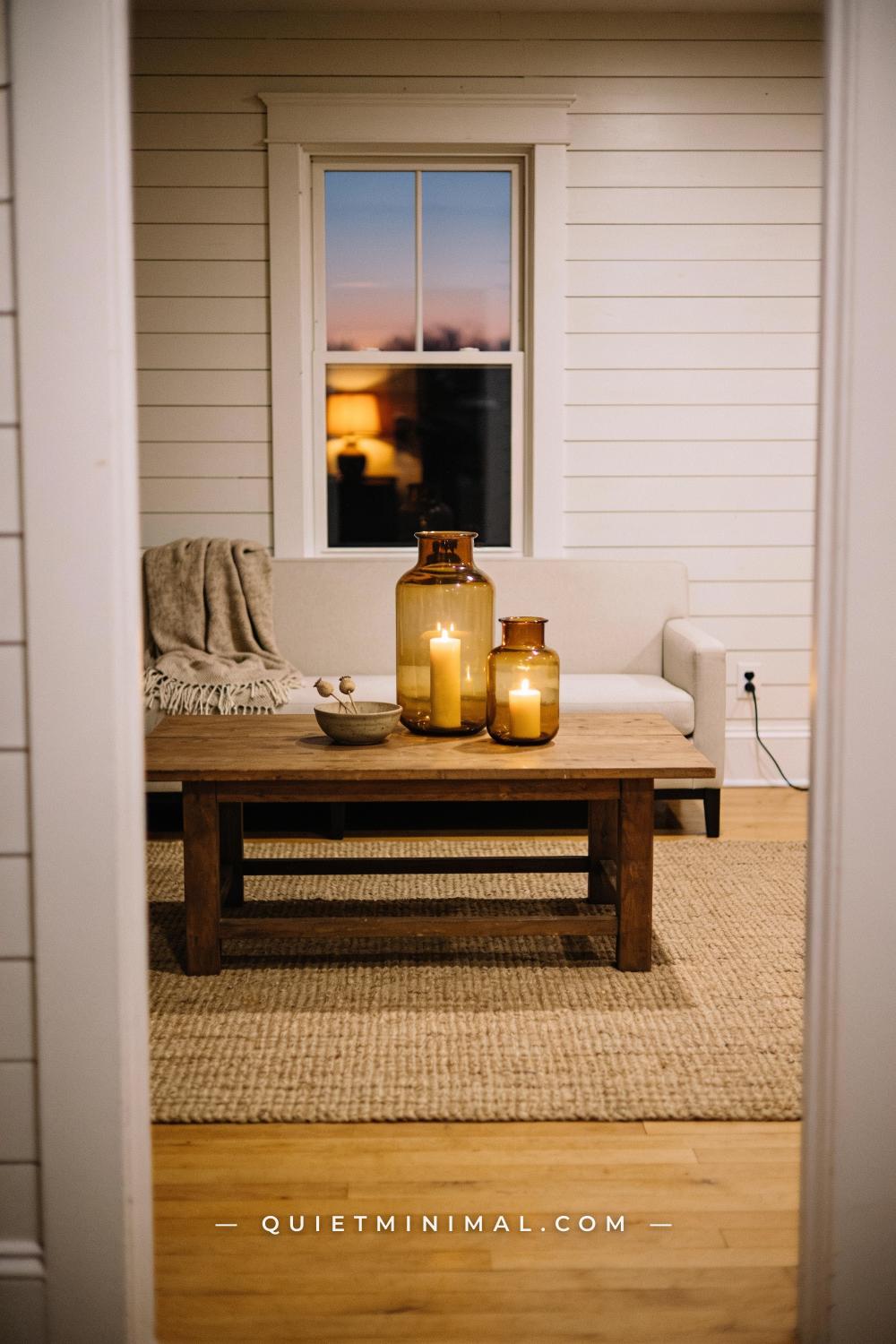
10. Layer Amber Glass Hurricane Lanterns on the Coffee Table
 Save
Amber glass catches warm candlelight in a way that no other material does — it filters and amplifies the glow, turning even a simple pillar candle into something that looks like it belongs in a farmhouse editorial. Hurricane lanterns in amber glass are available at nearly every home price point, and unlike clear glass, the amber tone itself adds to the fall palette even when the candles aren’t lit.
Group them on the coffee table at two heights — a taller hurricane and a shorter one, offset slightly — rather than placing them symmetrically. Add a small stoneware or wooden object beside the grouping to break the glass dominance with a matte material. In the evening, even a single lit candle inside an amber hurricane does more atmospheric work than a fully dressed mantel under overhead lighting.
Key Takeaway: Amber glass hurricane lanterns grouped at two heights on a coffee table create the warmest fall atmosphere in the room — and the effect is dramatic with a single lit candle.

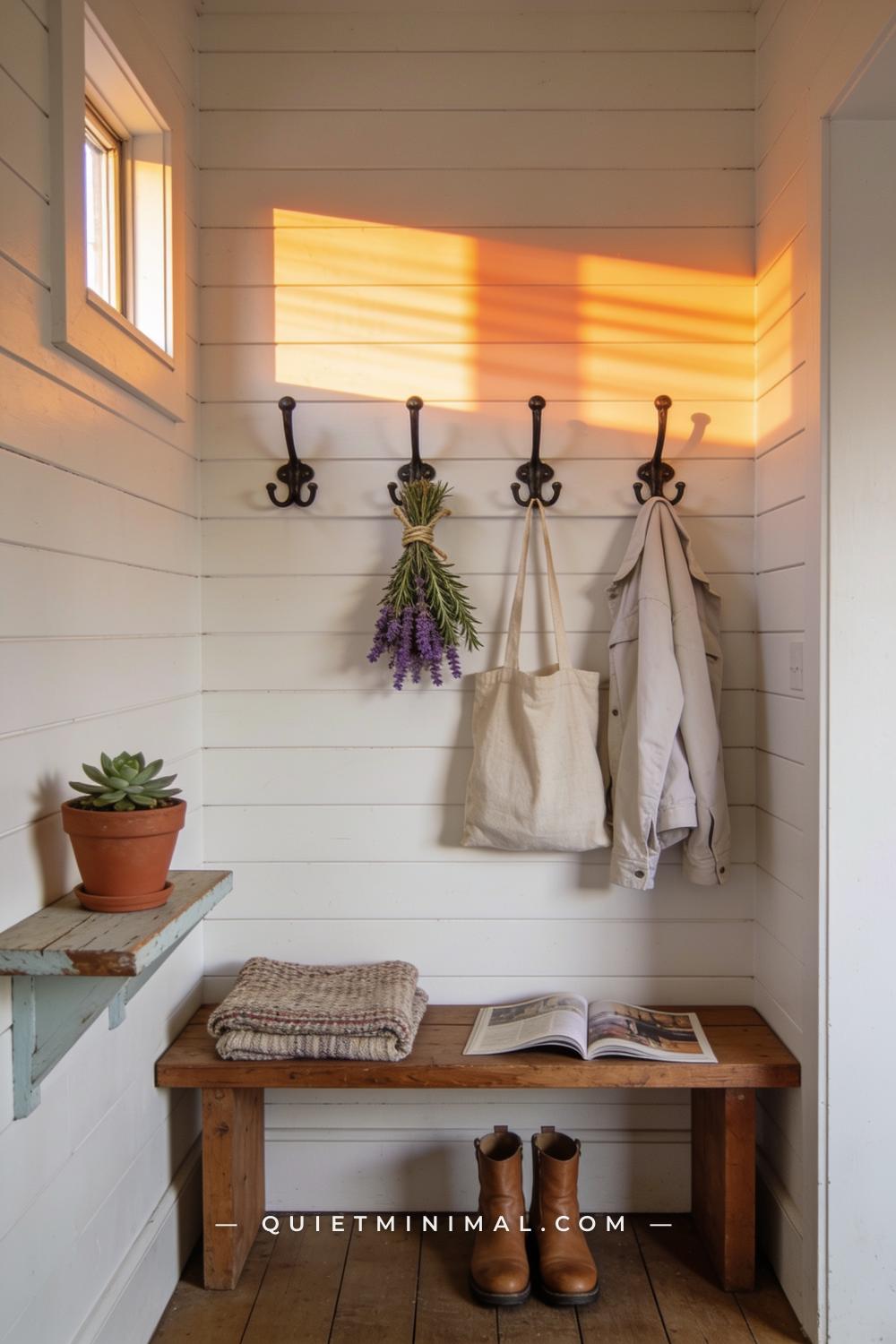
11. Hang Dried Herb Bundles in the Kitchen or Mudroom
 Save
Dried herb bundles — rosemary, lavender, sage, eucalyptus — serve triple duty in a farmhouse fall home. They’re decorative, they smell extraordinary as they dry, and they’re functional if you actually cook with them. Hung from a set of iron wall hooks in a mudroom or from a ceiling beam or pot rack in the kitchen, they create an effortless “working farmhouse” aesthetic that’s more authentic than any purchased seasonal accessory.
Tie each bundle with natural jute twine and hang them at slightly staggered heights so the grouping has movement. The drying process takes one to two weeks and the visual continues to look beautiful for months — the color shifts from fresh green to muted sage and dusty grey-green, which actually reads even better for fall’s quieter palette. This is one of the cheapest and most photographable fall decor moves in the entire list.
Key Takeaway: Dried herb bundles hung from iron hooks in the mudroom or kitchen are the most authentic and inexpensive farmhouse fall accent — they smell incredible, photograph beautifully, and cost almost nothing.

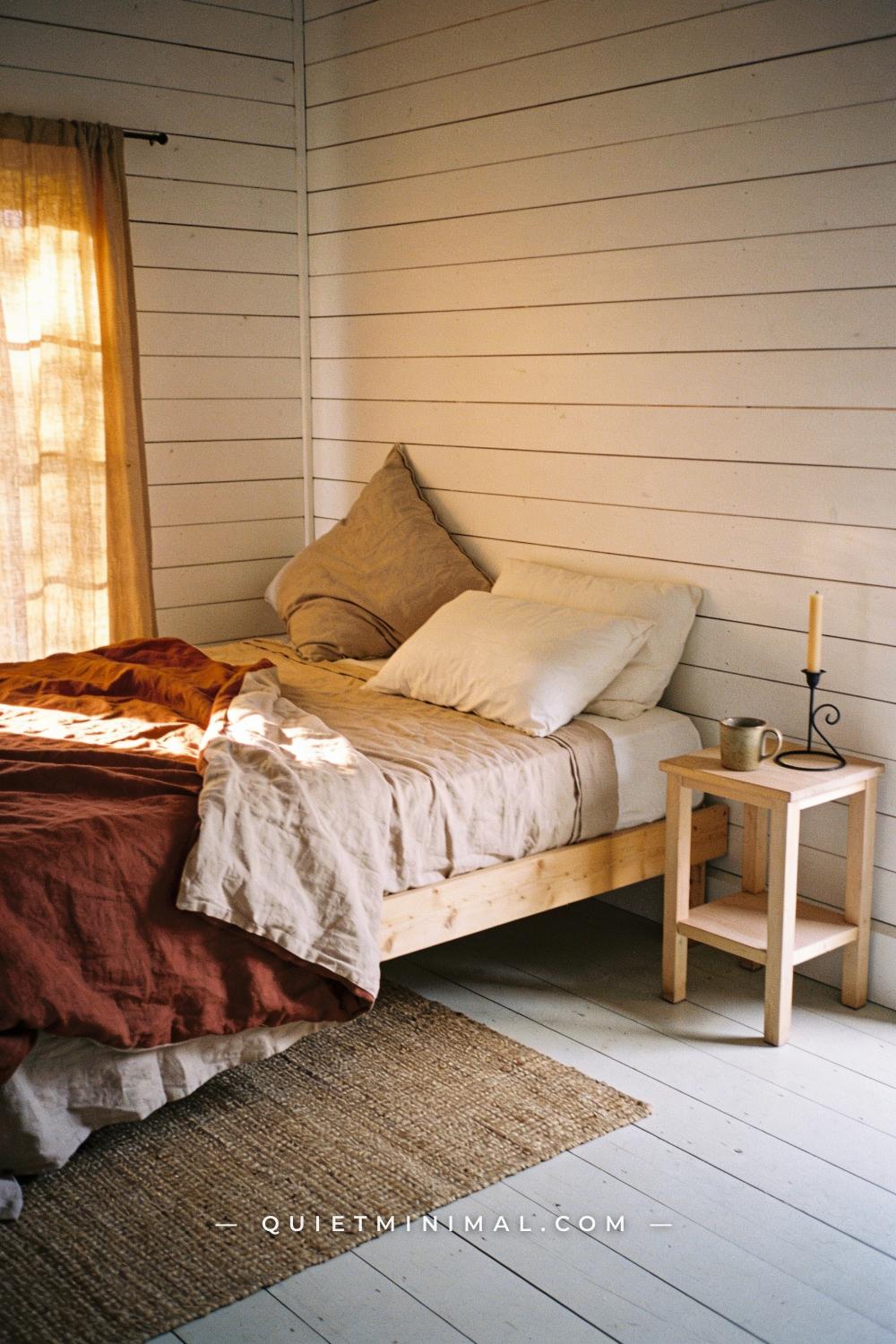
12. Complete the Bedroom With Linen Bedding in Autumn Earth Tones
 Save
The bedroom is the last room most people think to refresh for fall, but it’s one of the highest-return investments because you experience it twice a day. The shift is simple: swap bright-white cotton bedding for linen in warm, earthy tones. Deep rust, warm terracotta, aged ivory, or a dusty sage are all right. Linen specifically is the fabric of choice because it has natural texture variation and soft drape that cotton percale can’t replicate — it photographs like it was styled by a professional and gets softer with every wash.
Layer the bed with at least three textures: a linen duvet, a lighter linen or waffle-knit blanket folded at the foot, and a chunky knit throw draped loosely over one corner. Keep the pillow arrangement simple — three pillows is enough. Pair with a beeswax taper candle on the nightstand and one dried stem in a slim ceramic vase, and the bedroom becomes the most calming room in the house for the entire fall season.
Key Takeaway: Layered linen bedding in earthy fall tones — rust, terracotta, warm ivory — transforms the bedroom into the most restful room of the season with no additional accessories required.

Fall decor done well isn’t about quantity — it’s about choosing pieces that are organic, textured, and built to last more than one season. The ideas that hold up year after year share the same logic: natural materials over synthetic, muted earthy tones over screaming orange, and vignettes that are layered but not crowded. Start with the room you spend the most time in, pull in two or three of these ideas at once, and build outward from there. By the time you finish, the whole house will feel like fall landed on its own — not like it was installed.
 Save
Styling Ideas
 Save
Rustic Farmhouse Fall Decor Ideas That Actually Look Expensive
 Save
Front Porch Stacked Hay Bales and Real Pumpkins Done Right
 Save
Amber Glass Hurricane Lanterns Layered on the Coffee Table
 Save
Fireplace Mantel Vignette Built Around the Odd-Number Rule
 Save
Linen Bedding in Autumn Earth Tones for a Cozy Fall Bedroom
 Save
Swap Synthetic Pumpkins for a Dried Wheat Bundle Centerpiece
From the guides
You've saved it, wanted it. Here's the how: codes, measurements, order. Your choices make it yours.
The Japandi Honest PlaybookThe honest version of the style: what to keep, what to skip, and the order to do it in.See inside →The Room Refresh PlaybookA repeatable four-step method, room by room, in ten minutes, thirty minutes, or one weekend.See inside →Make Any Room Feel Cozy on PurposeWhy some rooms hold people and others empty out, and the moves that change it.See inside →