 Georgia
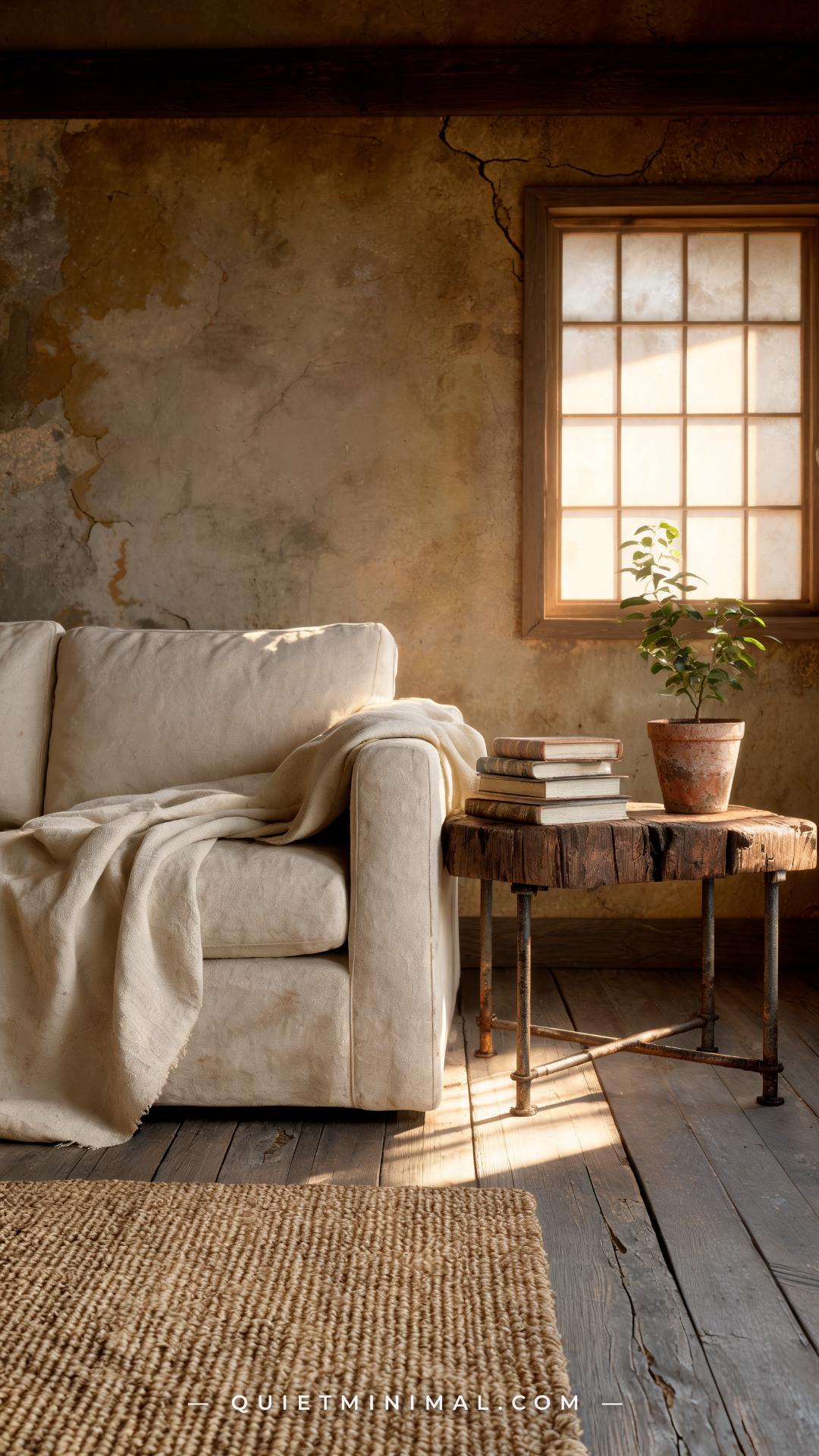
There is a specific kind of side table that makes a room feel like it has a history — the kind where the surface shows the grain of wood that lived outdoors for decades, where the iron legs have a patina that no spray paint can replicate, and where the whole piece looks like it belongs rather than arrived in flat-pack form. Distressed dark wood, aged iron pipe, and raw organic forms are not a trend in the way that statement wallpaper or fluted furniture is a trend. They are a design language that has been building steadily because the alternative — rooms full of smooth, identical, perfectly matched furniture — has started to feel sterile. If you have been saving images of this look but have not pulled the trigger because you are not sure which form of rustic side table actually works in your specific room, this article is the practical answer. Here are 14 specific ideas, organized by table form, with honest advice about where each one works and where it falls flat.
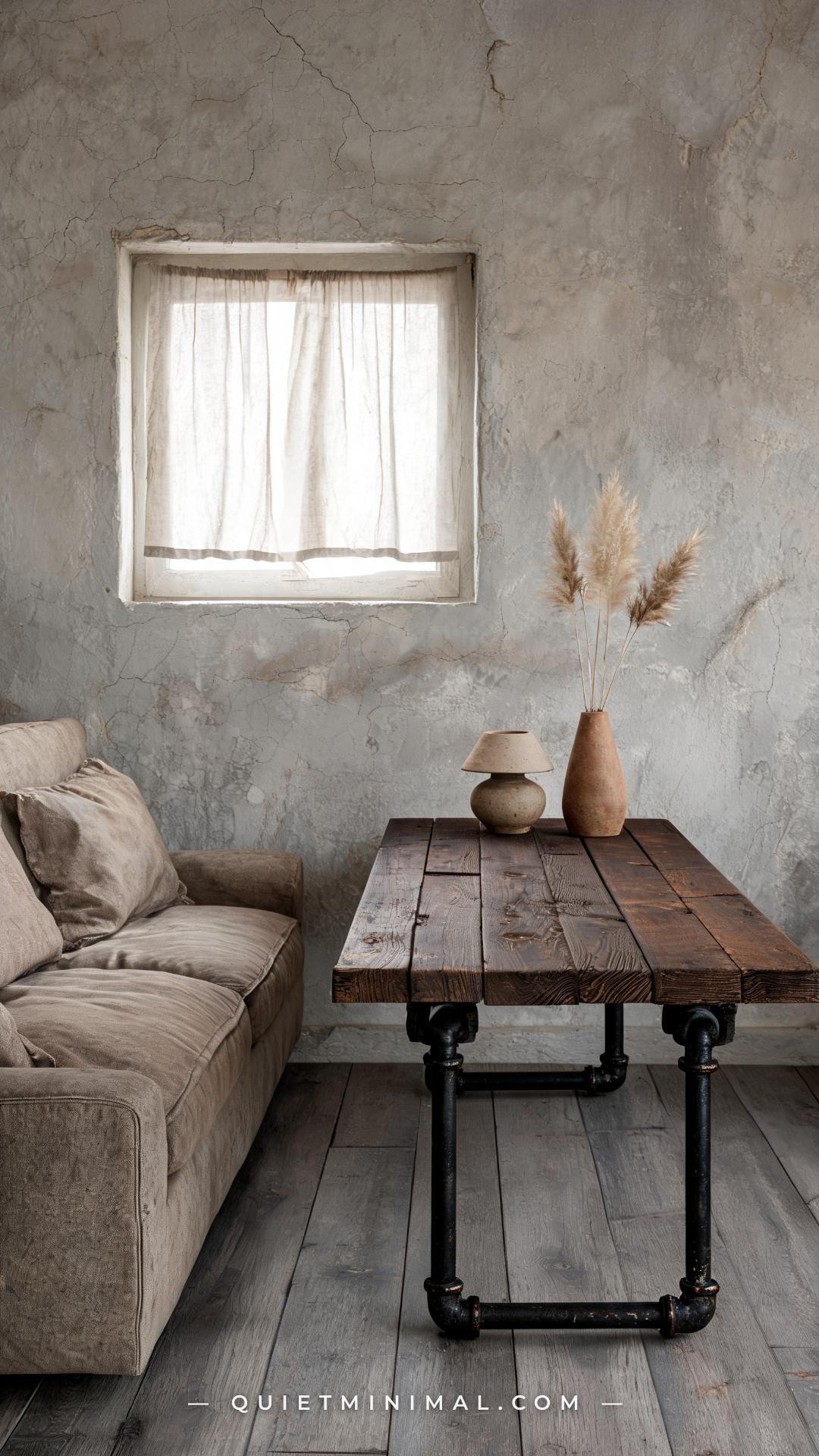
1. The Iron Pipe Leg Table With a Reclaimed Plank Top
 Save
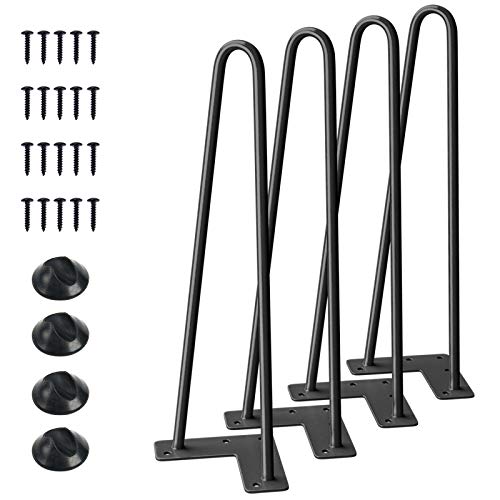
The iron pipe leg table is the most recognizable form in this category, and for good reason — the construction is honest. You can see exactly what is holding the top up, and that transparency reads as authentic rather than decorative. What makes this form work is the contrast between the industrial coldness of the black iron and the warmth of a genuinely reclaimed plank top, particularly one in dark walnut, ebony-stained oak, or aged mango wood. The fittings — floor flanges, pipe nipples, elbows — should be flat black or naturally rusted, never chrome. What makes this form fail is a top that is too smooth or too uniformly stained. If the wood looks like it came out of a factory, the pipe legs read as a costume rather than a character. Look for a top with visible grain movement, minor surface variation, and a matte or hand-rubbed finish.
Key Takeaway: The iron pipe leg table lives and dies by the authenticity of its top — choose real reclaimed or hand-finished wood, never a smooth factory veneer.
From the guides
You've saved it, wanted it. Here's the how: codes, measurements, order. Your choices make it yours.
 The Japandi Honest PlaybookThe honest version of the style: what to keep, what to skip, and the order to do it in.See inside →
 The Room Refresh PlaybookA repeatable four-step method, room by room, in ten minutes, thirty minutes, or one weekend.See inside →
 Make Any Room Feel Cozy on PurposeWhy some rooms hold people and others empty out, and the moves that change it.See inside →

2. The Live-Edge Dark Walnut Slab on Minimal Iron Hairpin Legs
 Save
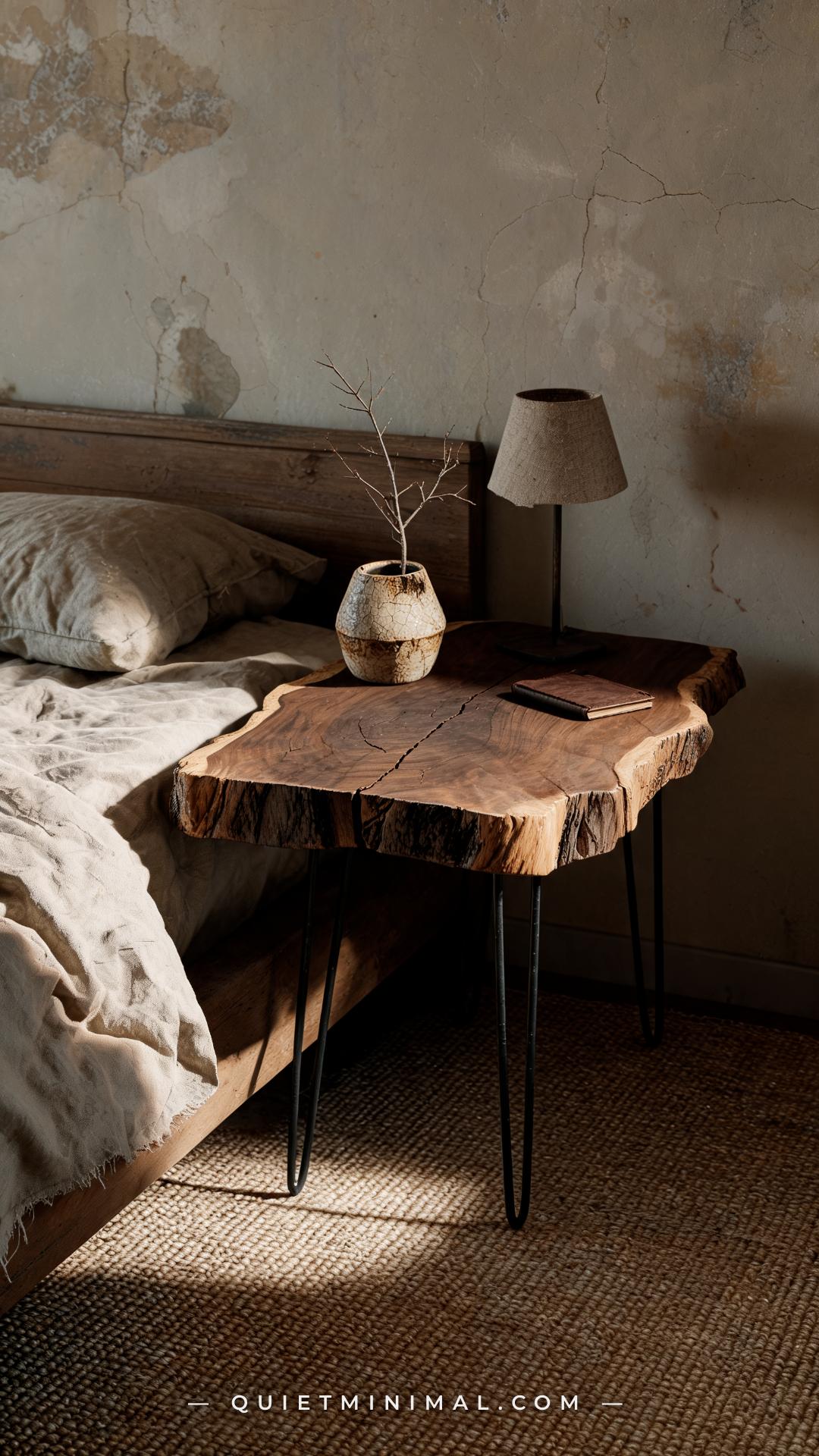
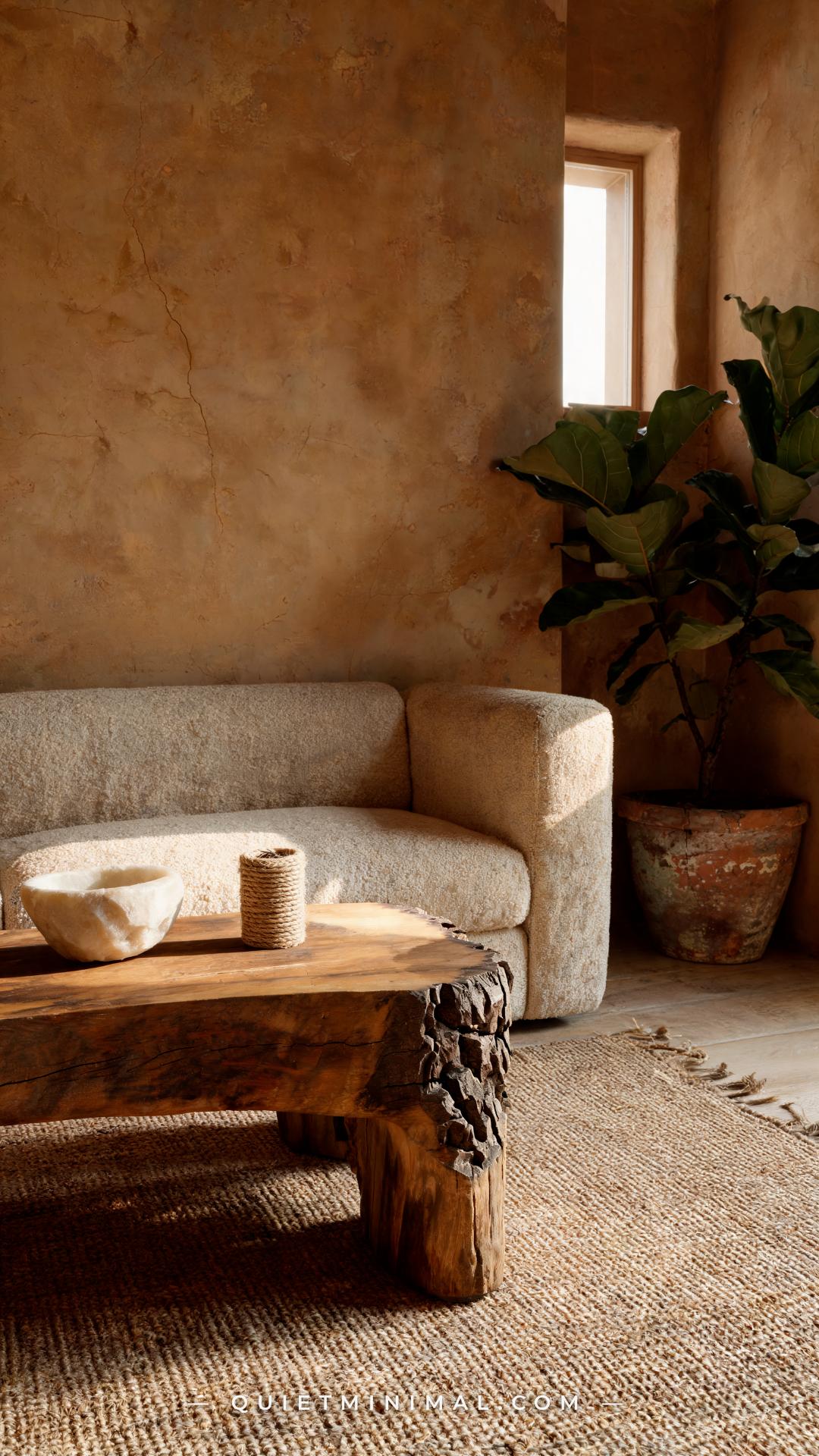
Live-edge side tables are the crossover piece between rustic and organic modern — they work in rooms that are not heavily industrial but still want a natural, textured note. The dark walnut variety specifically does something that lighter live-edge woods do not: it anchors the table visually so it does not disappear beside a dark upholstered sofa or a moody bedroom wall. The hairpin leg is the right base here because its slimness lets the slab be the focal point. A chunky iron base would compete with the edge’s visual complexity. The one mistake most people make with live-edge side tables is overcrowding the surface — the irregular edge is already doing the decorative work, so limit styling to one or two objects maximum.
Key Takeaway: On a live-edge slab, the natural edge is the decoration — keep the surface nearly bare so the wood’s organic line can read clearly.
3. The Industrial Cage-Base End Table in Welded Dark Iron
 Save
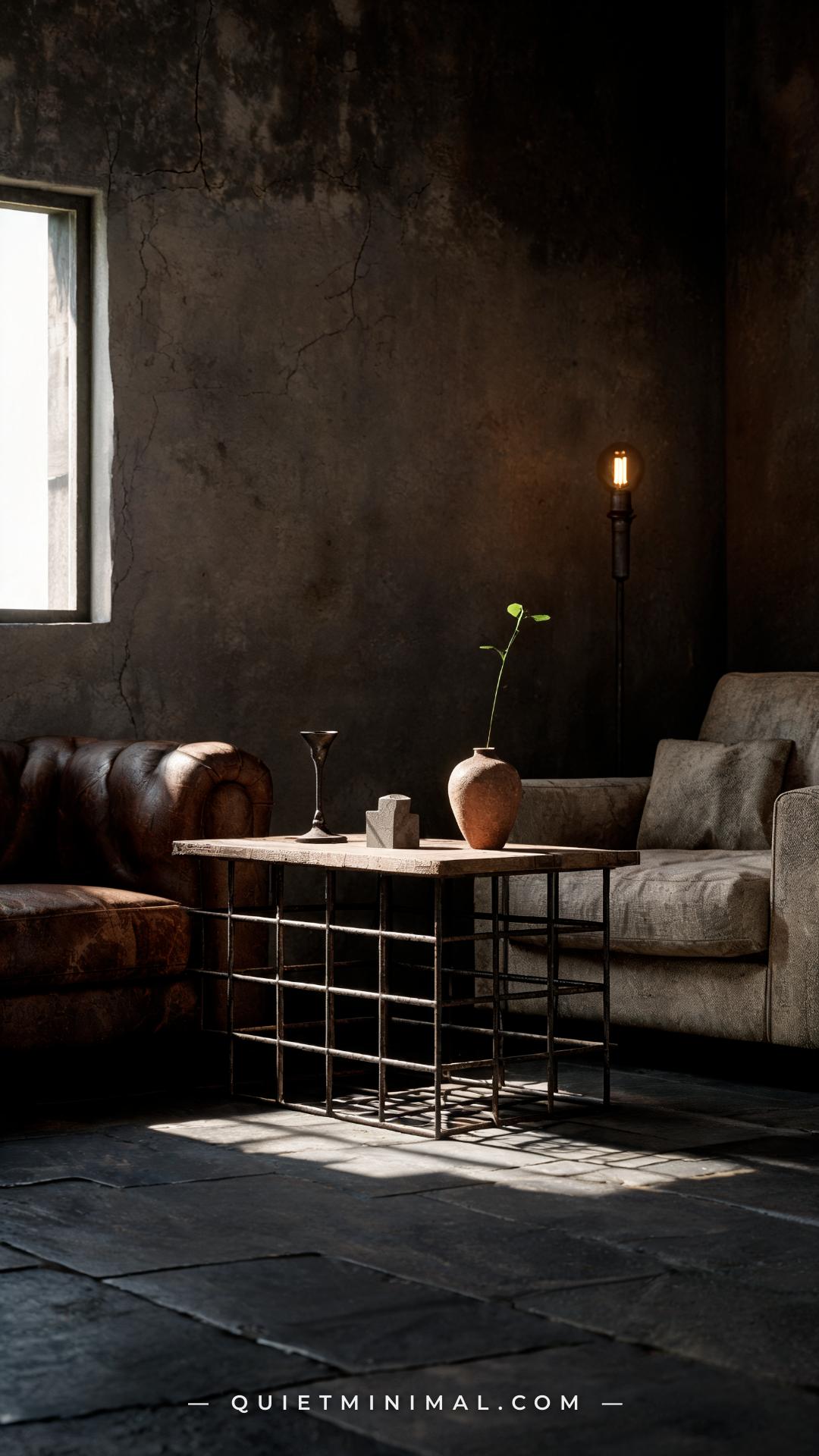
The cage-base table is the most overtly industrial option in this list, and that specificity is both its strength and its constraint. In a room with leather upholstery, exposed brick, concrete floors, or dark painted walls, an iron cage-base table looks like it was made for that space. In a room with soft textiles, painted white shiplap, or floral patterns, it will stick out as a set piece from a different film. The proportions matter more with this form than with any other on this list — a cage base that is too tall looks like scaffolding, and one that is too short loses the visual drama that makes the form interesting. Standard side table height (24 to 28 inches) is the sweet spot for most sofa-adjacent placement.
Key Takeaway: The cage-base iron table is a room-specific choice — commit to the industrial direction of the space before you buy it, or it will read as a misplaced prop.

4. The Reclaimed Wood Drum Table With a Raw-Edge Finish
 Save
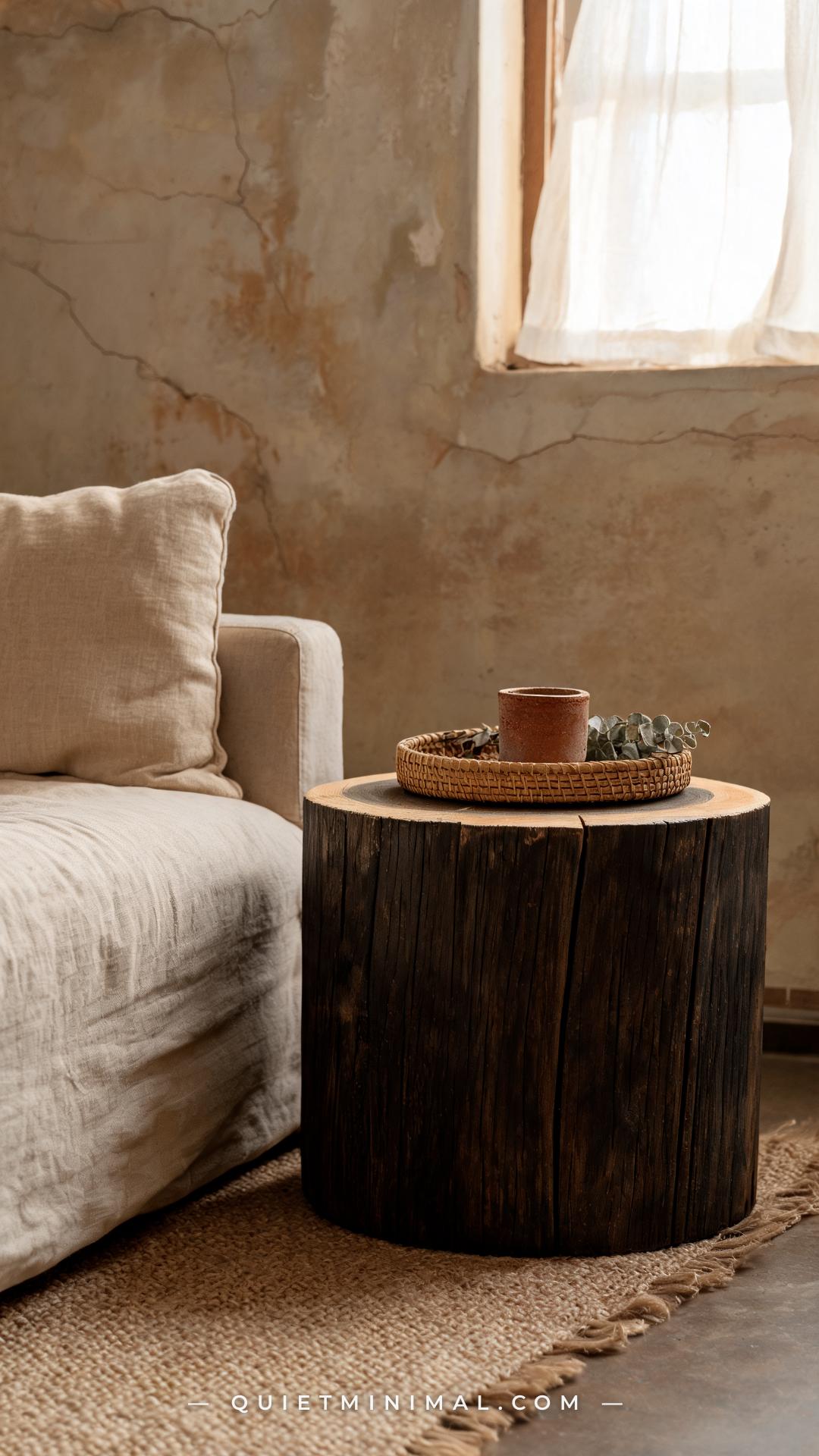
The drum table is the organic minimalist’s answer to the rustic side table category. It has no legs, no base hardware, no assembly — it is simply a mass of wood, and in reclaimed or rough-sawn dark hardwood, that simplicity reads as deliberate and grounded. The cylindrical form also solves a sizing problem that plagues narrow side tables: because the drum occupies a consistent footprint in all directions, it works beside a sofa end, in a bedroom corner, or as a freestanding accent piece without looking directional. In reclaimed mango wood or dark teak, the organic grain and color variation across the cylinder’s surface make every piece genuinely one-of-a-kind.
Key Takeaway: The drum table’s legless mass creates visual grounding that lighter tables cannot — use it in rooms where you want to add visual weight and warmth without adding furniture clutter.

5. The Tree-Stump Side Table in Dark Stained or Charred Wood
 Save
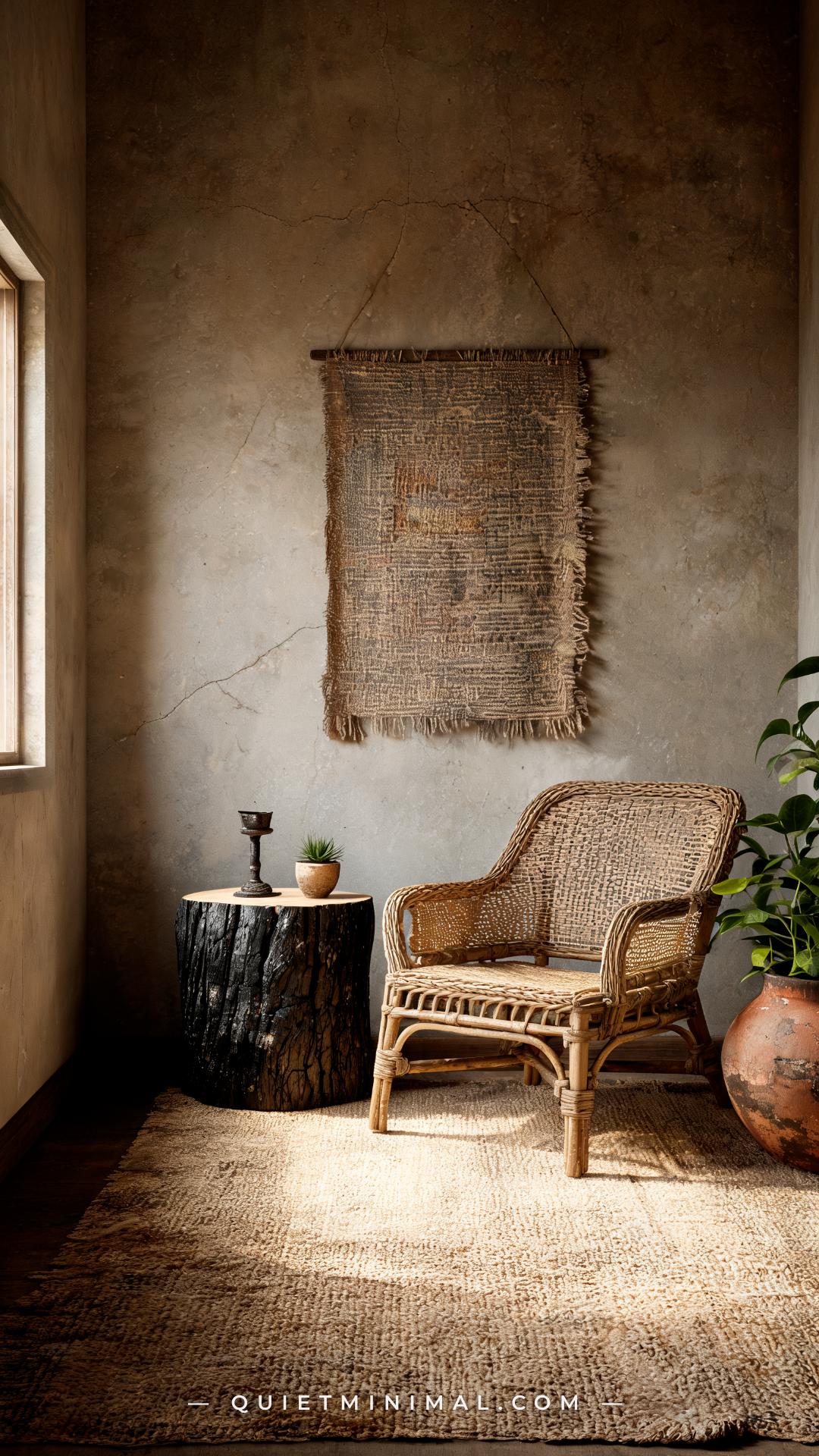
The tree stump table is the most polarizing item on this list, and the version most people get wrong is the one that looks like it was just brought in from the backyard — pale, untreated, and slightly damp-looking. The dark-stained or shou sugi ban (charred) version is a completely different object. The charred exterior stabilizes the wood, deepens the color to an almost black-brown, and turns the rough bark surface into a textural accent that works with other dark organic materials. This table works in boho-organic rooms, maximalist spaces, and anywhere you are already using natural materials like jute, rattan, and dried botanicals. It does not work in rooms that are trying to be sleek or contemporary — the form is too irregular and too obviously natural to coexist with modern geometric furniture.
Key Takeaway: A charred or dark-stained tree stump table reads as sophisticated — an untreated pale stump reads as unfinished; the finish is everything with this form.

6. The Industrial X-Frame Side Table in Hammered Iron and Dark Oak
 Save
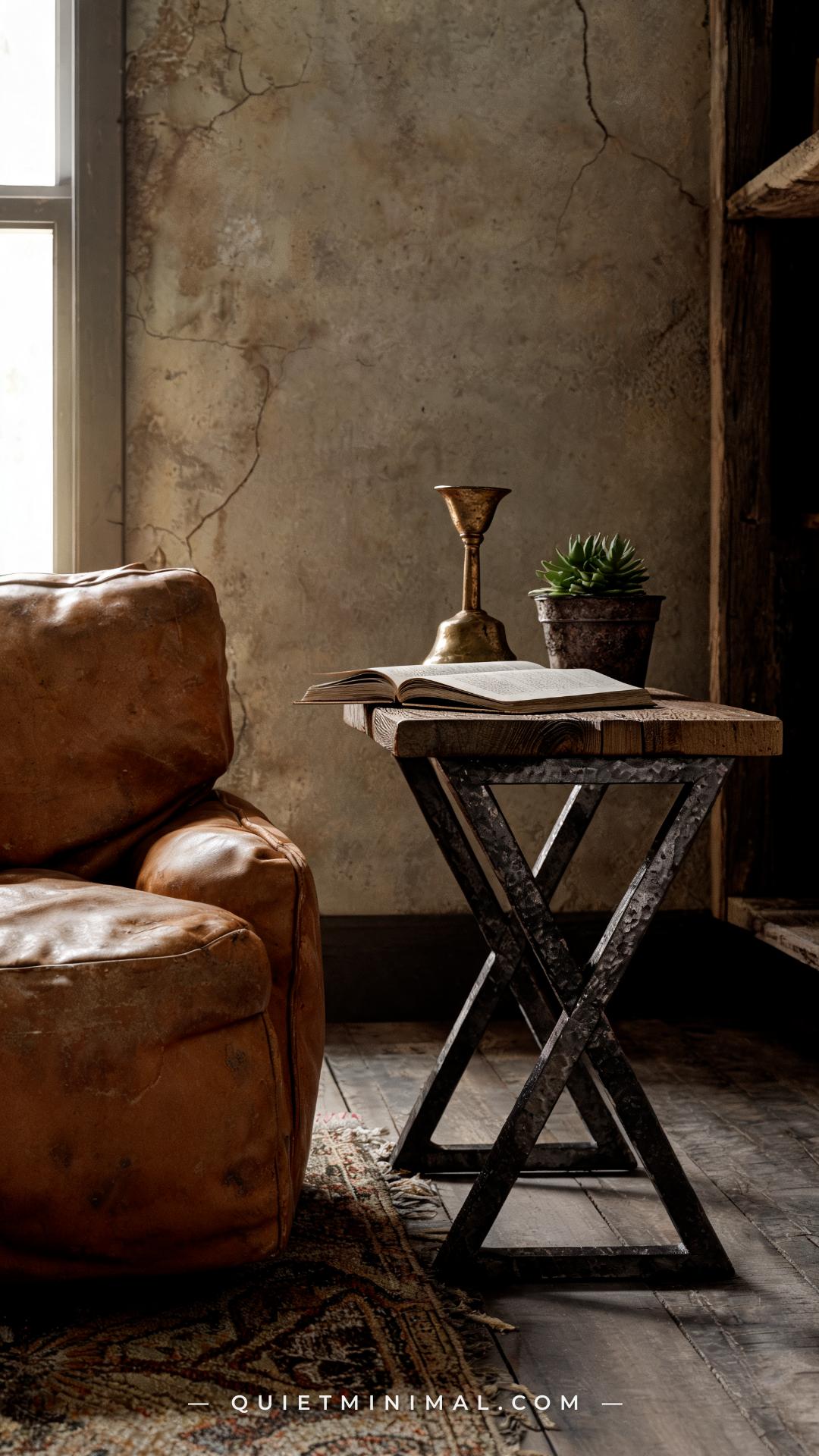
The X-frame base is a design language that sits at the intersection of traditional blacksmithing and industrial design — it has historical precedent (trestle furniture, sawhorse workbenches) and a contemporary execution. In hammered iron with a dark oak top, it works across more room contexts than most options on this list: it fits a farmhouse study, a contemporary living room, and a transitional bedroom with equal credibility. The key specification to look for is the base finish — a smooth powder-coated X-frame reads as modern and a bit corporate, while a visible hammer texture or slight surface variation reads as handmade and intentional. The dark oak top should be solid wood, not veneer over MDF, because the weight of the X-frame base requires a top with comparable visual mass.
Key Takeaway: The X-frame base is the most versatile iron table form on this list — choose a hammered or textured finish over smooth powder coat to keep the rustic credibility intact.

7. The Stacked Crate Side Table in Distressed Reclaimed Pine
 Save
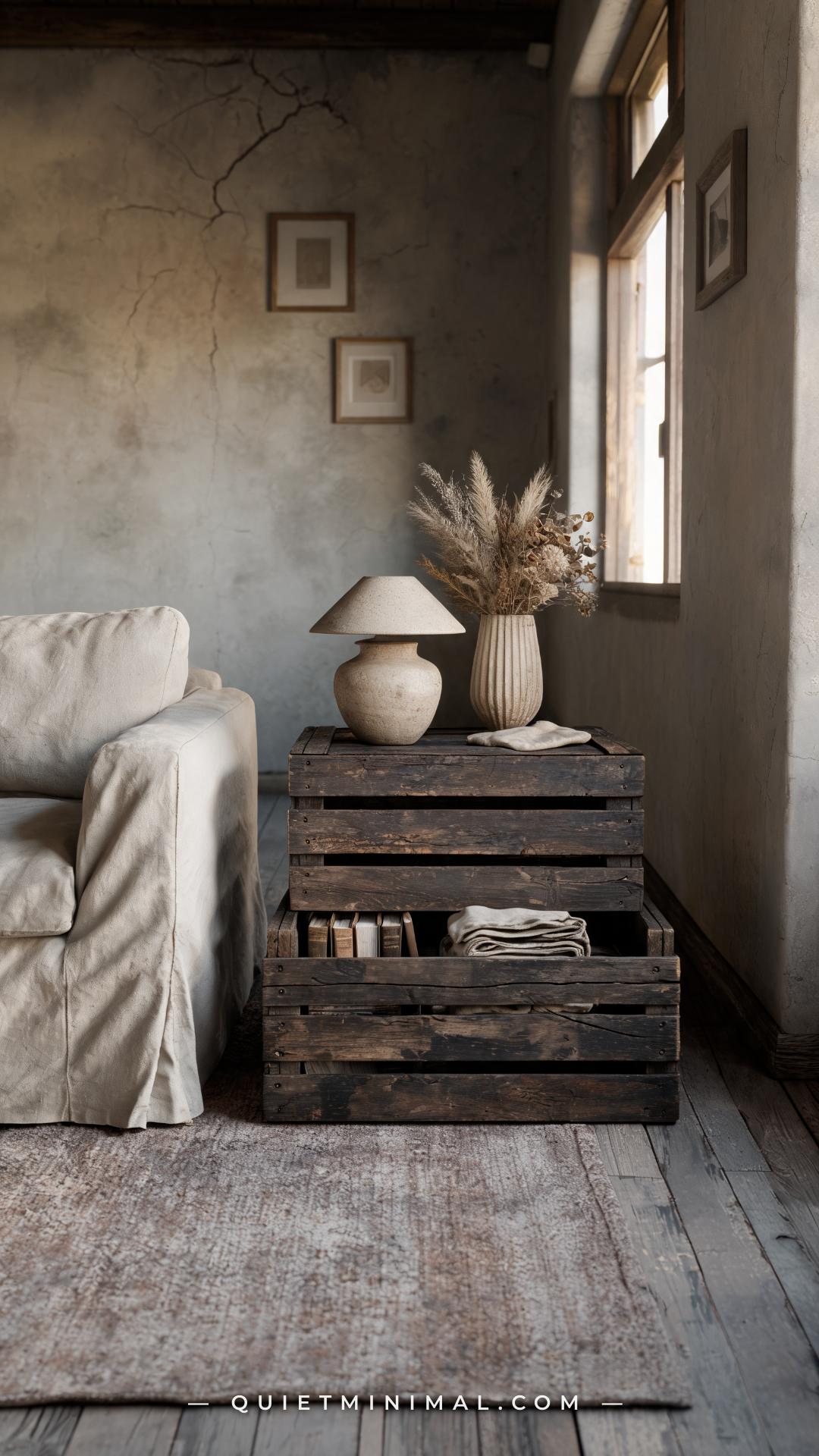
Stacked crates are the side table form that design snobs dismiss and practical stylists quietly rely on — they provide surface space at standard side table height, add hidden storage, and cost a fraction of a purchased table. The reclaimed pine version in dark stain is the credible execution: the wood’s open grain takes dark stain differently from plank to plank, creating the color variation that makes an assembled piece look genuinely collected. What matters most is structural stability — the crates must be secured to each other (a few screws through the base of the upper crate into the top of the lower one) and the base crate must be weighted or secured so the unit does not tip under a lamp’s weight. An unsecured stacked-crate table is a styling choice that announces itself as provisional; a secured one reads as furniture.
Key Takeaway: Securing the crates to each other converts a styling experiment into actual furniture — do not skip that step or the table will shift every time someone reaches for their coffee.

8. The Forged Iron Tripod Leg Table With a Rough-Sawn Dark Wood Top
 Save
The tripod base changes the visual logic of a side table from “furniture sitting on the floor” to “an object standing on the floor” — it has the intentionality of a sculpture. In forged iron, the three legs create a geometry that reads from across the room, which makes this form the best choice when you want the side table itself to be a design detail rather than a functional support item. The rough-sawn top amplifies this — the saw-mark texture on a thick dark hardwood slab is specifically not refined, and the contrast between that rough top and the precise geometry of the tripod base is where the tension that makes this form interesting lives. This table works in bedrooms (as a nightstand) and in sitting rooms with curated, intentional styling. It does not work in high-traffic areas because the tripod footprint is less stable under lateral force.
Key Takeaway: Place the tripod side table where it will be seen from across the room — its geometric base reads best at a distance, making it the most photogenic option on this list.

9. The Dark Mango Wood Accent Table With Organic Carved Edges
Save
Mango wood is the most underused material in the dark organic side table category — it is sustainably sourced (a byproduct of mango fruit cultivation), naturally dense and hard, and its grain variation produces a color story within a single piece of furniture that darker single-species woods like teak or walnut cannot replicate. When finished with a deep oil rather than a lacquer, mango wood has a warmth that reads as aged without any artificial distressing. The carved edge treatment — which at its best is more a chisel mark than a router profile — gives the piece an artisan quality that distinguishes it from mass-produced dark wood furniture. If you are choosing between a carved-edge mango table and a smooth-edge version in the same wood, the carved edge will always feel more considered.
From the guides
You've saved it, wanted it. Here's the how: codes, measurements, order. Your choices make it yours.
The Japandi Honest PlaybookThe honest version of the style: what to keep, what to skip, and the order to do it in.See inside →The Room Refresh PlaybookA repeatable four-step method, room by room, in ten minutes, thirty minutes, or one weekend.See inside →Make Any Room Feel Cozy on PurposeWhy some rooms hold people and others empty out, and the moves that change it.See inside →Key Takeaway: Mango wood’s natural color variation does the design work for you — a deep oil finish rather than lacquer lets that variation show instead of sealing it under a plastic-looking gloss.

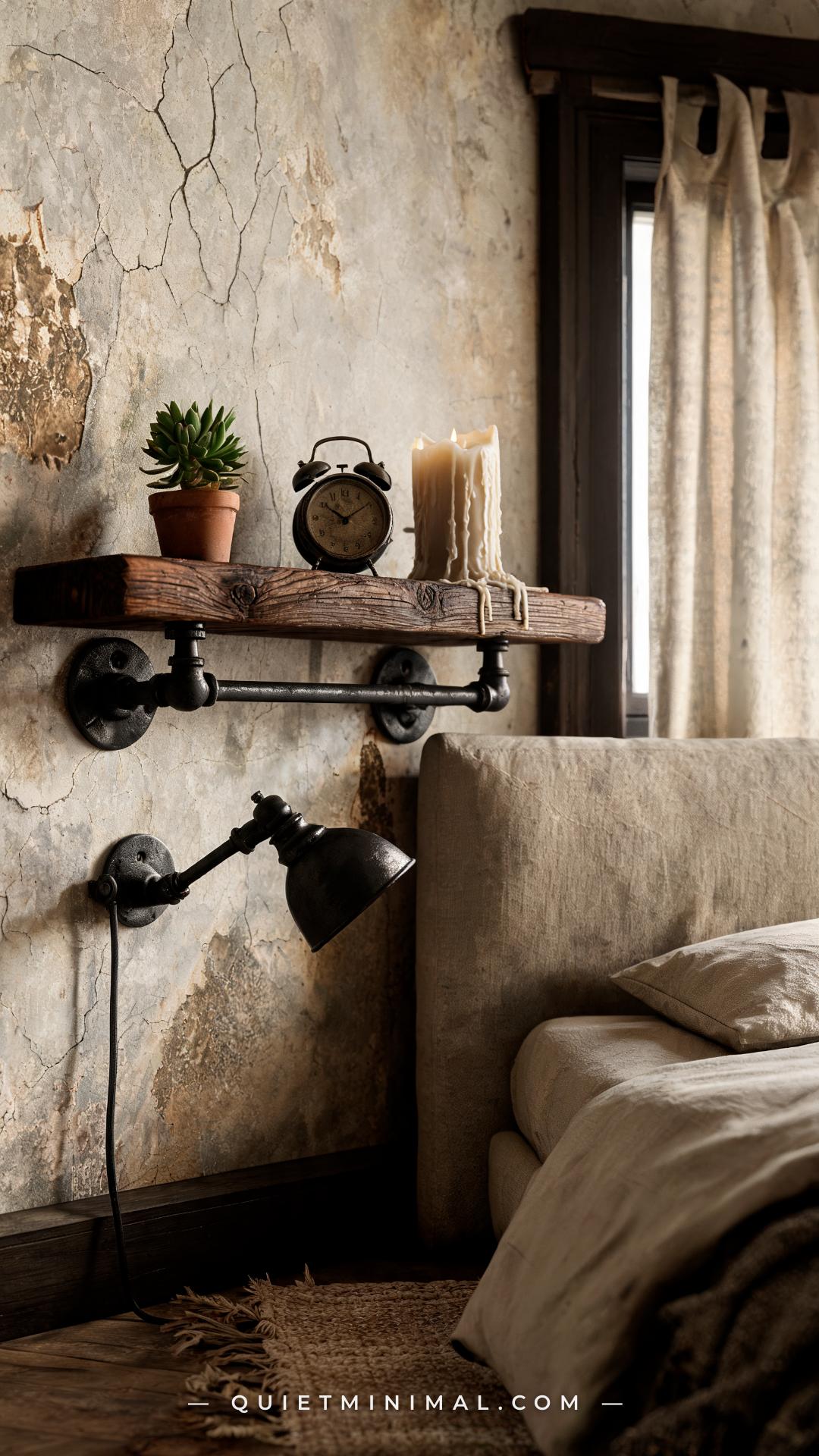
10. The Industrial Pipe Shelf Nightstand in Dark Pine and Black Iron
 Save
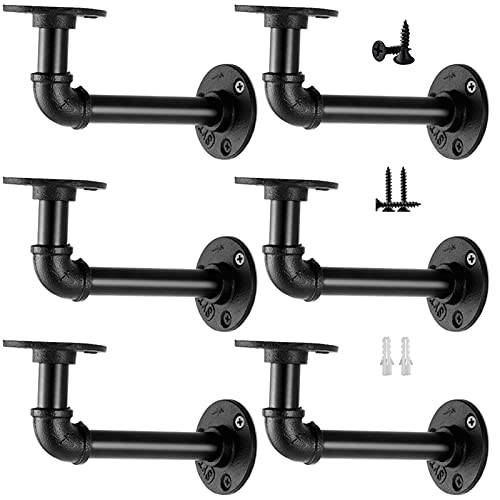
The wall-mounted pipe shelf nightstand solves the problem that floor-standing side tables create in small bedrooms — they occupy floor space that makes a narrow room feel narrower. Mounted at bed height, a pipe-shelf nightstand provides the same surface utility with zero floor footprint, and the exposed pipe bracket hardware becomes a design feature rather than a support mechanism you are trying to hide. The critical specification is bracket weight rating — a shelf holding a lamp, a phone, and a water glass needs brackets rated for at least 30 pounds each, and the shelf itself should be secured to studs or with appropriate wall anchors, not just drywall. The dark pine plank should be at least 1.5 inches thick so the shelf has visual mass proportionate to the iron brackets.
Key Takeaway: In a small bedroom, the pipe-shelf nightstand recovers floor space AND delivers a stronger design statement than a floor-standing table — it is the most practical option on this list for tight rooms.
11. The Raw-Edge Slice Side Table in Dark Ebonized Oak
 Save
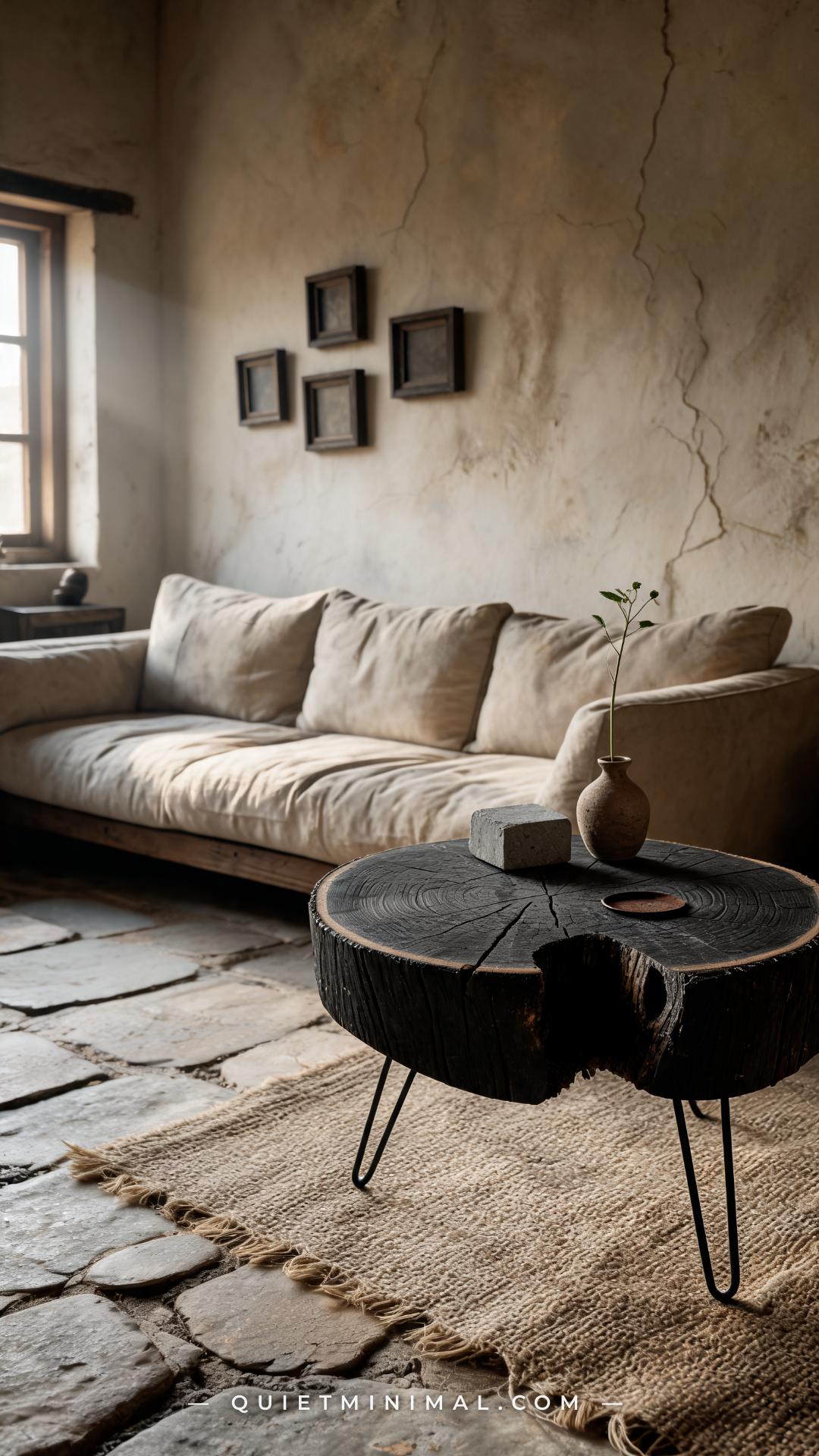
Ebonized oak is what happens when a designer finishes a raw wood slice with a steel wool and vinegar solution rather than a stain — the iron acetate reacts with the oak’s tannins to produce a near-black color that is not a coating sitting on top of the wood but a chemical change within the wood itself. The result is a surface that looks aged in a way that factory ebony stain never achieves. The raw-edge slice preserves the tree’s cross-section ring pattern, which is the strongest graphic element in any organic wood furniture — it turns the tabletop into a piece of natural art. The void or fissure that sometimes runs through the center of a slice should be left open if possible: filling it with black-tinted resin is one approach, but the open void reads as more authentic and requires no material that can yellow over time.
Key Takeaway: Ebonized oak produces a black that stain cannot — if you want a dark organic wood side table that will not look like a stained pine knockoff in five years, ebonizing is the technique that holds up.

12. The Wabi-Sabi Dark Wood Table With Intentional Imperfection
 Save
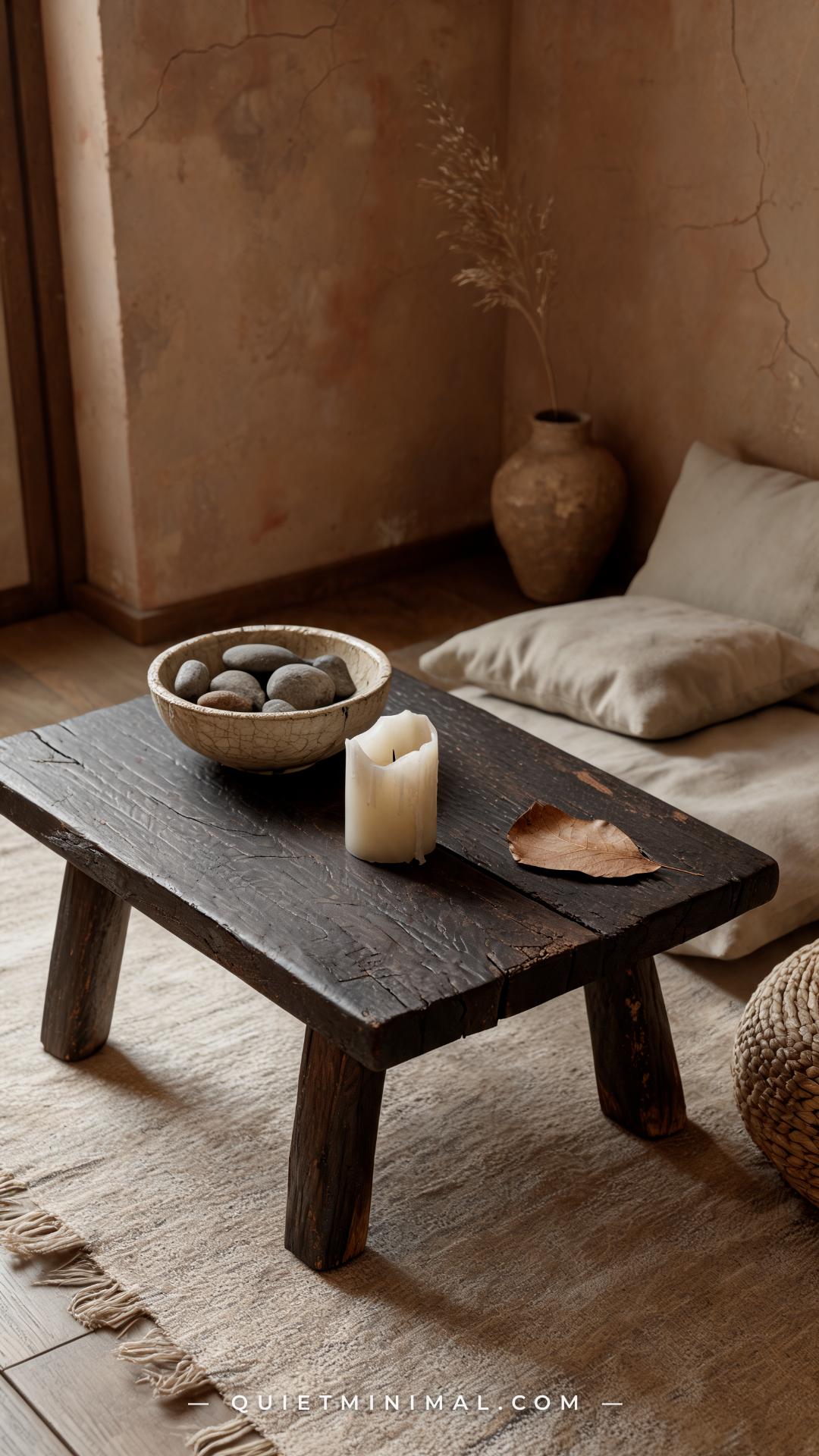
Wabi-sabi as an applied design principle in furniture means that the evidence of making is preserved rather than refined away — hand-plane marks, slight leg height variation, surface texture that resists a perfectly smooth finish. In dark wood furniture, this results in a piece that looks genuinely handmade rather than machine-produced-to-look-handmade. The market for wabi-sabi side tables lives mostly on Etsy and in small independent furniture studios, and the best pieces come with a description of the wood species, the finish used, and the maker’s process. What makes the wabi-sabi table fail in a room is surrounding it with furniture that is too sleek and perfect — it needs company of the same honesty. A wabi-sabi side table beside a machine-lacquered sofa table will read as a mistake rather than a choice.
Key Takeaway: A wabi-sabi side table must have genuine imperfection — not factory-pressed texture panels pretending to be hand-planed — and it needs equally honest companions in the room to read as intentional.

13. The Iron-and-Driftwood Coastal Industrial Side Table
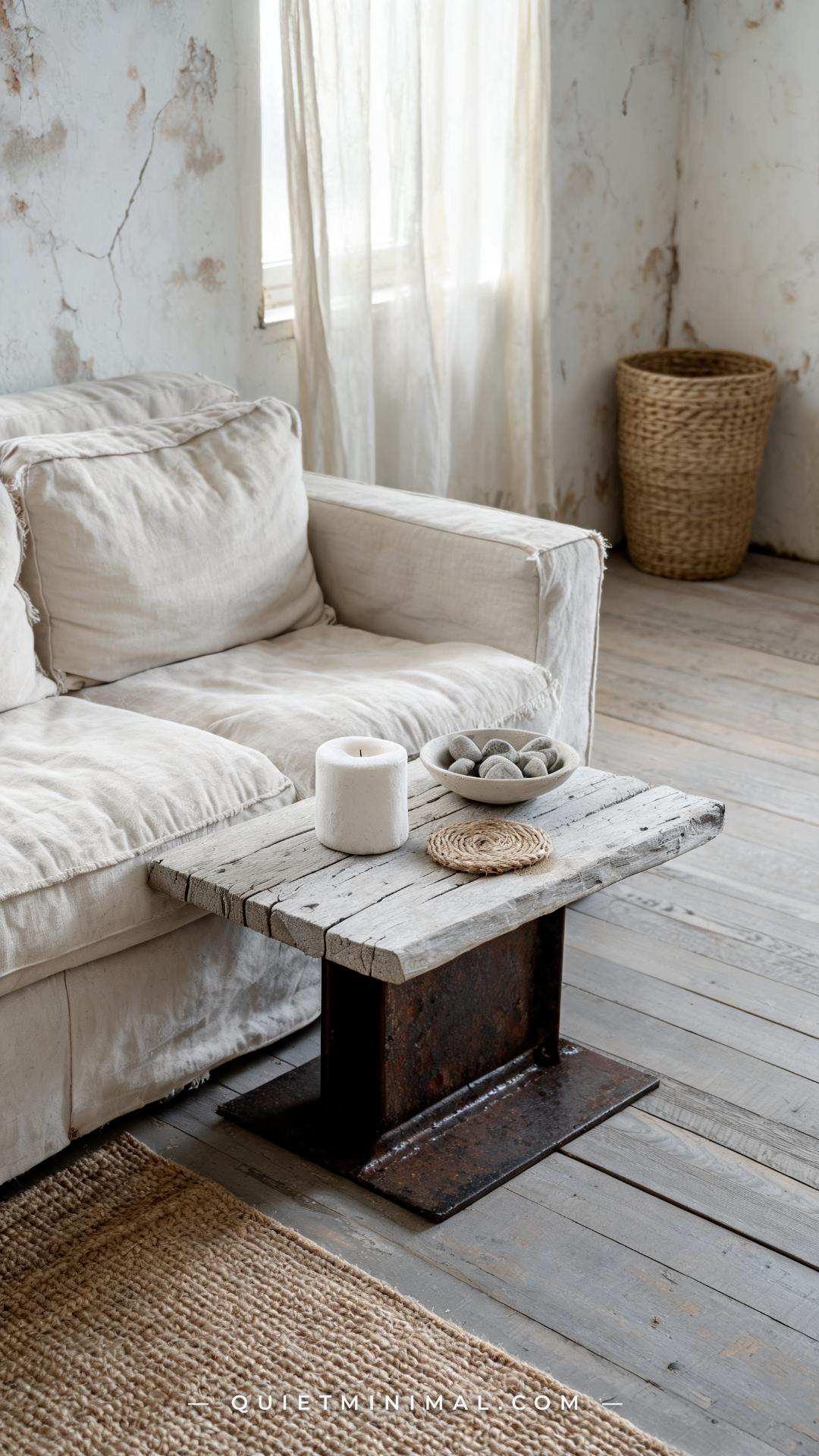 Save
The iron-and-driftwood pairing extends the rustic-industrial language into rooms that trend lighter and brighter than the typical dark-wood-and-iron interior. Driftwood-finished wood — which uses a weathered gray-white stain that mimics the salt-bleached quality of wood that has been in water — provides the natural texture and organic variation of reclaimed wood without the darkness. Against a matte black or rust-finished iron base, the contrast is striking: the cool gray wood and the dark warm iron are complementary in temperature in a way that dark wood and black iron are not. This table is the right choice for coastal homes, rooms with white or light gray walls, or any space where you want the rustic-industrial material language without adding visual weight.
Key Takeaway: The driftwood-finished top with a dark iron base is the rustic-industrial table for bright rooms — it delivers the same material honesty as dark wood versions without darkening a space that needs light.

14. The Double-Tier Dark Wood and Iron Side Table With Lower Storage Shelf
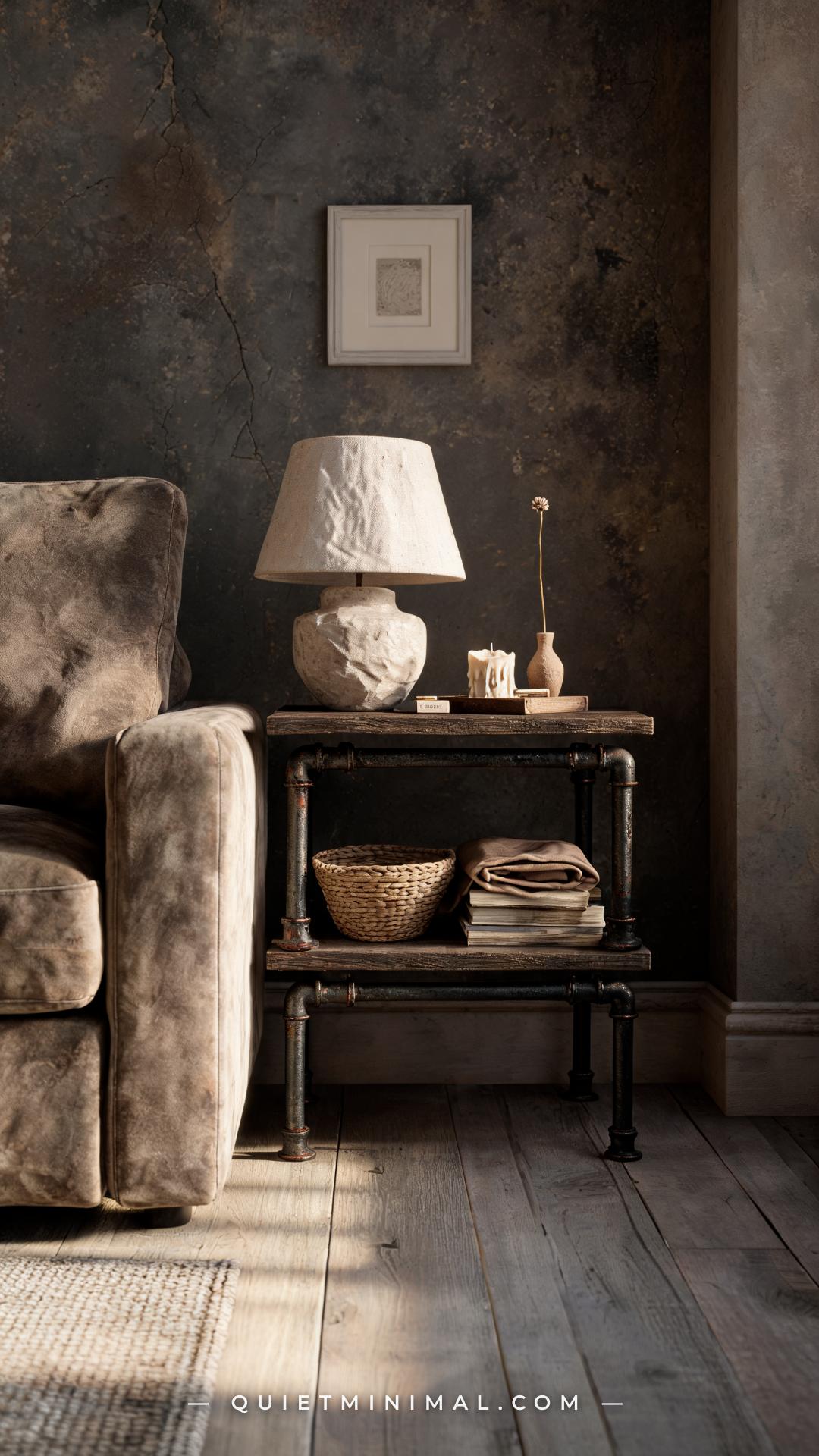 Save
The double-tier side table is the practical pick for anyone who actually uses their side table rather than just styling it. The lower shelf solves the problem of surface overcrowding — a lamp, a phone charger, a drink, a book, and a remote do not all fit comfortably on a standard single-surface table, and the visual chaos of an overcrowded side table is one of the fastest ways to make a living room feel untidy. In distressed dark wood with iron pipe connections between the tiers, the double-tier form retains all the rustic-industrial material credibility of the other options on this list while adding functional logic. The lower tier height matters: it should be high enough that items stored on it are easily accessible from a seated position (roughly 10 to 12 inches off the floor), and it should not be so deep that it traps dust or becomes a visual dumping ground.
Key Takeaway: The double-tier side table is the best functional choice for people who actually live in their living rooms — it gives surface space without the clutter that comes from piling everything onto a single shelf.

The forms covered here — from the pipe-leg plank table to the ebonized oak slice to the double-tier storage option — share one underlying principle: material honesty. Distressed dark wood, aged iron, and raw organic forms work in interiors because they are legible. You can see what they are made of, how they were put together, and what they have been through. That quality is what makes a room feel like it has a history rather than a delivery date. The next step is practical: identify which room context you are working in, match it to the two or three forms from this list that fit that context, and narrow your search to a real specification — wood species, finish type, base material. One well-chosen side table will do more for a room than three generic ones.
From the guides
You've saved it, wanted it. Here's the how: codes, measurements, order. Your choices make it yours.
The Japandi Honest PlaybookThe honest version of the style: what to keep, what to skip, and the order to do it in.See inside →The Room Refresh PlaybookA repeatable four-step method, room by room, in ten minutes, thirty minutes, or one weekend.See inside →Make Any Room Feel Cozy on PurposeWhy some rooms hold people and others empty out, and the moves that change it.See inside → Save


