 Georgia
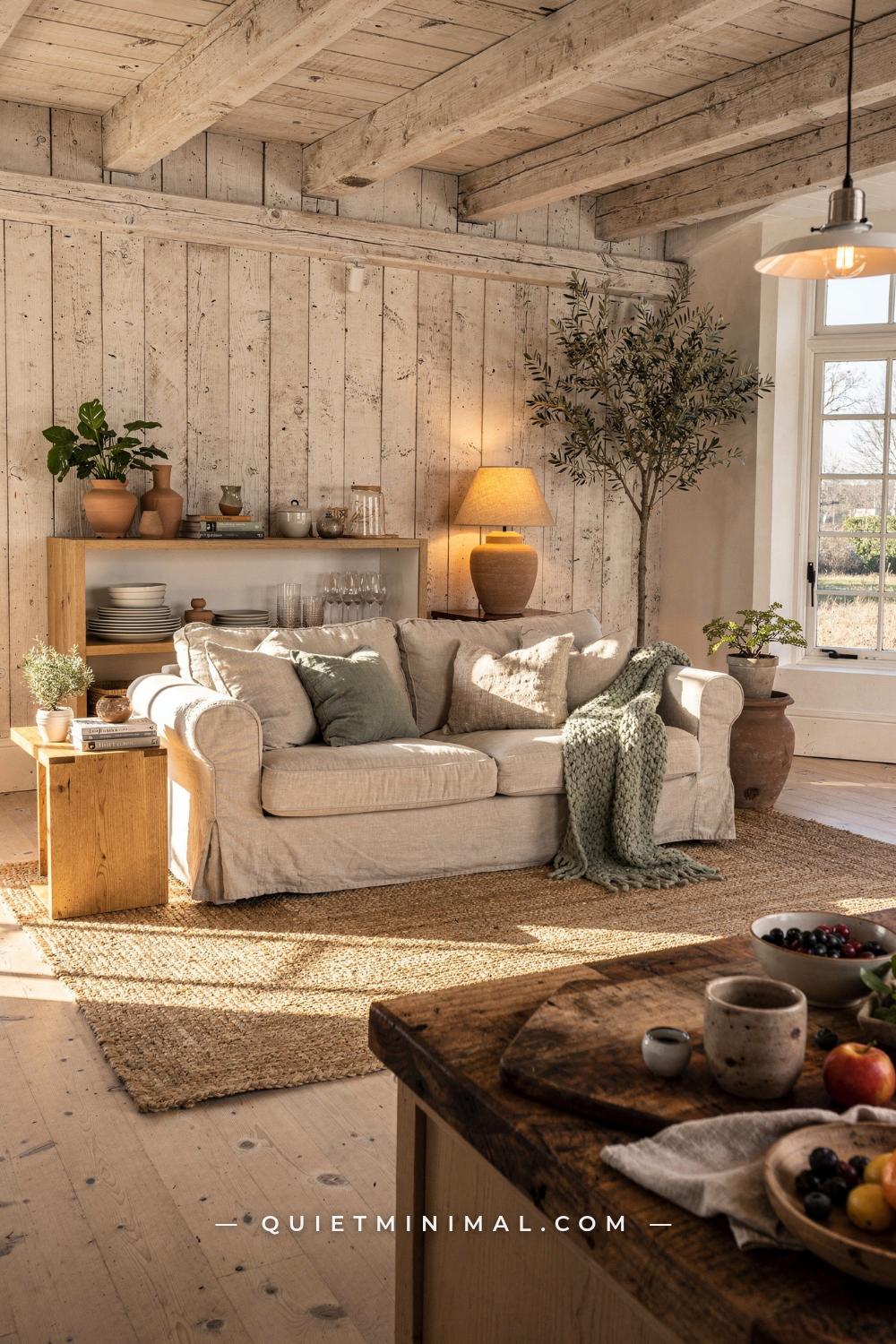
If your room is full of the right ingredients but still feels like a showroom that nobody actually lives in, you are not alone. Scandinavian country style is one of the most searched and most misunderstood aesthetics on Pinterest, precisely because it looks effortless in photographs and is genuinely hard to replicate at home. The gap between a styled editorial image and a real room usually comes down to a set of very specific, very fixable mistakes. Not vague “add more texture” advice, but concrete decisions about color temperature, wood-tone layering, rug proportion, and lighting placement that most people get slightly wrong, and those slight errors compound into a space that feels clinical instead of warm, sparse instead of intentional.
This article breaks down 12 of the most common Scandinavian country style mistakes, explains why each one breaks the look at a structural level, and gives you the specific fix so you know exactly what to change and why it will work.
—
The All-White Box That Reads as a Hospital Waiting Room
 Save
The all-white Scandinavian interior made sense as a trend during the long-dark-winter logic of Nordic design: pale surfaces reflect limited daylight. The mistake is applying that reasoning without the other half of the system, which is layered warm texture, honey-toned wood, and soft natural light. When you strip out those counterweights, you are left with a bright box that reads as clinical rather than calm. The palette magnifies every scuff, fingerprint, and shadow line instead of absorbing them.
The structural issue is contrast without warmth. A fully white room has very low tonal contrast, which sounds like it should be soothing, but the human eye reads low-contrast white environments as institutional because those are the places we actually encounter all-white surfaces: offices, clinics, and showrooms. The fix is not to abandon the neutral palette but to shift its undertone.
From the guides
You've saved it, wanted it. Here's the how: codes, measurements, order. Your choices make it yours.
 The Japandi Honest PlaybookThe honest version of the style: what to keep, what to skip, and the order to do it in.See inside →
 The Room Refresh PlaybookA repeatable four-step method, room by room, in ten minutes, thirty minutes, or one weekend.See inside →
 Make Any Room Feel Cozy on PurposeWhy some rooms hold people and others empty out, and the moves that change it.See inside →
Benjamin Moore Pale Oak (OC-20) is the wall color that most consistently solves this in Scandinavian country rooms: it reads as warm white in direct daylight and settles into a gentle cream at dusk. Pair it with Sherwin-Williams Accessible Beige (SW 7036) on a single accent wall, the one behind the sofa or headboard, and you introduce just enough tonal movement to make the room feel curated instead of unfinished. Neither color is dramatic; both are warm. That warmth is the structural fix the all-white room is missing.
For floors and furniture, the same logic applies. If your walls are already pure white, your floor has to carry warmth. Wide-plank oak flooring in a natural or lightly oiled finish does this; painted white floors do not. If you rent and cannot change your floors, a large area rug in oatmeal, undyed jute, or dusty sage will reset the warmth of the entire room.
Key Takeaway: Replace cool pure white with a warm-undertone neutral like Benjamin Moore Pale Oak, and pair it with one slightly deeper accent wall to create the tonal layering that Scandinavian country rooms need.

—
Matching Wood Tones That Flatten the Room
 Save
One of the most invisible but most damaging mistakes in Scandinavian country rooms is buying every wood piece in the same finish. The instinct is logical: if it all matches, it will look cohesive. The result is the opposite. A room where the dining table, floor, shelving, and side tables are all the same blonde birch reads as flat and one-dimensional. There are no depth cues for the eye to follow, so the room collapses into a single beige plane.
The physics of this is about value contrast. Professional interior designers typically work in three wood-tone tiers within a single room: a light, a medium, and a dark. The light anchors the floor or the largest furniture piece. The medium shows up in accent furniture: side tables, shelving, picture frames. The dark grounds the room in functional pieces like a sideboard, a media console, or a floating shelf. In a Scandinavian country context, a natural honey oak floor pairs with matte-painted furniture in warm off-white, plus one or two dark walnut or smoked oak accent pieces to create visual stopping points.
The rule of thumb for making mixed wood tones work is this: never use two finishes that are within the same tonal range unless they are separated by significant distance, at least 8 feet (244 cm) apart. A pale birch coffee table next to a barely-warmer pine side table creates a jarring “almost-match” that reads as a mistake. A pale birch coffee table next to a dark walnut floor lamp reads as intentional contrast. The gap in value has to be wide enough that no one could confuse them for an accident.
Today, the dominant Scandinavian wood combination is honey oak paired with smoked ash or brushed walnut. Honey oak carries a golden warmth that reads organic; smoked ash reads cooler and more architectural. Together they create the tonal pull that stops a Scandinavian country room from looking like a furniture showroom floor.
Key Takeaway: Use three distinct wood-tone tiers in every room, with a visible gap in value between each tier, to give the eye the depth cues it needs to read a space as intentional.

—
A Single Overhead Light That Kills Every Mood
 Save
A single overhead pendant or flush-mount ceiling light is the fastest way to make a Scandinavian country room feel like a rental unit. The problem is physics: overhead-only light casts downward shadows that flatten every surface it touches. Furniture loses depth. Texture disappears. The room reads as uniformly lit but deeply uninviting, which is the exact opposite of hygge.
The Nordic design tradition solved this problem centuries before anyone called it a design principle: distribute multiple low-level light sources throughout the room and use the overhead only for task situations. That habit became codified as a design rule because it works so reliably. Multiple light sources create light-and-shadow variation at human height, which is the zone where you actually experience a room while sitting on a sofa or around a dining table.
The Scandinavian country lighting formula involves a minimum of three sources per room, placed at three different heights. The first is a pendant or ceiling fixture at standard height, used primarily for ambient fill. The second is a table lamp or pair of table lamps at seated eye level, roughly 24 to 28 inches (61 to 71 cm) from the floor when sitting, used to create warmth zones around seating areas. The third is a floor lamp in a corner or beside an armchair, used to create depth and fill the room’s periphery.
Color temperature is equally important. The current Scandinavian country palette calls for bulbs in the 2,700K to 3,000K range: warm white, not daylight. A 4,000K “cool white” bulb turns a warm oatmeal sofa grey and makes wood grain look flat. At 2,700K, oatmeal looks golden, raw linen glows, and honey oak reads exactly as it should: warm and organic. If you have daylight bulbs installed anywhere in a Scandinavian country room, swapping them to 2,700K warm white is the single highest-return change you can make in under ten minutes.
Key Takeaway: Add at least two low-level light sources at seated eye height in every Scandinavian country room, and switch all bulbs to 2,700K warm white for immediate warmth.

—
Texture That Stops at One Layer
 Save
The all-too-common Scandinavian country bedroom or living room has a linen throw pillow, a faux-fur rug, and nothing else in the texture department. Both items read as individual gestures rather than a layered system, and the room stays flat regardless of how beautiful each piece is individually. Texture in a Scandinavian country room is not about collecting interesting objects; it is about building contrast between surfaces so that your eye travels through the room finding variety at every stop.
The specific failure mode here is single-material repetition. If your sofa is linen and your curtains are also linen and your throw pillows are also linen, you have technically followed the “natural materials” rule, but you have created a monotextural room. The eye registers it as visually quiet to the point of dullness. Scandinavian country rooms that photograph well and feel genuinely warm in person almost always have a minimum of five distinct surface textures in any given frame.
Here is how to count your textures in a living room: smooth (glazed ceramic vase or painted wall), matte-rough (raw linen cushion or jute rug), soft-pile (boucle throw or chunky wool blanket), hard-natural (visible wood grain on coffee table or exposed beam), and woven-structural (a basket, a paper-cord lamp shade, or a rattan accent). Five distinct categories. If you count your room and land at two or three, that is the reason it feels flat despite having the right color palette.
In practical terms, adding texture does not require buying new furniture. A chunky hand-knit throw draped over the corner of a sofa adds soft-pile texture. A terracotta planter introduces matte-rough. A stoneware bowl on the coffee table adds smooth-ceramic. A flat-woven kilim layered over a jute base rug adds woven-structural. None of these are expensive interventions; all of them are permanent visual upgrades to the room’s depth.
Key Takeaway: Aim for at least five distinct surface textures in every room, across five categories: smooth, matte-rough, soft-pile, hard-natural, and woven-structural.

—
Furniture Scale That Shrinks the Room
 Save
Furniture scale is the problem nobody names until a designer points it out. Most people buy furniture by how it looks on the showroom floor or in a product photograph, where it exists in isolation without a real room to measure it against. The result in Scandinavian country rooms is almost always one of two failures: furniture that is too small and floats in the space like islands with no relationship to each other, or furniture that is too large and blocks the sightlines that give a Scandinavian room its characteristic breathing room.
The Scandinavian country scale formula centers on sofa height. The back of a sofa should sit between 30 and 34 inches (76 to 86 cm) from the floor. Below 30 inches and the room looks unanchored; above 34 inches and the back of the sofa begins to dominate the room’s horizontal sightline. When a sofa back is too tall, it walls off the room and creates a “furniture row” feel rather than an open, airy living space. Low-profile sofas and chairs, where every seat-back clears to roughly the same horizon line, create the unobstructed sightline that Scandinavian country rooms are known for.
For coffee tables, the proportional rule is simple: the table should be two-thirds the length of the sofa, no shorter and rarely longer. A 90-inch (228 cm) sofa pairs with a coffee table that is 60 inches (152 cm) long. A table that is too short creates a visual gap between sofa and table that the eye reads as an accidental omission rather than an intentional design decision.
Clearance matters as much as scale. Leave at least 18 inches (46 cm) between the sofa and coffee table for comfortable leg room. Leave 30 to 36 inches (76 to 91 cm) between large furniture pieces and the main traffic path through the room. In Scandinavian country rooms, this clearance is not wasted space; it is the breathing room that makes the whole composition readable.
Key Takeaway: Keep sofa back height between 30 and 34 inches, size coffee tables at two-thirds the sofa length, and maintain 18 inches of clearance between sofa and table so the room breathes.

—
A Rug That Is Too Small for the Room
 Save
A too-small rug is the single most common layout mistake in Scandinavian country rooms, and it is worth explaining precisely why it fails visually: a rug that is sized for the furniture alone, rather than the full seating group, “chops” the floor into disconnected zones. Each furniture leg floats off the rug edge, which signals to the eye that the room was furnished in pieces rather than composed as a whole.
The correct sizing logic for a living room rug is that either all four legs of every piece of seating sit on the rug, or at minimum the front two legs of every piece sit on the rug. The rug edge should not appear between furniture legs. A standard living room with a three-seat sofa and two armchairs typically needs a rug that is at least 8 by 10 feet (244 by 305 cm). Smaller than that and you are almost certainly producing the floating-furniture problem.
In dining rooms, the proportional rule is even more precise: the rug should extend at least 24 inches (61 cm) beyond every edge of the table so that dining chairs remain fully on the rug when pulled out to a seated position. A dining chair seat is typically 17 to 18 inches (43 to 46 cm) deep; add the 24-inch extension and you need the rug to project well beyond what feels natural when you are measuring in an empty room. The most common mistake is measuring the table, adding 6 or 8 inches, and buying that. A 36-inch (91 cm) extension per side for dining is the safe professional rule.
In Scandinavian country rooms, rug texture and material also carry design weight. A flat-woven kilim in muted terracotta and natural linen tones, or a hand-knotted wool rug in undyed cream, accomplishes two things: it adds a layer of organic texture that anchors the room, and it introduces the kind of slight imperfection, the handmade quality, that country style requires. Machine-made rugs with perfectly symmetrical patterns register as contemporary rather than country, which breaks the hybrid character of the style.
Key Takeaway: Size living room rugs so all front furniture legs sit on the rug, and extend dining rugs at least 24 inches beyond every table edge so chairs stay on the rug when pulled out.

—
Curtains Hung at Window Height Instead of Ceiling Height
 Save
Hanging curtains at window-frame height, or even 4 to 6 inches above the frame, is one of the most proportion-destroying decisions in any room, and in a Scandinavian country space it is especially damaging because this style depends on the perception of generous ceiling height and abundant light. Curtains hung at window height create a visual stop at the wrong point: the eye hits the rod at mid-wall height and reads the space above as dead zone, making 9-foot (274 cm) ceilings look like 7-foot (213 cm) ceilings.
The fix is to mount the curtain rod as high as architecturally possible, ideally 3 to 4 inches (8 to 10 cm) below the ceiling line, and let the curtains run straight to the floor. If your ceilings are standard 8 feet (244 cm), mount the rod at 94 to 96 inches (239 to 244 cm) from the floor. If you have higher ceilings, mount even closer to the crown molding. The effect is immediate: the eye follows the fabric from near-ceiling to floor in one unbroken line, and the room reads as taller and more generously proportioned.
Width matters as much as height. A curtain panel that barely covers the window opening makes the window look small. Mount the rod so it extends 10 to 14 inches (25 to 36 cm) beyond the window frame on each side. When open, the panels stack against the wall clear of the glass, allowing full daylight, which is foundational to Scandinavian country design. When closed, they frame the wall rather than just the window.
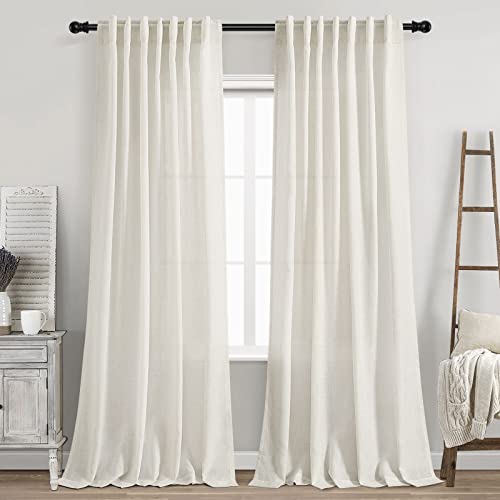
For fabric, undyed natural linen or a linen-cotton blend in off-white or warm flax is the material that reads most authentically as Scandinavian country. Sheer linen diffuses light beautifully and softens the room’s hard lines. Avoid stiff synthetic fabrics that stand away from the wall; you want fabric that falls in loose, soft folds and gathers slightly at the floor.
Key Takeaway: Mount curtain rods 3 to 4 inches below the ceiling, extend them 12 inches beyond the window frame on each side, and use floor-length natural linen panels to make any room read taller and more light-filled.

—
Decorative Objects That Have No Negative Space Around Them
 Save
Scandinavian country rooms fail most visibly when every surface is decorated to its full capacity. A shelf lined end to end with objects, a coffee table with seven items, a windowsill lined with plants: each of these kills the intentional, curated quality that the style depends on. The problem is not the number of objects per se; it is the absence of negative space around them.
Negative space in interior design functions the same way it does in graphic design: it creates visual breathing room that makes the objects it surrounds read as deliberate. An empty stretch of shelf next to a single stoneware vase makes the vase look chosen. The same vase crammed between six other items reads as clutter, regardless of how beautiful each individual piece is.
From the guides
You've saved it, wanted it. Here's the how: codes, measurements, order. Your choices make it yours.
The Japandi Honest PlaybookThe honest version of the style: what to keep, what to skip, and the order to do it in.See inside →The Room Refresh PlaybookA repeatable four-step method, room by room, in ten minutes, thirty minutes, or one weekend.See inside →Make Any Room Feel Cozy on PurposeWhy some rooms hold people and others empty out, and the moves that change it.See inside →The professional rule for Scandinavian country shelving is the rule of three in groups, with intentional gaps between groups. Cluster two or three objects: a tall vase, a small stack of books, a single dried stem. Then leave at least 6 to 8 inches (15 to 20 cm) of clear shelf before the next grouping. The empty stretch is doing design work; it is not a failure to fill the space. On a 48-inch (122 cm) shelf, a thoughtful arrangement might involve only three objects in two clusters, with one-third of the shelf surface empty.
For coffee tables, the maximum is three to five objects in the center of the table, arranged within an imaginary tray or circular zone. A sculptural ceramic bowl, a small stack of books with a smooth stone on top, and a single taper candle in a brass holder: that is a Scandinavian country coffee table at its best. Add more and you lose the curated quality. The country element of the style brings in the imperfect, organic character of the objects; the Scandinavian element keeps the editing severe.
Key Takeaway: Leave at least 6 to 8 inches of clear space between object groupings on any shelf, and style coffee tables with no more than five items arranged within a defined central zone.

—
Rustic Elements That Fight the Clean Scandi Lines
 Save
The most common way Scandinavian country style goes wrong is by importing too much from the farmhouse vocabulary. Barn doors, shiplap accent walls, galvanized metal baskets, and distressed-wood signs all belong to a different aesthetic tradition: American farmhouse. When these elements appear in a room that is otherwise trying to reference Nordic country simplicity, the two visual languages collide and neither reads clearly.
The distinction is structural. American farmhouse is warm, rustic, and deliberately “imperfect-looking,” with intentional references to agricultural utility: reclaimed boards, iron hardware, mason jars used as vases. Scandinavian country is also warm and uses natural materials, but its imperfection is quieter. The visible grain of an oiled wood table. The slight variation in a hand-thrown ceramic bowl. The texture of raw linen that has not been over-pressed. These are materials that are honest about what they are, not styled to reference a specific historic context.
The practical editing decision is this: keep one rustic anchor per room and make it organic rather than Americana. An exposed ceiling beam in reclaimed oak is a Scandinavian country move. A full shiplap accent wall references American farmhouse more strongly than Nordic country. A hand-woven basket next to the fireplace is Scandinavian country. A galvanized metal bucket used as a planter is American farmhouse. The distinction is in the material finish: raw wood, unglazed ceramic, and natural fiber read as Scandinavian country; painted-over or galvanized metal, distressed finishes, and farmhouse signage read as American farmhouse.
Keep the functional pieces clean-lined and the natural materials organic. A flat-front cabinet in off-white with simple brushed brass hardware and a visible oiled oak countertop is a Scandinavian country kitchen. Add a barn-style sliding door and the aesthetic grammar shifts.
Key Takeaway: Limit rustic elements to one per room and choose materials that are organically imperfect, natural linen, hand-thrown ceramics, oiled wood rather than styled-to-look-rustic finishes.

—
Plants Used as Filler Instead of as Anchors
 Save
A Scandinavian country room with nine small succulents on a windowsill and a miniature cactus on every shelf is not a room that has plants; it is a room where the plants have become clutter. Small plants used as decorative filler break one of the style’s most important rules: every element should be visible from across the room and earn its place in the composition.
The failure mode is scale. Small plants are designed for eye-level enjoyment. At room scale, they disappear into the background noise of the shelf or windowsill, adding visual busyness without adding the structural grounding that a large plant provides. In Scandinavian country rooms, the plant’s job is to introduce a soft, organic vertical line that contrasts with the straight edges of furniture and architecture.
A single large floor plant does more for a Scandinavian country room than a dozen small ones. A fiddle-leaf fig in a matte terracotta or concrete planter, standing 4 to 5 feet (122 to 152 cm) tall, fills the corner of a room, softens its 90-degree geometry, and introduces a scale of living material that registers even in a wide-angle photograph. The same effect works with a large monstera, an olive tree (particularly well-suited to Scandinavian country because of its sculptural branching and silver-green foliage), or a tall snake plant.
The second plant in the room, if there is one, should be placed at a completely different scale and height: a small trailing plant on a floating shelf, or a low succulent on the coffee table as part of a three-object grouping. The contrast between a large architectural plant and a single small accent plant creates the kind of compositional balance that makes a room feel thoughtfully edited rather than accidentally occupied.
Key Takeaway: Replace multiple small plants with one large floor plant at 4 to 5 feet tall and one small accent plant at a contrasting height to create architectural balance without clutter.

—
Artwork Hung at the Wrong Height or in a Random Grid
 Save
Gallery walls built from Pinterest inspiration boards are one of the most reliable ways to make a Scandinavian country room look busy and decoratively crowded at the same time. The issue is not that gallery walls are wrong for the style; it is that the style has a specific relationship to wall space that is antithetical to a tightly packed arrangement of frames.
Scandinavian country design treats empty wall space as an active design element, not a failure to decorate. A single large-format print, a ceramic wall plate, or a hand-woven textile panel, given generous open space on all sides, reads as intentional and confident. The same print surrounded by seven smaller frames reads as nervous, as if the designer did not trust the single piece to hold the wall.
The museum standard for artwork placement is that the center of any frame should sit at 57 to 60 inches (145 to 152 cm) from the floor. This is average seated and standing eye height and is why art looks correct in galleries regardless of ceiling height. The most common mistake is hanging artwork too high, a habit that comes from the intuition to get it “up and out of the way.” Art hung at 72 inches (183 cm) or higher sits outside the eye’s natural scanning range and disconnects visually from the furniture below it.
For Scandinavian country rooms specifically, the aesthetic directive is one large statement piece per wall rather than a grid. The piece can be large format artwork, a hand-woven wall hanging in natural fiber, a single oversized botanical print, or a textured plaster bas-relief panel. Size it to be genuinely commanding: a 30 by 40 inch (76 by 102 cm) print on a wall that is 10 feet (305 cm) wide is too small. Aim for artwork that spans at least 60 to 70 percent of the wall’s horizontal width or the furniture below it.
Key Takeaway: Hang a single large-format piece with its center at 57 to 60 inches from the floor, and size it to at least 60 percent of the wall’s or furniture’s width for Scandinavian country-appropriate presence.

—
Window Treatments That Block the Light the Style Needs
 Save
Scandinavian design philosophy is built on the logic of long, dark Nordic winters: every square inch of available daylight is precious and the interior should be arranged to capture as much of it as possible. When Nordic country rooms are covered in roller shades, plantation shutters, or heavy lined curtains, they fight the core operating principle of the style and immediately read as dim and heavy rather than the airy, light-filled quality that makes the look aspirational.
The architectural purpose of keeping windows maximally clear in Scandinavian country interiors is not just aesthetic; it is proportional. Natural light reflecting off pale walls and light wood floors creates the luminous, bounced-light quality that appears in every well-executed Nordic room. That effect requires the light to enter at maximum intensity, which means treatments that block, filter, or tint the incoming light undermine the whole system.
The practical solution is layered window treatments designed around privacy needs, not light-blocking assumptions. For rooms with good privacy, sheer linen panels hung at ceiling height and pulled fully to the sides of the window are sufficient and ideal. They soften the window architecturally without reducing daylight. For rooms that need privacy at night, a simple roller shade in warm white or soft cream is mounted inside the window recess so it is nearly invisible when raised. The sheer linen panel hangs in front of it for daytime softness. This combination gives full night privacy without sacrificing the daytime luminosity that Scandinavian country rooms depend on.
Blackout curtains in living rooms and kitchens are the most damaging window treatment choice for this style. Even when pulled aside, they read as heavy and room-darkening from across the room. Reserve blackout lining for bedrooms only and even there, mount them inside the recess as a hidden shade behind light-weight linen panels.
Key Takeaway: Use sheer linen panels at ceiling height as the primary treatment in living areas, and add a simple white roller shade inside the window recess only where privacy requires it.
—
Candles and Ambient Objects Treated as Afterthoughts
 Save
The Danish concept of hygge, pronounced “hoo-gah,” translates roughly as an atmosphere of coziness, comfort, and convivial warmth. It is widely referenced as the emotional goal of Scandinavian country rooms. What is less frequently explained is that hygge is not an accident; it is created by specific, deliberate choices about ambient objects, particularly candles and lighting props, that are treated intentionally rather than added as a finishing detail.
When candles appear in a Scandinavian country room as a single votive on a shelf corner or a lone taper on the dining table, they read as decorative afterthoughts rather than as contributors to the room’s atmosphere. The hygge approach to candles is to group them: three pillar candles at varying heights in a shallow dish or on a wooden board, a cluster of five votives at different levels on a side table, a row of three tapers in simple brass holders on the mantle. The grouping creates the impression of warmth as a deliberate atmospheric decision rather than a token gesture.
In Scandinavian country rooms, the materials around candles matter as much as the candles themselves. A pillar candle in a glazed ceramic dish sits on a round wooden cutting board. A cluster of votives sits in a shallow terracotta tray. The candle’s flame and the natural materials below it create a layered warm-light composition that is the visual definition of hygge. Synthetic candleholders, metallic-mirror trays, or acrylic accessories break the natural-material consistency the style requires.
Beyond candles, the ambient objects that give Scandinavian country rooms their warmth include stacks of worn linen-covered books, a ceramic bowl of pine cones or smooth river stones (seasonal), a hand-carved wooden bowl with a single piece of fruit, and a taper candle in a simple iron or brass holder. None of these are expensive. All of them are specific. The specificity is what separates a room that feels intentionally hygge from one that is merely beige.
Key Takeaway: Group candles in clusters of three or five at varying heights, always on or in natural materials, to create the deliberate atmospheric warmth that defines hygge in a Scandinavian country room.

—
Getting Scandinavian country style right is not about adding more of the right things. It is about removing the specific wrong things and understanding why each one is breaking the room. The three highest-leverage fixes to start with are the color temperature of your lighting (swap to 2,700K warm white bulbs tonight), the height of your curtain rods (remount them within 4 inches of the ceiling this weekend), and the scale of your rug (measure it against the front-leg rule before buying your next one). Make those three changes and the room will read as warmer, taller, and more composed before you touch a single piece of furniture or buy a single new object. From there, each of the other sections in this guide gives you a specific, measurable next step. Pick one per month and the room you have been working toward will be recognizable by the time the next season arrives.
From the guides
You've saved it, wanted it. Here's the how: codes, measurements, order. Your choices make it yours.
The Japandi Honest PlaybookThe honest version of the style: what to keep, what to skip, and the order to do it in.See inside →The Room Refresh PlaybookA repeatable four-step method, room by room, in ten minutes, thirty minutes, or one weekend.See inside →Make Any Room Feel Cozy on PurposeWhy some rooms hold people and others empty out, and the moves that change it.See inside → Save


