Georgia
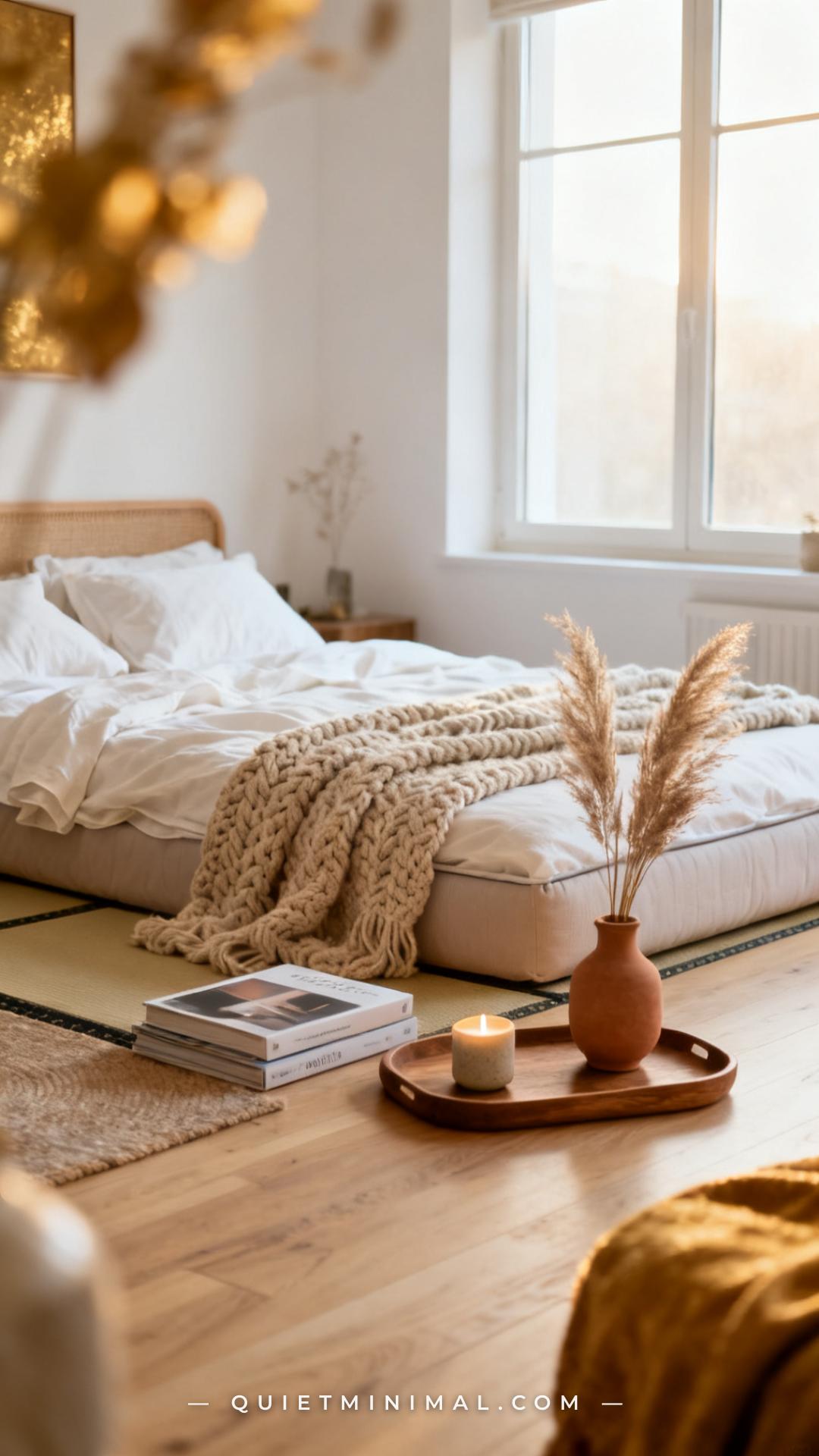
A floor setup done right doesn’t look like someone ran out of beds. It looks deliberate — layered, soft, and styled the way you’d see it on a design account you’ve been saving from for months. The difference between a pile of blankets on the floor and a setup that gets photographed and saved on Pinterest comes down to a handful of decisions: the right foundation, a layering system that adds depth without chaos, and a few well-placed details that signal it was intentional.
Whether you’re hosting friends for a movie night, setting up a sleepover nook for a guest, or creating a semi-permanent floor sleeping spot in a small apartment, these sleepover styling ideas for a cozy floor setup will give you a replicable system — not just inspo you can’t recreate.
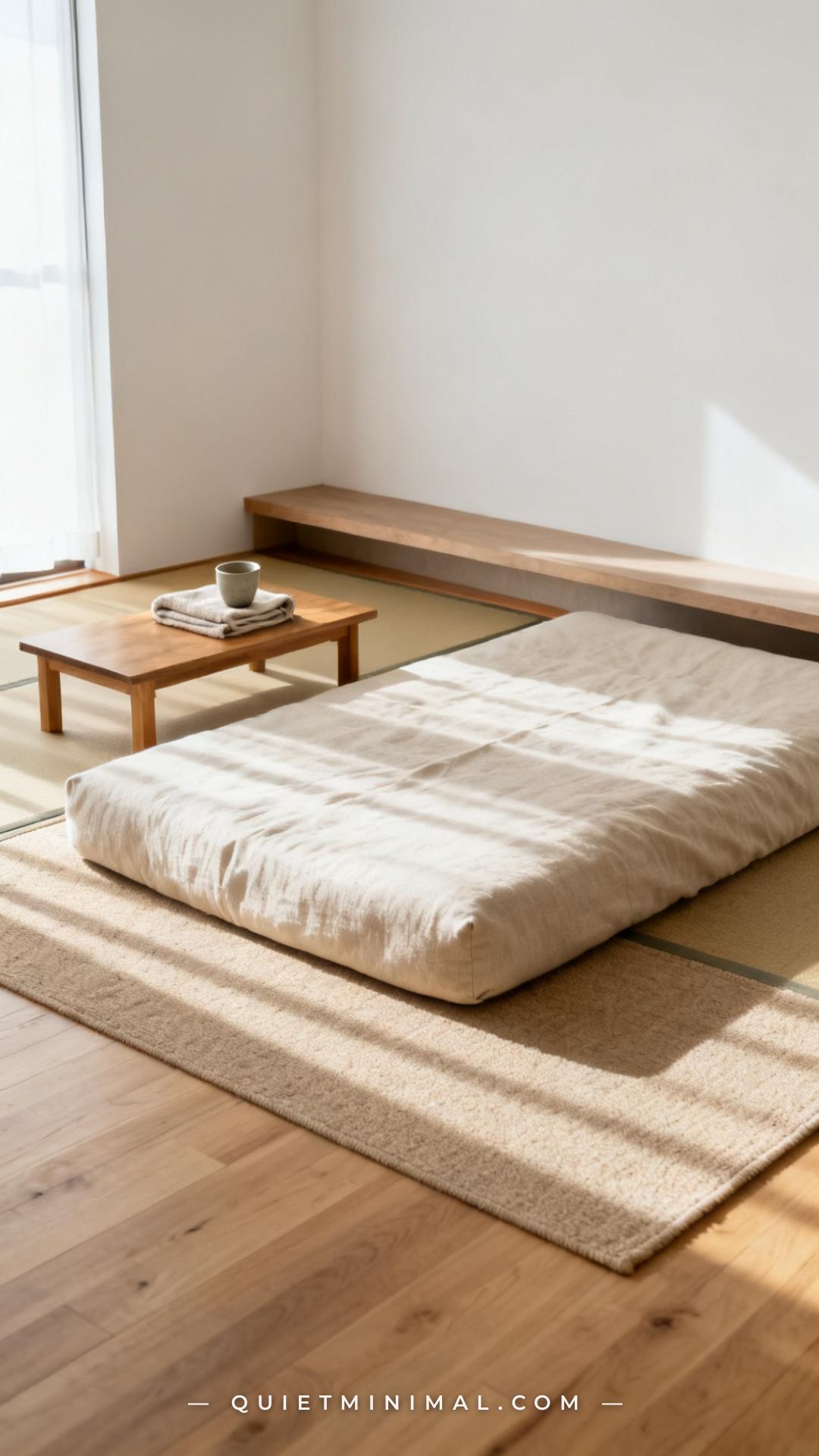
1. Start With a Japanese Floor Mattress, Not a Camping Mat
 Save
The foundation of any good floor setup is something that reads as a real sleeping surface — not improvised. A shikibuton (Japanese floor mattress) sits roughly 2–3 inches off the ground, folds for storage, and comes in cotton, organic, or memory foam-filled versions. It signals to anyone who walks in that this was a choice, not a compromise.
From the guides
You've saved it, wanted it. Here's the how: codes, measurements, order. Your choices make it yours.
 The Japandi Honest PlaybookThe honest version of the style: what to keep, what to skip, and the order to do it in.See inside →
 The Room Refresh PlaybookA repeatable four-step method, room by room, in ten minutes, thirty minutes, or one weekend.See inside →
 Make Any Room Feel Cozy on PurposeWhy some rooms hold people and others empty out, and the moves that change it.See inside →
Pair it with a fitted sheet or a flat sheet tucked underneath. This one step separates a “designed floor bed” from “sleeping bag territory.” Most standard twin sheets fit a shikibuton mattress perfectly, which means you’re already working with linens you likely own.
Look for a mattress with a removable, washable cover — practical for hosting and essential if this setup is something you’ll repeat seasonally.
Key Takeaway: A proper floor mattress is the single highest-leverage purchase for a sleepover setup — everything else layers on top of it.

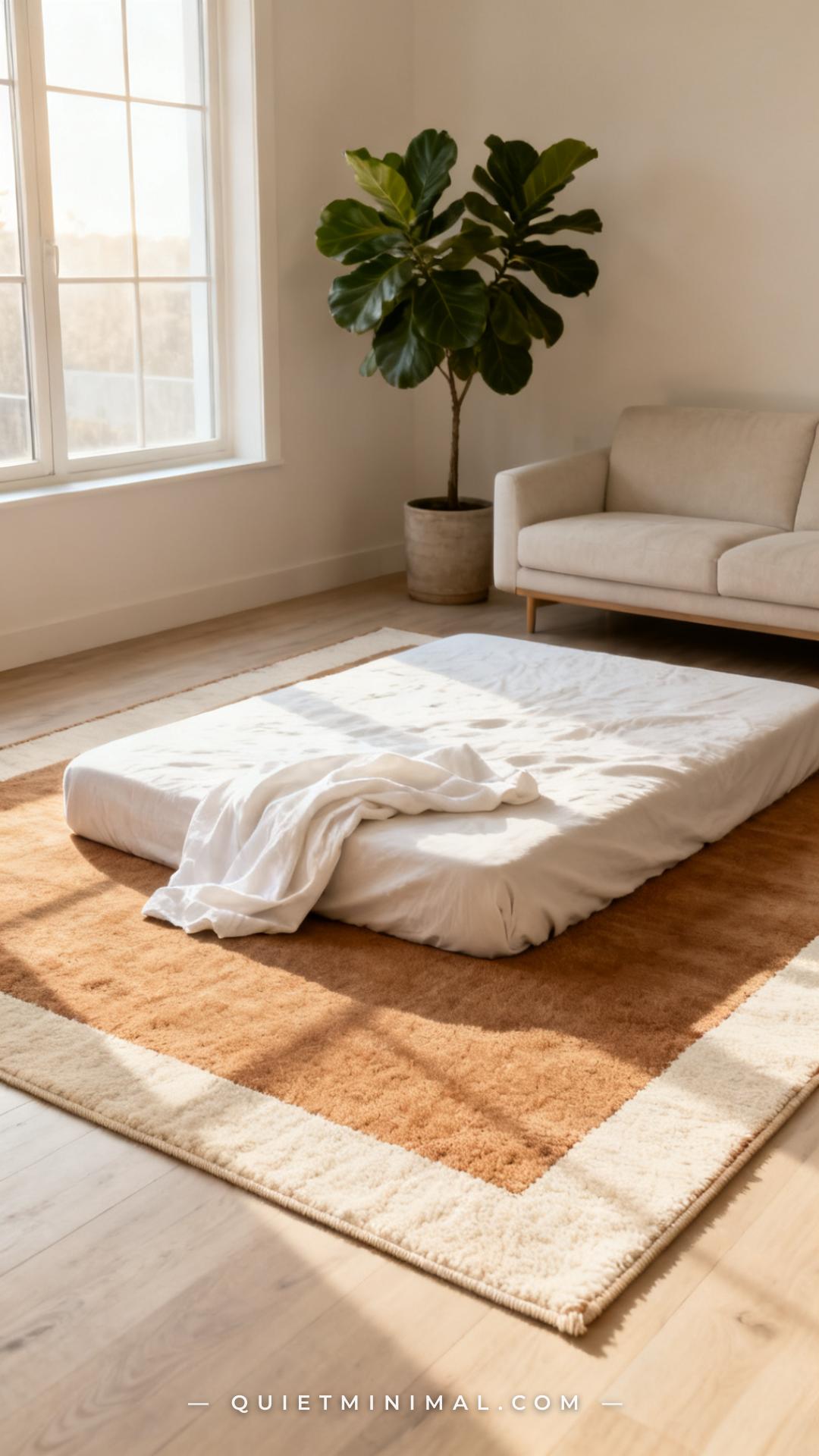
2. Anchor the Setup With a Low-Pile Area Rug
 Save
A rug underneath the mattress does two things: it keeps the setup from sliding and — more importantly — it creates a defined zone. A floor bed without a rug reads as temporary. A floor bed sitting on a properly sized rug reads as designed.
Size matters here. The rug should extend at least 12 inches beyond the mattress on all sides. A twin shikibuton on a 5×7 rug works well in most living rooms; if you have the floor space, a 6×9 is even better. Low-pile rugs are easier to sleep adjacent to than high-pile shags, which create an uneven surface when you roll toward the edge.
Stick to neutral tones — natural jute, oatmeal wool, or faded cream — so the rug grounds the setup without competing with the bedding layers on top.
Key Takeaway: The rug creates the room-within-a-room effect that makes a floor setup feel like a deliberate design zone rather than an afterthought.

3. Build Your Bedding in Three Layers, Not One
 Save
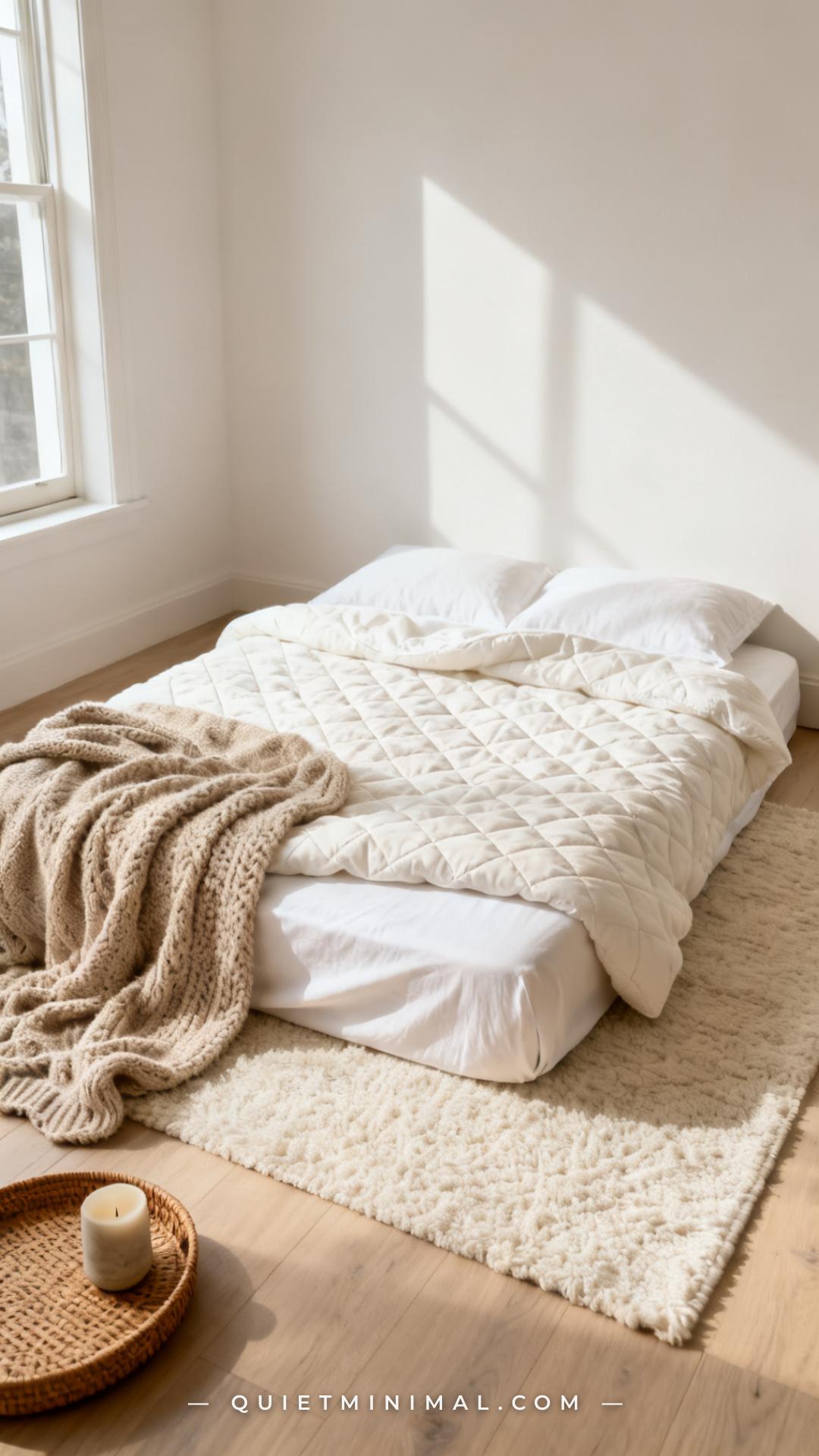
The reason most floor beds look flat and uninspired is single-layer bedding — one blanket, full stop. Styled floor setups use three layers: a fitted base sheet, a mid-layer comforter or duvet, and a top accent throw. Each layer serves a function beyond warmth.
The base sheet anchors everything and keeps the mattress clean. The mid-layer comforter provides the primary warmth and loft — this is where texture lives, so a quilted or waffle-weave comforter in white or cream reads as intentional. The accent throw is the styling layer: draped casually at the foot, or folded in thirds and laid across one corner. It adds color (if you want it) or textural contrast (if you’re keeping it neutral).
The key to the layered look is letting each layer show. Don’t tuck everything in tightly — let edges drape, let the throw spill naturally, and let the layers overlap imperfectly.
Key Takeaway: Three distinct layers with visible edges create the editorial floor bed look — tight single-layer setups will always look like camping, not design.

4. Choose Oversized Floor Pillows Over Standard Bed Pillows
 Save
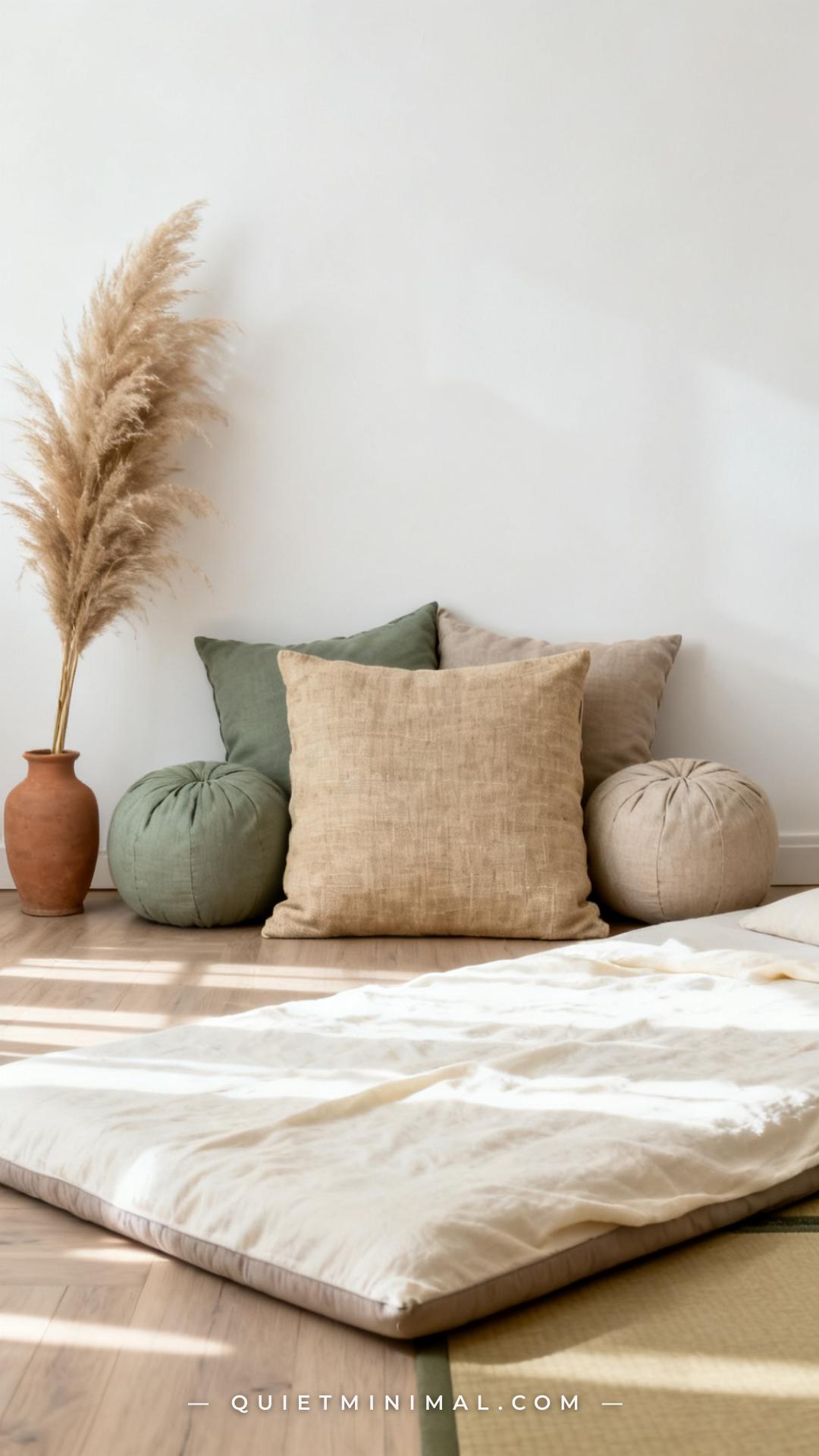
Standard sleeping pillows placed on the floor look exactly like what they are: bed pillows that got moved. Oversized floor cushions and square floor pillows — typically 26×26 inches or larger — read as intentional seating and lounge elements that happen to double as sleep support.
Stack two 26-inch euro shams in front of a larger 30-inch floor cushion for a layered headboard effect without a headboard. Or cluster three floor poufs in different shapes (square, round, bolster) for a more casual, maximalist arrangement. Linen, cotton canvas, and woven boucle are the best fabric choices — they photograph well and hold their shape better than polyester-filled options.
Keep the palette cohesive with your bedding: if your sheets are ivory, your pillows should pull from the same warm-neutral family. A single contrasting pillow in a muted terracotta or dusty sage adds depth without disrupting the calm.
Key Takeaway: Floor-specific pillows in the right scale make the setup look styled for the space, not borrowed from an upstairs bed.

5. Add a Low Tray Table for Styling and Function
 Save
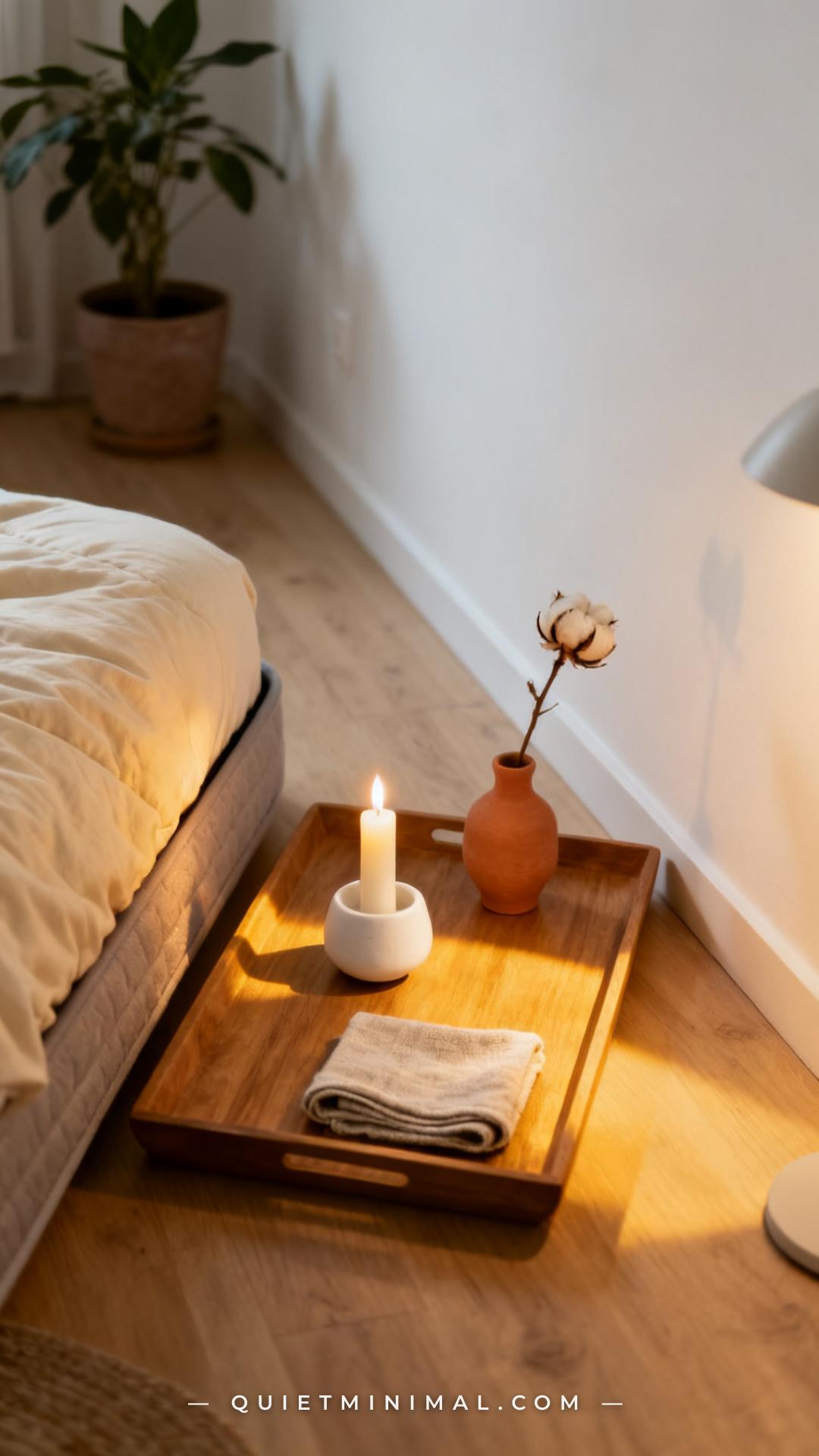
A low tray table — think bamboo, paulownia wood, or lacquered black — does more styling work than nearly anything else on this list. It defines a “nightstand zone” at floor level, which immediately communicates that this setup was thought through.
Use it to hold a candle, a small plant or dried stem, a glass of water, and a charging cable. That’s it — resist the urge to pile more on top. The tray’s purpose is to create a landing spot that looks curated rather than a random scatter of items on the floor. Folding tray tables that sit 8–12 inches off the ground are ideal; Japanese-style chabudai tables (traditionally used for floor dining) work beautifully and fold flat for storage.
If you’re building a multi-person setup for several guests, one tray per person creates a sense of individual space within a shared floor area — a small detail that guests consistently notice.
Key Takeaway: A low tray table converts a floor setup into a bedside experience, adding the one design element that signals intention more than any throw or pillow.

6. Use Low Lighting Only — No Overhead Lights
 Save
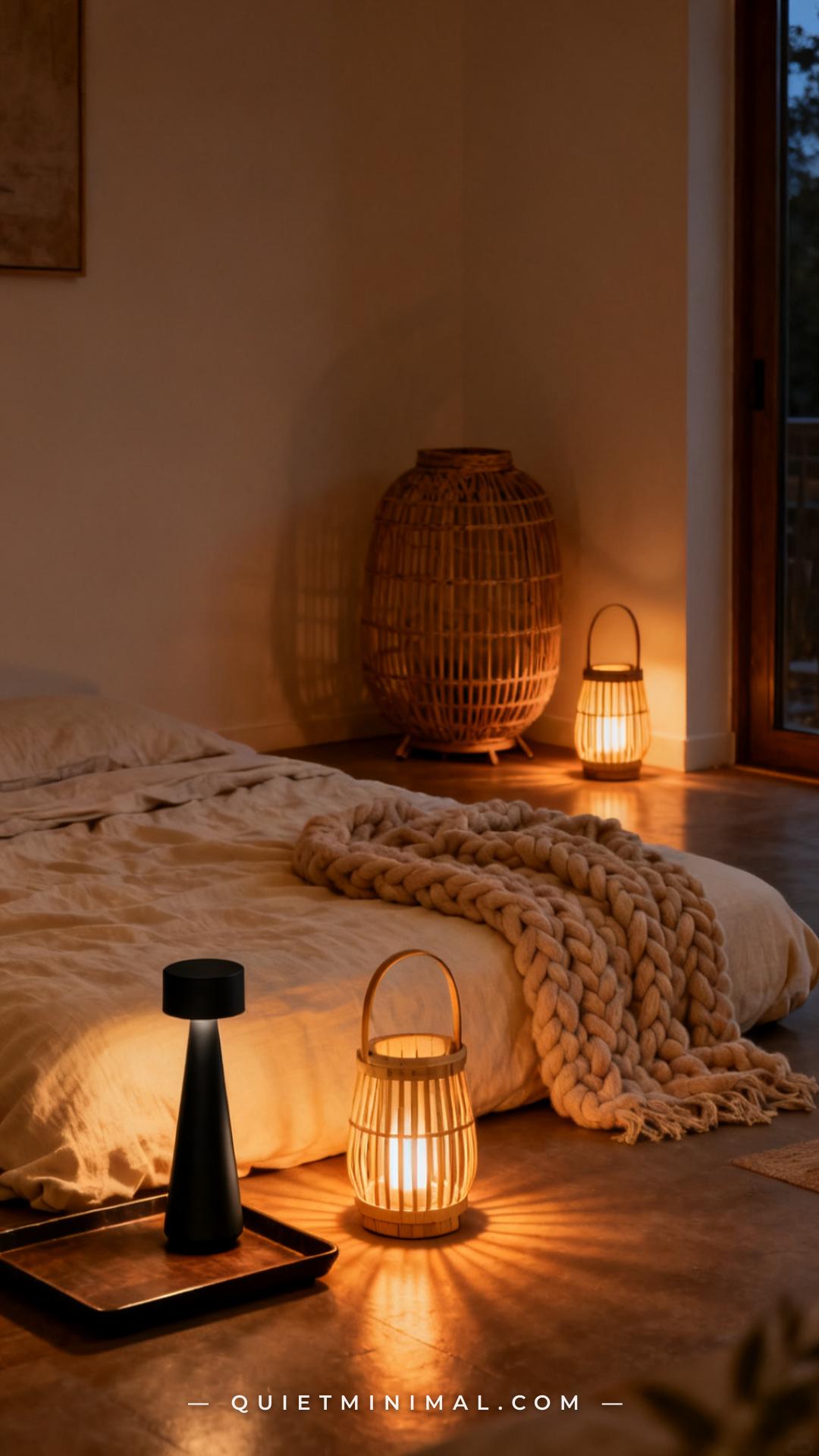
Overhead lighting is the fastest way to flatten a floor setup visually. Floor-level lighting — lanterns, low table lamps, LED pillar candles — creates the warm, pooled glow that makes a floor space feel like a retreat rather than just the floor.
Paper lanterns and rattan lanterns are inexpensive and highly effective. Battery-operated or rechargeable LED versions eliminate any fire concern and are portable across rooms. Cluster 2–3 lanterns at different heights near the setup — one on the tray table, one on the floor beside it, one slightly elevated on a low stack of books — for a layered light effect that reads as designed.
Avoid string lights draped directly over the sleeping area (a ceiling hazard and visually busy). Instead, string lights work well along a baseboard or shelf edge 3–5 feet away, providing ambient fill light without glare.
Key Takeaway: Low-level lighting is the single most atmospheric element in a sleepover setup — it determines whether the space feels like a boutique hotel nook or a last-minute floor situation.

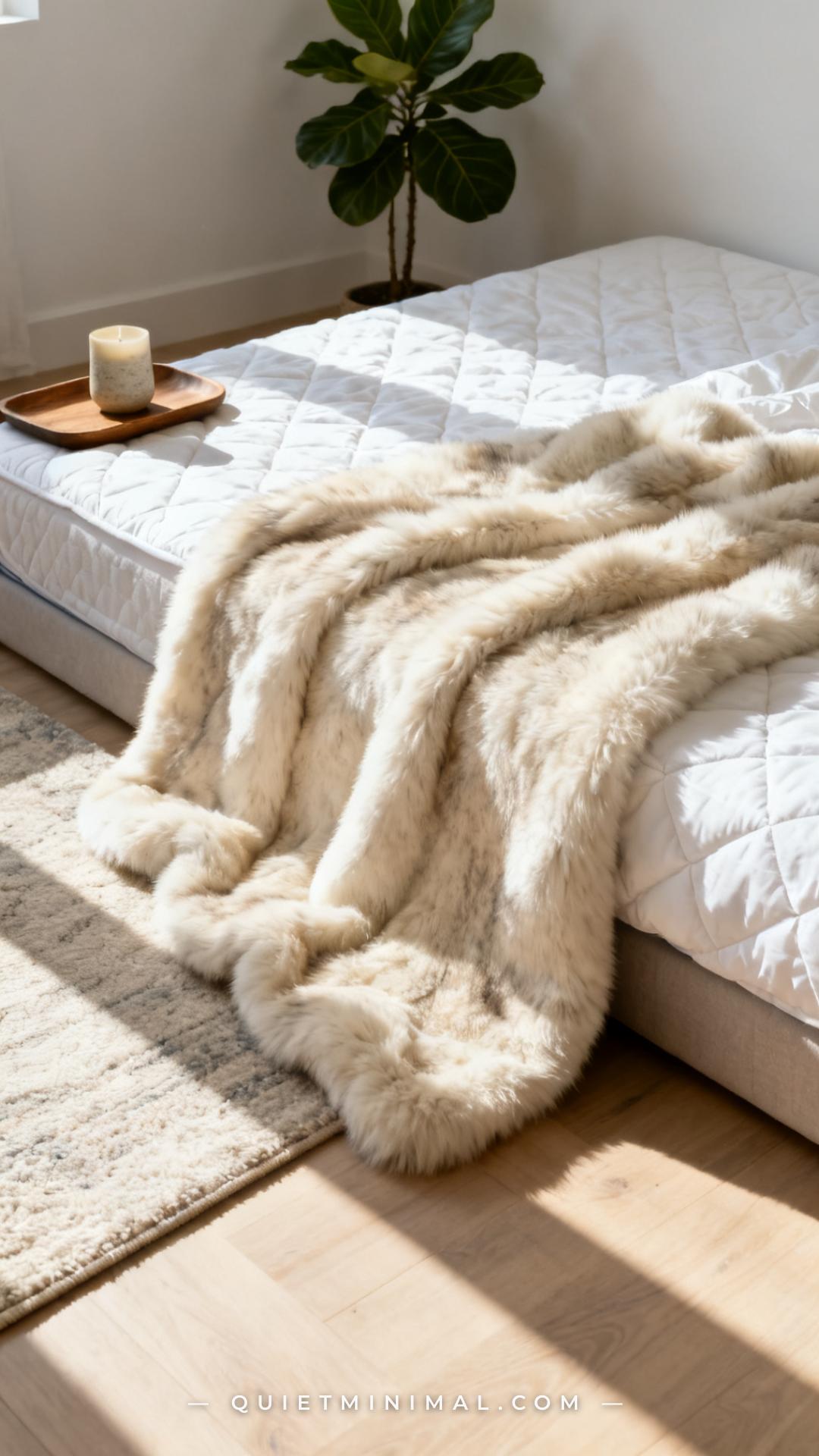
7. Layer a Faux Fur or Sherpa Throw for Tactile Depth
 Save
A faux fur or sherpa throw placed at the foot of the setup (or layered across one corner) introduces a tactile richness that reads instantly as “designed.” It’s the detail that photographs best in flat-lay shots and pins consistently well on Pinterest because it signals warmth in a visual medium.
The key is placement: don’t spread it flat over the whole setup like a blanket. Instead, drape it loosely across the lower third of the mattress, letting it bunch slightly at the edges. Or fold it in loose thirds and lay it perpendicular to the pillow line. Both placements suggest it was tossed there naturally — which is exactly the “casual editorial” look that performs well.
Ivory, camel, and oatmeal faux fur reads as neutral and elevated. Avoid the oversaturated jewel-tone versions — they skew more seasonal and less timeless in a floor styling context.
Key Takeaway: A faux fur throw at the foot of the setup creates immediate visual warmth and tactile contrast — it’s the accent piece that photographs well and signals comfort before anyone lies down.

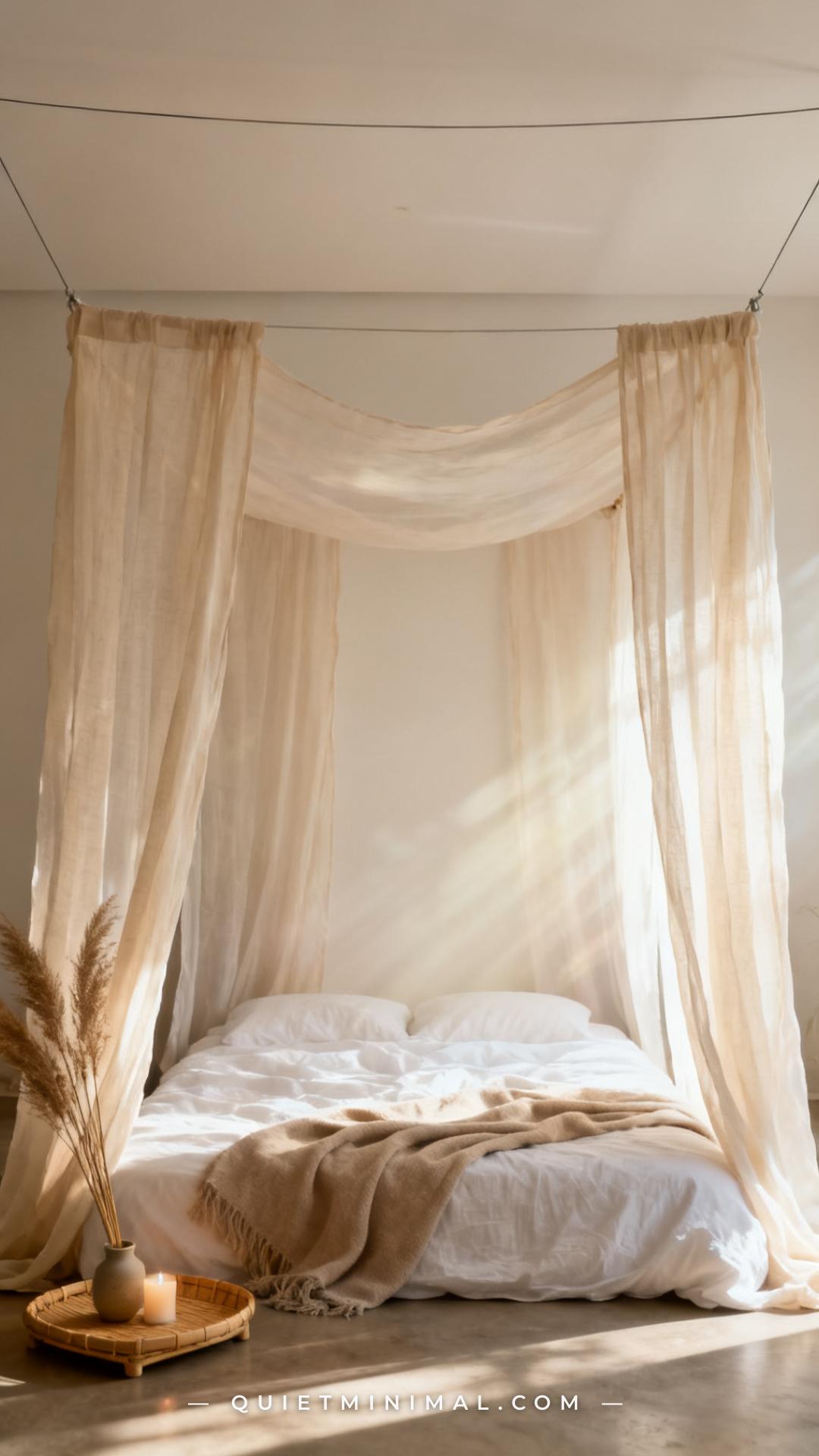
8. Create a Canopy Effect With a Curtain Rod or Tension Wire
 Save
A canopy transforms a floor setup from a sleeping surface into a defined space — and it costs far less than you’d think. A tension wire or a simple ceiling-mounted curtain rod positioned above the setup, hung with two panels of sheer linen or cotton gauze, creates a soft enclosure that makes the floor setup feel like a room within a room.
From the guides
You've saved it, wanted it. Here's the how: codes, measurements, order. Your choices make it yours.
The Japandi Honest PlaybookThe honest version of the style: what to keep, what to skip, and the order to do it in.See inside →The Room Refresh PlaybookA repeatable four-step method, room by room, in ten minutes, thirty minutes, or one weekend.See inside →Make Any Room Feel Cozy on PurposeWhy some rooms hold people and others empty out, and the moves that change it.See inside →You don’t need a four-poster frame. A single tension wire or a peel-and-stick ceiling hook with a draped panel on each side accomplishes the same visual effect. Sheer ivory, blush, or natural linen panels in 96-inch or 108-inch lengths work best — long enough to puddle slightly on the floor for a luxurious, relaxed look.
For renters: Command strips rated for lightweight drapes (up to 5 lbs per strip) can hold a tension wire or a lightweight dowel rod. No hardware, no holes, fully removable.
Key Takeaway: A simple linen canopy frame turns a floor mattress into a sleeping nook — the visual enclosure creates a sense of private space that guests consistently react to first.

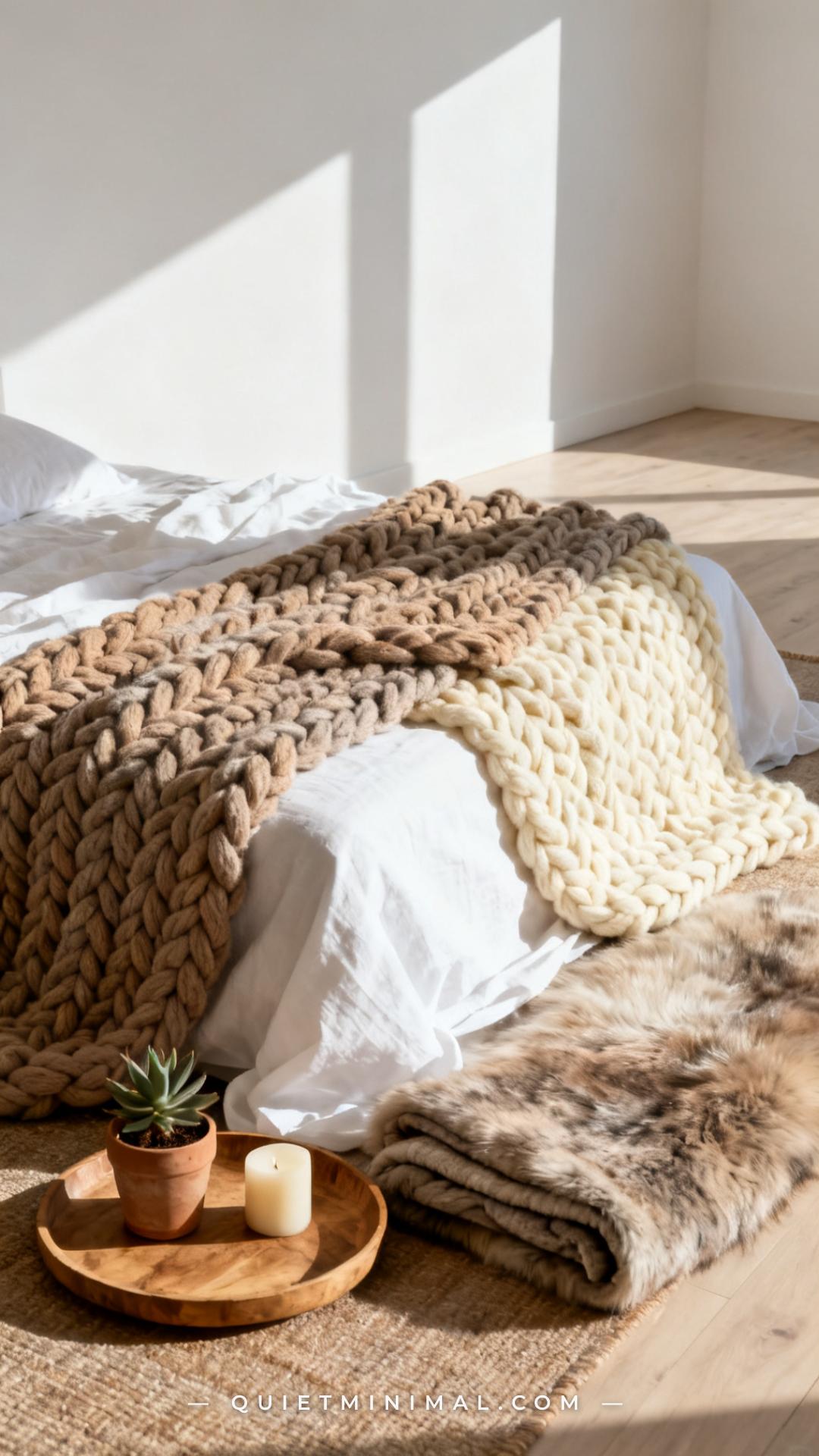
9. Incorporate a Chunky Knit or Woven Blanket as the Mid Layer
 Save
The chunky knit or hand-woven blanket is the mid-layer that photographs best and adds the most visual texture without adding visual noise. In the three-layer system, it lives between the base sheet and the accent throw, folded or draped across the center of the setup so the knit pattern is visible.
Look for open-weave or cable-knit versions in natural fibers — merino wool and cotton blends are softer underhand and breathe better than purely acrylic versions. For the setup to look cohesive, keep the chunky knit in the same warm-neutral family as your sheets: cream on white, oatmeal on ivory, or flax on sand.
Avoid blankets that are too heavily patterned or graphic — stripes, plaids, and abstract prints all compete with the layered bedding for visual attention. The goal is texture-on-texture, not pattern-on-pattern.
Key Takeaway: A visible chunky knit as the mid layer adds the most photographable texture to a floor setup — it’s the element that reads as “styled” rather than “assembled” in Pinterest images.

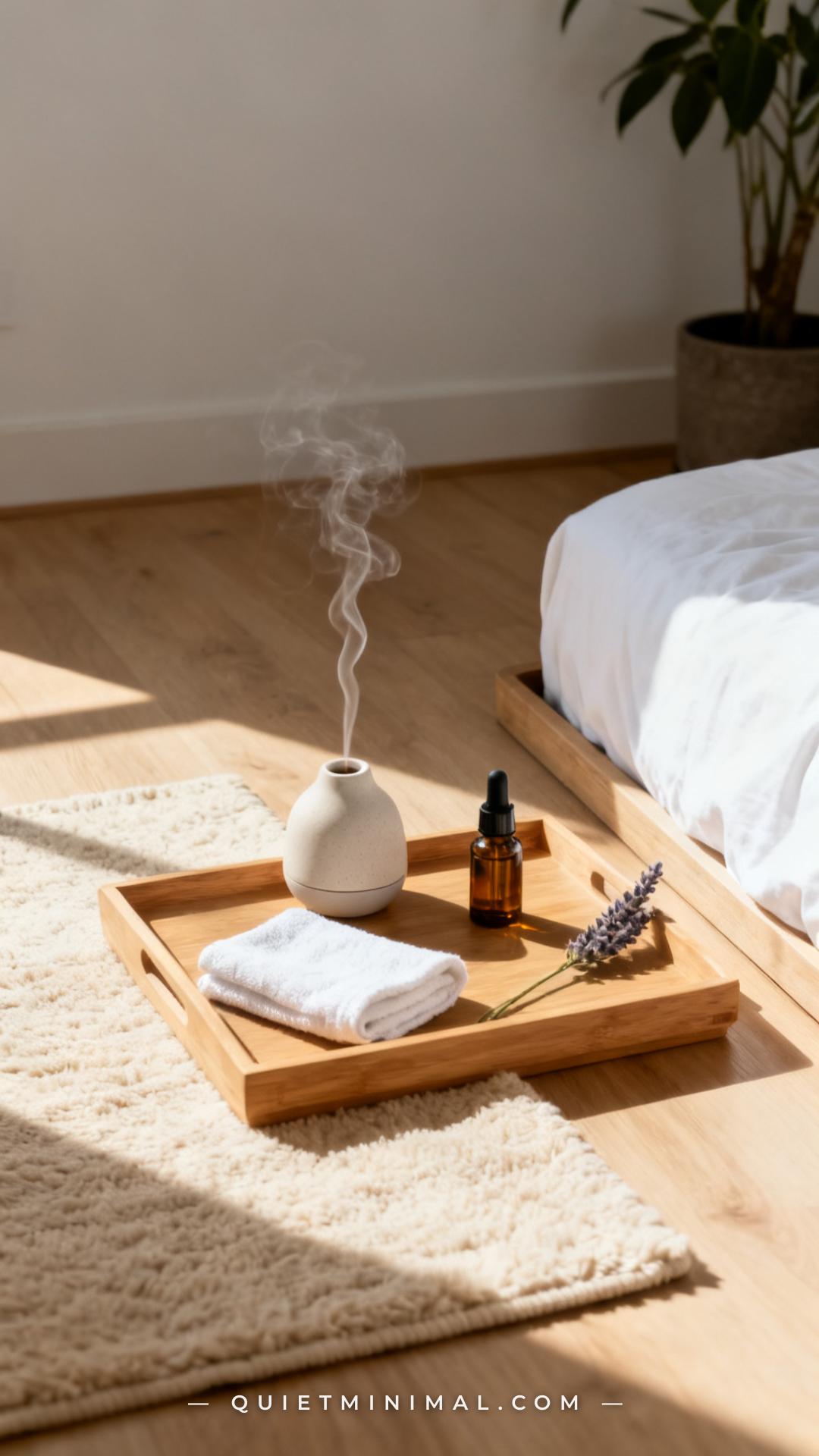
10. Style a Small Wellness Tray for the Guest Experience
 Save
This is the detail that upgrades a floor setup from “practical” to “guest-worthy.” A small wellness tray — a reed diffuser or ceramic ultrasonic diffuser, a folded hand towel, a glass of water, and a small botanical element (a sprig of dried lavender, a eucalyptus stem) — signals that you thought about the person staying there, not just the setup itself.
It doesn’t need to be elaborate. A single ceramic diffuser with a lavender or cedarwood blend, a neatly folded face cloth, and a sprig of dried herbs on a small wooden tray is all it takes. The visual effect is immediate: the tray becomes a focal detail that reads as intentional and considered.
From a sleep quality standpoint, lavender and chamomile diffuser blends have documented effects on perceived relaxation — practical, not just decorative.
Key Takeaway: A small wellness tray is the detail guests notice and remember most — it’s the move that turns a styled floor setup into a genuinely considered host moment.

11. Use a Bedside Caddy or Hanging Organizer for Essentials
 Save
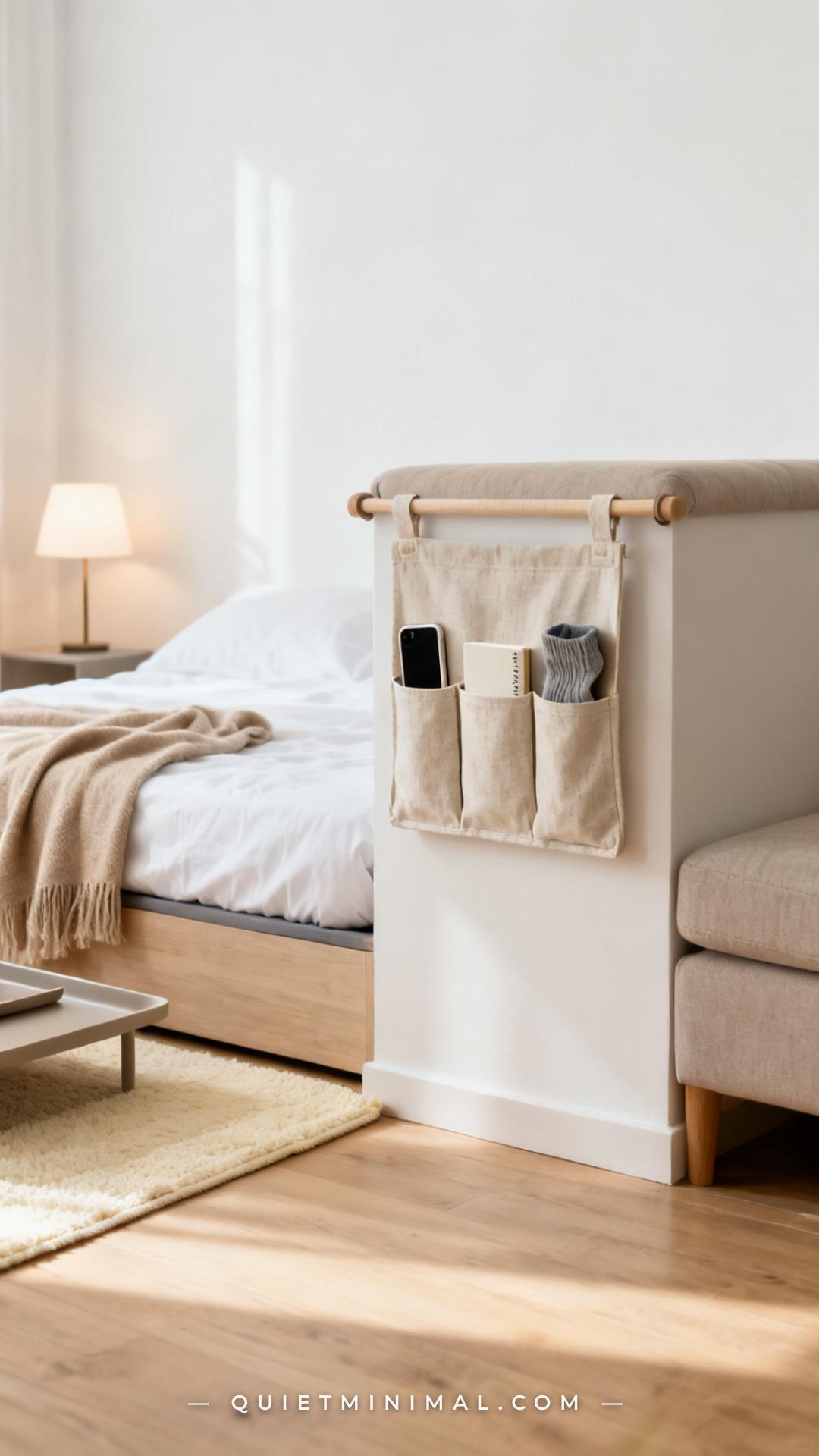
One of the subtle friction points with floor sleeping is the lack of a nightstand surface. A hanging bedside caddy — clipped to the edge of a nearby sofa or draped over a low side table — solves the phone, book, and eyeglasses problem without adding any visual clutter to the floor.
Look for linen or canvas versions with 2–3 slim pockets. They attach easily to couch edges via clips or velcro, and the natural fabric finishes disappear into a neutral setup rather than standing out as a separate object. Some versions hang from a closet rod or a low wall hook — useful if the setup is in a room with no adjacent sofa.
For multi-person setups, one caddy per person again creates that sense of individual space — it’s a low-cost detail that guests genuinely appreciate.
Key Takeaway: A bedside caddy resolves the floor-level storage problem while keeping the setup visually clean — it’s a practical detail that disappears into the design rather than interrupting it.

12. Add a Single Plant or Botanical Element at Floor Level
 Save
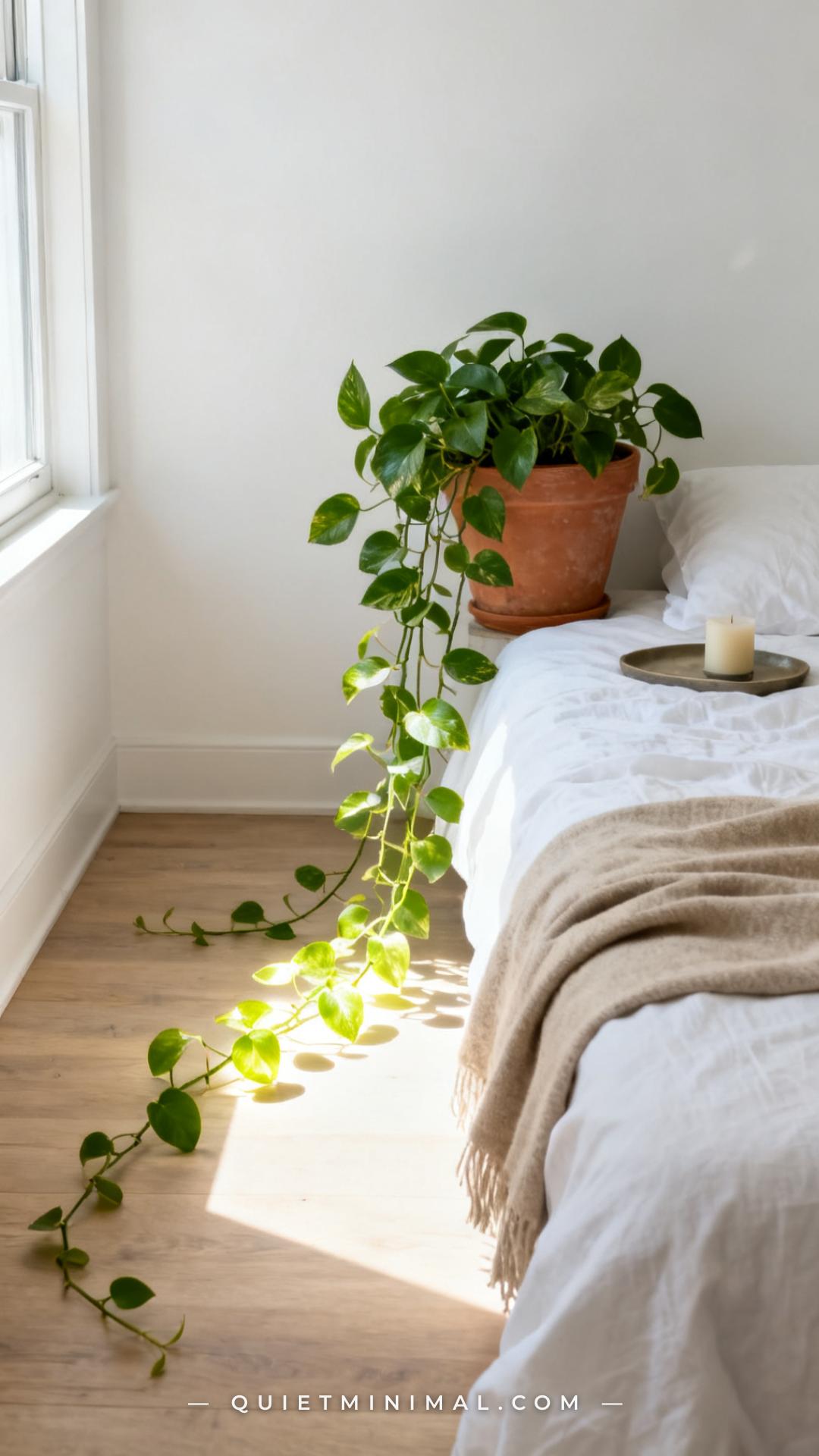
A single plant at floor level — a trailing pothos in a terracotta pot, a round ZZ plant, or a sculptural fiddle-leaf — does more styling work per square inch than nearly any decorative object. It introduces organic shape and color contrast against the neutral bedding palette, and it photographs as “alive” in a way that candles and trays alone don’t.
Position it near the head of the setup (against a wall, not directly beside where someone’s face will be) or at the corner of the rug zone. A 6-inch to 10-inch pot in a matte terracotta or cream ceramic keeps the look grounded and earthy rather than clinical.
If you don’t have a live plant that works visually, a large dried pampas grass stem in a simple floor vase accomplishes the same organic silhouette with zero maintenance.
Key Takeaway: One plant or large botanical at floor level adds organic life and visual scale to a floor setup — it’s the detail that makes the space feel curated rather than assembled.

13. Finish With a Scent That Anchors the Space
Scent is the detail that guests register emotionally before they register visually. A cedar and sandalwood candle, a lavender diffuser blend, or even a small bundle of dried herbs (eucalyptus, lavender, rosemary) clipped to the tray or a nearby vase creates an olfactory signal that the space was considered. This is the difference between walking into a room that feels “set up for me” versus a room that just has stuff in it.
Keep scent light for a shared sleeping environment — heavy fragrance in a closed room overnight disrupts sleep rather than supporting it. Dried botanical elements or a lightly diffused essential oil blend (3–4 drops in a 300ml diffuser) are preferable to heavily fragranced candles burned overnight. Set the candle for the aesthetic, extinguish before sleep, and let the diffuser carry through the night.
Key Takeaway: Scent is the final layer that makes a floor setup feel like it was designed for the person sleeping there — a light botanical or diffuser blend completes the sensory experience that pillows and throws begin.

The best sleepover floor setups aren’t about having the most pillows or the fanciest bedding — they’re about working through a deliberate sequence: foundation, layering, lighting, and detail. Start with a real floor mattress and a properly sized rug to create the zone, build your bedding in three visible layers, and add low lighting that warms the space rather than flattening it. From there, a tray, a plant, and a single scent element close the gap between “we set something up” and “I made this for you.” Work through the list in order, add what fits your space, and the rest follows naturally.
From the guides
You've saved it, wanted it. Here's the how: codes, measurements, order. Your choices make it yours.
The Japandi Honest PlaybookThe honest version of the style: what to keep, what to skip, and the order to do it in.See inside →The Room Refresh PlaybookA repeatable four-step method, room by room, in ten minutes, thirty minutes, or one weekend.See inside →Make Any Room Feel Cozy on PurposeWhy some rooms hold people and others empty out, and the moves that change it.See inside → Save