 Georgia
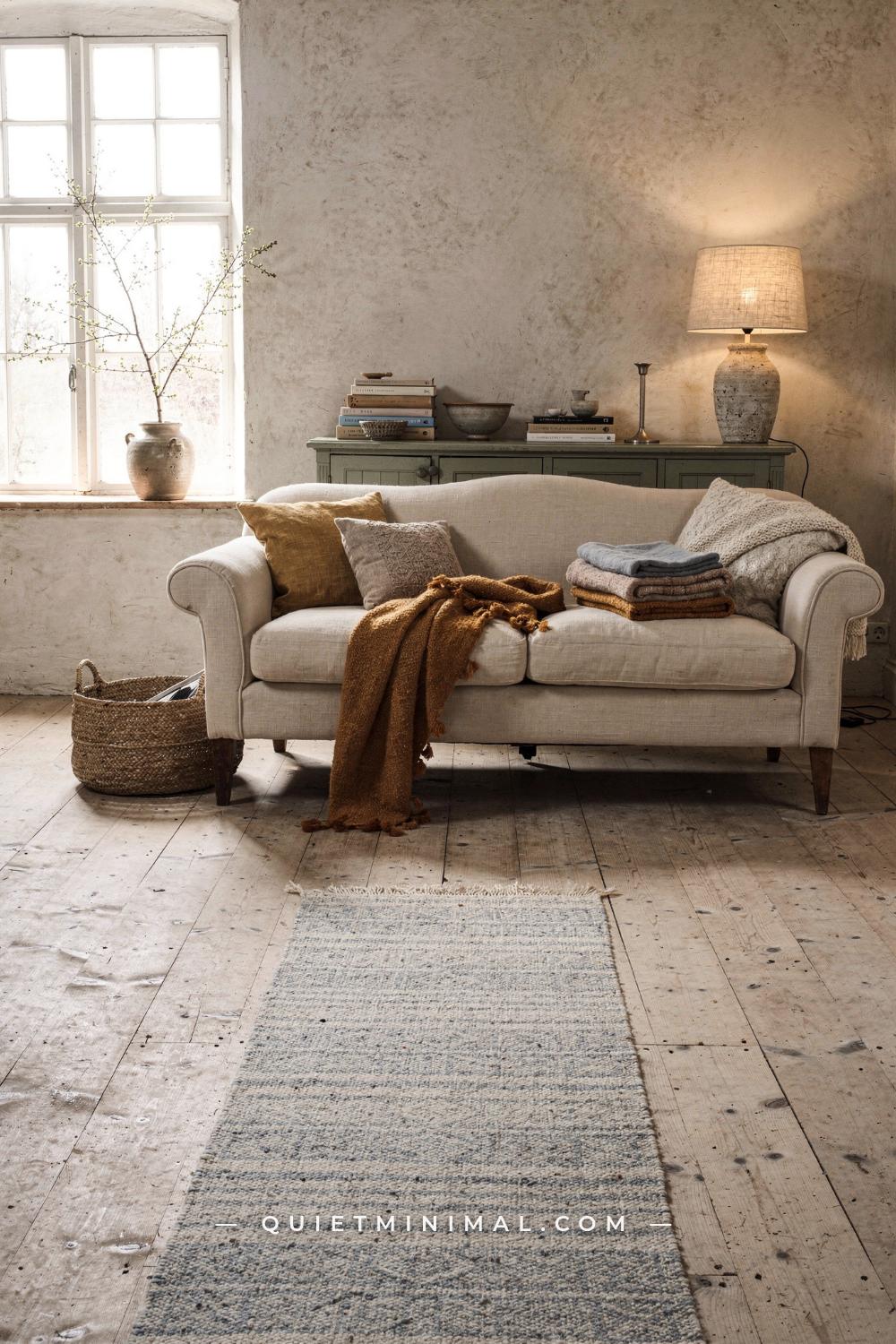
If you have been saving Swedish farmhouse images for months and your room still reads like a cool Scandinavian catalog or an American shiplap montage, you are not failing at decorating. You are following advice that does not actually reflect the style. The internet version of Swedish farmhouse has been flattened into a shortcut: white walls, bare wood, a linen throw. That version is not wrong exactly, but it is not complete, and the gaps are where real rooms fall apart. The Swedish farmhouse tradition is older, more specific, and more opinionated than most Pinterest guides admit. It originated in the Swedish countryside as a design philosophy built around surviving long winters in beautiful, functional spaces. The furniture was painted, not natural. The walls held color, not just white. The layering was intentional, not additive. What follows is the adviser version: twelve received ideas about Swedish farmhouse, each one examined against what the style actually demands, with the specific details you need to get it right.
The Color Is Not Just White
 Save
Walk through authentic Swedish farmhouse interiors and the first thing that strikes you is that the walls are not white. They are dusty blue-gray, pale sage, warm linden yellow, or chalky bone. Sweden sits far enough north that pure white walls in winter read as cold and institutional rather than airy. The Swedish solution, developed over centuries of long dark seasons, was to use muted, low-saturation color that bounced what little light existed and made a room feel inhabited rather than sterile.
The received wisdom says “white walls, clean and simple.” That interpretation comes from mid-century Scandinavian minimalism filtered through IKEA showrooms, which are predominantly white because white photographs well in catalogs. It is not an accurate read of Swedish farmhouse, which has Gustavian roots: a design tradition from the late eighteenth century that prized pale painted color on both walls and furniture.
The paint colors to know for Swedish farmhouse walls are specifically those that are muted and slightly dusty. Farrow and Ball Light Blue (No. 22) is a pale chambray-adjacent tone that reads as almost-gray in low light and softly blue in afternoon sun, which is exactly the quality Swedish farmhouse rooms rely on. Farrow and Ball French Gray (No. 18) gives a similar result with a cooler, more silver quality. For those working with Sherwin-Williams, Aesthetic White (SW 7035) is a warm, gray-tempered neutral that avoids the stark quality of pure white. Sherwin-Williams Agreeable Gray (SW 7029) reads warmer still and pairs well with honey-toned pine floors common to the style.
The failure mode is simple: choosing a bright warm white like Sherwin-Williams Alabaster or Benjamin Moore White Dove and layering in “rustic” wooden elements expecting the result to read Swedish farmhouse. What you get instead is American modern farmhouse with Scandinavian accessories. The distinction matters because the palette is not decorative in Swedish farmhouse design. It is structural. The room is built around the specific temperature of the wall color.
From the guides
You've saved it, wanted it. Here's the how: codes, measurements, order. Your choices make it yours.
 The Japandi Honest PlaybookThe honest version of the style: what to keep, what to skip, and the order to do it in.See inside →
 The Room Refresh PlaybookA repeatable four-step method, room by room, in ten minutes, thirty minutes, or one weekend.See inside →
 Make Any Room Feel Cozy on PurposeWhy some rooms hold people and others empty out, and the moves that change it.See inside →
Key Takeaway: Choose a muted, low-saturation color for your walls rather than pure white, and build every other element in the room around that specific tonal quality.

Painted Furniture Comes First, Not Natural Wood
 Save
This is the rule that trips up the most people who try Swedish farmhouse and cannot figure out why their room looks wrong. The dominant belief is that Swedish farmhouse means natural, unstained, unfinished wood everywhere: bare oak dining tables, raw pine shelves, natural birch chairs. That description applies more accurately to Danish or Norwegian minimalism. Swedish farmhouse is a painted tradition.
The Gustavian style that underpins Swedish country interiors calls for furniture painted in chalky muted tones. The classic Gustavian palette for furniture includes pale gray-blue, warm bone, sage gray, and occasionally a dusty terracotta. These are not bold colors. They are so quiet they almost read as neutral. But they are painted, not natural, and that distinction changes the entire visual logic of the room.
A painted flat-panel cabinet in Farrow and Ball Pigeon (No. 25), a soft blue-gray that sits between a pigeon-feather gray and a pale sage, reads as authentically Swedish in a way that a natural oak sideboard simply does not. Pair it with natural-finish floors in pale, lightly oiled pine, and the contrast between the painted furniture and the raw floor creates the layered quality that defines the style. If both your furniture and your floor are raw natural wood, you lose that contrast and the room collapses into one undifferentiated warm-wood tone.
The practical implication: if you already own natural wood furniture and want to achieve Swedish farmhouse without replacing everything, the move is to paint one anchor piece. Paint the sideboard or the dresser in a muted chalky color, leave the dining table natural, and you immediately introduce the furniture-floor contrast the style depends on. Do not paint the floor. Do not distress the painted finish artificially. Swedish farmhouse painted furniture is smooth, not chippy. The patina comes with time, not with a sanding block on a Saturday afternoon.
Key Takeaway: Introduce at least one painted furniture piece in a muted chalky tone, because Swedish farmhouse is a painted tradition, not a natural-wood-only aesthetic.

The Wood You Use Matters More Than How Much of It You Use
 Save
Most Swedish farmhouse guides instruct you to “add natural wood,” and then the reader sources the closest honey-toned oak pieces available at a major furniture retailer. The result looks warm and Scandinavian-adjacent but not Swedish farmhouse, because the wood species and finish are wrong.
Swedish farmhouse interiors are built around pine. Not oak, not walnut, not the golden honey-toned birch that dominated Nordic interiors for most of the 2010s. Pine, specifically pale, wide-plank, lightly finished pine. The reason is historical and practical: pine was the dominant timber in Swedish rural building for centuries. Swedish farmhouse floors are almost always wide-plank pine, sometimes as wide as 10 to 14 inches (25 to 35 cm) per board, finished with a light oil or leftlightly unfinished to bleach further over time.
The visual result of pale pine is a cooler, more silvery wood tone than the warm honey-oak that has dominated Scandinavian interiors recently. Pale pine reads as gray-adjacent in shadow, almost white in direct daylight. It does not compete with painted furniture; it recedes and lets the muted painted pieces hold the visual weight of the room. Warm golden oak in the same room pulls everything toward that honey tone and flattens the contrast the style depends on.
If you cannot source wide-plank pine floors, the practical workaround is to choose the lightest available finish for any light-toned hardwood or LVP flooring, and to avoid anything with a warm amber stain. The floor should look washed, not honey-warmed. Above the floor, the same rule applies to furniture: pine or lightly bleached pale wood over anything orange-toned. If your existing floors are warm golden oak, you can correct the effect by introducing a large area rug in a pale, cool-toned fiber like undyed wool or natural jute.
Key Takeaway: Swedish farmhouse calls for pale, wide-plank pine over golden oak, because the cooler wood tone is what holds contrast with painted furniture and light walls.

Shiplap Is an American Shorthand, Not a Swedish Tradition
 Save
Shiplap is the single most exported element from American modern farmhouse style, and it has become so synonymous with “farmhouse” in general that many people apply it reflexively when attempting Swedish farmhouse, assuming it is a universal farmhouse element. It is not. Shiplap is a North American construction material that became a decorative accent through HGTV, not a Swedish building tradition.
Swedish farmhouse walls are smooth plaster, sometimes with a faint texture from the plaster composition itself but not deliberately board-and-batten patterned. The wall treatment that does appear in authentic Swedish farmhouse interiors is, occasionally, vertical tongue-and-groove paneling in a wainscot format, painted to match the room’s palette. This is not the same as raw shiplap. The paneling is painted, smooth, and reads as furniture-grade rather than raw-construction rough.
The functional difference in a room is significant. Shiplap, especially in natural or white-washed wood, pushes a room immediately into American farmhouse visual territory. Even when every other element in the room is correct for Swedish farmhouse, a shiplap accent wall will reframe the entire space as something your eye reads as Joanna Gaines, not Gustavian. This is not a small error; it is a signal that overrides other choices.
The replacement move, if you want a wall treatment with some depth, is to install simple flat-panel wainscoting painted in the same chalky tone as your furniture and run it to about 36 to 42 inches (91 to 107 cm) high, with smooth plaster above painted in your wall color. The seam where the two meet creates visual structure without the horizontal board pattern that reads American. Alternatively, leave the walls smooth and invest in a large piece of art or a single architectural mirror in a painted frame. Swedish farmhouse rooms are not afraid of a clean, uninterrupted wall.
Key Takeaway: Skip shiplap entirely; Swedish farmhouse walls are smooth plaster or, rarely, vertical painted tongue-and-groove wainscoting that sits entirely within the room’s painted palette.

The Textiles Are Structured, Not Thrown Together
 Save
The standard advice for Swedish farmhouse textiles is “layer linen and wool for warmth.” That is true as far as it goes, but it creates a specific problem when people follow it: they layer indiscriminately. Another throw on the sofa, a second rug layered over the first, a fourth pillow on the bed, a chunky knit blanket draped over the arm chair. The room accumulates softness rather than achieving it.
Swedish farmhouse textiles are structural. Every piece has a job, and the room does not need more than one piece per job. The sofa takes one textile: the upholstery fabric, which should be a tight-woven linen or a smooth linen-cotton blend in an undyed, warm-bone tone. On top of the sofa, one folded blanket in a flat-woven wool or a simple stripe. That is the complete textile story for the sofa. Adding a pile of decorative pillows in different textures and covers turns a Swedish farmhouse sofa into something from an American catalog.
The correct pillow approach for Swedish farmhouse is one or two, in solid linen covers in a single color from within the room’s palette. If the walls are soft blue-gray, the pillows might be dusty blue or bone. No text pillows. No graphic-print covers. No velvet or faux fur. The tactile quality of Swedish farmhouse textiles is always understated: tight weaves, flat textures, materials that look better at three years than at three months.
For rugs, the same structural principle applies. One rug per room, sized correctly for the furniture group it anchors. A flat-weave wool in a muted geometric or a simple striped pattern in natural tones is ideal. The rug should define the zone, not fill the room edge to edge. In a bedroom, a 5-foot by 8-foot (152 cm by 244 cm) rug placed so its top edge sits under the bottom third of the bed is the classic Swedish farmhouse proportion. It leaves bare floor visible, which is intentional: the pale pine floor is a visual element, not a surface to be covered entirely.
Key Takeaway: Edit your textiles down to one piece per function rather than layering for warmth, because Swedish farmhouse achieves softness through quality and restraint, not accumulation.

Exposed Beams Are Optional, Not Required
 Save
Exposed ceiling beams have become such a standard component of any “farmhouse” mood board that people assume the Swedish version requires them too. The assumption is understandable. American farmhouse design, coastal farmhouse, and even French country all routinely feature beamed ceilings as a core element. Swedish farmhouse, particularly the Gustavian-influenced interiors that define the style, does not.
Swedish farmhouse ceilings are typically smooth plaster, painted to match the walls or in a soft white that is just slightly lighter than the wall tone. This continuous wrapped treatment, walls and ceiling in the same or nearly the same color family, is one of the defining moves of Swedish country interiors. It makes the room feel contained and sheltered rather than architecturally exposed. In a climate where winter darkness is a real consideration, a continuous pale ceiling that reflects light down into the room is more functional than one broken up by dark timber beams.
Where beams do appear in authentic Swedish farmhouse interiors, they are often painted rather than left as raw or stained wood. A painted beam in the same gray-blue or bone tone as the walls reads as architectural detail rather than rustic feature. The effect is quiet. If you have existing natural wood beams and want to shift the room toward Swedish farmhouse, consider painting them. Paint them in the wall color or a shade just slightly darker. The visual disruption disappears and the ceiling reads as intentional again.
If you are building or renovating and are drawn to the idea of exposed structure, the more Swedish move is to expose the structure where it is genuinely part of the building, rather than adding decorative faux beams. A real structural truss painted in the wall color reads as honest. A decorative box beam in a contrasting dark stain reads as American rustic.
Key Takeaway: Exposed beams are not a Swedish farmhouse requirement; smooth plastered ceilings painted in the room’s color family are more accurate to the style and reflect light better through dark seasons.

The Hardware Is Iron, Not Galvanized Metal
 Save
Galvanized metal is to American farmhouse what wicker is to coastal: technically durable, widely used, and immediately identifiable as belonging to a specific regional interpretation. Galvanized metal buckets, galvanized pipe light fixtures, galvanized metal planters, galvanized wall-mount storage: these are signals that read American working farmhouse, not Swedish.
Swedish farmhouse hardware tradition is hand-forged iron. The distinction is in both material and scale. Hand-forged iron hardware is dark, slightly matte, and irregular in a way that reflects hand manufacture. A simple strap hinge in forged iron reads as old and genuine. A bin-pull in hand-cast iron has weight and slight surface variation that the machine-stamped hardware from a big-box store cannot replicate. These are the specific details that give Swedish farmhouse its handmade quality.
In practical terms, what you are looking for is hardware described as “forged iron,” “blackened iron,” or “hand-cast iron” with a matte, non-shiny surface. The finish should not be polished. Swedish farmhouse hardware has a slightly raw, oxidized quality that reads as natural rather than manufactured. In a kitchen, this means bin pulls or simple D-ring pulls in blackened iron. On a cabinet, it means a simple surface-mounted hinge in the same finish rather than concealed Euro hinges.
The scale of the hardware also matters. Swedish farmhouse hardware is modest in scale. A 3-inch (7.5 cm) bin pull is appropriate. An oversized barn-door style strap hinge on a standard interior door is American farmhouse, not Swedish. The proportions should feel like they belong on a well-made piece of furniture, not on an actual working barn.
Replacing hardware is one of the highest-return updates in Swedish farmhouse styling because the signal is immediate. A flat-panel cabinet in white with nickel hardware reads as IKEA. The same cabinet with blackened iron bin pulls reads as Gustavian. The cabinet did not change. The hardware told the story.
Key Takeaway: Replace any galvanized, chrome, or brushed nickel hardware with blackened or hand-forged iron to shift the room’s signal from American farmhouse or Scandinavian minimalism to genuinely Swedish farmhouse.

Lighting Is Ceramics and Iron, Not Edison Bulb Industrial
 Save
Edison bulb industrial pendants, cage wire fixtures, and angular black metal barn lights are the lighting equivalent of shiplap: a signal that reads American farmhouse or industrial loft rather than Swedish country. They appear on farmhouse mood boards indiscriminately, and they migrate into Swedish farmhouse projects by default because they are widely available and labeled “farmhouse style” at retail.
From the guides
You've saved it, wanted it. Here's the how: codes, measurements, order. Your choices make it yours.
The Japandi Honest PlaybookThe honest version of the style: what to keep, what to skip, and the order to do it in.See inside →The Room Refresh PlaybookA repeatable four-step method, room by room, in ten minutes, thirty minutes, or one weekend.See inside →Make Any Room Feel Cozy on PurposeWhy some rooms hold people and others empty out, and the moves that change it.See inside →The Swedish farmhouse lighting tradition is quieter and more material-led. The two materials that define Swedish farmhouse lighting are hand-thrown ceramic and simple iron. A ceramic pendant in matte off-white or warm bone with a simple iron canopy is correct. A simple iron chandelier with candle-style arms and no glass shade reads as Swedish farmhouse. A hand-woven rattan pendant reads as coastal or Japandi adjacent and introduces a material that is not native to the Swedish interior tradition.
For wall sconces, simple iron wall mounts with a single candle-style socket or a small ceramic shade are the right direction. Avoid any sconce with decorative glass, cut crystal elements, or a polished or chrome finish. The light source itself matters too: in Swedish farmhouse rooms, the goal is warm, low-wattage light that mimics candlelight. Bulbs in the 2200K to 2700K color temperature range are correct. Bright daylight-spectrum bulbs in the 4000K-plus range make the room read as clinical.
Table lamps follow the same logic. A ceramic base in a matte glaze, off-white, pale blue-gray, or warm bone, with a drum shade in raw linen or undyed cotton is the right combination. Avoid lamps with turned wooden bases in raw wood, which read as American country, and avoid any lamp with a metal base in silver or gold tones.
Candlelight is not decorative in Swedish farmhouse interiors: it is functional and historical. Real taper candles in simple iron candlestick holders are correct accessories. Battery-powered faux candles in a lantern are not. If the only thing keeping you from using real candles is safety, opt for unscented, naturally colored pillar candles in iron or stoneware holders placed on a ceramic or stone surface.
Key Takeaway: Replace industrial Edison or cage-wire lighting with ceramic-shade or simple iron fixtures, and shift your bulbs to the 2200K to 2700K warm range to achieve the candlelit quality Swedish farmhouse interiors depend on.

Botanicals Are Specific, Not Generic
 Save
“Add plants and greenery” is the universal farmhouse advice, and it is not wrong, but it lands differently in Swedish farmhouse than in other interpretations of the style. The plant choices, the containers they live in, and the way they are arranged carry specific meaning in Swedish interiors that the generic “add some greenery” instruction does not convey.
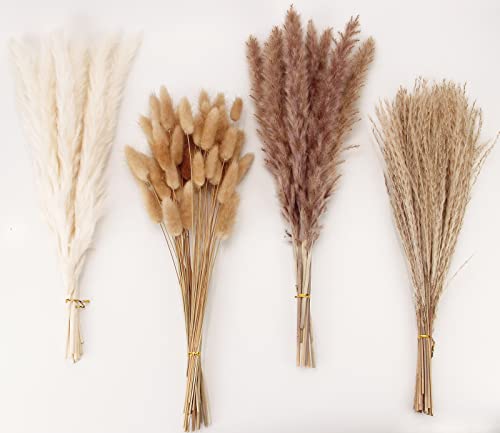
Swedish farmhouse botanicals lean heavily toward the botanical world as it exists in the Swedish countryside: dried grasses, seed heads, birch branches, dried wildflowers, and simple green plants with restrained shapes. The specific containers are stoneware crocks, simple terracotta pots without decoration, and plain iron buckets, not woven baskets, not glass vases, and not the wide ceramic planter with a mid-century form that appears on every other style of Scandinavian mood board.
Dried arrangements are more appropriate to Swedish farmhouse than fresh flowers in most settings. A loose bundle of dried pampas, oat grass, or lunaria in a tall stoneware crock on the floor has exactly the quality the style is after: something that came from outside, was brought in without fuss, and sits in the room as an honest object rather than a decorator’s gesture. Fresh seasonal flowers in a simple earthenware vase are also correct, particularly spring botanicals like early tulips or late-season branches with buds.
What to avoid: succulents in geometric planters (modernist signal), trailing pothos in macrame hangers (bohemian signal), tropical plants in bold-leafed varieties like monstera or fiddle-leaf fig (these are design-trend plants that sit outside the Swedish farmhouse tradition and scale). The test for a Swedish farmhouse botanical is this: could it have been brought in from a Swedish field or hedgerow? If yes, it belongs. If it requires a tropical greenhouse, it does not.
Key Takeaway: Limit botanicals to dried grasses, seed heads, birch branches, and simple green plants in plain stoneware or terracotta, avoiding any plant or container that signals tropical, bohemian, or modernist rather than northern European countryside.
The Kitchen Does Not Need a Farmhouse Sink
 Save
The apron-front farmhouse sink is the most replicated single element from American farmhouse style, and it has been marketed so aggressively as a “farmhouse essential” that it appears in nearly every farmhouse-adjacent kitchen guide regardless of whether the style being described is Swedish, French country, American rustic, or modern farmhouse. In Swedish farmhouse kitchens, it is not a defining element.
Swedish farmhouse kitchens historically featured simple, functional sinks in practical materials. A single-basin white fireclay undermount sink reads as Swedish farmhouse correct. A white porcelain apron-front sink does not read as wrong exactly, but it is an American import rather than a Swedish tradition. The distinction matters primarily when paired with other decisions: if everything else in the kitchen is reading accurately Swedish, an apron-front sink will not ruin it. But if you are deciding whether to invest several hundred dollars in an apron-front sink specifically to achieve Swedish farmhouse style, the answer is that the cabinetry and hardware choices carry more influence over the final read of the room than the sink profile.
What Swedish farmhouse kitchens do require is a specific kind of restraint on the countertop. A flat honed-marble or pale limestone countertop is correct. Polished quartz in a bright white is too contemporary. Butcher block is warmer and more American. The countertop material should have a matte quality and a pale, cool tone that extends the room’s color logic.
The single most Swedish farmhouse move you can make in a kitchen is the cabinet detail: flat-panel doors, no decorative molding, blackened iron hardware, and a matte painted finish in the room’s palette. A kitchen with shaker-style cabinets, bin-pull iron hardware, and a pale sage-gray paint reads as Swedish farmhouse in a way that an apron-front sink with chrome hardware and subway tile never will, regardless of how many farmhouse mood boards feature exactly that combination.
Key Takeaway: Prioritize flat-panel cabinetry with blackened iron hardware and a matte painted finish over the apron-front sink, because the cabinet detail carries more Swedish farmhouse signal than any single fixture choice.

The Art Is Understated and Botanical, Not Motivational or Generic
 Save
Art is where the American farmhouse influence shows up most visibly in rooms that have otherwise done a reasonable job with the Swedish farmhouse palette and furniture. The word-sign lettering that says GATHER or HYGGE or FAMILY in block sans-serif type is the clearest signal of an American farmhouse overlay. But it is not the only one. Generic landscape photography, abstract canvas prints in trendy color palettes, and oversized script-style wall lettering all pull a room out of Swedish farmhouse territory.
Swedish farmhouse art is botanical, historical, or hand-drawn. Botanical prints have been part of Scandinavian country interiors since the eighteenth century, when detailed engravings of plant specimens were both scientifically significant and aesthetically valued. A simple engraving-style botanical print in a plain birch or painted frame is as correct for Swedish farmhouse now as it was two hundred and fifty years ago. The frame matters: it should be simple, narrow, and either in pale natural wood or in a painted finish that matches the room’s furniture color.
The scale and arrangement of art in Swedish farmhouse rooms is also specific. Rather than a salon-style gallery wall with many different frames and print sizes, Swedish farmhouse art tends toward a small number of prints, consistently framed, arranged in a single horizontal line at eye level. Three botanical prints at the same scale, in matching frames, spaced evenly across a wall is far more Swedish farmhouse than twelve different pieces in different frames and sizes arranged gallery-wall style.
What else belongs: simple hand-drawn maps, antique mirrors in painted frames, a single oil painting in an old frame bought from a flea market. The test is whether the piece could have been in a Swedish rural home at any point in the last two hundred years. If the answer is yes, it probably belongs. If it requires a Midcentury modern aesthetic or a contemporary art movement to explain it, it probably does not.
Key Takeaway: Choose a small number of botanical or hand-drawn prints in matching simple frames arranged in a single horizontal line, and remove any word-based signs or motivational text from the room entirely.

Decluttering Means Something More Specific Than You Think
 Save
Every guide to Swedish farmhouse mentions minimalism or decluttering. The instruction is always some version of “keep it simple, remove the clutter.” That instruction is accurate but too vague to be useful, because what counts as clutter is subjective, and what counts as necessary in a Swedish farmhouse room is more specific than “less is more.”
Swedish farmhouse rooms are not minimalist in the sense of a Japanese or Japandi interior, where surfaces are entirely clear and the absence of objects is the point. Swedish farmhouse rooms have objects. They have a stoneware crock on the kitchen shelf, a small collection of smooth river stones on a windowsill, a single vase with dried grasses on the dining table. The objects are there. But each one has been chosen deliberately and placed with visible intention, and there are no objects that exist purely as filler.
The specific rule for Swedish farmhouse object editing is this: every surface holds one considered object or a tightly grouped cluster of objects from the same material family. A kitchen shelf might hold six cream stoneware bowls stacked together and nothing else. That is complete. A windowsill might hold two smooth stones and a small terracotta pot. Complete. The moment a third material enters the windowsill cluster, the window begins to read as cluttered rather than curated. Each surface should have one story, told in one material or material family, with clear negative space around it.
The failure mode that most people encounter is that they edit the room down to the right level of furniture, and then accessorize back up to the cluttered level they started at. The editing has to extend all the way to the small objects. One type of candle holder on the mantel, not five different styles. One plant in one pot, not three pots in three different materials. The restraint is not about having fewer things; it is about having fewer kinds of things per surface.
Key Takeaway: Edit every surface to hold one material story with clear negative space around it, because Swedish farmhouse objects are deliberately placed within a rule of material consistency, not simply reduced in quantity.

The gap between a Swedish farmhouse room that holds together and one that reads as generic farmhouse-adjacent is almost always traceable to one of these twelve points, and usually to the same handful of them: the wall color defaults to pure white, the wood choices trend warm-golden rather than pale-cool, the hardware signals the wrong tradition, and the small objects accumulate past the point of intention. None of these are expensive corrections. Paint is the most affordable intervention in any room. Hardware replacement is the highest-impact low-cost move. And editing objects costs nothing except the willingness to remove what is not working.
Start with the wall color. Choose a muted, dusty tone in the blue-gray or warm bone family and paint one room. Then look at your furniture through that new lens and identify which piece most benefits from a painted finish. From there, the rest of the corrections become readable as a sequence rather than an overwhelming overhaul. Swedish farmhouse is a style that rewards specificity. Every decision you make in the right direction compounds.
From the guides
You've saved it, wanted it. Here's the how: codes, measurements, order. Your choices make it yours.
The Japandi Honest PlaybookThe honest version of the style: what to keep, what to skip, and the order to do it in.See inside →The Room Refresh PlaybookA repeatable four-step method, room by room, in ten minutes, thirty minutes, or one weekend.See inside →Make Any Room Feel Cozy on PurposeWhy some rooms hold people and others empty out, and the moves that change it.See inside → Save


