Georgia
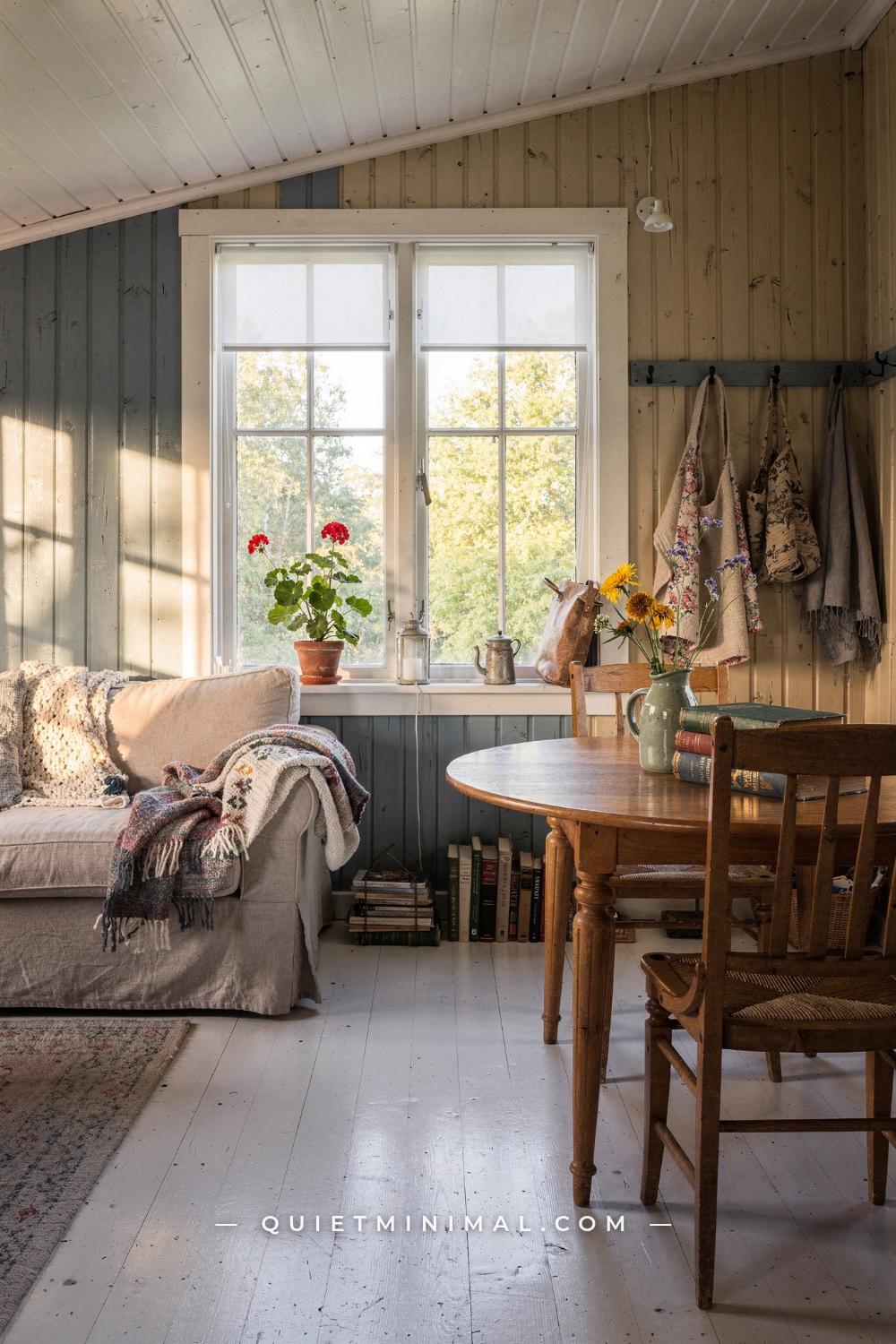
If you have ever looked at a photo of a genuine Swedish sommarstuga and felt the pull of it, that soft afternoon light, the painted wood floors, the linen curtains moving in the breeze, you already know what you are going for. The problem is that most people decorating a Swedish summer house interior end up somewhere noticeably different: a space that feels either too bare and clinical, or too busy and cluttered, or just generically “Scandinavian” in a way that could belong to any apartment in any city.
The sommarstuga is its own interior category. It has rules that are distinct from the urban Scandi apartment, and breaking them is exactly why so many well-intentioned rooms miss the feeling. This article walks through 13 specific mistakes, what makes each one fail in a summer house context, and what the correction looks like in practice.
1. Painting Every Wall Stark White and Calling It Scandi
 Save
Stark white is the most common starting point for anyone trying to get a Swedish look, and on the surface it seems logical. Nordic interiors are associated with brightness, light, and clean walls. The issue is that the bright whiteness of a Scandinavian city apartment is an engineering response to long dark winters: those rooms need every photon they can get. A summer house operates under completely different conditions. The windows are open, the light is abundant, and what the room actually needs is warmth to balance the brilliant summer glare, not a surface that amplifies it.
When every wall is painted in a cool or neutral stark white, the summer house reads as a rental property or a hospital wing rather than a well-loved family retreat. The warmth that makes the sommarstuga feel like itself comes from paint with a chalky or limewash finish in colors that have some grey, green, or clay in them. Think Farrow and Ball “Shaded White” or Behr “Cracked Wheat,” colors that look almost white in bright light but hold depth in shadow. One or two walls can go slightly deeper, a dusty sage, a faded blue-grey, which is entirely in keeping with how genuine Swedish cottages have painted their interiors for generations.
The mistake is treating “light” and “white” as synonyms. In a summer house, light comes from the sky and the water and the trees outside. What the interior walls do is respond to that light, not compete with it. A warm off-white or a soft sage green does that. A cold bright white does not. Apply a matte or limewash finish over whatever color you choose: the texture of the surface is as important as the hue, because a flat sheen on a rough timber wall reads as cheap renovation, while a chalky matte finish reads as age and character.
From the guides
You've saved it, wanted it. Here's the how: codes, measurements, order. Your choices make it yours.
 The Japandi Honest PlaybookThe honest version of the style: what to keep, what to skip, and the order to do it in.See inside →
 The Room Refresh PlaybookA repeatable four-step method, room by room, in ten minutes, thirty minutes, or one weekend.See inside →
 Make Any Room Feel Cozy on PurposeWhy some rooms hold people and others empty out, and the moves that change it.See inside →
Key Takeaway: Replace stark cool whites with chalky warm off-whites or muted sage and clay tones that deepen in shadow and hold warmth in the summer light.

2. Buying All New Furniture at Once
 Save
One of the clearest markers of a room that got decorated rather than lived in is a matching furniture set. In a genuine Swedish summer house, nothing matches in the catalog sense. The chairs around the table are different from each other because they arrived at different times, some inherited, some bought at a loppis (Swedish flea market), some dragged out of storage from a grandparent’s house. The visual effect is not chaos but a kind of settled completeness, as if the room has been gathering things slowly and knows what it has.
When you buy a complete living room or dining set for a summer house in one purchase, you get coherence at the cost of character. The room looks like the showroom floor it came from. Everything is the same wood tone, the same finish quality, the same design era. There is no friction in it, and friction is exactly what gives a summer house its feeling of having been used and loved. You can have a simple IKEA pine table and pair it with an antique bentwood chair and a painted ladder-back: the contrast is the point.
The correction is to shop in sequence, not in one visit. Start with the pieces you already have or can inherit, then find one or two secondhand pieces to fill gaps, then add anything new that needs to be new (a mattress, a sofa if there isn’t one) as a background piece rather than the focal statement. New items should be quiet. Old or found pieces get to be interesting. The rule of thumb for a summer house is roughly 60 percent inherited or vintage, 40 percent new and functional. If your ratios are flipped, the room will never feel genuinely Swedish.
Key Takeaway: Mix furniture from different eras and sources deliberately, with inherited or secondhand pieces as the character elements and new pieces as quiet functional backgrounds.

3. Skipping the Painted Floor
 Save
Bare wood floors are fine in many contexts, but in a Swedish summer house they often look unfinished rather than natural. The authentic sommarstuga floor is almost always painted, traditionally in a grey-blue known as the Swedish “blågrå,” a color that bounces light around the small rooms without making them feel smaller. Painted floors are also a practical answer to the realities of summer house life: sand, grass, and wet feet from swimming are easier to clean off paint than to work out of unsealed wood.
The mistake most people make is either leaving the floor bare and unfinished or sanding it down to bright natural pine in an effort to achieve a “natural Scandinavian look.” Bright raw pine floors work in a mid-century Nordic apartment with high ceilings. In a low-ceilinged 1930s summer cabin, they can read as too yellow and too new, stripping the room of age and gravity.
Painting a floor is not a permanent commitment. A traditional Swedish floor paint (in Swedish, “golvfärg”) is an oil-based paint that wears over time and needs refreshing every few years, which is itself part of the cottage maintenance ritual. The right colors are faded grey-blue (think of a color with about 40 percent grey mixed into a medium blue), warm stone, or a faded terracotta. Paint the floor and allow it to wear around the threshold and in front of the windows: that wear pattern is evidence of a house that has been lived in across seasons, and it reads as authentic in a way that any new surface cannot.
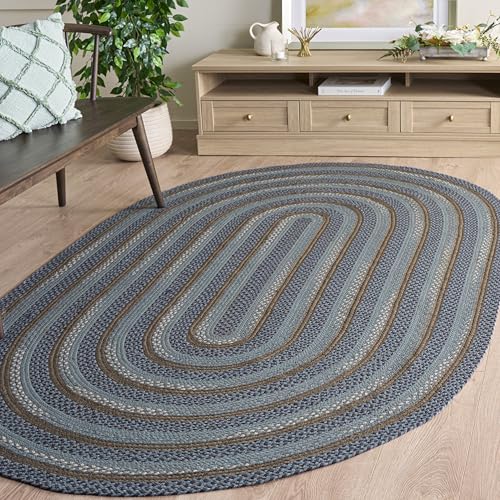
If you are renting or working with a floor you cannot paint, the next best option is a large flatwoven rug in grey, ivory, or faded blue that covers most of the floor area. But the painted floor is the first choice, and it is the one that most reliably produces the correct feeling.
Key Takeaway: Paint the floor in a faded grey-blue or warm stone using an oil-based floor paint and let it wear naturally around doorways and windows for a lived-in result.
4. Hanging Thick Curtains That Block the View
 Save
In an urban apartment, curtains do real functional work: they provide blackout for sleeping, insulation against cold, and privacy from neighboring buildings. In a Swedish summer house on a lake or in the countryside, those functions are mostly irrelevant. The windows are there to bring in the landscape, and anything that impedes that connection is working against the building.
Heavy drapes, lined curtains, or roman blinds are the wrong window treatment for a sommarstuga. They press down on the room and make the windows look like furniture rather than openings. The correct treatment is almost always a single panel of lightweight unbleached linen or cotton muslin hanging from a simple wooden curtain rod, gathered loosely rather than pulled taut. The curtain’s job is to soften the window frame and filter the very brightest midday light, not to block the view or create a formal look.
The traditional Swedish summer house curtain is hung from a thin rod placed close to the top of the window frame, not from a ceiling-mounted track. It is almost always white or natural linen-colored, occasionally in a simple check or stripe. It moves in the breeze. It is not padded, not lined, and not thermal. If your summer house windows face south or west and the afternoon glare becomes uncomfortable, the right solution is a lightweight muslin panel that can be pushed aside easily rather than a window treatment that commits to blocking the light.
Get the curtain length right: it should reach the windowsill or hang exactly to the floor with about 2 inches (5 cm) of pooling, never the awkward 3 to 6 inch (8 to 15 cm) gap between sill and hem that reads as miscalculated. The rod itself should be natural wood or matte black iron, not chrome or brushed nickel, which are too contemporary for the aesthetic.
Key Takeaway: Use a single lightweight unbleached linen panel per window hung from a simple wooden or iron rod, gathering loosely at the sides to let the landscape remain visible.

5. Ignoring the Windowsill
 Save
The Swedish windowsill is a design object in its own right. Swedes have been styling windowsills with deliberate care for generations, and the result is one of the most recognizable details of a genuine Nordic interior: a small composition of plants, a candlestick, maybe a found object or a piece of inherited pottery, arranged with the same intention you would apply to a shelf.
The mistake in a summer house context is leaving the windowsill bare, or worse, using it as overflow storage for random objects (a phone charger, a bottle of sunscreen, keys). A bare sill makes the window look raw and unconsidered. Random objects make it look like a catch-all surface. Neither reads as intentional.
The correct use of the windowsill is to treat it as a small curated display. In summer, this almost always includes a pelargonium (geranium) in a simple terracotta pot, because this is the most Swedish of all window plants, a detail that appears in Carl Larsson’s paintings and in virtually every authentic Swedish cottage from the 1890s to today. You can add a single candlestick in white or pale metal, and one small found object: a smooth stone from the shore, a piece of driftwood, a small glass bottle with a meadow flower. Three objects maximum. The composition should read as quiet and considered, not as a collection.
The windowsill arrangement also serves a practical function: the plants at the window catch the strongest direct sun so the rest of the room gets filtered light. This is especially effective in west-facing summer house windows where late afternoon sun can make a room uncomfortable. The pelargonium’s leaves diffuse the light beautifully.
Key Takeaway: Style every windowsill with a pelargonium in a terracotta pot, one candlestick, and at most one found object, arranged with the same care as a shelf display.

6. Over-Accessorizing the Walls
 Save
A summer house wall should feel calm. What often happens instead is that the walls get treated the same way as a city home, filling them with a gallery wall, multiple prints, decorative plates, framed photos, mirrors, and macramé, until the room feels like a shop floor. In a small summer house with low ceilings and modest rooms, a heavily decorated wall compresses the space rather than opening it.
The sommarstuga tradition is not to leave walls entirely bare but to use them very sparingly. One framed piece per wall is a good working limit for a small room. In a bedroom, it might be a single print above the bed or a simple botanical illustration in a pine frame. In the kitchen, a small framed piece of folk art or a vintage Swedish calendar print hung near the window. In the sitting room, one larger piece rather than several small ones grouped together.
What you are trying to avoid is visual busyness. In a small summer house, every element competes for attention in a confined space, and the walls need to provide rest for the eye rather than more stimulation. This is especially important because the windows are doing significant visual work: birch trees, water, meadows outside the glass are the real wall art of a summer house, and over-decorated walls compete with that view rather than framing it.
The frame style matters too. Natural wood frames (pine, oak, or birch) are correct for the aesthetic. Heavy ornate gilt frames are not. Black frames work if they are thin and simple. The goal is something that looks like it arrived in a bag from the flea market rather than something ordered from a chain home store.
Key Takeaway: Limit wall decoration to one framed piece per wall in a small room, using simple natural wood or thin black frames, and let the windows provide the primary visual interest.

7. Using Synthetic Textiles in a Natural-Materials Setting
 Save
Synthetic materials stand out in a Swedish summer house in a way they do not in a modern apartment, because the building itself is almost entirely natural: bare or painted timber walls and floors, cotton and linen textiles, ceramic and enamel kitchenware, wool throws. When you introduce microfiber cushions, polyester throws, or plastic storage baskets, the contrast is immediate and jarring. It makes the room feel like a rental kit rather than a cottage.
The textiles that belong in a sommarstuga are linen, cotton, and wool, in that priority order. Linen for curtains, cushion covers, and bed linens. Cotton for throws, table cloths, and kitchen textiles. Wool for heavier blankets and the occasional rug. These materials behave in ways that reinforce the summer house aesthetic: linen wrinkles and softens with washing, wool pills slightly with age, cotton takes on the smell of fresh air and sun, and all three of those things are evidence of a house that has been used.
The color palette for textiles in a summer house is also more specific than most people think. Natural unbleached linen, warm white cotton, faded blue stripe, and a Swedish folk-art red-and-white check are the canonical textile colors for a sommarstuga. A thick grey boucle cushion is a current urban Nordic trend, not a summer house textile. It can be used sparingly, but if you lead with it you shift the room toward a contemporary apartment feel and away from the cottage character.
Thread count and quality in a summer house is not about luxury. It is about durability and natural feel. A simple linen duvet cover that has been washed fifty times and has gone slightly creamy in color is exactly right. A bright white high-thread-count sateen cover belongs in a hotel.
Key Takeaway: Use only linen, cotton, and wool textiles, in natural, off-white, striped, or checked patterns, and wash them enough that they soften and lose their newness before they look right.

8. Getting the Lighting Wrong for a Space That Is Flooded with Daylight
 Save
The summer house has two distinct lighting needs that people routinely confuse. During the day, in a Nordic summer, there is so much natural light that artificial lighting is nearly irrelevant. In the evening, particularly in Sweden where the long summer days give way to a brief but genuinely dark late evening, the room needs to feel warm and intimate. A single overhead ceiling light in the center of the room achieves neither.
The mistake is relying on one overhead fixture for all evening light, usually a single pendant or a surface-mounted ceiling light that throws a flat, even wash across the room. This reads as a rental property or a school classroom. It flattens the room, removes shadow, and kills any sense of warmth or intimacy in the evening hours.
A Swedish summer house evening room is lit from multiple low sources: a pendant light above the dining table, a ceramic table lamp on a side table, and candles. Candles are not optional in a sommarstuga: they are central to the evening ritual of the space, as culturally specific to Swedish summer as the pelargonium on the windowsill. White pillar candles and taper candles in simple iron or ceramic holders are correct. Scented candles in glass jars are not.
For pendant lights, the right shape is either a simple white enamel dome (like a traditional Nordic kitchen lamp), a wicker or seagrass shade, or a hand-thrown ceramic shade. The cord should be a fabric braid, not plastic-coated cable. Avoid designer statement pendants: in a small cottage with 7-foot (213 cm) ceilings, a large architectural pendant looks like it arrived from the wrong building.
Key Takeaway: Layer evening light from three low sources, a pendant over the table, a ceramic or linen table lamp on a side surface, and pillar candles, and avoid any single overhead ceiling light as the primary source.
From the guides
You've saved it, wanted it. Here's the how: codes, measurements, order. Your choices make it yours.
The Japandi Honest PlaybookThe honest version of the style: what to keep, what to skip, and the order to do it in.See inside →The Room Refresh PlaybookA repeatable four-step method, room by room, in ten minutes, thirty minutes, or one weekend.See inside →Make Any Room Feel Cozy on PurposeWhy some rooms hold people and others empty out, and the moves that change it.See inside →
9. Making the Kitchen Too Sleek
 Save
The Swedish summer house kitchen is fundamentally a working kitchen for simple food made with summer produce: new potatoes, herring, berries, crispbread, cheese. It is not a chef’s kitchen or a showroom kitchen, and the mistake of modernizing it with sleek glossy cabinets, stainless steel appliances, integrated hardware, and quartz countertops destroys the character of the space faster than almost any other single decision.
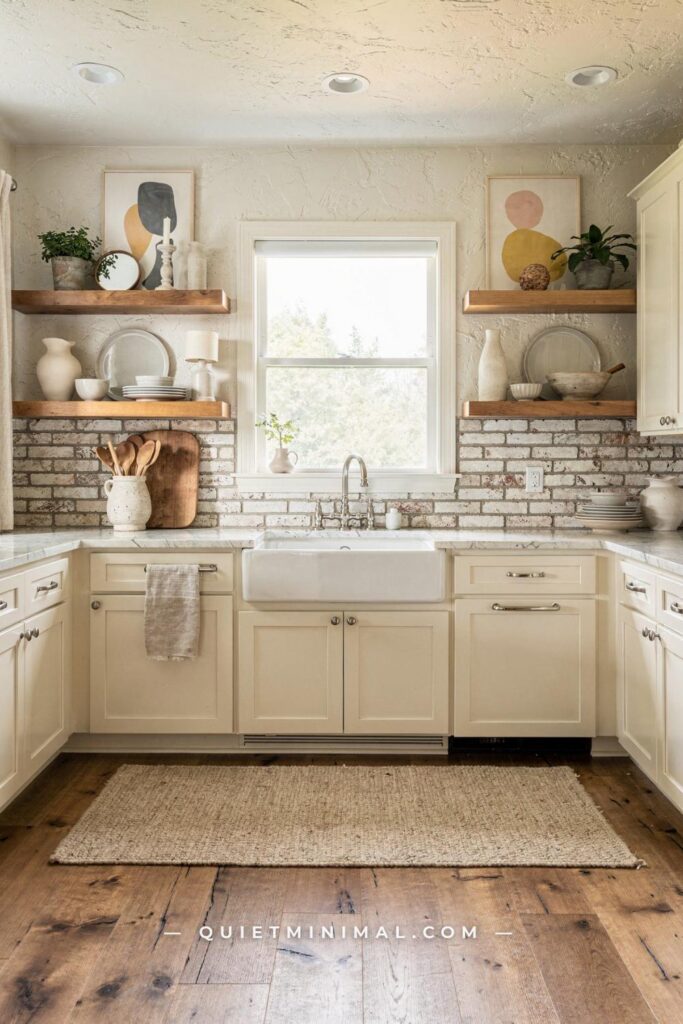
A sommarstuga kitchen should look like it has been in slow use for decades. Painted timber cabinet doors in a muted color, sage green, faded blue, or an aged cream, with simple iron or ceramic knob hardware. A butcher block or simple tiled countertop, worn at the edges. Open shelving rather than upper cabinets where possible, displaying ceramic plates, enamel mugs, glass jars, and the occasional vintage find. A deep enamel sink if the building’s plumbing allows.
If you are working with an existing modern kitchen that was renovated without this sensibility, the most effective corrections are: replace the cabinet hardware with simple black iron or ceramic knobs (this costs very little and changes the reading immediately), add open shelving in one run to break up the closed-cabinet monotony, and cover the countertop with a simple chopping board that takes up most of the prep surface. Those three changes pull the room back toward the cottage feeling without requiring a full renovation.
The refrigerator is usually the most disruptive modern object in a summer house kitchen. If it cannot be concealed, choose the smallest footprint that works for the household and push it into the most recessed corner of the room. A full-size stainless side-by-side refrigerator in a summer house kitchen is visually the wrong scale and the wrong material for the space.
Key Takeaway: Keep the summer house kitchen painted, worn, and open-shelved, replacing glossy surfaces and contemporary hardware with simple iron or ceramic fittings and visible ceramic storage.

10. Buying a Sofa That Is Too Large for the Room
 Save
Scale failure is one of the most common mistakes in summer house decorating and the hardest to reverse once you have committed to it. A sofa that is the right scale for a suburban living room at 90 to 96 inches (229 to 244 cm) becomes a room-dominating object in a summer house where the whole common area might be 180 square feet (17 square meters). The sofa fills the room visually even before you add a coffee table and two chairs, and the result is a space that feels cramped and impossible to move through comfortably.
The correct sofa for a sommarstuga is a two-seater or a compact three-seater, no longer than 72 to 78 inches (183 to 198 cm). It should sit on legs rather than a full base, because the visual gap between the floor and the sofa base makes the room read as larger. The upholstery should be a natural fabric: loose-weave linen, cotton canvas, or a simple cotton blend in a neutral or faded stripe. A tight weave in a contemporary fabric looks out of place in the same way a glossy kitchen does: too new, too finished.
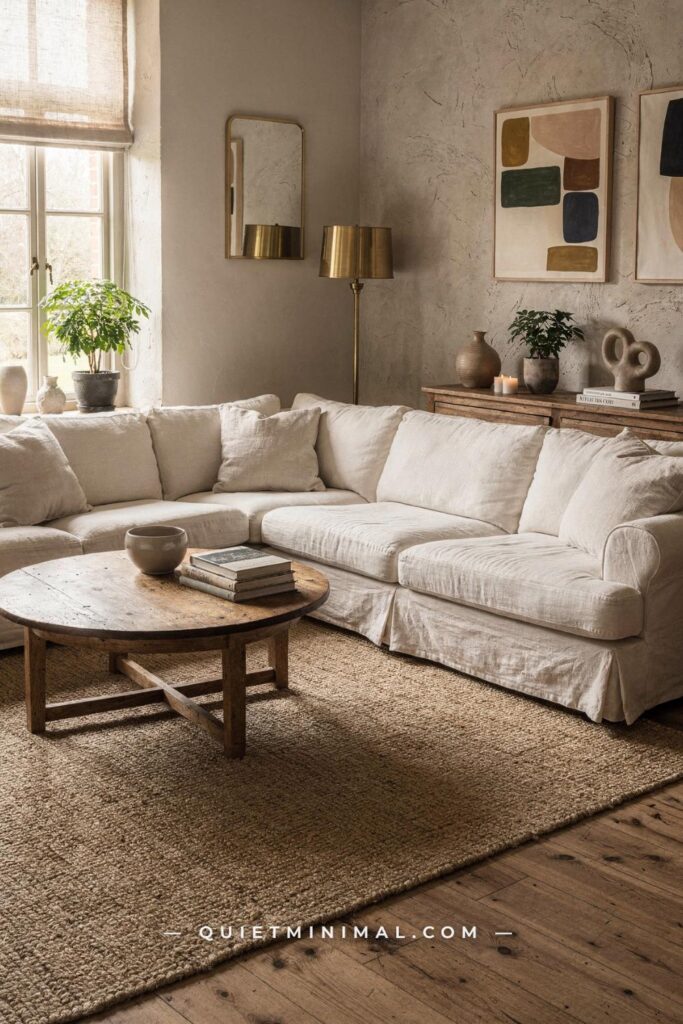
Avoid sectional sofas entirely in a summer house. Even a small sectional consumes the room’s available floor space and creates a barrier to movement that conflicts with the fluid indoor-outdoor living that a summer house is built around. People in a sommarstuga move between inside and outside constantly throughout the day, carrying things, pulling off boots, coming in from the garden. A sectional that wraps around the floor plan fights this flow.
If you need more seating, the summer house answer is a collection of lightweight movable chairs: a bentwood chair, a painted stool, a simple rocking chair. These can be pulled toward the sofa when needed and moved back against the wall or onto the porch when the room needs to breathe.
Key Takeaway: Keep the sofa at 72 to 78 inches (183 to 198 cm) maximum, on visible legs, in a natural fabric, and supplement seating with lightweight movable chairs rather than a sectional or oversized piece.

11. Treating the Bedroom Like a Hotel Room
 Save
Hotel room bedrooms in a summer house context means: a padded upholstered headboard, matching nightstands, coordinating lamps, a duvet folded with precision corners, and a color scheme chosen from a mood board. It is a coherent aesthetic, but it is completely wrong for a sommarstuga. The summer house bedroom should feel like the most restful room in the building precisely because it has not been decorated in any programmatic way.
The authentic sommarstuga bedroom is spare: an iron or simple painted wood bed frame, a white linen duvet that is slightly oversized for the mattress, one checked wool blanket folded across the foot, and a nightstand that is genuinely a side table pressed into service rather than a purpose-built bedroom piece. The walls are usually bare or have one small framed piece. The window is often uncurtained on summer nights when the light barely dims.
Storage in a summer house bedroom is handled by wall pegs rather than a wardrobe. A row of simple Shaker-style pegs at 66 to 68 inches (168 to 173 cm) height holds clothes, bags, and towels, and looks correct rather than provisional in a cottage setting. A wardrobe that fits correctly into a summer house room is almost always a freestanding painted wood piece, an inherited armoire or a simple painted plank cupboard, rather than a fitted wardrobe which reads as renovation rather than character.
The mattress height should be low to moderate: beds on frames that put the mattress at 30 inches (76 cm) or higher look like city apartment beds and make the ceiling feel lower. A frame that keeps the mattress at 20 to 24 inches (51 to 61 cm) from the floor fits the cottage proportions correctly and leaves the room feeling open rather than top-heavy.
Key Takeaway: Use a simple iron or painted wood bed frame kept low to the floor, with linen bedding and a wool check blanket, supplemented by wall pegs instead of a wardrobe for a genuinely restful sommarstuga bedroom.

12. Missing the Connection Between Indoors and Outdoors
 Save
The Swedish summer house exists primarily in the context of its outdoor surroundings, whether that is a lake, a birch forest, a meadow, or a rocky archipelago coast. The building is a shelter from rain and mosquitoes, not a refuge from the landscape. Yet one of the most common decorating mistakes is to treat the summer house interior as a self-contained room design exercise, furnishing and decorating it as if the outdoors were a backdrop rather than the main event.
This disconnection shows up in specific ways. Furniture arranged so that no seat faces a window. Heavy curtains that close off the view. An interior color palette that has no relationship to the colors outside the glass. A back door that leads to a porch but is usually kept shut because the room was designed to be self-contained.
The correction starts with furniture orientation. Every primary seating position, the sofa, the main chair, the dining chairs, should have a sightline to at least one window. If your room layout currently has the sofa against the window wall facing into the room, this is the most common arrangement in an urban apartment, consider rotating it 90 degrees so the seating faces the window from a position across the room.
Color palette should echo the exterior: the greens, the grey-blues of water, the warm wood tones of birch bark. If your summer house sits in a birch forest and your interior palette is warm terracotta and burgundy, the room will feel sealed off from its setting. The Swedish practice of bringing the outside in goes beyond placing a vase of flowers on the table (though that matters too). It means choosing interior colors that feel continuous with the landscape rather than contrasting with it.
Finally, the threshold itself needs treatment. The door from the interior to the porch or garden should be styled as a transitional zone: a hook for damp towels, a spot for boots, a place to set down what you brought in from the garden. This practical acknowledgment of the in-out rhythm of summer house life is what makes the building feel inhabited rather than staged.
Key Takeaway: Orient every primary seat toward a window, choose interior colors that echo the surrounding landscape, and design the threshold to the outdoors as a functional transitional zone rather than a dead end.

13. Removing All Signs That the House Has a History
 Save
There is a renovation reflex that treats every imperfection as something to fix: the worn floor paint gets sanded and relacquered, the old iron hardware gets replaced with new brushed nickel, the inherited chair with the repaired leg gets donated, the vintage enamelware gets replaced with matching ceramic. The result is a room that looks clean and new and has lost everything that made it interesting.
A genuine Swedish summer house has a patina of use. The floor paint is worn around the table legs and in front of the sink. The door hardware is iron and slightly oxidized. The shelf holds a mix of objects from different decades, an old enamel pitcher, a hand-painted ceramic from the sixties, a stone from the lake that a child picked up in 1987 and left on the windowsill. These are not decorating choices in the contemporary sense: they are evidence of occupancy across time, and they are what gives the room its feeling of being genuinely loved rather than recently assembled.
The mistake is editing the room toward coherence by removing its history. Every decision to replace something old with something new, unless the old thing is genuinely broken beyond function, pushes the room further from the sommarstuga feeling and closer to a generic rental aesthetic.
The correction is not to stop all improvements but to edit with restraint. Keep the things that show their age and still work. Repair rather than replace where possible. Add new things only where the function genuinely demands it, and when you do add new things, choose them to be quiet and recessive so the old pieces can remain the visual focal points.
One specific action that pays dividends immediately: look for one object in your summer house that has genuine history, even if it is not beautiful by conventional standards, and place it where it will be seen daily. An old photograph in a simple pine frame. A worn ceramic bowl. A piece of faded folk textile. That single object, treated with deliberate visibility, signals that this room has continuity with time rather than beginning this season.
Key Takeaway: Keep worn, repaired, and inherited objects as the room’s visual focal points, adding new pieces only where function demands and always choosing new additions to be quiet and background rather than prominent.

A well-done Swedish summer house interior is not a design exercise: it is a record of summers. The rooms that read most convincingly as genuine sommarstugor are the ones where something in the mix could not have been assembled on purpose because it was simply already there when the season began. Start with what the house already has. Keep what shows its age and still works. Correct the few things that actually break the feeling: the white walls that needed warmth, the curtains that blocked the light, the sofa that was two sizes too big. Make those changes with restraint, and the room that emerges will look as if it has been exactly this way for years, which is the highest standard a summer house interior can meet.
From the guides
You've saved it, wanted it. Here's the how: codes, measurements, order. Your choices make it yours.
The Japandi Honest PlaybookThe honest version of the style: what to keep, what to skip, and the order to do it in.See inside →The Room Refresh PlaybookA repeatable four-step method, room by room, in ten minutes, thirty minutes, or one weekend.See inside →Make Any Room Feel Cozy on PurposeWhy some rooms hold people and others empty out, and the moves that change it.See inside → Save