 Georgia
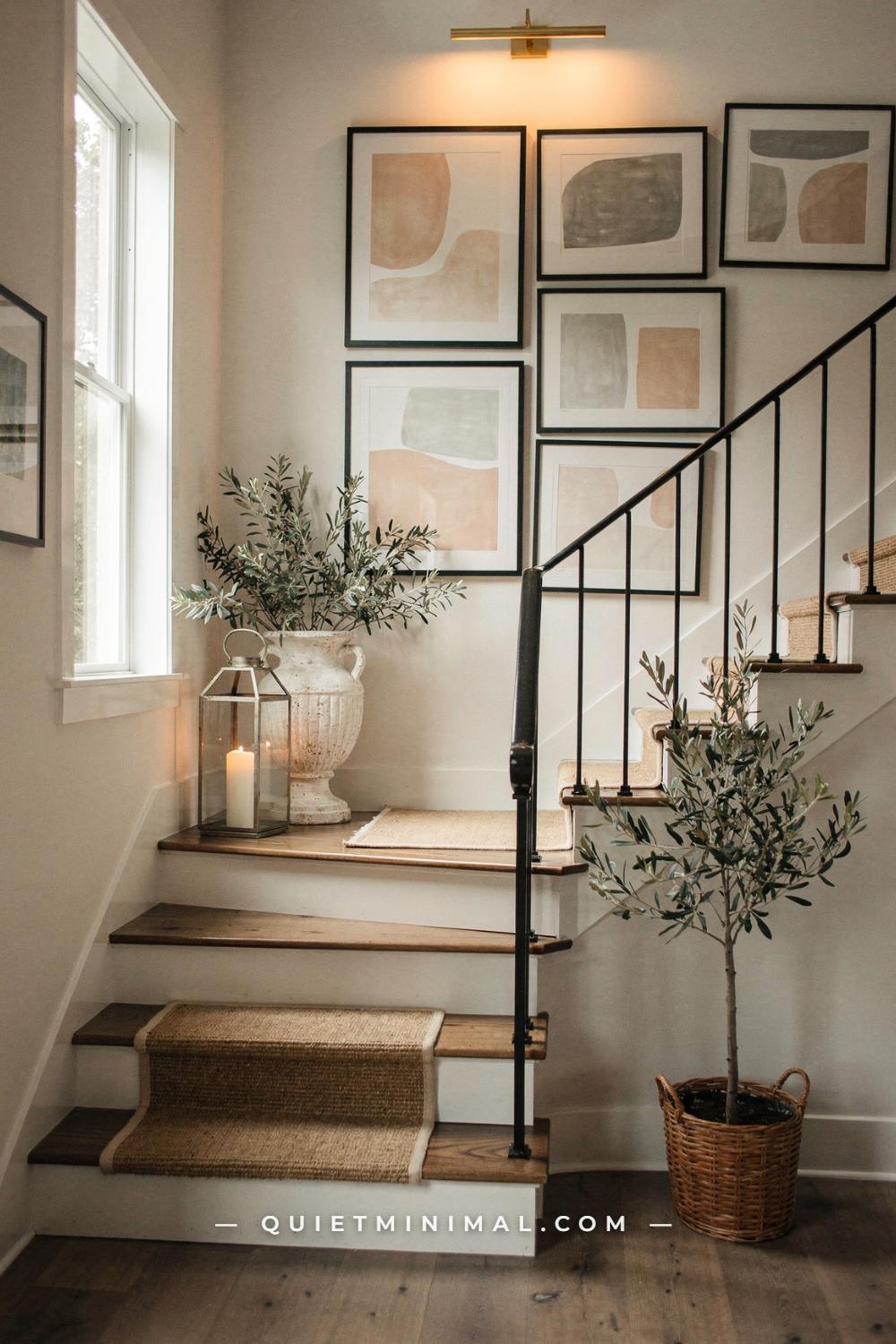
The advice on a tall staircase wall is remarkably uniform. Hang art at eye level. Match your frames. Keep the stairs clear, because anything on a stair wall is in the way. Choose symmetry, because symmetry looks calm. Leave the wall pale so it does not feel heavy. Each rule has a grain of sense in it, and each one is why so many stairwells end up with a single oversized print floating in the middle of three empty yards of wall.
A tall stair wall is a different problem from a living room wall. The floor under it slopes, the viewer is moving, the light changes with every step, and the wall can be twice as tall as any room you have decorated. Tall staircase wall decor ideas have to be measured against the slope, lit from more than one height, and sized for the person climbing, not the one standing in the hall.
What follows overturns the common rules one at a time, with the numbers and the reasoning behind what holds up.
“Hang Art at 57 Inches” Is Wrong on a Slope
 Save
The gallery rule everyone knows is to center art about 57 in (145 cm) from the floor. On a staircase, which floor? Measure from the hall at the bottom and the frames at the top of the wall float far above the eye of anyone climbing. Measure from the landing and the lower frames sink toward the ankles. The rule survives only if you give it a moving floor.
The version that holds up is measuring from the stair nosing line, the diagonal you get by joining the front edge of every tread. Keep the center of each frame about 57 in (145 cm) above that line, and the wall climbs at the same angle as the stairs. Tape a string from the first nosing to the last and measure up from it, not from the hall floor. Tall frames can then step upward with the stair, as the black-framed botanical and landscape prints do here beside the oak treads and white risers.
Lighting the climb matters as much as the hanging. A brass picture light grazing the frames from above keeps the black frames from reading as flat shapes, and it gives the wall a warm glow even when the window behind you is dim. Mount each light 6 to 8 in (15 to 20 cm) above its frame, and put the whole group on a dimmer if the wiring allows.
The large aged ceramic urn with olive branches on the landing, and the potted olive tree in a wicker basket below, are the floor-level counterweights. They give the tall wall a base so it does not look pinned in space. Keep the urn out of the walking line and use an LED candle in the lantern rather than a flame, since a stair is the wrong place for anything that can tip.
A few practical steps make the nosing-line method easy to follow. Stretch a length of painter’s tape or a loosely held string from the first nosing to the last, and use a long level to check that it is straight. Mark the wall every 24 in (61 cm) along the line, then measure up from each mark with a tape. Draw a faint pencil line through the tops of those marks and you have a guide that climbs at exactly the angle of the stair.
Keep the tallest frames toward the lower part of the wall, where the viewer is closer, and let the pieces get smaller as the wall rises. A frame hung high on a wall is seen from farther away and at a sharper angle, so it needs more presence, not less. If you want the whole group to read at a glance from the hall, step back to the foot of the stairs after every third frame and check the rhythm before you drill the next hole.
Remember the second measurement, the one from above. Walk to the top landing and look down the wall, because anyone coming down the stairs sees the frames from the opposite angle. A group that looks level from the hall can look tilted from the landing if the spacing drifts, so hold your tape against both ends of the group and check that the gaps match along the whole line.
Key Takeaway: Measure frame height up from the stair nosing line rather than the hall floor, and a tall gallery will climb at the same angle as the stairs.

“Keep Stair Walls Clear” Ignores What a Shallow Shelf Can Carry
 Save
Many people believe a stair wall should stay bare because anything on it is a hazard. Anything deep is a hazard. Anything shallow and well above shoulder height is not, and that distinction frees up a lot of wall. A floating shelf 3 to 4 in (8 to 10 cm) deep projects less than a handrail does, which is exactly why this landing can carry framed leaf prints, trailing pothos and small ferns on wood shelves without crowding the walkway.
The reasoning is about the arm swing. A person climbing carries bags, brushes the wall, and leans slightly toward the rail. Objects that come out 4 in (10 cm) or less at shoulder height and above are almost never touched. Anything deeper, or any shelf set at hip level, will be knocked. Set these shelves at 54 to 66 in (137 to 168 cm) above the stair nosing line.
Notice how this landing treats the second tall wall. Two tall arched black mirrors simply lean on the adjacent wall instead of hanging, which only works where nobody walks past; on a stair wall they should be hung into studs. The mirrors catch window light and double the candle glow from the black wall sconces, so the landing feels warmer than it is.
Because the shelves are narrow, the plants must be chosen for it. Pothos trails over the front edge without needing depth, and small ferns in 4 in (10 cm) pots stay inside the shelf line. A potted palm at the stair foot carries the height that the shelves cannot. Sisal on oak is a good floor because it is tough and takes the bright-dark contrast of the black fittings well.
The failure mode is quantity. Three shelves with three things each looks collected; three shelves with eight things each looks like storage. Leave a third of every shelf empty.
Mind the load on every shelf. A shelf 3 to 4 in (8 to 10 cm) deep and 24 in (61 cm) long might carry 10 to 15 lb (4.5 to 7 kg) safely when it is fixed into studs with proper screws, and far less when it hangs from plastic anchors in drywall. Wet potting mix is heavy, so keep plants in light nursery pots slipped inside a decorative cover, and swap them out to water at a sink.
Check the shelves in the evening as well. Light from a hall fixture or a sconce can throw a long shadow of a shelf across the wall, and that shadow becomes part of the picture. Move a shelf a few inches until the shadow falls where you want it, and set a battery LED candle or a small plant near the end so the shelf looks balanced even when the lamps are off.
If you are renting, use the same logic with a lighter touch. A picture ledge with a lip can be fixed into a few studs with small screws that leave tiny holes, and the objects on it can lean without any further fixing. Ask your landlord, in writing, before drilling, and keep the screws and anchors in a labeled bag so you can fill the holes when you leave.
Key Takeaway: A stair wall can carry shelves if they are 3 to 4 inches deep and above shoulder height, so the wall stays useful and the walkway stays clear.

“Match Your Frames” Misses the Texture That Does the Work
 Save
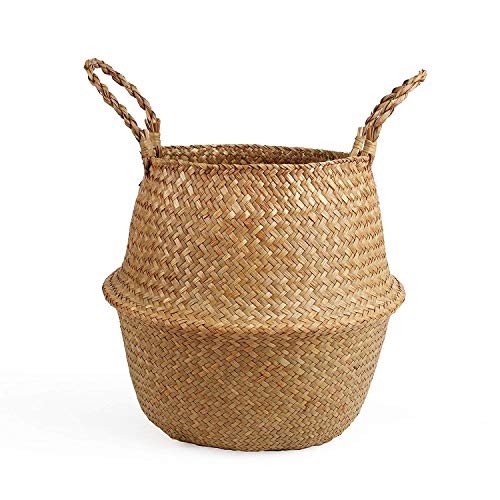
Matching frames is the standard advice for a tidy gallery wall, and the black frames here do match. What makes the wall feel inviting is not the frames. It is the mix of things between them: two floating wood shelves of trailing ivy, books and ceramic vases, a snake plant in a seagrass basket, a tall vase of pampas grass, a jute rug.
A frame wall that is only frames reads as a display of purchases. A wall that mixes flat prints with shelves and soft textures reads as a room that grew over time. Keep the frames consistent in color and let everything else vary in material: glazed ceramic, woven seagrass, dried grasses, paper. Aim for roughly two flat elements for every dimensional one.
The palette carries it. Warm greige walls, oak, black and muted green are all low-contrast neighbors, so a landscape print and a botanical print can sit beside each other without clashing. Repeat the black at least three times, in frames, in the rod railing and in a vase, and the eye reads one family.
Tall pampas grass at the base does a quiet structural job: it adds height at the point where the stair wall starts and gives the lowest frames something to sit above. Choose a stem arrangement about 36 to 48 in (91 to 122 cm) tall in a heavy vase so it cannot topple, and keep it on the side away from the stair’s first step.
Small stair lights set low along the wall are a safety feature and a styling one. They draw a warm line along the treads, and they let the frames hang at the proper height instead of being lit by whatever a hall fixture happens to reach.
Dimension is the cheapest way to make a wall of frames feel more expensive, so look for objects with a little depth. A shallow wall basket, a small ceramic dish on a bracket or a thin wooden tray fixed to the wall adds a shadow and a texture without projecting far. Keep each one under 4 in (10 cm) from the wall at shoulder height or above.
Plan the mix on the floor before it goes on the wall. Lay everything out on a large sheet of paper or a rug in the shape of the wall, arrange it until the balance feels right and photograph it. The photograph then becomes your plan, and you can match it as you hang each piece. Starting with the biggest piece and building outward keeps the layout from drifting upward at one end.
Key Takeaway: Match the frame color, then vary everything else in material, so the stair wall reads as collected rather than bought in one trip.
“Symmetry Looks Calm” Until the Wall Is Twice Your Height
 Save
Symmetry is the usual recommendation for formal calm, and on a normal wall it is. A stairwell, though, is seen from steps and angles, so a perfectly mirrored arrangement is almost never viewed from the point where it is symmetrical. It just looks stiff.
What holds up is balancing visual weight. Here a tight grid of black-framed botanical prints holds the left wall while floating wood shelves of plants and books hold the right, and a wood slat panel sits between them as a neutral buffer. The two sides do different jobs, but they weigh about the same, so the stairwell feels settled. A dark grid weighs a lot; airy shelves weigh less, so they need more things on them.
The slat panel is the clever part. Vertical wood slats, 1 to 2 in (3 to 5 cm) wide with narrow gaps, give a tall wall a vertical line that makes it feel taller and a texture that does not compete with the prints.
Light is layered here too. Black up-down sconces wash the wall in both directions, a lit display niche below the shelves holds vases, and a small olive tree in a basket stands at the stair foot. A niche like that is worth planning: recessed 3 to 4 in (8 to 10 cm) into the wall with a warm LED strip, it adds a glow with no projection at all.
For the grid, use identical frames and spacing of 2 in (5 cm) between them. Grids look expensive only when the gaps are exact, so use a paper template for each frame and a level.
Test the balance with a squint. Stand at the foot of the stairs, half close your eyes and look at the wall. If one side looks much heavier, the heavier side has too many dark or large pieces, and one of them should move across. If the whole wall looks like a single block, it needs a pause, a bare patch about the width of a frame, which gives the eye somewhere to rest.
Be careful with mirrors on a balanced stair wall. A mirror can look light but weighs a lot, and it reflects whatever is opposite, so tilt your head and check what it will show from several steps. If it reflects a bare door or a bright bulb, move it to a spot where it catches daylight instead.
Lighting changes which side looks heavier. A wall with a sconce beside it reads heavier than the same wall unlit, so judge the balance at night with the lights on as well as by day. If you have to choose one time to test, choose evening, since that is when most people use the stairs and when a stair wall is seen at its most dramatic.
Key Takeaway: Balance the weight of the two sides of a stairwell rather than mirroring them, and use a slat panel or similar neutral to separate heavy from airy.

“Dark Walls Shrink a Tall Stairwell” Is Only True Without Light
 Save
The common warning is that dark paint makes a tall, narrow stairwell feel like a shaft. Dark paint with no light does. Dark paint with small, warm, deliberate points of light behaves like a jewel box, and a tall paneled wall in deep taupe is one of the better stairwell treatments.
The paneling does the heavy lifting. A geometric molding grid in an offset arrangement breaks a tall wall into human-sized rectangles of about 16 to 24 in (41 to 61 cm) wide, so the eye reads many small units instead of one huge slab. Painting the molding and the panels in the same deep taupe keeps the surface cohesive and lets the shadows between do the pattern work.
Then come the ledges. Small wood ledges tucked into the panels hold potted plants, framed photos and brass candle cups, each lit by a tiny spotlight. Keep the ledges to 3 in (8 cm) deep, and use LED candles in the brass cups. A small spotlight at 2700K gives every object its own pool of light, which is what stops the dark wall feeling heavy.
Use a matte or eggshell finish, because a gloss on a stairwell wall will show every shadow and reflect the lights unevenly. Oak handrail and black metal balusters give the contrast, and a carpeted tread softens sound, which matters more with dark finishes.
The failure mode is spotlights placed so they glare at the person climbing. Aim them at the ledge from above and slightly forward, and check from the third step that no bulb is visible.
Think about paint sheen and prep, since dark walls show every flaw. Fill any holes and sand them, wipe off the dust, and apply a coat of primer tinted toward the finish color, which saves a coat of paint. A matte or eggshell finish hides unevenness, while a gloss shows every ripple. Cut in along the stair line with an angled brush and a steady hand, and keep a wet edge so the lap marks do not show.
Do not guess the color from a swatch. Paint a sample board about 24 by 24 in (61 by 61 cm), move it around the wall, and look at it in the morning, at noon and after dark with the lights on. A color that looks rich in the evening can look muddy at noon, and the test is the only way to know before you roll the whole wall.
Remember that dark walls also change how a stair sounds. A deep matte paint absorbs a little sound, a carpeted tread absorbs more, and the whole stairwell feels calmer for it. If your stair echoes, add a runner before you add any decor, and the quiet will make the dark color feel intentional rather than heavy.
Key Takeaway: A deep taupe stair wall works when the paneling breaks it into small units and every ledge has its own warm point of light.

“Fill the Wall” Loses to One Large Piece and Plenty of Quiet
 Save
Tall walls tempt people to fill them, and the result is usually many small pieces that lose against the height. A serene landing like this one does the opposite. One large framed abstract watercolor in sand tones hangs above a small window, flanked by floor-to-ceiling wood slat panels with glowing brass sconces. It is mostly restraint.
The scale rule is simple. On a wall this tall, a statement piece should be at least 36 to 48 in (91 to 122 cm) wide, because anything smaller disappears. Hang it centered on the window or on the wall’s visual center, not on the room’s center. Hanging a single large piece above a window works when the piece is wider than the window, so it reads as one composition rather than two competing things.
The slat panels flank the art like a frame around the frame. Light oak slats, 1 to 2 in (3 to 5 cm) wide with narrow gaps, give a vertical rhythm that echoes the oak treads and the wood handrail, so the landing reads as one material family. Brass sconces at 60 to 66 in (152 to 168 cm) above the landing floor wash the panels with warm light that suits the sand tones in the art.
The tall white planter with a leafy tree beside the window is a deliberate counterweight, a vertical on the opposite side from the sconce. A tree about 5 to 6 ft (152 to 183 cm) tall in a planter of 14 to 16 in (36 to 41 cm) diameter fits the scale. Choose a plant that tolerates window light, and turn it every few weeks.
Bright white walls keep the quiet. The restraint is the design.
Scale should come first, so measure the wall and decide how much of it the large piece will take. A good guide is that a single piece, or a pair, fills about half to two thirds of the width of the wall space it hangs in and about a third of its height. Use painter’s tape to mark the outline, live with it for a day, and adjust the size before buying.
Do not forget the surrounding quiet. Leave at least 8 to 12 in (20 to 30 cm) of clear wall on every side of the piece, and resist the urge to fill the corners. The empty wall is what makes the large piece look intentional. If the blank space feels uncomfortable, add a lamp or a plant on the floor beneath, but leave the wall alone.
Key Takeaway: On a tall stair wall, one large piece at 36 to 48 inches wide, framed by repeated slats, beats a crowd of small ones.

“Never Put Things on Stairs” Has One Exception
 Save
The usual rule is to keep the steps clear. For a main stair, that is correct. Where a wide staircase has an outer edge nobody uses, a carefully limited row of plants and lanterns turns the treads into part of the decor, and this lush stairwell shows how: LED-lit oak treads lined with potted plants and candle lanterns, with a tall wall above mixing black-framed prints, a round mirror, a woven wall basket and a small shelf with a trailing plant.
Safety sets the limits. Keep at least 36 in (91 cm) of clear walking width, which on a typical stair means the objects live only at the outer end of a tread, no more than 6 to 8 in (15 to 20 cm) deep. Use heavy, wide-based pots, and use LED candles in the lanterns. If the stair is busy, or children or pets use it, skip the treads entirely and move the same plants onto the wall.
Hanging planters from above is the safer way to get the same lush effect. Planters at 7 ft (213 cm) or higher spill greenery down the wall without ever touching a foot. Choose pothos and philodendron, which trail well and forgive uneven watering, and use a drip tray with each so water never reaches the wall.
The mixed wall above works because every element repeats a shape or a material. The round mirror echoes the pendant’s geometry, the woven basket echoes the plant pots, and the black frames echo the railing. Warm white walls hold it together, and the LED tread lights give a night glow.
Think hard about weight on any stair. A pot of wet soil can weigh 5 lb (2.3 kg) or more, and a glass lantern that tips on a tread can break and cut. Use a non-slip pad under every object that stands on a tread, and place a rubber shim under any pot with a curved base.
Treat night as a design condition. A stair with plants and lanterns on the treads must be lit properly, since a shadow can hide an object and a shin will find it. Add a night light at the foot and the top, and keep the treads’ decor at the outer edge, away from the center line. If anything looks even slightly risky, move it to the wall, where it can do the same job without a hazard.
Key Takeaway: Plants on the treads work only on a wide, low-traffic stair at the outer edge, with 36 inches clear; otherwise hang them from above.

“Vintage Means Cluttered” Unless One Era Governs the Wall
 Save
Vintage-style gallery walls have a reputation for looking like a flea market. They do when the frames, mats and subjects all belong to different decades. This stairwell avoids that by keeping the prints in one voice: sepia architectural prints in similar frames, plus a single arched black mirror, lit by a track of spotlights.
The discipline is tone. Sepia prints share a warm brown-and-cream cast, so even different subjects read as a set. Use a consistent mat width, about 2 to 3 in (5 to 8 cm), and keep frames to two or three finishes. Add an arched black mirror to break up the rectangles, since arches are the one shape that recalls old buildings without becoming a theme.
Track spotlights are the practical secret. They let you aim light at the wall without drilling into the wall in more places, and they can be redirected when you swap a print. Keep the heads about 24 to 30 in (61 to 76 cm) from the wall and angle them at 30 degrees.
At the base, a wood bench with a fringed throw and cushion sits beside a large terracotta urn of eucalyptus and a candle lantern on a round jute rug. That is a lot of objects, so keep the bench at the wall, about 15 to 18 in (38 to 46 cm) deep, so the walkway stays 36 in (91 cm) wide. An arched niche that glows with a candle and a plant adds warmth with no projection at all.
Dark wood treads and iron balusters finish the old-world feeling without more ornament.
Consider the origin of what you buy. A vintage wall comes together slowly, from flea markets, estate sales and family boxes, and the best strategy is to buy slowly and keep only what fits the tone. Carry a sample of your frame color and a measure of the mat width in your phone photos, so you can judge a piece on the spot.
Check old frames for safety before they go on a stair wall. Old glass can be thin and brittle, and heavy gilt frames can have weak corners. Replace the glass with acrylic or add safety film, and fit new hanging hardware rated for the weight, since the original wire may have weakened. A frame that has hung for fifty years in a quiet room is not necessarily safe over a flight of stairs.
Be patient with a collected look. A stair wall that has been added to over a few seasons usually looks better than one done in a weekend, since each new piece is judged against what is already there. Start with the large anchor pieces, live with them for a month, and add the smaller ones as you find them. Keep a note of the frame finishes and mat widths you have chosen so every later addition fits.
Key Takeaway: A vintage stair wall reads as curated when the prints share one tone and one mat width, and a track of lights does the staging.

“Sconces Go in Pairs” Is Not Why Paneling Looks Expensive
 Save
Pairs of sconces on either side of a focal point is the classic guidance. On a tall paneled stair wall, the trick is different: the sconces sit in the paneling, one slim brass fitting between each pair of panels, and what looks expensive is the rhythm rather than the pairing.
Paneling in a warm ivory gives you a grid of natural positions. Place three slim brass sconces at the center line of every second panel, at 60 to 66 in (152 to 168 cm) above the stair nosing line, and the wall gets an even cadence of light that follows the stair upward. Slim fittings, under 4 in (10 cm) projection, keep the walkway clear.
The brass reads as warm against ivory and picks up the black of the sculptural metal railing. Keep the finish matched across every fixture on the stair, because mixed metals on a visible wall look accidental.
At the foot, a dark wood console holds a shaded table lamp, a framed architectural print and small potted plants. A console 10 to 12 in (25 to 30 cm) deep is enough for the hall to feel furnished without blocking the first step. The palm in a white planter on the landing adds the height the wall rhythm implies.
A jute rug on pale stone gives the foot of the stair a texture to stand on, and it quiets the sound of arrival.
Wire sconces on a separate switch from the hall light so the wall can glow alone in the evening. That one switch changes how the stairwell feels more than any object you buy.
Brass sconces need attention to height and distance. Mount each fitting so that its center sits at 60 to 66 in (152 to 168 cm) above the nosing line, and check that the lowest edge of the shade is at least 6 ft (183 cm) above the tread, so no head meets it. Keep the projection under 4 in (10 cm) at stair height, and choose a wall-mounted fitting with a closed top if dust is a concern.
Use bulbs of the same color temperature in every fitting. A warm 2700K bulb in one sconce and a cool bulb in the next is the fastest way to make a refined wall look chaotic. Dimmable LED bulbs rated for enclosed fixtures last for years and keep heat low, and a single dimmer on the circuit lets you set the mood from the hall.
Key Takeaway: On a paneled stair wall, place slim brass sconces at an even rhythm between panels, and put them on their own switch.

“A Landing Should Stay Empty” Overlooks the Seat It Wants to Be
 Save
Landings are often kept bare, since they are a pause point and anything there is in someone’s way. A landing wide enough for a bench is the exception, and this classic example shows why it works: a black-and-white patterned upholstered bench on turned legs beneath a framed sepia tree print and a lantern-style wall sconce.
A bench gives the landing a reason to exist. It is somewhere to put a bag, tie a shoe or stop for a moment, and it gives the framed print above it a purpose and a base. Make sure the landing is at least 36 in (91 cm) deep in the direction of travel before adding anything, and keep the bench itself no more than 16 to 18 in (41 to 46 cm) deep, with a seat height of 17 to 18 in (43 to 46 cm).
The patterned upholstery is a deliberate hit of contrast against warm white walls and dark wood. A small black-and-white pattern grounds a landing that would otherwise be all neutrals. Keep the pattern small in scale, since a large pattern on a small bench overwhelms it.
A tall potted tree in a stone planter beside the bench takes the greenery up the wall. Choose a slim tree about 5 ft (152 cm) tall so its crown stays clear of the stairs. Framed prints climb the paneled side wall and small stair lights lead up the dark wood treads with white risers.
The sconce is the finishing piece. Mount the lantern fitting about 8 in (20 cm) above the print’s top edge or beside it, so it lights the print without glare.
You've saved it, wanted it. Here's the how: codes, measurements, order. Your choices make it yours.

Seating should be tested before it is bought. Cut a piece of cardboard to the footprint of the bench, lay it on the landing and walk the stairs with a laundry basket to see whether you can pass it comfortably. A landing that feels tight with the cardboard will feel tighter with the real thing.
Choose a fabric that survives. An upholstered bench on a landing takes shoes, bags and sometimes wet coats, so pick a tightly woven, stain-resistant cloth and treat it with a fabric protector according to the label. Fix any tall bench to the wall with a small bracket, and use felt pads under the feet so a polished floor stays unmarked.
Keep a record of the measurements you took, such as the landing depth, the bench size and the clear width, in your phone. When you shop, you can check a bench against the numbers on the spot, and you will avoid the common mistake of buying a piece that looks small in a shop and large on a landing. A cardboard template taped on the floor costs nothing and prevents a return.
Key Takeaway: A landing 36 inches deep or more can hold a slim patterned bench, which gives the print above it and the stairs a destination.

“Big Photos Need Big Statements” Falls Short Without Light
 Save
A tall wall of large photographs seems to need big frames and big drama. What makes it work is the quiet rule: identical frames, identical spacing and light on each one. This wall holds large black-framed photographs ascending beside gray carpeted treads, with a slim black picture light mounted above each frame.
Identical frames are the part that matters. Choose black frames with a thin profile, a wide white mat, and identical outer dimensions of 24 by 36 in (61 by 91 cm) or larger, then hang them at equal 3 in (8 cm) intervals along the rake. Photographs in a related palette, here white, black and gray, will read as a series even when the subjects differ.
The picture lights solve a real problem. Photographs behind glass reflect window light, and a slim light mounted directly above the frame gives you control over what you see. Use fittings in the same black as the frames and keep the cord hidden in a paint-matched channel or choose a battery version.
The gray carpet and wood handrail keep the stairs themselves quiet. Everything bright is on the wall.
At the foot, a leafy olive tree in a white planter softens the corner. A tree about 5 to 6 ft (152 to 183 cm) tall in a planter 14 to 16 in (36 to 41 cm) wide matches the scale of the frames. Keep it on the window side so it gets the soft daylight.
Bright white walls make the photographs the color. If your walls are tinted, choose a mat width of 3 in or more to give the photographs room to breathe.
Test the frames and lights with one example. Hang the first frame, mount the first picture light, switch it on at dusk and walk to the foot of the stairs and then to the top. Look for glare on the glass and for any visible bulb. If the lighting looks right on one frame, repeat it for the rest, and if it does not, adjust the angle or the height before you drill any further.
For the glass, consider non-glare or museum-grade glazing, which cuts reflections significantly, or acrylic, which is lighter and safer on a stair wall. Large photographs on paper can fade in strong daylight, so choose a spot out of direct sun, or use UV-filtering glazing for anything you want to keep.
Key Takeaway: Large stair photographs look gallery-level when the frames and spacing are identical and each has its own light.

“Chandeliers Belong in Dining Rooms” Forgets the Double-Height Stairwell
 Save
A chandelier is usually filed under dining rooms. In a double-height stairwell it is the best light you can own, because it is the only fixture that lives at the right scale. This hall has a well-spaced crystal chandelier dropping through the space, a glass balustrade with a dark handrail, tall windows with a potted palm on the landing, cream walls and a polished floor.
The measurement that matters is clearance. Building codes typically ask for 6 ft 8 in (203 cm) of headroom above the stair nosing line, so keep the lowest crystal well above that, and aim for about 7 ft (213 cm) or higher. Hang the fixture off the stair centerline so it is seen from the landing as well as the hall. Use a chain or cable long enough that the fixture sits about one-third of the way down the wall height.
Around it, gold-framed mirrors and framed family photographs climb the wall. Mirrors earn their place here because they double the window light and the chandelier. Hang gold frames in a loose ascending cluster with 2 to 3 in (5 to 8 cm) between them, and put the largest mirror opposite the tall windows.
LED-lit treads and a glass balustrade keep the stairs open and bright. The glass lets the chandelier read from every angle.
Cream and warm white walls keep the gold from tipping into heaviness. Keep the metal count at two, gold and black, and repeat each at least three times.
Have an electrician check the ceiling box rating before hanging anything over 25 lb (11 kg).
Before ordering a fixture, measure the whole stairwell. Take the height from the floor to the ceiling at the point where the fixture will hang, the width of the stair and the position of any window or beam. Cut a cardboard or paper template to the diameter of the chandelier and hold it up on a broom handle or a taped string to judge the scale from the landing and the hall.
A heavy fixture needs a proper structural support, which may be a brace between ceiling joists. A qualified electrician should check the ceiling box, wire and support, and should install the fixture. Keep a way to change the bulbs safely too, such as a chandelier hoist, since a ladder on a stair is dangerous. Choose LED bulbs, which last long and need changing rarely.
Pick a bulb color and stick with it. A chandelier with warm 2700K bulbs and sconces with the same tone give a hall a single glow, while mixed temperatures look patchy. LED candle-style bulbs in a crystal fixture keep heat low and last for years. A dimmer on the chandelier circuit lets you drop the light for evenings, which suits the crystal and saves power.
Key Takeaway: In a double-height stairwell a chandelier is the right-scale light, as long as its lowest point stays well above the 6 foot 8 inch headroom line.

“Hang Art in a Straight Line” Is the Last Thing a Stair Wants
 Save
Straight horizontal rows are the default way to hang art. On a stair wall, a row of frames that stays horizontal while the stairs climb will look wrong from the first step, because the gap between the frames and the nosing line keeps changing. The elegant version steps up with the stair, as these five tall gold-framed metal leaf sculptures do on a warm taupe wall above a marble staircase.
The frames ascend in size, which makes the climb itself the pattern. Keep the center of each frame at a consistent height above the nosing line, and let the spacing between frames follow the tread rhythm, about one frame every two to three treads. Recessed spotlights wash each frame, so aim each at the frame’s center from about 24 in (61 cm) out.
Using five pieces is deliberate. An odd count gives a center, and a center gives the eye somewhere to rest. Gold on warm taupe is a close-tone pairing, so the frames read as relief rather than contrast, which fits a formal stairwell with crown molding.
The console below holds a black vase of branches, and the black ornate balusters repeat the vase’s color. That repetition connects the base to the wall without adding objects. Keep the console shallow, about 10 to 12 in (25 to 30 cm).
Marble treads are a cool surface under a warm wall. A runner would soften it but hide the marble, so decide which matters more. Dark wood handrail ties the palette together.
Hang sculptural pieces carefully. Metal leaf pieces and other dimensional wall art often have a thicker profile, so check how far they project and keep the depth under 4 in (10 cm). Hang each from a screw into a stud or a rated anchor, and use two points to stop them tilting.
Walk the stair after hanging and look at the lowest and highest pieces. If the lowest is below eye level for a child, or the highest is out of sight from the foot of the stairs, adjust the whole group a few inches. The best check is a photograph taken from the foot of the stairs, since a photograph shows a skew that the eye forgives.
Key Takeaway: Hang stair art in a line parallel to the nosing, in ascending sizes and an odd count, so the arrangement climbs with the stair.

“Dense Gallery Walls Look Dated” Until Every Frame Has Its Own Light
 Save
The prevailing taste is for fewer pieces and more air. A dense wall can still feel sophisticated when it follows the rules of a salon. This romantic old-world stairwell has a dense gallery wall of vintage portraits in gilt frames climbing beside stone treads, an ornate carved mirror on the adjacent wall, ferns and trailing plants lining the steps and hanging from wall baskets.
What keeps it from looking dated is unity. Gilt frames in a related finish, a warm plaster wall with visible texture and one consistent spacing, 2 in (5 cm), turn many pieces into one mass. Think of the wall as a single large artwork made of parts, and fill it from the center outward so the edge is irregular but the heart is dense.
Light does the editing. Small spotlights pick out each frame, and a copper pendant glows at the top of the stair. Without lights, a dense wall flattens into one brown field; with them, each frame gets its own pool.
Plants are the softening layer. Ferns and trailing plants in wall baskets need humidity and indirect light, so choose hardy species like pothos or ivy if the stairwell is dim, and use a drip tray under every pot. Stone treads are cool and hard, so keep pots at the wall edge and out of the walking line.
The ornate carved mirror on the adjacent wall gives the eye a place to rest between portraits. Keep it away from the densest section.
Mount every frame into studs or use rated anchors, since a dense wall weighs far more than it looks.
Keep a map of the wall. When a gallery contains twenty or more pieces, it is useful to draw a simple sketch showing each frame and its position, with dimensions. Take a photograph of the finished wall and keep both in a folder, so you can rehang a piece in its place if it comes down or replace a frame with one of the same size.
Dust is the enemy of a dense wall. Use a soft brush or a microfiber cloth along the tops of frames every month, and wipe the glass with a slightly damp cloth, not a spray, which can seep into the frame. Check the lights too, since a failed bulb in a dense wall leaves a dark patch that the eye finds immediately.
Key Takeaway: A dense stair gallery stays fresh when frames share one finish, spacing is consistent and every piece has its own light.

“Shelves Compete With Art” Unless They Alternate With It
 Save
A common worry is that shelves and artwork fight each other. They do when they are stacked in separate zones. They cooperate when they alternate, as in this warm stairwell where three framed abstract prints in terracotta and sage tones climb the wall beside light oak treads, interleaved with floating wood shelves holding a ceramic vase of branches, stacked books and small potted plants.
The alternation sets a rhythm: print, shelf, print, shelf. Step each item up with the stair, keeping the same distance from the nosing line, and the wall reads as one ascending composition. Keep the shelves 3 to 4 in (8 to 10 cm) deep and 18 to 24 in (46 to 61 cm) long so they feel like part of the frame set.
The terracotta and sage in the prints are drawn from the objects on the shelves. A terracotta pot on one shelf and a sage plant on another tie the art to the objects, so the whole wall reads as a palette instead of a mix. Brass cylinder sconces between the frames add warm light and echo the brass tone against the warm white.
Style each shelf with a rule of three: one tall item, one horizontal item and one small item. A vase of branches, a short stack of books and a tiny plant are enough. Leave empty space at the end of each shelf.
A jute rug at the base and a black metal handrail ground the palette. The black is the anchor that keeps the warm tones from drifting.
When you buy shelves, look at the brackets. A hidden bracket gives the cleanest look, but it needs a solid fixing, so choose one designed for the load and fixed into studs. A shelf that droops by even a quarter inch looks cheap, so check the level with a small spirit level after every shelf.
Edit twice a year. Take everything off each shelf, wipe it, and put back only what looks right. Seasonal changes, such as a branch of blossom in spring or a few pinecones in the holiday season, keep the rhythm alive without any new purchases. Store extras in a box so the wall stays uncrowded.
Key Takeaway: Alternate prints and shallow shelves up the stair, and pull the print colors from the objects on the shelves.

“Dark Green Makes a Stairwell Feel Narrow” Overlooks What Light Can Do
 Save
Deep green is the color most people expect to close a stairwell in. Used well, it does the opposite, because a saturated wall recedes visually when it is lit with contrast. This dramatic stairwell has deep green walls, three large abstract paintings in gold, black and cream ascending beside a dark wood staircase, with cylindrical brass sconces washing each canvas.
Contrast is the mechanism. Gold, black and cream canvases against deep green read as bright shapes on a dark ground, and the eye travels along them rather than to the walls themselves. Make the paintings large, 30 to 40 in (76 to 102 cm) wide, so they are the dominant element, and hang them with one at each landing or roughly every four treads.
Lighting is what saves it. A cylindrical brass sconce above each canvas washes the surface so the gold glows. Add small lights on each tread, and the stairs read as a lit path rather than a dark tunnel. Keep the bulbs at 2700K for warmth and use dimmers.
Finish the paint in matte or eggshell for depth that does not shine back at the lights. Dark paint is also unforgiving to patchy prep, so skim and prime the wall first. Test a large sample patch on the wall and look at it at night as well as by day before committing.
At the stair foot, a large aged ceramic vase of bare branches adds height against the herringbone wood floor. Branches need no water and hold the vertical line.
Prepare the wall properly, since dark paint shows every flaw. Fill cracks and holes, sand them smooth, and prime with a stain-blocking primer if the wall is patched. Two coats of paint are the minimum, and three may be needed for full depth in a deep color. Allow each coat to dry as the can directs, and keep a wet edge along the stair line.
Add something pale to anchor the eye. A stair wall in deep green can feel heavy if every object is dark, so include a cream mat, a pale ceramic or a white sconce shade that picks up the light. Repeat the pale tone at least three times along the climb, and the wall will feel designed instead of simply dark.
Key Takeaway: Deep green works on a stair wall when the canvases are large, light and gold, and each has its own sconce.

“Minimal Means Bare” Forgets the Rhythm of Ascending Shelves
 Save
Minimal stairwells are assumed to be empty. Minimal does not mean empty; it means every object earns its place and the spacing is generous. This stairwell has light wood floating shelves ascending the wall beside pale treads and a black handrail, alternating with framed botanical and abstract prints, while black and brass sconces wash the wall.
The ascending shelves create a line that climbs with the stair, so the wall feels designed without being busy. Each shelf holds one thing from each of three families: a trailing pothos, stacked books and a ribbed ceramic vase with greenery, plus a small candle. Use an LED candle on a stair wall.
Spacing makes the minimalism. Leave 12 to 18 in (30 to 46 cm) of bare wall between each shelf and each frame, so every piece has a clear zone around it. If you can fit a second item in the gap, the gap is too small.
Light is the minimal wall’s only decoration. Black and brass sconces wash the wall and create soft shadows that give the plain white surface depth. Keep two sconces on a dimmer and let the shadows do the work.
The palette is warm white, light wood, black and muted green, and it is tight enough that every item can be tested against it. If a thing does not match one of the four, leave it out. That constraint is what keeps a minimal wall from sliding into a shelf of leftovers.
Plan the shelf positions with a paper template for each shelf, and tape them to the wall alongside the frames. A minimal wall depends on exact spacing, so check each gap with a tape measure, not an eyeball. Hold a long level against the nosing line, and use it to mark the center line each shelf and frame will follow, then hang each piece from that line.
Keep the styling consistent over time. Choose one tray or vase per shelf and resist the urge to add as you shop. If a new object does not match the four colors, it waits in a closet. The discipline is easy at the start and hard six months later, so write the four colors on a card and keep it in a drawer.
Key Takeaway: A minimal stair wall uses ascending shelves and generous spacing of 12 to 18 inches, with every object matching a four-color palette.

“Just Grab a Ladder” Is the Advice a Tall Stair Wall Should Never Get
 Save
The most dangerous part of decorating a tall stair wall is not the design. It is the reach. A wall that rises 9 to 12 ft (2.7 to 3.7 m) sits above a surface that slopes, and a standard stepladder placed on a stair is among the most common causes of household falls. The advice to grab a ladder skips the part that matters.
Start by deciding what really needs to be high. Plan the layout so that most of the weight, and everything you will want to change, sits within reach from the floor or a landing. Put the highest pieces at about 8 ft (244 cm) or lower, and keep the highest part of the wall for something you will hang once and never touch, such as a lightweight piece or a light fixture on a long pole.
Use the right equipment. A ladder made for stairs, with adjustable legs that level it across the treads, or an adjustable platform that sits across several steps, gives a stable base. Check the weight rating of the ladder and your own weight plus tools, and never set a standard stepladder on a single tread. A rolling platform with locking wheels works from a landing, and a work platform is best for large jobs.
Work with a helper. A second person can hold the base, hand up tools, and watch the angle while you hang. Keep the tools in a tray or a belt, not in your pockets, and keep your hips between the rails of the ladder, never leaning out.
Prepare the wall at floor level. Mark every position with a pencil and tape, tape paper templates on the wall in the final layout, and attach the hardware, such as a French cleat or a hanger, to the back of each piece before you climb. A frame with its hanger fixed on the floor is far safer to hang than one you have to adjust overhead.
Use tools that reduce climbing. An extension pole with a roller reaches the top of a wall without a ladder, a telescoping pole with a hook can hang a lightweight piece on a nail, and a laser level projects a line without a person climbing to hold a level on the wall.
Know when to stop. If a piece weighs more than about 15 lb (7 kg) and hangs above 7 ft (213 cm), or if a chandelier is involved, hire a professional with the equipment and the insurance. The cost is small beside the risk.
Key Takeaway: Keep changeable pieces within reach, use a ladder made for stairs with a helper, pre-fit hardware on the floor, and hire out heavy work above 7 feet.

Before you hang anything, stretch a string along the nosing line, tape paper templates to the wall, and walk the stairs up and down at different times of day. That one afternoon replaces most of the guessing the common rules ask you to do. Decide on one anchor, whether that is a single large piece, an ascending line of shelves or a grid, and light it before you add a second thing. A tall stair wall rewards patience and restraint far more than it rewards quantity, and the first piece you place correctly will tell you what the rest of the wall wants.
You've saved it, wanted it. Here's the how: codes, measurements, order. Your choices make it yours.
 Save


