Georgia
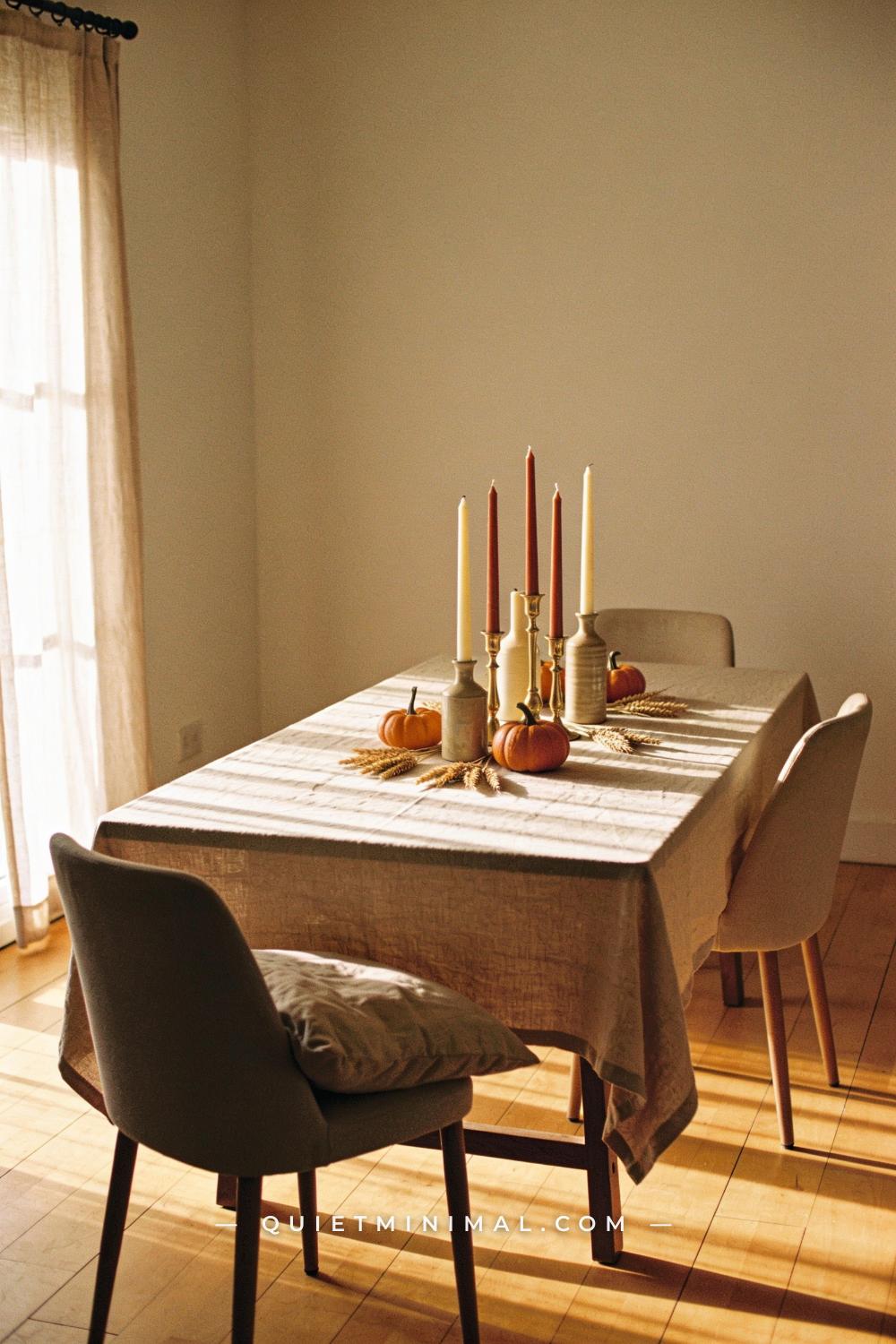
Taper candles do something to a Thanksgiving table that no other element quite replicates — they add height, warmth, and the kind of flickering light that makes every face at the table look good. But the styling details matter more than most guides admit. Get the candlestick heights wrong and sightlines disappear. Use the wrong wax color with your tablecloth and the whole thing reads “office party” instead of “harvest dinner.” Pick unstable holders and you’re mopping up wax at 6pm before guests arrive.
This article covers eleven specific centerpiece approaches, all built around taper candles as the anchor. Each one is practical enough to pull together the afternoon of, styled enough to photograph well, and designed to actually survive a four-course dinner without drama.
1. The Mixed-Height Candlestick Cluster
 Save
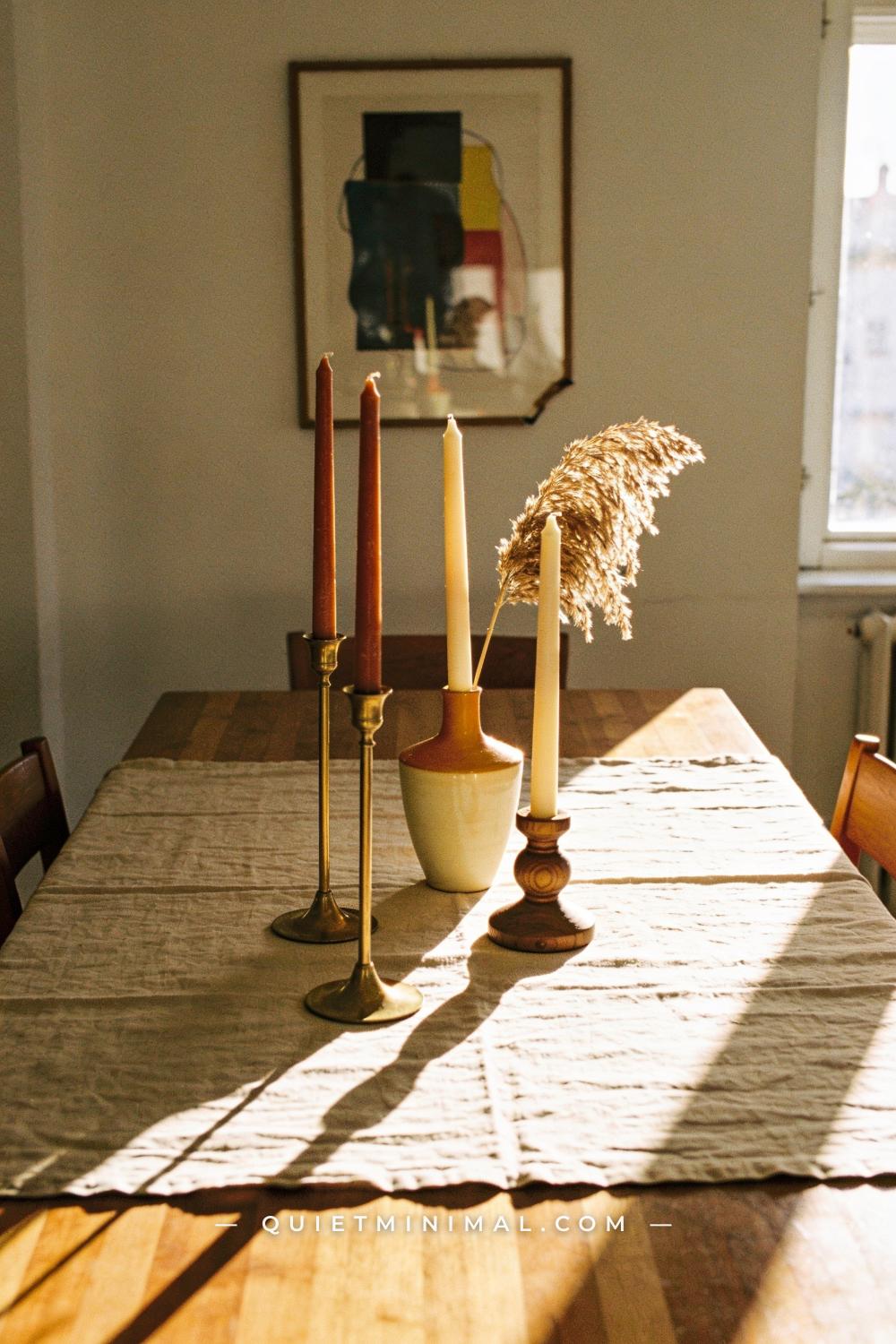
The most compelling taper candle centerpieces aren’t built from a matched set — they’re built from contrast. The rule is simple: cluster three to five candlesticks of different heights, and vary at least two of the three variables — material, height, and finish. Brass beside ceramic beside raw wood reads as intentional. Three identical silver holders read as a gift set.
From the guides
You've saved it, wanted it. Here's the how: codes, measurements, order. Your choices make it yours.
 The Japandi Honest PlaybookThe honest version of the style: what to keep, what to skip, and the order to do it in.See inside →
 The Room Refresh PlaybookA repeatable four-step method, room by room, in ten minutes, thirty minutes, or one weekend.See inside →
 Make Any Room Feel Cozy on PurposeWhy some rooms hold people and others empty out, and the moves that change it.See inside →
Aim for a height spread of at least eight inches between your shortest and tallest holder. This creates the visual layering that makes the arrangement feel designed rather than placed. The tallest taper should sit around eighteen to twenty inches above the table surface; the lowest around six to eight. Everything in between fills the middle ground naturally.
Use candles in two tones maximum — a neutral cream or beeswax alongside a deeper rust, burgundy, or forest green. More than two wax colors and the arrangement starts competing with the food and the dinnerware.
Key Takeaway: Vary candlestick material and height simultaneously — that combination is what separates a styled cluster from a random collection.

2. The Dried Botanical Base
 Save
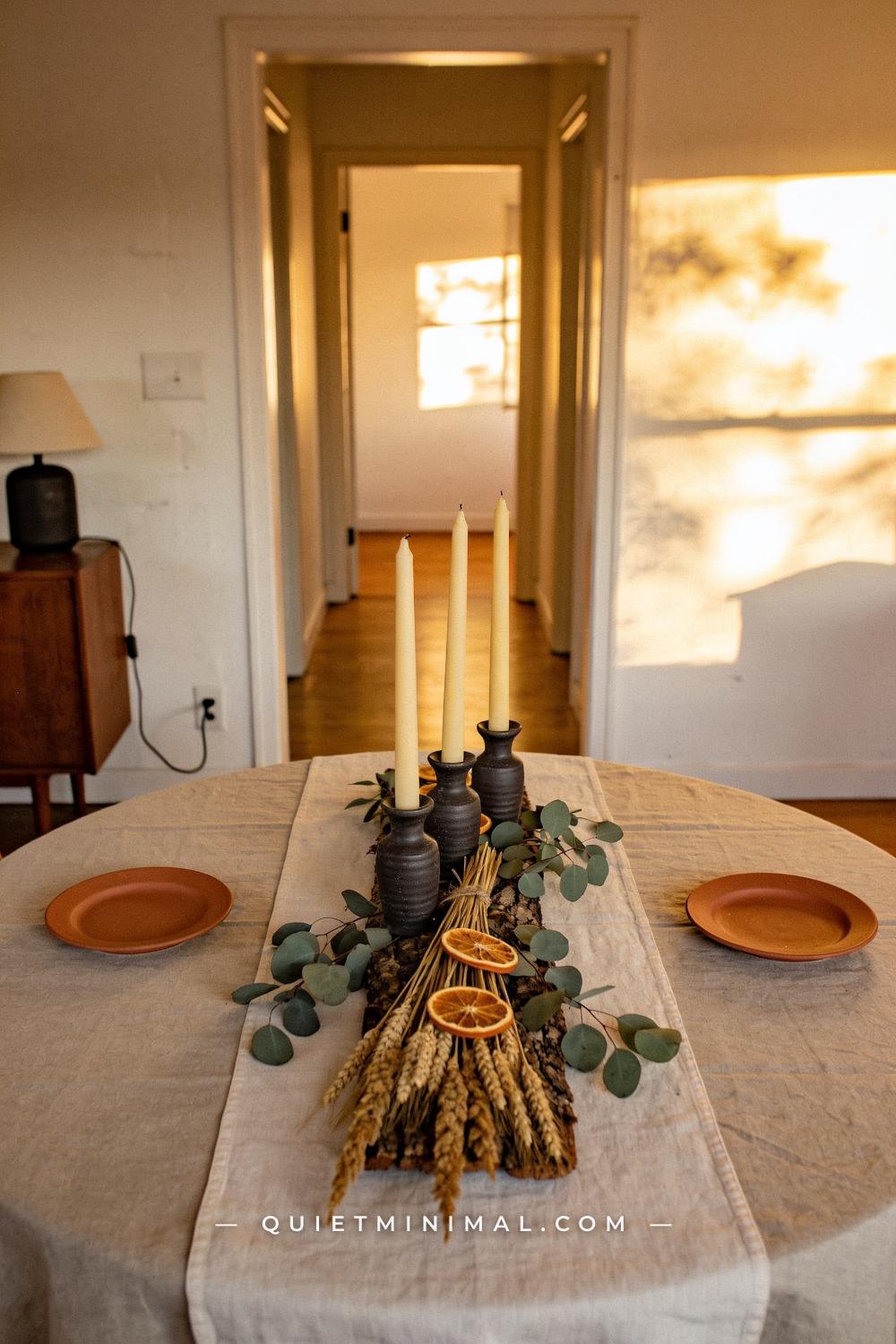
A dried botanical base anchors the whole centerpiece to the season without requiring pumpkins or anything that reads as costume-y. Dried wheat stems, bundles of preserved eucalyptus, sprigs of dried lavender, or silvery artemisia laid flat along the table runner form a textured foundation that taper candles rise out of naturally.
The technique is to lay your botanicals loosely along the center of the table first — not arranged symmetrically, but in an organic sweep — and then place your candlestick holders directly onto or just beside that base. The botanicals look like they grew around the holders, which is exactly the effect you want. Add a few dried orange slices or a scattering of small acorns between stems for warmth.
One important safety note: keep any dried botanicals at least three inches from the nearest flame. Dried plant material is highly flammable. Use taper holders with a wide base or drip collar to keep the radius clear.
Key Takeaway: Lay your botanical base first, then place holders into it — that sequence creates the “grown-in” look rather than the “stuck-in” look.

3. The Low-Profile Sightline-Safe Version
 Save
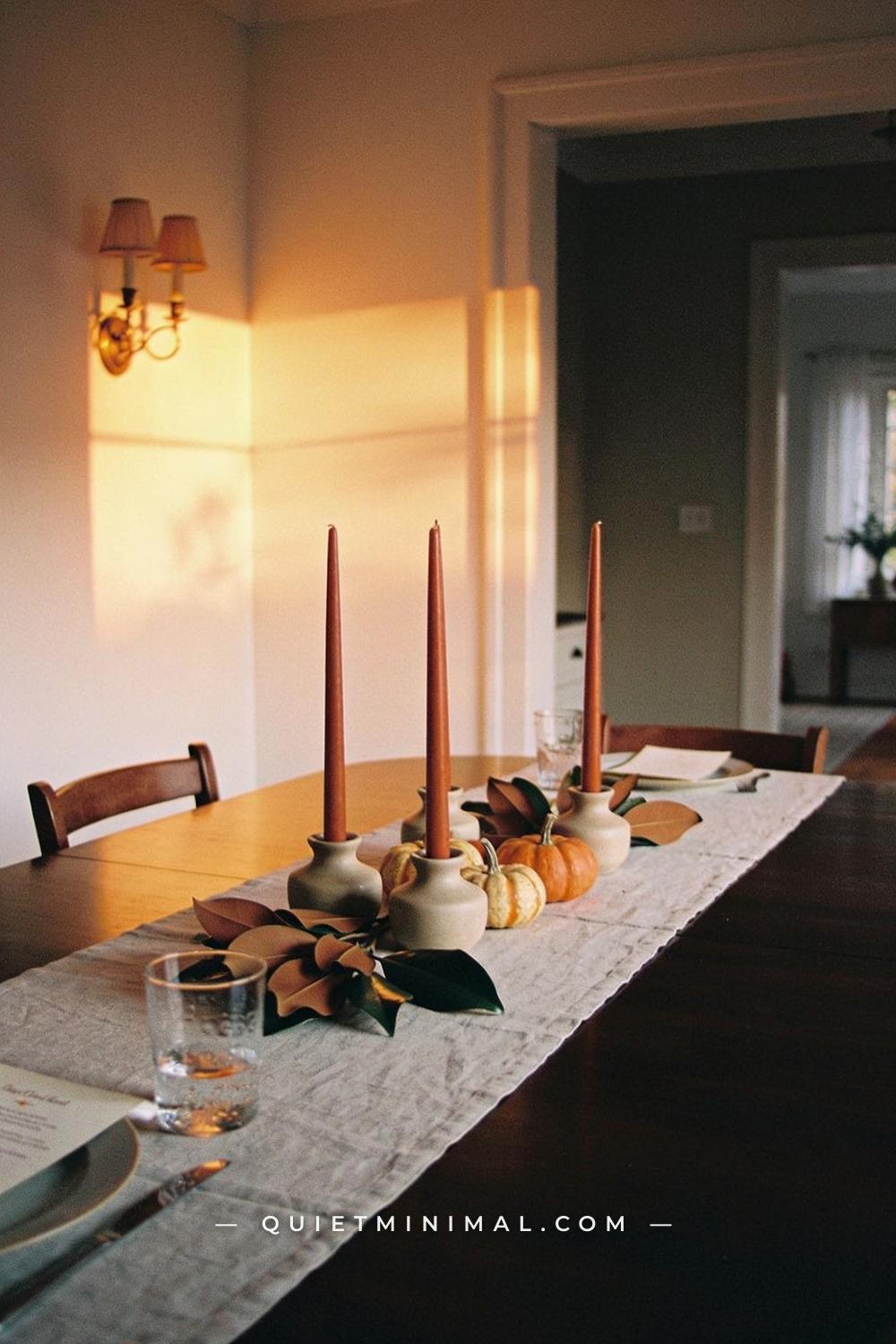
The classic objection to taper centerpieces is that they block conversation. A tall cluster down the middle of a ten-person table creates an actual visual wall. The fix is low-profile taper holders — specifically, holders in the four-to-six inch range that position the taper itself closer to the table surface, keeping the candle flame well below seated eye level.
Short, wide-based ceramic holders work particularly well for this approach. Their visual weight grounds the arrangement even when the candles themselves are slim. Space three or four of them in a loose line along the table runner rather than clustered tightly together — the linear spread keeps the table looking composed without building any vertical barrier.
This approach also makes the surrounding elements — a few small gourds, a low pile of autumn leaves, a shallow dish of cranberries — easier to see because they’re competing at the same visual height as the candles rather than being dwarfed beneath them.
Key Takeaway: Keep holder height under six inches for tables seating more than six, and space holders linearly rather than clustered to preserve sightlines all the way down the table.

4. The Beeswax Taper Upgrade
 Save
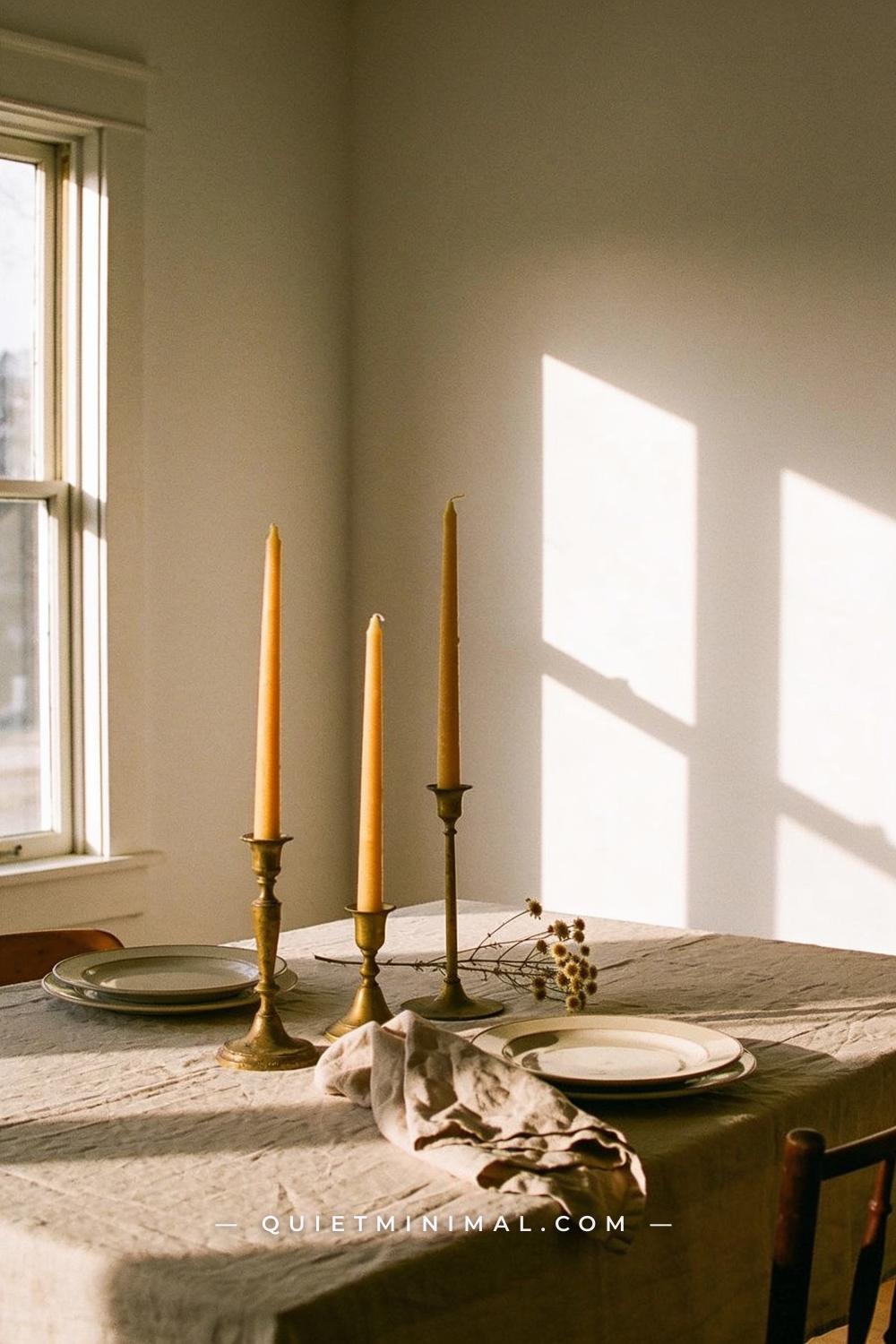
Standard paraffin tapers in bright white do the job, but beeswax tapers are worth the upgrade for Thanksgiving specifically. Their natural honey-gold color already reads as autumn without any styling effort, their burn is cleaner and slower, and the faint warm scent they release — subtle, never overpowering — complements the food rather than fighting it.
Natural beeswax tapers pair most beautifully with aged brass, raw wood, and dark ceramic holders — all materials that echo the same warm golden tones. They look slightly off against very cool-toned or bright-white settings, so if your dining room is predominantly cool-grey or stark white, a deeper-dyed taper in rust or forest green will read better than the natural beeswax shade.
Beeswax candles also drip less than standard paraffin when the burn conditions are right: keep them out of drafts, trim the wick to a quarter inch before lighting, and let them burn for at least two hours on first light to prevent tunneling.
Key Takeaway: Natural beeswax tapers earn their price point at Thanksgiving — their honey color, slower burn, and minimal drip make them a genuine functional upgrade, not just an aesthetic one.

5. The Candlestick-and-Pumpkin Pairing Done Right
 Save
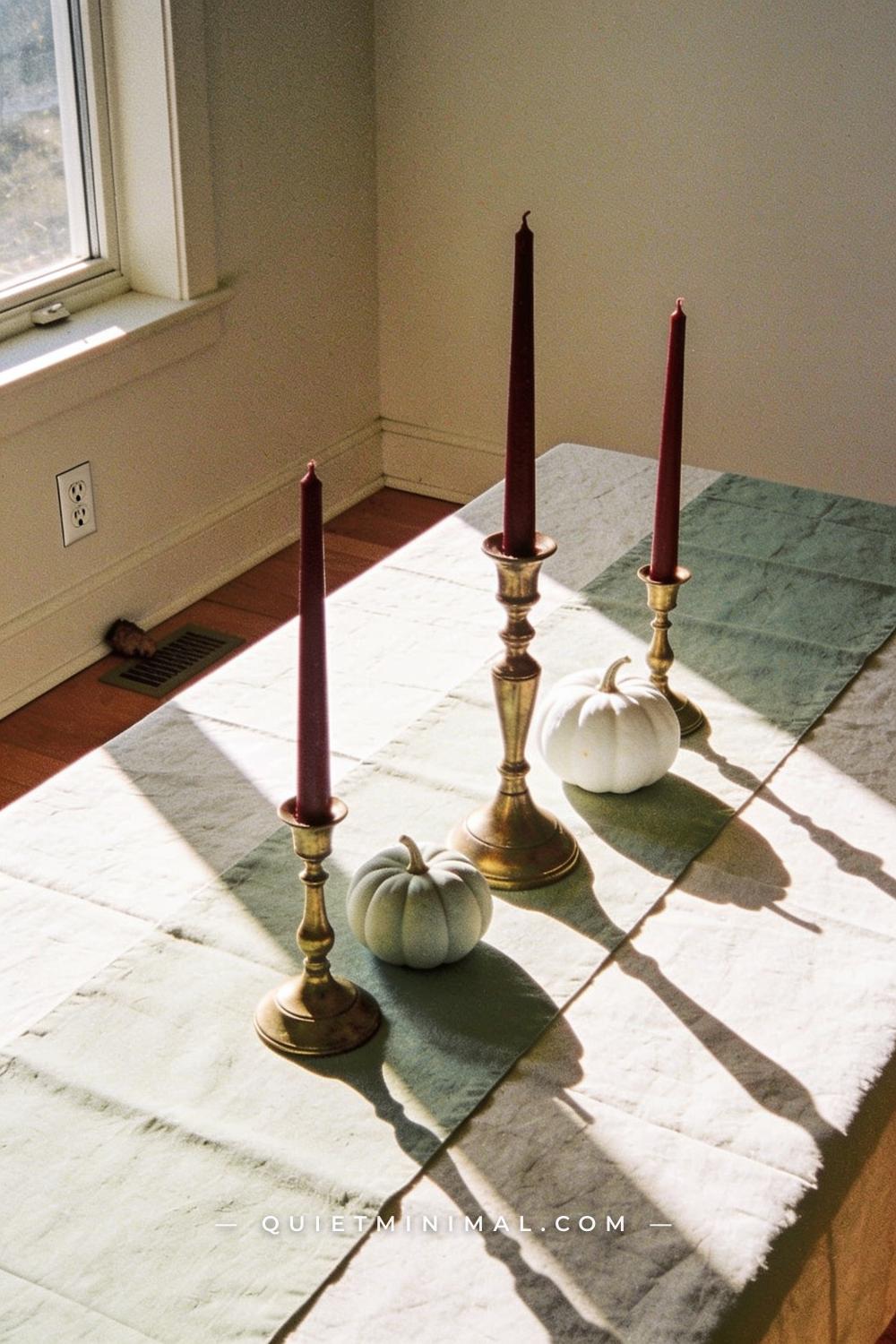
Taper candles and pumpkins are the obvious Thanksgiving pairing, and they work — but only when the pumpkins are chosen as carefully as the candlesticks. The mistake most styling guides skip over is using orange pumpkins beside orange-toned candlesticks, which creates a monochromatic blob that reads as “craft store” rather than curated.
The solution is color contrast: if your tapers are rust or burgundy, choose white, pale sage, or cream-colored pumpkins. If your tapers are cream or beeswax, go with a deeper terracotta or even a deep matte black pumpkin for visual separation. Size matters too — small decorative pumpkins (fist-sized or smaller) tuck between candlestick bases naturally; larger pumpkins compete with the holder heights and throw off the visual balance.
Keep the pumpkins odd-numbered and uneven — one close to a holder, one slightly apart, one almost touching the nearest plate. That slight randomness is what reads as natural rather than arranged.
Key Takeaway: Contrast the pumpkin color against your taper wax color — same-toned pumpkins and candles flatten the arrangement; contrasting tones create depth.
6. The Single-Material Holder Study
 Save
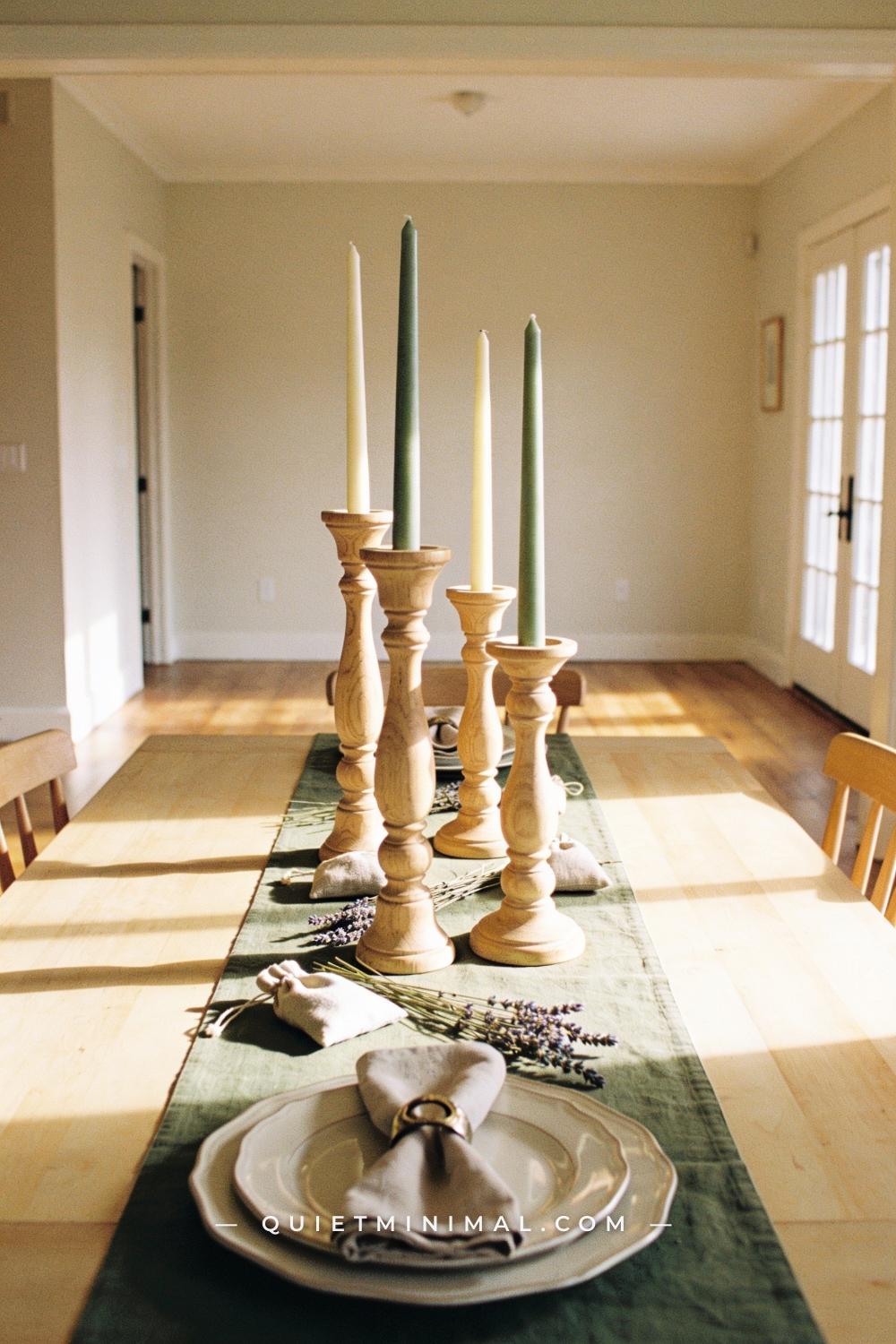
Mixing candlestick materials — brass, ceramic, wood — is the most common approach, but the single-material study is underrated and often more elegant in smaller spaces or for simpler table settings. The idea is to commit fully to one material — all turned wood, all matte black iron, all white ceramic — and vary only the height and silhouette within that material.
The visual coherence that comes from a single material creates a kind of quiet authority on the table. It reads as deliberate in a way that mixed materials can’t always achieve, particularly when the rest of the table setting is already layered with texture (linen napkins, varied ceramic dinnerware, woven placemats).
Wooden taper holders in pale ash or walnut are the strongest choice for Thanksgiving specifically — they bring organic warmth that brass can feel too formal beside, and they sit naturally alongside dried botanicals and natural-fiber textiles.
Key Takeaway: In a visually busy table setting, choosing one candlestick material and varying only height produces more cohesion than mixing multiple materials at once.

7. The Table Runner as the Real Foundation
 Save
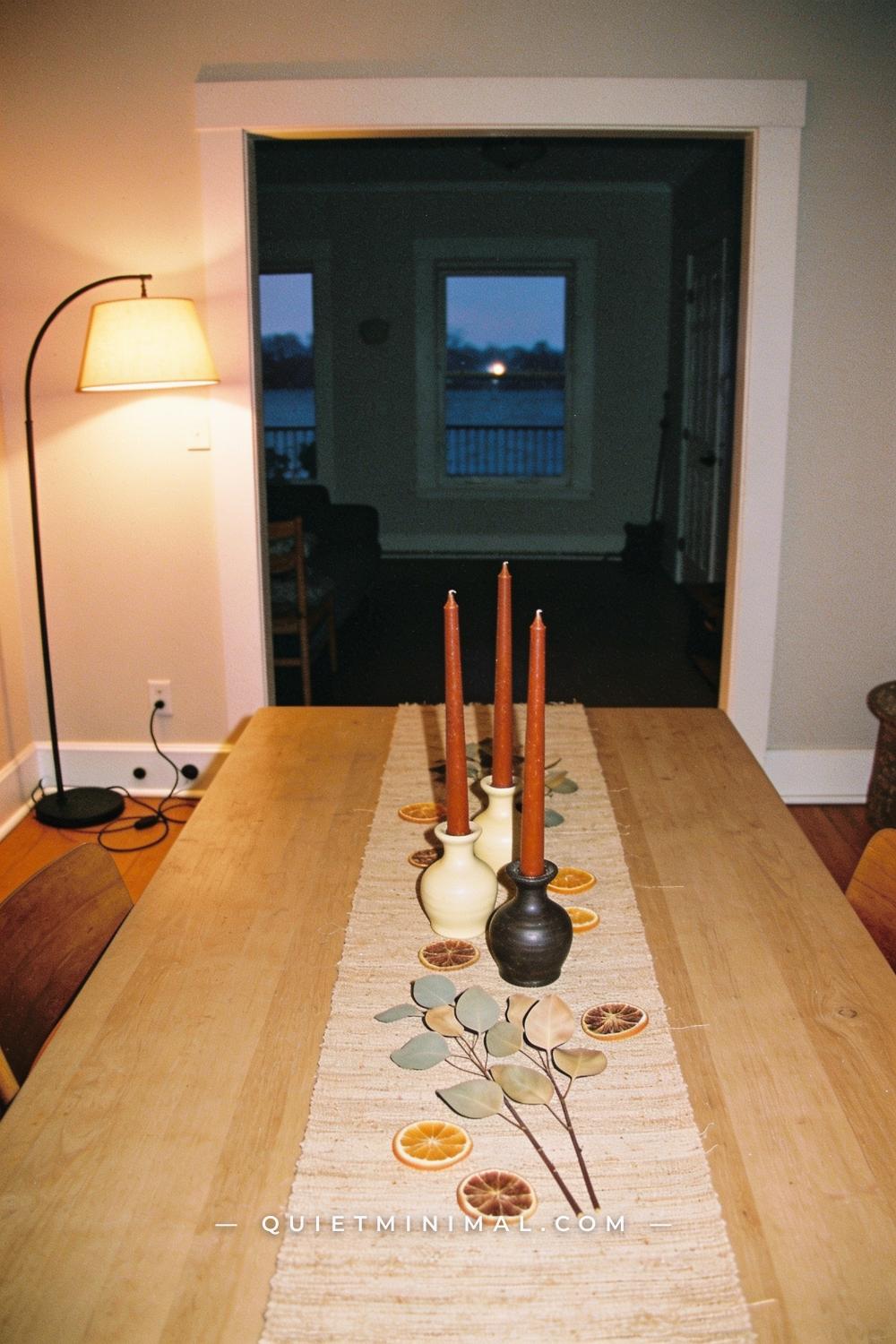
The table runner is doing more structural work than most people realize — it defines the “stage” for the entire centerpiece. A runner that’s too narrow creates a cramped, cluttered look no matter how well the candlesticks are arranged. A runner in a color that competes with the taper wax undermines the whole palette.
The rule of thumb: runner width should be at least fourteen inches, and the runner color should be a step quieter than the most saturated element in your centerpiece. If your tapers are deep rust, the runner should be oatmeal or flax linen, not terracotta. If your tapers are cream, a soft sage or warm grey runner creates contrast without noise.
Linen is the material that performs best under candlelight — it absorbs warm light rather than reflecting it, which gives the whole table a softer, more atmospheric look than a cotton or polyester runner. It also happens to handle the occasional drip better when it’s a darker or naturally textured weave.
Key Takeaway: Size and tone your table runner first — it’s the foundation the entire centerpiece reads against, and getting it wrong undermines even well-styled candlestick arrangements.

8. The Wax Drip Management Setup
 Save
From the guides
You've saved it, wanted it. Here's the how: codes, measurements, order. Your choices make it yours.
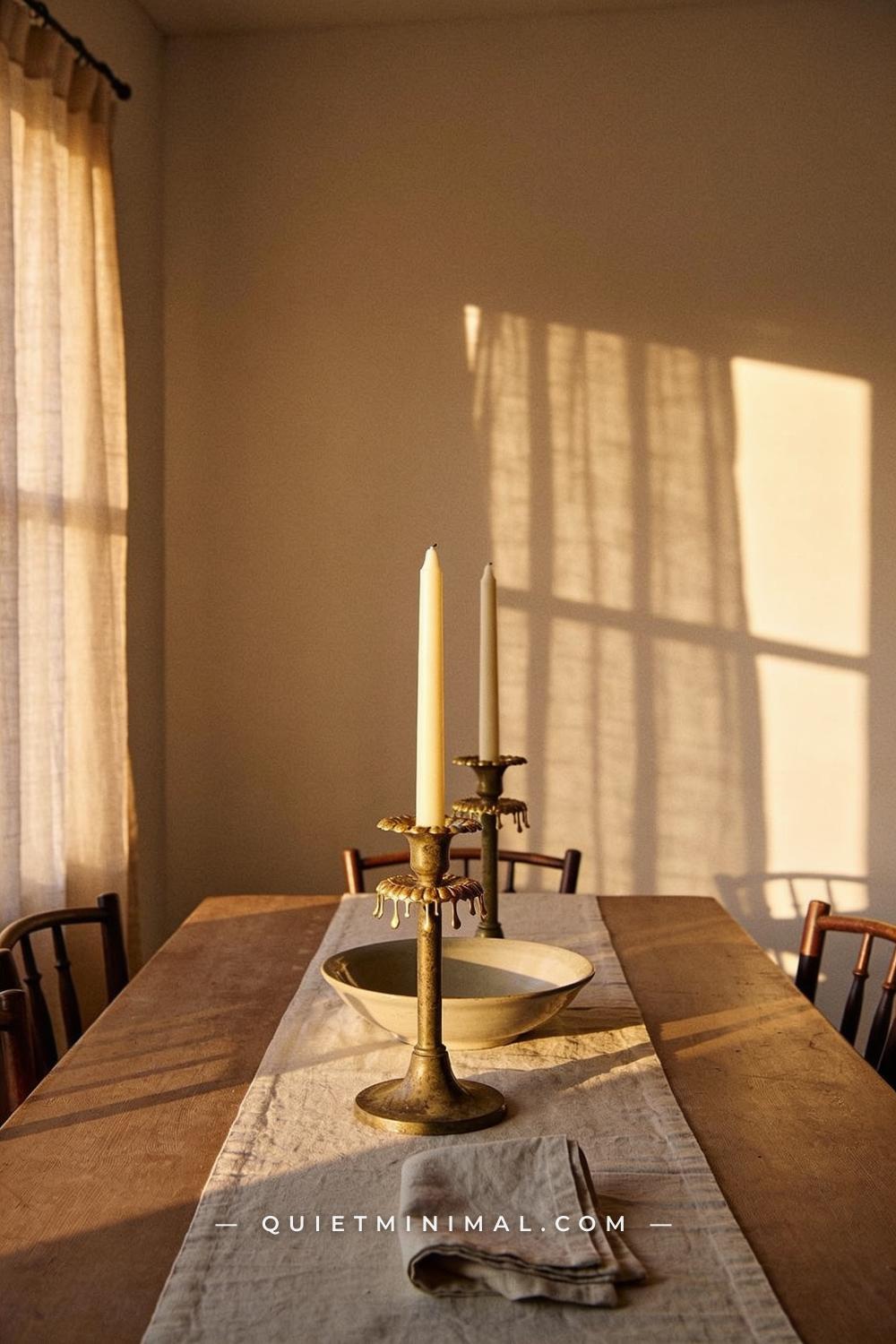
The Japandi Honest PlaybookThe honest version of the style: what to keep, what to skip, and the order to do it in.See inside →The Room Refresh PlaybookA repeatable four-step method, room by room, in ten minutes, thirty minutes, or one weekend.See inside →Make Any Room Feel Cozy on PurposeWhy some rooms hold people and others empty out, and the moves that change it.See inside →Wax drip on a tablecloth is the most common real-world disaster of the Thanksgiving taper centerpiece — and it’s entirely preventable with two simple setup steps. First, use holders with a drip collar or bobeche: the shallow disc that sits around the base of the taper and catches any wax before it reaches the holder or the table. Second, always do a test burn before guests arrive — burn each candle for at least thirty minutes in the actual holders you plan to use, over paper towels, so you know which ones drip and how much.
Beyond the hardware, taper selection matters: look for candles labeled “dripless” or “drip-resistant,” which are typically made from a harder paraffin blend or a higher-percentage beeswax. Slim tapers drip more than standard-diameter ones — if you’ve had drip issues before, move up one diameter size.
The lowest-risk wax-management setup for a long dinner is a dripless taper in a holder with a bobeche, on a runner rather than directly on a bare tablecloth. Three layers of protection means you can light everything an hour before guests arrive without hovering over it.
Key Takeaway: Fit every holder with a drip collar and test-burn each candle before the dinner — those two steps eliminate ninety percent of wax-on-linen situations.

9. The Foliage-and-Taper Garland Alternative
 Save
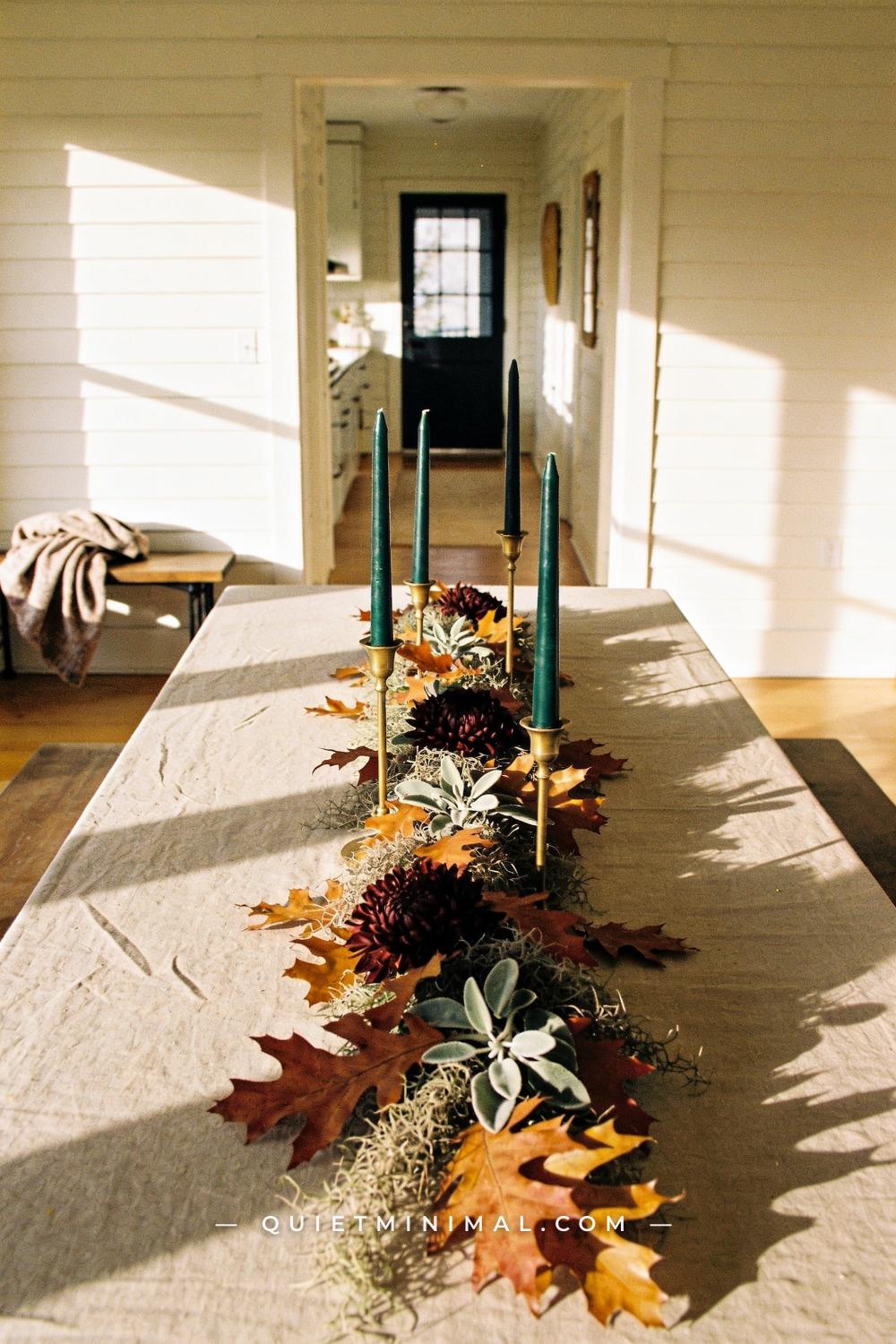
A foliage garland laid down the center of the table — with taper holders placed directly into it — is the most organic-looking version of this centerpiece style and consistently one of the highest-saved on Pinterest. The key is keeping the foliage low (two to three inches of height at most) and loose, not tight or wreath-like, so the taper holders can sit naturally within it rather than on top of it.
Preserved autumn leaves, dried sage branches, dried hydrangea heads, or eucalyptus all work well. Fresh herbs — rosemary, thyme, sage — are another strong option because they add a faint scent that enhances the dinner table atmosphere. Avoid fresh cut flowers for this application; they wilt under candlelight heat within an hour and look dramatically worse by dessert.
Space your taper holders evenly down the garland — roughly fifteen to eighteen inches apart for a standard six-foot table. This creates visual rhythm while leaving clear sightlines between each candle, which matters more for conversation than it does in a photograph.
Key Takeaway: Keep the foliage garland under three inches tall so taper holders sit within it naturally — anything taller turns the arrangement into an obstacle course for serving dishes.

10. The Warm-Metal Moment
 Save
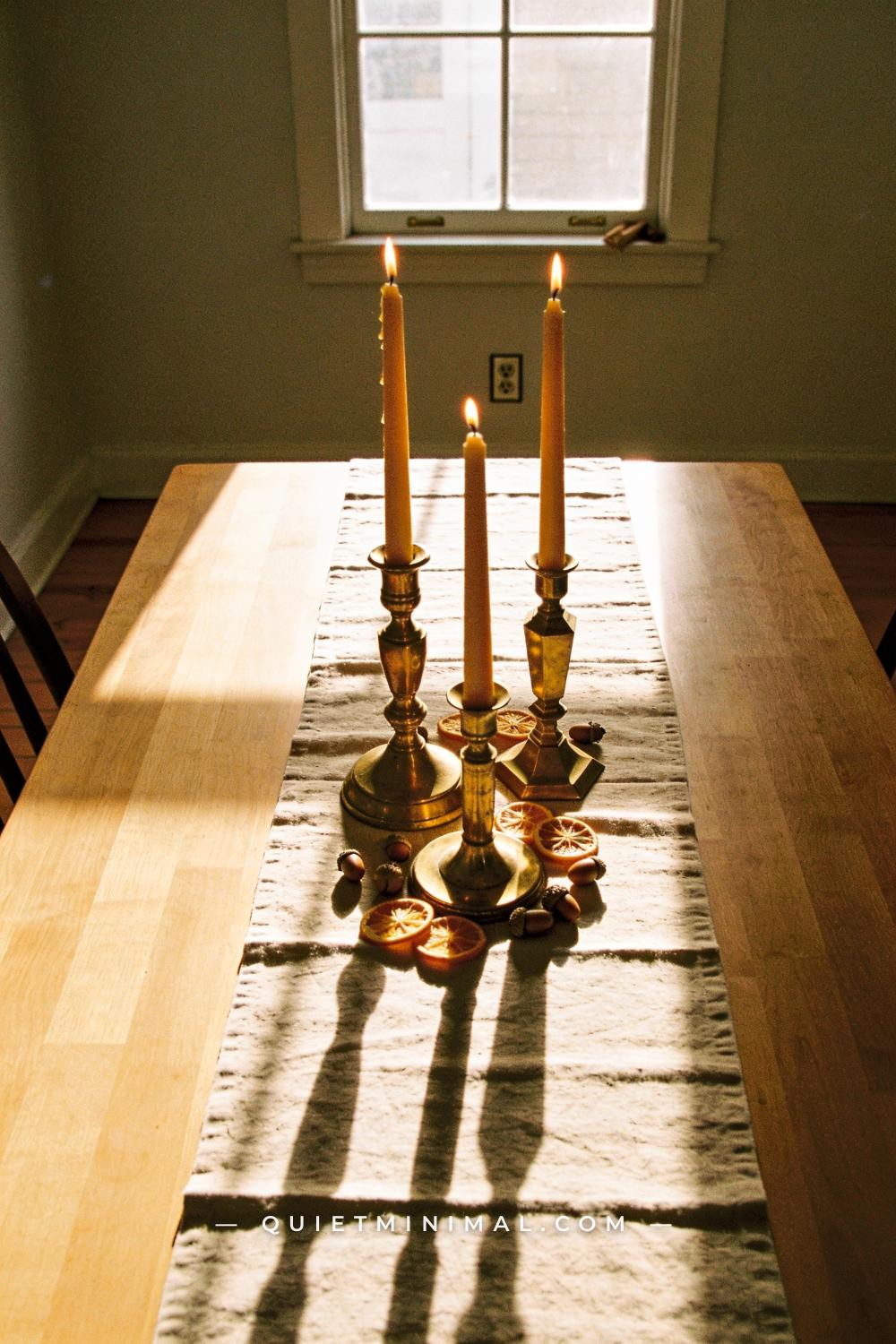
Brass is the dominant metallic finish in current Thanksgiving tablescaping — antique brass specifically, not the bright polished version that reads as more formal. Antique or aged brass has enough visual warmth to feel right beside linen, dried botanicals, and organic materials, whereas polished silver or chrome creates a temperature mismatch with harvest-toned settings.
The warm-metal centerpiece works best when brass is the only metallic material on the table — no silver flatware, no chrome napkin rings competing with it. If your everyday flatware is silver, either use wooden or bone-handled flatware for the occasion or minimize the metallic footprint by keeping candlesticks as the sole brass element and using ceramic or wooden accessories everywhere else.
Vary the brass candlestick silhouettes even within the same finish: a wide-base pillar style beside a tall narrow column beside a geometric stepped holder creates far more visual interest than three identical holders from a matching set, even when all three are the same finish.
Key Takeaway: Commit to antique brass as the only metal on the table — mixing brass with silver or chrome creates a temperature conflict that reads as unfinished.

11. The Day-After Reuse Strategy
 Save
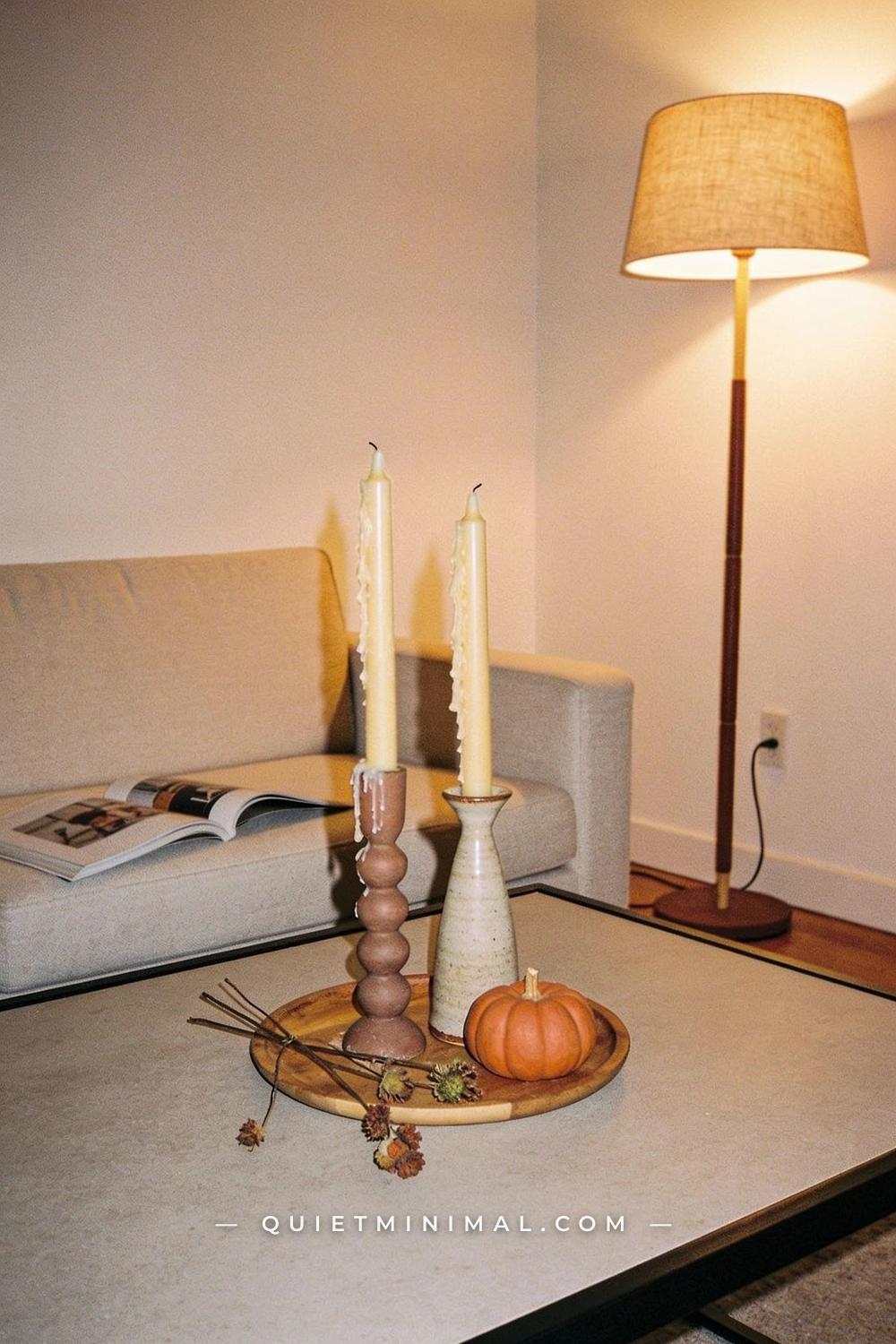
The most overlooked dimension of any Thanksgiving centerpiece is how it transitions after the holiday — and a well-designed taper candle arrangement is unusually reusable. The candlestick holders move directly to the coffee table or a sideboard, where a cluster of two or three at varying heights with partially burned tapers still in them reads as intentional styling rather than leftover décor.
The trick is designing the Thanksgiving centerpiece without any holiday-specific elements that force it into retirement the next morning. No turkey figurines, no “Grateful” script, no strictly autumn-only elements. Dried wheat stems, beeswax tapers, brass or ceramic candlesticks, and a linen runner are all seasonally neutral enough to stay out through November and into early December without any adjustment.
By the time you want to shift to a winter aesthetic, a simple swap — replace the rust or forest-green tapers with deep burgundy or forest green, add a few evergreen sprigs to the botanical base — and the same centerpiece serves through December without purchasing anything new.
Key Takeaway: Design your Thanksgiving centerpiece without holiday-specific motifs so the candlestick holders and botanicals transition directly to your November and December everyday styling — one purchase, two full months of use.

A taper candle centerpiece works because it brings the one thing no other table element provides — real, moving, warm light at seated eye level. But the details that make it actually work through a full dinner are the ones most guides skip: the height math that preserves sightlines, the wax color logic that holds the palette together, the drip management that keeps the tablecloth intact. Start with one idea from this list — the mixed-height cluster or the low-profile sightline-safe version are the most forgiving first attempts — and build from there. Your guests will remember the light long after they’ve forgotten the menu.
 Save
Styling Ideas
 Save
How to Style Thanksgiving Centerpiece Ideas with Taper Candles
 Save
Foliage-and-Taper Garland as a Thanksgiving Centerpiece with Taper Candles
 Save
The Beeswax Taper Upgrade Every Thanksgiving Centerpiece Deserves
 Save
Warm-Metal Candlesticks That Anchor Thanksgiving Centerpiece Ideas with Taper Candles
 Save
A Dried Botanical Base for Thanksgiving Centerpiece Ideas with Taper Candles
 Save
Candlestick-and-Pumpkin Pairing Done Right for Thanksgiving Centerpiece Ideas with Taper Candles
From the guides
You've saved it, wanted it. Here's the how: codes, measurements, order. Your choices make it yours.
The Japandi Honest PlaybookThe honest version of the style: what to keep, what to skip, and the order to do it in.See inside →The Room Refresh PlaybookA repeatable four-step method, room by room, in ten minutes, thirty minutes, or one weekend.See inside →Make Any Room Feel Cozy on PurposeWhy some rooms hold people and others empty out, and the moves that change it.See inside →