 Georgia
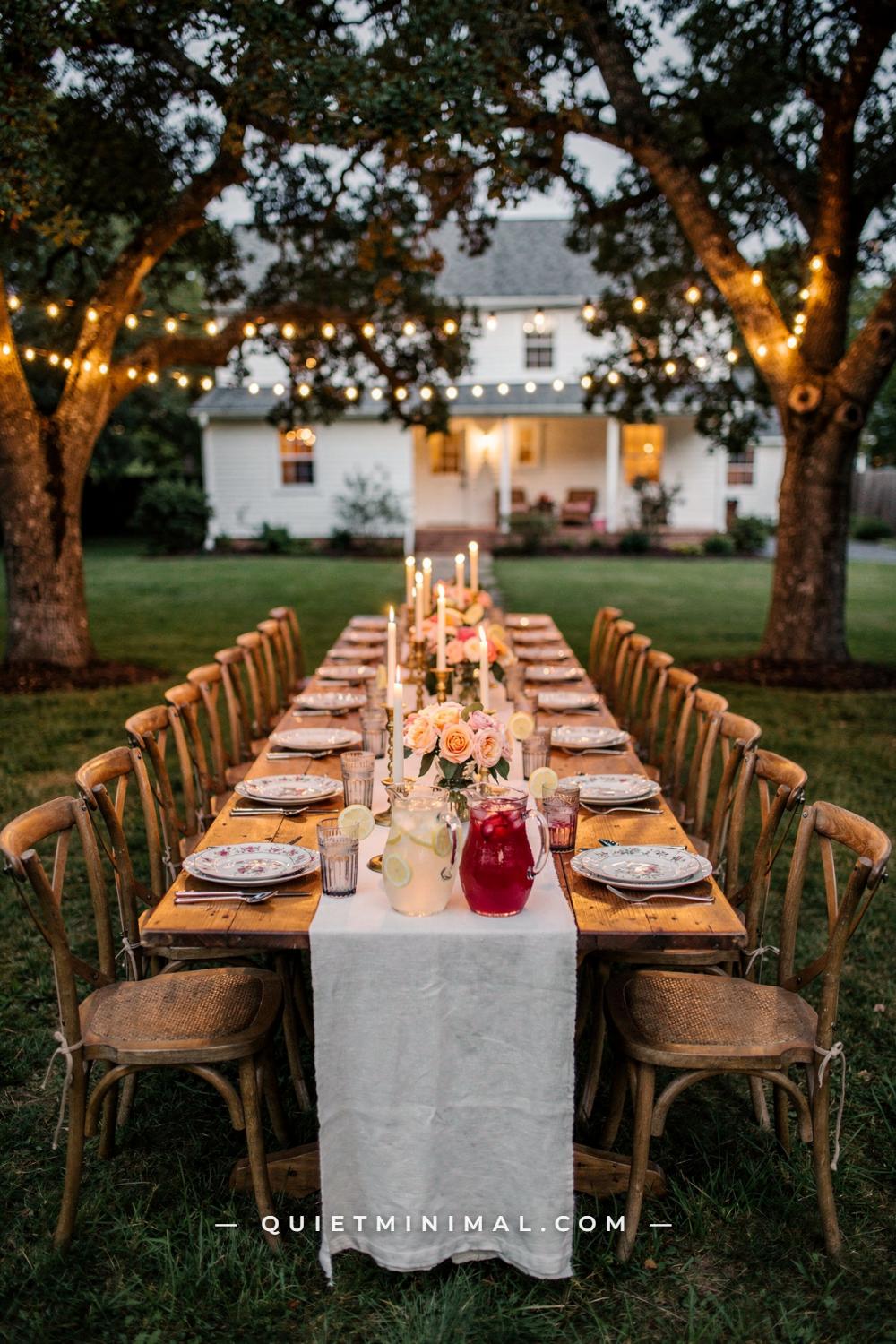
Unconventional wedding ideas are the easy part. The ten further down this page still hold: the thrifted decor, the art space, the maker stations, the dinner party. What a mood board never tells you is how many plates ten tables need, how far apart the chairs sit, or what a backyard costs per guest once the restrooms arrive. This block sits above those ideas as the plan: three formats priced per guest, the checklist for a space that is not a venue, seating counts, a maker-station spec, the activities by cost, the signs, the soft-drink station and the run of show.
The Welcome Table Tells Guests What Kind of Wedding This Is
 Save
The first table a guest meets tells them what kind of day this is before anyone says a word. Here that is a garden table with one generous arrangement and the escort cards laid out like an invitation.
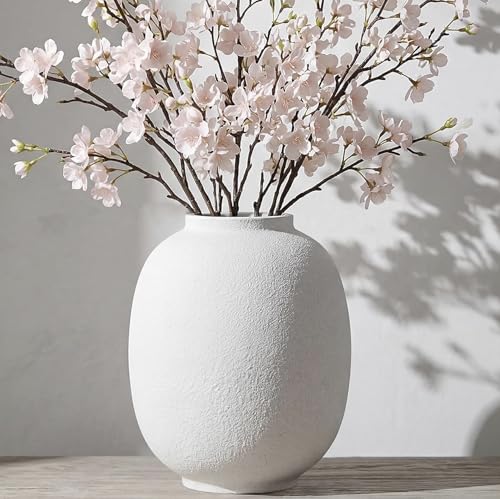
Keep the arrangement single and loud. One white ceramic vase about 10 in (25 cm) across, packed loose with coral ranunculus, dusty pink peonies, peach dahlias, butter yellow garden roses and periwinkle delphiniums, does more than five small ones. Set it at one end so the cards own the rest of the linen.
The cards are where the plan starts. Square sage green cards about 4 x 4 in (10 x 10 cm) in clear acrylic holders fit about six across a 30 in (76 cm) deep table and eight to ten rows down a 6 ft (183 cm) run, so one table holds 50 to 60. Eighty guests means a second, shorter table or cards by household. That headcount is the first number to settle, because it decides which of the three formats below you are actually planning.
Key Takeaway: Give the welcome table one oversized arrangement and a grid of escort cards, and let the guest count it displays settle your format.
From the guides
You've saved it, wanted it. Here's the how: codes, measurements, order. Your choices make it yours.
 The Japandi Honest PlaybookThe honest version of the style: what to keep, what to skip, and the order to do it in.See inside →
 The Room Refresh PlaybookA repeatable four-step method, room by room, in ten minutes, thirty minutes, or one weekend.See inside →
 Make Any Room Feel Cozy on PurposeWhy some rooms hold people and others empty out, and the moves that change it.See inside →
Three Unconventional Formats and What Each Costs per Guest
 Save
The national benchmark is The Knot’s latest Real Weddings Study: an average of $34,200, 117 guests and $292 per guest. All three formats here sit well under it. The per-guest figure covers the reception only: food, space, rentals, tableware, flowers, drinks and activities, not attire, rings, photography or the officiant.
Backyard dinner party, 30 guests at $40, $1,200: food $660 (a self-serve taco buffet at $22 a guest), thrifted tableware $200, table and chair rentals $150, soft drinks and ice $70, flowers $80, activities $40.
Art-space reception, 80 guests at $90, $7,200: food $3,200 (a staffed station at $40 a guest), space fee $2,000, rentals $800, flowers, decor and favors $600, soft drinks and ice $300, activities $300.
Thrifted-decor wedding, 120 guests at $180, $21,600: food $8,400 ($70 a guest, under the $80 national catering average), space $6,000, rentals $2,400, thrifted tableware for 15 tables $1,500, flowers $1,500, soft drinks and ice $900, activities $900.
Treat the splits as a starting allocation and replace each line with real quotes as they arrive.
Key Takeaway: Pick the format by multiplying guests by the per-guest number, $1,200, $7,200 or $21,600, then hold each line to its share.
A Backyard Under One Big Tree, Treated as a Real Venue
 Save
A single mature tree does the job a venue’s ceremony room does: it gives the eye a ceiling, a backdrop and shade. The mistake is treating the backyard as free. It is a venue you are running yourself.
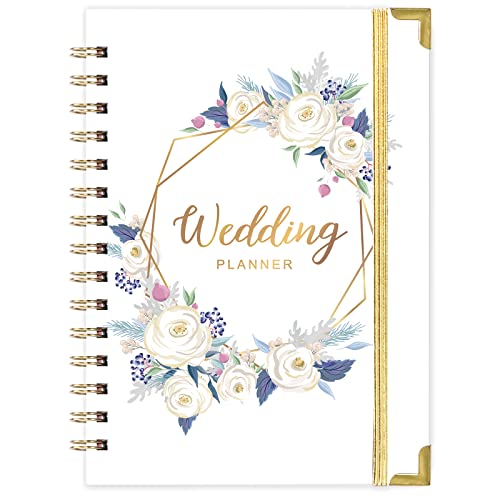
Frame the tree, do not compete with it. Two slim white pillars about 7 ft (213 cm) tall with cream chiffon swagged between them mark the front without hiding the bark, and a small posy of white roses at each base is all the floral the spot needs. Dark wood folding chairs about 32 in (81 cm) tall read as furniture against the green, where white resin reads as rental.
For the 30-guest dinner, set 16 chairs on each side of a petal-scattered aisle 48 in (122 cm) wide, in eight rows of two, which seats 32 with two to spare. At 36 in (91 cm) per row, eight rows run 24 ft (7.3 m) deep. Face the guests away from the late sun, so the light lands on the couple and never in anyone’s eyes.
Key Takeaway: Frame one tree with two pillars and a swag, seat 30 in eight paired rows, and plan the yard as a venue you are running.
The Non-Venue Checklist: Power, Restrooms, Permits, Rentals, Rain
 Save
A found space has none of the systems a venue supplies. Walk it with this list before you sign.
Power: a standard 15 amp, 120 volt circuit carries 1,800 watts, and you plan on 80 percent, 1,440 watts. Caterer warmers, a sound system and string lights each want their own circuit, so ask how many there are and where the outlets sit.
Restrooms: one unit per 50 guests is the rule for a 4-hour event. Thirty guests need one, 80 need two, and 80 over the five and a half hours in the run of show below need three. Units run about $50 to $150 per day before delivery and service fees.
Permits: the International Fire Code, which most cities adopt, requires one for a tent over 400 sq ft (37 m²). A tent open on all sides up to 700 sq ft (65 m²), with 12 ft (3.7 m) of clearance around it, is usually exempt. Ask about amplified sound and quiet hours too.
Rentals: tables, chairs and linens, plus delivery at $20 to $150.
Rain: plan 15 to 20 sq ft per seated guest. Thirty guests need 450 to 600 sq ft, a 20 x 30 ft (6 x 9 m) tent.
Key Takeaway: Confirm circuits, restrooms, permits, rentals and a rain footprint in writing before a found space becomes your venue.

An Evening Ceremony Lit Only by Candles and Bulbs
 Save
Moving the ceremony past sunset is the cheapest way to make a plain lawn feel like somewhere else. Darkness edits everything you did not decorate, and the light you add becomes the architecture.
Build it in two layers. Overhead, warm string lights draped from the branches give the ceiling. At knee height, glass pillar candles about 12 in (30 cm) tall line both edges of the aisle, one every 3 to 4 ft (91 to 122 cm), so a 24 ft (7.3 m) aisle takes 14 to 18 candles. Put each flame inside glass; a hurricane sleeve survives a breeze and keeps hems clear, and many spaces require it.
Keep the palette to deep green, ivory and amber. All-white flowers are the ones that still read after dark; color goes muddy in candlelight. Two white floral columns about 6 ft (183 cm) tall at the front catch the light and frame the couple.
Time it to start 15 to 20 minutes after sunset. The sky still holds some blue for the photographs, and the candles have started to matter.
Key Takeaway: Start just after sunset, hang string lights overhead and set a glass-enclosed pillar candle every 3 to 4 ft (91 to 122 cm) along the aisle.

Ceremony Seating in the Round, in a Spiral or in Sofa Groupings, With Chair Counts
 Save
Rows put half the room behind other heads. The alternatives seat guests closer, and the counts work out cleanly once you fix two numbers: 22 in (56 cm) of width per chair and 36 in (91 cm) from one row to the next.
Classic rows, 80 chairs: eight rows of ten, five on each side of a 48 in (122 cm) aisle. The block runs about 22 ft (6.8 m) wide and 24 ft (7.3 m) deep, and the back row sits 24 ft from the couple.
In the round, 86 chairs: leave a center circle 12 ft (3.7 m) across, then set three rings with two 48 in aisles cut through them. The rings hold 18, 29 and 39 chairs, 86 in all, inside a circle about 27 ft (8.2 m) across. No guest sits more than three rows away.
Spiral, about 80 chairs: start at the same 12 ft circle and wind one continuous row outward for about two and a quarter turns. One entrance, no aisles, and everyone faces the center.
Sofa groupings, 30 seats: five groupings of six, each a three-seat sofa, two armchairs and an ottoman. It suits the backyard dinner, never 80.
Key Takeaway: For 80 guests, three rings of 18, 29 and 39 chairs seat everyone within three rows; for 30, five sofa groupings of six do it.

Living-Room Seating Set Out on the Lawn
 Save
A sofa grouping on the grass turns a reception into a garden party people stay at. It also solves the dead stretch between dinner and dancing, when guests who are not dancing have nowhere good to sit.
Build each grouping like a small living room. A loveseat about 60 in (152 cm) wide faces a pair of armchairs across a low coffee table about 30 x 18 in (76 x 46 cm), and a rug about 5 x 7 ft (152 x 213 cm) defines the zone, because a rug on grass reads as a room the eye accepts. Mix on purpose: butter yellow velvet against ruby red florals, dark wood against faded indigo and gold in the rug. Matched pieces look rented; contrast looks collected.
Leave 6 ft (183 cm) between groupings so people pass without stepping onto a rug. Set the groupings between the dinner tent and the dance floor, never in the walkways the caterer uses.
Velvet takes dew badly, so bring the pieces out in the late afternoon and keep a tarp ready.
Key Takeaway: Build each grouping as a loveseat, two armchairs, a low table and a rug, keep 6 ft (183 cm) between them, and bring them out late in the day.

The Long-Table Dinner Layout, Drawn to the Inch
 Save
A long table is pure arithmetic. An 8 ft (244 cm) banquet table is 30 in (76 cm) wide and seats four per side at 24 in (61 cm) per guest, or ten with one at each end. Joined end to end, the ends disappear, so count four per side for every table.
Backyard, 30 guests: four tables make one run 32 ft (9.8 m) long that seats 16 per side, 32 places, two to spare. Allow 20 in (51 cm) for each chair and 36 in (91 cm) of walkway behind it. The cross-section is 36 + 20 + 30 + 20 + 36 = 142 in, about 12 ft (3.6 m), and the run plus 36 in at each end is 38 ft (11.6 m) long. That is about 450 sq ft (42 m²), 15 sq ft per guest, which is exactly what a seated meal wants.
Art space, 80 guests: two runs of five tables, 40 ft (12.2 m) each, 40 seats per run. Widen the aisle between them to 48 in (122 cm) so servers pass: 36 + 70 + 48 + 70 + 36 = 260 in, about 22 ft (6.6 m), by 46 ft (14 m), roughly 1,000 sq ft (93 m²).
Key Takeaway: Count four guests per side per 8 ft (244 cm) table, then add 20 in (51 cm) for chairs and 36 in (91 cm) behind them to size the floor.

A Pot-Your-Own Herb Station Guests Carry Home
 Save
A favor guests make themselves is remembered; a favor left at the place setting is usually left behind. Potting an herb or a succulent is the maker station that works for everyone, because nobody needs a skill to do it and everybody leaves holding something alive.
Make the display the advertisement. Stage finished examples on natural wood-slice risers 12 to 18 in (30 to 46 cm) across, so the table has height and guests see the result from across the lawn. Mix the plants, rosemary, thyme, mint, echeveria, jade, so each guest chooses, which is half the pleasure.
The pots are small and cheap: 3 in (8 cm) terracotta, about $0.73 to $1.10 each in packs of 20 or more. That size holds about a cup of potting mix and a single plug, and it fits in a handbag on the way out.
Put the station where the welcome hour happens, in sight of the drinks, and close it before dinner so nobody carries soil to the table.
Key Takeaway: Stage finished pots on wood-slice risers, let guests choose their plant, and run the station during the welcome hour only.

The Maker-Station Spec: Tables, Supplies, Staff and Timing
 Save
A maker station fails when its line eats the welcome hour. These numbers prevent it.
Tables: one 6 ft (183 cm) table per 25 to 30 guests. Eighty guests need three. Each table gives three work spots of 24 in (61 cm) along its front edge, with the attendant behind.
Supplies per guest: one 3 in (8 cm) pot, about 1 cup (240 ml) of potting mix, one plant plug or cutting, one tag and one small paper bag to carry it in. Order 10 percent spare: 88 sets for 80 guests.
Tools per table: two scoops, a brush, a drop cloth under the linen and a bin for spills.
Staff: one attendant per table, three for 80 guests. Their job is to hand over the next pot and keep the soil tidy, not to teach.
Timing: potting takes about 5 minutes. Nine spots working at once clear 9 guests every 5 minutes, roughly 108 an hour, so 80 guests pass through in about 45 minutes. Open the station when the welcome hour starts and close it at the 45-minute mark.
Key Takeaway: Plan one 6 ft (183 cm) table and one attendant per 25 to 30 guests, 88 kits for 80, and a 45-minute window inside the welcome hour.
Disposable Cameras on Every Table, and What They Cost to Develop
 Save
Disposable cameras are among the most saved wedding add-ons on Pinterest, and for a good reason: guests photograph each other the way the hired photographer never will, crooked, flash-lit and laughing.
Plan one camera per table of eight. For the 80-guest art space that is ten cameras at 27 exposures each, 270 frames. Single-use cameras run about $16 each at current prices, and developing with a scan costs $10 to $14 at a big-box lab or about $15 to $16 at a pharmacy lab. All in, $26 to $32 per camera, about $300 for ten, which is the whole activities line in that budget.
Display a dozen in rows on white linen with a basket of spares at the welcome hour, then move one to each table at dinner.
Set the collection basket by the exit, where guests can drop their camera on the way out, and expect 7 days to 3 weeks before the scans arrive. ISO 800 film with a flash handles candlelight, so the cameras keep working after dark.
Key Takeaway: Put one camera on each table of eight, budget about $26 to $32 each with developing, and collect them in a basket at the exit.

The Guest Activities Matrix by Cost, Space and Head Count
 Save
Pick activities on three numbers: cost, floor space and how many guests each serves at once.
Disposable cameras: $26 to $32 each with developing, one per table of eight. Space: a corner of each table. Works at any guest count.
Lawn games: $30 to $125 per game per day, or about $199 for a four-game pack. Cornhole boards sit 27 ft (8.2 m) apart, so the lane is about 10 x 40 ft (3 x 12 m); a giant tumbling tower needs 6 x 6 ft (1.8 x 1.8 m). Four to eight players per game, daylight only.
Instant-photo guest book: film runs $0.75 to $1.03 a shot; 80 guests plus 20 percent is about 100 shots, $75 to $103. One 6 ft (183 cm) table with an album and pens.
Live painter: $1,500 to $8,000. A 6 x 6 ft (1.8 x 1.8 m) corner with a clear view of the room, and the canvas an abstract study of the evening’s colors, which finishes on time.
From the guides
You've saved it, wanted it. Here's the how: codes, measurements, order. Your choices make it yours.
The Japandi Honest PlaybookThe honest version of the style: what to keep, what to skip, and the order to do it in.See inside →The Room Refresh PlaybookA repeatable four-step method, room by room, in ten minutes, thirty minutes, or one weekend.See inside →Make Any Room Feel Cozy on PurposeWhy some rooms hold people and others empty out, and the moves that change it.See inside →Record-request wall: about $30 to $60 in cards, clips and a pegboard. One 4 ft (122 cm) wall near the music, best above 50 guests.
Key Takeaway: Choose activities by cost, floor space and head count, and pair one table-top activity with one standing one.

Sourcing a Thrifted Tablescape for Ten Tables of Eight
 Save
Mismatched china takes a count, a color rule and about two months of shopping, and it still costs less than renting.
The count for ten tables of eight, 80 guests, with 10 percent spare for breakage: 88 dinner plates, 88 dessert plates, 88 water glasses, 88 tumblers for the soft drinks, 88 cotton napkins, 40 candlesticks at four per table, 60 taper candles and 10 runners or cloths. The 120-guest thrifted wedding needs 15 tables, so multiply everything by one and a half.
Thrift prices make the math easy: most plates and glasses run about $1 each, against roughly $3.75 for a rented place setting. The ladder per table of eight:
$50: eight dinner and eight dessert plates, 16 glasses, paper napkins and four tapers.
$100: add four brass or glass candlesticks, eight thrifted cotton napkins and a linen runner.
$150: add bud vases with stems and eight chargers.
Ten tables cost $500, $1,000 or $1,500; fifteen cost $750, $1,500 or $2,250. Hold one rule while you shop, florals in rose, blue and green only, and the mix reads as collected.
Key Takeaway: Buy 88 of every piece for 80 guests, keep the patterns inside one color family, and plan $100 a table at the middle of the ladder.

Sign Sizes and Letter Heights That Read From Across the Room
 Save
Most hand-lettered signs are unreadable from where guests stand. One rule fixes that: 1 in (2.5 cm) of letter height for every 10 ft (3 m) of viewing distance, with strong contrast and a clean letterform.
Welcome sign, 24 x 36 in (61 x 91 cm): guests read it from about 20 ft (6 m) as they walk in, so the names need capitals at least 2 in (5 cm) tall.
Seating chart, 24 x 36 in (61 x 91 cm): read from about 3 ft (91 cm), so names can drop to 0.3 in (8 mm). Eighty names in ten columns of eight, one per table, fit with room to spare.
Drink station sign, 11 x 14 in (28 x 36 cm): read from about 6 ft (1.8 m), so 0.6 in (15 mm) letters.
Table cards, 5 x 7 in (13 x 18 cm): the number has to read from 10 ft (3 m) across the room, so make it at least 1 in (2.5 cm) tall, and 2 in (5 cm) is better.
On a computer, capitals 1 in tall come out at roughly 100 point type in most faces. Script lettering reads smaller than its size, so give a script line about half again the height of a plain one.
Key Takeaway: Size every letter at 1 in (2.5 cm) per 10 ft (3 m) of viewing distance, and give script lettering half again as much.

A Soft-Drink Station With Four Named Pours
 Save
Four pours cover every guest: sparkling lemonade, hibiscus iced tea, cold brew coffee and an Arnold Palmer of half iced tea, half lemonade. Ginger ale over ice is the easy fifth if you want one.
The quantities follow a simple rule: 1 to 1.5 drinks per guest per hour, about half of it water. For the 30-guest backyard dinner over four hours, that is 120 to 180 servings, 60 to 90 of them water, so each of the four pours needs 15 to 23 servings. A 2 gallon (7.6 L) dispenser holds 32 pours of 8 oz (237 ml), so one dispenser per drink is enough.
At 80 guests the same math gives 320 to 480 servings, 40 to 60 per pour, so plan two dispensers each and refill from pitchers kept cold in the kitchen.
Ice is the line people forget: 1 to 1.5 lb per guest, doubled outdoors in summer heat. That is 45 lb for 30 guests, 90 lb in July sun, and up to 240 lb for 80.
Key Takeaway: Pour four named soft drinks, plan 1 to 1.5 servings per guest per hour with half as water, and double the ice outdoors in heat.

The Reception Run of Show, Hour by Hour
 Save
Every number above lands somewhere in the evening, and the run of show is where they have to agree. This one is the 80-guest art-space reception.
4:00 pm, ceremony, 20 minutes: in the round, 86 chairs for 80 guests.
4:20, welcome hour, 60 minutes: the drink station opens and the maker station runs 4:20 to 5:05, its 45-minute window.
5:20, seating, 15 minutes: guests find their names on the chart and their table cards.
5:35, dinner, 75 minutes: family style on the two long runs, one camera on each table of eight.
6:50, speeches, 20 minutes.
7:10, cake and dessert, 20 minutes.
7:30, dancing and activities, two hours: the record-request wall, games, the instant-photo guest book.
9:30, send-off: the camera basket waits by the door.
10:00, load-out: many cities set quiet hours around 10 pm, so confirm yours.
Ceremony to send-off runs five and a half hours, which is why the checklist calls for three restrooms rather than two. Give every vendor and attendant the one-page schedule.
Key Takeaway: Run the evening from a one-page schedule, 4:00 pm ceremony to 9:30 send-off, and make every station’s window match it.

The original ideas from this article continue below.
For the creative soul, a standard “wedding package” often feels like wearing someone else’s clothes—ill-fitting and impersonal. You’ve spent years curating your home with mid-century finds, refining your personal style, and prioritizing authentic experiences over generic traditions. Your wedding should be no different.
If you are looking to design a celebration that feels less like a production and more like an intimate, artful gathering, here are 10 unconventional ideas to help you craft a day that is authentically yours.
The High-Low Thrifted Wedding Decor
 Save
Forget mass-produced centerpieces. A thrifty wedding approach allows you to curate a tablescape that tells a story. By sourcing brass candlesticks, colored glassware, and unique ceramic vases from estate sales or local thrift shops, you build a “collected” look that feels warm and lived-in, rather than sterile and rented.
- Solution: Start hunting early. focus on one unifying element—like a color palette (e.g., amber and sage green) or a material (like brass)—to keep the eclectic mix cohesive rather than chaotic.
- Key Takeaway: A thrifted wedding isn’t just budget-friendly; it ensures your decor is one-of-a-kind and sustainable.
The Eclectic & Retro Bridal Look
 Save
The white ballgown isn’t for everyone. An eclectic wedding dress choice—whether it’s a vintage 70s slip dress, a jumpsuit, or a gown with colorful embroidery—speaks to a bride who values personal style over bridal norms. This retro wedding aesthetic channels a timeless, cinematic vibe that looks incredible in flash photography.
- Solution: Look for vintage designer pieces on resale sites or visit specialized vintage bridal boutiques. Don’t be afraid to alter a non-bridal dress to fit the occasion.
- Key Takeaway: Your outfit should make you feel like the most elevated version of yourself, not a costume.
The “Anti-Venue” Art Space
 Save
Traditional banquet halls can feel stifling for an artsy wedding. creative curators often prefer spaces with built-in character. Think art galleries, refurbished industrial lofts, botanical glasshouses, or even a favorite architectural landmark. These spaces require less decoration because the venue itself is the art.
- Solution: Search for “event spaces” rather than “wedding venues” to find hidden gems that offer flexibility with catering and layout.
- Key Takeaway: Unconventional wedding ideas start with the setting; choose a space that inspires you the moment you walk in.
Interactive “Maker” Stations
 Save
For the bride who loves a DIY project, passive entertainment can feel boring. Incorporate your love for the “make” by setting up interactive stations. This could be a flower bar where guests make their own boutonnieres, a live embroidery station for napkins, or a collaborative canvas painting.
- Solution: Hire a local artisan to run the station so you can enjoy the party, or prep kits in advance for a self-guided experience.
- Key Takeaway: Active participation creates deeper memories for guests than a standard dance floor.
Vintage Eclectic Tablescapes
 Save
A vintage eclectic wedding shines in the details of the dining experience. Instead of matching white china, mix and match vintage plates with different patterns that share a similar color story. Pair linen napkins with handwritten place cards for a texture-rich, sensory dining experience.
- Solution: Rent a “mismatched” collection from a specialty event rental company if you don’t have the time to source 100+ plates yourself.
- Key Takeaway: Texture and pattern mixing elevate a dinner from a meal to a visual feast.
Embracing the “Weird”
 Save
Authenticity often means embracing the quirks. If you and your partner love sci-fi, dark academia, or avant-garde art, lean into it. A weird wedding isn’t about being shocking; it’s about being honest. Whether it’s an odd ceremony ritual or surrealist decor, these specific touches make the day memorable.
- Solution: Pick one “eccentric” element to be the focal point—like a sculptural cake or a non-traditional ceremony reading—so it stands out without overwhelming the guests.
- Key Takeaway: An eccentric wedding is simply a wedding that refuses to apologize for the couple’s unique interests.
The Intimate Dinner Party Format
 Save
Many creatives are swapping the 200-person rave for a slow, curated dinner party. Untraditional wedding ideas like “family style” dining encourage conversation and connection. Focus your budget on high-quality, farm-to-table food and natural wine, served on long communal tables.
- Solution: Skip the DJ and create a curated playlist of your favorite vinyl tracks to play in the background, allowing conversation to flow.
- Key Takeaway: Prioritize quality of connection over quantity of guests for a truly meaningful celebration.
DIY Signage and Graphic Art
 Save
Use your eye for design to create custom signage. From welcome signs painted on thrifted mirrors to menus typed on a vintage typewriter, these unconventional wedding ideas add a layer of personalization that printed cardstock can’t match.
- Solution: Use a Cricut or hand-lettering skills to customize elements. Acrylic, wood, and even fabric scraps can serve as unique canvases for your signage.
- Key Takeaway: Handmade details signal to guests that every aspect of the day was touched by you.
Alternative Entertainment
 Save
If the “Chicken Dance” makes you cringe, look for eccentric wedding entertainment that fits your vibe. Tarot card readers, a live jazz trio, a caricature artist, or even a vinyl record listening station can provide atmosphere without the pressure of a packed dance floor.
- Solution: Match the entertainment to the time of day. A jazz trio fits a brunch wedding perfectly, while tarot suits a moody evening reception.
- Key Takeaway: Entertainment should reflect how you actually like to have fun on a Friday night.
Analog Guest Memories
 Save
In a digital world, analog feels special. Encourage a retro wedding aesthetic by placing disposable film cameras or Polaroids on tables. Ask guests to snap candid moments or write notes in a vintage guest book. The grain and imperfection of film capture the emotion of the day far better than a polished hashtag.
- Solution: Provide a “shot list” of fun prompts (e.g., “someone laughing,” “the best shoes”) to get guests creative with their photos.
- Key Takeaway: Tangible, imperfect photos become your most cherished heirlooms.
Final Thoughts: Curating Your Own Traditions
Ultimately, planning an unconventional wedding isn’t about being different for the sake of it; it’s about stripping away the “shoulds” to reveal what is authentic to you. Whether you choose a thrifted tablescape, an industrial warehouse, or a sculpture instead of a cake, the most memorable celebrations are the ones that feel deeply personal. Trust your curatorial eye, embrace the beauty in imperfection, and remember that the best decor is simply a true reflection of the love story it surrounds. Happy curating.
 Save
Follow Quiet Minimal on Pinterest for more curated aesthetic inspiration.
The images featured in this article have been generated or modified using AI to help visualize these design concepts.
 Save
From the guides
You've saved it, wanted it. Here's the how: codes, measurements, order. Your choices make it yours.
The Japandi Honest PlaybookThe honest version of the style: what to keep, what to skip, and the order to do it in.See inside →The Room Refresh PlaybookA repeatable four-step method, room by room, in ten minutes, thirty minutes, or one weekend.See inside →Make Any Room Feel Cozy on PurposeWhy some rooms hold people and others empty out, and the moves that change it.See inside →


