 Georgia
As the seasons shift and the days grow shorter, our homes must transition from being just spaces of living to becoming true sanctuaries of wellness. For the creative soul, the home is more than shelter; it is a canvas for self-expression and a retreat for restoration. However, the lack of natural sunlight during the cooler months can dampen even the most inspired spirit.
This is where the genius of the Nordic living room comes into play. In Scandinavia, where winters are long and darkness prevails, lighting isn’t just a utility—it is an art form essential for mental health. By curating light with the same intention you apply to your gallery walls or DIY projects, you can combat the “winter blues” before they begin. Here is how to borrow from Nordic design principles to illuminate your space and elevate your mood.
1. Prioritize Multiple Light Sources (The Rule of Three)
 Save
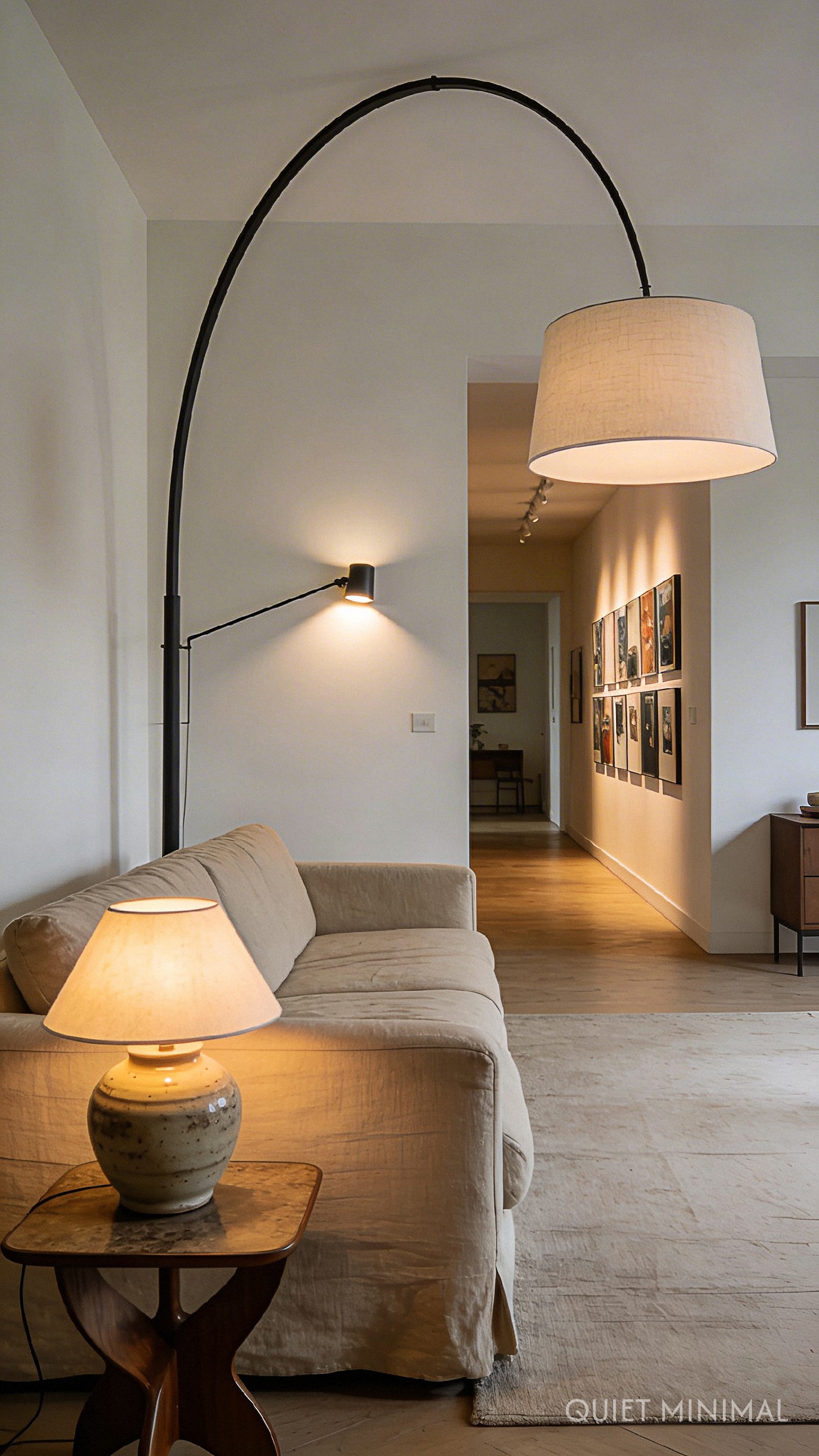
The biggest mistake in American living rooms is relying on a single overhead fixture, often referred to as “the big light.” This creates harsh shadows and a flat, clinical atmosphere that can negatively impact your circadian rhythm. The Nordic approach champions a layered scheme.
Aim for at least three distinct light sources in your living area: a floor lamp for height, table lamps for mid-level ambient glow, and directional lighting for tasks. This layering adds depth and dimension to the room, making your refurbished mid-century furniture pop while creating a cozy, enveloping atmosphere that combats the gloom outside.
Key Takeaway: Never rely on a single overhead light; layer at least three different light sources at varying heights to create depth and warmth.
From the guides
You've saved it, wanted it. Here's the how: codes, measurements, order. Your choices make it yours.
 The Japandi Honest PlaybookThe honest version of the style: what to keep, what to skip, and the order to do it in.See inside →
 The Room Refresh PlaybookA repeatable four-step method, room by room, in ten minutes, thirty minutes, or one weekend.See inside →
 Make Any Room Feel Cozy on PurposeWhy some rooms hold people and others empty out, and the moves that change it.See inside →
2. Choose the Right Color Temperature
 Save
Not all light bulbs are created equal, and for a nesting mindset, the Kelvin (K) rating is crucial. Daylight bulbs (5000K) can feel too stark and blue for a relaxing evening environment, often mimicking the harshness of office lighting.
To replicate the inviting glow of a Nordic living room, swap your bulbs for “Warm White” options, typically between 2700K and 3000K. This spectrum mimics the golden hour sunlight, signaling to your brain that it is time to unwind and relax. It softens the edges of your room and makes your skin care routine feel that much more luxurious.
Key Takeaway: Check your bulb packaging and stick to 2700K-3000K (Warm White) to create a soothing, golden atmosphere that promotes relaxation.
3. Embrace Diffused Lighting Fixtures
 Save
Direct, exposed bulbs can cause eye strain and visual fatigue, which contributes to seasonal lethargy. Nordic design icons, such as the PH5 pendant, were mathematically engineered to hide the bulb from view and scatter light softly across the room.
Look for fixtures with shades made of opal glass, linen, or paper. These materials act as diffusers, turning a harsh beam into a soft, glowing orb. This type of lighting mimics the soft, overcast light often found in nature, which is gentle on the eyes and perfect for those long evenings spent working on embroidery or sketching.
Key Takeaway: Invest in fixtures with shades or diffusers that conceal the bulb to prevent glare and create a soft, cloud-like illumination.
4. Create “Hygge” with Living Light
 Save
There is a reason the Danes consume more candles per capita than almost anyone else. “Living light”—the flicker of a flame—taps into a primal need for warmth and safety. It creates instant hygge (coziness).
Incorporate pillar candles, tapers, or high-quality LED flameless candles into your coffee table styling. The movement of the flame adds a dynamic energy to the room that static electric light cannot achieve. It turns a Tuesday night on the sofa into a restorative ritual.
Key Takeaway: Incorporate candles (real or high-quality LED) daily to add movement and primal warmth to your lighting scheme.
5. Maximize Natural Light with Sheer Window Treatments
 Save
Combatting seasonal depression isn’t just about what you turn on at night; it’s about how much light you capture during the day. Heavy, blackout drapes can make a room feel like a cave if they aren’t fully opened.
Swap heavy velvet curtains for light, linen sheers or leave the top half of the window exposed. This allows maximum daylight to flood your sanctuary while maintaining privacy. Position your workspace or reading chair near the window to soak up every available lumen of natural Vitamin D during the daylight hours.
Key Takeaway: Replace heavy window coverings with translucent materials to maximize daylight exposure during the shorter winter days.
6. Use Mirrors to Bounce Light
 Save
A classic trick in the curator’s handbook is using mirrors to expand space, but in a Nordic living room, mirrors are light amplifiers. Placing a large mirror opposite a window effectively doubles the amount of natural light entering the room.
Consider a large floor mirror with a minimal frame or a gallery arrangement of vintage mirrors. This not only brightens dark corners but also reflects your carefully curated art prints and decor, making the space feel airier and more energetic.
Key Takeaway: Position mirrors directly opposite windows or light sources to amplify brightness and eliminate dark, mood-dampening corners.
7. Incorporate Task Lighting for Creative Flow
 Save
Seasonal depression often stems from a lack of motivation to do the things we love. If your embroidery corner or reading nook is dimly lit, you are less likely to engage in those creative hobbies that bring you joy.
Incorporate specific task lighting, such as an angled floor lamp or a swing-arm sconce, dedicated solely to your creative zones. This pool of focused light invites you to sit down and focus, keeping your “maker mindset” active even when the sun goes down at 4:00 PM.
Key Takeaway: Install dedicated task lighting in creative nooks to encourage hobbies and combat the lack of motivation associated with winter.
From the guides
You've saved it, wanted it. Here's the how: codes, measurements, order. Your choices make it yours.
The Japandi Honest PlaybookThe honest version of the style: what to keep, what to skip, and the order to do it in.See inside →The Room Refresh PlaybookA repeatable four-step method, room by room, in ten minutes, thirty minutes, or one weekend.See inside →Make Any Room Feel Cozy on PurposeWhy some rooms hold people and others empty out, and the moves that change it.See inside →8. Highlight Texture with Wall Washing
 Save
Flat lighting creates a flat mood. To make your home feel like a dynamic sanctuary, use light to highlight the textures you’ve brought into the space—the weave of a throw blanket, the grain of your wood furniture, or the brushstrokes on your paintings.
“Wall washing” involves placing a light source (like a floor can light or track lighting) specifically to graze a wall or a piece of art. This technique adds drama and visual interest, reminding you of the beauty within your home and breaking up the monotony of grey winter days.
Key Takeaway: Use directional lights to wash walls or art with light, emphasizing texture and adding visual drama to the space.
9. The Power of Dimmers
 Save
Versatility is key to a functional living room. The lighting you need for a mid-day cleaning session is vastly different from the lighting you need for an evening wind-down with a green smoothie.
Installing dimmer switches (or using smart bulbs) allows you to control the intensity of the light to match the time of day. Lowering the lights as the evening progresses mimics the setting sun, helping your body produce melatonin naturally and ensuring better sleep hygiene—a critical component of mental health.
Key Takeaway: Install dimmers on all main fixtures to align your indoor lighting intensity with the natural rhythms of the day.
10. Add Portable Lamps (To-Go Light)
 Save
One of the rising trends in Nordic design is the portable, rechargeable table lamp. These small, mushroom-shaped aesthetic pieces are perfect for the modern curator who moves about her space.
Having a portable light source means you can bring a warm glow with you to a window seat, a dining table, or even the bathtub. It provides a sense of control over your environment and ensures you are never stuck in a dark corner. It is a small luxury that makes the home feel responsive to your needs.
Key Takeaway: Invest in a stylish, rechargeable portable lamp to ensure you have warm, personal lighting wherever you choose to nest.
 Save
Follow Quiet Minimal on Pinterest for more curated aesthetic inspiration.
The images featured in this article have been generated or modified using AI to help visualize these design concepts.
From the guides
You've saved it, wanted it. Here's the how: codes, measurements, order. Your choices make it yours.
The Japandi Honest PlaybookThe honest version of the style: what to keep, what to skip, and the order to do it in.See inside →The Room Refresh PlaybookA repeatable four-step method, room by room, in ten minutes, thirty minutes, or one weekend.See inside →Make Any Room Feel Cozy on PurposeWhy some rooms hold people and others empty out, and the moves that change it.See inside →


