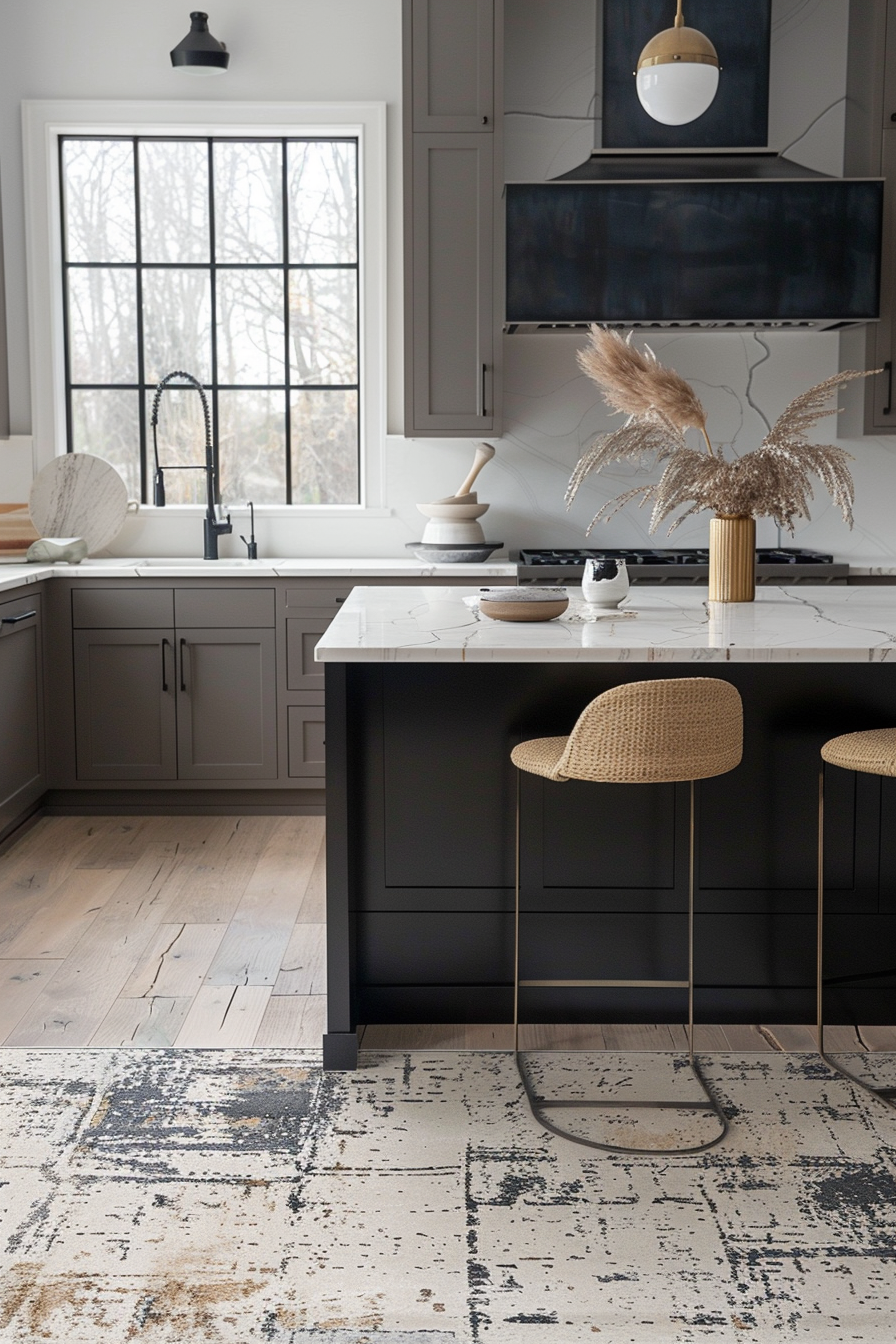
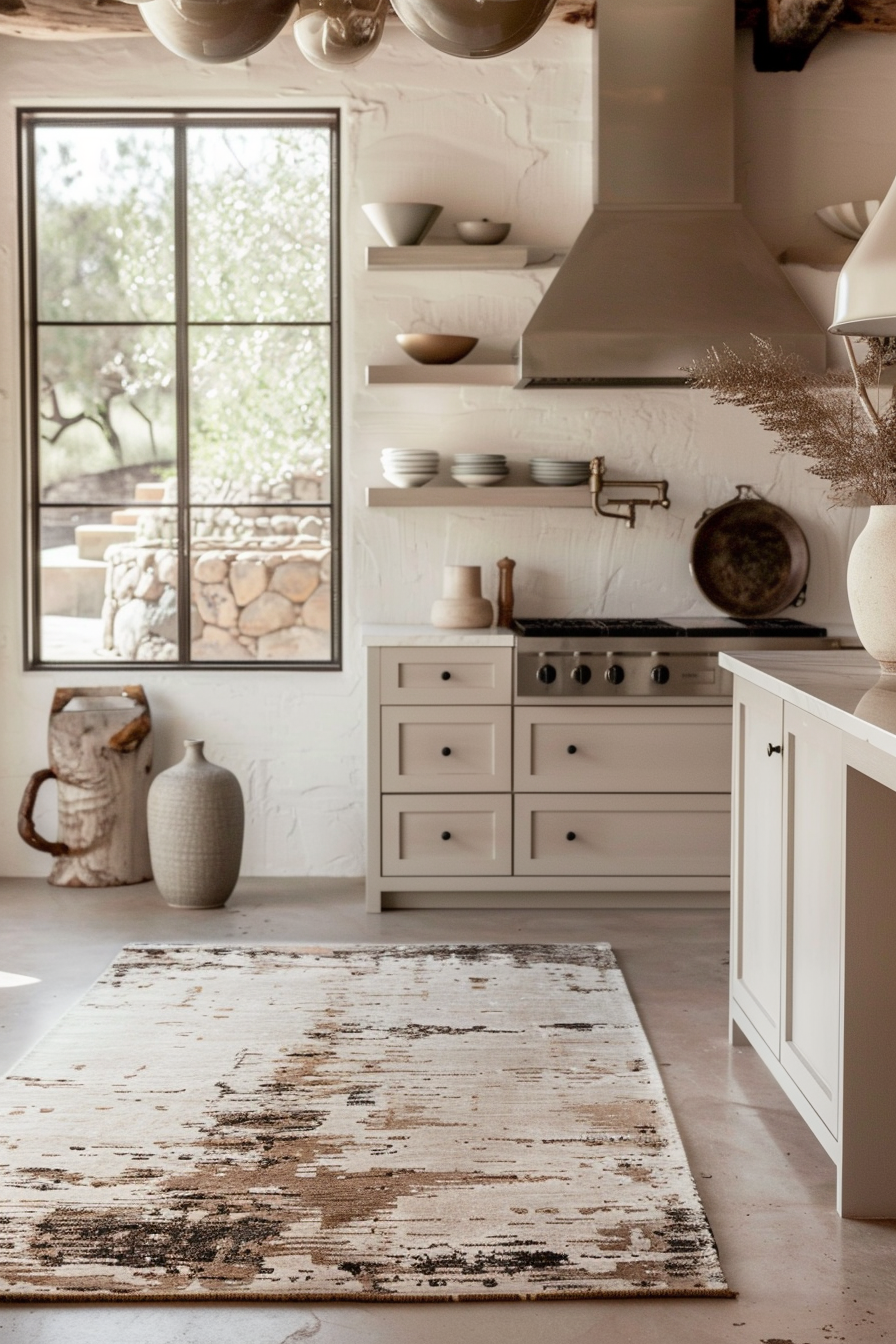
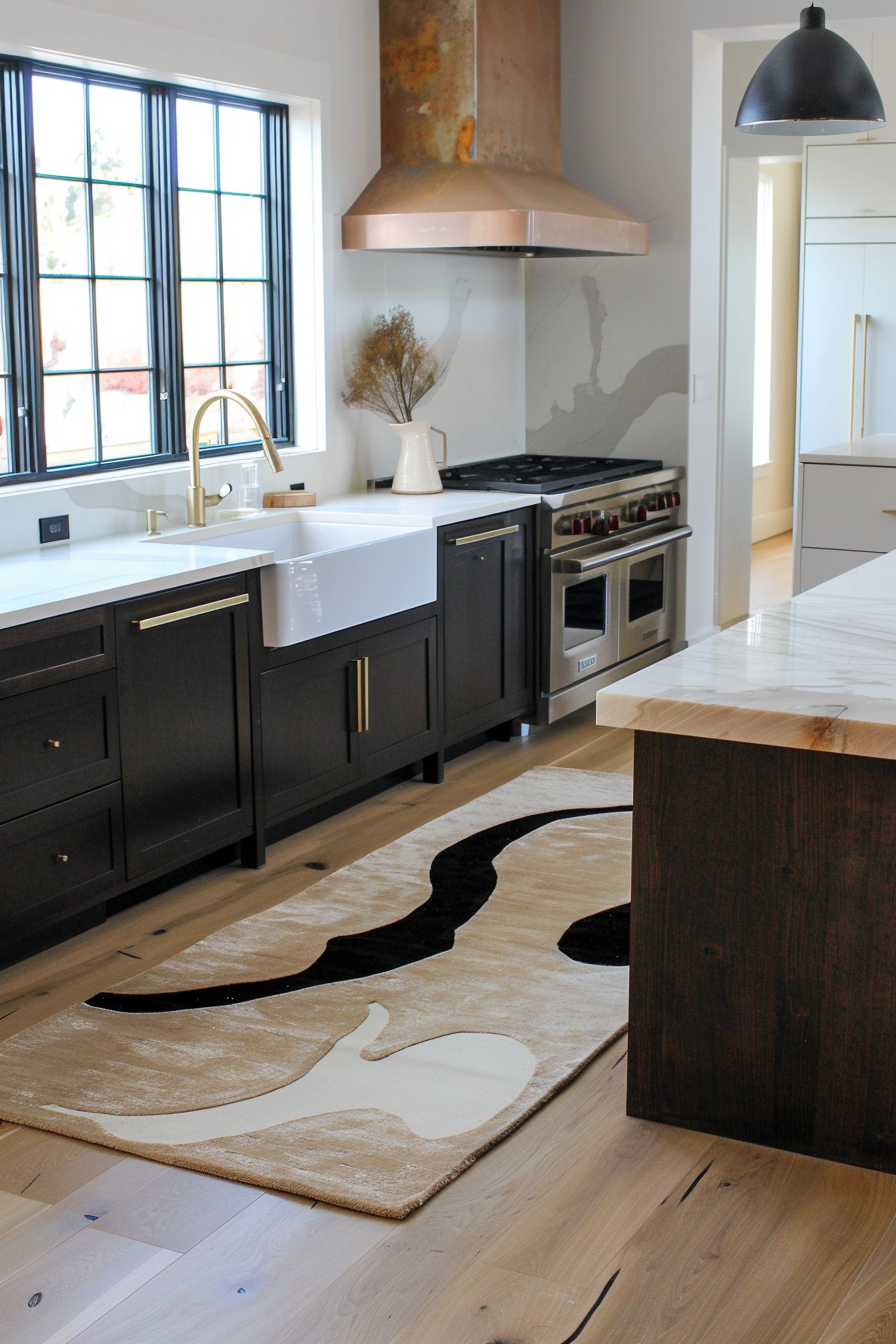
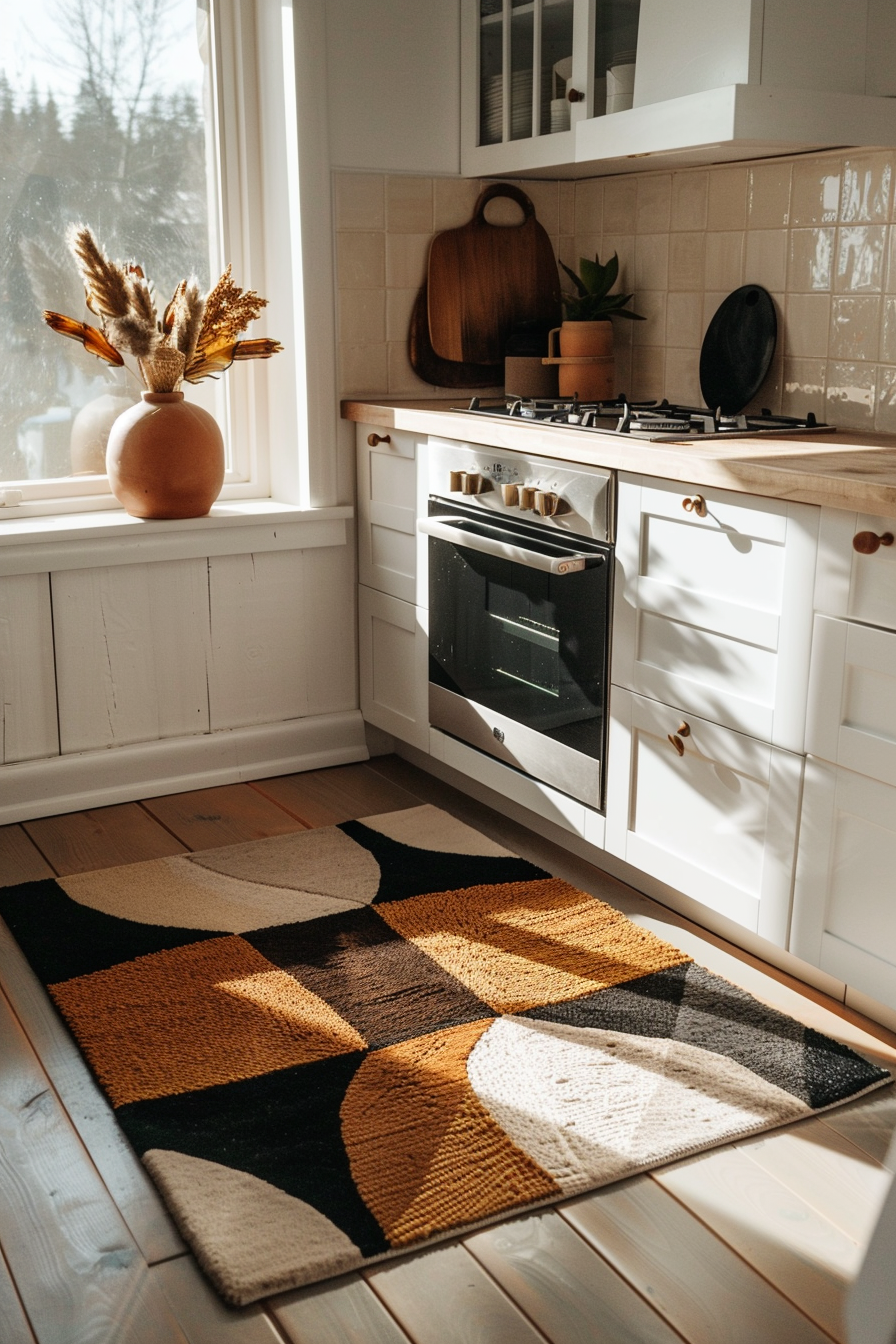
Add Warmth with Farmhouse Kitchen Rugs

In the farmhouse kitchen, a rug is not just a floor covering; it is an anchor. It softens the hard surfaces of tile and wood, introducing texture, pattern, and warmth to the heart of the home.

Here are the 6 distinct structural forms and styles that define the farmhouse kitchen rug, categorized by their material and visual impact.

1. The Classic Braided Oval

A timeless staple of country living. This rug style features concentric rings of braided fabric (often wool, cotton, or synthetic blends) stitched together.

  • The Visual: Multi-colored but muted threads woven into a sturdy, thick texture. It often features variegated earth tones—tans, reds, and deep blues.
  • The Vibe: Nostalgic and cozy. It adds a “heritage” feel, perfect for placing under a breakfast table or in front of the sink.

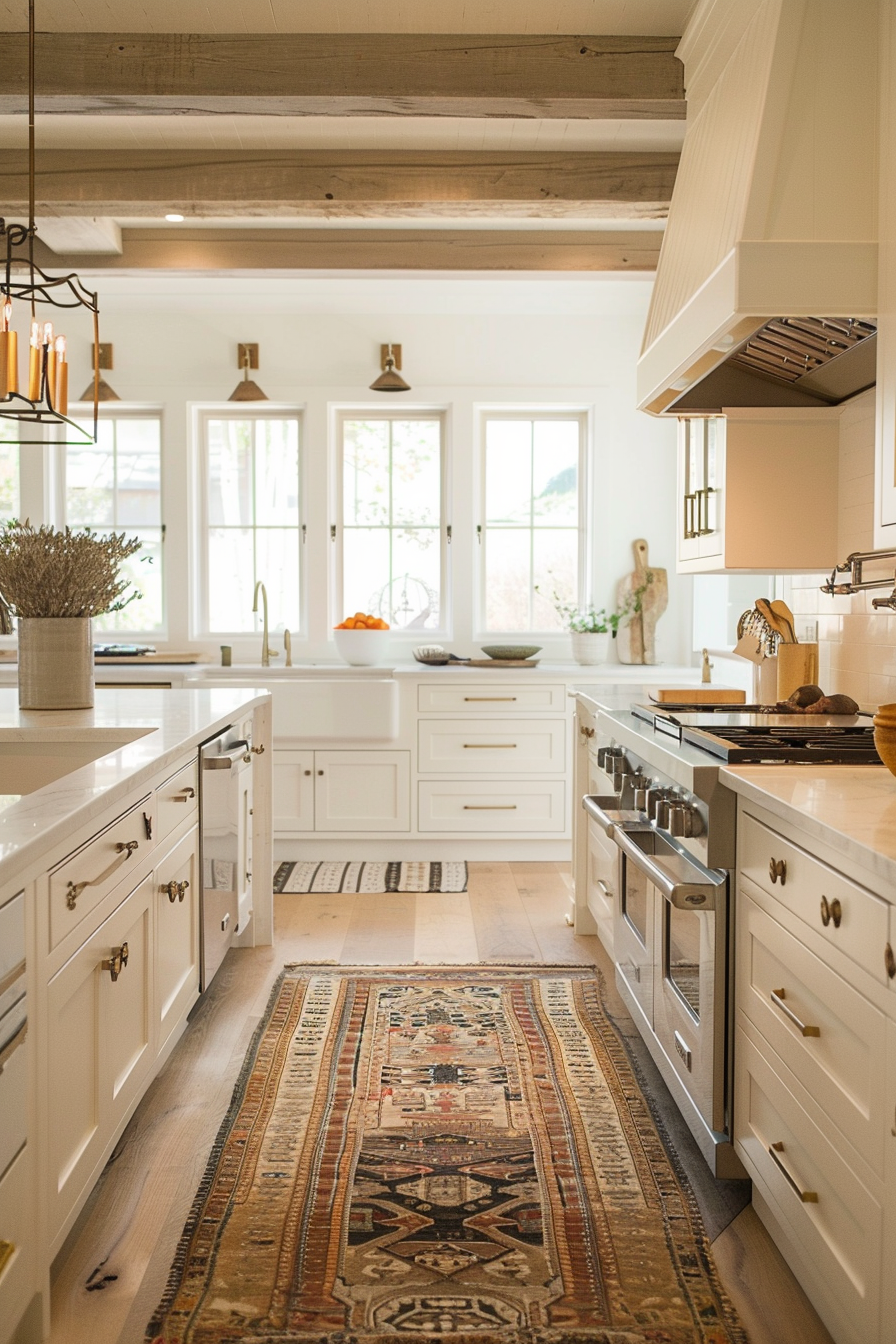
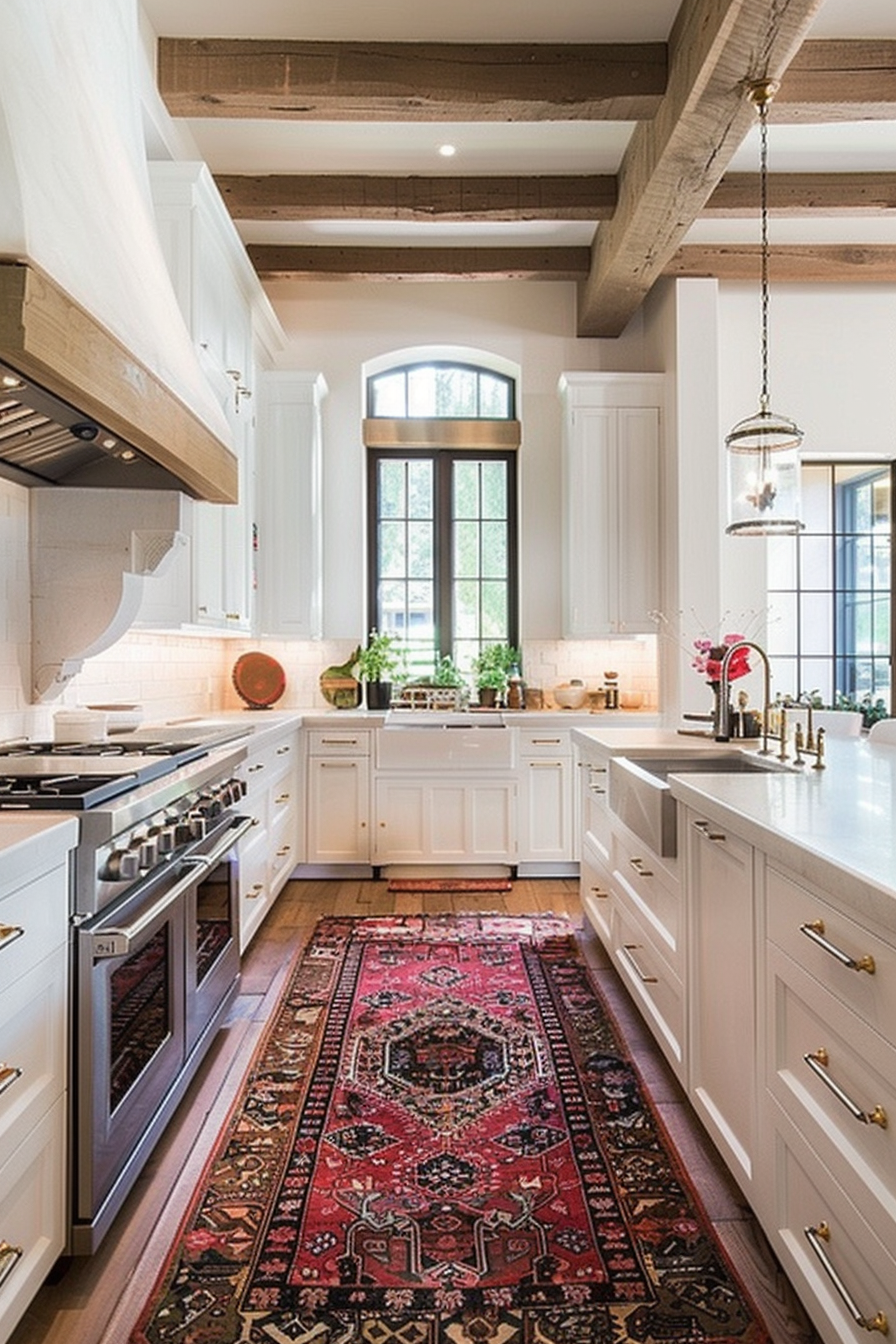
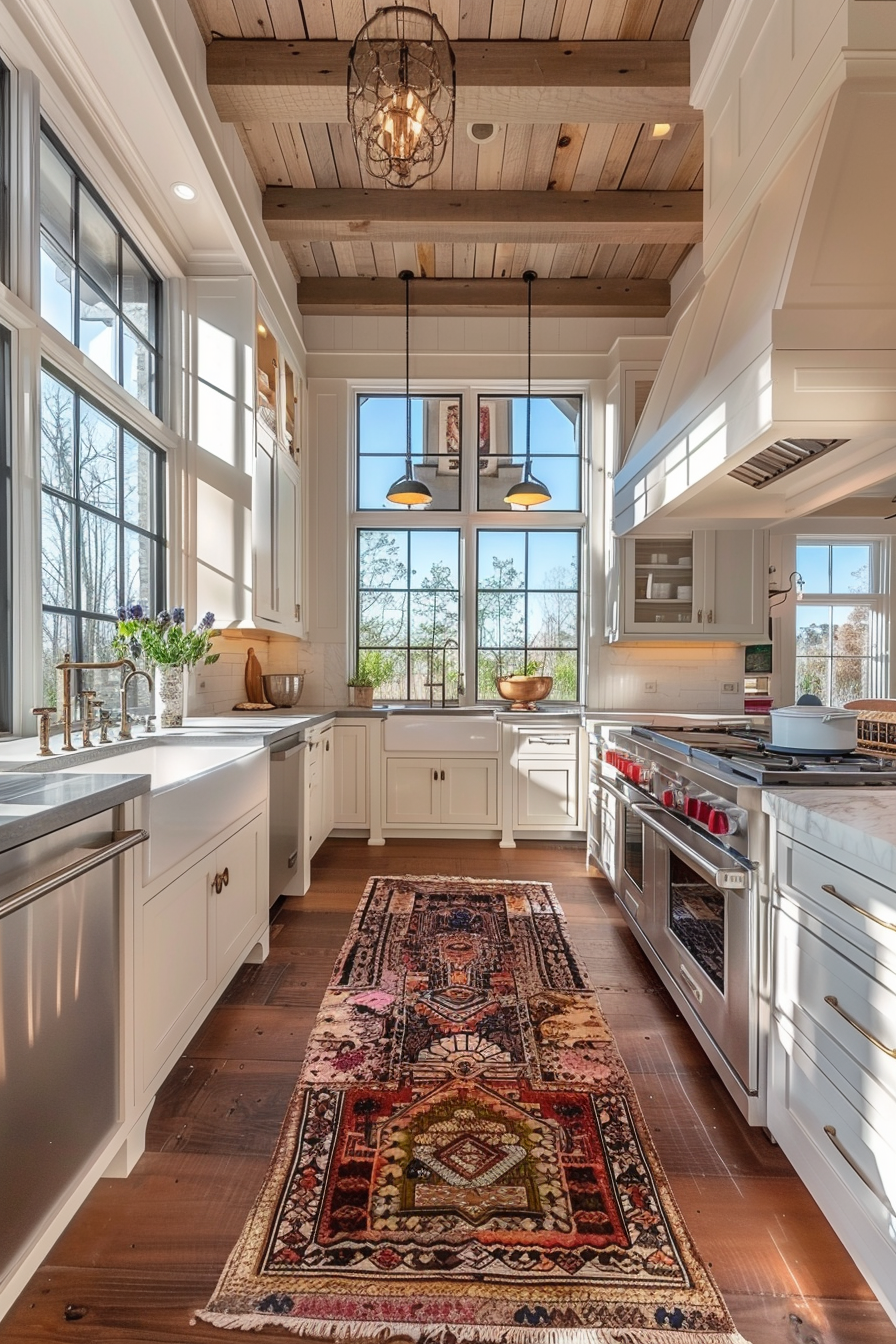
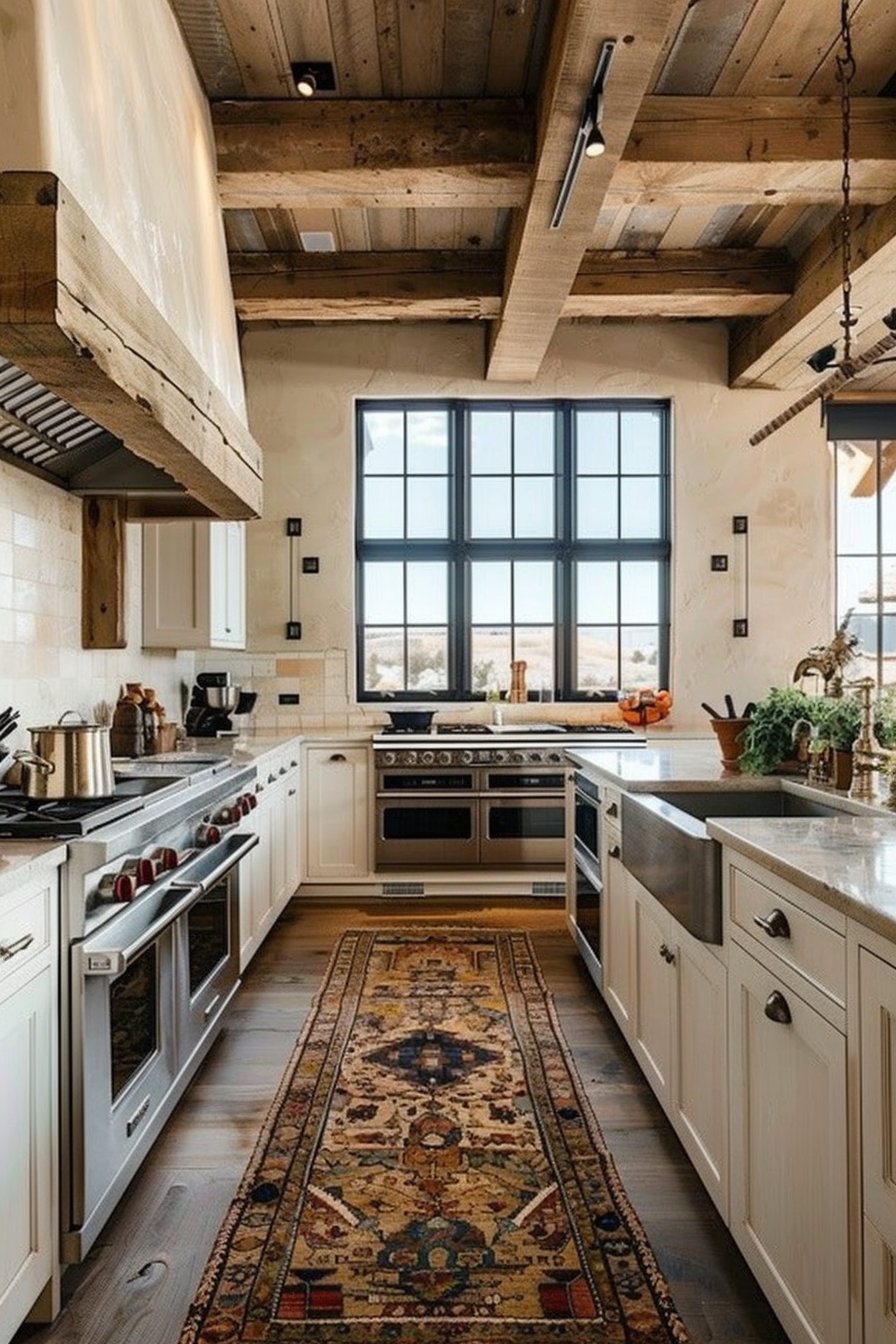
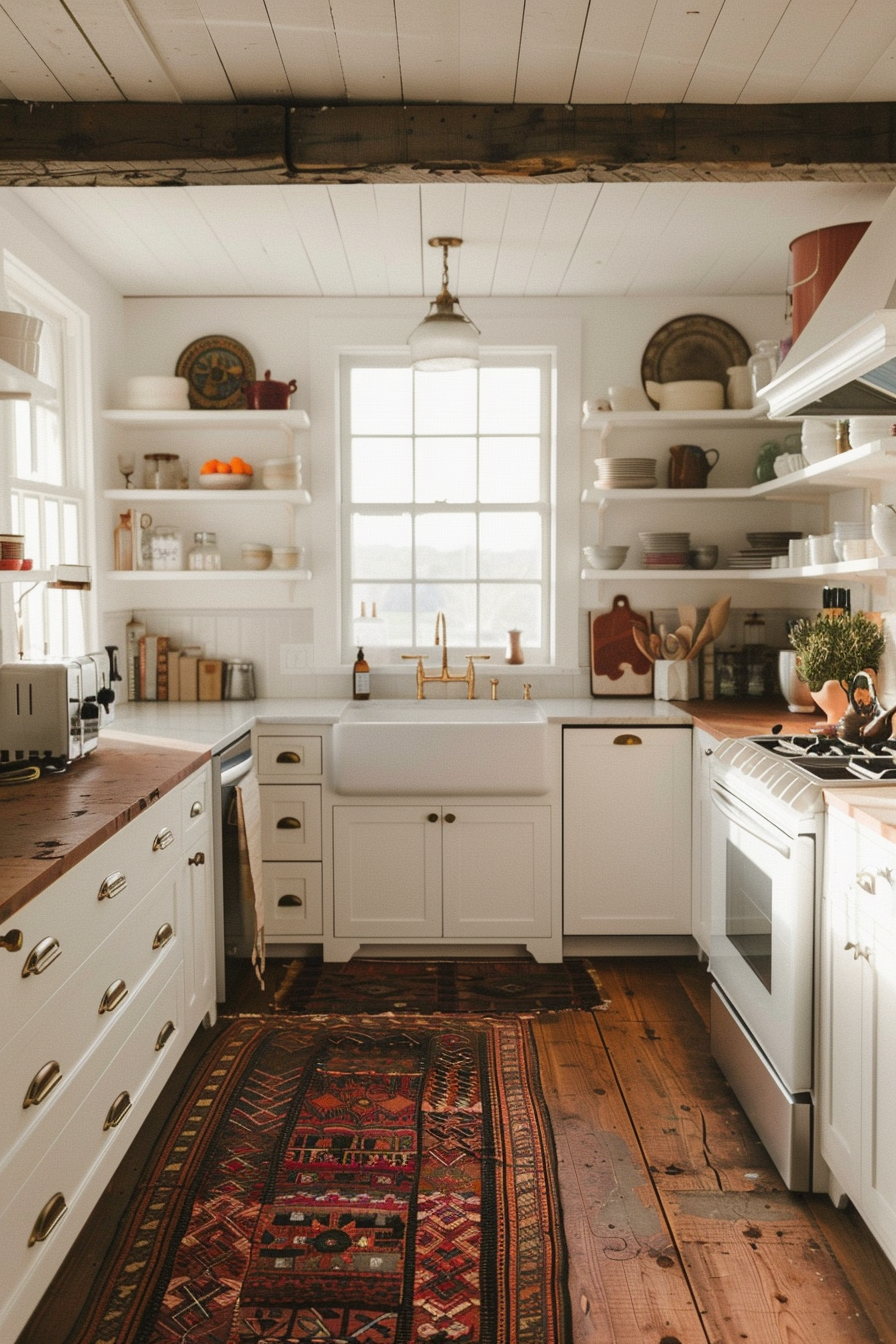
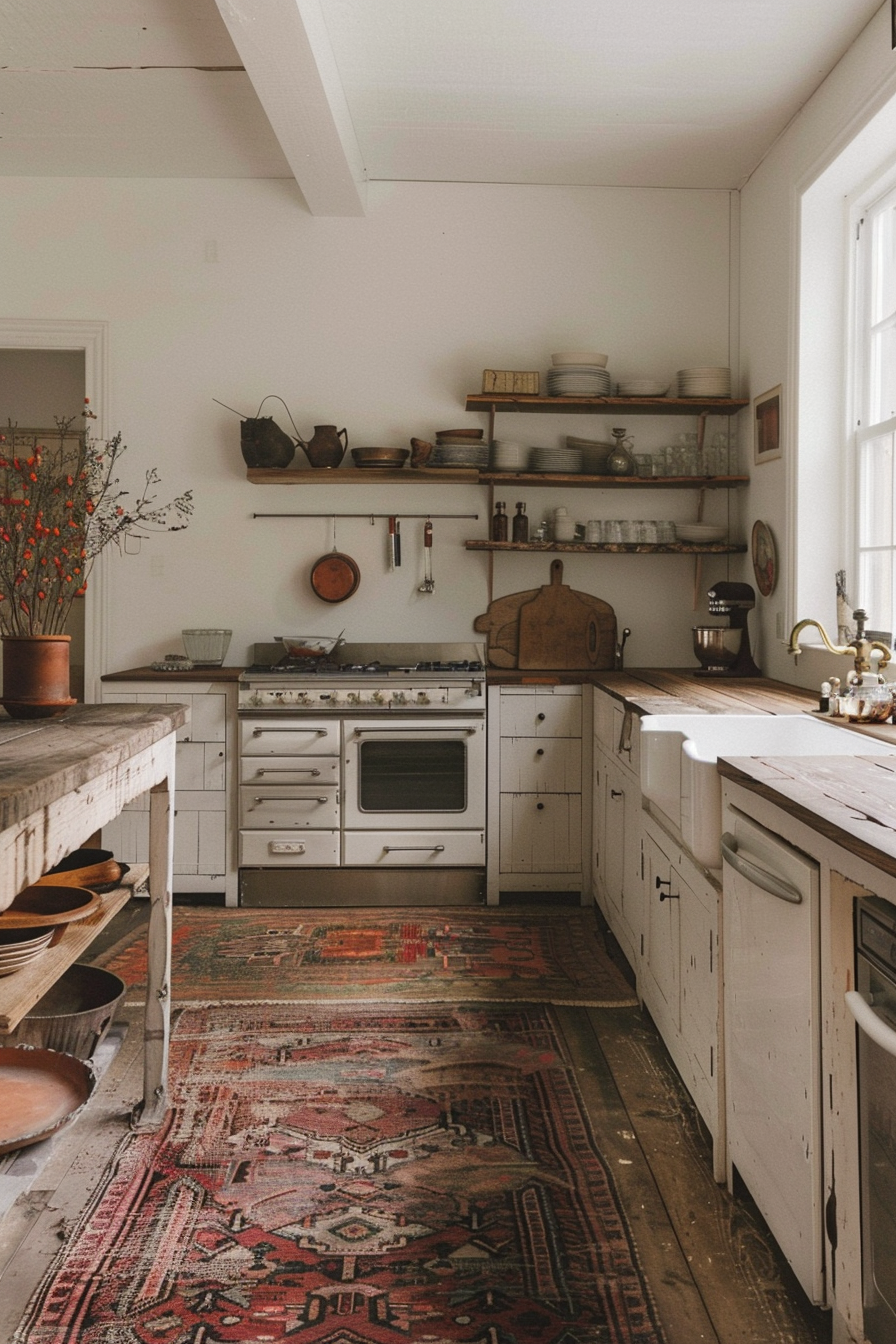
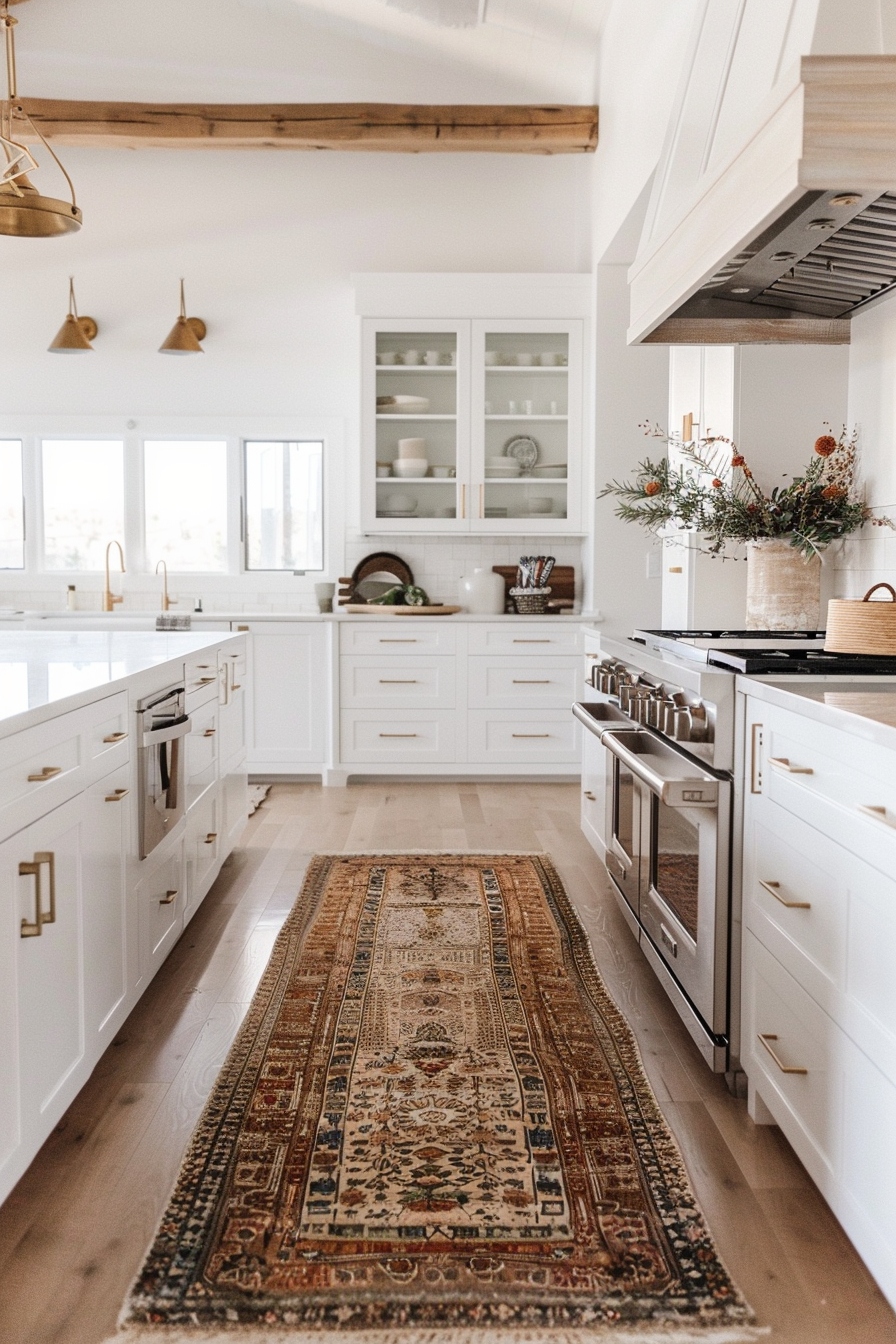
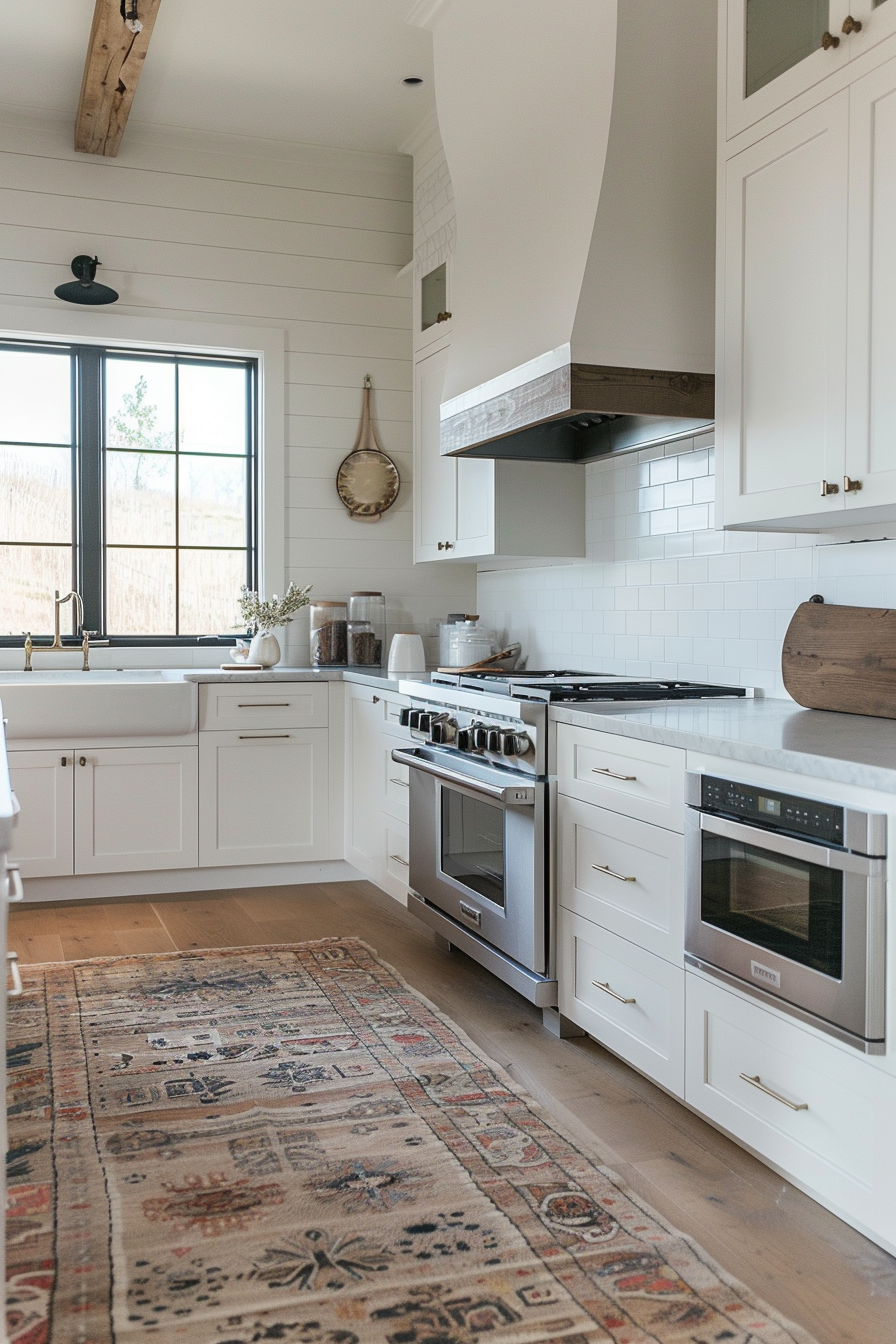
2. The Distressed Vintage Runner

A style that brings history and softness to the kitchen aisle.

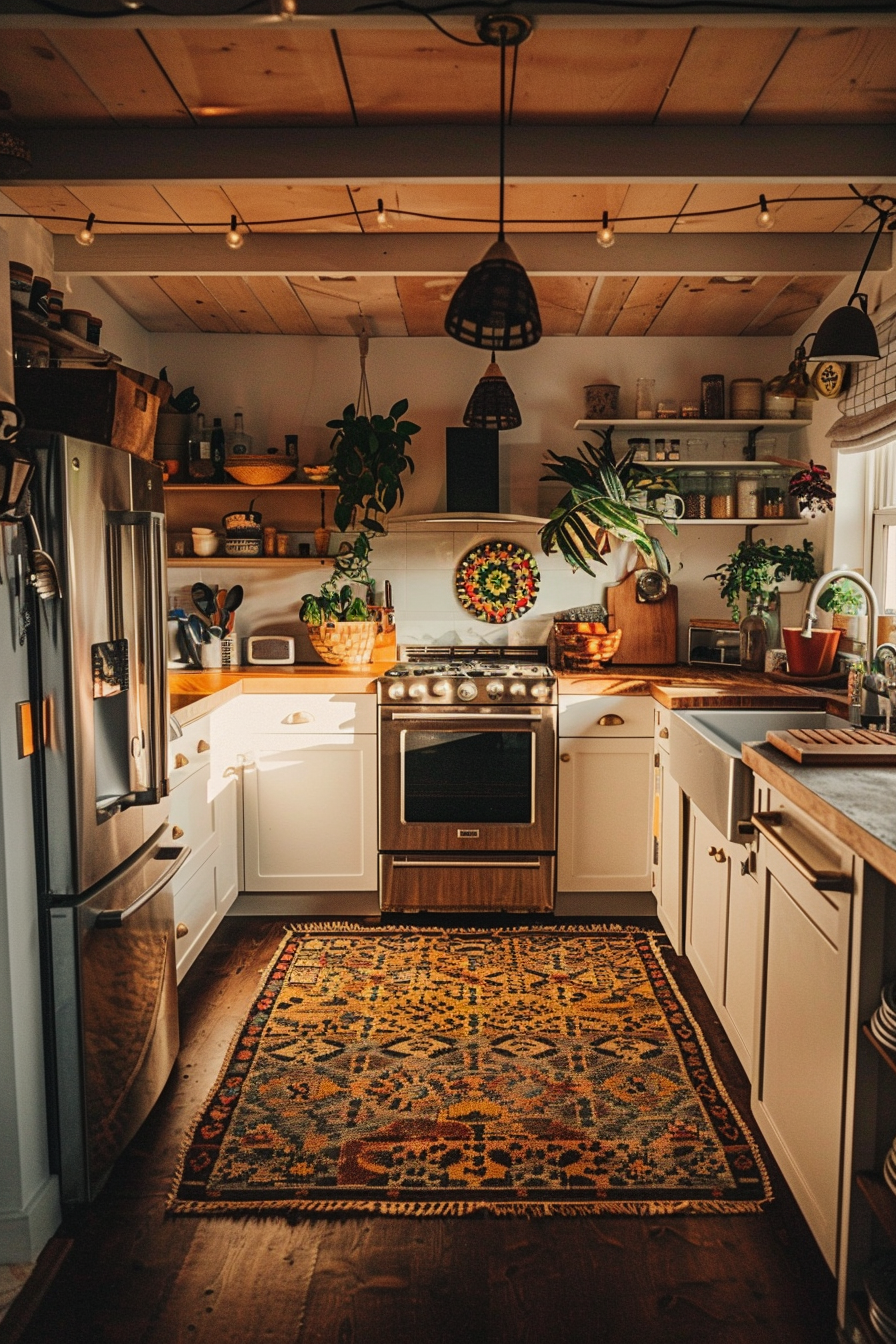
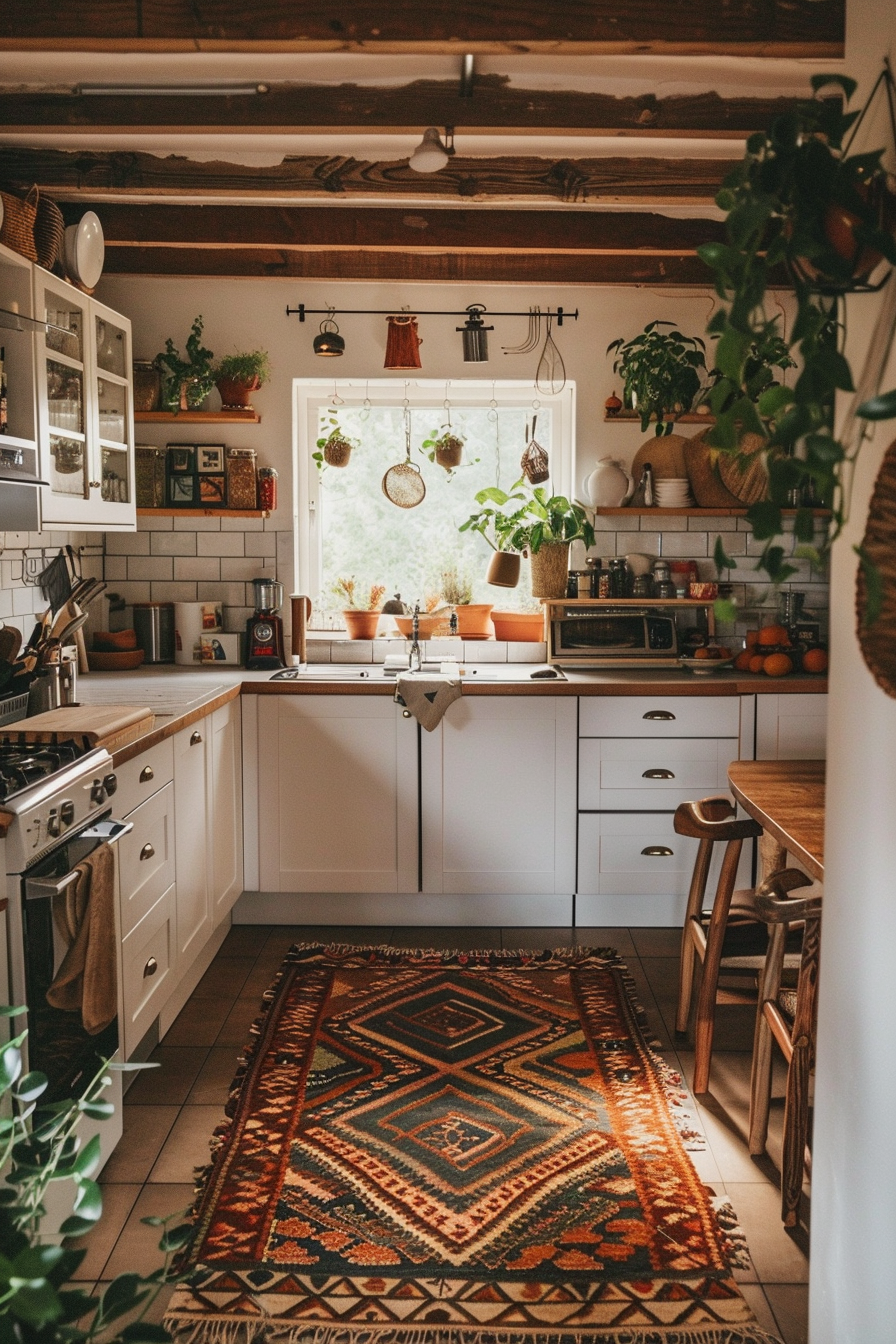
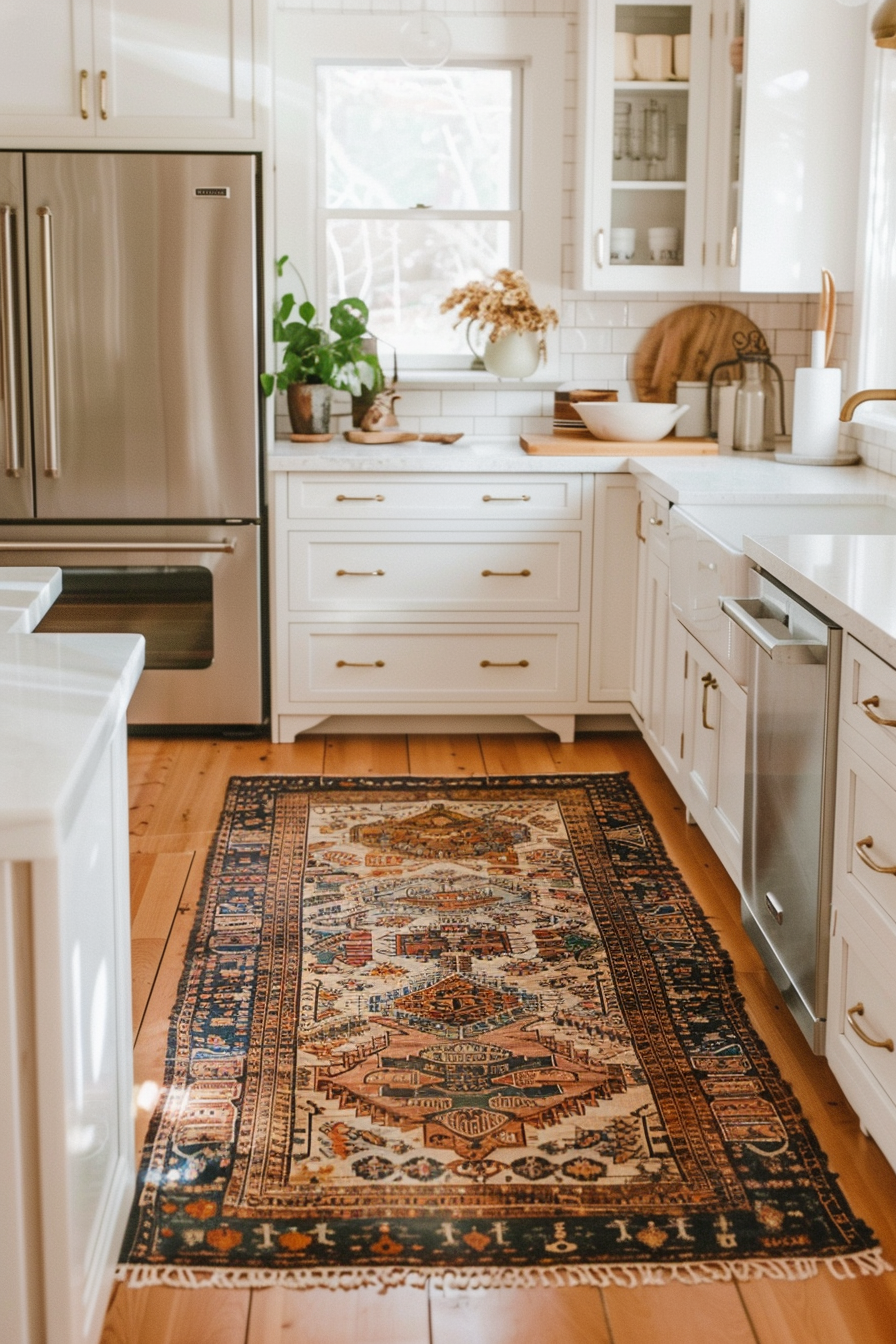
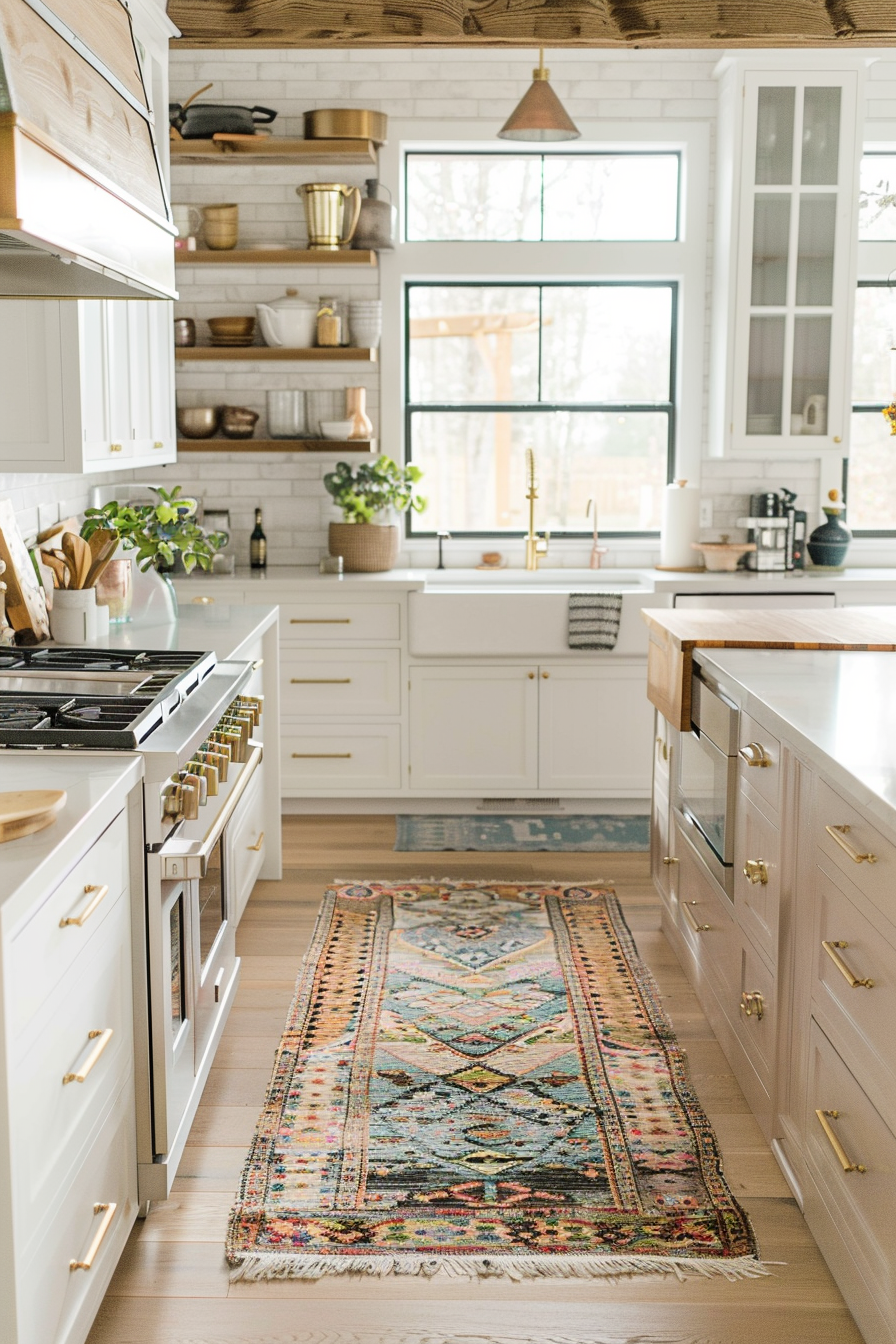
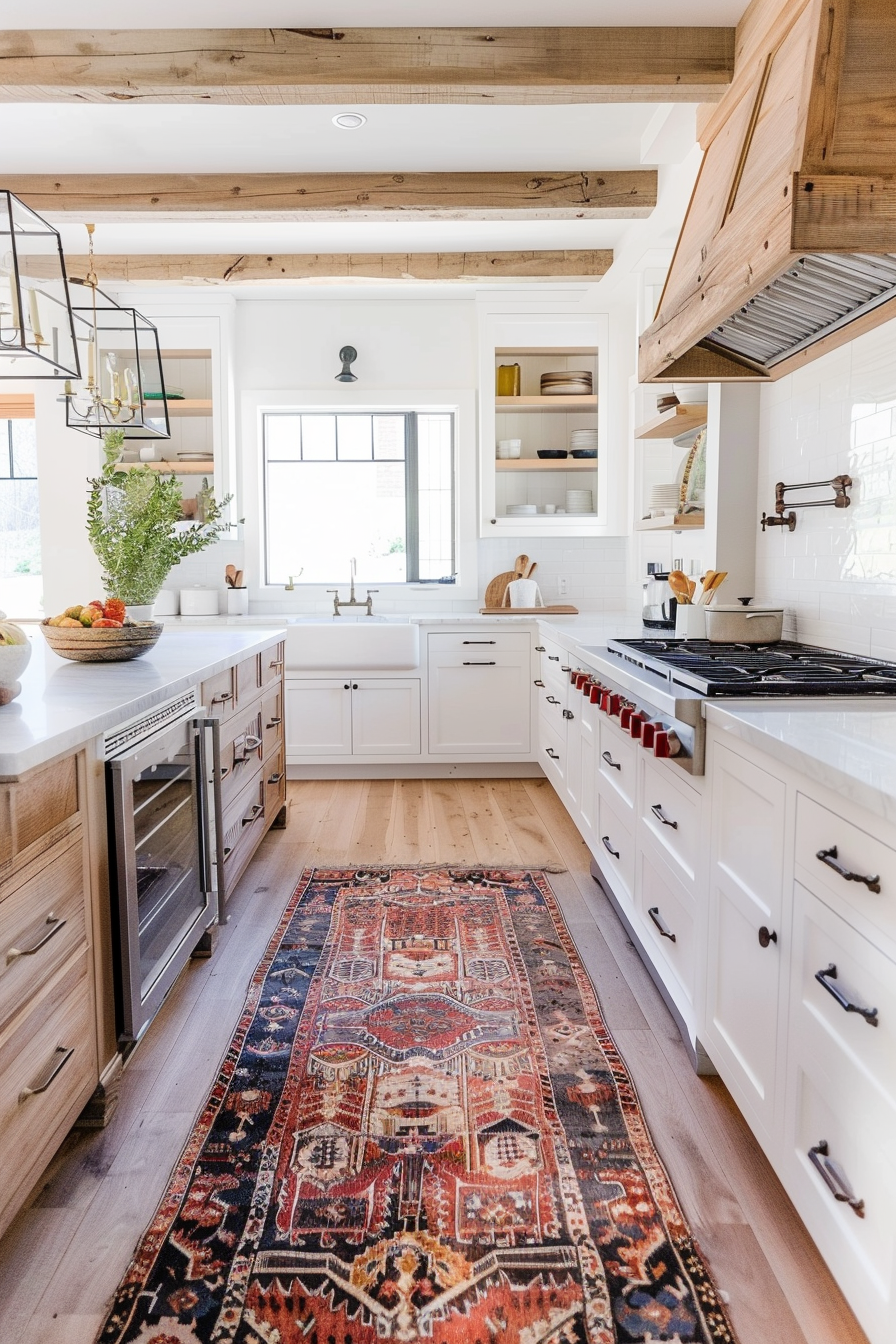
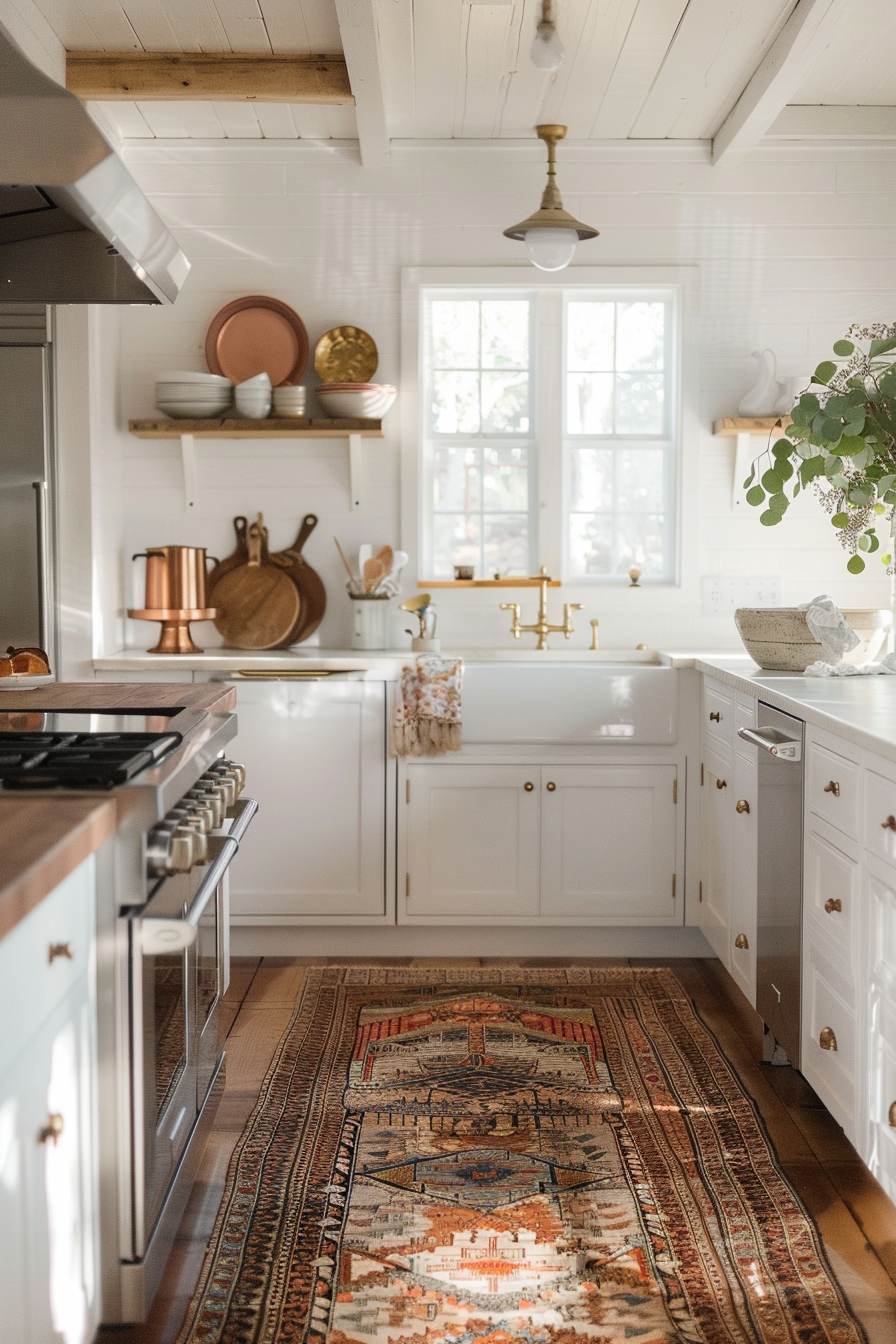
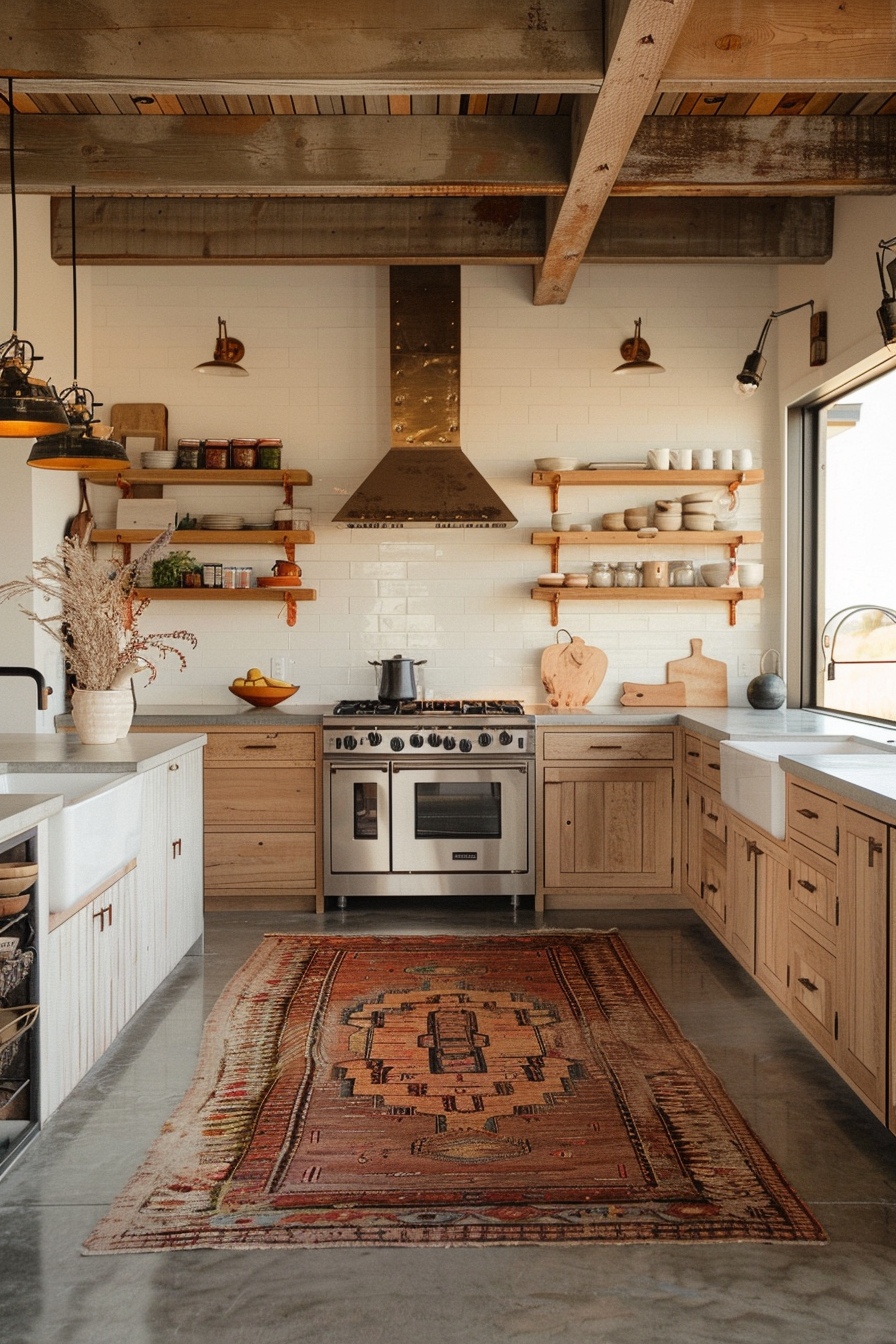
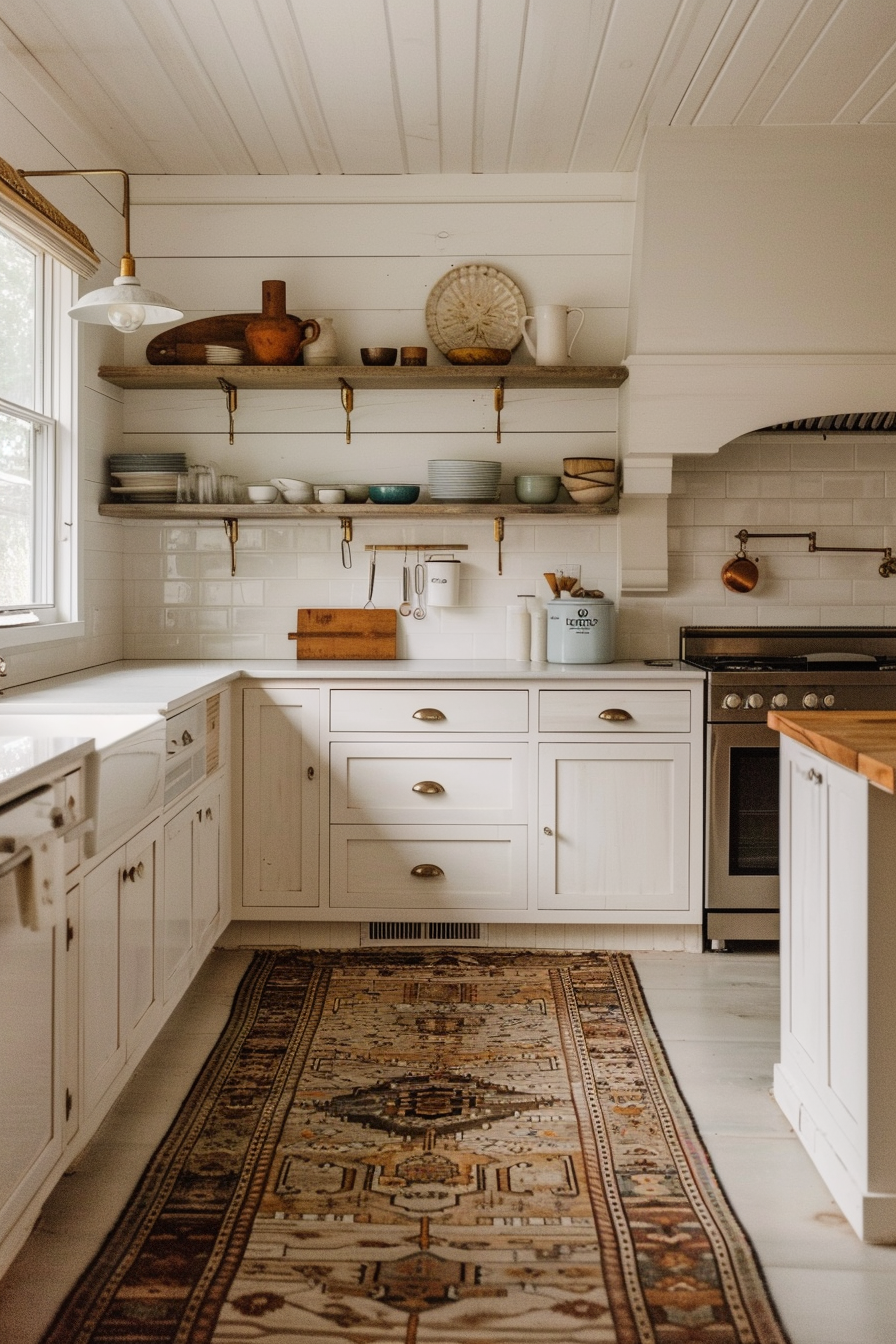
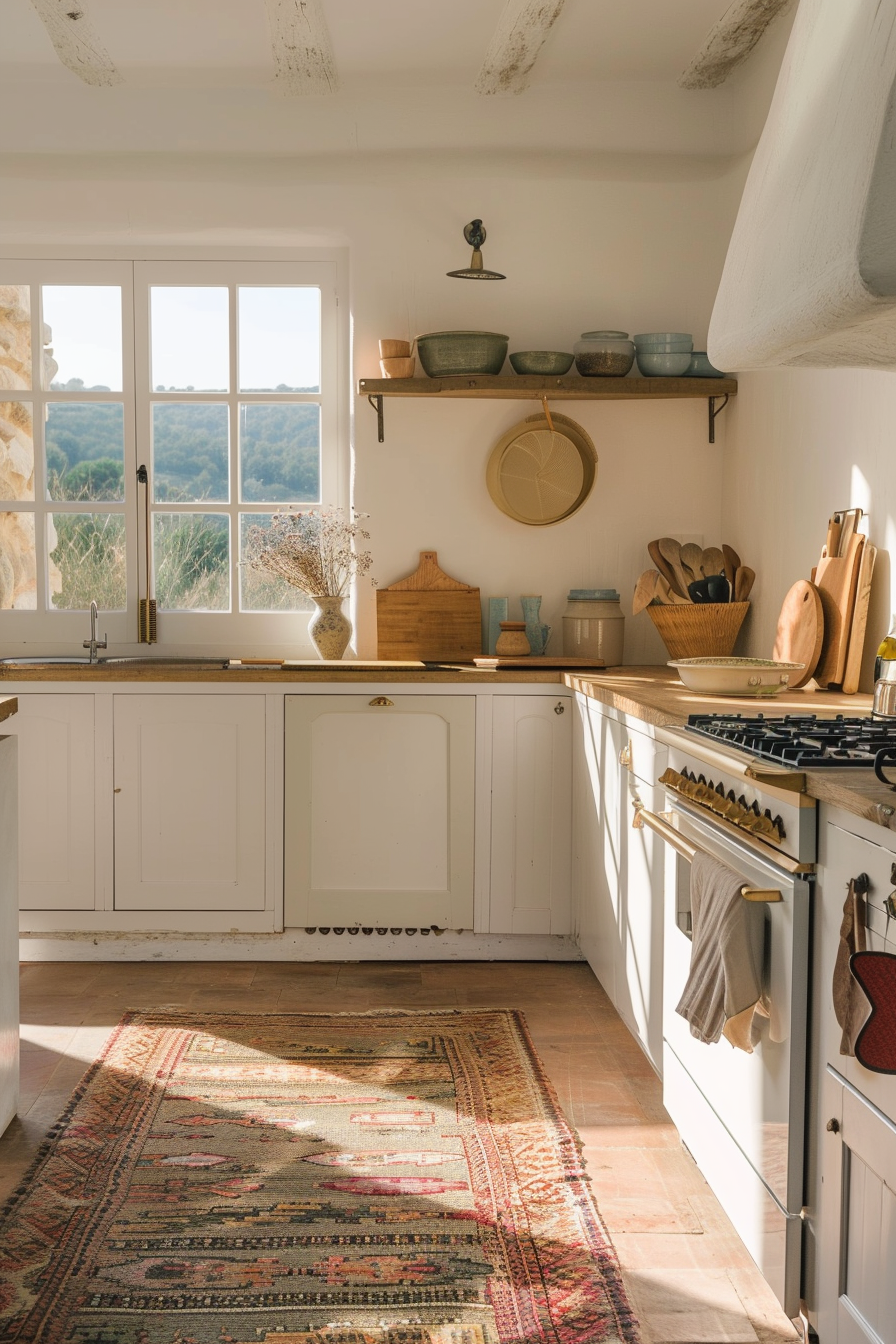
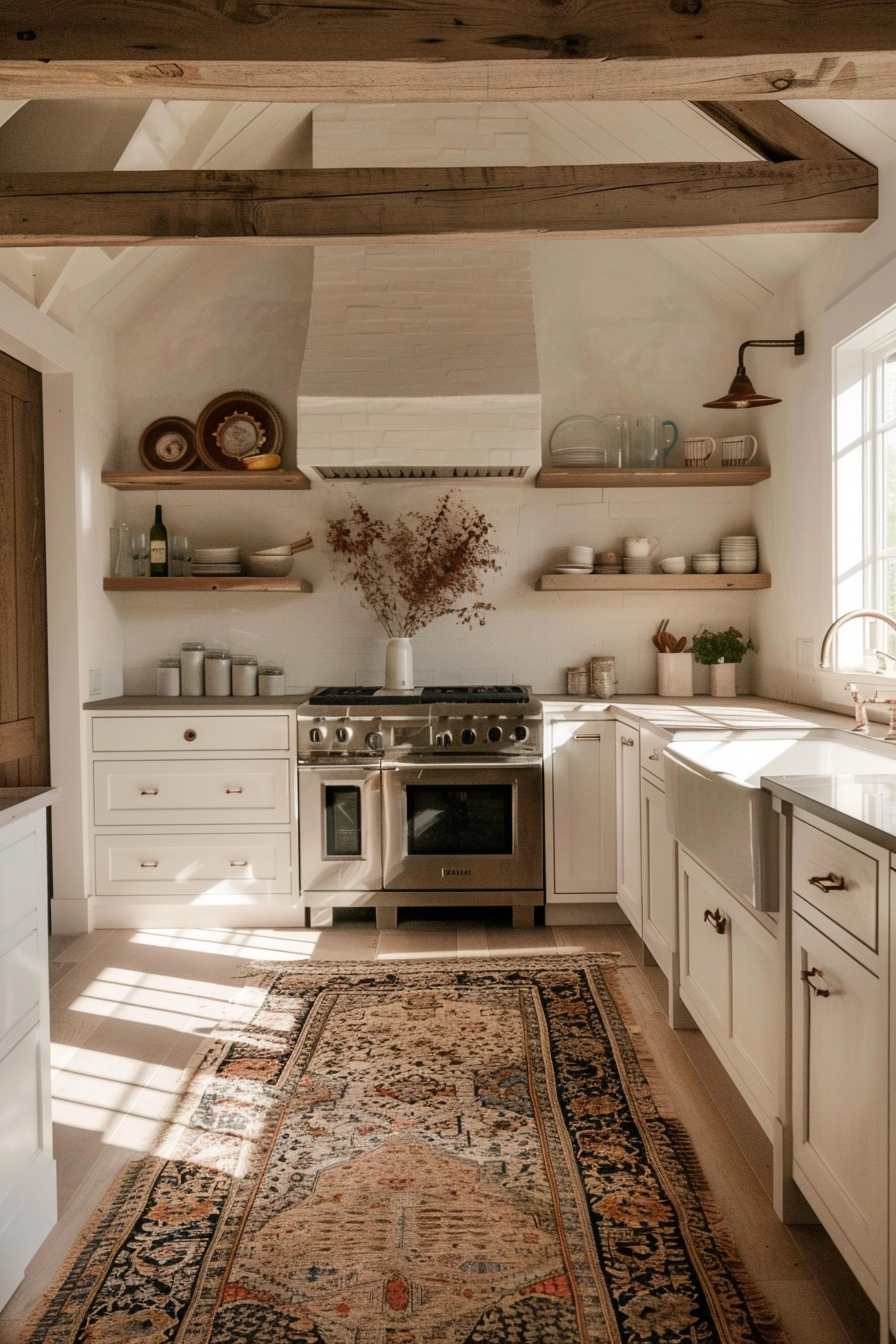
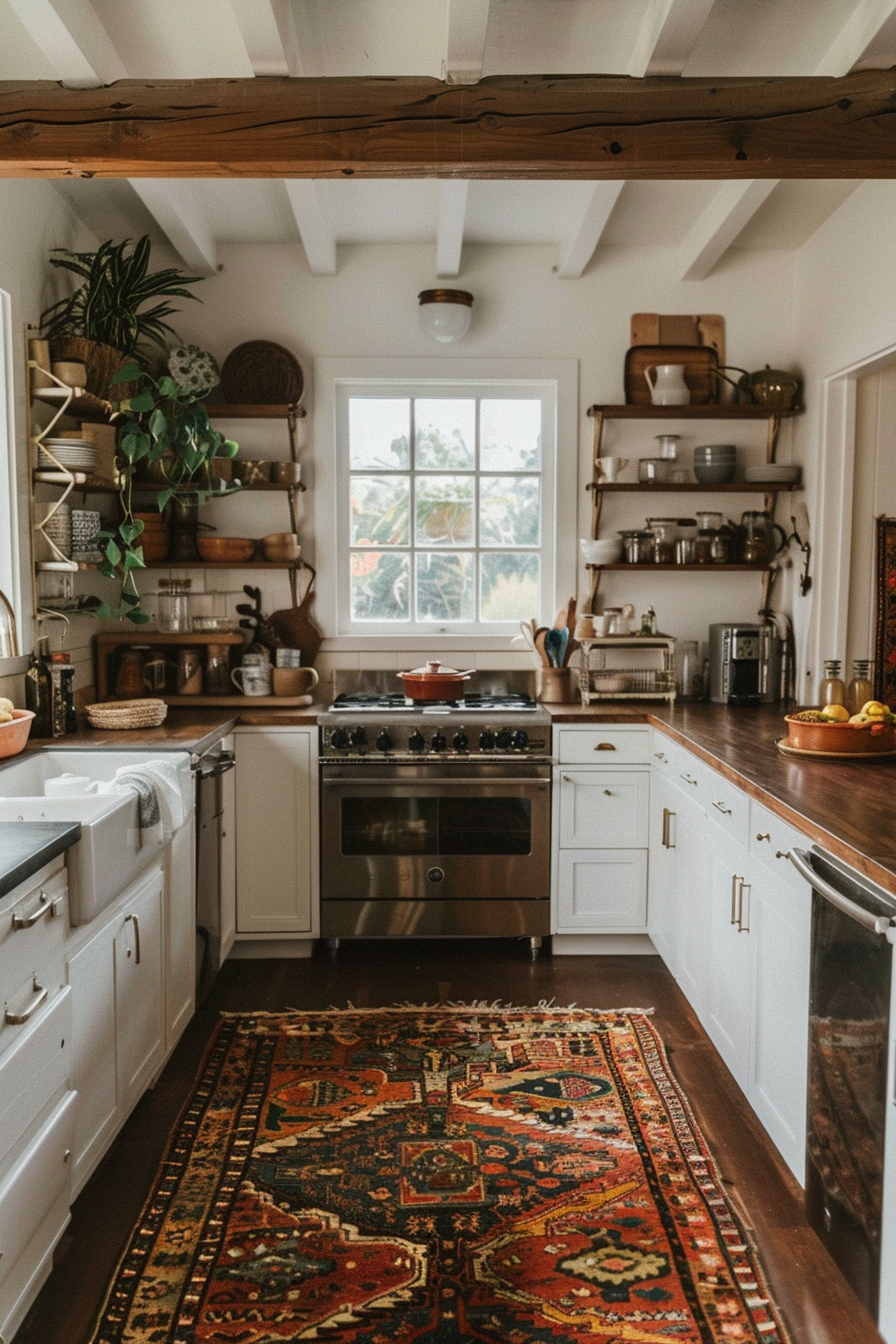
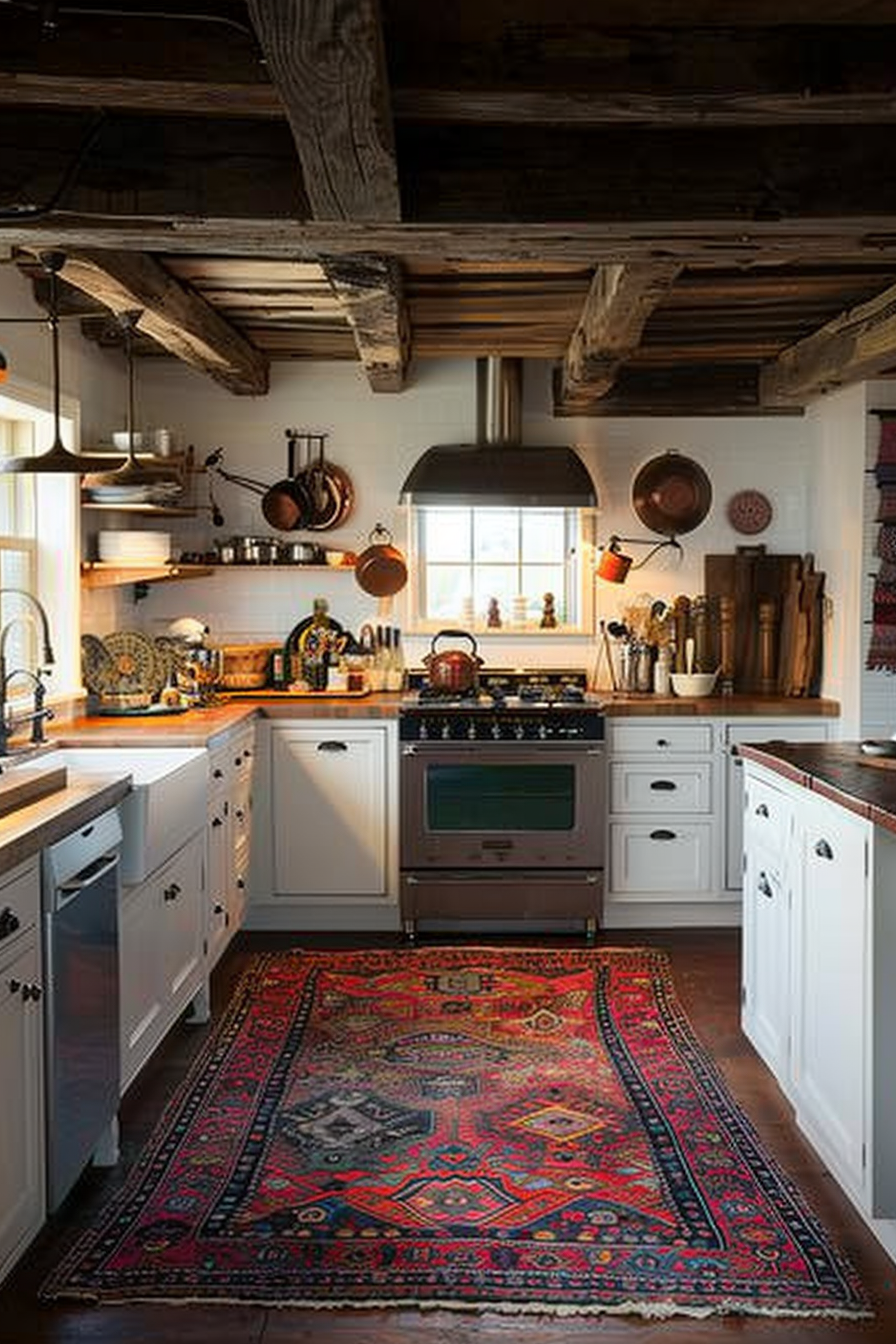
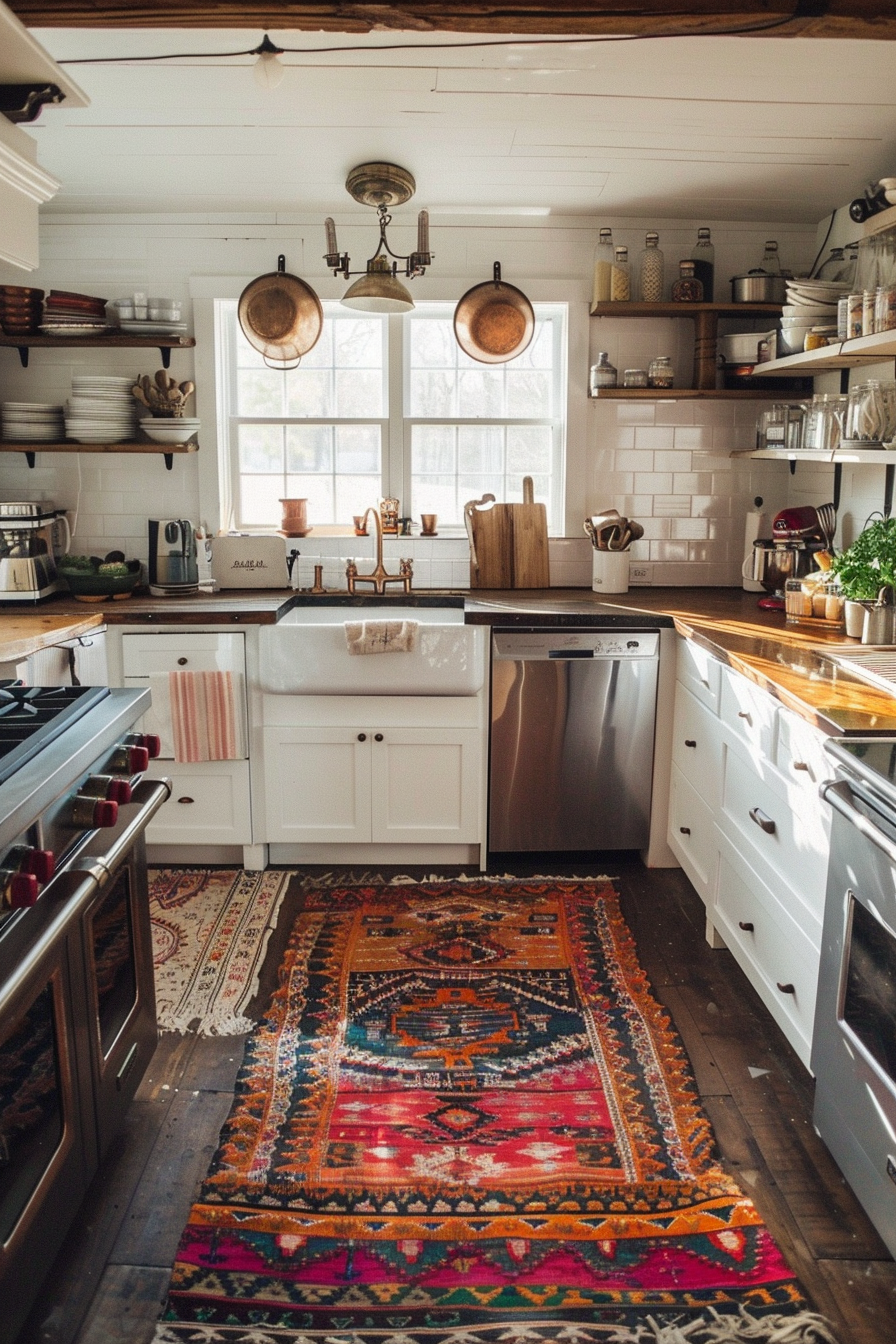
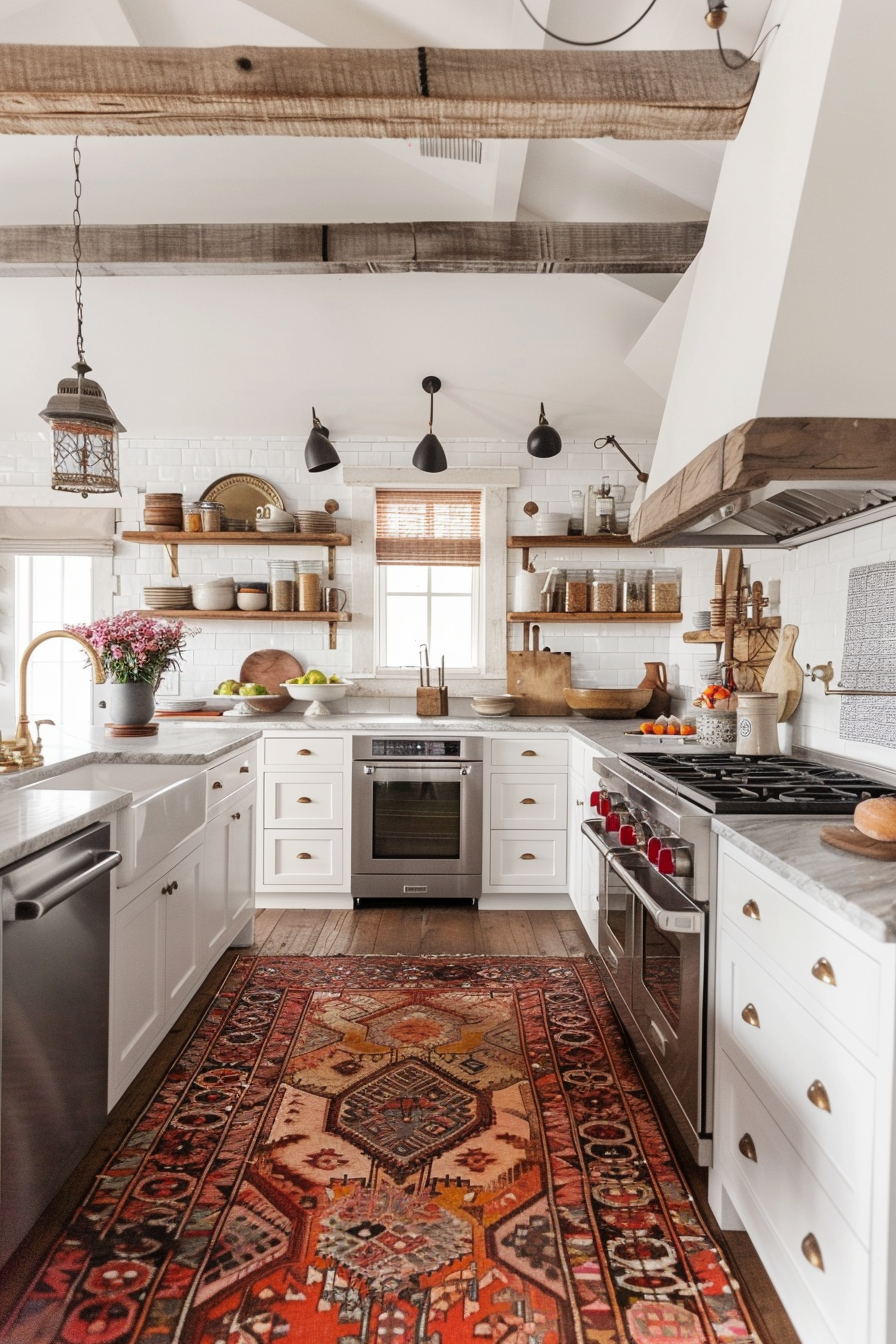
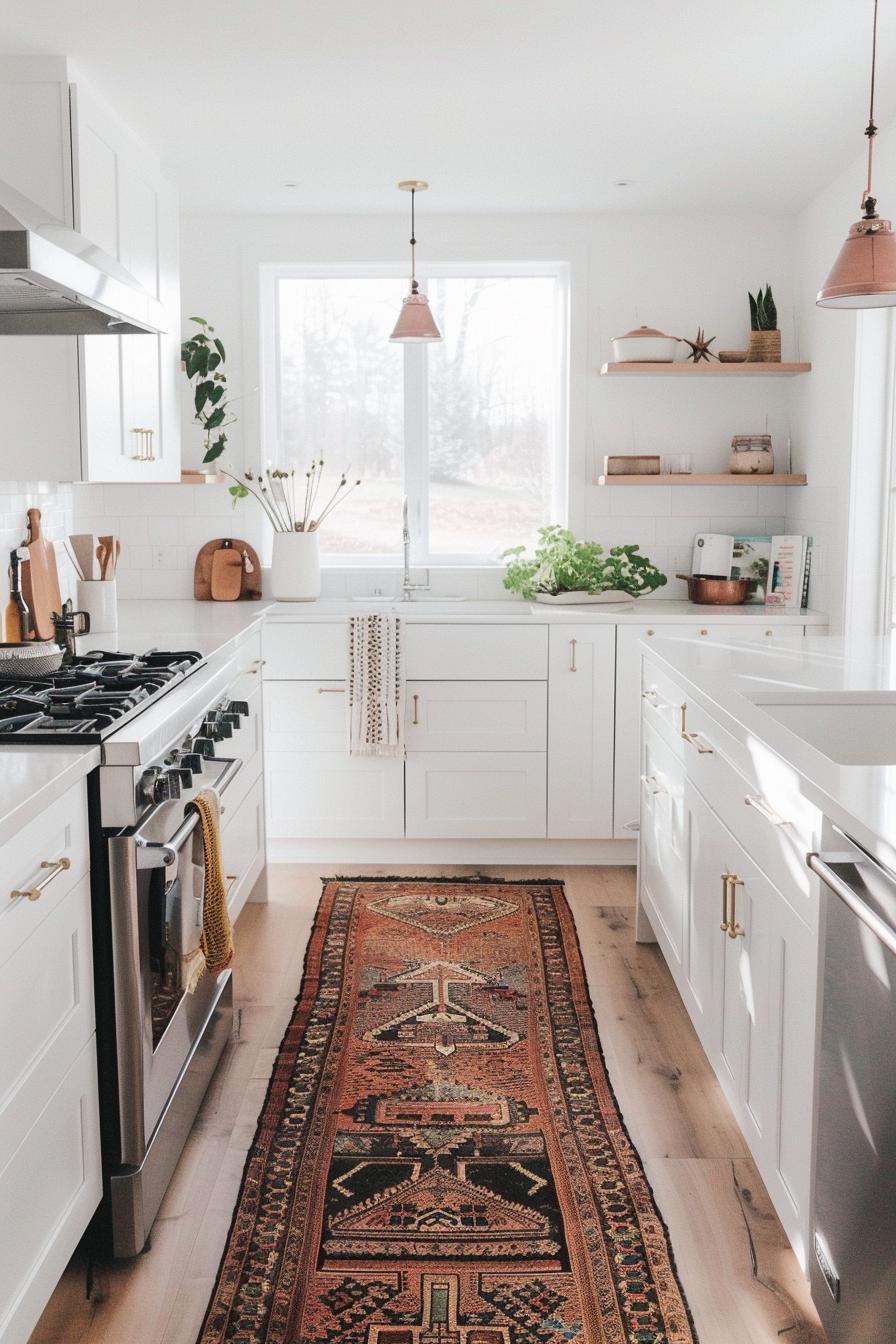
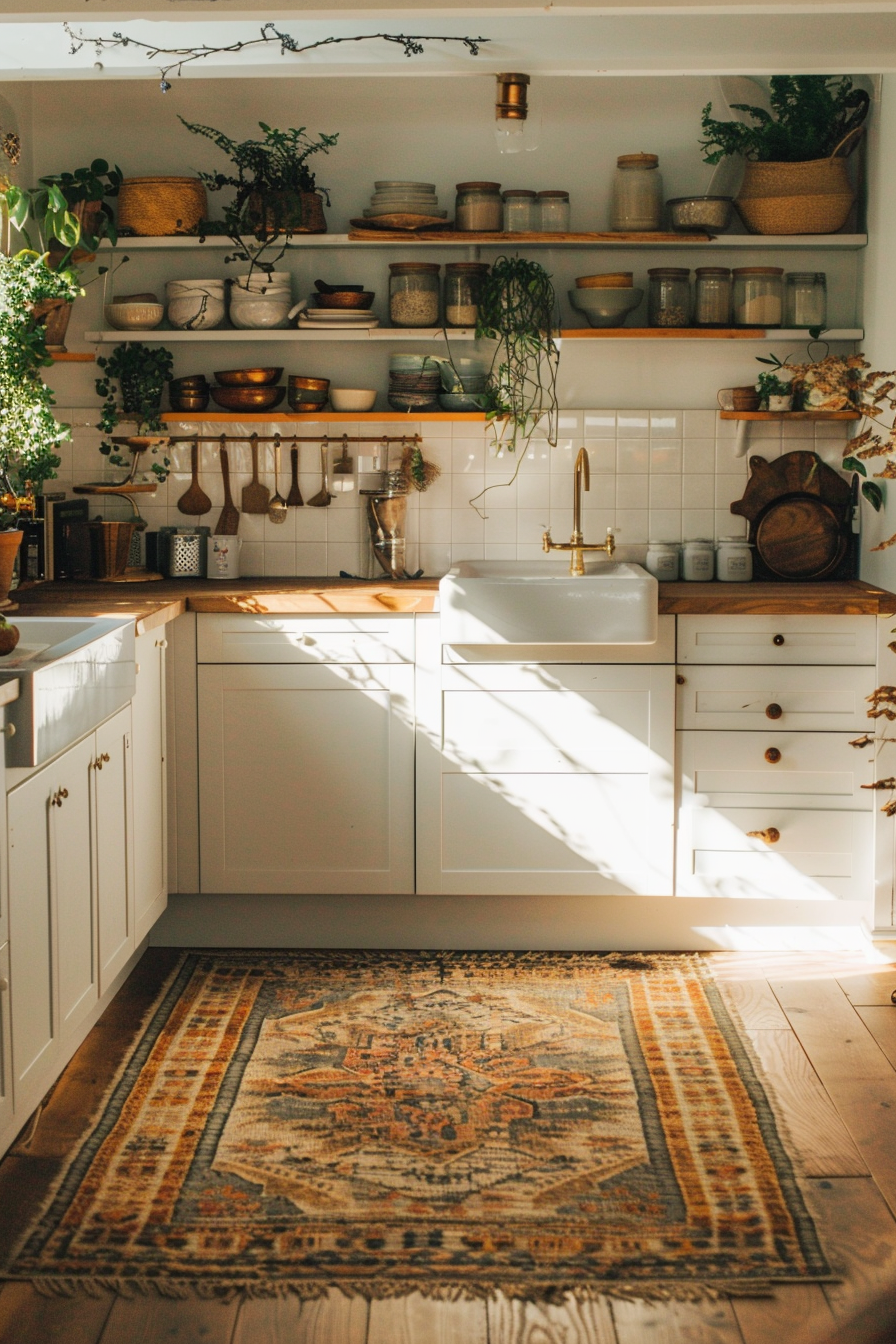
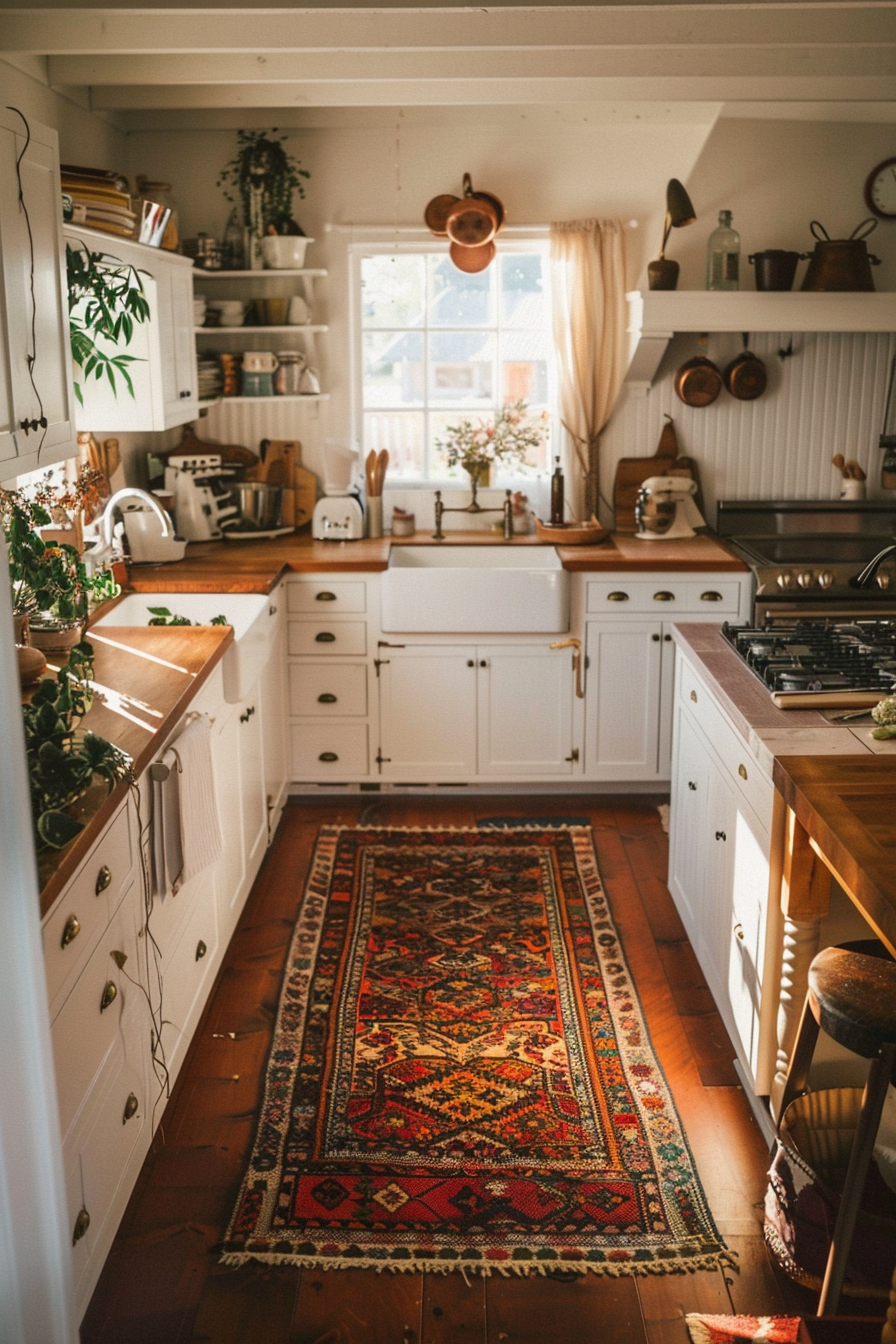
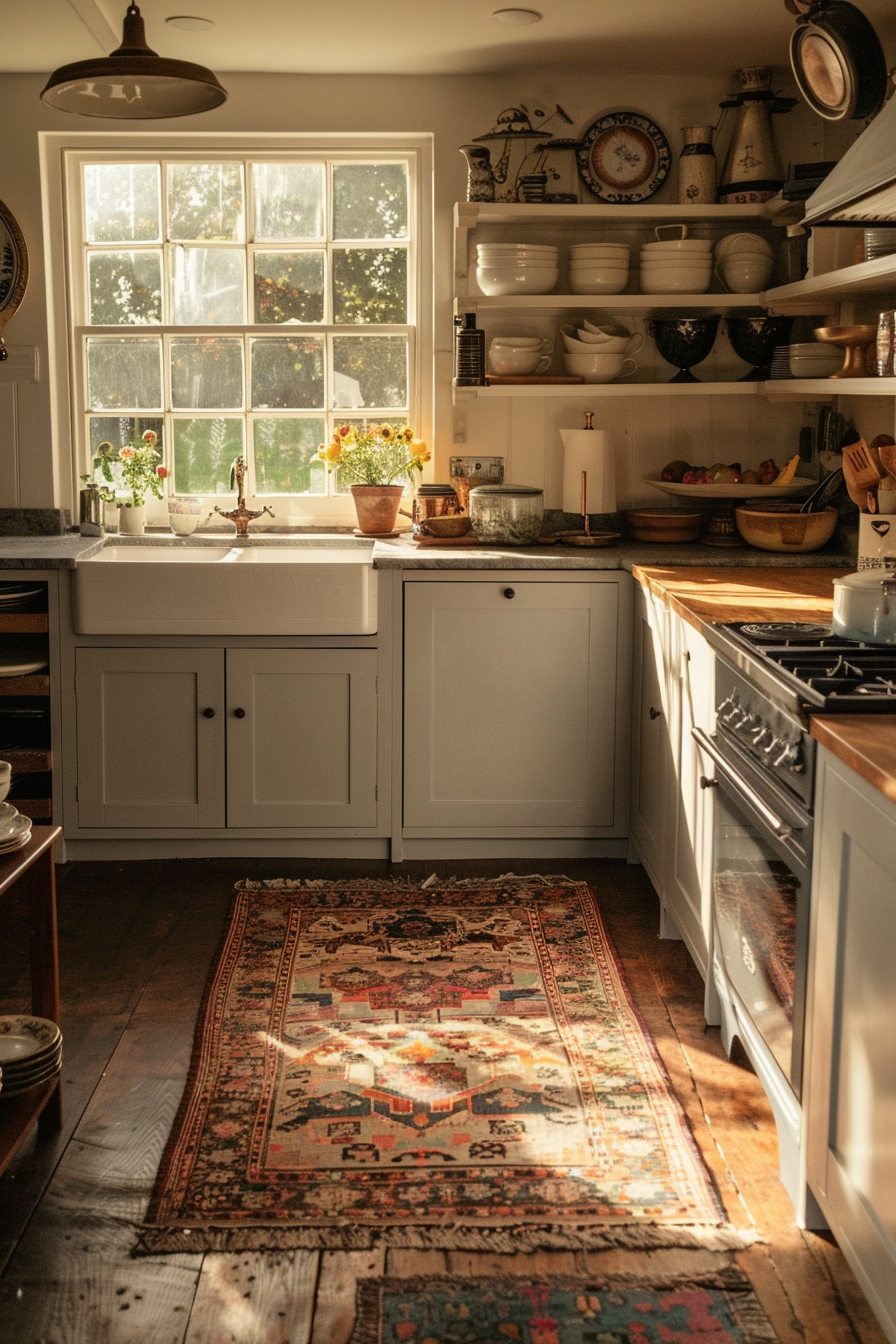
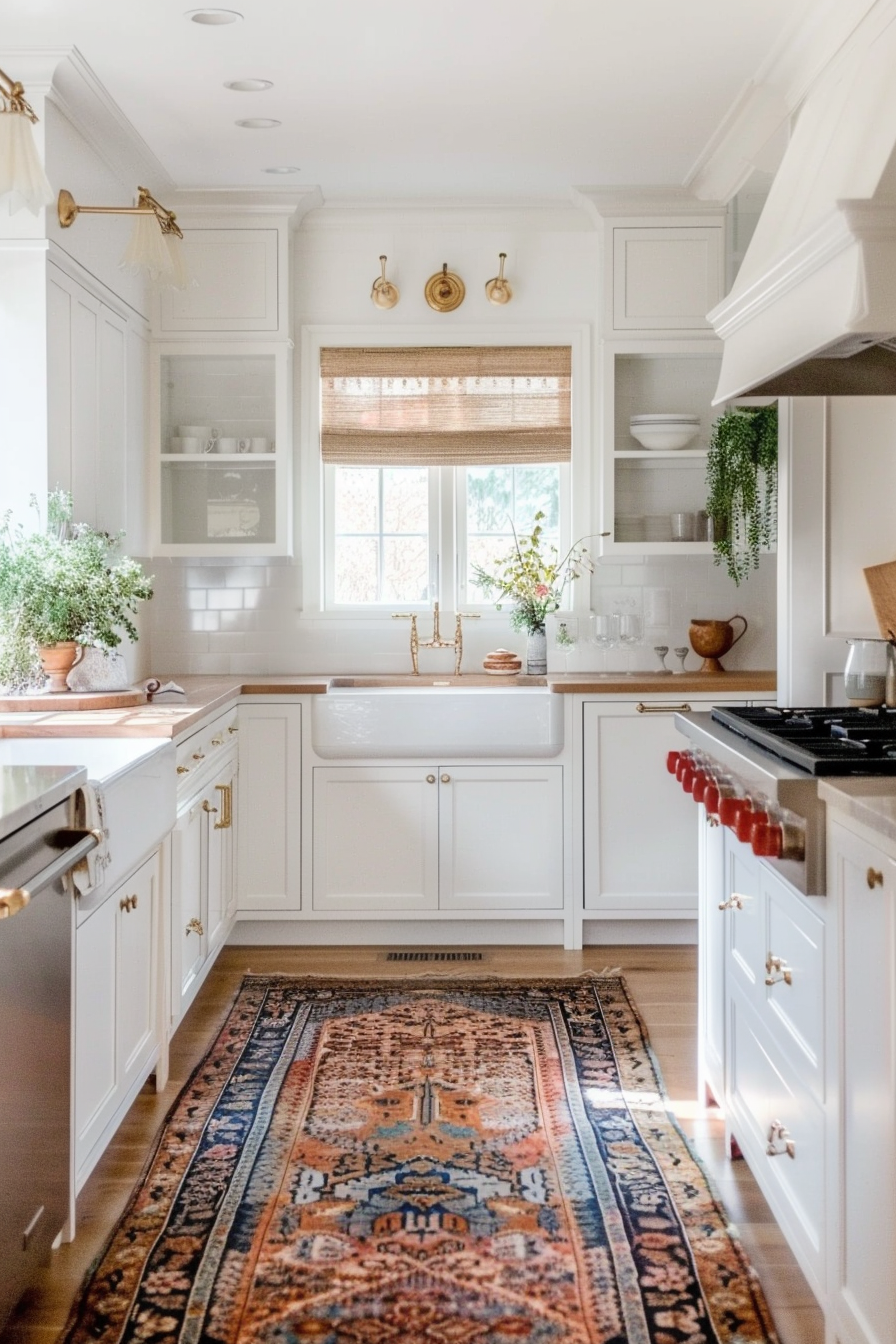
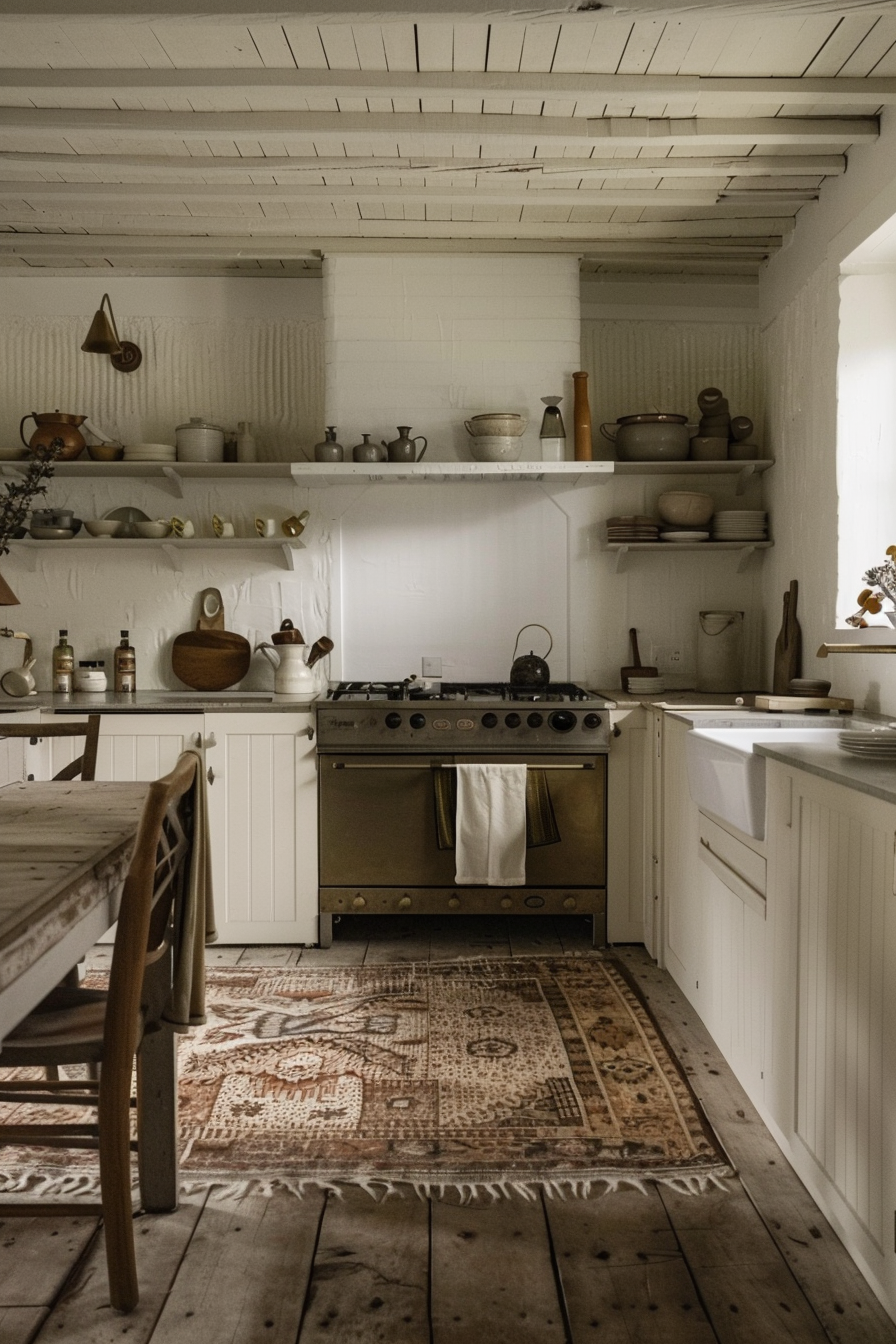
  • The Visual: A long, narrow rug featuring intricate Persian or Oriental-inspired patterns that have been intentionally faded or “distressed” to look aged.
  • The Vibe: Elegant and lived-in. The muted colors (often faded reds, blues, or creams) add sophistication without feeling too formal for a high-traffic cooking space.

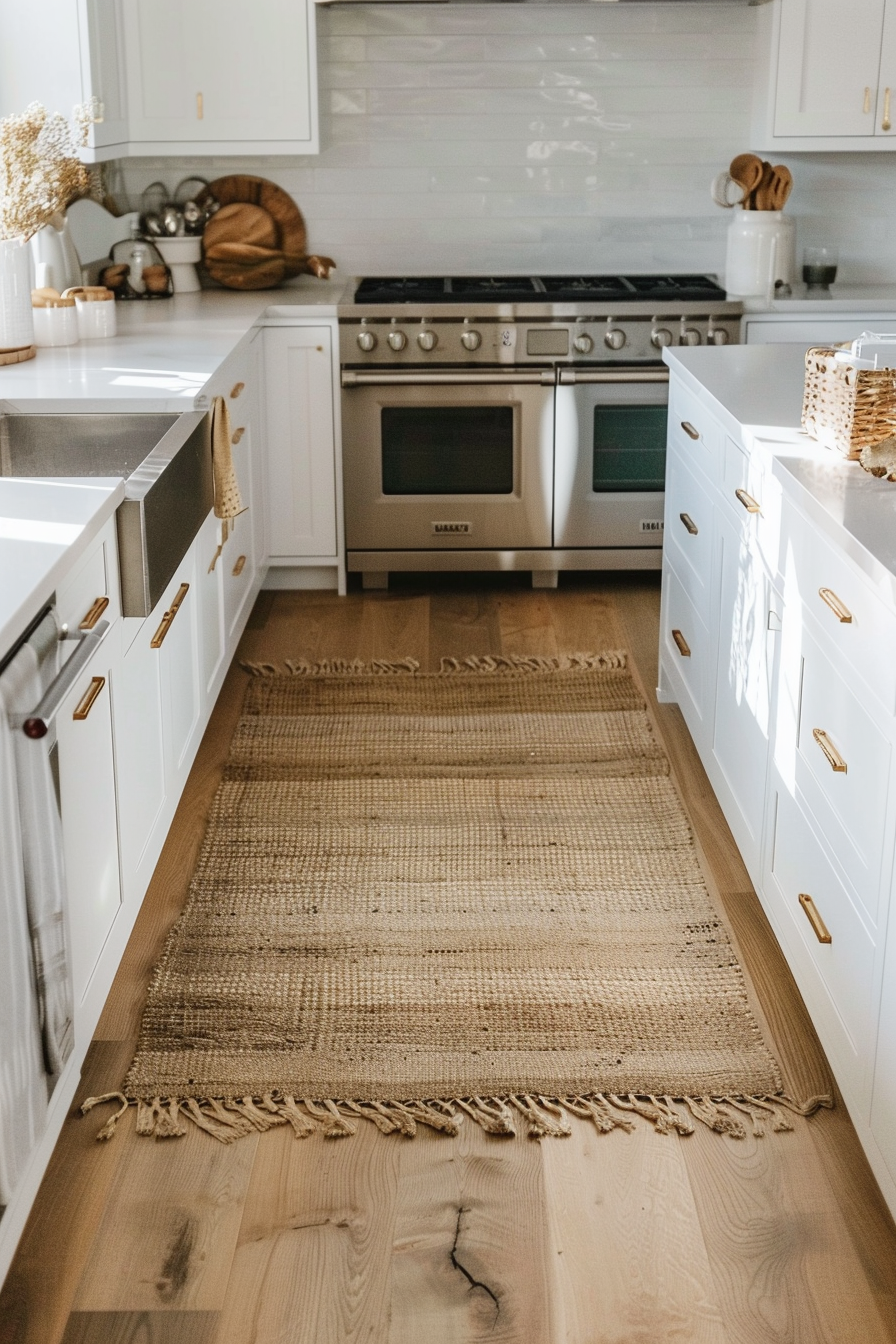
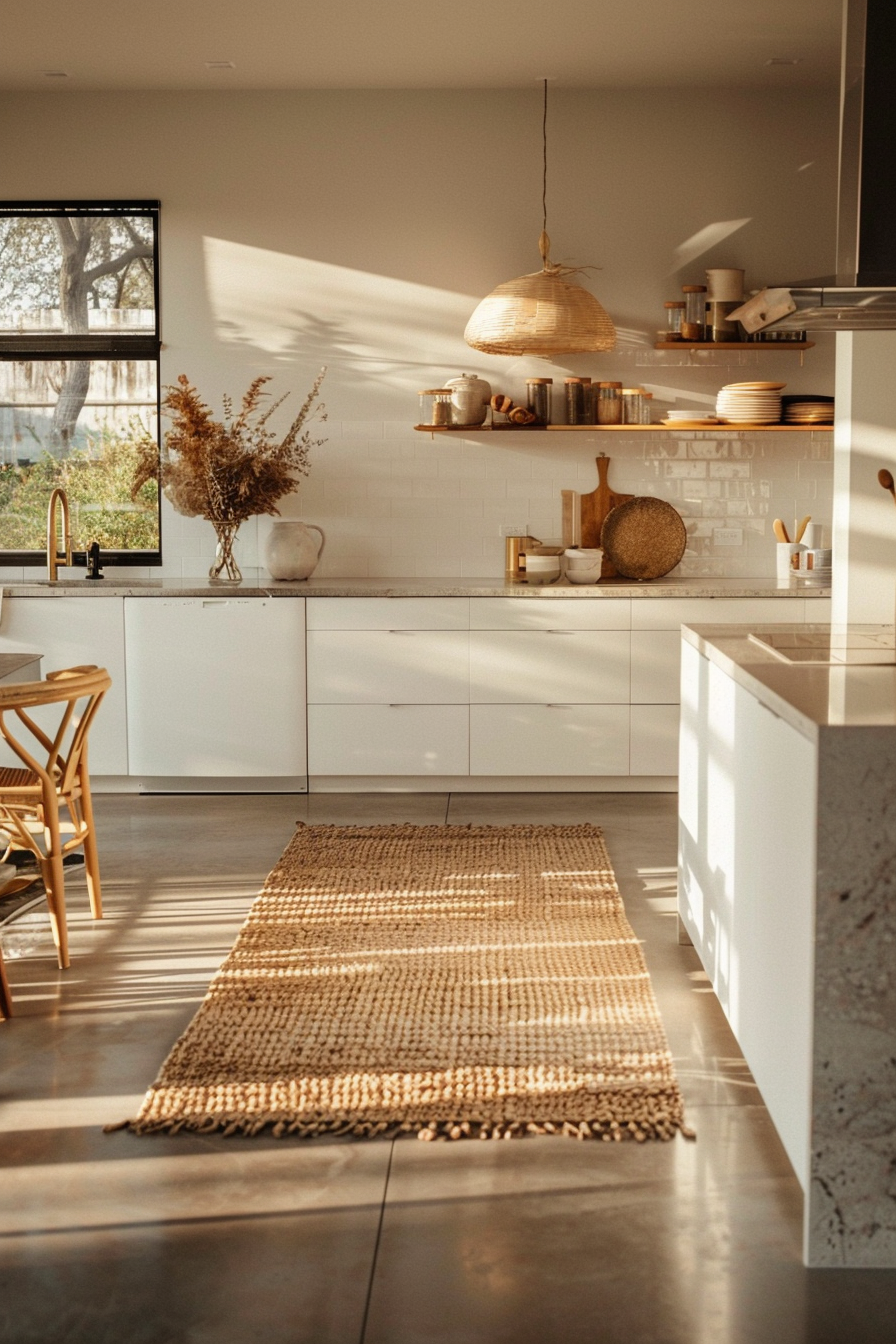
3. The Natural Jute & Sisal

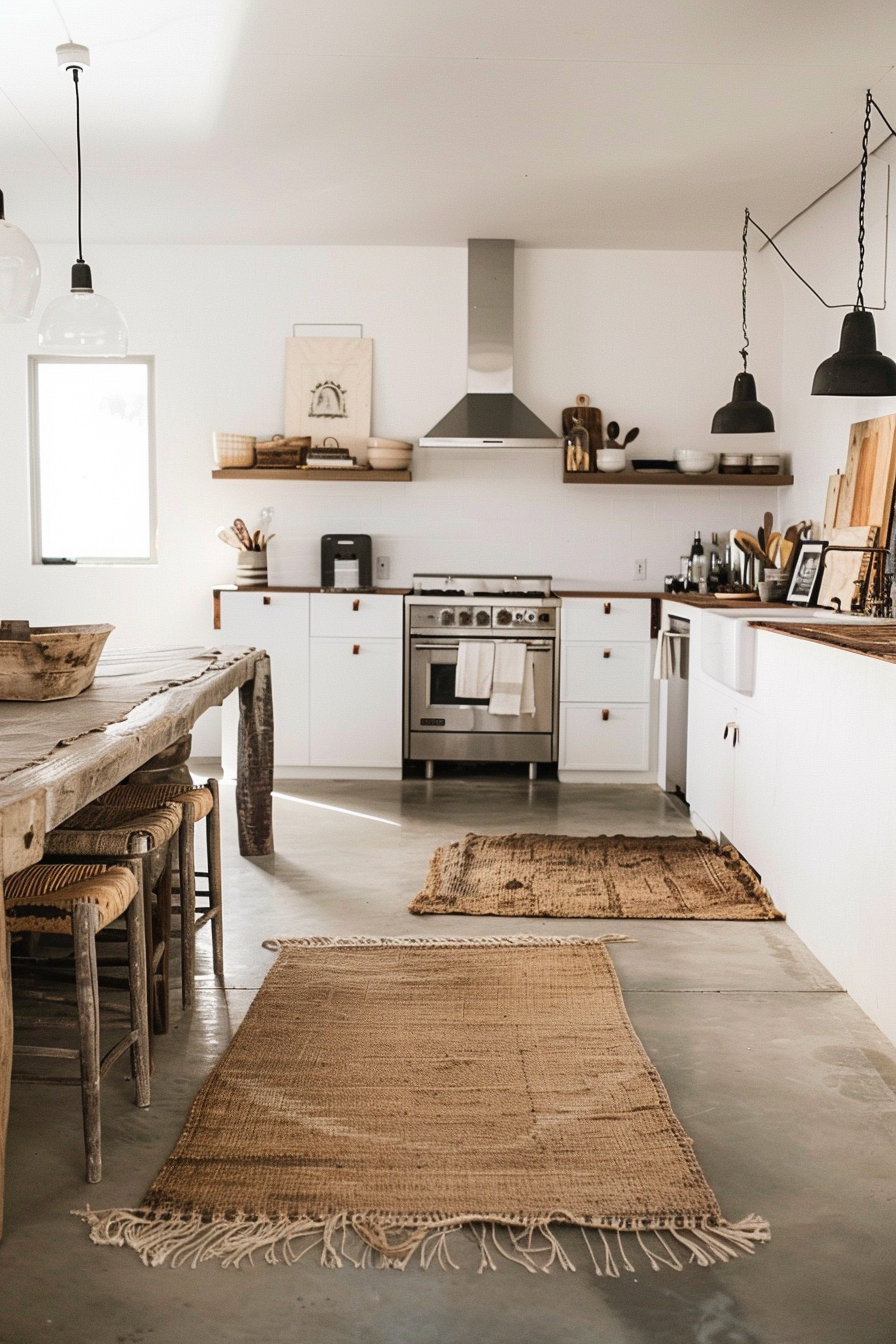
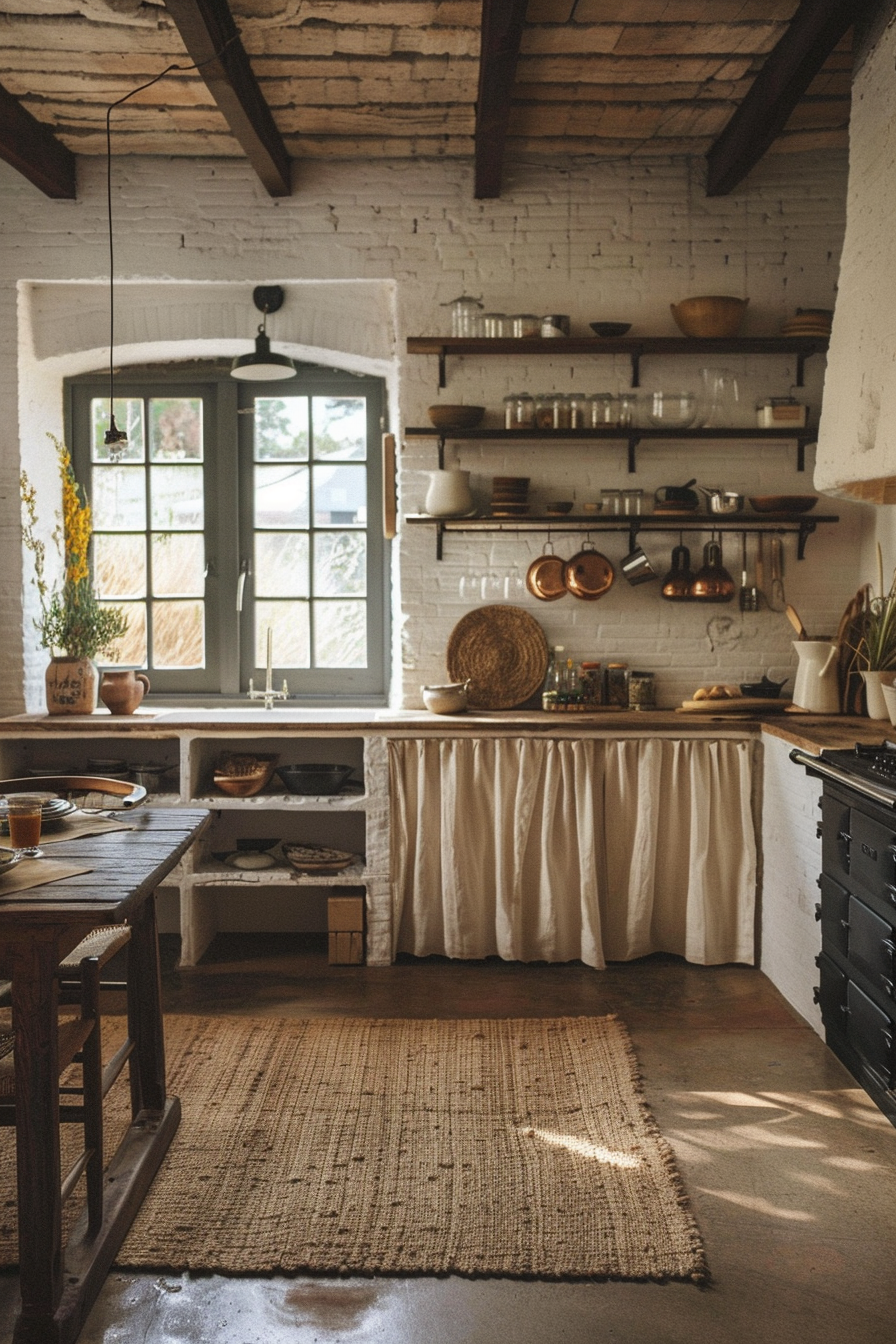
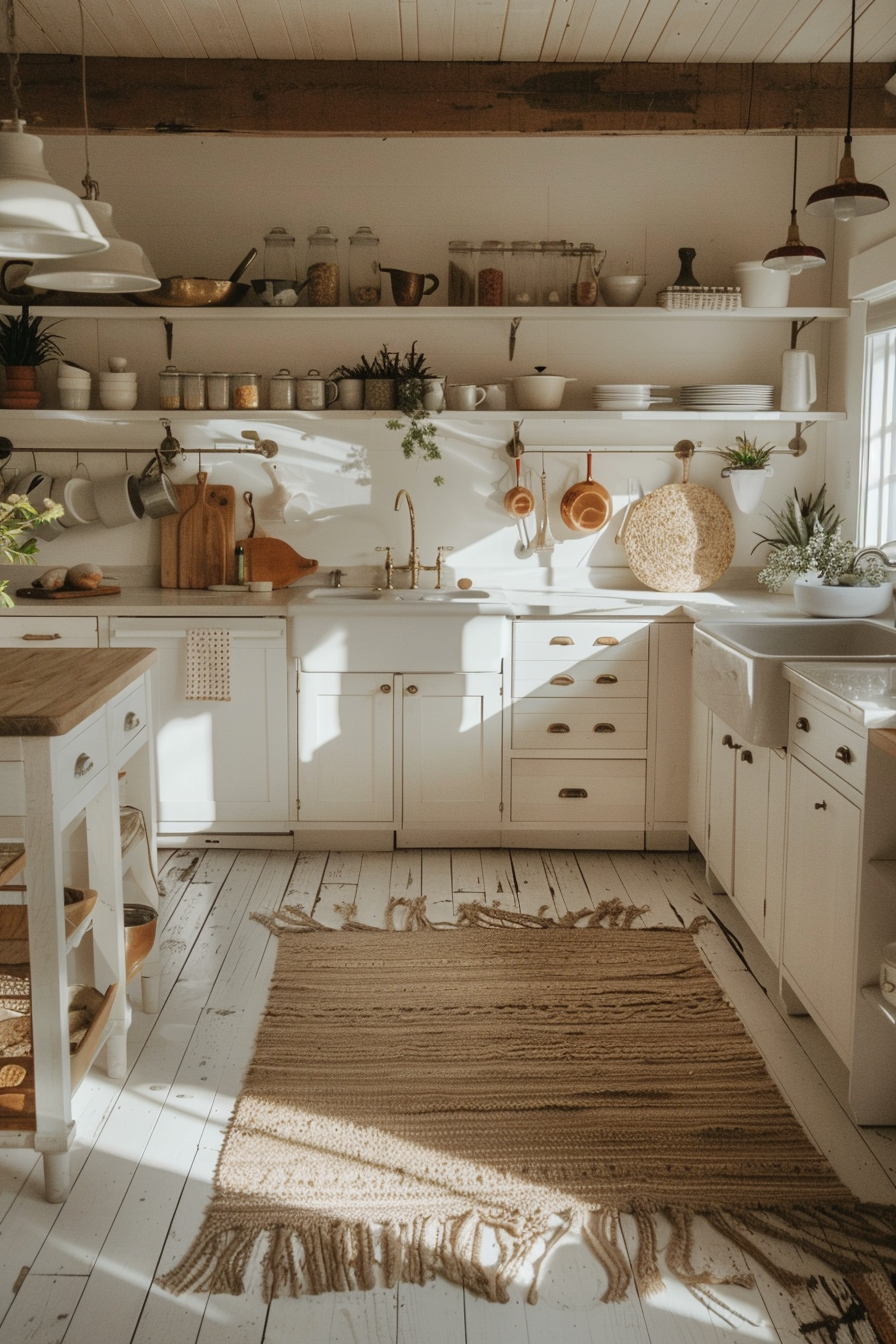
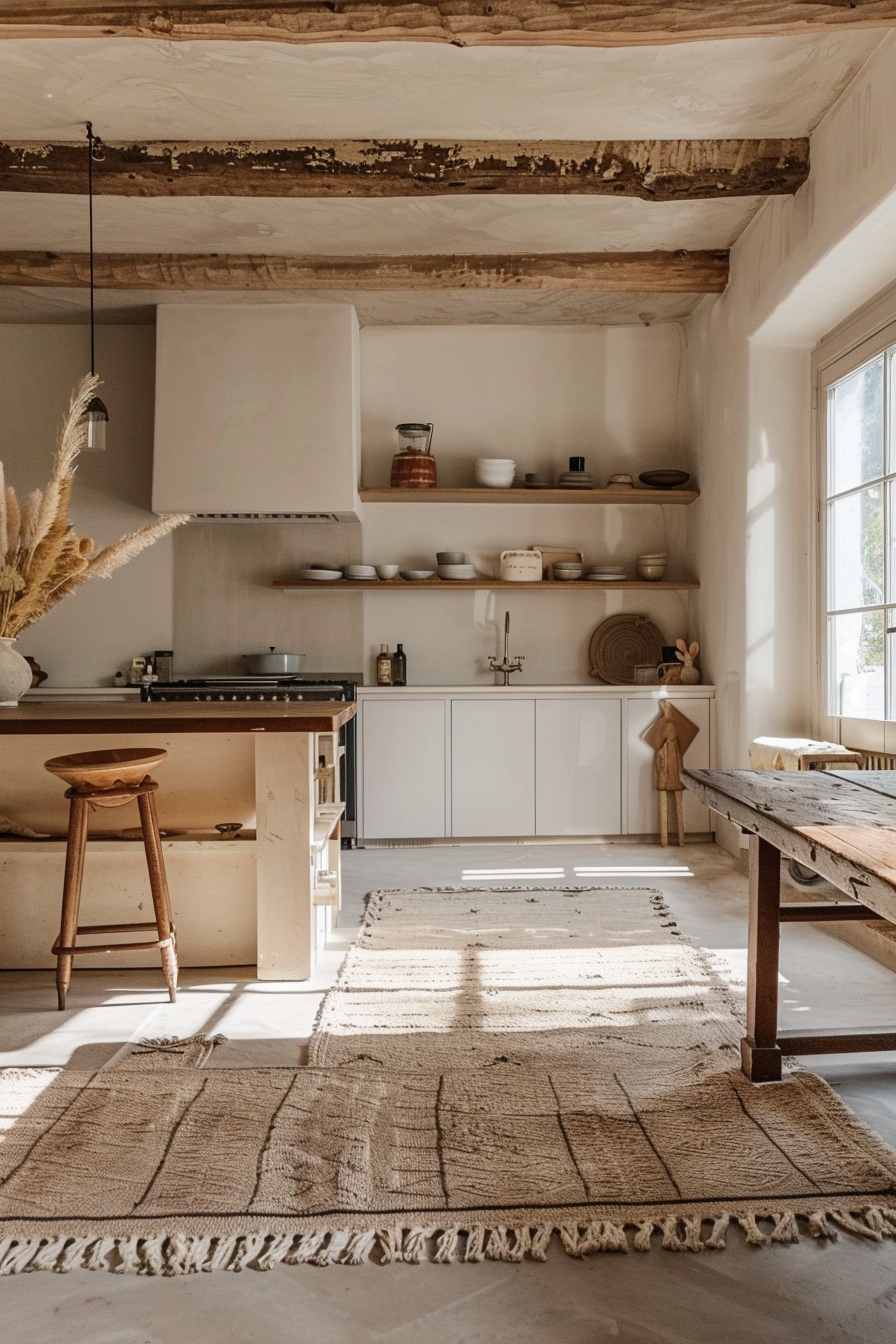
A celebration of raw, organic texture. These rugs are woven from dried plant fibers, offering a neutral, beige backdrop.

  • The Visual: Chunky, nubby texture in varying shades of golden tan or wheat. It serves as a neutral base that doesn’t compete with colorful cabinetry.
  • The Vibe: Earthy and durable. It grounds the space and bridges the gap between indoor comfort and outdoor durability.

4. The Buffalo Check & Plaid

The quintessential graphic print of modern farmhouse design.

  • The Visual: Bold, high-contrast grids—often in black and white, grey and white, or navy and cream. The pattern can be large-scale (Buffalo check) or smaller and more intricate (tartan).
  • The Vibe: Playful and structured. It adds a crisp, orderly geometric element that contrasts beautifully with rustic wood floors.

5. The Striped Cotton Weaver

A simple, casual option that emphasizes length and flow.

  • The Visual: Flat-woven cotton rugs featuring simple horizontal stripes, often in soft greys, blues, or ticking stripes.
  • The Vibe: Light and breezy. These rugs are typically thinner and washable, making them practical for the messiest room in the house while adding a touch of coastal or cottage charm.

6. The Geometric Modern Farmhouse

A contemporary update that blends rustic textures with modern shapes.

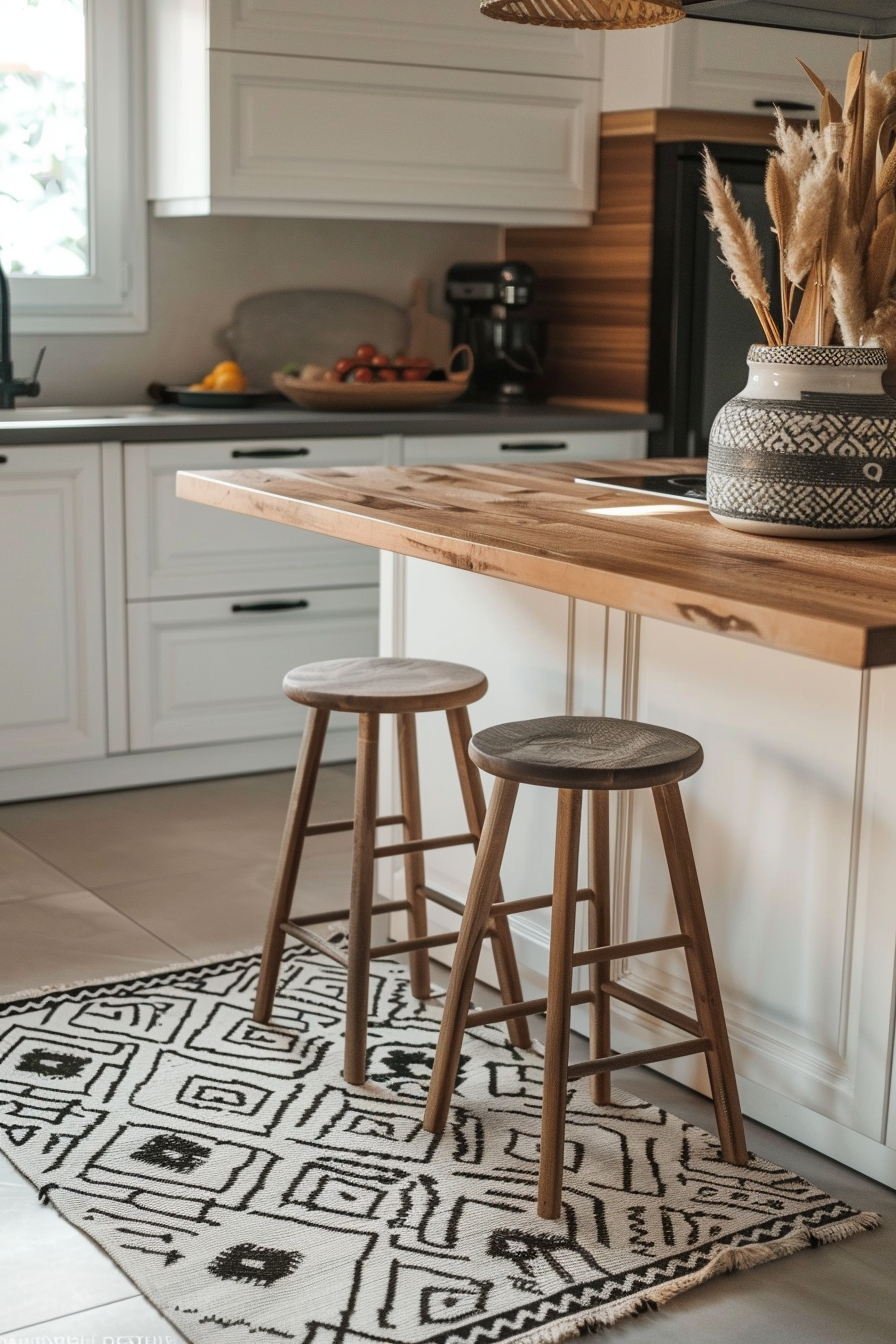
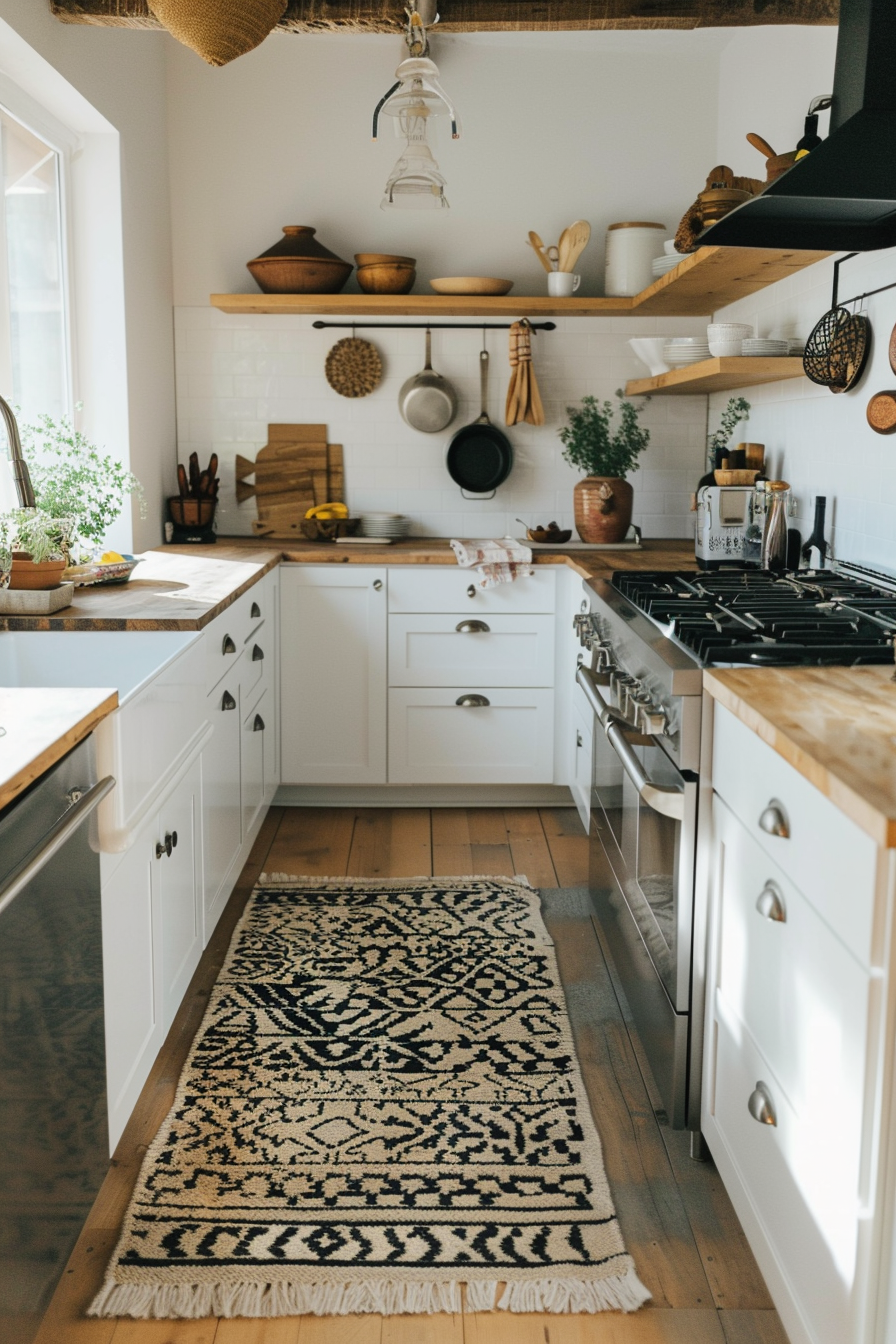
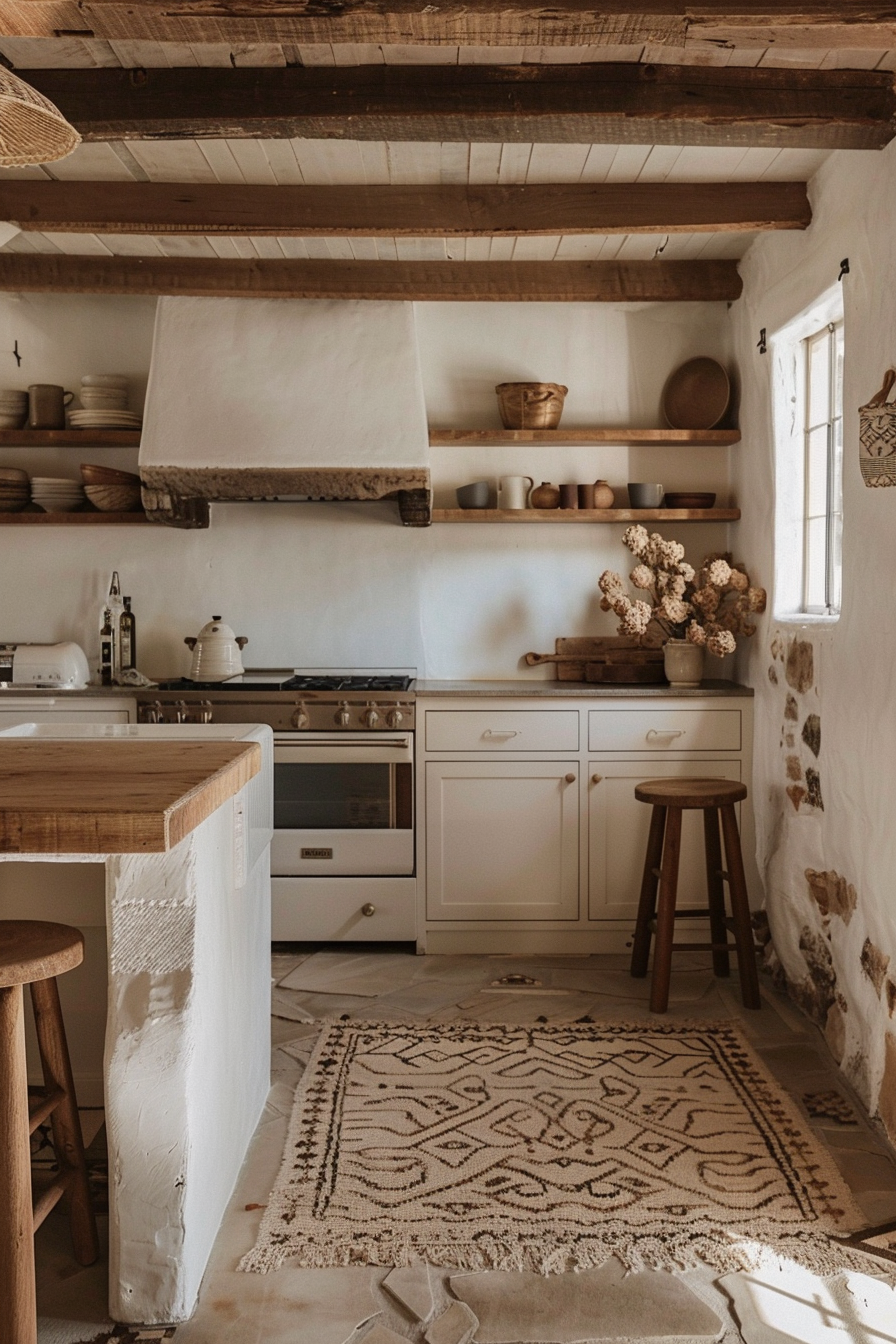
  • The Visual: Rugs featuring diamond patterns, trellis designs, or simple tribal motifs in neutral high-contrast colors (like cream and charcoal).
  • The Vibe: Fresh and updated. It fits perfectly in “Modern Farmhouse” kitchens that feature white shaker cabinets and black hardware, bridging the gap between old and new.
  • Choose classic braided rugs in earthy tones to create a cozy, rustic feel.
  • Opt for distressed vintage rugs to add a sense of history and aged beauty.
  • Incorporate jute or sisal rugs for a modern twist, eco-friendliness, and durability.
  • Use checkered or plaid rugs for a playful yet sophisticated farmhouse element.
  • Select neutral or earthy hues to complement kitchen decor and create a warm ambiance.

Choosing the Right Material

When selecting a farmhouse kitchen rug, opt for materials that are both durable and easy to clean. Kitchens are high-traffic areas, so you’ll want a rug that can withstand spills, crumbs, and constant foot traffic without losing its charm. Natural fibers like jute and sisal are excellent choices because they’re tough and offer a rustic look.

These materials aren’t only sturdy but also bring a natural texture that complements the farmhouse aesthetic. Synthetic materials like polypropylene can be another great option. They’re resistant to stains and moisture, making them perfect for a kitchen environment. Plus, they’re easy to clean with a simple wipe or vacuum, so you won’t have to worry about long-term maintenance.

Cotton rugs are also worth considering. They’re soft underfoot and can be machine-washed, giving you extra convenience. However, remember that while cotton is comfy, it mightn’t be as durable as jute or synthetic options.

Choosing the right material for your farmhouse kitchen rug ensures that it looks good and stands the test of time. Prioritize durability and ease of cleaning to keep your kitchen looking fresh and inviting.

Popular Farmhouse Rug Styles

Once you’ve picked the perfect material, it’s time to explore the most popular farmhouse rug styles that will add charm and character to your kitchen.

The first style to consider is the classic braided rug. These rugs often come in earthy tones and intricate patterns, making them perfect for a cozy, rustic kitchen. Their durability and timeless appeal make them a popular choice.

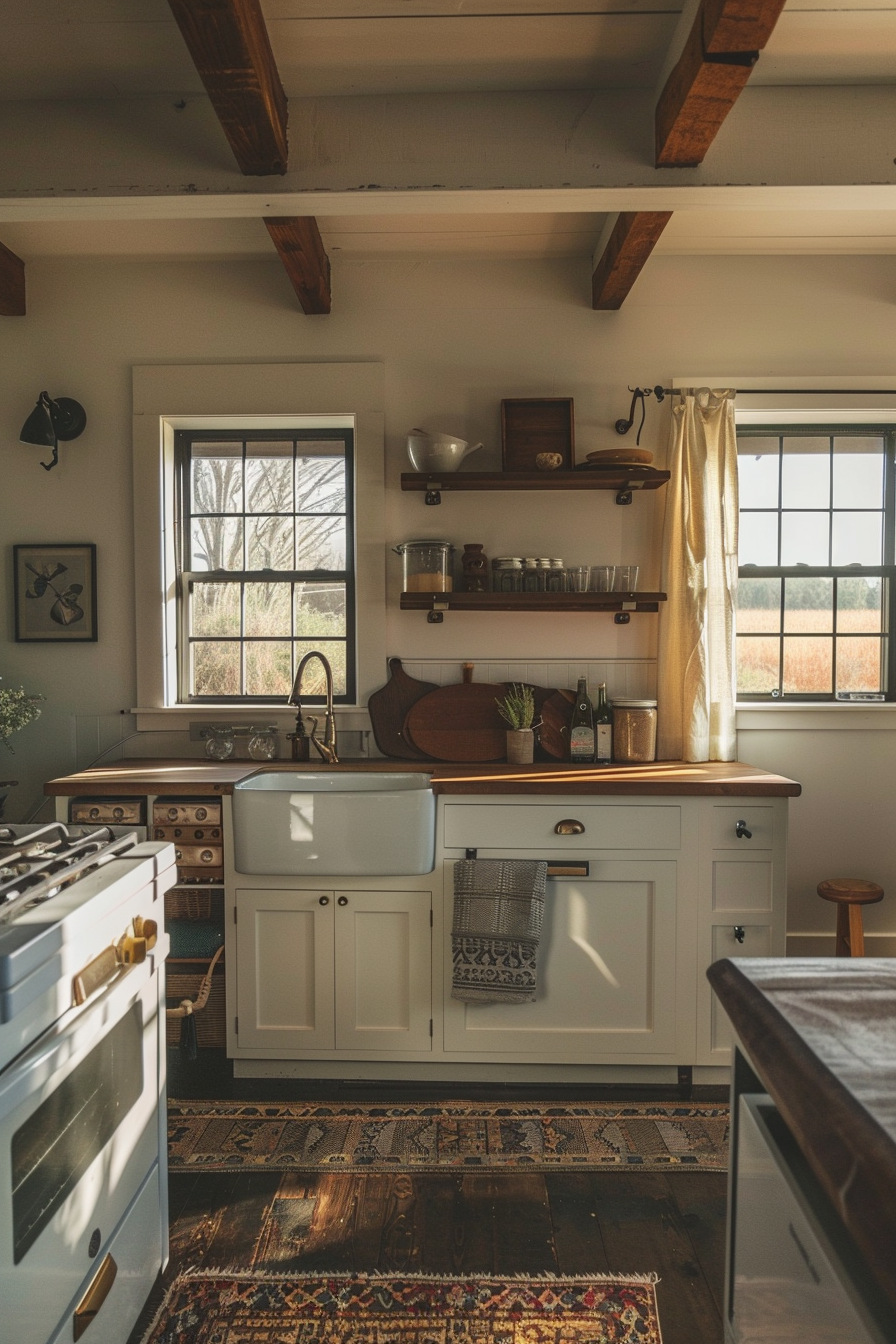
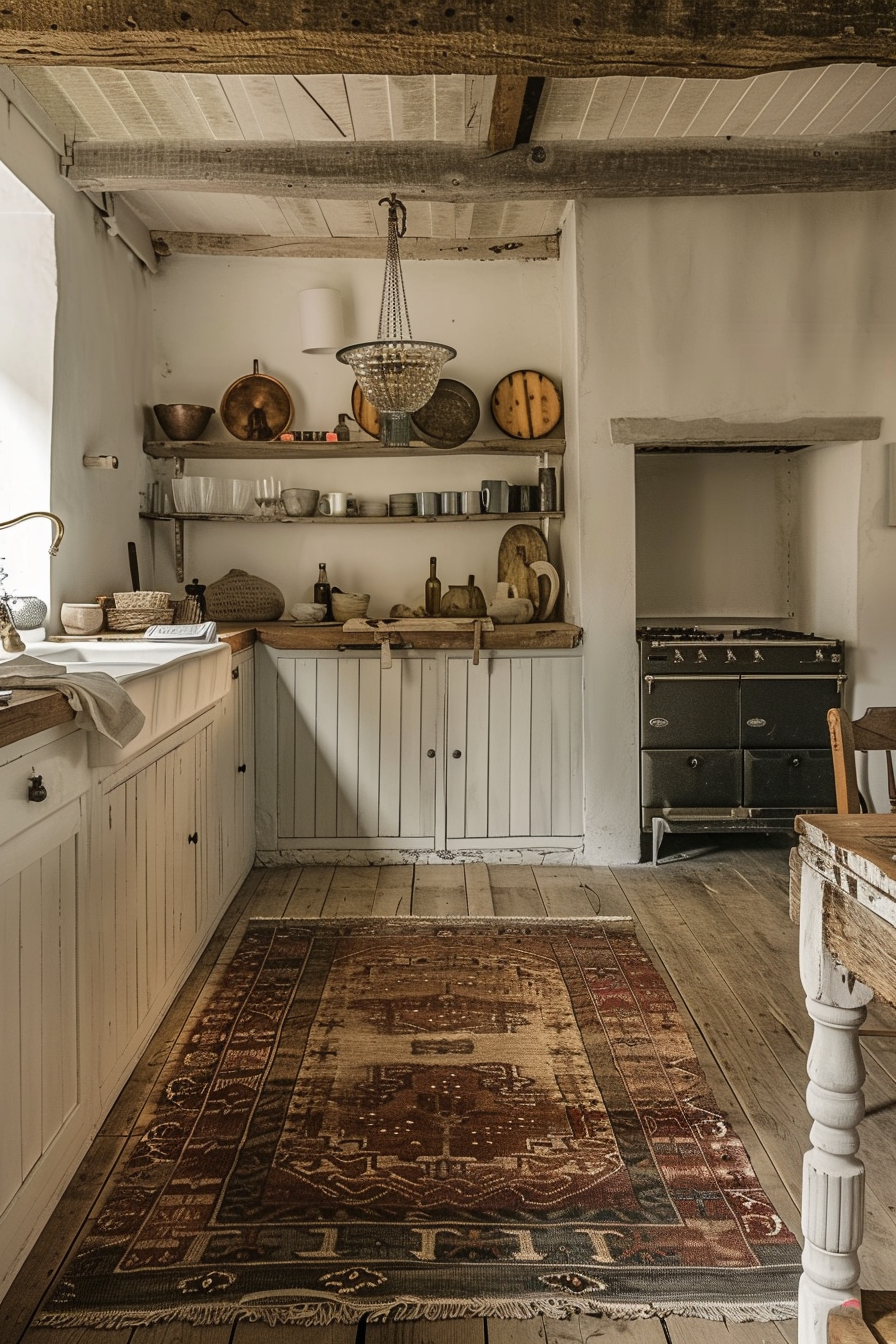
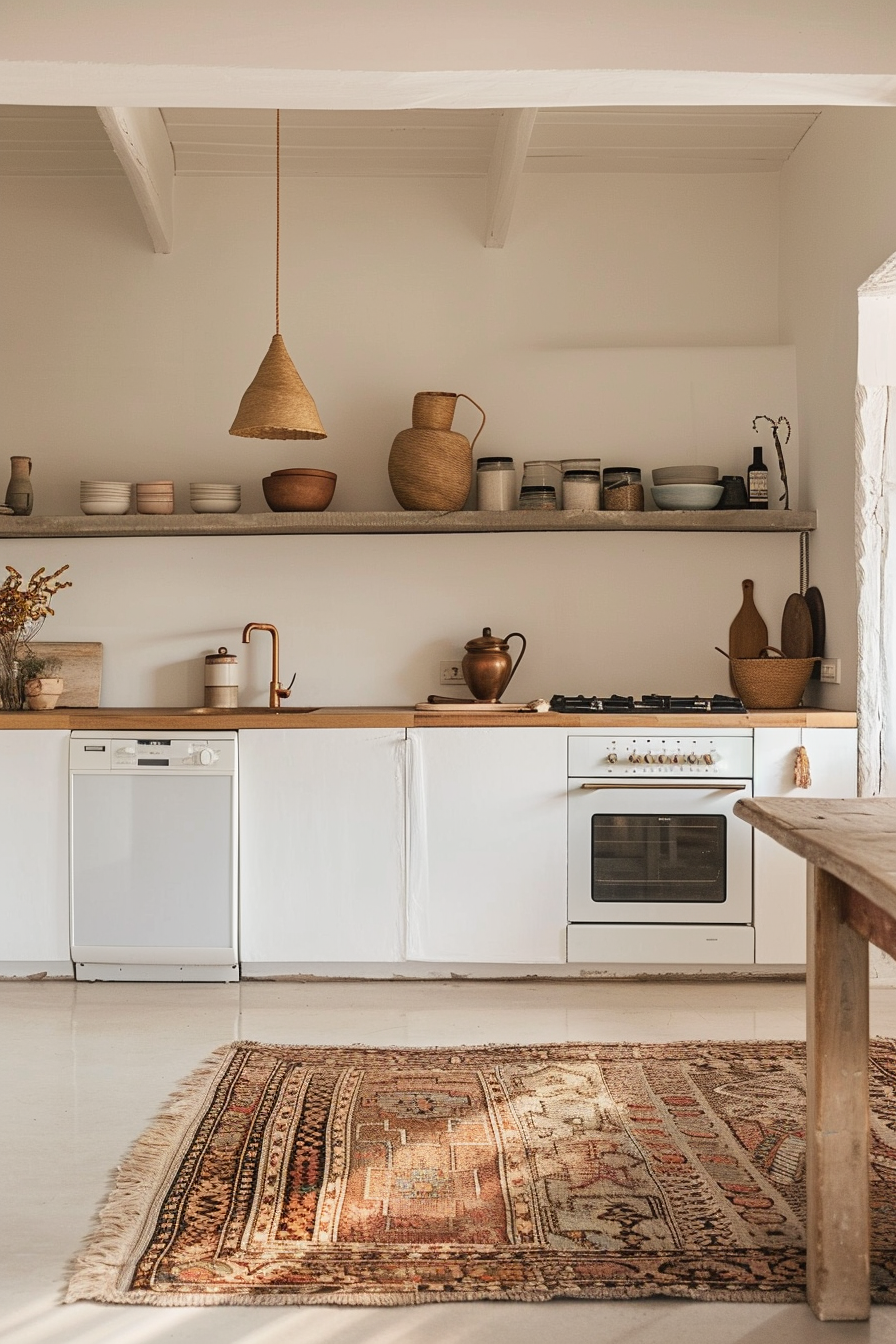
Another great option is the distressed vintage rug. These rugs bring a sense of history and aged beauty to your kitchen. The faded colors and worn-out look offer an authentic farmhouse feel, adding both warmth and style.

Consider a jute or sisal rug for a more modern twist on farmhouse décor. These natural fiber rugs offer a neutral palette that can blend seamlessly with various color schemes. They’re eco-friendly and durable and add an organic touch to your kitchen space.

Lastly, don’t overlook the charm of a checkered or plaid rug. These patterns are quintessentially farmhouse and can add a playful yet sophisticated element to your kitchen. Whether you go for bold black-and-white checks or subtle, muted hues, these rugs can make a striking statement.

Ideal Rug Sizes for Kitchens

Choosing the right rug size for your kitchen enhances both functionality and style. It’s essential to measure your space and consider the layout of your furniture.

For a galley kitchen, a runner rug works wonders. Place it along the floor length to create a comfortable walkway and add a touch of warmth. Typical runner sizes range from 2.5 by 8 feet to 3 by 12 feet.
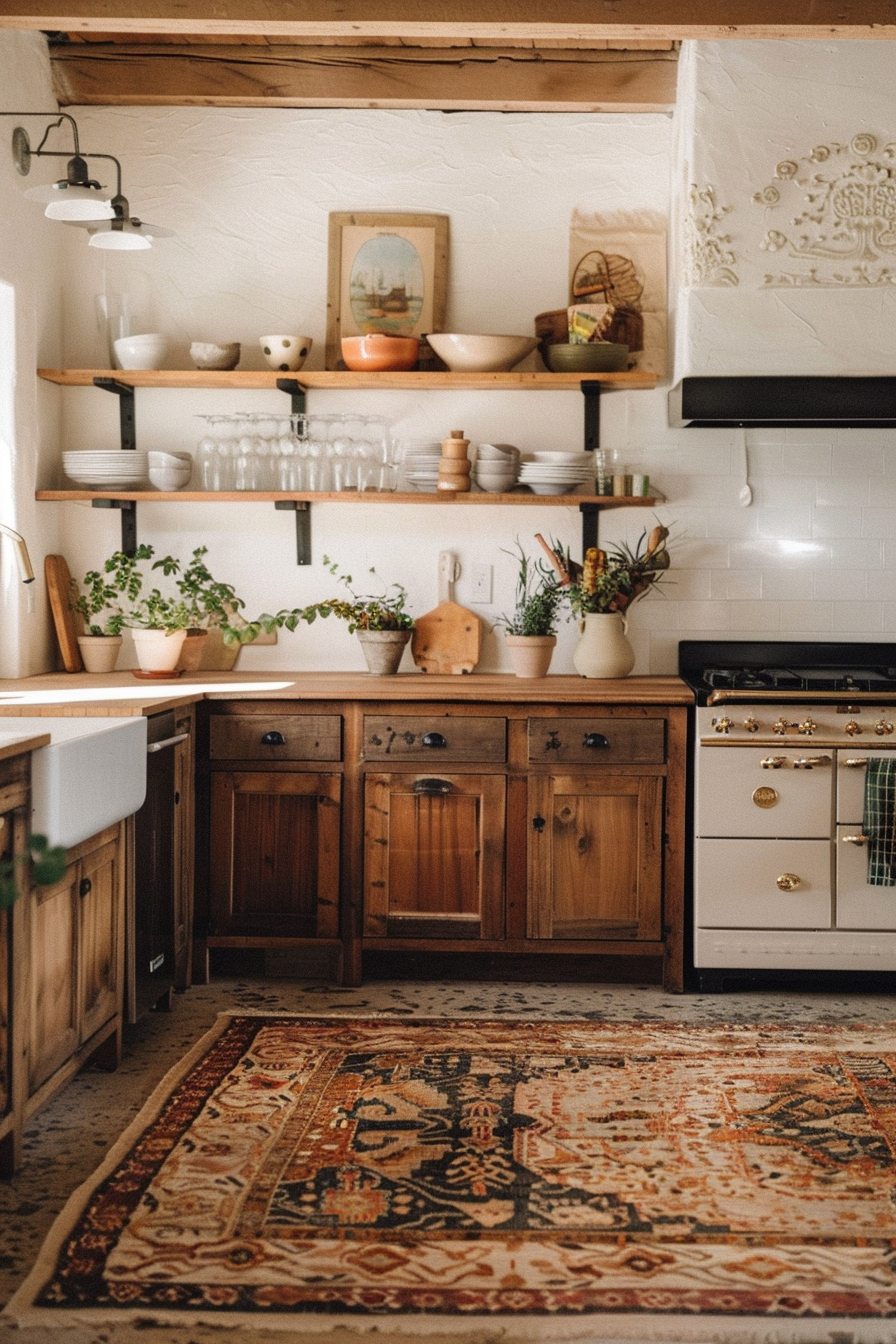
Consider a 5 by 7 or 6-by-9-foot rug in a larger, open kitchen to anchor the space. Place it under a kitchen island or in front of the sink to provide a cozy spot for standing. If you have a small kitchen, a 3-by-5-foot rug might be all you need to define areas or add a splash of style.

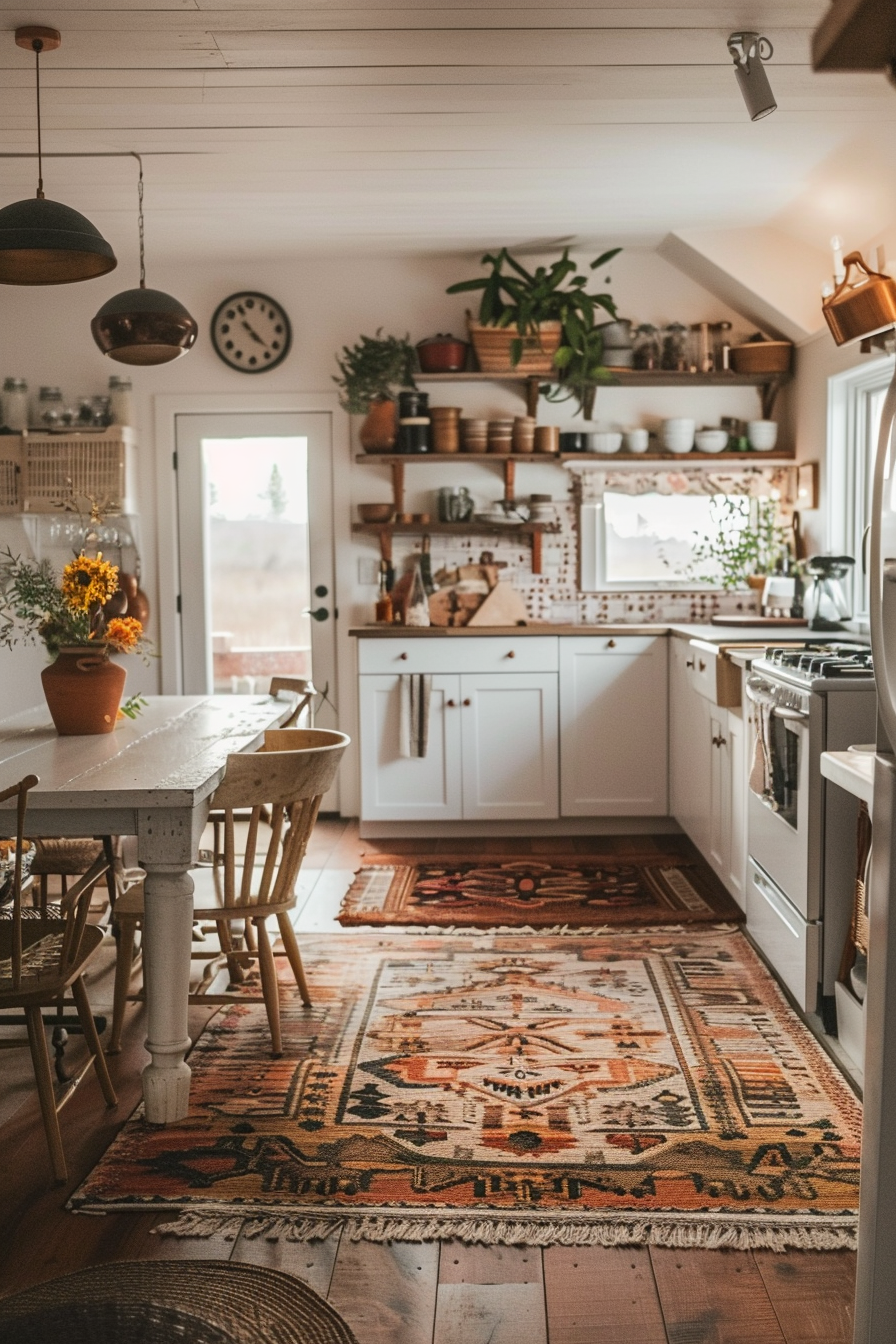
For kitchens with a dining area, an 8-by-10 or 9-by-12-foot rug can fit comfortably under the table and chairs. Ensure the rug extends at least 24 inches beyond the table’s edge to accommodate pulled-out chairs.

Color Schemes to Consider

After selecting the perfect rug size, you’ll want to focus on color schemes that complement your kitchen’s decor. Choosing the right colors can make a huge impact, transforming your space into a warm, inviting area.

Here are some color schemes to consider:

  1. Neutral Tones: Shades like beige, cream, and gray are timeless and versatile. They blend seamlessly with various decor styles, making your kitchen feel spacious and calm.
  2. Earthy Hues: Consider incorporating colors like sage green, terracotta, and deep browns. These colors bring the outdoors in, creating a natural, cozy ambiance that’s perfect for a farmhouse kitchen.
  3. Bold Accents: Don’t avoid vibrant colors like mustard yellow, barn red, or navy blue. These hues can add a touch of character and make your rug a focal point in the kitchen.
  4. Classic Black and White: This timeless combination can never go wrong. It adds a sophisticated touch while still keeping the overall look clean and crisp.

Maintenance and Care Tips

Proper maintenance and care will ensure your farmhouse kitchen rug stays beautiful and functional for years to come. Start by vacuuming your rug regularly to remove crumbs, dirt, and dust. Don’t forget to shake out smaller rugs outside to eliminate embedded particles.

If you spill something, act quickly. Blot the spill with a clean cloth instead of rubbing, which can push the stain deeper into the fibers. For deeper cleaning, check the care label on your rug. Some rugs are machine washable, while others require professional cleaning.

Use mild detergent and cold water for hand-washing, and avoid harsh chemicals that could damage the fabric. Rotate your rug every few months to ensure even wear and prevent fading from sunlight. Use a rug pad underneath to keep it in place and provide extra cushioning. This also helps prevent wear and tear on the rug edges.

If your rug has tassels or fringes, vacuum gently to avoid tangling or pulling.

Budget-Friendly Options

You don’t need to break the bank to find a stylish, durable farmhouse kitchen rug. Plenty of budget-friendly options can add warmth and charm to your kitchen without emptying your wallet.
Here are some tips for finding affordable rugs that don’t compromise on quality or style:

  1. Shop Sales and Discounts: Keep an eye on seasonal sales and clearance events, both online and in-store. Retailers often offer significant discounts, especially during holiday seasons or end-of-season sales.
  2. Consider Synthetic Materials: Rugs made from synthetic fibers like polypropylene are often more affordable than natural materials. They’re also durable and easy to clean, making them perfect for busy kitchens.
  3. Check Out Thrift Stores and Online Marketplaces: Sometimes, you can score fantastic deals on gently used rugs. Sites like Facebook Marketplace, Craigslist, or local thrift stores can have hidden gems at a fraction of the cost.
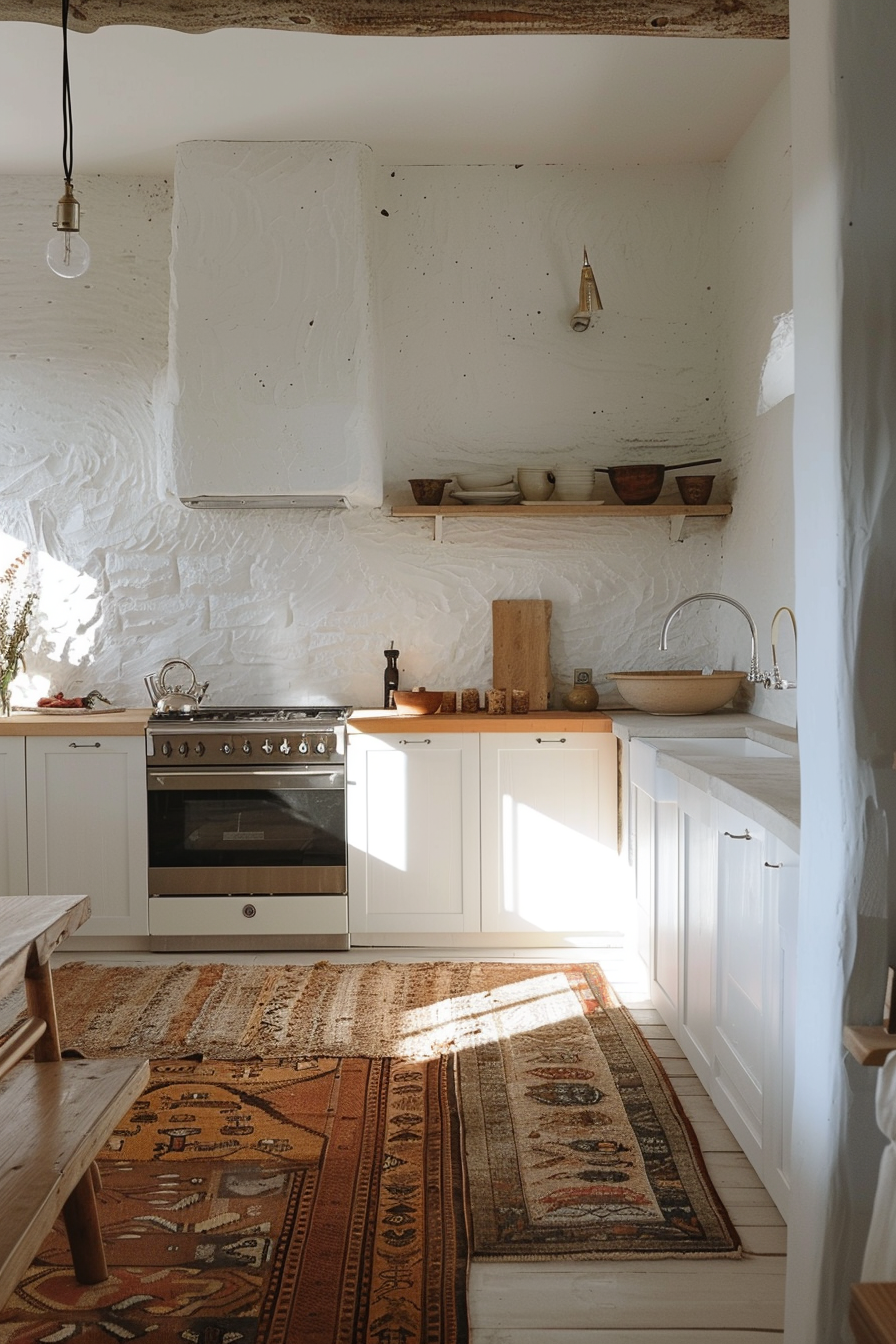
  4. DIY Options: If you’re crafty, consider making your own rug. You can use inexpensive materials like jute, old fabric scraps, or even braided rope to create a unique, custom piece for your kitchen.
Pairing Rugs With Decor

Choosing the right rug can seamlessly tie together your farmhouse kitchen decor while adding a touch of coziness and charm. Start by considering the color palette in your kitchen. A rug with bold patterns or vibrant hues can create a striking contrast if you have neutral tones. Conversely, if your kitchen boasts colorful cabinets or accents, a more subdued rug will balance the space without overwhelming it.

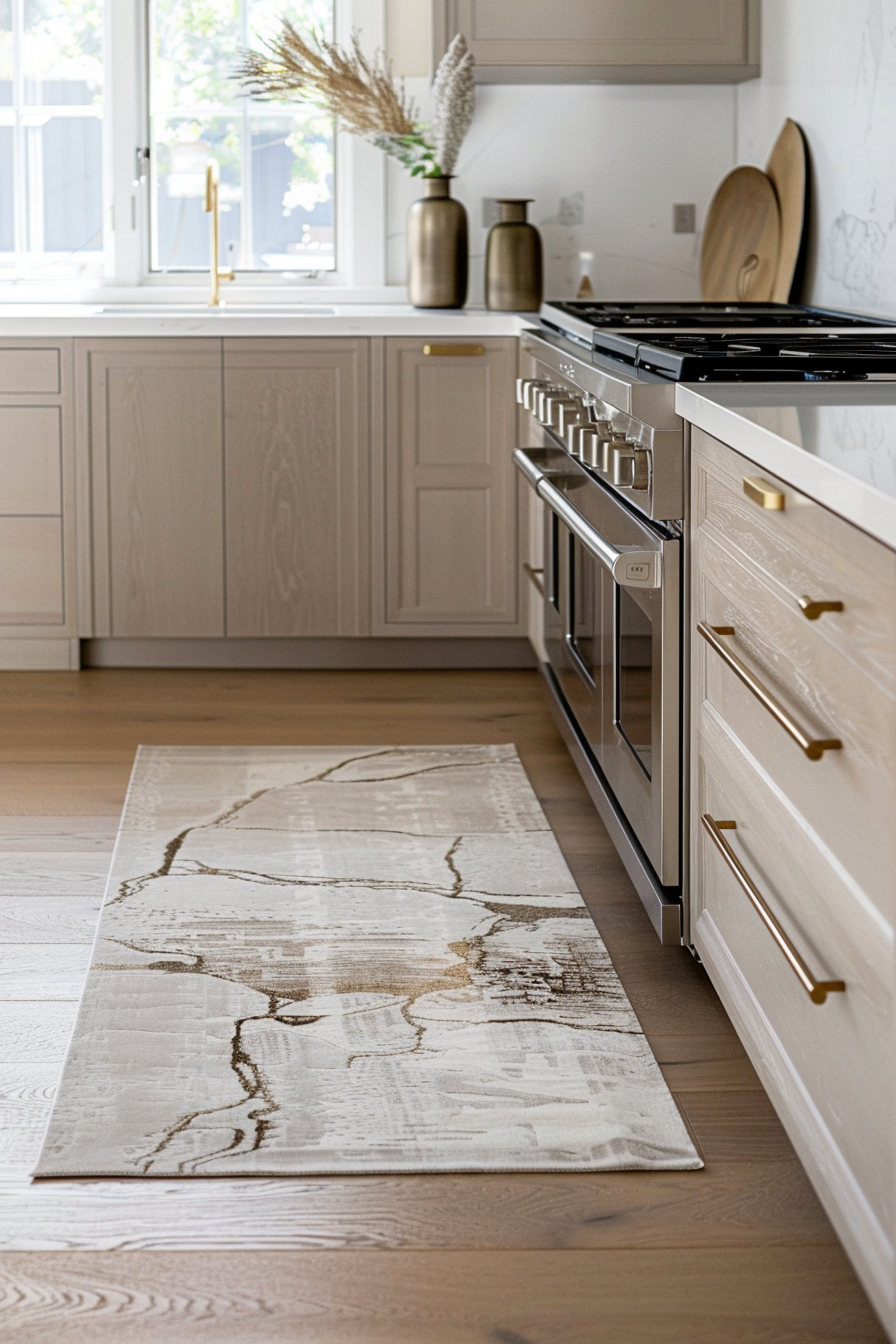
Think about the existing textures in your kitchen. If you have rustic wooden elements, a braided or woven rug can complement this aesthetic beautifully. A soft, plush rug can introduce warmth and comfort for spaces with sleek surfaces like marble countertops or stainless steel appliances.

Don’t forget about the size and shape of your rug. A runner works well for narrow spaces, like between an island and a counter, while a larger area rug can anchor a dining table or seating area.

Lastly, accessories play a crucial role. Match or coordinate your rug with other textiles, such as dish towels, curtains, or cushions, to create a cohesive look.

You’ll find that a thoughtfully chosen rug can transform your farmhouse kitchen into an inviting, stylish haven.

Seasonal Rug Swaps

Swapping out your farmhouse kitchen rugs with the changing seasons can instantly refresh the space and keep it feeling current. Imagine stepping into your kitchen and feeling the cozy warmth of a winter-themed rug or the bright cheerfulness of a summer design. Seasonal rug swaps allow you to create a dynamic environment that reflects the time of year, adding both visual interest and functional benefits.

Here are four tips to help you make the most of seasonal rug swaps:

  1. Winter Warmth:
    Opt for plush, thick rugs in darker hues like deep reds or forest greens to create a cozy atmosphere and add warmth during the colder months.
  2. Spring Freshness:
    Lighten up the space with rugs in pastel shades and floral patterns. These colors can breathe new life into your kitchen as you transition out of winter.
  3. Summer Brightness:
    Choose rugs with vibrant colors and lighter materials. Think bold blues, sunny yellows, and playful patterns that capture the essence of summer.
  4. Autumn Comfort:
    Embrace earthy tones like burnt orange, mustard yellow, and rich browns. These colors can make your kitchen feel inviting and snug during the fall.

Where to Buy

Finding the perfect farmhouse kitchen rugs for each season is much easier when you know where to shop. Start with online marketplaces like Amazon and Wayfair. They offer a wide selection of styles and prices, making finding something that fits your taste and budget easy. Look for customer reviews to ensure you’re getting a quality product.

Don’t overlook specialty stores like Pottery Barn and Magnolia Market. These stores focus on farmhouse and rustic designs, so you will likely find rugs that perfectly match your kitchen’s aesthetic. Plus, they often have seasonal collections, making it easy to swap out rugs as the weather changes.

Local home goods stores are also a great option. Stores like HomeGoods, Target, and IKEA frequently update their inventory, providing fresh options throughout the year. Shopping locally also lets you see and feel the rugs before buying, ensuring you’re happy with your choice.

Lastly, consider checking out small businesses on Etsy. Many artisans create unique, handmade rugs that can add a personal touch to your kitchen. Supporting small businesses is a great way to find unique pieces while supporting the community.

Summary

The farmhouse kitchen rug is defined by texture and livability. Whether it is the soft history of a distressed runner or the graphic punch of a plaid mat, the design always prioritizes comfort underfoot and a welcoming, “stay awhile” atmosphere.

Follow Quiet Minimal on Pinterest for more home design tips and inspiration.
Quiet Minimal Avatar