Wabi Sabi Plants: Green Serenity

Imagine the quiet charm of mosses, ferns, and grasses that thrive with minimal care while purifying your air. But how do you begin to integrate these living art pieces into your space, and what specific benefits can you expect from embracing this philosophy? Let’s explore the essence of Wabi Sabi and how it can transform your environment.

 
  • Embrace plants with rustic charm, resilience, and minimal care for a serene, natural aesthetic.
  • Select native species suited to your local climate and soil for harmony and ease of growth.
  • Incorporate textures and seasonal changes with mosses, ferns, and grasses for simplicity and beauty.
  • Use simple, rustic pots and asymmetrical plant arrangements to maintain a minimalist, balanced space.
  • Water sparingly, trim dead leaves, and ensure bright, indirect sunlight for low-maintenance care.

Understanding Wabi Sabi Philosophy

A rustic vase with a budding branch against a neutral background.

To truly appreciate Wabi Sabi plants, you first need to understand the philosophy that celebrates imperfection and transience. Wabi Sabi is a Japanese concept that finds beauty in the imperfect, impermanent, and incomplete. It encourages you to embrace the natural cycle of growth and decay rather than striving for unattainable perfection.

When you look at Wabi Sabi plants, notice the weathered leaves, asymmetrical shapes, and subtle changes over time. These characteristics aren’t flaws but vital aspects of their beauty. By adopting this mindset, you’ll start to see your garden as a living, evolving work of art.

Wabi Sabi invites you to slow down, appreciate the present moment, and find contentment in simplicity and natural authenticity.

Choosing the Right Plants

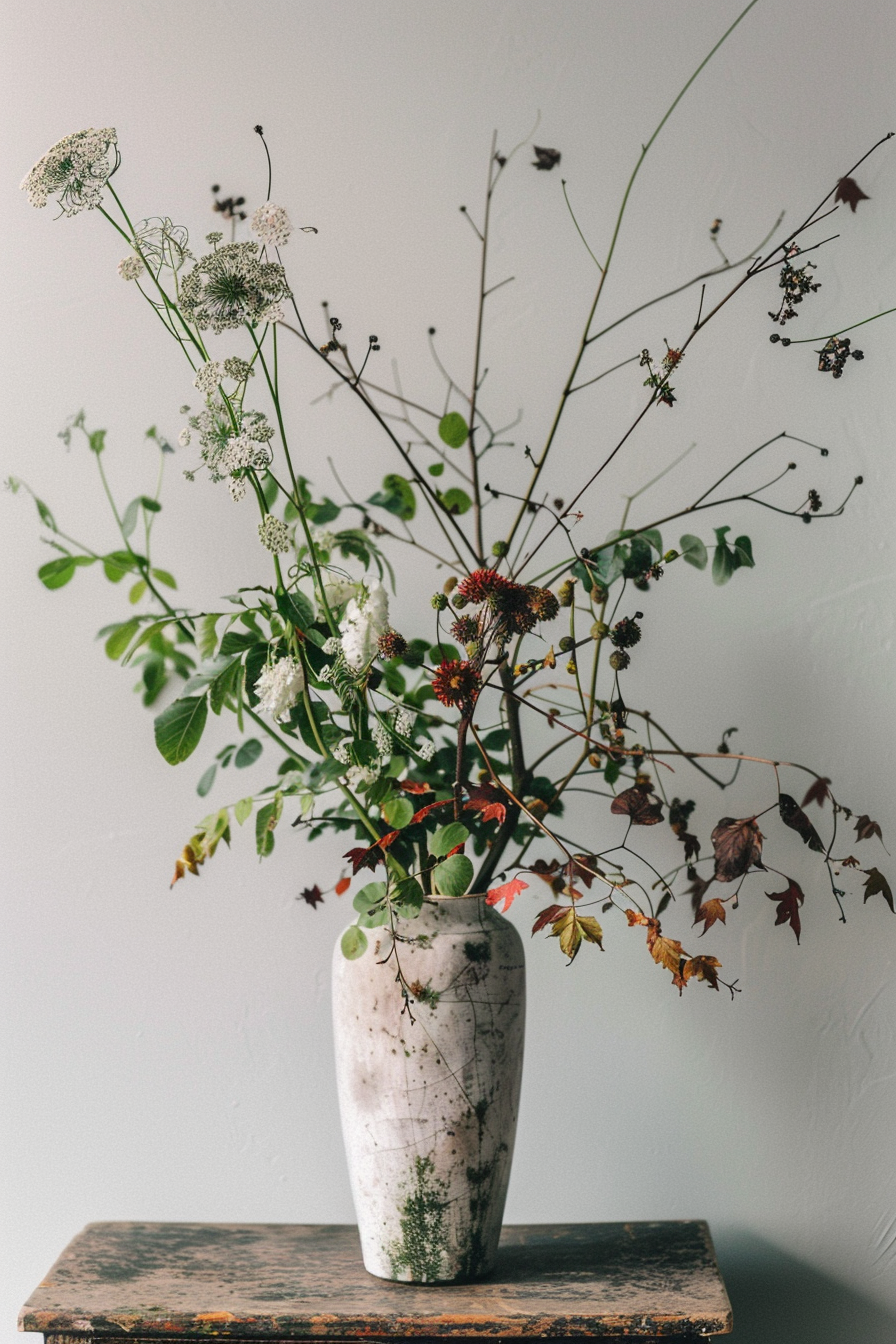
A rustic ceramic vase with an assortment of wildflowers and leaves on a weathered wooden bench against a plain background.

Selecting the right plants for your Wabi Sabi garden involves focusing on species that naturally exhibit rustic charm and resilience. Choose plants that thrive with minimal care and display imperfections gracefully. Opt for native plants which are well-suited to your local climate and soil.

Consider mosses, ferns, and grasses, which embody simplicity and understated beauty. Shrubs with twisted branches or weathered bark add character and a sense of timelessness.

Incorporate seasonal plants to reflect the transient nature of life. Think about perennials that bloom in different seasons, ensuring year-round interest. Don’t forget to include some plants with interesting textures and shapes, like succulents or bonsai trees. These choices will create a garden that mirrors the essence of Wabi Sabi.

Benefits of Wabi Sabi Plants

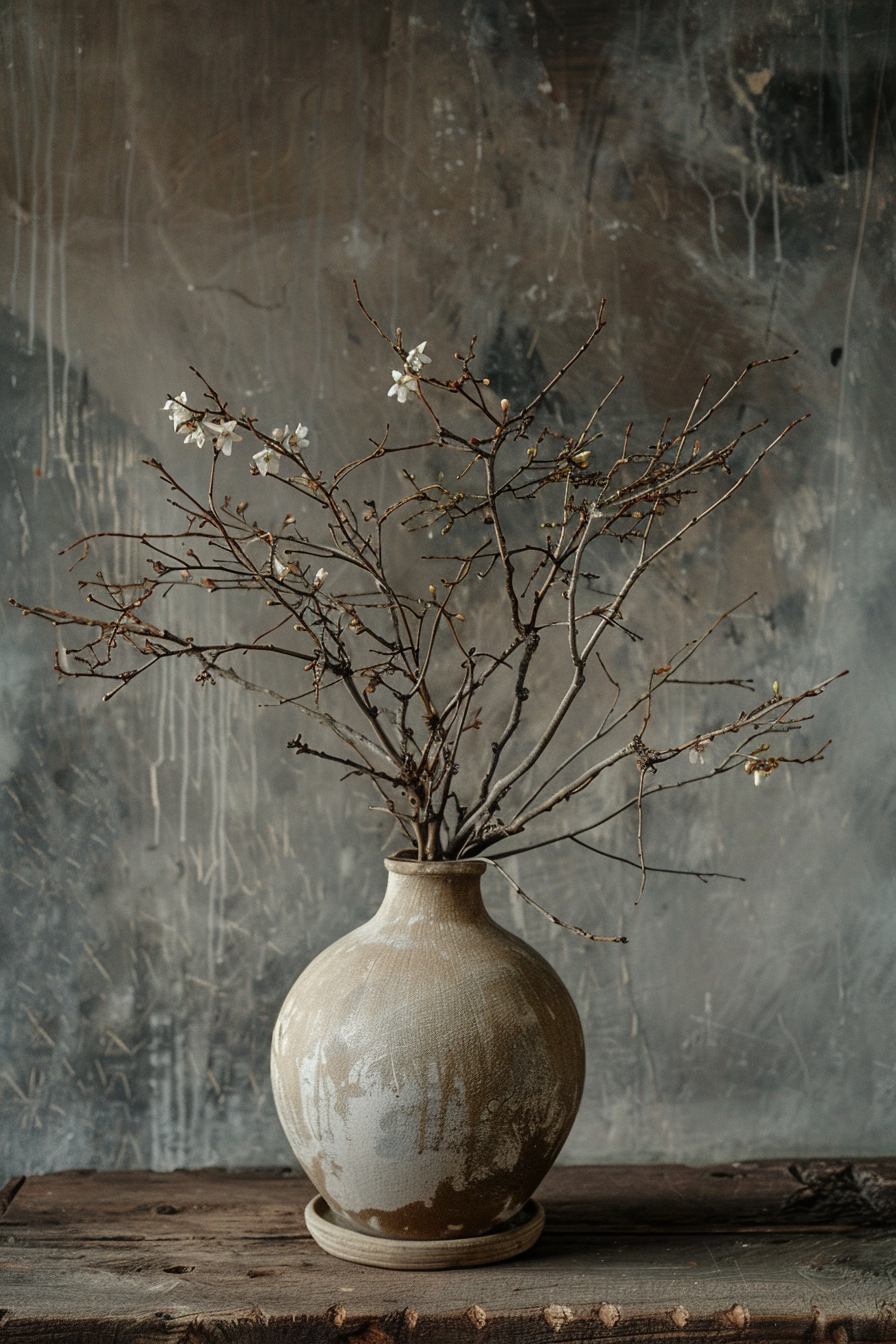
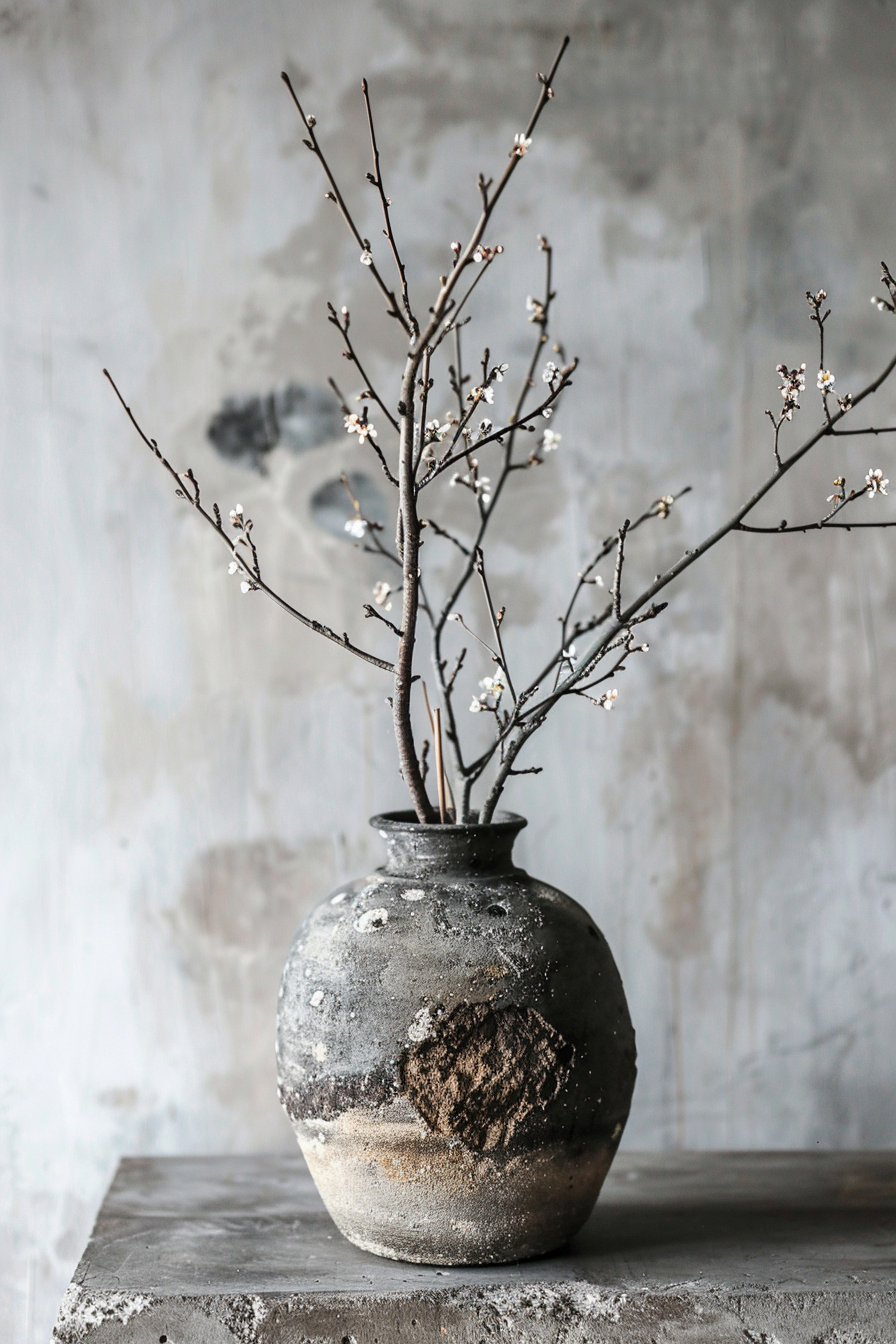
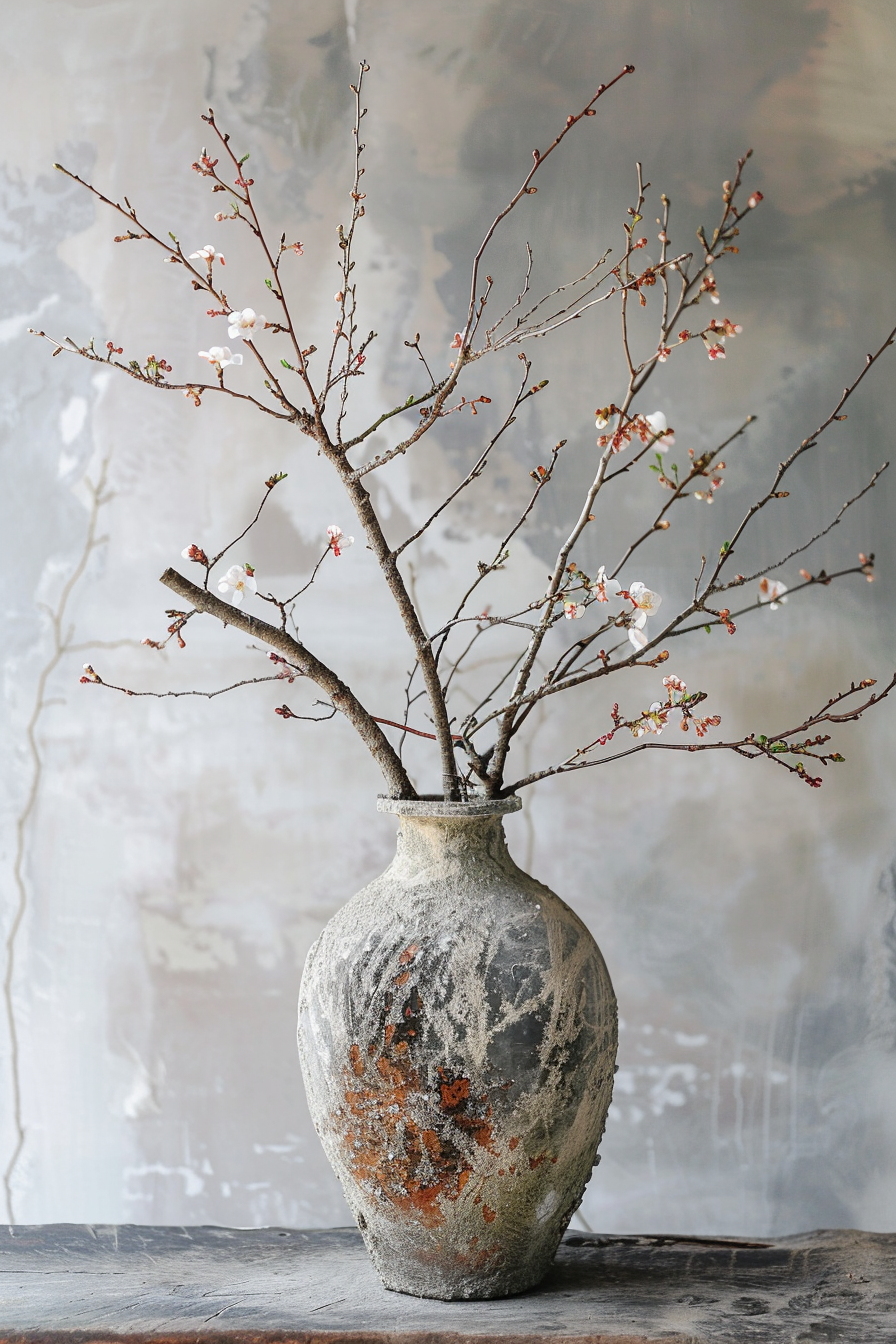
Rustic ceramic vase on a textured table with budding branches against a mottled gray wall.

Wabi Sabi plants offer numerous benefits, including low maintenance and a natural aesthetic that promotes tranquility. You’ll find that these plants thrive on minimal intervention, making them perfect for busy lifestyles.

Their imperfect beauty encourages you to appreciate the uniqueness in each leaf and stem, fostering a mindful connection with nature. Integrating Wabi Sabi plants into your space can elevate your environment, creating a serene and calming atmosphere. They help purify the air, boosting your overall well-being.

Unlike high-maintenance plants, Wabi Sabi varieties adapt well to various conditions, reducing stress and effort on your part. Embrace the simplicity and elegance of Wabi Sabi plants, and you’ll discover a peaceful, harmonious living space.

Care and Maintenance Tips

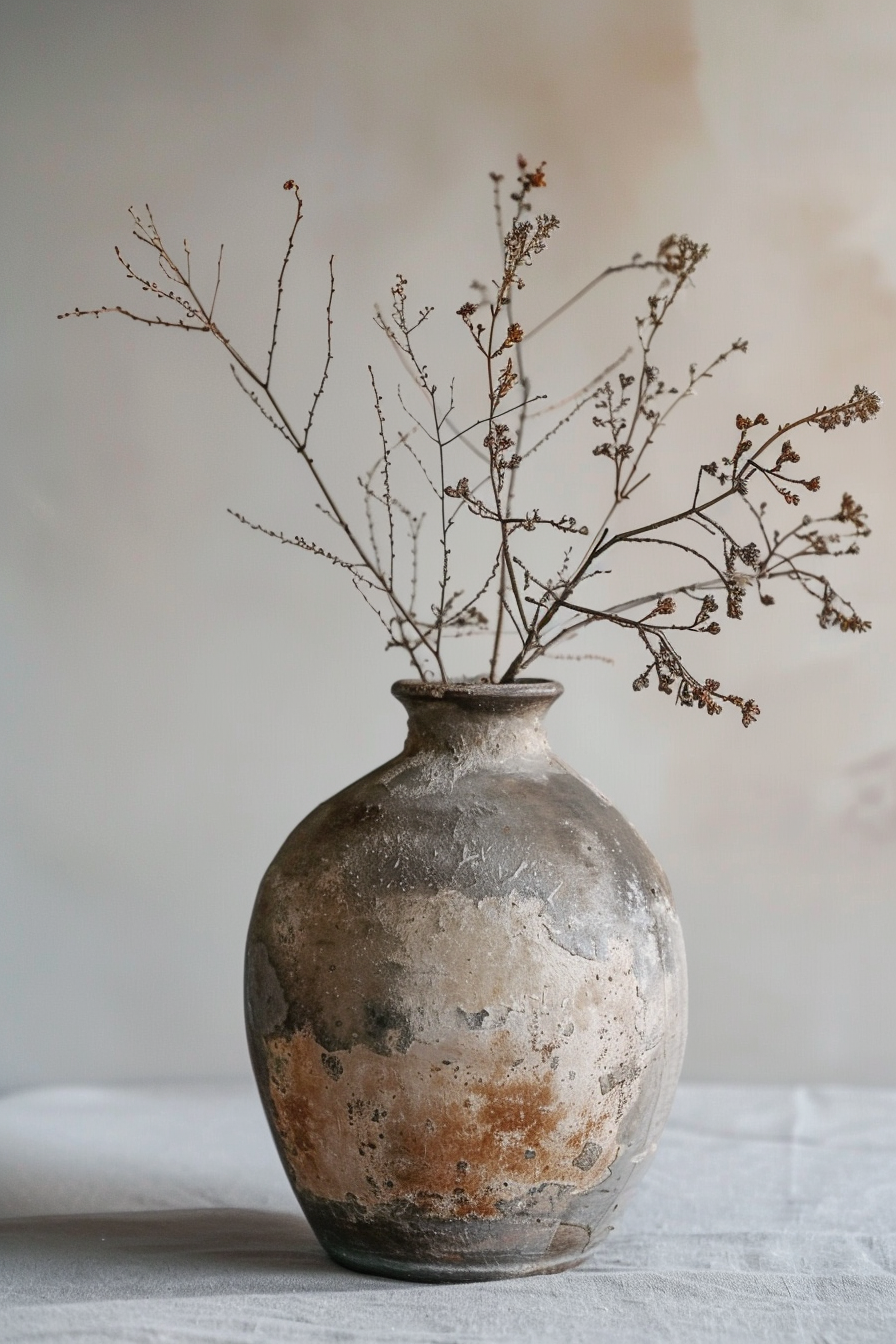
A rustic, weathered vase on a linen cloth with dried branches arranged inside it, set against a neutral background.

Caring for Wabi Sabi plants involves minimal effort, allowing you to enjoy their beauty without a complicated maintenance routine. Focus on the essentials: water, light, pruning, and soil. Don’t overwater; these plants thrive in slightly dry conditions. Place them in indirect sunlight to mimic their natural habitat. Pruning helps maintain their shape and encourages growth. Use well-draining soil to prevent root rot.

Care AspectTips
WateringWater sparingly, letting the soil dry between waterings.
LightKeep in bright, indirect sunlight.
PruningTrim dead leaves and stems to promote new growth.
SoilUse well-draining soil to avoid waterlogging.

Integrating Plants Into Your Space

ALT: A rustic vase with delicate pink blossoms on a weathered wooden table against a distressed teal wall.

Infusing your living space with the natural elegance of Wabi Sabi plants can create a serene and harmonious atmosphere. Start by selecting plants that resonate with the Wabi Sabi aesthetic—those with imperfect leaves, weathered textures, or asymmetrical shapes.

Place them in areas where they can thrive, considering light and humidity. Use simple, rustic pots that complement the organic beauty of the plants. Integrate them into your space by positioning them on shelves, window sills, or corners that need a touch of greenery.
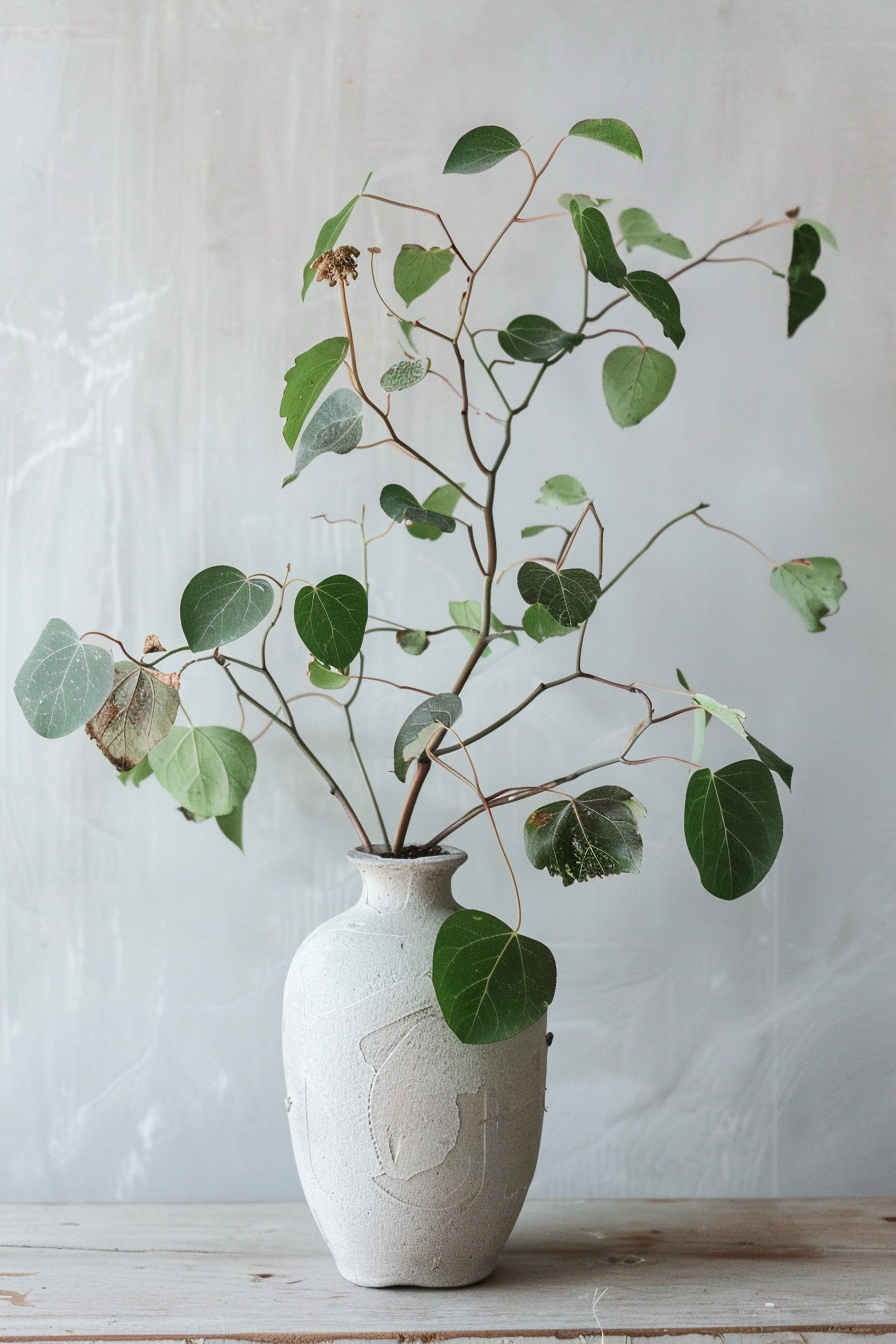
Keep the arrangement uncluttered to maintain the minimalist charm. Don’t hesitate to mix different types of plants to create a balanced yet dynamic environment. Embrace the imperfections and let them enhance your home’s natural beauty.
Inspiring Wabi Sabi Plant Arrangements

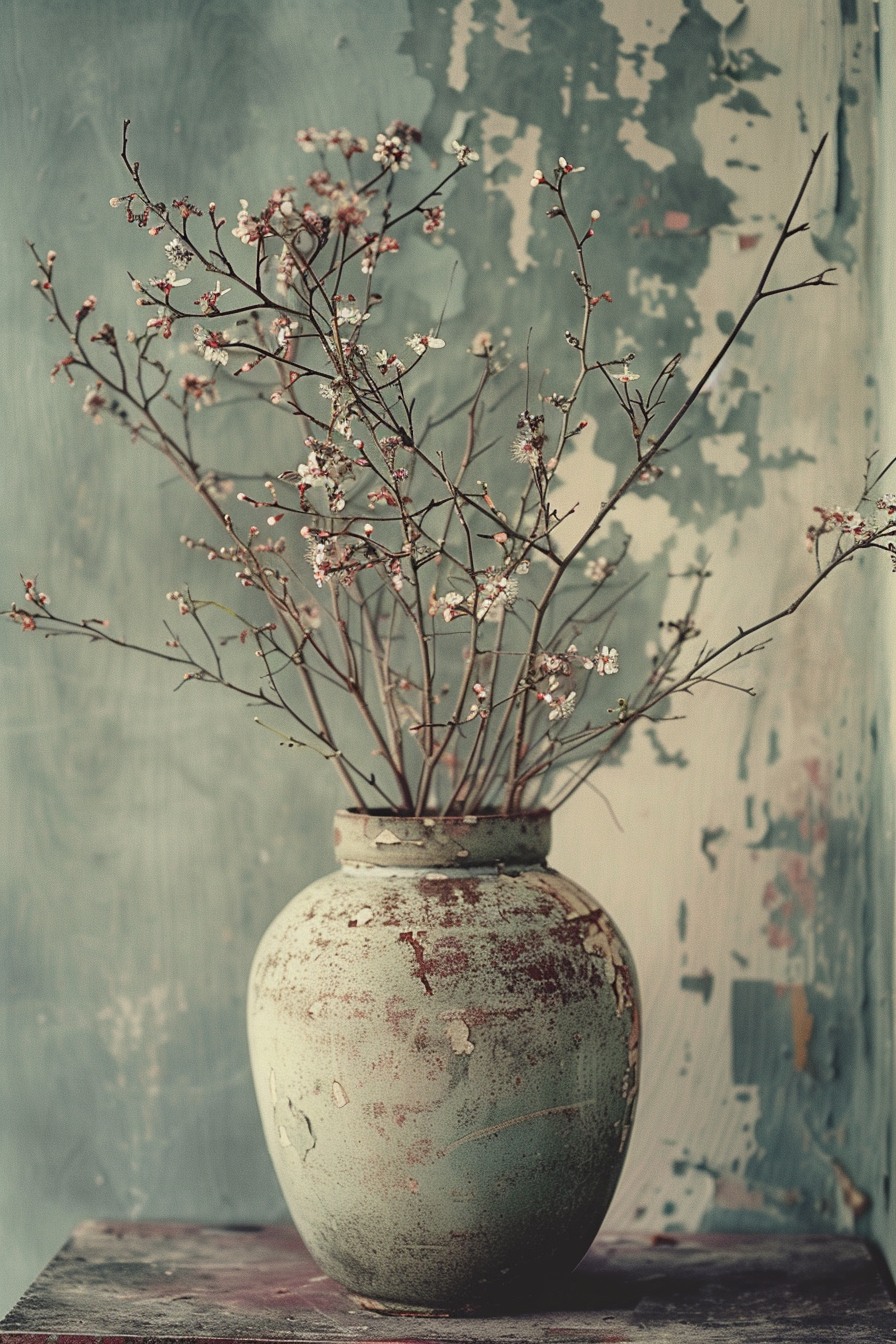
A vase with budding branches against a grey textured background, symbolizing the onset of spring.
Creating inspiring Wabi Sabi plant arrangements involves embracing each plant’s natural elegance and imperfections while thoughtfully positioning them to enhance your space.

Start by selecting plants with unique shapes, textures, and even blemishes. Place them in simple, rustic containers that highlight their raw beauty. Arrange plants at varying heights for a balanced yet unrefined look.

A textured white vase on a wooden surface with a branch of green leaves against a light grey background.
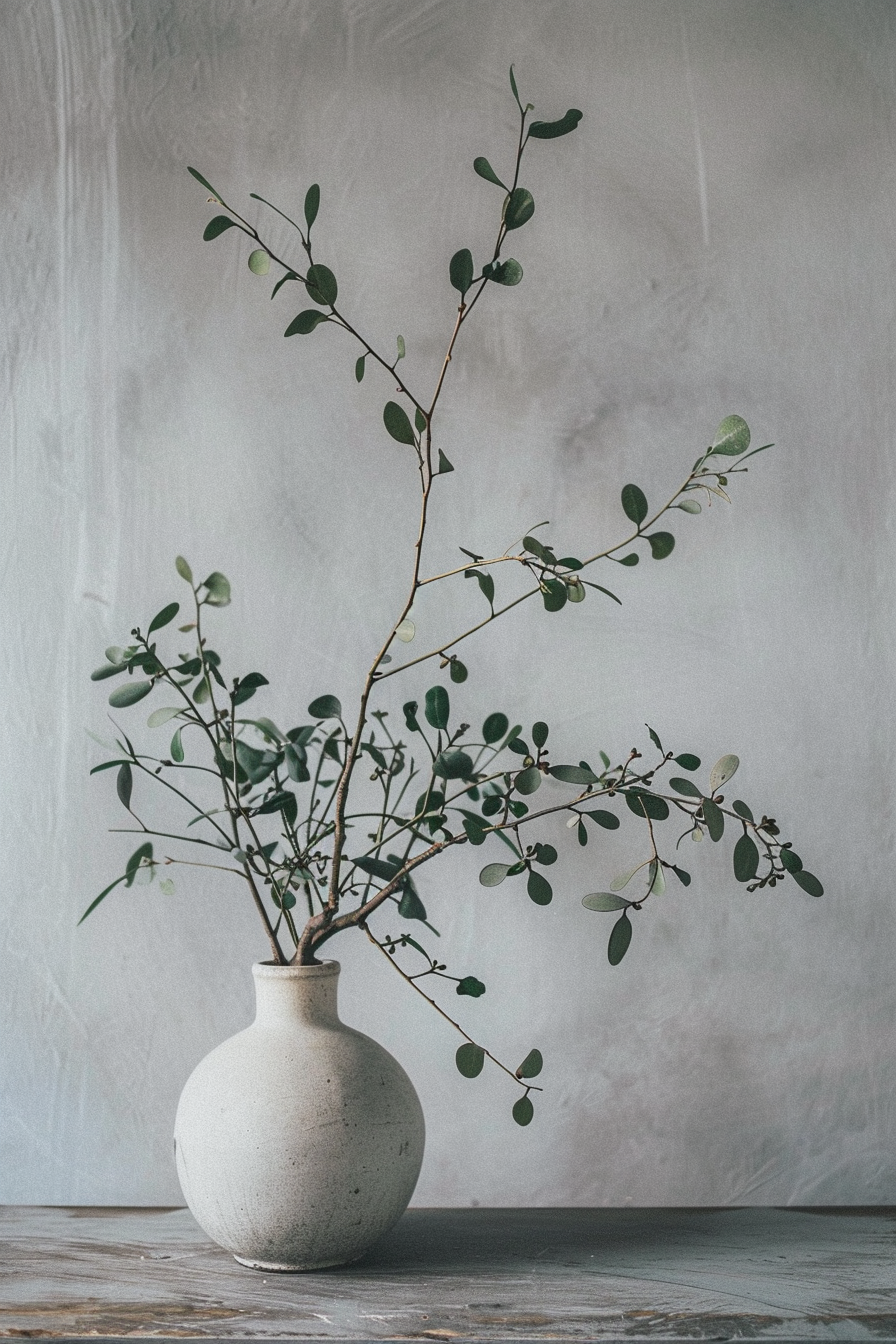
A simple white vase holding slender branches with small green leaves, sitting on a wooden table against a textured grey backdrop.
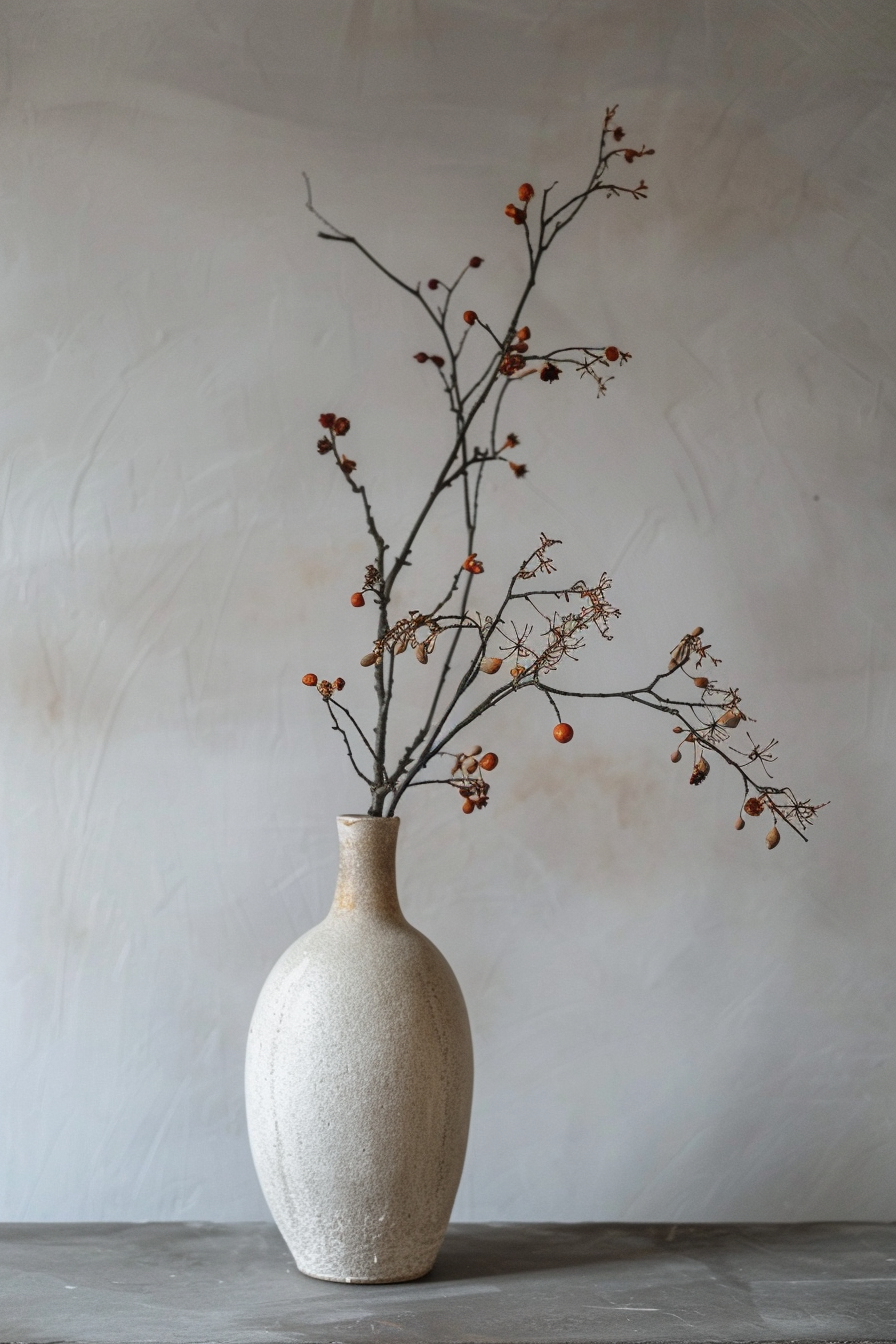
A textured white vase on a gray surface with bare twigs and small red berries against a neutral background.
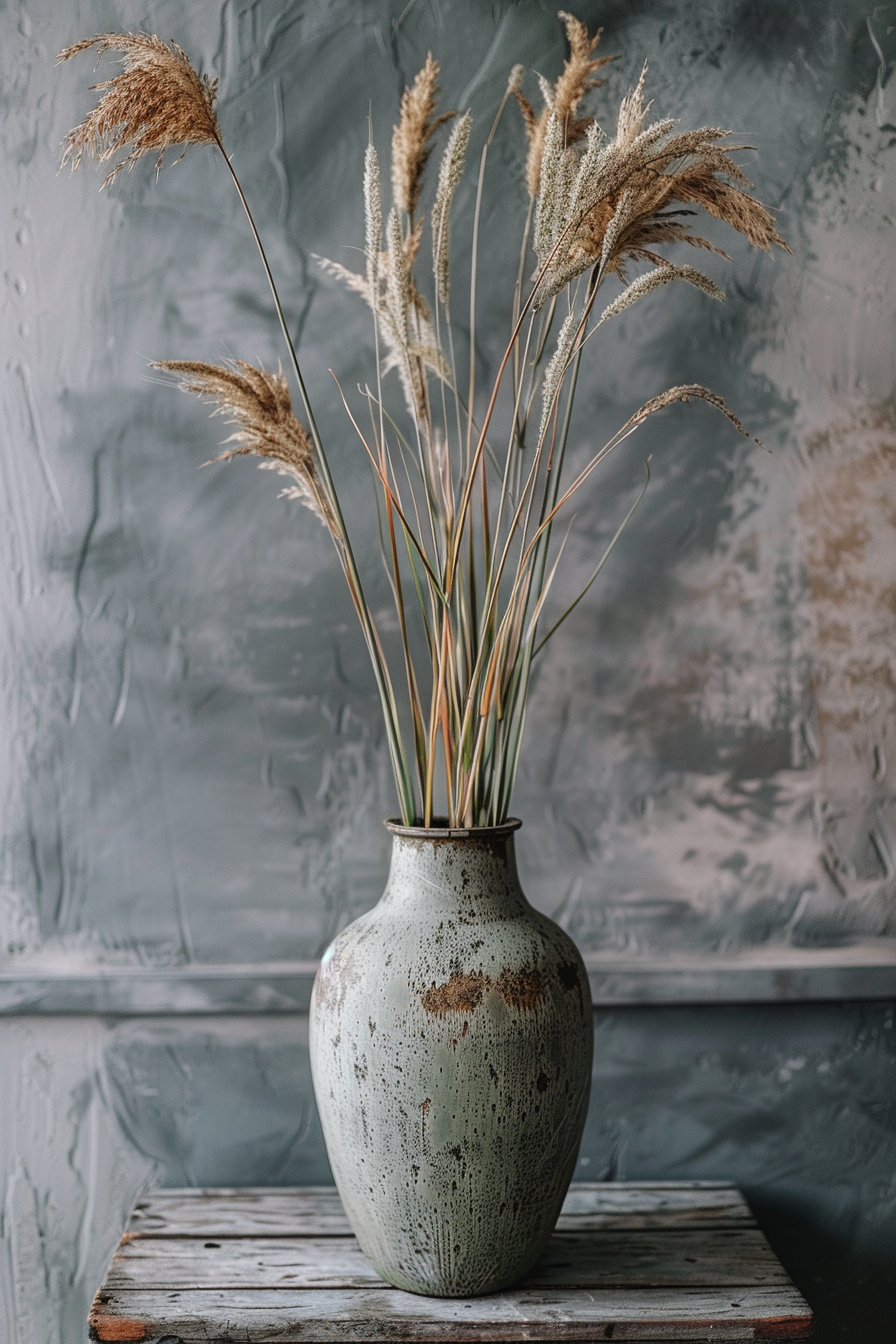
A rustic ceramic vase with tall pampas grass on a wooden table against a textured grey wall.
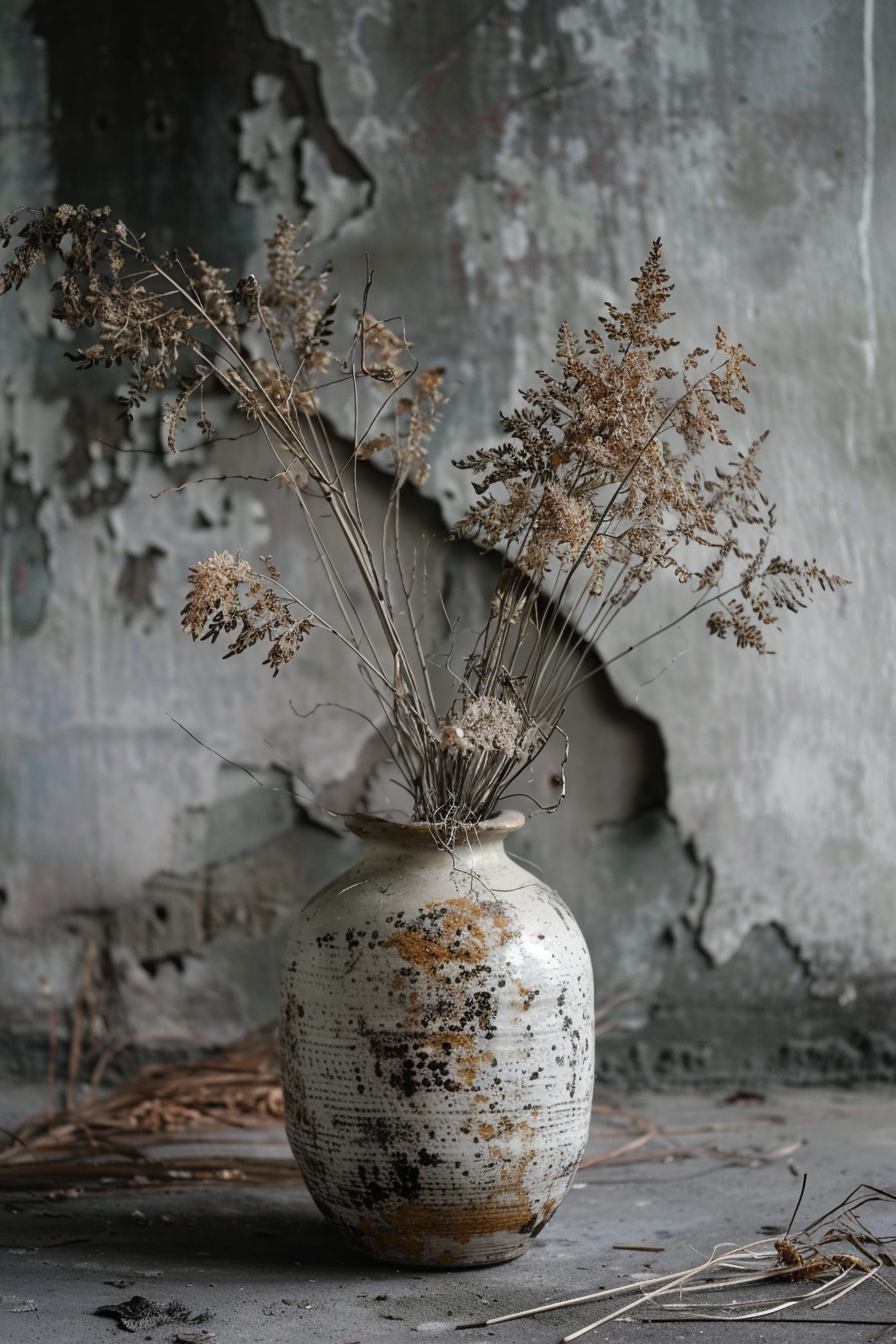
ALT: A weathered vase with dried plants sits against a peeling, gray wall, suggesting a sense of abandonment and decay.
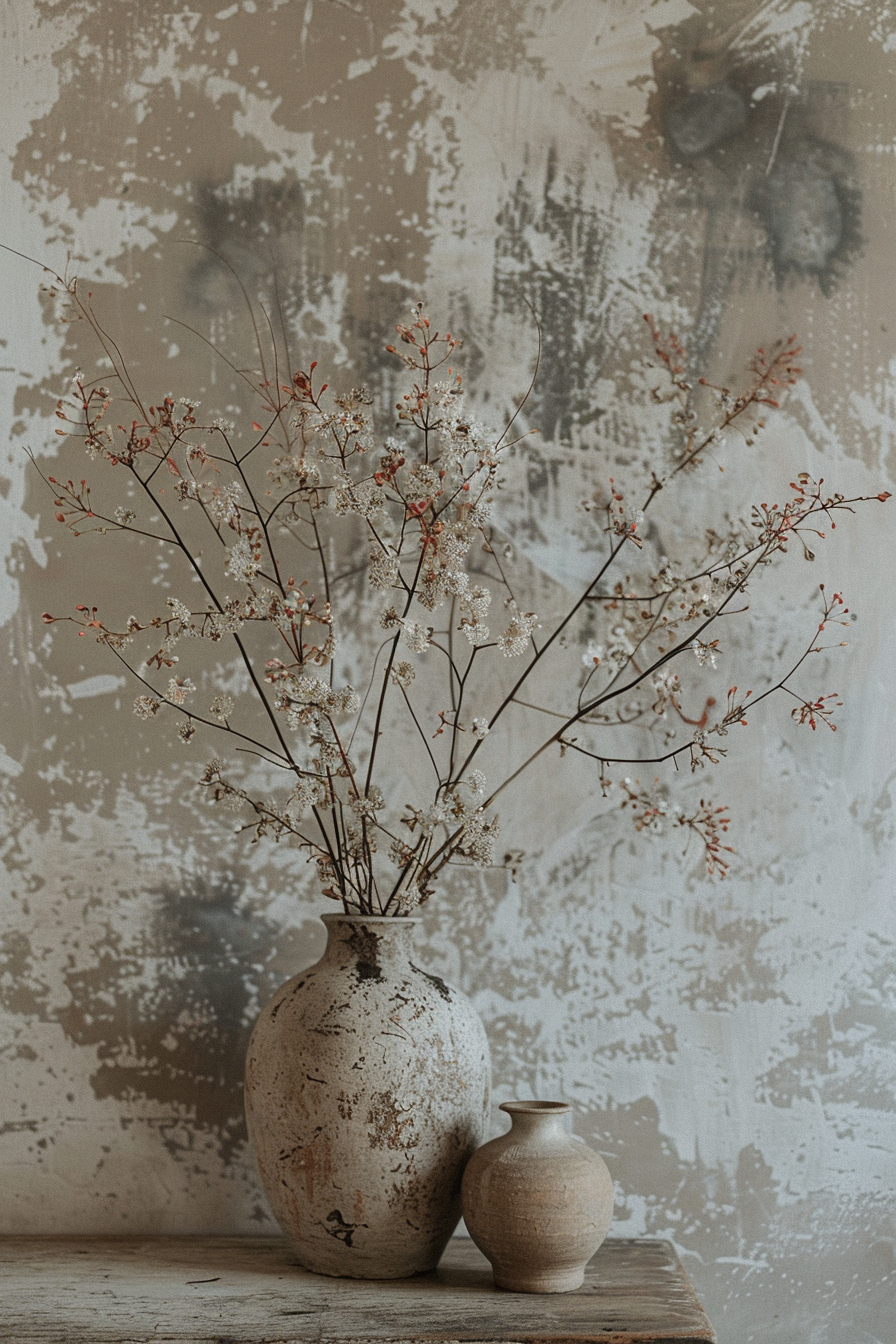
A rustic ceramic vase with dried branches bearing small flowers, next to a smaller vase, on a wooden table against a distressed wall.
A rustic vase with sprouting branches on a weathered wooden surface against a textured backdrop with paint streaks.
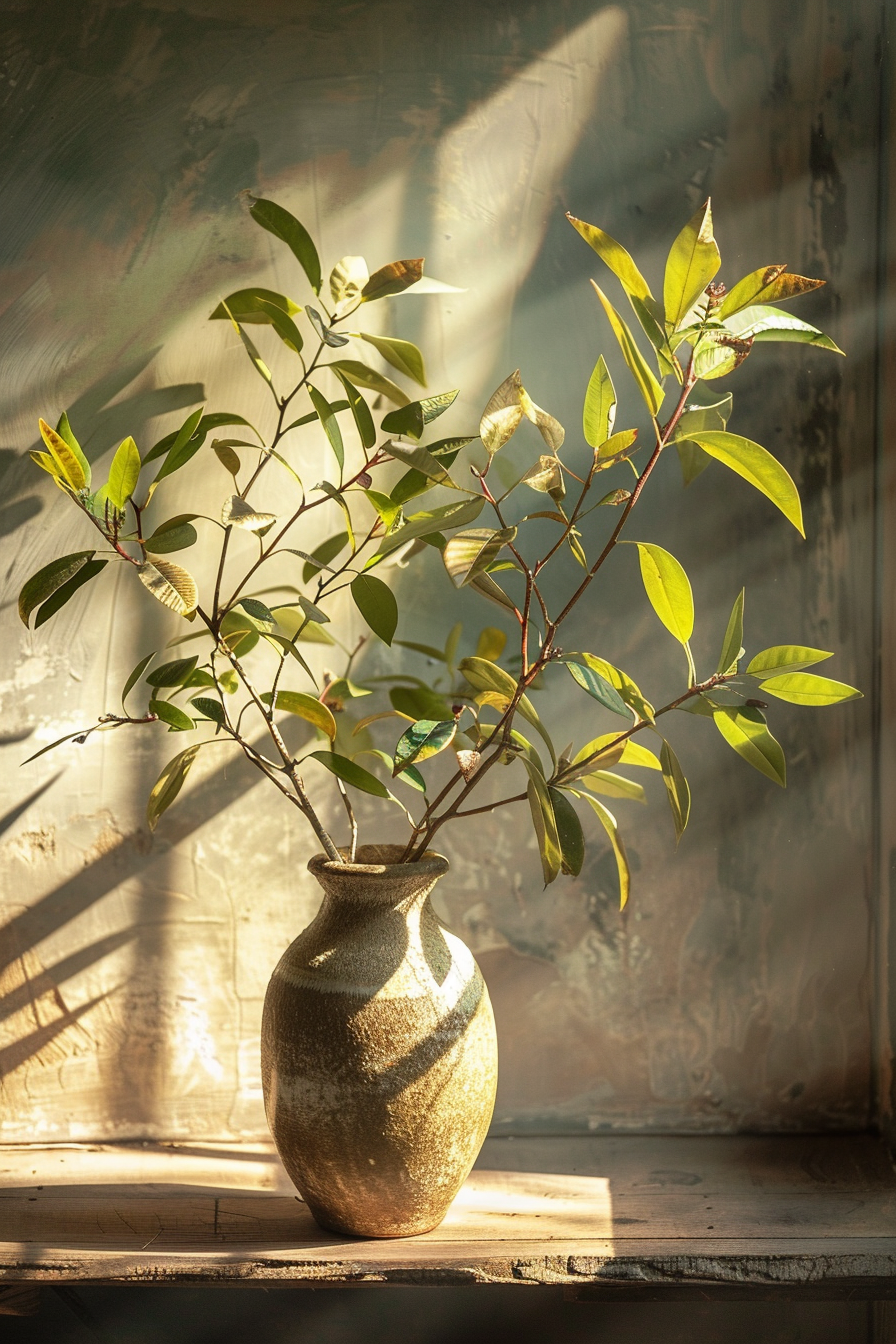
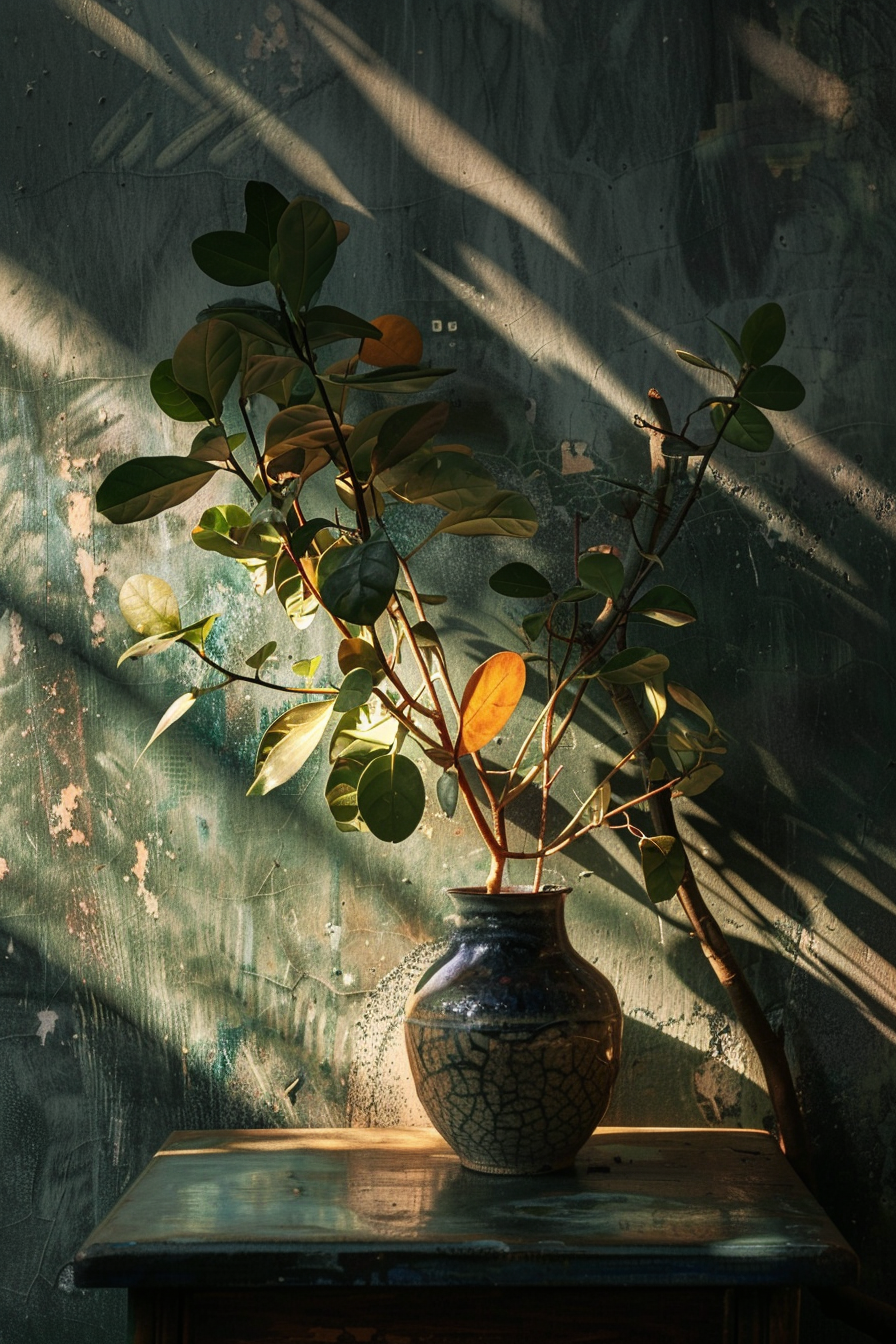
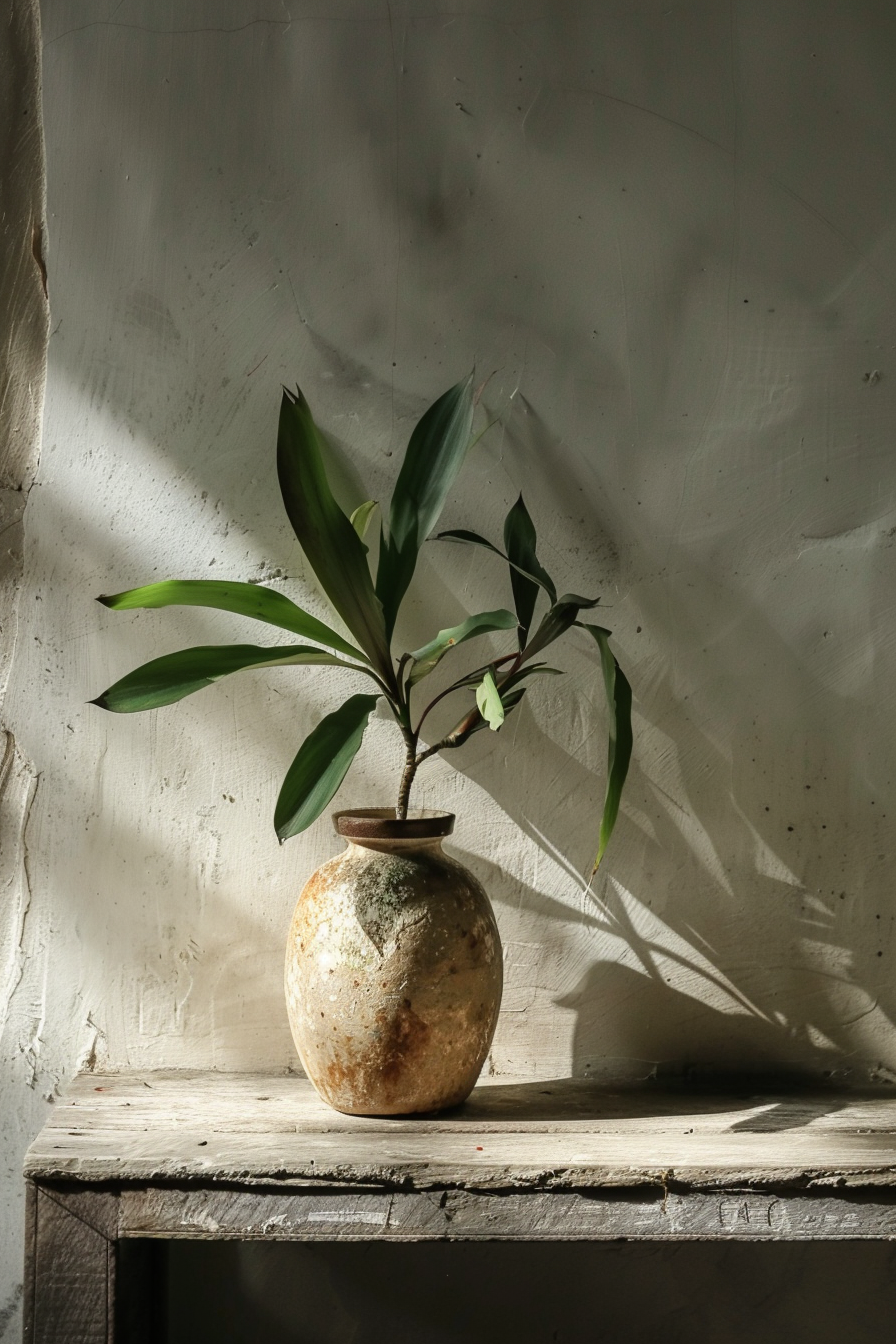
"Green plant with elongated leaves in a rustic pottery vase on a wooden bench, casting a shadow on a textured wall."
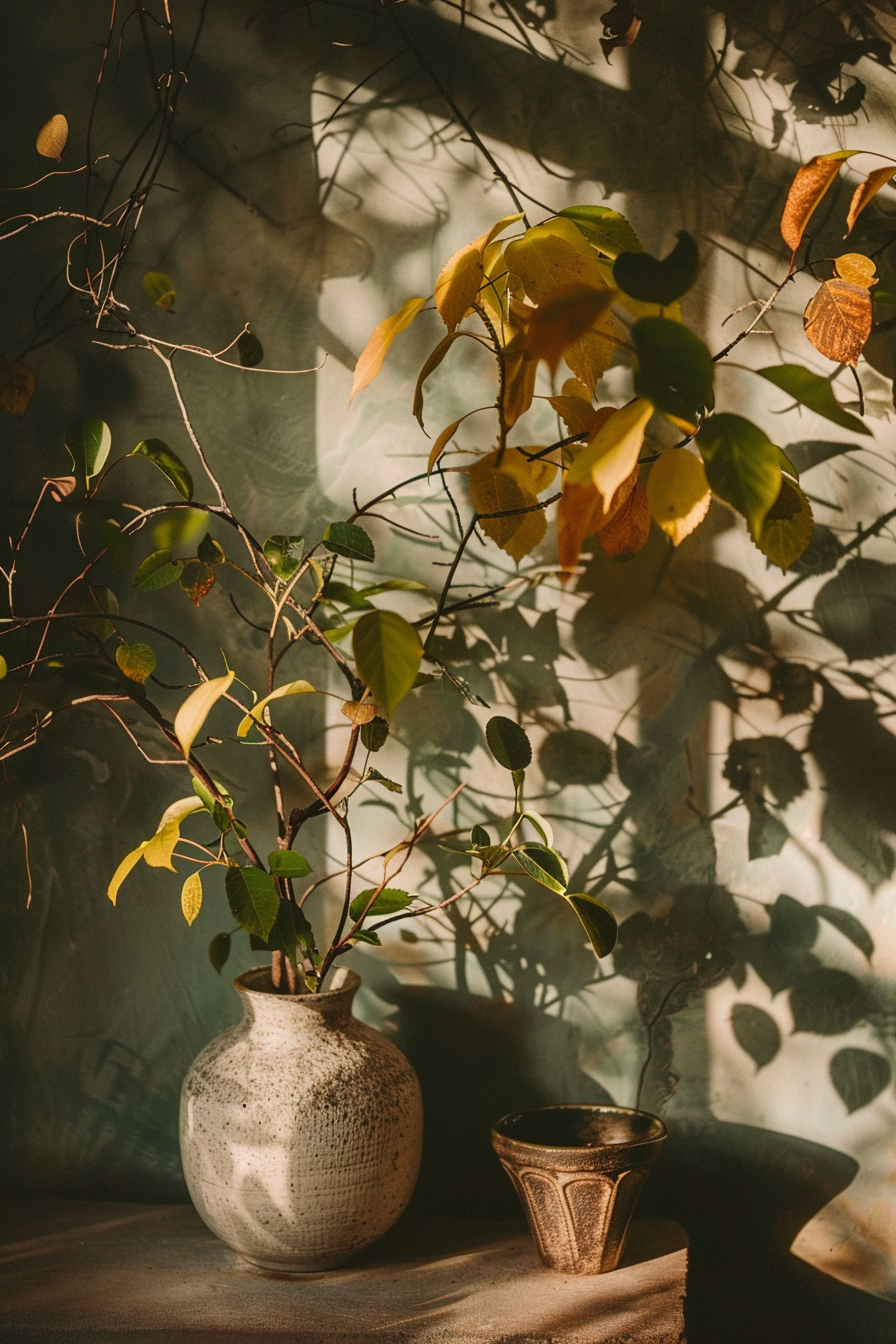
A serene still life of a vase with autumn leaves and a cup on a tabletop, bathed in dappled sunlight casting leafy shadows.
Potted plant on a wooden table illuminated by sunlight casting shadows with a textured wall in the background.
Cherry blossom branches in a rustic vase against a textured grey backdrop.
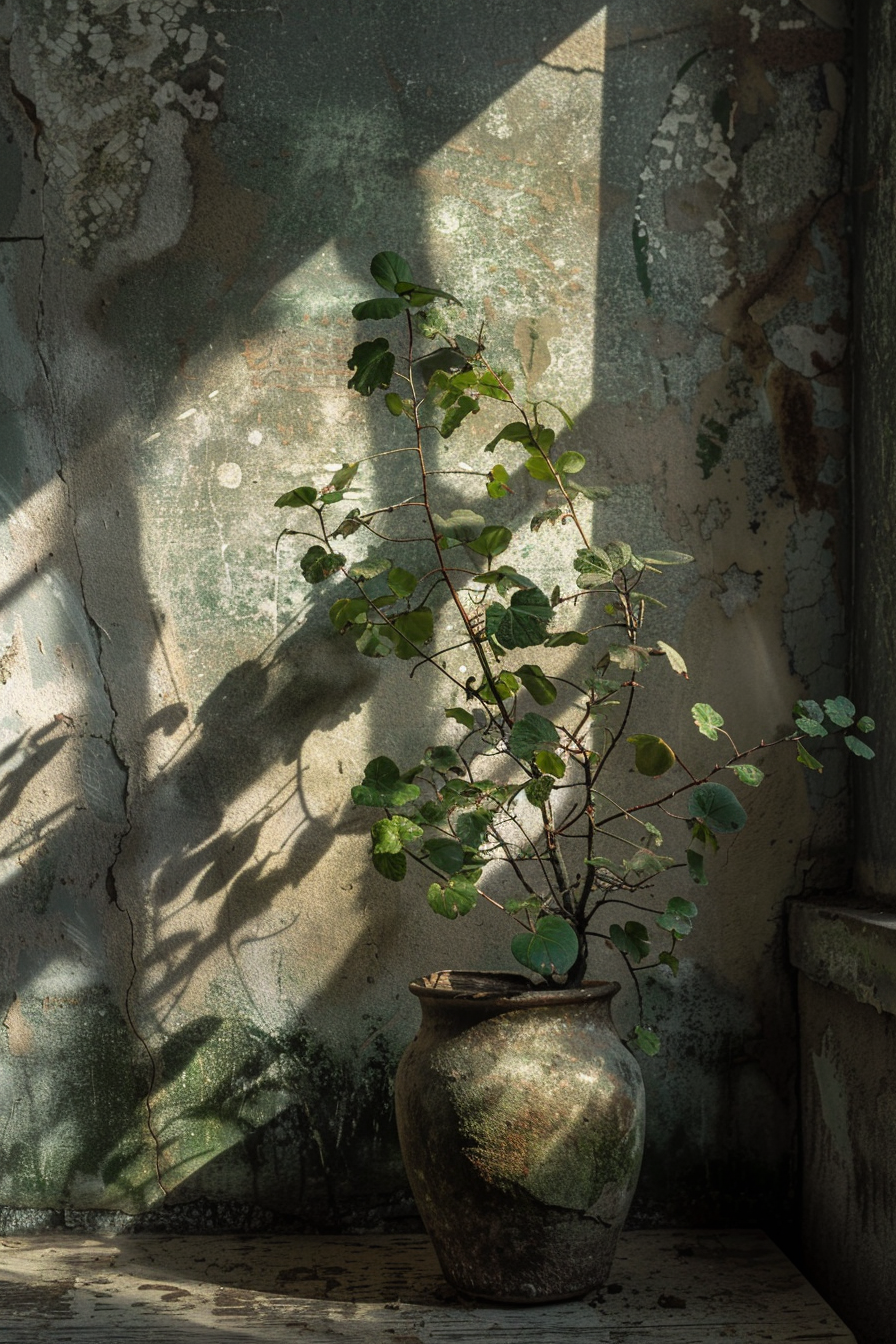
ALT: A small tree grows in an aged pottery vase amidst a backdrop of peeling paint and shadow play on a weathered wall.
Alt text: A rustic vase with budding branches on a wooden surface against a textured wall, with shadows and sunlight creating a serene ambiance.
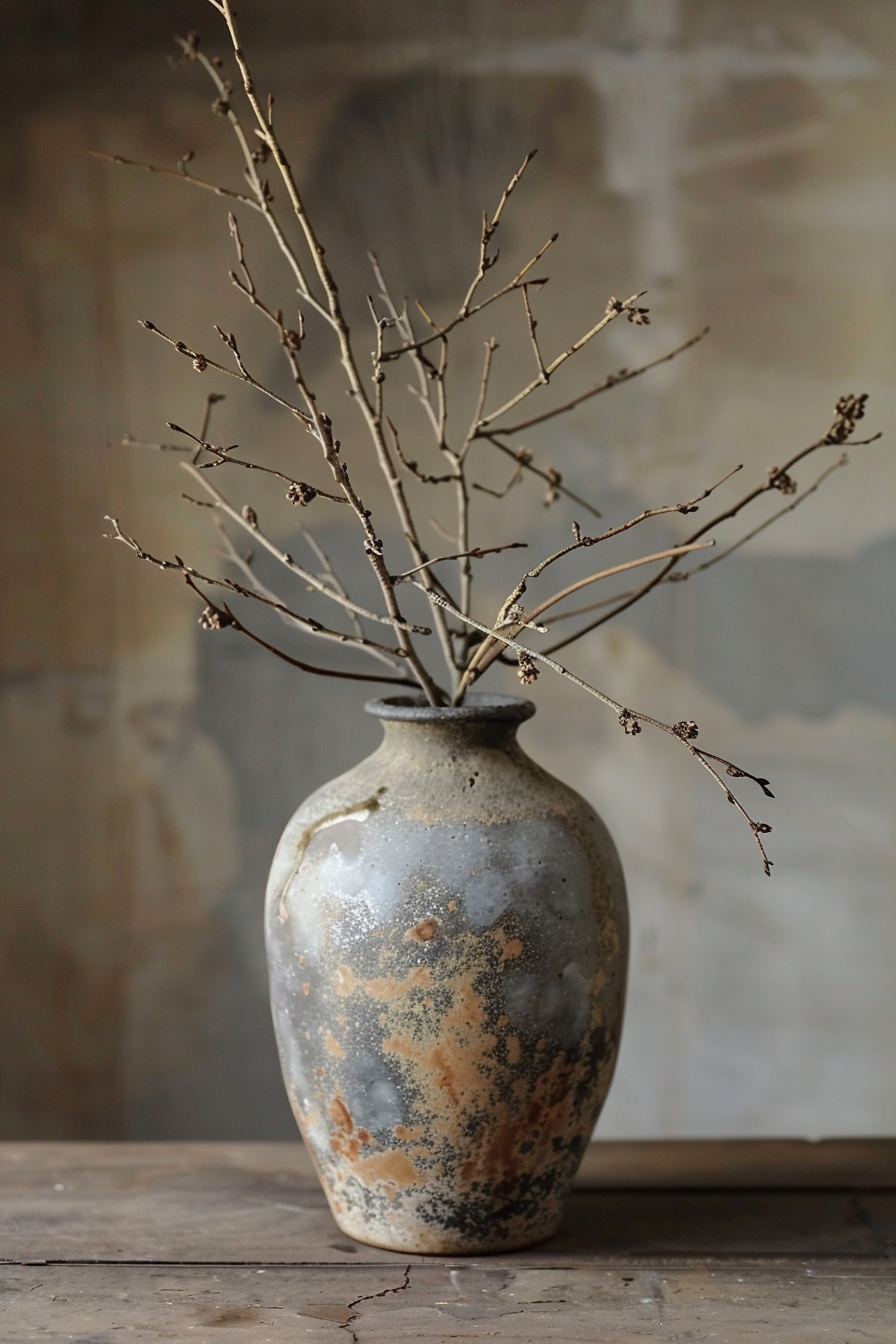
A rustic ceramic vase on a wooden table with dried branches sticking out against a blurred background.
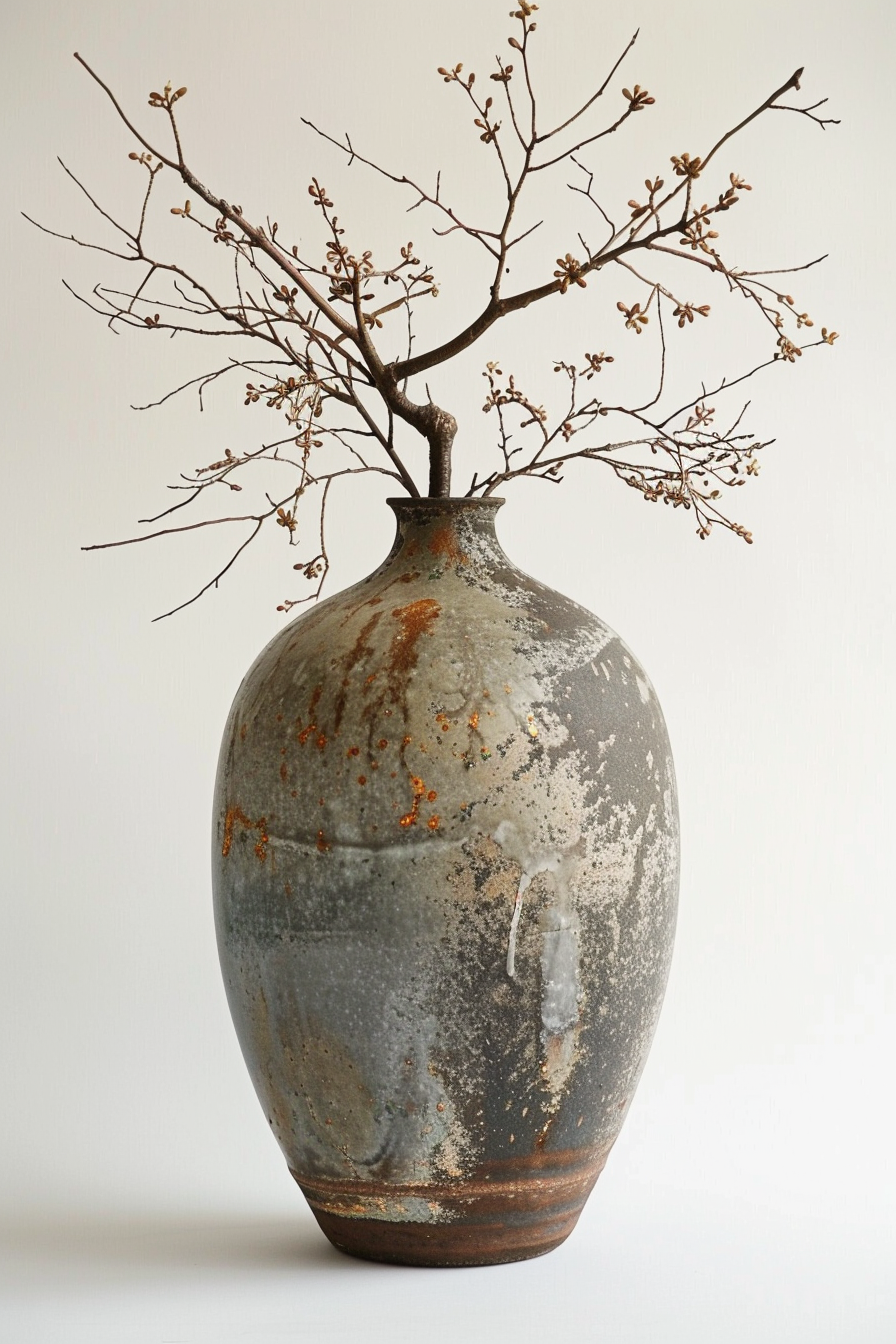
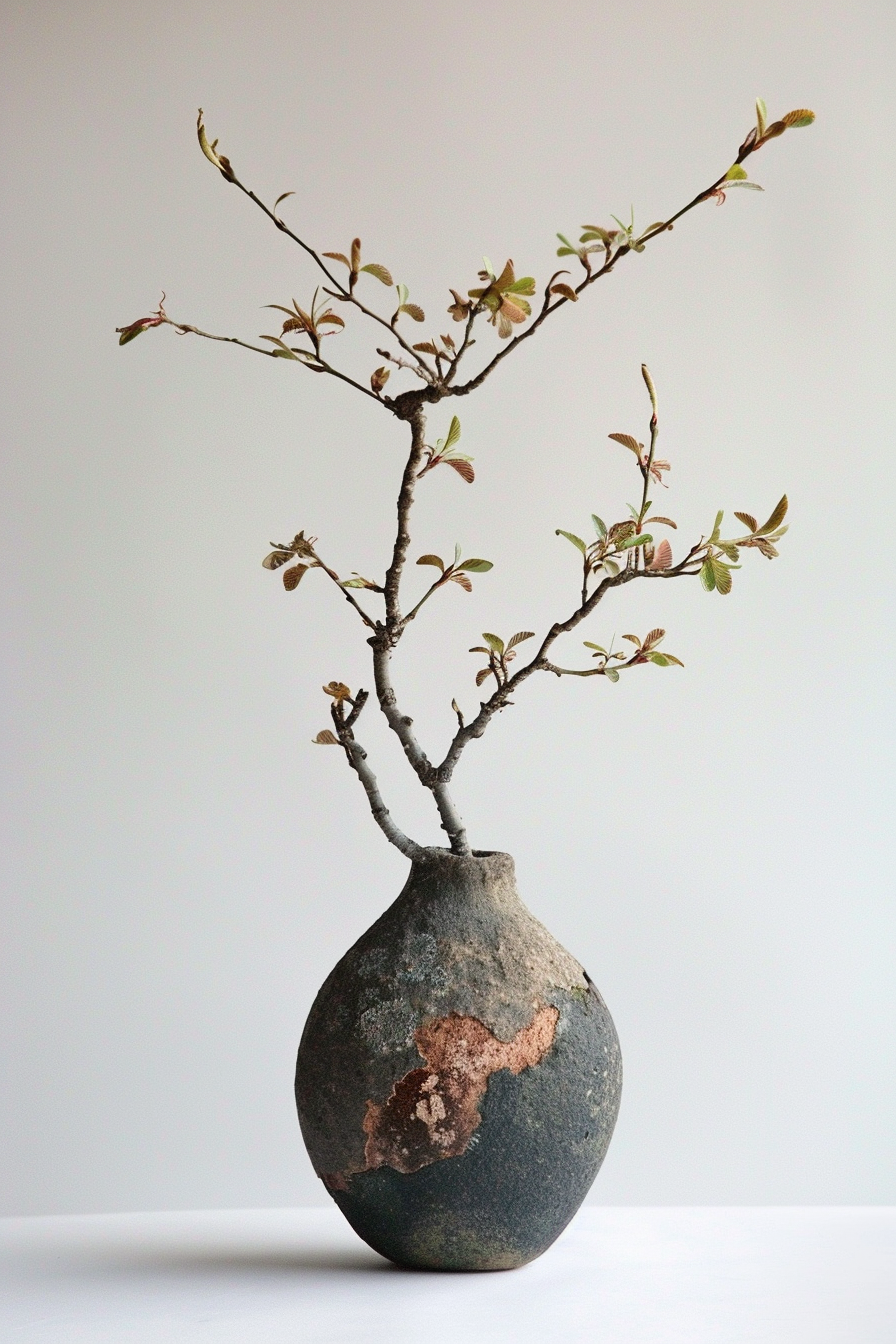
A large ceramic vase with a rustic finish containing sparse branches with small buds against a neutral background.
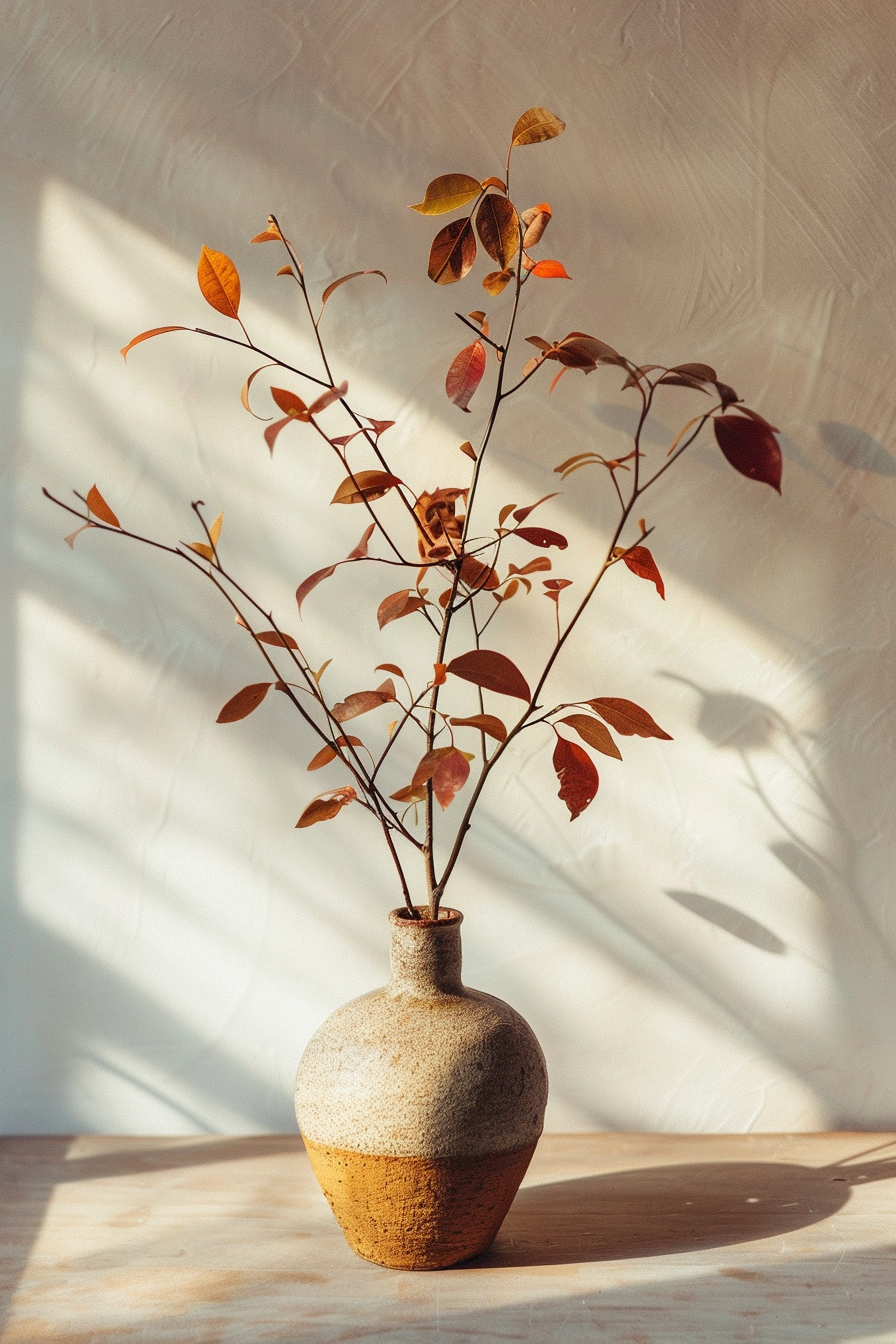
A rustic two-tone vase with autumn leaves on a surface illuminated by sunlight casting soft shadows on a wall.
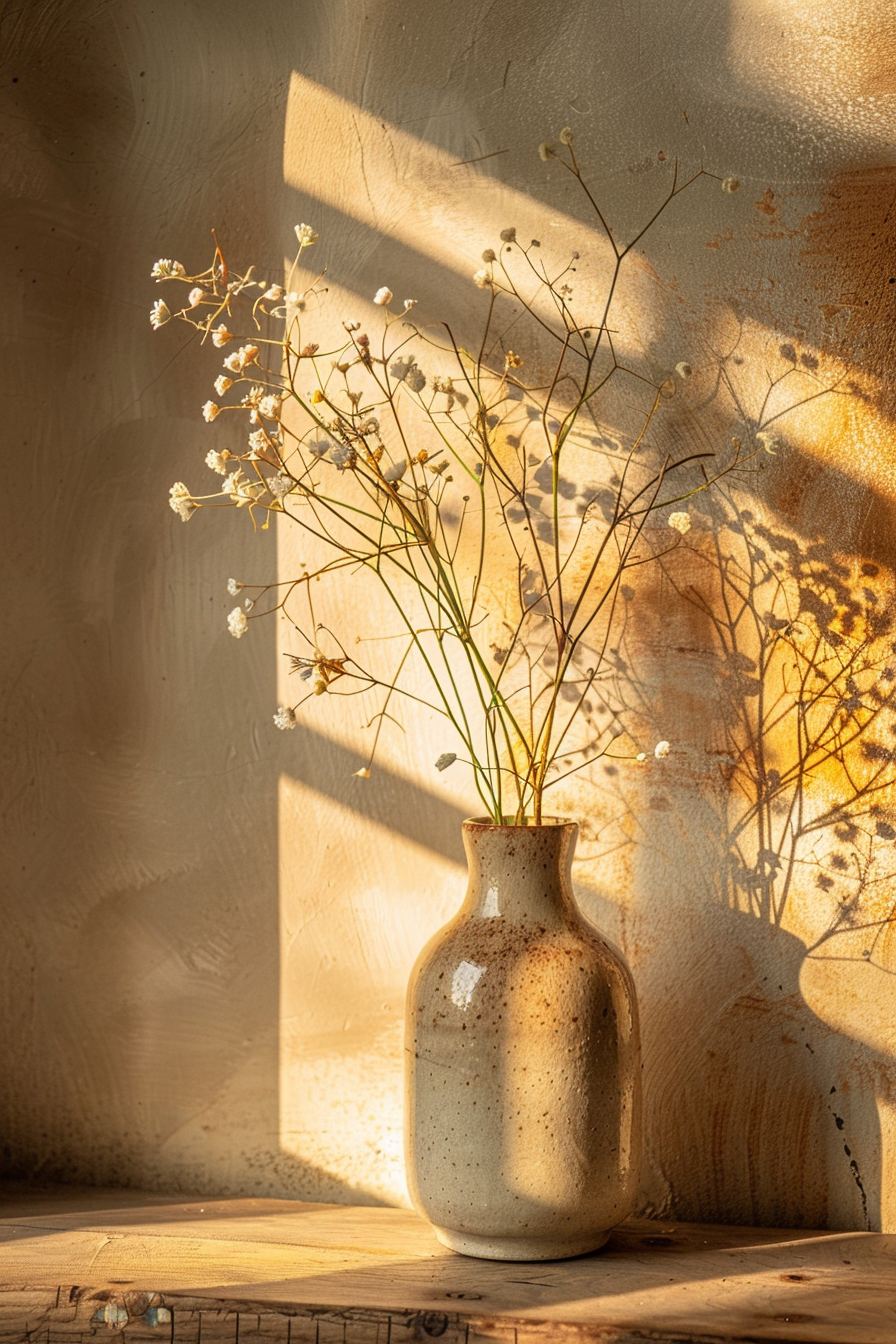
Vase with dried flowers bathed in warm sunlight casting intricate shadows on a textured wall.
A ceramic vase with fresh green leaves on a wooden surface, bathed in warm sunlight filtering through a glass window.
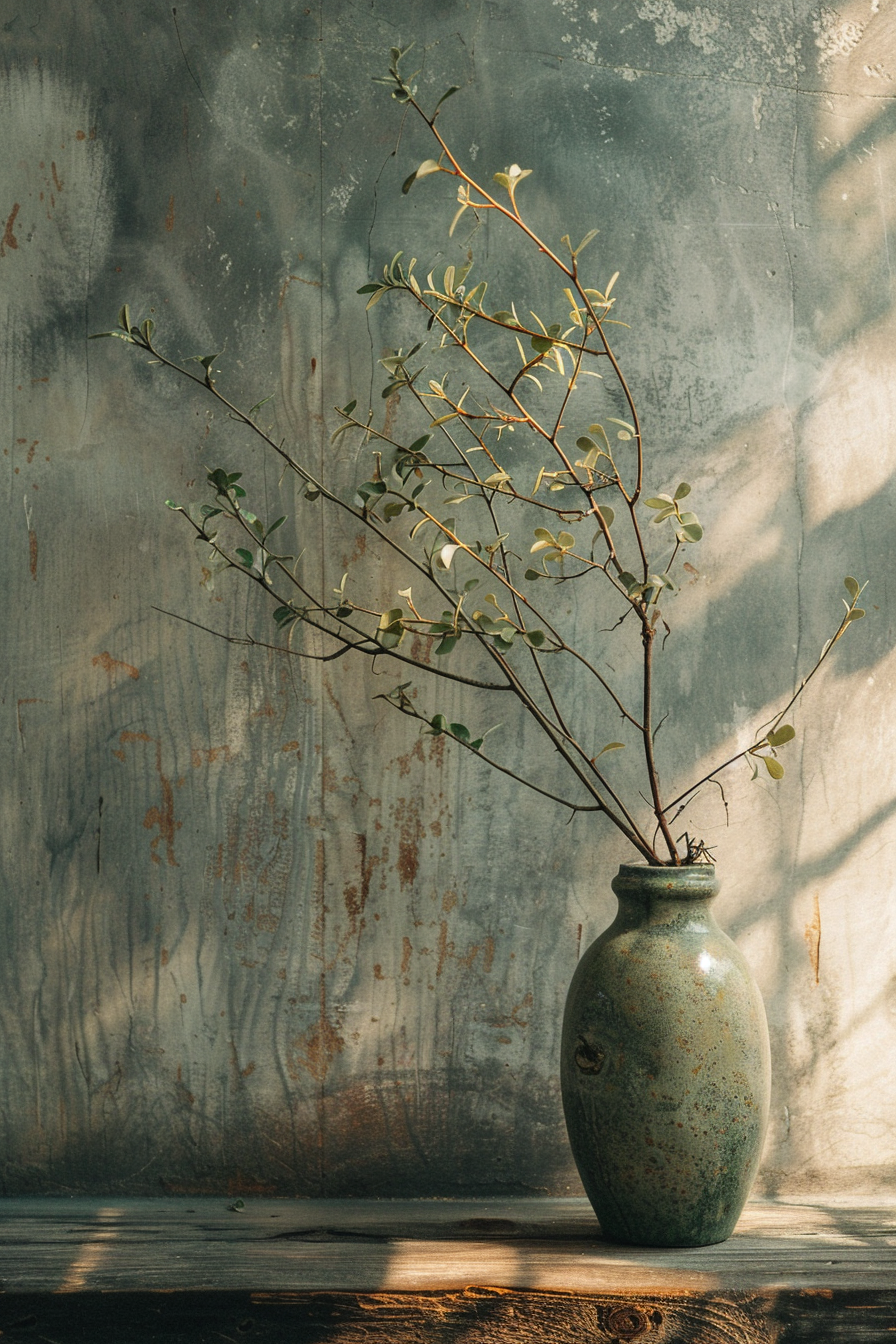
A ceramic vase with delicate branches on a rustic wooden table against a textured wall with sunlight casting shadows.
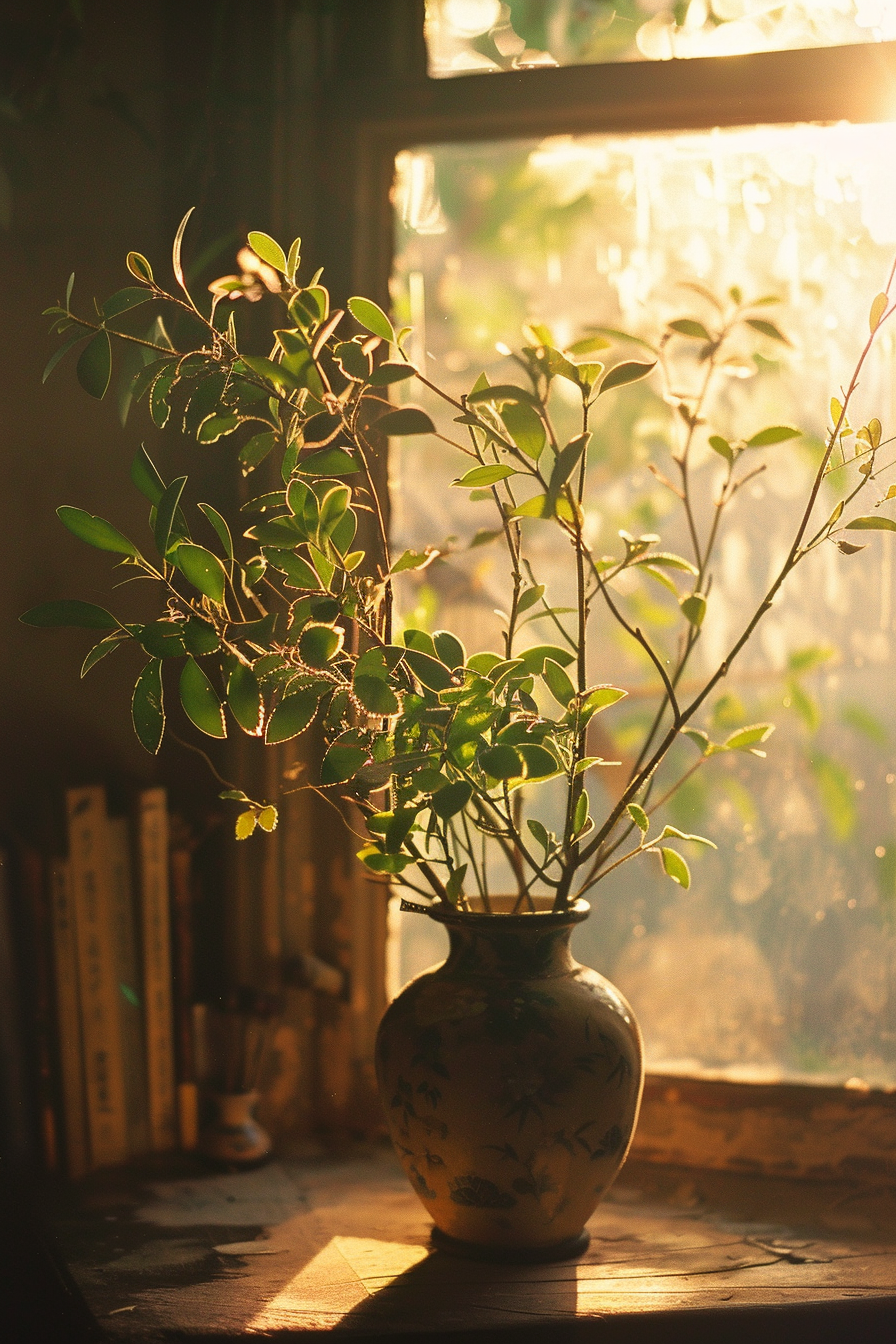
A warm sunlight-filled room with a vase of green plants on a table near a window, with a backdrop of books and a hazy view outdoors.
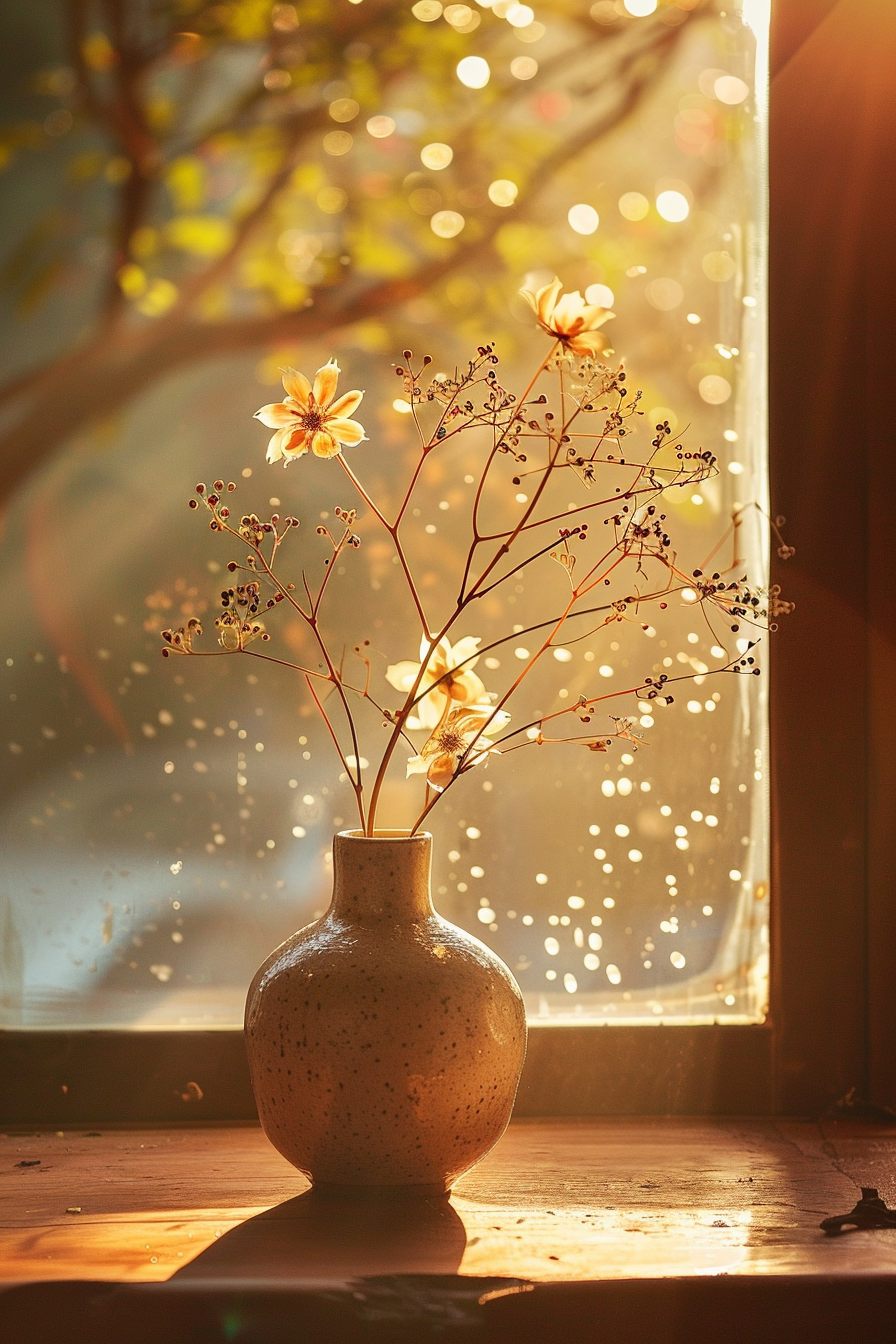
A ceramic vase with flowers basking in warm sunlight by a window with floating dust particles, creating a serene, golden ambiance.
A plant with delicate leaves in a vase, bathed in warm golden sunlight near a window with soft bokeh effect.
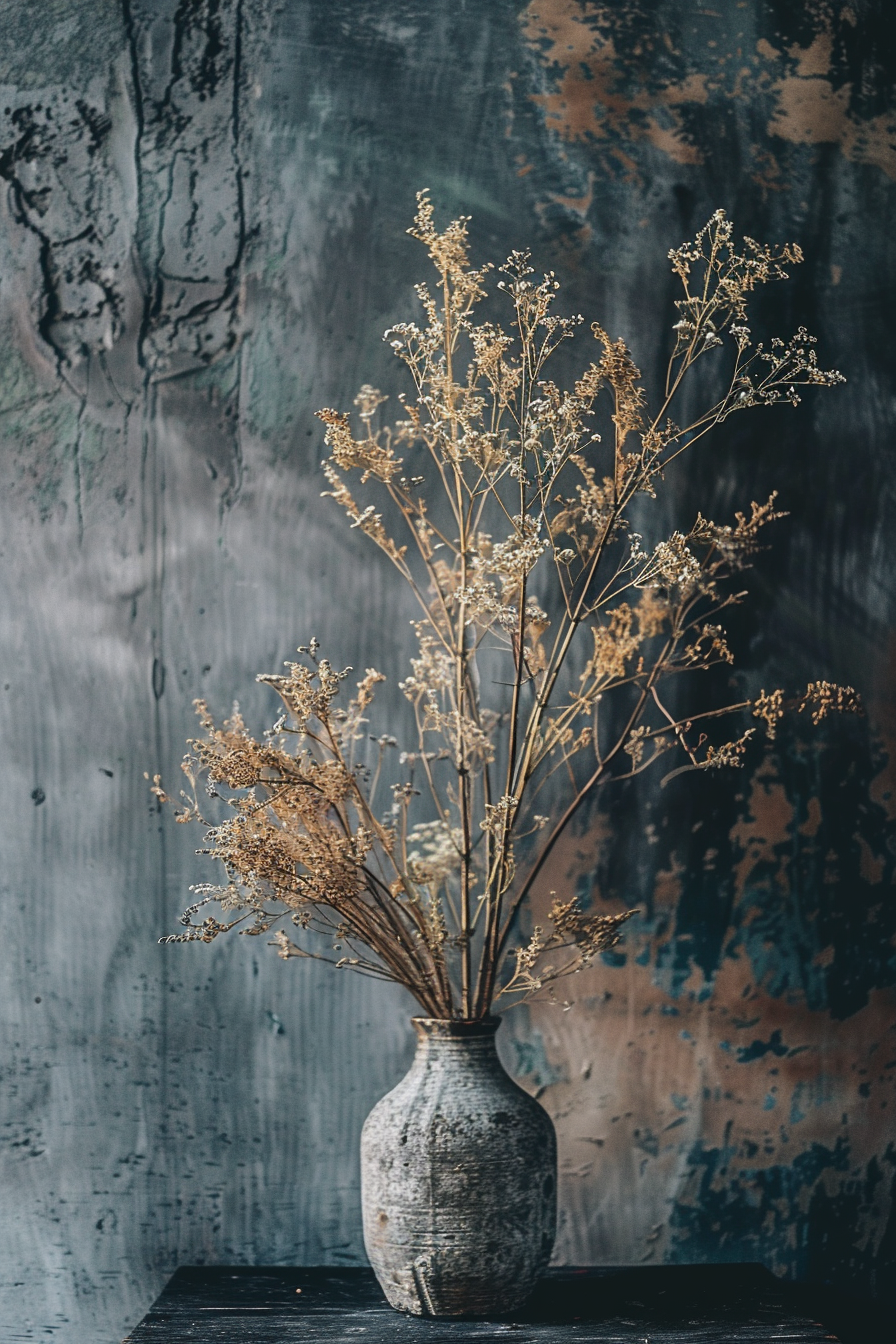
A rustic vase with dried flowers against a textured dark background with blue and rust accents.
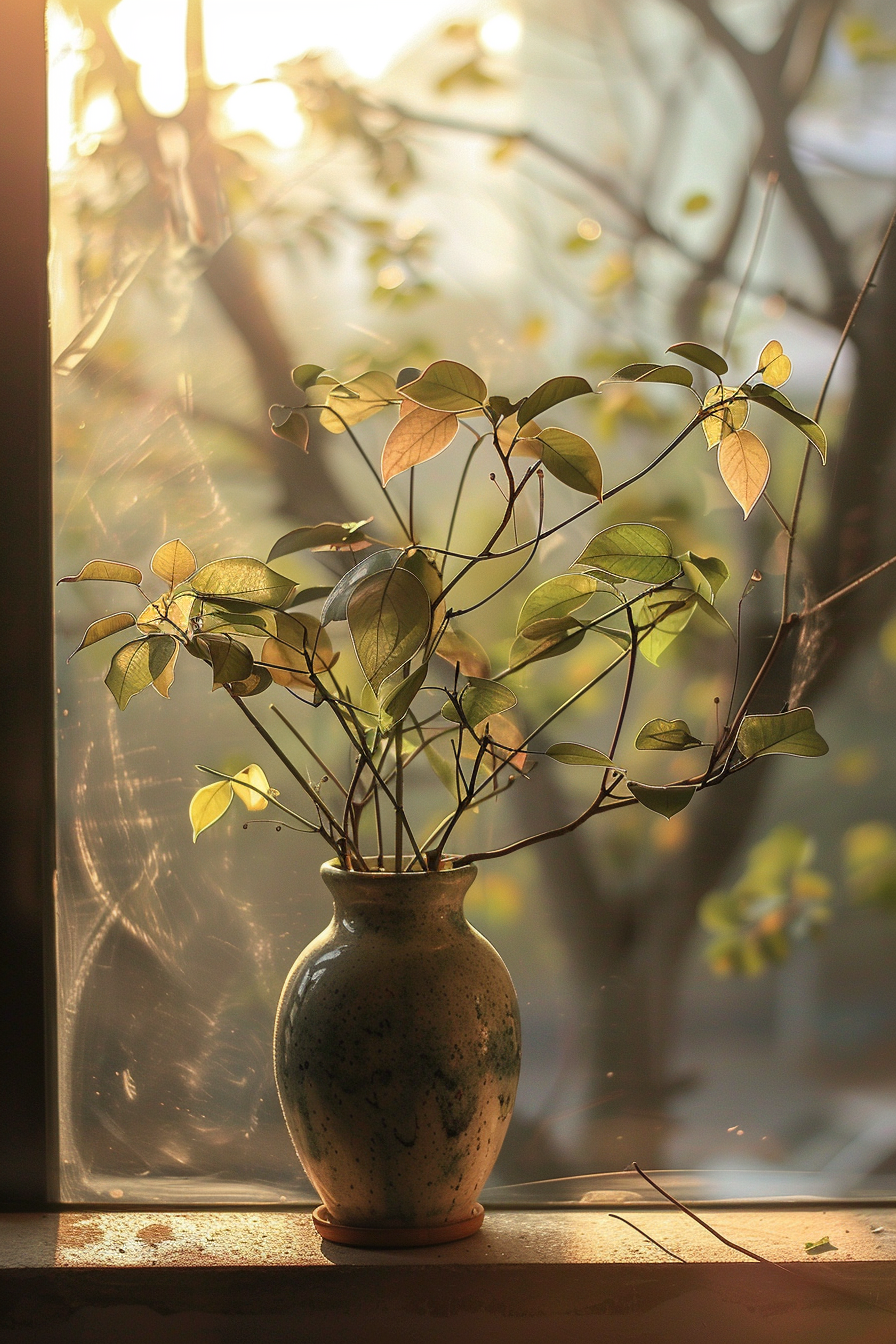
A ceramic vase with leaves on a windowsill, bathed in warm sunlight and framed by shadows of tree branches.
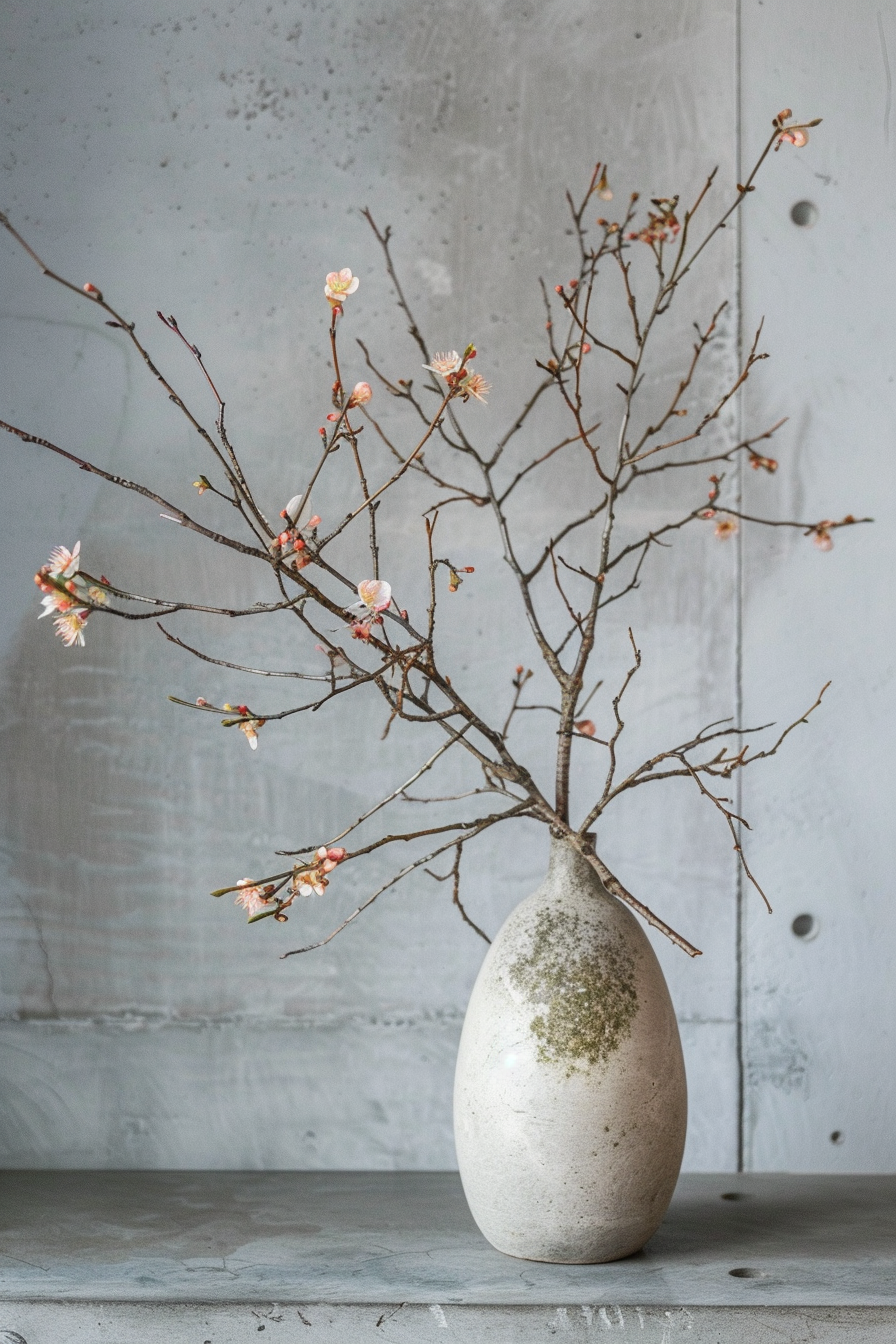
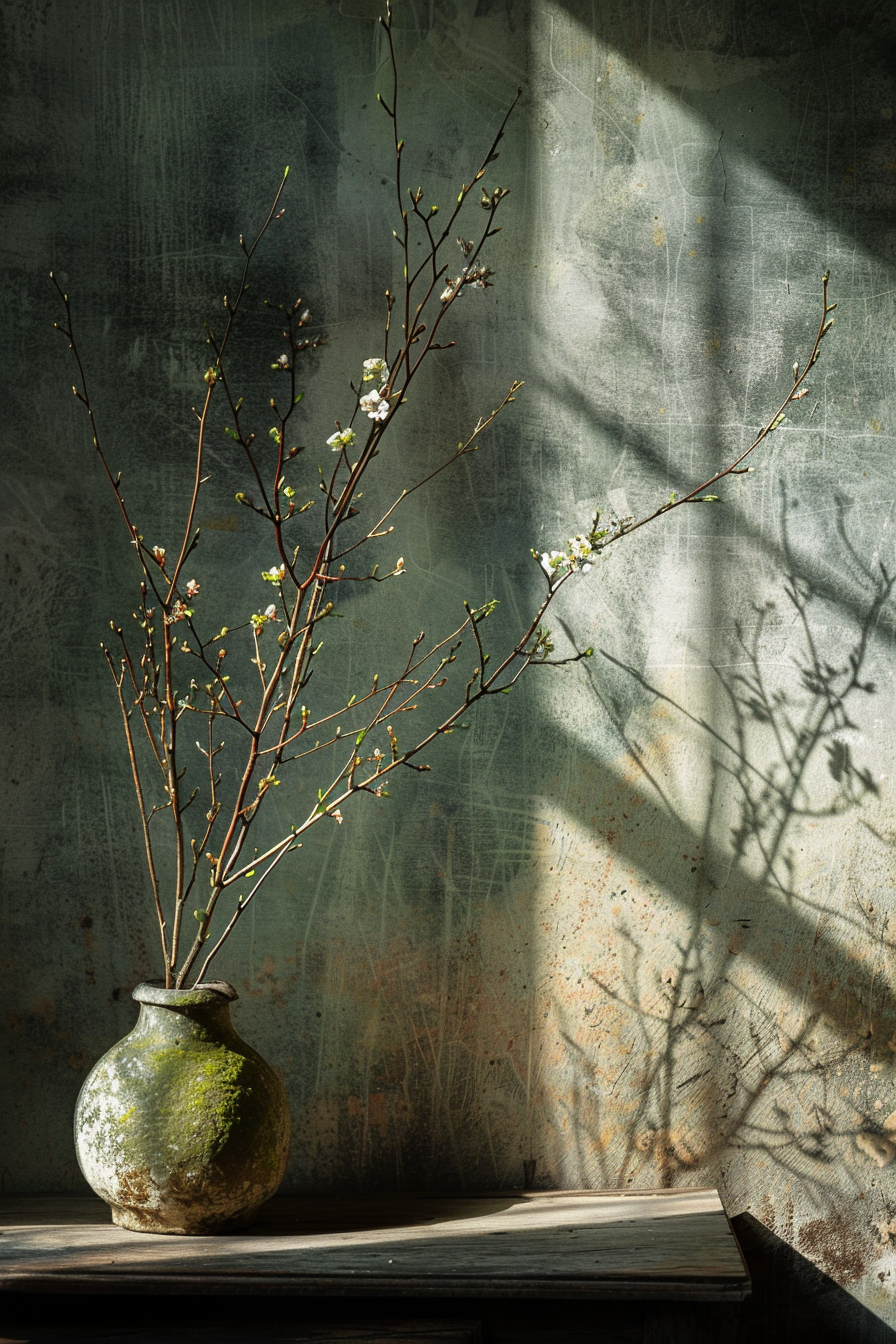
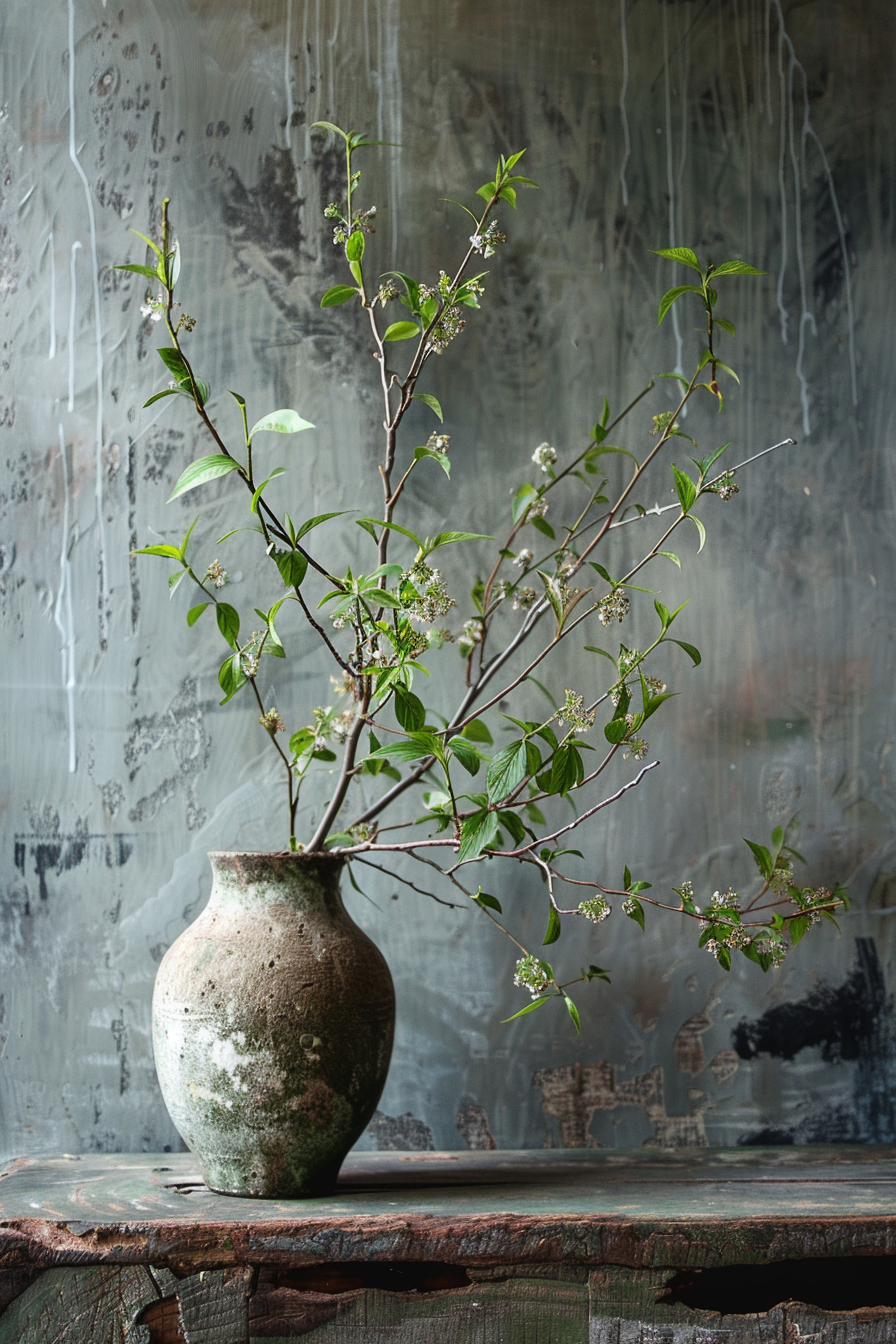
A rustic ceramic vase on a wooden surface with sparse branches bearing a few white blossoms, against a textured grey backdrop.
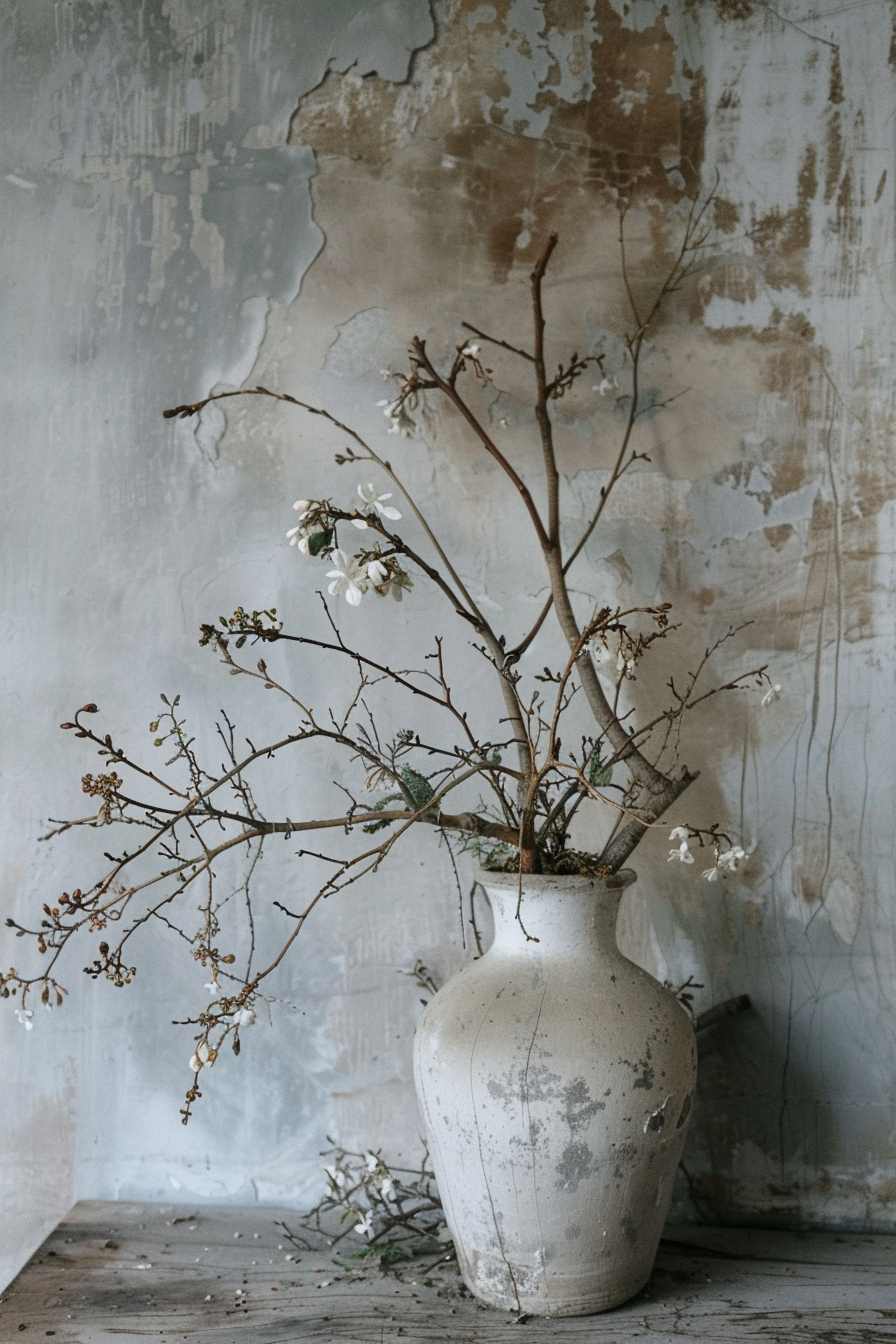
A weathered vase with branches and flowers against a peeling wall, creating a serene, rustic atmosphere.
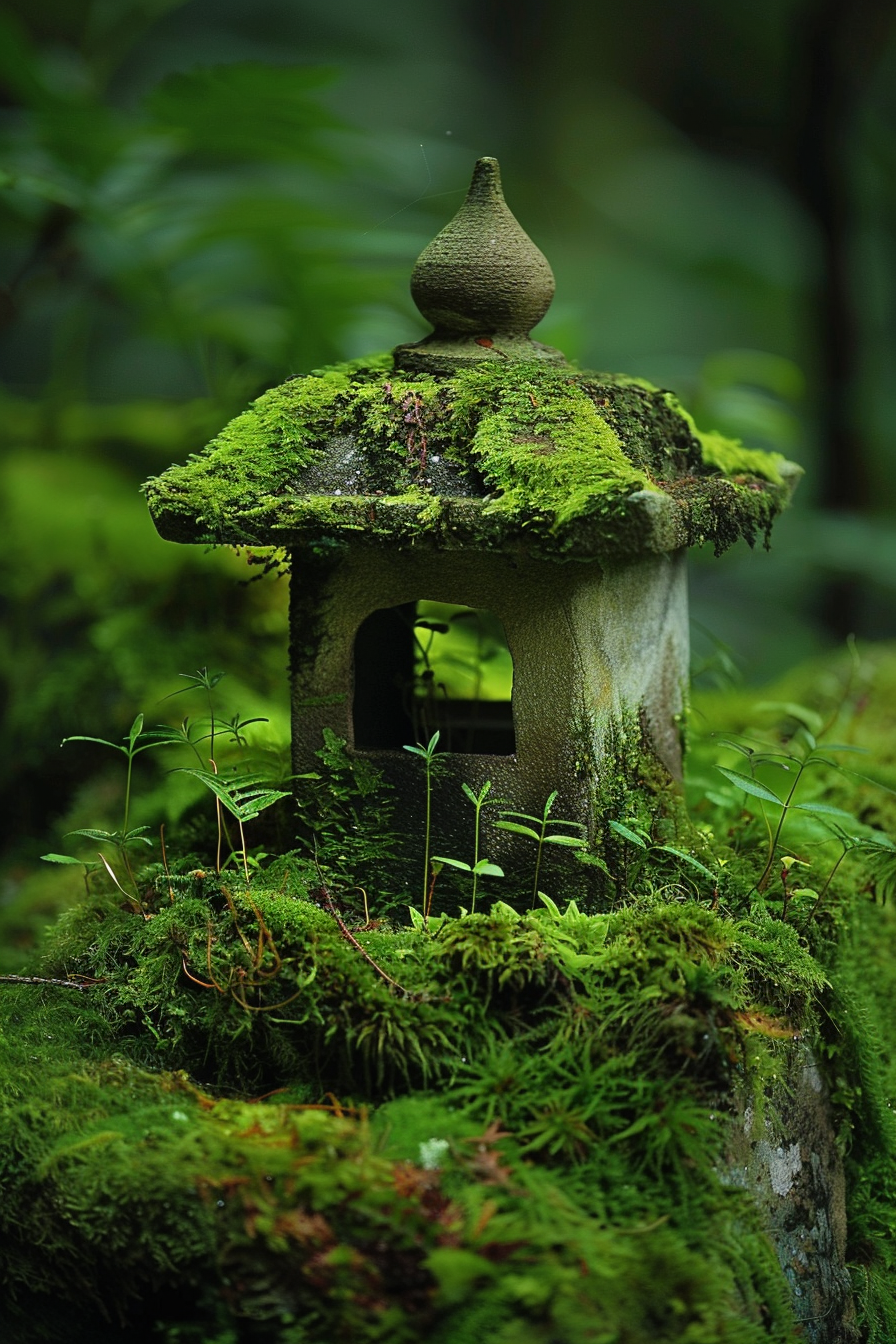
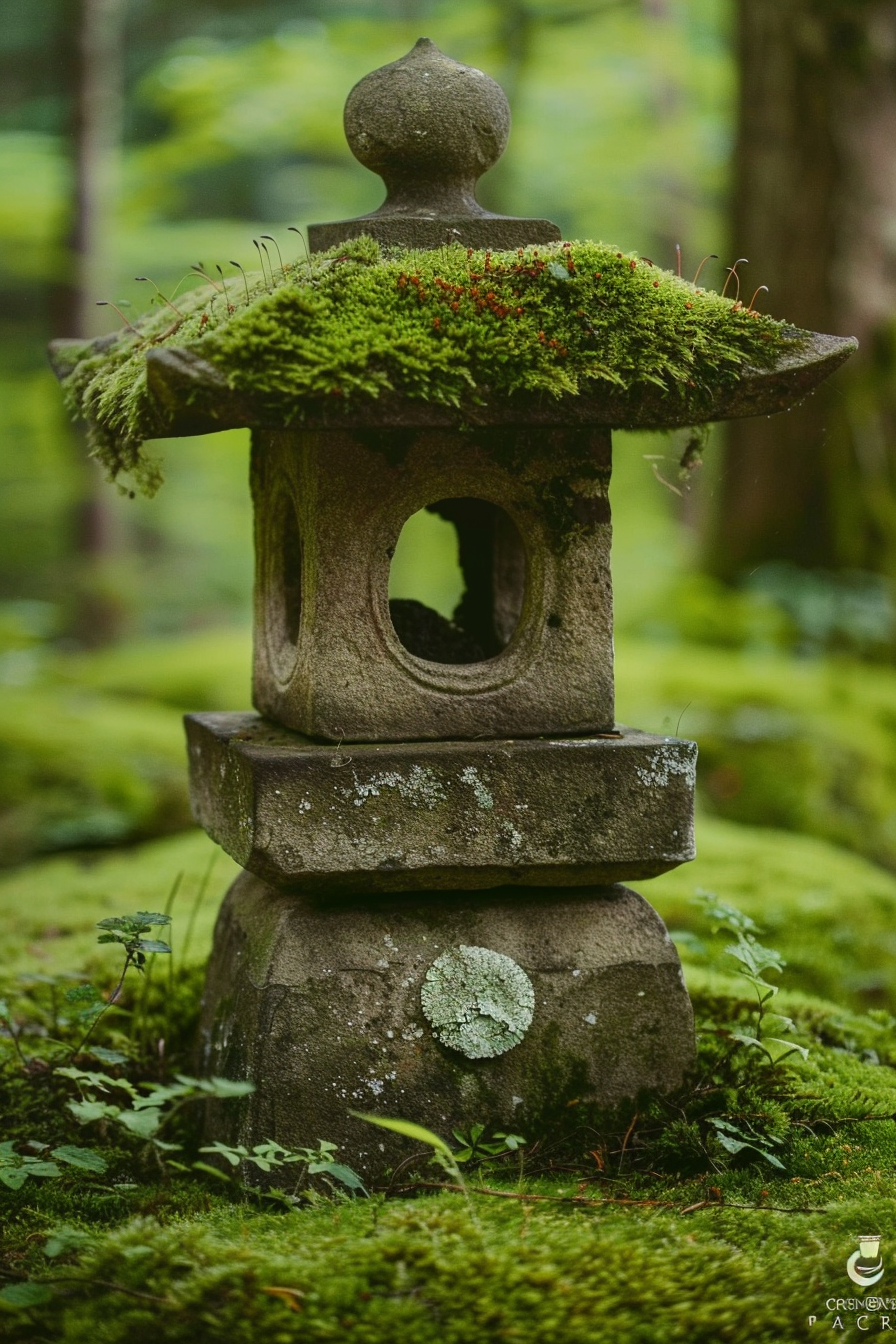
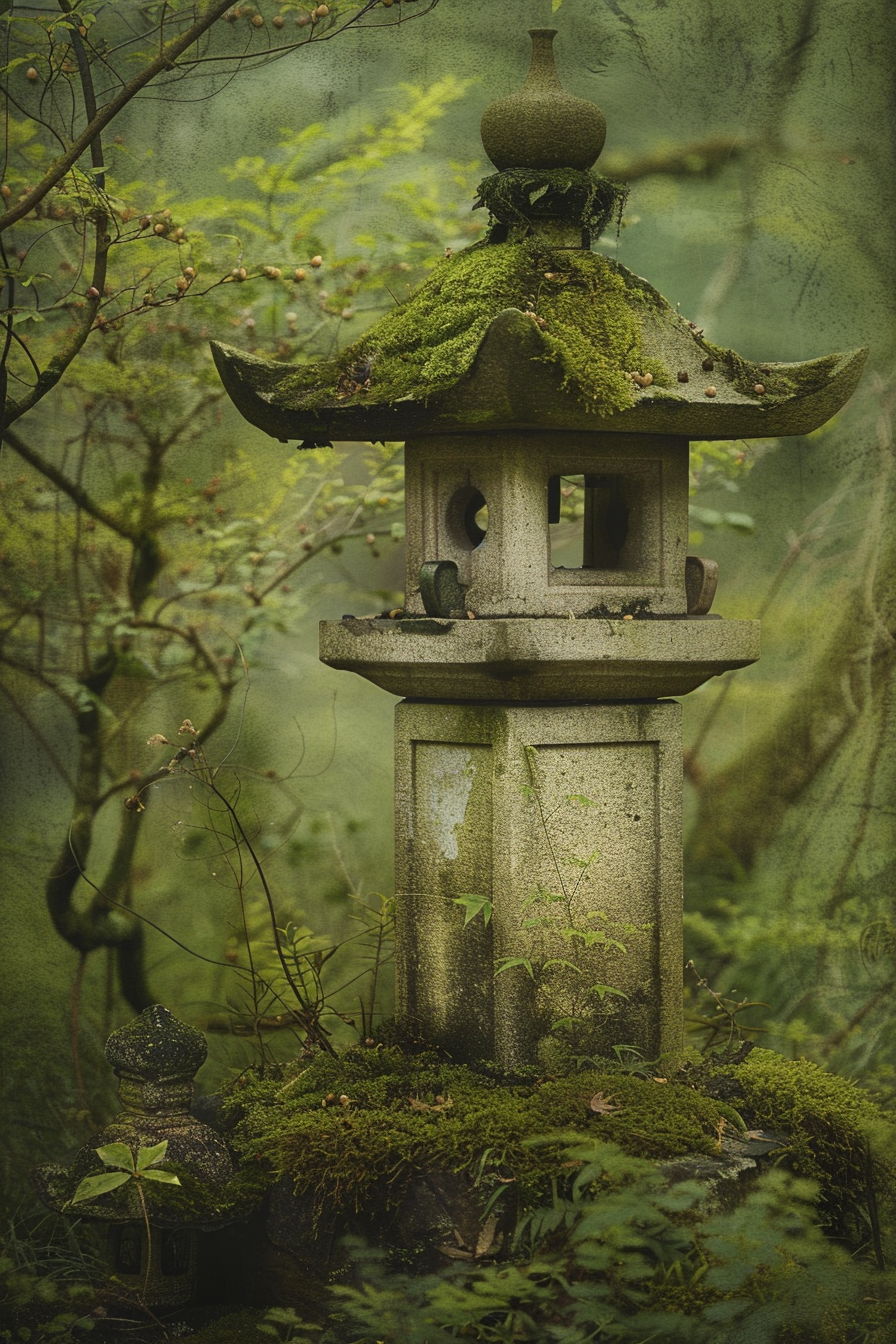
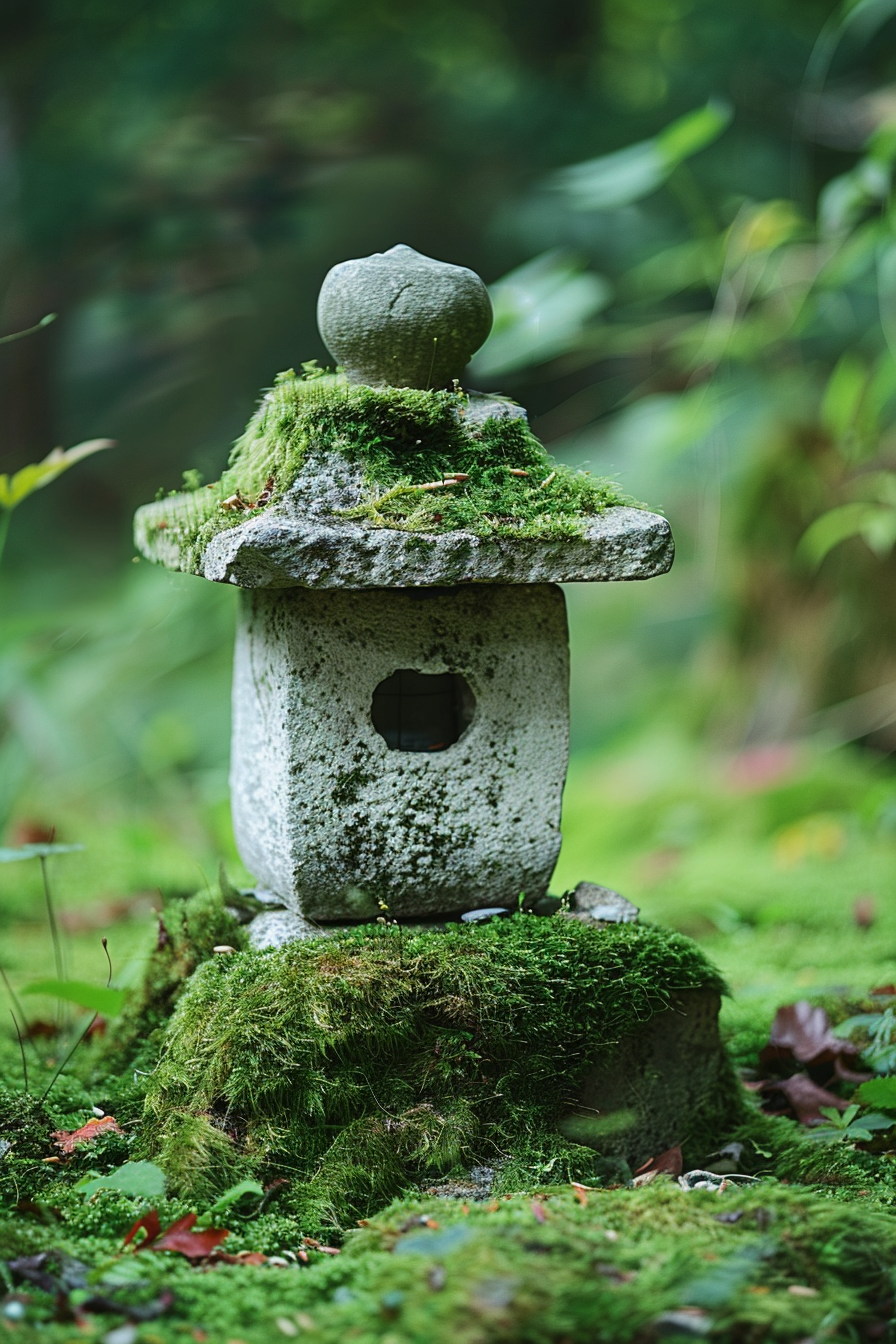
A moss-covered stone lantern in a tranquil forest setting, exhibiting a serene and mystical atmosphere.
ALT: Moss-covered stone lantern in a misty, green forest suggesting a serene, ancient Japanese garden setting.
A moss-covered stone lantern in a lush green forest setting.
ALT: An old, moss-covered lantern amidst lush greenery, evoking a serene, mystical forest atmosphere.
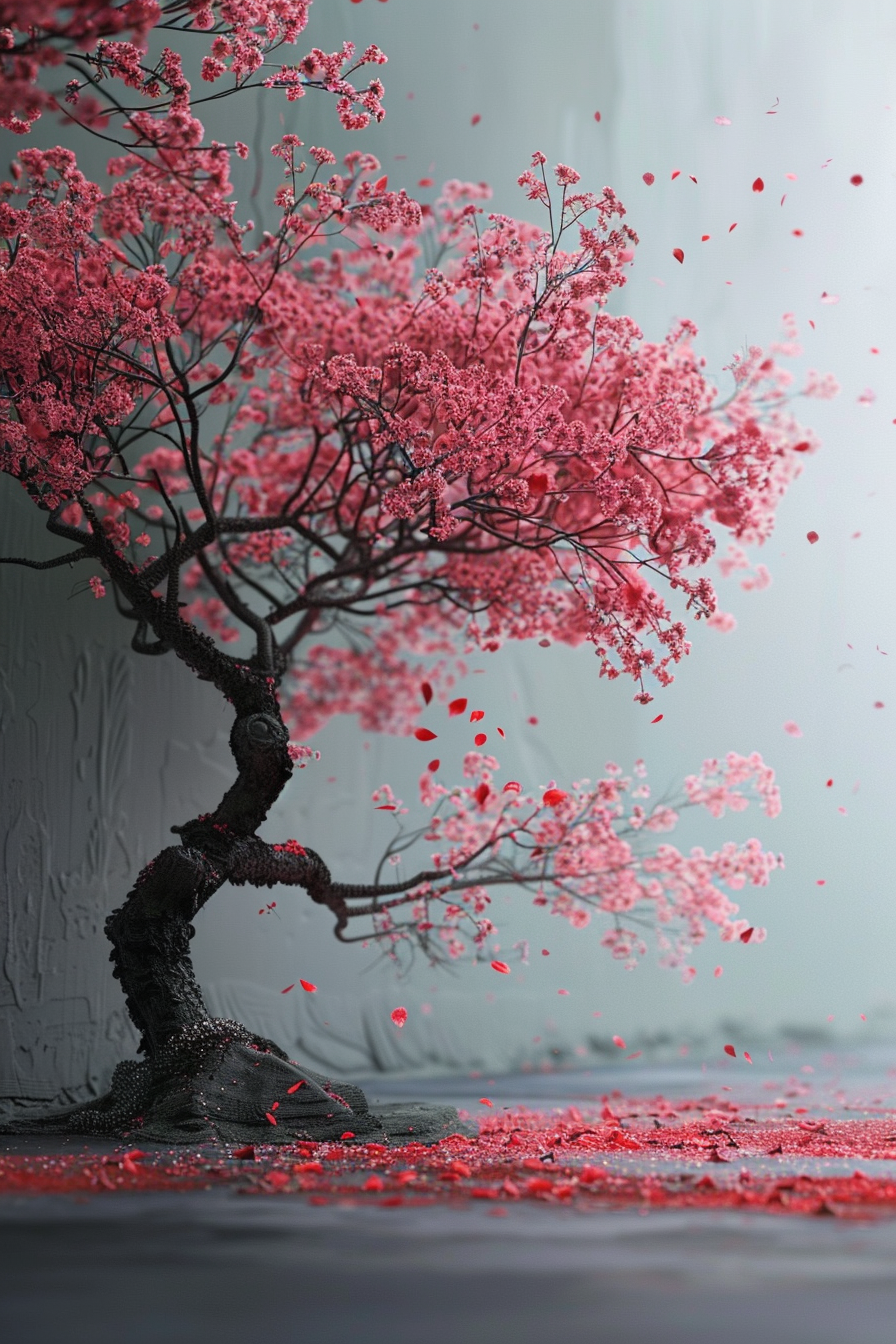
Digital art of a bent cherry blossom tree shedding vibrant pink petals on a grey background.
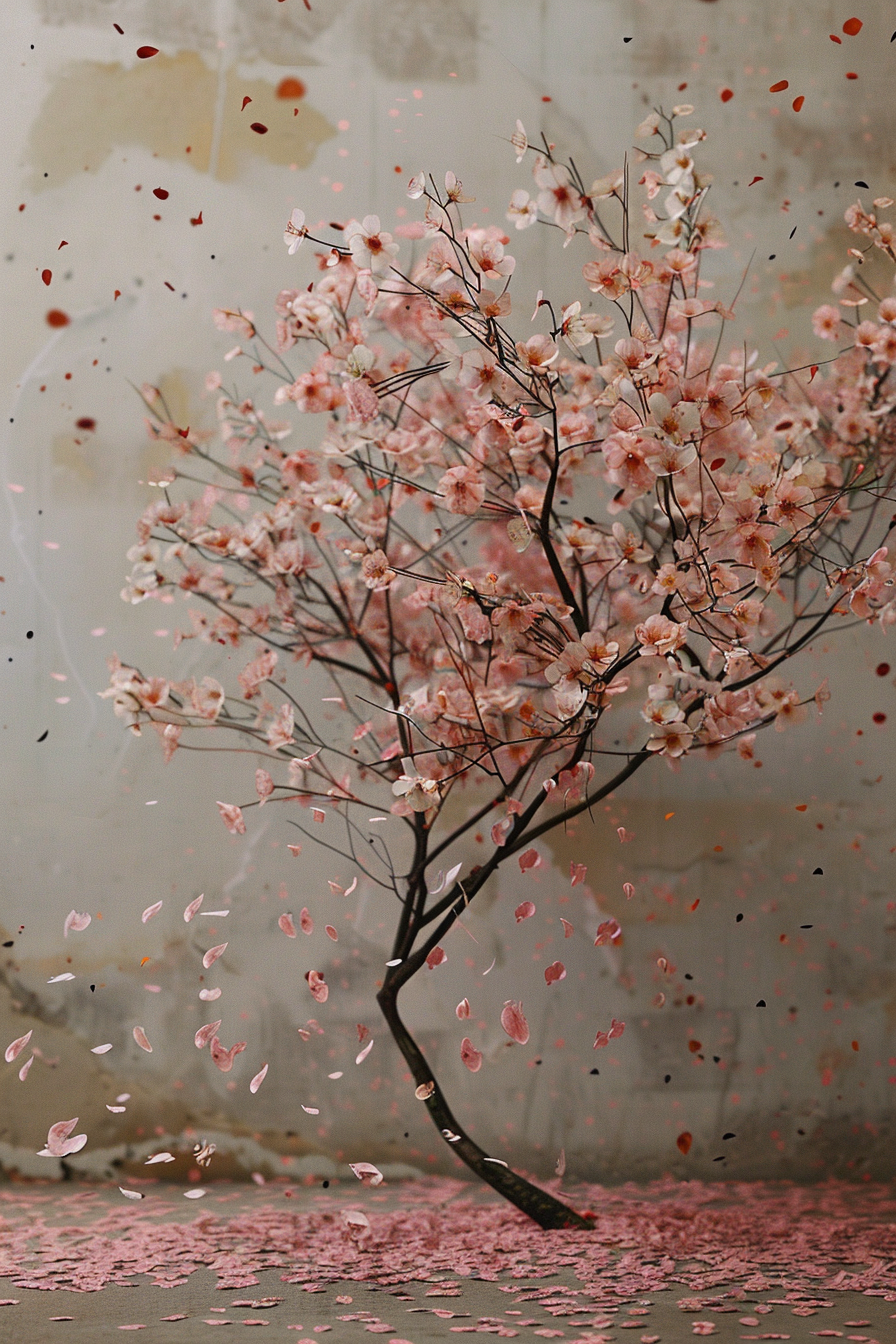
Cherry blossom branch with fallen petals on the ground, against a muted backdrop with splashes of paint.
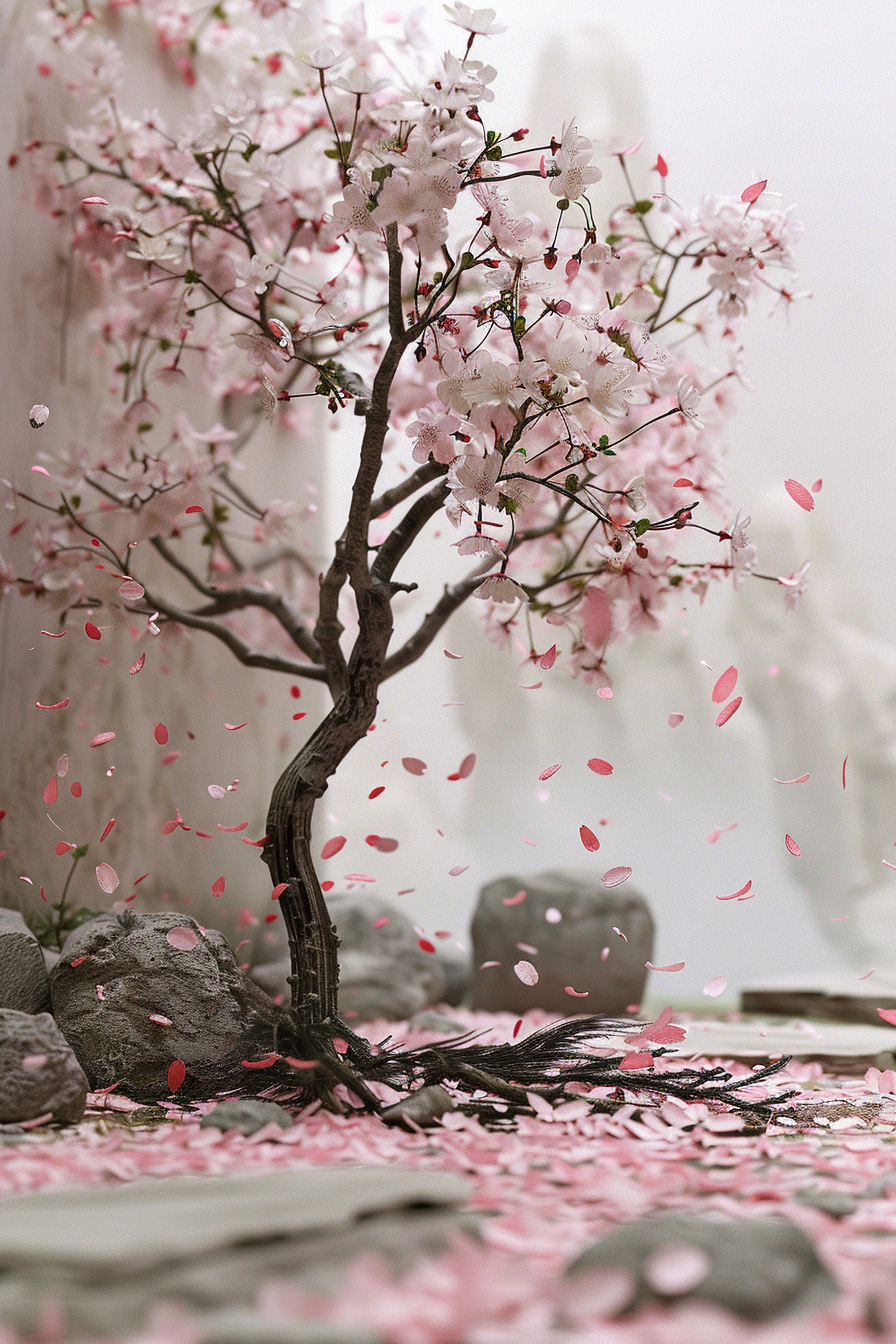
ALT: A cherry blossom tree shedding its pink petals among rocks, with petals scattered on the ground, conveying a serene and peaceful scene.
Cherry blossom tree in full bloom by a traditional building, with petals gently falling onto a stone-paved ground.
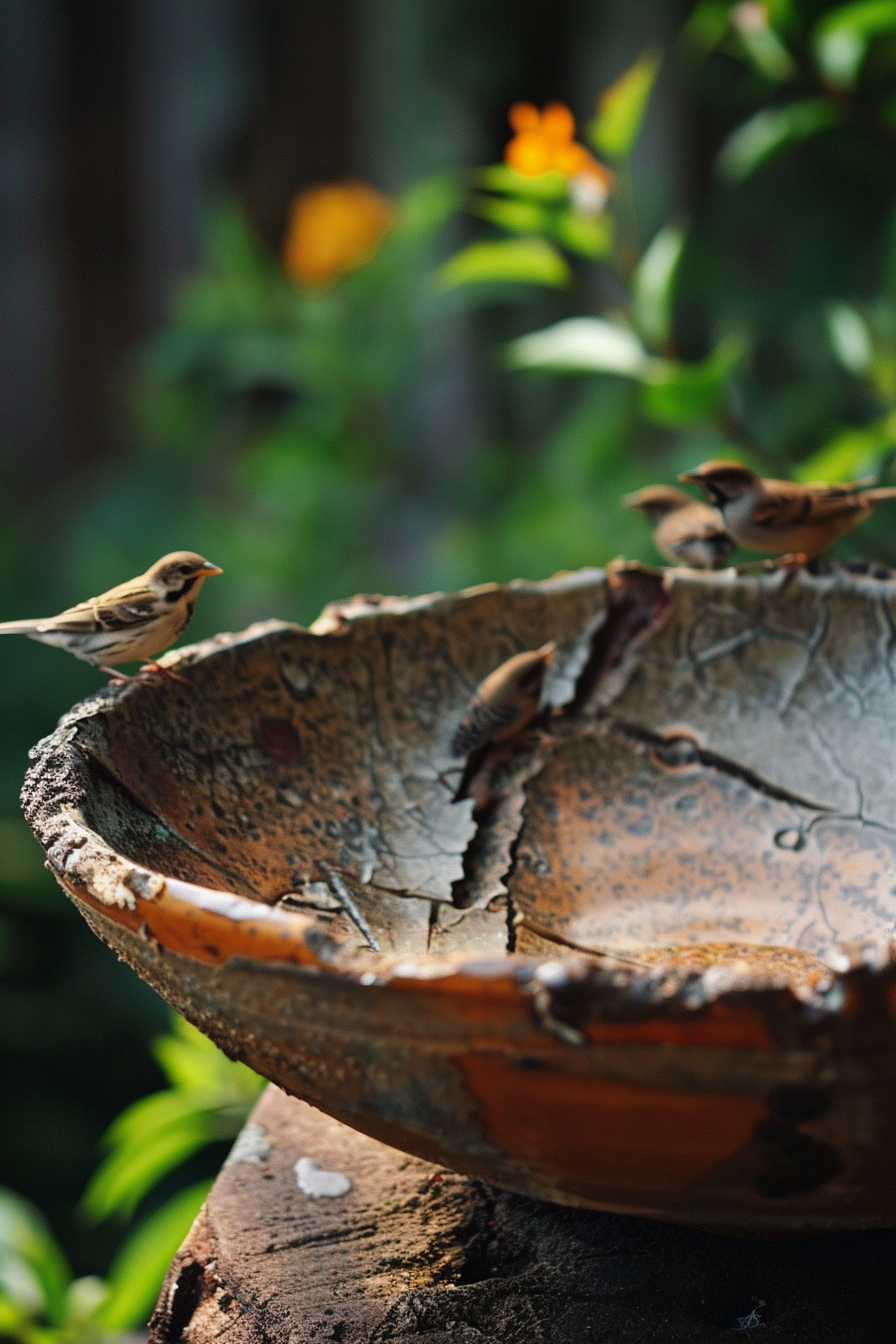
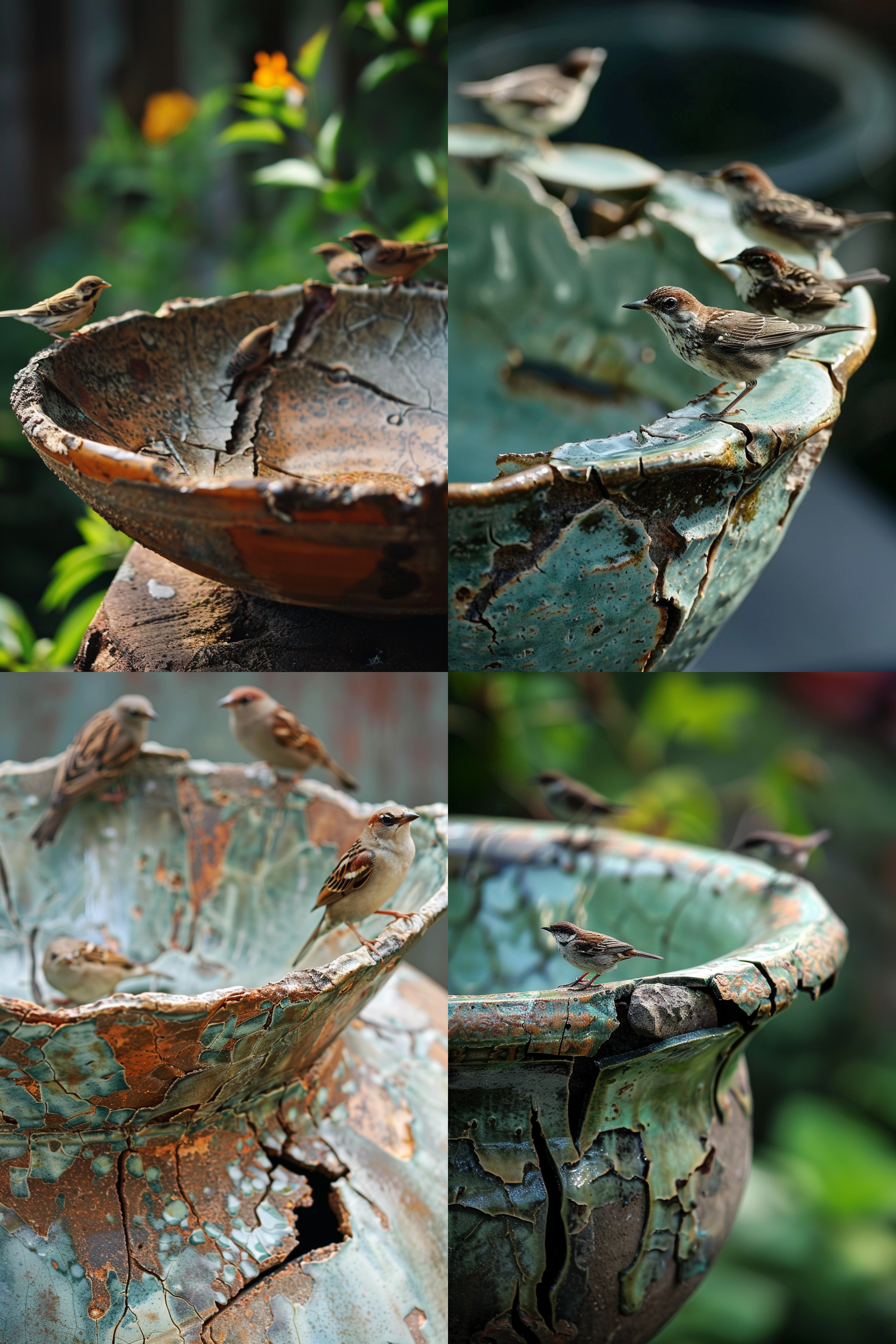
Four composite images showing sparrows perched on edges of a weathered, cracked ceramic bird bath.
Sparrows perched on and around a rustic, water-filled bird bath with blurred green foliage and orange flowers in the background.
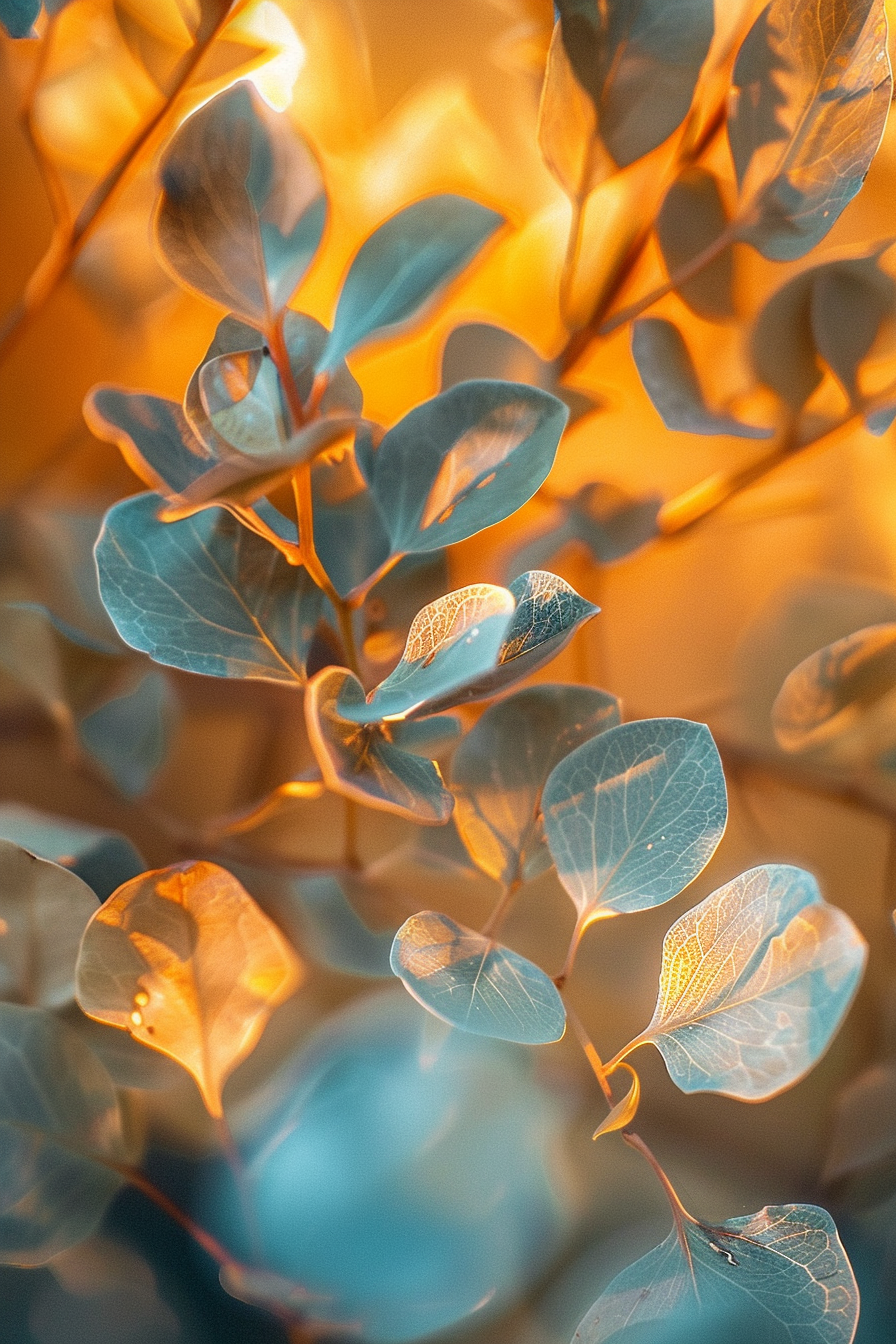
Translucent leaves on a branch, backlit by warm sunlight, highlighting their intricate vein patterns.
Leaves basking in warm golden light, highlighting their delicate veins and textures.
Backlit translucent leaves with a golden glow, highlighting their intricate vein structures.
ALT: Backlit golden leaves on thin branches, with a soft blue background, highlighting the intricate vein patterns of the foliage.

Don’t shy away from asymmetry; it reflects the imperfect perfection that Wabi Sabi celebrates. Use natural elements like stones, driftwood, or aged pottery to complement your plants.

Follow Quiet Minimal on Pinterest for more home design tips and inspiration.
 

Quiet Minimal Avatar